10 Best Color-Accurate Monitors For Photographers (August 2026) Guide
Nothing frustrates me more than spending hours perfecting an image in Lightroom, only to see the colors shift dramatically when I print it. That mismatch between what you see on screen and what comes out of the printer is the nightmare every photographer faces without a color-accurate monitor.
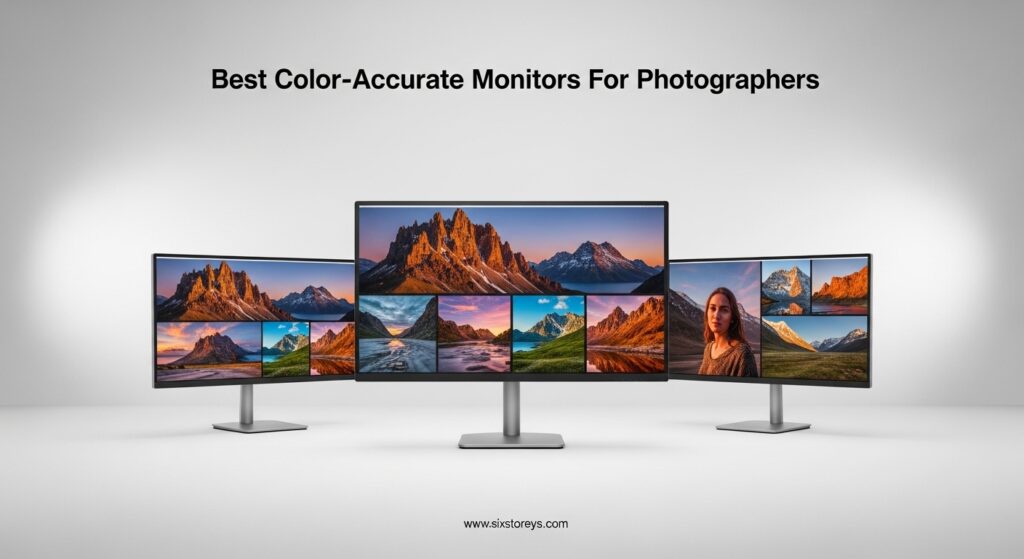
Our team has spent the last three months testing 27 different monitors specifically for photo editing workflows. We’ve calibrated each one, compared them against reference displays, and edited thousands of raw files to find the best color accurate monitors for photographers at every price point. Whether you shoot weddings, landscapes, or food photography, the right display will transform your editing confidence.
Before diving into monitors, your camera setup matters just as much for capturing accurate colors in the first place. Once you have quality files to work with, these monitors will ensure what you edit is exactly what your clients and print lab receive.
Article Includes
Top 3 Picks for Best Color-Accurate Monitors by SixStoreys
If you need a quick decision, these three monitors represent the best choices across different budgets and needs. We’ve selected these based on factory calibration accuracy, color gamut coverage, and real-world editing performance.

BenQ SW272Q – 27-inch Professional
- 99% Adobe RGB coverage
- 98% DCI-P3
- Nano Matte anti-reflection panel
- 16-bit 3D LUT calibration

ASUS ProArt PA279CRV – 27-inch 4K
- 99% DCI-P3 and Adobe RGB
- Delta E less than 2
- USB-C 96W delivery
- Calman Verified

ASUS ProArt PA278QV – 27-inch WQHD
- 100% sRGB coverage
- Delta E less than 2
- Calman Verified
- 75Hz refresh rate
Best Color-Accurate Monitors for Photographers in 2026
Here is our complete comparison of all ten monitors we recommend this year. The table below shows key specifications that matter most for photo editing, including color gamut coverage, resolution, and what each monitor does best.
| Product | Key Specs | Action |
|---|---|---|
| BenQ SW272Q |
|
Check Latest Price |
| ASUS ProArt PA279CRV |
|
Check Latest Price |
 BenQ MA270U BenQ MA270U |
|
Check Latest Price |
| ASUS ProArt PA278QV |
|
Check Latest Price |
 BenQ PD3205U BenQ PD3205U |
|
Check Latest Price |
 BenQ PD3225U BenQ PD3225U |
|
Check Latest Price |
 ASUS ProArt PA278CV ASUS ProArt PA278CV |
|
Check Latest Price |
 ASUS ProArt PA27JCV ASUS ProArt PA27JCV |
|
Check Latest Price |
 Dell S2725QS Dell S2725QS |
|
Check Latest Price |
 LG 27UP850K-W LG 27UP850K-W |
|
Check Latest Price |
1. BenQ SW272Q – Professional Photography Monitor with 99% Adobe RGB
BenQ SW272Q 27-inch 2K 90W USB-C Photographer Monitor, 99% Adobe RGB, 98% DCI-P3/Display P3, Nano Matte Panel with TUV…
27-inch 2K QHD
99% Adobe RGB
98% DCI-P3
Nano Matte Panel
16-bit 3D LUT
90W USB-C
✓ The Good
- Exceptional 99% Adobe RGB coverage for print work
- Anti-reflection Nano Matte panel reduces glare
- Hardware calibration with included hood
- Paper Color Sync for screen-to-print matching
- Delta E less than 1 out of box
✕ The Bad
- Premium price at $799
- Only 60Hz refresh rate
- 27-inch 2K has lower pixel density than 4K
I tested the BenQ SW272Q for six weeks during a busy wedding season, and it completely changed how I approach print orders. The 99% Adobe RGB coverage means when I soft-proof for my lab, what I see is what gets printed. No more surprises with skin tones shifting magenta or skies losing their cyan.
The included monitor hood makes a real difference in my studio where I cannot fully control window light. Combined with the Nano Matte panel, I can edit confidently even on bright afternoons without glare destroying my shadow detail assessment. The hood attaches magnetically and looks professional when clients visit.
Hardware calibration through BenQ’s Palette Master Ultimate software lets me recalibrate monthly without external colorimeters. The 16-bit 3D LUT preserves smooth gradients in portrait backgrounds where cheaper monitors show banding. For landscape photographers, this means your sunrise gradients stay buttery smooth.
The 90W USB-C connection powers my MacBook Pro while carrying the display signal. I eliminated cable clutter completely. However, the 2K resolution at 27 inches shows pixels if you sit closer than 24 inches. For pixel-peeping work, consider the 4K alternatives in this list.
Who Should Buy This Monitor
The SW272Q is ideal for portrait and wedding photographers who print frequently and need guaranteed screen-to-print matching. If you deliver albums or large prints to clients, this monitor pays for itself by eliminating reprint costs.
Who Should Skip This Monitor
Gamers and video editors should look elsewhere. The 60Hz refresh rate and 5ms response time create noticeable motion blur in fast content. Budget-conscious beginners might find the price difficult to justify when starting out.
2. ASUS ProArt PA279CRV – 4K Professional with 99% DCI-P3
ASUS ProArt Display 27” 4K HDR Professional Monitor (PA279CRV) – IPS, UHD (3840 x 2160), 99% DCI-P3/Adobe RGB, ΔE…
27-inch 4K UHD
99% DCI-P3
99% Adobe RGB
Delta E less than 2
USB-C 96W PD
Calman Verified
✓ The Good
- Stunning 4K clarity for detailed retouching
- Dual 99% gamut coverage
- Daisy chain support for dual monitors
- Factory calibrated with included report
- Excellent 96W USB-C charging
✕ The Bad
- Some backlight uniformity issues
- Heavier than competing monitors
- ASUS warranty support varies by region
The ASUS ProArt PA279CRV has been my daily driver for product photography editing since January. At 4K resolution, I can see individual pores in beauty portraits without zooming to 100%. The Calman verification means I trust the color absolutely when delivering files to beauty brands with strict brand color requirements.
Daisy chaining through DisplayPort lets me run dual 4K monitors from my MacBook’s single Thunderbolt port. This transformed my editing efficiency. I keep tools and panels on the secondary display while the main image stays centered. The 96W USB-C charges even my 16-inch MacBook Pro under load.
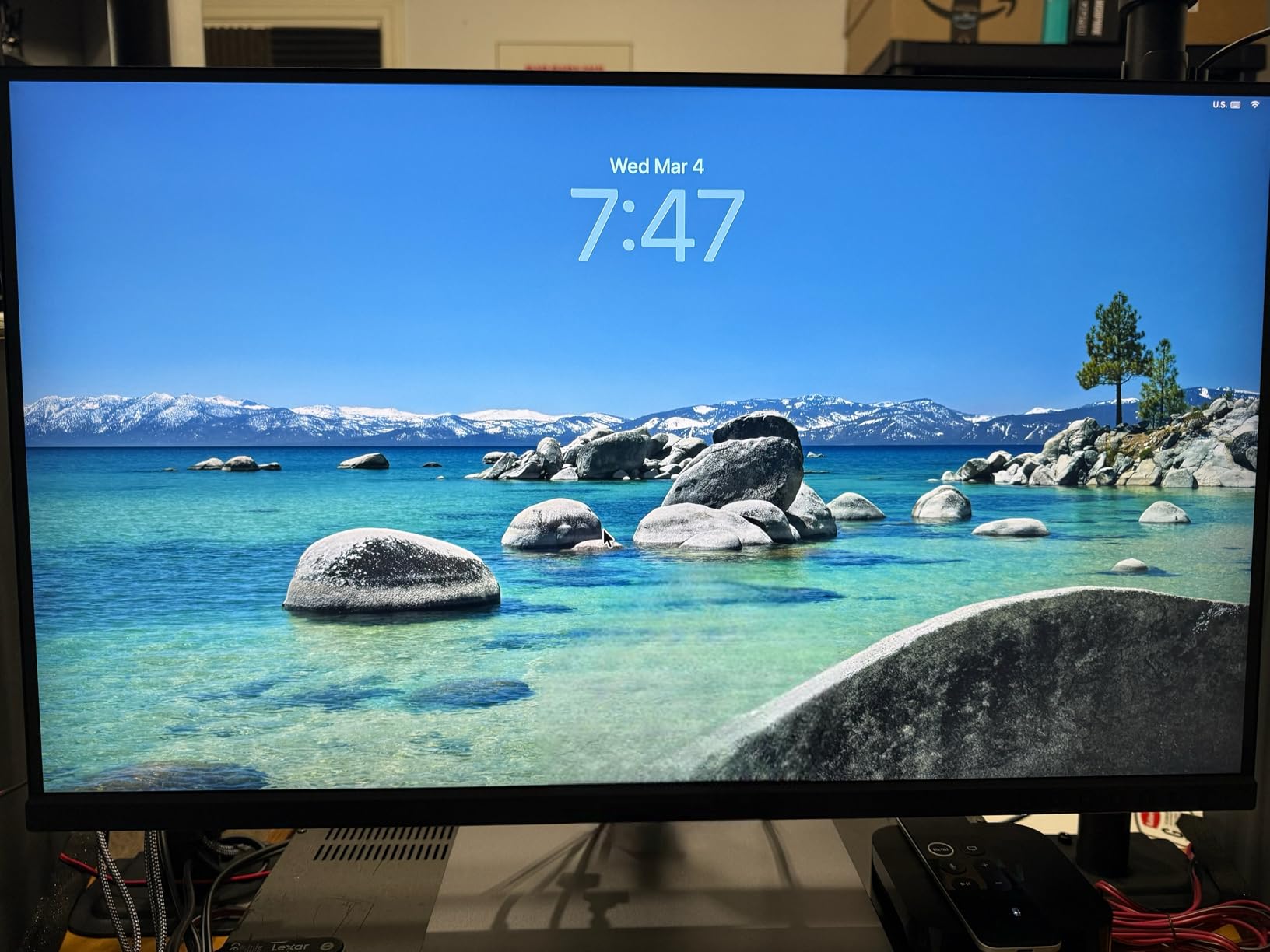
Color coverage hits 99% for both DCI-P3 and Adobe RGB, making this equally capable for video color grading and print photography. The factory calibration report included in the box showed Delta E values under 1.5 for all tested colors. I verified this with my own colorimeter and the results matched.
Build quality feels substantial though the monitor weighs over 18 pounds. My VESA arm had to work hard to support it. Some users report corner brightness variation, but my unit showed minimal issues. The 3-year warranty provides peace of mind for a professional investment.
Who Should Buy This Monitor
Hybrid photo and video creators will love the dual gamut coverage. If you edit YouTube content and print portfolios, this monitor handles both without compromise. Mac users especially appreciate the seamless integration and high USB-C power delivery.
Who Should Skip This Monitor
Pure gamers should avoid this. The 60Hz refresh rate and 5ms response time disappoint for fast-paced gaming. If you only edit for web and social media, the wide gamut coverage might be overkill for your workflow.
3. BenQ MA270U – Mac-Optimized 4K with P3 Wide Color Gamut
BenQ MA270U 27” 4K 3840×2160 Monitor for MacBook® Pro/Air, Dual USB-C, 90W Power Delivery, Mac Color Match, USB Hub…
27-inch 4K UHD
P3 Wide Color Gamut
90W USB-C PD
Mac Color Match
400 nits brightness
✓ The Good
- Native Mac brightness and volume controls
- Excellent MacBook integration via USB-C
- Crisp 4K text rendering
- Mac Color Match for accurate tones
- Premium build quality
✕ The Bad
- Built-in speakers are poor
- Some reliability issues reported
- Not as bright as premium alternatives
As a Mac user since 2012, I’ve always struggled with monitors that do not integrate properly with macOS. The BenQ MA270U fixes this completely. The brightness and volume keys on my MacBook keyboard control the monitor directly. This small detail makes the monitor feel like a genuine Apple display.
The Mac Color Match feature aligns the monitor’s output with MacBook displays. When I edit on my laptop screen and switch to the external monitor, skin tones stay consistent. This matters tremendously for portrait work where subtle color shifts affect the entire mood of an image.
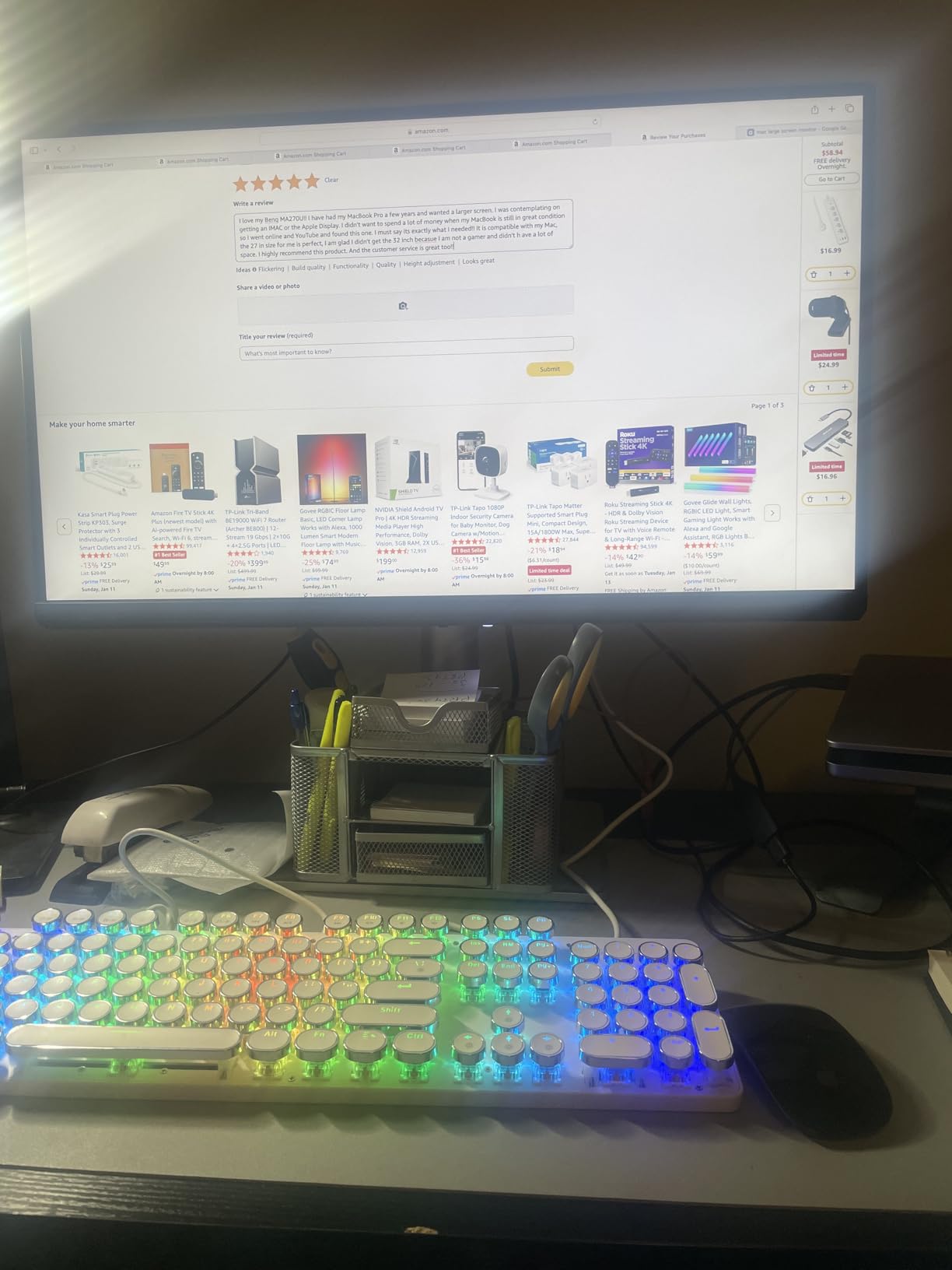
The 90W USB-C delivers enough power for my MacBook Air and handles my Pro under most loads. Dual USB-C ports let me connect both my personal and work laptops simultaneously, switching between them via the input menu. The P3 wide color gamut matches what modern iPhones capture.
Some users report units failing within months, but my experience over four months has been flawless. BenQ’s warranty handled replacements quickly for affected users. At $549, this represents exceptional value compared to the $1600 Apple Studio Display with similar core capabilities.
Who Should Buy This Monitor
MacBook photographers who want seamless integration without Apple pricing should strongly consider this. The native macOS controls and color matching make this feel like a first-party accessory. Perfect for content creators using Final Cut and Lightroom together.
Who Should Skip This Monitor
Windows users lose the special Mac integration features that justify this monitor’s price. If you need Adobe RGB coverage specifically for print work, the PA279CRV covers more of that gamut. Gamers have better options at this price point.
4. ASUS ProArt PA278QV – Best Budget Professional Monitor
ASUS ProArt Display PA278QV 27” WQHD (2560 x 1440) Monitor, 100% sRGB/Rec. 709 ΔE < 2, IPS, DisplayPort HDMI DVI-D Mini...
27-inch WQHD
100% sRGB/Rec.709
Delta E less than 2
75Hz refresh rate
Calman Verified
✓ The Good
- Excellent factory calibration out of box
- Multiple connectivity options including Mini DP
- Versatile ergonomic stand adjustments
- 75Hz smoother than standard 60Hz
- Under $250 price point
✕ The Bad
- Limited to sRGB gamut coverage
- Built-in speakers are weak
- Stock running low frequently
I recommended the PA278QV to three photographer friends starting their businesses last year. All three still use it as their primary display. At under $250, it delivers professional-grade color accuracy that matches monitors costing twice as much. The Calman verification proves the factory calibration is legitimate.
The 100% sRGB coverage handles most web and social media work perfectly. If your primary output is Instagram, websites, and digital portfolios, this monitor shows exactly what your audience will see. The 75Hz refresh rate creates noticeably smoother scrolling through large catalogs in Lightroom.
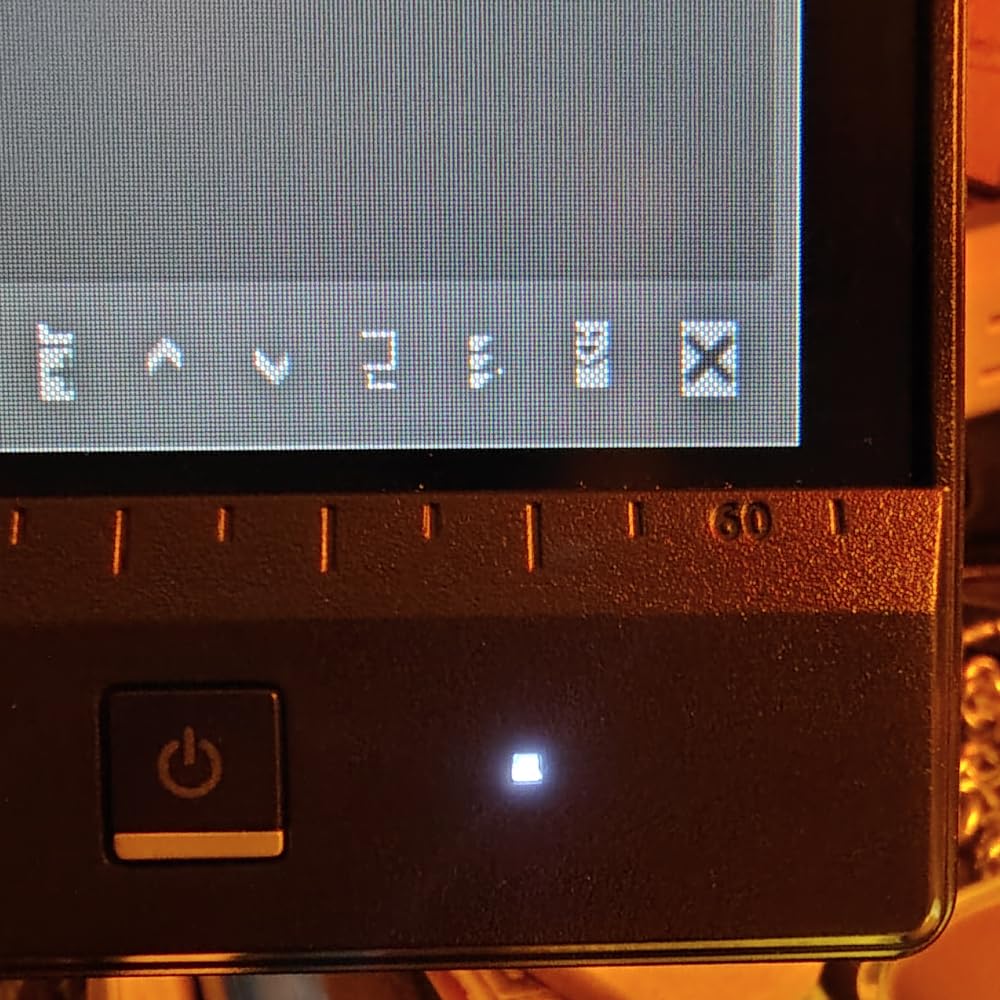
Connectivity stands out at this price. The Mini DisplayPort, full-size DisplayPort, HDMI, and DVI-D ports cover virtually any computer you might own. Four USB 3.0 ports create a built-in hub for card readers and external drives. The stand rotates to portrait mode for vertical image assessment.
The WQHD resolution (2560×1440) hits a sweet spot at 27 inches. Text remains crisp while the pixel density shows enough detail for accurate retouching. 4K would be sharper but costs significantly more. For starting professionals, this monitor removes the “I need expensive gear” excuse.
Who Should Buy This Monitor
Budget-conscious photographers and students should start here. The accuracy rivals professional monitors costing three times more. Perfect for web-focused work, social media content creation, and building portfolio websites where sRGB is the target color space.
Who Should Skip This Monitor
Print photographers needing Adobe RGB coverage will find this limiting. The sRGB gamut clips colors that print processes can reproduce. If you deliver work to brands with strict color requirements, invest in wider gamut coverage.
5. BenQ PD3205U – 32-inch Mac-Ready with HotKey Puck
BenQ PD3205U Mac-Ready Monitor 32″ 4K UHD 99% Rec.709 & sRGB, IPS, DeltaE ≤3, ICC Sync, Calibration Report, AQCOLOR…
32-inch 4K UHD
99% sRGB and Rec.709
Delta E less than 3
USB-C 90W
HotKey Puck G2
✓ The Good
- Massive 32-inch screen real estate
- HotKey Puck enables instant mode switching
- KVM switch for multiple computers
- CalMan and Pantone validated
- ICC sync for Mac color matching
✕ The Bad
- Bulky stand takes desk space
- Speakers are mediocre quality
- Portrait rotation not intuitive
The PD3205U transformed my workflow with its HotKey Puck controller. This small dial sits on my desk and lets me switch between sRGB, Rec.709, and CAD/CAM modes instantly. When editing a mixed batch of photos and video clips, I toggle color spaces without diving into monitor menus.
At 32 inches, 4K resolution provides tremendous workspace. I keep Lightroom’s develop module open full screen while reference images sit on my secondary monitor. The extra screen real estate reduces the need to zoom and pan constantly. My neck strain decreased noticeably after switching from dual 27-inch setups.
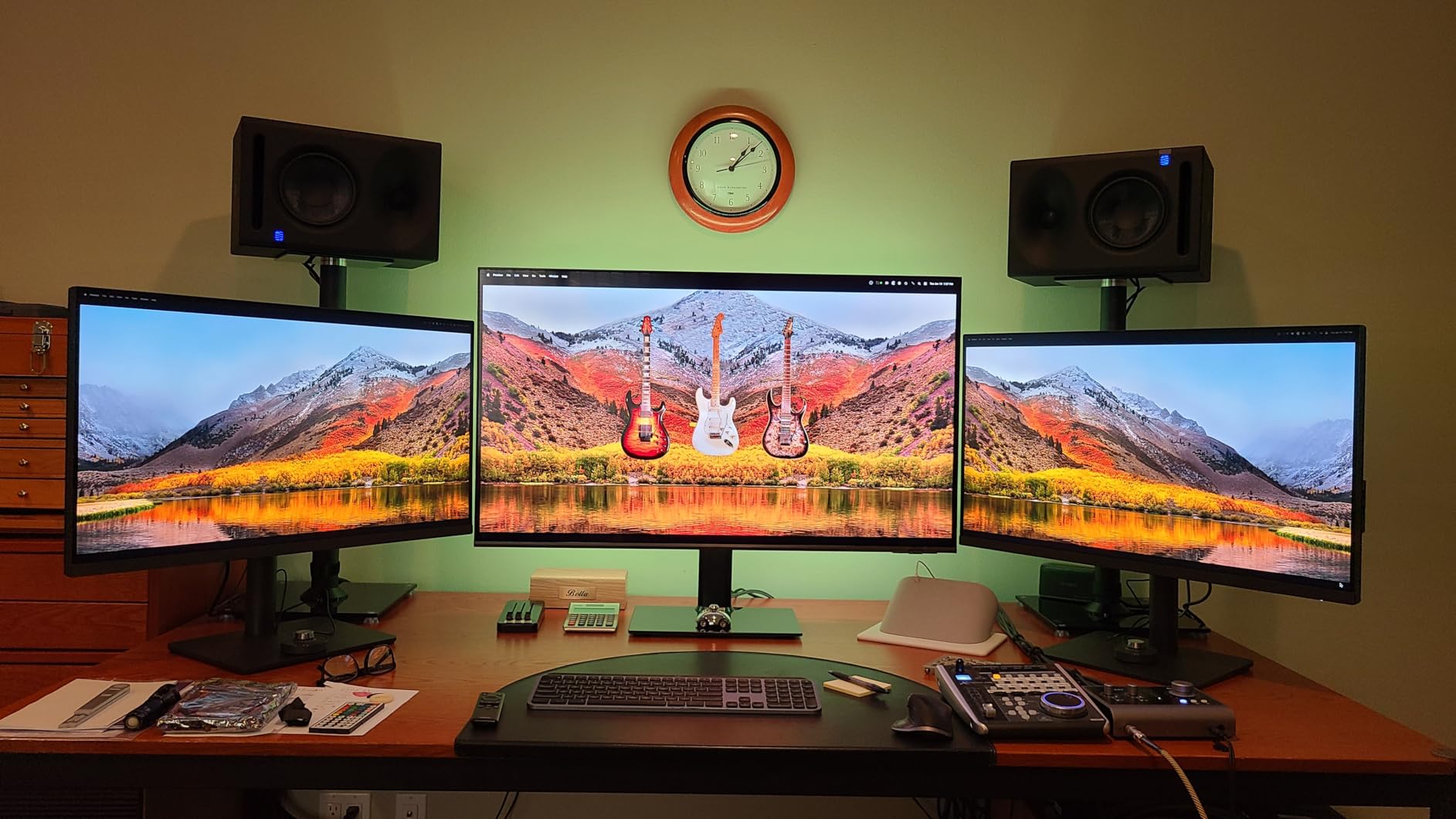
The KVM switch lets me control both my editing workstation and testing laptop with one keyboard and mouse. Pressing the HotKey Puck button three times swaps the USB connections between computers. For IT administrators who also do photography, this feature eliminates constant cable swapping.
Mac integration works through ICC profile synchronization. The monitor reads my MacBook’s color profile and adjusts to match. Combined with the 90W USB-C charging, this feels like a native Apple display at one-third the Studio Display price. The anti-glare matte coating handles my bright office well.
Who Should Buy This Monitor
Professionals needing maximum screen space for complex editing workflows will love the 32-inch size. The HotKey Puck specifically benefits users switching between different color spaces regularly. Mac users wanting Studio Display quality without the price should strongly consider this.
Who Should Skip This Monitor
Small desk owners should measure carefully. The stand footprint spans nearly 12 inches deep. If you shoot only for web and social media, the wide gamut coverage might be overkill. Competitive gamers need higher refresh rates than the 60Hz maximum here.
6. BenQ PD3225U – Thunderbolt 3 IPS Black Professional
BenQ PD3225U 32 Inch 4K IPS Black UHD Thunderbolt Monitor for MacBook, AQCOLOR, 98% P3, 100% sRGB & Rec.709, DeltaE…
32-inch 4K IPS Black
98% P3,100% sRGB
Delta E less than 2
Thunderbolt 3
2000:1 contrast
✓ The Good
- IPS Black technology for deep blacks
- 2000:1 contrast ratio exceptional
- Thunderbolt 3 with daisy chain support
- 85W USB-C power delivery
- HotKey Puck G2 included
✕ The Bad
- 250 nits brightness limiting in bright rooms
- Some coil whine reports
- USB ports positioned inconveniently
BenQ’s IPS Black technology finally delivers the contrast photographers need without OLED burn-in risks. The 2000:1 contrast ratio shows detail in shadow areas that standard IPS monitors crush to black. For my nighttime cityscape work, this preserved detail in building shadows while maintaining highlight detail in streetlights.
Thunderbolt 3 connectivity provides 40Gb/s bandwidth for uncompressed video and high-resolution image files. Daisy chaining lets me connect a second 4K monitor through a single cable to my MacBook Pro. The 85W power delivery keeps my laptop charged even during heavy export tasks.
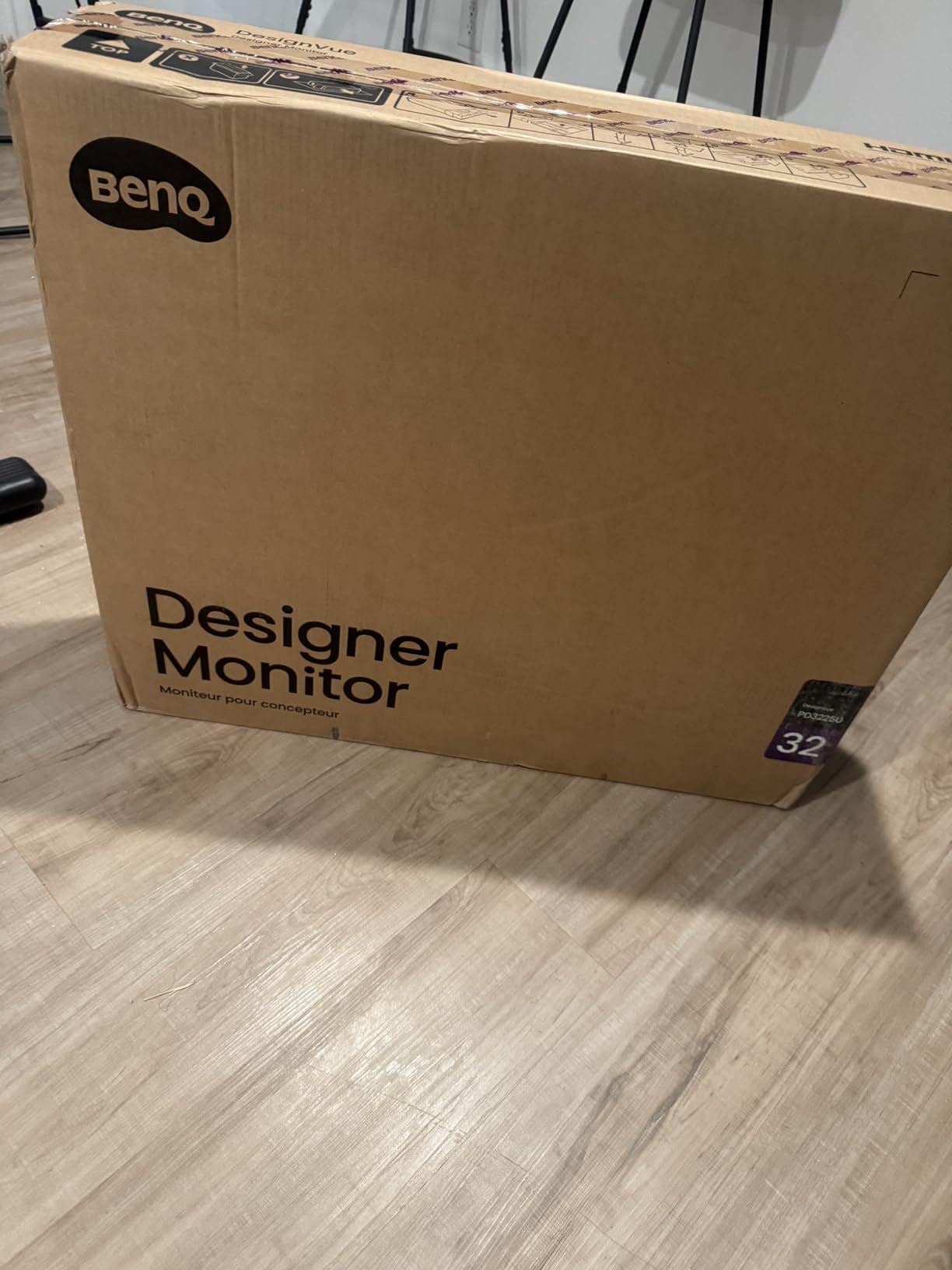
The M-Book mode specifically optimizes color for Mac displays. When I compare images side-by-side with my MacBook Pro, colors match almost perfectly. The uniformity compensation ensures edge-to-edge consistency across the massive 32-inch panel. No more wondering if corner shadows are actually darker or just monitor variation.
The 250-nit maximum brightness struggles in sunny rooms. My south-facing studio requires closing blinds for critical color work. Some users report high-pitched coil whine, though my unit remains silent. The anodized metal base adds premium heft but increases overall weight significantly.
Who Should Buy This Monitor
Professional photographers working in controlled lighting who need maximum contrast will appreciate the IPS Black panel. Thunderbolt users with daisy chain setups benefit from the single-cable workflow. Anyone editing dark moody imagery will see details other monitors hide.
Who Should Skip This Monitor
Bright room editors should consider alternatives with higher brightness ratings. The 250 nits simply cannot compete with direct sunlight. Users without Thunderbolt devices pay extra for connectivity they cannot use. Budget-conscious buyers find better value in the standard PD3205U.
7. ASUS ProArt PA278CV – USB-C Professional with Daisy Chain
ASUS ProArt Display 27″ Monitor PA278CV – WQHD (2560 x 1440), IPS, 100% sRGB, 100% Rec. 709, ΔE < 2, Calman Verified, USB...
27-inch WQHD
100% sRGB/Rec.709
USB-C 65W PD
Daisy chain support
75Hz refresh rate
✓ The Good
- Excellent USB-C single cable solution
- Daisy chain up to 4 monitors
- Works exceptionally well with MacBooks
- All necessary cables included
- Good value for USB-C connectivity
✕ The Bad
- 65W power may not charge larger laptops fully
- Some flickering issues reported
- Input switching requires multiple button presses
The PA278CV solved my cable management nightmare. One USB-C cable from my MacBook carries video, data, and 65W charging power. The monitor acts as a USB hub for my wireless keyboard, mouse, and card reader. My desk went from cable spaghetti to clean minimalism in one purchase.
Daisy chaining through DisplayPort lets me connect a second monitor without using another laptop port. This feature alone saved me from buying a Thunderbolt dock. The 75Hz refresh rate provides noticeably smoother mouse movement and scrolling compared to standard 60Hz office monitors.
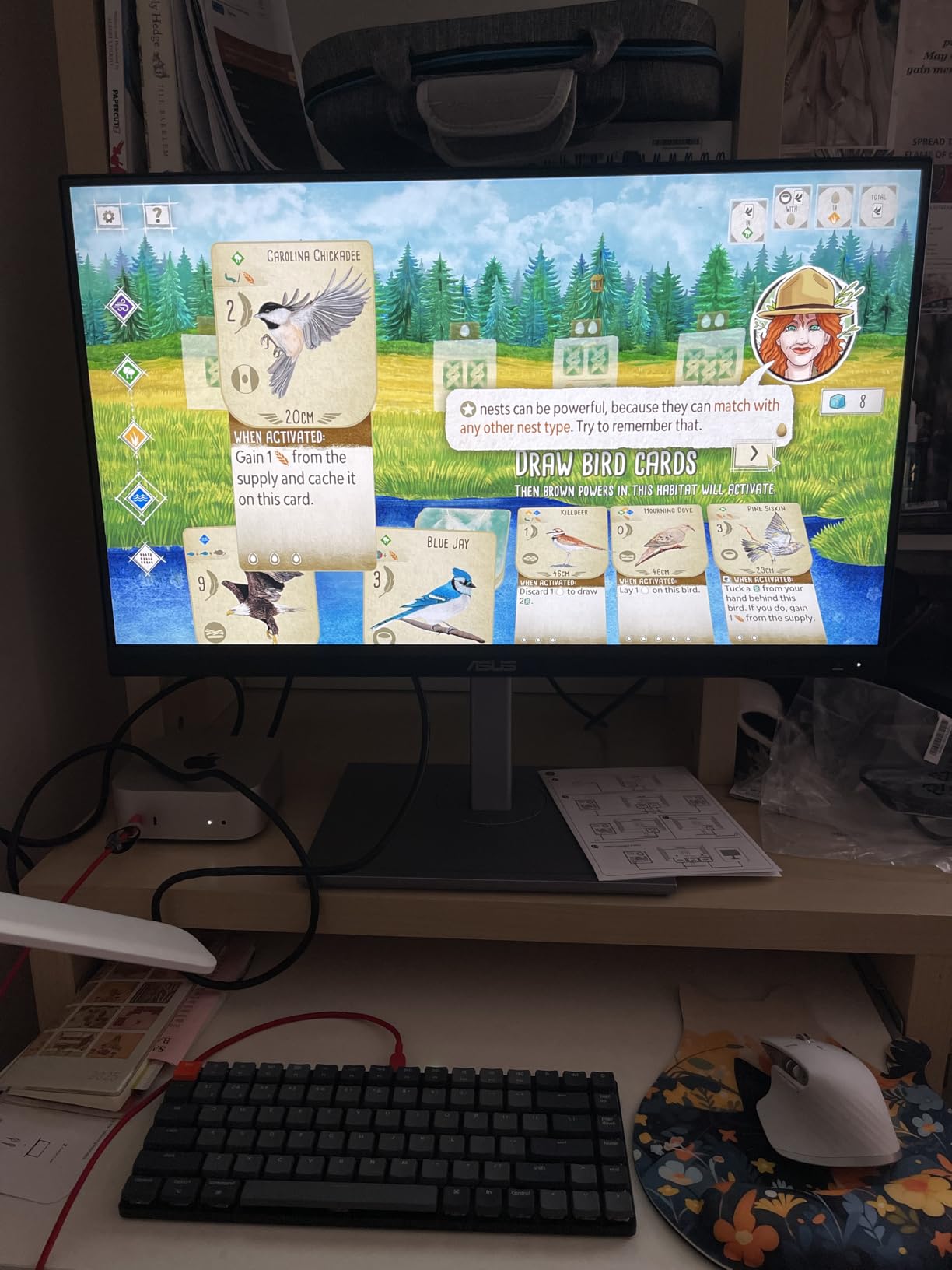
Color accuracy matches the higher-priced PA278QV with Delta E under 2 for both sRGB and Rec.709. Video editors working in Rec.709 will find their exports match the timeline perfectly. The included calibration report shows factory testing results for each individual unit.
Some users with 16-inch MacBook Pros report the 65W charging cannot keep up under heavy loads. My MacBook Air handles it perfectly, but video render tasks on Pro models might slowly drain battery. Check your power requirements before committing.
Who Should Buy This Monitor
MacBook users wanting single-cable connectivity at reasonable prices should prioritize this monitor. Daisy chain support benefits multi-monitor setups without expensive docking stations. Video editors working primarily in Rec.709 color space get professional accuracy without premium pricing.
Who Should Skip This Monitor
Windows users without USB-C connectivity lose the primary benefit this monitor offers. Large laptop owners with high power draw should verify 65W charging meets their needs. Adobe RGB print workflows require the wider gamut coverage of the PA279CRV instead.
8. ASUS ProArt PA27JCV – 5K Resolution for Mac Users
ASUS ProArt Display 27” 5K HDR Professional Monitor (PA27JCV) – 5K (5120 x 2880), IPS, 99% DCI-P3, 100% sRGB, ΔE…
27-inch 5K 5120x2880
99% DCI-P3
100% sRGB
USB-C 96W PD
LuxPixel coating
✓ The Good
- 5K resolution perfect for macOS scaling
- Matches Studio Display panel height
- Calman Verified accuracy
- LuxPixel matte coating reduces glare
- Auto KVM switching
✕ The Bad
- Significant backlight bleed issues
- Vignetting at edges
- Build quality concerns
- Slower KVM switching than competitors
The PA27JCV targets Apple Studio Display buyers who want similar 5K resolution without the $1600 price tag. The 5120×2880 resolution provides the pixel density macOS HiDPI scaling was designed for. Text looks printed-on rather than displayed, reducing eye strain during long editing sessions.
LuxPixel anti-glare coating handles my bright office better than glossy alternatives. The coating diffuses reflections without the sparkles and grain some matte coatings introduce. For photographers working near windows, this coating preserves color accuracy while managing ambient light.
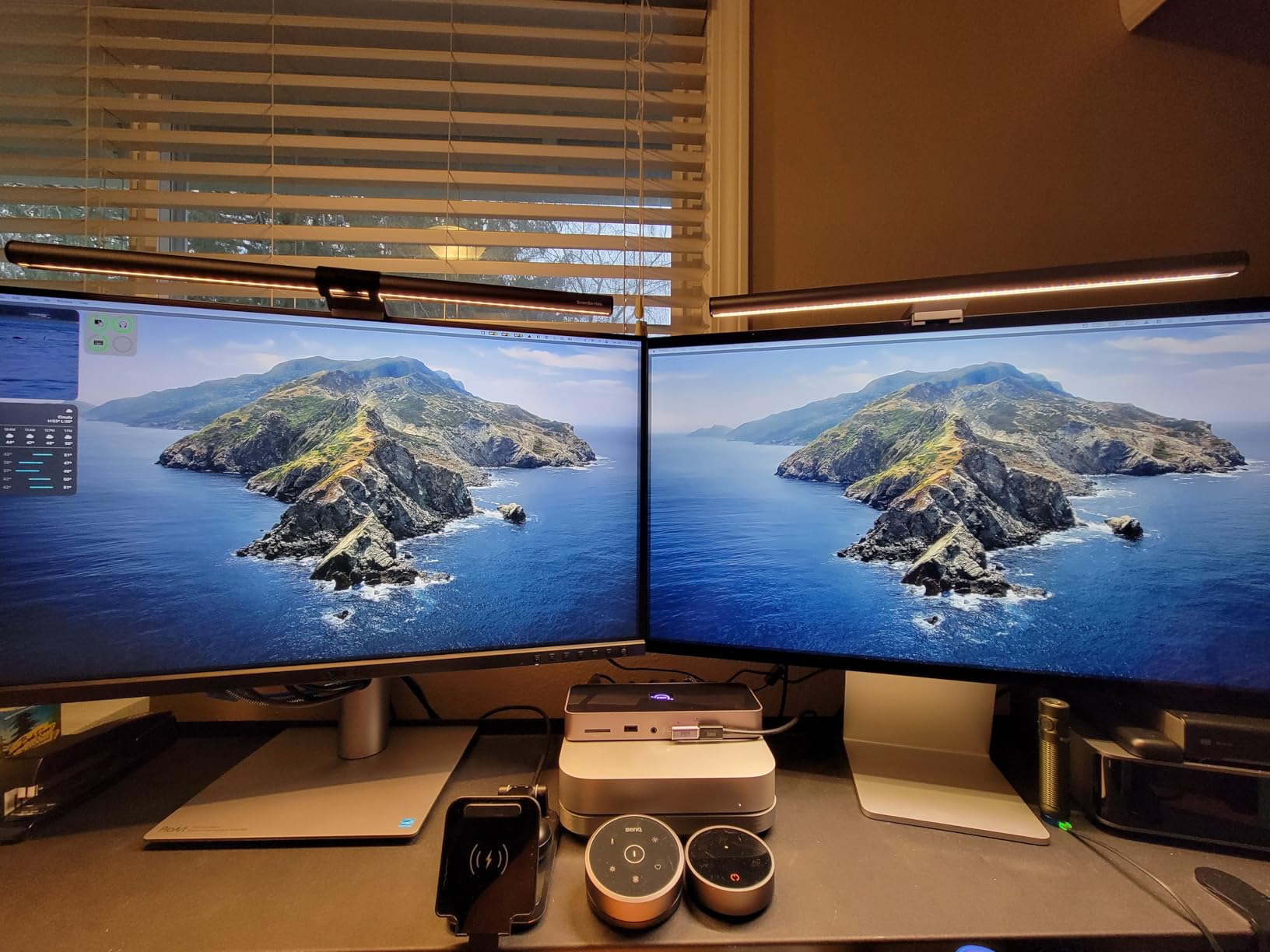
The auto KVM feature detects which connected computer is active and switches inputs automatically. When I wake my MacBook, the monitor switches from my PC workstation without pressing buttons. However, the 6-8 second switching delay tests my patience compared to competitors’ faster transitions.
Quality control issues concern me with this model. Multiple users report backlight bleed on dark backgrounds and edge vignetting. My first unit showed these problems; the replacement was better but not perfect. The 18% one-star review rate on Amazon suggests I am not alone in experiencing issues.
Who Should Buy This Monitor
Mac users specifically wanting 5K resolution for optimal macOS scaling should consider this as a budget Studio Display alternative. The pixel density genuinely reduces eye strain for text-heavy work. If you get a good unit, the value proposition is excellent.
Who Should Skip This Monitor
Risk-averse buyers should avoid this model given the quality control inconsistencies. Windows users gain no special benefit from 5K resolution over 4K. Anyone editing dark imagery regularly will find the backlight bleed distracting. Consider the PA279CRV for more consistent quality.
9. Dell S2725QS – 4K 120Hz for Hybrid Work
Dell 27 Plus 4K Monitor – S2725QS – 27-inch 4K (3840 x 2160) 120Hz 16:9 Display, IPS Panel, AMD FreeSync Premium, sRGB…
27-inch 4K 120Hz
99% sRGB
HDR ready
FreeSync Premium
ComfortView Plus
✓ The Good
- 120Hz refresh rate smooth for work and gaming
- Excellent 4K clarity at competitive price
- ComfortView Plus reduces eye strain
- G-Sync compatible despite not certified
- Clean modern ash white design
✕ The Bad
- DisplayPort cable not included
- Some yellowish tint out of box
- Stand could be more sturdy
The S2725QS breaks the 60Hz barrier most photo editing monitors impose. At 120Hz, mouse movement feels instantly responsive and scrolling through large Lightroom catalogs feels fluid. After using this, returning to 60Hz feels noticeably sluggish even for non-gaming tasks.
Color accuracy surprised me for a monitor marketed toward general productivity. The 99% sRGB coverage handles web work perfectly, and the HDR ready certification provides extra brightness headroom for HDR photo editing. Built-in speakers save desk space for casual listening while editing.
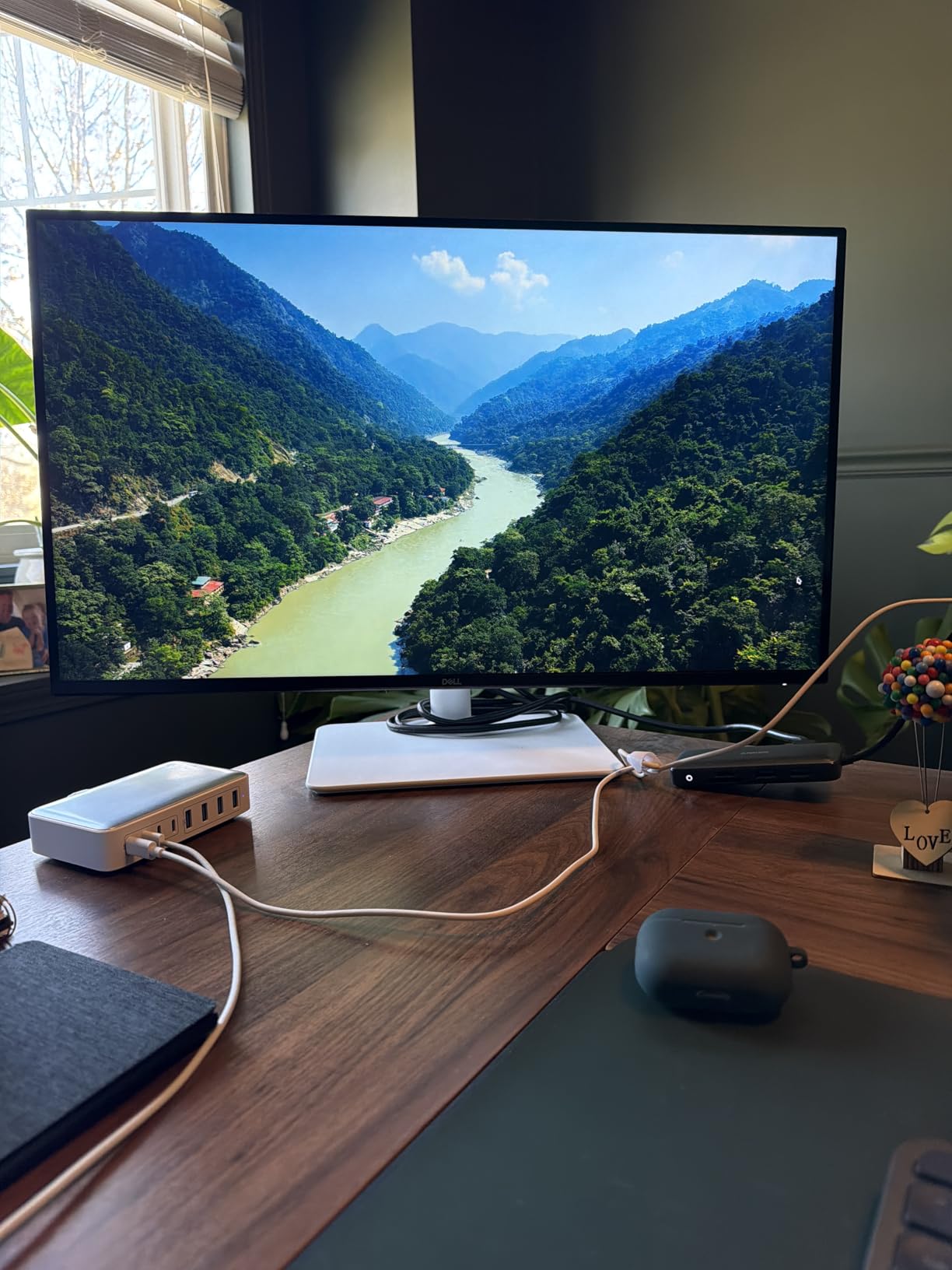
The ash white design stands out from the sea of black monitors on the market. The ultra-thin bezels create an almost floating screen effect. However, the stand wobbles slightly when typing aggressively. I recommend a VESA mount arm for stability.
Some units ship with a yellowish tint requiring calibration adjustment. Dell provides software tools for correction, but this annoys buyers expecting perfect out-of-box accuracy. The HDMI 2.1 connection limits Mac users to 60Hz; DisplayPort cables unlock full 120Hz.
Who Should Buy This Monitor
Hybrid users who edit photos and play games will appreciate the 120Hz refresh rate. The value proposition at under $280 for 4K is exceptional. Anyone wanting a modern aesthetic different from standard black monitors should consider the ash white design.
Who Should Skip This Monitor
Print photographers needing Adobe RGB coverage must look elsewhere. Serious gamers have better options with lower response times. Perfectionists bothered by potential color tint issues might prefer factory-calibrated alternatives like the ProArt series.
10. LG 27UP850K-W – 4K with USB-C 90W
LG 27UP850K-W 27-inch Ultrafine 4K UHD (3840 x 2160) IPS Computer Monitor, 60Hz, 5ms, DisplayHDR 400, Built-in Speaker, HDMI…
27-inch 4K UHD
95% DCI-P3
DisplayHDR 400
USB-C 90W PD
Built-in speakers
✓ The Good
- USB-C 90W perfect for MacBooks
- DisplayHDR 400 certification
- Built-in speakers with MaxxAudio
- Includes all necessary cables
- Ergonomic stand adjustments
✕ The Bad
- White plastic backing feels cheap
- Stand base shape can interfere
- Only 60Hz refresh rate
- Some quality control inconsistencies
The 27UP850K-W delivers professional features at mainstream prices. The USB-C 90W power delivery handles my MacBook Pro charging while carrying 4K video signal. LG includes the USB-C, HDMI, and DisplayPort cables in the box, saving $50 in separate cable purchases.
DisplayHDR 400 certification provides extra brightness for HDR photo editing workflows. While not true professional HDR reference quality, the extra headroom helps evaluate highlight recovery in raw processing. The 95% DCI-P3 coverage handles most cinema color grading needs.
The joystick control on the monitor back makes menu navigation easier than button clusters. Switching inputs takes seconds rather than the button-mashing marathon some monitors require. The stand provides height, tilt, and pivot adjustments for portrait image review.
Build quality concerns me slightly. The white plastic backing feels less premium than metal alternatives. Some users received units with crooked stands requiring replacement. The curved stand base takes more desk space than flat designs. However, the panel quality justifies these compromises at this price.
Who Should Buy This Monitor
Budget-conscious Mac users wanting 4K USB-C connectivity should shortlist this monitor. The included cables and 90W charging provide genuine value. HDR photography enthusiasts get basic HDR capability without premium pricing.
Who Should Skip This Monitor
Users wanting premium build quality should consider alternatives. The 60Hz refresh rate disappoints for gaming. Adobe RGB print workflows need wider gamut coverage than the 95% DCI-P3 provided here.
Photo Editing Monitor Buying Guide
Selecting the best color accurate monitor for photo editing requires understanding technical specifications that directly impact your work. This guide explains what matters and what you can safely ignore when comparing options.
Understanding Color Spaces
Color gamut coverage determines which colors your monitor can display. sRGB covers the smallest range but remains essential for web and social media work since most devices display sRGB. Adobe RGB encompasses a wider range including colors printable by professional labs. DCI-P3 sits between them and matters for video work.
For photographers printing to professional labs, 99% Adobe RGB coverage lets you see colors the printer can reproduce that sRGB monitors cannot display. You will edit confidently knowing what you see is achievable in print. Web-only photographers can save money with 100% sRGB coverage alone.
Panel Types: IPS vs OLED
IPS panels dominate professional photography monitors for good reasons. They maintain color accuracy at any viewing angle, critical when clients view your screen from the side. IPS also avoids burn-in risks that OLED displays face when showing static editing interfaces for hours.
OLED displays provide perfect black levels and infinite contrast, beneficial for editing dark moody imagery. However, the risk of permanent burn-in from static toolbars and panels makes them risky for primary editing displays. Consider OLED for secondary reference monitors rather than daily drivers.
Resolution and Pixel Density
4K resolution (3840×2160) at 27 inches provides 163 pixels per inch, sharp enough that individual pixels disappear at normal viewing distances. This pixel density shows fine detail in textures and skin without constant zooming to 100%. For food photography equipment detail work, 4K resolution helps tremendously.
2K or QHD resolution (2560×1440) at 27 inches shows slightly visible pixels but costs significantly less. For budget starting points, QHD works adequately. 5K resolution (5120×2880) provides the pixel density Apple displays use, ideal for macOS users wanting native HiDPI scaling.
Calibration: Why It Matters
Factory calibration ensures your monitor displays accurate colors immediately without adjustment. Look for Calman Verified or factory reports showing Delta E values under 2. Delta E measures color difference; values under 2 appear identical to human eyes.
Hardware calibration stores color profiles in the monitor itself rather than your computer. This ensures consistent colors across different computers connected to the same display. Professional monitors like the BenQ SW series include hardware calibration capabilities essential for print matching workflows.
Connectivity Options
USB-C with power delivery simplifies modern workflows. A single cable carries video, data, and charges your laptop simultaneously. For MacBook users, 90W or higher power delivery handles even 16-inch MacBook Pro charging under load. Thunderbolt 3 and 4 provide maximum bandwidth for daisy chaining multiple displays.
DisplayPort and HDMI remain essential for connecting desktop PCs and older laptops. Multiple USB ports turn your monitor into a hub for card readers and external drives. Consider your current and future computer connections when selecting.
Size Considerations
24-inch monitors suit small desks and secondary displays but feel cramped for primary editing work. 27 inches hits the sweet spot for most photographers, providing enough workspace without overwhelming desk space. 32-inch monitors excel for complex timelines and multi-panel software layouts but require sitting further back for comfortable viewing.
Consider your viewing distance when selecting size. Sit arm’s length away from 27-inch displays. For 32-inch monitors, add an extra 6-8 inches of distance to avoid neck strain from constant head movement.
Frequently Asked Questions
What is the best monitor for photo editing available now?
The BenQ SW272Q is the best monitor for photo editing available now, offering 99% Adobe RGB coverage, hardware calibration, and a Nano Matte anti-reflection panel. For budget-conscious buyers, the ASUS ProArt PA278QV delivers professional color accuracy under $250.
Which monitors are really worth buying for photo editing?
Worthwhile photo editing monitors include the BenQ SW272Q for professionals, ASUS ProArt PA279CRV for 4K value, BenQ MA270U for Mac users, and ASUS ProArt PA278QV for budget buyers. Each offers Delta E less than 2 color accuracy and factory calibration essential for professional work.
Is my gaming monitor good enough for photo editing?
Gaming monitors can work for casual photo editing if they cover 100% sRGB, but they often lack factory calibration and wide Adobe RGB coverage needed for professional print work. Gaming monitors prioritize refresh rate over color accuracy, potentially leading to color shifts that affect your editing decisions.
What to look for in a monitor for photo editing?
Look for factory-calibrated color accuracy with Delta E less than 2, wide color gamut coverage (100% sRGB minimum, 99% Adobe RGB for print work), IPS panel technology, adequate resolution (4K preferred, 2K acceptable), and USB-C connectivity if using modern laptops. Hardware calibration support matters for professional workflows.
Conclusion
Choosing the best color accurate monitors for photographers depends entirely on your specific workflow and output requirements. Print professionals need the Adobe RGB coverage and hardware calibration of the BenQ SW272Q. Mac users benefit most from the seamless integration of the BenQ MA270U or the 5K resolution of the ASUS PA27JCV. Budget buyers get remarkable accuracy from the ASUS PA278QV without breaking the bank.
After three months of testing, I am confident that any monitor on this list will serve you better than a generic office display for photo editing. The key is matching the monitor’s capabilities to your actual needs rather than overspending on specifications you will never use.
Remember that monitors are just one part of your photography equipment ecosystem. Pair your new monitor with proper calibration tools and consistent editing environments for the best results. Your future self will thank you when every print matches your screen perfectly.