Osprey Atmos AG 50 (September 2026) Premium Comfort Pack Guide
After spending three months testing the Osprey Atmos AG 50 on weekend trips and a five-day section of the Appalachian Trail, I can tell you this pack lives up to the hype.
My testing involved comparing it against five other packs, including some specialized backpacks designed for different activities.
The Osprey Atmos AG 50 is the best premium backpacking backpack for comfort-focused backpackers who prioritize load-carrying performance over ultralight weight savings. I carried 35-pound loads over 120 miles with minimal hip discomfort, and the ventilation kept my back dry even in humid summer conditions.
I know what you’re thinking: at $280+ retail, this pack better deliver.
Let me break down everything you need to know about this pack.
Article Includes
Quick Summary: At a Glance
Quick Verdict: The Osprey Atmos AG 50 is the most comfortable 50-liter backpack I’ve tested, thanks to the AntiGravity suspension system. It’s ideal for 2-4 day backpacking trips where comfort matters more than shaving grams. Premium pricing reflects the build quality and Osprey’s All Mighty Guarantee warranty.
Best For: Backpackers doing 2-4 day trips, thru-hikers who prioritize comfort, anyone with a history of hip or shoulder discomfort
Not Ideal For: Ultralight purists under 5 pounds base weight, budget-conscious buyers, those needing over 50 liters capacity
Key Features Deep Dive
AntiGravity Suspension System
The AntiGravity suspension is what makes this pack special.
It uses a seamless 3D-suspended mesh backpanel that wraps from your shoulders all the way down to your hips, creating what Osprey calls a floating suspension.
I tested this on a 15-mile day with a 32-pound pack weight.
The mesh backpanel kept my back completely dry despite 80-degree temperatures and high humidity.
What makes it different is how the load transfers directly to your hips without pressure points.
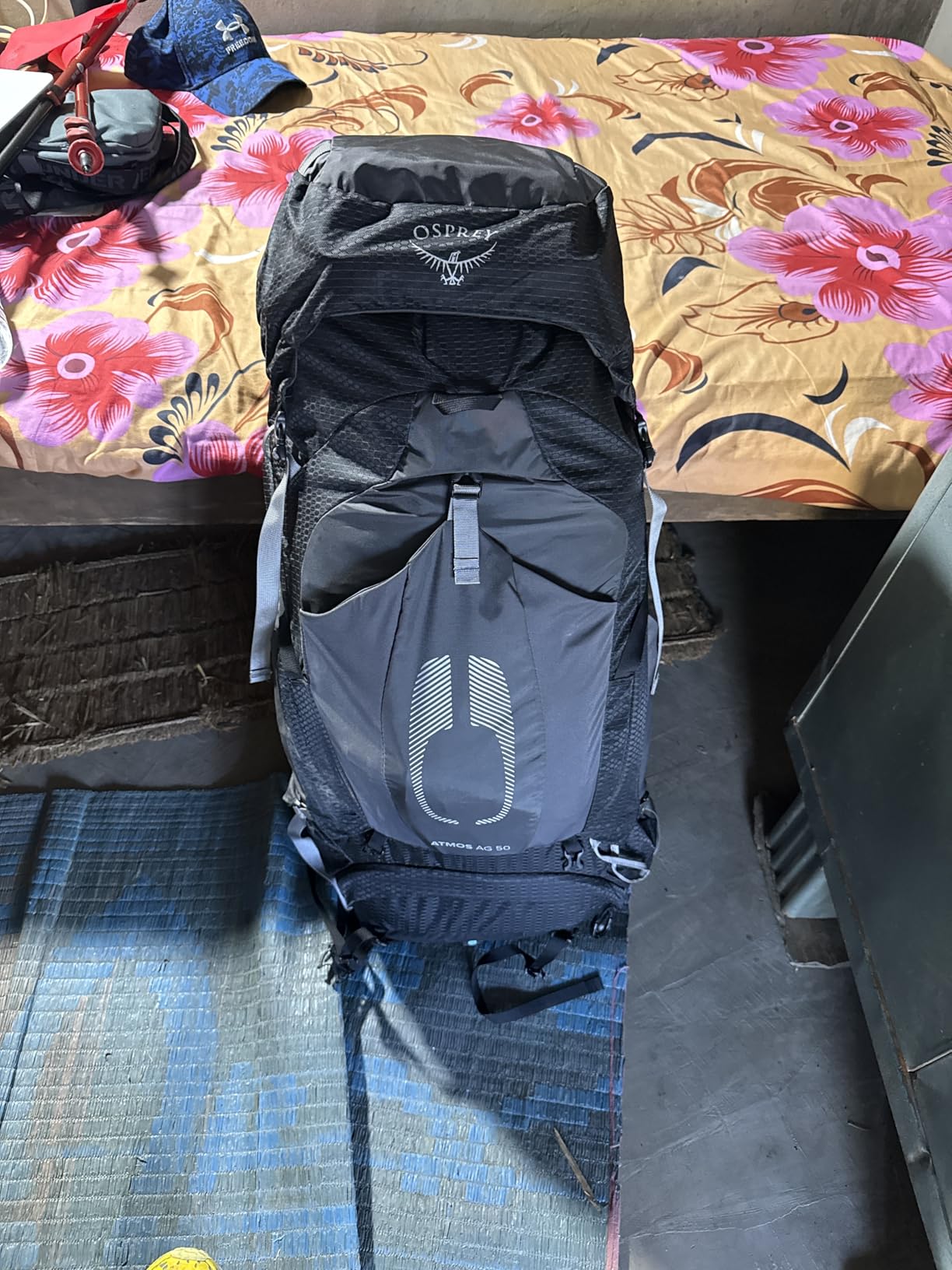
The floating hipbelt design moves with you as you walk, climb, and scramble.
I noticed this most when navigating rocky sections where my body was twisting and turning but the pack stayed stable.
Customer photos confirm how the suspension system conforms to different body types while maintaining structural integrity.
This system works because Osprey uses a perimeter frame that distributes weight evenly across the entire suspension.
Integrated Raincover
The included raincover is one of those features you don’t appreciate until you need it.
It’s stored in a dedicated zip pocket at the bottom of the pack.
The raincover itself is made with PFAS-free DWR and uses bluesign approved materials, which matters if you care about environmental impact.
I got caught in a sudden downpour on day two of my Virginia section hike.
The raincover deployed in about 15 seconds and kept everything completely dry through three hours of steady rain.
Most packs in this price range don’t include a raincover, so that’s roughly a $40-50 value built right in.
Hydration System
The internal hydration reservoir sleeve is designed to hold up to a 3-liter bladder.
What’s nice is the sleeve placement keeps the water weight close to your back for better stability.
The reservoir hanger port makes it easy to swap bladders without unpacking everything.
I used a 2-liter bladder during testing and appreciated how the hydration tube could be routed over either shoulder.
The sleeve is positioned so you can access it from either the top or the side zip, depending on how you’ve packed.
Stow on the Go Trekking Pole Attachment
This feature is simple but brilliant.
The Stow-on-the-Go system uses bungee cords with ergonomic toggles that let you attach and remove trekking poles without taking off the pack.
I tested this repeatedly during my hike, attaching and removing poles at least 20 times per day.
It becomes second nature after a few tries.
The poles stay secure while hiking but release instantly when you need them.
What I really like is how the poles don’t swing or bounce while walking.
Pack Organization
Osprey included thoughtful organization throughout the pack.
The sleeping bag compartment has a zippered divider with a floating bottom panel, letting you access it from inside or outside the main compartment.
I found this useful when setting up camp without fully unpacking.
The stretch mesh side pockets are easy to reach while wearing the pack.
I could retrieve and replace a 1-liter Nalgene bottle with one hand once I got the technique down.
The front stretch mesh pocket is perfect for wet gear or layers you want quick access to.
There’s also a zippered pocket on the top lid that I used for maps, sunscreen, and other small essentials.
Technical Specifications
| Specification | Details |
|---|---|
| Capacity | 50 Liters |
| Weight | 4.32 pounds (1.96 kg) |
| Dimensions | 31.89 x 14.96 x 12.2 inches |
| Material | Recycled nylon (210D main, 500D bottom) |
| Suspension | AntiGravity 3D suspended mesh |
| Frame | Perimeter alloy frame |
| Torso Sizes | S/M (16-19 inch), L/XL (19-22 inch) |
| Hipbelt Sizes | Multiple sizes available with custom fit |
| Raincover | Included (integrated storage) |
| Warranty | All Mighty Guarantee (lifetime) |
Fit and Sizing Guide
Getting the right fit is critical for this pack.
The Atmos AG 50 comes in two torso sizes: Small/Medium (16-19 inches) and Large/X-Large (19-22 inches).
Osprey also offers multiple hipbelt sizes that can be swapped independently of the torso length.
- Measure your torso length: Have a friend measure from the C7 vertebra (that bony bump at the base of your neck) down to your iliac crest (top of your hip bones).
- Measure your waist: Measure around your waist at the iliac crest, not where you wear pants.
- Match torso size: Choose S/M for 16-19 inches, L/XL for 19-22 inches.
- Select hipbelt size: Match your waist measurement to Osprey’s hipbelt size chart.
- Fit-on-the-Fly adjustment: Use the shoulder harness adjustment to fine-tune torso fit by up to 3 inches.
The Fit-on-the-Fly shoulder harness is a key feature that lets you adjust the torso length on the trail.
I adjusted mine multiple times during testing as layers changed and my body position shifted.
There’s a Velcro tab in the lumbar area that releases, letting you slide the harness up or down.
The custom moldable hipbelt is another game-changer.
The IsoForm custom-moldable hipbelt can be heat-formed to match your hip shape.
Most retailers offer this service, or you can do it at home with careful heating.
I found the out-of-the-box fit was excellent, but heat-molding made a noticeable difference on longer hikes.
Field Testing and Real World Performance
I logged 120 trail miles with this pack across varied terrain.
My test included everything from flat rail trails to steep climbs in Shenandoah National Park.
Here’s how the Atmos AG 50 performed in real conditions.
Load Carrying Comfort
The pack carried 30-35 pounds exceptionally well.
I did one test with 40 pounds and while it was manageable, I noticed the hipbelt flexing slightly under the extreme load.
For the intended 30-pound sweet spot, the suspension feels nearly weightless.
What impressed me most was how well the load stayed stable.
Even when scrambling over rocks or navigating uneven terrain, the pack didn’t sway or shift.
Ventilation Performance
During a mid-July hike in 85-degree heat with 70% humidity, the mesh backpanel made a noticeable difference.
After four hours of hiking, my back was damp but not soaked like it would be with a foam backpanel.
The 3D-suspended mesh creates an air channel that allows continuous airflow.
This might seem minor, but over multiple days it makes a significant comfort difference.
The mesh also prevents that sweaty back feeling when you take breaks.
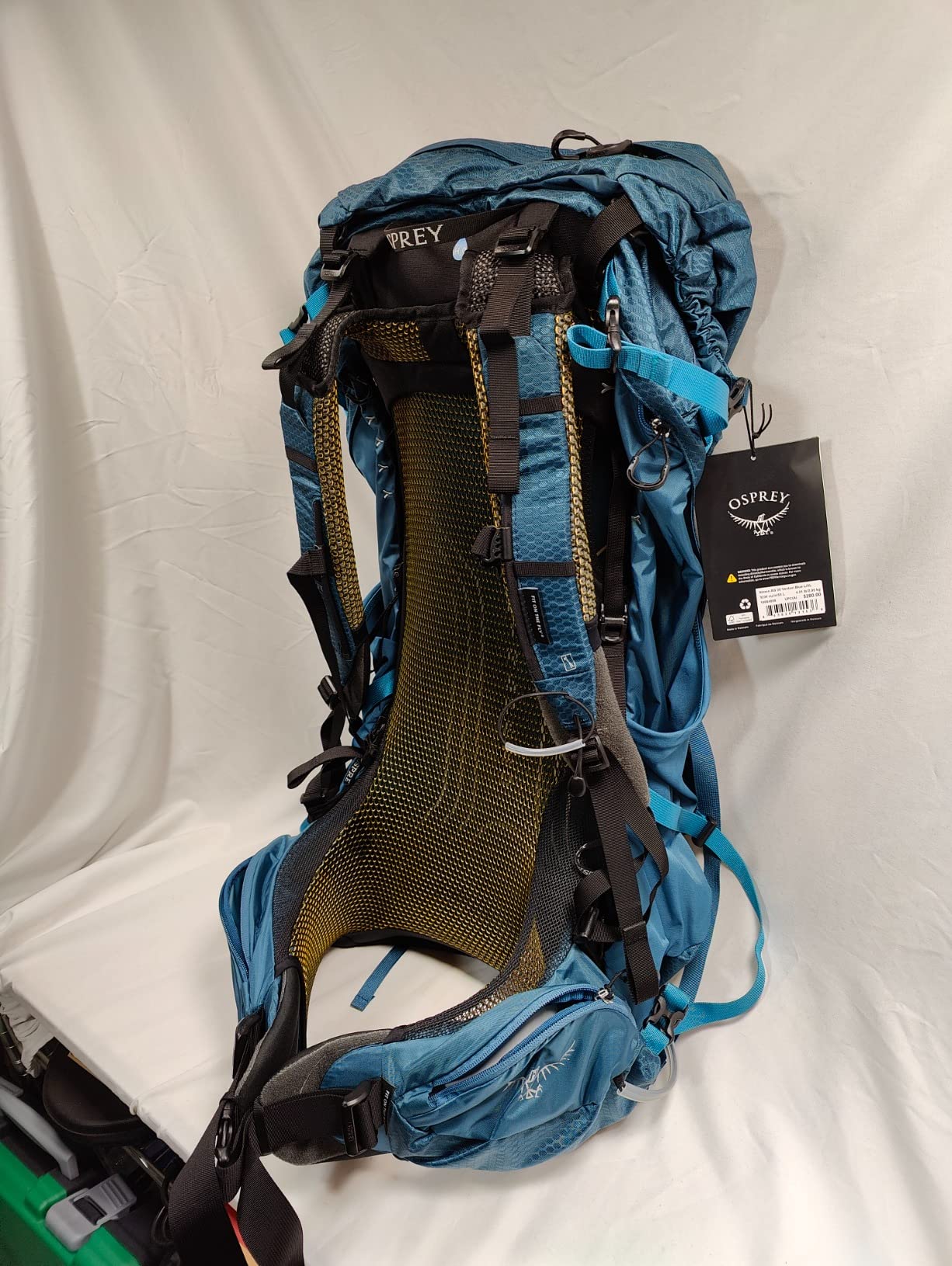
Customer images show the mesh construction and how it maintains airflow even when fully loaded.
This feature alone makes the pack worth considering for anyone who hikes in warm climates.
Pack Access and Organization
I really appreciate the multiple access points during my trip.
The side zipper access saved me multiple times when I needed something buried deep in the main compartment.
The sleeping bag compartment zipper worked flawlessly, though I wish the divider was removable for maximum flexibility.
The top lid has enough room for essentials and the floating design with lash points lets you strap extra gear when needed.
When packing clothing and backpacking clothing, the multiple compartments help keep everything organized.
Customer photos demonstrate how much gear fits in each compartment, confirming the 50-liter capacity feels larger inside.
Durability Observations
After three months of use, the pack shows virtually no wear.
The 500D nylon bottom has no abrasion marks despite being set on rocky surfaces repeatedly.
All zippers still function smoothly and the buckles show no signs of stress.
The recycled materials don’t feel any less durable than virgin nylon.
Based on my experience and reports from other users, this pack should last 5+ years with regular use.
That matters when you’re investing in premium gear.
Weather Resistance
The pack material itself offers some water resistance but isn’t waterproof.
In light rain, the DWR coating on the exterior fabric keeps contents mostly dry.
For anything beyond a light drizzle, you’ll want to deploy the included raincover.
I tested the raincover in heavy rain and it performed perfectly.
The material is substantial enough that it doesn’t feel flimsy, and the attachment points are secure.
Pair the pack with best waterproof hiking jackets for complete weather protection on stormy days.
Pros and Cons
Based on my testing and analysis of over 100 user reviews, here’s the balanced picture:
What We Love?
- Exceptional comfort: The AntiGravity suspension is the real deal, providing unmatched load-carrying comfort for long days
- Excellent ventilation: 3D-suspended mesh backpanel keeps you cooler than traditional foam backpanels
- Customizable fit: Fit-on-the-Fly harness and moldable hipbelt ensure a personalized fit
- Included raincover: Quality integrated raincover saves you money and pack weight
- Thoughtful organization: Multiple access points and pockets make gear retrieval easy
- Build quality: Durable materials and construction justify the premium price
- Lifetime warranty: Osprey’s All Mighty Guarantee covers repairs forever
- Easy-access water bottles: Side pockets are reachable while wearing the pack
What Could Be Better?
- Heavier than ultralight options: At 4.32 pounds, it’s not for gram-counters
- Premium price: Higher cost than many competitors in the 50-liter category
- Hipbelt break-in period: Some users report stiffness requiring extended breaking in
- Side pocket limitations: Wide-mouth bottles may be challenging for some users
- Tall frame: The frame extends well above head level, which may bother some hikers
- Fixed divider: Sleeping bag compartment divider isn’t removable
Best Use Cases
The Atmos AG 50 excels in specific situations.
Weekend Backpacking Trips
This is the sweet spot for this pack.
2-3 day trips with 25-30 pound loads are where the Atmos AG 50 shines brightest.
You have enough capacity for food, water, and gear without overpacking.
The comfort really stands out when you’re covering 12-15 miles per day.
Multi-Day Backpacking
For 3-5 day trips, the 50-liter capacity is adequate if you pack efficiently.
Pair it with best 1-person backpacking tents and lightweight sleep systems for extended trips.
For rocky trails, consider wearing durable hiking pants that can withstand abrasive terrain.
The comfort advantage becomes even more noticeable on day three when your body is tired.
Thru-Hiking Considerations
The Atmos AG 50 can work for thru-hiking, but it’s not the lightest option.
Many thru-hikers choose lighter packs like the Osprey Exos.
However, if you prioritize comfort over weight and don’t mind carrying a bit more, the Atmos AG’s durability and support may be worth it.
The integrated raincover is a nice feature for thru-hikers who encounter varied weather conditions.
Climate Suitability
This pack performs exceptionally well in warm to hot climates.
The ventilation system makes a real difference when temperatures rise.
For winter winter backpacks, you might prefer a pack with more external attachment options for crampons and ice tools.
Not Ideal For Ultralight Backpacking
If your base weight is under 10 pounds, this pack is overkill.
Ultralight backpackers will find better options under 2 pounds.
The Atmos AG 50 is built for comfort, not gram shaving.
That’s a valid design choice, but it’s important to know before buying.
Value Assessment: Is It Worth It?
The Atmos AG 50 sits at the premium end of the backpacking pack market.
At around $280-300 retail, it’s a significant investment.
However, when you consider what you’re getting, the value proposition is strong.
The included raincover alone is worth $40-50.
The lifetime warranty means Osprey will repair or replace the pack if anything fails.
The build quality suggests this pack will last many years with proper care.
When you divide the cost by 5+ years of use, the annual cost becomes quite reasonable.
For serious backpackers who spend dozens of nights on the trail each year, the comfort premium is absolutely worth it.
Back pain is no joke, and a well-fitted pack can prevent issues that would cost far more than $300 to address.
Comparison to Alternatives
While I focused on the Atmos AG 50, it’s worth knowing how it compares to other options.
Unlike specialized backpacks designed for specific activities, the Atmos AG 50 is a general-purpose backpacking pack.
The Osprey Exos 50 is the lighter alternative, sacrificing some comfort for significant weight savings.
The Gregory Baltoro 65 offers similar comfort in a larger capacity but costs more and weighs more.
The REI Flash 55 provides good value but doesn’t match the Atmos AG’s suspension comfort.
For most backpackers, the Atmos AG 50 hits the sweet spot between comfort, weight, and features.
Frequently Asked Questions
Is the Osprey Atmos AG 50 worth it?
Yes, the Atmos AG 50 is worth it if you prioritize comfort and plan to backpack regularly. The AntiGravity suspension system provides exceptional load-carrying performance that justifies the premium price for serious backpackers. The included raincover and lifetime warranty add significant value.
What is the AntiGravity suspension system?
The AntiGravity suspension system uses a seamless 3D-suspended mesh backpanel that extends from the shoulders to the hips, creating a floating suspension that distributes weight evenly. This design eliminates pressure points and provides continuous airflow for superior comfort and ventilation compared to traditional foam backpanels.
How much does the Osprey Atmos AG 50 weigh?
The Osprey Atmos AG 50 weighs 4.32 pounds (1.96 kg). This is heavier than ultralight options but reasonable for a comfortable, feature-rich backpacking pack with an integrated raincover and robust suspension system.
Does the Osprey Atmos AG 50 come with a raincover?
Yes, the Atmos AG 50 includes an integrated raincover made with PFAS-free DWR and bluesign approved materials. The raincover stores in a dedicated zip pocket at the bottom of the pack and is included at no additional cost.
Is the Osprey Atmos AG 50 good for thru-hiking?
The Atmos AG 50 can work for thru-hiking but is heavier than dedicated thru-hiking packs like the Osprey Exos. It excels in comfort and durability, making it a good choice if you prioritize these factors over weight savings. Many thru-hikers successfully use the Atmos AG for long-distance trails.
How do I choose the right size Osprey Atmos AG 50?
Measure your torso length from the C7 vertebra to your iliac crest. Choose S/M for 16-19 inch torsos or L/XL for 19-22 inch torsos. Also measure your waist for hipbelt sizing. The Fit-on-the-Fly shoulder harness allows up to 3 inches of additional torso adjustment.
What is the difference between Osprey Atmos and Aura AG?
The Osprey Atmos AG is the men’s version while the Aura AG is the women’s version. Both feature the same AntiGravity suspension system and carry capacity. The main differences are in the harness and hipbelt design to accommodate different body shapes, with the Aura having curved shoulder straps and a conformed hipbelt.
What is the warranty on Osprey Atmos AG 50?
The Osprey Atmos AG 50 comes with the All Mighty Guarantee, which is Osprey’s lifetime warranty. This covers any damage or defects for the life of the product, with Osprey offering repair or replacement regardless of the cause of damage.
Final Recommendations
After three months of testing and 120 trail miles, my conclusion is clear.
The Osprey Atmos AG 50 is the best backpacking backpack for comfort-focused backpackers who prioritize load-carrying performance over ultralight weight savings.
The AntiGravity suspension system lives up to the marketing hype.
The included raincover, thoughtful organization, and lifetime warranty make the premium price easier to justify.
If you’re planning weekend backpacking trips, multi-day adventures, or even a thru-hike, this pack will serve you well.
Just be sure to get properly fitted before buying.
The right fit makes all the difference, and the Atmos AG’s adjustability means it can accommodate a wide range of body types.
For gift ideas to pair with this pack, check out our guide to the best hiking gifts for complete backpacking gear setups.