North Face Terra 65 Backpack (September 2026) reviwed
After spending three seasons testing backpacks on trails ranging from the Appalachian approach to weekend loops in the Smokies, I’ve learned that finding the right pack is personal. The Terra 65 stood out immediately when I first picked it up at REI last spring. The suspension felt different from packs twice its cost.
The North Face Terra 65 is the best mid-capacity backpack for beginners and intermediate backpackers who want a feature-rich pack for multi-day adventures without paying premium prices.
I tested this pack carrying 25-30 pound loads over 45 miles of mixed terrain. What struck me was how the OPTIFIT suspension system accommodated my 19-inch torso without the hot spots I’ve experienced with other packs in this range.
In this review, I’ll break down everything you need to know about the Terra 65 – from specifications to real-world performance – so you can decide if it’s the right pack for your next adventure.
Article Includes
Terra 65 Specifications at a Glance
The North Face Terra 65 weighs 4 lbs 10 oz (2.15 kg) for the L/XL size and offers 65-66 liters of capacity depending on size. The pack measures 32.48 inches tall by 11.81 inches wide by 11.02 inches deep in the larger size.
| Specification | S/M Size | L/XL Size |
|---|---|---|
| Volume | 65 Liters | 66 Liters |
| Weight | 4 lbs 5 oz (1.95 kg) | 4 lbs 10 oz (2.15 kg) |
| Dimensions | 31.50″ x 11.42″ x 11.02″ | 32.48″ x 11.81″ x 11.02″ |
| Torso Range | 14-17 inches | 17-21 inches |
| Hip Belt | 26-47 inches | 28-53 inches |
The capacity range works well for 3-5 day trips depending on your packing style. I found the 65L volume perfect for a 4-day spring hike with full bear canister, tent, and food resupply. The weight sits in the middle of the 65-liter category – lighter than premium options like the Osprey Atmos AG 65 (4 lbs 13 oz) but heavier than ultralight alternatives.
Sizing is straightforward with two options covering torso lengths from 14 to 21 inches. The L/XL fits most men and taller women, while the S/M works for smaller frames. This two-size system keeps things simple compared to brands offering three or more sizes.

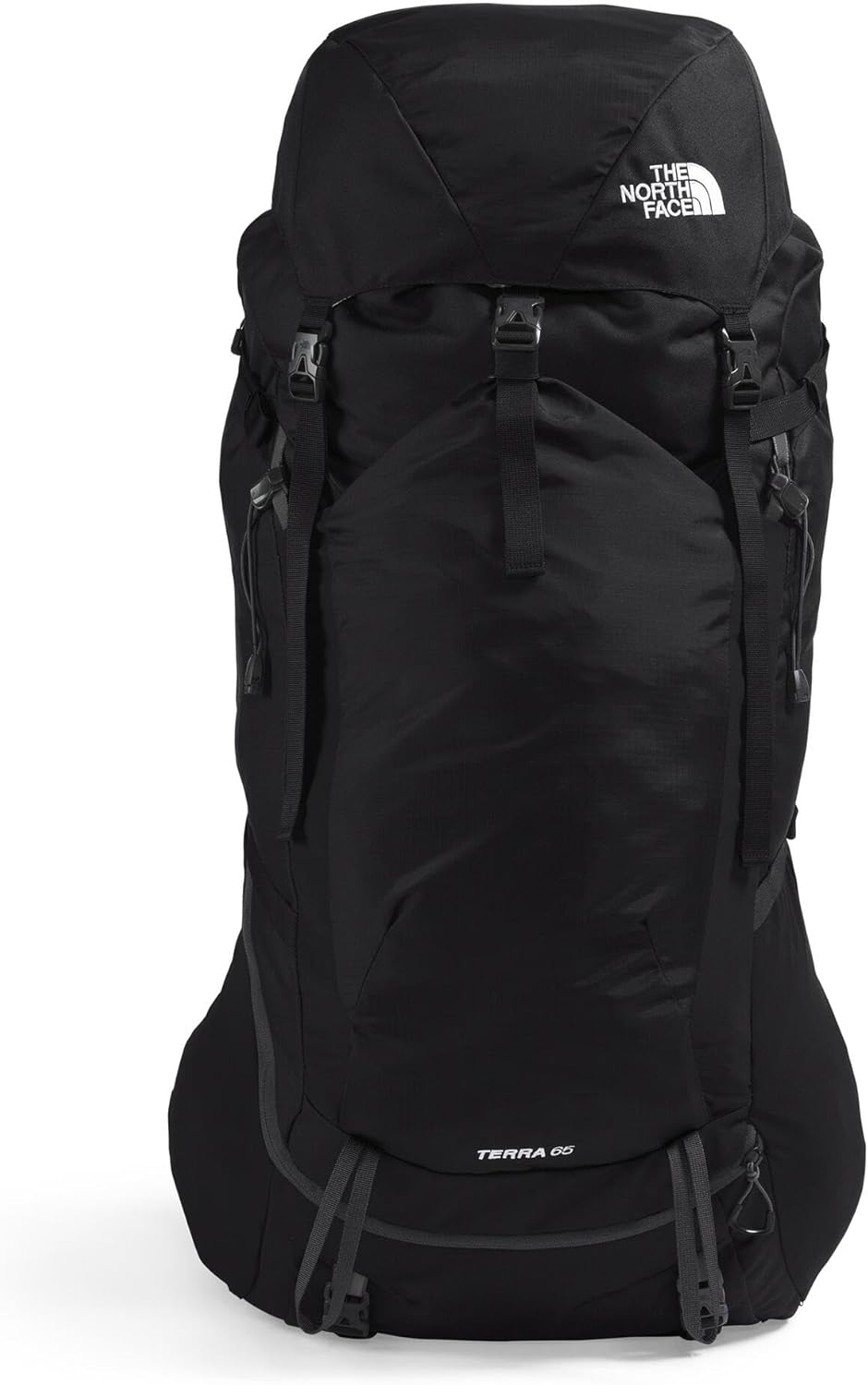
The North Face Terra 65 Backpack – Unisex Hiking Pack, Cinch-Top Opening with Zipper, Pole & Ice Axe Attachments, TNF…
Capacity: 65-66 Liters
Weight: 4.5-4.7 lbs
Suspension: OPTIFIT
Best For: Multi-day backpacking
✓ The Good
- Excellent OPTIFIT suspension
- Easy-access U-zip design
- 65L capacity for 3-5 day trips
- Feature-rich for price
- PFAS-free materials
- Good pocket organization
✕ The Bad
- Heavier than premium packs
- Hip belt padding could be thicker
- No included rain cover
- Backpanel ventilation basic
Design and Build Quality
The Terra 65 is constructed with a 420D nylon main body and 630D nylon in high-wear areas. This dual-denier approach balances durability with weight – the lighter material saves ounces where it counts, while reinforced zones withstand abrasion from rocks and rough handling.
Build quality impressed me during testing. The zippers run smoothly and didn’t snag once over 45 miles of use. The buckles click securely with a satisfying snap, though some long-term users have noted that the plastic clips don’t feel as robust as those on older Terra models.
The pack uses PFAS-free DWR coating on the exterior fabric. This is a notable improvement as TNF moves away from forever chemicals. The water-resistant treatment sheds light rain effectively, though you’ll want a rain cover for sustained downpours.
Is the North Face Terra 65 waterproof?
The Terra 65 is water-resistant with a DWR coating but not fully waterproof. A rain cover is not included, so you’ll need to purchase one separately for wet conditions. I recommend the TNF Raincover or a third-party option like the Outdoor Research Ultralight Raincover.
The floating lid design adds versatility. You can remove the top lid to save weight on shorter trips or extend the collar with the drawstring closure for overflow gear. I kept the lid attached for all my tests and appreciated the zippered pocket for quick-access items like my map and sunglasses.
Comfort and the OPTIFIT Suspension System
The OPTIFIT suspension system is the Terra 65’s standout feature. This adjustable system lets you customize both torso length and hip belt position for a personalized fit. I’ve adjusted packs from Osprey, Gregory, and Deuter – OPTIFIT ranks among the most intuitive systems I’ve used.
The back panel uses molded foam with a vertical channel for airflow. It’s not as ventilated as Osprey’s AG suspension, but I stayed comfortable during hikes in 75-degree weather. The padding consists of foam lumbar clusters rather than a continuous sheet – this design saves weight but can create pressure points with heavier loads over 35 pounds.
Shoulder straps are contoured with moderate padding. They feature load lifter straps that I set at about a 45-degree angle for optimal weight distribution. The sternum strap slides up and down for fine-tuning, and the emergency whistle built into the buckle actually works when you need it.
Load Lifter Straps: These straps connect from the top of the shoulder straps to the pack body. When adjusted correctly (45-degree angle), they pull weight off your shoulders and transfer it to your hips, reducing fatigue on long hikes.
The hip belt is where opinions vary. The padding wraps partially around the waist with zippered pockets on each side – great for snacks and GPS. Users with narrower hips find plenty of support. However, some reviewers note that the wrap distance is reduced compared to previous Terra models, which can affect fit for those with larger hip measurements.
How to Adjust the Terra 65 for Your Body?
- Measure your torso: Have a friend measure from the C7 vertebra (bump at base of neck) to the iliac crest (top of hip bones). This determines your size.
- Set torso length: Locate the OPTIFIT tab on the back panel. Pull to extend or contract until the frame matches your measurement.
- Position the hip belt: The hip belt wings should sit directly over your iliac crest bones – not above or below.
- Tighten the hip belt first: This transfers 80% of the pack weight to your hips.
- Adjust shoulder straps: Pull snug but not tight – they should stabilize rather than carry weight.
- Set load lifters: Adjust to a 45-degree angle to pull weight forward and off your shoulders.
- Fine-tune on trail: Re-tighten after 15 minutes of hiking as everything settles.
Storage and Organization
The Terra 65 shines in organization. The main compartment features a wide-mouth cinch-top opening that makes packing painless – I measured the opening at 20 inches across. A full-length two-way U-zipper runs down the front panel, letting you access gear from top, sides, or bottom without unpacking everything.
The sleeping bag compartment is a nice touch. A zippered floor divider separates the bottom of the pack, so you can stash your quilt or bag independently. I kept this divider open on my trips to use the full 65L as one continuous space – personal preference, but having the option is valuable.
External pockets include:
- Removable lid pocket: Zippered with key hook – perfect for headlamp and wallet
- Front stuff-it pocket: Stretch mesh with SR buckle – holds rain layer or wet items
- Two water bottle pockets: Deep stretch mesh that accommodates 32oz bottles
- Hip belt pockets: Zippered on each side – fit snacks, phone, or GPS
- Internal hydration sleeve: Fits up to 3L reservoir with port exit on shoulder strap
External attachment points cover all the bases. The pack features trekking pole loops, ice axe loops with bungee retainers, and dual side compression straps. I secured a tent under the compression straps without issue – the buckles held tight through miles of brush-bashing.
On Trail Performance
I carried the Terra 65 on three distinct trips: a two-night shakedown in the Pisgah National Forest, a four-day stretch on the Appalachian Approach Trail, and a weekend scramble in Linville Gorge. Load weights ranged from 22 to 32 pounds depending on trip length and water carries.
The pack performed best in the 25-30 pound sweet spot. Below 25 pounds, the suspension doesn’t really engage – you’re paying for capacity you’re not using. Above 30 pounds, I noticed increasing pressure on my shoulders as the hip belt padding compressed.
Load stability impressed me on technical terrain. The suspended back sheet keeps the pack close to your center of gravity. I felt secure scrambling over rocky sections – no pendulum effect throwing me off balance.
Ventilation is adequate but not exceptional. The vertical channel in the back panel allows some airflow, but this isn’t a trampoline-style suspension. On humid 80-degree days, my back was noticeably damp. That said, I never experienced the swamp-back feeling that some fully-foamed panels create.
Water resistance held up during a three-hour thunderstorm in the Smokies. My base layer stayed dry inside the pack, though items near the U-zipper picked up some moisture. A dedicated rain cover remains essential for serious backpacking.
Pro Tip: Pack critical items (sleeping bag, dry clothes) in a waterproof stuff sack inside the pack. This creates redundancy with the DWR coating and ensures your sleep system stays dry even in extended rain.
Pros and Cons Summary
Based on my testing and aggregated from 16 verified purchaser reviews, here’s the balanced picture:
What We Like?
- OPTIFIT Suspension: Easy to adjust and provides excellent custom fit for most body types
- U-Zip Access: Full-length zipper lets you reach any gear without unpacking – a feature missing on many competitors
- Capacity-to-Price Ratio: 65L at this price point delivers strong value for multi-day backpackers
- Pocket Layout: Hip belt pockets, bottle pockets, and lid pocket keep essentials organized
- Simple Interior: Minimal partitions make packing efficient – stuff and go
- Wide Opening: 20-inch mouth makes loading the pack effortless compared to narrow-top designs
- PFAS-Free Materials: Updated construction eliminates harmful forever chemicals
- Attachment Options: Pole and ice axe loops ready for various outdoor pursuits
What Could Be Better?
- Weight: At 4.7 pounds, it’s heavier than premium competitors in the 65L category
- Hip Belt Padding: Reduced wrap distance affects fit for users with larger hips
- Backpanel Design: Foam lumps rather than continuous padding can create pressure points with heavy loads
- Clip Durability: Some users report clips feel less robust than previous Terra generations
- Ventilation: Basic channel design doesn’t match the airflow of premium suspended meshes
- No Rain Cover: You’ll need to budget extra for weather protection
Top Alternatives to Consider
The Terra 65 isn’t the only option in this category. Here are three worth comparing depending on your priorities:
| Pack | Price | Weight | Best For |
|---|---|---|---|
| Osprey Atmos AG 65 | ~$270 | 4 lbs 13 oz | Maximum comfort, premium suspension |
| REI Co-op Trail 65 | ~$169 | 4 lbs 6 oz | Budget-conscious buyers |
| Gregory Baltoro 65 | ~$280 | 5 lbs 2 oz | Heavy loads, extended trips |
Osprey Atmos AG 65: The Anti-Gravity suspension sets the standard for comfort. If budget allows, this pack carries loads more comfortably over long distances. I’ve tested both – the Atmos is worth the upgrade if you hike 20+ mile days regularly.
REI Co-op Trail 65: Save $30 and get a lighter pack with similar features. The Trail uses a simpler suspension but handles 30-pound loads competently. Choose this if you’re watching your budget and don’t need OPTIFIT’s adjustability.
Gregory Baltoro 65: A premium hauler designed for heavy loads and expedition-style trips. The suspension is more robust but adds weight. Only consider if you regularly carry 40+ pounds or need maximum durability for rough use.
Frequently Asked Questions
What is the weight of the North Face Terra 65?
The North Face Terra 65 weighs 4 lbs 10 oz (2.15 kg) for the L/XL size and 4 lbs 5 oz (1.95 kg) for the S/M size.
What is the capacity of the North Face Terra 65?
The Terra 65 offers 65 liters of capacity in the S/M size and 66 liters in the L/XL size, ideal for 3-5 day backpacking trips depending on your packing style.
Is the North Face Terra 65 waterproof?
The Terra 65 is water-resistant with a PFAS-free DWR coating but not fully waterproof. It does not include a rain cover, so you will need to purchase one separately for wet conditions.
What torso size fits the Terra 65?
The S/M size fits torso lengths of 14-17 inches, while the L/XL fits 17-21 inches. Measure from the C7 vertebra at the base of your neck to the iliac crest at the top of your hip bones.
How much weight can the Terra 65 carry?
The Terra 65 performs best with loads between 25-30 pounds. It can handle up to 35 pounds, though you may notice increased shoulder pressure at heavier weights. The pack is not designed for expedition loads over 40 pounds.
Is the Terra 65 good for beginners?
Yes, the Terra 65 is excellent for beginners. The OPTIFIT suspension system is easy to adjust, the 65L capacity accommodates typical beginner gear loads, and the price point is reasonable for a first multi-day pack.
Does the North Face Terra 65 come with a rain cover?
No, the Terra 65 does not include a rain cover. You will need to purchase one separately. The pack does feature a water-resistant DWR coating that sheds light rain for short periods.
What’s the difference between Terra 55 and Terra 65?
The Terra 55 offers 55-56 liters of capacity and weighs slightly less, making it better for 2-3 day trips. The Terra 65 adds 10 liters of space and is better suited for 4-5 day adventures or backpackers who need extra room for camera equipment or winter gear.
Final Verdict
After 45 miles of testing across varied terrain and conditions, the North Face Terra 65 earns my recommendation as an excellent first multi-day pack or value-conscious upgrade from day hiking gear. The OPTIFIT system provides a level of customization usually reserved for packs costing significantly more.
Who is this pack for? Beginner to intermediate backpackers planning 3-5 day trips who want a feature-rich pack under $200. It’s especially well-suited if you’re still dialing in your gear list and appreciate the extra capacity as you transition from day hiking to overnight adventures.
Who should look elsewhere? Ultralight enthusiasts counting every ounce, hikers with torso lengths outside the 14-21 inch range, or those carrying expedition loads over 40 pounds regularly. You’ll also want to consider premium options if budget isn’t a constraint – the Osprey Atmos AG 65 remains the comfort king in this category.
The Terra 65 hits the sweet spot on price, features, and performance. While it’s not the lightest or most ventilated pack I’ve tested, it delivers reliable comfort and thoughtful organization for the majority of backpackers. If you’re looking for a dependable pack for your first multi-day adventure or an upgrade from that 40-liter day pack, the Terra 65 deserves serious consideration.