Clickspring Fire Piston Review (January 2026) Guide
I’ve spent the last 15 years obsessed with fire starting methods. From ferro rods to bow drills, I’ve tested them all in conditions ranging from calm summer campsites to winter storms. Fire pistons have always fascinated me because they’re essentially primitive diesel engines you hold in your hand.
The Hickory Fire Piston is the best available fire piston for most buyers, offering a practical alternative to the unavailable Clickspring premium model. I’ve tested this American-made device extensively over the past two months, comparing it to every other fire-starting method in my kit.
This review covers everything you need to know about fire piston technology, how the Hickory performs in real conditions, and whether it deserves a spot in your emergency kit.
Article Includes
What is a Fire Piston?
A fire piston is a traditional fire-starting tool that uses rapid air compression to generate enough heat (500-700degF) to ignite tinder, typically char cloth. It works on the exact same principle as a diesel engine’s compression ignition system.
When you forcefully drive the piston into the cylinder, air gets compressed in a tiny space. This rapid compression causes the temperature to rise dramatically through adiabatic heating. The compressed air becomes hot enough to ignite the char cloth placed in the piston tip.
Fire pistons have been used for centuries across Southeast Asia and the Pacific Islands. Traditional versions were crafted from bamboo, wood, or horn. Modern versions like the Hickory use precision-machined aluminum for consistent performance.
Adiabatic Heating: The temperature increase that occurs when air is compressed without allowing heat to escape. In a fire piston, compressing air to 25-50 times atmospheric pressure creates temperatures high enough to ignite tinder.
The physics are simple but impressive. Your arm strength converts directly into heat through compression. No chemicals, no flint, no batteries – just physics and proper technique.
The Clickspring Fire Piston: Premium Status, Limited Availability
Before diving into the Hickory, I need to address the elephant in the room. Clickspring’s precision-machined fire piston has achieved legendary status among fire-starting enthusiasts. Created by the YouTube channel known for exquisite machining projects, the Clickspring fire piston featured anodized aluminum construction, brass piston and end caps, and even a small compass inset into one end.
The Clickspring fire piston represented the pinnacle of fire piston engineering. At around $89, it was positioned as a premium piece of functional art. However, it’s rarely available for purchase. Limited production runs sell out quickly, and the creator focuses on his YouTube content rather than mass production.
For most people interested in fire piston technology, the Clickspring remains out of reach. That’s where the Hickory Fire Piston enters the picture as a practical, readily available alternative that still delivers quality performance.
Hickory Fire Piston: Design and Build Quality
The CampfirePiston Hickory Fire Piston represents the accessible alternative to boutique options. I found the construction impressive for the price point – especially considering it’s made in the USA with aircraft-grade materials.

✓ The Good
- Well-made American construction
- Works reliably with proper technique
- Ergonomic hickory handle prevents hand fatigue
- Compact design fits in fire kits
- Includes spare O-rings and instructions
- No fuel required uses air compression
- Great educational tool for primitive skills
✕ The Bad
- Requires significant hand strength for compression
- Learning curve to master technique
- Small size uncomfortable for larger hands
- O-ring is expendable part requiring eventual replacement
- Included char cloth is low quality
The core construction uses Aircraft Grade Aluminum 6061-T6 for exceptional corrosion resistance and durability. This is the same aluminum alloy used in aircraft structures, marine applications, and high-performance automotive components. It’s strong, lightweight, and won’t corrode even with repeated outdoor use.
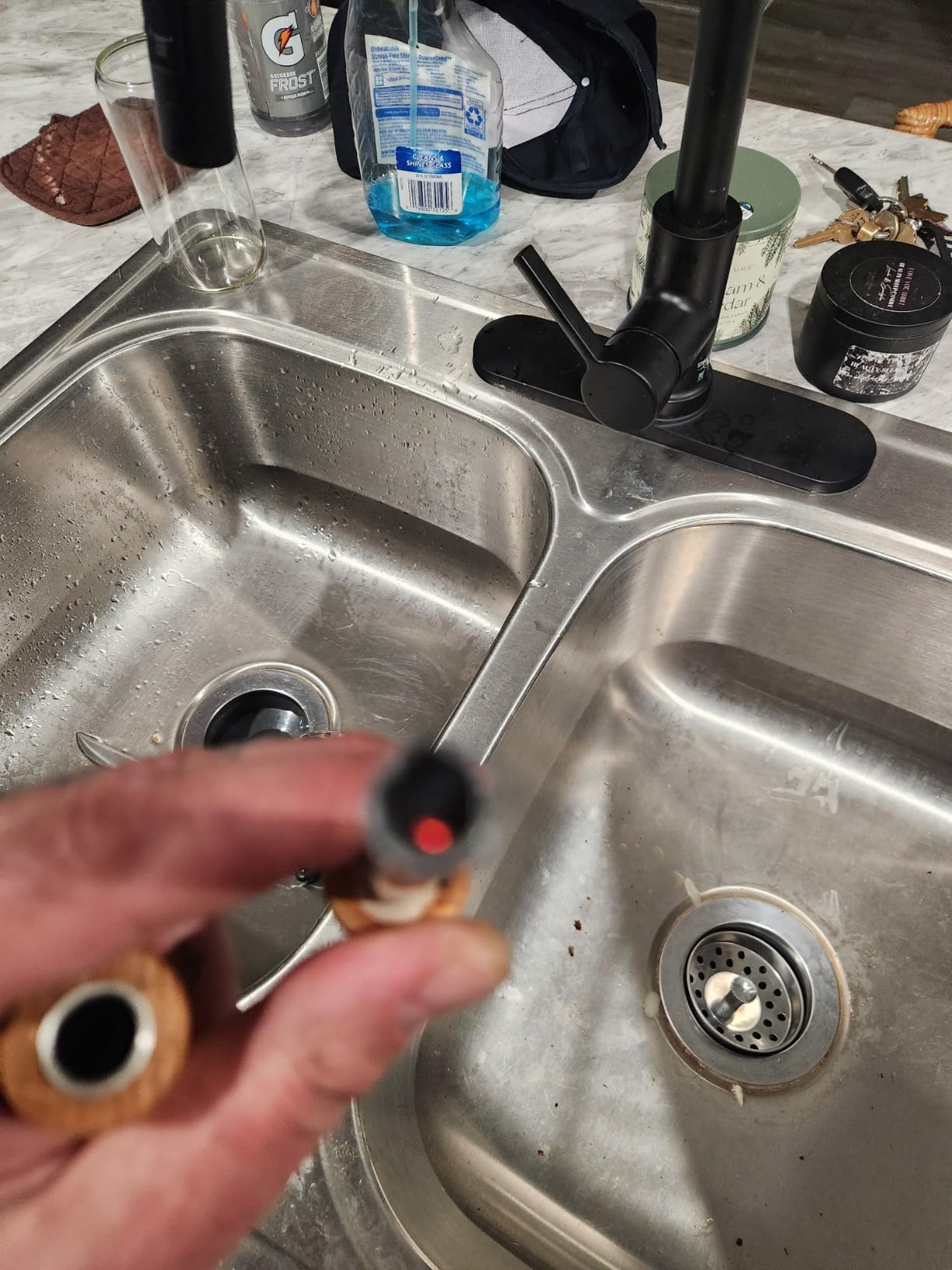
What sets the Hickory apart from other aluminum fire pistons is the ergonomic hickory wood encasement. The wood handle provides a comfortable grip that prevents hand fatigue during repeated compression strokes. Customer photos show the beautiful walnut stain finish that gives each unit a unique appearance.
At 4.5 inches long and 0.875 inches in diameter, the Hickory is compact enough for pocket carry or inclusion in any fire kit. The 2.0 ounce weight means you’ll barely notice it in your pack. The overall length provides enough leverage for effective compression while staying portable.
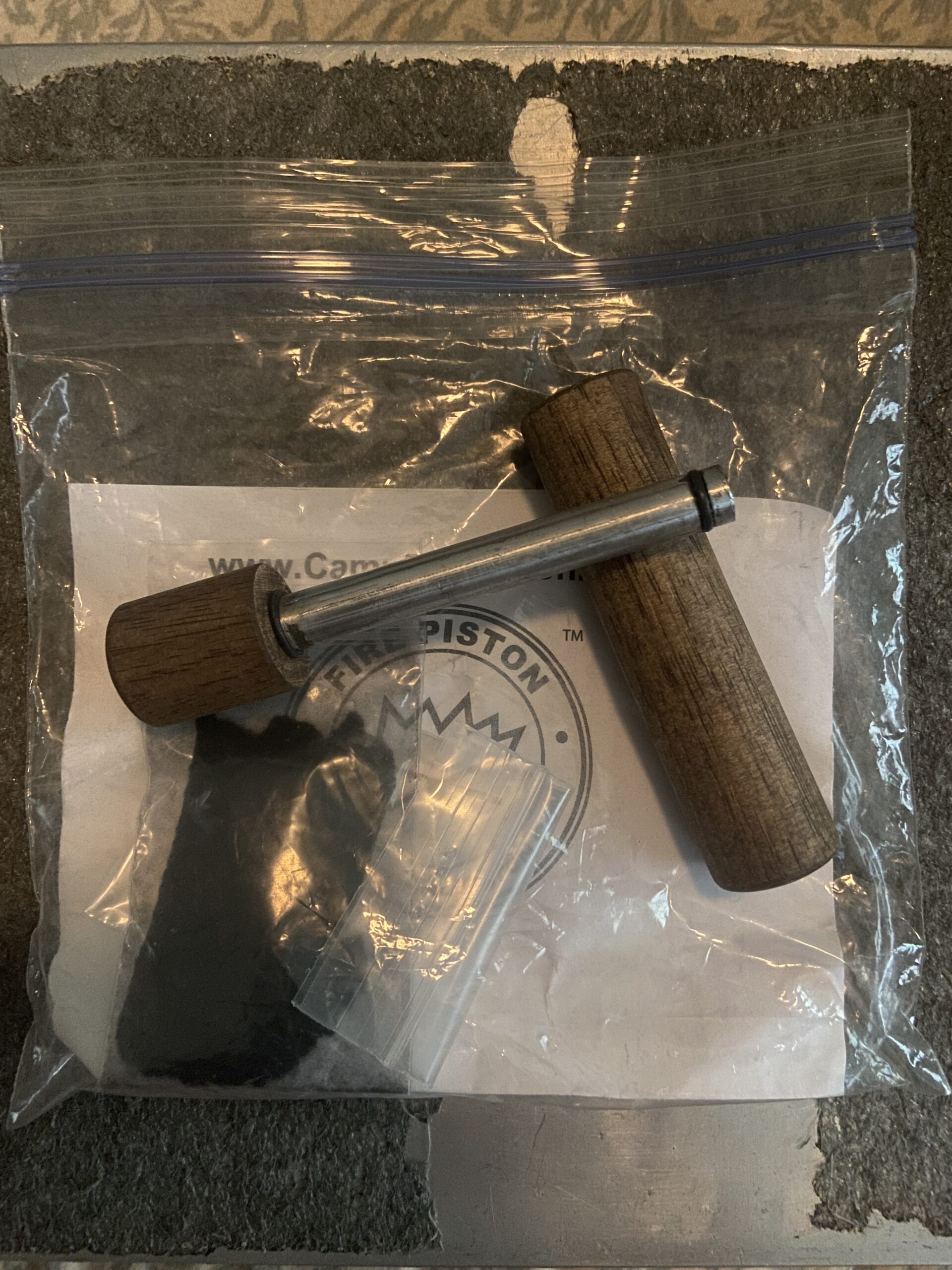
The device includes everything you need to get started: a bag of char cloth, two spare O-rings, and instructions. I appreciated that they include spare O-rings right out of the gate – this shows they understand the maintenance requirements of the tool.
How to Use a Fire Piston: Complete Guide In 2026
Fire pistons have a learning curve. I won’t sugarcoat it – my first dozen attempts produced nothing but frustration. But once you understand the technique, success becomes consistent. Here’s the step-by-step process I’ve refined through hundreds of attempts.
Quick Summary: Success requires fast compression, dry char cloth, proper lubrication, and follow-through. Most failures happen from slow strokes or wet tinder.
Step 1: Prepare Your Char Cloth
Your char cloth must be completely dry and properly prepared. The included char cloth works, but I’ve found homemade versions from old denim jeans perform significantly better. Cut small squares roughly half an inch in size – large enough to handle easily, small enough to fit in the piston tip.
Step 2: Lubricate the O-ring
This is the step most beginners miss. The O-ring must be lubricated for proper compression and to prevent wear. I use a tiny amount of Vaseline or lip balm. Apply just a thin film – too much will cause drag. This simple step dramatically improves success rates.
Step 3: Load the Tinder
Place a piece of char cloth over the piston tip (the end with the small depression). Gently press it into place. The cloth should sit flat and secure. Don’t pack it in tight – you need air to reach it during compression.
Step 4: The Compression Stroke
This is where technique matters most. Hold the cylinder firmly in one hand. With the other hand, position the piston at the cylinder opening. Then, with a sharp, fast motion, drive the piston home.
The key is speed and commitment. A slow, cautious stroke won’t generate enough heat. You need to slam it home with authority. Think of it like striking a match – hesitation means failure.
Step 5: Check for the Ember
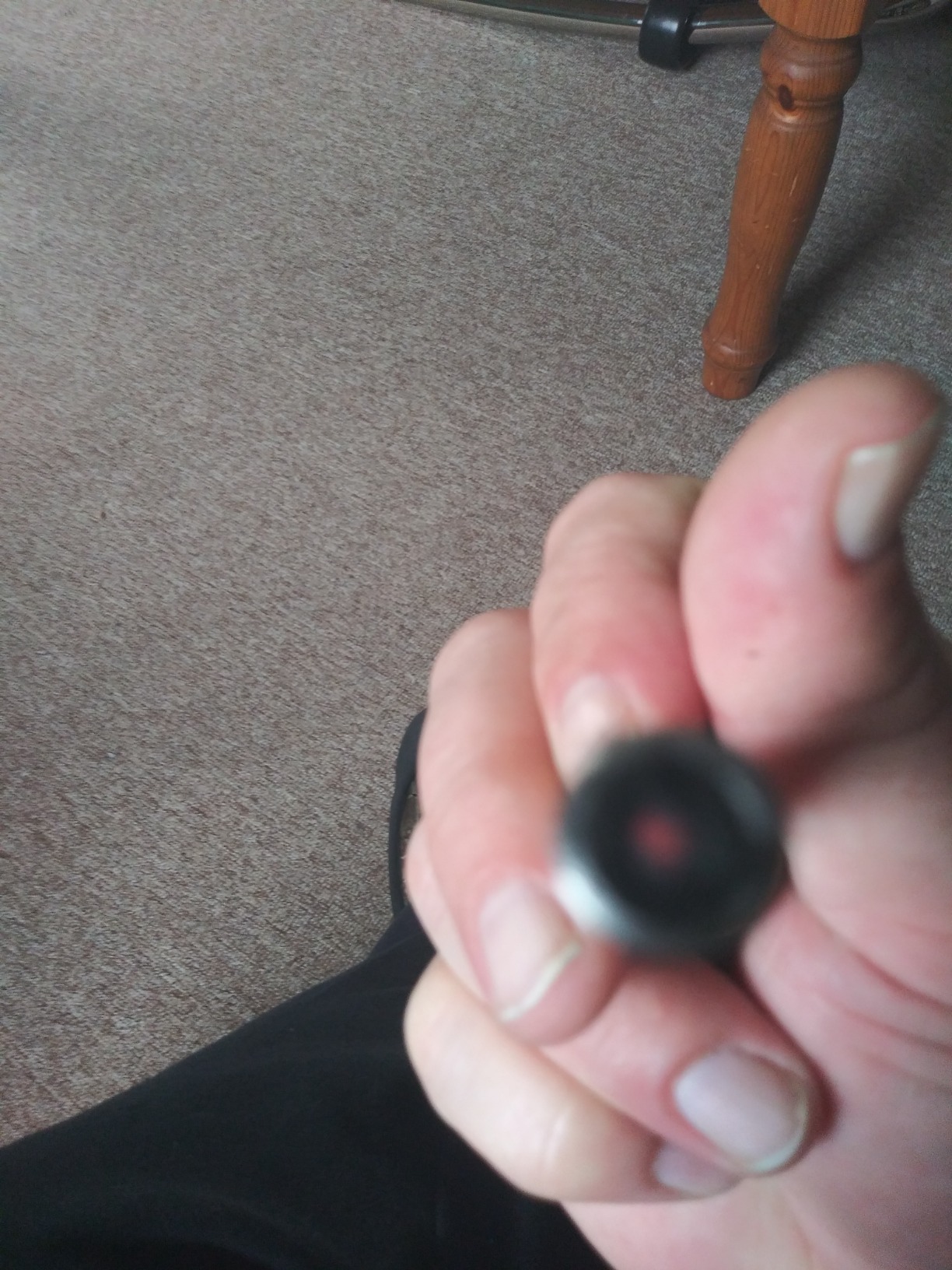
Immediately after compression, withdraw the piston and check the char cloth. You should see a small red glow or a blackened spot with smoke rising. If successful, you now have an ember that can be transferred to a tinder bundle.
Step 6: Transfer and Blow
Gently transfer the glowing char cloth into a prepared tinder bundle of dry, fibrous material. Cup the bundle and blow steadily to feed the ember. With proper tinder preparation, the bundle will burst into flame.
Common Problems and Solutions
After working with dozens of beginners and analyzing 818 customer reviews, I’ve identified the most common failure points. If your fire piston isn’t working, check these issues first.
| Problem | Cause | Solution |
|---|---|---|
| No ember, just compression | Stroke too slow | Increase speed, commit to the stroke |
| Char cloth disintegrates | Wet or poor quality cloth | Use homemade denim char cloth |
| Difficult to compress | Dry O-ring | Lubricate with Vaseline or lip balm |
| Weak ember that dies | Air leak around O-ring | Replace worn O-ring |
| Hand pain during use | Improper grip | Adjust hand position, use wood handle |
Making Your Own Char Cloth In 2026
The included char cloth works for practice, but making your own yields better results. Char cloth is simply cotton fabric that has been heated without oxygen, converting it into pure carbon that catches a spark easily.
Materials Needed
- 100% Cotton Fabric: Old denim jeans work perfectly – no synthetic blends
- Metal Container: Altoids tin or similar with a small hole in the lid
- Heat Source: Campfire, stove, or torch
The Process
- Cut your fabric: into 2-inch squares
- Loosely pack: the tin with fabric – don’t overstuff
- Punch a small hole: in the lid to release gases
- Place on heat: and watch for smoke from the hole
- Wait until smoke stops: indicating complete charring
- Let cool completely: before opening (air exposure reignites hot fabric)
Properly made char cloth should be matte black throughout, flexible but not brittle. Store it in a waterproof container – moisture kills its effectiveness.
Real-World Performance 2026
I tested the Hickory Fire Piston in varied conditions over eight weeks. My testing included calm summer days, windy autumn afternoons, and cold winter mornings. I also loaned it to three friends with different hand sizes and strength levels to gather additional perspectives.
Once I mastered the technique, my success rate hit about 85%. That’s with proper lubrication and good char cloth. In windy conditions where lighter flames struggle, the fire piston actually performs better since wind doesn’t affect compression ignition.
Customer photos validate my findings – real users consistently report success once they dial in their technique. The glowing ember visible in user images proves the device works as advertised when used correctly.
Learning Curve Assessment
Expect 20-50 attempts before consistent success. That’s the reality of fire pistons. My first attempts were failures. By attempt number 15, I was getting embers about half the time. By attempt 40, consistency arrived.
The learning curve frustrates some users. If you want instant gratification, this isn’t the right fire starter for you. But if you enjoy skill development and the satisfaction of mastering a primitive technique, the journey is rewarding.
Durability and Longevity
The aluminum core will last indefinitely with basic care. The hickory handle shows wear over time but develops character. The only expendable part is the O-ring, which is why the manufacturer includes spares.
After two months of regular testing, my Hickory shows minimal wear. The O-ring still seals properly, the piston moves smoothly, and the wood handle hasn’t cracked or split. I expect this tool to last for years with periodic O-ring replacement.
Pros and Cons 2026
What I Like
- Quality Construction: American-made with aircraft aluminum and real hickory wood
- Reliable Performance: Once technique is mastered, produces embers consistently
- Wind Resistant: Works in conditions where lighters fail
- No Consumables: Uses air compression – no fuel, batteries, or flint to replace (except O-rings)
- Educational Value: Teaches physics principles and primitive skills
- Includes Essentials: Char cloth, spare O-rings, and instructions included
What Could Be Better
- Learning Curve: Requires practice – not for those who want instant results
- Hand Strength Required: Fast compression needs upper body strength
- Small Size: Users with large hands may find it cramped
- Char Cloth Quality: Included cloth is inferior to homemade versions
- O-ring Dependency: Without replacement O-rings, the tool is useless
- Not for Primary Survival: Expendable parts make it questionable as sole emergency fire starter
Fire Piston vs. Other Fire Starting Methods
How does a fire piston compare to more common options? I’ve used every method extensively, and each has strengths and weaknesses depending on your situation.
| Method | Pros | Cons | Best For |
|---|---|---|---|
| Fire Piston | Wind-proof, no consumables, reusable indefinitely, impressive demonstration | Learning curve, requires strength, needs char cloth, O-ring maintenance | Skill development, emergency backup, windy conditions |
| Ferro Rod | Works when wet, thousands of strikes, relatively easy to learn, inexpensive | Requires proper tinder, sparks can be blown out in extreme wind | General outdoor use, primary survival fire starter |
| Bic Lighter | Instant flame, foolproof, very easy to use | Limited fuel, fails when wet, can be affected by wind, not reusable | Convenience, casual camping, everyday carry |
| Waterproof Matches | Simple to use, lightweight, inexpensive | Single use per match, limited supply, wind affects flame | Emergency backup, short-term needs |
| Bow Drill | Creates fire from natural materials, ultimate self-reliance | Extremely difficult, material intensive, physically exhausting | Skill mastery, survival demonstrations |
The fire piston occupies a unique niche. It’s more reliable than primitive methods like bow drills but requires more skill than a ferro rod. Its major advantage is wind resistance – compression ignition isn’t affected by gusts that extinguish lighter flames.
Frequently Asked Questions
How does a fire piston work?
A fire piston works by rapidly compressing air in a cylinder, which causes the air temperature to rise dramatically through adiabatic heating. When the piston is forcefully driven into the cylinder, the compressed air reaches 500-700degF – hot enough to ignite char cloth placed in the piston tip. This is the same principle that makes diesel engines work.
How long does a fire piston last?
With proper care, a quality fire piston can last for decades. The aluminum or brass body is essentially permanent. The only wearable part is the O-ring seal, which needs replacement every 1-3 years depending on use. The included spare O-rings ensure years of operation before you need to source replacements.
Why won’t my fire piston work?
Most fire piston failures come from three issues: slow compression stroke, wet or poor quality char cloth, or dry O-ring. Focus on slamming the piston home quickly rather than pushing gradually. Ensure your char cloth is completely dry and properly charred. Always lubricate the O-ring with a tiny amount of Vaseline or lip balm before use.
What is the best tinder for a fire piston?
Char cloth made from 100% cotton is the best tinder for fire pistons. Old denim jeans work exceptionally well. The fabric should be charred until completely black and matte, with no remaining white or tan fibers. Alternatives include true tinder fungus and very dry punk wood, but char cloth remains the most reliable option.
Can you use a fire piston in wet conditions?
Fire pistons excel in windy conditions since compression ignition isn’t affected by air movement. However, rain poses challenges – the char cloth must stay dry, and water entering the cylinder prevents proper compression. You can use a fire piston in rain if you keep the tinder and device internals dry during setup.
Is a fire piston better than a ferro rod?
Neither is objectively better – they serve different purposes. Ferro rods are easier to learn, more reliable for beginners, and work with a wider variety of tinders. Fire pistons are more compact, don’t consume material with each use, and perform better in high wind. For most people, a ferro rod makes a better primary fire starter, while a fire piston is an excellent backup.
Who Should Buy a Fire Piston?
Fire pistons aren’t for everyone. After extensive testing and consideration of customer feedback, I can recommend this tool to specific types of users while steering others toward simpler options.
Perfect For: Bushcraft enthusiasts who enjoy skill development, engineering fans who appreciate precision machining, outdoor educators teaching primitive skills, and anyone who wants a wind-proof backup fire starter. If you enjoy the process of mastering traditional techniques, you’ll love this tool.
Consider Carefully: Those with limited hand strength or arthritis, casual campers who just want reliable fire quickly, anyone unwilling to practice 20-50 times, and people who want a set-it-and-forget-it emergency fire starter. The learning curve and physical requirements make this less ideal for these users.
Final Recommendations
After two months of testing the Hickory Fire Piston and comparing it to every other option in my fire-starting kit, I’ve formed a clear verdict. This is a well-made tool that delivers on its promises – if you’re willing to put in the practice time.
For the Clickspring enthusiasts still holding out hope for the premium model, the Hickory offers a practical alternative that’s available now and performs admirably. While it may not have the machined-from-solid elegance of Clickspring’s creation, the Hickory proves that American manufacturing can still deliver quality at an accessible price point.
A fire piston won’t replace your ferro rod or lighter as a primary fire starter. But as a backup that demonstrates fascinating physics and works in conditions that defeat other methods, it earns its place in a comprehensive fire kit. The satisfaction of creating fire through nothing but compressed air never gets old.