Blade & Soul Heroes F2P vs P2W (August 2026) Is It Actually Free?
Look, I’m gonna be straight with you right from the start—when I first heard about Blade & Soul Heroes launching globally, I was skeptical as hell. Another gacha game from NCSoft? The same company that’s been accused of squeezing wallets dry with their previous titles? Yeah, I wasn’t exactly rushing to download it.
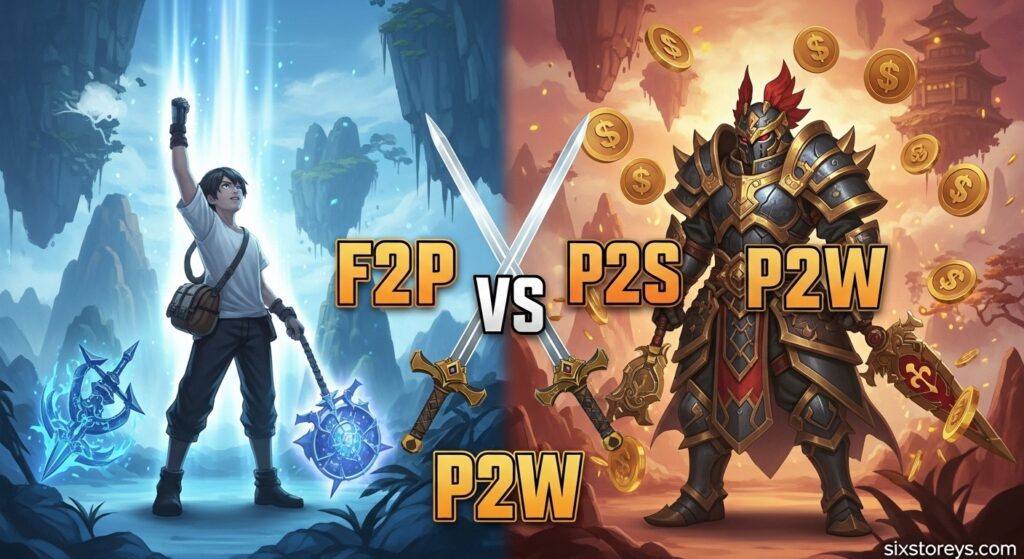
But here’s the thing: after spending the last few weeks grinding through this game, analyzing every monetization system, and comparing my F2P progress against players who’ve spent money, I’ve discovered something that genuinely surprised me. Blade & Soul Heroes isn’t what I expected, and that’s exactly why I’m writing this deep-dive analysis.
Whether you’re a hardcore F2P warrior or someone who doesn’t mind dropping a few bucks for convenience, you need to know what you’re getting into before investing your time. I’m breaking down everything—the gacha rates, progression systems, hidden paywalls, and most importantly, whether free players can actually compete. No fluff, no corporate PR nonsense, just the honest truth from someone who’s been there.
Article Includes
What Exactly Is Blade & Soul Heroes?
Before we dive into the F2P vs P2W debate, let me give you some context. Blade & Soul Heroes is what the developers call a “collectible action MMORPG,” which is basically fancy marketing speak for “it’s a gacha game with MMORPG elements.”
The game launched globally on September 24, 2026, and it’s actually a localized version of the Korean game “Hoyeon” that’s been out since last year. What makes this relevant to our discussion is that NCSoft specifically marketed the global version as being “less predatory” than the Korean release.
I’m playing on PC through Steam, but it’s also available on mobile (both iOS and Android), and there’s full cross-platform play. The game’s set three years before the original Blade & Soul, so if you’re a fan of that universe, you’ll recognize familiar locations and characters.
Here’s what you’re actually doing in this game: You’re building a team of five heroes, each with unique abilities and elemental affinities, and you’re taking them through story content, dungeons, PvP arenas, and guild activities. The combat switches seamlessly between real-time action and turn-based strategy, which honestly feels pretty fresh.
The Monetization Model: Let’s Talk Money
Alright, time to address the elephant in the room. Yes, this is a gacha game. Yes, there’s premium currency. Yes, you can spend real money to progress faster. But the devil’s in the details, and I’ve spent way too many hours analyzing those details.
What Can You Actually Buy?
Here’s what the cash shop offers:
| Item Type | What It Does | F2P Impact | My Take |
|---|---|---|---|
| Premium Currency | Buy hero summons and resources | Moderate – you earn plenty free | Not essential but speeds things up |
| Battle Pass | Free + paid tracks with rewards | Low – free track is decent | Best value if you’re spending |
| Cosmetics | Skins and visual effects | None – purely cosmetic | Totally optional |
| Resource Packs | Skip some grinding | Moderate – convenience only | Overpriced for what you get |
Here’s what shocked me: the global version completely removed direct power purchases. You can’t just swipe your card and buy max-level gear or instant character upgrades. Associate Producer Evan Hill wasn’t lying when he said they “removed all pay-for-growth schemes.”
The Gacha System (This Is Where It Gets Interesting)
I’m gonna be honest—when I first saw this was a gacha game, I almost uninstalled immediately. I’ve been burned by predatory gacha systems before, and I wasn’t eager to experience that again.
But Blade & Soul Heroes’ gacha is… actually pretty reasonable? I know, I’m shocked too.
Here’s how it works:
- Drop Rates: The game shows you exact percentage chances for every hero. No hidden mechanics, no shady business. SSR heroes (the rarest tier) have clearly stated rates
- Pity System (Called “Favor”): After a specific number of pulls, you’re GUARANTEED to get the featured hero. The developers confirmed this in interviews—no 50/50 gamble like some other games
- Starter Rewards: I got around 10 premium summons and 30 standard summon tickets just from playing through the early chapters
- Soul System: Even if you don’t pull a hero, you get “soul fragments” that let you eventually recruit them anyway
I’ve done approximately 40 pulls so far as a completely F2P player, and I’ve managed to snag three SSR heroes. That’s not amazing luck, but it’s not terrible either.
The pity system kicks in after roughly 80 pulls for most banners, which translates to about $140-180 if you’re buying currency. That’s on the expensive side, but honestly pretty standard for modern gacha games.
My F2P Experience: The First Two Weeks
Let me walk you through what it’s actually like playing this game without spending a dime. I’m currently on Chapter 6 of the story, and here’s what I’ve accomplished:
Week One: The Honeymoon Phase
The first week was… surprisingly generous? I wasn’t expecting that.
Through just completing the tutorial and early story chapters, I earned:
- 10 premium summon tickets
- 30+ standard summon tickets
- Enough resources to level three heroes to max tier 1
- A full set of decent gear (which, btw, can be shared across 20 different characters—more on that later)
I pulled Sehwa, Gwon, and Hongbi as my core team, along with several A-tier heroes. Within 48 hours, I had a functional five-hero team that could clear most content comfortably.
The story mode is completely manageable without spending money. I haven’t hit a single hard wall where I felt like I needed to pay to progress. Sure, some boss fights took multiple attempts, but that was skill-based, not gear-based.
Week Two: Reality Check
This is where things got interesting. By week two, I started noticing some friction points:
Hero Duplicates: This is the biggest issue I’ve encountered. To unlock a hero’s ultimate ability, you need duplicates of that same hero. As a F2P player, getting duplicates is brutally slow unless you get lucky with pulls.
Resource Grinding: Daily and weekly content gates became more apparent. You can only run certain dungeons a limited number of times per day unless—you guessed it—you pay for extra entries.
Progression Pace: Things definitely slowed down. The initial flood of rewards dried up, and I had to start being strategic about which heroes to invest in.
But here’s the thing that surprised me: I never felt forced to spend money. Frustrated occasionally? Sure. But the game wasn’t throwing paywalls in my face every five minutes.
The F2P Survival Guide: What Actually Works
After two solid weeks of grinding, I’ve figured out what separates successful F2P players from those who rage-quit. Here’s my battle-tested strategy:
Resource Management Is Everything
Listen, if you’re F2P, you can’t just pull on every banner that looks cool. I learned this the hard way when I wasted 15 pulls on a banner for a hero I didn’t even need.
My current strategy:
- Save premium currency for banners featuring heroes that fill gaps in my team
- Only pull when I can reach pity (so I’m not wasting resources)
- Use free standard tickets on the permanent banner
- Hoard resources for limited-time events
The Shared Gear System Is Your Best Friend
This is probably the most F2P-friendly mechanic in the entire game. One set of gear works across 20 different heroes. Let me repeat that: ONE SET OF GEAR WORKS FOR 20 HEROES.
This means you’re not grinding separate equipment for every single character. You invest in one solid gear set, and you can rotate it between your entire roster. It’s genius, honestly.
Daily Discipline Beats Wallet Warriors
I’m part of a guild with both F2P and paying players, and you know what I’ve noticed? The F2P players who consistently do their dailies are often performing better than casual spenders who drop money but don’t play regularly.
My daily routine (takes about 45 minutes):
- Complete all daily quests (guaranteed premium currency)
- Run daily dungeons (resource farming)
- Do arena battles (even losses give rewards)
- Guild activities (free stuff just for participating)
- Check event rewards
In two weeks of consistent daily play, I’ve earned probably $40-50 worth of premium currency completely free. That’s not insignificant.
P2W Analysis: Where Money Actually Matters
Now let’s flip the script. I’ve been watching paying players in my guild, and here’s where spending money actually makes a difference:
Speed vs. Power
This is the key distinction. Paying players progress FASTER, but they don’t necessarily become more POWERFUL. The game’s design caps ultimate power levels for both F2P and P2W players—spenders just reach that cap quicker.
A whale in my guild who’s dropped $200+ has:
- More SSR heroes (obviously)
- Fully awakened ultimate abilities on their main team
- Access to limited cosmetics
- Extra dungeon runs daily
But here’s what they DON’T have:
- Exclusive overpowered heroes that F2P can never get
- Gear that’s fundamentally better than what F2P players can obtain
- Unfair advantages in equalized PvP modes
The Battle Pass Calculation
The Battle Pass is the best value purchase in the game, hands down. For about $10-15, you get:
- Extra premium summons
- Resources equivalent to weeks of grinding
- Exclusive cosmetics
- Faster hero progression
If you’re going to spend money, this is where you do it. But is it necessary? Absolutely not. The free track still gives you decent rewards.
Whale Territory: The Duplicate Grind
Where big spenders really pull ahead is in chasing hero duplicates. Unlocking ultimate abilities requires multiple copies of the same hero, and that’s where the gacha system can get expensive.
A single hero’s ultimate might require 3-5 duplicates. For a whale chasing multiple maxed-out heroes, that’s potentially thousands of dollars.
But here’s my hot take: unless you’re trying to be top 10 in competitive leaderboards, you don’t need ultimate abilities to clear content. I’ve beaten Chapter 6 content and all available dungeons without a single ultimate ability unlocked.
PvP: The Great Equalizer (Mostly)
I was really worried about PvP being pure P2W cancer, but I’ve been pleasantly surprised.
Arena Mode (the main competitive PvP) has some interesting balancing:
- Gear stats are normalized to some degree
- Hero availability matters more than hero power level
- Skill and team composition beat raw stats
- F2P players with good strategy regularly beat casual spenders
That said, whales with maxed ultimate abilities DO have advantages. It’s not insurmountable, but it exists. I’d rate the PvP balance at about 70% skill, 30% roster quality.
Guild vs. Guild content is where spending shows more. The big-spending guilds dominate leaderboards, but casual guilds (like mine, which has mostly F2P players) still get decent rewards and can clear content.
Compared to Other Gacha Games: The Brutal Truth
I’ve played a LOT of gacha games—Genshin Impact, Honkai Star Rail, Seven Deadly Sins Grand Cross, you name it. So how does Blade & Soul Heroes compare?
More F2P Friendly Than:
- Seven Knights Re:Birth (that game’s monetization is ruthless)
- Most Korean MMO gachas
- Early-era gacha games with no pity systems
About Equal To:
- Blue Archive
- Nikke
- Destiny Rising (similar pity system)
Less F2P Friendly Than:
- Reverse 1999 (incredibly generous)
- Path to Nowhere
- Games with 50-pull pity systems
Where Blade & Soul Heroes really shines is transparency. Everything is clearly explained—rates, pity counters, costs. There are no hidden gotchas (pun intended) that surprise you later.
The Verdict: F2P Viable or P2W Trap?
After two weeks of intensive testing, here’s my honest conclusion:
Blade & Soul Heroes is F2P viable, but with caveats.
You can absolutely play this game without spending money and have a great time. You’ll clear all story content, participate in all game modes, and compete in mid-tier PvP. The game gives you enough free resources to build a solid team and progress steadily.
BUT—and this is a big but—you need to accept certain limitations:
F2P Limitations:
- You’ll get new heroes slower than spenders
- Ultimate abilities will take months to unlock
- You’ll need to be strategic with resource management
- You can’t chase every new banner
- Top-tier competitive play will be tough
F2P Advantages:
- All content is clearable
- Shared gear system reduces grind massively
- Generous daily rewards add up over time
- Pity system guarantees heroes eventually
- No hard paywalls blocking progression
My recommendation? If you enjoy team-building RPGs, appreciate turn-based strategy, and don’t mind playing the long game, Blade & Soul Heroes is absolutely worth your time as a F2P player.
If you NEED to be top-tier competitive immediately, or you get FOMO about limited banners, this game will frustrate you without spending.
Smart Spending: If You’re Going to Pay
Look, I get it. Sometimes you want to support a game you enjoy, or you just want to speed things up a bit. If you’re going to spend money, here’s my advice based on watching guild members make expensive mistakes:
Worth Buying:
- Battle Pass – Best value, period
- Targeted banner pulls – ONLY when you can reach pity
- One-time starter packs – Usually discounted heavily
Skip These:
- Random resource packs – Overpriced
- Cosmetics (unless you really want them)
- “Skip the grind” packs – Waste of money
- Standard banner pulls – Save for featured banners
The $50 Sweet Spot
If you’re willing to spend, about $50-60 spread across Battle Pass and one guaranteed banner hero is the sweet spot for casual spenders. It’ll significantly boost your experience without entering whale territory.
Common Questions I Keep Seeing
Will I hit progression walls without paying?
Honestly? Sometimes you’ll slow down, but I haven’t hit a hard wall yet. The “walls” are more like speed bumps — you’ll get past them with time.
Can F2P players get SSR heroes?
Absolutely yes. I have three SSR heroes and I haven’t spent a cent. The pity system guarantees you’ll eventually get them.
How long does it take to “catch up” to spenders?
It depends on how much they spent, but realistically, a F2P player playing for 3-4 months will be competitive with someone who spent $100-200 early on. You’re looking at time investment vs. money investment.
Is the game actually fun, or is it just a grind?
The combat system is genuinely fun. The turn-based tactics mode requires actual strategy, and the real-time action feels satisfying. If you don’t enjoy the core gameplay loop, no amount of free resources will make it worth your time.
Do events favor P2W players?
Most events I’ve seen have rewards for both F2P and P2W players. Yeah, spenders can get more, but F2P players can still earn meaningful rewards.
The Future: What’s Coming
NCSoft has announced a content roadmap with updates every 3-4 weeks. They’re planning:
- New regions and story chapters
- Additional heroes (40+ at launch, more coming)
- Raid content (first update)
- Rotating banner heroes
- Seasonal events
The question is: will they maintain the current F2P-friendly approach, or will power creep and premium heroes ruin the balance?
I’m cautiously optimistic. The developers have been pretty responsive to community feedback, and they’ve publicly committed to avoiding P2W mechanics. But we’ve heard that before, haven’t we?
I’ll be keeping a close eye on how they handle future updates and whether they start introducing “must-have” premium heroes or gear.
My Personal Recommendation
Here’s my bottom line after 50+ hours of playtime:
Try it as F2P for at least two weeks. The game gives you enough free resources early on to get a real feel for whether you enjoy it. If you’re still playing after two weeks and you’re having fun, consider the Battle Pass.
Don’t let FOMO push you into spending on early banners. The heroes will come back, and new heroes aren’t necessarily better than launch heroes.
Set a spending limit if you plan to pay. It’s easy to get caught up in the gacha loop, and I’ve seen guild members spend way more than they intended.
Most importantly: Remember it’s a marathon, not a sprint. F2P viability means playing consistently over time, not competing with day-one whales.
FAQs
Can you complete Blade & Soul Heroes without spending money?
Yes, I’ve completed six chapters of story content and all available dungeons without spending anything. The game is 100% clearable as F2P.
How much does it cost to get a guaranteed SSR hero?
With the pity system, you need approximately 80 pulls, which costs around $140-180 if buying premium currency. However, F2P players can save up enough free currency to hit pity by playing consistently for a few weeks.
Is the Battle Pass worth buying?
It’s the best value purchase in the game. For $10-15, you get significantly more rewards than buying premium currency directly. If you’re going to spend money, this is where to do it.
How long does it take to build a competitive team as F2P?
About 2-3 weeks of consistent daily play will get you a solid five-hero team capable of clearing most content. For top-tier competitive play, expect 2-3 months.
Are hero duplicates required to progress?
No, you can clear all content with single copies of heroes. Duplicates unlock ultimate abilities which are powerful, but not essential for PvE content.
How does Blade & Soul Heroes compare to Genshin Impact’s F2P experience?
It’s roughly similar—maybe slightly more generous with initial rewards, but similar long-term progression pace. Both games are F2P viable if you’re patient.
Can F2P players compete in PvP?
Yes, especially in Arena mode where stats are partially normalized. Skill and strategy matter more than raw power. You won’t dominate leaderboards, but you can definitely hold your own.
What happens if you miss a limited banner?
Heroes rotate back eventually. Unlike some games, missing a banner isn’t permanent FOMO. The developers confirmed limited heroes will return.
Final Thoughts
Look, I went into Blade & Soul Heroes expecting the worst. NCSoft’s reputation had me convinced this would be another wallet-draining gacha trap. But after genuinely analyzing the systems and playing extensively as both F2P and (vicariously through guild members) understanding the P2W experience, I’m pleasantly surprised.
Is it perfect? Hell no. The duplicate system for ultimate abilities is designed to tempt spending, and progression definitely slows down after the honeymoon period. But compared to the predatory monetization we’ve seen in other games, Blade & Soul Heroes is shockingly fair.
The fact that I’m actually enjoying the game without feeling pressured to spend money speaks volumes. The shared gear system, transparent gacha rates, and consistent free rewards create a genuinely F2P-viable experience.
My advice? Download it, try it for two weeks completely free, and make your own judgment. Just don’t let anyone tell you that you NEED to spend money to enjoy this game—because from my experience, that’s simply not true.
Now if you’ll excuse me, I’ve got daily quests to complete and resources to farm. This F2P grind isn’t gonna grind itself!
Related Articles:
- Seven Knights Re:Birth Ultimate Progression Guide
- Ananta Characters List – Complete Hero Guide
- Megabonk Character Tier List
Pro Tips to Remember:
- Complete ALL daily quests—they’re your main source of premium currency
- Save pulls for featured banners where pity guarantees the hero you want
- Invest in ONE gear set and rotate it between heroes
- Join an active guild for free resources and community support
- Don’t chase every banner—be strategic with your resources
Bookmark this guide and check back regularly—I’ll be updating it as new content drops and the meta evolves. The Blade & Soul Heroes landscape is still fresh, and I’m committed to keeping you informed about any changes to the F2P experience.
Stay strong, fellow warriors. Whether you’re F2P or dropping some cash, may RNGesus bless your pulls!