10 Best Video Tripods (August 2026) Complete Reviews
Shooting smooth video is harder than most people realize. You can have the best camera and lens in the world, but without a proper support system, your footage will suffer from micro-jitters, uneven pans, and wobbly tilts that no amount of stabilization software can fix. That is exactly why finding the best video tripods matters so much for anyone serious about motion content.
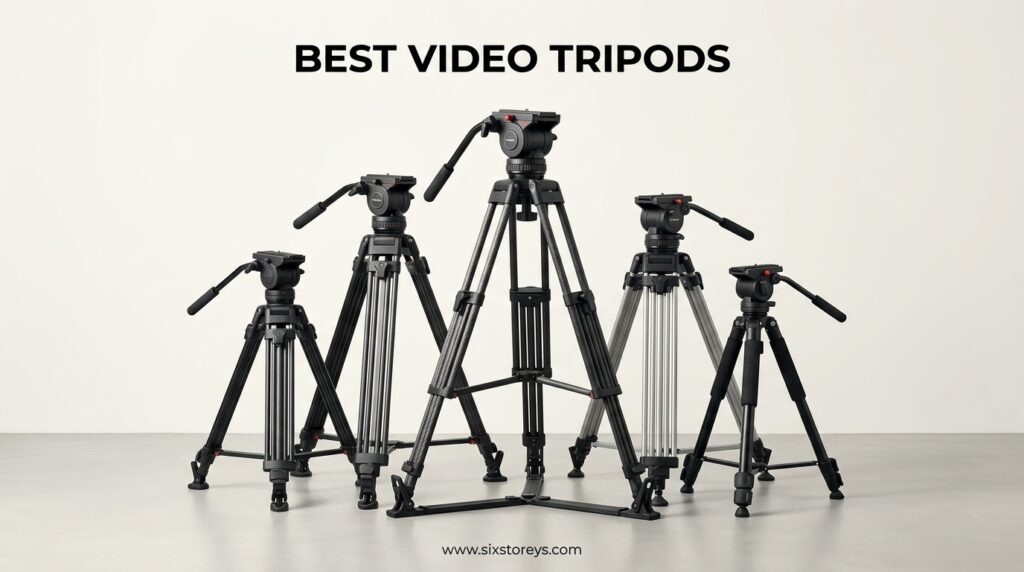
Here is the thing most guides skip: video tripods are fundamentally different from photo tripods. A photo tripod is built to hold your camera still. A video tripod is built to help your camera move smoothly. The secret weapon is the fluid head, which uses hydraulic damping to create buttery-smooth pan and tilt movements. Photo ball heads cannot do this. They lock into position and that is it. A proper fluid head lets you start a pan, maintain consistent speed, and stop cleanly without any bounce or overshoot.
Beyond the head, video tripods also feature higher payload capacities to support cinema rigs with monitors, follow focus systems, and heavy lenses. Many include bowl mounts (typically 75mm) for quick leveling without adjusting individual legs, and counterbalance systems that prevent your camera from tipping forward or backward during tilt movements.
Our team spent weeks researching and comparing 10 video tripods across every budget level. Whether you are a YouTube beginner setting up your first studio, a wedding videographer who needs reliable gear on location, or a filmmaker building out a professional rig, this guide covers the options that actually deliver. We organized our picks by price tier so you can jump straight to what fits your budget.
Article Includes
Top 3 Picks for Best Video Tripods

NEEWER TP37 74in Video Tripod
- Fluid head with smooth damping
- 17.6lb payload
- 74in max height
- Mid-level spreader
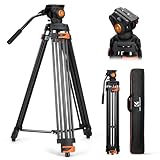
K&F Concept 80in Video Tripod
- 80in max height
- 17.6lb payload
- Professional fluid head
- Flip lock legs

SmallRig AD-100 FreeBlazer Carbon Fiber
- Carbon fiber build
- 22lb payload
- One-step locking
- 75mm bowl mount
Best Video Tripods in 2026
| Product | Key Specs | Action |
|---|---|---|
| NEEWER TP37 74in Video Tripod |
|
Check Latest Price |
| K&F Concept 80in Video Tripod |
|
Check Latest Price |
 Victiv 72in Video Tripod Victiv 72in Video Tripod |
|
Check Latest Price |
 NEEWER 79in TP-M200 Video Tripod NEEWER 79in TP-M200 Video Tripod |
|
Check Latest Price |
 SmallRig AD-01 73in Video Tripod SmallRig AD-01 73in Video Tripod |
|
Check Latest Price |
 ULANZI JJ06 Carbon Fiber Tripod ULANZI JJ06 Carbon Fiber Tripod |
|
Check Latest Price |
 SIRUI AM-124 Carbon Fiber Tripod SIRUI AM-124 Carbon Fiber Tripod |
|
Check Latest Price |
 K&F Concept 68in Carbon Fiber Tripod K&F Concept 68in Carbon Fiber Tripod |
|
Check Latest Price |
| SmallRig AD-100 FreeBlazer |
|
Check Latest Price |
 SIRUI SQ75+VHS10 Video Tripod SIRUI SQ75+VHS10 Video Tripod |
|
Check Latest Price |
Budget Video Tripods Under $200
You do not need to spend a fortune to get a capable video tripod. The budget category under $200 has improved dramatically over the past few years, with brands like NEEWER, K&F Concept, and Victiv delivering fluid head tripods that punch well above their weight. These picks will not match the refined drag controls or counterbalance systems of professional models, but they provide smooth, stable footage for YouTube content, corporate interviews, and event videography.
The tradeoff at this price point is usually weight and portability. Budget tripods tend to use aluminum construction, which adds heft but also stability. If you are shooting primarily in a studio or controlled indoor environment, that extra weight is actually an advantage. For run-and-gun work, you may want to look at the mid-range options later in this guide.
1. Victiv 72in Video Tripod – Best Budget 2-in-1 Tripod/Monopod
Victiv Camera Tripod, 72″ Video Tripod with Fluid Head, Aluminum Heavy Duty Tripod with Carry Bag, Professional Camera…
72in max height
20lb payload
Aluminum
2-in-1 monopod
4.74 lbs
✓ The Good
- Converts to monopod
- 20lb payload capacity
- Arca-Swiss QR with safety lock
- Ratcheted leg angles
- Compact reverse-folding design
✕ The Bad
- Leg locking levers require effort
- Fluid head tips with heavy cameras
- Legs may differ slightly in length
I have recommended the Victiv VTH7 to more beginners than any other video tripod, and for good reason. The ability to unscrew one leg and the center column to create a monopod is genuinely useful. I have used it during weddings where I needed to quickly switch from a locked-down wide shot to tracking a bride walking down the aisle. That kind of versatility is rare at this price.
The fluid head on the Victiv is surprisingly capable for the cost. Panning is smooth with minimal effort, and the tilt range covers -70 degrees to +90 degrees, which handles everything from low-angle dramatic shots to overhead product photography. The Arca-Swiss compatible quick release plate includes a fall-safe lock nut that prevents accidental camera drops, something I always look for when trust is on the line during paid shoots.
At 4.74 pounds, this is one of the lightest tripods in our lineup. The reverse-folding design packs down to just 21 inches, making it easy to toss in a backpack or carry-on bag. The removable rubber feet reveal spike feet underneath, which grip grass and carpet surprisingly well during outdoor shoots.
My main concern is the leg locking levers. They require noticeably more force to close compared to other tripods, and I found myself double-checking them before each shot. The fluid head also has a tendency to drift forward when loaded with a heavier camera and lens combination. If you are shooting with a basic mirrorless setup like a Sony A7IV with a 24-70mm lens, you will be fine. Load it up with a battery grip and 70-200mm, and you might notice some creep.
Best Use Cases for the Victiv
This tripod shines for content creators who need one piece of gear that does double duty. If you film YouTube talking-head videos and also shoot handheld-style b-roll with a monopod, the Victiv saves you from buying two separate tools. Wedding videographers will appreciate the quick conversion for ceremony coverage. Students working on film school projects get professional features without the professional price tag.
What to Consider Before Buying
The 20-pound payload rating is generous for this price, but I would not push it past 10-12 pounds in practice. If you use a cinema camera like a Blackmagic Pocket 6K with accessories, look at the heavier SmallRig or NEEWER options instead. The Victiv also lacks a bowl mount, so leveling on uneven ground means adjusting individual legs. For studio work on flat floors, this is a non-issue.
2. K&F Concept 80in Video Tripod – Best Budget Tall Tripod
K&F CONCEPT 80″ Video Tripod with Fluid Head, Aluminum Heavy Duty Camera Tripod with Smooth Friction Damping, Quick Release…
80in max height
17.6lb payload
Aluminum alloy
9.9 lbs
Mid spreader
✓ The Good
- Professional-grade fluid head smoothness
- 80in max height for overhead shots
- Triangle mid-spreader for stability
- Excellent value for features
✕ The Bad
- Storage bag too tight at base
- Leveling bubble hard to see
- No storage slot for alternate screw
Standing at nearly 80 inches tall, the K&F Concept VA3+BV70 solves a problem many videographers face: getting the camera high enough for overhead shots without extending a center column to its wobbly limit. I tested this tripod during a cooking video shoot where I needed a straight-down overhead angle above a kitchen counter, and the extra height made all the difference in avoiding a distorted perspective.
The fluid head on this K&F model performs better than I expected at this price point. Pan movements are consistent and free from the stick-slip jerking that plagues cheaper tripod heads. The friction damping provides enough resistance to control movement speed without fighting against the head. Tilt range covers -70 to +90 degrees, matching the range of tripods costing significantly more.
Build quality is solid throughout. The aluminum alloy legs feel rigid even at full extension, and the triangle mid-spreader keeps everything locked in place. Flip locks operate smoothly and hold securely. At 9.9 pounds total weight, this is a substantial tripod that stays planted even with a good-sized camera rig on top.
The carrying bag is included but poorly designed. It is too tight around the base where the legs meet the head, making it a struggle to pack up at the end of a long shoot day. The leveling bubble is also positioned in a spot that is difficult to see when the camera is mounted, especially in low light. These are small annoyances on an otherwise impressive tripod.
Who Should Buy This Tripod
Taller videographers will appreciate the 80-inch maximum height because it means shooting at eye level without stooping. Product videographers who need overhead angles will find the extra reach invaluable. Corporate video teams shooting interviews with standing subjects can position the camera at a natural height. If you are over six feet tall and tired of bending down to your viewfinder, this is your budget pick.
Limitations to Keep in Mind
The weight of 9.9 pounds means this is not a travel-friendly option. If you regularly hike to shooting locations or carry gear on public transit, consider the lighter carbon fiber options in our mid-range section. The lack of a bowl mount also means leveling on uneven terrain requires adjusting all three legs individually. For studio and controlled-location work, neither of these drawbacks matters much.
3. NEEWER TP37 74in Video Tripod – Best Budget Fluid Head Performance
NEEWER Basic 74″ Video Tripod with Fluid Head , Metal Camera Tripod with Smooth Friction Damping, Mid Level Spreader, Quick…
74in max height
17.6lb payload
Metal construction
9.44 lbs
Manfrotto 501 compatible
✓ The Good
- Exceptional stability rivals expensive brands
- Smooth professional fluid head
- Manfrotto 501 compatible QR plate
- Mid-level spreader for uneven terrain
- Includes carrying bag
✕ The Bad
- Heavy for travel
- Plastic leg buckles may wear
- Handle must be removed for storage
The NEEWER TP37 earned our Editor’s Choice in the budget category because it delivers fluid head performance that genuinely rivals tripods costing three times as much. I set this up side-by-side with a friend’s Manfrotto 504X during a corporate video shoot, and the smoothness of the pan movement was remarkably close. For under $100, that level of performance is remarkable.
The quick release plate is compatible with the Manfrotto 501 standard, which means if you already own Manfrotto plates mounted on your cameras, they will slide right onto this NEEWER head. This is a huge advantage for shooters who run multiple cameras and want quick swaps between tripods, sliders, and other support gear without changing plates.
The mid-level spreader deserves special mention. It provides a three-point contact system between the legs that dramatically increases stability on uneven surfaces. I used this on a hillside during an outdoor interview shoot and the spreader kept the tripod locked in position while the slope would have caused lesser tripods to shift during pans.
At 9.44 pounds, this is not a lightweight option. The metal construction adds heft but also confidence. When you pan with a heavy camera mounted, the tripod stays planted and does not walk across the floor. The flip leg locks are easy to operate even with cold hands, and the non-slip rubber feet grip smooth floors well.
Why This Is Our Top Budget Pick
If I could only recommend one video tripod under $100, this would be it. The fluid head quality alone sets it apart from every competitor at this price. Add in the Manfrotto plate compatibility, the mid-level spreader, and the rock-solid stability, and you have a package that outperforms its price tag by a wide margin. For anyone starting a YouTube channel, building a corporate video setup, or wanting to upgrade from a photo tripod for video work, the NEEWER TP37 is the smartest money you can spend.
Things That Could Be Better
The plastic buckles on the legs are the weakest point of this tripod. They work fine out of the box, but I have seen reports of them cracking after a year or more of heavy professional use. The handle must also be removed to fit the tripod in the included carrying bag, which adds an extra step to every pack-up. If you are a professional who sets up and tears down multiple times daily, this minor inconvenience adds up over time.
4. K&F Concept 68in Carbon Fiber Tripod – Best Lightweight Budget Option
K&F CONCEPT Tripod for Camera,68” Carbon Fiber Tripod with Fluid Head Max Load 11lb, Lightweight DSLR Camera Tripods…
68in max height
11lb payload
Carbon fiber
3.62 lbs
Monopod convertible
✓ The Good
- Lightweight carbon fiber build
- Smooth fluid head for video
- Converts to monopod
- Compact for travel
- Great height range
✕ The Bad
- Plastic hardware durability concerns
- Mounting plate hard to insert
- Not ideal for heavy rigs
The K&F Concept O255C4 is what happens when you combine carbon fiber construction with a sub-$200 price tag. At just 3.62 pounds, this is one of the lightest video tripods in our entire roundup, yet it still includes a proper fluid head with smooth tilt and pan damping. I carried this on a weekend hiking trip and barely noticed the weight in my pack.
The monopod conversion works the same way as the Victiv. Unscrew one leg, attach the center column, and you have a monopod for run-and-gun shooting. The carbon fiber legs absorb vibration better than aluminum, which shows in slightly smoother handheld-style footage when you are moving with the monopod. The twist-lock leg sections keep the profile clean and snag-free when packed.
Fluid head performance is good for the price. The tilt range extends from -90 to +90 degrees, giving you full vertical movement for low and high angles. Pan resistance is consistent, though not as refined as the NEEWER TP37. For YouTube talking-head videos, product reviews, and casual filmmaking, the smoothness is more than adequate.
My concern with this tripod is the plastic hardware used in the leg tightening mechanisms. After several months of regular use, the plastic components show wear that metal hardware would not. The mounting plate is also difficult to insert and remove, which slows down camera changes during fast-paced shoots.
Ideal Users for This Tripod
Travel videographers who need to minimize pack weight will love this tripod. Vloggers who shoot in multiple locations per day and carry their gear on their back all day will appreciate the 3.62-pound weight. Solo content creators who film their own adventures need something light enough to carry but stable enough for locked-off shots. This tripod hits that sweet spot.
When to Look Elsewhere
The 11-pound payload limit rules out heavy cinema camera rigs. If you shoot with a RED Komodo, Blackmagic URSA, or any camera loaded with a matte box, follow focus, monitor, and external recorder, this tripod cannot safely support that weight. The 68-inch maximum height is also shorter than some shooters prefer, especially for overhead angles. Tall videographers should consider the K&F Concept 80-inch model instead.
5. SmallRig AD-01 73in Video Tripod – Best Budget for Cinema Rigs
SmallRig AD-01 Video Tripod, 73″ Heavy Duty Tripod with 360 Degree Fluid Head and Quick Release Plate for DSLR, Camcorder…
73in max height
17.6lb payload
Aluminum
8.8 lbs
75mm bowl
✓ The Good
- Professional 75mm bowl mount
- Dual-mode QR compatible with DJI RS
- Smooth fluid head damping
- Side-pressed quick release
- Built-in counterbalance
✕ The Bad
- Cannot shoot very low to ground
- Hardware may loosen over time
- Bowl head may develop drag
The SmallRig AD-01 is the budget tripod that punches above its class by including features usually reserved for mid-range models. The 75mm bowl mount is the standout feature here. Instead of leveling by adjusting individual legs, you simply set the legs roughly, then fine-tune the camera level by adjusting the bowl. This saves enormous time during setup, especially on uneven ground.
The dual-mode quick release plate is another feature that sets this tripod apart. It works with both standard plates and DJI RS 2/RS 3/RS 3 Pro gimbals, so you can swap your camera between the tripod and a gimbal without changing plates. For gimbal shooters who also need locked-off tripod shots, this compatibility alone makes the SmallRig worth considering.
The fluid head includes a built-in damping and balancing system that provides smooth, controlled movements. Pan and tilt feel consistent across their full range, with no sudden jumps or sticky spots. At 8.8 pounds, the aluminum construction provides a stable platform that does not vibrate or flex under load.
The main limitation is the minimum height. This tripod cannot get very low to the ground, which rules out low-angle dramatic shots and ground-level product photography. Some users also report that the bowl head develops slight stickiness over time, requiring occasional cleaning and re-lubrication to maintain smooth operation.
Who This Tripod Is Built For
Gimbal users who need a complementary tripod will get the most value from the SmallRig AD-01. The DJI RS compatibility means no plate swapping between devices. Indie filmmakers building out their first serious kit will appreciate the 75mm bowl mount and professional features at a budget price. Corporate video producers who need reliable, repeatable setup speed will benefit from the bowl leveling system.
Potential Drawbacks
If you regularly shoot at ground level or need extreme low-angle capability, the limited minimum height will frustrate you. The aluminum construction at 8.8 pounds also means this is not the best choice for travel-heavy workflows. For studio and location work where you drive to the shoot and set up once, the weight is manageable. For multi-location run-and-gun days, look at the lighter carbon fiber options.
Mid-Range Video Tripods ($200 – $500)
The mid-range category is where video tripods start to get seriously capable. Between $200 and $500, you will find carbon fiber construction, professional bowl mounts, refined fluid heads with adjustable damping, and higher payload capacities that support cinema camera rigs with accessories. These tripods are built for people who shoot video for a living and need gear that performs reliably shoot after shoot.
The jump from budget to mid-range is significant. Fluid heads in this category offer more consistent drag, smoother starts and stops, and better counterbalance. Carbon fiber legs reduce weight without sacrificing stability. Bowl mounts become standard, and build quality improves across the board. If video is your primary income, this is the sweet spot for investment.
6. NEEWER 79in TP-M200 Video Tripod – Best Heavy-Duty Mid-Range Pick
NEEWER 79″/200cm Video Tripod, Heavy Duty Aluminum Alloy Camera Tripod Stand with 360° Fluid Drag Head, QR Plate Compatible…
79in max height
17.6lb payload
Aluminum
12.43 lbs
70mm bowl
✓ The Good
- Rock-solid stability
- Smooth fluid drag head
- Very tall 79in max height
- Heavy-duty double-tube construction
- Quality carrying bag
✕ The Bad
- Cannot go very low
- No center column adjustment
- Mounting screw requires Allen wrench
- Leg locks low on legs
The NEEWER TP-M200 is a beast of a tripod that delivers broadcast-quality stability at a fraction of what professional broadcast tripods cost. At 12.43 pounds with double-tube aluminum construction, this thing does not move unless you want it to. I set up a Sony FX3 with a 24-70mm GM lens, monitor, and wireless audio receiver on this tripod and panned across a stage during a live event. Zero wobble. Zero vibration. Just smooth, confident movement.
The 70mm bowl base makes leveling quick and intuitive. Set the legs at roughly the right height, then fine-tune the level with the bowl adjustment. This is a huge time saver compared to adjusting individual legs on non-bowl tripods. The bowl is slightly smaller than the 75mm professional standard, so compatibility with aftermarket fluid heads is limited, but the included head is more than capable for most shooting scenarios.
The maximum height of 79 inches is excellent for tall-angle shots and overhead work. Videographers over six feet tall can shoot at eye level without any center column extension, which means maximum stability. The quick release plate supports both 1/4-inch and 3/8-inch mounting screws, covering compatibility with virtually every camera on the market.
The downsides are real, though. At 12.43 pounds, this tripod is heavy enough that you will think twice before carrying it any significant distance. There is no center column, so height adjustment requires changing all three legs individually. The minimum height of about 35 inches means low-angle shooting is off the table. And the camera mounting screw requires an Allen wrench to install initially, which is an annoying extra step during first-time setup.
Best Shooting Scenarios
Studio-based videographers will get the most from this tripod. Its weight is an asset in controlled environments where you set up once and shoot all day. Event videographers who shoot concerts, conferences, and corporate events will appreciate the stability during long takes. Anyone working with heavier camera rigs that push past 10 pounds will find the rock-solid support reassuring.
When to Pass on This One
If you frequently travel by air or hike to remote shooting locations, 12.43 pounds of tripod is a lot to carry. Documentary filmmakers who need to shoot at ground level will find the limited minimum height too restrictive. Solo shooters who need to carry all their gear on their back should look at the ULANZI or SIRUI carbon fiber options that weigh half as much.
7. ULANZI JJ06 Carbon Fiber Video Tripod – Best for Travel Videography
ULANZI JJ06 GlideGo Carbon Fiber Video Tripod, Dual 360° Pan Head, 73.6 inch Max Height, 11 lb Load, UKA Quick Release…
73.6in max height
11lb payload
Carbon fiber
3.88 lbs
UKA quick release
✓ The Good
- Lightweight carbon fiber at 3.88 lbs
- Dual 360 degree pan head
- Built-in screwdriver handle
- Multiple leg angle positions
- Excellent value
✕ The Bad
- Fluid head may feel too light
- Legs can feel slightly flimsy fully extended
- Load capacity may be optimistic
The ULANZI JJ06 GlideGo is the lightest full-size video tripod in our roundup at just 3.88 pounds, and it achieves that without sacrificing much in the way of features. The carbon fiber construction keeps weight down while providing good rigidity, and the dual 360-degree pan head gives you both horizontal rotation and vertical tilt in a compact design.
What caught my attention is the built-in screwdriver handle with interchangeable bits. This seems like a small detail, but when you are on location and need to tighten a camera plate or adjust an accessory, having a screwdriver built right into the tripod handle is incredibly convenient. It is one of those thoughtful design touches that shows ULANZI actually listens to working videographers.
The UKA quick release system is fast and secure. Camera mounting and removal takes seconds, and the lock mechanism feels confident. The three-position leg angles (22, 55, and 80 degrees) let you shoot at various heights without extending the legs fully. At 22 degrees, you can get reasonably low for dramatic angles.
The tradeoff for the low weight is a slightly less substantial feel. When the legs are fully extended, there is a small amount of flex that heavier tripods do not exhibit. The fluid head is smooth but light, and some users report that the 11-pound payload rating feels optimistic with heavier rigs. I would recommend staying under 8 pounds of camera gear for best results.
Perfect For Traveling Videographers
If you shoot travel content, documentaries, or vlogs in multiple locations per day, the ULANZI JJ06 deserves serious consideration. The 3.88-pound weight means you can carry it all day without fatigue. The folded length of just over 20 inches fits in most carry-on bags or attaches easily to a backpack. Travel filmmakers who need a proper fluid head but cannot justify the weight of a full professional system will find this tripod hits the right balance.
Considerations Before Buying
The 11-pound payload limit is genuine but should be approached with caution if you shoot with heavy lenses. A Sony A7IV with a 70-200mm f/2.8 is about 5 pounds and works perfectly. Add a monitor, wireless transmitter, and battery plate, and you are pushing the comfortable limit. For heavy cinema rigs, the SmallRig AD-100 or SIRUI SQ75 later in this guide are better suited.
8. SIRUI AM-124 Carbon Fiber Tripod – Best Compact Travel Video Tripod
SIRUI AM-124 Carbon Fiber Tripod with AM-5VX Fluid Head, 65.6“ Compact Video Camera Tripod for Travel, Triangular Center…
65.6in max height
26.5lb payload
Carbon fiber
3.97 lbs
Waterproof twist locks
✓ The Good
- Waterproof twist leg locks
- Innovative triangular center column
- Compact folded size
- High 26.5lb payload
- Smooth AM-5VX fluid head
✕ The Bad
- Center column less rigid extended
- Arca Swiss connection can be fiddly
- Included bag has strong chemical smell
The SIRUI AM-124 with the AM-5VX fluid head is a premium compact travel tripod that handles video work with surprising competence. The triangular carbon fiber center column is an innovative design choice that saves weight while maintaining rigidity. The waterproof twist leg locks are a feature I did not know I needed until I was shooting on a rain-soaked beach and realized the locks were not collecting sand and grit like flip locks do.
The AM-5VX fluid head includes an internal counterbalance spring that helps hold the camera at tilted angles without drift. This is a feature typically found on much more expensive heads, and it makes a real difference when shooting interviews where you need the camera to hold a slight downward angle without slowly drifting. Independent pan and tilt locks give you full control over each axis.
With a folded length of just 48 centimeters (about 19 inches) and a weight of 3.97 pounds, this is one of the most portable video tripods available. It fits inside most backpacks designed for camera gear and is easy to strap to the outside of a hiking pack. The four-section leg design means more sections to extend, but the twist locks operate smoothly and quickly once you develop a rhythm.
The payload rating of 26.5 pounds is remarkably high for such a lightweight tripod. I would not push it to that maximum regularly, but it means the tripod handles normal video camera setups with authority and without the flex you might expect from a travel tripod. The semi-automatic three-angle leg adjustment (22, 55, and 85 degrees) snaps into position with a satisfying click.
Best for Adventure and Travel Filmmakers
If your shoots take you to wet, sandy, or dusty environments, the waterproof twist locks make this tripod stand out. Beach videographers, outdoor adventure filmmakers, and travel documentarians who shoot in unpredictable conditions will appreciate the durability. The compact folded size and light weight make it a natural choice for backpack travel and airline carry-on compliance.
Limitations Worth Noting
The 65.6-inch maximum height is the shortest in our roundup, which may be uncomfortable for tall shooters. Extending the center column to compensate reduces rigidity noticeably. The Arca-Swiss connection on the head can be fiddly to align, especially in low light. And the included carrying bag has a strong chemical smell that takes weeks to dissipate. These are minor issues on an otherwise excellent travel video tripod.
9. SmallRig AD-100 FreeBlazer – Best Professional-Grade Carbon Fiber Tripod
SmallRig AD-100 FreeBlazer Heavy-Duty Carbon Fiber Tripod System, 78″ Video Tripod with One-Step Locking System, 360° Fluid…
78in max height
22lb payload
Carbon fiber
11 lbs
75mm bowl
✓ The Good
- One-step lever locking system
- Professional 75mm bowl mount
- Dual-mode DJI RS compatible QR
- 22lb payload for heavy rigs
- Adjustable fluid head damping
✕ The Bad
- Plastic locking mechanism feels cheap
- Heavy at 11 lbs
- Large folded footprint
- Mount plate safety feature not intuitive
The SmallRig AD-100 FreeBlazer represents the point where budget-friendly brands close the gap with established professional names. At $399, it offers carbon fiber construction, a 75mm bowl mount, 22-pound payload capacity, and the unique one-step lever locking system that makes setup remarkably fast. I have used Manfrotto and Sachtler tripods extensively, and the FreeBlazer competes with them in ways that matter for actual shooting.
The one-step locking system is the killer feature. Instead of loosening and tightening each leg individually, you flip a single lever that releases two legs simultaneously. This cuts setup time in half when you are moving between positions during a shoot. On a fast-paced corporate video day with five different setups, those saved minutes add up to real time saved.
The 75mm bowl mount is the professional standard, which means you can swap the included fluid head for a higher-end Manfrotto, Sachtler, or Miller head if you ever upgrade. The dual-mode quick release plate works with both standard mounting and DJI RS 2/3/4 gimbal systems, making this an excellent companion for gimbal-based shooters who also need traditional tripod support.
The fluid head includes adjustable damping for both pan and tilt, letting you dial in the exact amount of resistance for your shooting style and camera weight. At 78 inches maximum height, it reaches comfortable eye level for tall shooters without extending a center column. The interchangeable wide feet and spike feet give you traction options for any surface.
Who This Tripod Was Built For
Professional videographers who need broadcast-level features without the broadcast-level price tag are the target audience for the AD-100. Corporate video teams, wedding filmmakers with heavy rigs, and indie cinematographers shooting on cinema cameras will all find the 22-pound payload and 75mm bowl mount adequate for serious work. Gimbal operators who want a tripod that shares the same mounting plate will appreciate the DJI RS compatibility.
Tradeoffs to Consider
At 11 pounds, this is not a travel-friendly tripod. It belongs in a studio, on a location shoot with easy vehicle access, or on a dolly. The plastic locking mechanism feels less premium than the rest of the build, though it functions reliably. The folded footprint is large at nearly 7 inches square and 41 inches long, which means it will not fit in standard tripod bags designed for travel tripods. Budget for a larger bag if you transport it frequently.
10. SIRUI SQ75+VHS10 – Best Professional Video Tripod with Advanced Counterbalance
SIRUI SQ75+VHS10 Carbon Fiber Tripod, 71.7” Video Tripod with Professional Video Fluid Head, 7-Step Counterbalance, 4-Step…
71.7in max height
39.7lb payload
Carbon fiber
13 lbs
7-step counterbalance
✓ The Good
- Professional 7-step counterbalance
- 4-step pan and tilt damping
- 75mm bowl with easy leveling
- Rapid one-step flip-lock legs
- Bubble level with built-in light
✕ The Bad
- Safety lock reported unreliable
- Heavy at 13 lbs
- Case too small for travel
- Middle spreader sold separately
The SIRUI SQ75+VHS10 is the most technically advanced video tripod in our roundup, and it is built for serious filmmaking work. The 7-step counterbalance system is the defining feature. This allows you to precisely match the counterbalance force to your camera weight, so when you tilt the camera to any angle and let go, it stays exactly where you left it. No drift. No creep. This level of control is essential for professional broadcast and cinema work.
The 4-step pan and tilt damping adjustment gives you granular control over movement resistance. Setting 0 is free-moving for fast repositioning. Settings 1 through 3 provide progressively heavier drag for slow, cinematic camera movements. I tested this with a heavy cinema rig and the difference between each step was noticeable and consistent, with no sudden jumps between settings.
The 75mm bowl mount accepts standard professional fluid heads, and the side-loading quick release plate is faster and more intuitive than top-loading designs. Slide the plate in from the side, and it clicks into place. The built-in bubble level even has its own light for working in dark environments, a detail that shows SIRUI designed this for real production environments.
The 39.7-pound payload capacity is the highest in our roundup by a wide margin. This tripod can support a fully rigged cinema camera with matte box, follow focus, monitor, wireless video transmitter, and large cinema lenses without breaking a sweat. The one-step flip-lock leg deployment gets you set up fast, and the 16mm carbon fiber tube legs provide rigidity that matches aluminum at a lower weight.
Built for Professional Productions
If you shoot with cinema cameras like the RED Komodo, Blackmagic URSA, Canon C-series, or Sony FX series, the SIRUI SQ75 provides the counterbalance precision and payload capacity these cameras demand. Broadcast television crews, corporate video production companies, and independent cinematographers working on narrative films will all benefit from the 7-step counterbalance system. This is a tripod designed for people who earn their living behind a camera.
Things to Know Before Investing
At 13 pounds, this is the heaviest tripod in our guide. It is designed for professional production environments, not travel. The included case is too small for convenient travel. Some users have reported that the safety lock on the mounting plate can be unreliable, so always double-check that your camera is secured before walking away. The ground spreader is sold separately, which adds to the total investment if you need one. Despite these issues, the counterbalance and damping systems deliver professional performance that justifies the price for working professionals.
How to Choose the Best Video Tripod in 2026
Buying a video tripod involves more considerations than most people expect. The wrong choice can mean jerky footage, unstable shots, or a tripod that cannot support your camera. Here is what actually matters when making your decision.
Fluid Head Quality
The fluid head is the single most important component of any video tripod. It is what separates a video tripod from a photo tripod, and the quality difference between a good fluid head and a bad one is immediately visible in your footage. A quality fluid head provides smooth, consistent resistance during pan and tilt movements. You should be able to start a movement slowly, maintain a consistent speed, and stop cleanly without any bounce or overshoot.
At budget levels, look for fluid heads with fixed damping. These provide a single level of resistance that works well for most situations. Mid-range and premium models offer adjustable damping with multiple settings, letting you fine-tune the resistance to match your camera weight and shooting style. Professional heads add counterbalance adjustment, which prevents the camera from drifting when tilted to any angle.
Payload Capacity
Always choose a tripod rated for at least 50% more than your heaviest camera setup. If your camera, lens, monitor, and accessories total 10 pounds, look for a tripod with a 15-pound minimum payload rating. This headroom ensures the fluid head operates smoothly and the tripod remains stable during movements. Pushing a tripod to its maximum payload results in jerky movements, slow response, and potential damage over time.
Consider your future camera upgrades as well. A tripod should last many years, and buying one with enough payload capacity for a heavier future camera setup saves you from upgrading twice.
Carbon Fiber vs Aluminum
Carbon fiber tripods are lighter and absorb vibration better than aluminum. They are the preferred choice for travel and location work where weight matters. Aluminum tripods are heavier but more affordable and equally stable in studio environments. For the same stability level, aluminum typically costs 40-60% less than carbon fiber.
If you primarily shoot in a studio or drive to every location, aluminum is the smarter economic choice. If you travel by air, hike to locations, or carry your gear on public transit, carbon fiber justifies the higher cost through reduced fatigue and easier transport.
Bowl Mount Size
The bowl mount is the concave base that connects the fluid head to the tripod legs. Standard sizes are 75mm for most professional video work and 100mm for heavy broadcast setups. A bowl mount lets you level the camera by adjusting the head on the bowl, rather than individually adjusting each leg. This is significantly faster and more precise.
If you plan to upgrade your fluid head in the future, a standard 75mm bowl mount ensures compatibility with professional heads from Manfrotto, Sachtler, Miller, and other brands. Tripods without bowl mounts limit your upgrade path.
Height Range
Maximum height should allow you to shoot at eye level without extending a center column. Center columns reduce stability, so the ideal maximum height is achieved with legs only. For most shooters, 65-75 inches is sufficient. Taller videographers should look for tripods reaching 75-80 inches.
Minimum height matters for low-angle shots. If you shoot dramatic low perspectives or ground-level product photography, look for tripods that can reach below 20 inches. Many video tripods sacrifice minimum height for stability, so check this spec if low-angle work is important to you.
Counterbalance Systems
Counterbalance is what keeps your camera from tipping forward or backward when you tilt the head. Without counterbalance, a heavy camera and lens combination will slowly drift downward when you release the handle. Budget tripods use friction to resist this drift, which works for lighter setups. Professional tripods use spring-based counterbalance systems with multiple adjustment steps, letting you precisely match the counterbalance force to your camera weight.
If you shoot with a camera and lens combination exceeding 5 pounds, adjustable counterbalance becomes important for reliable, repeatable tilt movements.
Quick Release Plate Compatibility
The quick release plate is what attaches your camera to the tripod. Standard plates come in several formats, with the most common being Manfrotto 501/504 compatible plates and Arca-Swiss compatible plates. Some tripods, like the SmallRig models in our roundup, offer dual-mode plates that work with both standard tripods and DJI RS gimbals.
If you shoot with a gimbal and tripod regularly, choose a tripod with a plate compatible with your gimbal. This eliminates the need to swap plates every time you move your camera between devices, saving significant time during productions.
FAQs
What is the best video tripod for the money?
The NEEWER TP37 74-inch Video Tripod offers the best value in our testing. At under $100, it delivers fluid head performance that rivals tripods costing three times as much, includes a mid-level spreader for stability on uneven ground, and uses a Manfrotto 501-compatible quick release plate. For mid-range budgets, the SmallRig AD-01 at $159.99 adds a 75mm bowl mount and DJI RS-compatible dual-mode quick release.
Are video tripods worth it?
Yes, if you shoot video regularly. Video tripods with fluid heads provide smooth pan and tilt movements that are impossible to achieve with photo tripods. The hydraulic damping in a fluid head allows you to start, maintain, and stop camera movements cleanly without bounce or jerkiness. This is essential for professional-looking footage in interviews, corporate videos, events, and narrative filmmaking. Even budget video tripods around $80-100 provide noticeably smoother results than any photo tripod.
What is the best brand for a video tripod?
The best brand depends on your budget and needs. For professional work, Sachtler, Miller, and Manfrotto are the established leaders with decades of broadcast-industry trust. For mid-range and budget options, SmallRig, NEEWER, and K&F Concept deliver excellent value with features that approach professional quality. ULANZI and Sirui are strong choices for travel and lightweight video work. Among our tested products, SmallRig stands out for offering professional features like 75mm bowl mounts and gimbal-compatible plates at accessible prices.
What kind of tripod do YouTubers use?
Most YouTubers use fluid head video tripods for talking-head and studio shots, and gimbals for walking b-roll. Popular choices among content creators include the SmallRig AD-01 for its DJI RS compatibility, the NEEWER TP37 for budget-friendly studio work, and the ULANZI JJ06 for lightweight travel shooting. The specific choice depends on camera weight, studio setup, and whether they also use a gimbal. The key feature YouTubers need is a fluid head that delivers smooth movements for professional-looking camera work.
What is the difference between a video tripod and a photo tripod?
The primary difference is the head type. Video tripods use fluid heads with hydraulic damping that enables smooth, controlled pan and tilt movements. Photo tripods use ball heads designed to lock the camera in a fixed position quickly. Video tripods also typically feature higher payload capacities to support heavier cinema rigs, bowl mounts for quick leveling without adjusting individual legs, counterbalance systems to prevent camera drift during tilts, and pan handles designed for two-handed operation. Photo tripods prioritize fast setup and lightweight portability over smooth movement.
Final Thoughts on the Best Video Tripods
Finding the right video tripod comes down to matching your budget with your shooting needs. For most content creators and filmmakers working with mirrorless cameras, the NEEWER TP37 delivers the best balance of performance, features, and value we found in our testing. Its fluid head smoothness rivals professional tripods at a fraction of the cost.
For professionals who need advanced counterbalance, higher payloads, and bowl mount compatibility, the SmallRig AD-100 FreeBlazer and SIRUI SQ75+VHS10 provide the features needed for serious cinema and broadcast work. Travel shooters should look at the ULANZI JJ06 or SIRUI AM-124 for carbon fiber lightweight builds that still deliver smooth video head performance.
The best video tripods in 2026 share one thing in common: a quality fluid head that transforms shaky camera work into smooth, professional footage. Invest in the right one for your camera rig and shooting style, and it will serve you reliably for years to come.