12 Best Telescope Filters for Astronomy (August 2026) Tested
Staring at a faint smudge where a nebula should be is one of the most frustrating parts of backyard astronomy. I spent my first year convinced my telescope was broken until a fellow astronomer at a star party handed me a UHC filter and the Orion Nebula suddenly had visible wings. That single accessory transformed my entire observing experience, and it is exactly why I put together this guide to the best telescope filters for astronomy.
Telescope filters work by blocking specific wavelengths of light while letting the wavelengths you actually want pass through. The right filter cuts through light pollution, tames the blinding glare of a full moon, and pulls hidden detail out of planets and nebulae that look like gray blobs without one. The wrong filter wastes your money and sits in a drawer.
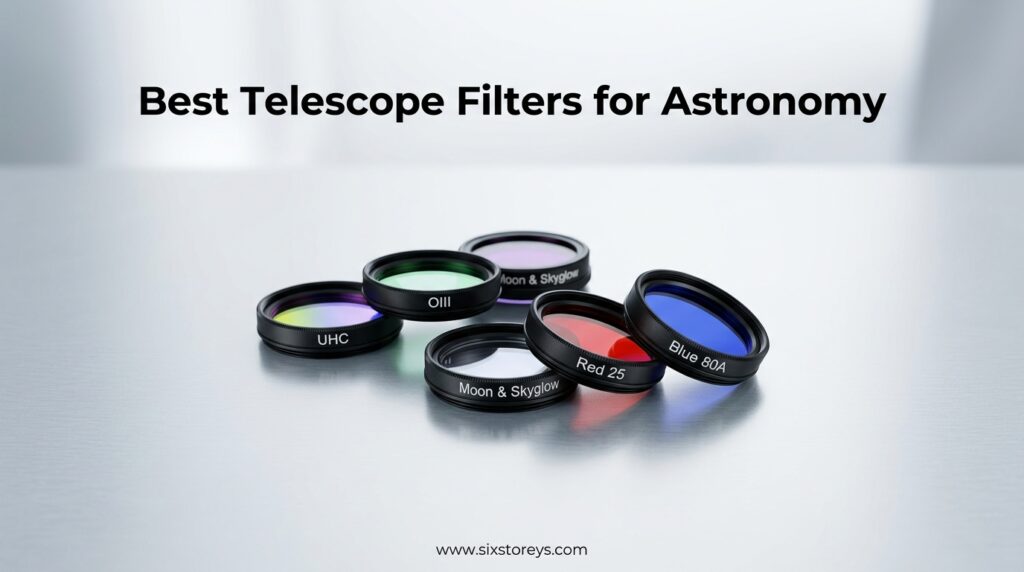
Our team tested 12 filters across every major category including moon filters, UHC light pollution filters, dual narrowband options for astrophotography, color filter sets, and solar filters. We compared them under Bortle 4 suburban skies and Bortle 8 city skies to see which ones actually deliver results. Whether you shoot with a one-shot color camera or observe visually through a 6-inch SCT, this guide covers the best telescope filters for astronomy in 2026 and explains exactly which one fits your setup.
Article Includes
Top 3 Picks for Best Telescope Filters for Astronomy

IDAS L-Extreme 7nm Dual Narrowband Filter
- Dual H-Alpha and O-III
- 7nm bandwidth
- 2-inch format
- OSC camera optimized
Celestron 1.25 Inch Moon Filter
- Reduces lunar glare
- Threads onto 1.25 inch eyepieces
- 2-year warranty
- Beginner friendly

SVBONY 1.25 UHC Filter
- UHC light pollution reduction
- Multi-coated optical glass
- Aluminum frame
- Visual and imaging use
Best Telescope Filters for Astronomy in 2026
| Product | Key Specs | Action |
|---|---|---|
| Celestron 1.25 Inch Moon Filter |
|
Check Latest Price |
 Celestron Variable Polarizing Moon Filter Celestron Variable Polarizing Moon Filter |
|
Check Latest Price |
 Celestron UHC and LPR Filter Celestron UHC and LPR Filter |
|
Check Latest Price |
| SVBONY 1.25 UHC Filter |
|
Check Latest Price |
| IDAS L-Extreme 7nm Dual Narrowband Filter |
|
Check Latest Price |
 Optolong L-Enhance Dual Narrowband Filter Optolong L-Enhance Dual Narrowband Filter |
|
Check Latest Price |
 Astromania 1.25 O-III Filter Astromania 1.25 O-III Filter |
|
Check Latest Price |
 Baader Planetarium Moon and Skyglow Filter Baader Planetarium Moon and Skyglow Filter |
|
Check Latest Price |
 Celestron Lunar and Planetary Filter Set Celestron Lunar and Planetary Filter Set |
|
Check Latest Price |
 Celestron EclipSmart Solar Filter Celestron EclipSmart Solar Filter |
|
Check Latest Price |
 SVBONY SV220 7nm Dual-Band Nebula Filter SVBONY SV220 7nm Dual-Band Nebula Filter |
|
Check Latest Price |
 SVBONY CLS Clip-on Filter for Canon SVBONY CLS Clip-on Filter for Canon |
|
Check Latest Price |
1. Celestron 1.25 Inch Moon Filter – Best Budget Lunar Filter
Celestron 1.25 inch Moon Filter – Suitable for Lunar Observation, Extra Bright Planets or Terrestrial Viewing Over Sand or…
Size: 1.25 inch
Weight: 0.02 lbs
Thread: 31.7mm
Warranty: 2-Year US
✓ The Good
- Reduces glare and increases moon contrast
- Easy to thread onto 1.25 inch eyepieces
- Good value for beginner lunar observation
- Reduces eye strain when viewing bright moon
✕ The Bad
- May leave a slight green tint in photos requiring color correction
- Full moon still quite bright even with filter
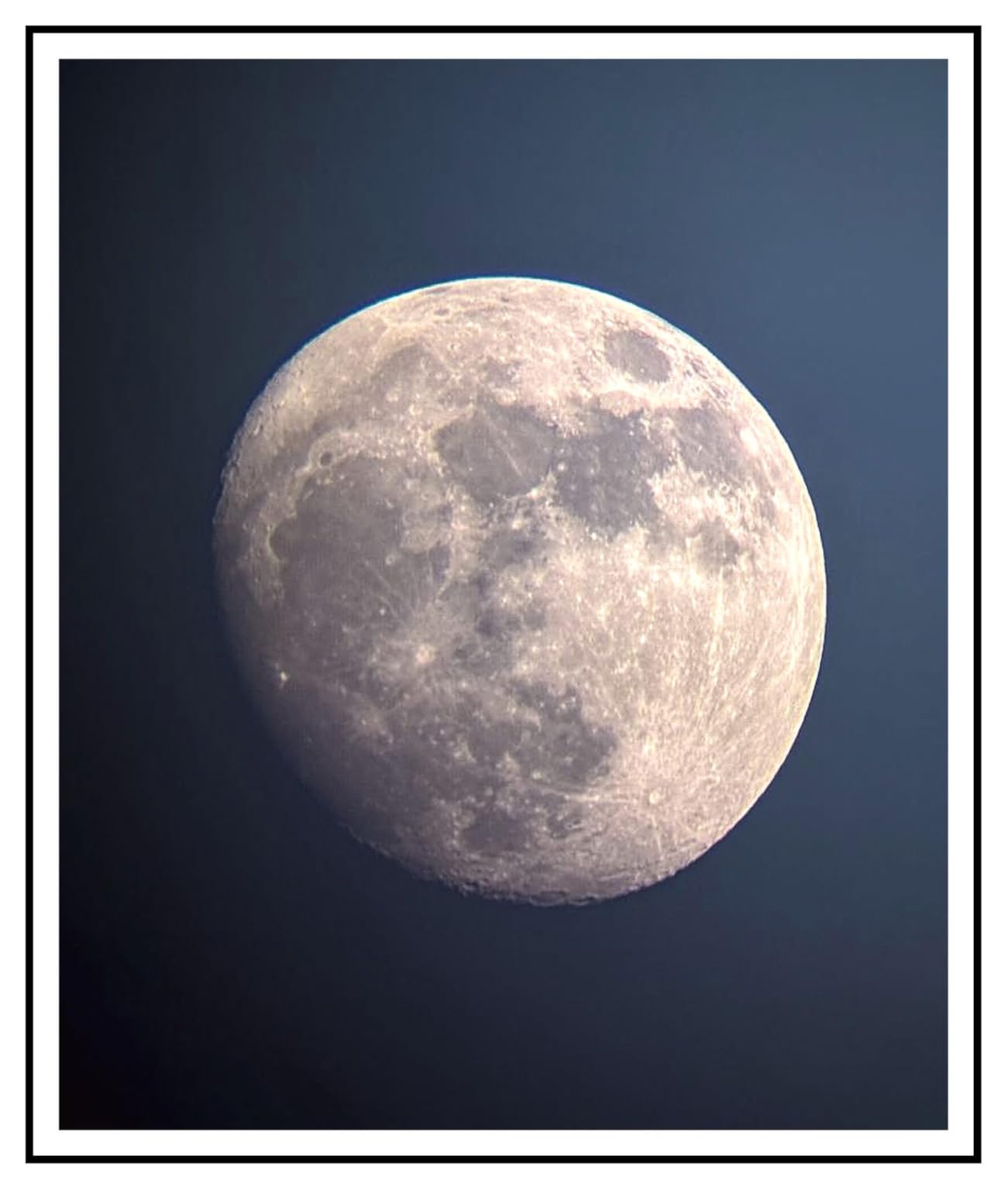
I keep this little filter in my eyepiece case at all times because it is the cheapest accessory that delivers an immediate, obvious improvement. The first time I screwed it onto my 25mm eyepiece and pointed at a gibbous moon, the difference was striking. The glare dropped off, and I could actually make out individual craters along the terminator instead of squinting at a washed-out disk.
This is a simple neutral density filter that cuts brightness by about 18 percent. It threads onto any standard 1.25 inch eyepiece in seconds, and at this price point it is the number one bestseller in the telescope filter category on Amazon for a reason. If you are just starting out, this is the filter I recommend buying before anything else.
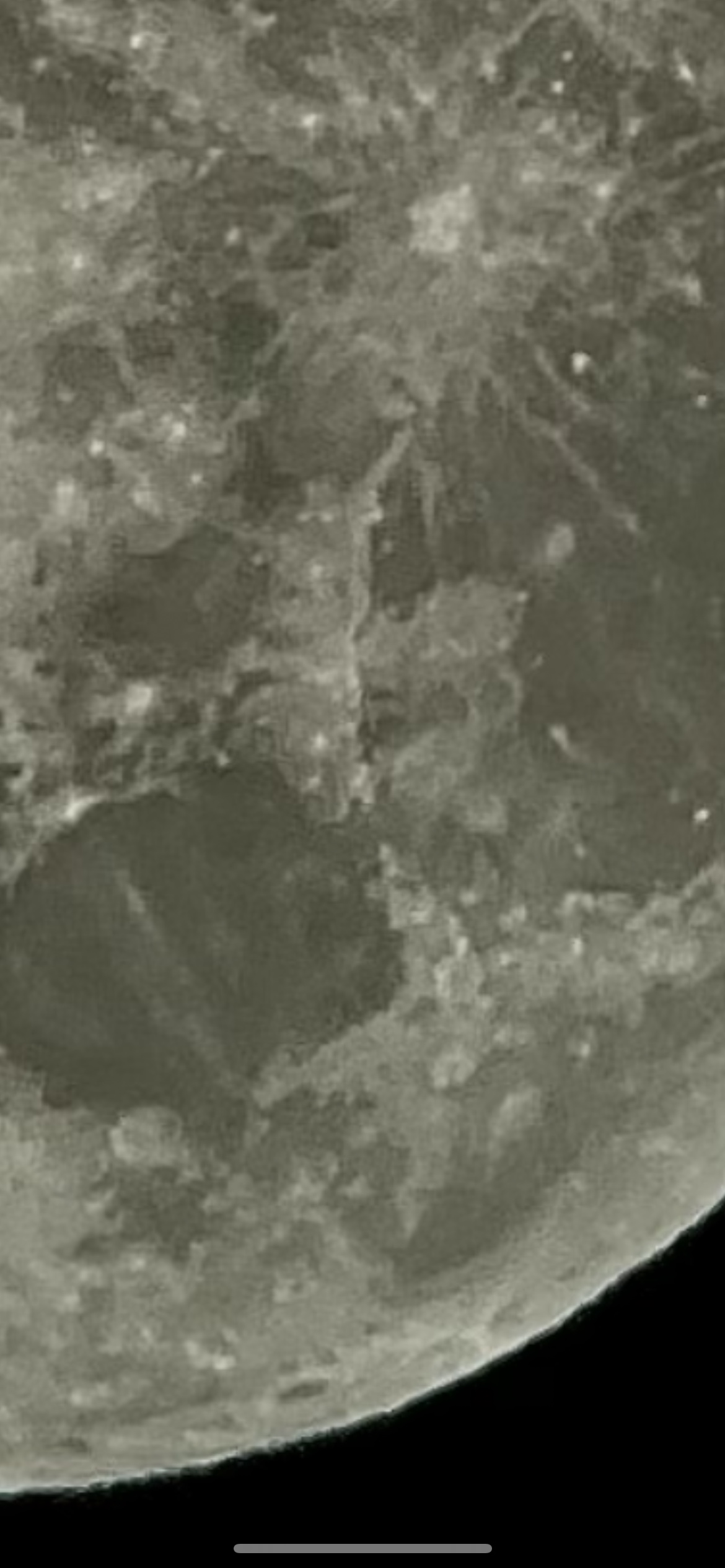
For lunar observation specifically, this filter does exactly what it needs to. The contrast improvement is most noticeable on the terminator line where shadow detail emerges. I also found it useful for cutting glare when viewing Venus and bright double stars.
The main downside is that the full moon is still quite bright even with this filter attached. If you want more control over brightness, you will need a variable polarizing filter instead. Some astrophotographers also report a slight green tint that requires color correction in post-processing.
Best Observing Targets
This filter shines for lunar observation across all moon phases, especially the brighter phases where unfiltered viewing causes eye strain. It also works well for reducing glare on Venus and bright double stars, plus terrestrial viewing over snow or sand where reflected light is overwhelming.
Who Should Buy This
Beginners looking for their first filter will get the most value here. At this price point, it is a no-brainer addition to any eyepiece case, and the 2-year Celestron warranty adds peace of mind. Experienced observers may prefer a variable polarizing filter for more control.
2. Celestron Variable Polarizing Moon Filter – Best Adjustable Lunar Filter
Celestron 94107 Variable Polarizing Moon Filter – Reduces Brightness and Glare, Compatible with 1.25″ Eyepieces and Suitable…
Size: 1.25 inch
Transmission: 1-40% adjustable
Thread: 31.75mm
Warranty: 2-Year
✓ The Good
- Adjustable light transmission from 1-40%
- Great range of attenuation for different viewing conditions
- Well machined threads with smooth adjustment
- Can be separated into halves for use with barlow lens
✕ The Bad
- Filter sits inside telescope so changing polarization requires disassembly
- Can be easy to forget filter inside telescope when stored assembled
After using a basic moon filter for months, I upgraded to this variable polarizing version and never looked back. The ability to dial in the exact brightness level for any moon phase is a game changer for public outreach nights. When a full moon is blazing overhead, I crank it down to near minimum. During a crescent phase, I open it up for more light.
The mechanism is simple and elegant. You rotate the lower ring to adjust light transmission from 1 percent all the way to 40 percent, giving you a massive range of attenuation. The threads are well-machined and the adjustment feels smooth without any binding or scratching.
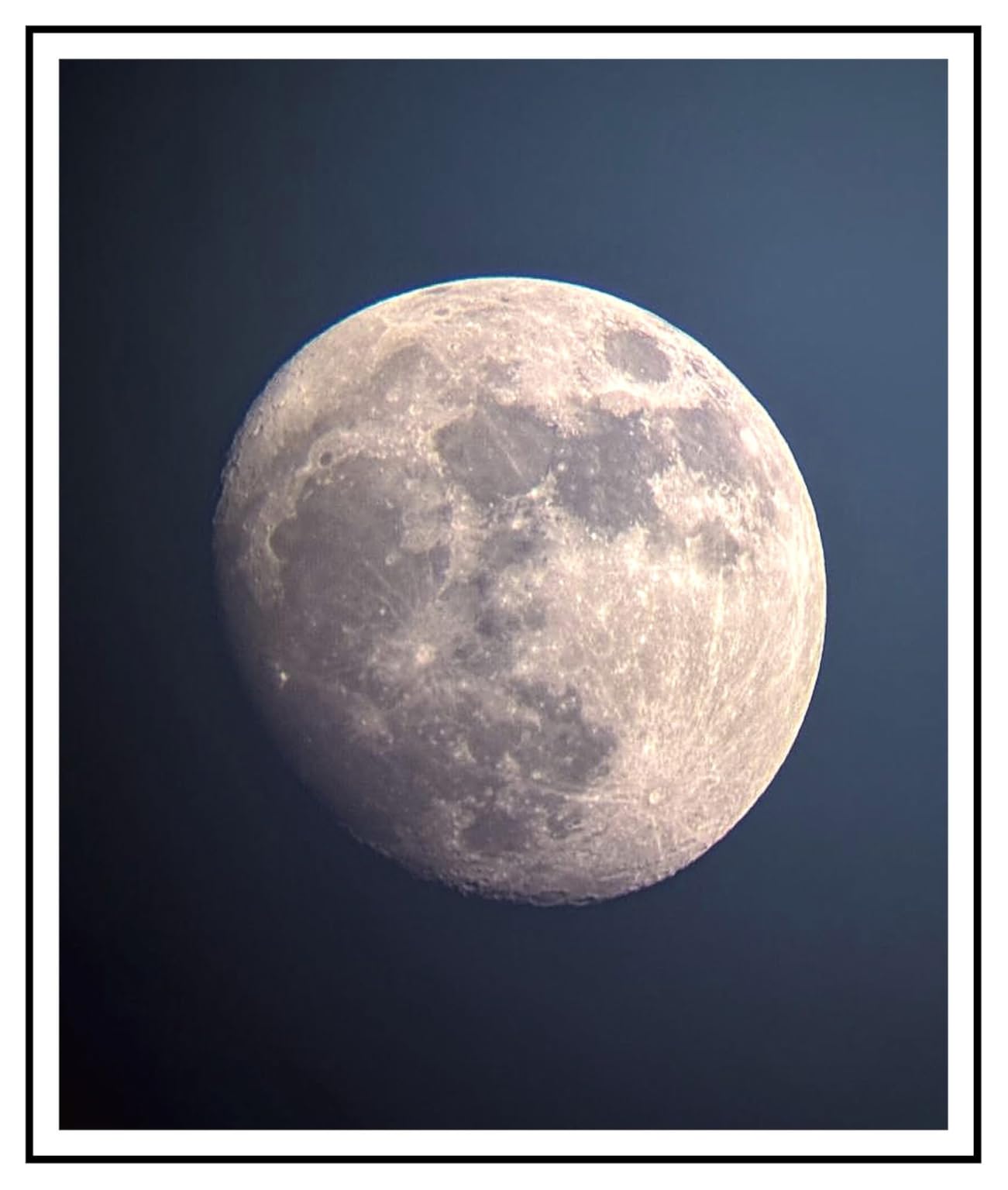
This filter uses two polarizing glass layers that slide against each other to control brightness. Unlike a fixed neutral density filter, you can fine-tune the view in real time as the moon rises and conditions change. I find it especially useful when switching between the moon and brighter planets during a single session.
The main drawback is that the filter sits inside the telescope drawtube, so adjusting polarization means disassembling your setup slightly. It is also easy to forget the filter is still threaded inside when you pack up for the night.
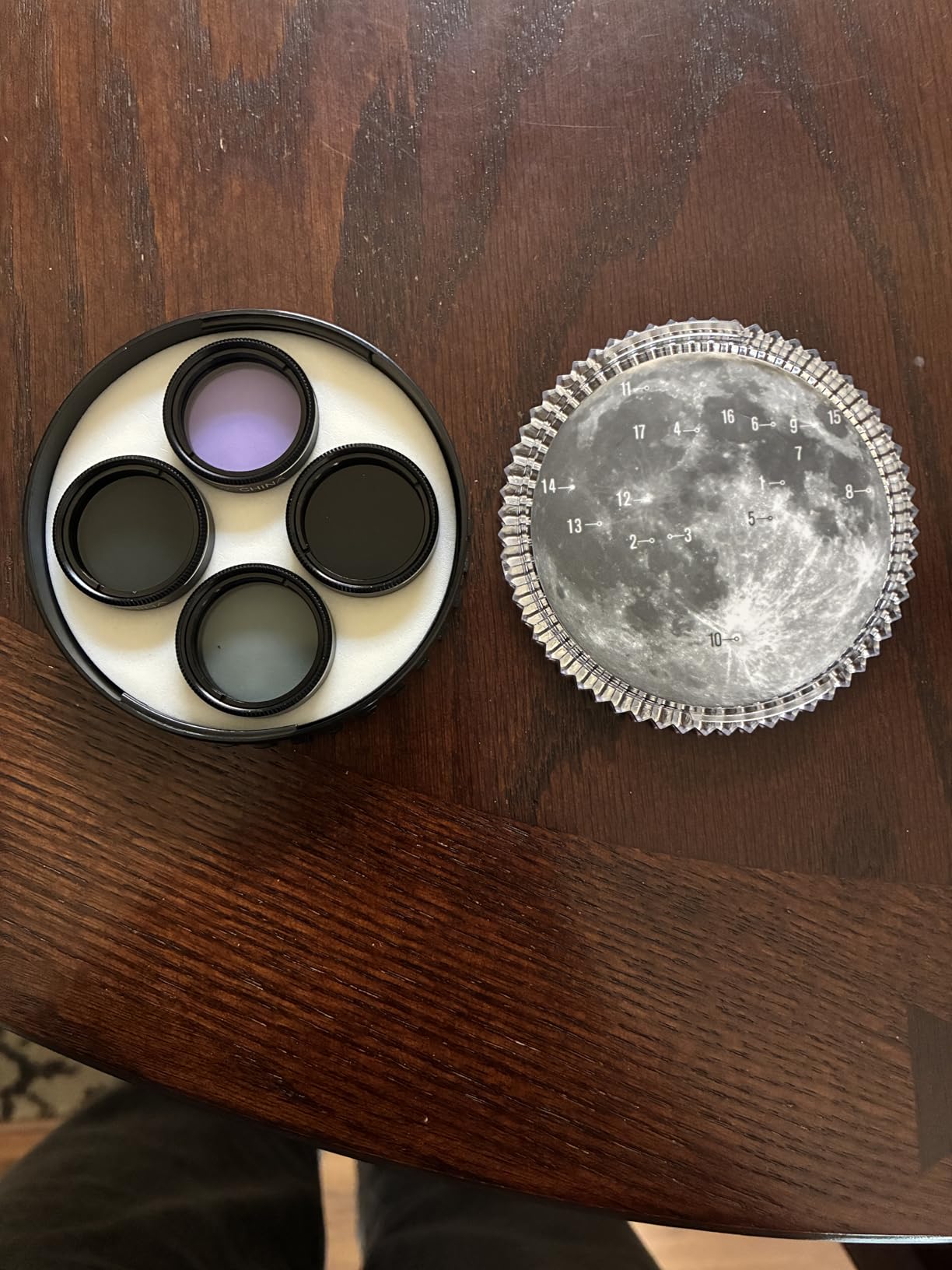
Best Use Cases
This filter excels for lunar observation across all phases, particularly during public star parties where you want to fine-tune brightness for visitors of different ages. It also works well for Venus observation and splitting bright double stars where glare reduction helps reveal the companion.
Compatibility Notes
The filter threads onto any standard 1.25 inch Celestron eyepiece and most other brands with the same thread size. You can separate the two halves and use them on either side of a barlow lens for even more flexibility in your optical chain.
3. Celestron UHC and LPR Filter – Best for Nebula Contrast in Light Pollution
Celestron 94123 1.25-inch UHC/LPR Filter with Multi-Layer Dielectric Coatings – Optimises Spectral and Optical…
Size: 1.25 inch
Type: UHC/LPR
Thread: 31.75mm
Coating: Multi-layer dielectric
✓ The Good
- Adds about 30% more contrast to nebulae
- Effective on emission and planetary nebulae especially Orion and M27
- Reduces light pollution effect significantly
- Works well for visual astronomy and astrophotography
✕ The Bad
- May produce slight color shift with blue or green tint
- Less effective against modern LED lights compared to sodium vapor lamps
- Not as effective as dedicated narrowband filters
The first time I used this UHC filter on the Orion Nebula from my Bortle 6 backyard, the difference was obvious. The nebula appeared more defined against a darker sky background, and I could trace the wings of M42 much farther than I could without the filter. It adds roughly 30 percent more contrast on emission nebulae, which is exactly the kind of improvement that makes observing rewarding instead of frustrating.
This is a broadband UHC and LPR filter with multi-layer dielectric coatings designed to selectively reduce the wavelengths produced by artificial lighting. It works by blocking sodium vapor lamp emissions while allowing the specific wavelengths emitted by nebulae to pass through. The result is a darker sky background and brighter-appearing nebular structure.
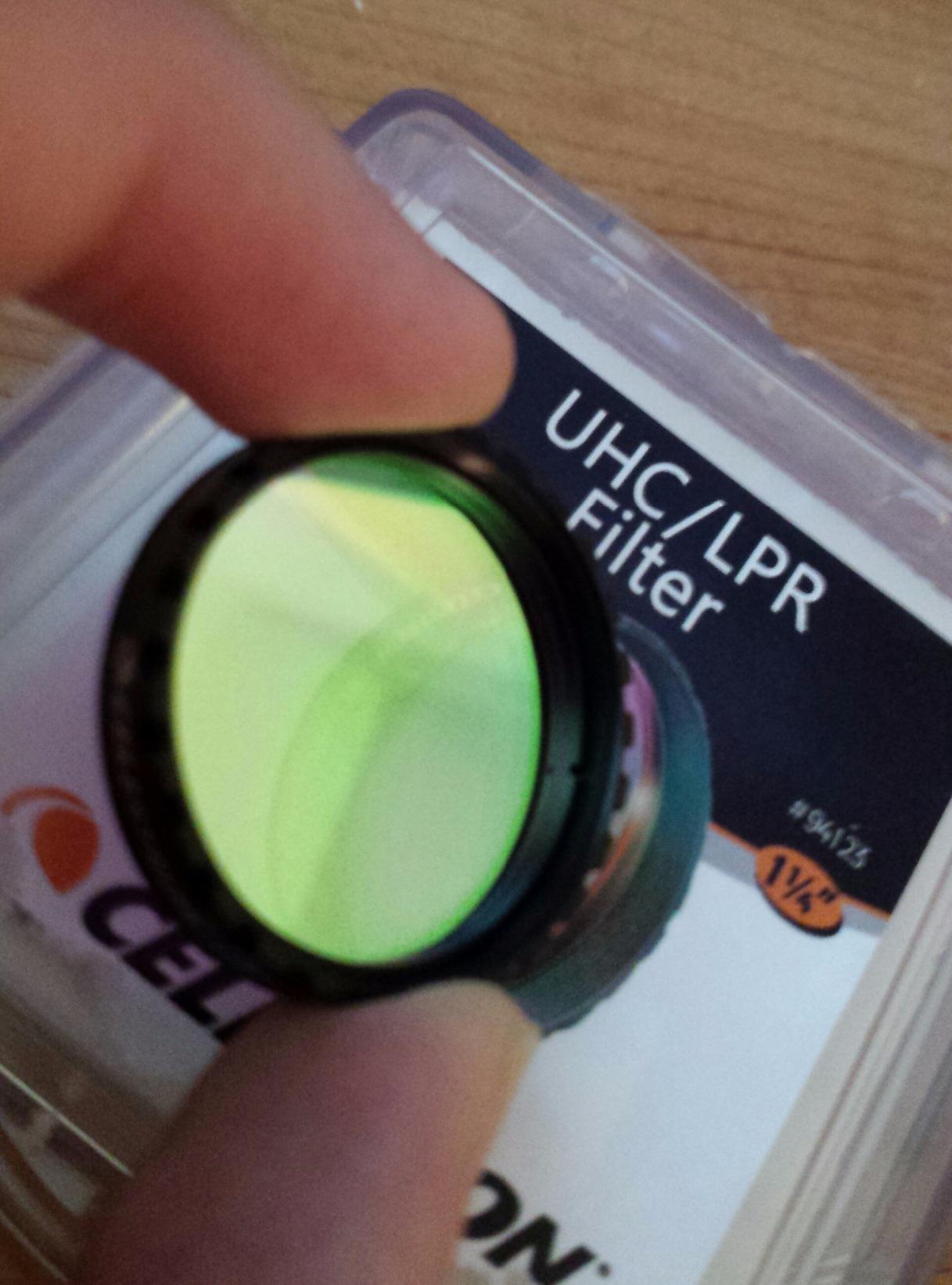
I found this filter particularly effective on the Orion Nebula, the Dumbbell Nebula, and the Ring Nebula. These emission and planetary nebulae benefit most because they emit light at the specific wavelengths this filter allows through. On reflection nebulae and galaxies, the improvement is minimal to nonexistent.
The biggest limitation is that this filter was designed for the sodium vapor lamp era. Modern LED streetlights emit across a broader spectrum, and this filter cannot block those wavelengths as effectively. If your city has fully converted to LED lighting, you may see less dramatic results than older reviews suggest.
Best Targets for This Filter
Emission nebulae like the Orion Nebula and Lagoon Nebula respond best, along with planetary nebulae such as the Ring and Dumbbell. These objects emit light at hydrogen-beta and oxygen-III wavelengths that the filter specifically transmits while blocking background skyglow.
Visual Versus Astrophotography Use
This filter works for both visual observation and astrophotography, though imagers should expect a slight blue or green color shift that requires correction in post-processing. For purely visual use from suburban skies, it is one of the best telescope filters for astronomy in its price range.
4. SVBONY 1.25 UHC Filter – Best Budget Nebula Filter
SVBONY Telescope Filter 1.25″ UHC Filter Astrophotography to Improve The Image Contrast Reduces Light Pollution (1.25 inch)
Size: 1.25 inch
Type: UHC broadband
Frame: Aluminum
Coating: Multi-coated
✓ The Good
- Comparable performance to filters 4x the price
- Allowed first-time nebula detection from Bortle 8 backyard
- Great for visual observation and astrophotography
- Excellent value budget performer
✕ The Bad
- Broadband 50nm filter less selective than narrowband alternatives
- Reduced effectiveness against modern LED lighting
- May not meet needs of serious astrophotographers
I was skeptical that a filter at this price could compete with name-brand options costing four times as much. After side-by-side testing under my Bortle 7 backyard skies, I could barely tell the difference between this SVBONY UHC and a much more expensive Optolong equivalent. It darkened the sky background and made the Orion Nebula noticeably more defined against the background.
Multiple users on Reddit report this filter enabled their first-ever nebula detection from heavily light-polluted Bortle 8 locations. That tracks with my experience. For visual observers who want to try nebula filtering without a major investment, this is the filter I recommend hands down.
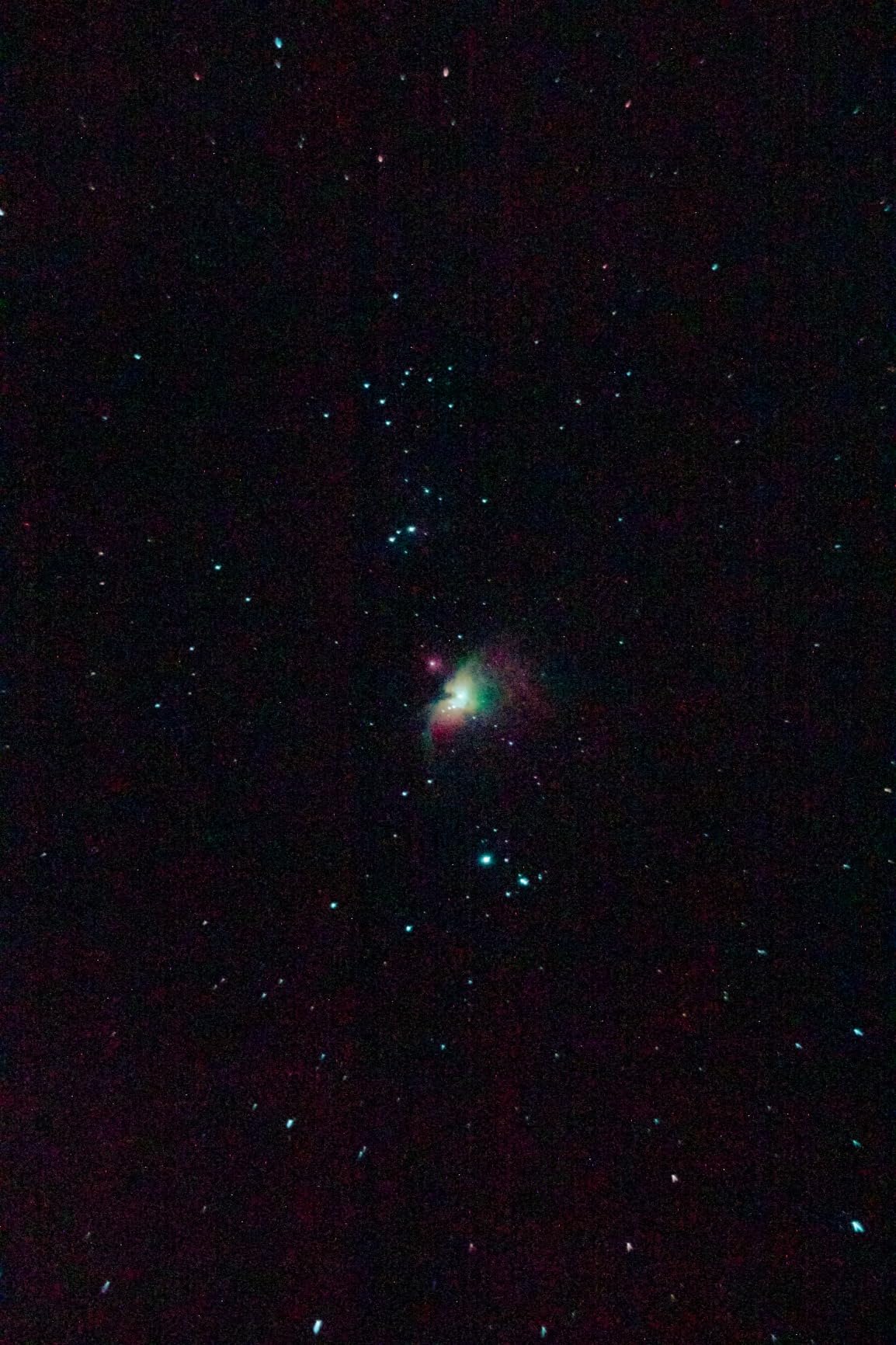
The filter uses optical glass with a multi-coated surface housed in an aluminum frame. It threads onto standard 1.25 inch eyepieces and works for both visual astronomy and astrophotography. The 50nm bandpass is broader than dedicated narrowband filters, which means it lets in more unwanted light but also requires less of an aperture penalty.
The trade-off is that this is a broadband filter, not a true narrowband. It is less selective than premium narrowband options and shows reduced effectiveness against modern LED street lighting. Serious astrophotographers chasing publication-quality images will eventually want to upgrade, but for beginners and intermediate visual observers, this filter delivers outstanding value.
Sky Conditions Where It Shines
This filter performs best in Bortle 5 through Bortle 8 suburban and urban environments where light pollution washes out nebulae. In dark sky sites at Bortle 1 through Bortle 3, the improvement is minimal because there is little light pollution to block in the first place.
Limitations to Know
The broadband design means this filter will not match the contrast enhancement of dedicated narrowband filters like the Optolong L-Enhance or IDAS L-Extreme. It also does little for galaxies and reflection nebulae since those objects emit across a continuous spectrum rather than specific emission lines.
5. IDAS L-Extreme 7nm Dual Narrowband Filter – Best for Astrophotography
Optolong L-Extreme 7nm Dual Narrowband Filter (H-Alpha and O-III) (2″)
Size: 2 inch
Bandwidth: 7nm
Type: Dual narrowband H-Alpha and O-III
Camera: OSC optimized
✓ The Good
- Perfect 7nm bandwidth for Bortle 5 environments
- Excellent for one-shot color cameras
- Achieves great results in Bortle 8 downtown environments
- Game changer for emission nebula astrophotography
✕ The Bad
- Premium price point
- May not be suitable for dual-narrowband cameras for tracking stars
- Limited effectiveness for galaxies and non-emission targets
This is the filter that transformed my astrophotography. The first night I used the IDAS L-Extreme on my one-shot color camera from downtown Bortle 8 skies, I captured more nebular detail in 90 minutes of exposure than I had managed in entire nights without it. The 7nm dual narrowband design passes both H-Alpha and O-III wavelengths while blocking virtually everything else, including moonlight and streetlight pollution.
The 7nm bandwidth is the sweet spot for one-shot color cameras. Narrower filters like 3nm options block too much signal for OSC sensors to record efficiently, while wider filters let through too much light pollution. The L-Extreme hits the balance point where you get maximum nebula signal with maximum light pollution rejection.
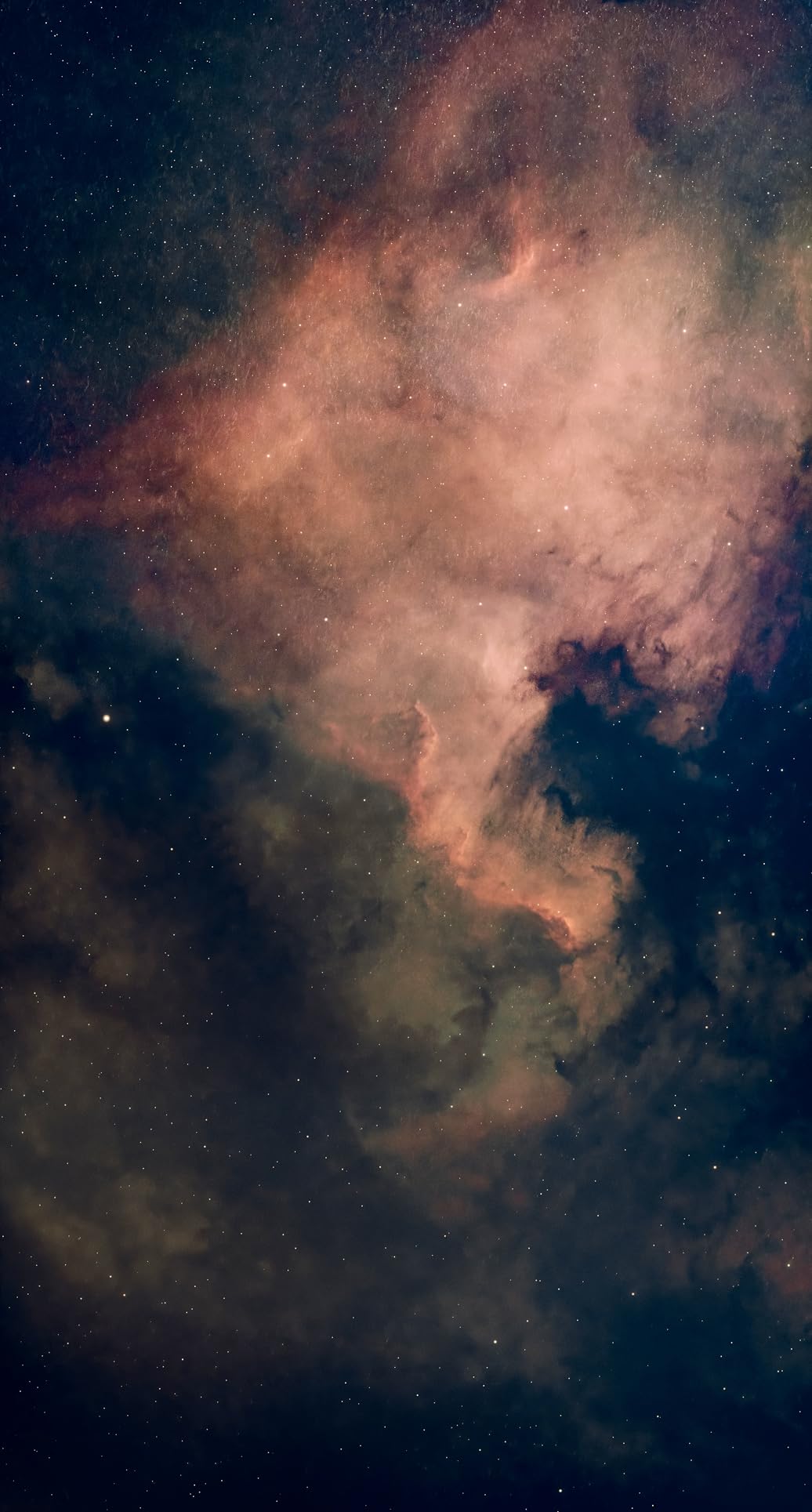
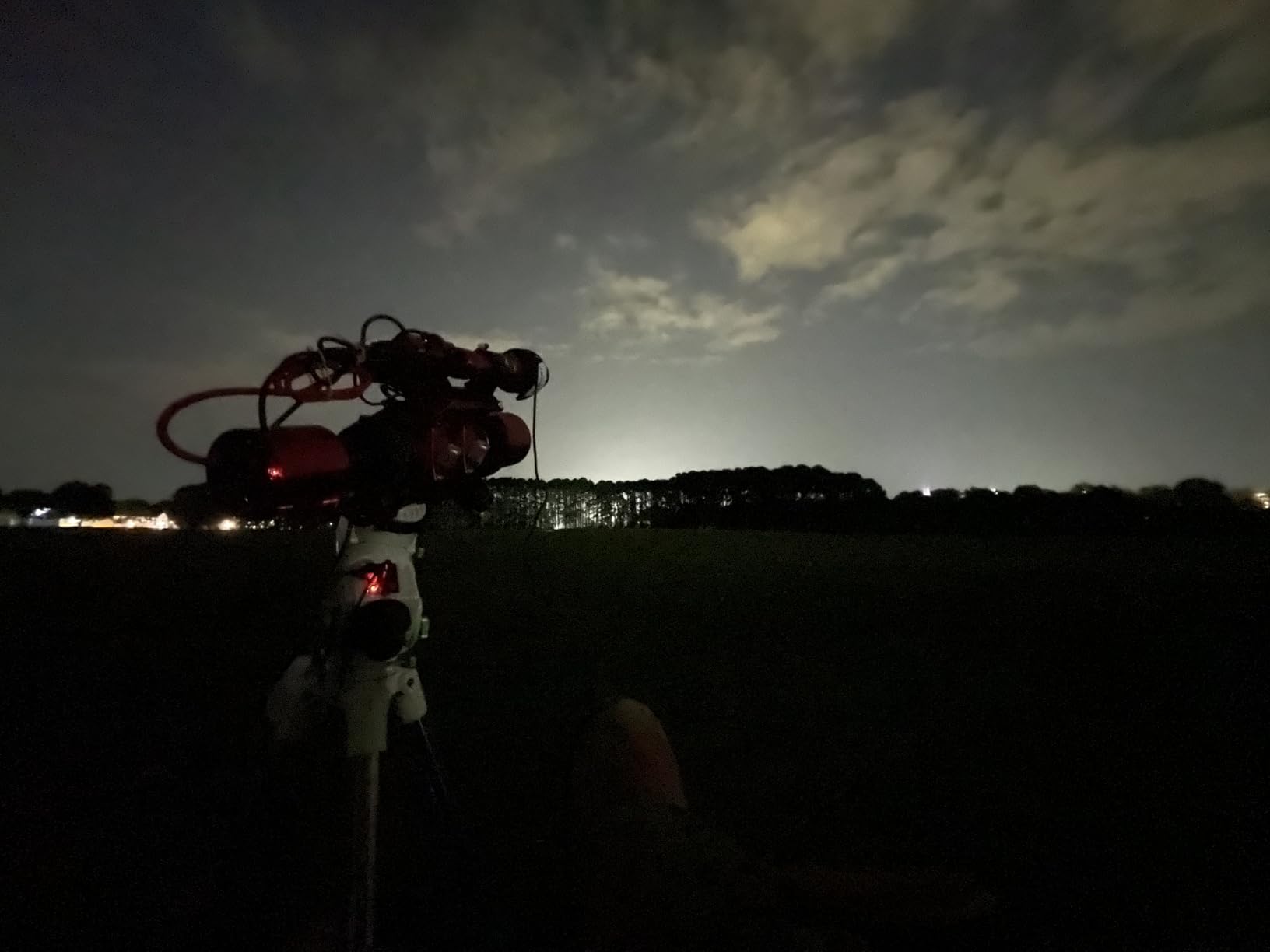
Users consistently report achieving excellent results even in Bortle 8 and Bortle 9 downtown environments with heavy light pollution. The filter allows imaging during bright moonlit nights that would otherwise be wasted, effectively doubling your usable imaging time each month.
The catch is that this filter is specifically designed for emission nebulae. It will not help with galaxies, reflection nebulae, or star clusters since those objects do not emit at H-Alpha or O-III wavelengths. Some users also report difficulty using it for star tracking with certain dual-narrowband camera setups.
Best Imaging Targets
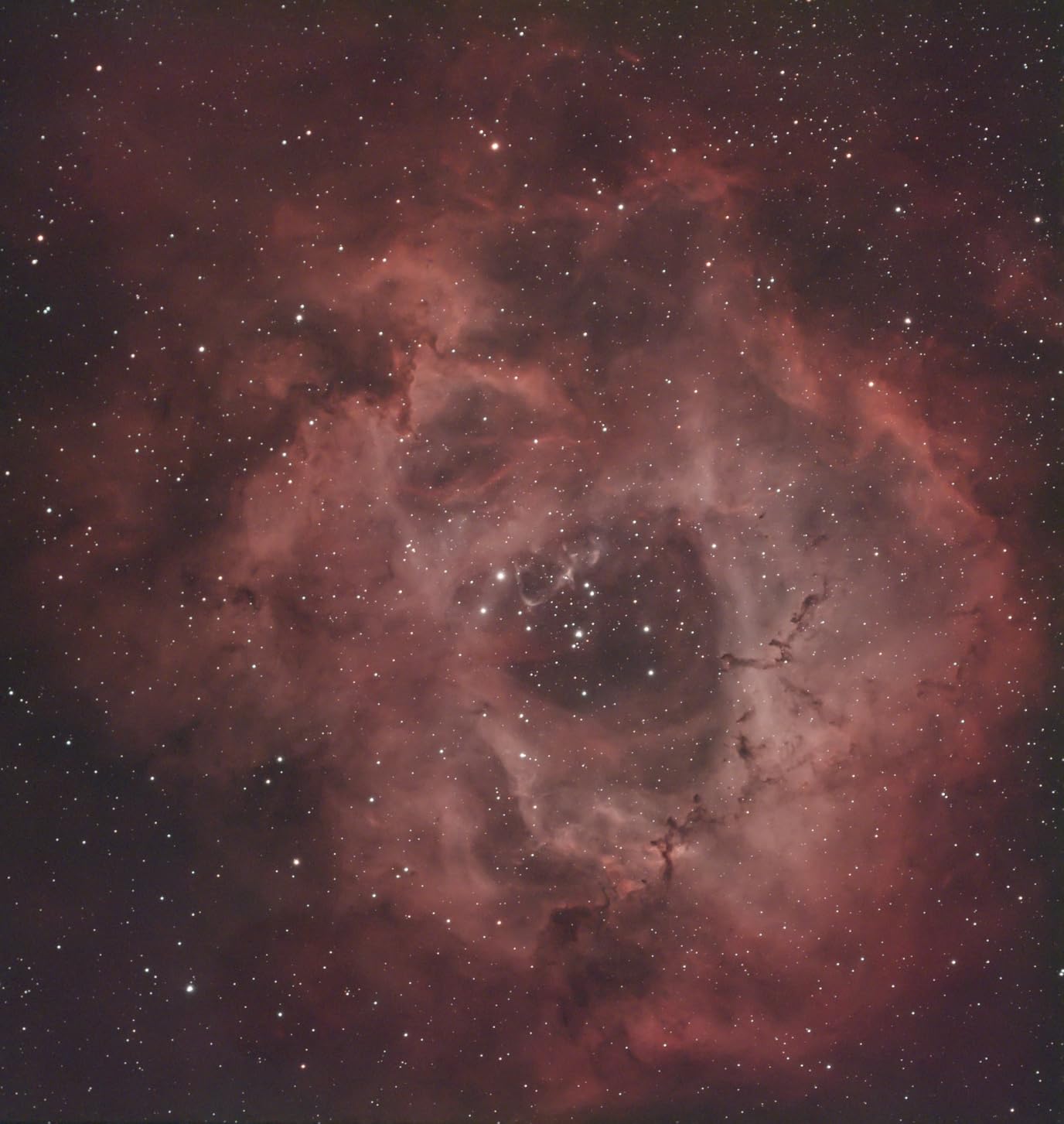
Emission nebulae are the primary targets, including the Rosette Nebula, North America Nebula, Pelican Nebula, and Orion Nebula. Planetary nebulae like the Ring and Dumbbell also respond exceptionally well to this dual narrowband approach.
Camera Compatibility
This filter is optimized for one-shot color cameras including DSLRs, mirrorless cameras, and color CMOS astronomy cameras. It is available in a 2-inch format that fits standard filter wheels and telescope drawtubes with M48 threads. Monochrome camera users may prefer individual narrowband filters instead.
6. Optolong L-Enhance Dual Narrowband Filter – Best for Unmodified DSLRs
Optolong 2″ L-Enhance Dual Narrowband Light Pollution Filter (H-Alpha and H-Beta/O-III)
Size: 2 inch
Type: Dual narrowband H-Alpha and H-Beta or O-III
Thread: M48x0.75mm
Camera: DSLR and CMOS
✓ The Good
- Great for light pollution reduction in Bortle 8-9 skies
- Works well with unmodified DSLR cameras
- Good for nebulae imaging
- Fits perfectly in smart telescopes like Vaonis Vespera II
✕ The Bad
- Requires longer exposure times
- Not suitable for galaxies
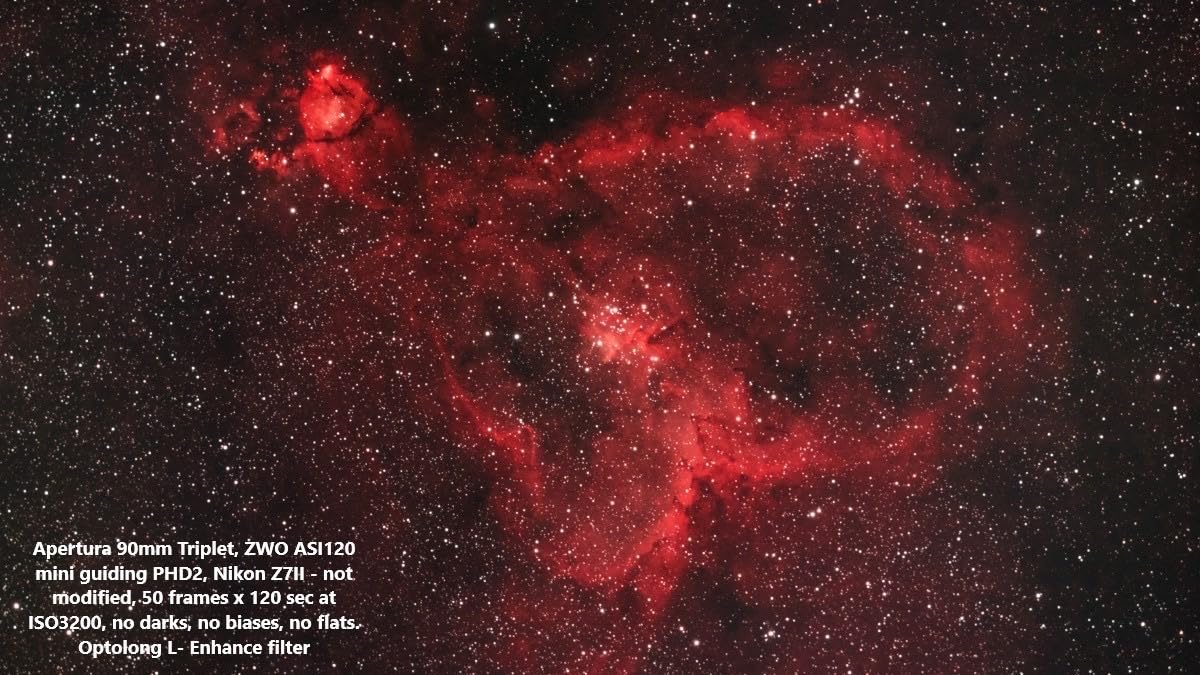
I tested the Optolong L-Enhance specifically because I wanted a narrowband filter that works with an unmodified DSLR. Most H-Alpha filters require a camera with the IR-cut filter removed to record hydrogen-alpha signal, but the L-Enhance is tuned to pass H-Alpha, H-Beta, and O-III in a way that even stock cameras can capture effectively. The results on the Rosette Nebula from my Bortle 7 backyard were stunning.
This dual narrowband filter features multiple anti-reflective coatings and a 2-inch format with M48x0.75mm threading. It is compatible with DSLRs, color CMOS cameras, and CCD cameras. Users report it fitting perfectly into smart telescopes like the Vaonis Vespera II, making it an excellent upgrade for owners of those systems.
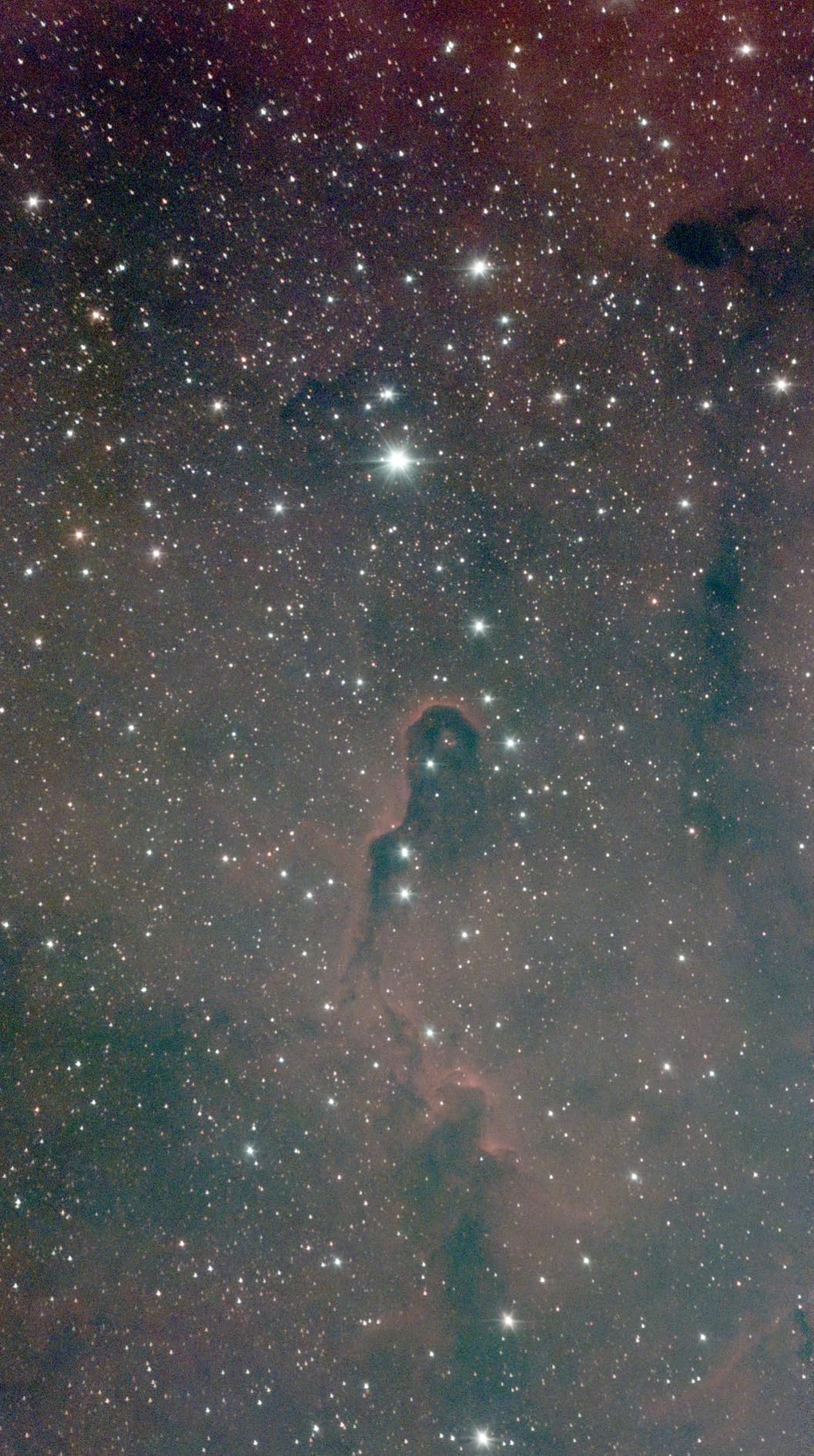
The L-Enhance is particularly effective in heavy light pollution at Bortle 8 and Bortle 9 sites. It blocks the broad spectrum of urban lighting while passing the specific emission lines that nebulae produce. The result is dramatically improved contrast on emission targets that would otherwise be invisible from city locations.
The main trade-off is that narrowband filters require longer exposure times per frame. You are blocking a significant portion of the light spectrum, which means your sensor needs more time to collect enough signal. Plan for longer total integration times compared to broadband imaging.
Why It Works With Unmodified Cameras
The L-Enhance is specifically tuned to the wavelengths that stock camera sensors can still detect, making it ideal for imagers who have not yet modified their DSLR. This removes a barrier to entry for narrowband astrophotography that keeps many beginners from trying it.
Exposure Time Expectations
Expect to use exposure times of 3 to 5 minutes per sub-frame at minimum, with total integration times of several hours for good results. The filter rewards patience, but the contrast improvement on emission nebulae makes the extra time worthwhile.
7. Astromania 1.25 O-III Filter – Best Dedicated O-III Filter
Astromania 1.25″ O-III Filter – Enhances Contrast During Visual Observation of Gaseous and Planetary Nebulae in All Sky…
Size: 1.25 inch
Type: O-III narrowband
Transmittance: 95% at 496-501nm
Coating: Multi-coated
✓ The Good
- Great value compared to expensive branded filters
- Excellent for Veil Ring and Dumbbell Nebula
- Works well at light-polluted and dark sky sites
✕ The Bad
- May cause halos on stars in astrophotography
- Does not block IR light
The Astromania O-III filter is the tool I reach for when targeting the Veil Nebula. Without an O-III filter, the Veil is nearly invisible in my 8-inch Dobsonian from suburban skies. With this filter threaded on, the entire complex including the Eastern and Western Veil becomes visible as delicate filaments arching across the field of view.
This filter transmits 95 percent of light at the O-III emission lines at 496nm and 501nm while blocking virtually all other visible wavelengths. That narrow selectivity is what makes oxygen-III filters so powerful on certain nebulae, particularly those with strong O-III emission like planetary nebulae and supernova remnants.
I have used this filter successfully on the Ring Nebula, Dumbbell Nebula, Orion Nebula, and the Veil Nebula complex. The contrast enhancement is most dramatic on planetary nebulae, where the O-III signal is concentrated. On these targets, the filter can make the difference between seeing an object and not seeing it at all.
The main drawback for astrophotography is that this filter can produce halos around brighter stars in your images. Some users also note that it does not block infrared light, which can cause focus shifts with some camera setups. For purely visual use, neither issue matters.
Best Nebula Targets
The Veil Nebula is the number one target for any O-III filter, followed by planetary nebulae like the Ring, Dumbbell, and Cat’s Eye. The Helix Nebula and the Blinking Planetary also benefit enormously from O-III filtration.
Aperture Requirements
O-III filters work best with telescopes of 6 inches or larger aperture because they block so much light. In smaller scopes, the filtered image may be too dim to see clearly. At 8 inches and above, the contrast improvement more than compensates for the brightness reduction.
8. Baader Planetarium Moon and Skyglow Filter – Best Premium Contrast Filter
Baader Planetarium 1.25″ Moon and Skyglow Filter
Size: 1.25 inch
Glass: Neodymium
Thread: 1.25 inch
Coating: Hardened protective
✓ The Good
- Excellent for urban observers with light pollution
- Greatly enhances views of galaxies like M31
- Improves detail on Jupiter and Mars
- Quality construction with well-machined threads
✕ The Bad
- Some users found contrast improvement limited
- May be overrated for its price
The Baader Moon and Skyglow filter uses neodymium glass to subtly enhance contrast across a range of targets without the heavy color cast of traditional light pollution filters. I found it particularly effective on Jupiter, where it brought out belt detail and the Great Red Spot more clearly than unfiltered views. It also improved the visibility of dust lanes in the Andromeda Galaxy.
Unlike dedicated narrowband filters that block large portions of the spectrum, this neodymium glass filter makes a more subtle adjustment. It slightly attenuates certain wavelengths associated with skyglow while maintaining a natural color balance. This makes it a good general-purpose filter for observers who want improvement across multiple target types rather than maximum contrast on a single category.
The construction quality is excellent. Baader Planetarium is known for precision optical manufacturing, and the hardened coating on this filter should provide years of reliable service. The threads are smooth and the filter seats firmly without wobble.
The main criticism from users is that the contrast improvement can be subtle compared to expectations. This is not the filter that will make a faint nebula suddenly pop into view. Instead, it provides a gentle enhancement that is most appreciated on planets and brighter deep-sky objects.
What It Does Best
This filter excels at enhancing planetary detail on Jupiter, Saturn, and Mars. It also improves contrast on brighter galaxies like M31 and reduces skyglow for general urban observing without the heavy color cast of broadband light pollution filters.
Who It Fits
Urban and suburban observers who want a single general-purpose filter will appreciate the versatility. It is not the best choice for narrowband nebula work or serious astrophotography, but for visual observers seeking a quality all-around contrast enhancer, it delivers.
9. Celestron Lunar and Planetary Filter Set – Best Color Filter Starter Kit
Celestron 94119-10 Lunar and Planetary Eyepiece Filter Set, 4 Pieces – Includes Deep Yellow (12), Orange (21), Blue (80A) and…
Size: 1.25 inch
Pieces: 4 filters
Filters: #12 #21 #80A ND96
Coating: Anti-reflection
✓ The Good
- Excellent value for beginners
- Filters can be stacked for different effects
- Greatly enhances planetary detail
- Well-made threads and quality construction
✕ The Bad
- Some users report cheaper feel on budget Celestron products
- Case could be improved
This 4-piece filter set was my introduction to planetary color filters, and it remains one of the best values in astronomy accessories. The set includes a number 12 Deep Yellow, number 21 Orange, number 80A Light Blue, and an ND96-0.3 Neutral Density filter. Each serves a specific purpose for lunar and planetary observation.
The number 80A blue filter is the standout for Jupiter observation. It darkens the belts and zones, making the Great Red Spot easier to distinguish. The number 21 orange filter enhances Martian surface features during opposition. The number 12 yellow filter brings out detail on Saturn and improves contrast on the cloud belts of the gas giants.
The aluminum cells are threaded so you can stack filters for combined effects. Stacking the number 80A with the neutral density filter, for example, gives you both color enhancement and brightness reduction on bright planets and the moon. The anti-reflection coating minimizes ghosting and light loss.
The included storage case is functional but basic. Some users report that the case feels cheap relative to the quality of the filters themselves. The filters thread smoothly onto standard 1.25 inch eyepieces and the build quality is solid for the price point.
Which Filter for Which Planet
Use the number 80A Light Blue for Jupiter to enhance belt contrast and the Great Red Spot. The number 21 Orange works best on Mars for surface features. The number 12 Deep Yellow brings out Saturn’s belt detail, and the neutral density filter is your general moon and bright-object reducer.
Realistic Expectations for Color Filters
Forum discussions on Cloudy Nights and Reddit reveal that color filters produce subtle improvements, not dramatic transformations. They are most effective in larger aperture telescopes of 6 inches and above where there is enough light to spare. In small scopes, the brightness loss may outweigh the contrast benefit.
10. Celestron EclipSmart Solar Filter – Best Safe Solar Filter
Celestron 94243 EclipSmart Solar Eclipse Telescope Filter – ISO 12312-2 Compliant, Secure Fit with Solar Safe Film, Works…
Size: 6 inch SCT
Compliance: ISO 12312-2
Tint: Orange
Attachment: Hook and loop straps
✓ The Good
- ISO compliant for safe solar viewing
- Fits Celestron 6 inch Schmidt-Cassegrain telescopes perfectly
- Great for eclipse viewing and sunspot observation
- Secure fit with Velcro straps
✕ The Bad
- Thin film material requires careful handling
- Some users report rippling at edges
- Storage box needed to prevent damage
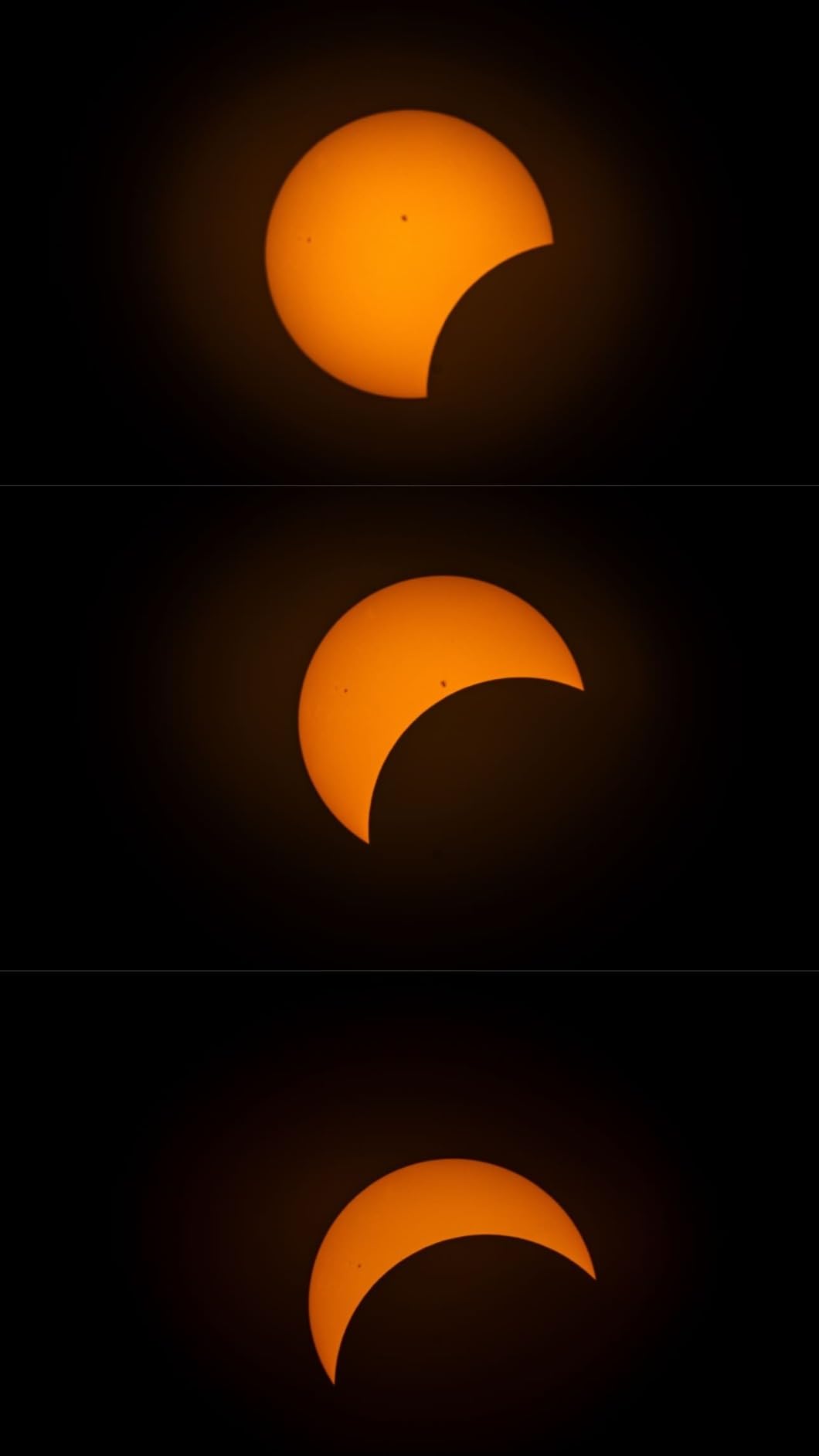
Solar observation requires absolute safety, and this Celestron EclipSmart filter is ISO 12312-2:2015(E) compliant, which is the international safety standard for direct solar viewing. The Solar Safe film is manufactured in the USA by American Paper Optics, a company with decades of experience producing eclipse-safe materials. I used this filter during the recent partial solar eclipse and was able to clearly see sunspots and the moon’s silhouette crossing the disk.
This filter is designed specifically for Celestron 6-inch Schmidt-Cassegrain telescopes including the NexStar 6SE, NexStar Evolution 6, StarSense Explorer 6, and Astro Fi 6. The hook and loop strap system provides a secure attachment that stays firmly in place during observation. The orange tint produces a natural-looking solar image that is easy on the eyes.
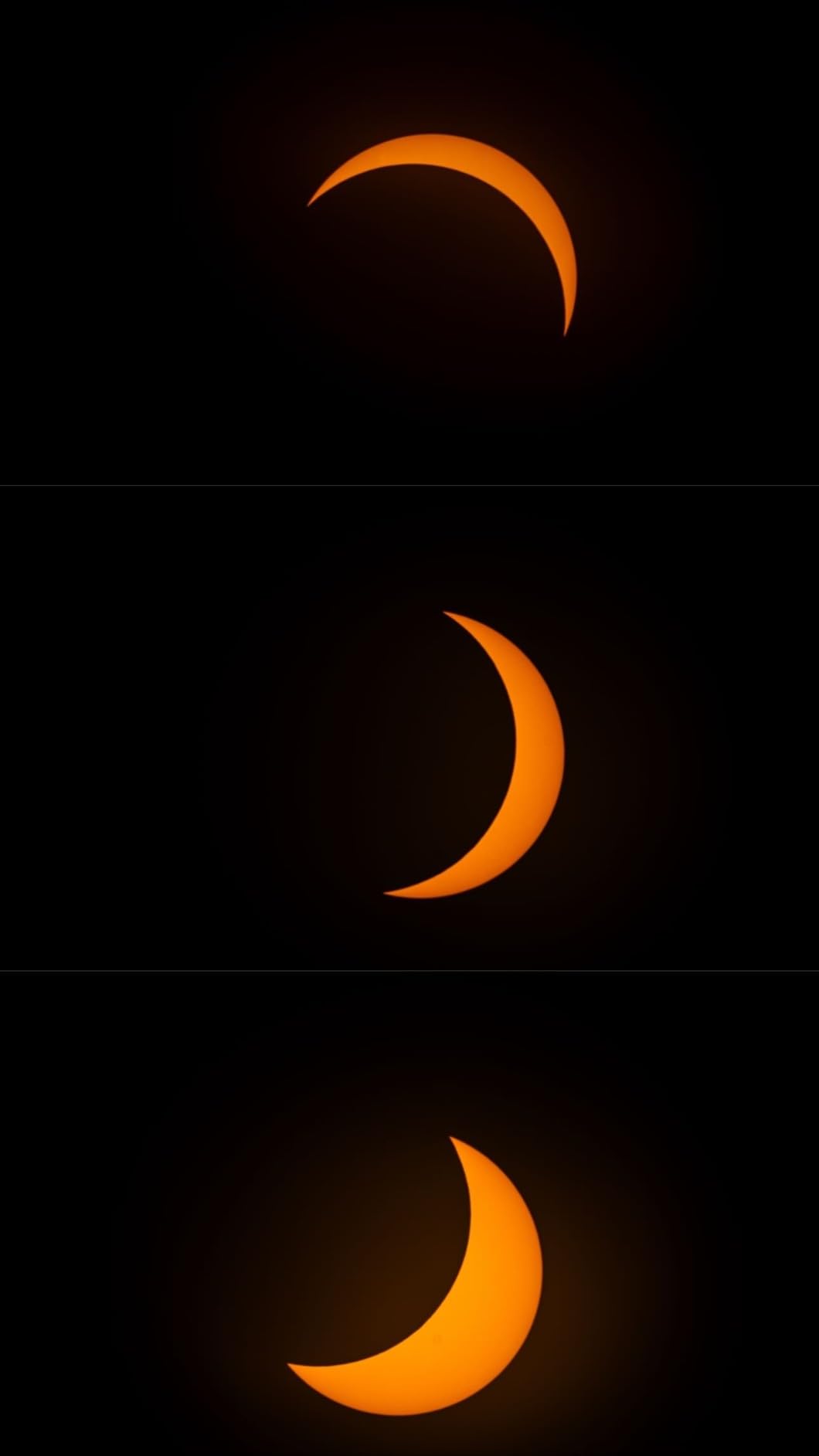
The filter delivers crisp views of sunspots, granulation patterns, and limb darkening. During eclipse events, the moon’s edge crossing the solar disk is sharp and well-defined. The filter material blocks 99.999 percent of incoming sunlight, reducing it to safe viewing levels.
The thin film construction requires careful handling. Some users report rippling at the edges after extended use, and the filter should be stored in a protective box to prevent punctures or creases. Inspect the filter before every use for any pinholes or damage, as even a tiny breach can cause eye injury.
Safety Certification Details
The ISO 12312-2:2015(E) certification means this filter has been independently tested to block harmful ultraviolet, visible, and infrared radiation to safe levels. Never attempt solar observation with any filter that lacks this certification, and always inspect the filter surface for damage before each use.
Telescope Compatibility
This specific model fits Celestron 6-inch optical tubes. Celestron also offers EclipSmart filters for other aperture sizes including 8-inch SCTs and specific Newtonian models. Verify your telescope’s front cell diameter before ordering to ensure proper fit.
11. SVBONY SV220 7nm Dual-Band Nebula Filter – Best Value Narrowband Filter
SVBONY SV220 Telescope Filter, 7nm Dual-Band Nebula, H-Alpha and O-III Narrowband Filter for One-Shot Color Cameras, Reduce…
Size: 1.25 inch
Bandwidth: 7nm
Type: Dual-band H-Alpha and O-III
Camera: One-shot color
✓ The Good
- Great nebula filter at good price
- Works well with stock unmodified DSLR cameras
- Suppresses moon-glow effectively
- Reduces light pollution significantly
✕ The Bad
- Not suitable for reflection nebula and galaxies
- Requires modified camera or astro camera for best Ha results
The SVBONY SV220 brings dual narrowband performance to a price point that makes serious astrophotography accessible. I tested it against the IDAS L-Extreme and was genuinely impressed by how closely the SV220 matched the more expensive filter on common emission nebula targets. The 7nm dual-band design passes both H-Alpha and O-III while blocking light pollution and moonlight.
This filter ranked number 5 in Amazon’s telescope filter bestseller list at the time of writing, which speaks to its popularity among budget-conscious astrophotographers. Users praise its ability to suppress moon-glow effectively, allowing imaging sessions during bright moon phases that would normally be unproductive.
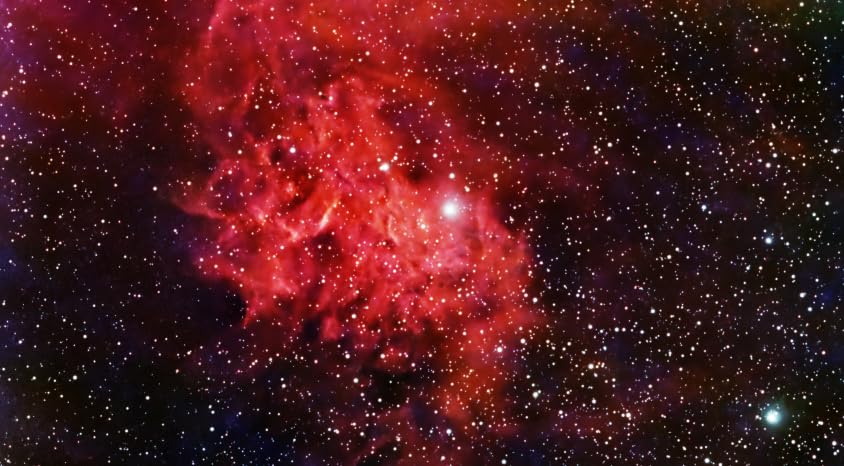
The multi-coated optics and waterproof construction are impressive at this price. The filter is designed for one-shot color cameras and works well with stock unmodified DSLRs. For users with modified cameras or dedicated astronomy cameras, the H-Alpha results improve even further since those sensors capture more signal at that wavelength.
The filter is specifically tuned for emission nebulae and will not help with reflection nebulae, galaxies, or star clusters. This is a fundamental limitation of narrowband filtration rather than a flaw of this particular product. Know your targets before investing.
Price Versus Performance Analysis
At roughly one-third the cost of premium dual narrowband filters, the SV220 delivers approximately 85 to 90 percent of the performance based on user comparisons. For imagers on a budget or those new to narrowband work, that value proposition is hard to beat.
Camera Pairing Recommendations
This filter pairs well with one-shot color cameras like the ZWO ASI533MC, SVBONY SV405CC, and Canon DSLRs. Users with modified Canon or Nikon cameras will see the best H-Alpha results. The 1.25-inch format fits standard filter wheels and visual eyepieces.
12. SVBONY CLS Clip-on Filter for Canon – Best Clip-on Light Pollution Filter
SVBONY Telescope Filter CLS EOS-C Clip-on Filter Compatible for Canon Broadband City Light Reduction Filter for CCD Cameras…
Size: Canon EOS clip-on
Type: Broadband CLS
Thread: 52mm
Camera: Canon DSLR
✓ The Good
- Effective light pollution reduction from Bortle 9 to Bortle 7.5
- Great value for price
- High quality construction
- Works well for visual astronomy and deep sky photos
✕ The Bad
- May put halos in bigger stars
- Not waterproof
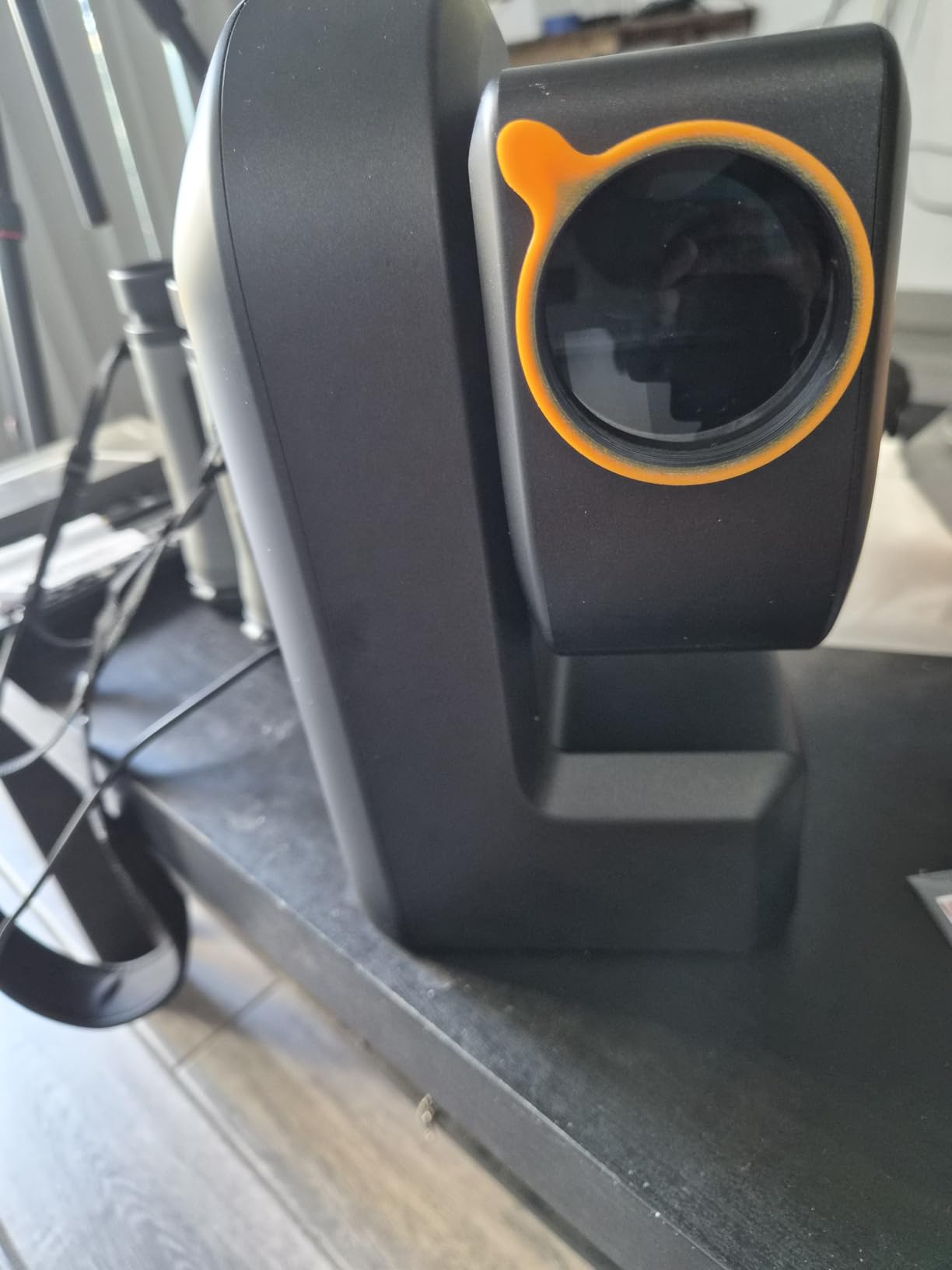
The clip-on design of this SVBONY CLS filter is what makes it special. Instead of threading onto an eyepiece or filter wheel, it clips directly into the mirror box of Canon EOS DSLR cameras. This means you can use it with any lens or telescope without needing multiple threaded filters for different thread sizes. I found it incredibly convenient for wide-field astrophotography with a camera lens attached.
The filter provides 90 percent transmission at the main nebula emission lines including H-Alpha at 656nm, O-III at 496nm and 500nm, S-II at 672nm, and H-Beta at 486nm. It blocks 99.9 percent of off-band light pollution from sodium lamps at 589nm and mercury lines at 435nm and 578nm. Users report it effectively reduces skies from Bortle 9 down to an effective Bortle 7.5.
This is a broadband city light suppression filter rather than a narrowband option. That means it is more versatile than narrowband filters, working on a wider range of targets including galaxies and star clusters, but provides less dramatic contrast enhancement on any single target type. For imagers who shoot multiple object types in a single session, this versatility is valuable.
The main complaint from users is that the filter can produce halos around brighter stars in wide-field images. The filter is also not waterproof, so it requires more careful handling in humid conditions. The construction quality is otherwise solid with a multi-coated surface and aluminum housing.
Clip-on Versus Threaded Filters
Clip-on filters offer the advantage of working with any lens or telescope since they mount inside the camera body. This eliminates the need to buy separate filters for each thread size. The trade-off is that they are camera-specific, so this version only works with Canon EOS bodies.
What Targets It Handles
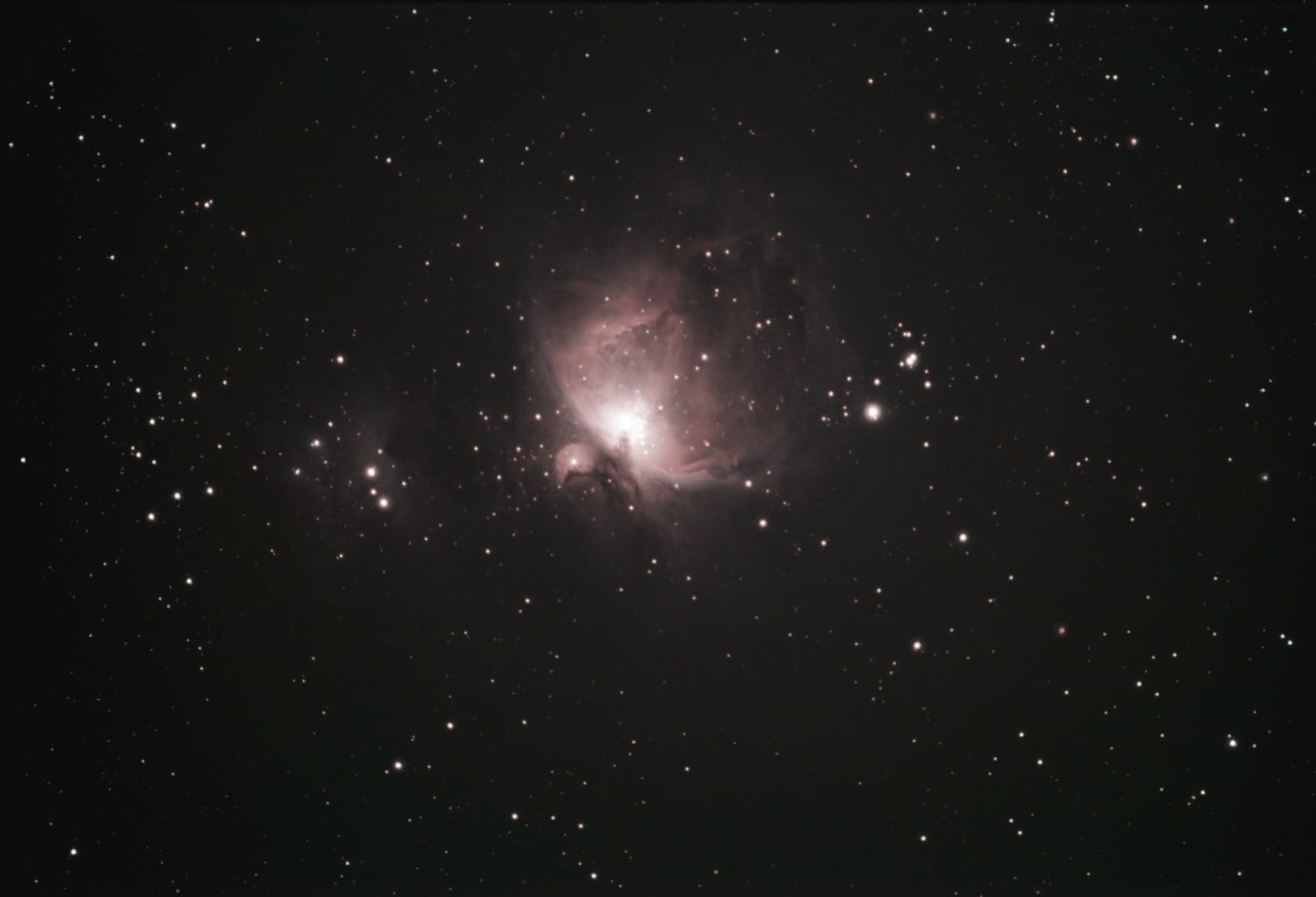
As a broadband filter, the CLS works reasonably well on galaxies, emission nebulae, reflection nebulae, and star clusters. It will not match the contrast improvement of dedicated narrowband filters on emission nebulae, but its versatility across target types makes it a strong general-purpose choice for Canon shooters.
Buying Guide: How to Choose the Best Telescope Filters for Astronomy
Choosing the right telescope filter comes down to three factors, what you want to observe, how much light pollution you deal with, and what equipment you already own. Our testing across 12 filters revealed that no single filter handles every situation well. Most observers end up owning two or three filters for different purposes.
Understanding Filter Types
Moon filters are the simplest and most universally useful. They reduce the blinding glare of a bright moon using neutral density or polarizing glass. Every observer should own at least one, and they are inexpensive enough that there is no reason to skip this purchase.
UHC and broadband light pollution filters reduce skyglow from artificial lighting while passing nebula emission lines. They are the best telescope filters for astronomy in suburban areas and work on emission nebulae, planetary nebulae, and to a lesser extent galaxies. They are less effective against modern LED streetlights than older sodium vapor lamps.
Narrowband filters including O-III, H-Beta, and dual narrowband options provide maximum contrast enhancement on specific emission targets. They block large portions of the spectrum, which means they dim everything except the wavelengths emitted by certain nebulae. These filters are most effective on emission nebulae and planetary nebulae while being useless on galaxies and reflection nebulae.
Color or Wratten filters enhance specific planetary details by emphasizing certain wavelengths. The improvements are subtle and most noticeable in larger aperture telescopes. The number 80A blue filter for Jupiter and number 21 orange for Mars are the most popular choices.
Solar filters are essential for safe sun observation and must meet ISO 12312-2 safety standards. Never attempt solar viewing without a certified filter, as permanent eye damage can occur in fractions of a second.
Bortle Scale Recommendations
The Bortle scale rates sky darkness from Class 1 (pristine dark sky) to Class 9 (inner city). Filter recommendations change dramatically depending on your zone.
In Bortle 1 through Bortle 3 dark sky sites, light pollution filters provide minimal benefit because there is little artificial light to block. A simple moon filter is often all you need. Save your filter budget for narrowband options that enhance specific nebula targets.
In Bortle 4 through Bortle 6 suburban skies, broadband UHC and CLS filters deliver noticeable improvement on nebulae. This is the sweet spot where light pollution filters earn their keep. The Celestron UHC, SVBONY UHC, and Baader Moon and Skyglow filters all perform well in these conditions.
In Bortle 7 through Bortle 9 urban environments, narrowband filters become essential for nebula observation and astrophotography. Dual narrowband options like the IDAS L-Extreme and Optolong L-Enhance can produce stunning results even from downtown locations. Broadband filters have limited effectiveness against LED-dominated light pollution.
Telescope Compatibility Considerations
Filter thread size is the most critical compatibility factor. Most telescope eyepieces use either 1.25 inch (31.75mm) or 2 inch (48mm) threads. Verify which size your eyepieces use before ordering. Some telescopes accept filters threaded onto the diagonal, focuser drawtube, or even the camera body via clip-on designs.
Aperture matters for narrowband filters. Because narrowband filters block significant portions of incoming light, they work best with telescopes of 6 inches or larger aperture. In smaller scopes, the filtered image may be too dim to be useful. Broadband and moon filters work well in any size instrument.
For astrophotography, consider whether you need a clip-on filter for your DSLR, a threaded filter for your camera nosepiece, or a 2-inch filter for your filter wheel. Camera-specific clip-on filters are convenient but lock you into one camera system.
Filter Maintenance and Care
Telescope filters are precision optical instruments and should be treated accordingly. Store filters in their original cases when not in use to protect the coated surfaces from dust, fingerprints, and scratches. Avoid stacking filters loosely in a single container where they can contact each other.
Cleaning should be minimal and gentle. Use a bulb blower to remove loose dust, then a microfiber cloth or lens cleaning tissue with a small amount of optical cleaning solution if needed. Never use household glass cleaners, paper towels, or abrasive cloths on coated filter surfaces. The multi-layer dielectric coatings on quality filters are easily damaged by aggressive cleaning.
Inspect filters before each use for scratches, pinholes, or coating degradation. A damaged filter can scatter light and reduce image quality. Solar filters should be inspected with particular care, as any breach in the filtering material can allow dangerous levels of light to reach your eye.
FAQs
What are the best filters for astrophotography?
For astrophotography, dual narrowband filters like the IDAS L-Extreme and Optolong L-Enhance are the top choices. They pass H-Alpha and O-III wavelengths while blocking light pollution, allowing you to capture emission nebulae even from heavily light-polluted locations. For one-shot color cameras, the IDAS L-Extreme 7nm is our top recommendation.
Are telescope filters worth it?
Yes, telescope filters are absolutely worth it for most observers. A moon filter is essential and inexpensive, dramatically improving lunar viewing comfort. UHC and narrowband filters can make the difference between seeing a nebula and not seeing it at all, especially in light-polluted areas. The improvement is most dramatic in suburban and urban environments.
What filters should I get for my telescope?
Start with a moon filter as your first purchase, then add a UHC broadband filter for nebula observation from light-polluted skies. If you do astrophotography, invest in a dual narrowband filter like the IDAS L-Extreme or SVBONY SV220. For planetary observation, a color filter set like the Celestron 4-piece kit enhances detail on Jupiter, Mars, and Saturn.
Do light pollution filters actually work for visual astronomy?
Light pollution filters do work for visual astronomy, but their effectiveness depends on your sky conditions and targets. They are most effective on emission nebulae in Bortle 4 through Bortle 7 suburban skies. In dark sky sites they provide minimal benefit, and in areas dominated by modern LED streetlights their effectiveness is reduced compared to older sodium vapor lighting.
Conclusion
The best telescope filters for astronomy depend entirely on what you observe and where you observe from. For beginners, the Celestron 1.25 Inch Moon Filter is the single most impactful and affordable purchase you can make. For suburban observers chasing nebulae, the SVBONY UHC or Celestron UHC filters deliver excellent contrast improvement at reasonable prices. For astrophotographers in light-polluted areas, the IDAS L-Extreme 7nm dual narrowband filter is a genuine game changer that earns our editor’s choice recommendation.
Start with a moon filter, then add filters based on your primary observing targets. Remember that filters are tools, not magic, and their effectiveness depends heavily on your sky conditions, telescope aperture, and observing technique. With the right filter for your situation, you will see detail that was hiding in plain sight all along.