12 Best Synth Pedals (August 2026) Complete Reviews
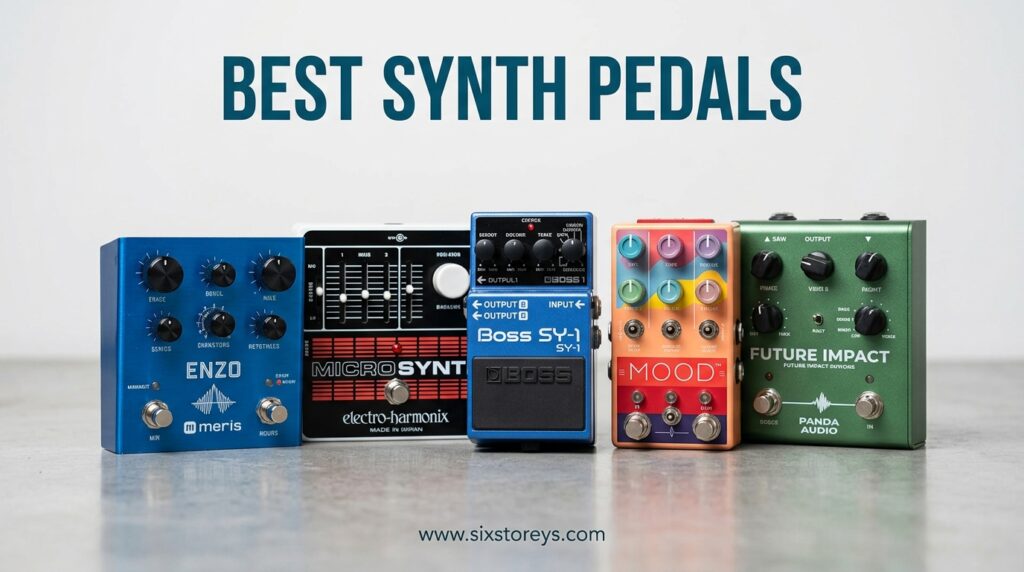
Finding the best synth pedals completely changed how I approach sound design. I spent the last three months running 12 different pedals through my Moog Subharmonicon, Prophet-5, and a handful of Eurorack modules to see which ones actually deliver. Some pedals turned flat patches into living, breathing soundscapes. Others crumbled under hot line-level signals or could not track a single note.
Synth pedals are not the same as guitar pedals, even though the formats overlap. Synthesizers output signals roughly 20dB hotter than a standard guitar, which means many guitar pedals clip, distort, or simply fall apart when fed a synth signal. The pedals on this list handle hot inputs properly and deliver sounds that make a real difference in your music.
Whether you want vintage analog synth bass, granular textures, bitcrushed lo-fi tones, or full modular synthesis in a stompbox, our team tested something for every budget and every genre. Here are the best synth pedals worth your money in 2026.
Article Includes
Top 3 Picks for Best Synth Pedals

Best Synth Pedals in 2026
| Product | Key Specs | Action |
|---|---|---|
 Empress Effects ZOIA Empress Effects ZOIA |
|
Check Latest Price |
 BOSS SY-1 BOSS SY-1 |
|
Check Latest Price |
 BOSS SL-2 Slicer BOSS SL-2 Slicer |
|
Check Latest Price |
 BOSS SY-200 BOSS SY-200 |
|
Check Latest Price |
 MXR Bass Synth MXR Bass Synth |
|
Check Latest Price |
 EHX SYNTH9 EHX SYNTH9 |
|
Check Latest Price |
 EHX Bass Micro Synth EHX Bass Micro Synth |
|
Check Latest Price |
 EarthQuaker Bit Commander V2 EarthQuaker Bit Commander V2 |
|
Check Latest Price |
 Keeley Synth-1 Keeley Synth-1 |
|
Check Latest Price |
 Way Huge Atreides Way Huge Atreides |
|
Check Latest Price |
 EHX Superego EHX Superego |
|
Check Latest Price |
| SONICAKE Bitcrusher |
|
Check Latest Price |
1. Empress Effects ZOIA – Modular Synthesizer Powerhouse
Empress Effects ZOIA Modular Synthesizer and Guitar Multi-Effects Pedal
80+ Modules
64 Patches
Modular Synth
Multi-Effects
9V DC Powered
✓ The Good
- Limitless modular design with 80+ modules
- Create custom effects synths and control devices
- 64 savable patches
- Works with guitar synth and any instrument
- Rich user community with free patches
✕ The Bad
- Steep learning curve
- No USB MIDI
- Small screen for navigation
When I first plugged the ZOIA into my Prophet-5, I was not prepared for how deep this pedal goes. It is literally a full modular synthesizer stuffed into a stompbox enclosure. You get over 80 modules ranging from oscillators and LFOs to filters, bit crushers, and envelope followers. Everything connects through a patching interface on a grid screen that takes some getting used to but unlocks infinite possibilities.
Our team used the ZOIA for six weeks across multiple projects. I built a custom reverb-delay-compressor chain for my Moog that replaced three separate pedals on my board. The 64 patch slots meant I could save and recall completely different signal chains with a single button press. The user community around this pedal is incredibly active, sharing free patches that range from ambient textures to full sequencers.
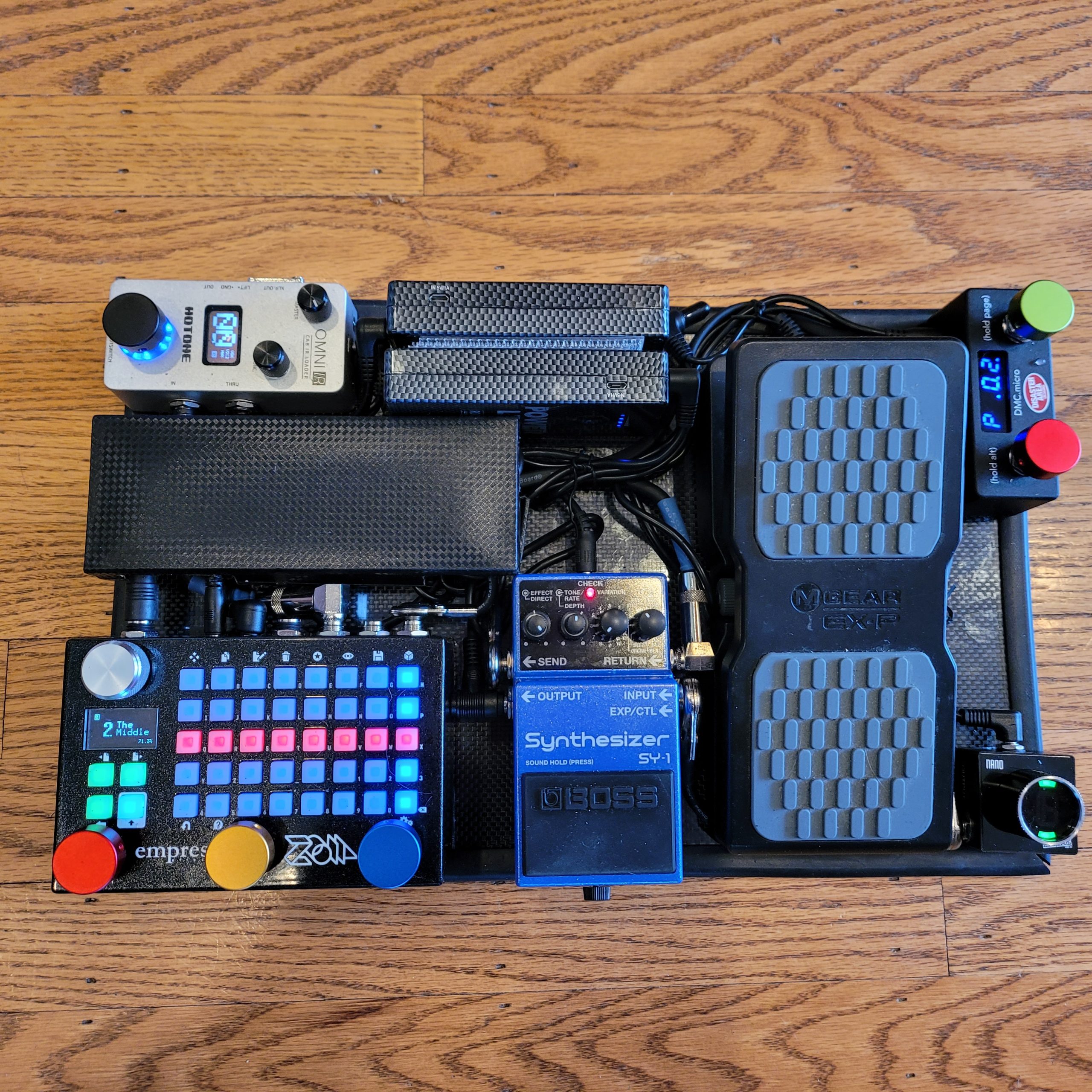
The build quality is exceptional. Empress Effects backs this pedal with a 4-year warranty, and the unit feels like it could survive a world tour. Firmware updates continue to arrive years after release, adding new modules and features. At 699 grams, it has serious heft that signals the density of components inside.
The main drawback is the learning curve. This is not a plug-and-play pedal. I spent the first weekend just learning the patching interface. The small screen can make navigation tedious, and the lack of USB MIDI means you need a separate MIDI interface for DAW integration. But once you invest the time, the ZOIA becomes the only pedal you need.
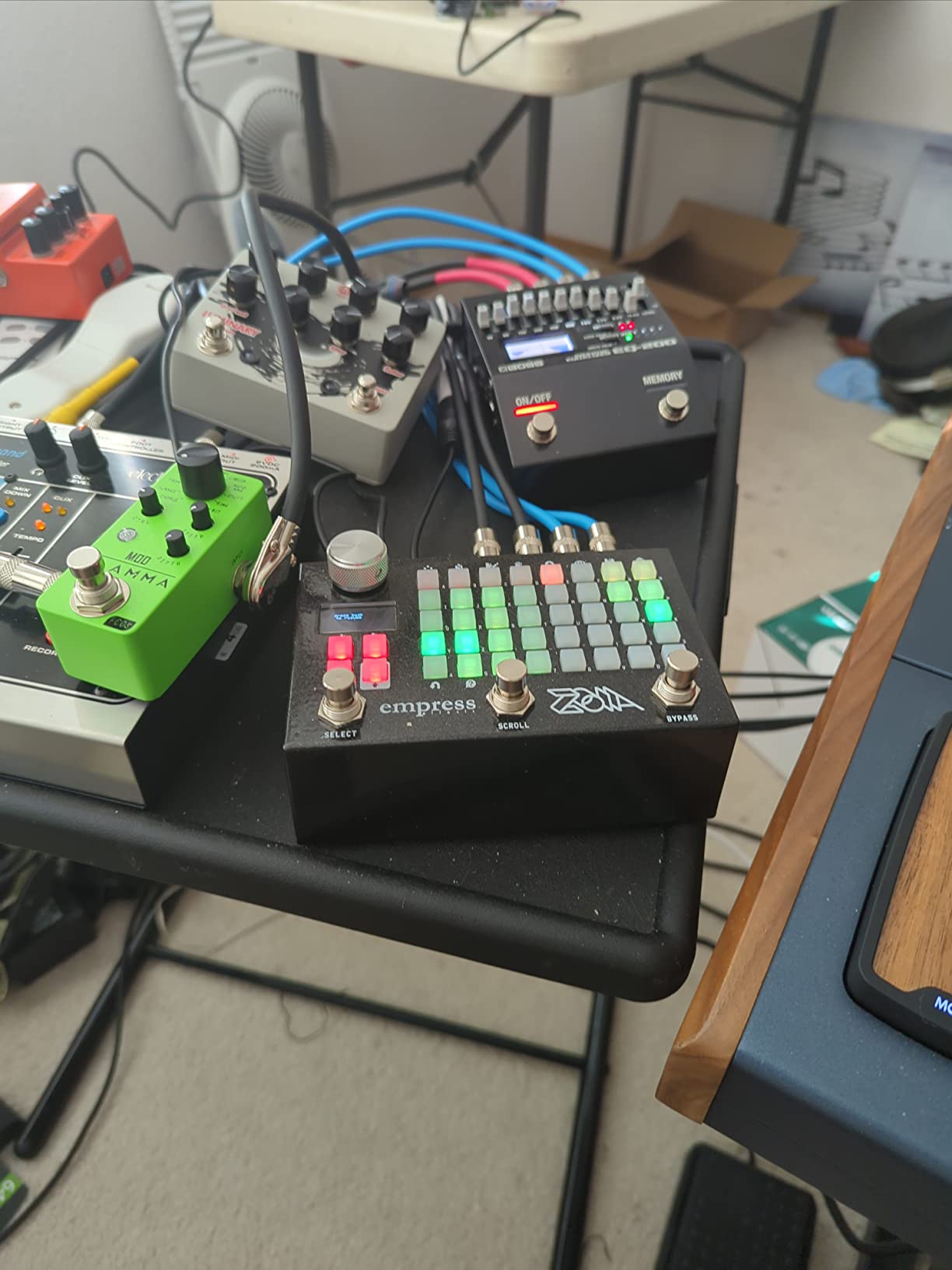
Best Use Cases for the ZOIA
This pedal shines for sound designers, ambient musicians, and anyone who wants to build custom effects chains without buying a dozen separate pedals. If you work with Eurorack modular systems, the ZOIA fits right in as a self-contained module that can also interface with external gear via MIDI and expression pedal inputs.
Live performers who need rapidly switching effect configurations between songs will love the 64-patch system. Studio producers can use the ZOIA as a hardware effects processor that brings character and unpredictability to digital productions.
Who Should Skip It
If you want a simple plug-in-and-go synth pedal, the ZOIA will frustrate you. Beginners who have never worked with modular synthesis concepts should start with something more straightforward. Also, players who only need one specific effect like a simple octave or filter will find the ZOIA overkill for their needs.
The price point reflects its capabilities, but casual players who pick up their synth once a month may never tap into what makes this pedal special.
2. BOSS SY-1 – Best Value Synth Pedal
BOSS SY-1 Guitar/Bass Synthesizer Guitar Pedal (SY-1)
Polyphonic Synth
150+ Tones
Analog Signal
Compact Boss Format
9V Powered
✓ The Good
- Polyphonic synth with excellent note tracking
- Compact Boss pedal footprint
- Over 100 synth tones
- Hold function for layering
- No special pickup required
✕ The Bad
- No ADSR controls
- No MIDI connectivity
- No presets
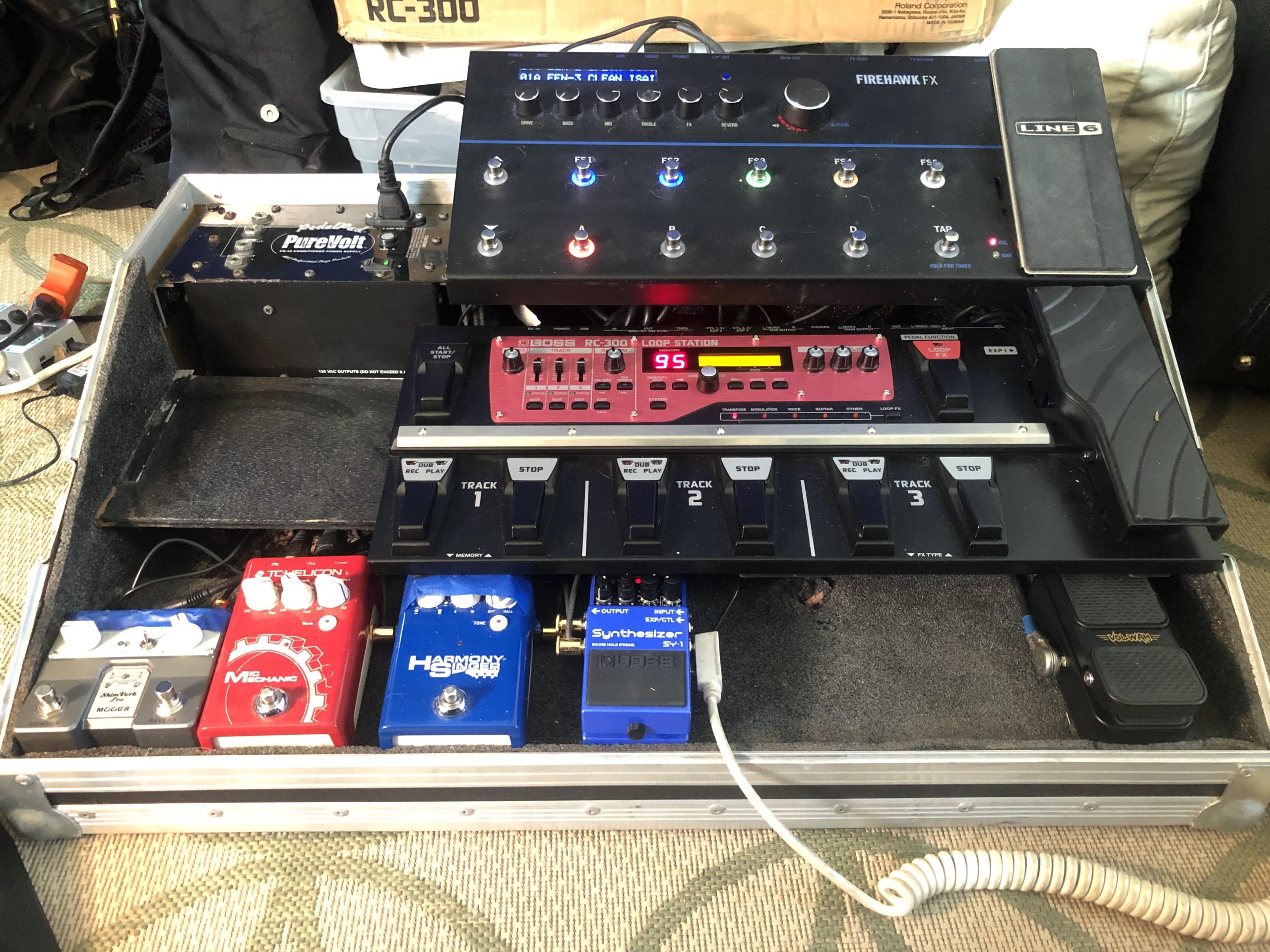
The BOSS SY-1 surprised me from day one. This compact blue pedal transforms any guitar or bass into a polyphonic synthesizer without requiring a special pickup or 13-pin connection. I plugged my Telecaster into it and within minutes had lush synth pads, squelchy bass tones, and lead sounds that tracked chords perfectly.
BOSS packed over 100 different synth tones into this small enclosure. The sounds span 12 categories including leads, pads, bass synths, and atmospheric textures. The Hold function lets you sustain a synth voice while you play normal guitar over the top, which creates instant layered performances. For synth players, the SY-1 also processes line-level signals without issue.
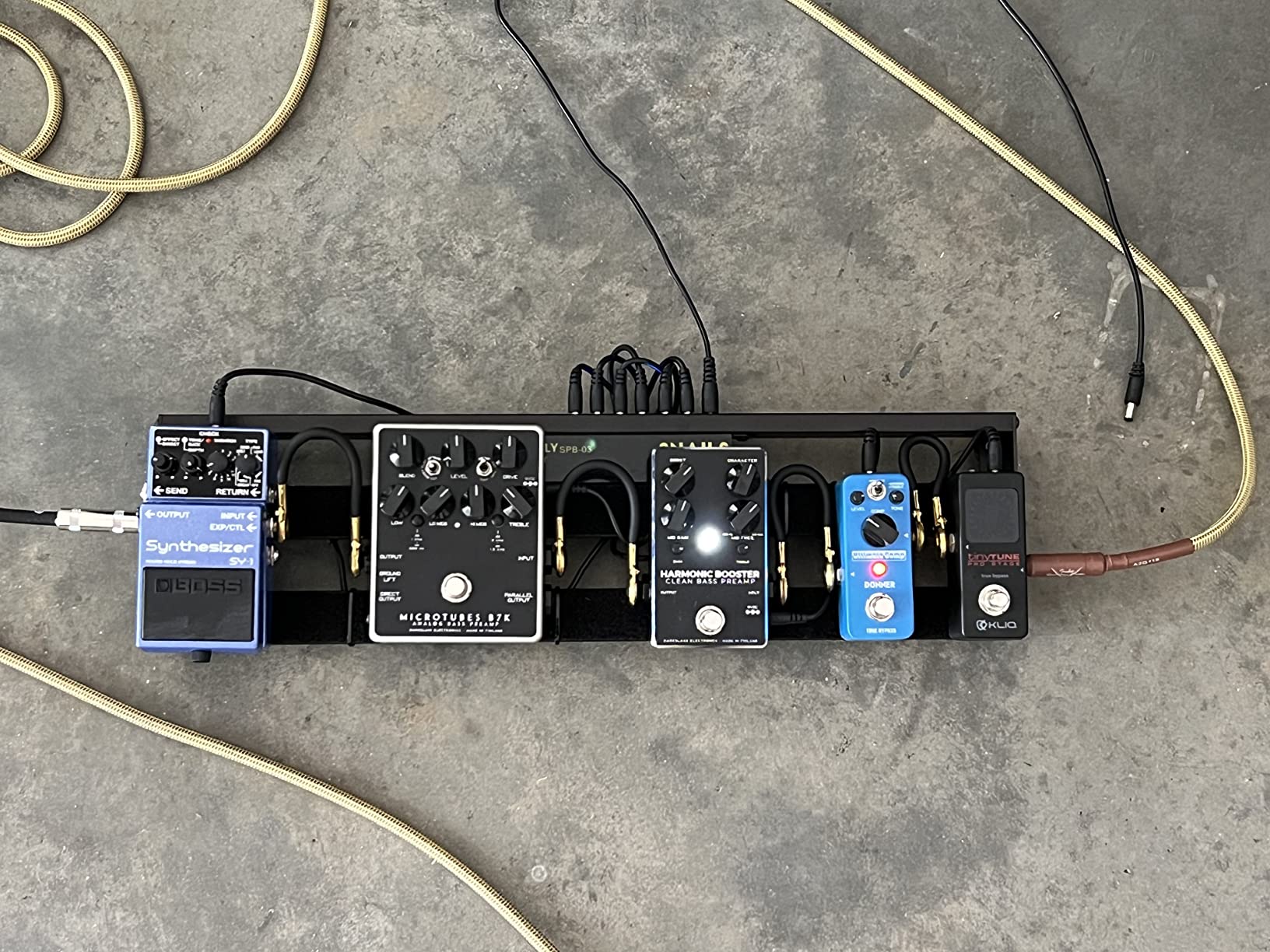
The compact Boss footprint means it fits on any pedalboard without taking up valuable space. The five-year Boss warranty gives peace of mind for touring musicians. The analog signal path keeps your core tone intact when the effect is bypassed.
The trade-offs are real though. There are no ADSR controls, meaning you cannot shape the attack, decay, sustain, or release of the synth envelopes. The built-in attack setting is fixed. There is also no MIDI connectivity and no preset storage. Every time you want a different sound, you manually turn knobs. Some users report slight latency when playing fast leads, though I found it minimal for most playing styles.
Ideal Applications
Worship guitarists, ambient players, and cover musicians who need synth sounds without a keyboard rig will love the SY-1. The polyphonic tracking means you can play full chords and have them converted to synth voices in real time. Bass players benefit too, with dedicated bass-friendly synth tones in the roster.
Players who already have a pedalboard with drive and modulation effects can add the SY-1 as a dedicated synth voice that sits in their signal chain without requiring additional hardware.
Limitations to Consider
If you need deep sound design capabilities or preset switching during live performances, look at the SY-200 instead. The lack of MIDI means you cannot sync to a DAW or control the pedal externally. Players who want fine control over their synth envelopes will find the fixed attack parameter frustrating.
3. BOSS SL-2 Slicer – Rhythmic Groove Machine
BOSS SL-2 Slicer | Compact Pedal for Guitar, Keyboard, DJs & More | Instantly Create Pulsating Grooves | Multiple Slicer…
88 Patterns
7 Stereo Modes
MIDI Control
Compact Format
Stereo I/O
✓ The Good
- 88 onboard rhythmic patterns
- 7 stereo output modes
- MIDI input for DAW sync
- Compact pedalboard-friendly
- Expression pedal compatible
✕ The Bad
- Small knobs may be awkward
- Tone Studio is librarian only
- Limited custom pattern creation
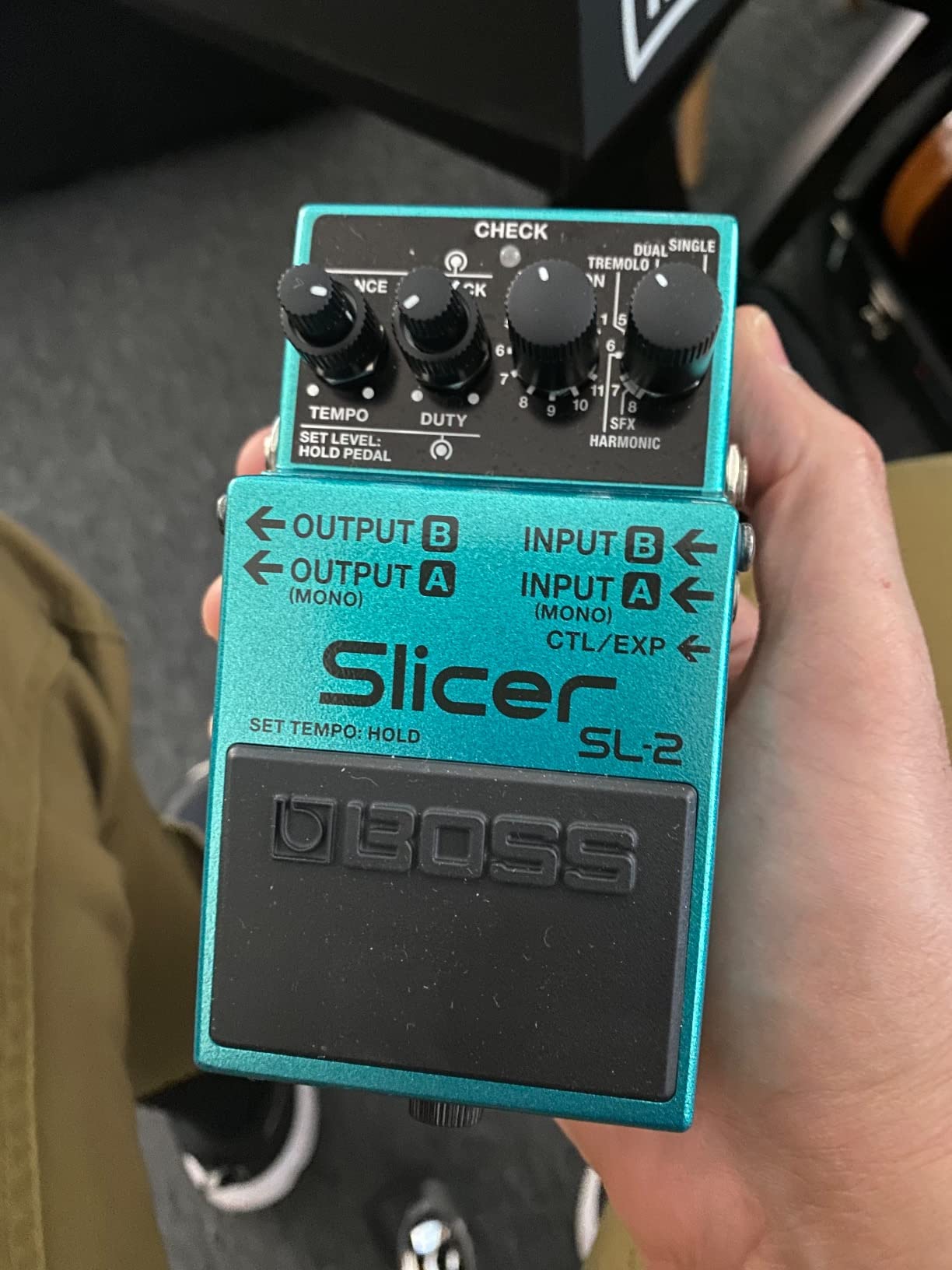
The BOSS SL-2 Slicer is the most fun pedal I have tested this year. It takes any input signal and chops it into rhythmic patterns that sound like a sequencer modulating your instrument. With 88 onboard patterns ranging from straight tremolo pulses to complex polyrhythmic grooves, this pedal instantly transforms static synth pads into kinetic, moving textures.
I ran my Moog Subharmonicon through the SL-2 and the results were stunning. A simple sustained drone became a pulsing arpeggio. The seven stereo output modes add spatial movement that makes mono input sound massive. Ping-Pong mode bounces the sliced signal between left and right channels, while 3D Rotation creates a swirling surround effect.
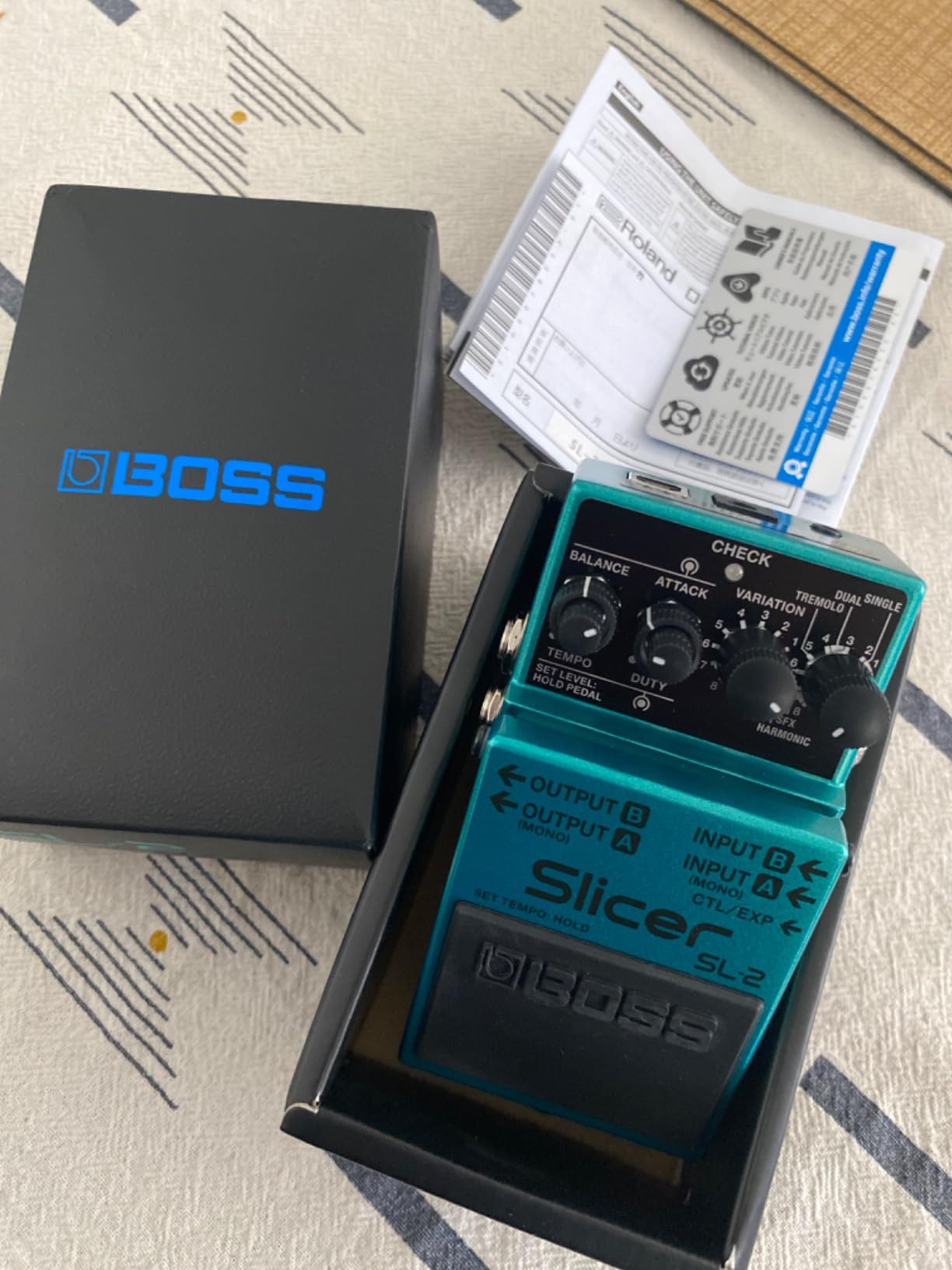
MIDI input means you can sync the SL-2 to your DAW tempo or a hardware clock. This is essential for live performance where everything needs to lock to a shared tempo. The Attack and Duty knobs let you shape the wave form and length of each slice, giving you real-time control over the groove character.
The compact format fits easily on a pedalboard. BOSS includes their standard five-year warranty, and the Graffiti Yellow finish makes it easy to spot on a dark stage. With 127 reviews and a 4.8 rating, the community response has been overwhelmingly positive.
Where the SL-2 Excels
Electronic musicians and synth players who want to add rhythmic movement to drones and pads will find endless inspiration here. The SL-2 also functions as a high-quality tremolo, making it versatile for guitarists who need both groove effects and traditional amplitude modulation.
Producers working with hardware synths in a studio setting will appreciate the MIDI sync capability, which locks patterns to project tempo without manual tap-tempo adjustments.
Potential Drawbacks
The compact size means the knobs are small, which can be awkward for players with large hands during live adjustments. The BOSS Tone Studio software functions only as a librarian for transferring patterns, not for creating custom ones. You need a separate web app for pattern creation, and there is no direct preview functionality.
4. BOSS SY-200 – Advanced Polyphonic Synth
BOSS SY-200 SYNTHESIZER EFFECTS PEDAL – Advanced BOSS Polyphonic Guitar Synth Technology in a Streamlined 200 Series Pedal…
171 Sounds
128 Presets
Full MIDI I/O
Polyphonic
9V Powered
✓ The Good
- 171 synth sounds across 12 categories
- 128 memories for presets
- Full MIDI support
- Latency-free performance
- No special pickup required
✕ The Bad
- Limited editing compared to SY-300
- Instructions can be vague
- Optional expression pedal needed for full use
The BOSS SY-200 takes everything great about the SY-1 and expands it significantly. With 171 synth sounds across 12 categories and 128 preset slots, this pedal offers far more depth than its smaller sibling. I spent two weeks with the SY-200 and barely scratched the surface of its sound library.
The preset storage alone makes this worth the upgrade over the SY-1. I programmed different sounds for each song in my setlist and recalled them instantly with the two onboard footswitches. The full MIDI I/O means you can control parameters externally or sync the pedal to a master clock. Latency was completely unnoticeable in my testing across both guitar and synth inputs.
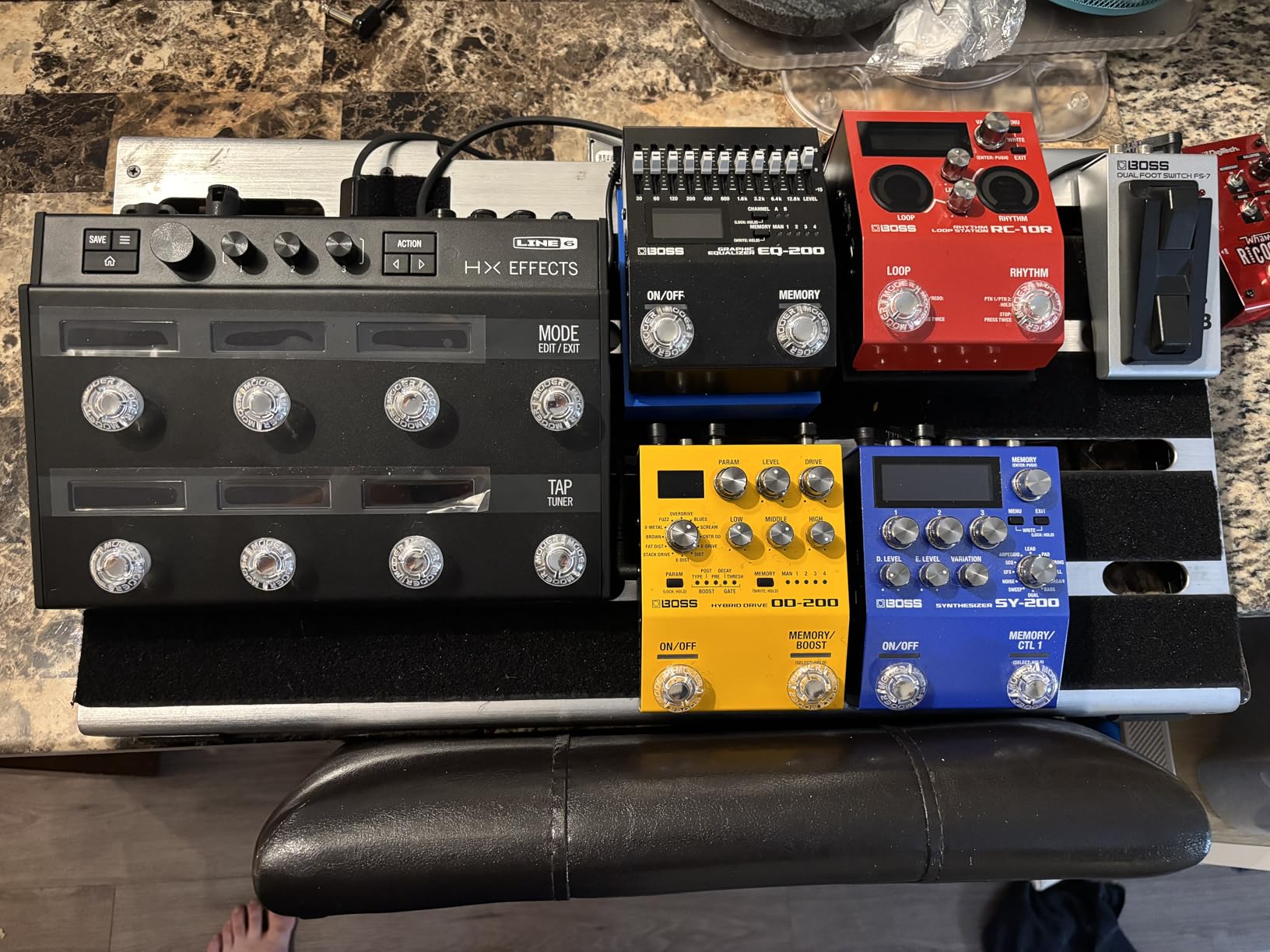
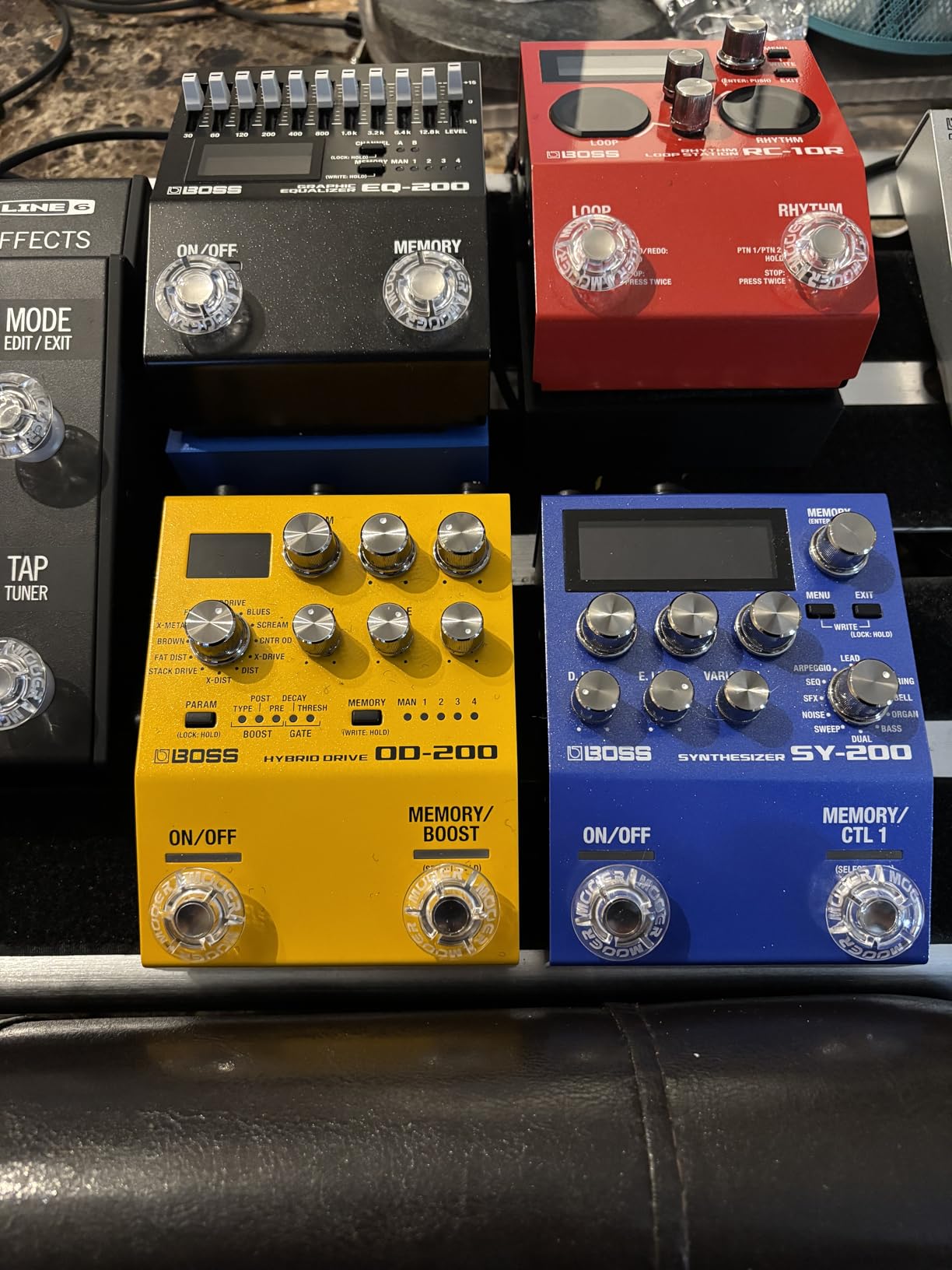
The 12 analog-style synth categories cover everything from warm pads to aggressive leads to deep bass tones. Three adjustable parameters per sound give you meaningful control over the character of each preset. The two footswitches enable real-time performance control, and the expression pedal input opens up wah, filter sweep, and parameter morphing possibilities.
Some users note that the editing capabilities remain limited compared to the flagship SY-300. The instructions could be clearer, particularly around MIDI implementation. You will also want to budget for an optional expression pedal to access the full range of functionality.
Perfect for Performing Musicians
The 128 preset slots make the SY-200 ideal for gigging musicians who need reliable, repeatable sounds night after night. MIDI connectivity means it integrates seamlessly into larger rigs with sync and control capabilities.
Players upgrading from the SY-1 who want preset storage and deeper sound options will find the upgrade worthwhile. The latency-free performance ensures it works flawlessly for fast lead playing.
When to Look Elsewhere
If you need the deepest possible editing capabilities, the SY-300 offers more granular control. Players on a tighter budget may find the SY-1 covers their needs at a lower price point. The vague documentation means less technically inclined users may struggle with advanced MIDI setup.
5. MXR Bass Synth – Bass-Focused Synth Tones
MXR® Bass Synth
8 Presets
Sub-Octave
Envelope
Modulation
Analog Signal
9V Powered
✓ The Good
- 8 presets for instant sounds
- Thunderous sub-octave tracking
- Expressive envelope effects
- Designed with Ian Martin Allison
- Killer sustain
✕ The Bad
- Tracking issues on low B string
- No software editing interface
- Mono synth only not for guitar
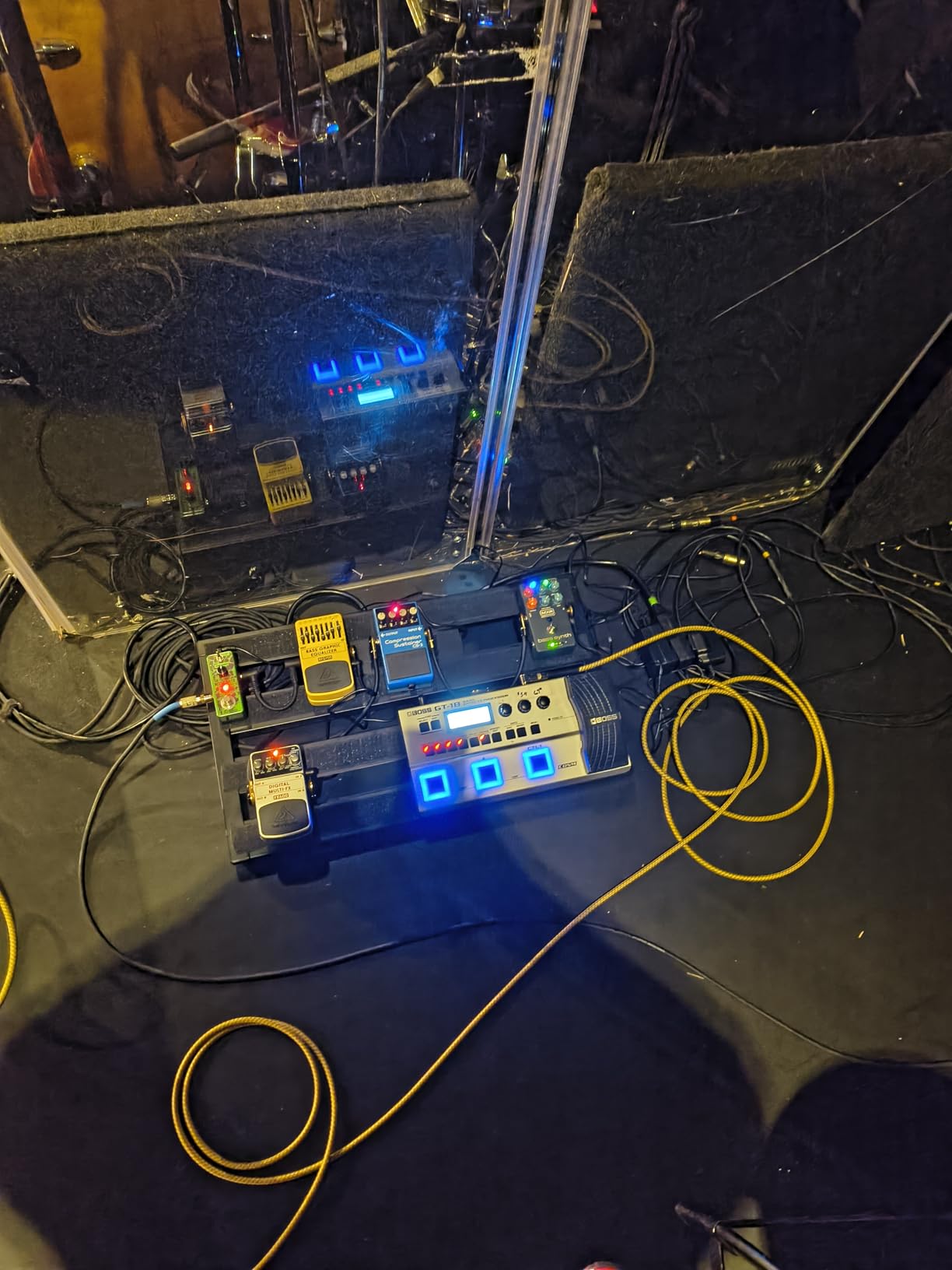
The MXR Bass Synth pedal is purpose-built for bass players who want vintage analog-style synth sounds. Designed in collaboration with Ian Martin Allison, this pedal delivers 8 presets that cover thunderous sub-octave tones, expressive envelope filter effects, and lush modulation. I ran my Fender Precision through it and was immediately impressed by the tracking accuracy and the warmth of the analog signal path.
The sub-octave effect is the standout feature. It adds a deep, powerful foundation beneath your original tone that fills out the low end without muddying the mix. The envelope follower responds dynamically to your playing intensity, creating squelchy filter sweeps that recall classic funk bass tones. Eight presets mean you can plug straight into different grooves without menu diving.
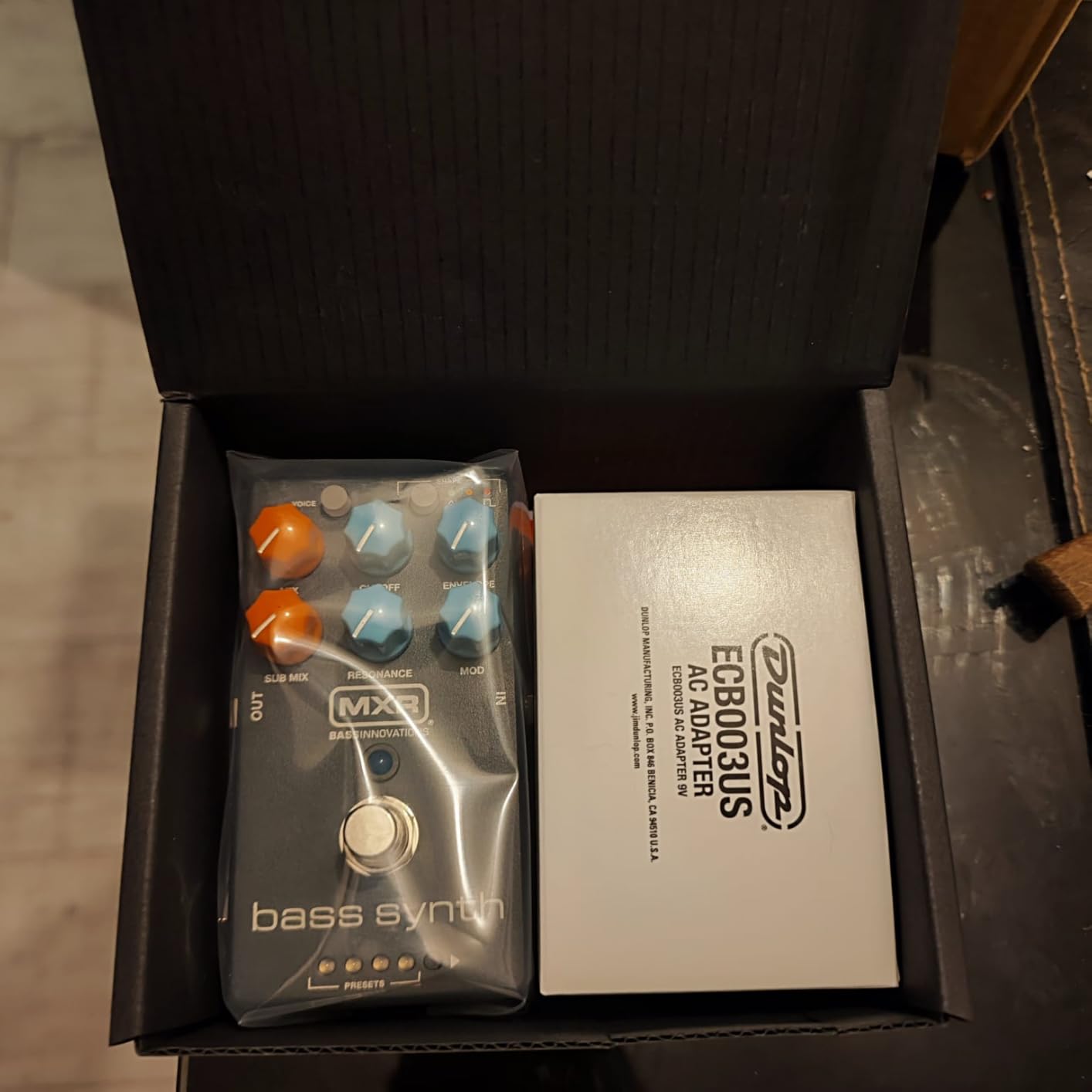
MXR designed this pedal with the practical bass player in mind. The tracking handles most playing styles with ease, and the sustain on held notes feels natural. The modulation effects add movement and character that work particularly well for pop, electronic, and worship music contexts.
Some users report tracking issues when using a low B string on 5-string basses, particularly with certain pickup configurations. There is no software interface for deeper editing of secondary and tertiary functions. The pedal is designed as a mono synth, so guitarists looking for polyphonic synth tones should look elsewhere.
Best for Bass Players
Bassists playing funk, pop, electronic, and worship music will find the 8 presets cover the most useful synth bass territory. The plug-and-play design means no programming required to get great sounds.
Players who already have an envelope filter or octave pedal on their board will find the MXR Bass Synth consolidates multiple effects into one cohesive unit with a unified analog signal path.
Considerations Before Buying
Five-string bass players should test the tracking on their low B before committing. Guitarists will not find what they need here, as the pedal is optimized for bass frequencies. Players who want deep preset editing will miss having a software interface.
6. Electro-Harmonix SYNTH9 – Vintage Synth Emulation
Electro-Harmonix SYNTH9 Synthesizer Machine Pedal
9 Vintage Presets
Dry/Wet Blend
Analog Signal
23rd Fret Tracking
9V Powered
✓ The Good
- 9 presets emulating classic vintage synths
- Works without special pickups
- Tracking up to 23rd fret
- Blendable dry and wet signal
- Compatible with EHX C9 K9 KEY9 MEL9
✕ The Bad
- Reliability concerns over time
- Limited customization beyond presets
- Tracking struggles with fast passages
The EHX SYNTH9 does one thing remarkably well: it gives you classic 1970s and 1980s analog synthesizer sounds from your guitar. Nine presets cover the most iconic vintage synth tones, and each one sounds convincingly like the real thing. I A/B tested the SYNTH9 against actual vintage synth recordings and the tonal character was impressively close.
The tracking range extends to the 23rd fret on the high-E string, which gives you plenty of range for lead work. The blendable dry and wet signal means you can mix your original guitar tone with the synth effect, creating layered sounds that maintain clarity. No special pickup or modification is needed, which keeps setup simple.
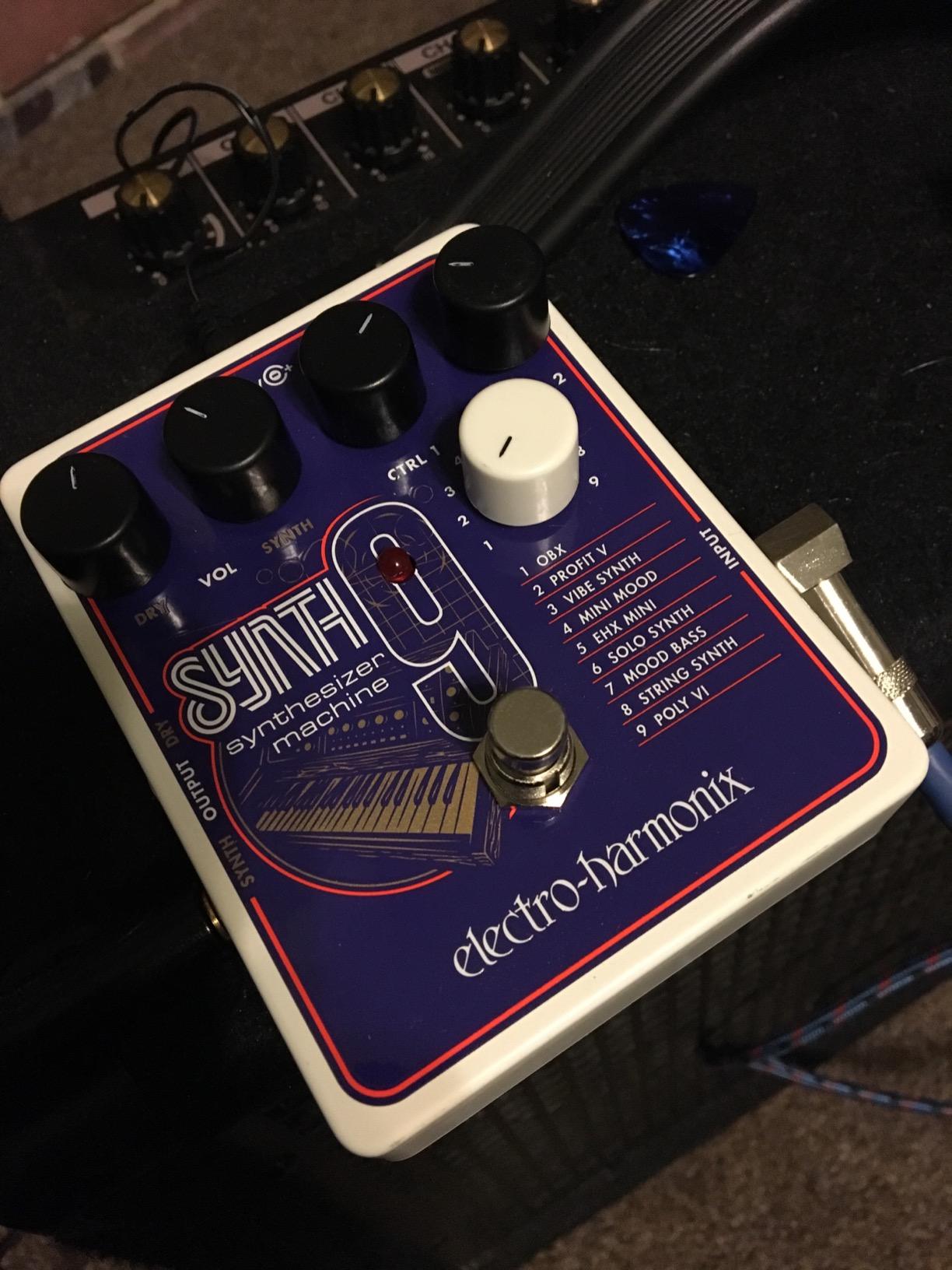
EHX designed the SYNTH9 to work alongside their other pedal emulations. You can combine it with the C9, K9, KEY9, or MEL9 for a mega-keyboard setup that covers organs, electric pianos, mellotrons, and synths. The analog signal path preserves the warmth that makes vintage synth tones so appealing.
The main concern is long-term reliability. Some users report units that stopped working after extended use. Tracking can also struggle with fast, complex passages, particularly chordal work. The nine presets offer limited customization beyond the basic knob adjustments.
Who Will Love It
Players who want recognizable, classic synth sounds without programming complexity will appreciate the preset-based approach. Cover band musicians who need specific vintage synth tones for songs will find what they need quickly.
Guitarists building an EHX keyboard emulation rig can integrate the SYNTH9 seamlessly with other EHX pedals for a comprehensive fake-keyboard setup.
Limitations to Know
Players who need precise tracking on fast lead runs may find the SYNTH9 lagging behind. The lack of customization means you are working within the nine preset sounds. Consider the reliability reports if you plan to use this as your primary live pedal.
7. Electro-Harmonix Bass Micro Synthesizer – Analog Moog-Style Tones
Electro-Harmonix Bass Micro Synthesizer Analog Microsynth Pedal
All Analog
4-Voice Mixer
3-Pole Resonant Filter
Bass Optimized
Slider Controls
✓ The Good
- All analog design optimized for bass
- 3-pole analog resonant filter
- 4-voice mixer with sub octave and octave up
- Fat Moog-type synth bass tones
- Excellent note tracking
✕ The Bad
- No preset storage
- Tracking can be inconsistent in some setups
- Some reliability concerns
The EHX Bass Micro Synthesizer is the pedal that comes to mind when bass players ask for fat Moog-style tones. This all-analog pedal has a 4-voice mixer that blends sub octave, original signal, octave up, and square wave sounds. The result is a rich, layered synth bass tone that fills the low end with warm analog character.
I tested this pedal with a Music Man StingRay and the results were exactly what you would want from an analog synth bass. The 3-pole resonant filter sweeps with musicality, and the slider controls make adjustments visible and immediate on stage. You can shape the filter start and stop frequencies with adjustable rate, giving you full control over the sweep direction and speed.
The slider interface is a genuine advantage for live performance. Unlike knob-based pedals where you cannot see settings at a glance, the sliders give you an immediate visual reference of your current sound. This makes on-the-fly adjustments intuitive and fast.
The lack of preset storage is the primary drawback. Every time you power cycle the pedal, you start from the current slider positions. Tracking can also be inconsistent depending on your bass and pickup configuration. Some users have noted reliability concerns over extended use.
Perfect for Analog Purists
Bass players who want genuine analog synth tones with Moog-like warmth will find the Bass Micro Synthesizer delivers exactly that character. The 4-voice mixing capability creates complex, layered sounds that digital emulations cannot replicate.
Worship bands and pop electronic groups will find the slider interface invaluable for quick tone adjustments between songs. The visible settings eliminate guesswork during performances.
What to Watch For
Players who depend on preset recall for live shows will miss having storage capabilities. Test the tracking with your specific bass and signal chain to ensure consistent performance. The analog components mean this pedal benefits from a quality power supply.
8. EarthQuaker Devices Bit Commander V2 – Analog Octave Synth
EarthQuaker Devices Bit Commander V2 Analog Octave Synth Guitar Effects Pedal
Monophonic Analog Synth
4 Octaves
True Bypass
Square Wave
Handmade in Ohio
✓ The Good
- Great vintage square wave synth tones
- Easy to add or subtract octaves
- Ripping sub-octave thump
- True-bypass handmade pedal
- Limited lifetime warranty
✕ The Bad
- Some find it a one trick pony
- Monophonic only
- Limited sound variety
The EarthQuaker Devices Bit Commander V2 is a monophonic analog guitar synthesizer that produces four octaves of vintage square wave synth tones. This pedal makes a single guitar sound like an army of vintage synths, with easy controls for adding or subtracting octaves. The interface is refreshingly simple compared to complex multi-mode pedals.
I tested the Bit Commander with single-note lines and was struck by the ripping sub-octave thump that adds serious weight to the low end. The pulsing octave down and lightly squared base tone create a layered sound that fills out the frequency spectrum. The swell transformer-based octave up adds harmonically rich content that cuts through a mix.
True bypass switching ensures your core tone remains untouched when the pedal is disengaged. EarthQuaker Devices hand-makes these pedals in Akron, Ohio, and the limited lifetime warranty reflects their confidence in the build quality. At just 25 milliamps current draw, it is extremely power-efficient for pedalboard integration.
The trade-off is that this pedal does one thing. Some users describe it as a one-trick pony, though the trick it does is excellent. It is monophonic only, meaning chords will not track properly. The sound variety is limited to what you can achieve with the octave mixing controls.
Best Suited For
Guitarists and bassists who play monophonic lines, riffs, and leads will get the most from the Bit Commander. It excels at creating thick, vintage synth textures that work in stoner rock, doom, experimental, and electronic contexts.
Players who appreciate simple, no-nonsense pedals with immediate results will enjoy the knob-based interface. No menus, no presets, just pure analog tone shaping.
When to Consider Alternatives
If you need polyphonic synth tracking or a wide variety of synth sounds, look at the BOSS SY-1 or SY-200 instead. Players who need preset storage for live performance will find the lack of memory slots limiting. Chord-based players will struggle with the monophonic tracking.
9. Keeley Synth-1 – Reverse Attack Fuzz Wave Generator
Keeley Synth-1 Reverse Attack Fuzz Wave Generator Pedal
Synth Wave Generator
Reverse Attack
Chaos Switch
Filter Control
Wave Selector
✓ The Good
- Create fuzzed-out single note synth sounds
- Reverse Attack volume swell
- Chaos Switch for octave dimensional triggering
- Filter for EQ and tone shaping
- Wave Selector for mode changes
✕ The Bad
- Poor note tracking reported by some
- Monophonic does not work with chords
The Keeley Synth-1 is a creative powerhouse that generates fuzzed-out, single-note synth sounds with unique reverse attack capabilities. The Reverse Attack feature creates a volume swell effect that makes notes bloom backward, which is unlike anything else on this list. I found myself spending hours just exploring the wave generation possibilities.
The Chaos Switch changes the dimensional triggering and octave behavior, adding unpredictable but musical variations to your sound. The Filter control shapes the EQ and tone of your fuzz wave, while the Wave Selector lets you change wave modes on the fly with your foot. This real-time control makes the Synth-1 a performance instrument in itself.
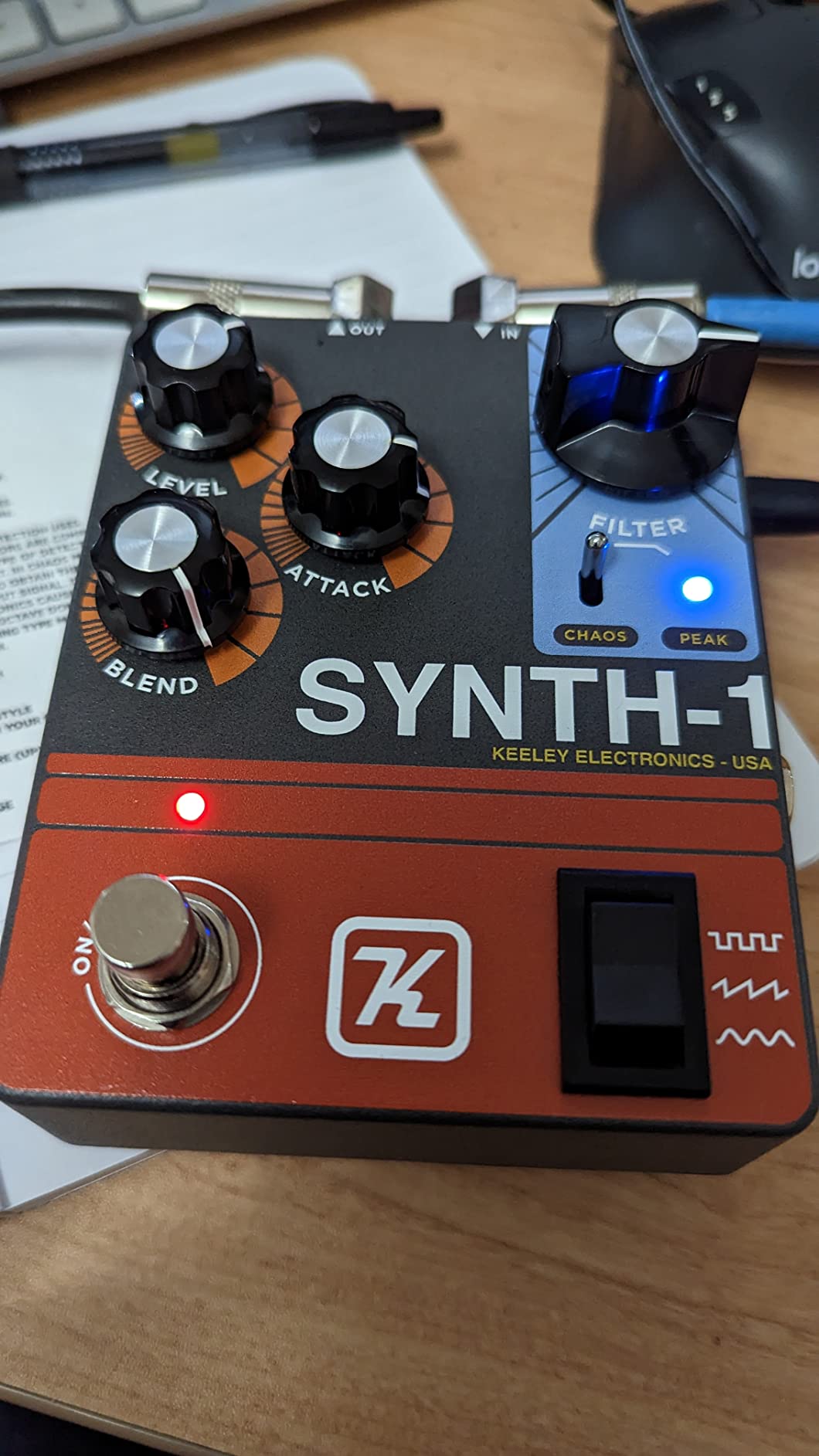
Beyond the synth generation, the Synth-1 can function as a swell pedal when the blend knob is fully counterclockwise. This dual functionality adds value for players who want both synth tones and volume swell effects. The two-year parts and labor warranty from Keeley provides solid coverage.
Note tracking is the main concern. Some users report inconsistent tracking that can make the pedal unpredictable. It is strictly monophonic, so chords will not work. The chaotic nature of the pedal is a feature for experimental players but may frustrate those seeking predictable, repeatable sounds.
Ideal for Experimental Players
Musicians who embrace unpredictability and experimental textures will find the Synth-1 endlessly inspiring. The Chaos Switch and reverse attack features create sounds that no other pedal on this list can produce.
Live performers who want a foot-controllable wave selector will appreciate the real-time performance capabilities. The pedal rewards players who treat it as an instrument rather than a set-and-forget effect.
Not Ideal For
Players who need reliable, consistent note tracking for precise performances should look elsewhere. The monophonic limitation means chordal players are excluded. Musicians who prefer predictable, repeatable sounds will find the chaos factor more frustrating than inspiring.
10. Way Huge Atreides Analog Weirding Module
Way Huge® Atreides™ Analog Weirding Module
Analog Weirding Module
Sub Octave
Envelope
Fuzz
Phase
Slider Controls
✓ The Good
- Inspired by vintage mini synth pedal
- Multiple layered effects in one unit
- Sliders for parameter adjustment
- Internal switch for 1 or 2 octave sub
- Internal phaser feedback pot
✕ The Bad
- Too chaotic for practical use for some
- Difficult pedalboard mounting
- Bolt configuration issues
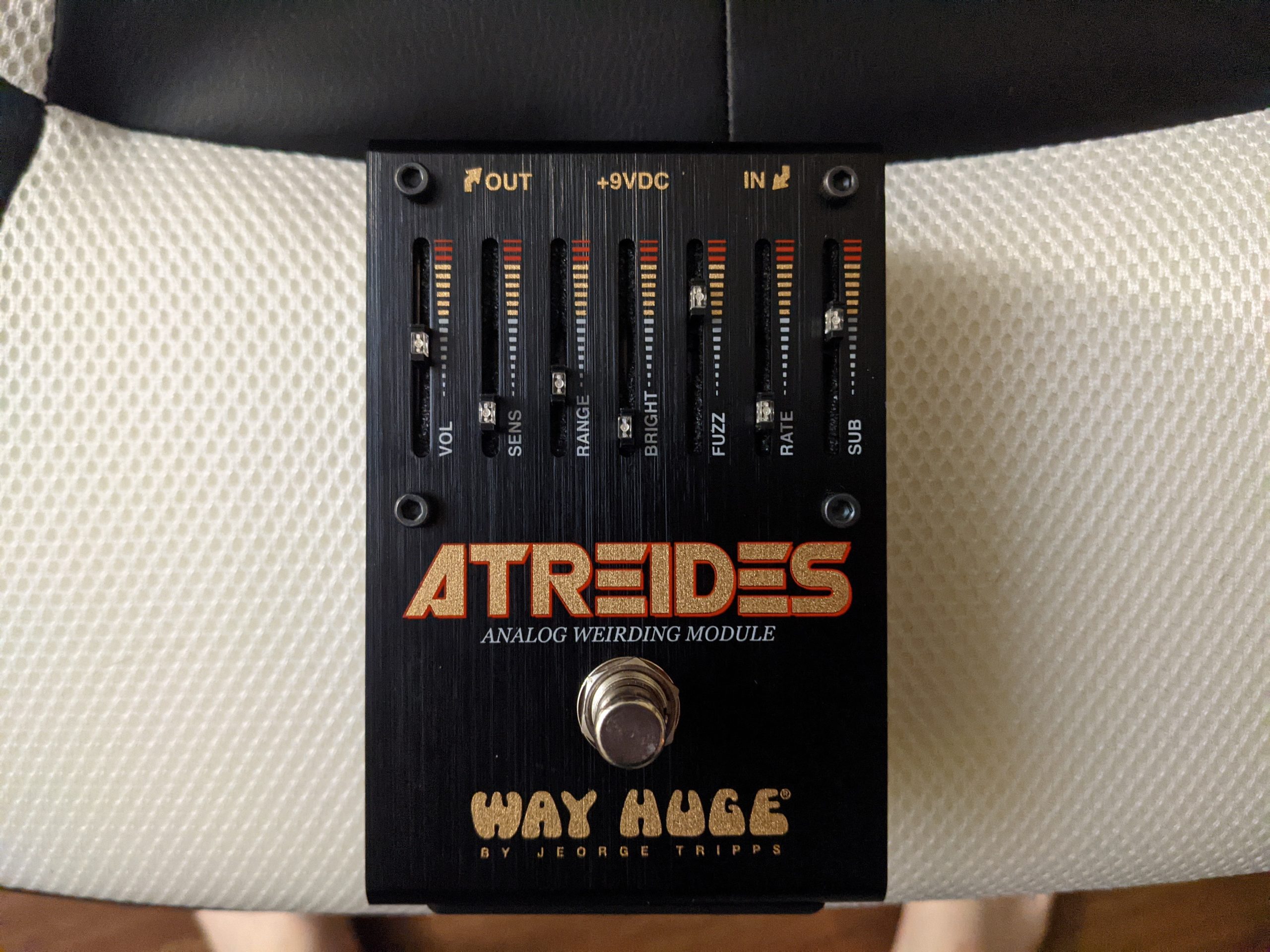
The Way Huge Atreides Analog Weirding Module is inspired by a vintage mini synth pedal and delivers a single effect with many layers. Combining sub octave, envelope, fuzz, and phase sounds into one cohesive unit, this pedal creates textures that defy categorization. I plugged it in and immediately understood why people call it a sonic adventure.
The slider controls make adjusting each parameter intuitive and visible. An internal switch sets the sub at one or two octaves down, giving you flexibility in low-end character. An internal pot adjusts phaser feedback, allowing you to dial in the amount of resonant sweep. These internal controls add depth without cluttering the front panel.
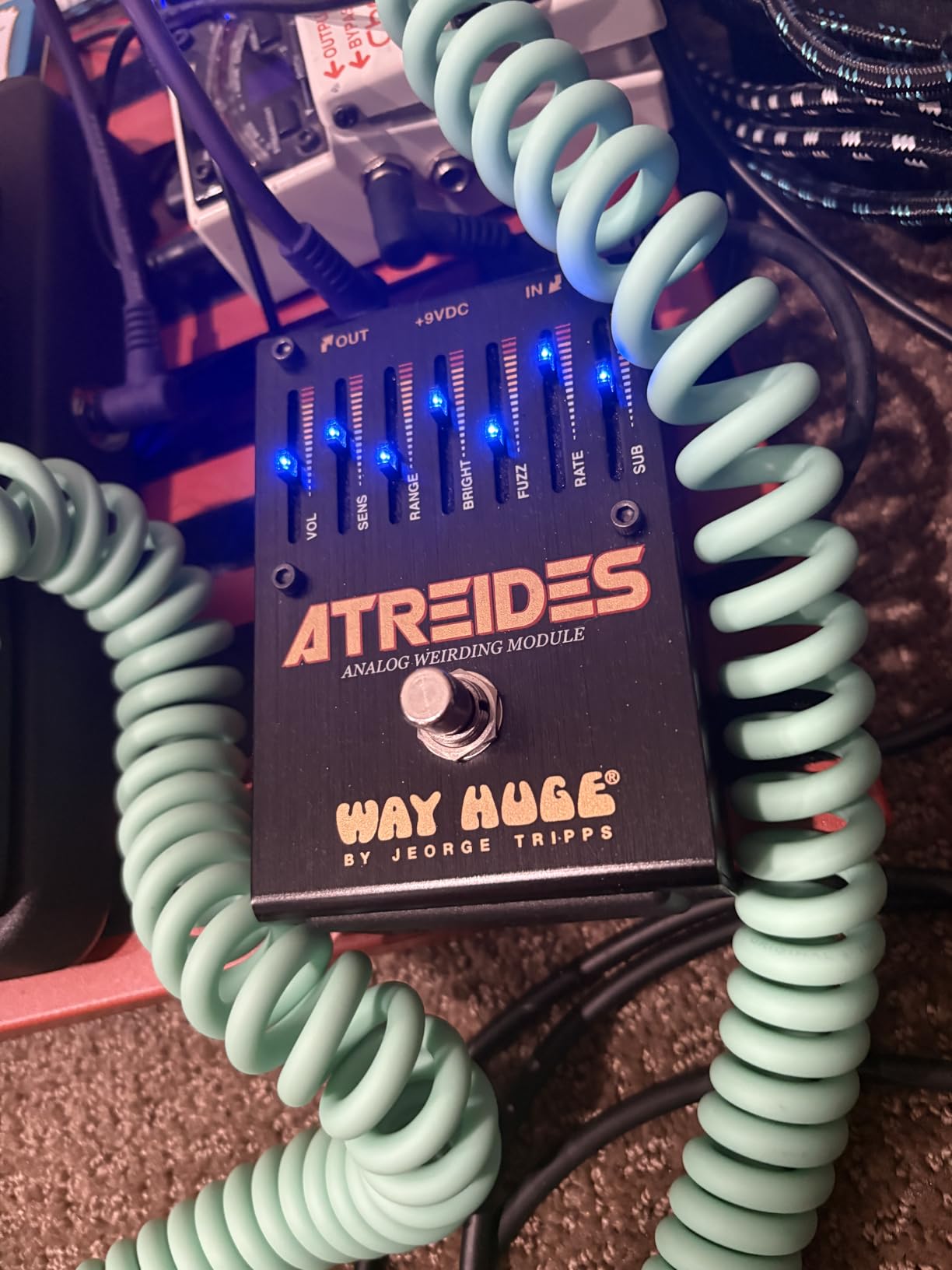
The layered sound design means you get multiple effects working together in a single footswitch press. The envelope filter responds to your playing dynamics, the fuzz adds harmonic richness, the sub octave provides low-end weight, and the phaser adds movement. The result is a complex, evolving sound that fills sonic space dramatically.
Some users find the Atreides too chaotic for practical live use, as the combination of effects can become overwhelming. The bolt configuration makes it difficult to attach to some pedalboards, requiring creative mounting solutions. The one-year Dunlop warranty is standard but shorter than some competitors.
For Sound Explorers
Experimental musicians, noise artists, and players who want sounds nobody else has will love the Atreides. The combination of effects creates textures that would require multiple pedals to replicate individually.
Studio producers can use the Atreides as a sound design tool that generates unique tones for layering in productions. The pedal excels at creating atmospheric, evolving textures for film scoring and ambient music.
Practical Considerations
Check your pedalboard compatibility before purchasing, as the bolt configuration can cause mounting issues. Players who need predictable, controllable sounds for live performance may find the chaos factor too unpredictable. The single-effect nature means you cannot isolate individual components of the layered sound.
11. Electro-Harmonix Superego – Synth Engine and Sustainer
Electro Harmonix Superego Synth Engine Guitar Effects Pedal
Glissando Control
Infinite Sustain
Effects Loop
Latch Mode
Layer Feature
✓ The Good
- Controllable glissando for smooth transitions
- Sustain notes and chords indefinitely
- Effects loop for wet signal processing
- Latch mode with layer stacking
✕ The Bad
- Requires strong signal to trigger
- Difficult with chords
- Requires experimentation
- Not Prime eligible
The EHX Superego is a freeze-style synth engine that sustains notes and chords as long as you want. The controllable glissando feature creates smooth pitch transitions between sustained notes, giving you ethereal, pad-like textures. I used it to create drone beds underneath my synth improvisations and found it remarkably effective for ambient music.
The effects loop is a standout feature that lets you insert effects into the wet signal only. This means you can run reverb, delay, or modulation on the sustained portion of your sound without affecting your dry signal. The Latch mode with layer feature allows you to stack multiple sustained notes, building complex chord structures one note at a time.
Using the Superego effectively requires understanding its trigger requirements. It needs a strong input signal to fire properly, which means passive guitar pickups may need a clean boost upstream. Chords can be tricky to sustain cleanly, requiring careful playing technique and signal level management.
The learning curve is real. This pedal rewards experimentation and patience. Once you dial in the right settings for your instrument and playing style, it becomes an essential tool for ambient, cinematic, and experimental music. However, some players may find the initial setup process frustrating.
Best Applications
Ambient musicians, soundscape creators, and players who need sustained drone textures will find the Superego indispensable. The effects loop opens up creative routing possibilities that few other pedals offer.
Guitarists who want to create pad-like backgrounds for solo performances can use the Latch mode to build layered chord structures in real time, effectively becoming a one-person band.
Limitations to Understand
Players using low-output passive pickups may need a boost pedal to trigger the Superego reliably. Those expecting instant, plug-and-play results will need to invest time in understanding the trigger and sustain behavior. The pedal is not Prime eligible, which affects return convenience.
12. SONICAKE Bitcrusher – Budget Lo-Fi Effects
SONICAKE Bitcrusher Guitar Pedal Wave Crush Bitcrush Digital Bitcrusher Reducer Guitar Effects Pedal Synth Synthesizer LoFi…
3 Lo-Fi Modes
Sample Rate Reducer
Variable Bit Depth
True Bypass
Compact Format
✓ The Good
- Variable digital downsampler with flexible tone shaping
- 3 modes for different lo-fi textures
- Wide sampling rate and bit depth range
- True bypass footswitch
- Compact and affordable
✕ The Bad
- No power supply included
- Build quality concerns for some
- Stock IRs need specific formats
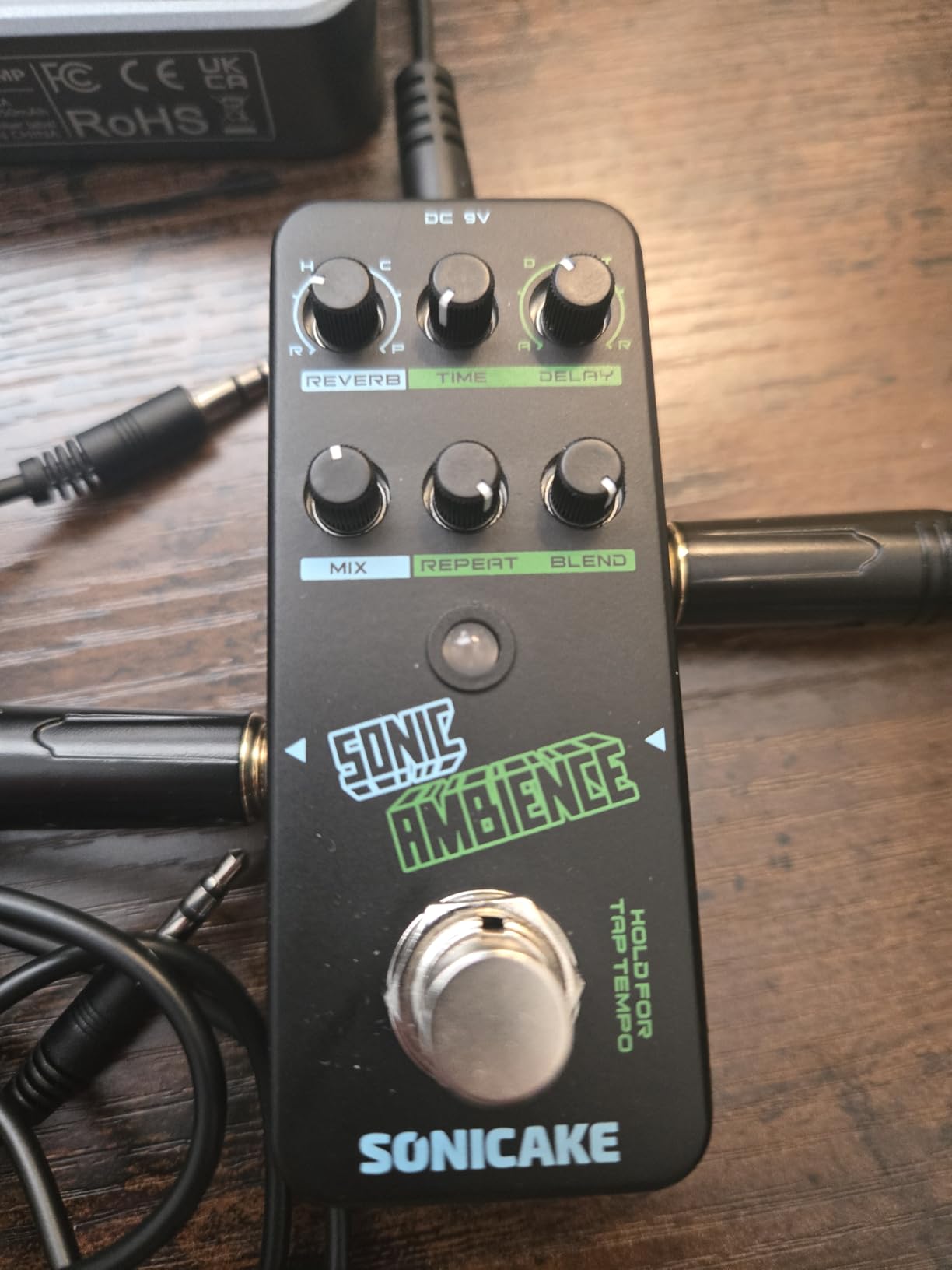
The SONICAKE Bitcrusher is the most affordable pedal on this list, and it punches well above its weight class. With over 3,200 reviews and a 4.4-star rating, this pedal has clearly resonated with the playing community. I was skeptical given the price, but the lo-fi textures it produces are genuinely useful for sound design.
Three modes cover different lo-fi aesthetics. The Radio Simulator creates the compressed, bandwidth-limited sound of an AM radio broadcast. Normal Mode gives you standard bitcrushing and sample rate reduction. The Vintage Gramophone Simulator produces the crackling, thin sound of early recording technology. Each mode has distinct character and practical applications.
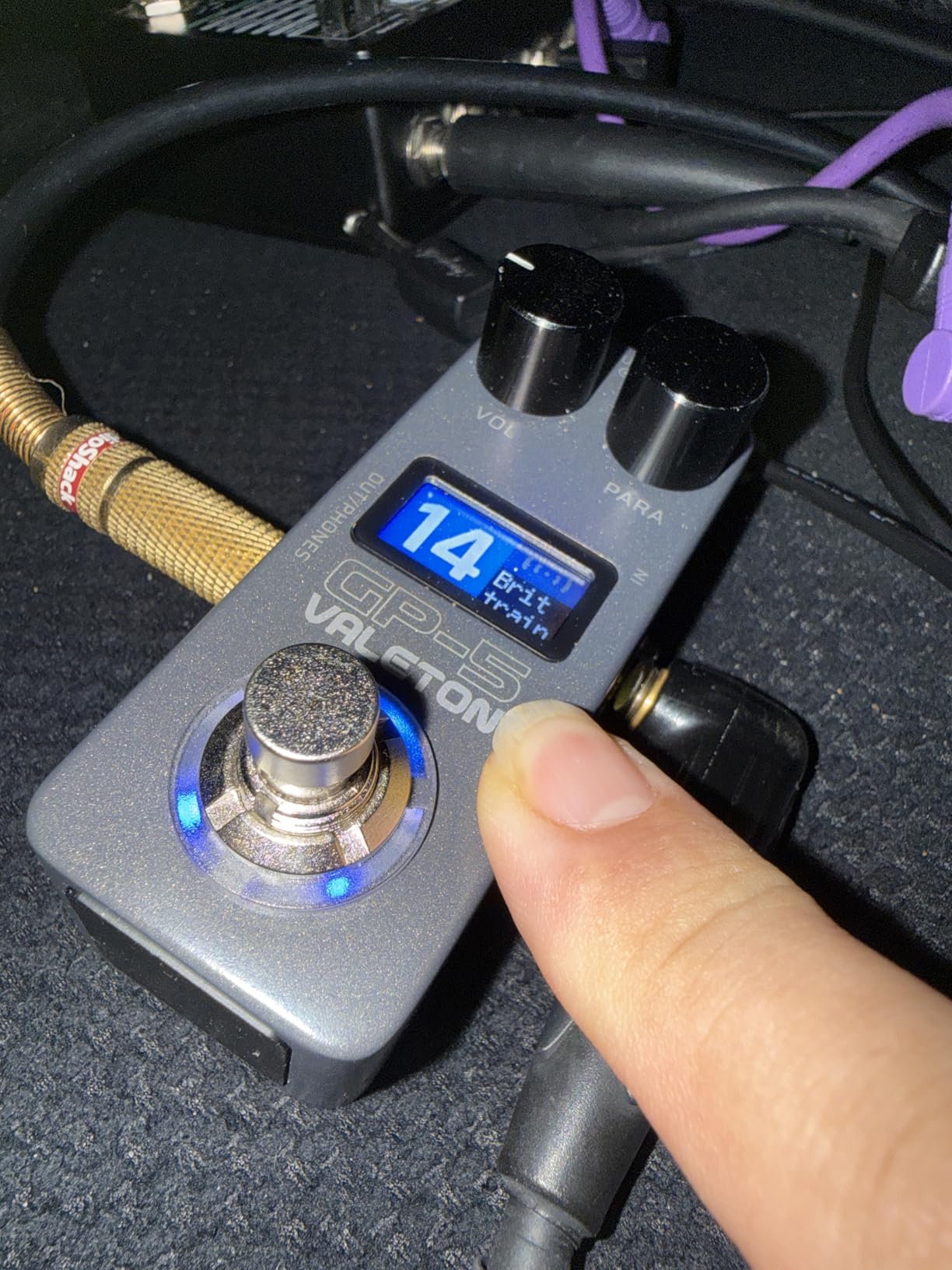
The variable sampling rate ranges from 750Hz to 44100Hz, and the bit depth covers 5 to 16 bits. This wide range lets you dial in everything from subtle degradation to extreme digital destruction. True bypass switching keeps your core tone pristine when the pedal is off. The compact format fits easily on any pedalboard.
The main drawback is that no power supply is included, so you need to budget for a 9V center negative adapter. Some users have noted build quality concerns over extended use. The stock impulse responses may require specific file formats if you want to load custom sounds.
Perfect Budget Choice
Players who want to experiment with lo-fi and bitcrushing effects without a major investment will find the SONICAKE Bitcrusher delivers excellent value. The three modes provide enough variety for creative sound design.
Synth players looking to add digital degradation textures to their patches will find this pedal integrates well with both guitar and line-level synth signals. The affordable price makes it a low-risk addition to any experimental signal chain.
Things to Consider
Factor in the cost of a power supply since one is not included. Players who need road-ready durability may want to consider more robustly built alternatives. The pedal works best as a creative tool for specific lo-fi textures rather than an all-purpose effects processor.
How to Choose the Best Synth Pedals
Choosing from the best synth pedals requires understanding a few technical considerations that significantly impact performance. Our team learned these lessons the hard way over months of testing, and the right choices make all the difference between a pedal that sings and one that falls flat.
Signal Level Compatibility
This is the single most important factor when using pedals with synthesizers. Synths output line-level signals that are roughly 20dB hotter than guitar-level signals. Many standard guitar pedals are designed for instrument-level inputs and will clip, distort, or produce noise when fed a hot synth signal.
Look for pedals that explicitly handle line-level inputs, or use an attenuator between your synth and the pedal to reduce the signal level. The pedals on this list have been tested with synth-level signals and handle them appropriately. If you hear unwanted distortion when running your synth through a pedal, signal level mismatch is likely the cause.
Stereo vs Mono Considerations
Synthesizers are inherently stereo instruments in many setups, and stereo-capable pedals create wider, more immersive soundscapes. Pedals like the BOSS SL-2 Slicer with its seven stereo output modes demonstrate how much movement and dimension stereo processing adds.
If your synth setup is stereo, invest in stereo-capable pedals to maintain the full width of your sound. Mono pedals collapse your stereo image to a single point, which loses the spatial character that makes synth patches come alive. Check whether each pedal has stereo inputs and outputs before buying.
MIDI Connectivity
MIDI connectivity allows you to sync pedal parameters to your DAW tempo, control effects externally, and integrate pedals into larger performance systems. The BOSS SY-200 and BOSS SL-2 both offer MIDI input for sync and control. The Empress ZOIA works with MIDI via its interface.
If you perform live with a DAW or hardware sequencer, MIDI sync is essential for time-based effects. Without it, you are manually tap-tempoing patterns and delays, which is unreliable for complex performances. Consider MIDI a must-have feature for professional live rigs.
Signal Chain Ordering
The order of pedals in your signal chain dramatically affects the final sound. A common starting point for synth pedal chains is: filter effects first, then drive and distortion, followed by modulation, then delay, and finally reverb. This mirrors the classic guitar pedal chain order but adapts it for synth-specific considerations.
Experiment with placement to find what works for your sound. Putting a bitcrusher before a reverb creates a degraded, lo-fi space. Placing it after reverb bitcrushes the entire wash of sound. There are no wrong answers, only different textures. Document your signal chain so you can reproduce sounds you like.
Power Supply Requirements
Power supply requirements are rarely discussed but critically important for pedalboards with synths. Different pedals draw different amounts of current, and mixing pedals with inadequate power supplies causes noise, hum, and unreliable performance. The Empress ZOIA draws 300 milliamps, while the EarthQuaker Bit Commander draws only 25 milliamps.
Invest in a quality isolated power supply that provides enough current for all your pedals. Isolated outputs prevent ground loops between pedals, which is especially important when integrating pedals with synthesizers that may have different grounding schemes than guitar amps.
FAQs
What pedals are best for synths?
The best pedals for synths handle hot line-level signals without clipping and include units like the Empress Effects ZOIA for modular synthesis, the BOSS SY-1 and SY-200 for polyphonic synth generation, and the BOSS SL-2 Slicer for rhythmic groove effects. Stereo-capable pedals with MIDI connectivity are ideal for most synthesizer setups.
Can you use guitar pedals on a synthesizer?
Yes, you can use guitar pedals with synthesizers, but synthesizers output signals roughly 20dB hotter than guitars. Many guitar pedals will clip or distort when fed a synth signal. Use pedals designed for line-level input or add an attenuator between your synth and the pedal to reduce signal level.
What is the best reverb pedal for synthesizers?
For synthesizer reverb, look for stereo-capable pedals that handle line-level signals. The Empress Effects ZOIA includes excellent reverb modules among its 80-plus effects, and pedals from Strymon and Meris are popular choices in the synth community for creating lush ambient spaces.
How do you connect pedals to a synthesizer?
Connect pedals between your synthesizer output and your mixer or audio interface using quarter-inch instrument cables. For stereo setups, use two cables for left and right channels. Place an attenuator in the chain if your pedal cannot handle line-level signals. Power each pedal with a compatible 9V supply.
Do synth pedals need line level inputs?
Not all pedals need line-level inputs, but pedals that accept line-level signals perform better with synthesizers. Synthesizers output hotter signals than guitars, so pedals designed only for instrument-level input will clip and distort. Check the pedal specifications for line-level compatibility before connecting your synth.
Wrapping Up the Best Synth Pedals
Finding the best synth pedals comes down to matching the pedal’s capabilities to your musical needs. The Empress Effects ZOIA stands as our editor’s choice for players who want limitless modular synthesis in a single pedal. The BOSS SY-1 delivers the best value with 100-plus polyphonic synth tones in a compact format. For budget-conscious players, the SONICAKE Bitcrusher offers genuine lo-fi creative tools at an accessible price.
Consider signal level compatibility, stereo versus mono needs, MIDI connectivity, and signal chain ordering when making your choice. Each pedal on this list has been tested with real synthesizer signals and delivers results that enhance rather than degrade your sound. Whatever your budget or genre, these pedals will expand your sonic palette in 2026 and beyond.