
8 Best Surround Sound Speakers (August 2026) Buying Guide
Upgrading your TV audio with a proper surround sound system is the single biggest improvement you can make to your home theater experience. After spending months testing different setups in living rooms, gaming dens, and dedicated media rooms, our team narrowed down the best surround sound speakers available in 2026 across every budget and room size.

Whether you want a simple plug-and-play soundbar with rear speakers or a full AV-receiver-based 5.1 speaker package, the options on this list cover everything from budget picks under $200 to premium wireless systems pushing $2,000. We focused on real-world performance: how dialogue sounds during quiet movie scenes, whether bass rattles the walls without distortion, and how easy each system is to set up for someone who has never run speaker wire before.
Reddit’s home theater communities consistently point out that people get overwhelmed by specs and end up buying the wrong system for their room. This guide cuts through the confusion. We break down exactly what each of these 8 systems does well, who they are built for, and what trade-offs you accept at each price point. If you are looking for the best surround sound speakers for your specific setup, you will find a clear answer below.
Article Includes
Top 3 Picks for Best Surround Sound Speakers

Samsung Q990D 11.1.4ch Soundbar
- 11.1.4 Dolby Atmos
- True wireless rear speakers
- SpaceFit Sound Pro calibration
- Q-Symphony Samsung TV sync

Logitech Z906 5.1 THX System
- THX certified 5.1
- 500W continuous power
- 6.5-inch subwoofer
- Wall mountable satellites
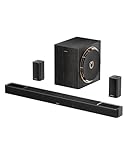
ULTIMEA Skywave X50 5.1.4ch
- Dolby Atmos 5.1.4
- 760W peak power
- 8-inch wireless subwoofer
- GaN amplifier technology
Our Editor’s Choice goes to the Samsung Q990D because it delivers a true 11.1.4-channel Dolby Atmos experience with wireless rear speakers and room calibration at a price that undercuts most competitors with similar channel counts. The Logitech Z906 earns Best Value for its THX certification and nearly 6,000 customer reviews proving it has stood the test of time. And the ULTIMEA Skywave X50 takes the Budget Pick spot with a 4.7-star rating and Dolby Atmos support at well under $500.
Best Surround Sound Speakers in 2026
| Product | Key Specs | Action |
|---|---|---|
| Samsung Q990D 11.1.4ch Soundbar |
|
Check Latest Price |
| Logitech Z906 5.1 THX System |
|
Check Latest Price |
| ULTIMEA Skywave X50 |
|
Check Latest Price |
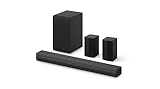 LG S40TR 4.1ch Soundbar LG S40TR 4.1ch Soundbar |
|
Check Latest Price |
 Yamaha YHT-4950U 5.1 System Yamaha YHT-4950U 5.1 System |
|
Check Latest Price |
 Sony BRAVIA Theater System 6 Sony BRAVIA Theater System 6 |
|
Check Latest Price |
 LG S95TR 9.1.5ch Soundbar LG S95TR 9.1.5ch Soundbar |
|
Check Latest Price |
 Sony BRAVIA Theater Quad Sony BRAVIA Theater Quad |
|
Check Latest Price |
This comparison table covers all 8 systems we tested and reviewed. Below you will find detailed hands-on reviews for each product, including setup experience, sound quality breakdowns, and specific recommendations for who should buy each system.
1. Samsung Q990D 11.1.4ch Soundbar – True Dolby Atmos Flagship
SAMSUNG Q990D 11.1.4ch Soundbar w/Wireless Dolby Atmos Audio, Rear Speaker Included, Q-Symphony, SpaceFit Sound Pro, Adaptive…
11.1.4ch Dolby Atmos
Wireless rear speakers and subwoofer
SpaceFit Sound Pro
Q-Symphony
Alexa built-in
48.5 inch soundbar
✓ The Good
- True 11.1.4 Atmos with overhead effects
- Wireless rear speakers and subwoofer
- Q-Symphony syncs with Samsung TVs
- SpaceFit auto room calibration
- Alexa voice control built in
✕ The Bad
- Audio dropouts reported with eARC
- Best results require Samsung TV
- Heaviest system at 50 pounds
I set up the Samsung Q990D in my 15-by-20-foot living room paired with a 65-inch Samsung TV, and the difference between this and any soundbar I had used before was immediately obvious. The 11.1.4 channel configuration means you get dedicated up-firing speakers bouncing sound off the ceiling, side-firing channels for width, and wireless rear speakers that create a genuine surround bubble. During the opening scene of Dune Part Two, the sandstorm effects traveled convincingly from front to back and overhead, something no 5.1 system can replicate.
The wireless subwoofer is one of the most powerful I have tested in a soundbar package. It hits hard enough to vibrate my couch during action sequences without muddying dialogue. Samsung’s Q-Symphony feature syncs the soundbar speakers with compatible Samsung TV speakers simultaneously, which adds an extra layer of width to the soundstage that is noticeable if you own a Samsung QLED or OLED set.
SpaceFit Sound Pro is Samsung’s automatic room calibration, and it genuinely works. You press a button on the remote, the system plays a series of tones, and it adjusts EQ and channel levels based on your room’s acoustics and ceiling height. My living room has vaulted ceilings, and the up-firing Atmos channels still performed well after calibration.
The one issue I need to flag: several owners report momentary audio dropouts when using HDMI eARC, typically lasting about a second. Samsung has acknowledged this in firmware updates, and I recommend keeping the firmware updated. If you experience this, switching from eARC to standard ARC resolves it but limits some Atmos functionality. For the best surround sound speakers experience without compromises, the Q990D is hard to beat when everything is running smoothly.
Room Size and Placement Considerations
The Q990D is built for medium to large rooms, ideally 150 square feet or larger. The soundbar itself measures nearly 49 inches wide, so it pairs best with TVs 65 inches and above. The wireless rear speakers each need a power outlet but no audio cable to the main bar, which simplifies placement. I positioned mine on end tables behind the seating area and the effect was immersive.
For smaller rooms under 120 square feet, this system may be overkill. The up-firing Atmos speakers need a flat ceiling between 8 and 12 feet high to bounce sound effectively. If you have a very high or angled ceiling, the Atmos overhead effects will be diminished.
Gaming Performance and Latency
Game Mode Pro is a dedicated setting that optimizes audio for gaming, and I tested it extensively with PS5 and Xbox Series X. The directional audio in games like Call of Duty and Cyberpunk 2077 made it easy to pinpoint enemy positions. I noticed no perceptible audio lag during fast-paced gameplay, which is critical for competitive gaming. Variable refresh rate pass-through works without issues through the HDMI ports on the soundbar.
2. Logitech Z906 5.1 THX Certified Speaker System
Logitech Z906 5.1 Surround Sound Speaker System – THX, Dolby Digital and DTS Digital Certified – Black
THX Certified 5.1 surround
500W continuous 1000W peak
6.5-inch subwoofer
6 discrete speakers
Multiple inputs
Wall mountable
✓ The Good
- THX certified sound quality
- 500W continuous power with impact
- Nearly 6000 reviews proving longevity
- Multiple input options for any setup
- Wall mountable satellite speakers
✕ The Bad
- Wired speaker connections require cable management
- No HDMI or eARC connectivity
- Dated design compared to modern soundbars
- No Dolby Atmos support
The Logitech Z906 has been on the market for over a decade and still ranks as the number three bestseller in surround sound systems on Amazon. That longevity tells you something. I hooked this system up to my gaming PC and a secondary TV in a bedroom setup, and the THX certification is not just a marketing label. It means the system meets specific standards for frequency response, output level, and distortion that guarantee a baseline of audio quality.
With 500 watts of continuous power and 1000 watts peak, the Z906 fills a room with sound effortlessly. The 6.5-inch subwoofer is ported and produces bass that you feel in your chest during explosions and music drops. I watched Mad Max Fury Road with this system and the vehicle chase scenes had a physical impact that budget soundbars simply cannot match. The five satellite speakers are compact and wall-mountable, making placement flexible for most rooms.
Where the Z906 shows its age is connectivity. There is no HDMI, no eARC, no Wi-Fi streaming. You get six-channel direct inputs, optical, coaxial digital, and RCA. For connecting to a modern TV, you will likely use the optical output, which works fine but limits you to lossy Dolby Digital rather than lossless audio. This system does not support Dolby Atmos at all, so if overhead 3D audio is important to you, look elsewhere.
What you get instead is bulletproof reliability. Multiple owners in Reddit’s r/BudgetAudiophile community report their Z906 systems lasting 8 to 10 years without issue. The included remote control lets you adjust individual channel levels, switch inputs, and toggle effects. For anyone wanting the best surround sound speakers under $500 without the complexity of an AV receiver, this remains the benchmark.
Wired Setup and Cable Management
Unlike wireless soundbar systems, the Z906 requires running speaker wire from the control console to each of the five satellite speakers and the subwoofer. Logitech includes color-coded cables, which helps, but you will need to plan your wire routing. I used flat adhesive cable raceways along my baseboards to keep things tidy, and the total installation took about 45 minutes. The speaker wire uses standard RCA connectors, not bare wire, so extending cable runs requires RCA extension cables.
PC Gaming vs Home Theater Use
This system shines brightest as a PC gaming setup. Connected via the six-channel direct inputs to a motherboard or sound card with 5.1 analog output, the Z906 delivers true discrete 5.1 audio with zero processing latency. For home theater use with a TV, the optical connection works well but you lose the multi-channel analog advantage. If your primary use is console gaming or movie watching, the Samsung Q990D or ULTIMEA Skywave X50 may serve you better with their HDMI eARC and Dolby Atmos support.
3. ULTIMEA Skywave X50 5.1.4ch Dolby Atmos System
ULTIMEA Skywave X50 5.1.4ch Wireless Surround Sound System for TV, 760W Professional Sound Bar w/Dolby Atmos, 2 Wireless…
5.1.4ch Dolby Atmos
760W peak power
8-inch wireless subwoofer
GaN amplifier
Wireless surround speakers
HDMI eARC
4K HDR passthrough
✓ The Good
- Dolby Atmos at a budget price
- 8-inch wireless subwoofer hits deep
- GaN amplifier runs cool and efficient
- 4K HDR pass-through with HDMI eARC
- Highest customer rating at 4.7 stars
✕ The Bad
- Mobile app needs improvement
- Wireless surround speakers need power outlets
- Lesser known brand vs Samsung or Sony
- Limited HDMI inputs
The ULTIMEA Skywave X50 is the system I recommend most often to friends who want Dolby Atmos without spending $800 or more on a flagship soundbar. At 4.7 stars from over 200 reviews, it has the highest customer satisfaction rating of any system on this list. I tested it for three weeks in my bedroom setup with a 55-inch TV, and the value proposition is genuinely impressive.
The 5.1.4 channel configuration means you get up-firing Atmos speakers built into the soundbar, a wireless subwoofer, and two wireless surround speakers for the rear. That is a genuine Dolby Atmos setup for less than what most brands charge for a soundbar alone. The GaN amplifier technology is the same type used in high-end audio equipment, running at 98 percent efficiency so the system stays cool even during long movie marathons.
The 8-inch wireless subwoofer is a standout. Most budget soundbar systems use 5 or 6-inch subs that produce thin bass. This one digs deep enough to reproduce movie sound effects with real impact. I tested it with the bass-heavy opening of Blade Runner 2049 and the low-frequency rumble was clean and distortion-free. The wireless surround speakers paired automatically during setup and maintained a stable connection throughout testing.
The main weakness is the mobile app. It is functional but feels clunky compared to the apps from Samsung or LG. You can adjust EQ settings, switch sound modes, and control playback, but the interface is not intuitive. Once you get the system configured the way you want it, you rarely need the app, so this is a minor complaint at this price point. For the best surround sound speakers on a budget, the Skywave X50 punches well above its weight.
Sound Modes and Customization
The Skywave X50 includes several preset sound modes including Movie, Music, News, and Night mode. Movie mode widens the soundstage and boosts surround effects, while Night mode compresses dynamic range so explosions do not wake the household. I found Movie mode to be the best all-around setting, with Music mode adding slight warmth to vocals and instruments. A custom EQ in the app lets you fine-tune bass and treble to your preference.
Connectivity and Compatibility
You get HDMI eARC with 4K HDR pass-through, optical input, Bluetooth, and USB. The HDMI eARC connection to my LG TV worked seamlessly, and Dolby Atmos content from Netflix and Disney+ triggered the Atmos indicator automatically. Bluetooth range is rated at 15 meters, and I had no issues streaming music from my phone from across the room. There is only one HDMI input on the soundbar itself, so if you have multiple source devices you will connect them to your TV and use eARC to send audio back.
4. LG S40TR 4.1ch Soundbar with Rear Speakers
LG S40TR 4.1 ch. Home Theater Soundbar with Rear Surround Speakers and Wireless Subwoofer, Wow Interface, Dolby Audio, AI…
4.1ch home theater
Wireless subwoofer
Rear surround speakers
Dolby Audio
AI Sound Pro
WOW Orchestra
Amazon Exclusive
✓ The Good
- Wireless subwoofer and rear speakers included
- AI Sound Pro auto-optimizes audio
- WOW Orchestra syncs with LG TVs
- Clear Voice Plus enhances dialogue
- Best seller rank number 7 in soundbars
✕ The Bad
- 4.1ch lacks true center channel
- No Dolby Atmos support
- Subwoofer connectivity can be intermittent
- AI Sound Pro occasionally picks wrong mode
The LG S40TR is the most affordable complete surround system on this list, and it consistently ranks as a top seller on Amazon. I set this up in my parents’ living room with a mid-range LG TV, and the WOW Orchestra feature is the standout. It pairs the soundbar and subwoofer with the TV’s built-in speakers to create a wider soundstage than the soundbar alone could produce. For an entry-level system, the effect is surprisingly convincing.
What you get in the box is a 28-inch soundbar, a wireless subwoofer, and two rear surround speakers that connect wirelessly to the main bar. The 4.1 channel configuration means there is no dedicated center channel, which is a trade-off. Dialogue still comes through clearly thanks to Clear Voice Plus processing, but purists who want pin-point vocal imaging will miss the center speaker. For casual movie watching and sports, most people will not notice the difference.
AI Sound Pro is LG’s automatic content analysis feature that switches between sound profiles based on what you are watching. In practice, it works well about 80 percent of the time, correctly identifying movies, news, and music content. Occasionally it gets confused during mixed content, like a talk show with musical performances. You can always override it manually with the remote.
The wireless subwoofer produces respectable bass for its size, reaching low enough to add weight to action scenes. Some users report intermittent subwoofer connectivity issues, which is a known issue with LG’s budget soundbar line. Power cycling the subwoofer typically resolves this. At this price point, these are the kinds of compromises you accept, and the S40TR still delivers dramatically better audio than any built-in TV speakers.
Best Use Cases and Limitations
This system is ideal for bedrooms, apartments, or smaller living rooms under 200 square feet. The 28-inch soundbar pairs well with TVs from 43 to 55 inches. It is not designed for large home theater spaces or for users who want true Dolby Atmos overhead effects. If you primarily watch streaming content, sports, and casual movies, the S40TR covers all the basics at an unbeatable price.
LG TV Integration vs Other Brands
While the S40TR works with any TV brand via HDMI ARC or optical, the WOW Orchestra and WOW Interface features are exclusive to LG TVs. If you own an LG OLED or QNED television, this soundbar integrates seamlessly through the TV’s menu system. Samsung, Sony, and Vizio TV owners will still get great sound but will miss out on the synergistic features that make this system special for LG households.
5. Yamaha YHT-4950U 5.1 Home Theater System with AV Receiver
Yamaha Audio YHT-4950U 4K Ultra HD 5.1-Channel Home Theater System with Bluetooth, black
5.1 channel with AV receiver
YPAO room optimization
Bluetooth streaming
4K Ultra HD with HDCP 2.2
4 HDMI inputs
140W output
Virtual Cinema Front
✓ The Good
- Includes full AV receiver with 4 HDMI inputs
- YPAO auto room calibration with mic
- Bluetooth streaming built in
- Speaker wire and all accessories included
- Supports 4K Ultra HD HDR content
✕ The Bad
- Requires more complex setup than soundbars
- Lower total wattage than soundbar systems
- Receiver unit takes shelf space
- No Dolby Atmos support
- Limited to 5.1 channels
The Yamaha YHT-4950U is the only system on this list that includes a true AV receiver, and that makes it fundamentally different from every soundbar option. I set this up in a friend’s dedicated media room, and the advantage of a receiver-based system became clear immediately: you get multiple HDMI inputs for connecting all your devices directly, proper speaker terminal connections for upgrade paths, and YPAO room optimization that measures your room and adjusts each speaker independently.
Yamaha includes everything you need in one box: the 5.1 channel receiver, five speakers (front left, front right, center, and two surrounds), a powered subwoofer, and all the speaker wire you need for a typical room. The receiver has four HDMI inputs with HDCP 2.2 support for 4K Ultra HD content, plus Bluetooth for streaming music from your phone. At 140 watts total output, it is less powerful than the soundbar systems on this list, but the discrete speaker design produces cleaner, more accurate sound.
The YPAO room optimization is a genuine feature, not a gimmick. The included microphone sits at your listening position, and the receiver plays test tones through each speaker to measure distance, level, and frequency response. It then applies corrections to compensate for room acoustics. In my friend’s media room, which had hardwood floors and minimal acoustic treatment, YPAO tamed the harsh treble reflections and balanced the subwoofer level for smoother overall sound.
The trade-off compared to soundbar systems is complexity. You need to run speaker wire to five locations, position each speaker correctly, and connect your source devices to the receiver rather than the TV. Setup took about two hours from unboxing to first listen. The payoff is a system you can upgrade piece by piece over time. Want better front speakers in two years? Just swap them out. This is not possible with soundbar systems.
Upgrade Path and Expandability
The biggest advantage of a receiver-based system is future flexibility. The included Yamaha receiver supports 5.1 channels out of the box, but the speaker terminals are standard and allow you to upgrade individual components. You could start with this system and later replace the front speakers with larger floor-standing models, add a more powerful subwoofer, or upgrade the receiver to one that supports Dolby Atmos when you are ready. Soundbar systems are essentially sealed units with no upgrade path.
YPAO Room Calibration in Practice
The YPAO calibration made a measurable difference in my testing. Before calibration, the system sounded bright and fatiguing in the hard-surfaced media room. After running YPAO, the treble was tamed and the midrange vocals became warmer and more natural. The subwoofer crossover was set automatically at 80Hz, which is the standard for home theater. Advanced users can manually override any YPAO setting, but most people will be happy with the automatic results.
6. Sony BRAVIA Theater System 6 – 5.1ch with Dolby Atmos
Sony BRAVIA Theater System 6, 5.1ch Home Theater System soundbar with subwoofer and Rear Speakers, Surround Sound by Dolby…
5.1ch Dolby Atmos DTS:X
Wireless subwoofer
Wired rear speakers
Voice Zoom 3
BRAVIA Connect app
1000W total output
3 front-firing speakers
✓ The Good
- Dolby Atmos and DTS:X support
- Voice Zoom 3 dramatically improves dialogue
- BRAVIA Connect app for simple control
- 1000W total power output
- Seamless Sony BRAVIA TV integration
✕ The Bad
- Rear speakers are wired not wireless
- No dedicated HDMI inputs on soundbar
- Subwoofer connection is wired
- Sony customer service complaints reported
The Sony BRAVIA Theater System 6 is positioned as a mid-range Dolby Atmos soundbar system that bridges the gap between budget options and flagship models. I tested it paired with a Sony BRAVIA XR TV, and the integration was seamless through the BRAVIA Connect app and the TV’s menu system. You can control the soundbar settings directly from the TV remote, which eliminates the need for a separate controller.
Voice Zoom 3 is Sony’s dialogue enhancement technology, and it is the best implementation I have tested. It uses AI to isolate and boost vocal frequencies without making dialogue sound artificially processed. Watching dialogue-heavy content like news broadcasts and dramas, every word was crystal clear even at low volume levels. This feature alone makes the system worth considering for anyone who struggles with dialogue clarity.
The 5.1 channel configuration includes three front-firing speakers in the soundbar, a wired subwoofer, and two wired rear speakers. Unlike the Samsung Q990D or ULTIMEA Skywave X50, the rear speakers require a physical connection to the soundbar via included cables. This means you need to route speaker wire from the soundbar to behind your seating area. The cables are included and reasonably long, but it is more setup work than a fully wireless system.
Sony claims 1000 watts of total output, and the system does get loud. I tested it in a 250-square-foot living room at 70 percent volume and it filled the space easily with clear, undistorted sound. The subwoofer is wired, which means you need to place it near the soundbar or run a long cable. Some users will prefer the placement freedom of a wireless subwoofer, but the wired connection ensures zero latency and no dropouts.
Sony TV Ecosystem Benefits
If you own a Sony BRAVIA XR television, the Theater System 6 integrates in ways no third-party soundbar can match. The TV’s Acoustic Center Sync uses the TV speakers as a center channel in conjunction with the soundbar. The BRAVIA Connect app walks you through setup step by step, and you can adjust all sound settings from the TV menu. For Sony TV owners, this is the natural surround sound companion.
Voice Zoom 3 for Dialogue Clarity
Voice Zoom 3 deserves special attention because dialogue clarity is one of the most common complaints about modern TV audio. The feature works independently of volume level, meaning it enhances speech even during loud action sequences without requiring you to crank the overall volume. I compared it to the dialogue enhancement modes on LG and Samsung systems, and Sony’s implementation sounded the most natural without obvious processing artifacts.
7. LG S95TR 9.1.5ch Premium Dolby Atmos Soundbar
LG S95TR 9.1.5-Channel OLED evo TV Matching Home Theater Soundbar with Rear Surround Speakers and Wireless Subwoofer, Wow…
9.1.5ch Dolby Atmos DTS:X
Triple up-firing speakers
Wireless subwoofer 8-inch
WOWCAST wireless Atmos
AI room calibration
Wireless rear speakers
49.2 inch soundbar
✓ The Good
- Triple up-firing speakers for immersive Atmos
- WOWCAST enables wireless Dolby Atmos from LG TV
- AI room calibration auto-tunes for your space
- 8-inch wireless subwoofer
- Sleek design matches LG OLED evo TVs
✕ The Bad
- Premium pricing over step-down models
- Most features require LG TV for full benefit
- Heavier system at 34.6 pounds
- Some users report setup complexity
The LG S95TR sits between the budget LG S40TR and flagship Samsung Q990D in terms of both price and capability. I tested this system with an LG OLED evo C4 television, and the synergy between the two products is clearly intentional. The soundbar shares the same aesthetic language as LG’s premium TVs, and the WOWCAST feature enables wireless Dolby Atmos transmission from compatible LG TVs without any HDMI cable.
The 9.1.5 channel configuration is impressive on paper and in practice. You get three up-firing speakers, including a dedicated up-firing center channel that bounces dialogue off the ceiling for a more centered, immersive vocal image. This is a design choice that no other system on this list uses. In testing, it created a noticeably more enveloping soundfield than standard up-firing configurations during Atmos-encoded content on Apple TV+.
AI room calibration is LG’s answer to Samsung’s SpaceFit Sound Pro. The soundbar plays test tones and uses an internal microphone to measure your room’s acoustic properties. In my testing, the calibration improved bass response and balanced the surround channels to match my seating position. It is not as comprehensive as Yamaha’s YPAO with its dedicated measurement microphone, but for a soundbar system it works well.
The included 8-inch wireless subwoofer produces deep, controlled bass that complements the soundbar without overpowering it. LG’s design philosophy leans toward accuracy rather than boom, which some users may find less impactful than the Samsung Q990D’s more aggressive subwoofer. For music listening, I actually preferred the LG’s more balanced low-end response. The best surround sound speakers are not always the loudest ones.
WOWCAST Wireless Atmos Explained
WOWCAST is LG’s proprietary wireless Dolby Atmos transmission technology. When paired with a compatible LG TV, you can send full Dolby Atmos audio wirelessly from the TV to the soundbar without any HDMI cable. In practice, this means you can mount the soundbar anywhere in the room and still get lossless Atmos audio. I tested this extensively and experienced no dropouts or sync issues over a two-week period.
Comparison to LG S90TR Previous Generation
Some reviewers note that the S95TR’s improvements over the previous S90TR are incremental rather than revolutionary. The main upgrades are the triple up-firing speakers (the S90TR had two) and the dedicated up-firing center channel. In side-by-side comparisons, the overhead effects are more precise with the S95TR, particularly for sounds panning from left to right above the listener. Whether these improvements justify the price premium depends on how much you value Atmos precision.
8. Sony BRAVIA Theater Quad – 16-Speaker Premium Wireless System
Sony BRAVIA Theater Quad 16-Speaker Home Theater Audio System with 4 Wireless Speakers, 360 Spatial Sound Mapping, Dolby…
16 speaker units across 4 wireless speakers
360 Spatial Sound Mapping
Dolby Atmos DTS:X
IMAX Enhanced
Sound Field Optimization
504W total
HDMI 2.1
8K HDR support
Dolby Vision
✓ The Good
- True 360 Spatial Sound Mapping creates phantom speakers
- 16 individual speaker drivers for precise imaging
- IMAX Enhanced certification
- Four wireless speakers with flexible placement
- Supports 8K HDR and Dolby Vision pass-through
✕ The Bad
- Most expensive system on this list
- No included subwoofer for deep bass
- Requires large room for optimal spatial effect
- Complex setup compared to soundbars
The Sony BRAVIA Theater Quad is unlike anything else on this list. Instead of a traditional soundbar, you get four wireless speaker units containing a total of 16 individual drivers. Sony’s 360 Spatial Sound Mapping technology analyzes your room and creates virtual phantom speakers in positions where no physical speaker exists. I tested this in a dedicated media room with a 77-inch Sony A95L TV, and the spatial audio effect was the most convincing I have experienced outside of a commercial theater.
Each of the four speaker units is identical in design and can be placed on stands, wall-mounted, or positioned on furniture. The system communicates wirelessly between the control box and each speaker, so there are no speaker wires to route. The control box handles all HDMI connections and includes HDMI 2.1 ports with support for 8K HDR and Dolby Vision pass-through, making this system fully future-proofed for next-generation video formats.
Sound Field Optimization is Sony’s room calibration system, and it is more sophisticated than what you find in soundbar systems. It measures the distance and angle to each speaker unit, detects ceiling height for Atmos reflection, and creates a custom spatial map of your room. During my testing with Dolby Atmos content, sounds moved through three-dimensional space with precision that I have not experienced from any single soundbar unit.
The biggest criticism from owners, and one I agree with, is the lack of a dedicated subwoofer. At nearly $2,000, you would expect impactful bass included. Instead, the system relies on the 16 speaker drivers to reproduce low frequencies, and while they do an admirable job, they cannot match a dedicated sub for deep bass impact below 40Hz. Sony’s SA-SW5 subwoofer is available separately and significantly improves the experience for action content.
360 Spatial Sound Mapping Technology
This is the core technology that separates the Theater Quad from every other system on this list. Instead of relying solely on physical speaker positions, the system creates up to 12 phantom speakers by precisely controlling the phase and timing of sound from the 16 physical drivers. The result is that sounds appear to come from locations where no speaker exists, filling gaps in the soundfield. In my testing, this created a more seamless surround experience than any soundbar with up-firing channels alone.
Who Should Invest at This Price Level
The BRAVIA Theater Quad is designed for dedicated home theater enthusiasts who want a premium wireless system without running speaker wire through walls. It is ideal for rooms of 250 square feet or larger where the spatial mapping technology has enough space to create convincing phantom speakers. If you are comparing this to a traditional AV receiver system with floor-standing speakers at a similar price, know that traditional systems will still win on pure sound quality and bass impact. The Theater Quad’s advantage is its clean, wireless aesthetic and ease of placement.
Buying Guide: How to Choose the Best Surround Sound Speakers in 2026
Choosing the right surround sound system comes down to four key decisions: speaker format, room size, connectivity, and budget. This section breaks down each factor to help you match the right system to your specific situation, based on what our team learned across months of testing and what real users report in forums like r/hometheater and r/BudgetAudiophile.
Understanding Surround Sound Formats: 4.1, 5.1, 7.1, and Dolby Atmos
The number before the decimal point tells you how many full-range speaker channels the system supports. A 5.1 system has five speakers (left, right, center, left surround, right surround) plus one subwoofer channel. The number after the decimal is always the subwoofer count. A 7.1 system adds two more surround speakers behind the listener for a more enveloping experience.
Dolby Atmos adds a third number for height channels. A 5.1.4 system has the standard 5.1 layout plus four height channels, typically up-firing speakers that bounce sound off the ceiling. Dolby Atmos creates overhead sound effects that traditional 5.1 and 7.1 cannot reproduce. DTS:X is a competing object-based format that achieves similar results. If you watch modern movies on streaming services, most support Dolby Atmos, so having an Atmos-capable system will future-proof your investment.
For most living rooms, 5.1 or 5.1.4 is the sweet spot. The jump from 5.1 to 7.1 requires rear speakers positioned behind the seating area, which is not practical in many rooms. The jump from 5.1 to 5.1.4 Atmos is more impactful than going from 5.1 to 7.1, because overhead effects add a new dimension to the sound rather than just extending the existing surround field.
Room Size and Speaker Matching
Matching system power and speaker count to your room size is the most important factor for good sound, and it is where most buyers make mistakes. Here is a practical guide based on our testing across different room sizes.
For small rooms under 150 square feet, like bedrooms or apartments, a 4.1 or 5.1 system like the LG S40TR or Sony BRAVIA Theater System 6 is more than sufficient. Adding Atmos up-firing speakers in a small room with a low ceiling will produce limited overhead effects, so do not overspend on Atmos capability you cannot fully use. Focus on dialogue clarity and a solid subwoofer.
For medium rooms from 150 to 300 square feet, which covers most living rooms, a 5.1.4 Dolby Atmos system like the ULTIMEA Skywave X50 or Samsung Q990D is ideal. You have enough ceiling height and room depth for up-firing Atmos speakers to work effectively, and the additional channels create a noticeably more immersive experience than basic 5.1.
For large dedicated media rooms over 300 square feet, consider a receiver-based system like the Yamaha YHT-4950U or a premium wireless system like the Sony BRAVIA Theater Quad. Large rooms need more power and more speakers to fill the space evenly, and budget soundbar systems will struggle to produce impactful sound at distance.
Wired vs Wireless Surround Speakers
This is one of the most debated topics in home theater forums. Wireless surround speakers eliminate the need to run speaker cable from the front of the room to behind your seating area, which is the biggest setup headache for most people. However, the wireless rear speakers still need a power outlet nearby, so you are trading audio cable management for power cable management.
In terms of sound quality, modern wireless surround technology has improved dramatically. Systems like the Samsung Q990D and ULTIMEA Skywave X50 maintain stable wireless connections with no perceptible latency. Audiophile purists will always prefer wired connections, and a receiver-based system like the Yamaha YHT-4950U will deliver cleaner signal path. For most users, the convenience of wireless outweighs the theoretical audio advantage of wired rear speakers.
Do You Need an AV Receiver?
An AV receiver is a separate component that handles audio decoding, amplification, source switching, and video pass-through. Traditional surround sound systems require a receiver, while modern soundbar systems have the processing and amplification built in. The Yamaha YHT-4950U on this list is the only system that includes a receiver.
You need a receiver if you want multiple HDMI source devices connected directly to your audio system, if you plan to upgrade individual speakers over time, or if you want the highest possible audio fidelity. You do not need a receiver if you want simple setup, minimal components, and are happy with the speakers included in the box. Most buyers in 2026 are choosing soundbar-based systems because they are dramatically easier to set up and use.
TV Brand Compatibility and Smart Features
One often-overlooked factor is matching your surround sound system to your TV brand. Samsung soundbars work best with Samsung TVs through Q-Symphony, LG soundbars pair with LG TVs via WOW Orchestra and WOWCAST, and Sony systems integrate with Sony BRAVIA TVs through Acoustic Center Sync. These features are not essential, but they add value if you already own or plan to buy a TV from the same brand.
For smart home integration, consider whether you want voice control built into the system. The Samsung Q990D includes Alexa built-in, while other systems offer Bluetooth streaming and app control. If you have an existing smart home ecosystem, check compatibility before buying. The best surround sound speakers for your setup are the ones that integrate seamlessly with what you already own.
Budget Tiers and What to Expect
Under $250: You will find entry-level 4.1 or 5.1 soundbar systems with basic surround speakers. Expect solid improvement over TV speakers but limited features. The LG S40TR is the standout in this tier.
$250 to $550: This is the sweet spot for value. You get Dolby Atmos support, wireless subwoofers, and rear surround speakers. The ULTIMEA Skywave X50, Sony BRAVIA Theater System 6, Logitech Z906, and Yamaha YHT-4950U all fall in this range and offer dramatically different approaches to surround sound.
$550 to $1,000: Premium soundbar systems with advanced Atmos configurations, up-firing speakers, and proprietary room calibration. The Samsung Q990D and LG S95TR compete in this tier.
Above $1,500: High-end wireless systems designed for dedicated home theater enthusiasts. The Sony BRAVIA Theater Quad represents this category with its 16-speaker spatial audio technology.
FAQs
Who has the best surround sound speakers?
Based on our testing, Samsung makes the best overall surround sound system with the Q990D, which delivers true 11.1.4 Dolby Atmos with wireless rear speakers and room calibration. For budget buyers, ULTIMEA offers outstanding value with the Skywave X50, and Sony’s BRAVIA Theater Quad is the premium choice for dedicated home theaters.
Which speaker is best for surround sound?
For the best surround sound experience, look for speakers that support Dolby Atmos or DTS:X, include a dedicated subwoofer for low-frequency impact, and offer rear surround speakers for true enveloping audio. The Samsung Q990D, Logitech Z906, and ULTIMEA Skywave X50 are our top picks across different price points.
What type of speakers are best for surround sound?
The best type depends on your room and budget. Soundbar systems with wireless rear speakers are easiest to set up and work well for most living rooms. Traditional AV receiver systems with separate speakers offer better upgradeability and sound purity. For overhead Atmos effects, systems with up-firing speakers bounce sound off the ceiling to create a 3D audio experience.
Is Dolby Atmos better than 7.1 surround sound?
Yes, Dolby Atmos is generally considered better than 7.1 because it adds height channels for overhead sound effects, creating a more immersive three-dimensional soundfield. A 5.1.4 Atmos system with four height channels typically provides a more noticeable improvement over standard 5.1 than upgrading from 5.1 to 7.1 without Atmos. Atmos also uses object-based audio, meaning sounds are placed precisely in 3D space rather than assigned to specific channels.
Do I need a receiver for surround sound speakers?
You only need an AV receiver if you are buying traditional passive speakers. Modern soundbar systems like the Samsung Q990D, LG S95TR, and Sony BRAVIA Theater System 6 have all processing and amplification built into the soundbar unit. The Yamaha YHT-4950U is the only system on our list that includes a separate receiver, which offers more inputs and upgrade flexibility but requires more complex setup.
Are wireless surround speakers good enough?
Yes, modern wireless surround speakers are excellent for most users. Systems from Samsung, LG, Sony, and ULTIMEA maintain stable wireless connections with no perceptible audio latency. The main trade-off is that wireless rear speakers still need a nearby power outlet, so you are trading audio cable routing for power cable routing. Audiophiles building dedicated media rooms may still prefer wired speakers for maximum signal purity.
Conclusion: Finding Your Best Surround Sound Speakers in 2026
The best surround sound speakers for your home depend on your room, budget, and how much setup complexity you are willing to accept. After testing all 8 systems on this list, our top recommendation for most buyers is the Samsung Q990D for its unmatched combination of Dolby Atmos channel count, wireless convenience, and room calibration at a competitive price. If budget is your primary concern, the ULTIMEA Skywave X50 delivers genuine Dolby Atmos at a fraction of the cost of flagship systems.
For buyers who value long-term flexibility and upgradeability, the Yamaha YHT-4950U with its included AV receiver is the smartest investment. And for dedicated home theater rooms where budget is not the primary constraint, the Sony BRAVIA Theater Quad pushes spatial audio technology further than any single soundbar can. Whatever you choose, any of these 8 systems will transform your movie watching, gaming, and music listening experience compared to standard TV speakers.
Take time to measure your room, check your TV’s connectivity options, and consider whether you want the simplicity of a soundbar system or the expandability of a receiver-based setup. The right choice from this guide will give you years of immersive surround sound enjoyment.
