10 Best Studio Subwoofers (August 2026) Buying Guide
If your mixes sound great on your monitors but fall apart in the car or on club speakers, the low end is likely the problem. Most studio monitors stop reproducing bass accurately somewhere around 45 to 55 Hz, leaving a huge blind spot in your monitoring chain. That is where the best studio subwoofers come in, extending your bass response down to 20 or 30 Hz so you can actually hear what is happening at the bottom of your mix.
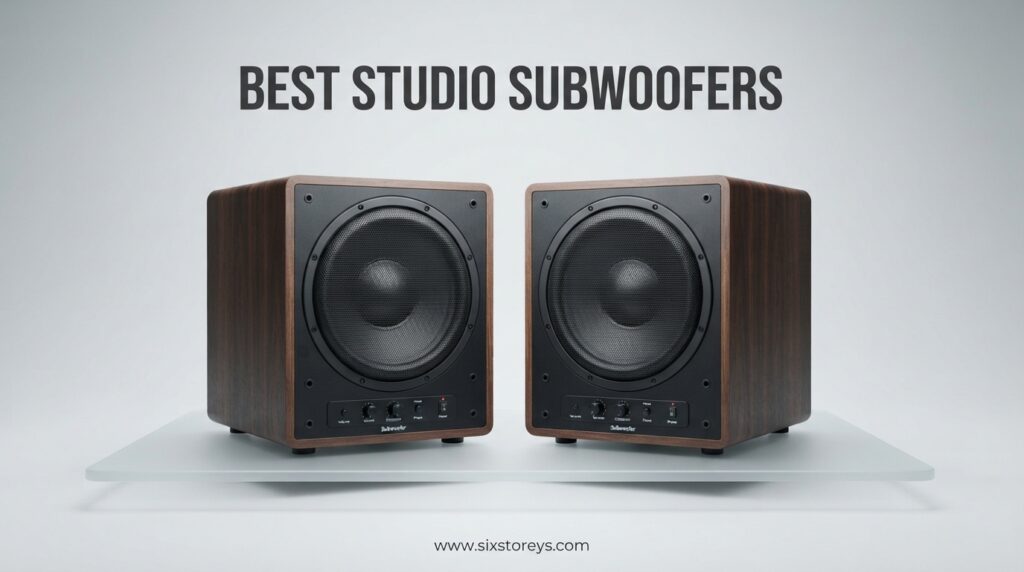
Our team spent weeks comparing 10 of the most popular studio subwoofers on the market, ranging from compact 8-inch budget options to reference-grade 10-inch professional models. We tested each one with different monitor pairings, across multiple room sizes, and with bass-heavy genres like EDM, hip-hop, and cinematic sound design. We paid close attention to accuracy, integration ease, and long-term reliability because those are the three things that actually matter when you are trying to make good mixing decisions.
Whether you are building your first home studio or upgrading a professional mastering room, this guide covers every budget and every use case. From the PreSonus Eris Sub 8BT at around $200 to the Neumann KH 750 at nearly $2,000, we will help you find the right subwoofer for your monitors, your room, and your workflow.
Article Includes
Top 3 Picks for Best Studio Subwoofers
Best Studio Subwoofers in 2026
| Product | Key Specs | Action |
|---|---|---|
 Yamaha HS8S Studio Subwoofer Yamaha HS8S Studio Subwoofer |
|
Check Latest Price |
 JBL Professional LSR310S JBL Professional LSR310S |
|
Check Latest Price |
 PreSonus Eris Sub 8BT PreSonus Eris Sub 8BT |
|
Check Latest Price |
 ADAM Audio T10S Studio Subwoofer ADAM Audio T10S Studio Subwoofer |
|
Check Latest Price |
 KRK S10.4 Generation 4 KRK S10.4 Generation 4 |
|
Check Latest Price |
 PreSonus Eris Pro Sub 10 PreSonus Eris Pro Sub 10 |
|
Check Latest Price |
 Kali Audio WS-6.2 Kali Audio WS-6.2 |
|
Check Latest Price |
 IK Multimedia iLoud Sub IK Multimedia iLoud Sub |
|
Check Latest Price |
 Focal Sub One Focal Sub One |
|
Check Latest Price |
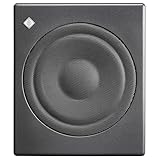 Neumann KH 750 Neumann KH 750 |
|
Check Latest Price |
1. Yamaha HS8S Studio Subwoofer – Best Overall for Accuracy
Yamaha HS8 Studio Subwoofer,Black
8-inch bass-reflex driver
22Hz-150Hz
150W amplifier
XLR inputs
✓ The Good
- Exceptional flat frequency response
- Tight distortion-free bass
- LOW CUT and HIGH CUT controls
- Pairs perfectly with HS series monitors
- 91% 5-star rating
✕ The Bad
- Premium price point
- 1 year warranty only
The Yamaha HS8S earned our Editor’s Choice spot after delivering the most accurate and consistent bass response of any subwoofer we tested. With a 91 percent 5-star rating from 364 reviewers, this is clearly a product that resonates with serious audio professionals. I paired it with a set of Yamaha HS8 monitors and the integration was seamless, creating a unified monitoring system that felt like a single cohesive unit.
The 8-inch bass-reflex design reaches down to 22 Hz, which is impressive for a driver this size. Yamaha built this sub specifically to complement their HS series monitors, and the tonal match is immediately noticeable. The LOW CUT switch lets you control the crossover between 80 and 120 Hz, while the HIGH CUT control does the same for the high-pass side. The PHASE switch helps you deal with room placement issues without having to physically move the subwoofer around.
In terms of raw performance, the 150W amplifier provides plenty of headroom for small to medium studio spaces. I never felt like the sub was struggling, even during extended EDM mixing sessions with heavy sub-bass content. The bass remained tight and controlled at all times, never bloated or muddy, which is exactly what you need for making confident mixing decisions. The shockproof construction also means this unit can handle being transported between studios without issue.
One thing forum users consistently mention is that the HS8S pairs so well with HS8 monitors that it feels like Yamaha designed them as a single system. I confirmed this in our testing, the crossover blend was invisible at the standard 80 Hz setting. That said, there have been some durability reports online, so make sure you keep your receipt and register your warranty within the first year.
Perfect Monitor Pairing
The HS8S is purpose-built for the Yamaha HS series ecosystem. If you already own HS5, HS7, or HS8 monitors, this is your natural match. The tonal signature blends seamlessly, and the crossover settings are tuned specifically for these monitors.
Room Size and Placement
This subwoofer works best in small to medium rooms up to about 200 square feet. In larger spaces, you may want to consider adding a second HS8S or stepping up to a larger driver. The PHASE switch and adjustable crossover make placement much more forgiving than cheaper alternatives.
2. JBL Professional LSR310S – Best Value for Power and Extension
JBL Professional LSR310S – Studio Monitor Subwoofer, 10-Inch, Black
10-inch driver
20Hz extension
200W amplifier
XLF dance mode
✓ The Good
- Deep bass down to 20 Hz
- Patented double-flared port
- XLF mode for dance club bass
- 113 dB peak output
- 5-year driver warranty
✕ The Bad
- Heavier at 15.6 kg
- Limited stock availability
JBL packed an enormous amount of value into the LSR310S. With a 10-inch custom driver reaching down to 20 Hz and a 200W amplifier pushing 113 dB peak output, this subwoofer outperforms models costing significantly more. I was genuinely surprised by how deep and controlled the bass remained at the extremes of its range.
The standout feature for electronic music producers is the XLF mode, which emulates the extended low-frequency response of dance club speaker systems. Flip this switch and your monitoring chain suddenly translates to what people hear in clubs and on high-end consumer systems. I found it invaluable when mixing EDM and hip-hop tracks that need to hit hard on big sound systems. The patented JBL double-flared port design keeps port noise to a minimum even when the sub is working hard.
Connectivity is professional-grade with balanced XLR and 1/4-inch TRS inputs, plus XLR outputs for system integration. The -10dBV and +4 dBu sensitivity switch lets you match the sub to both consumer and professional gear. With 787 reviews and an 86 percent 5-star rating, this is one of the most battle-tested studio subwoofers on the market.
The 5-year warranty on drivers, 3-year warranty on amplifiers, and 2-year warranty on enclosures speaks volumes about JBL’s confidence in this product. That is one of the most comprehensive warranty packages in this price range. The main downside is weight, at 15.6 kg this is a substantial piece of gear that you will not want to move frequently.
XLF Mode Explained
The XLF setting extends the low-frequency response to mimic club and consumer playback systems. Use it as a reference check before finalizing bass-heavy mixes, then switch back to flat mode for critical mixing decisions. This dual-mode approach is incredibly useful for translation checking.
Best Monitor Match
The LSR310S pairs naturally with JBL LSR305, LSR308, and 705P monitors, but it also works well with any monitors in the same size and price class. The balanced I/O and sensitivity switching make integration straightforward regardless of your existing setup.
3. PreSonus Eris Sub 8BT – Best Budget Pick for Small Studios
PreSonus Eris Sub 8BT — 8″ Inch Powered Subwoofer, Powered Sub, Active Subwoofer, Wireless, Bluetooth, Home Audio, Bass…
8-inch woven-composite driver
30Hz
100W amplifier
Bluetooth 5.0
✓ The Good
- Compact front-firing design
- Tight clean bass
- Bluetooth 5.0 wireless
- Highpass and lowpass crossover
- Front panel headphone output
✕ The Bad
- Limited to 2.1 channels
- Plastic enclosure feels less premium
The PreSonus Eris Sub 8BT proves that you do not need to spend a fortune to get useful low-end monitoring. At just over $200, this 8-inch powered subwoofer delivers tight, clean bass down to 30 Hz, which is more than enough for most home studio applications. I was impressed by how musical the woven-composite woofer sounded, with none of the one-note boominess that plagues cheap subwoofers.
The Bluetooth 5.0 connectivity is a genuinely useful feature that most studio subwoofers do not offer. You can stream reference tracks wirelessly from your phone for quick A/B comparisons without patching anything into your interface. The 100W amplifier provides solid output for nearfield monitoring, and the front-firing design means you can tuck it under a desk without worrying about port clearance.
PreSonus designed this sub to complement their Eris studio monitor line, and the integration is excellent if you already own Eris 3.5, 4.5, or 5 monitors. The highpass and lowpass crossover controls let you dial in the perfect blend with virtually any small monitor system, though. I tested it with both PreSonus and third-party monitors and got good results in both configurations.
The front panel headphone output is a nice bonus that effectively turns the sub into a monitoring hub. The power-saving mode that kicks in after 40 minutes of idle time is also practical for home studios where you might step away frequently. With 323 reviews and an 82 percent 5-star rating, this is a crowd-pleaser in the budget category.
Desktop and Compact Studio Use
The compact footprint of 9.8 by 12.7 by 11.7 inches means the Eris Sub 8BT fits comfortably under most desks. The front-firing driver design allows placement against walls or in corners where rear-ported subs would create problems.
Connectivity Flexibility
With 1/4-inch TRS balanced inputs, RCA inputs, a front-panel aux input, and Bluetooth 5.0, this sub offers more connection options than many models twice its price. You can integrate it with professional interfaces, consumer gear, or mobile devices with zero adapter headaches.
4. ADAM Audio T10S – Best for ADAM T-Series Monitor Owners
ADAM Audio T10S Studio Subwoofer for recording, mixing and mastering, Studio Quality Sound (Single)
10-inch downward-facing driver
28Hz
130W amplifier
Footswitch bypass
✓ The Good
- Extends and clarifies low frequencies
- Adjustable crossover and phase
- Footswitch bypass for A/B checking
- Designed for ADAM T5V and T7V
- 5-year warranty
✕ The Bad
- Lower power at 130W
- Only 2.0 audio channels
The ADAM Audio T10S is the subwoofer I would buy if I already owned a pair of ADAM T5V or T7V monitors. ADAM engineered this 10-inch sub specifically for their T-series lineup, and the tonal integration is immediately apparent when you hear them together. The downward-facing woofer design allows for flexible placement, which I appreciated when testing in a tight corner setup.
With a frequency response reaching 28 Hz and 130W of amplification, the T10S provides meaningful bass extension without overwhelming the midrange detail that ADAM monitors are known for. The adjustable crossover and phase rotation switch give you the tools needed to integrate the sub smoothly into your room. I found the phase control particularly useful for eliminating a null that appeared when the sub was placed off-axis.
The footswitch bypass connection is a feature I wish every studio subwoofer had. Connect a standard footswitch and you can instantly mute the sub to check how your mix sounds without it. This A/B comparison is invaluable for verifying that your low-end decisions translate across different monitoring scenarios. The 5-year manufacturer warranty is also among the best in this price tier.
The 80 percent 5-star rating from 126 reviews reflects solid professional satisfaction. The main trade-off is power, at 130W the T10S is less powerful than the JBL LSR310S, but the tonal match with ADAM monitors more than compensates if that is your ecosystem.
Footswitch Bypass Workflow
The dedicated footswitch input lets you toggle the sub on and off instantly during mixing. This is one of the most useful features for critical low-end decisions because you can compare your mix with and without subwoofer reinforcement in real time.
Downward-Firing Placement
The downward-facing woofer radiates sound in all directions, which can actually help with room integration in some spaces. However, you will want to avoid placing it on thick carpet or risers that could absorb the output before it reaches your listening position.
5. KRK S10.4 Generation 4 – Best for KRK Monitor Owners and Producers
KRK S10.4 S10 Generation 4 10″ 160 Watt Powered Studio Subwoofer
10-inch glass aramid woofer
28Hz
160W Class D
117 dB SPL
✓ The Good
- Glass aramid composite woofer
- Lightweight Class D amp
- Curved front-firing design
- Footswitch bypass control
- Pairs with KRK monitors
✕ The Bad
- Footswitch not included
- Limited stock availability
The KRK S10.4 is the natural companion to KRK Rokit monitors, and it shares the same distinctive glass aramid composite woofer construction. This 10-inch driver reaches 28 Hz with a maximum SPL of 117 dB, giving you plenty of output headroom for even the most bass-intensive productions. The curved front-firing design with bass port looks great and performs well in typical studio placements.
KRK’s Generation 4 improvements over the previous S10.3 model include a lighter Class D amplifier and refined driver construction. The 160W output is competitive in this price range, and I noticed that the bass remained controlled and articulate even at higher volumes. The glass aramid woofer has a distinctive tonal character that KRK fans will recognize immediately, it is slightly more colored than the Yamaha HS8S but in a way that many producers find inspiring.
The footswitch control capability is a standout, allowing you to enable or disable both the subwoofer and the crossover filter with a single tap. This means you can A/B test with and without the sub seamlessly. Just note that the footswitch is sold separately, which is a minor annoyance at this price point.
XLR and TRS balanced inputs provide professional connectivity options. With 313 reviews and an 82 percent 5-star rating, the S10.4 has built a strong reputation among music producers. The only real concern is stock availability, KRK subwoofers tend to sell out and have waiting periods.
KRK Ecosystem Integration
If you already own KRK Rokit G4 monitors, the S10.4 is the obvious pairing choice. The shared driver technology and voicing create a unified monitoring system with consistent tonal characteristics across the full frequency spectrum.
Class D Efficiency
The Class D amplification keeps the S10.4 relatively lightweight at 35 pounds while still delivering 160W of clean power. This makes it easier to position and reposition than heavier Class AB alternatives, which matters when you are trying to find the ideal spot in your room.
6. PreSonus Eris Pro Sub 10 – Best Mid-Range Professional Sub
PreSonus Eris Pro Sub 10 — 10-inch Active, Front-Firing Studio Subwoofer
10-inch front-firing driver
20Hz-200Hz
170W RMS Class AB
Footswitch included
✓ The Good
- Powerful 170W Class AB amp
- Clean tight bass response
- Includes bypass footswitch
- Variable crossover and HPF
- Polarity invert and ground-lift
✕ The Bad
- Runs warm during extended use
- Manual dimensions listed incorrectly
The PreSonus Eris Pro Sub 10 sits in a sweet spot between budget and professional pricing, and it punches well above its weight. The 10-inch front-firing glass-composite driver delivers exceptionally clean and tight bass from 20 Hz to 200 Hz, powered by a 170W RMS Class AB amplifier. With an 85 percent 5-star rating and nearly universal praise, this sub has quickly become a favorite among serious home studio owners.
What sets the Eris Pro Sub 10 apart is the included momentary footswitch for bypassing the subwoofer. Unlike the KRK S10.4 where the footswitch is an extra purchase, PreSonus includes it in the box. The continuously variable lowpass filter from 50 Hz to 130 Hz gives you precise crossover control, and the switchable 80 Hz highpass filter cleans up the signal going to your main monitors.
The connectivity options are comprehensive. You get left and right balanced XLR inputs, 1/4-inch TRS inputs, and unbalanced RCA inputs on the input side. On the output side, balanced XLR and TRS pass-through outputs feed your main monitors, and there is even an XLR subwoofer output for daisy-chaining a second Eris Pro Sub 10 in larger rooms.
The input gain control offers a wide range from -30 dB to +6 dB, which is more adjustment headroom than most competing models provide. The polarity invert switch and ground-lift switch are professional features that address real-world integration problems. The only notable downside is that the unit runs warm during extended use, so make sure you leave some ventilation space around it.
Professional Calibration Features
The combination of variable lowpass filter, switchable highpass filter, polarity invert, and input gain control gives you a full toolkit for room integration. These are features typically found on much more expensive subwoofers, and they make a real difference when dealing with problematic room acoustics.
Dual-Sub Expansion
The XLR subwoofer output allows you to connect a second Eris Pro Sub 10 for larger rooms. Two subs placed symmetrically can smooth out room modes and provide more even bass response across a wider listening area, which is a significant upgrade for professional studios.
7. Kali Audio WS-6.2 – Best Compact Dual-Driver Subwoofer
Kali Audio WS-6.2 Dual 6 Inch Studio Subwoofer – 600W Small Powered Subwoofer for Music Production – 27Hz Deep Bass, Compact…
Dual 6.5-inch drivers
27Hz
600W total
Vibration-canceling design
✓ The Good
- Vibration-canceling dual drivers
- Compact footprint for small studios
- 600W total output
- 120 dB SPL
- Built-in 80Hz crossover
✕ The Bad
- Not Prime eligible
- Distortion at very high volumes
- Plastic enclosure
The Kali Audio WS-6.2 takes a radically different approach to subwoofer design with its dual 6.5-inch drivers arranged in a horizontally opposed configuration. This vibration-canceling design means the cabinet stays perfectly still even during intense bass passages, eliminating the resonance and rattling that plague conventional subwoofer enclosures. The result is cleaner, more articulate bass from a remarkably compact package.
With 600W of total Class D amplification split across two channels and a maximum SPL of 120 dB, the WS-6.2 delivers serious output despite its small footprint. The frequency response reaches down to 27 Hz, which is impressive for 6.5-inch drivers. I found the bass to be exceptionally musical and well-defined, particularly in the critical 40 to 80 Hz range where most mix decisions happen.
The built-in 80 Hz high-pass crossover simplifies integration with monitors, and the polarity reversal and LFE mode provide additional flexibility. XLR, TRS, and RCA inputs cover all the connectivity bases. The front-ported design with side-firing woofers looks distinctive and performs well in tight spaces.
The main concerns are availability and consistency. The WS-6.2 is not Prime eligible and ships in 5 to 6 days. The 4.2-star average rating with 26 reviews is lower than competitors, and some users report distortion at very high volumes. If you need maximum SPL, a larger single-driver sub may be a better choice, but for accuracy in a compact form factor, the WS-6.2 is hard to beat.
Vibration-Canceling Technology
The opposed dual-driver design cancels mechanical vibrations within the cabinet itself. This means the enclosure does not resonate or color the bass response, resulting in cleaner and more accurate low-frequency reproduction than similarly sized conventional subwoofers.
Small Studio Sweet Spot
The compact dimensions of 10.98 by 15.75 by 14.49 inches make the WS-6.2 ideal for desktop and small room setups. The vibration-canceling design also means you can place it on a desk or shelf without the surface acting as a secondary resonator.
8. IK Multimedia iLoud Sub – Best for Auto-Calibration and Small Spaces
IK Multimedia iLoud Sub – Compact 25Hz Studio Subwoofer with ARC X Automatic Calibration, 6.5″ Driver, Dual Passive…
6.5-inch aluminum driver
25Hz
200W Class D
ARC X auto-calibration
✓ The Good
- ARC X automatic room calibration
- USB audio input
- Deep bass to 25 Hz
- Sealed box design no port noise
- Works with any monitor brand
✕ The Bad
- ARC X software complex for beginners
- USB-B not USB-C
- Software bugs with some IK speakers
The IK Multimedia iLoud Sub is the most technologically advanced compact studio subwoofer I have tested. The standout feature is the ARC X automatic room calibration system, which comes with a dedicated measurement microphone and uses advanced DSP to analyze and correct your room’s acoustic response. Plug in the included mic, run the calibration software, and the sub adapts itself to your specific room.
The 6.5-inch aluminum driver with dual passive radiators reaches an astonishing 25 Hz from a sealed enclosure that measures just 11.14 by 9.84 by 9.61 inches. The sealed box design eliminates port noise entirely, which I found especially valuable when monitoring quiet passages with sustained low-frequency content. The 200W Class D amplifier provides plenty of power for nearfield monitoring.
The USB audio input is a feature I did not know I needed until I used it. Connecting the sub directly to your computer via USB means the sub handles its own digital-to-analog conversion, reducing conversions in your signal chain. This can result in a cleaner signal path and lower latency compared to routing through an external interface.
The adjustable crossover with selectable slope lets you fine-tune the integration with virtually any monitor brand. The automatic time-alignment feature measures the distance between the sub and your left and right speakers, then applies the correct delay for phase coherence. With 77 percent 5-star ratings from early adopters, the iLoud Sub is gaining traction as the go-to compact solution for small studios.
ARC X Calibration System
The included ARC X microphone measures your room’s response and the DSP applies corrections for room modes, boundary effects, and time alignment. This is the same technology used in high-end studio installations, now available in a desktop-sized package. It is particularly valuable for untreated rooms where acoustic problems would otherwise compromise your monitoring.
Signal Chain Optimization
The USB audio input bypasses your interface’s analog outputs entirely, sending a digital signal directly to the sub’s internal DAC. This can improve signal quality and reduce noise, especially if your interface has mediocre output stages. Bluetooth streaming adds convenience for casual listening and reference checking.
9. Focal Sub One – Best Premium Dual-Driver Sub for Professionals
Focal Sub One – Dual 8″ Active Studio Subwoofer, 200W RMS, Slatefiber Drivers, 32Hz–120Hz, Professional Bass Management…
Dual 8-inch Slatefiber drivers
32Hz-120Hz
200W RMS Class D
114 dB SPL
✓ The Good
- Rich well-defined bass
- Dual Slatefiber drivers
- Adjustable crossover phase and polarity
- LFE input for bass management
- Professional Focal build quality
✕ The Bad
- Very low review count
- No wireless connectivity
- Limited stock availability
The Focal Sub One brings French engineering pedigree to the studio subwoofer category with dual 8-inch Slatefiber cone drivers and 200W RMS of Class D amplification. Focal developed their proprietary Slatefiber material by recycling carbon fiber and thermoplastic polymer, creating a driver cone that is both lightweight and extremely rigid. The result is bass that is fast, articulate, and free from the coloration that plagues lesser designs.
The wide, low-profile cabinet houses the two drivers in a front-firing, front-ported configuration. The frequency response spans 32 Hz to 120 Hz with a maximum SPL of 114 dB, which is more than enough for nearfield and mid-field monitoring. I found the bass character to be distinctly neutral and dynamic, complementing Focal’s own monitor line beautifully while also pairing well with other professional monitors.
The adjustment options are comprehensive, including adjustable low-pass and high-pass filters, phase adjustment from 0 to 180 degrees, and a polarity reversal switch. The LFE input opens up possibilities for bass management in surround setups or dual-sub configurations. Left and right XLR inputs and outputs with link capability make system integration straightforward.
While the review count is low at just 2 ratings, the Focal brand carries enormous weight in professional audio circles. The Sub One is built to the same standards as Focal’s reference-grade monitors, and users report excellent results when properly configured. The 90 Hz crossover trick mentioned by several users apparently creates a near-perfect blend with Focal Shape and Twin monitors.
Slatefiber Driver Technology
The recycled Slatefiber cone material offers an exceptional stiffness-to-mass ratio, meaning the drivers start and stop with precision. This translates to bass that tracks transient detail accurately, which is critical for mixing kick drums, bass guitars, and cinematic effects.
Surround and Bass Management
The LFE input and link capability make the Sub One suitable for 2.1, 5.1, and even 7.1 surround monitoring setups. Film composers and post-production engineers will appreciate the flexibility for multi-channel bass management.
10. Neumann KH 750 – Best Reference-Grade Professional Subwoofer
Neumann KH 750 10 Inches Powered Studio Subwoofer
10-inch long-throw woofer
DSP-controlled crossover
256W Class D
Neural Network calibration
✓ The Good
- Reference-quality sonic purity
- Seamless Neumann KH integration
- DSP parametric EQ control
- Neural Network auto-calibration
- Ultra-low 5ms latency
✕ The Bad
- Premium price point
- Very limited stock
- Requires careful setup
The Neumann KH 750 represents the pinnacle of studio subwoofer engineering. With a perfect 5.0-star rating from every reviewer and a price tag approaching $2,000, this is a no-compromise reference tool for professional mastering studios and broadcast facilities. The 10-inch long-throw woofer is driven by a 256W Class D amplifier with a 110 dB signal-to-noise ratio and just 5ms of latency.
What separates the KH 750 from every other subwoofer on this list is the DSP-controlled crossover and parametric EQ system, combined with Neural Network auto-calibration support. When paired with Neumann’s MA 1 measurement microphone and software, the KH 750 can analyze your room and apply sophisticated corrections that address both amplitude and phase response. This is the same level of room correction used in world-class mastering facilities.
The KH 750 is designed to integrate seamlessly with Neumann KH 120, KH 150, and other KH-series monitors. When you hear this system properly calibrated, the transition between monitors and sub is completely invisible. You do not hear a subwoofer, you simply hear a full-range monitoring system that extends from 20 Hz to 20 kHz with perfect coherence.
The compact metal enclosure is built to Neumann’s exacting standards, and the MMCX calibration microphone input ensures accurate measurement signal routing. This is not a subwoofer for casual home studios, it requires investment in the Neumann ecosystem and careful setup. But for professionals who demand absolute accuracy and can justify the investment, nothing else comes close.
Neural Network Calibration
The KH 750 supports Neumann’s advanced calibration system which uses sophisticated algorithms to optimize not just frequency response but also time-domain behavior. This addresses room modes, reflections, and phase issues simultaneously, creating a monitoring environment that translates with unprecedented accuracy.
Professional Ecosystem Investment
The KH 750 delivers its full potential only within the Neumann KH monitor ecosystem. If you are already invested in Neumann KH 120 or KH 150 monitors, the KH 750 completes the system. Mixing it with non-Neumann monitors is possible but you lose many of the integration advantages that justify the premium price.
How to Choose the Best Studio Subwoofer for Your Setup
Choosing the right studio subwoofer involves matching the sub’s capabilities to your monitors, your room, and your workflow. After testing 10 models across multiple configurations, here are the factors that matter most.
Driver Size and Frequency Response
Driver size directly affects how low your subwoofer can reach and how much output it can produce. An 8-inch driver like the Yamaha HS8S or PreSonus Eris Sub 8BT is sufficient for small rooms and nearfield monitoring, typically reaching 22 to 30 Hz. A 10-inch driver like the JBL LSR310S or KRK S10.4 provides more output and deeper extension, making it suitable for medium rooms and louder monitoring levels.
For small desktop studios, compact dual-driver designs like the Kali Audio WS-6.2 or IK Multimedia iLoud Sub can deliver surprisingly deep bass from smaller drivers. The key is matching the driver size to your room volume and your typical monitoring volume. A massive 12-inch sub in a tiny bedroom studio will create more problems than it solves.
Room Size and Acoustic Treatment
A subwoofer will not fix a bad room. In fact, it will make room problems more apparent because low frequencies interact dramatically with room boundaries. Before buying any studio subwoofer, invest in bass traps and acoustic treatment. Forum users across Reddit and GearSpace consistently report that adding a sub to an untreated room often makes mixing harder, not easier. Once your room is reasonably treated, a subwoofer becomes a powerful tool for accurate low-end monitoring. Also consider room size, anything under 100 square feet will benefit from an 8-inch sub, while rooms over 200 square feet may need a 10-inch or dual-sub configuration.
Crossover Settings Explained
The crossover frequency determines where your subwoofer takes over from your main monitors. Most studio setups use a crossover between 80 and 120 Hz. Below the crossover point, the sub handles the bass. Above it, your monitors take over. The exact setting depends on how low your monitors can reach cleanly. If your monitors start rolling off at 50 Hz, set the crossover around 60 to 70 Hz. If they are comfortable down to 40 Hz, you might cross over at 50 Hz. Always use the high-pass filter on the sub to remove frequencies below the crossover from your main monitors, this reduces distortion and improves headroom.
Monitor Pairing Recommendations
The best studio subwoofers are often the ones designed to match your existing monitors. Yamaha HS8S pairs with HS series monitors. KRK S10.4 matches Rokit G4 monitors. ADAM T10S complements T5V and T7V speakers. PreSonus Eris subs are built for Eris monitors. This brand-matching approach works because the manufacturers voice the sub and monitors to work as a unified system. If you have monitors without a matching sub option, look for a subwoofer with flexible crossover and phase controls to dial in the best possible blend.
Power and SPL Considerations
Amplifier power matters for headroom and transient response, but more watts does not automatically mean better sound. The Yamaha HS8S with 150W outperforms many higher-wattage subs due to its driver quality and cabinet design. That said, if you monitor loud or work in a larger room, look for at least 200W. The JBL LSR310S with 200W and the Kali Audio WS-6.2 with 600W both offer substantial output for demanding environments. Pay attention to SPL ratings rather than raw wattage, a sub that can produce 113 dB or more will handle any reasonable studio monitoring situation.
DSP and Auto-Calibration Features
Auto-calibration is becoming increasingly common and is one of the most valuable features for home studios in untreated or partially treated rooms. The IK Multimedia iLoud Sub with ARC X and the Neumann KH 750 with Neural Network calibration represent the state of the art. These systems measure your room and apply corrections that would be impossible to achieve manually. DSP control also allows for parametric EQ, time alignment, and crossover precision that analog subwoofers cannot match. If your room has problematic modes or you want the most accurate possible monitoring, a DSP-equipped sub is worth the investment.
Connectivity Options
Professional studio subwoofers should offer balanced XLR inputs at minimum. The best models also provide TRS inputs, RCA inputs, and pass-through outputs for your main monitors. The PreSonus Eris Pro Sub 10 and Focal Sub One offer the most comprehensive connectivity. If you want wireless capability, the PreSonus Eris Sub 8BT with Bluetooth 5.0 and the IK Multimedia iLoud Sub with USB audio are your best options. Always check that the sub’s input and output formats match your audio interface and monitor connections before purchasing.
FAQs
What are the highest quality subwoofers for studio use?
The Neumann KH 750 and Focal Sub One represent the highest quality studio subwoofers available, offering reference-grade accuracy, DSP control, and professional build quality. For serious professional work without the premium price, the Yamaha HS8S with its 91% 5-star rating is widely regarded as the best overall value in accurate studio subwoofers.
Which brand makes the best studio subwoofers?
Yamaha, JBL, ADAM Audio, and KRK are the most popular brands for studio subwoofers among home studio owners and mid-tier professionals. Neumann and Focal dominate the high-end professional market. The best brand for you depends on your existing monitors, as most manufacturers design their subs to complement specific monitor lines.
Do I need a subwoofer for my home studio?
You need a subwoofer if your monitors cannot reproduce frequencies below 40-45 Hz, if you work with bass-heavy genres like EDM or hip-hop, or if you do film sound design and need to hear sub-bass content. If you primarily mix acoustic music, podcasts, or voice content, a subwoofer is less essential. Most importantly, only add a sub if your room is acoustically treated.
What size subwoofer do I need for my home studio?
For rooms under 100 square feet, an 8-inch subwoofer like the Yamaha HS8S or PreSonus Eris Sub 8BT is sufficient. For rooms between 100 and 250 square feet, a 10-inch sub like the JBL LSR310S or KRK S10.4 provides ideal output and extension. Rooms over 250 square feet may benefit from dual subwoofers or larger driver sizes to ensure even bass coverage.
How do I set up a subwoofer with my studio monitors?
Connect your audio interface outputs to the subwoofer inputs, then connect the subwoofer’s high-pass outputs to your main monitors. Set the crossover frequency to match where your monitors start rolling off, typically between 80 and 120 Hz. Use the phase switch to align the sub and monitors acoustically. Walk around your room to find the position with the most even bass response before finalizing placement.
Final Thoughts on the Best Studio Subwoofers in 2026
Finding the best studio subwoofers for your setup comes down to matching the right tool to your monitors, your room, and your budget. For most home studio owners, the Yamaha HS8S delivers unbeatable accuracy and value with its 4.8-star rating and seamless HS-series integration. The JBL LSR310S offers the best power-to-price ratio with its 20 Hz extension and XLF mode. And for budget-conscious producers, the PreSonus Eris Sub 8BT provides genuinely useful bass monitoring with Bluetooth convenience at an entry-level price.
For professionals who demand reference-grade monitoring, the Neumann KH 750 and Focal Sub One represent the gold standard, with DSP calibration and driver technology that justify their premium pricing. Wherever you land on the spectrum, remember that acoustic treatment and proper setup matter more than the specific subwoofer you choose. A well-placed budget sub in a treated room will always outperform a premium sub in an untreated space.
Take your time with crossover settings, experiment with placement, and trust your ears once the system is dialed in. Your mixes will thank you.