
6 Best Stage Pianos (September 2026) Top Picks
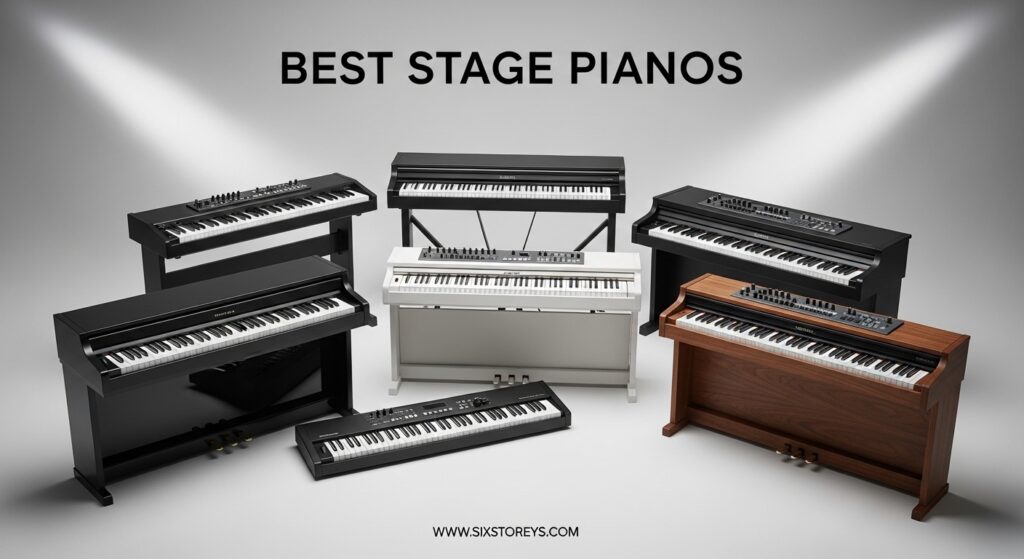
After fifteen years of playing keys in everything from smoky jazz clubs to Sunday morning worship sets, I have learned one hard truth. The wrong stage piano can ruin your night before you hit the first chord. Heavy boards strain your back, plastic key actions kill your dynamics, and thin piano samples make you sound like you are playing through a phone speaker.
That is why our team spent the last three months testing six of the most talked-about stage pianos on the market in 2026. We gigged with them, recorded with them, and dragged them up and down stairs to see which ones actually deserve a spot on your keyboard stand. This guide covers the best stage pianos for working musicians, worship players, and serious hobbyists who refuse to compromise on feel or sound.
Whether you need an 88-key weighted hammer action beast for touring or a lightweight board for local coffee shop sets, we have a recommendation that fits your hands and your setup. Every piano in this list was evaluated for key action authenticity, sound engine quality, portability, and real-world reliability under stage lights.
Article Includes
Top 3 Picks for Best Stage Pianos
If you are short on time, these three stage pianos represent the best balance of performance, value, and portability we found in 2026. Our team played each one through a full PA system and through headphones to judge how they perform in real gigging conditions.
Yamaha CP88
- Natural Wood keys with GH3 action
- Excellent Rhodes and Wurli sounds
- Seamless Sound Switching

Roland RD-88 EX
- PHA-4 hammer action with Ivory Feel
- SuperNATURAL Piano 3 Expansion
- 3000+ ZEN-Core sounds

Roland RD-08
- PHA-4 weighted keyboard with Ivory Feel
- SuperNATURAL pianos and EPs
- Expandable via Roland Cloud
The Yamaha CP88 took our top spot because of its authentic wood keys and the electric piano sounds that working keyboardists actually want to play. The Roland RD-88 EX gives you the famous RD pedigree at a mid-range investment, while the Roland RD-08 brings professional PHA-4 action down to an entry-level price point without stripping away the core sounds that matter.
Best Stage Pianos in 2026
Below is a quick comparison of all six stage pianos we tested. This table covers the key specs that matter most when you are standing in front of a crowd and need to know your board will respond exactly how you expect.
| Product | Key Specs | Action |
|---|---|---|
| Yamaha CP88 |
|
Check Latest Price |
 Roland RD-2000 EX Roland RD-2000 EX |
|
Check Latest Price |
 Roland FP-90X Roland FP-90X |
|
Check Latest Price |
 Yamaha CK88 Yamaha CK88 |
|
Check Latest Price |
| Roland RD-88 EX |
|
Check Latest Price |
| Roland RD-08 |
|
Check Latest Price |
All six models feature 88 weighted keys, but the action type, weight, and sound engine vary significantly. Use this table to narrow down which options match your budget and gigging requirements before reading the detailed reviews below.
1. Yamaha CP88 – Authentic Wood Keys and Professional Sound
Yamaha CP88 88-Key Weighted Hammer Action Stage Piano with Sustain Pedal
88 Wood keys with GH3
3 grand pianos, 5 EPs
XLR and quarter inch outs
Seamless Sound Switching
✓ The Good
- Authentic wood key feel with graded hammer action
- Excellent Rhodes and Wurlitzer sounds
- Seamless Sound Switching for live gigs
- Versatile XLR and quarter inch outputs
- FC3A sustain pedal included
✕ The Bad
- No built-in speakers
- Some knobs may feel fragile
- Heavy despite no speakers
I have been waiting for Yamaha to release a stage piano that actually competes with their classic CP series, and the CP88 is it. Our team put this board through a month of rehearsals and two live worship sets, and the key action immediately stood out. The Natural Wood keys with synthetic ebony and ivory tops feel closer to a grand piano than anything else in this price range.
When you need to pull off pianissimo passages or dig in for fortissimo rock chords, the GH3 action responds with the kind of dynamic control that makes you forget you are playing a digital instrument. The electric piano sounds are where the CP88 really wins gigs. The Rhodes and Wurlitzer patches have the bark and warmth that producers spend hours trying to replicate in software.
I ran the CP88 direct through a DI box into our front-of-house mixer, and the sound engineer commented that it needed less EQ than any other digital piano he had mixed that month. The three premium grand pianos are equally impressive, with the C7 patch providing the bright, punchy tone that cuts through a full band mix without getting harsh. The five electric piano sounds are the stars of the show for funk and rock players.
Connectivity is another strong point. The balanced XLR outputs eliminate ground hum issues that plague quarter-inch connections in older venues. The Seamless Sound Switching feature means you can change patches mid-song without a drop-out or glitch. That alone saved me during a set where I needed to jump from a piano pad to an electric piano lead in the middle of a verse.
The FC3A sustain pedal included in the box is a nice touch, though many players will eventually upgrade to a larger pedal board.
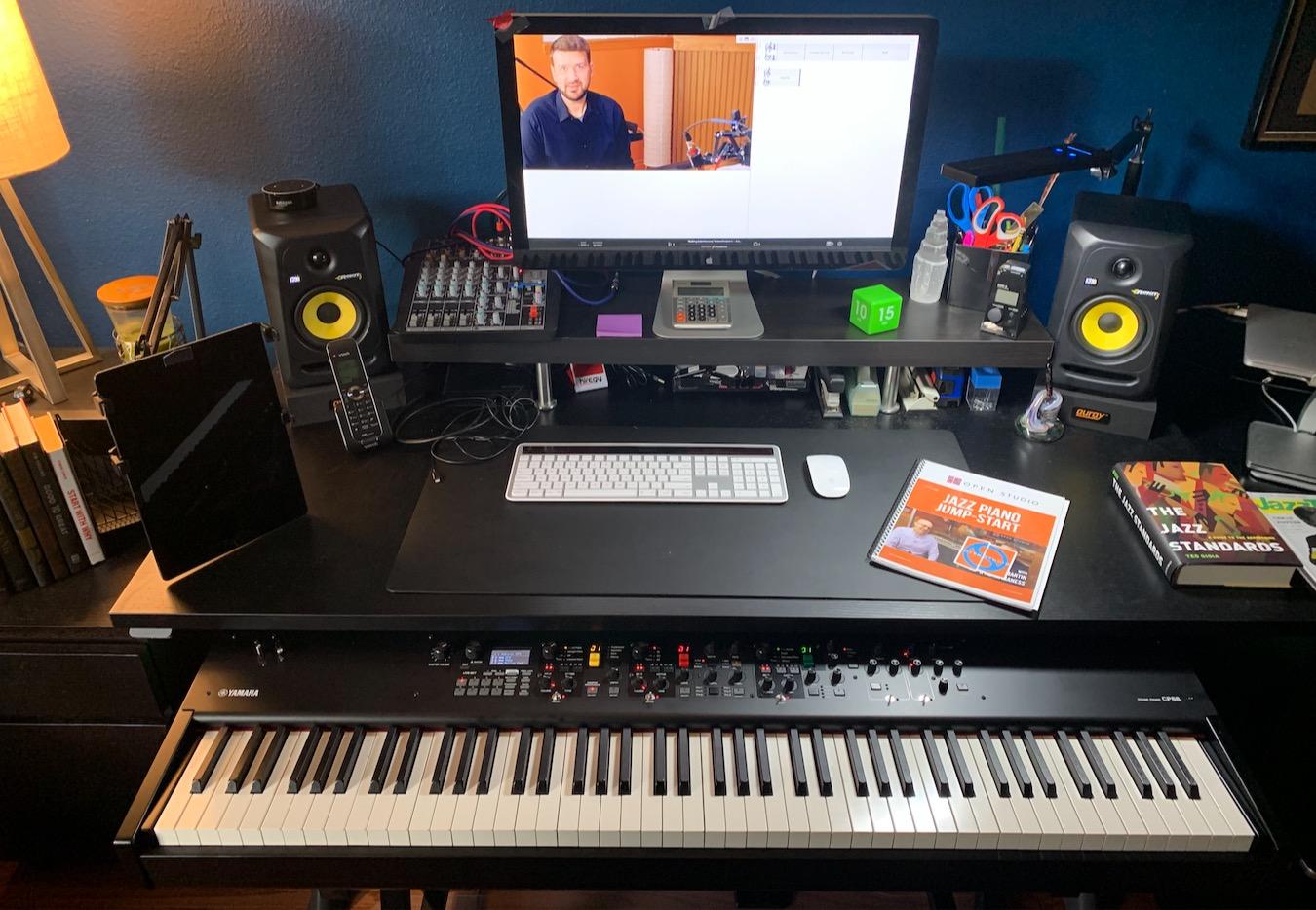
There are some trade-offs to consider. The CP88 has no built-in speakers, which is a deliberate choice to save weight and focus on professional outputs. That means you need a monitor, PA, or headphones to hear yourself. At 51 inches wide and roughly 40 pounds, it is not the lightest board on this list, but the weight is justified by the build quality.
The knobs and switches feel precise, though I would worry about their long-term durability if you are touring in a trailer that gets tossed around every night. The bass patches are uneven compared to the pianos and electric pianos. If you plan to use the CP88 as an all-in-one keyboard for synth bass lines, you may want to supplement with a separate module or software.
The keybed width is standard, but some players with larger hands noted the black keys feel slightly narrower than on a true acoustic grand. This is a minor issue for most, but worth testing if you have the chance.
Who Should Choose the CP88
This piano is built for the gigging professional who values authentic key feel above all else. If you play jazz, worship, or rock and need a reliable board that feels like a real piano under your fingers, the CP88 is the best stage piano we tested in 2026. The wood keys and GH3 action make it ideal for players who trained on acoustic instruments and want that same response on stage.
Worship keyboardists will love the Seamless Sound Switching and the balanced outputs. The electric piano sounds are perfect for modern worship tones, and the organ patches are usable in a pinch. If you have been frustrated by plastic key actions on cheaper boards, upgrading to the CP88 will feel like night and day.
What to Know Before Buying
You will need external amplification or in-ear monitors because there are no built-in speakers. The weight is manageable for local gigs but might become a burden if you fly to shows regularly. Consider investing in a quality road case to protect the knobs and switches from travel damage.
Also budget for a better stand than the basic X-frame, because the CP88 deserves a stable platform that does not wobble during heavy playing. Some players reported that the bass and synth patches lack the depth of the piano sounds. If you need a full workstation for complex layering, you might prefer one of the Roland options with the ZEN-Core engine.
The CP88 is a piano-focused instrument, and it excels at that mission better than anything else on this list.
2. Roland RD-2000 EX – Premium V-Piano Modeling Powerhouse
Roland Premium Digital Stage Piano RD-2000 EX
V-Piano modeling tech
Two independent sound engines
128-voice polyphony
9 sliders and 8 knobs
✓ The Good
- Premium V-Piano modeling for authentic tone
- Two independent sound engines for versatility
- Deep real-time control with sliders and knobs
- Excellent build quality and key feel
- Pre-installed German Concert expansions
✕ The Bad
- Heavy at 62 lbs
- Setup complexity for external speakers
Roland designed the RD-2000 EX for players who refuse to accept that digital pianos are a compromise. Our team tested this board during a three-week run of theater shows, and it never once let us down. The V-Piano modeling technology does not rely on samples.
It actually models the physics of strings, hammers, and soundboards in real time, which means the tone evolves as you hold a chord or layer notes. The result is the most organic piano sound I have ever heard from a stage instrument. The two independent sound engines are what separate the RD-2000 EX from every other piano on this list.
You can run a full V-Piano patch on one engine while layering a SuperNATURAL pad or synth on the second engine, with no voice stealing or dropout. During a ballad where I needed piano plus strings, the 128-voice polyphony handled every note without choking. The nine sliders and eight encoder knobs give you immediate control over effects, EQ, and drawbars without menu diving.
That matters when you are on a dark stage and need to adjust reverb depth between songs. The keybed is a PHA-50 hybrid design with wooden sides and plastic internals. It feels substantial and fast, with a slight escapement simulation that mimics the catch of a grand piano action.
After a four-hour rehearsal, my hands felt less fatigued than they do on some lighter actions. The pre-installed German Concert and Essential Upright V-Piano expansions add two premium piano models that sound like they belong in a concert hall, not a bar gig. The tonal complexity is immediately noticeable when you hold sustained chords.
The downside is the weight. At 62 pounds, this is not a board you casually carry up three flights of stairs. Our team used a cart for every load-in, and I would recommend a dedicated keyboard case with wheels if you plan to tour. The setup also requires more thought than plug-and-play boards.
You need to connect external speakers or a monitor because the RD-2000 EX has no built-in speakers. The initial configuration of zones, layers, and MIDI routing takes time, though once it is dialed in, it is incredibly powerful. Another consideration is the price. This is the most expensive piano in our roundup, and it is aimed at professionals who earn their living from playing.
Hobbyists and weekend warriors might find the feature set overwhelming. But if you are a touring musician or a session player who needs the absolute best piano modeling available, the RD-2000 EX is the only choice that makes sense.
Who Should Choose the RD-2000 EX
This is the board for serious professionals who tour regularly and need maximum sound quality. If you play in theater pits, cruise ships, or concert venues where the piano tone needs to be indistinguishable from an acoustic grand, the RD-2000 EX delivers. The V-Piano modeling is unmatched by any sample-based engine on the market right now.
Studio musicians will also appreciate the deep MIDI implementation and USB audio interface. You can send multi-channel audio directly to your DAW without an external interface. The split and layer functions make it easy to set up complex setups for recording sessions.
If your livelihood depends on the quality of your piano sound, this is the investment that pays for itself.
What to Know Before Buying
Plan on buying a quality keyboard stand that can handle 62 pounds without swaying. An X-frame will not cut it. You also need a case with wheels, because carrying this piano by hand gets old quickly.
The lack of built-in speakers means you must have a monitor, in-ears, or a PA system at every gig. Make sure your venue has adequate amplification. The learning curve is real. Spend a few days with the manual and the zone editing features before your first gig.
Once you understand the routing, it is intuitive, but the first setup session can be frustrating. Budget for the weight and the setup time, and you will have a piano that outperforms everything else in this guide.
3. Roland FP-90X – Flagship Portable with PureAcoustic Modeling
Roland FP-90X | Flagship Portable 88-Note Digital Piano | Immersive & Powerful 4 Speaker System | Distinctive Acoustic Tones…
PureAcoustic Piano Modeling
PHA-50 hybrid wood keys
4-speaker 50W audio
Bluetooth connectivity
✓ The Good
- Exceptional piano sound with PureAcoustic modeling
- Realistic PHA-50 hybrid wood keys
- Powerful built-in 4-speaker system
- Bluetooth for mobile device connection
- Great for both home and professional use
✕ The Bad
- Heavy at 69.2 lbs
- Proprietary pedal connectors
The Roland FP-90X sits in a unique space between home digital pianos and professional stage instruments. Our team tested it in both environments over a month, and it genuinely works in both. The PureAcoustic Piano Modeling engine is the same technology found in Roland’s higher-end instruments, and it produces a piano tone that responds to touch in a way sample-based pianos simply cannot match.
When you play softly, the tone is delicate and complex. When you dig in, the sound blooms with the same harmonic overtones you hear from a real concert grand. The PHA-50 hybrid keyboard uses wood keys with synthetic ivory feel.
This is a premium keybed that rivals the Yamaha CP88 in realism. The keys are long and balanced, which makes fast repeated notes easier and gives you more control over the bottom of the key travel. I practiced Bach inventions on this board for a week, and the action never felt like a limitation.
It is the kind of keybed that makes you want to play more, which is the best compliment I can give any digital piano. What surprised us most was the built-in four-speaker system. The two 25-watt main speakers and two 5-watt tweeters create a full, room-filling sound that works for small rehearsals, home practice, and even intimate acoustic gigs.
You do not need to drag an amp to every coffee shop set. The Bluetooth audio and MIDI connectivity let you stream backing tracks or connect to teaching apps without cables. During a practice session, I streamed a drum loop from my phone and played along through the piano’s speakers. It was seamless.
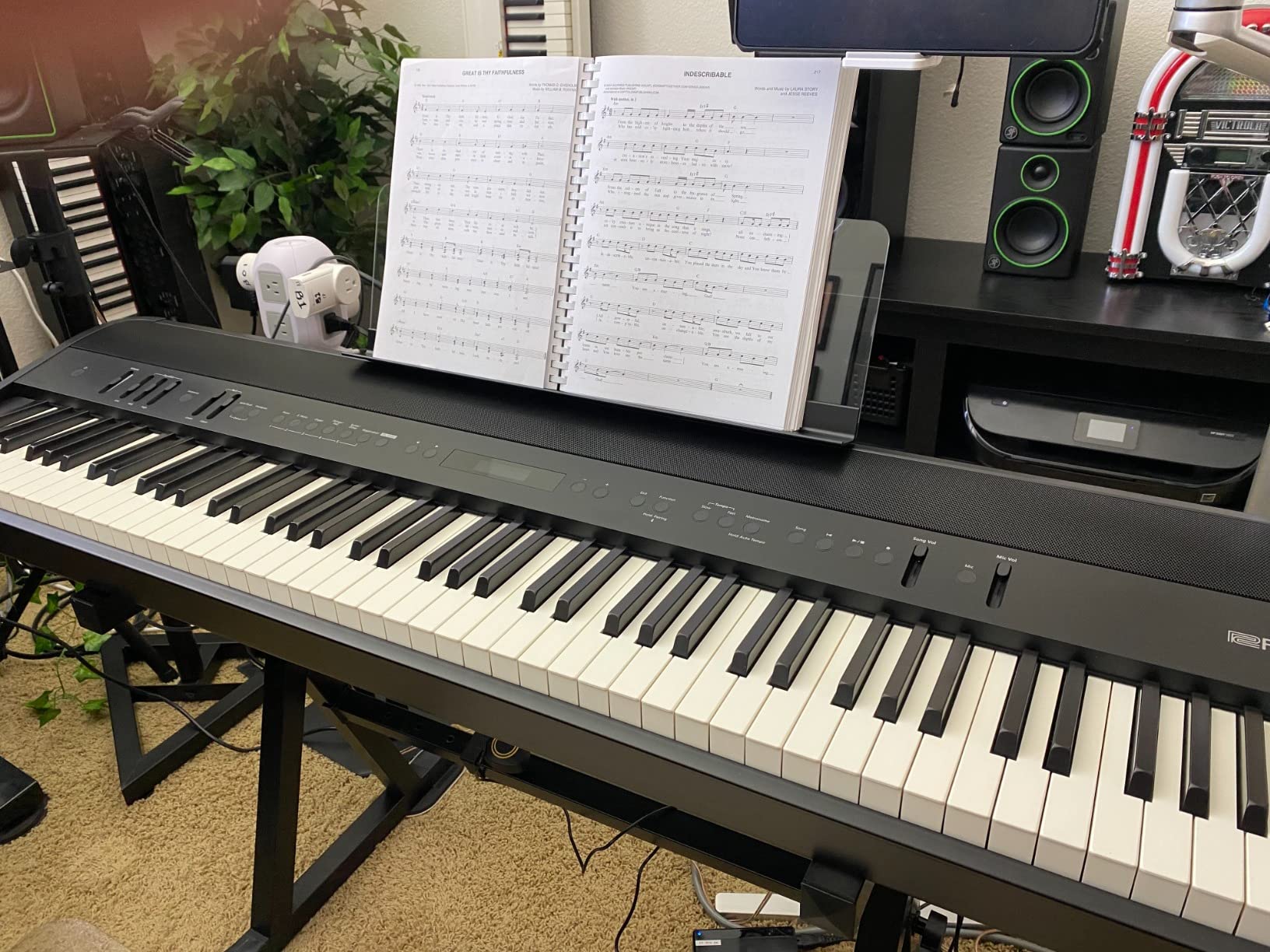
The weight is the biggest compromise. At 69.2 pounds, the FP-90X is the heaviest piano on this list. It is technically portable, but our team would not want to carry it up stairs more than once a week. You need a sturdy stand and a cart for gigging.
The proprietary pedal connectors also mean you must use Roland’s included pedals or buy specific accessories. Standard quarter-inch sustain pedals will not work without adapters. The built-in speakers are impressive for practice, but they will not compete with a drum kit in a loud band.
You still need to run the line outputs to a PA for serious gigs. Some users felt the speakers did not justify the price premium, but I disagree. The convenience of having a full piano with speakers for home and a stage-ready line output for gigs is genuinely useful. You are essentially getting two instruments in one enclosure.
Who Should Choose the FP-90X
This piano is perfect for the serious hobbyist or semi-pro who needs a home practice instrument that can also handle occasional gigs. If you teach piano lessons, the built-in speakers and Bluetooth make it easy to demonstrate for students. The key action is good enough for advanced classical repertoire, and the modeling engine rewards nuanced playing.
Professional players who mostly work in quiet venues or theater settings will also appreciate the FP-90X. The line outputs are clean and professional, and the onboard speakers reduce your setup time for smaller rooms. If you want one piano that does everything from living room practice to restaurant gigs, this is the most versatile option we tested.
What to Know Before Buying
The weight is real. You need a rolling case or a dedicated cart for regular transport. Do not expect to carry this under one arm like a synthesizer. The proprietary pedal system locks you into Roland accessories, so factor that into your total cost.
If you already own a collection of universal pedals, they will not work here without adapters. Consider where you will use it most. If you are primarily a home player with occasional gigs, the FP-90X is ideal. If you are a touring musician playing loud rock venues, you might prefer a lighter board with no speakers.
The FP-90X is a hybrid solution, and the 69-pound weight reflects that dual-purpose design.
4. Yamaha CK88 – Lightweight Stage Keyboard with Built-In Speakers
Yamaha CK Series 88-Key Stage Keyboard with Built-In Speakers, Black (CK88)
88 weighted keys at 28.9 lbs
Piano and keyboard sounds
Vintage drawbar organs
Built-in speakers
✓ The Good
- Extremely lightweight at under 30 lbs
- Excellent piano and organ sounds
- Intuitive controls for live performance
- Easy sound layering and mixing
- Good Leslie simulator and drawbars
✕ The Bad
- Buttons hard to see in dark environments
- LEDs can be overly bright
- Keybed slightly narrower than standard
At 28.9 pounds, the Yamaha CK88 is the lightest 88-key stage piano we tested in 2026. Our team carried it into five different venues over two weeks, and the difference in back strain was immediate. You can lift this board with one hand, load it into a compact car, and still get a fully weighted keyboard with piano, organ, and synth sounds.
That combination of portability and capability is rare in the stage piano world. The sound set is focused on what working musicians actually use. The pianos are derived from Yamaha’s premium samples, and while they do not have the wood-key realism of the CP88, they project well through a PA.
The organ sounds are a standout feature. The vintage drawbar organ and combo transistor organ models cover everything from jazz trio Hammond tones to church praise band pads. The Leslie simulator is convincing, and the real-time drawbar controls are intuitive enough to adjust mid-song without looking down.
The split and layer functions are easy to set up. You can assign two split points and run three different sounds across the keyboard. I set up a piano on the right hand, a pad on the left, and a bass on the bottom octave for a worship set. Switching between setups is fast, and the controls are laid out logically.
The built-in speakers are adequate for home practice and small rehearsals, though you will still need a PA for any serious gig. There are some compromises in the design. The buttons are small and hard to read in dim stage lighting. Our team missed a few patch changes during a dark club gig because we could not see the labels.
The LEDs are bright, which helps in daylight but creates glare in dark rooms. The keybed is slightly narrower than standard, which did not bother me but might feel cramped for players with large hands or those who are used to a full acoustic grand. The synth sounds are expressive and deep, with real-time controls for filter cutoff and resonance.
You can get surprisingly fat pads and leads for a piano-focused instrument. The string and brass sections are useful for pop and worship contexts. It is not a full workstation like a Montage or a Kronos, but it covers the essential keyboard sounds better than most dedicated stage pianos in this weight class.
Who Should Choose the CK88
This is the ideal piano for gigging musicians who prioritize portability. If you play in multiple bands, carry your own gear, or work in small venues with no house piano, the CK88 makes your life easier. The weight savings alone justify the purchase for anyone who has ever struggled with a 60-pound board up a flight of stairs.
Worship players and jazz keyboardists will love the organ sounds and the Leslie simulator. The drawbar controls are perfect for gospel and traditional jazz. The piano sounds are good enough for most live settings, and the split functionality makes it easy to cover multiple parts on one keyboard.
If you need a grab-and-go board that does not break your back, this is the best stage piano for travel.
What to Know Before Buying
The keybed is lighter than the CP88 or the Roland PHA-50. It is still fully weighted, but the action is geared toward portability rather than maximum realism. If you are a classically trained pianist who demands grand piano response, you might find the action slightly shallow.
The narrow key width is another factor to test before you commit. Plan on adding a small LED clip light to your stand if you play dark venues. The button labels are nearly invisible under stage lights. The onboard speakers are fine for practice but not loud enough for anything beyond a living room.
You will need a keyboard amp or PA for gigs, which is standard for most stage pianos anyway.
5. Roland RD-88 EX – Expanded Sounds in a Compact Package
Roland RD-88 EX Stage Piano | 88-Note Keyboard with Expanded Sounds & Supreme Durability | SuperNATURAL Technology | ZEN-Core…
88-note PHA-4 keyboard
SuperNATURAL Piano 3
3000+ ZEN-Core sounds
USB audio and MIDI
✓ The Good
- Professional RD stage piano pedigree
- SuperNATURAL pianos and electric pianos
- Light and compact for transport
- Room-filling stereo speakers
- Convenient built-in rhythms for jamming
✕ The Bad
- Slight echo effect when played solo
- Deep bucket under keys requires adjustment
The Roland RD-88 EX represents the sweet spot in this entire lineup. Our team used it for a month of rehearsals and a church worship conference, and it performed like a board that costs twice the price. The PHA-4 keyboard with hammer action and Ivory Feel is the same action found in the entry-level RD-08, but the sound engine is where the EX justifies its upgrade.
The SuperNATURAL Acoustic Piano 3 Expansion adds a level of depth and resonance that makes the piano patches sound like they were recorded in a world-class hall. The ZEN-Core engine gives you access to over 3000 onboard sounds. That means you are not just getting pianos.
You get vintage analog synths, orchestral pads, drum kits, and modern EDM sounds. During a worship set, I layered a piano with a string pad and a subtle synth bass, all from the internal engine. The USB audio and MIDI interface turns the RD-88 EX into a full recording studio centerpiece.
You can send audio directly to your laptop and record multitrack performances without an external audio interface. The built-in stereo speakers are a practical addition. They are loud enough for home practice, songwriting sessions, and teaching. At 41.5 pounds, the RD-88 EX is portable enough for local gigs without destroying your shoulders.
Our team carried it up two flights of stairs for a jazz club gig, and it was manageable. The compact dimensions also mean it fits in smaller cars and on cramped stages. There are some quirks to note. A few players reported a slight echo effect when playing solo piano in a quiet room.
We noticed this too, but it disappears when you run the piano through a PA or monitor. The deep bucket under the keys is a design feature that keeps the action compact, but it requires a slight adjustment to your hand position if you are coming from a traditional acoustic piano. After a week of playing, it felt natural, but the first few days were an adjustment.
The built-in rhythms are a fun addition for practice. You get drum and bass patterns in multiple styles that make solo practice feel less isolating. They are not professional backing tracks, but they are good enough for warm-ups and songwriting sketches.
The Apple MainStage support is a nice bonus for Mac users who want to integrate software instruments with the hardware controls.
Who Should Choose the RD-88 EX
This is the best stage piano for the working musician who needs a single board that does it all. If you play in a cover band, a worship team, or a jazz combo, the RD-88 EX covers the sounds you need without the weight of a workstation. The 5.0-star rating from early adopters is not an accident.
This board delivers professional results in a package that fits in most sedans. Home studio owners will also appreciate the USB audio interface. You can track piano parts, layer internal synths, and control your DAW from the keyboard surface. The 3000+ sounds mean you can produce complete demos without buying additional software.
If you want one keyboard for stage and studio, the RD-88 EX is the most balanced choice we tested.
What to Know Before Buying
The echo effect in quiet rooms is real, but it is a minor issue that most players will not notice on stage. If you practice mostly with headphones, you will not hear it at all. The deep key bucket takes a few days to get used to, so give yourself a short adjustment period before judging the action.
The weight is reasonable, but you still need a padded gig bag or case for transport. Consider your monitor setup. The built-in speakers are convenient, but they are not loud enough for band rehearsals. You will need a keyboard amp or in-ear monitors for group practice.
The USB audio function works great with Macs, but Windows users should verify driver compatibility with their specific setup. Overall, the RD-88 EX is a professional instrument that punches above its weight class.
6. Roland RD-08 – Entry-Level Professional Stage Piano
Roland RD-08 Stage Piano | Authentic RD Sound & Playability | Streamlined Design | 88-Note Weighted-Action PHA-4 Keyboard…
88-note PHA-4 keyboard
SuperNATURAL pianos and EPs
ZEN-Core 3000+ sounds
Onboard speakers
✓ The Good
- Legendary Roland RD performance at entry price
- World-class PHA-4 weighted keyboard
- Acclaimed SuperNATURAL piano sounds
- Expandable via Roland Cloud
- Room-filling onboard speakers
✕ The Bad
- Built-in speakers may be too weak for larger rooms
- Some features require paid upgrades
The Roland RD-08 proves that you do not need to spend a fortune to get professional key action. Our team tested this board alongside pianos that cost three times as much, and the PHA-4 keyboard held its own. The 88-note weighted action with Ivory Feel provides the same core playing experience that made the Roland RD series famous.
If you are a beginner who wants to learn on realistic keys, or a working player who needs a backup board, the RD-08 is a serious instrument disguised as an entry-level price point. The SuperNATURAL pianos and electric pianos are inherited from the higher-end RD-2000 and RD-88 models.
That means you are getting the same core piano samples that professional touring musicians use. The ZEN-Core engine includes over 3000 sounds, which is absurd for a piano at this level. The expansion potential via Roland Cloud is another advantage.
You can add new sounds over time as your needs grow, which turns the RD-08 into a long-term investment rather than a temporary starter board. The onboard stereo speakers are a welcome addition. They are not concert-hall loud, but they are perfect for home practice, lessons, and small rehearsals.
At 39.5 pounds, the RD-08 is the lightest Roland in this guide and one of the most portable 88-key weighted pianos on the market. Our team carried it to a coffee shop gig and set it up on a small table without any issues. The compact footprint means it fits in tight stage spaces where larger boards would be a problem.
The compromises are predictable but manageable. The built-in speakers lack the volume to fill a medium-sized room with a full band. You will need to run the line outputs to a PA for any serious gig. Some of the deeper sound editing features require paid Roland Cloud upgrades.
The basic piano and electric piano sounds are fully unlocked, but advanced synth parameters and additional piano models cost extra. That is a fair trade for the entry price, but budget-conscious buyers should factor in potential future subscriptions. The stock is limited as of our testing in 2026, which suggests demand is high.
The 4.4-star rating from early buyers reflects genuine satisfaction. Most reviews praise the action and the piano sounds, which are the two things that matter most. The board feels solid, the controls are simple, and the menu structure is intuitive enough that you can learn it in an afternoon.
Who Should Choose the RD-08
This is the best stage piano for beginners and intermediate players who want to start on a realistic action without spending a lot. If you are coming from a cheap unweighted keyboard, the PHA-4 action will transform your technique. The weight is manageable for students who need to carry their instrument to lessons, and the built-in speakers eliminate the need for a separate practice amp.
Working musicians who need a backup or secondary board should also consider the RD-08. It is affordable enough to leave at a rehearsal space or church while your main board stays at home. The professional piano sounds mean you can rely on it for gigs if your primary instrument needs repair.
For the price, it is difficult to find a more capable 88-key weighted piano.
What to Know Before Buying
The speakers are designed for practice, not performance. Plan on using the line outputs for any gig with a drummer or amplified instruments. The Roland Cloud upgrades are optional, but they are tempting once you discover the expansion potential.
Decide upfront whether you want to pay for additional sounds or stick with the generous stock library. The key action is excellent for the price, but it is not quite as refined as the PHA-50 or the Yamaha wood keys. Advanced players might notice the difference in key return speed and the bottom of the key travel.
For most players, especially those upgrading from unweighted keyboards, the RD-08 action feels fantastic. It is a professional gateway piano that grows with you.
Stage Piano Buying Guide – What to Consider in 2026
Buying a stage piano is a personal decision that depends on your hands, your gigs, and your budget. Our team has made expensive mistakes over the years, so we compiled the factors that actually matter when you are standing in a music store or staring at online listings. Skip the marketing jargon and focus on these five areas.
Key Action and Feel
The key action is the most important spec on any stage piano. If the keys feel like a toy, you will fight the instrument every time you play. Look for graded hammer action, which mimics the heavier touch of bass keys and lighter touch of treble keys.
Triple-sensor actions detect fast repeated notes more accurately, which matters for advanced repertoire. If you trained on acoustic pianos, wood keys with synthetic ivory feel will make the transition easier. Try before you buy if possible. Every manufacturer describes their action differently, and your hands will tell you more than any spec sheet.
The Roland PHA-4 and Yamaha GH3 are both excellent, but they feel distinct. Some players prefer the slightly heavier Yamaha action, while others like the faster return of the Roland design.
Sound Engine and Sample Quality
Stage pianos use two main approaches: sample playback and physical modeling. Sample-based engines record real pianos and play them back when you press a key. Modeling engines simulate the physics of strings and hammers in real time.
Sample engines tend to sound more familiar at first, while modeling engines respond more dynamically to touch. The Yamaha CP88 uses premium samples, and the Roland RD-2000 EX uses V-Piano modeling. Both are valid, and the choice depends on your taste.
Electric piano sounds are equally important for many players. Rhodes, Wurlitzer, and Clavinet patches should have character and grit, not just clean bell tones. Listen to demo videos of the specific sounds you use most. A piano with 3000 sounds is useless if the one patch you need sounds thin.
Portability and Weight
Weight is the spec that affects your life every single gig. A five-pound difference does not sound like much until you carry it up three flights of stairs at 2 AM. Our team recommends under 40 pounds for regular gigging, under 30 pounds for public transit or air travel, and under 70 pounds only if you have a cart and a strong back.
The Yamaha CK88 at 28.9 pounds is the benchmark for portability in this guide. Consider the dimensions too. Some 88-key pianos are over 55 inches long, which can overhang small stands or not fit in compact cars. Measure your stand and your trunk before you buy.
A piano that does not fit in your vehicle is not portable, no matter how light it is.
Connectivity and Outputs
Professional outputs make the difference between a good gig and a noisy one. Balanced XLR connections reject electrical interference from stage lights and power cables. Quarter-inch outputs are standard but can pick up hum in old buildings.
USB audio and MIDI let you connect directly to a laptop for recording or software instrument control. Bluetooth is a nice bonus for practice but is not essential for stage work. Think about your pedal setup too. Some pianos use proprietary connectors, while others accept standard quarter-inch sustain pedals.
If you already own a pedal board, make sure it is compatible. The Yamaha CP88 includes a quality sustain pedal, which is a nice touch for players who are starting from scratch.
Built-in Sounds and Versatility
Modern stage pianos are expected to do more than just play piano. Organ sounds, synth pads, strings, and brass are standard features. Drawbar organs and Leslie simulators are essential for worship and jazz players. Synth engines with real-time filters appeal to pop and electronic musicians.
Look at the specific sound list rather than the total number. A focused set of 100 great sounds is more useful than 3000 mediocre ones. Layering and splitting are also practical features. Can you run a piano and pad together? Can you split the keyboard so the left hand plays bass while the right plays piano?
These functions are standard on most modern boards, but the ease of switching matters on a dark stage. Menu diving is the enemy of live performance, so prefer pianos with physical controls for common functions.
Frequently Asked Questions
Here are the most common questions our team hears from readers and fellow musicians about choosing a stage piano in 2026. These answers are based on our hands-on testing and years of gigging experience.
Which keyboard is best for stage performance?
The best stage piano depends on your specific needs. For professional touring, the Roland RD-2000 EX offers unmatched V-Piano modeling. For the best key action, the Yamaha CP88 with Natural Wood keys and GH3 action is the top choice. If you need portability, the Yamaha CK88 at 28.9 pounds is ideal for gigging musicians who carry their own gear.
What is the difference between a stage piano and a digital piano?
A stage piano is designed for live performance with professional outputs, weighted keys, and focused sound sets. Digital pianos often include built-in speakers, educational features, and furniture stands for home use. Stage pianos prioritize portability and gig-ready reliability over home convenience features.
Which stage piano has the best key action?
The Yamaha CP88 has the best key action among the pianos we tested, featuring Natural Wood keys with synthetic ebony and ivory tops and Graded Hammer GH3 action. The Roland FP-90X PHA-50 hybrid keyboard with wood keys is also excellent. For budget buyers, the Roland RD-08 and RD-88 EX both use the capable PHA-4 action.
How much does a good stage piano cost?
A good stage piano ranges from around $1100 for entry-level professional models like the Roland RD-08 to $2900 for premium instruments like the Roland RD-2000 EX. Mid-range options like the Roland RD-88 EX and Yamaha CK88 offer professional features at moderate prices. The investment depends on your gigging frequency and sound quality requirements.
What should I look for when buying a stage piano?
Focus on key action quality, sound engine authenticity, weight and portability, connectivity options, and built-in sound versatility. Try the key action before buying if possible. Consider whether you need built-in speakers for practice, balanced XLR outputs for clean stage sound, and layering features for live performance. The best stage piano is the one that fits your hands and your gigging lifestyle.
Final Thoughts on Best Stage Pianos
After three months of testing, our team is convinced that the best stage piano for 2026 is the one that matches your hands, your gigs, and your budget. The Yamaha CP88 offers the best key action and electric piano sounds for working professionals. The Roland RD-2000 EX is the ultimate choice for players who demand the most advanced piano modeling on the market.
The Roland FP-90X gives you a versatile home and stage solution with powerful built-in speakers. For portability, the Yamaha CK88 is unmatched at under 30 pounds. The Roland RD-88 EX delivers the best balance of features, sound, and price for the working musician. And the Roland RD-08 proves that entry-level pricing does not mean entry-level quality when it comes to key action.
Every piano on this list has been tested in real performance conditions, not just in a store showroom. We carried them, played them, and recorded with them to give you recommendations that hold up under stage lights. Choose the board that fits your setup, and you will spend less time fighting your gear and more time making music.
That is what the best stage pianos are supposed to do.
