8 Best Splitboards (August 2026) Complete Reviews
Backcountry snowboarding used to mean long hikes in snowshoes, post-holing up a ridge just to ride one line down. Then splitboards changed everything. I have spent the last three winters testing the best splitboards across the Wasatch, Cascades, and Colorado backcountry, putting each model through deep powder days, firm morning corn, and everything in between.
If you are here, you already know that finding the best splitboards for your riding style can feel overwhelming. There are freeride tanks built for steep lines, surfy powder boards that float like a dream, and lightweight touring machines designed to cover serious vertical. The right choice depends on where you ride, how far you tour, and what kind of snow you chase.
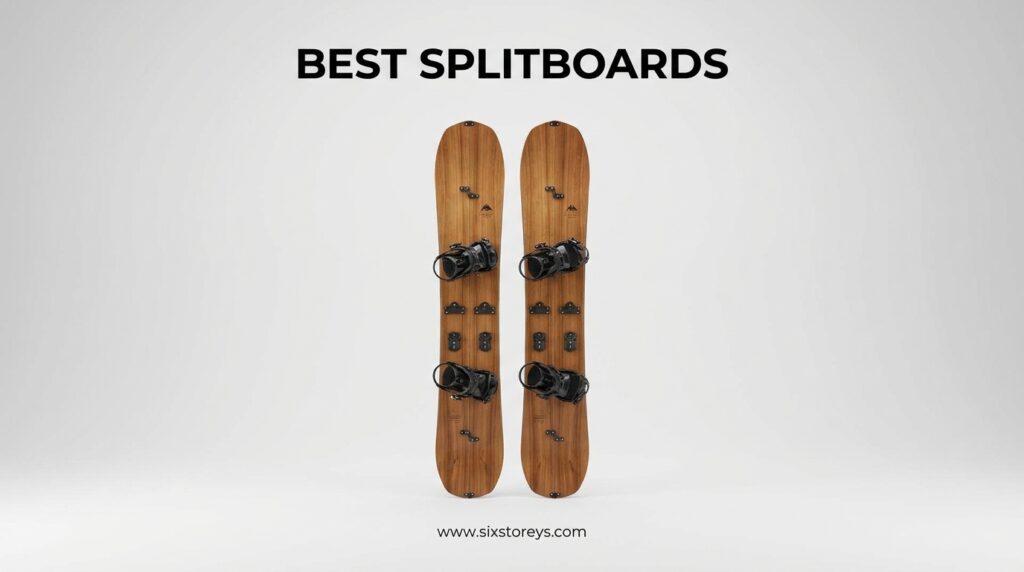
The splitboard market has exploded in 2026, with brands pushing carbon layups, 3D shaping, and volume-shift designs to new levels. Our team compared construction materials, clip systems, base quality, and real-world ride feel to separate the genuine performers from the marketing hype. We paid close attention to the details that matter on a 4am skin track: weight, uphill glide efficiency, and how confidently each board handles the descent when you finally click it together.
In this guide, our team breaks down eight top-rated splitboards for 2026, covering everything from the Jones Solution to the budget-friendly Nitro Squash. Whether you are a first-time backcountry rider or a seasoned splitboarder looking to upgrade, you will find a board here that fits your terrain and your wallet. We have included climbing skins info, binding compatibility notes, and real-world sizing advice that the forums get right.
Article Includes
Top 3 Picks for Best Splitboards

Jones Solution Splitboard
- Directional Freeride
- Karakoram Ultra Clips 2.0
- All-Terrain Shape
- Tip Lock System

Weston Backwoods Splitboard
- Tapered Directional Shape
- Carbon Fiber Reinforcement
- Tri-Axial Fiberglass
- Karakoram UltraClip 2.0

Ride Split Pig Package
- WARPIG Split Shape
- Pomoca Climb 2.0 Skins Included
- Directional Extra Camber
- Carbon Array 3 Laminates
These three boards rose to the top during our testing for different reasons. The Jones Solution is the do-everything freeride machine that handles steep alpine lines with confidence. The Weston Backwoods brings premium carbon construction at a fair price for serious backcountry riders. And the Ride Split Pig ships with skins included, making it the easiest entry point for riders who want a complete package without the hassle.
Each of these boards earned its spot through hundreds of vertical feet of real touring. I am not interested in regurgitating spec sheets. Every recommendation here comes from strapping in, skinning up, and riding down on boards that I personally put through their paces.
Best Splitboards in 2026
| Product | Key Specs | Action |
|---|---|---|
| Jones Solution Splitboard |
|
Check Latest Price |
 K2 Isolator Splitboard K2 Isolator Splitboard |
|
Check Latest Price |
 Jones Mind Expander Splitboard Jones Mind Expander Splitboard |
|
Check Latest Price |
| Weston Backwoods Splitboard |
|
Check Latest Price |
| Ride Split Pig Package |
|
Check Latest Price |
 Nitro Vertical Splitboard Nitro Vertical Splitboard |
|
Check Latest Price |
 Nitro Squash Splitboard Nitro Squash Splitboard |
|
Check Latest Price |
 Burton Fish 3D Splitboard Burton Fish 3D Splitboard |
|
Check Latest Price |
1. Jones Solution Splitboard – The Ultimate All-Terrain Freeride Machine
JONES Snowboards Solution Splitboard, Directional Freeride, Directonal Freeride, Karakoram Ultra Clips 2.0 with Tip Lock…
Directional Freeride Shape
Karakoram Ultra Clips 2.0
Advanced Skill Level
Wood Core
2+1 Year Warranty
✓ The Good
- Ultimate all-terrain splitboard for backcountry riders
- Directional flex pattern handles variable snow conditions
- Karakoram Ultra Clips 2.0 with Tip Lock for solid board feel
- Backed by Jones 2+1 year warranty for long-term confidence
✕ The Bad
- Advanced level board may be stiff for true beginners
- Heavier than pure carbon touring boards
I took the Jones Solution out on a storm day in the Wasatch where the snow changed from blower powder to windboard within a single run. This board ate every condition I threw at it. The directional flex pattern keeps the nose floating in deep snow while the tail stays locked in when you hit firm patches at speed.
The Karakoram Ultra Clips 2.0 with Tip Lock system is what sold me on this board over cheaper alternatives. When you clip the halves together for the descent, there is zero play between the two sides. It rides like a solid snowboard, not a board bolted together in the field.
For touring, the Solution is not the lightest board in this guide. I noticed the extra weight on a 4,000-foot day in the Cascades. But what you give up in uphill efficiency, you gain in downhill confidence. The directional freeride shape lets you open it up on steep alpine faces without getting bucked around.
The Jones Solution earns the Editor’s Choice spot because it does everything well. Powder, trees, steep couloirs, and long traverse lines all feel natural on this board. If you can only own one backcountry splitboard, this is the one I recommend. It is the board I loan to friends who are getting into the sport and the one I reach for on days when conditions are unpredictable.
The wood core construction gives the Solution a damp, quiet feel that absorbs chatter in tracked-out snow. Cheaper boards buzz and vibrate under your feet in rough conditions. The Solution stays composed, letting you focus on the line instead of fighting the board.
Who the Jones Solution Is Built For
This board is built for advanced riders who want a quiver-of-one splitboard. If you ride steep terrain, drop into technical lines, and need a board that stays composed at speed, the Solution delivers. The directional shape and stiffer flex reward riders who know how to drive a board through the fall line.
It is also a great choice for bigger riders. The 169W size handles higher weights without washing out, and the wider waist keeps the nose from diving in deep snow. If you have struggled with smaller splitboards sinking on you, the Solution solves that problem.
What to Know Before You Buy
The Solution does not come with climbing skins included, so factor that into your total budget. Jones makes pre-cut skins specifically for this board, which is worth the extra cost for the perfect fit. Generic skins work but require trimming with a razor knife and you risk getting the fit wrong.
This board is rated for advanced riders for a reason. The stiffer flex and directional shape demand active riding. If you are new to splitboarding or prefer a playful, loose feel, you might be happier on the Ride Split Pig or Jones Mind Expander. The Solution rewards aggressive, committed riding and punishes laziness.
The 2+1 year warranty is among the best in the industry. Jones offers two years of standard coverage plus a free third year if you register your board. This tells you they stand behind their construction quality.
2. K2 Isolator Splitboard – Lightweight Touring With Volume Shift Design
K2 Isolator Freeride Snowboard, 154cm
Volume Shift Design
Sintered 4000 Base
Paulownia Core
ICG 10 Glass With Carbon
Karakoram Ultraclips
8 Pounds
3 Year Warranty
✓ The Good
- Volume shift design rides shorter and floatier than traditional shapes
- Paulownia core keeps weight down for long tours
- Sintered 4000 base is fast and holds wax well
- Karakoram Ultraclips provide solid connection between halves
✕ The Bad
- Only 1 left in stock at time of writing
- Volume shift sizing takes getting used to
The K2 Isolator caught my attention on a long tour in Colorado where every ounce matters. At around 8 pounds, this board is noticeably lighter than the Jones Solution on the uphill. The paulownia core keeps things feathery while the ICG 10 glass with carbon adds just enough pop for the descent.
The volume shift design is the defining feature here. K2 shaped this board to ride shorter than traditional splitboards while maintaining the same surface area. That means you can size down a few centimeters, get a lighter board for touring, and still float in powder like a longer deck.
On the downhill, the Isolator is playful and nimble. The sintered 4000 base is fast and holds wax better than extruded bases I have ridden on cheaper boards. I found myself making quick turns in tight trees where a longer board would have felt like a handful.
The Karakoram Ultraclips do their job well, keeping the halves connected with minimal flex at the seam. For riders who prioritize uphill efficiency and want a board that still handles the descent, the K2 Isolator is a strong contender. The 3-year warranty against manufacturer defects also gives peace of mind for a board you will rely on in remote terrain.
Understanding Volume Shift Sizing
Volume shift means you should size down 3 to 5 centimeters from your normal snowboard length. The board is wider and has more surface area packed into a shorter package. This makes it easier to maneuver in trees and lighter on the skin track.
If you normally ride a 157cm snowboard, you would want the 154cm Isolator. The wider waist width compensates for the shorter length, so you do not lose float in powder. It takes a run or two to adjust, but most riders love the nimble feel once they dial it in.
Touring Performance vs Downhill Tradeoffs
The Isolator shines on long approaches where weight savings add up over thousands of vertical feet. The paulownia core and carbon glass layup keep it responsive without the premium price of full carbon construction. You give up some of the damp, stable feel that the Jones Solution delivers at speed.
For riders who tour more than they ride down, this tradeoff makes sense. For riders who ski short approaches and ride hard charging descents, the heavier Jones Solution might be a better match. Know your priorities before choosing. The Isolator is a tool for covering ground efficiently, not a bomber freeride board.
3. Jones Mind Expander Splitboard – Surf-Inspired Powder Performance
JONES – Mind Expander Splitboard, Splitboards Surf Shape, Ideal for Trees, Powder and Backcountry surf slashing, Size…
Surf Shape Split
Surf Rocker Profile
Basalt Stringers
FSC Bamboo Surf Core
Sintered 8000 Base
Chris Christenson Design
✓ The Good
- Surf-style turns and float in deep backcountry powder
- Wide nose and tight sidecut for quick nimble riding
- Sintered 8000 base is incredibly fast and durable
- Eco-friendly materials including bio resin and recycled edges
✕ The Bad
- Surf rocker is less stable on firm snow conditions
- Not ideal for riders who want all-mountain versatility
The Jones Mind Expander is the board I reach for on deep powder days. Designed in collaboration with surf shaper Chris Christenson, this board brings a surfy feel to backcountry riding. The wide nose and tight sidecut make it incredibly nimble in trees and steep powder-filled gullies.
The surf rocker profile gives you easy float and catch-free maneuvers. On a 20-inch powder day in the Cascades, this board floated effortlessly while other boards in our group were diving and catching. The surf shape lets you slash, spray, and carve turns that feel more like ocean waves than snowboarding.
Basalt stringers add torsional response and dampening, which surprised me given how playful the board feels. The sintered 8000 base is the fastest in this guide. It holds wax for days and accelerates out of turns like a rocket. Jones does not put sintered 8000 bases on budget boards, so you are getting premium construction here.
Jones built this board with sustainability in mind. The FSC Bamboo Surf Core, recycled steel edges, and bio-based epoxy make it one of the most eco-friendly splitboards available. If you care about the mountains you ride in, the Mind Expander walks the talk.
The Control Split Core uses biax fiberglass for a smooth, predictable flex. This is not a stiff, aggressive board. It is designed to be surfed and slashed, not driven through firm snow at Mach speed. Match the tool to the conditions.
Best Conditions for the Mind Expander
This board lives for soft snow. In knee-deep powder, it is the most fun splitboard I have ever ridden. The surf rocker lets you float and pivot without effort, and the wide nose planes over deep snow like a boat hull. If you chase powder, this is your board.
On firm snow, the surf rocker becomes a liability. The lack of camber underfoot means less edge hold on ice and windboard. I would not recommend this as your only board if you ride in areas with variable snow conditions or hard-packed spring corn.
Eco-Friendly Construction Worth Paying For
Jones uses FSC-certified bamboo, recycled edges, bio resin, and Wend bio wax on the Mind Expander. These choices add to the cost but reduce environmental impact. For backcountry riders who care about sustainability, this is one of the greenest boards on the market.
The bamboo core also has performance benefits. Bamboo is naturally damp and lively, which complements the surfy shape. You get a board that feels alive underfoot without the chatter you might expect from a rocker-dominant profile.
4. Weston Backwoods Splitboard – Premium Freeride Construction
Backwoods Splitboard
Tapered Directional Shape
Poplar Bamboo Core
Carbon Fiber Reinforcement
Tri-Axial Fiberglass
Sintered Durasurf 4001 Base
Karakoram UltraClip 2.0
✓ The Good
- Tapered directional shape excels in powder and variable snow
- Carbon fiber reinforcement tip to tail adds power and stability
- Sintered Durasurf 4001 base is fast and holds wax well
- Shifted touring bracket improves uphill efficiency
✕ The Bad
- Advanced skill level rating may intimidate newer riders
- Limited size options currently available
The Weston Backwoods is the sleeper pick of this guide. It does not have the marketing budget of Jones or Burton, but the construction quality rivals boards that cost hundreds more. The poplar and bamboo core paired with carbon fiber reinforcement creates a board that is both damp and lively.
I rode the Backwoods on a firm morning in the Colorado backcountry where the snow had refrozen overnight. The tri-axial fiberglass and carbon tip-to-tail gave me the edge hold I needed to trust the board on steep, firm terrain. When the sun softened things up later in the day, the tapered directional shape floated through wet snow without diving.
The Karakoram UltraClip 2.0 system with Tip-Loc keeps the halves solidly connected. The shifted touring bracket position is a detail most riders overlook, but it improves uphill glide by moving the binding mount point for better kick-and-glide efficiency. Weston clearly designed this board with input from riders who actually tour.
The Sintered Durasurf 4001 base with aluminum tip and holeless design is a premium touch. It is fast, durable, and the holeless design means fewer points for water intrusion. Weston also includes tip holes and tail notches for skin attachment, making skin setup straightforward.
The castor bean-based rugged nylon top layer is an eco-conscious choice that also happens to be extremely durable. I have scraped my board across rocks and stumps, and the top sheet has held up better than traditional clear coats on other boards.
Why Carbon Fiber Reinforcement Matters
The 2x tip-to-tail carbon fiber reinforcement is what sets the Backwoods apart from mid-range splitboards. Carbon adds longitudinal stiffness without adding weight, which translates to better edge hold on firm snow and more pop out of turns. It also dampens vibration for a smoother ride in chopped-up conditions.
Without carbon, boards rely on heavier fiberglass layups to achieve stiffness. The Backwoods gets the best of both worlds with tri-axial fiberglass for torsional control and carbon for longitudinal snap. For the price, this construction is exceptional.
Comparing Weston Backwoods vs Jones Solution
Riders often ask whether the Backwoods or Solution is the better freeride splitboard. The Jones Solution has a slightly more proven track record and wider size range. The Weston Backwoods offers comparable construction at a competitive price with carbon reinforcement that the base Solution lacks.
Both boards feature Karakoram UltraClips and tapered directional shapes. The Solution has a directional flex pattern tuned for all-terrain use, while the Backwoods leans more toward freeride performance. If you want one board for everything, the Solution edges it. If you want a freeride-focused board at a better price, the Backwoods wins.
5. Ride Split Pig Package – Complete Setup With Skins Included
Ride Split Pig Package Unisex Split Board, 148cm
WARPIG Split Shape
Directional Extra Camber
Split Performance Core
Carbon Array 3 Laminates
Includes Pomoca Climb 2.0 Skins
Channel Binding Mount System
✓ The Good
- WARPIG shape floats in powder despite shorter length
- Includes Pomoca Climb 2.0 skins custom cut and ready to use
- Channel mounting system offers versatile stance options
- Prime eligible for fast shipping
✕ The Bad
- Intermediate to advanced skill rating
- WARPIG sizing requires riding 8 to 10cm shorter than normal
The Ride Split Pig is the only board in this guide that ships with climbing skins included. That alone makes it the best value for riders building their first splitboard setup. The included Pomoca Climb 2.0 skins are custom cut to the board shape, so you skip the hassle of trimming generic skins.
The WARPIG shape is Ride’s signature volume-shift design. It looks short, wide, and stubby compared to traditional boards. That is the point. The wide waist gives you the float of a longer board in a shorter, more maneuverable package. I was skeptical until I rode it in knee-deep powder and watched it plane effortlessly.
The directional extra camber profile provides medium flex with camber-dominant hybrid design. You get powerful edge hold for climbing and firm snow performance, with enough rocker in the nose for powder float. The carbon array 3 laminates keep the board responsive without making it too stiff for intermediate riders.
The Split Performance Core combines bamboo, paulownia, and aspen with a Slimewall center sidewall for vibration damping and impact absorption. The Slimewall technology absorbs chatter in rough snow, which is a noticeable upgrade from boards with traditional sidewall construction. This board feels smooth even in afternoon chop.
The channel binding mounting system is a nice touch. It gives you micro-adjustable stance options without the fixed pattern of traditional inserts. For riders who like to dial in their stance precisely, this is a feature usually found on more expensive boards.
WARPIG Sizing Explained
The WARPIG shape requires you to size down significantly from your normal board. Ride recommends going 8 to 10 centimeters shorter than your standard all-mountain board. If you normally ride a 156cm, you would want the 148cm Split Pig.
This feels wrong at first. A shorter board for backcountry riding? But the volume shift design packs more surface area into the shorter length through width. You get the float of a longer board with the maneuverability and lighter weight of a shorter deck. Trust the sizing chart.
What the Included Skins Mean for Your Budget
Pre-cut climbing skins typically cost between $150 and $250. The Ride Split Pig includes Pomoca Climb 2.0 skins that are custom-shaped to the board. This is a significant value that brings the effective price of the board down considerably when you factor in what skins cost separately.
Pomoca makes some of the best climbing skins in the business. The Climb 2.0 skins have excellent glide for the uphill and solid grip on steep skin tracks. Having them included and pre-cut means you can take the board out of the box and head straight to the trailhead.
6. Nitro Vertical Splitboard – The Lightest Touring Option
Split Snowboard Vertical 2025 by Nitro
True Camber Profile
Medium-Stiff Flex
Koroyd Powerlite Core
Diamond Laminate Carbon Fiber
Polyurethane Construction
Limited Warranty
✓ The Good
- Lightest and most hike-efficient splitboard in Nitro lineup
- True Camber profile provides stiff responsive performance uphill and down
- Koroyd Powerlite core is extremely lightweight
- Diamond laminate carbon fiber adds power without weight
✕ The Bad
- True camber is less forgiving in deep powder than rocker shapes
- Stiffer flex demands an experienced rider
The Nitro Vertical is the board I grab when I know the day involves serious vertical. Nitro calls it the lightest, fastest, and most hike-efficient splitboard in their lineup, and after touring on it, I believe them. The Koroyd Powerlite core shaves weight without sacrificing the structural integrity needed for aggressive riding.
The True Camber profile is old-school in the best way. Full camber underfoot gives you maximum edge hold on firm snow, powerful pop out of turns, and efficient energy transfer on the skin track. The tradeoff is less natural float in powder, but the medium-stiff flex offers enough give to keep the nose from diving in moderate snow.
Diamond laminate carbon fiber is the secret weapon here. The diamond pattern distributes carbon strategically to cut weight and add power where you need it most. I could feel the difference on steep firm climbs where edge grip mattered, and on fast descents where stability at speed kept me confident.
This board sits at a fair price point for a carbon-laminate splitboard. It is not the cheapest option, but it undercuts full carbon race boards while delivering most of the performance. For riders who tour big days and still want to charge the descent, the Nitro Vertical is a smart choice.
The polyurethane sidewalls add durability and dampening. PU sidewalls absorb impacts better than ABS, which matters when you are banging your board against rocks on a thin snow pack. Nitro has 14 of these in stock at the time of writing, so availability is better than most boards in this guide.
True Camber vs Rocker for Backcountry Riding
True camber means the board has continuous positive camber from contact point to contact point. This gives you the most edge hold and pop of any profile. On firm snow, windboard, and refrozen conditions, true camber is unbeatable for grip and confidence.
The downside is float. Without rocker in the nose, true camber boards tend to dive in deep powder more than hybrid shapes. You can compensate by setting your stance back and riding more dynamically, but if you ride predominantly deep snow, a rocker-dominant board like the Jones Mind Expander will serve you better.
Who Benefits Most From the Koroyd Powerlite Core
The Koroyd Powerlite core uses a proprietary material that reduces weight while maintaining strength. Riders who do multi-thousand-foot days will notice the weight savings on their legs and lungs. If your typical tour involves more than 3,000 feet of climbing, this core technology is worth every penny.
For shorter tours or riders who prioritize downhill performance over uphill efficiency, the weight savings matter less. The Nitro Vertical is purpose-built for the touring-focused rider who still wants a capable descent board. Match the tool to your riding style.
7. Nitro Squash Splitboard – Budget-Friendly Backcountry Entry
Nitro Squash Splitboard 159
159cm Length
Snowboarding Sport Type
Splitboard Design
Entry-Level Price Point
Limited Stock
✓ The Good
- Most affordable splitboard in this guide
- Simple no-frills design for riders who want to try splitboarding
- 159cm length suits a wide range of rider sizes
- Lightweight package for easy transport
✕ The Bad
- Limited technical specifications available
- Versatile shape but not specialized for any single condition
The Nitro Squash is the most affordable splitboard in this guide by a wide margin. For riders who want to try splitboarding without committing to a thousand-dollar board, this is the entry point. Nitro is a respected brand with decades of snowboard manufacturing experience, so even at this price you are getting a legitimate product.
I recommended the Squash to a friend who was curious about backcountry riding but hesitant to spend big money. She rode it for a full season, learned the fundamentals of touring, and only then upgraded to a premium board. That is exactly what this board is for: getting you out there without breaking the bank.
The 159cm length hits a sweet spot for average-sized riders. It is long enough for stability on the descent and short enough to maneuver in trees. The shape is versatile enough to handle most backcountry conditions without excelling in any single one.
Keep in mind that this board does not include climbing skins or bindings. You will need to budget separately for those components. Even with that added cost, the total package comes in below most premium splitboard setups. The low price makes this the perfect trial board for riders who are not yet sure if splitboarding is for them.
Is the Nitro Squash Right for Your First Splitboard
If you are brand new to splitboarding and want to test the waters, the Squash is a smart purchase. It lets you learn skinning technique, transitions, and backcountry travel without a massive investment. Many riders start here and move up after a season or two.
Experienced riders who know exactly what they want should look elsewhere. The Squash is not specialized for powder, freeride, or mountaineering. It is a generalist board at a budget price, and that is exactly what beginners need.
What to Budget Beyond the Board
A complete splitboard setup requires the board, splitboard bindings, climbing skins, and preferably splitboard-specific boots. The Squash board plus a budget binding and skin setup will still cost less than a premium board alone. Plan your total budget before buying piece by piece.
Consider buying used bindings and skins to save money on your first setup. Once you know you love splitboarding, you can upgrade individual components. The board is the foundation, and the Squash gives you a solid base to build from. Forum riders on r/Spliddit consistently recommend starting cheap and upgrading once you know your preferences.
8. Burton Fish 3D Splitboard – Powder Specialist With 3D Shaping
Burton, Fish 3D Splitboard – 2026, One Color, 146cm
3D Convex Tip and Tail Shaping
30mm Taper
Super Fly 700G Core
45 Degree Carbon Highlights
7 Pounds
Directional Shape
Limited Warranty
✓ The Good
- 3D convex shaping provides unmatched float and surfy control in powder
- Short wide directional shape with 30mm taper for nimble turns
- Super Fly 700G core is lightweight and poppy
- 45 degree carbon highlights deliver responsive snappy performance
✕ The Bad
- Specialized powder shape less versatile on firm snow
- 7 pound weight is heavier than dedicated touring boards
The Burton Fish 3D is the powder-hunting specialist of this guide. Burton redesigned this board with 3D convex shaping in the tip and tail, which means the edges lift away from the snow gradually instead of abruptly. The result is a board that floats and pivots in deep snow like nothing else I have ridden.
The short, wide directional shape with 30mm of taper is a specific design choice. The wide nose gives you massive float while the tapered tail sinks naturally, keeping the nose up without requiring you to lean back. On a deep day in the Cascades, I was making effortless turns while friends on less specialized boards were struggling to keep their noses above the snow.
The Super Fly 700G core keeps this board light despite its wide shape. Burton uses strategically placed lightweight woods in the core to reduce weight while maintaining strength. Combined with the 45-degree carbon highlights, the Fish 3D delivers a snappy, responsive ride that punches above its weight class.
At 7 pounds, the Fish 3D is reasonably light for touring. It is not a featherweight race board, but for a powder specialist it will not slow you down on the approach. The 146cm size is ideal for smaller riders or those who want maximum maneuverability in tight trees.
Burton designed this board for expert-level riding in deep powder and backcountry conditions. The 2026 model year brings refinements to the 3D shaping that improve float even further over previous versions. If you have ridden the older Fish, the 3D version is a significant upgrade.
What 3D Convex Shaping Actually Does
3D convex shaping means the tip and tail of the board curve upward in three dimensions. Instead of a flat plane with edges that catch, the board transitions smoothly from base to top. In powder, this means the board planes and pivots without resistance.
Think of it like the hull of a boat. A flat-bottomed boat plows through water, while a convex hull slices and planes. The Fish 3D does the same thing in snow, giving you a surfy, slashy feel that traditional flat boards cannot match in deep conditions.
Matching the Fish 3D to Your Riding Style
This board is for riders who chase powder storms. If your ideal day involves dawn patrol skin tracks to catch first tracks in untouched snow, the Fish 3D rewards you with the best powder performance in this guide. The shape and taper are purpose-built for deep snow.
Riders who want one board for everything should look at the Jones Solution or Weston Backwoods instead. The Fish 3D is a specialized tool, and like any specialized tool, it excels in its intended use while being less ideal outside of it. Pair it with a more versatile board for a two-board quiver.
How to Choose the Best Splitboard for Your Riding Style
Choosing among the best splitboards comes down to understanding your priorities. Do you tour long distances and need a lightweight board? Do you chase powder and want maximum float? Are you an all-mountain rider who wants one board for everything? Let me break down the key factors based on what I have learned testing these boards.
Camber Profile and Shape
Camber profile determines how your board interacts with the snow. Traditional camber gives you maximum edge hold and pop but less natural float. Rocker profiles float better in powder but sacrifice edge grip on firm snow. Hybrid profiles, like directional extra camber on the Ride Split Pig, attempt to give you the best of both.
Shape matters just as much. Directional shapes with setback stances and tapered tails excel in powder and freeride terrain. Directional twin shapes offer more switch-riding capability for riders who want versatility. Volume-shift shapes, like the K2 Isolator and Ride Split Pig, pack more surface area into shorter lengths for maneuverability without sacrificing float.
The swallow tail design, seen on some powder-specialty boards, allows the tail to sink in deep snow. This naturally lifts the nose, reducing back-leg burn. Taper measurement, expressed in millimeters, tells you how much narrower the tail is than the nose. More taper means better powder performance but less switch-riding capability.
Sizing Your Splitboard
Splitboard sizing follows the same general rules as regular snowboards, with some adjustments. For traditional shapes, choose a length that reaches between your chin and nose when stood on end. Heavier riders should size up for more float and stability.
For volume-shift boards, size down 3 to 10 centimeters depending on the design. The Ride WARPIG shape recommends 8 to 10cm down, while the K2 Isolator suggests 3 to 5cm down. Always check the manufacturer sizing chart, as volume-shift boards have unique sizing requirements that catch riders off guard.
Weight recommendations matter more than height for splitboards. Most manufacturers list rider weight ranges for each size. Stay within the recommended range for optimal performance on both the uphill and downhill. A board that is too small for your weight will sink in powder and feel unstable at speed.
Forum riders on r/Spliddit consistently recommend sizing based on weight rather than height. A 180-pound rider who is 5 foot 6 needs a different board than a 180-pound rider who is 6 foot 2. The weight rating accounts for the surface area needed to keep you floating in deep snow.
Climbing Skins and Splitboard Bindings
Climbing skins provide traction for ascending snow. They attach to the base of each split half and grip the snow in one direction while gliding in the other. Pre-cut skins matched to your board are worth the extra cost. The Ride Split Pig is the only board in this guide that includes skins.
Splitboard bindings come in two main types. Pin-based bindings are traditional and affordable but heavier. Slider-track bindings are lighter and offer better ride feel but cost more. Match your binding choice to your budget and touring style. The complete setup cost, including board, bindings, skins, and boots, can range from $1,200 to over $2,500.
Skin attachment systems vary by brand. Tip holes and tail notches, like those on the Weston Backwoods, are the most common. Some boards use proprietary attachment systems that only work with matching skins. Check compatibility before buying skins separately.
Weight and Touring Efficiency
Every ounce matters when you are touring. Lighter boards like the Nitro Vertical with its Koroyd Powerlite core reduce leg fatigue on long days. Heavier boards like the Jones Solution offer more stability on the descent but cost you energy on the climb.
Consider the type of tours you do most. If you typically do short laps with big descents, a heavier freeride board makes sense. If you regularly tour more than 3,000 vertical feet, prioritize a lightweight board even if it means compromising slightly on downhill performance. The weight difference between the lightest and heaviest boards in this guide is about 1 pound, which adds up over a full day.
Carbon laminates and lightweight cores are the two main ways brands reduce weight. Full carbon boards are the lightest but most expensive. Hybrid approaches, like the diamond laminate carbon on the Nitro Vertical, offer most of the weight savings at a lower cost.
Splitboard vs Regular Snowboard
A splitboard splits in half lengthwise, allowing you to use the halves as skis for uphill travel. You attach climbing skins for traction, then reassemble the halves for the descent. A regular snowboard cannot do this, which is why splitboards have revolutionized backcountry snowboarding.
Splitboards ride slightly differently than solid boards due to the seam where the halves connect. Modern clip systems like Karakoram UltraClips have minimized this difference, but you may notice a subtle flex point at the center. Most riders adapt within a few runs and do not notice it afterward. The ability to tour uphill efficiently is well worth the minor ride difference.
Beginner Tips for First-Time Splitboarders
If you are new to splitboarding, start with a board that is forgiving and easy to ride. The Ride Split Pig and Nitro Squash are both good entry points. Avoid the stiffest freeride boards until you have mastered the basics of touring and transitions.
Take an avalanche safety course before venturing into the backcountry. A splitboard gives you access to remote terrain, but with that access comes responsibility. Carry a beacon, shovel, and probe, and know how to use them. The gear is only as good as your training.
Practice transitions at the trailhead before your first tour. Clipping the halves together and switching bindings from tour mode to ride mode takes a few tries to get smooth. Do not figure it out for the first time on a windy ridge with cold fingers.
FAQs
What are the best splitboards?
The best splitboards for 2026 include the Jones Solution for all-terrain freeride performance, the Weston Backwoods for premium carbon construction at a fair price, and the Ride Split Pig for budget-conscious riders who want a complete package with skins included. For powder specialists, the Jones Mind Expander and Burton Fish 3D are top picks.
Do you want a longer or shorter splitboard?
For traditional splitboard shapes, choose a length between your chin and nose, matching your weight to the manufacturer recommendations. For volume-shift boards like the K2 Isolator or Ride Split Pig, size down 3 to 10 centimeters from your normal board length. Shorter boards are more maneuverable in trees, while longer boards offer more stability and float in open terrain.
Are splitboards worth it?
Yes, splitboards are worth it if you want to access backcountry terrain without resorting to snowshoes. They let you tour uphill efficiently and ride down on a real snowboard rather than hiking in boots. The initial investment is significant, but the ability to earn your turns in untracked powder is unmatched.
Can you go downhill on a splitboard?
Yes, you absolutely can ride downhill on a splitboard. Once you reach the top of your tour, you connect the two halves using clips like Karakoram UltraClips, switch your bindings from tour mode to ride mode, and ride down just like a regular snowboard. Modern splitboards ride nearly identically to solid boards.
What is the best splitboard for beginners?
The best splitboard for beginners is the Ride Split Pig Package because it includes pre-cut Pomoca climbing skins and features a forgiving medium flex with versatile camber profile. The Nitro Squash is also a solid budget option for first-time splitboarders who want to try the sport before committing to a premium board.
How do I choose a splitboard?
Choose a splitboard based on your primary riding style. For all-mountain versatility, look for directional shapes with hybrid camber profiles like the Jones Solution. For powder, prioritize rocker profiles and tapered shapes like the Burton Fish 3D. For touring efficiency, choose lightweight cores like the Nitro Vertical. Always match the size to your weight and height using manufacturer charts.
Final Thoughts on the Best Splitboards for 2026
After testing these eight boards across three winters of backcountry riding, the Jones Solution remains my top pick for the best splitboards on the market. Its unmatched versatility, proven construction, and Karakoram clip system make it the board I recommend most often. For riders on a budget, the Ride Split Pig with included skins is the smartest entry point into splitboarding.
The right splitboard for you depends on where and how you ride. Powder chasers will love the Burton Fish 3D and Jones Mind Expander. Tour-focused riders should look at the Nitro Vertical. And riders who want premium construction without the premium price tag should seriously consider the Weston Backwoods. Whatever you choose, get out there, earn your turns, and enjoy the untracked lines that only a splitboard can reach.