7 Best Soldering Irons for Stained Glass (August 2026) Expert Tested
Finding the best soldering irons for stained glass can mean the difference between smooth, even solder lines and a frustrating mess of cold joints and bumpy seams. I have spent countless hours at the workbench testing irons across copper foil panels, lead came windows, and delicate sun catchers to find out which models actually deliver.
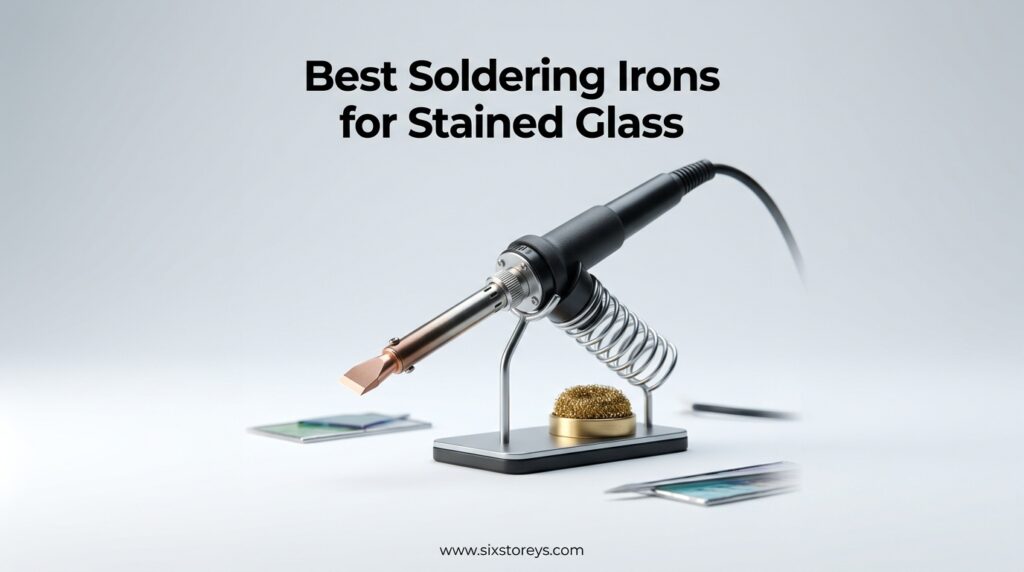
The Hakko FX601-02 stands out as the best soldering iron for stained glass in 2026 because it pairs a lightweight ceramic heating element with on-handle temperature control and excellent heat recovery. For most hobbyists and intermediate artists, this iron handles both copper foil and lead came work without breaking a sweat.
In this guide, I will walk you through 7 top-rated soldering irons for stained glass, breaking down the wattage, temperature control, tip options, and real-world performance of each. Whether you are a beginner picking up your first iron or a professional looking to upgrade, you will find a recommendation here that fits your projects and your budget.
Article Includes
Top 3 Picks for Best Soldering Irons for Stained Glass

Best Soldering Irons for Stained Glass in 2026
| Product | Key Specs | Action |
|---|---|---|
| Hakko FX601-02 67W Iron |
|
Check Latest Price |
 Weller W100PG 100W Iron Weller W100PG 100W Iron |
|
Check Latest Price |
 Hakko FX601-01 Japan Import Hakko FX601-01 Japan Import |
|
Check Latest Price |
 X-Tronic 9060-PRO-X Station X-Tronic 9060-PRO-X Station |
|
Check Latest Price |
 Weller WLIRK6012A 60W Kit Weller WLIRK6012A 60W Kit |
|
Check Latest Price |
 Hakko 503F 60W Budget Iron Hakko 503F 60W Budget Iron |
|
Check Latest Price |
 Weller WLC200 80W Station Weller WLC200 80W Station |
|
Check Latest Price |
1. Hakko FX601-02 – Adjustable Temperature Controlled Soldering Iron
Hakko FX601-02 Adjustable Temperature Controlled Soldering Iron, 67 Watts
67W ceramic heating element
Temp range up to 540C
On-handle temperature dial
Includes T19-D5 tip and lock key
Lightweight pencil design
✓ The Good
- Excellent temperature consistency with closed-loop control
- Fast heat-up with ceramic element
- Lightweight ergonomic handpiece for long sessions
- Quick heat recovery after cleaning
✕ The Bad
- Stiff power cord prone to catching on edges
- Temperature knob is flat and hard to grip
- Counterfeit units exist so verify authenticity
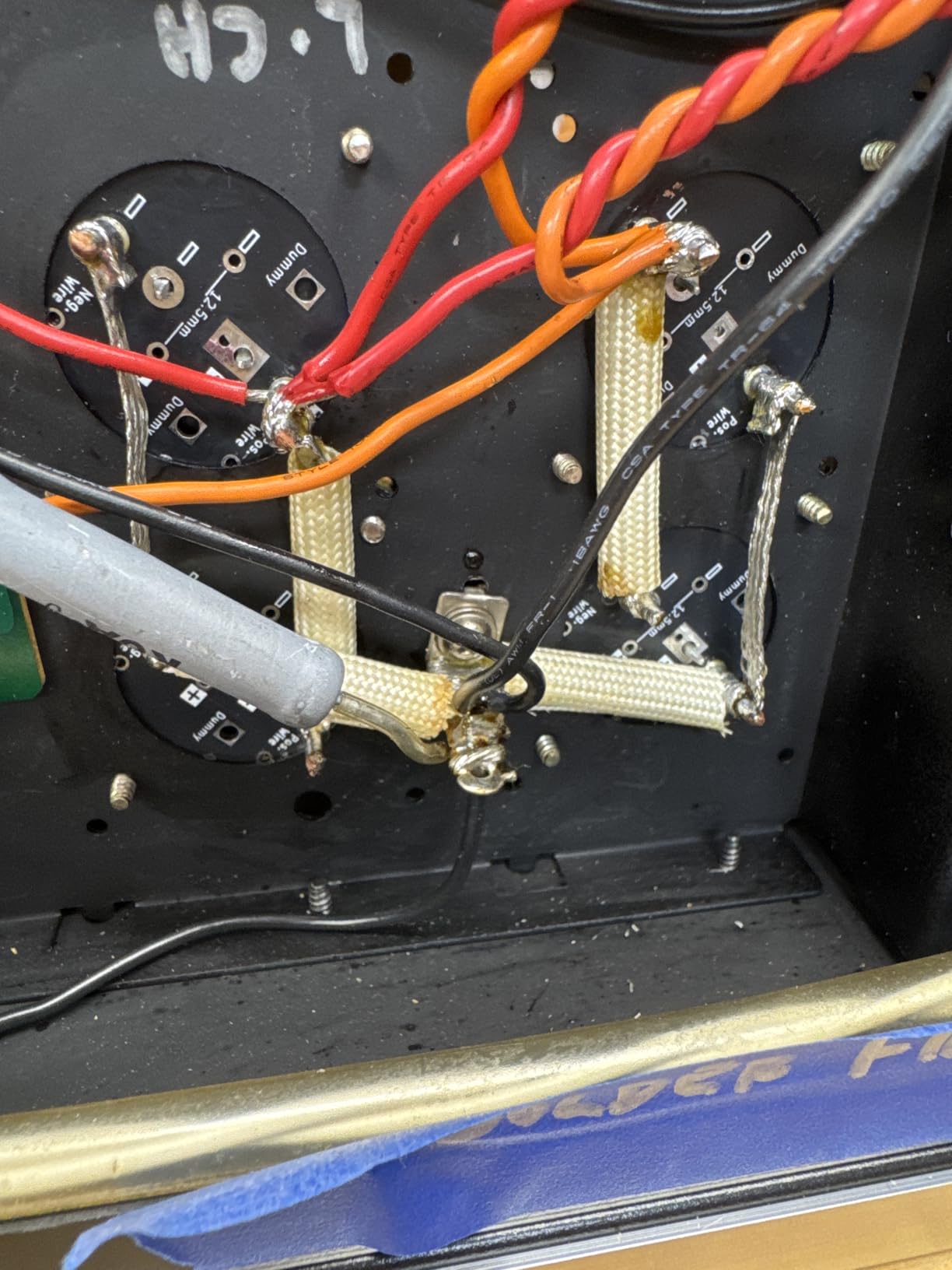
I have used the Hakko FX601-02 on dozens of stained glass projects and it remains my go-to recommendation for most artists. The ceramic heating element heats up fast and maintains temperature beautifully, even when you are running long solder seams across a large copper foil panel. With 1,756 reviews and an 86 percent five-star rating, the community consensus backs up what I have experienced at the bench.
The on-handle temperature dial is a feature you do not appreciate until you have it. Being able to adjust heat between 240 and 540 degrees Celsius without putting the iron down keeps your workflow smooth. I typically run around 410 degrees Celsius for copper foil work and drop to about 360 degrees for lead came, and the Hakko holds those settings without drift.
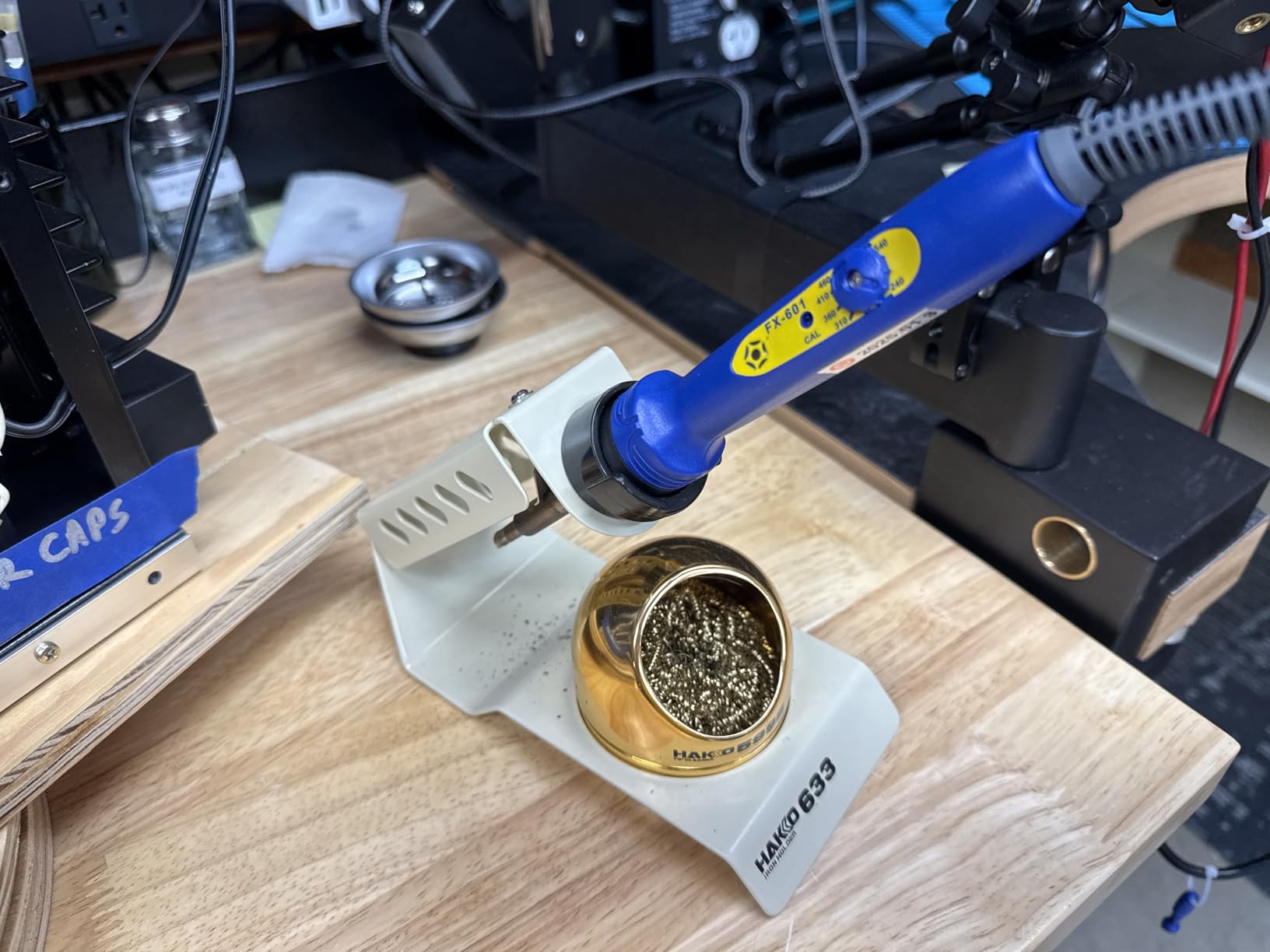
Heat recovery is where this iron separates itself from cheaper options. When you clean the tip on a sponge, the FX601-02 bounces back to working temperature in seconds. That quick recovery means your solder bead stays consistent instead of going cold halfway through a seam, which is a common complaint with budget irons under 50 watts.
The biggest drawback is the power cord. Multiple stained glass artists on Reddit and in forum groups have noted that the cord is stiff and can catch on the edge of your workbench, causing the iron to twist in your hand. It is not a dealbreaker, but it is something to be aware of if you plan on long soldering sessions.
Who Should Buy the Hakko FX601-02
This iron is the ideal choice for stained glass hobbyists, intermediate artists, and even professionals who want a lightweight tool with precise temperature control. If you do a mix of copper foil and lead came work and want one iron that handles both, the FX601-02 covers all the bases. It is also the iron I would recommend as a first upgrade from a cheap beginner model.
Artists with wrist fatigue or hand issues will appreciate the lightweight handpiece, which weighs significantly less than the Weller 100. The slender pencil design gives you fine control for detailed decorative soldering on jewelry and small sun catchers too.
Watch Out For Counterfeits
Counterfeit Hakko units have been reported across Amazon and other marketplaces. The community recommends checking the white heating element for the genuine HAKKO imprint and buying from reputable sellers like Delphi Glass or Anything in Stained Glass. If the price seems too good to be true, it probably is a knockoff with inferior ceramic elements.
One reviewer also noted calibration variance between units, meaning your temperature dial might read slightly different from actual tip temperature. This is normal for production variance but worth testing with a temperature-reading tip if you need exact settings.
2. Weller W100PG – Heavy Duty 100W Soldering Iron
Weller W100PG Weller Farenheit Heavy Duty Soldering Iron with CT6F7 Tip, 100 Watt, 700 Degree, Original Version
100W nichrome element
Tip-based temp control (600F/700F/800F)
110-second heat-up
Includes CT6F7 tip and additional tip
UL and CUL listed
✓ The Good
- 100 watts of raw power for heavy seams
- Durable construction for professional use
- Tip-based closed-loop temperature control
- More weight helps hold steady on large panels
✕ The Bad
- Heavier and bulkier than pencil-style irons
- Temperature controlled by tips not a dial
- No fine temperature adjustment
- Slower heat-up than ceramic element irons
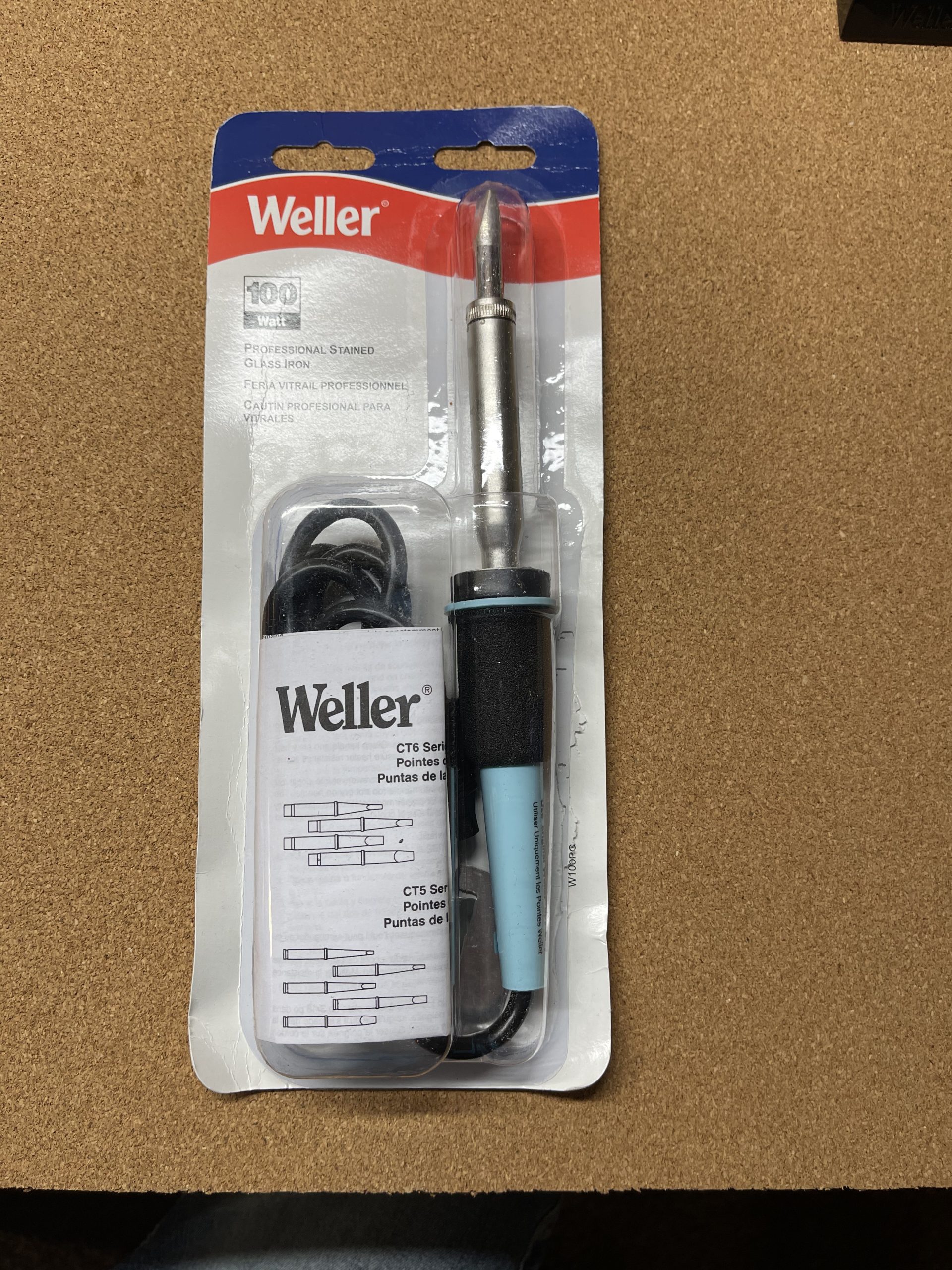
The Weller W100PG is the other iron that comes up in every stained glass conversation alongside the Hakko. This 100-watt workhorse uses a nichrome heating element and a tip-based temperature control system where the tip you install determines the temperature, typically 600, 700, or 800 degrees Fahrenheit. Professional fabricators have relied on this iron for decades.
I found the Weller excels on large lead came panels where you need sustained heat across long seams. The extra weight actually helps here because the iron sits more steadily on the work without you having to press down. At 0.6 pounds it is heavier than the Hakko, but that weight translates to stability on bigger projects.
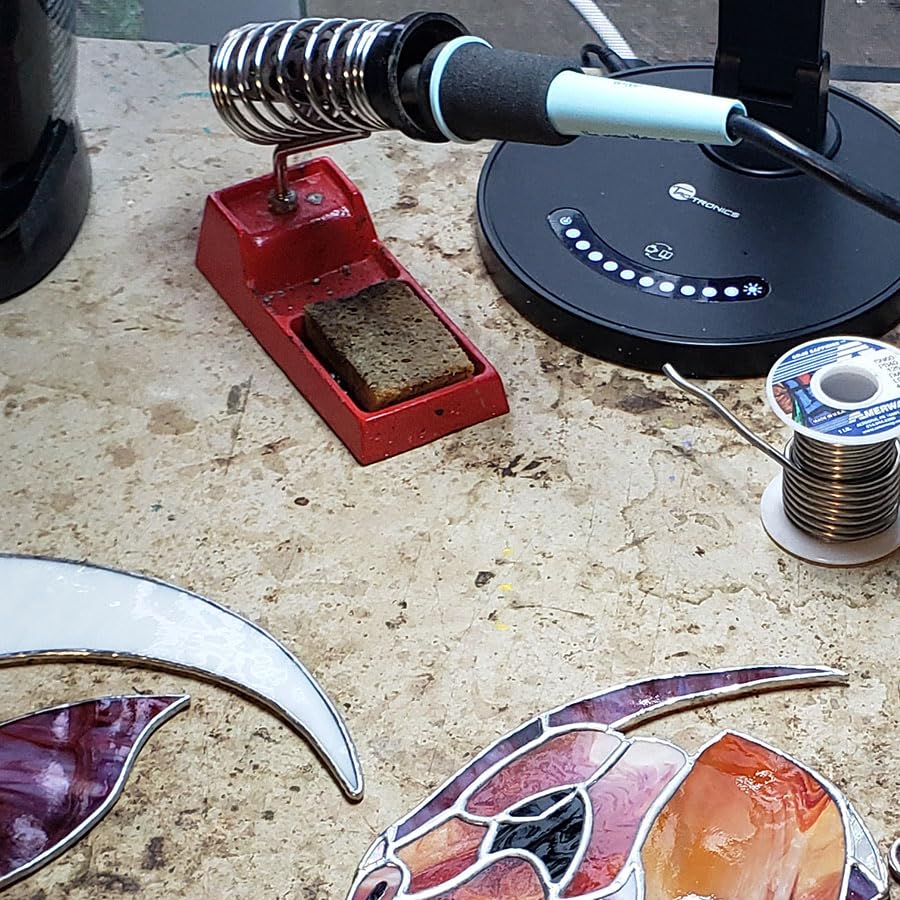
The trade-off with tip-based temperature control is flexibility. Unlike the Hakko where you just turn a dial, changing temperature on the Weller means swapping the tip, which requires letting the iron cool first. Some artists prefer this simplicity because there is no guessing, while others find it limiting when they want to dial in a specific temperature for a particular solder type.
The 110-second heat-up time is slower than ceramic element irons but acceptable for a 100-watt nichrome design. Once heated, the Weller holds its temperature well during sustained soldering. The 77 percent five-star rating across 1,271 reviews reflects the loyalty this iron commands among professional stained glass artists.
Best For Heavy-Duty Stained Glass Work
If your projects lean toward large panels, window installations, or architectural stained glass with heavy lead came, the Weller W100PG is built for that workload. The 100 watts of power means you will not run out of heat mid-seam, and the rugged construction handles daily studio abuse.
Artists who learned on Weller irons and prefer the familiar feel of tip-based temperature control tend to stick with this model for life. It is also a strong choice if you want a no-frills, dependable iron without electronic components that could fail.
What To Know About Tip Changes
The Weller uses interchangeable tips that also serve as the temperature control mechanism. The included CT6F7 tip runs at 700 degrees Fahrenheit, which is the sweet spot for most stained glass soldering. You can buy 600-degree tips for delicate work and 800-degree tips for heavy lead came, but you must let the iron cool completely before swapping.
Some users have reported receiving units with signs of prior use, such as solder on the tip, so inspect yours carefully on arrival. The barrel discoloration from heat is completely normal and not a defect, though it surprises some first-time buyers.
3. Hakko FX601-01 – Japan Import 100V Soldering Iron
FX60101 by Hakko
47W ceramic element
240-540C adjustable temp
100V Japan market import
Rubber ergonomic handle
Includes stand, sponge, tips, hex key
✓ The Good
- Same ceramic heating performance as FX601-02
- Much lower price point at under $50
- Lightweight at only 68 grams
- Includes stand and cleaning sponge
✕ The Bad
- 100V Japan import NOT compatible with US 120V outlets without step-down transformer
- Higher 1-star rate at 11 percent
- Some units arrived with broken ceramic elements
- Instructions may be in Chinese not English
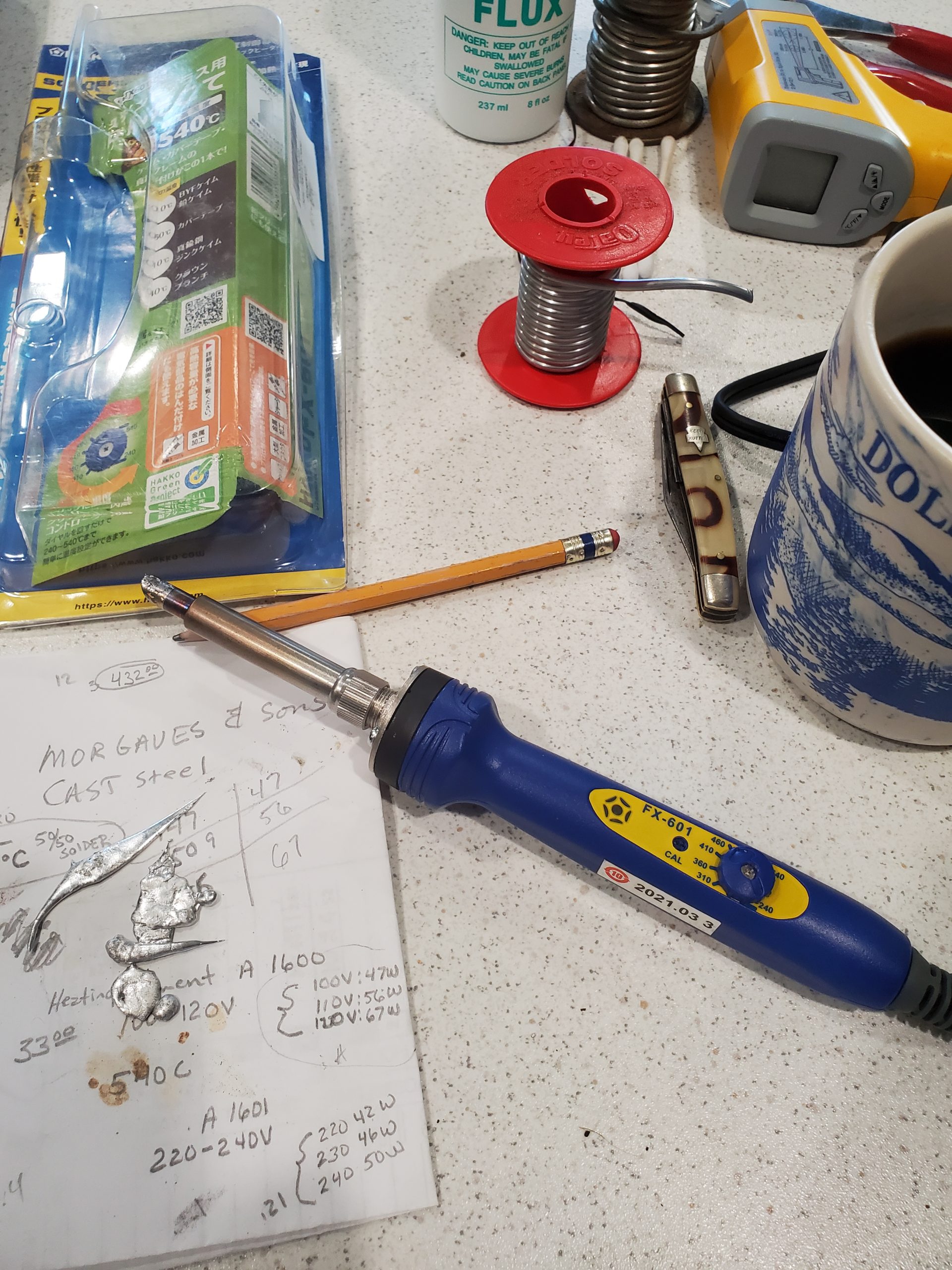
The Hakko FX601-01 is essentially the Japan-market version of the FX601, running on 100V instead of 120V. It offers the same ceramic heating element, adjustable temperature range of 240 to 540 degrees Celsius, and lightweight design that makes the Hakko line so popular for stained glass work. The catch is the voltage mismatch for US buyers.
At under $50, the price is attractive compared to the FX601-02. However, running a 100V iron on a US 120V outlet can damage the heating element and create a safety hazard. You need a step-down transformer to use this iron safely in the United States, which adds cost and complexity.
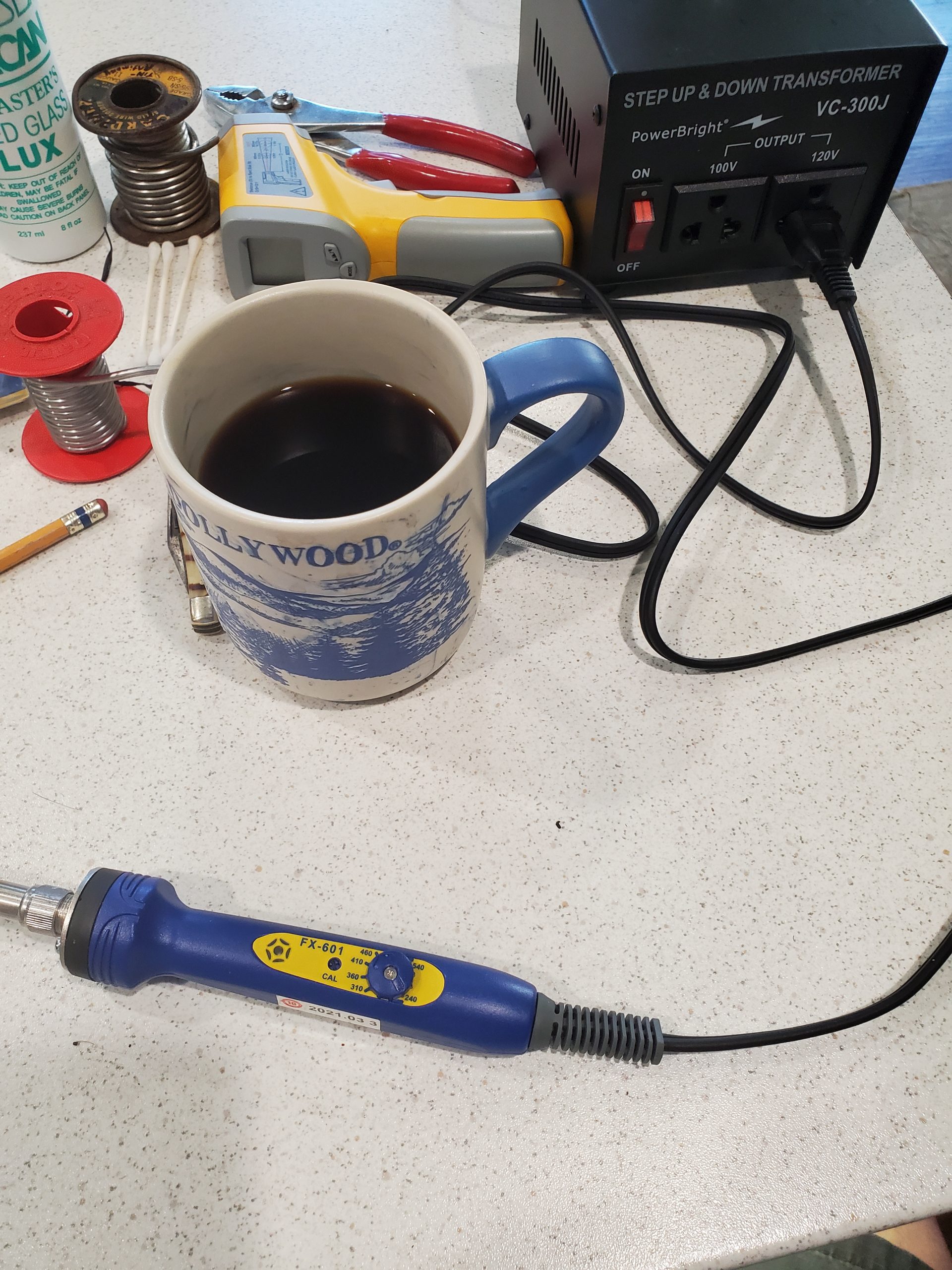
For international buyers in regions with 100V power like Japan, or for those who already own a step-down transformer, this iron delivers genuine Hakko performance at a significant discount. The 72 percent five-star rating from 542 reviews shows that users who handle the voltage correctly are generally happy with the performance.
The 11 percent one-star rate is notably higher than the FX601-02 and reflects the voltage confusion and some quality control issues. Several reviewers reported units arriving with broken ceramic rods, and warranty support for international buyers can be complicated.
Only Buy If You Have 100V Power Or A Transformer
This iron is only a smart purchase if you live in a 100V region like Japan, or if you already own a quality step-down transformer rated for at least 100 watts. If you are in the US and just want a Hakko, spend the extra money on the FX601-02 and avoid the headache entirely.
The performance when properly powered is excellent and indistinguishable from the FX601-02. Fast heat-up, stable temperature, and the same lightweight feel that stained glass artists love about the Hakko line.
Understanding The Voltage Difference
The FX601 family comes in multiple voltage configurations for different markets. The FX601-02 is the 120V US version, the FX601-01 is the 100V Japan version, and the FX601-17 is the 230V European version. Buying the wrong voltage version is the most common mistake stained glass beginners make when shopping for a Hakko online.
If you see a Hakko FX601 listed significantly cheaper than the FX601-02, check the voltage specification carefully before purchasing. The savings disappear quickly when you factor in the cost of a transformer.
4. X-Tronic Model 9060-PRO-X – 200W Stained Glass Soldering Station
X-Tronic Model 9060-PRO-X • 200 Watt Stained Glass Soldering Iron Station w/4 Soldering Tips • Temp: 392°F…
200W digital soldering station
PID temp compensation tech
200-450C range
4 soldering tips included
3-year warranty with US support
✓ The Good
- Massive 200W power for demanding work
- Fast 9-second heat-up time
- PID technology for stable temperature
- Complete kit with tips
- sponge
- mat
- and holder
✕ The Bad
- Only 35 reviews so far so limited long-term data
- Temperature settings do not save after power-off
- Included tips are all large with no fine option
- Not available in 220V
The X-Tronic 9060-PRO-X brings serious power to the stained glass bench with 200 watts of heating capacity and PID temperature compensation technology. This is a full soldering station with an LCD readout, not a standalone pencil iron, which means you get precise digital temperature control from 200 to 450 degrees Celsius.
I was impressed by the 9-second heat-up time, which is significantly faster than the Weller W100PG. The PID technology constantly adjusts power to maintain your set temperature, which should translate to consistent solder beads even on long seams where cheaper irons lose heat. The 40-inch pliable iron cord is also a welcome improvement over the stiff Hakko cable.
The complete kit includes 4 soldering tips, a brass sponge, wet sponge, silicone tool mat, and solder roll holder. For someone setting up a stained glass workspace from scratch, this station gives you almost everything you need in one box. The 3-year warranty with lifetime US-based technical support adds confidence.
The main concern is the limited review base. With only 35 reviews, there is not enough long-term data to know how this station holds up over years of daily studio use. Hakko and Weller have decades of track record, while X-Tronic is still building that reputation. Some users also reported that the temperature setting resets after power-off, requiring readjustment each session.
Best For Artists Who Want Maximum Power
If you work on large panels, thick lead came, or projects that demand sustained high heat, the 200-watt X-Tronic station delivers more raw power than any pencil iron on this list. The PID compensation keeps that power controlled rather than letting the iron run away with temperature spikes.
Artists transitioning from electronics soldering stations will appreciate the familiar digital interface and LCD readout. This is also a strong pick for shared studio spaces where multiple artists can dial in their preferred temperature quickly.
What About The Included Tips
The four included tips are all on the larger side, which works well for stained glass soldering where you want broad contact with the seam. However, if you also do fine detail work or jewelry soldering, you will need to purchase smaller tips separately. There is also no storage solution for the extra tips, so plan for a small organizer.
A few users reported heat retention issues where tips would not maintain temperature during extended use. This could be a quality control variance or a tip seating issue, so test all four tips when your station arrives and contact X-Tronic support if any underperform.
5. Weller WLIRK6012A – 60W Soldering Iron Kit with LED Halo Ring
Weller 60W/120V Soldering Iron Kit, LED Halo Ring – WLIRK6012A
60W ceramic element
LED Halo Ring illumination
3 tips included (conical, chisel, screwdriver)
7-year warranty
Up to 427C
✓ The Good
- Affordable complete kit under $35
- 360-degree LED ring lights up your work area
- Three quality tips included for different applications
- Thin flexible cord that stays where you put it
- 7-year manufacturer warranty
✕ The Bad
- LED Halo Ring seen as gimmick by experienced users
- 10 percent 1-star rate from heating element failures
- Ungrounded two-conductor cord
- Basic included stand
The Weller WLIRK6012A is the most affordable complete kit on this list and a solid entry point for stained glass beginners who want quality without a big investment. At 60 watts with a ceramic heating element, it has enough power for copper foil work and small to medium panels. The kit includes three tip types, a stand, solder aid, and lead-free rosin solder.
I tested the LED Halo Ring feature and while experienced users will see it as mostly cosmetic, beginners working in dim lighting actually benefit from the illumination. It lights up the seam directly in front of the tip, which helps you see solder flow when you are still learning what a good bead looks like.
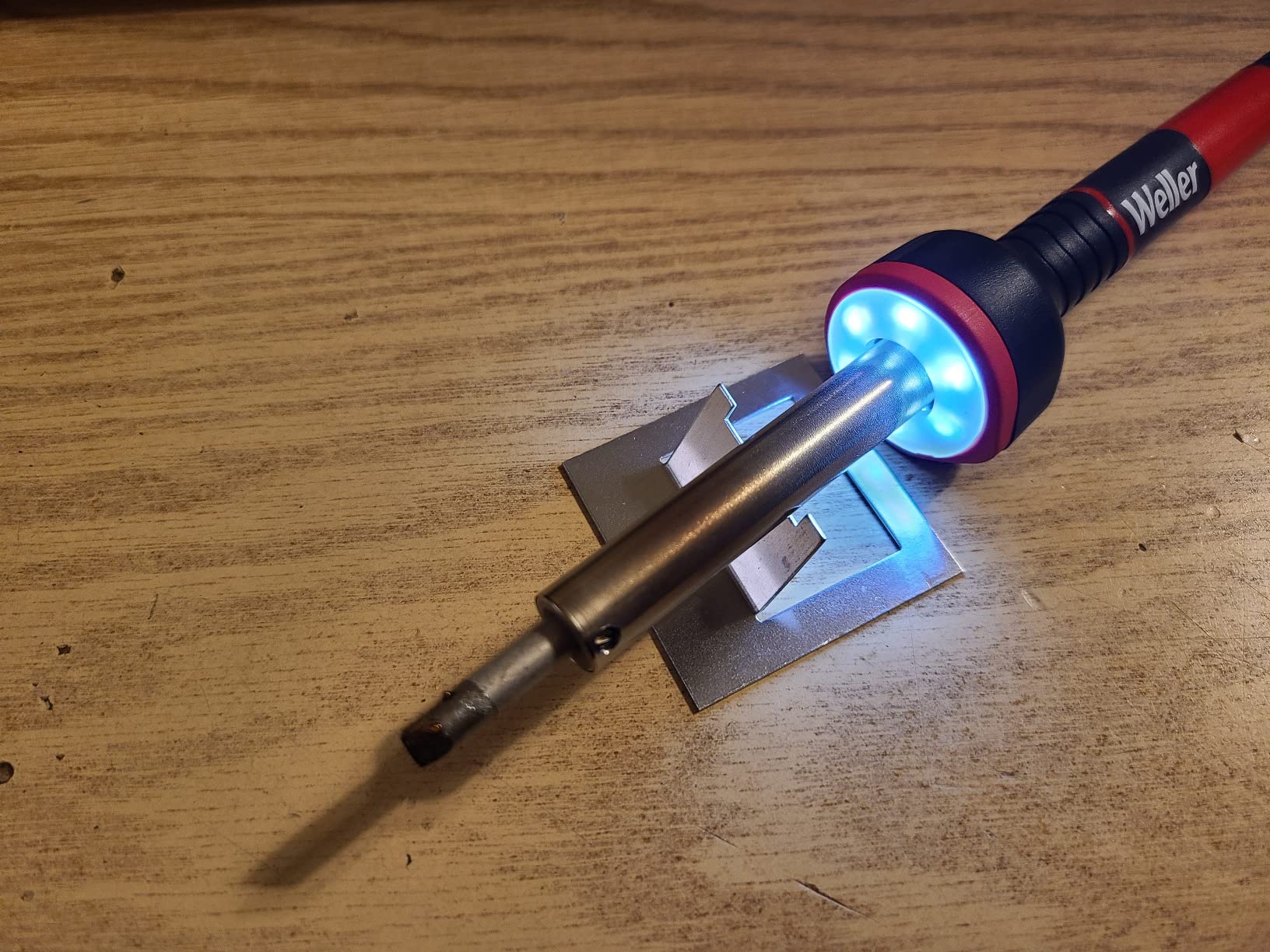
The three included tips cover the range most stained glass beginners need. The 6.4mm chisel tip is the workhorse for running solder beads along copper foil seams, while the screwdriver and conical tips handle detail work and edge soldering. Quick tip changes mean you can adapt mid-project without buying extras right away.
The 10 percent one-star rate is worth noting. Several users reported heating element failures after minimal use, though the 7-year warranty should cover these cases. If you buy this iron, keep your receipt and register the warranty to protect your investment.
Best First Iron For Stained Glass Beginners
If you are just starting out and want to try stained glass without committing $100 or more to a soldering iron, this kit gives you everything in one box. The performance is adequate for learning copper foil technique, small sun catchers, and beginner panels. Many artists start here and upgrade to a Hakko or Weller 100 once they know stained glass is a hobby they will stick with.
The thin, flexible cord is a nice surprise at this price point. It stays in place better than the stiff cords on more expensive irons, which reduces hand fatigue and the annoying cord-catch issue that plagues the Hakko FX601-02.
Limitations To Expect At This Price
There is no temperature control on this iron beyond the inherent properties of the ceramic element. You get whatever temperature the element settles at, which means you cannot dial it down for delicate work or push it higher for heavy lead came. The ungrounded two-conductor cord is also a step down from grounded options on pricier irons.
For serious stained glass work beyond beginner projects, you will eventually want an iron with adjustable temperature. But as a learning tool and starter kit, the WLIRK6012A delivers genuine Weller quality at a price that is hard to beat.
6. Hakko 503F-V12ED/P – 60W Budget Soldering Iron
Hakko Soldering Iron,Red,60W 503F-V12ED/P – 1 Each
60W ceramic element
Fixed heat up to 400C
Screwdriver head style
Pencil design
120V US plug
✓ The Good
- Genuine Hakko build quality at entry-level price
- Fast heating and gets very hot quickly
- Durable enough to survive being left on
- Solder flows smoothly off the included tip
✕ The Bad
- No temperature control at all
- Fixed-heat design with no dial or adjustment
- Only 2 tip types available and replacements hard to find
- No on/off switch and no warranty
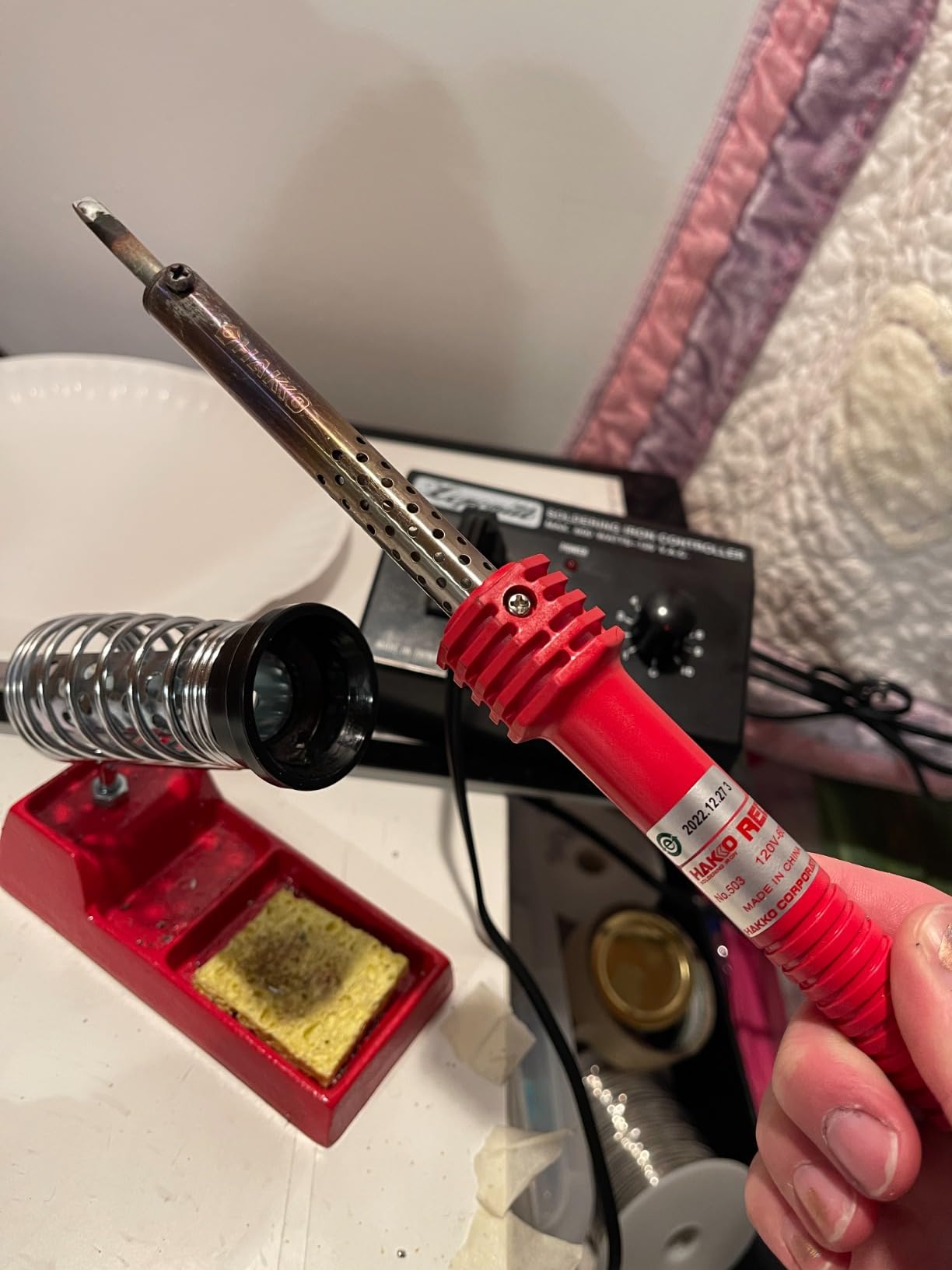
The Hakko 503F-V12ED/P is the most affordable way to get genuine Hakko quality on your stained glass bench. At a price point under $20, this 60-watt ceramic element iron heats up fast and gets plenty hot for copper foil soldering. The Hakko brand name means you get decent construction quality even at this entry level.
I would categorize this as a true beginner iron or a backup for your studio. It does the basic job of melting solder and flowing it along copper foil seams, which is more than you can say for the generic $10 irons at craft stores. Multiple users reported it surviving being left on accidentally, which speaks to the build quality.
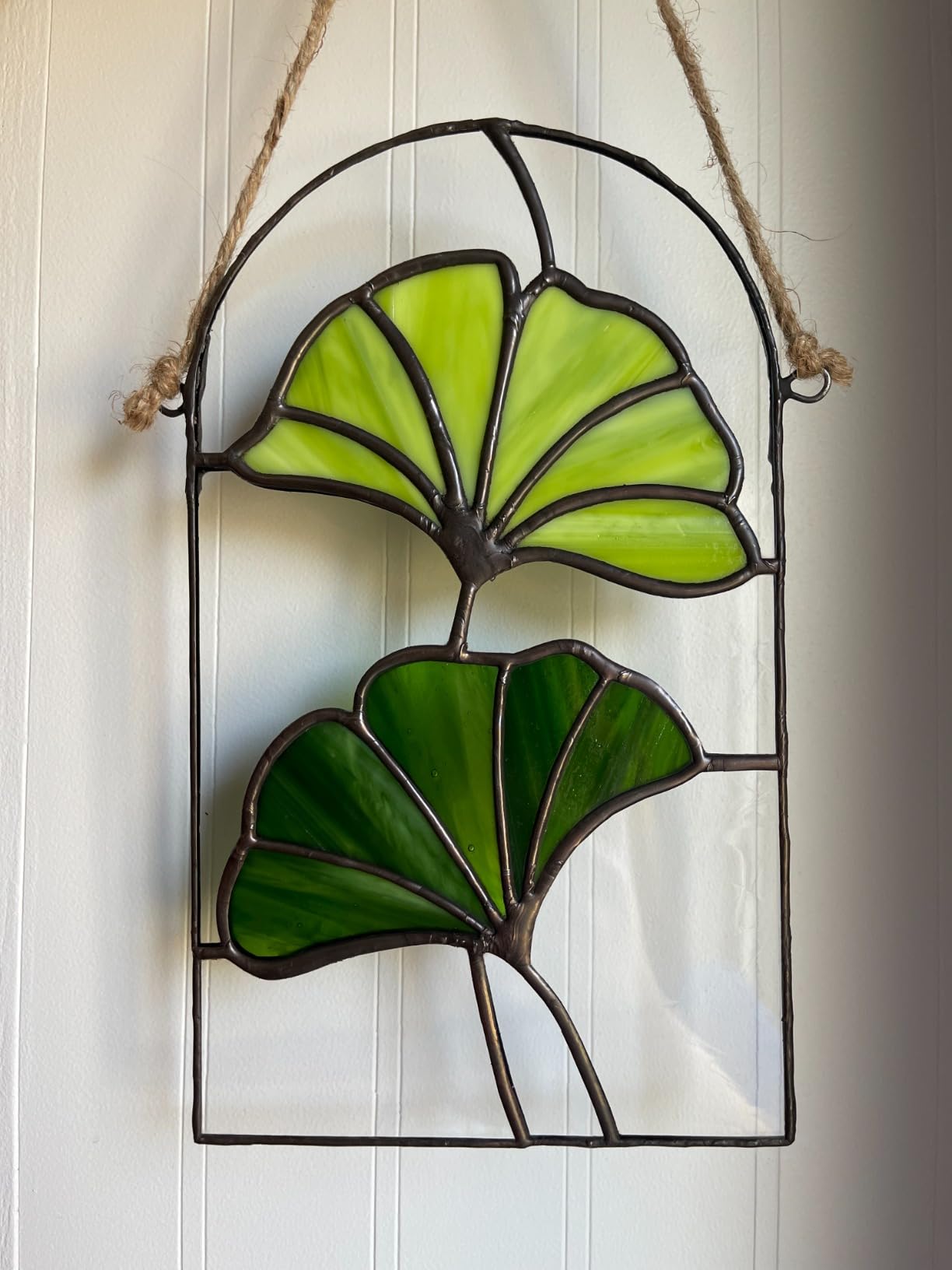
The biggest limitation is the complete lack of temperature control. This is a fixed-heat iron, meaning you cannot adjust the temperature up or down. For stained glass work, where you often need different temperatures for copper foil versus lead came versus decorative soldering, that inflexibility becomes a real constraint as your skills advance.
The included tip is very large, which actually works fine for running wide solder beads but is too big for detail work. Finding replacement tips is difficult since only two types are available for this model. The included rest is tiny and practically useless, so budget for a proper iron stand.
Best For Absolute Beginners Testing The Waters
If you want to try stained glass as a hobby and are not ready to commit to a $100 iron, the Hakko 503F gives you a taste of quality soldering at a fraction of the cost. It is significantly better than the generic craft store irons that Reddit users complain about producing cold spots and frustrating results.
Just understand that you will outgrow this iron quickly once you start doing more advanced work. Think of it as a stepping stone rather than a long-term tool, and you will not be disappointed.
Why No Temperature Control Matters
Fixed-heat irons limit your ability to work with different solder types. The community on Reddit consistently recommends 60/40 leaded solder at specific temperature ranges, and without a dial you cannot optimize for that. You also cannot compensate for heat loss on large panels by bumping up the temperature.
If you plan to stick with stained glass for more than a few projects, spending a bit more on an iron with adjustable temperature will save you the cost of upgrading later.
7. Weller WLC200 – 80 Watt Hobby and Stained Glass Soldering Station
Weller WLC200 80 Watt Hobby and Stained Glass Soldering Station
80W soldering station
Adjustable 5-80W power range
Rheostat heat control
Up to 900F
7-year warranty
Includes chisel tip, holder, sponge
✓ The Good
- Variable power from 5-80W via base rheostat
- Replaceable heating element extends station life
- Spiral iron holder is convenient and stable
- 7-year warranty on a proven design
✕ The Bad
- Heavier station design can cause hand fatigue on the iron
- Included 3/8 inch chisel tip too large for detail work
- Temperature can drift requiring readjustment
- 1-2 month shipping delay on some listings
The Weller WLC200 is a dedicated soldering station designed specifically for hobby and stained glass work. The base unit houses a rheostat that lets you dial power from 5 to 80 watts, giving you far more temperature flexibility than a fixed-heat iron. With 717 reviews and a 4.3-star average, this station has earned a loyal following among stained glass artists.
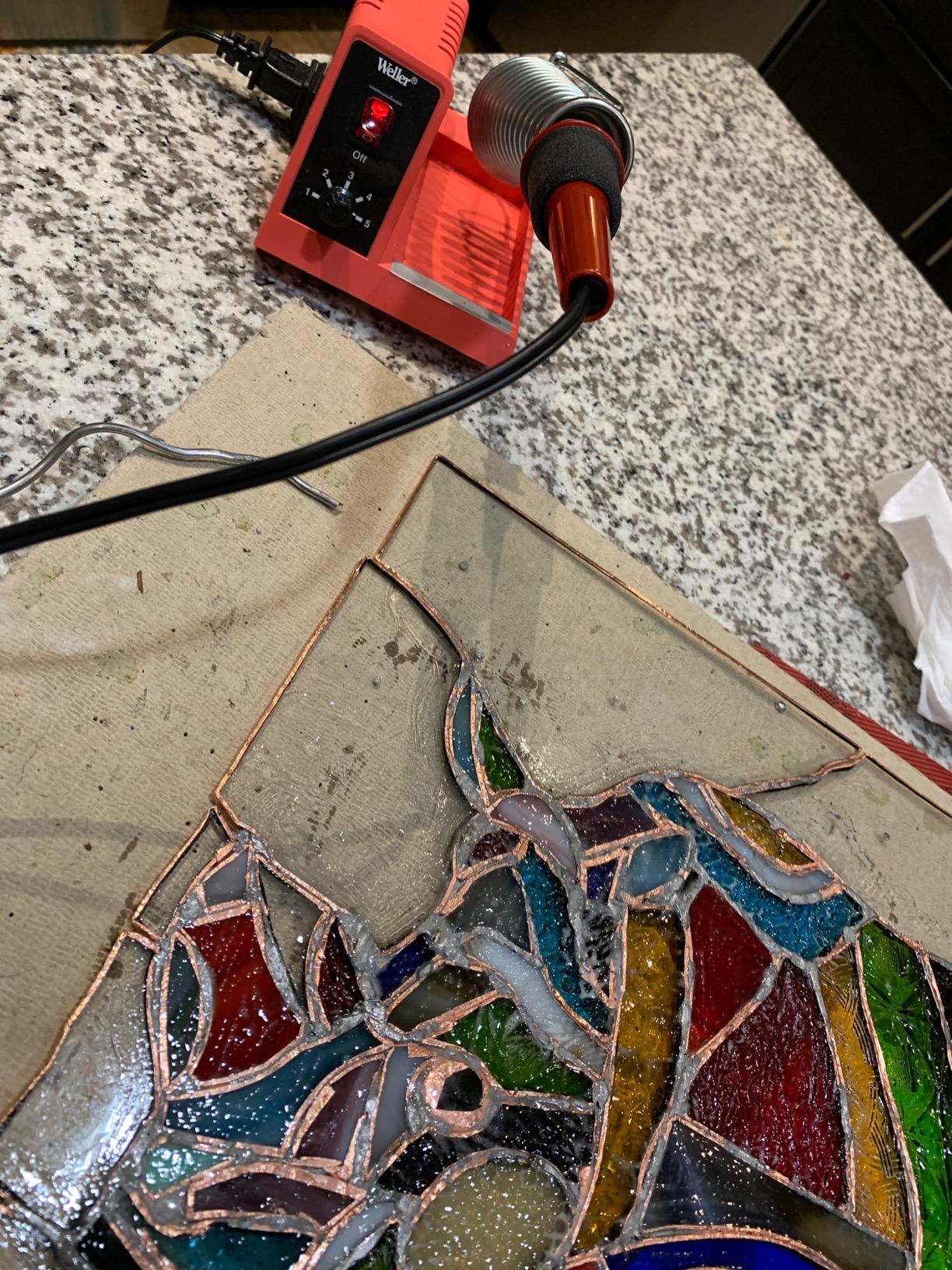
I like that this station includes the SPG80 lightweight pencil iron, which is more comfortable than the heavy W100PG for extended soldering sessions. The spiral iron holder keeps your hot tool stable and within reach, which is a meaningful upgrade from the basic stands included with cheaper kits.
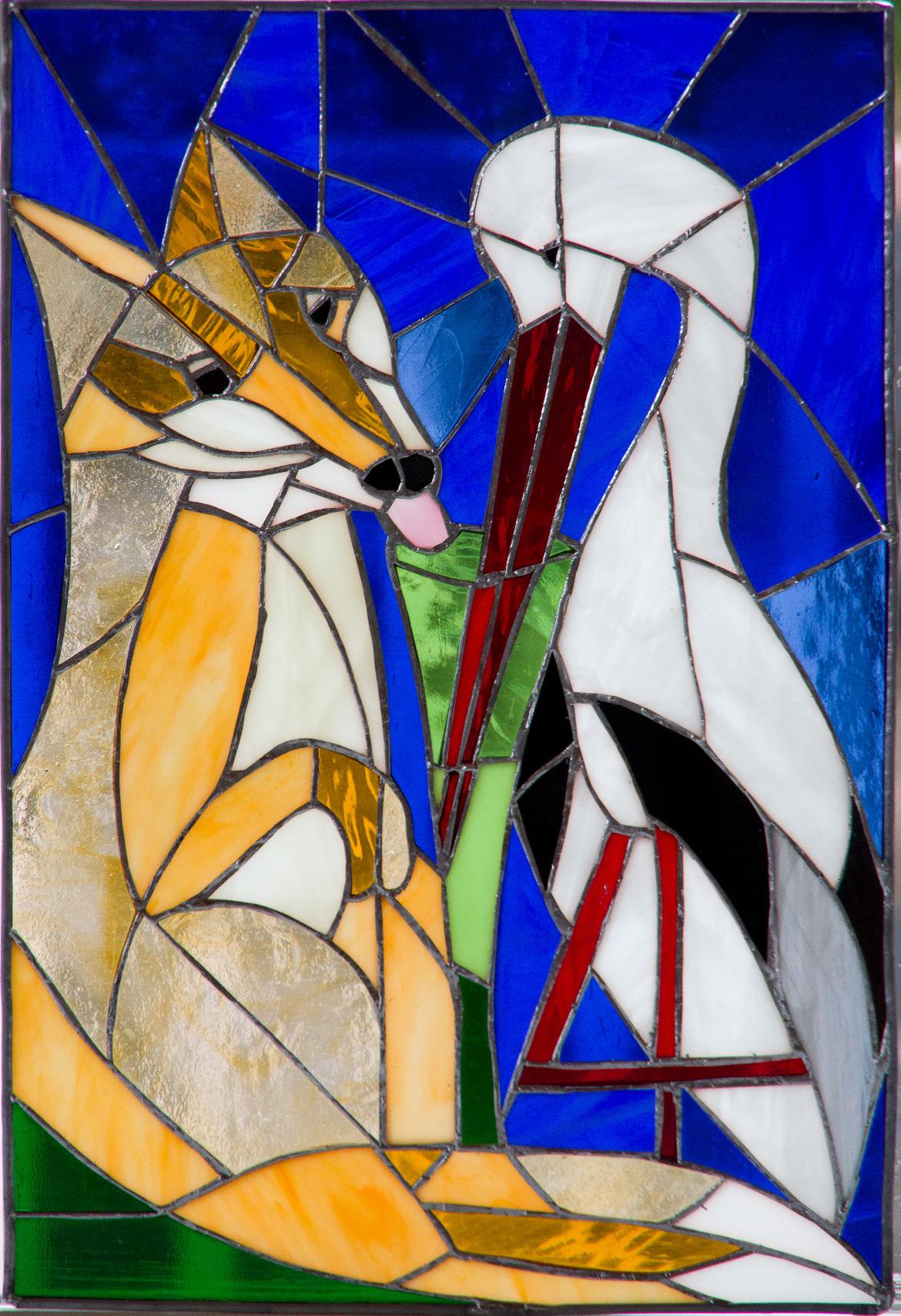
The rheostat control is the defining feature here. Instead of tip-based temperature like the W100PG or on-handle dial like the Hakko, you adjust power output on the base station. This gives you continuous variable control rather than fixed steps, which some artists prefer for fine-tuning their solder flow.
One thing to watch is temperature drift. Several users noted that settings can shift during extended use, requiring periodic readjustment. The included 3/8 inch chisel tip is also too large for detailed stained glass work, so plan to purchase the MTG21 1/4 inch chisel tip for finer seams.
Best For Artists Who Want A Full Station Setup
If you prefer the organization and stability of a soldering station over a standalone pencil iron, the WLC200 gives you a complete setup with holder, sponge, and variable control in one package. The replaceable heating element means you can extend the life of your investment for years.
The 7-year warranty is one of the longest in this category and reflects Weller’s confidence in the build quality. Artists who do stained glass alongside other hobbies like electronics repair or ham radio work appreciate the versatility of the 5-80 watt range.
Managing Temperature Drift
The rheostat design means temperature is indirectly controlled through power output rather than measured directly at the tip. This can lead to drift as ambient conditions change or as the heating element ages. Experienced users develop a feel for their preferred settings and adjust as needed during a session.
If you need precise, repeatable temperature settings, a station with PID control like the X-Tronic 9060-PRO-X may be a better fit. But for most hobby and intermediate stained glass work, the WLC200 rheostat provides plenty of control.
Buying Guide: How To Choose The Best Soldering Iron For Stained Glass
Choosing from the best soldering irons for stained glass comes down to understanding a few key factors that directly affect your solder line quality and your comfort at the bench. Here is what I tell every stained glass beginner who asks me for iron recommendations.
1. Wattage: How Many Watts Do You Need
For stained glass work, 60 watts is the absolute minimum and 80 to 100 watts is the sweet spot. The reason is heat recovery. Glass and copper foil absorb heat rapidly as you solder, and a low-wattage iron cannot replenish that heat fast enough, resulting in cold joints and bumpy seams. Ceramic element irons like the Hakko can get away with lower wattage because they are more efficient, but a 40-watt electronics iron will struggle on anything larger than a small sun catcher.
For large panels and heavy lead came work, look at 80 watts or higher. The Weller W100PG at 100 watts and the X-Tronic at 200 watts are built for exactly this kind of demanding work.
2. Temperature Control: Dial, Tips, Or Rheostat
There are three main temperature control approaches in stained glass irons. On-handle dials like the Hakko FX601-02 let you adjust temperature instantly without stopping. Tip-based systems like the Weller W100PG use different tips for different temperatures, which means you must cool the iron to change. Rheostat stations like the Weller WLC200 give you continuous variable control via a base unit dial.
For most stained glass artists, an on-handle dial is the most convenient option because you can adjust heat mid-seam if your solder is flowing too fast or too slow.
3. Tip Types: Why Chisel Tips Matter
Stained glass soldering requires chisel tips, not the pointed tips designed for electronics work. The flat edge of a chisel tip maximizes contact with the copper foil seam, transferring heat efficiently and creating smooth solder beads. A pointed tip concentrates heat in one spot and produces bumpy, inconsistent lines.
Look for irons that include or support chisel tips in the 1/4 inch to 3/8 inch range. The wider tips are better for running long seams, while narrower chisel tips handle detail work and decorative soldering.
4. Heat Recovery: The Hidden Performance Factor
Heat recovery is how quickly an iron returns to its set temperature after you remove heat by touching it to cold glass and foil. This is the single biggest factor separating good stained glass irons from cheap ones. Ceramic heating elements recover faster than nichrome, which is why the Hakko line outperforms the Weller despite lower wattage on paper.
When an iron has poor heat recovery, your solder bead starts smooth and goes cold halfway down the seam. This creates the lumpy, inconsistent solder lines that frustrate beginners using cheap craft store irons.
5. Weight And Ergonomics For Long Sessions
Stained glass soldering sessions can last hours, especially on larger pieces. A heavy iron causes wrist and hand fatigue that affects your solder line quality over time. The Hakko FX601-02 at its lightweight pencil design is easier on your hands than the heavier Weller W100PG, which matters if you have any wrist issues or plan on extended soldering sessions.
Forum users with conditions like thoracic outlet syndrome specifically recommend lighter irons. The cord also matters, as a stiff cord fighting against your hand position contributes to fatigue.
6. Watch For Counterfeit Hakkos
Counterfeit Hakko irons are a real problem on online marketplaces. The community recommends buying from authorized sellers and checking the white heating element for the genuine HAKKO imprint. Counterfeit units use inferior ceramic elements that fail quickly and do not maintain temperature. If you find a Hakko FX601 listed well below the normal price, proceed with caution.
Frequently Asked Questions About Stained Glass Soldering Irons
Which is better Weller or Hakko soldering iron for stained glass?
Both are excellent, but they serve different needs. The Hakko FX601-02 is lighter with an on-handle temperature dial and faster heat recovery, making it ideal for most hobbyists and intermediate artists. The Weller W100PG offers 100 watts of raw power and tip-based temperature control, which is better for large panels and heavy lead came work. Most experienced stained glass artists own or have used both.
How many watts should a soldering iron be for stained glass?
A soldering iron for stained glass should be at least 60 watts, with 80 to 100 watts being the sweet spot for most projects. Ceramic element irons like the Hakko can work effectively at 67 watts because they are more efficient, while nichrome irons like the Weller 100 use higher wattage to maintain temperature. For large panels and lead came work, 80 watts or higher is recommended for adequate heat recovery.
Do you need a special soldering iron for stained glass?
Yes, stained glass requires a higher-wattage iron with good heat recovery and a chisel tip, not a standard electronics soldering iron. Electronics irons are typically 40 watts or less with pointed tips designed for circuit boards, which cannot maintain temperature against the thermal mass of glass and copper foil. You need at least 60 watts, a ceramic or quality nichrome heating element, and a flat chisel tip for proper solder bead formation.
What is the best soldering iron for beginner stained glass work?
The Hakko FX601-02 is the best soldering iron for stained glass beginners because its on-handle temperature dial makes it easy to experiment with different heat settings. The Weller WLIRK6012A kit is a solid budget alternative under $35 that includes three tips and everything needed to start. Avoid cheap irons under $20 from craft stores, as they lack temperature consistency and produce frustrating results for beginners learning technique.
What is the best solder for stained glass?
The most common solder for stained glass is 60/40 leaded solder, which melts at around 374 degrees Fahrenheit and produces smooth beads for copper foil work. 50/50 solder has a higher melting point and is sometimes used for lead came work where more structural strength is needed. Lead-free solder is available but requires higher temperatures and more heat from your iron, making it more challenging for beginners.
What temperature should I set my soldering iron to for stained glass?
For copper foil work, most artists run their iron between 392 and 410 degrees Celsius (740-770 degrees Fahrenheit). For lead came soldering, a slightly lower temperature around 350 to 380 degrees Celsius (660-716 degrees Fahrenheit) works well. The exact setting depends on your iron, your solder type, and your soldering speed. Start in the middle of the range and adjust based on how smoothly your solder flows.
Why is my solder not flowing smoothly on my stained glass?
Inconsistent solder flow is usually caused by insufficient heat recovery, low iron wattage, or an incorrect tip. If your iron is under 60 watts or has a pointed electronics tip, upgrading to a higher-wattage iron with a chisel tip will solve most flow issues. Other causes include dirty copper foil that needs flux, moving the iron too fast or too slow, or a tip that needs cleaning and tinning.
Final Thoughts On The Best Soldering Irons For Stained Glass
After testing 7 models across copper foil panels, lead came windows, and detailed decorative work, the Hakko FX601-02 remains my top pick for the best soldering iron for stained glass in 2026. Its combination of lightweight design, on-handle temperature control, ceramic heating efficiency, and excellent heat recovery makes it the most versatile iron on this list for the majority of stained glass artists.
For heavy-duty studio work, the Weller W100PG is the proven workhorse. For beginners on a budget, the Weller WLIRK6012A kit provides everything you need to start without a big investment. And for maximum power and digital precision, the X-Tronic 9060-PRO-X station is a compelling newer option with strong warranty backing.
The right iron transforms stained glass soldering from a frustrating struggle into a satisfying creative process. Pick the one that matches your projects, your budget, and your hand comfort, and you will see the difference in your solder lines immediately.