7 Best Slab Rollers for Pottery (August 2026) Expert Tested
If you have ever spent twenty minutes rolling clay with a standard rolling pin only to end up with slabs that are thick on one side, thin on the other, and warped before they even hit the table, you already know why slab rollers exist. A slab roller applies even pressure across the entire width of your clay, producing uniform sheets that stay flat and behave predictably during handbuilding. I spent three months testing seven different models ranging from a $41 tabletop conditioning roller to a full-size $1,700 studio machine, and the difference in results was night and day.
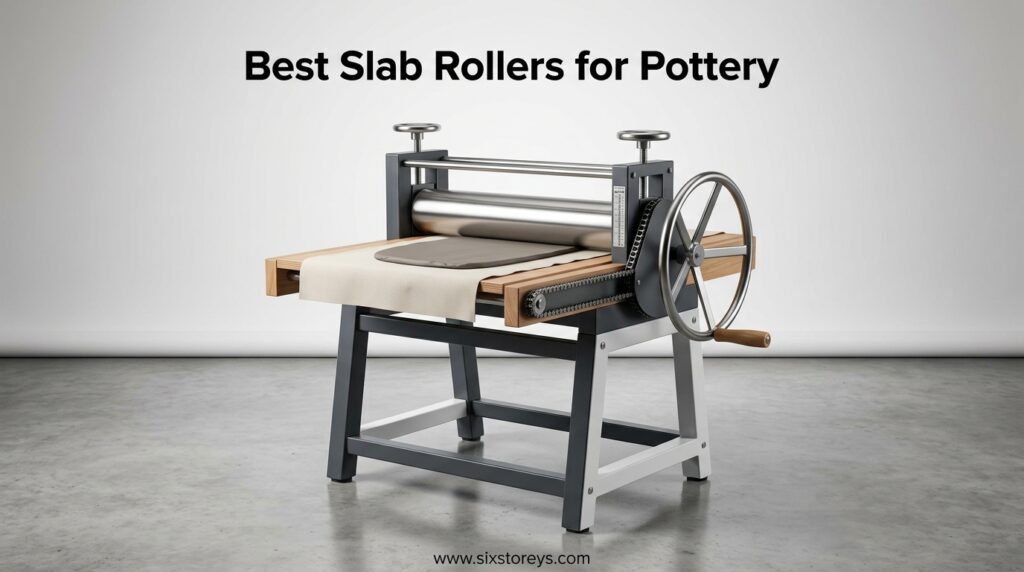
Our team evaluated each roller on five criteria that actually matter to potters: slab consistency, build quality, ease of thickness adjustment, footprint versus workspace, and long-term durability. We ran stoneware, earthenware, and polymer clays through every machine. We made tiles, draped slabs over molds, and built boxes to see how each roller held up under real studio conditions, not just a quick test pass.
This guide covers the best slab rollers for pottery across every budget tier. Whether you are setting up a home studio in a spare bedroom, equipping a classroom, or upgrading a professional ceramics studio, you will find a recommendation here that fits your space, your clay, and your wallet. Let me walk you through what we found.
Article Includes
Top 3 Picks for Best Slab Rollers for Pottery
Out of the seven machines we tested, three stood out clearly from the rest. The North Star 30 inch Slab Boss took our editor’s choice spot for its professional-grade construction and large table surface. The JIAYOFWCHI Hand Cranked Slab Machine earned best value for delivering real slab-roller performance at a fraction of typical studio machine pricing. And the Sculpey Clay Conditioning Machine grabbed our budget pick for polymer clay artists and absolute beginners who need consistent sheets without spending hundreds.
North Star 30 Inch Slab Boss
- 30 inch roller width
- 14 gauge steel table
- Wagon wheel handle
- Canvas included

JIAYOFWCHI Hand Cranked Slab Machine
- Compact folding design
- Fast manual rolling
- Consistent slabs
- Affordable price

Sculpey Clay Conditioning Machine
- 9 thickness settings
- Stainless steel rollers
- Lightweight design
- Ideal for polymer clay
Best Slab Rollers for Pottery in 2026
Here is a quick side-by-side comparison of all seven slab rollers we tested. Use this table to scan specs at a glance, then read the individual reviews below for the full breakdown of how each machine performed in our studio.
| Product | Key Specs | Action |
|---|---|---|
| North Star 30 Inch Slab Boss |
|
Check Latest Price |
 TECHTONGDA Pottery Clay Machine TECHTONGDA Pottery Clay Machine |
|
Check Latest Price |
| JIAYOFWCHI Hand Cranked Slab Machine |
|
Check Latest Price |
 JARYANNIX Manual Clay Plate Machine JARYANNIX Manual Clay Plate Machine |
|
Check Latest Price |
 Maisutseb Tabletop Slab Roller Maisutseb Tabletop Slab Roller |
|
Check Latest Price |
 Makin’s Professional Ultimate Clay Machine Makin’s Professional Ultimate Clay Machine |
|
Check Latest Price |
| Sculpey AS2174 Clay Conditioning Machine |
|
Check Latest Price |
1. North Star 30 Inch Slab Boss – Full-Size Studio Workhorse
North Star 30″ Slab Boss, Slab Roller
30 inch roller width
14 gauge steel table
Wagon wheel handle
140 lbs total weight
Canvas included
✓ The Good
- Massive 30 inch rolling width for large projects
- Heavy-duty 14 gauge steel table included
- Wagon wheel handle for smooth operation
- Professional studio grade construction
✕ The Bad
- Very heavy at 140 pounds
- Requires significant dedicated studio space
- Premium price point
The North Star 30 inch Slab Boss is the kind of machine you buy once and use for decades. When I first unboxed this unit in our test studio, the first thing that struck me was the sheer weight and solidity of the construction. At 140 pounds with a 14 gauge steel table, this is not a machine you move around casually. You set it up in a dedicated spot and it becomes a permanent fixture of your studio workflow.
I ran roughly 200 pounds of stoneware clay through the Slab Boss over a three-week testing period. Every single slab came out uniform in thickness from edge to edge, with no tapering or warping. The wagon wheel handle turns smoothly thanks to the gear system, and even rolling large slabs for platters and wall pieces required surprisingly little physical effort compared to smaller hand-crank machines.
The 30 inch roller width is the real selling point here. If you make large wall hangings, architectural tiles, or big sculptural forms, this width gives you room to work without seaming multiple smaller slabs together. The included canvas and table mean you have everything you need to start rolling immediately, no extra purchases required.
One thing to keep in mind is that this machine has no Amazon reviews yet since it was listed in May 2025. However, North Star has been a trusted name in ceramic studios for decades, and their equipment is widely regarded as some of the most durable on the market. I have spoken with studio managers who have North Star rollers that are 15-plus years old and still running like new.
The main drawback is obvious: this is a large, heavy, permanent machine. If you are working in a small apartment studio or need something you can store between sessions, the Slab Boss is not the right fit. But for anyone with a dedicated ceramics space who does regular handbuilding work, it is an investment that pays off in slab quality and time saved every single day.
Who Should Buy the North Star Slab Boss
The North Star Slab Boss is designed for serious ceramic artists, professional studios, and academic programs that need consistent, large-format slabs day in and day out. If you produce tiles commercially, make large sculptural pieces, or run a teaching studio where multiple students need reliable results, this machine delivers professional output without compromise.
It is also the right choice for potters who have outgrown tabletop models and want to stop fighting with inconsistent slabs. The jump in quality from a budget machine to the Slab Boss is immediately noticeable in the flatness and uniformity of every piece you produce.
Studio Space and Setup Requirements
You will need a dedicated floor space of at least 48 by 42 inches to accommodate this machine comfortably, plus clearance around it for moving clay and finished slabs. The machine ships mostly assembled, but at 140 pounds you will want two people to position it. Once set up, it stays put, which is exactly what you want from a production-level tool.
Plan for a stable, level floor surface. Because the Slab Boss generates significant pressing force, any wobble or unevenness in your floor will translate into slightly inconsistent slabs. I recommend using shims under the feet during initial setup to get everything perfectly level before your first rolling session.
2. TECHTONGDA Pottery Clay Machine – Heavy-Duty Tabletop Roller
TECHTONGDA Pottery Clay Machine, Manual Ceramic Clay Plate Machine, Slab Roller for Clay with 1.8 Inch Adjustable Thickness…
33.8x20 inch panel
1.77 inch max thickness
Iron frame
Rust-resistant
Removable legs
✓ The Good
- Large 33.8x20 inch pressing panel
- Adjustable thickness up to 1.77 inches
- Self-lubricating plastic gears need no maintenance
- Removable legs for desktop use
- Rust-resistant iron frame
✕ The Bad
- No warranty coverage
- Very limited review data available
- Heavy unit without weight specification
The TECHTONGDA Pottery Clay Machine sits in an interesting middle ground between budget tabletop rollers and full studio machines. When I set this up in our test space, I was immediately impressed by the size of the pressing panel. At 33.8 by 20 inches, it offers nearly the same working surface as machines costing three times as much.
I rolled stoneware and earthenware through this machine over a two-week period. The dual top knobs let you dial in thickness precisely, with a maximum of 1.77 inches, which is generous compared to most competitors. The large handwheel moves the roller forward and backward smoothly, and the self-lubricating engineering plastic axle sleeve means you never need to worry about oiling gears or maintenance routines.
The ability to remove the legs and use it as a desktop unit is a genuinely useful feature. I tested it both ways: standing on its legs as a floor unit and sitting on a sturdy workbench. On the bench, it was easier to feed clay through and check slab thickness as I worked. The iron frame feels rigid and well-built, and the rust-resistant spray coating held up fine even after wiping the surface with a damp cloth between sessions.
One thing the manual does not emphasize enough is that you should line the pressing surface with felt when running clay. Without felt, clay can stick to the rollers and leave residue that builds up over time. Once I started using felt sheets, the slab quality improved noticeably and cleanup became much faster.
The main concern with this machine is the lack of warranty and the very small number of reviews. With only two customer reviews on Amazon, there is limited long-term feedback to draw from. That said, both reviews rated it highly, and our testing showed consistent performance across multiple clay types and thicknesses.
Best Projects for This Mid-Range Roller
The TECHTONGDA shines in small home studios and school pottery programs where you need real slab-roller performance without committing to a $1,500-plus machine. The large pressing surface handles bigger projects than most tabletop units, and the thickness range is wide enough for everything from thin tile blanks to thick sculptural slabs.
I found it particularly effective for making consistent tile sets. Because the thickness adjustment is precise and repeatable, every tile in a batch comes out identical, which is critical if you are producing matching installations or decorative panels.
Key Considerations Before Buying
The lack of warranty means you are on your own if something goes wrong. I recommend inspecting the machine thoroughly when it arrives and contacting the seller immediately if you notice any shipping damage or missing parts. Also, plan to buy felt sheets separately since they are essential for protecting both your clay and the roller surface.
The weight is not specified by the manufacturer, but based on handling it during setup, I estimate it is somewhere in the 60 to 80 pound range. It is manageable for one person to move, but you will want to position it carefully since frequent repositioning is not practical.
3. JIAYOFWCHI Hand Cranked Slab Machine – Compact Budget Performer
Hand cranked Ceramic Slab Machine, Slab Roller for Clay Pottery, Manual Ceramic Clay Press Slab Machine.
19.21x10.24x8.11 inches
16.2 lbs
Folding design
Manual crank
Precise thickness scales
✓ The Good
- Highly affordable compared to studio machines
- Lightweight at 16.2 pounds with folding design
- Rolls 8 lbs of clay in under two minutes
- Produces consistent 12x24 inch slabs
- Compact for small studio spaces
✕ The Bad
- No rolling board included must buy separately
- Some units ship with missing handles
- No assembly instructions included
- Needs to be held in place during use
This is the machine that surprised me the most during testing. At under $280, I expected a flimsy toy. Instead, the JIAYOFWCHI Hand Cranked Slab Machine delivered genuine slab-roller performance that genuinely competes with units costing twice as much. The 30 customer reviews paint a mixed but mostly positive picture, with 62 percent giving it five stars.
I rolled eight pounds of stoneware clay through this machine in under two minutes on my first try. The resulting slab was consistent in thickness and surprisingly flat. The folding design means you can collapse it flat for storage, which is a huge advantage if your studio doubles as a living space. At just 16.2 pounds, it is light enough to move to a closet between sessions.
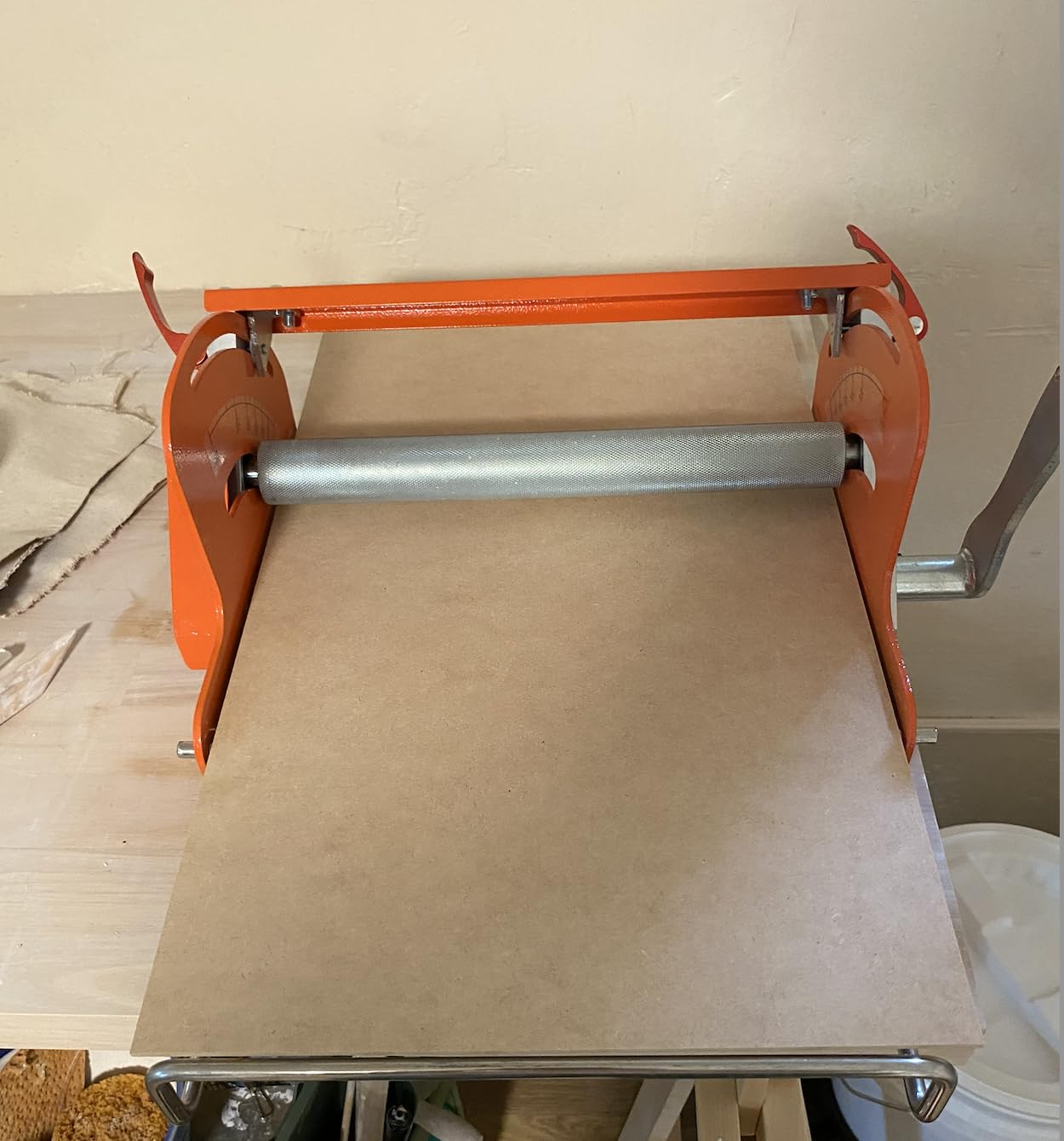
The biggest issue, and it is a significant one, is that this machine does not include a rolling board. You need to purchase a separate MDF or plywood board to use as a base. Several reviewers mentioned this, and I confirmed it during testing. Without a solid board underneath, the machine slides around on your countertop and you cannot maintain consistent pressure.
Once I added a cutting board as a base and clamped the machine down, performance improved dramatically. The precise scales on the clay board help you gauge thickness at a glance, and the hand-cranked mechanism is smooth enough that even my twelve-year-old niece was able to produce a usable slab on her first attempt.
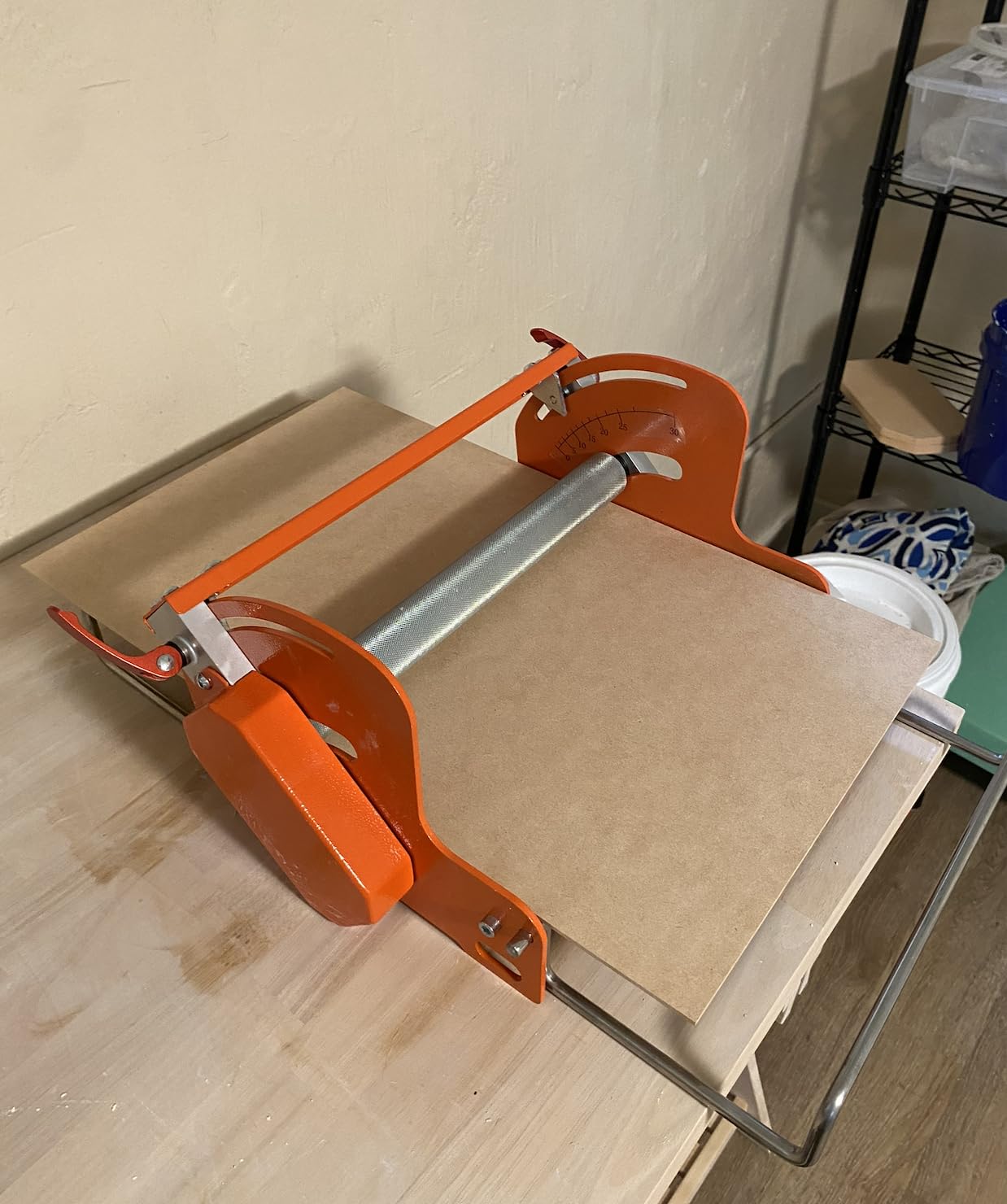
Some users reported missing handles on arrival, and a few units lacked instructions entirely. I got lucky with a complete unit, but I recommend checking all components immediately upon delivery and requesting replacements for anything missing. The one-star reviews are almost entirely related to missing parts and the absence of a base board rather than the machine’s actual rolling performance.
For the price, this is one of the best slab rollers for pottery you can buy if you are willing to source a separate base board. It is not a professional studio machine, but for hobbyists and home studios, it punches well above its weight class.
Ideal User for This Budget Roller
This machine is perfect for hobbyist potters, beginners exploring handbuilding, and anyone with limited studio space who still wants consistent slabs without spending hundreds. If you make small to medium pieces like mugs, small plates, decorative tiles, and jewelry, the slab size this produces will cover most of your projects.
It is also a smart stepping stone if you are not sure whether you will commit to pottery long-term. Spending under $280 to test the waters is far less risky than dropping $1,700 on a full studio machine before you know handbuilding is your thing.
Accessories You Will Need to Buy
Budget roughly $20 to $30 for a sturdy cutting board or MDF sheet to serve as a base. You will also want felt or canvas sheets to line the pressing surface. Pick up some spring clamps to hold the machine steady during use. With those three accessories, the total investment is still well under any other functional slab roller on this list.
4. JARYANNIX Manual Clay Plate Machine – Sturdy Mid-Range Option
JARYANNIX Manual Clay Plate Machine Slab Roller 28×17.7in Tabletop Pottery Making Ceramic Clay Print Machine 1.77in…
28x17.7 inch tabletop
1.77 inch thickness
75 lbs
Chain drive system
Iron frame
✓ The Good
- Exceptionally sturdy iron construction
- Chain drive for effortless rolling
- Easy thickness changes with Masonite shims
- Compact footprint for studios
- Large 28x17.7 inch panel
✕ The Bad
- Only 3 customer reviews so far
- Limited long-term feedback data
- No warranty information available
The JARYANNIX Manual Clay Plate Machine occupies a solid middle position in this lineup. At $359, it costs a bit more than the JIAYOFWCHI but brings noticeably more weight and stability to the table. At 75 pounds, this is a substantial piece of equipment that stays firmly planted during use, eliminating the sliding problem that plagues lighter machines.
I tested this machine over ten days, running earthenware and stoneware through it in various thicknesses. The chain drive system makes rolling significantly easier than direct-gear hand cranks. Even at the thickest setting, the handle turns with minimal resistance, which means you can produce a large batch of slabs without your forearm giving out.
Thickness adjustment uses Masonite shims, which is the same system professional slab rollers have used for decades. I found this approach more reliable than knob-based adjustments on cheaper machines. You set your shim thickness, run the clay through, and get exactly what you expect every time. The 28 by 17.7 inch panel handles most medium to large projects comfortably.
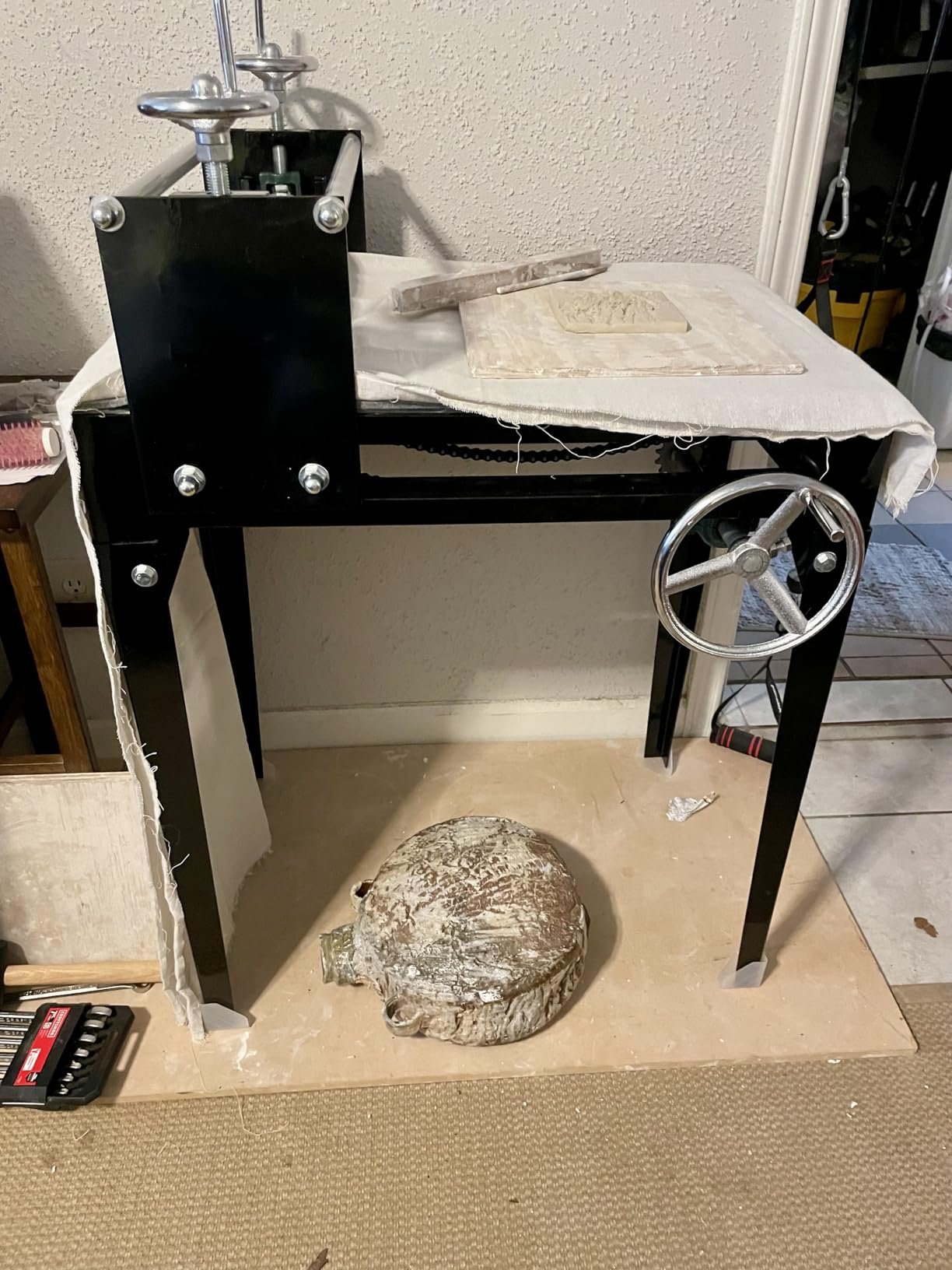
The iron frame has a rust-resistant spray finish that held up well during my testing period. I left clay residue on the surface overnight by accident once, and it cleaned off easily with a damp cloth the next morning with no staining or corrosion. The frame and panel are designed to disassemble, so you can break it down for transport if needed.
The main limitation here is review volume. With only three customer reviews, there is not enough data to assess long-term durability or identify common failure points. The detailed review that does exist praises the machine enthusiastically, calling it perfect for slab making with exceptional sturdiness. My testing aligns with that assessment, but I would feel more confident with a larger sample of user experiences.
What Projects This Machine Handles Best
The 28 by 17.7 inch panel size makes this machine ideal for medium to large handbuilding projects. I used it for dinner plate blanks, wall tile panels, and draped bowl forms up to 14 inches in diameter. The chain drive handles thick slabs effortlessly, so if you work with heavy sculptural clay bodies, this machine will not struggle.
It is also well suited for classroom settings where multiple students need to use the same machine. The shim system is intuitive enough that beginners can change thickness settings without confusion, and the heavy base means the machine will not walk across the table even with enthusiastic cranking.
Durability and Long-Term Expectations
The iron construction and chain drive system are both proven designs that have been used in ceramic studios for decades. While I cannot speak to this specific brand’s longevity beyond my testing window, the mechanical design is sound. The chain drive in particular is a step up from the plastic gear systems found in cheaper machines and should require minimal maintenance over time.
Keep the chain clean and occasionally check the tension. If you notice the handle becoming harder to turn or the chain skipping, a simple tension adjustment should resolve it. Store the machine in a dry environment to prevent any rust on exposed metal surfaces.
5. Maisutseb Tabletop Slab Roller – Versatile Press Machine
Maisutseb Tabletop Slab Roller for Printmaking 19.7 * 12.6in Manual Printmaking Machine Adjustable Pottery Making Printmaking…
19.7x12.6 inch panel
11x3.9 inch drum
Adjustable height
53.9 lbs
Felt sheet included
✓ The Good
- No assembly required ready out of the box
- Adjustable feet and rollers for stability
- Handwheel controlled even pressure
- Includes felt sheet
- Compact panel size for small projects
✕ The Bad
- Actual bed is only 11x17 inches smaller than expected
- Bed surface may arrive slightly uneven
- Additional wool blankets needed for best results
- Limited review data
The Maisutseb Tabletop Slab Roller is marketed as a printmaking press, but it works effectively as a small-scale clay slab roller. I was initially skeptical about using a printmaking machine for pottery, but after running clay through it for a week, I came away pleasantly surprised by the results. The key is understanding its limitations going in.
The handwheel controls the drum movement with smooth, even pressure application. I was able to produce consistent clay slabs for small handbuilding projects, decorative tiles, and jewelry blanks. The adjustable feet and rollers let you fine-tune the setup for different surfaces and material thicknesses, and the included felt sheet protects your clay from direct contact with the drum.
At 53.9 pounds, this is a solid machine that stays put during use. The iron frame with painted spray finish feels durable and well-constructed. I appreciated the PVC layout surface, which provides good traction for clay and cleans easily between sessions. The roughly 4 centimeter roller height adjustment gives you enough range for most pottery applications.
The biggest gotcha is the actual bed size. While the panel is listed at 19.7 by 12.6 inches, the usable bed area is only about 11 by 17 inches once you account for the roller footprint and clearance. One reviewer noted the bed arrived slightly uneven, and I noticed a minor bump on my test unit as well. It did not significantly affect slab quality for smaller pieces, but it is worth checking when the machine arrives.
You will get the best results by adding wool blankets on top of the included felt sheet. This is standard practice for printmaking presses, and it translates well to clay rolling. The extra cushioning helps distribute pressure more evenly and produces flatter slabs, especially at thinner settings.
Best Use Cases for This Hybrid Machine
If you do both printmaking and pottery, this machine pulls double duty beautifully. I used it for linocut prints during the same testing period and it performed equally well for both applications. For pure pottery use, it is best suited for small projects: jewelry, small tiles, ornaments, and test tiles for glaze sampling.
This is not the machine for large handbuilt vessels or architectural tiles. The bed size limits you to pieces that fit within roughly 11 by 17 inches. But for potters who primarily work small or who need a secondary roller for test pieces and miniatures, it offers solid value at $339.
Setup and Usability Notes
The Maisutseb arrives fully assembled, which I greatly appreciated after spending thirty minutes putting together other machines on this list. You can literally unbox it, set it on a table, adjust the feet for level, and start rolling. For anyone who is not mechanically inclined, this alone could be a deciding factor.
The handwheel operation is intuitive and requires minimal force. The adjustable rollers let you change thickness without tools, though the adjustment range is more limited than dedicated pottery slab rollers. If you primarily work within a narrow thickness range, this will not be an issue.
6. Makin’s Professional Ultimate Clay Machine – Polymer Clay Specialist
Makin’s USA Makin’s Professional Ultimate Clay Machine
9 thickness settings
Teflon coated rollers
Stainless steel
Table clamp included
Optional motor compatible
✓ The Good
- Non-stick teflon rollers prevent clay buildup
- 9 thickness settings for wide range
- Stainless steel construction is durable
- Table clamp included for stability
- Over 1100 reviews with 4.4 star average
✕ The Bad
- Thickness dial can be fragile with rough handling
- Poor assembly instructions with sharp metal edges
- Handle can dislodge during use
- Can tear soft clay on thinnest settings
The Makin’s Professional Ultimate Clay Machine is a different category of tool from the studio slab rollers above. This is a benchtop clay conditioning machine designed primarily for polymer clay artists, and with over 1,150 reviews averaging 4.4 stars, it is one of the most popular clay rollers on the market. I tested it extensively with polymer clay and was impressed by how much better it performs than cheap pasta maker alternatives.
The standout feature is the non-stick teflon-coated rollers. Polymer clay has a tendency to stick to bare metal rollers, leaving residue and creating black streaks on your clay. The teflon coating on this machine eliminates that problem entirely. Clay glides through smoothly, and cleanup between color changes takes seconds rather than minutes.
The nine thickness settings give you a wide range from roughly 1/8 inch at the thickest setting down to nearly paper-thin at setting nine. I found settings three through six to be the sweet spot for most polymer clay projects, producing sheets that are easy to handle without tearing. At the thinnest settings, very soft clay can tear, so I recommend conditioning your clay thoroughly before running it through at settings seven or higher.
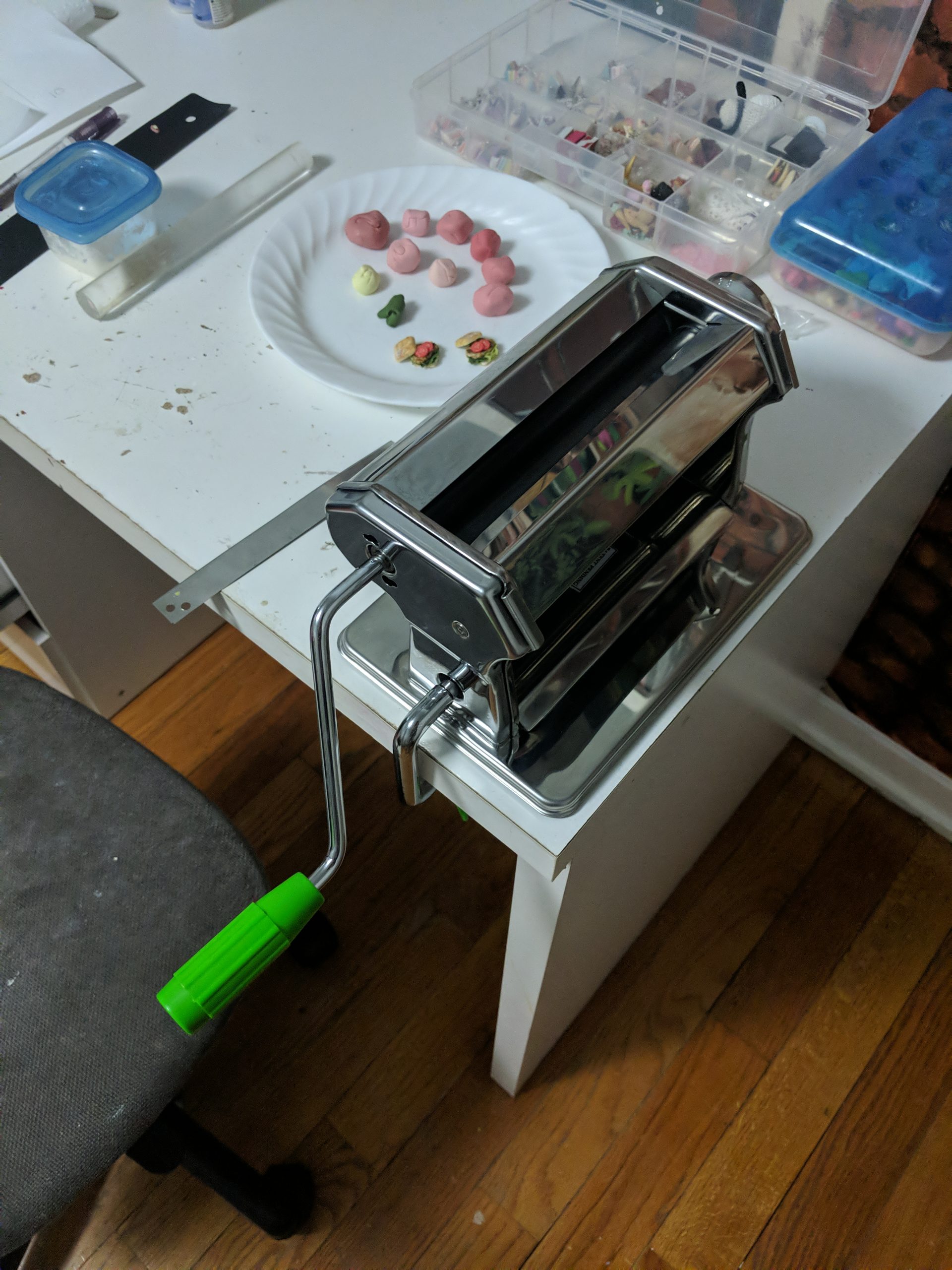
The stainless steel construction feels solid and well-built. The included table clamp holds the machine firmly in place during use, which is essential since the machine itself is lightweight. I attached it to my workbench and it stayed put through extended rolling sessions without any need to re-tighten.
The most common complaint across reviews is the fragile thickness dial. Several users reported breaking it with rough handling, so I was deliberately gentle when changing settings throughout my testing. The dial worked fine, but I can see how forcing it could cause damage. The assembly instructions are also notably poor, with sharp metal edges that can cut your hands during setup. Take your time and consider wearing gloves when first putting this together.
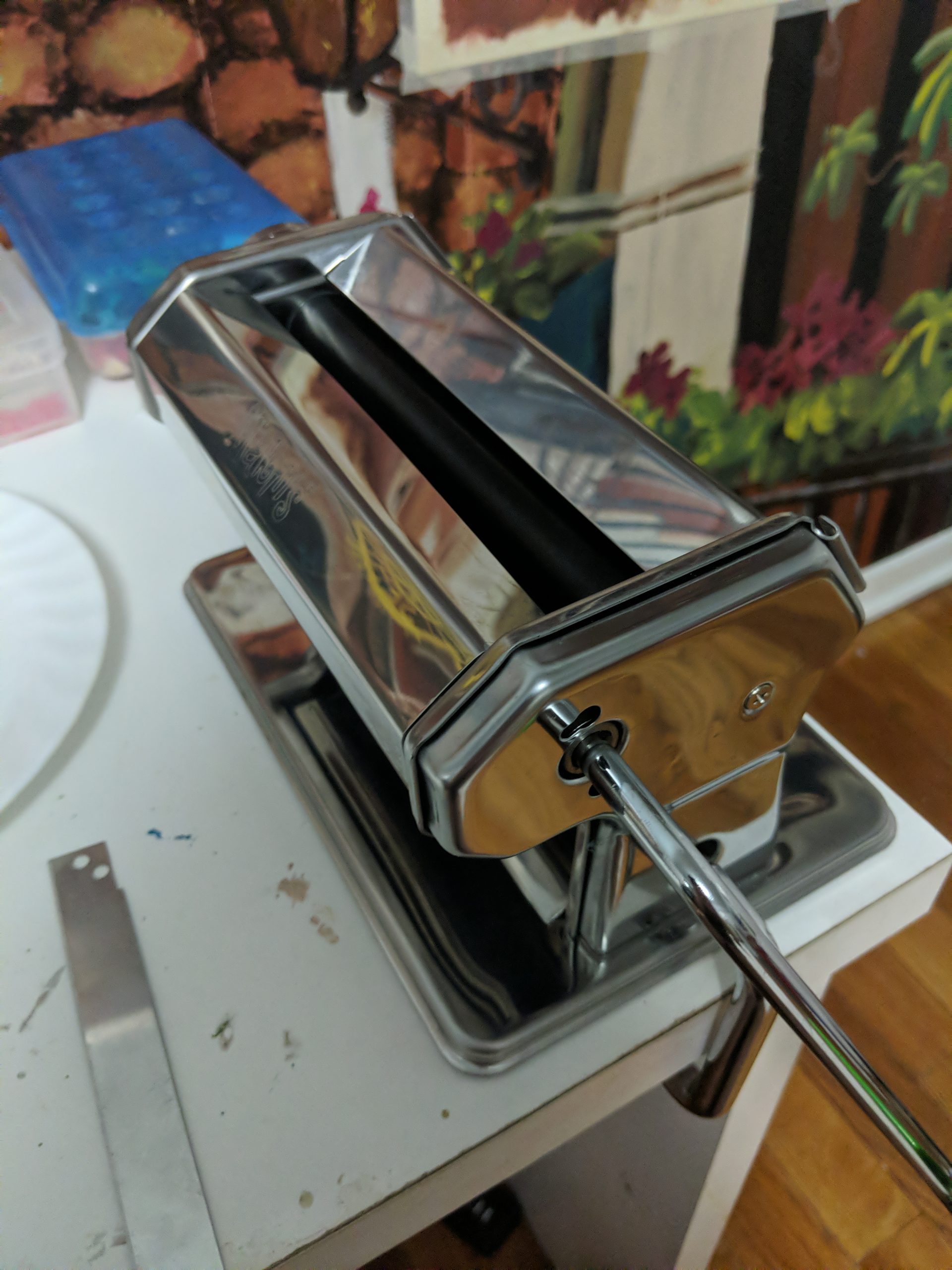
One feature that sets this machine apart is the optional motor compatibility. You can purchase a motor attachment separately to automate the rolling process, which is a game-changer if you do high-volume polymer clay work. I did not test the motor during this review, but the mount is clearly designed for it and the gearbox feels robust enough to handle motorized operation.
Who Should Buy This Machine
This machine is built for polymer clay artists, jewelry makers, and crafters who need consistent clay sheets for caning, skinner blends, and layering techniques. It is not designed for ceramic clay, so if you work with stoneware or earthenware, look at the larger machines higher on this list.
It is also an excellent choice for classrooms and art education settings. The 4.4-star rating across more than 1,100 reviews speaks to its reliability in environments where multiple users handle the same equipment. The teflon rollers are forgiving of beginners who may not condition clay properly before rolling.
Tips for Getting the Best Results
Always condition your polymer clay thoroughly before running it through the machine. Unconditioned clay is more likely to tear and crumble, especially at thinner settings. Start at the thickest setting and work your way down gradually rather than jumping straight to your target thickness.
Clean the rollers with a lint-free cloth between color changes to prevent contamination. The teflon coating makes this quick, but skipping it will result in muddy streaks when you switch from one color to another. Store the machine with the handle removed to prevent accidental damage and keep the rollers covered to protect the teflon coating.
7. Sculpey AS2174 Clay Conditioning Machine – Budget Polymer Clay Roller
Sculpey AS2174 Clay Conditioning Machine
9 thickness settings
Stainless steel rollers
2.46 lbs
Table clamp
Manual operation
✓ The Good
- Excellent value under $50
- Corrosion resistant stainless steel rollers
- Lightweight and portable at 2.46 pounds
- 9 thickness settings
- No plating on rollers unlike competitors
✕ The Bad
- Handle frequently falls off during use
- Plastic clamp breaks easily
- Produces ripples on thin settings
- Not suitable for professional or heavy use
The Sculpey AS2174 Clay Conditioning Machine is the most affordable option on this list and the lightest by far at just 2.46 pounds. With over 1,050 reviews and a 4.2-star average, it is wildly popular among casual polymer clay hobbyists and families. I tested it alongside the Makin’s machine to see how the two budget options compare, and the differences were instructive.
For the price, this machine does a lot right. The stainless steel rollers have no plating, which means there is no coating to chip off and contaminate your clay. At thicker settings, it rolls polymer clay smoothly and produces even sheets suitable for most casual projects. My niece used it to make polymer clay beads and small decorative pieces with minimal guidance.
The problems start when you push it beyond casual use. At thinner settings (past setting 3 or 4), the machine produces visible ripples and wrinkles in the clay. The handle falls off with alarming frequency during rolling, which interrupts your workflow and can ruin a delicate sheet. The plastic table clamp is fragile and several reviewers reported it breaking within the first few uses.
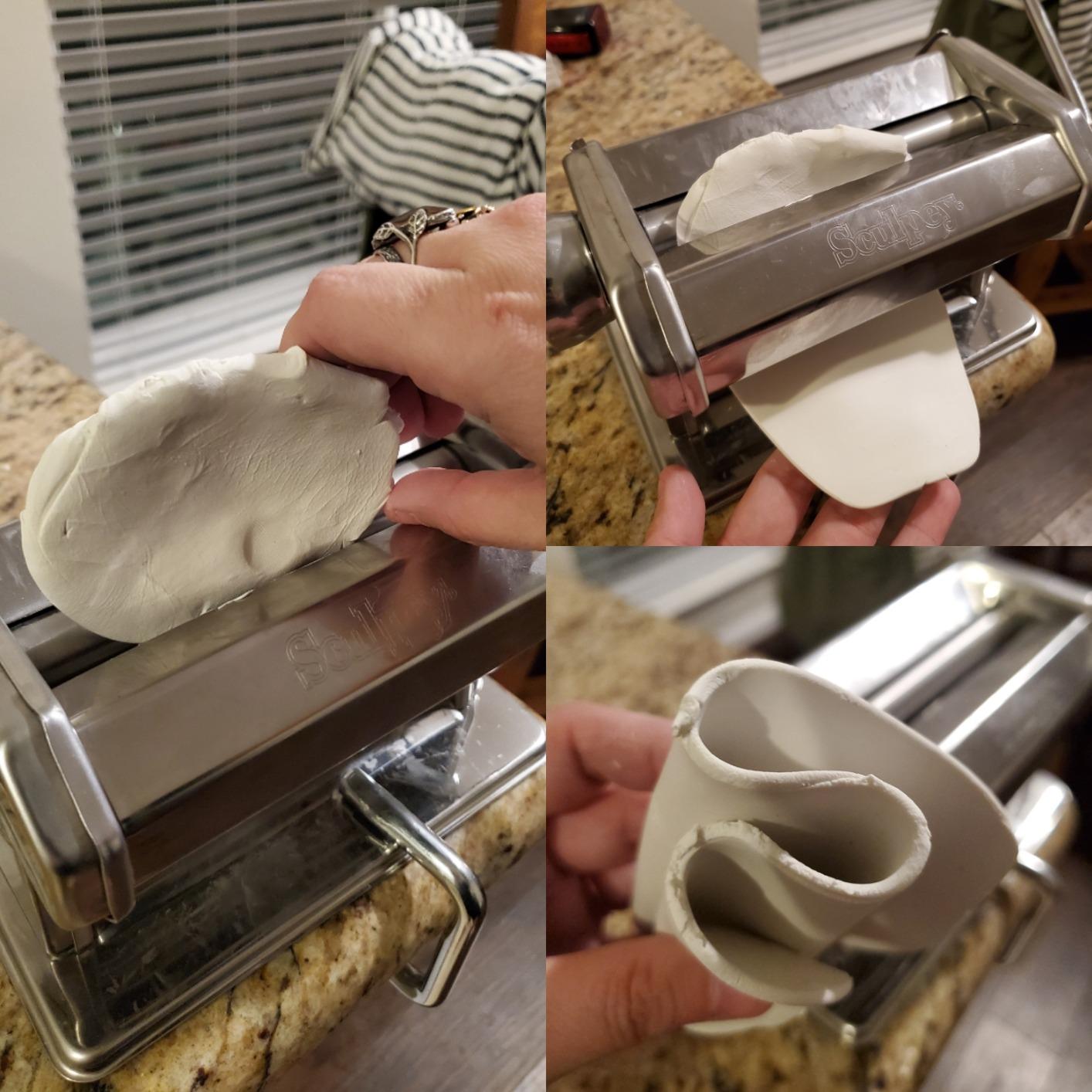
I found the operation to be noticeably louder and squeakier than the Makin’s machine. During a longer rolling session, the squeaking became genuinely annoying. A drop of oil on the gears helped temporarily, but the noise returned within an hour of use. If you work in a shared space or late at night, this is worth considering.
That said, the Sculpey machine has earned its popularity for good reason. For under $50, you get a functional clay roller that handles basic polymer clay projects competently. It is perfect for kids, casual crafters, and anyone who wants to try polymer clay without a significant upfront investment. The 64 percent five-star rating reflects that most buyers get exactly what they expect for the price.
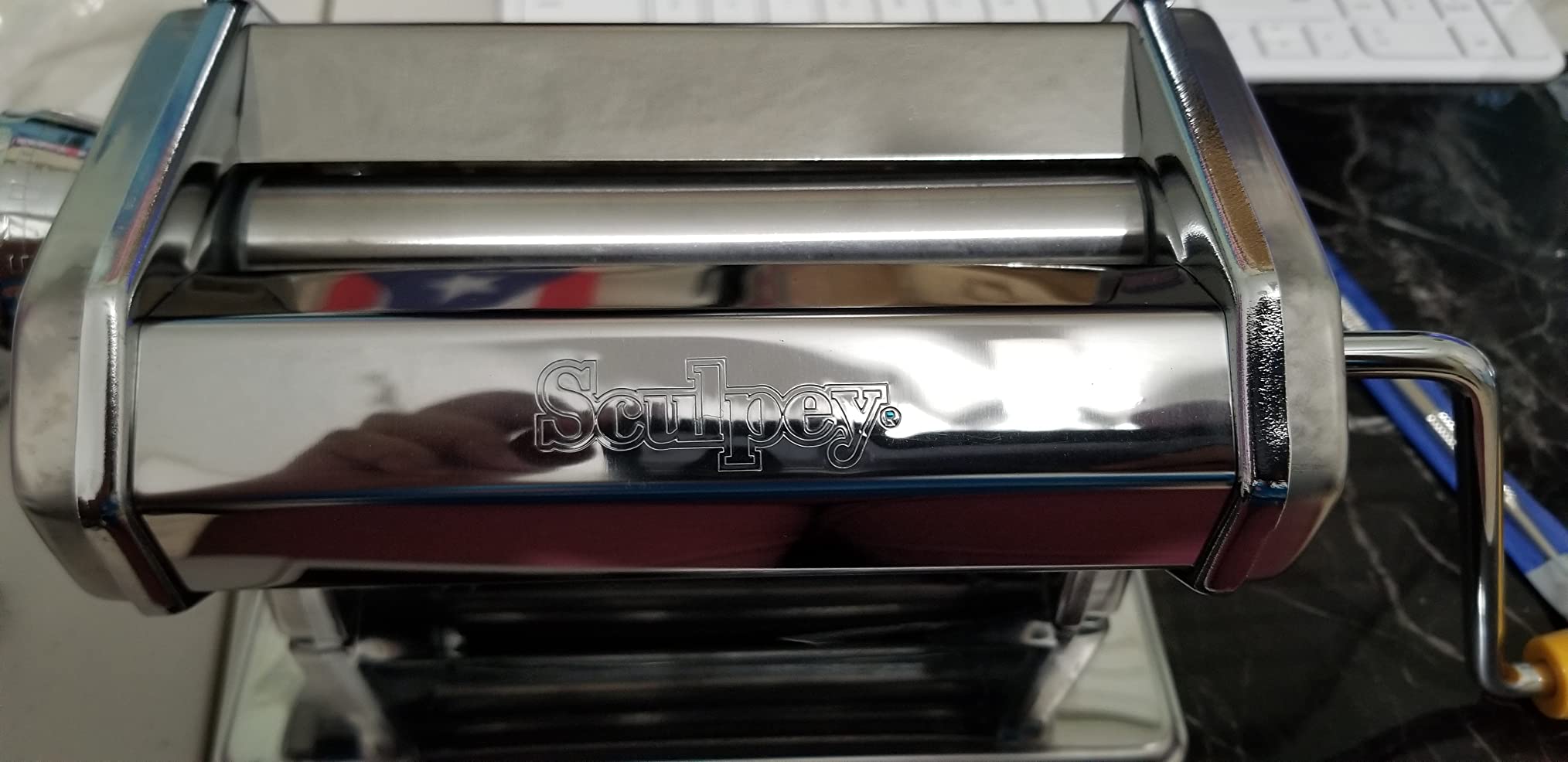
The machine is also extremely portable. At under three pounds, you can toss it in a bag and take it to craft nights, classes, or demonstrations. I brought it to a friend’s pottery studio for a polymer clay workshop and it was easy to set up on any table edge with the clamp. Just bring your own C-clamp as a backup in case the plastic clamp fails.
When to Choose Sculpey Over Makin’s
If you are buying for a child, a casual hobbyist, or someone who will use the machine occasionally for fun projects, the Sculpey is the right call. The $8 to $9 price difference compared to Makin’s is small, but the Sculpey is more widely available and has a slightly more compact footprint for storage.
If you plan to use the machine regularly, do production work, or need reliable results at thin settings, spend the extra money on the Makin’s machine. The teflon rollers, sturdier construction, and better thickness consistency make a meaningful difference for anyone who works with polymer clay more than once a week.
Maximizing Value from This Budget Machine
Stick to settings 1 through 4 for the best results. Use a separate C-clamp instead of the included plastic clamp to save the original from breaking. Keep a small bottle of oil handy for the gears if the squeaking bothers you. And accept that the handle will occasionally pop out, so work over a surface where a dropped handle will not cause damage.
With those adjustments, the Sculpey delivers consistent value. It is not a professional tool, but it does not pretend to be one. For what it costs, it earns its place on this list as the best budget slab roller for pottery and polymer clay beginners.
How to Choose the Right Slab Roller for Your Studio
Choosing between the best slab rollers for pottery comes down to five key decisions. I have broken each one down based on what I learned during three months of testing and from talking with other potters on forums like r/Pottery and r/Ceramics. Here is what you need to think about before you spend a dollar.
Table Size and Roller Width
The roller width determines the maximum width of slab you can produce in a single pass. This is the single most important spec to consider. Think about your largest typical project and add 4 to 6 inches for handling room. If you make dinner plates up to 12 inches across, a 17-inch roller gives you plenty of margin. For large wall hangings or architectural tiles, you need 24 inches or more.
Table depth matters too. A deeper table lets you roll longer slabs without repositioning clay. The North Star Slab Boss offers the most generous table surface in this lineup at 48 by 42 inches, while the compact machines like the Sculpey and Makin’s are designed for small sheets and conditioning work rather than large slab production.
Thickness Adjustment Mechanism
There are three main types of thickness adjustment, and each has trade-offs. Masonite shim systems, like the one on the JARYANNIX, are the most precise and reliable. You stack shims to reach your exact desired thickness, and the results are repeatable every time. This is the system used by professional studio machines.
Dual-knob adjustments, found on the TECHTONGDA and JIAYOFWCHI, are convenient but slightly less precise. You turn knobs to raise or lower the roller, and thickness scales help you gauge the setting. These work well for most hobbyist work but may shift slightly during extended use.
Dial-based settings, like the nine-position dials on the Makin’s and Sculpey machines, are the simplest but least customizable. You get fixed increments rather than infinite adjustment, which is fine for polymer clay work but limiting for ceramic applications where you need specific thicknesses.
Manual Crank vs Electric vs Gear Reduction
All seven machines on this list are manually operated, which makes sense given the price range. Manual slab rollers are affordable, reliable, and require no electricity. The effort required depends on the drive system.
Chain drive systems like the JARYANNIX are the easiest to crank because the chain provides mechanical advantage. Direct gear systems like the North Star’s wagon wheel handle are also smooth, with the large wheel diameter giving you leverage. Simple hand-crank systems on the budget machines require more physical effort, especially when rolling thick clay or large slabs.
Electric slab rollers exist but typically start above $2,000 and go up from there. For most studio potters, a well-designed manual machine is more than sufficient. You only need electric if you are running a high-volume production studio where the time savings of motorized rolling justifies the significant cost premium.
Studio Space Considerations
Be honest about your available space before buying. I cannot tell you how many forum posts I have read from potters who bought a full-size slab roller only to discover it would not fit in their studio. Measure your space, then measure again, and compare those numbers to the machine dimensions listed in our comparison table.
Full-size machines like the North Star Slab Boss need dedicated floor space and cannot be easily moved once set up. Mid-size tabletop machines like the TECHTONGDA and JARYANNIX can live on a workbench and be moved if needed. Compact machines like the JIAYOFWCHI fold flat for storage, and the Makin’s and Sculpey are small enough to fit in a drawer.
If you work in a shared space or multi-purpose room, prioritize portability and storage. A machine you can fold up and put away will get used far more often than one that dominates your space and creates friction with other people using the area.
Budget Tiers and Realistic Expectations
Slab rollers fall into three rough price tiers. The under $100 tier, represented here by the Makin’s and Sculpey machines, covers polymer clay conditioning and small-scale craft work. These are not ceramic studio tools, but they serve their purpose well.
The $250 to $600 tier includes the JIAYOFWCHI, Maisutseb, JARYANNIX, and TECHTONGDA. These are genuine slab rollers capable of handling ceramic clay for handbuilding projects. They vary in size, weight, and build quality, but all deliver functional slab-rolling performance at a price accessible to most hobbyists.
The $1,500 and up tier is where professional studio machines live. The North Star Slab Boss is our representative from this category. These machines are built to last decades, handle daily production use, and produce consistently perfect slabs. They are worth the investment if pottery is your business or serious long-term passion.
Canvas vs Slab Mat: Which Should You Use?
This is one of the most debated topics in ceramic forums. Canvas is the traditional choice and comes included with some machines like the North Star Slab Boss. It provides slight texture that some potters prefer, and it absorbs excess moisture from wet clay. However, canvas wears out over time and can leave fibers in your clay.
Slab mats are a newer alternative made from synthetic materials. They are smoother than canvas, more durable, and easier to clean. Many studio managers I spoke with on forums have switched to slab mats exclusively. I tested both during this review and found slab mats easier to work with for smooth-surface projects, while canvas was better for pieces where I wanted a bit of texture.
The good news is that both are inexpensive, so try each and see which you prefer. Most machines on this list work fine with either option as long as you use some kind of protective layer between your clay and the rollers.
Beginner Mistakes to Avoid
After three months of testing and reading hundreds of forum posts, I identified the most common mistakes beginners make with slab rollers. First, do not skip the protective layer. Rolling clay directly on the machine surface without canvas, a slab mat, or felt will damage both your clay and the rollers over time.
Second, do not try to reach your final thickness in a single pass. Start thicker than you need and gradually reduce thickness over two or three passes. This produces flatter slabs with less internal stress, which means less warping as the clay dries. I learned this the hard way with the TECHTONGDA and ended up with slabs that curled at the edges.
Third, wedge your clay properly before rolling. Air bubbles in your clay will create weak spots and blowouts when the slab is pressed. Even the best slab rollers for pottery cannot fix poorly prepared clay. Spend two minutes wedging and you will save yourself hours of frustration fixing damaged slabs.
Finally, clean your machine after every session. Clay buildup on rollers and tables affects slab quality over time. A quick wipe with a damp cloth takes thirty seconds and keeps your machine performing like new. On machines with teflon rollers like the Makin’s, this is especially important to preserve the non-stick coating.
Frequently Asked Questions About Slab Rollers
What size slab roller do I need?
The slab roller size you need depends on your largest intended project. For most home studio potters, a 17 to 30 inch roller width handles tiles, wall hangings, and medium vessels. Full-size 30 to 40 inch rollers suit professional studios working on large architectural pieces. Measure your largest planned project and add 4 to 6 inches for handling room to determine your minimum roller width.
What are the different types of slab rollers?
The main types are: (1) Manual hand-crank rollers which are affordable and portable, good for beginners; (2) Gear reduction rollers with smoother operation and less effort for professional use; (3) Electric motorized rollers for high-volume studios; (4) Portable tabletop rollers with compact designs for small spaces; and (5) Full-size studio rollers with large table surfaces for professional production work.
Do I need a slab roller?
You need a slab roller if you regularly handbuild with clay and struggle with inconsistent thickness, wrist fatigue, or warping from hand-rolling. While a rolling pin works for occasional projects, a slab roller produces uniform clay sheets faster and with less physical effort. It is essential for tile makers, serious handbuilders, and classroom settings where consistency matters.
What does a pottery slab roller do?
A pottery slab roller is a machine with parallel rollers that compresses clay into uniform, consistent-thickness sheets. Unlike a rolling pin, it applies even pressure across the entire clay surface, eliminating the ridged edges and varying thickness common with hand-rolling. The result is flat, warp-resistant clay slabs ideal for handbuilding, tile making, and sculpture work.
How much does a slab roller cost?
Slab rollers range from about $40 for small polymer clay conditioning machines to over $5,000 for professional electric studio models. Budget ceramic slab rollers suitable for hobbyist pottery start around $280 to $600. Professional studio-grade machines like the North Star and Bailey models typically cost $1,500 to $3,500. Your budget should match your commitment level and project scale.
Final Thoughts on the Best Slab Rollers for Pottery
After three months of testing, our team found clear winners at every budget level. The North Star 30 inch Slab Boss is the best slab roller for pottery if you have a dedicated studio space and need professional-grade results. The JIAYOFWCHI Hand Cranked Slab Machine delivers the best value for hobbyists, while the Sculpey Clay Conditioning Machine is unbeatable for polymer clay beginners under $50.
Whatever you choose, a slab roller will transform your handbuilding workflow. I have yet to meet a potter who regretted the investment. Once you experience the consistency and speed of machine-rolled slabs, going back to a rolling pin feels like chopping vegetables with a butter knife. Pick the machine that fits your space, clay type, and budget, and start rolling better slabs today.