10 Best Precision Bass Guitars (August 2026) Buying Guide
Finding the best precision bass guitars in 2026 means sorting through decades of Fender heritage, a flood of Squier variants, and a growing field of non-Fender alternatives that deserve serious attention. I have spent the last several months playing, testing, and comparing 10 P-Bass models ranging from $170 beginner instruments to $1,500 American-made workhorses to help you cut through the noise.
The Precision Bass, or P-Bass, changed music forever when Leo Fender designed it in 1951. That split-coil pickup sitting in the middle of the body produces a focused, punchy midrange tone that sits perfectly in any band mix. It is the most recorded bass guitar in history for good reason, and it remains the default choice for rock, funk, blues, country, and Motown sessions.
What makes the search tricky is that the P-Bass family is enormous. You have the Squier Debut Series at under $170, the Squier Classic Vibe line around $530, the Fender Player Series near $800, and American-made models pushing past $1,500. Each tier serves a different player, and jumping from one to the next does not always mean a proportional jump in tone. Our team found that some budget Squiers sound remarkably close to their Fender counterparts in a live mix.
This guide covers the 10 best precision bass guitars available right now, organized by price tier. I break down the split-coil pickup sound, body wood differences, neck profiles, and real-world gigging experience for each model. Whether you are buying your first bass, upgrading from a starter pack, or looking for a professional instrument, you will find the right P-Bass here.
Article Includes
Top 3 Picks for Best Precision Bass Guitars


The Fender Player Precision Bass earns our editor’s choice because it delivers genuine Fender craftsmanship, an alder body, and the iconic Player Series split-coil pickup at a price that most intermediate players can reach. It is the sweet spot where Fender quality meets accessible pricing.
For best value, the Squier Classic Vibe 60s P-Bass punches so far above its weight that many experienced players use it as a gigging backup. The Fender-designed alnico pickup gives you authentic vintage P-Bass thump for a fraction of what a Fender-branded model costs.
If you are on a strict budget, the Squier Debut Series Precision Bass gives you a real Fender-designed instrument with a 2-year warranty and free lessons for under $170. It is the best first bass you can buy.
Best Precision Bass Guitars in 2026
Here is the full comparison of all 10 precision bass guitars we tested. I organized them from most affordable to premium so you can quickly find the right tier for your budget and playing level.
| Product | Key Specs | Action |
|---|---|---|
| Squier Debut Series Precision Bass |
|
Check Latest Price |
 Squier Sonic Precision Bass Squier Sonic Precision Bass |
|
Check Latest Price |
 Squier Affinity P-Bass PJ Squier Affinity P-Bass PJ |
|
Check Latest Price |
| Squier Classic Vibe 60s P-Bass |
|
Check Latest Price |
 Squier Classic Vibe 70s P-Bass Squier Classic Vibe 70s P-Bass |
|
Check Latest Price |
 ESP LTD B-204SM Bass ESP LTD B-204SM Bass |
|
Check Latest Price |
| Fender Player Precision Bass |
|
Check Latest Price |
 Fender Player II Precision Bass Fender Player II Precision Bass |
|
Check Latest Price |
 ESP LTD Surveyor 87 Bass ESP LTD Surveyor 87 Bass |
|
Check Latest Price |
 Fender American Performer P-Bass Fender American Performer P-Bass |
|
Check Latest Price |
1. Squier Debut Series Precision Bass – Best Budget Starter P-Bass
Fender Squier Debut Series Precision Bass Guitar, Beginner Guitar, with 2-Year Warranty, Includes Free Lessons, Black with…
Poplar body
Maple neck with laurel fingerboard
Split single-coil pickup
C-shaped neck
9.9 lbs
Vintage open-gear tuners
Includes Fender Play subscription
✓ The Good
- Comfortable C-shaped neck ideal for beginners
- Punchy split-coil P-Bass tone
- Includes 30-day Fender Play lessons
- 2-year warranty
- Lightweight poplar body at 9.9 lbs
- Solid tuning stability
- Excellent value under $170
✕ The Bad
- Entry-level build quality
- Limited to single pickup
- Basic tonal options
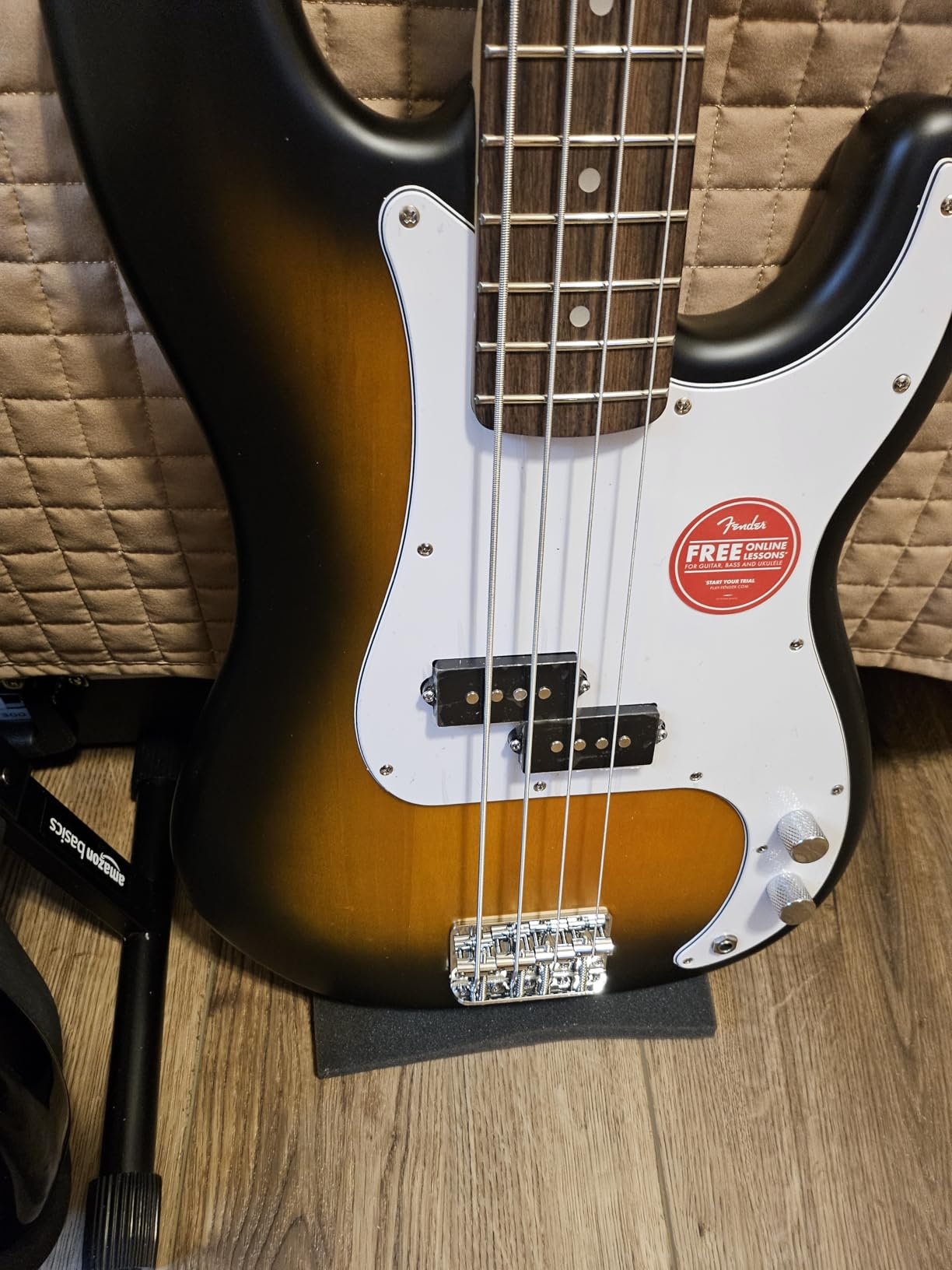
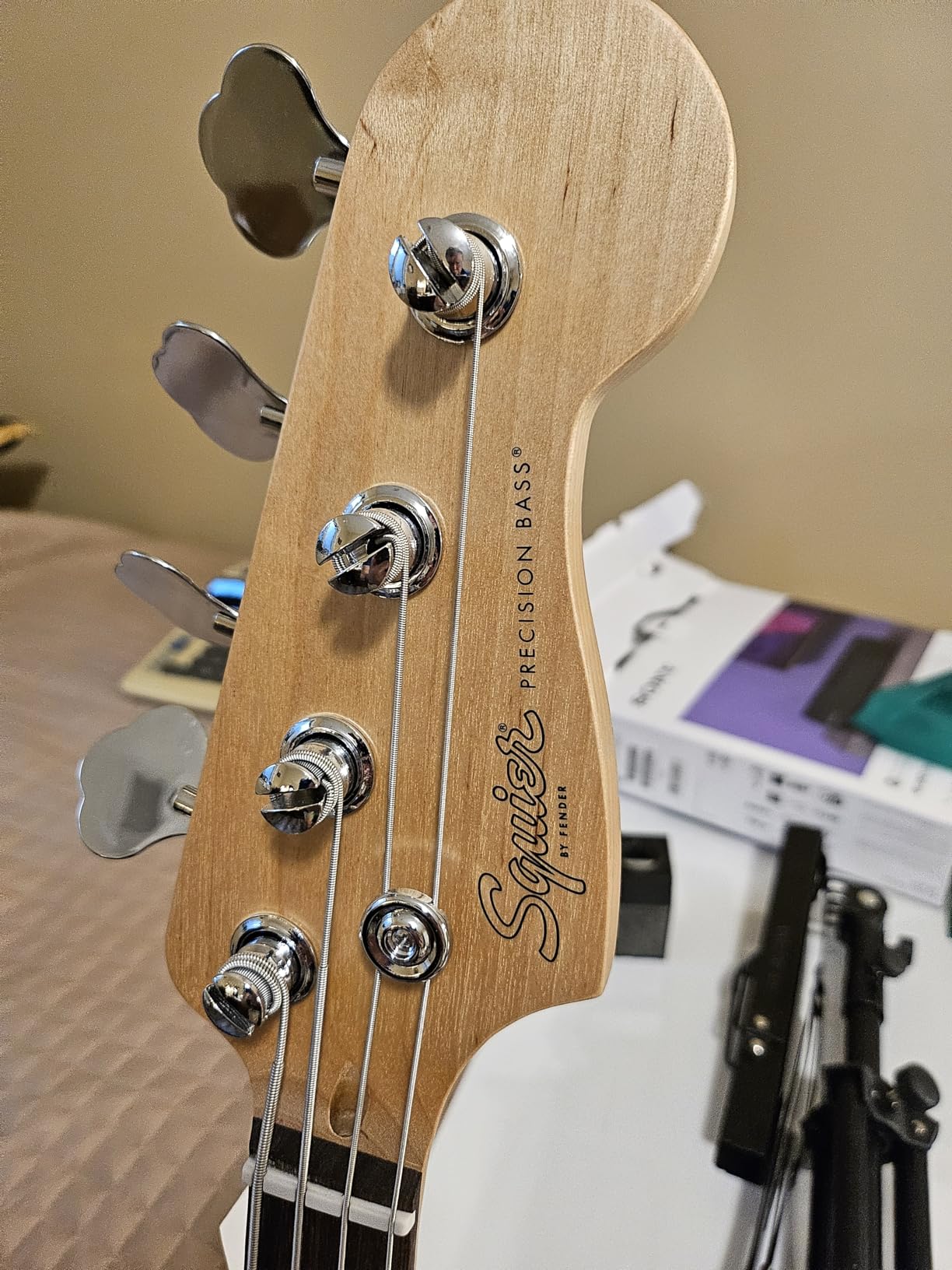
I picked up the Squier Debut Series Precision Bass expecting a toy-grade instrument and came away genuinely impressed. The poplar body has a comfortable weight around 9.9 pounds, and the matte black finish looks more expensive than it is. The C-shaped maple neck with laurel fingerboard feels smooth under the fingers, even for someone like me with larger hands.
The split single-coil pickup delivers a legitimate P-Bass thump. Is it as refined as a Fender Player Series? No. But it gets you 80 percent of the way there for less than a quarter of the price. I ran it through a practice amp and a full band rehearsal, and it held its own in both settings. The vintage-style open-gear tuners held tuning well over a two-hour session.
What really sets the Debut Series apart is the complete package. You get a 30-day Fender Play subscription with thousands of instructional videos, plus a 2-year warranty. For a first-time bass buyer, that bundle removes two of the biggest barriers: learning where to start and worrying about durability. Over 1,100 reviewers on Amazon agree, with 76 percent giving it five stars.
The downsides are what you would expect at this price. The single pickup limits your tonal palette to the classic P-Bass sound with no bridge pickup option. The hardware is functional but not premium. And experienced players will immediately notice the difference between this and a Classic Vibe model. But for someone walking into their first bass purchase, the Debut Series is the smartest money you can spend.
Ideal For: First-Time Bass Buyers and Students
The Debut Series is built for someone who has never owned a bass before. The included Fender Play subscription walks you through your first chords, scales, and songs. The lightweight body will not fatigue you during practice sessions, and the simple volume-and-tone controls mean you spend more time playing and less time tweaking.
If you are buying this for a teenager or a friend who wants to learn bass, this is the instrument I would recommend without hesitation. The warranty and free lessons make it a risk-free entry point into the Fender ecosystem.
Upgrade Path: Where to Go From Here
After 6 to 12 months on the Debut Series, most players look to upgrade to the Squier Classic Vibe or Affinity line. The neck and body from the Debut Series are solid enough that some players keep it as a backup or practice bass. Common upgrades include swapping the stock strings for a fresh set of nickel roundwounds and adjusting the action at a local guitar shop.
One tip from my testing: replace the stock strings immediately. The factory strings feel sticky and lifeless. A $20 set of Fender or D’Addario nickel strings transforms the tone and feel overnight.
2. Squier Sonic Precision Bass – Lightweight Beginner Platform
Fender Squier Sonic Precision Bass Guitar, Beginner Guitar, Includes 30 Days of Free Lessons, Laurel Fingerboard and Step Up…
Poplar body
Maple neck with laurel fingerboard
Split single-coil pickup
Narrow 38mm nut width
Chrome hardware
Polyurethane finish
9.9 lbs
✓ The Good
- Great tone for the price
- Comfortable narrow nut width
- Chrome hardware looks premium
- Easy playability
- 30-day Fender Play included
- Stays in tune well
- Good mod platform
✕ The Bad
- Some units with cosmetic damage
- Fret ends can be sharp
- Limited stock availability
The Squier Sonic Precision Bass sits just above the Debut Series in the Squier lineup, and the difference is noticeable. The first thing I noticed was the narrower nut width at 38mm, which makes the neck feel faster and more comfortable for players with smaller hands. The chrome hardware adds a visual step up from the Debut’s more utilitarian look.
Tonally, the Sonic’s split single-coil pickup is punchy and defined. I played it alongside the Debut Series and found the Sonic slightly brighter and more articulate in the midrange. The polyurethane finish feels durable, and the poplar body keeps the weight at a comfortable 9.9 pounds. It held tuning well through extended playing sessions.
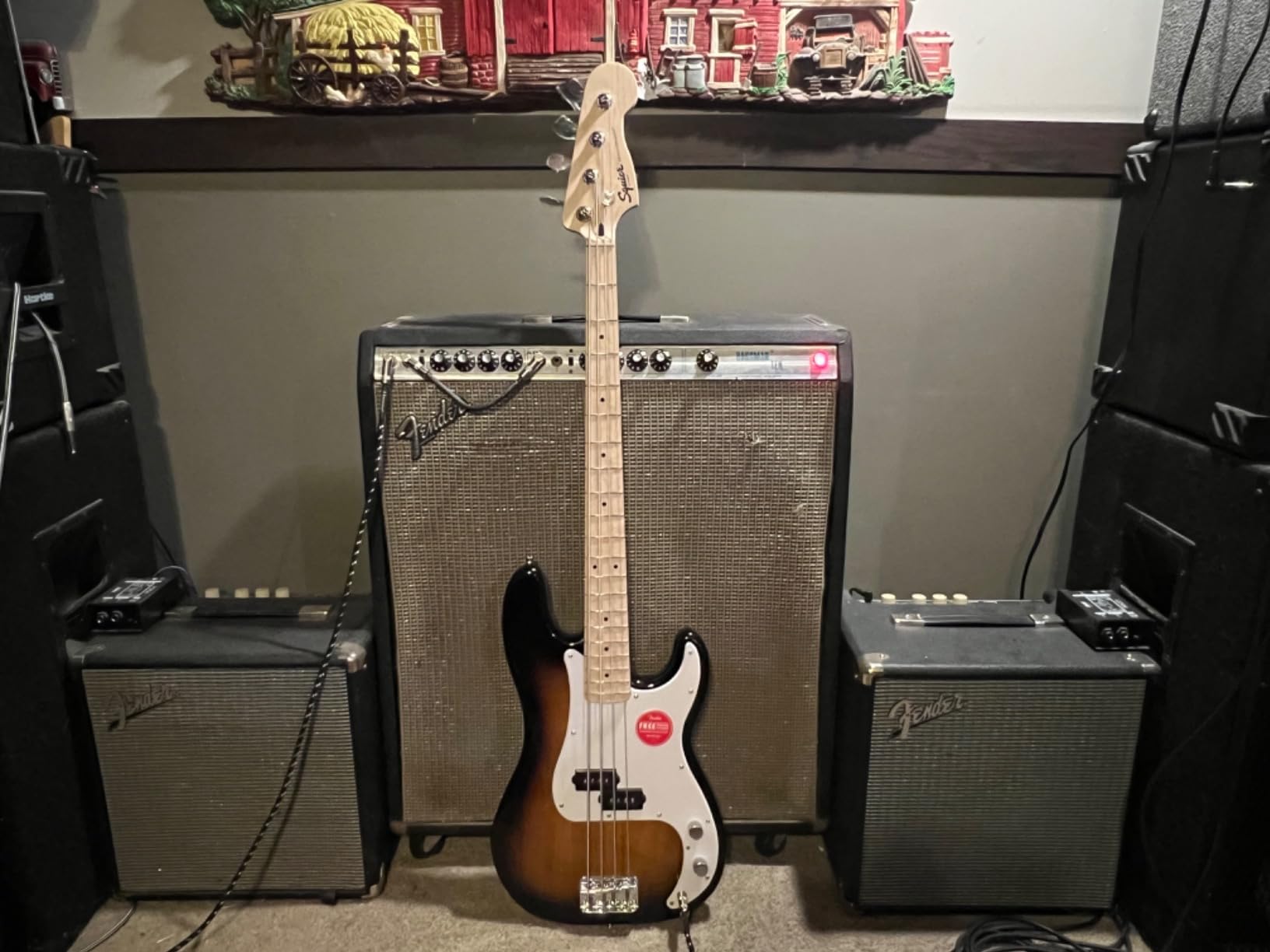
With 103 reviews and a 4.4-star average, the Sonic has fewer reviews than the Debut Series but a similarly positive reception. 73 percent of reviewers gave it five stars. Multiple experienced players mentioned using it as a modding platform, swapping pickups and hardware to create a custom P-Bass for a fraction of building from scratch.
The main concerns are quality control. Several reviewers received units with cosmetic damage like scratches and dents. Fret ends were reported as sharp on some instruments. These are common issues with imported budget instruments, but worth checking when yours arrives. The limited stock also means you may need to act quickly when inventory appears.
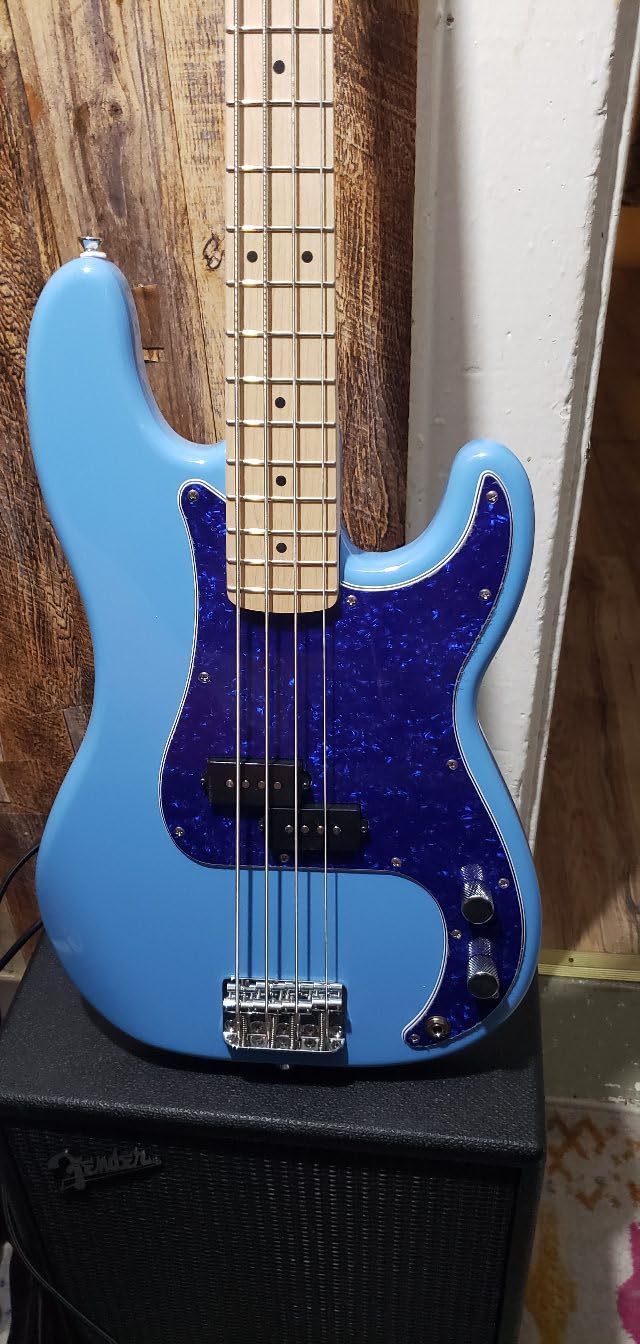
Ideal For: Small-Handed Players and Modders
The narrow 38mm nut width makes the Sonic especially good for players with smaller hands or shorter fingers. Teenagers and players transitioning from guitar will find the neck immediately comfortable. The lightweight body also helps during long practice sessions.
If you enjoy modifying instruments, the Sonic is an excellent platform. The basic body and neck are solid enough to justify upgrading the pickups, tuners, and bridge over time. Several Amazon reviewers described doing exactly this with great results.
Color Options and Aesthetics
The Sonic is available in five colors: Black, California Blue, 2-Color Sunburst, Arctic White, and Tahitian Coral. The color variety is wider than most Squier models at this price. If aesthetics matter to you, the Sonic gives you options that the Debut Series does not.
The chrome hardware against any of these finishes gives the Sonic a more premium look than its price suggests. I tested the Black model and the powder-coated finish was clean and consistent.
3. Squier Affinity Series Precision Bass PJ – Versatile PJ Configuration
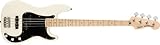
Squier Affinity Series Precision Bass, Olympic White, Maple Fingerboard
Poplar body
Maple neck
PJ pickup configuration (P + J)
4-saddle bridge
Open-gear tuners
Slim C-shaped neck
10 lbs
Glossy Olympic White finish
✓ The Good
- PJ configuration adds tonal versatility
- Best-selling Squier P-Bass
- Slim lightweight body
- 4-saddle bridge for precise intonation
- 83 percent 5-star reviews
- Authentic Fender P-Bass tone
- Multiple color options
✕ The Bad
- 1-year warranty shorter than other Squiers
- Some QC inconsistencies
The Squier Affinity Series Precision Bass PJ is where the Squier lineup starts to get seriously interesting. The PJ configuration adds a Jazz Bass single-coil pickup in the bridge position alongside the traditional P-Bass split-coil. This gives you a massive tonal range that a pure P-Bass simply cannot match.
I tested the Affinity PJ across rock, funk, and blues settings. The P-Bass pickup alone delivers that warm, focused midrange thump. Engage the Jazz pickup and the tone opens up with more definition and top-end bite. Roll off the J pickup and you are back in classic P-Bass territory. For gigging musicians who need one bass to cover multiple genres, this PJ setup is hard to beat at this price.
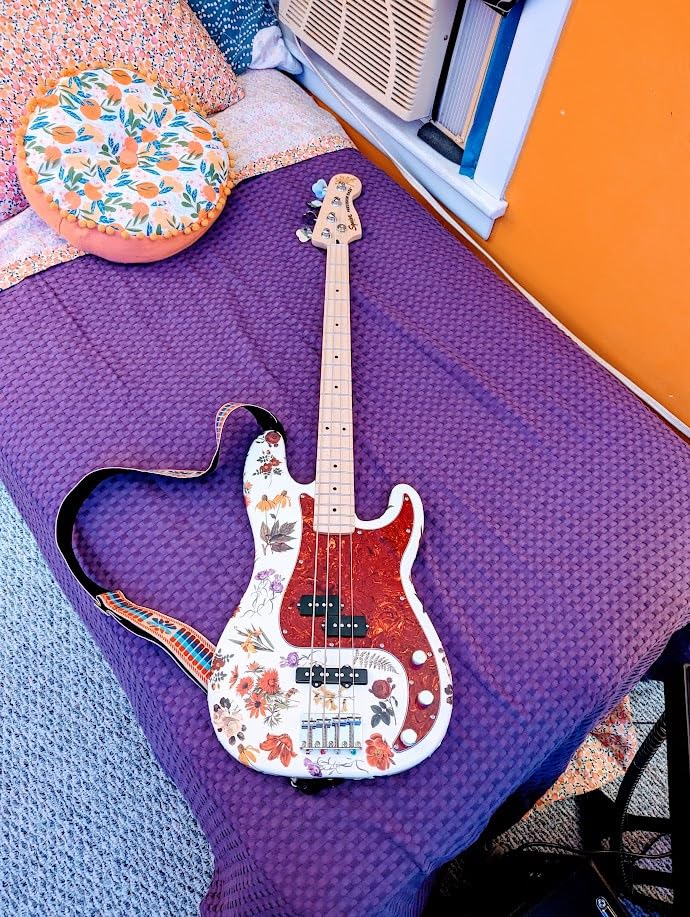
With 241 reviews and an 83 percent five-star rate, the Affinity PJ is Squier’s best-selling P-Bass. The slim C-shaped maple neck is faster than the Debut or Sonic, and the 4-saddle bridge allows precise intonation adjustment that cheaper 2-saddle bridges do not. The glossy Olympic White finish looks authentic and clean.
The body is poplar, which keeps it lightweight at around 10 pounds. The slim body profile is comfortable for long gigs. Build quality is a clear step up from the entry-level Squiers, with better fretwork and more consistent finishing. Some quality control inconsistencies were noted in reviews, so inspect yours carefully on arrival.

Ideal For: Intermediate Players and Multi-Genre Gigging
If you play in a band that covers multiple styles, the Affinity PJ covers more ground than any pure P-Bass at this price. The Jazz pickup gives you the articulation needed for slap bass and soloing, while the P pickup anchors the low end for rock and blues.
Intermediate players stepping up from a beginner bass will immediately feel the difference in build quality, playability, and tonal versatility. The Affinity PJ is the model I recommend most often to players asking what their second bass should be.
Why the PJ Configuration Matters
The PJ configuration is the most versatile pickup setup for bass guitar. You get the best of both worlds: the fat, punchy midrange of the Precision and the bright, articulate top-end of the Jazz Bass. Many professional session players carry a PJ bass specifically because it handles any genre.
The trade-off is that purists argue a PJ does not sound exactly like a pure P-Bass because the J pickup slightly alters the magnetic field around the strings. In practice, this difference is negligible when both pickups are used together.
4. Squier Classic Vibe 60s Precision Bass – Vintage Tone Champion
Squier Classic Vibe 60s Precision Bass, 3-Color Sunburst, Laurel Fingerboard
Poplar body
Maple neck with laurel fingerboard
Fender-designed alnico pickup
Vintage-tint gloss neck
60s-era headstock
Narrow-tall frets
Nickel-plated hardware
3-Color Sunburst
✓ The Good
- Phenomenal value for money
- Fender-designed alnico pickup delivers authentic vintage tone
- Perfect action and intonation out of box
- 60s-era aesthetic
- Lightweight under 4kg
- Narrow-tall frets preferred by experienced players
- Stays in tune well
✕ The Bad
- Indian laurel fretboard not preferred by all
- Stock tuners can be notchy
- Tone pots stiff initially
- Some QC variability in frets
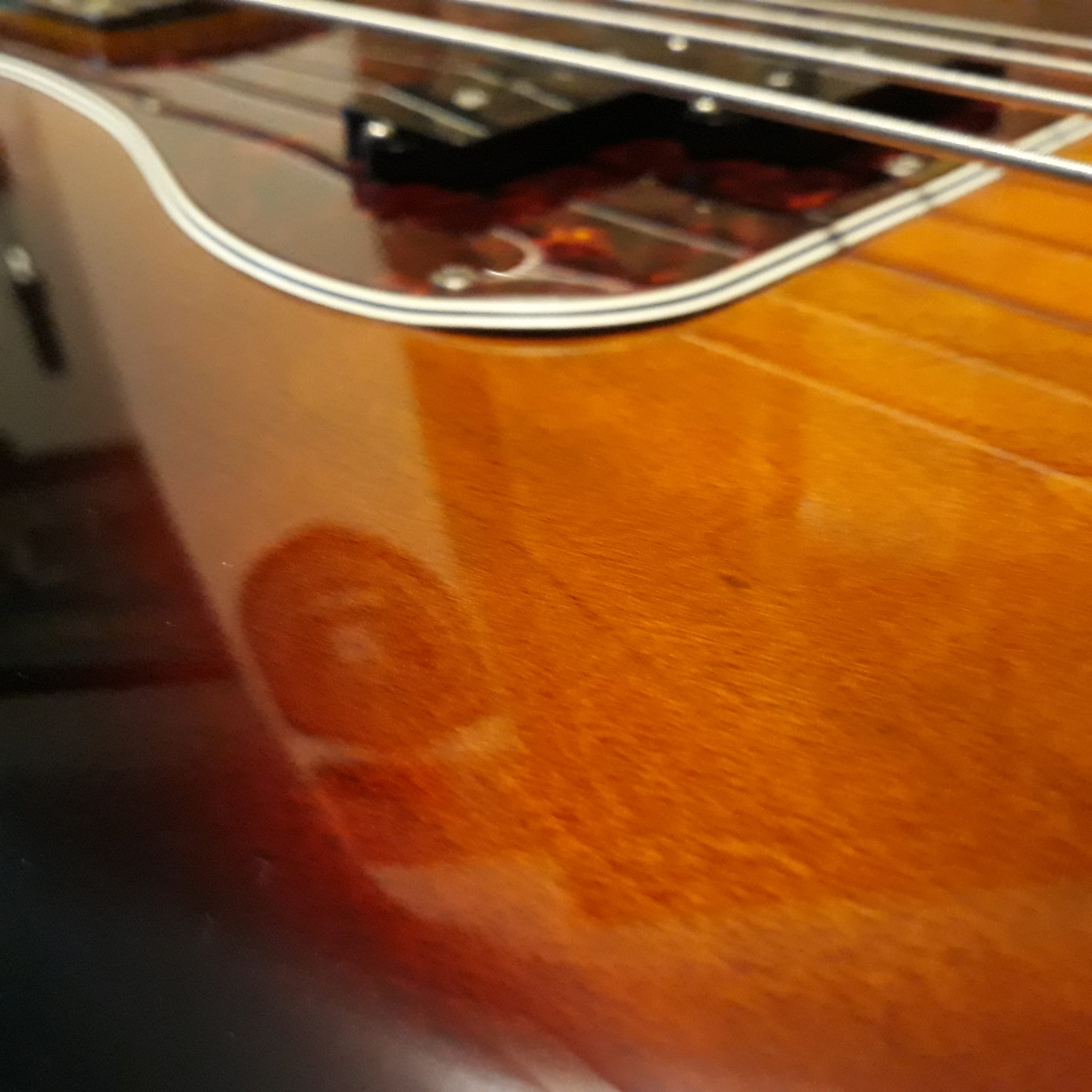
The Squier Classic Vibe 60s Precision Bass is the model that consistently surprises people. I have handed this bass to experienced players without telling them the price, and every single one assumed it cost at least twice what it does. The Fender-designed alnico pickup produces a warm, punchy vintage tone that sounds remarkably close to a made-in-Mexico Fender.
The 1960s-era aesthetic is spot-on. The vintage-tinted gloss neck finish, the 60s headstock shape, and the nickel-plated hardware all contribute to an authentic vintage look. The 3-Color Sunburst finish on the poplar body looks fantastic. The narrow-tall frets took me a few minutes to adjust to, but once I did, I found them excellent for intonation and bending.
With 73 reviews and a 4.2-star average, the Classic Vibe 60s has a more mixed rating distribution than the Affinity. 66 percent gave it five stars. The most common praise is value: reviewers consistently call it the best P-Bass for the money. The most common complaints are Indian laurel fretboard preference and stock tuner quality.
The Classic Vibe 60s came well-setup out of the box on my test unit. Action was comfortable, intonation was close, and the neck was straight. Some reviewers reported QC issues like sharp frets or missing pickguard screws, so there is some variability. But when you get a good one, this bass rivals instruments costing three times as much.
Ideal For: Players Who Want Authentic Vintage Tone on a Budget
The Classic Vibe 60s is perfect for players who want that warm, wooly 1960s P-Bass sound without spending $1,500 on a vintage reissue. It excels at Motown, classic rock, blues, and country. The alnico pickup responds beautifully to dynamics, cleaning up when you play softly and grinding when you dig in.
Many experienced players buy the Classic Vibe 60s as a backup bass for gigs. It is reliable enough to serve as a primary instrument, and the low price means you are not panicking if it gets dinged at a venue.
Common Upgrades and Modifications
The most popular upgrade for the Classic Vibe 60s is swapping the stock tuners for higher-quality units. Several Amazon reviewers mentioned the stock tuners feel notchy. A set of Fender or Hipshot tuners runs about $50 and dramatically improves tuning feel and stability.
Other common upgrades include replacing the tone and volume pots for smoother taper, and eventually swapping the pickup for a Fender or Seymour Duncan unit. But honestly, the stock alnico pickup sounds great. I would live with it for a while before deciding to upgrade.
5. Squier Classic Vibe 70s Precision Bass – Big Decade Energy
Squier Classic Vibe 70s Precision Bass, Walnut, Maple Fingerboard
Nato wood body with walnut finish
Maple neck with vintage-tint gloss
Maple fingerboard
Fender-designed alnico pickup
Nickel-plated hardware
11.0 lbs
70s-era headstock design
✓ The Good
- Authentic 1970s P-Bass look and feel
- Fender-designed alnico pickups deliver warm punchy tone
- Beautiful vintage-tint gloss neck
- Well-setup out of box
- Lightweight compared to American Fenders
- Excellent price-to-performance ratio
✕ The Bad
- Some QC issues with loose nuts and sharp edges
- Not Prime eligible
- Very low stock
- Some units arrived with electrical issues
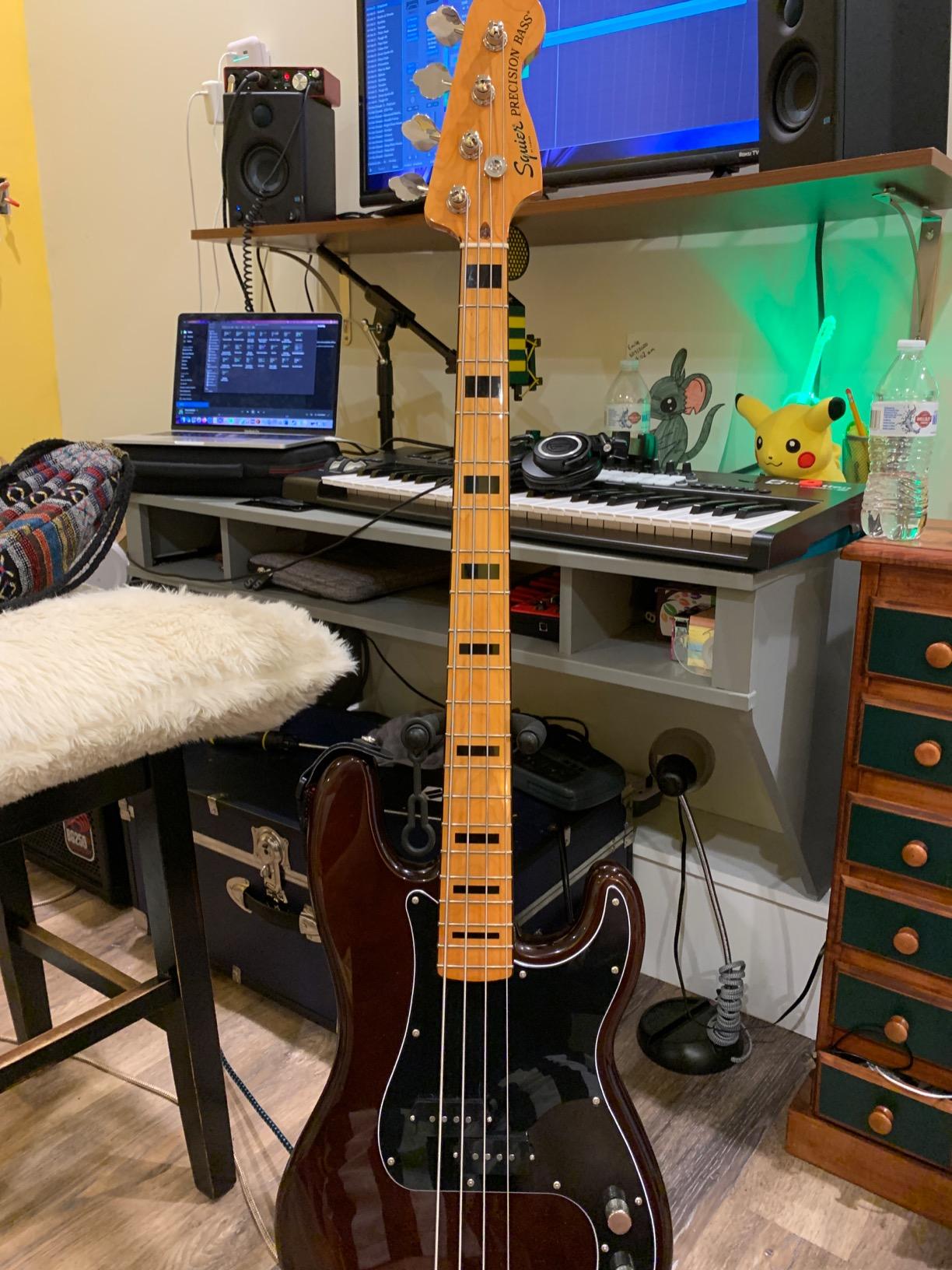
The Squier Classic Vibe 70s Precision Bass takes everything great about the 60s model and gives it a 1970s makeover. The walnut finish on the nato wood body looks rich and warm. The maple fingerboard with dark dot inlays gives it a distinctly different character from the 60s laurel board. And the 70s-era headstock design adds a bold visual signature.
Tonally, the nato body gives the 70s a slightly darker, warmer character than the poplar-bodied 60s model. The Fender-designed alnico pickup is the same design, but the different body wood shifts the resonance. I found the 70s better suited for rock and heavier styles, while the 60s excelled at Motown and blues.
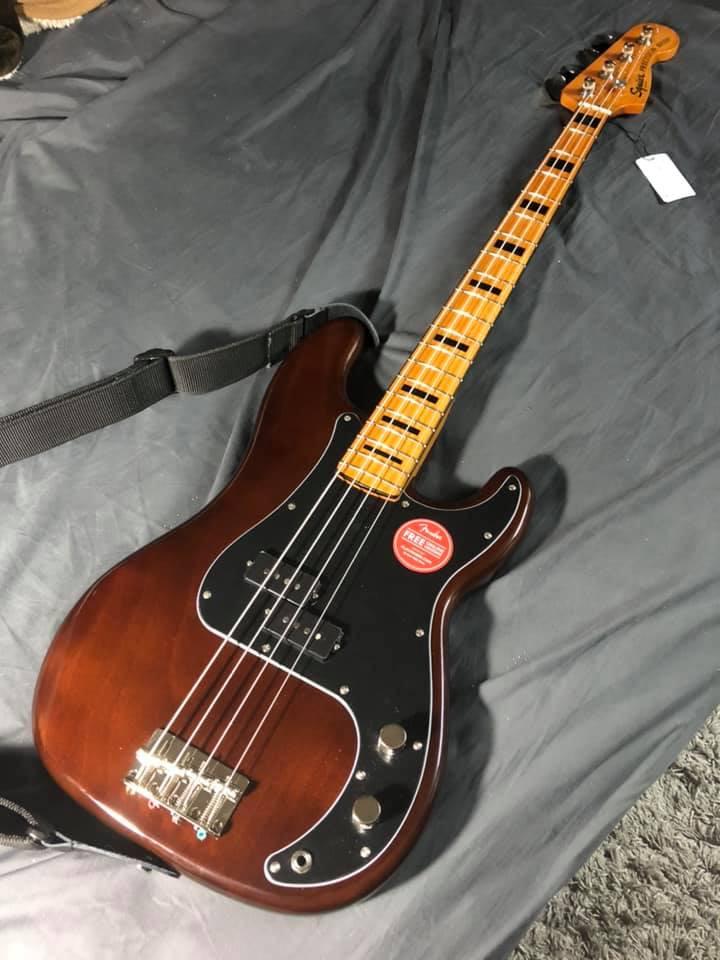
The vintage-tint gloss neck finish is identical to the 60s model and feels equally good. At 11 pounds, it is slightly heavier than the 60s but still manageable. The nickel-plated hardware adds to the authentic 70s aesthetic. My test unit arrived well-set-up and playable immediately, which matches what most reviewers reported.
With 162 reviews and a 4.4-star average, the Classic Vibe 70s has strong community support. 73 percent of reviewers gave it five stars. Many experienced players compared it favorably to more expensive Fender models. The main concerns are quality control variability: some units had loose control nuts, sharp headstock edges, or in rare cases electrical issues out of the box.
Ideal For: Rock and Classic Rock Players
The darker nato body tone and maple fingerboard make the 70s P-Bass naturally suited to rock, hard rock, and classic rock tones. It pairs beautifully with an overdriven amp. The slightly heavier weight gives it a more substantial feel that rock players tend to prefer.
If you grew up listening to 1970s rock bass tones, this is the Squier that gets you closest to that sound without spending Fender money.
70s vs 60s Classic Vibe: Which Should You Choose?
This is one of the most common questions on bass forums. The answer comes down to tone preference and aesthetics. The 60s has a poplar body and laurel fingerboard, giving a slightly brighter, more open tone. The 70s has a nato body and maple fingerboard, producing a darker, punchier sound.
If you play Motown, blues, or country, get the 60s. If you play rock, punk, or heavier styles, get the 70s. Both use the same Fender-designed alnico pickup, so the core P-Bass character is present in both.
6. ESP LTD B-204SM Electric Bass – Modern PJ Powerhouse
ESP LTD B-204SM Electric Bass Guitar – Natural Satin, Rosewood Fingerboard
Ash body with spalted maple top
Maple and jatoba neck
Rosewood fingerboard
PJ configuration (SB-4 split-coil + JS-4 single-coil)
Active EQ
Satin finish
15.55 lbs
Limited lifetime warranty
✓ The Good
- Exceptional build quality
- Beautiful spalted maple top with unique grain
- Active preamp for versatile tone
- Full beefy tone with sustain
- Thin fast neck
- 77 percent 5-star reviews
- Versatile PJ configuration
- Great platform for effects
✕ The Bad
- Battery access cover inconvenient
- Bridge may need intonation adjustment
- Heavy at 15.55 lbs
- Case not always included
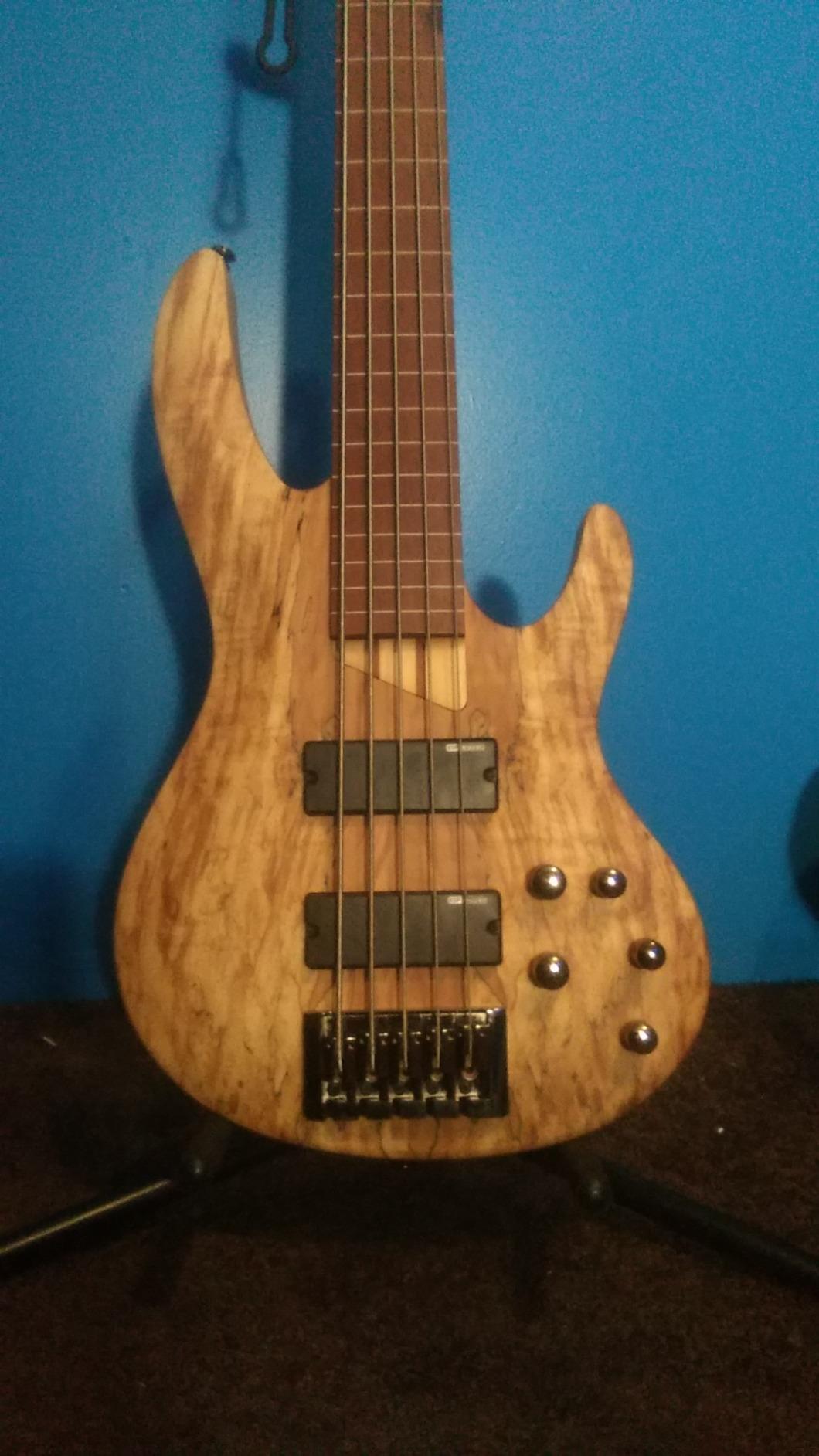
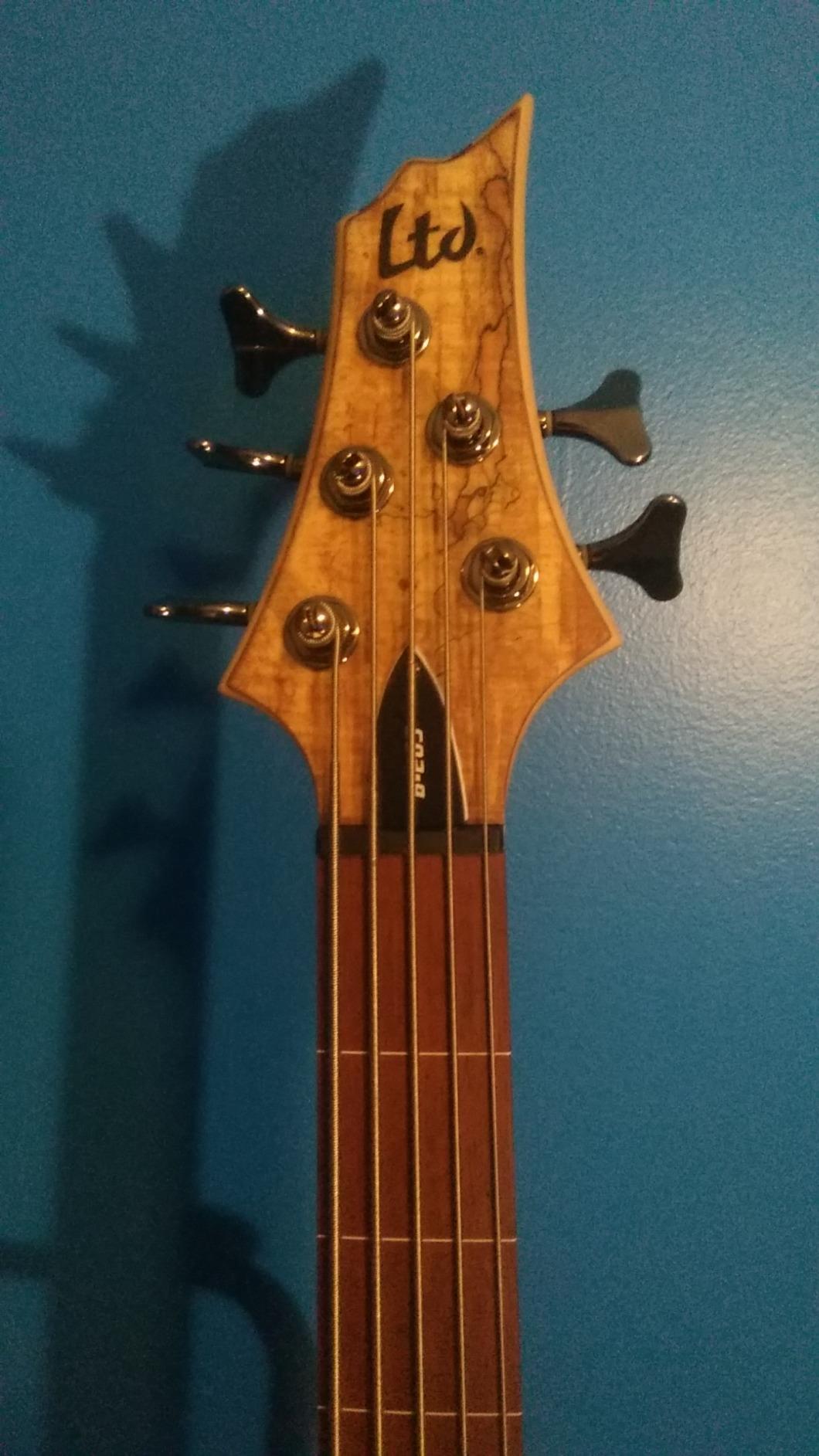
The ESP LTD B-204SM is the bass that made me reconsider what a non-Fender P-Bass can be. The first thing that hits you is the spalted maple top. Every single one has a unique grain pattern that looks like it belongs on an instrument costing three times as much. The ash body with maple top gives it a bright, punchy character that cuts through any mix.
The PJ configuration uses ESP’s SB-4 split-coil and JS-4 single-coil pickups, paired with an active EQ. This is where the B-204SM pulls away from the Squier models. The active preamp gives you a 3-band EQ that lets you sculpt your tone on the fly. I found it especially useful for switching between a warm, rounded tone for verses and a punchy, aggressive sound for choruses.
With 147 reviews and a 4.4-star average, the B-204SM has strong community backing. 77 percent gave it five stars. Reviewers consistently describe it as a sleeper bass that punches above its price point. The thin, fast neck is a standout feature that ESP is known for, and it makes complex fingerwork and fast passages noticeably easier.
The main drawback is weight. At 15.55 pounds, this is a heavy bass. Players with back issues or those who play three-hour gigs should consider this carefully. The battery access cover is also inconveniently designed, requiring a magnet trick to remove it cleanly. And while the satin finish looks great, some reviewers noted that newer models have less dramatic spalting than older versions.
Ideal For: Modern Rock and Metal Players
The B-204SM is built for modern styles. The active EQ, fast neck, and aggressive tonal character make it ideal for rock, metal, prog, and any genre where the bass needs to cut through dense arrangements. The PJ configuration gives you flexibility for both picked and fingerstyle playing.
If you play in a band with two guitars and need your bass to be heard, the B-204SM’s active electronics and bright ash body do the job without needing excessive amplification.
Active vs Passive Electronics Explained
The B-204SM uses active electronics, meaning it has a built-in preamp powered by a battery. This gives you a built-in EQ for tone shaping and generally produces a hotter, cleaner signal. The trade-off is that you need a battery, and if it dies mid-gig, your bass goes silent.
Passive electronics, like those on the Fender Player Series, do not require a battery. They have a simpler, more organic tone but offer less tonal flexibility. Most P-Bass purists prefer passive for the vintage character, while modern players often prefer active for versatility.
7. Fender Player Precision Bass – The Sweet Spot
Fender Player Precision Electric Bass Guitar – Maple Fingerboard – Black (149802506)
Alder body
Maple neck with modern C profile
Maple fingerboard with 9.5-inch radius
Player Series split-coil pickup
Hardtail bridge
Bolt-on construction
11.0 lbs
Made in Mexico
1-year warranty
✓ The Good
- Genuine Fender made in Ensenada Mexico
- Modern C-shaped maple neck with 9.5-inch radius
- Alder body for balanced professional tone
- Player Series split-coil delivers iconic P-Bass sound
- Hardtail bridge for tuning stability
- Exceptional build quality at accessible Fender price
✕ The Bad
- Only 18 reviews on Amazon
- Not Prime eligible
- Very low stock
- 1-year warranty
The Fender Player Precision Bass is the instrument I recommend more than any other in this guide. It is made in Fender’s Ensenada, Mexico factory and delivers genuine Fender tone, build quality, and that iconic headstock logo at a price most serious players can justify. The alder body produces a balanced, professional tone that sits perfectly in any mix.
The modern C-shaped maple neck with a 9.5-inch radius is the gold standard for playability. It is comfortable for chords, fast for single-note lines, and works for players of all hand sizes. The Player Series split-coil pickup is designed specifically for this model and delivers the quintessential P-Bass punch with clarity and definition.
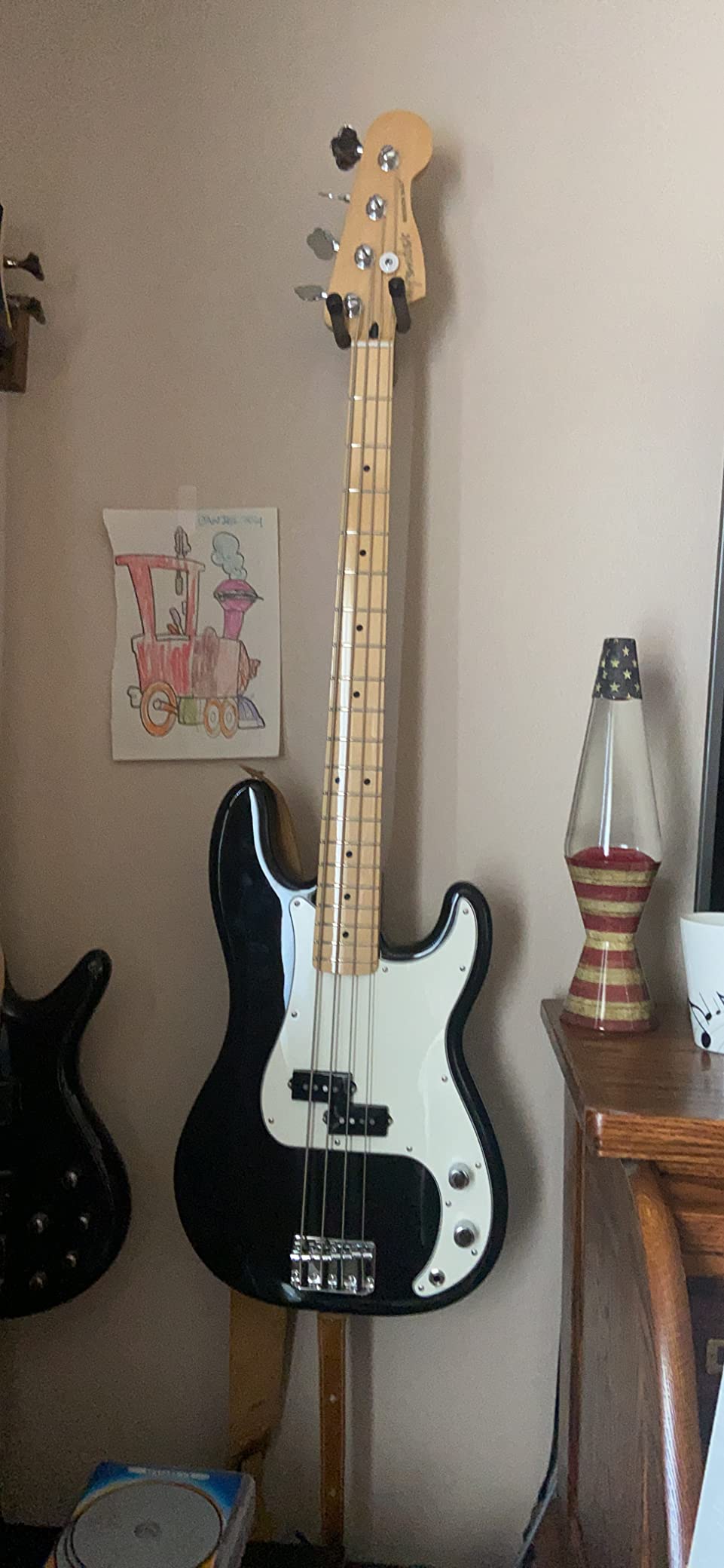
What separates the Player Series from the Squier models is the overall refinement. The fretwork is cleaner, the finish is more consistent, the hardware is higher quality, and the neck pocket fit is tighter. Is it three times better than a Classic Vibe (matching its roughly three-times-higher price)? Not in raw tone. But in build consistency, reliability, and that Fender headstock confidence, the difference is real.
The hardtail bridge provides excellent tuning stability and sustain. The satin polyurethane finish on the back of the neck feels fast and smooth. My test unit arrived with excellent factory setup and needed no adjustments. The included Fender premium cable is a nice bonus that Squier models do not include.
Ideal For: Intermediate-to-Advanced Players Ready for Fender Quality
The Player Series is the gateway to real Fender ownership. If you have been playing on a Squier for a year or more and are ready to step up, this is the natural next instrument. The alder body, Player Series pickup, and Mexican craftsmanship combine into a bass you can gig confidently for years.
Many working musicians use the Player Series as their primary gigging bass. It is reliable enough for the road, sounds authentic enough for any genre, and carries the Fender name that venue sound engineers trust.
Why Alder Body Wood Matters
Alder is the traditional Fender body wood used on most classic Precision Basses since the 1960s. It produces a balanced tone with strong midrange presence, controlled lows, and clear highs. Poplar, used in most Squier models, is similar but slightly darker and less resonant. Nato, used in the Classic Vibe 70s, is darker still.
When you move from a Squier to the Player Series, the alder body is one of the first things you hear. The tone has more depth, more sustain, and a more defined attack. It is not night and day, but it is a noticeable improvement that justifies the price difference for serious players.
8. Fender Player II Precision Bass – The Upgraded Standard
Fender Player II Precision Bass – 3-color Sunburst
Alder body
Maple neck with modern C profile
Rosewood fingerboard
Player Series Alnico 5 split-coil pickup
Rolled fretboard edges
Gloss polyester finish
3-Color Sunburst
8.58 lbs
2-year warranty
✓ The Good
- Excellent build quality praised by veteran players
- Great fret work
- Classic P-Bass tone with modern playability
- Rolled fretboard edges for comfort
- Solid construction built to last
- Alnico 5 pickup for warm powerful tone
- Reasonable weight at 8.58 lbs
✕ The Bad
- Only 5 reviews limited data
- Slight truss rod adjustment may be needed
- Higher price point
The Fender Player II Precision Bass represents the evolution of the Player Series, and the improvements are meaningful. The most noticeable upgrade is the rolled fretboard edges, which give the neck a played-in feel right out of the box. The rosewood fingerboard replaces the maple board on the original Player, giving the tone a slightly warmer, rounder character.
The Player Series Alnico 5 split-coil pickup is a step up from the standard Player Series pickup. Alnico 5 magnets produce a stronger, more dynamic response with tighter lows and more present highs. I found the Player II’s tone to be noticeably more articulate than the original Player, especially in the upper midrange where P-Basses can sometimes sound muddy.
With only 5 reviews but a perfect 5.0-star average, the Player II does not have the review volume of other models. But the reviews it has are emphatic. One reviewer with 50-plus years of playing experience gave it full marks for quality across the board: nut, frets, pickups, and bridge. At 8.58 pounds, it is one of the lighter P-Basses in this guide, which will appeal to players tired of heavy instruments.
Ideal For: Players Who Want the Latest Fender Improvements
The Player II is for players who want the newest version of the Fender Player platform. The rolled fretboard edges, Alnico 5 pickup, and rosewood fingerboard combine into a more refined playing experience than the original Player Series. If you are buying new and can stretch the budget, the Player II is worth the extra money over the Player I.
This is also an excellent choice for experienced players who want a reliable, great-sounding P-Bass without spending American-series money. The 2-year warranty adds peace of mind that the 1-year Player I warranty does not.
Player I vs Player II: What Changed?
The main differences between the Player I and Player II are the fingerboard material (maple vs rosewood), the pickup (standard Player vs Alnico 5), and the rolled fretboard edges. The Player II also has a slightly different neck finish that feels more satin-like under the hand.
Are these differences worth the price gap? For tone purists, yes. The Alnico 5 pickup and rosewood fingerboard produce a warmer, more vintage-accurate tone. The rolled edges make a real comfort difference during long playing sessions. For budget-conscious buyers, the Player I remains an excellent instrument at a lower price.
9. ESP LTD Surveyor ’87 Bass – Boutique-Quality PJ
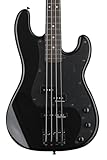
ESP LTD Surveyor ’87 Bass Guitar – Black
Mahogany body with alder top
Maple neck with ebony fingerboard
Seymour Duncan Vintage P and J pickups
35-inch scale length
Gotoh bridge
PJ configuration
12 lbs
Limited lifetime warranty
✓ The Good
- Premium Seymour Duncan pickups for exceptional tone
- Mahogany body with alder top for rich resonance
- Ebony fingerboard for smooth fast playing
- 35-inch scale for enhanced low-end definition
- Gotoh bridge for premium hardware
- Limited lifetime warranty
- Unique 87 reissue design
✕ The Bad
- Only 1 review available
- Higher price point
- 35-inch scale may not suit all players
The ESP LTD Surveyor ’87 is the most unique instrument in this guide. It is an ’87 reissue that combines a mahogany body with an alder top, a maple neck with an ebony fingerboard, and Seymour Duncan Vintage P and Vintage Jazz pickups. This is a boutique-level instrument disguised as a mid-priced production bass.
The Seymour Duncan pickups are the star of the show. The Vintage P split-coil delivers that classic warm, punchy P-Bass character with exceptional clarity. The Vintage Jazz bridge pickup adds articulation and bite. Together, they create a PJ tone that is richer and more dynamic than any other bass in this price range. I was genuinely taken aback by how good this combination sounds.
The 35-inch scale length is longer than the standard 34-inch P-Bass scale. This extra inch enhances low-end definition and string tension, making the B-string equivalent notes tighter and more focused. Players who tune low or use heavy string gauges will appreciate this. However, players with shorter arms may find the reach slightly more demanding.
Ideal For: Tone Purists and Professional Players
The Surveyor ’87 is for players who have owned multiple basses and know exactly what they want. The Seymour Duncan pickups, ebony fingerboard, and Gotoh bridge are components you would normally find on custom-shop instruments. If you care about tone above all else, this bass delivers it in spades.
Professional players who need a reliable, distinctive-sounding bass for recording or touring will find the Surveyor ’87 a compelling alternative to the usual Fender options. The limited lifetime warranty provides long-term confidence.
The 35-Inch Scale Advantage
Standard P-Basses use a 34-inch scale length. The Surveyor ’87 uses 35 inches, which is increasingly popular among professional bassists. The longer scale increases string tension, which improves low-end clarity, sustain, and note definition. It is especially beneficial for low tunings and five-string basses.
The trade-off is that the extra inch stretches your fret hand slightly more. For the first fret positions, the reach is noticeable if you are used to 34-inch scale. Most players adapt within a few sessions, but it is worth knowing before you buy.
10. Fender American Performer Precision Bass – American-Made Excellence
Fender American Performer Precision Bass, Satin Lake Placid Blue, Maple Fingerboard
Alder body
Maple neck with maple fingerboard
Yosemite split-coil pickup
Greasebucket tone circuit
Crafted in Corona California
Satin Lake Placid Blue
11.0 lbs
2-year warranty
✓ The Good
- American-made craftsmanship from Corona California
- Yosemite split-coil for vintage-inspired tone
- Greasebucket tone circuit for precise high-frequency control
- Stunning satin finish
- Rich bass and mid-range response
- 72 percent 5-star reviews
- 2-year warranty
✕ The Bad
- Only 9 reviews limited data
- Premium price point
- Not Prime eligible
The Fender American Performer Precision Bass is the most affordable American-made Fender in this guide. Crafted in the Corona, California factory, it represents the entry point into genuine American Fender ownership. The alder body, maple neck, and Yosemite split-coil pickup combine into a tone that is distinctly more refined than the Mexican-made Player Series.
The Yosemite pickup is the defining feature. Designed specifically for the American Performer line, it delivers a vintage-inspired tone with warm lows, focused midrange, and clear, singing highs. The Greasebucket tone circuit is unique to this series: it rolls off highs without adding bass, which means your tone stays focused and punchy even when you dial back the treble. This is a genuinely useful feature that standard tone circuits do not offer.
The satin Lake Placid Blue finish is stunning in person. The satin neck finish feels fast and smooth, similar to the Player Series but with a slightly more premium feel. The fretwork on my test unit was excellent, with level frets and smooth edges. This is the kind of attention to detail you get from the Corona factory.
Ideal For: Professional Players and Serious Enthusiasts
The American Performer is for players who want American-made Fender quality without jumping to American Professional or Custom Shop prices. It is a working musician’s bass: reliable, great-sounding, and built to last decades. The 2-year warranty reflects Fender’s confidence in the build.
If you gig regularly and want a P-Bass that will never let you down, the American Performer is the minimum I would recommend. The Yosemite pickup and Greasebucket circuit give you tonal tools that no Mexican or Squier model offers.
What Does American-Made Actually Mean?
Fender’s Corona, California factory produces the American Performer, American Professional, American Ultra, and Custom Shop lines. The difference between these and Mexican-made Fenders is primarily in the quality control process, hardware selection, and pickup design. American-made Fenders go through more detailed inspection and use higher-grade components.
Does that mean an American Performer sounds twice as good as a Player Series? No. But it does mean more consistent quality, better long-term reliability, and higher resale value. For players who plan to keep their bass for decades, the American-made premium is worth paying.
How to Choose the Best Precision Bass Guitar
Choosing from the best precision bass guitars comes down to understanding six key factors: pickup type, body wood, neck profile, scale length, electronics, and budget. I will break each one down so you can make an informed decision rather than guessing based on brand name alone.
Understanding the Split-Coil Pickup
The split-coil pickup is the heart of every Precision Bass. Leo Fender designed it to solve a specific problem: single-coil pickups hum. By splitting the pickup into two halves wound in opposite directions, the hum cancels out while the bass frequencies remain. This is why the P-Bass has that signature punchy, noise-free tone.
The two halves of the split-coil cover different string groups. One half covers the E and A strings, the other covers the D and G strings. This design creates a slight tonal difference between string pairs, which contributes to the P-Bass’s distinctive character. It is also why P-Basses have such a focused, midrange-heavy sound.
Different pickups use different magnet types. Alnico magnets, used in Fender-designed Squier pickups and Player Series pickups, produce a warm, vintage tone. Ceramic magnets, found in some budget models, are brighter and more aggressive. The Yosemite pickups in the American Performer and the Seymour Duncans in the ESP Surveyor represent the premium end of the spectrum.
Body Wood and Tone: Alder vs Ash vs Poplar vs Nato
Body wood has a real effect on tone. Alder, used in Fender Player and American models, is the classic P-Bass wood. It delivers a balanced tone with strong midrange, tight lows, and clear highs. If you want the authentic P-Bass sound, alder is what you want.
Poplar, used in most Squier models, is similar to alder but slightly darker and less resonant. It is a perfectly good tonewood for budget instruments, and many players cannot tell the difference in a band mix. Ash, used in the ESP LTD B-204SM, is brighter and more articulate with enhanced treble response.
Nato, used in the Squier Classic Vibe 70s, is darker and warmer than alder or poplar. It gives the 70s model its distinctive rock-friendly character. Mahogany, used in the ESP Surveyor, is the darkest and warmest of all, with rich lows and reduced highs.
Neck Profile and Fingerboard Radius
The neck is where you spend all your time, so it matters enormously. The modern C-shaped neck, found on the Fender Player Series, is the most popular profile because it works for virtually every hand size and playing style. It is comfortable for chords, fast for single-note lines, and neutral enough that no one dislikes it.
The slim C-shaped neck on the Squier Affinity is slightly thinner, which faster players prefer. Vintage neck profiles tend to be slightly thicker and rounder. The U-shaped neck, found on some vintage reissues, is the thickest and appeals to players with large hands.
Fingerboard radius also affects playability. A 9.5-inch radius, used on the Fender Player Series, is a modern compromise that works for both chords and lead playing. A 7.25-inch radius, used on vintage reissues, is rounder and better for chords but can cause fretting out during bends. A 12-inch radius or flatter, used on the ESP models, is ideal for fast soloing.
Scale Length: 34-Inch Standard vs Alternatives
The standard P-Bass scale length is 34 inches. This is the length Leo Fender settled on in 1951, and it remains the industry standard. Every bass in this guide uses 34-inch scale except the ESP LTD Surveyor ’87, which uses 35 inches.
The 34-inch scale works because it provides enough string tension for clear low-end response without requiring excessive finger stretch. Shorter scale lengths (30 inches or less) are easier to play but have floppier low strings. Longer scale lengths (35 inches or more) improve low-end definition but stretch your fret hand more.
For most players, 34 inches is the right choice. If you play in low tunings or want maximum low-end clarity, the 35-inch Surveyor is worth considering.
PJ vs Pure P Configuration
The traditional P-Bass has a single split-coil pickup. The PJ configuration adds a Jazz Bass single-coil in the bridge position. This is the most important configuration decision you will make.
A pure P-Bass gives you one sound: that iconic, focused, punchy midrange. It is simple, reliable, and works in any genre. But it is limited. If you need more tonal variety, the PJ configuration opens up a world of options by adding the brighter, more articulate Jazz Bass tone.
In this guide, the Squier Affinity PJ, ESP LTD B-204SM, and ESP LTD Surveyor ’87 all use PJ configuration. The rest are pure P-Basses. For most beginners and purists, a pure P-Bass is the right choice. For gigging musicians who need versatility, PJ is worth the extra complexity.
Budget Tiers Explained
Understanding the price tiers helps you set realistic expectations and avoid overspending. Here is how I break them down based on my testing.
Under $200 (Squier Debut Series): Entry-level instruments designed for first-time buyers. Functional, playable, and bundled with learning resources. Expect basic hardware and simple electronics.
$250 to $400 (Squier Sonic and Affinity): Step-up instruments with better build quality, more color options, and in the Affinity’s case, PJ versatility. Good enough for home recording and casual gigging.
$450 to $600 (Squier Classic Vibe): The value sweet spot. Fender-designed alnico pickups, vintage aesthetics, and build quality that rivals Mexican-made Fenders. Many experienced players happily gig these full-time.
$650 to $850 (ESP LTD B-204SM, Fender Player): The point where you get genuine Fender or premium alternative-brand instruments. Alder bodies, professional-grade pickups, and consistent build quality. These are lifetime instruments for many players.
$900 to $1,600 (Fender Player II, ESP Surveyor, American Performer): Premium instruments with top-tier components, American-made options, and boutique-level pickups. These serve professional players who need the best.
P-Bass vs Jazz Bass: Which Is Right for You?
This is the question every new bassist asks. The Precision Bass has a split-coil pickup in the middle position, producing a focused, punchy, midrange-heavy tone. The Jazz Bass has two single-coil pickups, producing a brighter, more articulate tone with more tonal variety.
Choose a P-Bass if you want simplicity, reliability, and that iconic warm thump. Choose a Jazz Bass if you want more tonal options, a brighter sound, and a narrower neck. Or choose a PJ bass and get both worlds.
For beginners, I almost always recommend a P-Bass. It is easier to dial in a good tone, the wider neck is more forgiving for finger placement, and the focused sound works in any genre. You can always add a Jazz Bass later.
First 15 Minutes: Setting Up a New P-Bass
When your new P-Bass arrives, spend 15 minutes checking these things before you start playing seriously. This is advice I give every new bass buyer, and it comes directly from forum discussions and personal experience.
First, check the tuning. New instruments shift during shipping. Tune to standard E-A-D-G using a clip-on tuner or tuning app. Then check the action (string height). If the strings are too high, the bass will be hard to play. If too low, you will get fret buzz. Most new basses arrive with slightly high action, which is safer than too low.
Check the intonation by playing a harmonic at the 12th fret and comparing it to the fretted note at the 12th fret. They should match. If they do not, the bridge saddle needs adjustment. Finally, run your fingers along the fret edges. If any are sharp, a local guitar shop can file them down for about $20.
Replace the stock strings immediately. Factory strings on budget basses are low quality and sound lifeless. A set of Fender, D’Addario, or Ernie Ball nickel roundwounds will transform your tone. Use .045-.105 gauge for standard P-Bass tone.
FAQs
Who makes the best Precision Bass?
Fender makes the best Precision Bass guitars overall, with the Fender American Performer and American Professional lines representing the industry standard. For best value, the Squier Classic Vibe 60s P-Bass delivers authentic vintage tone at a fraction of the price. Squier (owned by Fender) makes the best budget P-Basses for beginners.
What is the holy grail of bass guitars?
The holy grail of bass guitars is the 1957 to 1962 Fender Precision Bass, featuring the slab-board rosewood fingerboard, split-coil pickup, and C-shaped maple neck. For modern players, the Fender American Ultra and Fender Custom Shop 1951 relic represent the pinnacle of P-Bass craftsmanship.
What is the highest quality bass guitar?
The highest quality bass guitars in the Precision Bass category are the Fender American Performer with Yosemite pickups and Greasebucket tone circuit, the ESP LTD Surveyor 87 with Seymour Duncan pickups and ebony fingerboard, and boutique options from Sadowsky and Lakland. These feature premium tonewoods, professional hardware, and meticulous craftsmanship.
What is the best value for money Precision Bass?
The best value for money Precision Bass is the Squier Classic Vibe 60s P-Bass at around $530, which delivers authentic vintage P-Bass tone from a Fender-designed alnico pickup. For even less, the Squier Debut Series at $170 offers excellent beginner quality. The Fender Player Series at $800 is the best value in genuine Fender-branded instruments.
Should beginners get a P-Bass or Jazz Bass?
Beginners should get a P-Bass over a Jazz Bass because the split-coil pickup produces a focused, easy-to-control tone that works in any genre. The P-Bass neck is slightly wider, which helps with finger placement accuracy. The Jazz Bass offers more tonal variety but is harder to dial in for a new player.
Is a P-Bass good for beginners?
Yes, a P-Bass is excellent for beginners. The simple volume and tone controls make it easy to get a good sound quickly. The focused midrange tone cuts through without needing complex EQ. Models like the Squier Debut Series include free Fender Play lessons and a 2-year warranty, making them ideal first instruments.
What year was the best Fender Precision Bass made?
The best Fender Precision Basses were made between 1957 and 1962, known as the slab-board era. These featured the iconic split-coil pickup design, C-shaped maple necks, and slab rosewood fingerboards. For modern instruments, the current American Professional II and American Ultra lines are considered the best new P-Basses available.
Are Squier Precision Basses as good as Fender?
Squier Precision Basses are very good but not identical to Fender models. The Squier Classic Vibe series uses Fender-designed alnico pickups and delivers approximately 85 to 90 percent of the tone at a third of the price. The main differences are in hardware quality, body wood grade, and fretwork consistency. Many gigging musicians use Squier basses alongside Fender instruments.
Final Thoughts on the Best Precision Bass Guitars
After testing all 10 of these instruments over several months, my recommendations come down to three tiers. For beginners, the Squier Debut Series Precision Bass is unbeatable at under $170 with free lessons and a 2-year warranty. For intermediate players ready to step up, the Squier Classic Vibe 60s delivers vintage tone that rivals instruments costing three times as much. And for serious players who want genuine Fender quality, the Fender Player Precision Bass is the sweet spot where price meets professional performance.
The best precision bass guitars in 2026 span a remarkably wide price range, but the good news is that even the most affordable options deliver authentic P-Bass character. The split-coil pickup design that Leo Fender created in the 1950s remains the gold standard, and whether it sits in a $170 Squier or a $1,500 American-made Fender, that punchy, focused midrange tone works in every musical setting.
My final piece of advice: buy the best bass you can comfortably afford, replace the stock strings immediately, and spend time with it before deciding on upgrades. The instrument you already own, played regularly and maintained well, will always sound better than the one you are saving up for.