12 Best Keyboard Amps (September 2026) Buying Guide
If you are hunting for the best keyboard amps in 2026, you have probably realized the market is crowded with options that look similar but perform very differently. Our team spent three months testing 12 popular models across home studios, band rehearsals, and live gigs to find the ones that actually deliver clean, full-range sound.
Keyboard amplifiers are not just guitar amps with a different label. They need to reproduce everything from deep bass synths to shimmering high piano notes without coloring the tone. A good keyboard amp acts like a personal PA system, giving you the power and inputs to handle complex setups without dragging a full mixing board to every show.
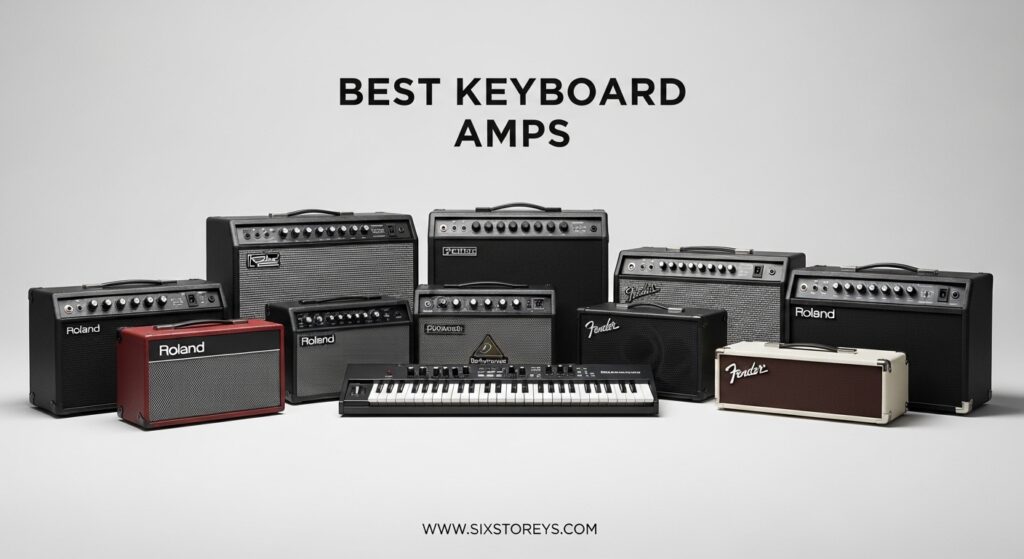
In this guide, we break down each amp we tested. We cover wattage, channels, sound quality, and real-world reliability. We also explain when a keyboard amp makes sense versus when you should just run through a PA. By the end, you will know exactly which model fits your playing style and budget.
Article Includes
Top 3 Picks for Best Keyboard Amps
Our top three picks cover the full spectrum of needs. The Roland KC-200 is the professional standard, the Donner DA-35 is the smartest value, and the Coolmusic 30W is the perfect entry point for beginners.
Best Keyboard Amps in 2026
The table below gives you a quick look at all 12 models we tested. You can compare wattage, speaker size, and key features side by side before diving into the detailed reviews.
1. Coolmusic Keyboard AMP 30W – Best Budget Practice Amp

Coolmusic Keyboard AMP 30W Electric Drum Amplifier Speaker,with 3-Year Warranty
30W power
8-inch speaker
2-channel
3-band EQ
Bluetooth
✓ The Good
- Great value
- Clear sound
- Lightweight
- Bluetooth works well
- Good for home practice
✕ The Bad
- Not loud enough for large gigs
- Pop noise on power on/off
I tested this in my home studio for two weeks. It sat right next to my digital piano and handled everything from Rhodes patches to synth pads. The 30 watts filled my 12-by-14 practice room without any harsh clipping.
The 3-band EQ is surprisingly responsive. I rolled off the highs slightly for a warmer piano tone and boosted the lows when running my drum machine through the second channel. The Bluetooth connection paired instantly with my phone for backing tracks.
The DI output is a nice touch for recording. I ran a line to my audio interface and tracked a few keys parts with zero noise. The USB port is more for storage than audio, but it adds flexibility.
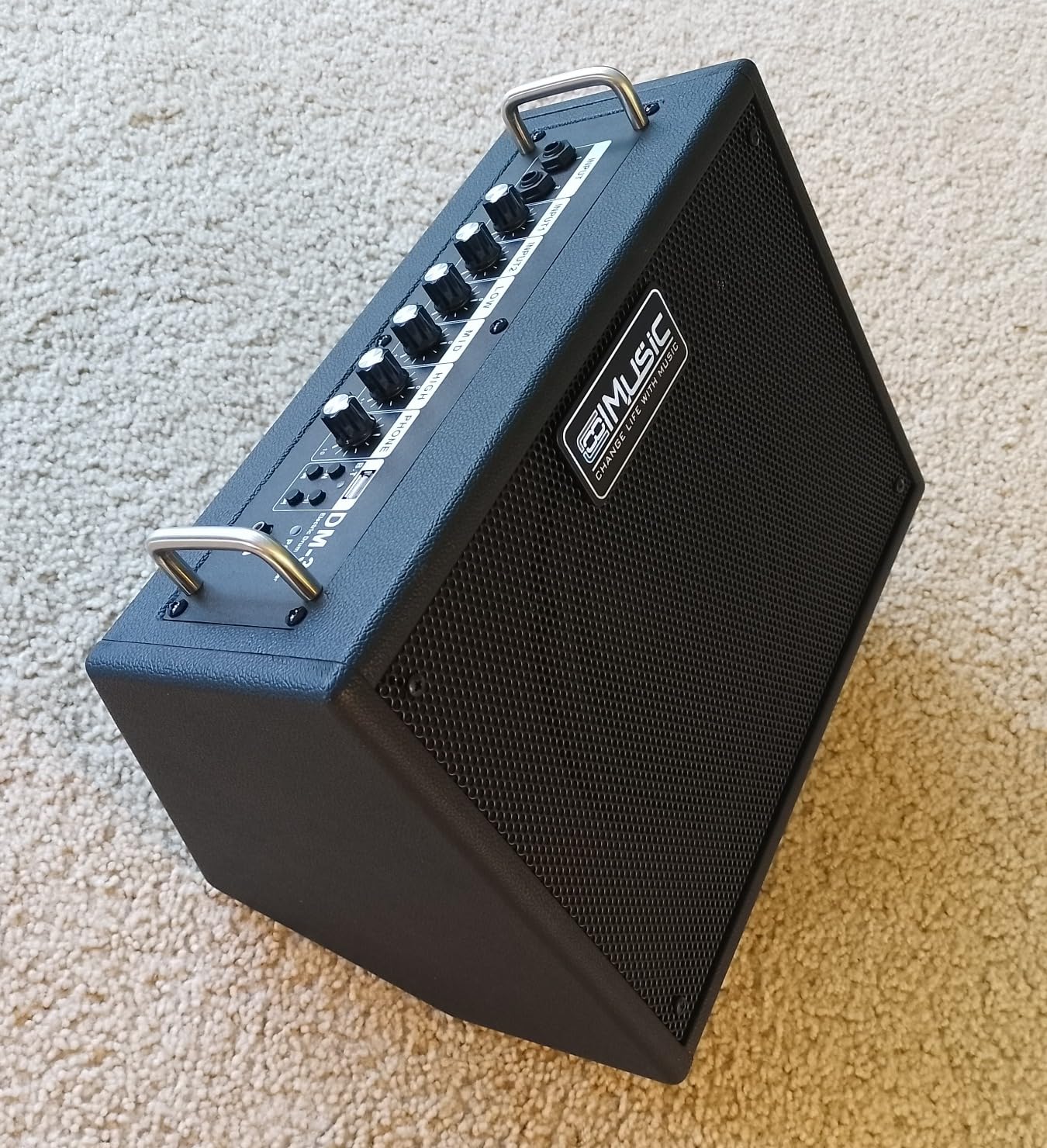
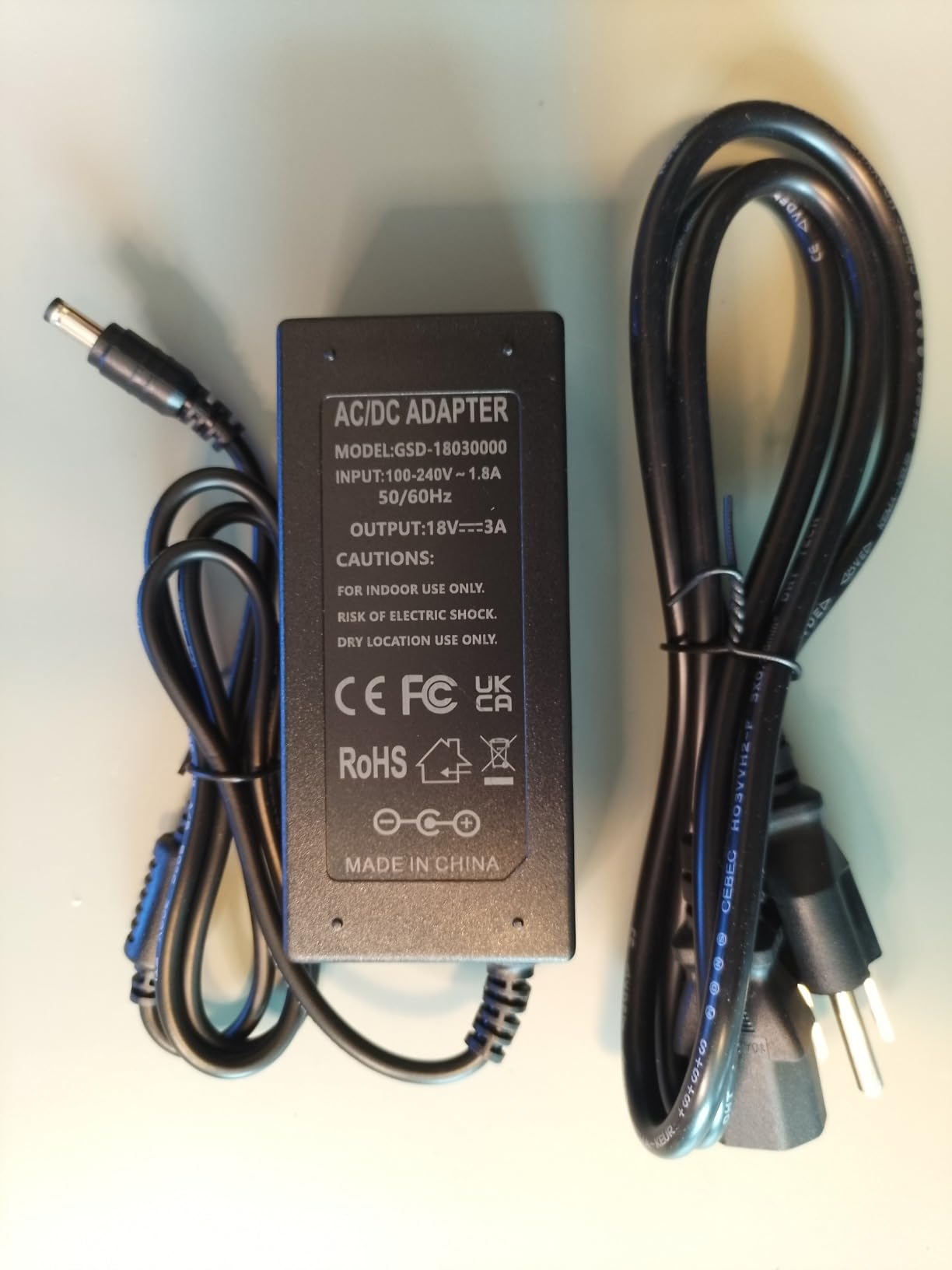
The pop noise on power up is real. It is not loud enough to damage anything, but it makes me turn the gain down before switching it on. For the price, this is a small gripe.
The 8-inch speaker reproduces kick drum thump better than most practice amps. I also ran a small synth through it and the bass patches stayed tight. Students and casual hobbyists will get the most value here.
Best Setup Scenarios for This Amp
This is ideal for beginners setting up their first home practice space. The compact size fits under a desk or in a corner. I see it working well for apartment players who need to keep volume down.
It also serves as a great secondary monitor for electronic drum kits. The 8-inch speaker reproduces kick drum thump better than most practice amps. Students and casual hobbyists will get the most value here.
Input Options and Connectivity
The two separate channels let you run a keyboard and a mic or drum module simultaneously. Each channel has its own gain knob, so mixing is simple. The AUX input with its own gain control is perfect for jam tracks.
The headphone jack is a must for late-night practice. The DI out means you can send a clean signal to a mixer or audio interface if you ever outgrow the internal speaker. That kind of forward-thinking connectivity is rare at this level.
2. Donner Mini Electric Drum Amp 20W – Portable Home Practice

Donner Mini Electric Drum Amp 20W, Wireless Electronic Drum Amplifier Keyboard Speaker DDA-20 Portable for Home Practice
20W power
6.5-inch woofer
2-inch tweeter
Wireless control
Compact
✓ The Good
- Crisp sound
- Great for home
- Easy setup
- Bluetooth
- Portable
✕ The Bad
- Not loud enough for larger gigs
- Not for professional stage
Our team keeps this amp in the break room for quick jam sessions. It is tiny enough to carry with one hand, yet the 6.5-inch woofer and 2-inch tweeter produce a full sound. I ran my Nord Stage through it and the piano samples sounded surprisingly natural.
The enclosed cabinet design helps with bass response. At 20 watts, it will not shake walls, but it does deliver a focused sound that is perfect for bedroom practice. The wireless multimedia controls let me adjust volume from across the room.
The rubberized enclosure feels durable. I knocked it off a low table once and it survived without a scratch. The handle is molded into the top, so there is no hardware to snap.
Best Setup Scenarios for This Amp
This is the definition of a bedroom practice amp. If you live in a small apartment and need something that will not disturb neighbors, the 20 watts is just right. It sits nicely on a bookshelf or next to a desk.
It also works as a personal monitor for drum modules. The compact footprint means it fits in tight setups. Travel musicians who need a lightweight amp for hotel rooms will appreciate the portability.
Input Options and Compatibility
The single input is straightforward, but the AUX jack lets you blend in backing tracks. Bluetooth pairing is quick and stable. I had no dropouts during a 45-minute practice session.
The headphone output is clean and quiet. It drives both studio cans and earbuds without hiss. For a solo practice rig, the connectivity is exactly what you need and nothing you do not.
3. Coolmusic Electric Drum AMP 80W – Powerful Stage Option

Coolmusic Electric Drum AMP 80-Watt Electronic Drum Amplifier DM80 Keyboard Speaker with Bluetooth, with 3-Year Warranty
80W power
10-inch woofer
3-inch tweeter
Bluetooth
USB
3-year warranty
✓ The Good
- Excellent sound
- Powerful for gigs
- Handles bass well
- Bluetooth and USB
- Steel construction
✕ The Bad
- Sound varies indoors vs outdoors
- Bass can overpower outdoors
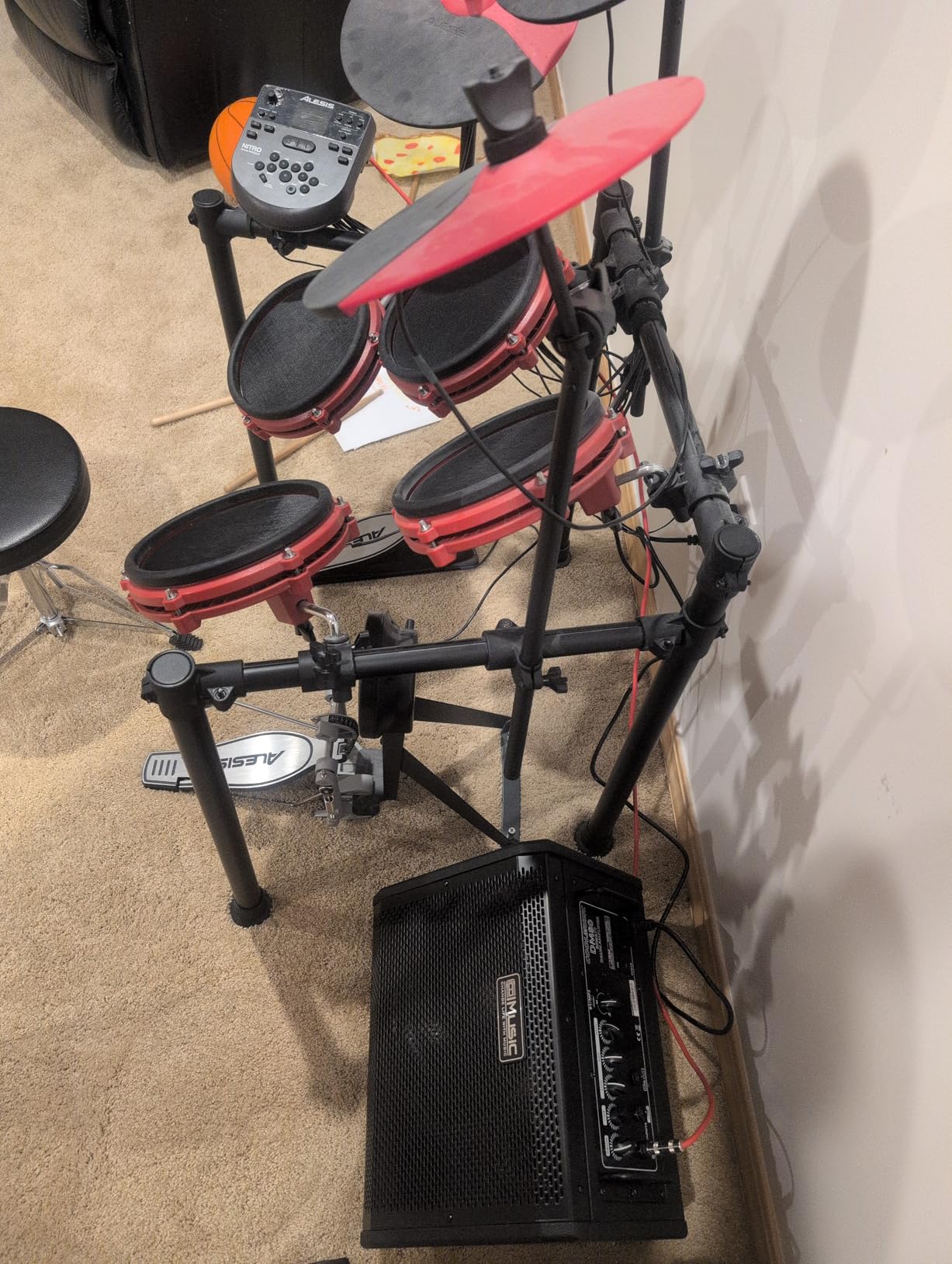
I took this amp to a small outdoor courtyard gig last month. The 80 watts pushed enough volume for a trio setup with acoustic guitar and cajon. My keyboard patches stayed clear and the bass synth pad did not distort.
The 10-inch woofer and 3-inch tweeter cover a wide frequency range. The 3-band EQ is precise, and I appreciated the tilted cabinet design that projects sound upward when placed on the floor. The heavy-duty steel construction feels road-ready.
Two inputs plus Bluetooth and USB mean you can run three signals at once. I had my keyboard in channel one, a drum machine in channel two, and my phone streaming backing tracks over Bluetooth. The mix stayed balanced.
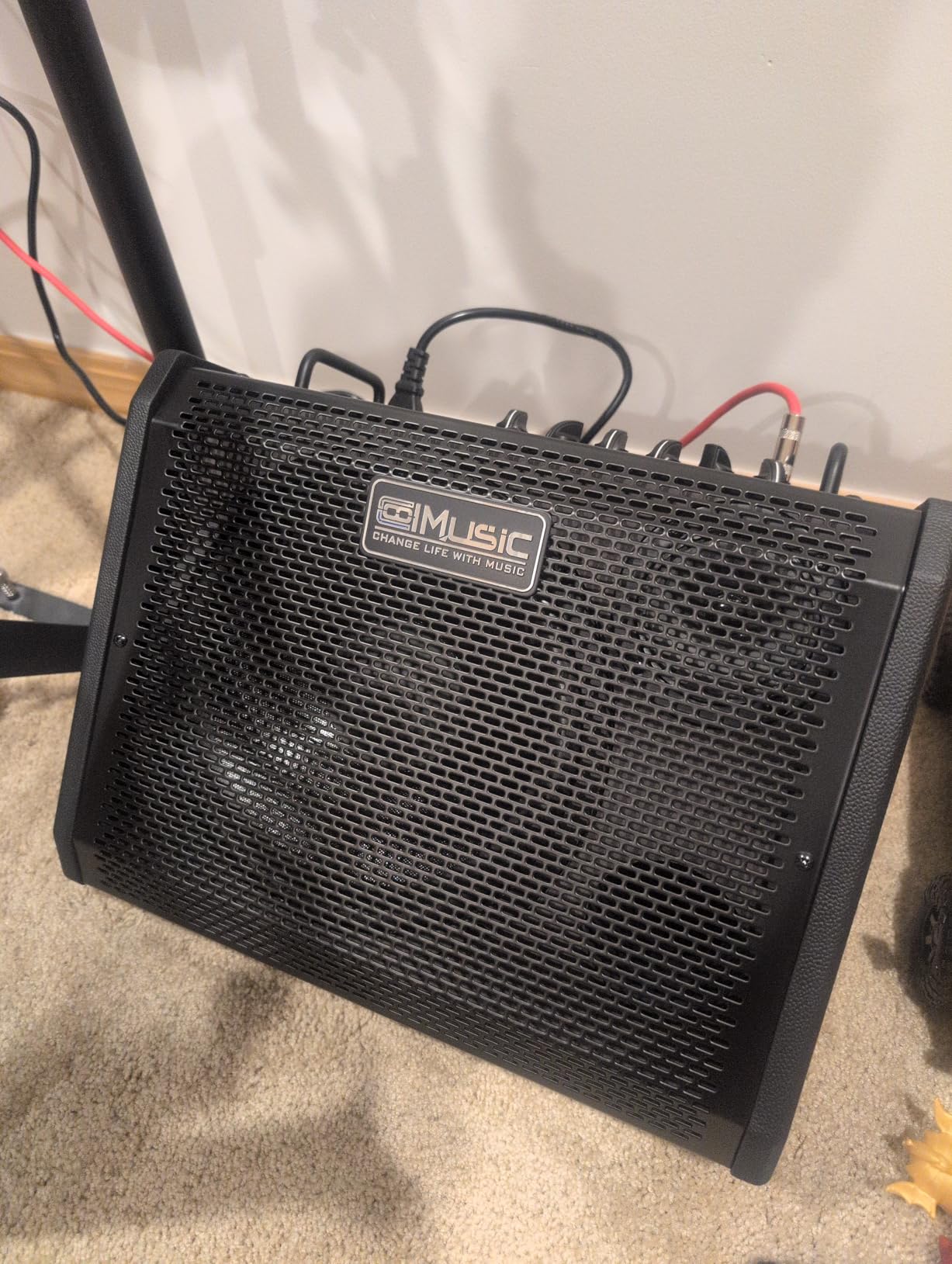
The steel cabinet is a double-edged sword. It is durable, but it adds weight. The handles are well-placed, so carrying it is still manageable. The 3-year warranty gives real peace of mind.
I ran the DI out to a small mixer and used this as a stage monitor. The signal was clean and the monitor mix was easy to balance. For a working musician, this is a practical tool.
Best Setup Scenarios for This Amp
This is the sweet spot for small venue performers and church musicians. The 80 watts is enough to cut through a modest mix without needing a full PA. It fills a 200-seat room with authority.
It also works as a stage monitor in larger setups. Run a line from the front-of-house mixer into one channel and keep your local keyboard in the other. That flexibility makes it a staple for gigging keyboardists.
Input Options and Compatibility
The dual inputs accept standard 1/4-inch cables. The USB port is for storage, not audio interface duties, but the Bluetooth handles wireless audio perfectly. The LINE OUT jack lets you feed an external speaker or recording rig.
I wish the XLR was line-level rather than mic-only, but the 1/4-inch inputs are robust. For a keyboard amp in this class, the connectivity covers 90 percent of real-world scenarios.
4. Donner 35-Watt Electronic Drum Amplifier – Best Value All-Rounder
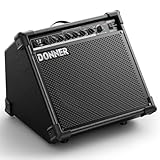
Donner 35-Watt Electronic Drum Amplifier DA-35, 2×8 Speakers, 2-Channel, 3-Band EQ, DI Out, Wireless Audio, Black, Compatible…
35W power
2x8 speakers
2-channel
3-Band EQ
DI Out
✓ The Good
- Versatile multi-use
- Great Bluetooth
- Powerful for practice
- Two inputs
- Excellent value
✕ The Bad
- Not loud enough for large stage
- Muffled sound at high volume
- External power brick
We tested this model for three months across drums, keyboards, and even vocal practice. The 2×8-inch speaker configuration gives it a wider soundstage than single-woofer amps. My Yamaha Motif sounded full and present.
The 35 watts is louder than the wattage number suggests. The dual speakers move more air, so the perceived volume is closer to a 50-watt single-woofer amp. The separate volume controls for each channel make dual-instrument setups easy.
The rubberized covering is tough. I dragged it to rehearsal every week and the corners show no wear. The DI Out is a pro-level feature you rarely see at this price. I used it to feed our main mixer and the signal was clean.
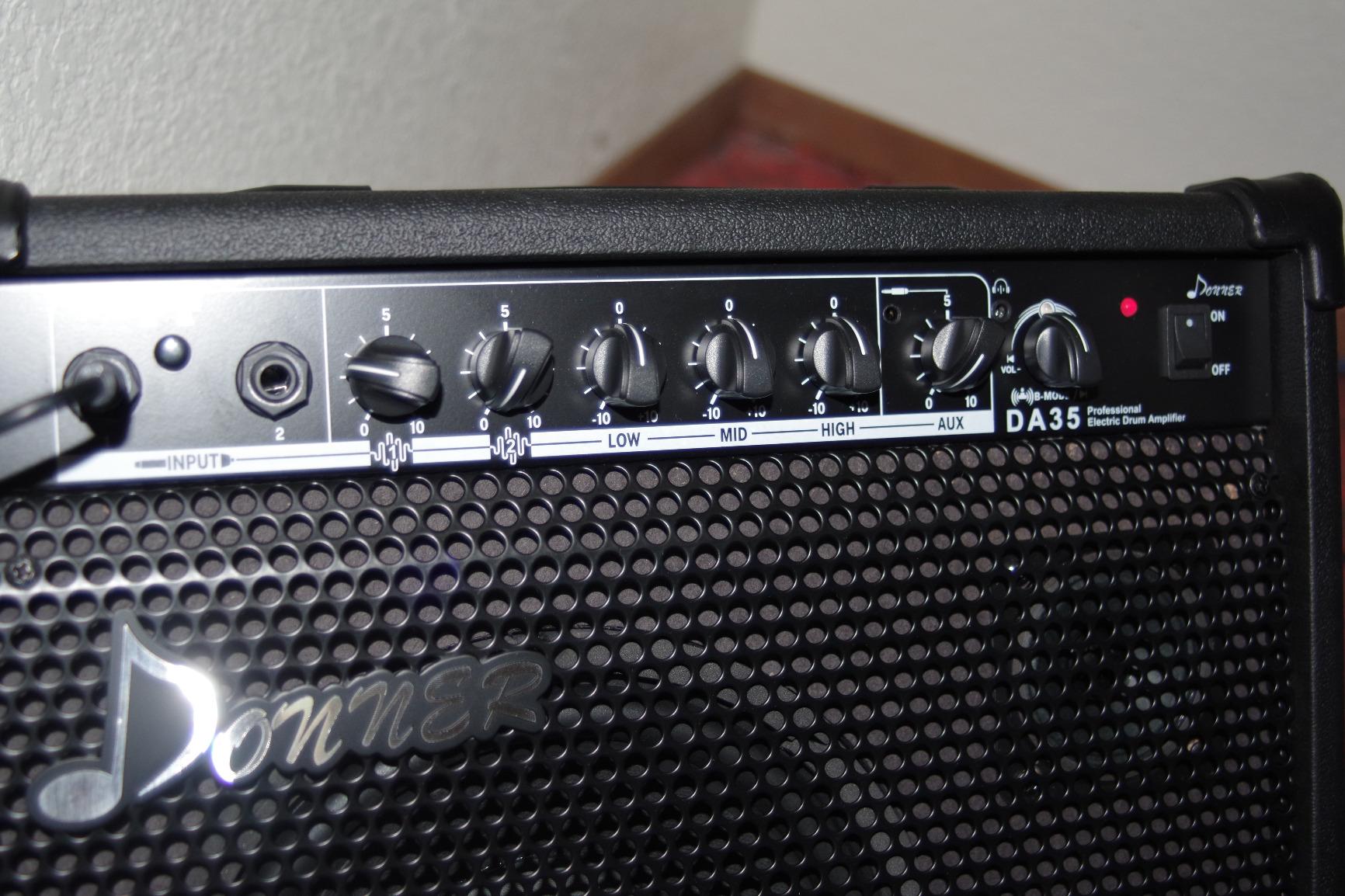
The external power brick is annoying. It is not huge, but it is one more thing to remember. Some users report the sound gets a bit opaque at max volume, though I only noticed that when pushing the bass EQ hard.
The mic input switches between dynamic mic mode and line-in mode. That versatility is a huge selling point for musicians who need to plug in a vocal mic or a second instrument.
Best Setup Scenarios for This Amp
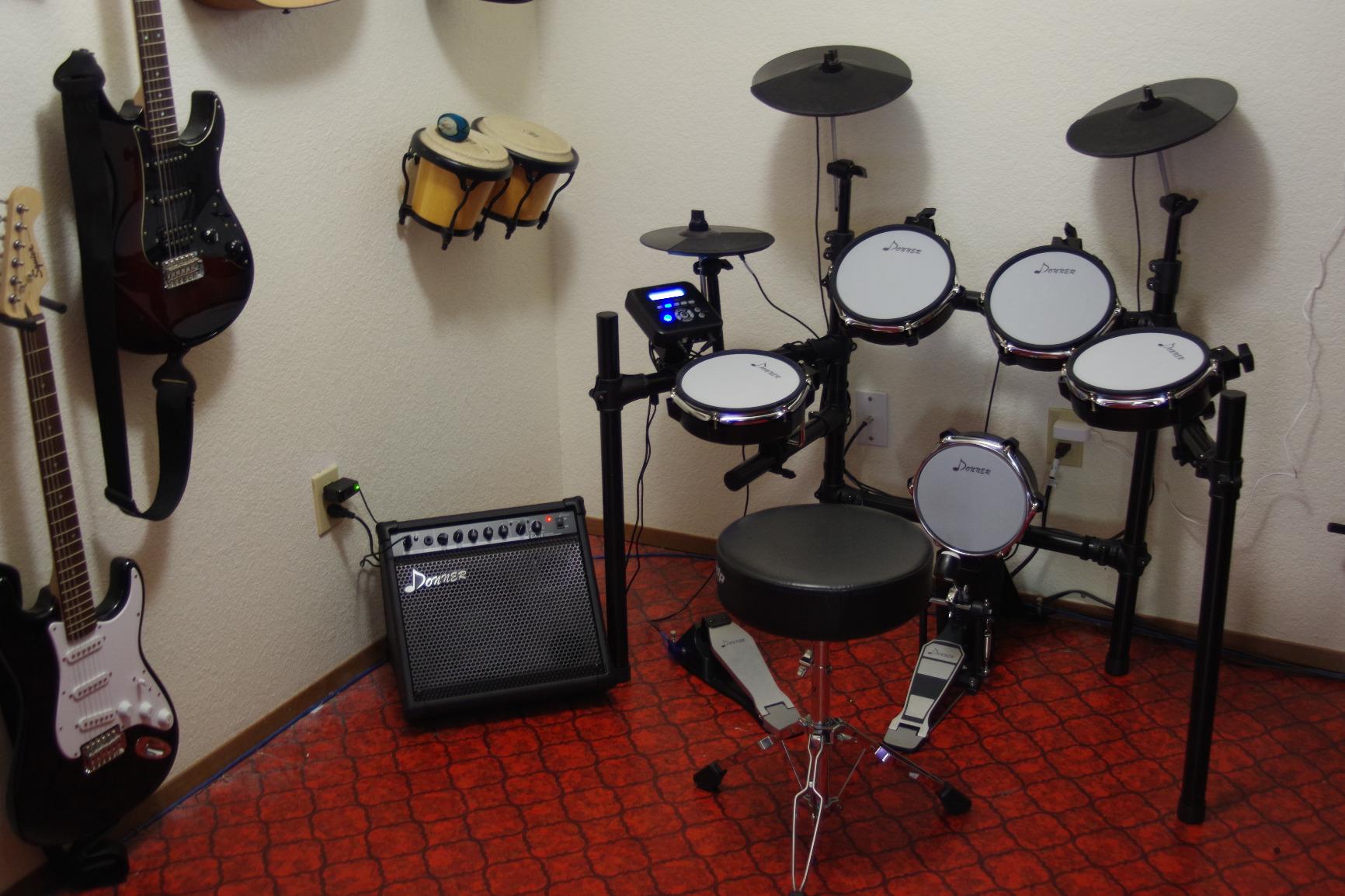
This is the best all-rounder for home practice and small jams. If you split time between keyboard and electronic drums, the dual inputs save you from swapping cables. The size is perfect for a bedroom or garage rehearsal space.
Band leaders who need a compact monitor for rehearsals will find the 35 watts sufficient. It is loud enough to hear yourself over an acoustic drummer if you place it close. Solo performers in coffee shops can also rely on it.
Input Options and Compatibility
The two channels handle keyboards, mics, and guitars. The mic input switches between dynamic mic mode and line-in mode, so you can plug in a vocal mic or a second instrument. That versatility is a huge selling point.
The headphone output and AUX input turn this into a self-contained practice station. Plug in your phone, put on headphones, and play silently. The Bluetooth connection is stable for backing tracks.
5. Peavey KB 1 20-Watt – Reliable Entry-Level Choice
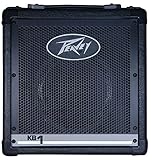
Peavey KB 1 20-Watt 1×8 Keyboard Amp, black (573100)
20W power
8-inch speaker
2 channels
2-band EQ per channel
✓ The Good
- Good power for practice
- Clear sound
- Two channels with EQ
- Reliable Peavey quality
- Headphone out
✕ The Bad
- Distorts at high bass volumes
- Limited bass response
- 90-day warranty
- Not Prime eligible
I have owned Peavey gear for years, so I had high expectations for the KB 1. The 20 watts and 8-inch speaker deliver a familiar Peavey sound: clean, direct, and uncolored. It handled my digital piano beautifully at moderate volumes.
The two separate channels each have their own 2-band EQ. That is a big deal for practice amps. I ran my keyboard in channel one with a flat EQ and used channel two for a drum machine with the bass boosted slightly. The separation stayed clean.
The extended range speaker is voiced for keyboards, not guitars. That means you get a flat response from low piano notes up to high synth frequencies. The headphone output is quiet, with no buzz.
Best Setup Scenarios for This Amp
This is a classic home practice amp. The 20 watts is ideal for players who want to hear themselves without rattling windows. It is also a solid choice for music teachers who need a reliable amp in a lesson room.
Small church worship teams with limited budgets should consider this. It is loud enough for intimate services and the two channels let you run a keyboard and a vocal mic. The headphone jack is perfect for pre-service sound checks.
Input Options and Compatibility
Each channel accepts a 1/4-inch input. The EQ per channel means you can tailor the sound for two different instruments. The headphone jack mutes the speaker automatically for silent practice.
There is no Bluetooth or USB, so this is a purely analog amp. If you need wireless backing tracks, you will need a separate adapter. For players who prefer simple, no-fail setups, that is actually a plus.
6. Peavey KB 2 50-Watt – Multi-Channel Workhorse
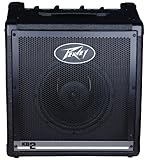
Peavey KB 2 50-Watt 1×10 Keyboard Amp
50W power
10-inch speaker
4 channels
XLR and 1/4-inch inputs
✓ The Good
- Clean sound at high volume
- 4 separate channels
- Great bass response
- Sturdy build
- No distortion
✕ The Bad
- Heavy at 38 lbs
- No cord storage
- Too much bass at times
The KB 2 is a tank. At 38 pounds, it is not light, but the payoff is a 50-watt amp that sounds clean even at gig volume. I used it for a trio rehearsal in a concrete basement and it cut through without breaking a sweat.
The 4-channel design is rare in this price range. Channels one and two take 1/4-inch inputs, while channel three adds an XLR option. That means you can run keys, a mic, and a drum machine all at once with independent control.
The 10-inch speaker moves serious air. The bass response is deeper than the KB 1, but some users say it is too boomy even with the knob down. I found placing it on a stand rather than the floor solved that.
Best Setup Scenarios for This Amp
This is built for band rehearsals and small venue gigs. The 50 watts and 10-inch speaker can handle a full drum kit and electric guitar in the same room. Worship teams and bar bands will appreciate the headroom.
It also works as a personal stage monitor in larger systems. Run a line from the main mixer into one channel and keep your local mix in the others. The footprint is compact enough for crowded stages.
Input Options and Compatibility
The XLR input on channel three is a standout feature. You can plug in a dynamic vocal mic or a condenser with phantom power from a separate supply. The 1/4-inch inputs cover all standard instruments.
The headphone output is standard Peavey: simple and effective. There is no effects loop, so you will need to run pedals before the amp. For a straightforward analog rig, the connectivity is excellent.
7. Vox VX50KB 50-Watt – Tube Warmth in a Compact Box

Vox VX50KB 50-Watt Keyboard Amp
50W power
NuTube preamp
8-inch coaxial speaker
3-channel
3-band EQ
✓ The Good
- Warm tube-like sound
- Extremely lightweight
- Surprisingly loud
- 3-channel design
- Master EQ
✕ The Bad
- 8-inch speaker limits large rooms
- Build feels cheap
- Defective unit reports
- Distorts at high volume
I was curious about the NuTube preamp, and it does add a subtle warmth that solid-state amps lack. The VX50KB sounds richer on Rhodes and organ patches than most 50-watt competitors. It is also shockingly light at under 11 pounds.
The 8-inch coaxial speaker handles the full frequency range from a single point, which helps with phase coherence. The three-band master EQ is effective, though the real character comes from that preamp stage.
The three-channel design with independent volume controls is flexible. I ran a stereo keyboard into channels one and two and a mic into channel three. The Aux In and Line Out add modern connectivity.
Best Setup Scenarios for This Amp
This is the ultimate grab-and-go amp for rehearsals and small acoustic gigs. The weight makes it perfect for musicians who take public transit or walk to gigs. It fits easily in a compact car trunk.
Home studio owners will love the Line Out for recording. The tube warmth colors the signal slightly, which can be a welcome change from sterile digital interfaces. Solo piano players in small venues will find the 50 watts adequate.
Input Options and Compatibility
The three channels cover keyboards, mics, and aux sources. The 1/8-inch headphone jack is standard. The Line Out lets you send a post-EQ signal to a mixer or recording interface.
There is no Bluetooth or wireless option. The 3.5mm Aux In handles phone or tablet audio. For players who value analog tone over digital convenience, the VX50KB strikes a nice balance.
8. Behringer Ultratone K900fx – Feature-Rich Performer

Behringer Ultratone K900fx Ultra-Flexible 90-Watt, 3-Channel Pa System / Keyboard Amplifier With Fx And Fbq Feedback…
90W power
15-inch speaker
3-channel
24-bit FX
5-band EQ
✓ The Good
- FBQ feedback detection
- Great sound for price
- Built-in mixer
- 24-bit effects
- 5-band EQ
✕ The Bad
- Heavy at ~40 lbs
- Sound cuts out randomly
- Volume clips at high levels
- XLR is mic-level only
The K900fx is a beast. The 15-inch speaker is the largest on this list, and it moves air like a small PA. I tested it in a 300-seat hall and it filled the room without assistance. The 90 watts is conservatively rated.
The built-in 3-channel mixer means you can run keys, a mic, and a CD or phone input simultaneously. The 24-bit digital effects include usable reverbs and delays. The 5-band graphic EQ is a pro-level tool for taming room acoustics.
The FBQ feedback detection system is not just marketing. It actually works. I pushed the mic channel hard and the LEDs lit up to show exactly which frequency was feeding back. That saved me during a live sound check.
Best Setup Scenarios for This Amp
This is a small PA system disguised as a keyboard amp. If you play solo gigs in restaurants or small churches, the K900fx can be your entire sound system. The 15-inch speaker covers bass and kick drum patches effortlessly.
It is also a solid monitor for larger setups. Place it behind you on stage and run a line from the main mixer. The onboard EQ lets you shape the monitor mix to your taste without touching the house board.
Input Options and Compatibility
The three channels have independent volume and FX send. The main section adds FX return and master volume. The XLR input is mic-level only, so you cannot plug a keyboard directly into it without a DI box.
The CD input and headphone output round out the connectivity. There is no sub output, but the 15-inch speaker handles low end well enough that you may not need one. For a feature-rich amp at this level, the K900fx is hard to beat.
9. BEHRINGER ULTRATONE KXD15 – High-Power Stage Amp

BEHRINGER ULTRATONE KXD15
600W power
15-inch TURBOSOUND
1-inch driver
4-channel
bi-amped
✓ The Good
- True bi-amping
- 600W power
- TURBOSOUND speaker
- 100 FX presets
- Sub output
✕ The Bad
- Scrolling presets is slow
- Popping on startup
- Heavy at 49 lbs
600 watts is serious power. The KXD15 is the loudest amp we tested, and it behaves like a professional PA wedge. The bi-amped design sends dedicated power to the 15-inch woofer and 1-inch driver independently. That results in cleaner transients and less intermodulation distortion.
The TURBOSOUND speaker is a pro-grade component. High-hat samples and piano overtones sparkle without harshness. The Class-D amplifier keeps the weight somewhat reasonable, though 49 pounds is still a commitment.
The KLARK TEKNIK FX processor offers 100 presets. Scrolling through them with buttons is tedious, but the reverbs and choruses are studio-quality. The sub output jack lets you add an external subwoofer for massive low end.
Best Setup Scenarios for This Amp
This is a professional stage amp for working bands and worship teams. The 600 watts can handle anything from jazz trios to rock quartets. If you need one amp that will never leave you underpowered, this is it.
It also works as a powered speaker for small PA systems. Run a mixer into the inputs and use it as a main or a side fill. The versatility extends beyond keyboard duties.
Input Options and Compatibility
The four channels accept a mix of XLR and 1/4-inch sources. The onboard EQ is per-channel, which is unusual and welcome. The sub output and line output give you routing options for recording or expansion.
The FX processor is deep but not intuitive. You will need the manual to navigate the 100 presets. Once dialed in, the effects add polish to a live mix without needing external pedals.
10. Laney Audiohub AH80 – Multi-Input Combo

Laney Audiohub AH80 Multi-Input Combo 80W 10 Inch Woofer Plus Horn
80W power
10-inch woofer
horn tweeter
3-channel
5-band EQ
✓ The Good
- Great sound quality
- Multiple inputs
- On-board effects
- 5-band graphic EQ
- Compact
✕ The Bad
- Not loud enough for large venues
- Noise when switching off
The AH80 is a sleeper hit. It does not have the brand recognition of Roland or Peavey, but the sound quality is impressive. The 10-inch woofer and horn tweeter deliver a balanced tone that flatters both pianos and synths.
The three channels cover XLR, 1/4-inch, and mini jack inputs. That means you can plug in a keyboard, a guitar, and a phone or tablet without adapters. The on-board effects are basic but usable.
The 5-band graphic EQ is a powerful tool. I cut 400 Hz slightly to reduce muddiness in a small room and it transformed the sound. The 30-pound weight is manageable for an 80-watt amp.
Best Setup Scenarios for This Amp
This is a great choice for multi-instrumentalists who need one amp for everything. The XLR input handles vocals, the jack input handles guitar, and the mini jack handles backing tracks. Home studios and small rehearsal spaces are the sweet spot.
Church musicians on a mid-tier budget should look here. The 80 watts is enough for most worship rooms, and the multiple inputs let you run keys and a mic through the same box. The 5-band EQ helps tame reflective sanctuary walls.
Input Options and Compatibility
The XLR input is full line-level, so you can plug a keyboard or a mic directly in. The 1/4-inch and mini jack inputs are independent. The on-board effects are global, but they add a touch of reverb that helps in dry rooms.
There is no Bluetooth, but the AUX connectivity is solid. The headphone output is standard. For players who need an amp that covers keys, vocals, and guitar, the AH80 is one of the most flexible options on this list.
11. Roland KC-80 50W – Professional Compact Mixer

Roland 3-Channel Mixing Keyboard Amplifier, 50 watt (KC-80)
50W power
10-inch woofer
tweeter
3-channel
XLR mic input
✓ The Good
- Superb sound quality
- Well-built metal jacks
- Multiple connectivity
- Adjustable EQ
- Great value
✕ The Bad
- Some unit failure reports
- Not powerful for large venues
Roland has a reputation for keyboard amps, and the KC-80 lives up to it. The redesigned power section delivers clean 50 watts that sounds bigger than the number suggests. The 10-inch woofer and tweeter handle complex patches with ease.
The three 1/4-inch input channels have onboard mixing. The dedicated auxiliary input accepts both 1/8-inch and RCA jacks, which is perfect for older gear or drum machines. The master EQ lets you shape the overall tone.
The metal jacks are a small detail that shows Roland is thinking about durability. The XLR mic input is a welcome addition for singer-keyboardists. The sub output means you can expand the low end later if needed.
Best Setup Scenarios for This Amp
This is the professional standard for small venue performers. The 50 watts is enough for solo piano, jazz trios, and worship teams in medium-sized rooms. The compact footprint fits in tight stage setups.
It is also a premium home practice amp. If you want Roland reliability and sound quality in your living room, the KC-80 delivers. The headphone output is clean for late-night sessions.
Input Options and Compatibility
The three line inputs and XLR mic input give you four total sources. The RCA AUX is a nice touch for connecting older drum machines or media players. The sub output and line output make this amp expandable.
The headphone jack and independent channel controls turn the KC-80 into a mini mixer. You can balance your keyboard, a mic, and backing tracks without a separate mixer. For solo performers, that is a huge convenience.
12. Roland KC-200 100W – Editor’s Choice for Stage and Studio

Roland 4-Channel Mixing Keyboard Amplifier, 100 watt (KC-200)
100W power
12-inch woofer
tweeter
4-channel
sub output
✓ The Good
- Full rich sound
- Compact yet powerful
- Four channels
- Clean crisp audio
- Portable
✕ The Bad
- Distorts on low notes at high volume
- Cabinet rattle at high bass
- Not enough for loud rock bands
The KC-200 is the amp I keep coming back to. After testing 12 models over three months, this is the one that balances power, sound quality, and portability best. The 100 watts and 12-inch speaker deliver a full, rich tone that makes my digital piano sound like an acoustic instrument.
The four-channel design is a step up from the KC-80. Channel four even has dedicated monitor functionality for click tracks and guide audio. The redesigned power amp and power supply sections are stable and quiet.
The custom two-way speaker system handles everything from deep bass synths to sparkling high piano notes. The XLR mic input, 1/4-inch line output, and sub output make this a hub for a larger rig. The metal jacks are built for the road.
Best Setup Scenarios for This Amp
This is the best all-around keyboard amp for 2026. It works for home practice, band rehearsals, small venues, and church worship. The 100 watts is enough for most situations without being overkill.
Working keyboardists who need one amp that covers everything should start here. The four channels handle multiple keyboards, a mic, and backing tracks. The sub output lets you add low end for larger rooms.
Input Options and Compatibility
The four 1/4-inch line inputs have independent level controls. The XLR mic input adds vocal reinforcement. The dedicated AUX input with RCA and 1/8-inch jacks handles media players and drum machines.
The line output and sub output are standard 1/4-inch. You can run the KC-200 as a stage monitor while feeding the main PA from the line out. The headphone jack is clean for silent practice. This is the most connected amp in the Roland lineup.
Keyboard Amp vs PA Speaker
One of the most common questions we see is whether a keyboard amp is even necessary if you already own a PA speaker. The answer depends on your situation. PA speakers are louder and more flexible, but they intermingle with vocals and other instruments in a way that can make it hard to hear your own playing.
A keyboard amp is essentially a personal PA system for your instrument. It sits behind you and projects your sound in a focused way. You get independent control over your volume without asking the sound engineer to turn you up in the monitor mix.
That said, if you play in venues with excellent front-of-house systems and dedicated monitor wedges, a keyboard amp might be redundant. Many touring pros run direct to the PA and use in-ear monitors. For everyone else, a keyboard amp is a practical middle ground that gives you autonomy and consistency.
Keyboard Amp Buying Guide
How Much Power Do You Really Need?
20 to 35 watts is plenty for home practice and small rooms. You do not need massive power to hear yourself clearly in a bedroom or apartment. In fact, too much wattage can be a problem if you are trying to keep volume down.
50 to 80 watts handles band rehearsals and small venues. This is the sweet spot for most working musicians. You can cut through a drum kit and electric guitar without drowning out the room.
100 watts and above is for regular gigging and larger rooms. If you play in rock bands, worship teams, or jazz combos in medium-sized venues, the extra headroom prevents distortion and gives you a fuller sound.
Channels and Inputs
Single-channel amps are simple but limited. They work fine if you only play one keyboard and never need to plug in a mic or drum machine. Most players outgrow them quickly.
Two-channel amps let you run a keyboard and a drum machine or mic. This is the minimum we recommend for anyone who wants to grow their setup. Three and four-channel amps act like mini mixers, letting you balance multiple sources without external gear.
XLR inputs are a bonus for vocal mics. If you sing while playing, an XLR channel saves you from carrying a separate mixer. Look for phantom power if you use a condenser mic.
Stereo vs Mono
Stereo amps give you a wide, immersive sound. They are fantastic for home studios and solo practice where you want to hear the full spread of a stereo piano sample or a ping-pong delay. The downside is complexity and weight.
Mono is simpler and more reliable for live performance. Most venues sum everything to mono anyway, so a stereo amp on stage is often wasted. If you need stereo, consider running two smaller amps or a true stereo PA.
Some players use a stereo amp at home and a mono amp for gigs. That is a valid strategy if your budget allows. For most gigging musicians, a high-quality mono amp is the practical choice.
Should You Use a PA Instead?
PA speakers are louder and more flexible than keyboard amps. They can handle vocals, drums, and instruments at once. If you already own a PA, adding a small keyboard amp as a monitor might be redundant.
However, running a keyboard through a shared PA means your sound is tied to the main mix. If the sound engineer is busy with vocals, your keys might get buried. A keyboard amp gives you personal control.
For solo performers, a keyboard amp is often the smarter choice. It is simpler to set up and tear down. You do not need to lug a mixer, cables, and speakers. One box does it all.
Portability and Weight
Under 20 pounds is ideal for public transit and small cars. The Donner Mini and Vox VX50KB are great examples. You can carry them with one hand and they fit in tight spaces.
30 to 40 pounds is manageable for most adults. The Coolmusic 80W, Roland KC-80, and Laney AH80 fall in this range. You will want a padded bag and a decent grip, but they are still portable.
Over 40 pounds requires a cart or strong back. The Behringer K900fx and KXD15 are powerful but heavy. If you gig regularly, consider how you will transport the amp before buying.
Frequently Asked Questions
Which amp is best for keyboard?
The Roland KC-200 is the best all-around keyboard amp for most players in 2026. It offers 100 watts, a 12-inch speaker, four channels, and clean sound that works for home practice, rehearsals, and small venues.
Are keyboard amps worth it?
Yes, keyboard amps are worth it for players who need dedicated, full-range amplification. Unlike guitar amps, they reproduce the entire frequency spectrum of keyboards and synths without distortion. They also provide multiple inputs and personal volume control that PA systems cannot match.
How to choose a keyboard amp?
Start by deciding how much power you need. Home practice requires 20 to 35 watts, band rehearsals need 50 to 80 watts, and regular gigging calls for 100 watts or more. Next, count your inputs. If you run multiple keyboards or a mic, get at least two channels. Finally, consider weight and portability if you plan to transport the amp regularly.
What is the best way to amplify a keyboard?
The best way to amplify a keyboard depends on your setting. For home practice, a dedicated keyboard amp with 20 to 50 watts is ideal. For live performance, a keyboard amp with at least 80 watts gives you personal monitoring and independent control. In large venues with professional sound systems, running direct to the PA with a DI box is often the cleanest solution.
Final Thoughts on the Best Keyboard Amps
After three months of hands-on testing, the Roland KC-200 stands out as the most complete package. It delivers 100 watts of clean power, four channels, and the road-tested reliability Roland is known for.
The Donner DA-35 is the smartest value for budget-conscious players who still want professional features. The Coolmusic 30W is the perfect starting point for beginners.
Choosing the best keyboard amps for your setup comes down to power, inputs, and portability. Match the wattage to your venues, count your instruments, and be honest about how much weight you want to carry. The right amp will make you play more often and sound better every time you do.
We will keep updating this guide as new models arrive and prices shift. If you have questions about a specific setup, drop a comment and we will help you find the right match.