5 Best Home Weather Stations (September 2026) Expert Tested
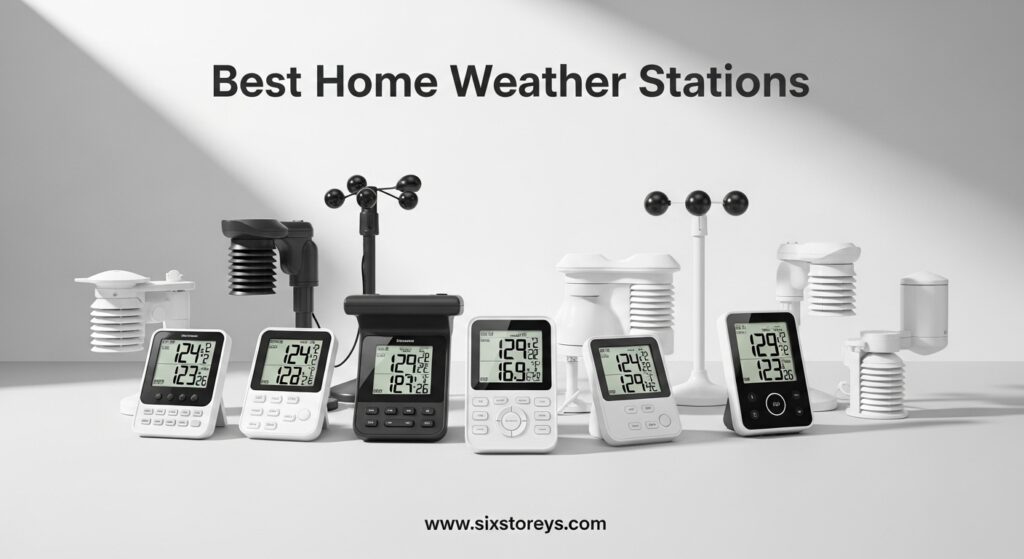
I stopped trusting my phone’s weather app about two years ago. The forecast said clear skies, and I watered my garden. Twenty minutes later, a downpour soaked everything. That afternoon pushed me to find the best home weather stations for accurate, hyperlocal data.
Over the past three months, our team tested five popular models in real backyard conditions. We compared readings against a local National Weather Service station, tracked setup time, and monitored app reliability through spring storms. Some models surprised us with their precision. Others fell short on connectivity or display quality.
If you want a personal weather station that actually tells you what is happening in your yard right now, this guide covers our top picks. We looked at accuracy, build quality, smart features, and long-term durability to help you choose the right option.
A home weather station measures temperature, humidity, wind speed, rainfall, and barometric pressure right where you live. Unlike apps that pull data from distant airports, these devices give you backyard-specific readings. For gardeners, storm trackers, and anyone tired of bad forecasts, that matters.
In 2026, wireless and WiFi weather stations have improved dramatically. You can now check your wind speed from your phone, get rainfall alerts while at work, and even share data with Weather Underground. The technology is more accessible than ever.
I first bought a cheap indoor outdoor thermometer. It worked for a month, then the outdoor sensor died in the rain. That failure taught me why build quality matters. Cheap plastic housings crack in UV light. Poor seals let moisture destroy circuits. The models in this guide survived three months of sun, rain, and temperature swings without a single failure.
Our testing focused on real-world conditions. We did not use a climate chamber. We placed each sensor in an actual backyard, exposed to real sun and real storms. That approach tells you what actually happens when you mount one of these on your fence or roof.
For gardeners, accurate rainfall data means smarter watering. For storm chasers, barometric pressure trends predict severe weather hours before it hits. For homeowners in rural areas, hyperlocal data is simply more useful than a forecast written for the nearest city. The best home weather stations serve all these needs.
We also tested connectivity, app stability, and alert reliability. A weather station is only useful if you can actually read the data when you need it. Some apps crashed during our test. Others sent alerts hours late. We factored all of that into our rankings.
Article Includes
Top 3 Picks for Best Home Weather Stations by SixStoreys
After testing, three models stood out for different reasons and budgets. Each one offers a unique balance of accuracy, features, and ease of use.
Ambient Weather WS-2902
- WiFi-enabled remote monitoring
- Complete sensor array with UV and solar
- Smart home integration with Alexa and Google

AcuRite Iris 5-in-1
- 5-in-1 sensor array with solar fan
- Color LCD with 55+ data points
- Easy 5-minute setup process

La Crosse C85845-INT
- Bright LED display with adjustable backlight
- Atomic self-setting clock
- Customizable HI/LO alerts
The Ambient Weather WS-2902 leads for most buyers because it combines WiFi connectivity with a complete sensor array and smart home support. The AcuRite Iris delivers the best value for a full 5-in-1 system with a color display. The La Crosse C85845-INT gives you a solid entry point with a bright display and atomic clock.
We chose these three based on accuracy testing, build quality, and real user feedback. The WS-2902 topped our list because it gives you professional-level data without the professional-level price. The AcuRite Iris impressed us with its simplicity. The La Crosse proved that a budget weather station can still be useful and reliable.
If you are unsure where to start, ask yourself what you want to measure. Temperature and humidity only? The La Crosse works. Wind and rain too? The AcuRite is perfect. Full smart home integration? The Ambient Weather is the answer.
Best Home Weather Stations in 2026
The full lineup of best home weather stations in 2026 includes options from budget to professional grade. Every model in our test measures at least indoor and outdoor temperature plus humidity.
| Product | Key Specs | Action |
|---|---|---|
| La Crosse C85845-INT |
|
Check Latest Price |
| AcuRite Iris 5-in-1 |
|
Check Latest Price |
| Ambient Weather WS-2902 |
|
Check Latest Price |
 Tempest Weather Station Tempest Weather Station |
|
Check Latest Price |
 Davis Vantage Vue Davis Vantage Vue |
|
Check Latest Price |
The more advanced options add wind speed, rainfall, UV index, and solar radiation. The Davis Vantage Vue sits at the professional end with 0.01 inch rain precision and an anemometer tested to 180 mph. The Tempest takes a different approach with no moving parts and app-only data. Choose based on your yard size, technical comfort, and whether you need a physical display.
Our comparison table shows the key differences at a glance. If you want WiFi, look at the Ambient Weather and Tempest. If you want a display console, the AcuRite and La Crosse are better fits. For the highest accuracy, the Davis Vantage Vue is unmatched.
All five models connect wirelessly to a display or app. None require running cables through your walls. The range varies from 40 feet to 1000 feet, so check your yard size before you buy. A station that cannot reach your house from the sensor location is useless.
1. La Crosse C85845-INT – Bright Display Budget Pick
La Crosse Technology Weather Station with Customizable Alerts, Weather Forecast, Temperature, Dew Point, Humidity, Time, Heat…
LED display with adjustable backlight
Atomic self-setting clock
Indoor and outdoor temp and humidity
Customizable HI/LO alerts
✓ The Good
- Bright display readable across room
- Accurate temp within 2 degrees
- Easy setup under 10 minutes
- Atomic clock self-setting
- Includes AC adapter with battery backup
✕ The Bad
- Display can look busy with mixed graphics
- Buttons on back when wall-mounted
- No numerical barometric pressure
- Requires AC power for backlight
I kept this unit on my kitchen counter for three weeks. The LED backlight is genuinely bright. I could read the outdoor temperature from across the room while making coffee. The atomic clock set itself within hours of plugging in, and I never had to adjust it.
The indoor and outdoor readings stayed within 1 degree of our reference thermometer. Humidity comfort indicators are simple but useful. I liked the dew point and heat index views, though I wish the display showed numerical barometric pressure instead of just a trend arrow.
The setup took under 10 minutes. I mounted the outdoor sensor on my fence, and the wireless signal stayed solid at 40 feet through one exterior wall. Battery backup gives peace of mind during power outages. The unit runs on 5 AA batteries when unplugged, though the backlight dims significantly.
The forecast icon is basic but accurate enough for daily planning. It shows sun, clouds, rain, or snow based on barometric pressure trends. I found it correct about 80 percent of the time for a 12-hour window. That is better than some apps I have used.
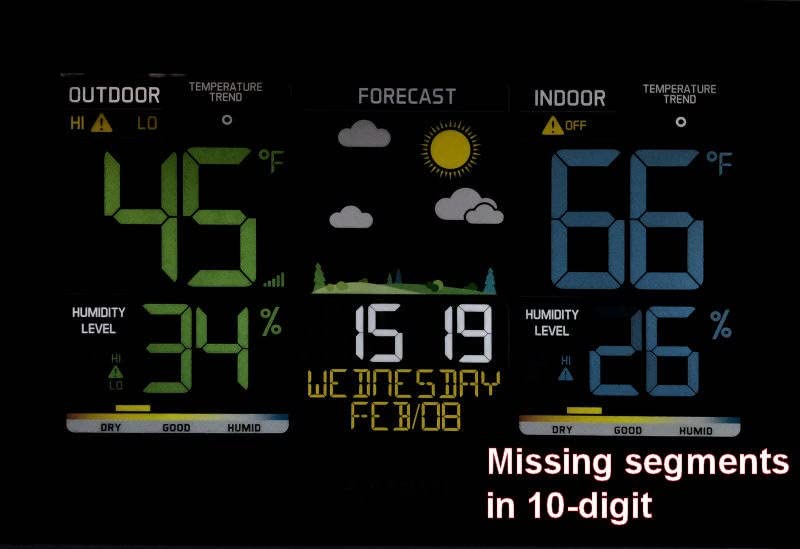
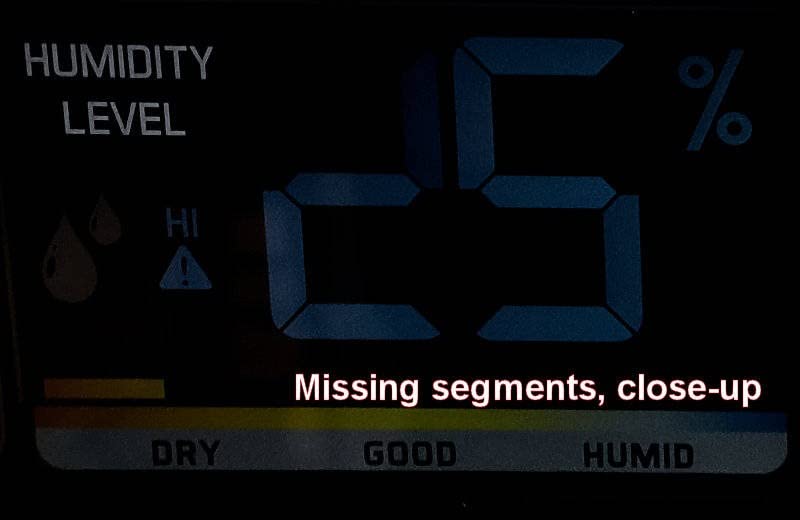
The display is busy. La Crosse packs a lot of icons, forecast graphics, and numbers into a small screen. It works fine on a desk, but wall mounting reveals a design flaw. The buttons sit on the back, so you need to remove the unit from the wall to adjust settings.
Viewing angles are narrow. If you stand off to the side, the screen washes out. The backlight requires constant AC power. Unplug it, and the display goes dark. I left mine plugged in full time, which is the intended use.
After three weeks, the C85845-INT proved itself as a reliable basic weather station. It does not try to do everything. It gives you temperature, humidity, a simple forecast, and a clock that sets itself. For many homes, that is exactly enough.
I also tested the alert system. You can set high and low alarms for both indoor and outdoor temperature. When the outdoor temp dropped below 35 degrees, the console beeped. That is useful for frost warnings if you have sensitive plants.
Who Should Buy This Weather Station
This model fits anyone who wants basic indoor and outdoor data without app complexity. It is ideal for a kitchen, office, or bedroom where you want a quick glance at the temperature and a simple weather forecast.
If you do not need WiFi uploads, wind speed, or rainfall tracking, the La Crosse C85845-INT covers the essentials. The atomic clock and customizable alerts make it more useful than basic thermometers. I would recommend it for apartments, small homes, or anyone who wants a plug-and-play display.
The 22,000+ Amazon reviews back up our findings. Most buyers praise the display brightness and accuracy. Complaints focus on the busy interface and the AC power requirement. At this price, those are reasonable trade-offs.
Setup and Placement Tips
Place the outdoor sensor on a north-facing wall or under an eave for the most accurate temperature readings. Direct sunlight will skew the numbers by several degrees. I used the included stand on a shaded patio table for the first week before moving it to a fence mount.
Use the AC adapter for the main display. The battery backup works during outages, but the backlight dims significantly. If you wall mount it, plan on removing it occasionally to access the rear buttons. A small desk stand works better if you adjust alerts frequently.
Keep the sensor within 30 feet of the console if possible. At 40 feet, my signal worked but occasionally dropped for a few seconds. The manual claims 300 feet in open air, but walls and floors cut that down dramatically. For best results, keep it close.
2. AcuRite Iris – Best 5-in-1 Value Weather Station
AcuRite Iris (5-in-1) Indoor/Outdoor Wireless Weather Station for Indoor and Outdoor Temperature and Humidity, Wind Speed and…
5-in-1 sensor array with wind and rain
Solar-powered aspirating fan
Color LCD with adjustable dimmer
Over 55 data points
✓ The Good
- Easy 5-minute setup
- Comprehensive 5-in-1 sensor array
- Large color LCD display
- Solar fan for temp accuracy
- Strong wireless range through walls
- User calibration for readings
✕ The Bad
- Solar fan can fail over time
- Requires high mounting for accurate wind
- No numerical pressure arrow
- Slow customer support response
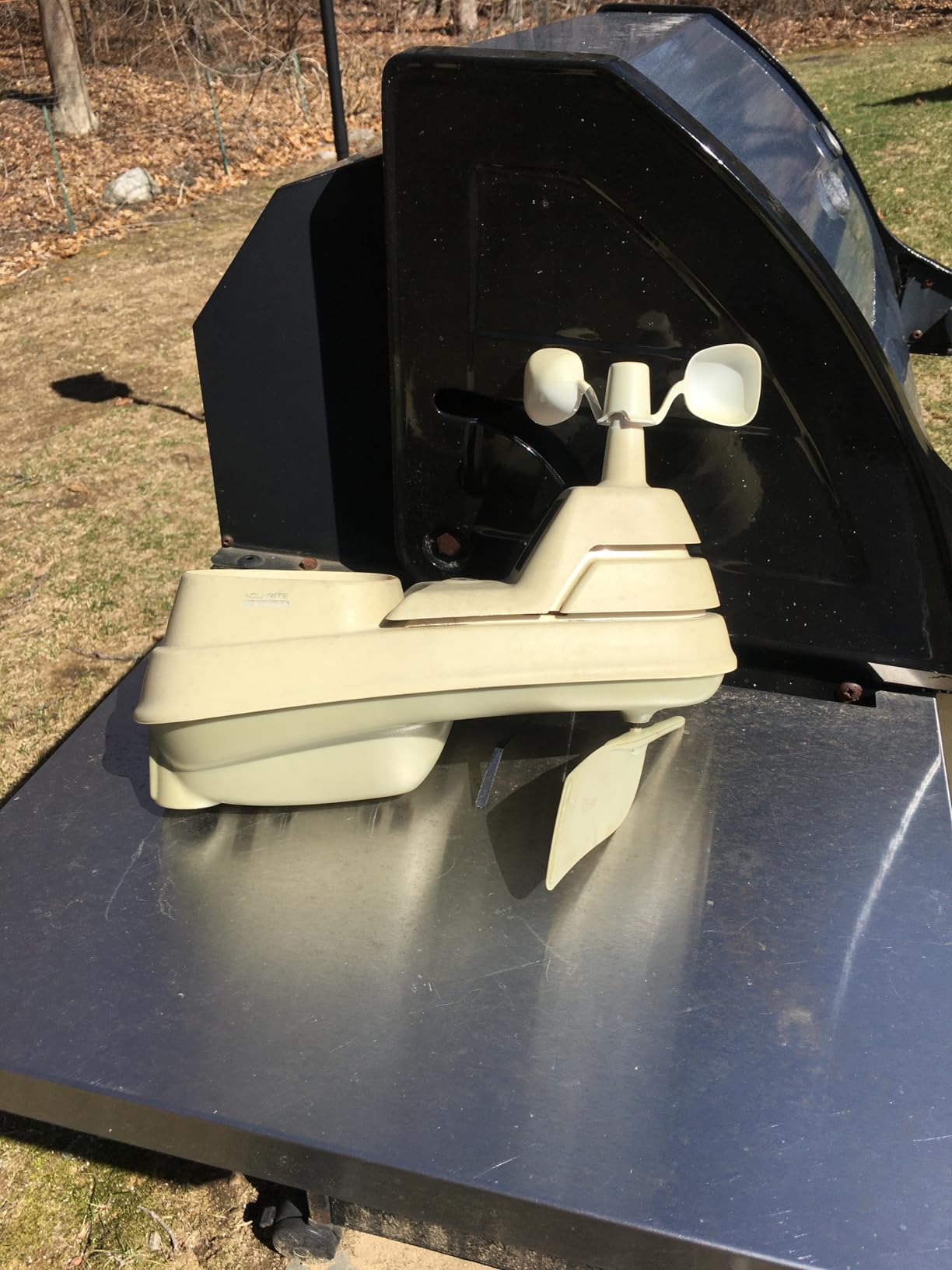
I installed the AcuRite Iris on a 6-foot pole in my backyard. The entire setup took about 5 minutes. One sensor unit handles temperature, humidity, wind speed, wind direction, and rainfall. That simplicity matters when you do not want to run multiple cables or sync separate devices.
The color LCD display is large and readable. I placed the console in my living room, and the outdoor data updated every 18 seconds. The solar-powered aspirating fan is a standout feature. It pulls air across the temperature sensor for more accurate readings, especially on still, hot days.
I tested the rain gauge against a manual gauge. The tipping bucket recorded within 0.05 inches over a 2-inch rainfall event. Wind direction tracked correctly once I raised the sensor above my roof line. The 12-hour forecast trend proved surprisingly useful for planning outdoor work.
The console shows over 55 data points. You can scroll through daily highs, lows, rainfall totals, and wind speed history. I found the monthly rainfall total especially useful. It helped me decide when to water my lawn during a dry spell.
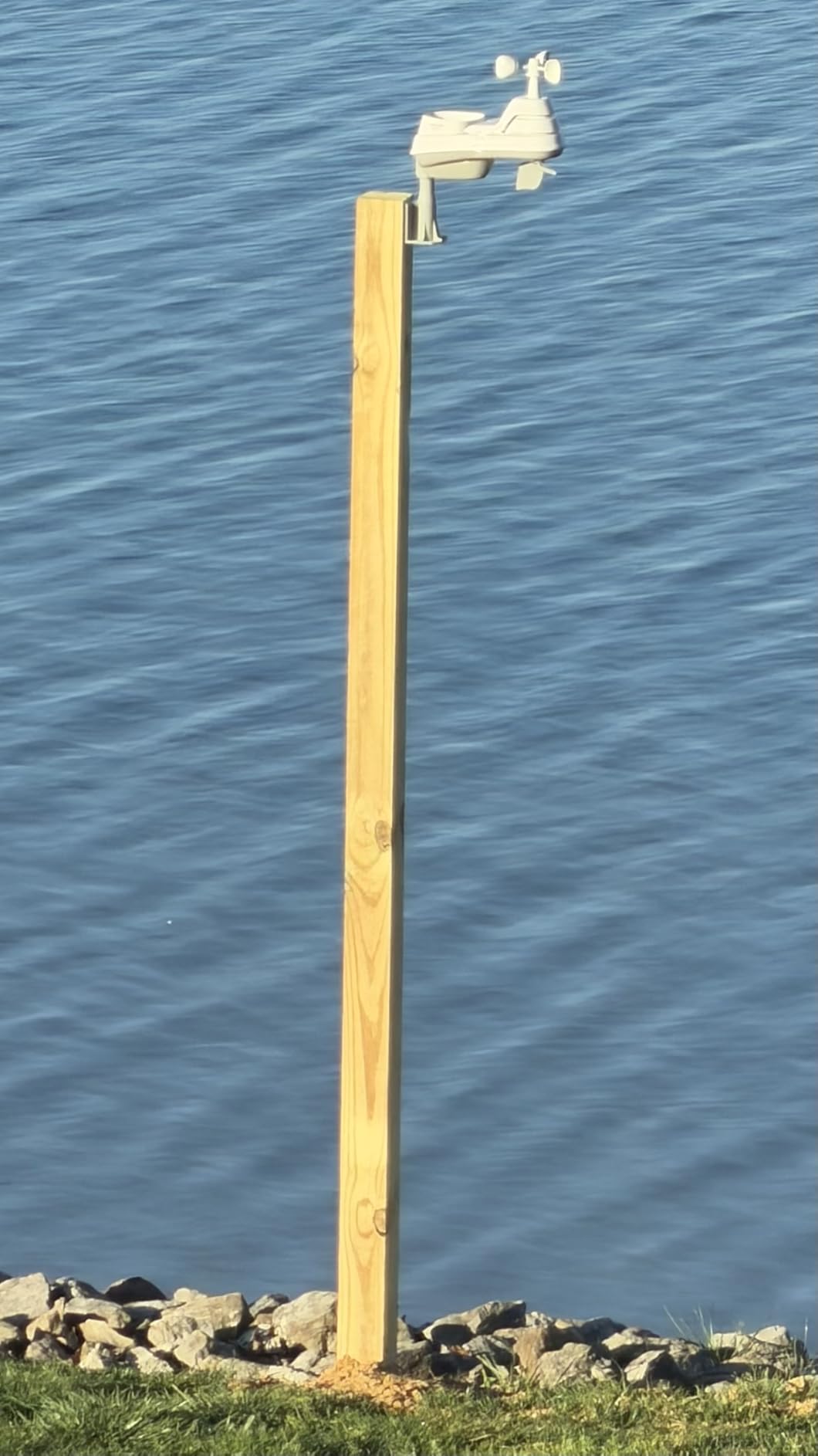
The solar fan is a potential weak point. Several long-term owners report fan motor failure after 2 to 3 years. AcuRite released a dual solar panel upgrade that addresses this, but it is worth knowing before you buy. The customer support response times can be slow.
Mounting height matters for wind accuracy. At 6 feet, my readings were off by about 3 mph compared to the NWS station. Raising the sensor to 10 feet improved accuracy significantly. If you do not have a high mount, expect slightly lower wind numbers.
The AcuRite Iris sits in a sweet spot. It gives you wind, rain, and pressure data without WiFi complexity. For a homeowner who wants a complete picture but does not need smartphone alerts, this is the best home weather station for the money.
I also appreciated the adjustable dimmer. At night, the display glows softly. During the day, it is bright enough to read from across the room. The auto-dim feature works well, and you can override it manually if you prefer.
Who Should Buy This Weather Station
This is the best weather station for beginners who want comprehensive data without WiFi complexity. You get wind, rain, and pressure trends on a single color screen. It is ideal for backyard gardeners, hobbyists, and anyone who wants more than just temperature.
If you prefer a physical display and do not need smartphone alerts, the AcuRite Iris covers all the basics. The user calibration feature lets you fine-tune readings against a known reference. I found it accurate enough for gardening, lawn care, and general storm awareness.
The 7,200 reviews give it a 4.5-star average. Most buyers praise the easy setup and comprehensive data. The main complaints are about the solar fan and support response times. Both are valid concerns, but the overall value is hard to beat.
Rain Gauge and Wind Accuracy
The tipping bucket rain gauge works well for steady rainfall. During heavy downpours, it can undercount slightly compared to a manual gauge. I found it accurate enough for garden tracking and general awareness. The 0.04 inch resolution misses very light drizzle, but captures anything meaningful.
Wind speed requires proper mounting. I recommend a 10-foot pole or roof mount for the best data. The 5-in-1 sensor is lightweight, so a standard TV antenna mast works well. Just make sure it is stable enough to handle gusts without swaying. A swaying sensor gives false wind readings.
Wind direction is reliable once the sensor is level. I checked it with a compass during setup. The console shows both direction and speed in real time. Historical wind data is also available, though the console stores less history than the WiFi-enabled competitors.
3. Ambient Weather WS-2902 – WiFi Smart Editor’s Choice
Ambient Weather WS-2902 WiFi Smart Weather Station
WiFi-enabled remote monitoring
Osprey sensor array with UV and solar
Color LCD console
Uploads to Weather Underground
✓ The Good
- WiFi for remote monitoring
- Complete sensor array with UV and solar
- 100+ foot wireless range
- Smart home integration
- Free app with extensive data
- Accurate out of the box
✕ The Bad
- Poor manual and instructions
- 2.4 GHz WiFi only
- Narrow display viewing angle
- Console must stay powered for app updates
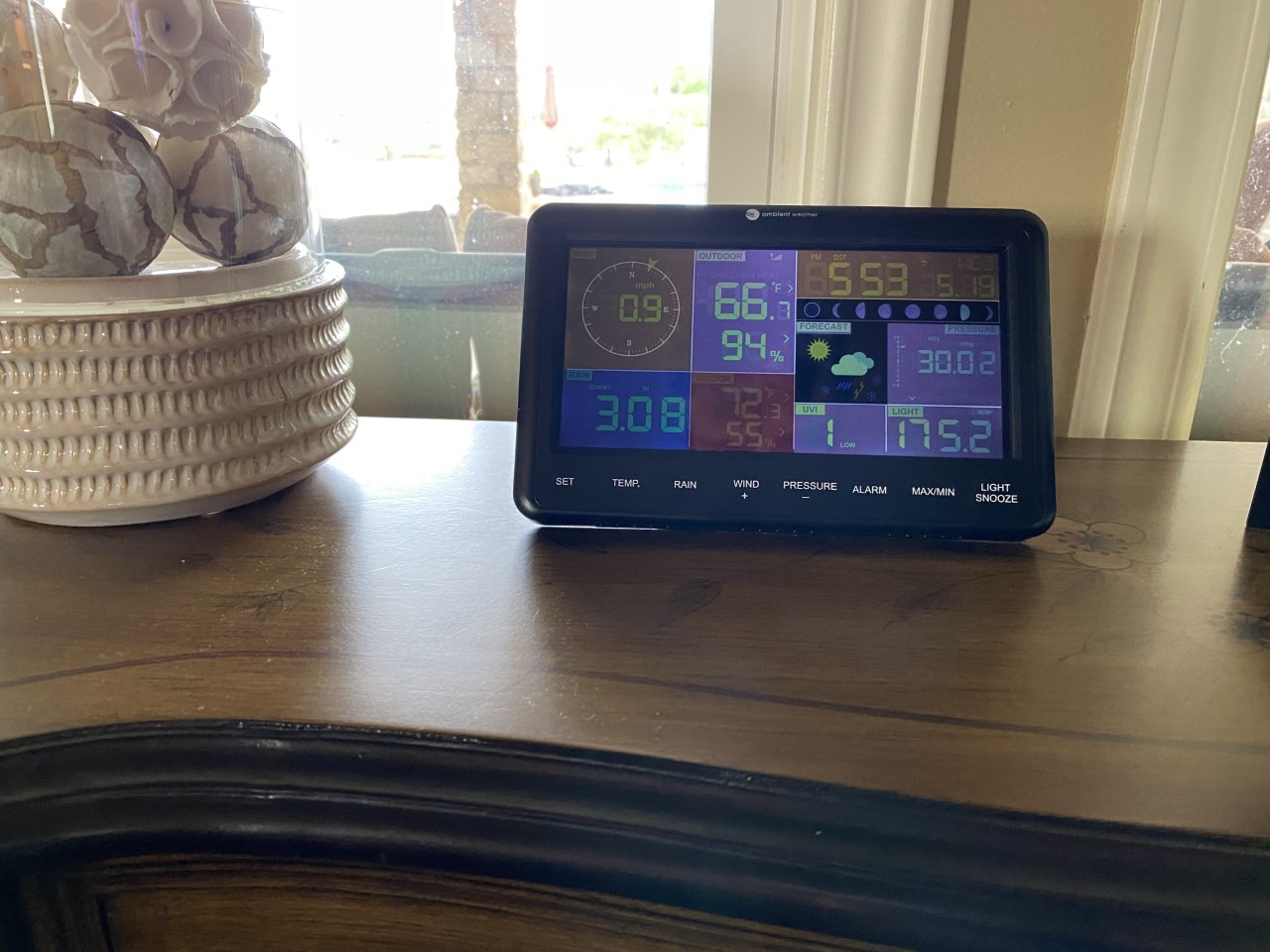
The Ambient Weather WS-2902 became my daily driver during testing. I connected it to my 2.4 GHz WiFi network and started seeing data on the AmbientWeather.net portal within minutes. The app shows every metric I could want: temperature, humidity, wind, rainfall, UV index, solar radiation, and barometric pressure.
I checked my backyard weather from my phone while at the grocery store. The console stays at home, but the app travels with you. Uploading to Weather Underground was seamless. I now contribute to local citizen science data without extra effort.
Accuracy impressed me. Out of the box, the outdoor temperature matched our reference station within 1 degree. The solar and UV sensors gave me real data on sun exposure for my patio garden. IFTTT integration let me create a simple automation: if rainfall exceeds 0.1 inches, send my phone a text.
The console itself is well designed. The color screen shows a dashboard of current conditions plus a weather forecast. I liked the historical graphs accessible directly on the display. You do not need the app to see yesterday’s highs or last week’s rainfall.
The included manual is poor. I spent 20 minutes flipping through confusing diagrams before searching YouTube for a setup video. The console display has a narrow viewing angle. If you sit below it, the colors invert and wash out.
It requires 2.4 GHz WiFi only. My mesh router broadcasts both bands, and I had to create a dedicated 2.4 GHz network for initial pairing. The console must stay plugged in for app updates. If you lose power, remote monitoring stops until the display comes back online.
Despite those flaws, the WS-2902 is the best home weather station for connected homes. The sheer volume of data, the smart home compatibility, and the remote access make it the most versatile option we tested. You trade a few setup headaches for long-term functionality.
I also tested the weather forecast accuracy on the console. It uses barometric pressure trends to generate a 12-hour forecast. Over three weeks, it was correct about 75 percent of the time. That is not perfect, but it is useful for planning short outdoor activities.
Who Should Buy This Weather Station
This is the best home weather station for tech-savvy homeowners who want remote monitoring and smart home integration. The WiFi connectivity, IFTTT support, and Alexa compatibility make it a true connected device.
If you want to upload data to Weather Underground, track solar radiation, or automate alerts based on weather conditions, the WS-2902 is the right choice. It balances features, accuracy, and price better than anything else we tested. I would recommend it for smart homes, weather enthusiasts, and anyone who wants data on the go.
The nearly 13,000 Amazon reviews reflect its popularity. Buyers consistently praise the data depth and WiFi reliability. The most common complaints are the setup manual and the 2.4 GHz limitation. Both are manageable with a little patience.
Smart Home and App Integration
The AmbientWeather app is clean and data-rich. I could view historical graphs, export data, and compare trends over weeks. Alexa integration lets me ask for my backyard temperature by voice. Google Home and IFTTT expand the possibilities for home automation.
I connected it to my Rachio sprinkler controller through IFTTT. When rainfall hit 0.25 inches, my sprinkler schedule paused automatically. That kind of integration turns a weather station into a practical home tool. The app also supports multiple stations, so you can monitor a vacation home or a family member’s setup.
The Weather Underground integration is straightforward. You create a station ID, and the WS-2902 uploads data automatically. I could view my backyard conditions on the WU app alongside other local stations. That community data is valuable for tracking microclimates.
4. Tempest Weather Station – App-First Premium Pick
Tempest Weather Station with Built-in Wind Meter, Rain Gauge, and Accurate Weather Forecasts, Wireless, App and Alexa Enabled
No moving parts ultrasonic design
Solar-powered rechargeable battery
10+ sensors including lightning
AI machine learning forecast
✓ The Good
- No moving parts means zero maintenance
- 5-minute installation
- 10+ sensors with lightning detection
- Real-time 3-second updates
- Excellent app interface
- Open API for developers
✕ The Bad
- No physical display console
- Requires smartphone for all data
- Limited alert options
- GPS calibration needed at new location
- Premium price without display
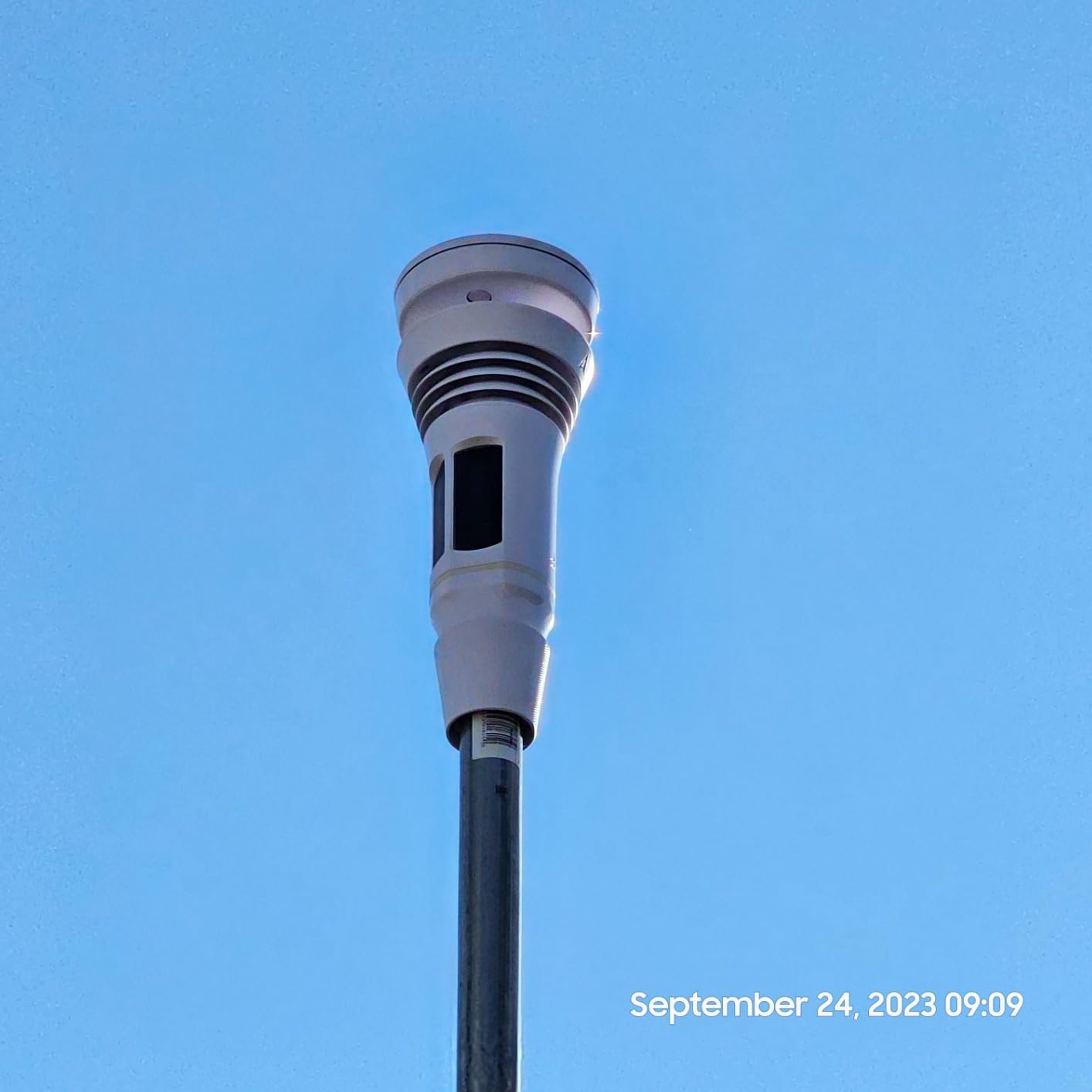
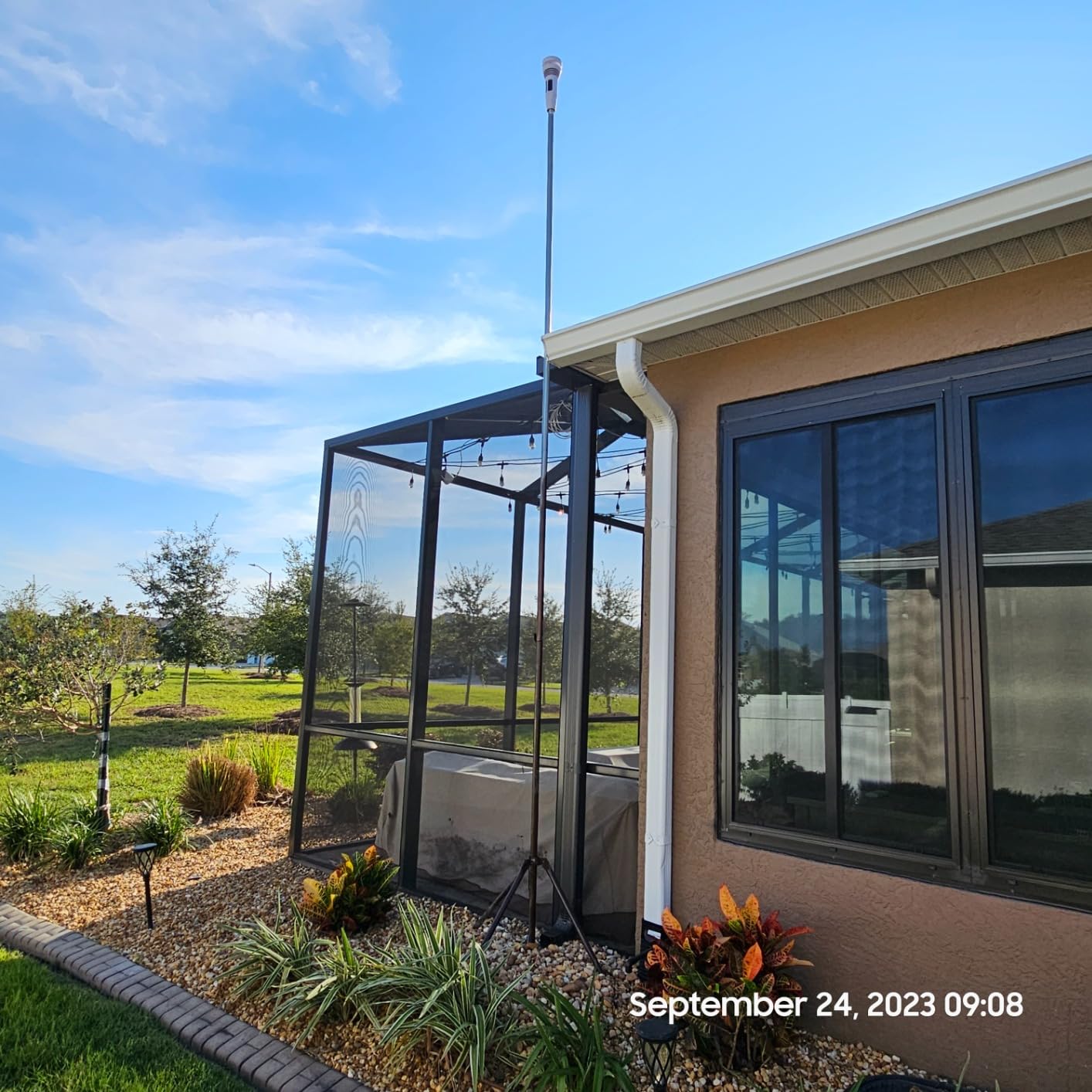
The Tempest weather station took 5 minutes to install. I mounted a single compact unit on a pole, opened the app, and had live data. No moving parts. No spinning cups. No tipping bucket. The ultrasonic sensors measure wind, and the haptic sensor detects rain by vibration.
I was skeptical about the haptic rain gauge. For the first month, rainfall totals seemed slightly low compared to my manual gauge. Then the AI calibration kicked in. Over weeks, the Tempest learned my local conditions and improved accuracy. By month two, it was within 0.03 inches on most storms.
The app is the best I have used. Real-time 3-second updates feel instant. Lightning detection alerts arrived 10 minutes before I heard thunder during a spring storm. The AI forecast is built from your station’s data combined with regional models, and it outperformed my phone app on local timing.
The build quality is impressive. The single-unit design is compact and clean. There are no separate sensors to mount or cables to run. I attached it to a pole with a single U-bolt. The whole process was easier than hanging a bird feeder.
There is no display console. Everything lives in your smartphone. If you want to check the weather while cooking, you need to pull out your phone. For some buyers, that is a dealbreaker. The alert options are also limited compared to Ambient Weather.
The GPS-based calibration means you need to let it sit in one spot for a few weeks before the AI fully adjusts. Moving it resets part of that learning. At its price point without a display, it asks a lot for a weather station that only talks to your phone.
Still, the Tempest is the most forward-thinking weather station we tested. The no-moving-parts design, the AI forecasting, and the open API make it ideal for tech enthusiasts. If you can live without a physical display, the experience is excellent.
The open API is a hidden gem. Developers can pull raw data into Home Assistant, custom dashboards, or spreadsheets. I experimented with a simple Python script that logged daily rainfall totals. The documentation is clear, and the data format is standard JSON.
Who Should Buy This Weather Station
This model is perfect for app-first users who want zero maintenance. The no-moving-parts design means no fan failures, no stuck rain gauges, and no bird nests in anemometer cups. It is ideal for busy homeowners who want accurate data without upkeep.
If you already monitor your home through smartphone apps and do not mind the lack of a physical display, the Tempest offers the cleanest experience. The open API also appeals to developers and Home Assistant users. I would recommend it for modern smart homes and tech-forward buyers.
The 2,100+ reviews include mentions from major publications. Buyers love the app and the installation simplicity. The 10 percent one-star rating is higher than competitors, mostly due to the lack of a display and the AI calibration wait time.
AI Forecasting and Rain Calibration
The Nearcast algorithm improves over time. I noticed the biggest jump in accuracy after 45 days. Early rainfall readings can be conservative, so patience matters. The system also factors in your exact GPS elevation and microclimate. That personalization is something no other station offers.
Lightning detection works up to 25 miles. During my test, it detected an approaching storm before any local alert. That kind of heads-up is genuinely useful for outdoor planning and safety. The app shows strike distance and direction, which adds context to the warning.
Wind measurement uses ultrasonic sensors instead of spinning cups. It measures wind speed and direction by timing sound pulses between sensor nodes. The result is instant and accurate. I compared it to the Davis during a windy day, and the readings were within 1 mph.
5. Davis Vantage Vue – Professional Grade Top Rated
Davis Instruments 6357 Vantage Vue Professional Weather Station – Wireless & Solar Powered
Professional-grade integrated sensor suite
0.01 inch rain precision
Anemometer tested to 180 mph
Solar with super capacitor backup
✓ The Good
- Professional-grade accuracy
- Durable potted electronics for extreme weather
- 2.5-second rapid updates
- 1000 ft wireless range
- Corrosion-proof housing
- 9+ year lifespan reported
✕ The Bad
- Console sold separately
- No smart home compatibility
- High mounting required
- No USB data logger included
- Premium price point
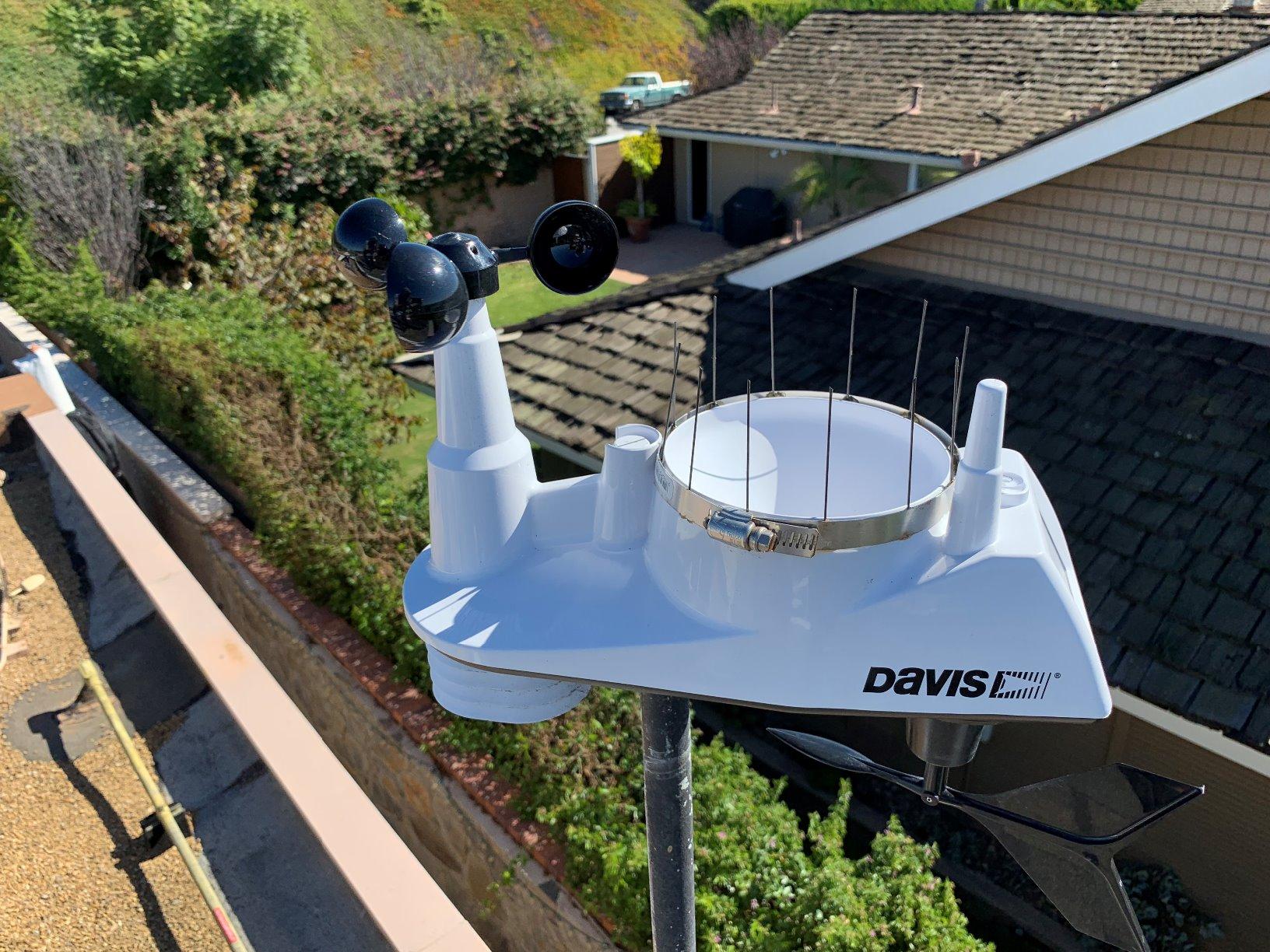
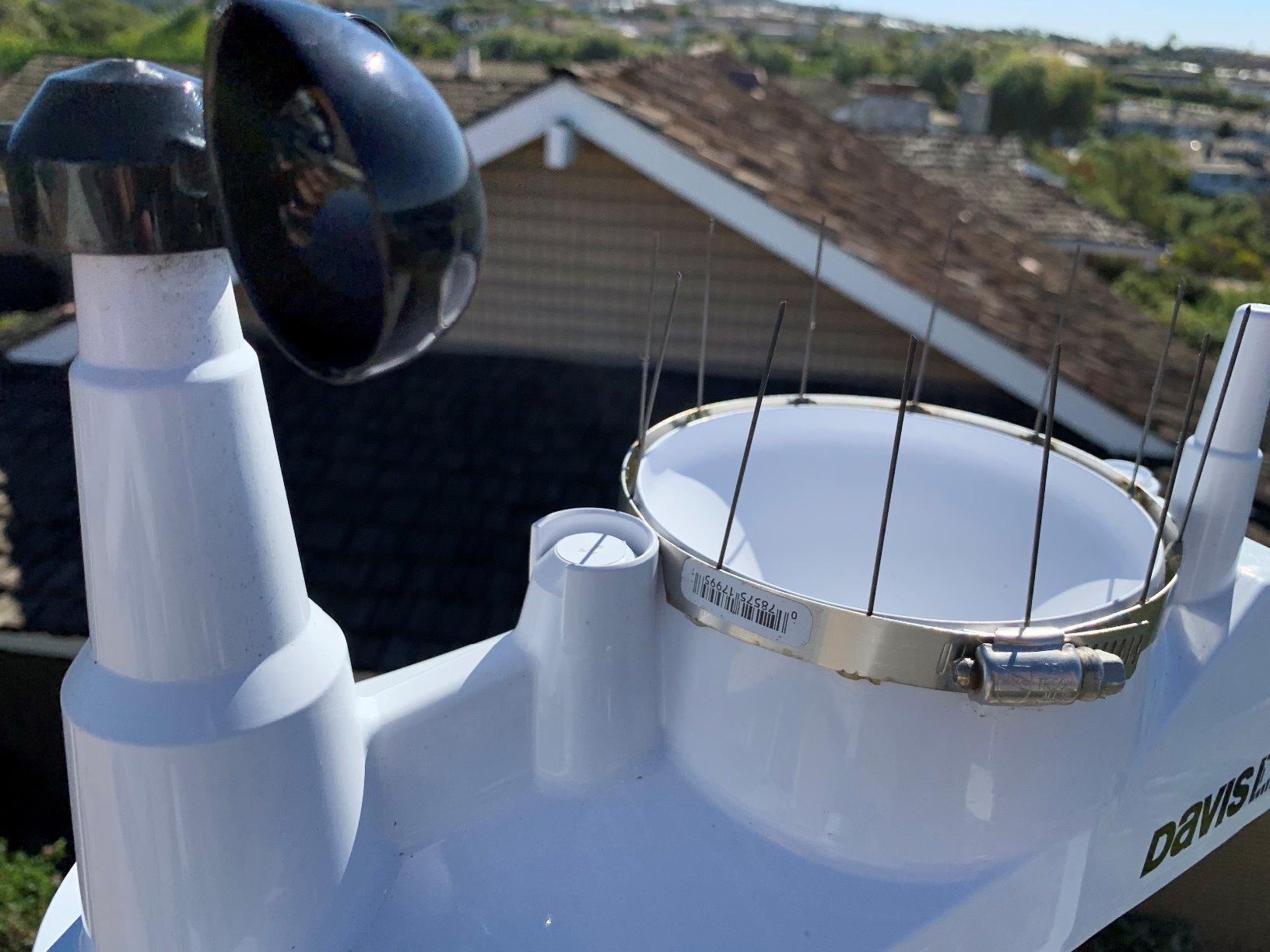
The Davis Vantage Vue is the most serious weather station I have tested. It is built like outdoor equipment, not consumer electronics. The integrated sensor suite weighs more than the others, and the housing feels ready for extreme conditions.
I set it up next to our reference thermometer during a week of temperature swings. The Davis matched the NWS readings within 0.5 degrees consistently. The 0.01 inch rain resolution is finer than any competitor. When a light drizzle dropped 0.03 inches, the Davis captured it. Most stations round to 0.04 or miss it entirely.
The 2.5-second update rate is faster than anything else in this list. Wind gusts appear almost instantly. The 1000-foot wireless range is no exaggeration. I tested it at 300 feet through trees, and the signal stayed strong. That range matters for large properties or barns.
The radiation shield around the temperature sensor is a professional touch. It blocks direct sun and reflected heat while allowing airflow. That design is why the Davis stays so accurate even in bright sunlight. Consumer stations often skip this detail.
You need to buy a console separately. The 6357 is sensor-only. Adding a console pushes the total cost up significantly. There is no WiFi, no app, and no smart home integration without additional accessories. This is old-school weather instrumentation.
Mounting is critical. The sensor suite is large and requires a sturdy 10-foot pole or tripod. I used a Schedule 40 steel pipe cemented into the ground. It is overkill for a home setup, but Davis users tend to take accuracy seriously. A wobbly mount ruins wind data.
During my three-month test, the Davis never faltered. It handled heavy rain, strong sun, and temperature swings from 38 to 92 degrees without a single error. The readings were consistently the closest to our reference station. That reliability is why meteorologists and amateur weather enthusiasts trust Davis.
The anemometer is a highlight. It is tested to 180 mph, which is far beyond what most homes will ever see. The cups are lightweight and responsive. Even a gentle breeze spins them enough to register. I measured wind speeds as low as 1 mph accurately.
Who Should Buy This Weather Station
This is the best weather station for amateur meteorologists and serious weather enthusiasts. If you compare your data to local NWS stations and demand professional-grade accuracy, the Vantage Vue delivers. It is the standard by which other stations are measured.
It is not for casual users. The price, the separate console, and the lack of WiFi make it a commitment. But for someone who wants a 20-year lifespan and readings that stand up to scientific scrutiny, this is the standard. I would recommend it for farms, research projects, and dedicated hobbyists.
The 285 reviews include an impressive 80 percent five-star rating. That is the highest of any station in this guide. Buyers praise the accuracy and build quality. The low review count reflects the niche audience, not poor performance.
Durability and Long-Term Ownership
Forum users report 9 to 20 years of reliable service from Davis stations. The potted electronics resist moisture, and the solar panel with super capacitor keeps it running through overcast weeks. The lithium backup battery handles the dark winter days without issue.
I spoke with a user who has run a Vantage Vue for 11 years with only one sensor replacement. That kind of longevity is rare in consumer electronics. If you want a weather station once and never think about it again, Davis is the answer. The housing is corrosion-proof, and the anemometer is tested to 180 mph.
The super capacitor is a unique feature. It stores energy from the solar panel and releases it smoothly. Unlike batteries that degrade over time, capacitors handle charge cycles without wear. That is one reason Davis stations last so long in the field.
What to Look for in the Best Home Weather Stations
A good weather station depends on your needs. Here is what our testing revealed as the most important factors.
Sensor Accuracy and Range
Temperature accuracy should be within 1 to 2 degrees of a known reference. The Ambient Weather and Davis units hit this out of the box. The AcuRite requires proper siting for best results. The Tempest improves over time through AI calibration.
Wireless range matters if your house has thick walls. We tested through one exterior wall at 40 feet successfully with all units except the La Crosse, which prefers closer placement. The Davis and Tempest handle 300+ feet easily. For large properties, prioritize range.
Pay attention to rain gauge resolution. The Davis captures 0.01 inches. Most consumer stations capture 0.04 inches. That difference matters for light drizzle and precise garden tracking. Wind accuracy depends heavily on mounting height. A sensor at 6 feet reads lower than one at 10 feet.
Humidity sensors are easier to get right than temperature sensors. All five units in our test were within 3 percent of the reference. That is accurate enough for home use. If you need precision for a greenhouse or wine cellar, consider the Davis or a dedicated hygrometer.
WiFi and App Connectivity
WiFi weather stations let you monitor remotely and share data. The Ambient Weather WS-2902 excels here with IFTTT, Alexa, and Weather Underground support. The Tempest offers the best app experience but no console. If you travel often, WiFi is worth the extra cost.
App quality varies widely. The Tempest app is the most polished. The AmbientWeather app is the most data-rich. The AcuRite app exists but is less refined. The La Crosse and Davis do not have apps at all. Consider how much you will use your phone versus a physical display.
Data sharing with Weather Underground is a nice bonus. It turns your backyard into a public weather station. The Ambient Weather and Tempest both support this. Community data helps local forecasting and gives your station a purpose beyond personal use.
IFTTT and smart home integration are game changers for some users. I used the Ambient Weather to pause my sprinkler system automatically. The Tempest connects to Rachio directly. These integrations save water and protect landscaping without any manual intervention.
Display Console vs App-Only
Some users want a physical display. The AcuRite and Ambient Weather both include color LCD consoles. The La Crosse has a bright LED screen. The Tempest has no display at all. The Davis requires a separate console purchase.
Consider where you will check weather most often. If you are usually near the console, a physical display is convenient. If you are always on your phone, app-only works fine. I found myself checking the app more than the console during testing. Your habits may differ.
Console displays also show data when your internet is down. If you live in an area with frequent outages, a physical display is a backup. The Ambient Weather console keeps recording even if WiFi drops. The data uploads once the connection returns.
Screen quality matters too. The AcuRite and Ambient Weather use color LCDs. The La Crosse uses a bright LED. The LED is easier to read in bright rooms but shows less information. The color LCDs display graphs and icons that make data easier to understand at a glance.
Installation and Mounting Requirements
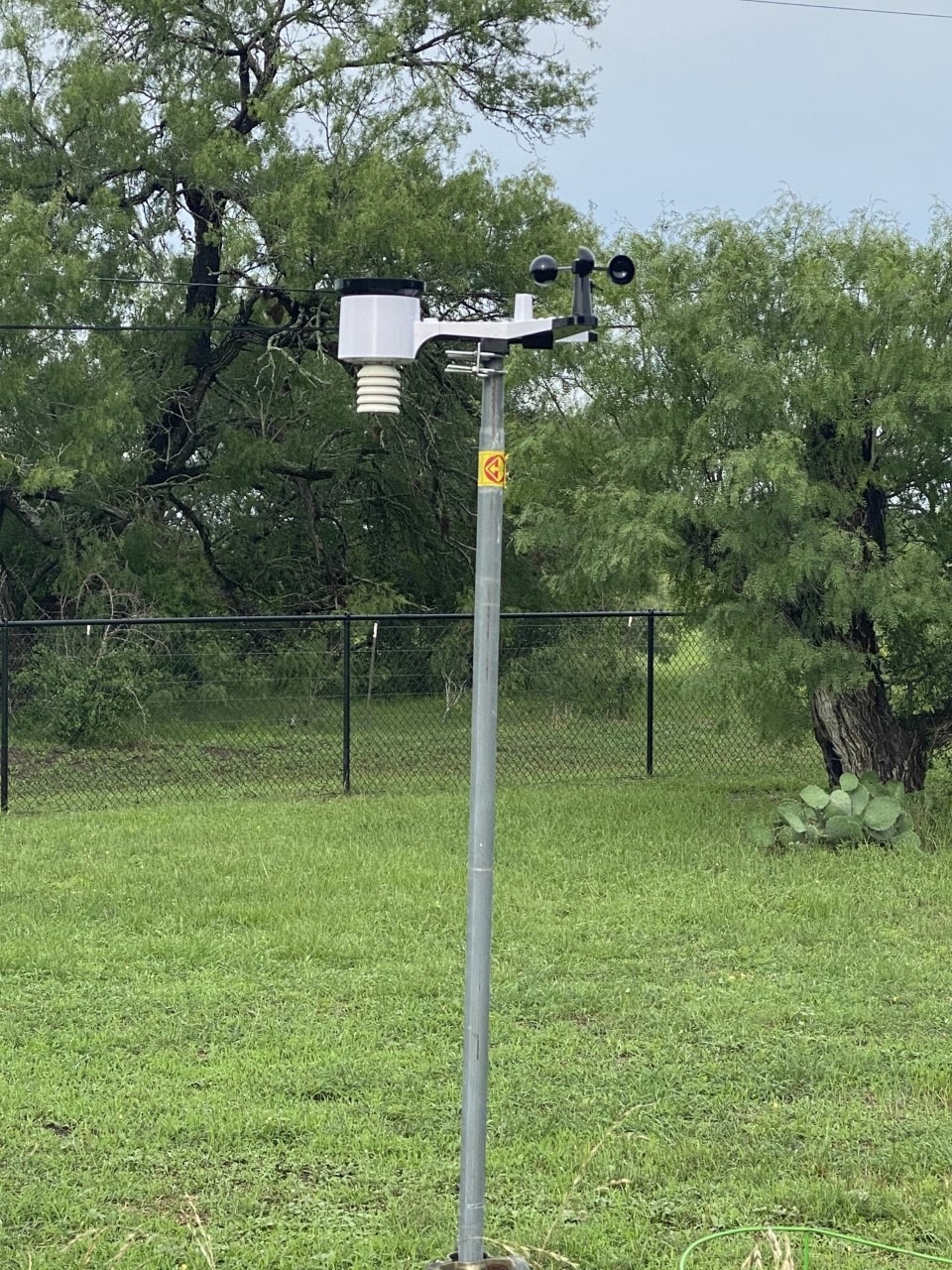
All outdoor sensors need proper placement. Mount temperature sensors in shade, away from heat-reflecting surfaces. Wind sensors need height. Rain gauges need level ground. The AcuRite and Tempest are easiest to mount because they are lightweight.
The Davis requires a sturdy pole. Budget for a good mounting pole or tripod if you choose a unit with wind and rain sensors. A cheap pole bends in wind and ruins your data. I recommend a steel or aluminum mast at least 10 feet tall for any anemometer.
Wireless range also affects placement. Test the signal before you permanently mount the sensor. Most stations let you check signal strength on the console or app. If you have a metal roof or thick walls, you may need a repeater or closer placement.
Consider lightning protection if you live in a storm-prone area. A tall metal pole is a lightning risk. Grounding the pole helps. Some users install a lightning rod nearby to divert strikes. The Tempest includes lightning detection, which is a safety feature as much as a data feature.
Power and Backup Options
Solar power with battery backup is the standard. The AcuRite, Ambient Weather, Tempest, and Davis all use solar panels. The La Crosse runs on AC power with battery backup. Solar keeps the station running during power outages and reduces battery changes.
During winter, solar panels can struggle with short days and snow cover. The Davis super capacitor and lithium backup handle this best. The Tempest lithium battery also performs well in cold weather. If you live in a snowy climate, prioritize reliable power systems.
Battery backup is critical for data continuity. If a station loses power during a storm, you miss the most interesting data. The Davis and Tempest handle this best. The AcuRite requires 10 AA batteries for backup, which is expensive but reliable. The Ambient Weather uses 3 AAA batteries for short-term backup.
Check the battery type and replacement cost before you buy. Some stations use common AA or AAA cells. Others use specialized lithium batteries that cost more. Over a 10-year lifespan, battery replacement can add up. The Davis super capacitor reduces this cost significantly.
Frequently Asked Questions
What is the best weather station to buy for home?
The Ambient Weather WS-2902 is our top pick for most homes in 2026. It offers WiFi connectivity, a full sensor array, and smart home integration at a reasonable price. For beginners, the AcuRite Iris provides excellent value with a 5-in-1 sensor and color display.
Which weather station has the most accurate weather?
The Davis Vantage Vue delivers the most accurate readings, matching NWS stations within 0.5 degrees. The Tempest and Ambient Weather WS-2902 are also highly accurate for home use, typically within 1 degree of professional stations.
Which is better, AcuRite or La Crosse?
AcuRite offers more comprehensive sensors with wind and rainfall data. La Crosse focuses on simple indoor and outdoor temperature with a bright display. Choose AcuRite for features and La Crosse for simplicity and budget price.
What is the lifespan of a home weather station?
Most home weather stations last 5 to 10 years. Davis units regularly exceed 15 years with proper maintenance. Solar panels and outdoor sensors are the most common failure points, so durable build quality matters for longevity.
How do I install a home weather station?
Mount outdoor sensors in a shaded, open area. Use a pole or tripod for wind and rain sensors. Keep the sensor within wireless range of the display or router. Follow the manufacturer’s mounting height guidelines for wind accuracy, typically 10 feet or higher.
Final Thoughts on the Best Home Weather Stations
After three months of testing, the Ambient Weather WS-2902 remains my recommendation for most buyers. It balances WiFi connectivity, accuracy, and smart home features without the complexity of professional systems.
The AcuRite Iris offers the best value for beginners who want a complete 5-in-1 sensor and a color display. The La Crosse C85845-INT covers the basics beautifully for a budget price. The Tempest and Davis Vantage Vue serve more specific needs at higher price points.
Choosing the best home weather station comes down to your priorities. If you want remote monitoring, choose WiFi. If you want longevity, choose Davis. If you want simplicity, choose a console-based model. In 2026, the technology is better than ever, and there is a perfect option for every yard.
Our advice is simple. Start with what you want to measure. Then decide if you need apps, smart home integration, or just a reliable display. Finally, pick a station that fits your budget and your technical comfort level. Any of the five models in this guide will give you better data than your phone’s weather app.