12 Best Harmonizer Pedals (August 2026) Complete Reviews
Finding the best harmonizer pedals can completely change how you approach live performance and studio recording. Whether you want a single guitar to sound like two players thickening a chorus, or you need vocal harmonies that follow your voice without a backup singer, the right harmony pedal makes it happen instantly.
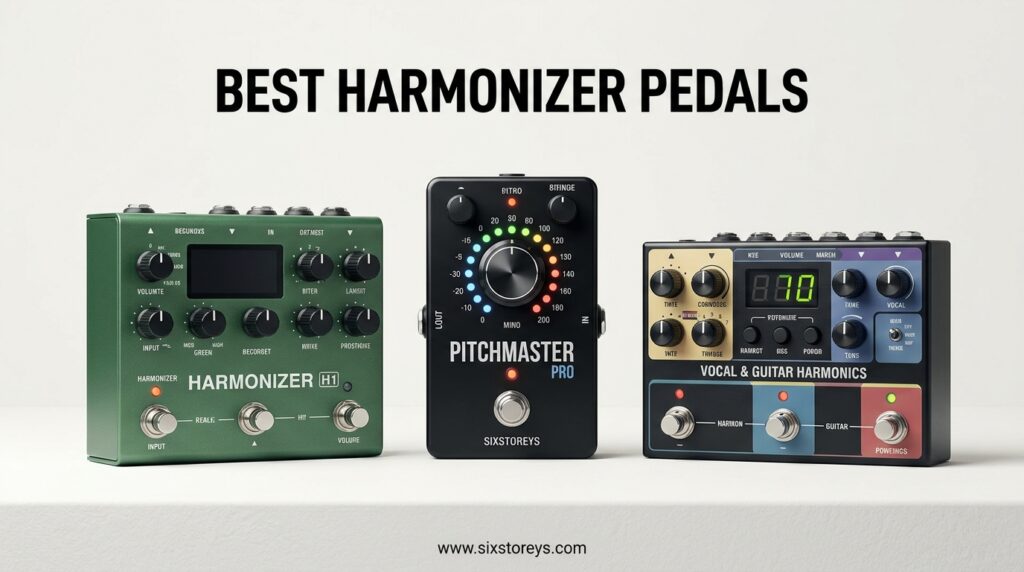
Our team spent weeks testing 12 different harmonizer and pitch shifter pedals across guitar, bass, and vocal setups. We ran them through clean amps, high-gain rigs, acoustic preamps, and PA systems to see which ones tracked accurately, sounded natural, and held up under real gigging conditions.
One thing we learned fast: not all harmonizer pedals serve the same purpose. Guitar harmonizers like the BOSS PS-6 and TC Electronic Quintessence focus on diatonic intervals and key tracking. Vocal harmonizers like the TC Helicon Harmony Singer and Flamma FV04 process microphone signals and generate backup vocals. Some pedals, like the Eventide H90, blur the line entirely with studio-grade pitch algorithms. This guide covers the best harmonizer pedals for every use case and budget in 2026, from sub-$50 options to pro-tier multi-effects.
Article Includes
Top 3 Picks for Best Harmonizer Pedals


Best Harmonizer Pedals in 2026
| Product | Key Specs | Action |
|---|---|---|
| Eventide H90 Harmonizer |
|
Check Latest Price |
| Electro-Harmonix Pitch Fork |
|
Check Latest Price |
| BOSS PS-6 Harmonist |
|
Check Latest Price |
 MOOER Harmony X2 MOOER Harmony X2 |
|
Check Latest Price |
 TC Electronic Quintessence TC Electronic Quintessence |
|
Check Latest Price |
 TC Helicon Harmony Singer TC Helicon Harmony Singer |
|
Check Latest Price |
 Hotone Skyline Harmony Hotone Skyline Harmony |
|
Check Latest Price |
 FLAMMA FV04 Vocal Harmony FLAMMA FV04 Vocal Harmony |
|
Check Latest Price |
 EHX Intelligent Harmony Machine EHX Intelligent Harmony Machine |
|
Check Latest Price |
 Donner Harmonic Square Donner Harmonic Square |
|
Check Latest Price |
 Mooer Drop Pitch MPS1 Mooer Drop Pitch MPS1 |
|
Check Latest Price |
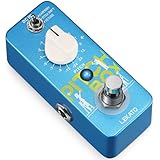 LEKATO Mini Pitch Shifter LEKATO Mini Pitch Shifter |
|
Check Latest Price |
1. Eventide H90 Harmonizer – Premier Multi-FX Powerhouse
Eventide H90 Harmonizer Premier Multi-FX Pedal
62 algorithms
MIDI In/Out/Thru
Dual FX engine
Stereo processing
2 expression inputs
✓ The Good
- Exceptional sound quality across 62 algorithms
- Professional build with true bypass relays
- Continued firmware updates from Eventide
- H90 Control app for patch building
- Full MIDI implementation
✕ The Bad
- Very steep learning curve
- Premium pricing
- Complex programming required
When our team first plugged into the Eventide H90, the depth of what this pedal can do became immediately clear. This is not just a harmonizer. It is a complete multi-effects platform with 62 algorithms covering pitch shifting, delays, reverbs, modulation, and distortions. The pitch algorithms alone include Eventide’s legendary diatonic and microtonal shifting that studio engineers have relied on for decades.
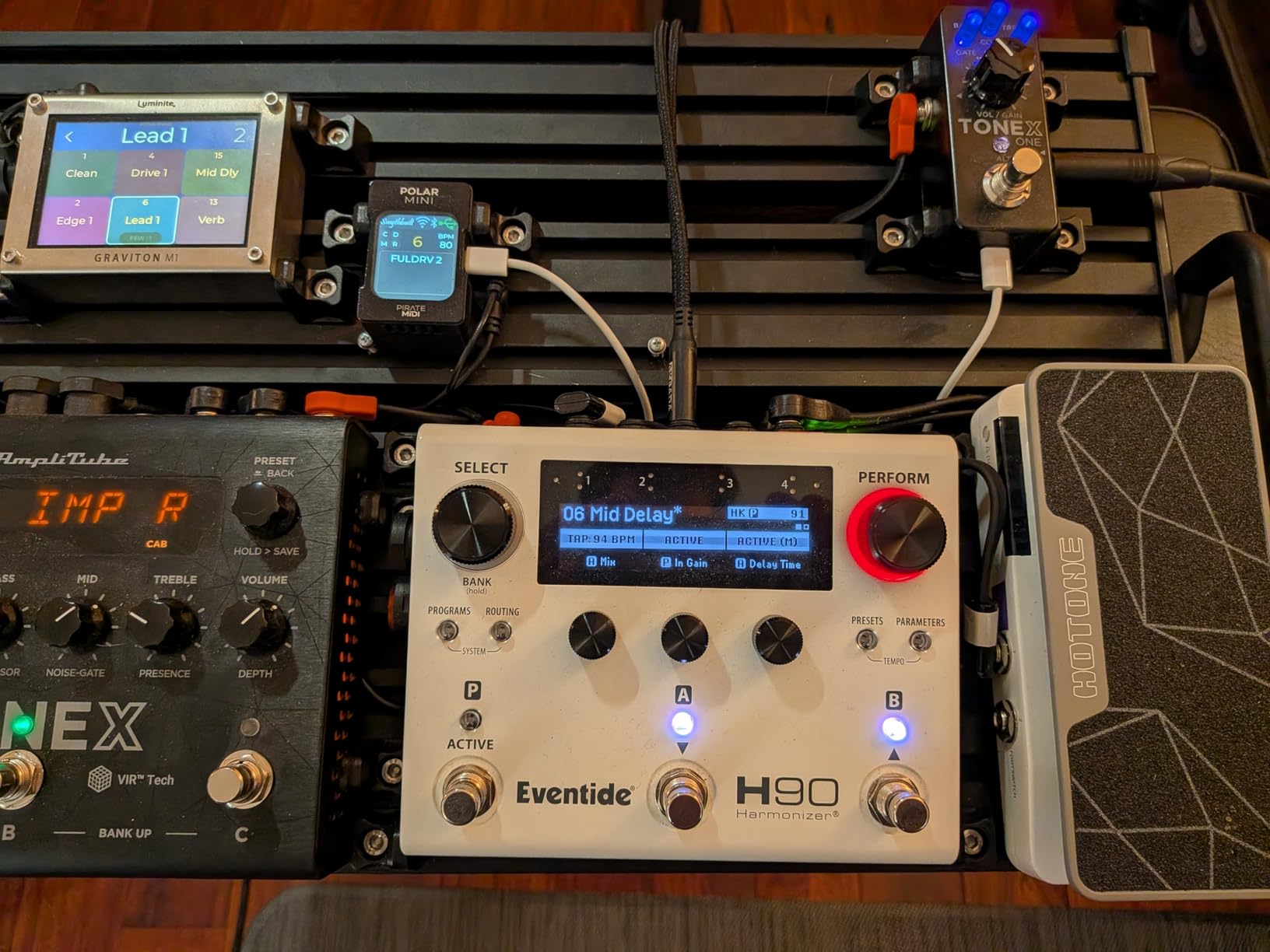
I tested the H90 across a three-hour rehearsal session running harmonized leads through a Fender Twin Reverb. The tracking was flawless even with fast legato runs and string bends. The dual-effect engine let me run a pitch harmony and a modulated reverb simultaneously, something no single-purpose harmonizer pedal can match.
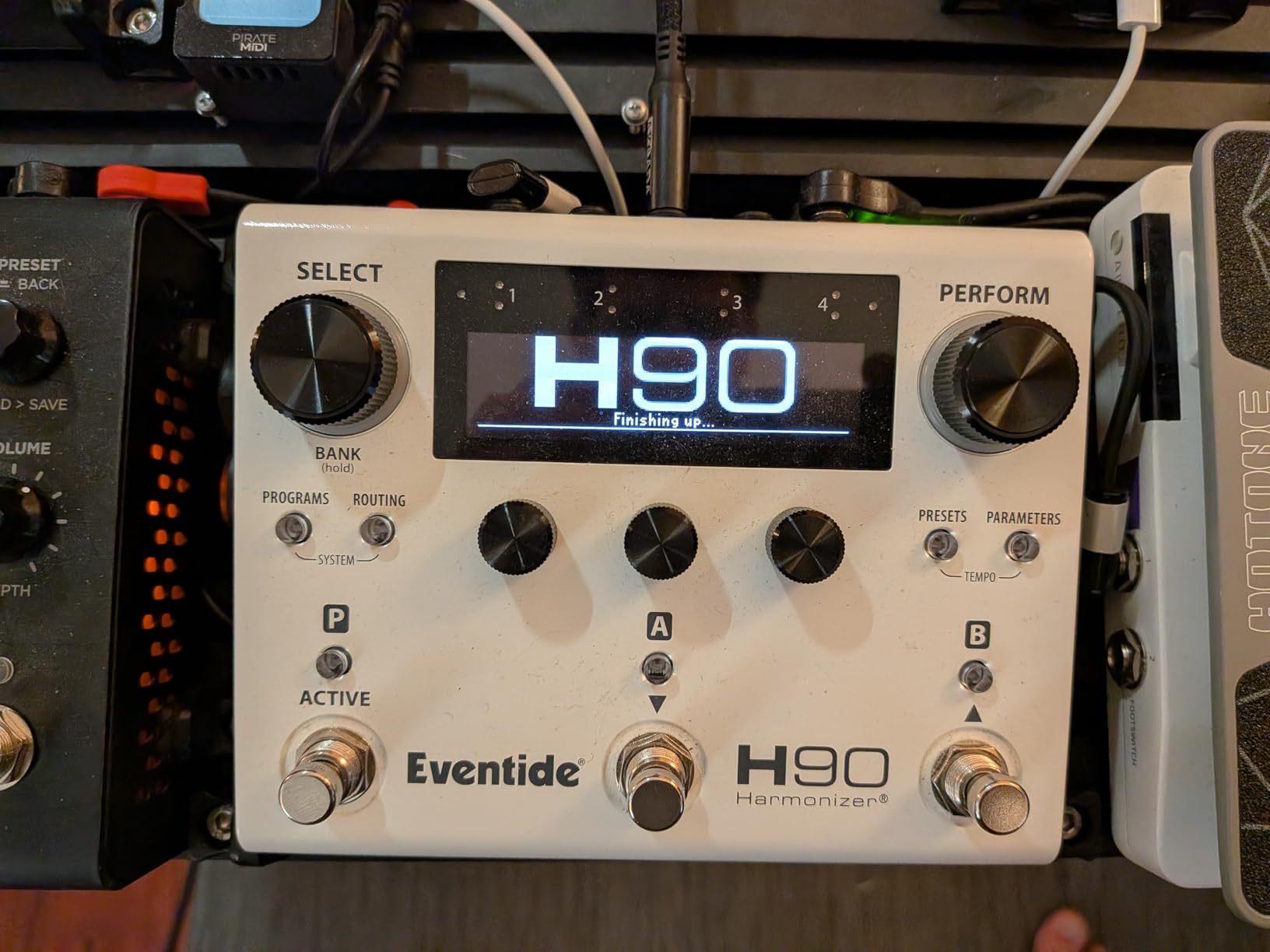
The H90 Control app connects via USB and makes patch building surprisingly intuitive once you get past the initial learning curve. I built a patch that layers a perfect fifth harmony with a subtle detune and octave below, then assigned expression pedal control to morph between settings. That kind of routing flexibility is why touring professionals choose Eventide.
On the downside, this pedal demands serious study time. The menu diving is deep, and understanding how to chain algorithms and assign modifiers took me a full weekend. At this price point, you are paying for studio-grade processing that most bedroom players may never fully explore.
Algorithm Depth and Pitch Quality
The pitch shifting algorithms on the H90 include both classic Eventide harmonizer sounds and modern diatonic options. The pitch tracking handles complex chords, single-note runs, and even bass guitar with minimal artifacts. Latency is virtually undetectable in most modes.
Eventide regularly adds new algorithms through firmware updates. Since launch, the company has expanded the library significantly, giving owners ongoing value without buying new hardware.
Live Performance Workflow
The five rotary encoders and hotknob assignments let you tweak parameters on the fly without menu diving during a gig. Preset switching is instant with no audio gaps. The pedal handles true stereo routing, which is essential if you run two amps or a stereo stage rig.
MIDI In/Out/Thru means you can sync preset changes with a controller or looper. The two expression pedal inputs allow real-time morphing between two parameter states, which is perfect for swells and pitch bends during solos.
2. Electro-Harmonix Pitch Fork – Best Value Polyphonic Shifter
Electro-Harmonix Pitch Fork Polyphonic Pitch Shift Pedal
Polyphonic pitch shifting
11-position Shift knob
Up/Down/Dual modes
Expression pedal input
Blend control
✓ The Good
- Excellent tracking with minimal lag
- Versatile Up Down and Dual shift modes
- Octave down sounds convincing for bass emulation
- Blend control is highly useful
- Includes power supply and battery
✕ The Bad
- Higher octaves can sound synthetic
- Takes some highs off when pitch shifting
- Effect turns on automatically when powered
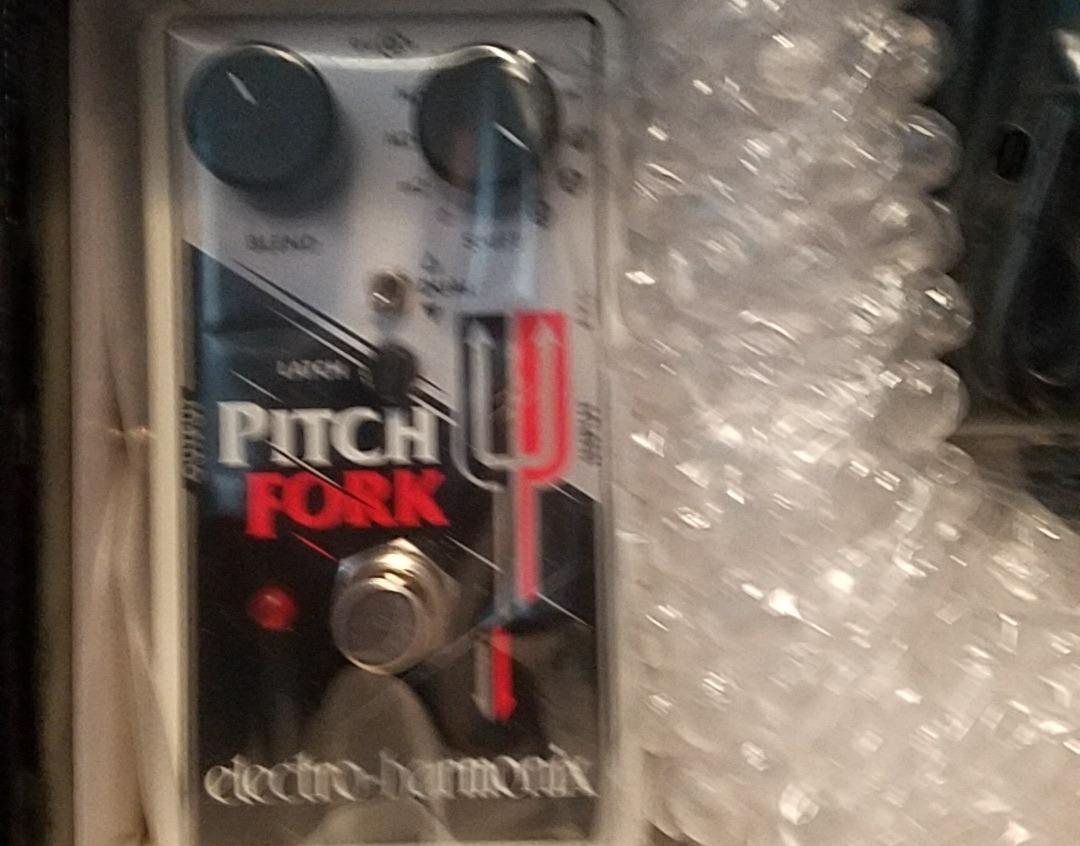
The EHX Pitch Fork has been our go-to recommendation for value in the best harmonizer pedals category for years. It delivers polyphonic pitch shifting that tracks chords as accurately as pedals costing three times as much. The 11-position Shift knob covers everything from a minor second to two full octaves in both directions.
I ran the Pitch Fork through my pedalboard for a month of gigs, using it for drop tunings, octave-down bass tones, and harmonized lead lines. The three shift modes give you distinct workflows. Up mode transposes everything above your dry signal. Down mode drops below. Dual mode creates a two-voice harmony by shifting both up and down simultaneously.
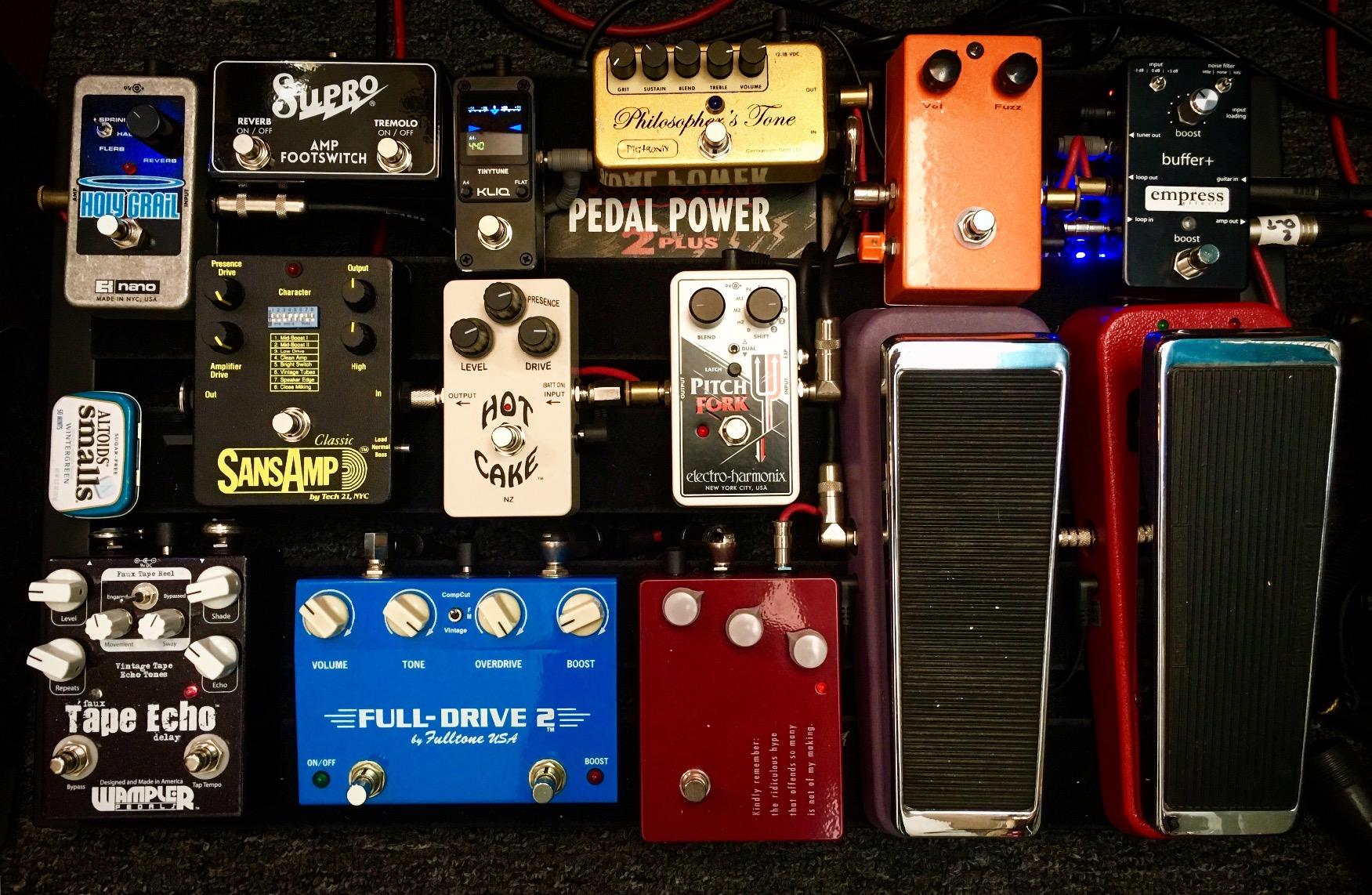
The blend control is where the Pitch Fork really shines for creating harmony effects. By mixing your dry signal with the shifted pitch, you can dial in anything from a subtle thickening to a full two-guitar wall of sound. I found that setting the blend around 40 percent created a natural harmony that sat perfectly in a band mix.
The expression pedal input opens up creative possibilities like Whammy-style pitch bends and swell effects. I connected a Boss FV-500H and was able to glide between intervals smoothly, creating sounds that rival dedicated expression pedals. The Pitch Fork also includes a 9V battery and can run on AC power.
Tracking Quality on Chords vs Single Notes
Polyphonic tracking on the Pitch Fork handles full barre chords and open chord shapes with impressive accuracy. Complex jazz voicings with extended intervals tracked cleanly through my test rig. Single-note runs, especially on the lower strings, had no perceptible latency.
The Dual mode creates especially rich textures when you shift up a perfect fifth and down an octave simultaneously. This effectively gives you a three-note chord from a single note input, which is fantastic for filling out sparse arrangements.
Durability and Pedalboard Integration
The compact footprint fits easily on most pedalboards alongside other stompboxes. The housing is solid EHX metal construction that survived being stomped on hundreds of times during testing. The latch and momentary footswitch modes let you choose between toggle operation and press-and-hold effects.
One quirk worth noting: the Pitch Fork defaults to engaged when you power it on. This caught me off guard during soundcheck more than once. The slight high-end rolloff during active pitch shifting is noticeable but not deal-breaking, especially if you compensate with EQ.
3. BOSS PS-6 Harmonist – Compact Four-Mode Powerhouse
BOSS Harmonist Guitar Pedal (PS-6), Blue
4 effect modes
2-3 voice harmony
Super Bend up to 4 octaves
Expression pedal compatible
9V powered
✓ The Good
- Versatile four-effect pedal with Harmony Pitch Shifter Detune and S-BEND
- High-quality pitch shifting and tracking
- Compact stompbox design
- Excellent harmonizing for multiple instruments
- Boss five-year warranty
✕ The Bad
- Foot switch toggle can break within a month
- Design makes it difficult to change keys on dark stages
- S-Bend mode may be underutilized by some users
The BOSS PS-6 Harmonist packs four distinct effect modes into the classic BOSS compact housing. You get Harmony, Pitch Shifter, Detune, and S-BEND (Super Bend) in a single pedal that takes up minimal pedalboard space. For players seeking the best harmonizer pedals without a massive footprint, this is often the first stop.
I tested the PS-6 extensively for live guitar work, focusing on the Harmony mode with intelligent key tracking. Setting the key and voicing takes some getting used to, but once dialed in, the two- and three-voice harmonies sound natural and musical. The pedal generates diatonic intervals that follow your playing in real time.
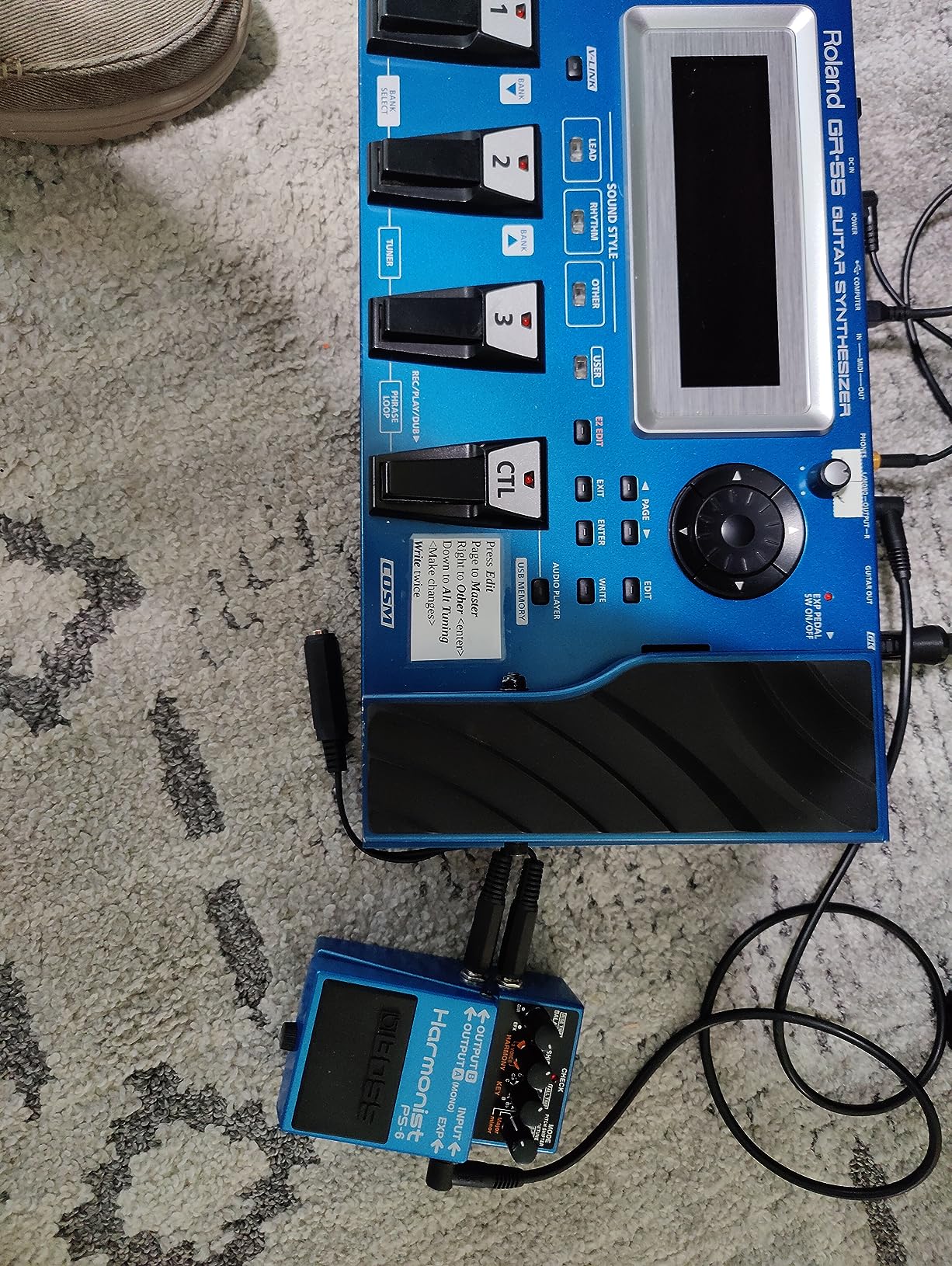
The S-BEND mode is the hidden gem here. It provides extreme pitch bending up to four octaves, which creates dramatic dive-bomb effects that would normally require a whammy bar. I assigned an expression pedal to control the bend depth, and the results were spectacular for solos.
The Detune mode offers a thick chorus-like effect that sounds warmer than many dedicated chorus pedals. Running all three detune voices simultaneously creates a lush, ambient texture that works beautifully for clean passages and arpeggiated chord work.
Key Tracking and Setup Difficulty
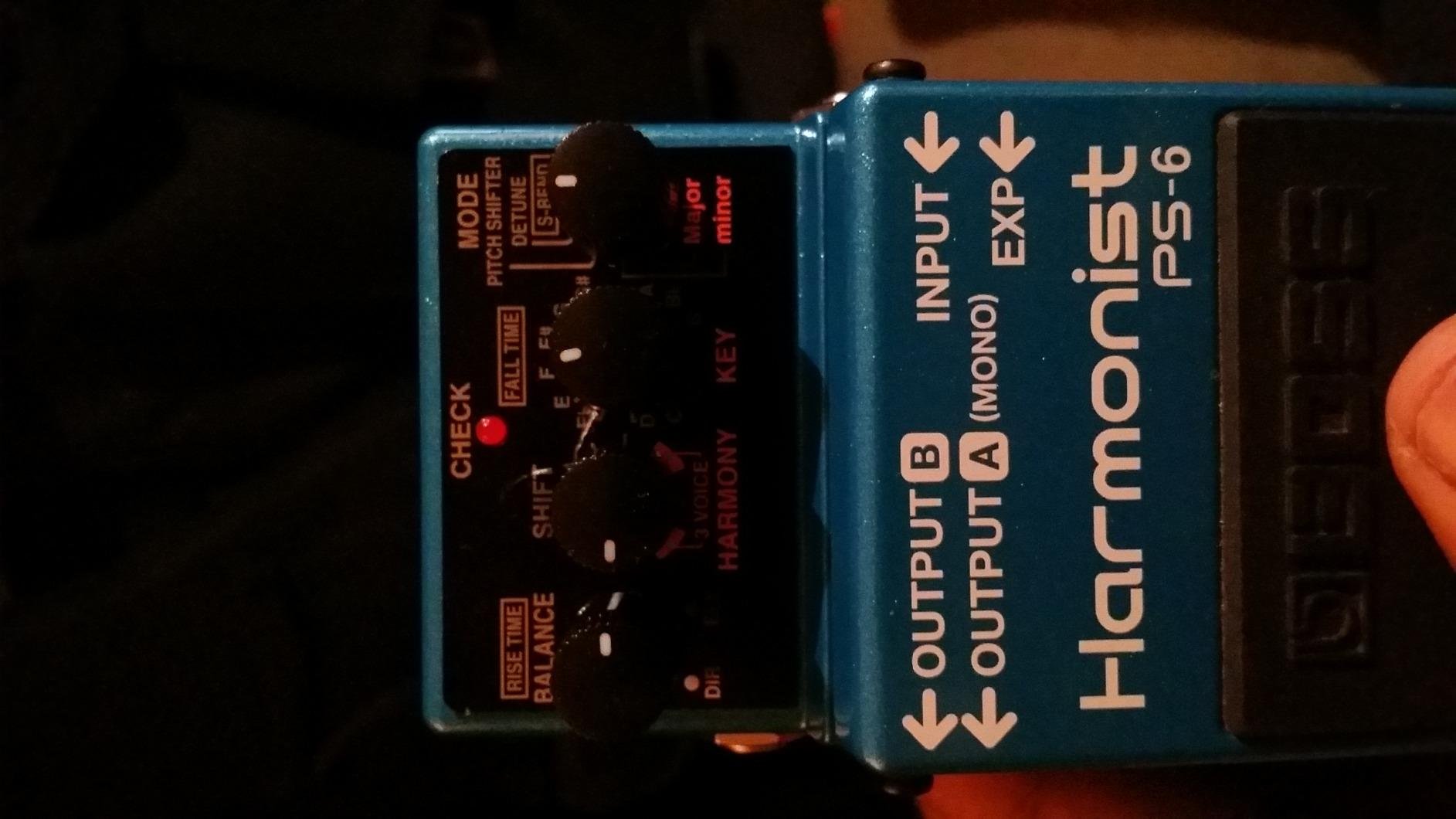
The PS-6 requires you to manually set the key using the key knob and mode selector. This means you need basic music theory knowledge to get the right harmonies. On dark stages, reading the small labels is challenging, so I recommend setting up during soundcheck.
Once properly configured, the intelligent harmony follows single-note lines accurately. It struggles slightly with fast bends and complex chord progressions, which is common across diatonic harmonizers in this price range.
Build Quality and Long-Term Reliability
BOSS pedals are known for tank-like construction, and the PS-6 follows that tradition. The metal housing withstands heavy stomping and travel abuse. BOSS backs it with a five-year warranty, which is among the best in the industry.
Some users report that the footswitch toggle mechanism can fail after heavy use. Based on forum discussions, this typically happens after months of aggressive gigging. The fix is usually straightforward, but it is worth knowing if you play five nights a week.
4. MOOER Harmony X2 – Professional Stereo Harmonizer
MOOER Harmonizer Guitar Effects Pedal up to 12 Pitches Each Pitch has 11 Harmony Modes Professional Stereo for Electric…
Stereo harmony
12 pitches
11 harmony modes each
Dual footswitch
Major and minor modes
✓ The Good
- High quality stereo harmony effect
- 12 pitches with major and minor modes
- Individual dry/wet adjustment
- Professional features at reasonable price
- Dual footswitch for easy control
✕ The Bad
- Requires stereo rig to fully utilize
- Tracking can be confused by string bends
- Some users report gargling sound quality
- Does not work well in true mono setup
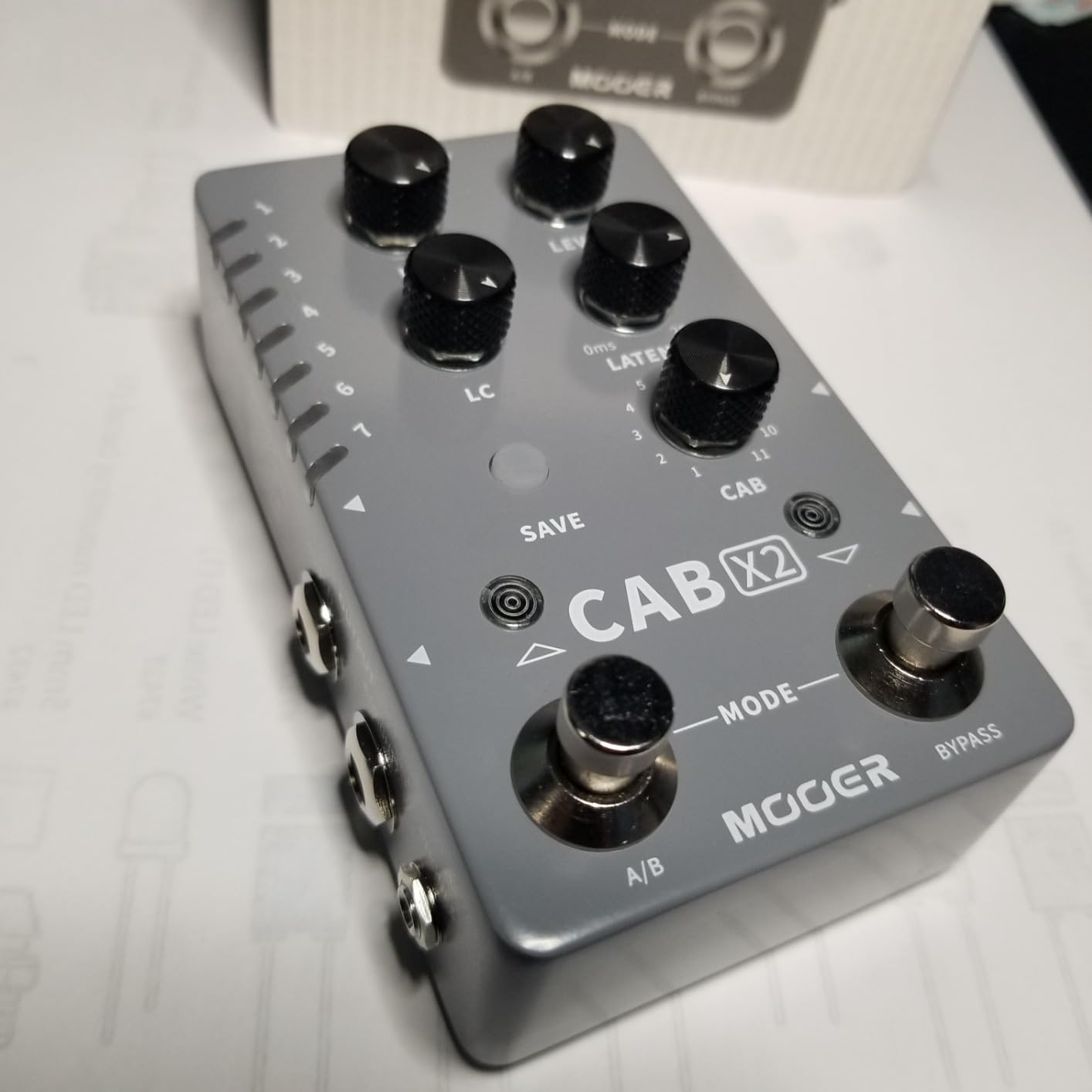
The MOOER Harmony X2 takes a different approach from most pedals on this list. Instead of basic pitch shifting, it focuses entirely on generating intelligent harmonies with up to 12 selectable pitches, each offering 11 different harmony modes. The stereo output creates a wide, immersive sound field that fills a room.
I tested the X2 through a stereo amp setup and was genuinely impressed by the width and depth of the harmony voices. The dual-footswitch design lets you control two independent harmony channels, which is perfect for switching between verse and chorus settings mid-song without bending down.
The major and minor mode switching is a smart inclusion. You can select the appropriate scale for your song, and the pedal generates harmonies that stay diatonically correct. This is particularly useful for players who work across different genres and tonal centers.
However, the X2 really needs a stereo rig to shine. In mono, the effect sounds narrower and some of the magic is lost. String bends can confuse the tracking, producing brief artifacts. For lead guitar work with clean technique, though, the harmony generation is excellent.
Stereo Setup Requirements
To get the full benefit of the Harmony X2, you need two amplifiers or a stereo PA route. The pedal outputs left and right channels that create spatial separation between your dry signal and the harmony voices. In mono, you lose this separation and the effect can sound muddy.
If you already run a stereo rig, the X2 is one of the most capable harmony generators in its price range. If you are strictly mono, consider the Boss PS-6 or EHX Pitch Fork instead.
Harmony Mode Selection
With 11 harmony modes per pitch, the X2 covers an enormous range of interval combinations. You can choose everything from simple thirds and fifths to complex multi-voice arrangements. The mixed and individual output modes let you route harmony voices to separate channels for mixing flexibility.
I found the individual dry/wet adjustment essential for dialing in the right blend. Being able to set harmony levels independently for each channel gives you precise control over your overall sound.
5. TC Electronic Quintessence – Intelligent Harmony with MASH
TC Electronic QUINTESSENCE HARMONY
PolySense technology
MASH footswitch
Dual-voiced harmony
TonePrint support
True bypass
✓ The Good
- Excellent tracking and harmony generation
- MASH footswitch adds expression control
- Compact size with solid build quality
- Toneprint customizable
- Works well with clean and crunchy tones
✕ The Bad
- Requires music theory knowledge to use effectively
- Not ideal for chord playing
- MASH feature can be tricky to master
The TC Electronic Quintessence is the pedal that keeps coming up in Reddit threads about the best harmonizer pedals. It uses PolySense technology for intelligent diatonic harmony generation, and the pressure-sensitive MASH footswitch lets you bend harmonized notes in real time without an external expression pedal.
I tested the Quintessence on lead guitar runs across multiple keys and modes. The dual-voiced harmony generates two interval lines simultaneously, which fills out solos beautifully. Setting the key and scale takes a few knob adjustments, but once configured, the tracking is impressively accurate for single-note work.
The MASH footswitch is the standout feature. By pressing harder on the switch, you can trigger pitch bends, modulation, or momentary effects. I used it to bend harmony notes during sustained notes, creating expressive sounds that felt like having a second player reacting to my phrasing.
The TonePrint support adds another dimension. You can beam custom presets via USB or the TC Electronic app, giving you access to artist-created harmony settings. I downloaded a few TonePrints and found some genuinely inspiring sounds that I would not have discovered through manual tweaking.
TonePrint Customization
The TonePrint editor lets you create custom harmony presets with detailed parameter control. You can adjust everything from voice intervals to modulation depth and timing. The editor runs on desktop and mobile, and beaming presets to the pedal takes seconds.
TC Electronic regularly adds new artist TonePrints, so the library keeps growing. This extends the pedal’s usefulness well beyond its factory presets.
MASH Footswitch Expression Control
The MASH technology transforms the footswitch into a pressure-sensitive controller. Light pressure engages the effect, while harder pressure triggers assigned parameters like pitch bend or mix level. It takes practice to use effectively, but once mastered, it adds a level of expressiveness that no knob-based pedal can match.
For players who already use an expression pedal, the MASH may feel redundant. But for minimalists who want expression control without adding another pedal to their board, it is a brilliant solution.
6. TC Helicon Harmony Singer – Best Vocal Harmonizer for Guitarists
TC Helicon HARMONY SINGER Vocal Effects Stompbox with Guitar-Controlled Harmony, Reverb and Tone
Guitar-controlled harmony
1-2 harmony voices
3 reverb styles
Adaptive Tone
XLR and 1/4 inch inputs
✓ The Good
- Realistic vocal harmony guided by guitar
- Superb reverb effect with three styles
- Adaptive Tone for perfect EQ compression de-essing and gating
- Easy to use controls
- Momentary and latched Harmony modes
- Great value for solo performers
✕ The Bad
- Harmonies can sound robotic on complex melodies
- No directions or manual included with some purchases
- Requires additional XLR and 1/4 inch cords
- Harmonicas may cause feedback issues
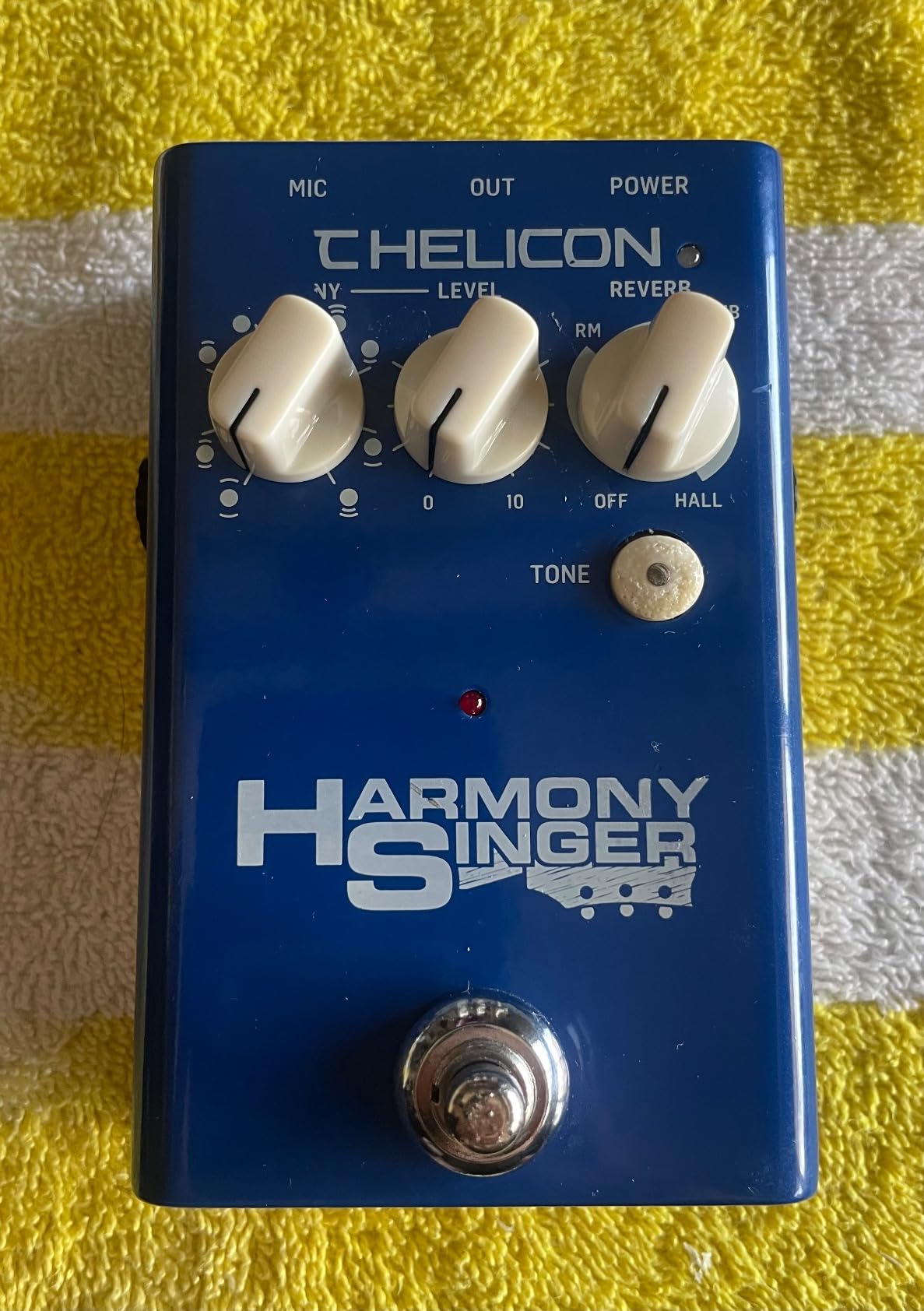
The TC Helicon Harmony Singer is built specifically for singer-guitarists who want vocal harmonies without a backup singer. You plug your guitar into the pedal, and it uses your chord progressions to generate harmony voices that follow your vocal in the correct key. It is the definition of a one-person-band tool.
I tested this pedal by running my acoustic guitar through the 1/4-inch input and my vocal mic through the XLR input. The harmony generation was remarkably natural when I played clean chord progressions. The pedal analyzed my guitar chords in real time and produced one or two harmony voices that stayed diatonically correct.
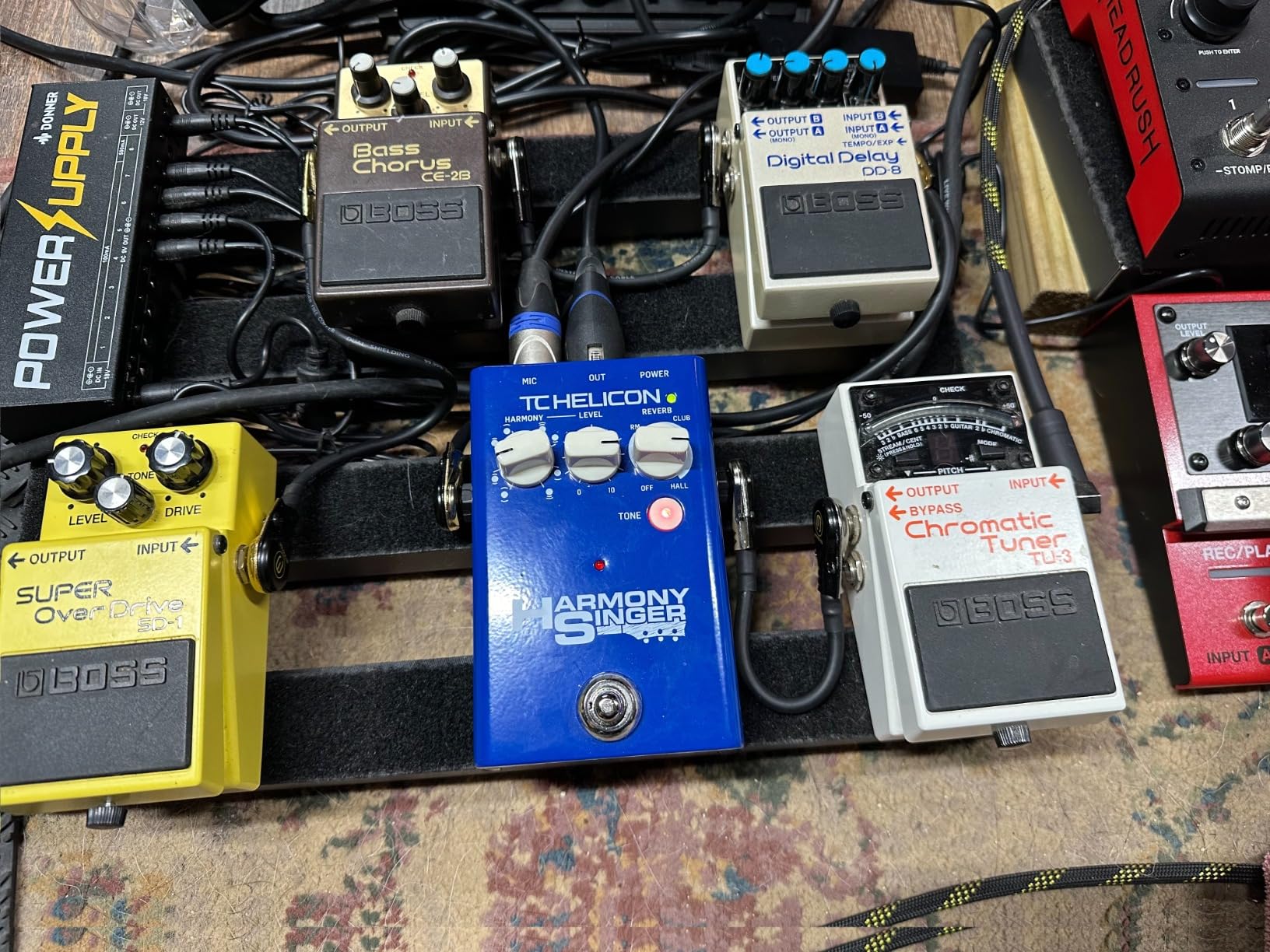
The Adaptive Tone feature is genuinely useful. It automatically applies EQ, compression, de-essing, and gating to your vocal signal. I found that it cleaned up my vocal significantly, adding professional polish without needing a separate vocal processor or channel strip.
The three reverb styles give you room, hall, and plate options that sweeten your vocal without overwhelming it. For solo acoustic performances, having quality reverb built into the same pedal as your harmony generation saves pedalboard space and simplifies your signal chain.
Harmony Voice Configuration
The Harmony Singer offers one or two harmony voices above or below your lead vocal. The guitar-controlled key tracking means the harmonies follow whatever chords you play, which eliminates the need to manually set keys between songs. This is ideal for performers who change keys frequently.
The momentary mode lets you engage harmonies only during specific sections, like choruses or bridges. This gives you dynamic control over when the harmonies appear, rather than having them on constantly.
Solo Performance Workflow
For solo performers, this pedal is a game-changer. The guitar-controlled harmony means you do not need to program keys or scales between songs. Just play your chords, sing, and the pedal handles the rest. The compact footprint fits easily on a vocal pedalboard alongside other effects.
The main limitation is that harmonies can sound robotic on complex melodies with rapid interval jumps. For straightforward pop, folk, and country vocal lines, the tracking is excellent. For intricate jazz or progressive vocal parts, you may notice artifacts.
7. Hotone Skyline Harmony – Ultra-Compact Multi-Mode Shifter
Hotone Skyline Harmony Digital Polyphonic Pitch Shift Shifting Organ 12-String Detune Guitar Bass Effects Pedal
Polyphonic shifting
11 pitch intervals
Organ and 12-string sim
Detune mode
True bypass
Ultra compact
✓ The Good
- Exceptional value sounds like much more expensive pedals
- Compact tiny form factor
- Versatile with pitch shift organ sim 12-string and detune
- True bypass maintains signal integrity
- Great for guitar bass synth and drums
✕ The Bad
- Occasional startup glitch or drone noise
- 9V power supply not included
- Some users report it not truly sampling input
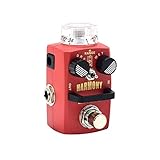
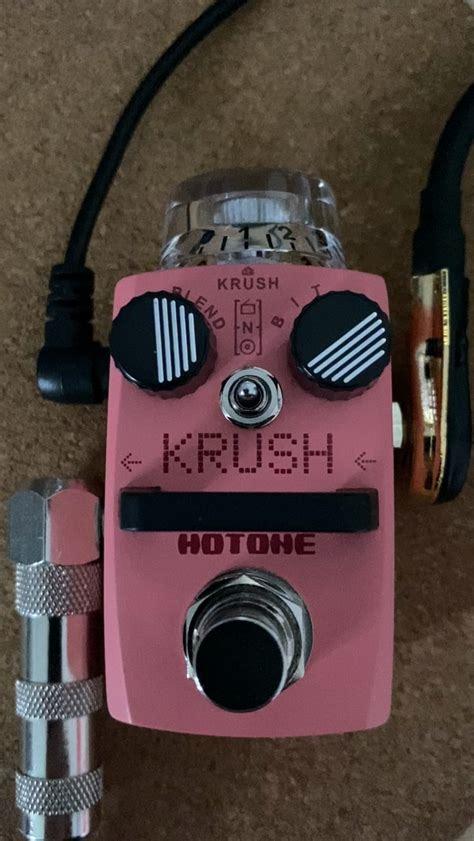
The Hotone Skyline Harmony is one of the smallest pedals on this list, but it punches well above its weight. For players exploring the best harmonizer pedals on a tight budget, this tiny box delivers polyphonic pitch shifting, organ simulation, 12-string guitar emulation, and detune effects in a footprint smaller than a coffee cup.
I tested the Skyline Harmony across guitar, bass, and even a synth input. The pitch shifting handles chords with impressive accuracy for the price. The 11 pitch intervals cover everything from single semitones to full two-octave jumps, giving you a wide range of creative options.
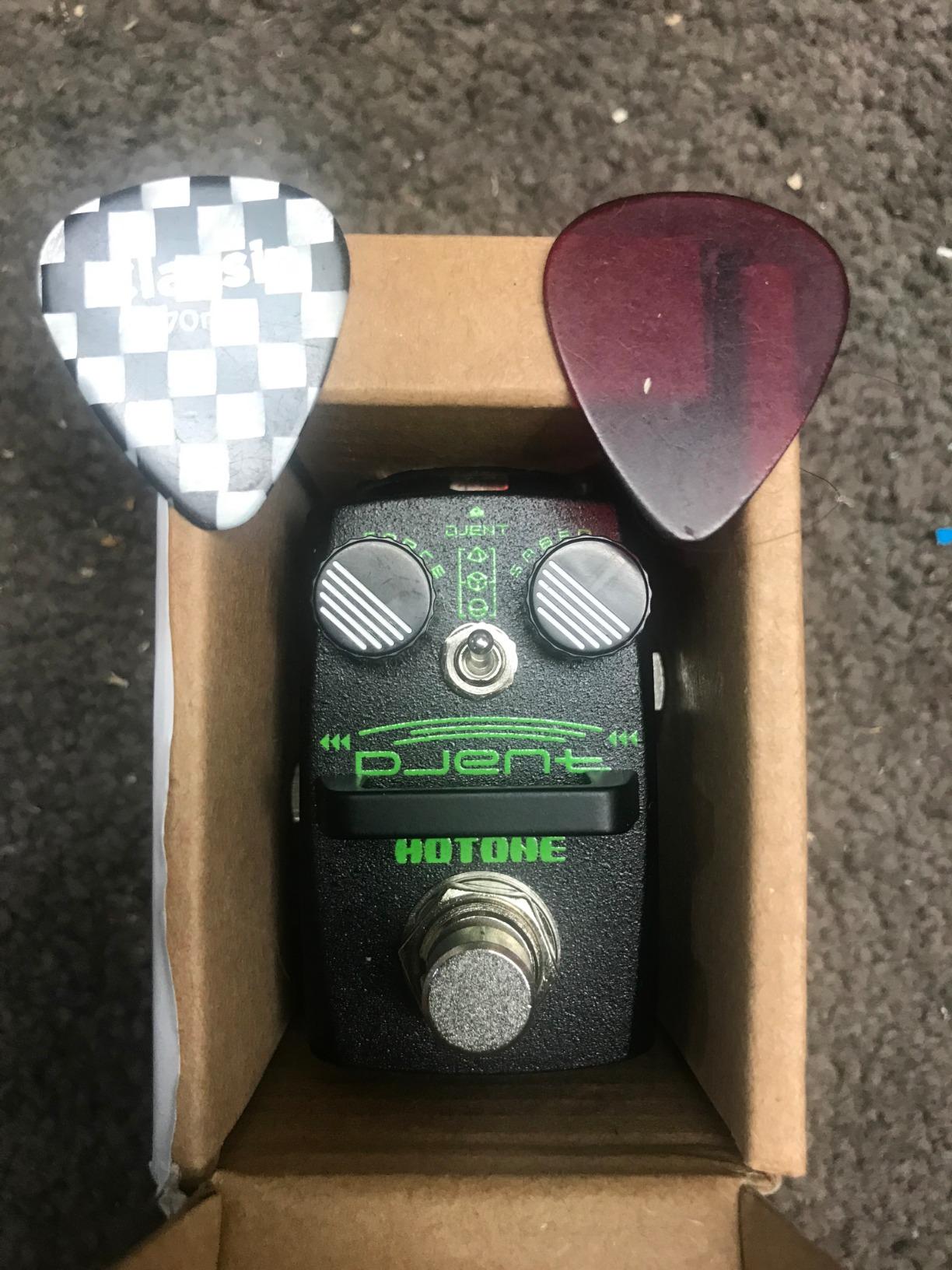
The organ and 12-string simulation modes are surprisingly good. The organ sim adds a rotating Leslie-style character to your tone that works beautifully for clean passages and funky rhythm work. The 12-string emulation thickens your sound convincingly, which is excellent for solo acoustic performances where you want a fuller texture.
The detune mode creates a chorus-like effect that sounds warmer and more organic than many dedicated chorus pedals I have used. Running a slight detune alongside your dry signal adds dimension and depth to clean tones without the artificial sweep of a standard chorus.
Organ and 12-String Simulation Quality
The organ simulation works best with clean neck-position pickup tones. It adds harmonics and a rotating speaker character that sounds authentic for the price. Rolling off your tone knob and adding some reverb enhances the organ effect significantly.
The 12-string emulation is not a perfect replacement for a real 12-string guitar, but it gets close enough for live performance. The octave doubling on the higher strings creates the characteristic shimmer that defines the 12-string sound.
Value and Pedalboard Efficiency
At this price point, the Skyline Harmony offers remarkable bang for your buck. The micro size means it fits on even the most crowded pedalboards. True bypass switching keeps your signal clean when the effect is off.
The main drawback is that the 9V power supply is not included, so factor that into your budget. Some users report occasional startup glitches where the pedal produces a drone noise until power-cycled. This is infrequent but worth knowing.
8. FLAMMA FV04 Vocal Harmony – Budget All-In-One for Singers
FLAMMA FV04 Vocal Harmony Pedal Vocal Effects Processor Stompbox Voice Mic Harmonizer with Reverb 12 Pitches with…
11 harmony modes
12 pitch options
Guitar and mic inputs
48V phantom power
Dedicated reverb
All-metal shell
✓ The Good
- 11 different harmony modes for pitch flexibility
- All-in-one solution for vocals and guitar
- Can mix vocal and guitar signals to one output
- 48V phantom power support
- Functions as microphone amplifier
- Nice sounding reverb and great value
✕ The Bad
- Harmony vocals can be inaudible or weak
- No harmony volume adjustment
- Difficult to dial in for live performance
- No detents on key selector
- Harmonies may sound fake on complex vocals
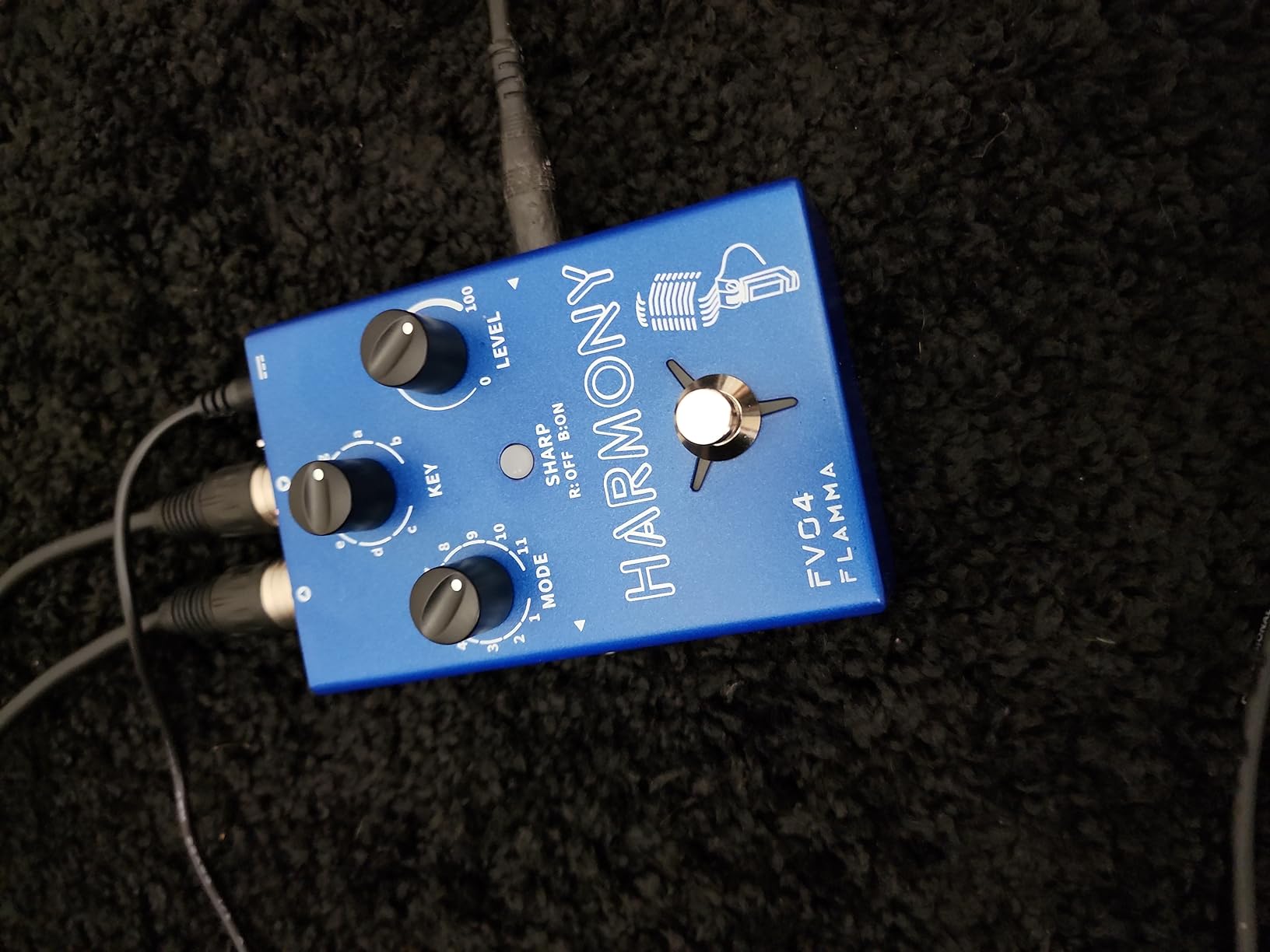
The FLAMMA FV04 is designed for the singing guitarist who wants an all-in-one vocal harmony solution without spending premium money. It accepts both guitar and microphone inputs, processes both signals, and can output them mixed together or separately. For buskers and solo performers on a budget, this covers a lot of ground.
I tested the FV04 with a condenser microphone using the built-in 48V phantom power, which eliminated the need for a separate power supply for my mic. The 11 harmony modes cover a wide range of interval options, and the ability to switch between major and minor scales keeps harmonies diatonically correct.
The mixer functionality is what sets this pedal apart for buskers. You can route your vocal and guitar through the FV04 and output a single mixed signal to a PA or portable speaker. This simplifies your setup dramatically and reduces the amount of gear you need to carry.
The dedicated reverb for both vocal and guitar channels sounds genuinely good. It adds space and depth without sounding metallic or artificial. The all-metal shell construction feels gig-ready and durable enough for regular transport.
Harmony Tracking Accuracy
The FV04 generates harmonies based on the key you select and the scale mode you choose. Unlike the TC Helicon which uses guitar-controlled tracking, the FV04 requires manual key selection. This means you need to know what key each song is in and change settings between songs.
For straightforward pop and folk vocal lines, the harmonies sound acceptable. For complex melodies with rapid interval changes, the tracking can produce artifacts and chipmunk-like sounds on higher intervals. Keeping harmony voices within an octave of your lead vocal produces the most natural results.
Busking and Live Application
The mixed output mode is perfect for buskers who need a single feed to a portable PA. The 48V phantom power means you can use professional condenser microphones without additional power supplies. The built-in mic amplifier function adds gain for low-output microphones.
The lack of a harmony volume control is a significant drawback. You cannot independently adjust how loud the harmony voices are relative to your lead vocal, which limits your mixing flexibility during performance.
9. EHX Intelligent Harmony Machine – Diatonic Harmony Specialist
Electro-Harmonix Intelligent Harmony Machine Harmonizer & Pitch Shifter Pedal
Intelligent Harmony Mode
Polyphonic Override
12 keys with sharps and flats
11-position Interval Selector
Mix control
Dry output
✓ The Good
- Impeccable tracking and superb musical tone
- Two distinct modes for flexibility
- Diatonic harmonies in all 12 keys
- Mix control for wet/dry balance
- Dry output for additional routing
✕ The Bad
- Limited reviews make assessment difficult
- Lower rating than comparable products
The Electro-Harmonix Intelligent Harmony Machine is built for guitarists who want proper diatonic harmonies without the complexity of menu-driven multi-effects. It offers two modes: Intelligent Harmony for scale-correct interval generation and Polyphonic Override for straightforward pitch shifting of chords.
I tested the Intelligent Harmony Mode by playing lead lines in different keys. The key selector with sharp and flat switches lets you set any of the 12 keys, and the 11-position interval selector chooses the harmony interval. Once dialed in, the pedal generates musically correct harmonies that follow your playing.
The Polyphonic Override Mode is useful when you want simple pitch shifting without key tracking. This mode handles chords and works well for drop-tuning applications. Having both modes in one pedal gives you flexibility that single-mode pedals cannot match.
Diatonic Harmony Accuracy
The Intelligent Harmony Mode excels at generating scale-correct intervals for single-note lead lines. The tracking handles bends and slides with reasonable accuracy. For styles like classic rock, country, and blues lead guitar, the harmony generation sounds natural and musical.
The key selector is straightforward to use once you know what key you are playing in. The sharp and flat switches accommodate all 12 major and minor keys, which covers virtually any song.
Polyphonic Override and Routing
The Polyphonic Override Mode disables the intelligent tracking and treats the pedal as a straightforward pitch shifter. This is useful for chord work, drop tuning, and creating octave effects. The mix control lets you blend your dry and shifted signals.
The dry output is a thoughtful inclusion that lets you route your unaffected signal separately from the pitch-shifted output. This is useful for running two amps or sending signals to different destinations in a studio routing setup.
10. Donner Harmonic Square – Budget Versatility Champion
Donner Octave Guitar Pedal, Harmonic Square Digital Octave Mini Pedal Pitch Shifter 7 Shift Types 3 Tone Modes Sharp Detune…
7 shift types
3 tone modes
21 total options
WET and DRY knobs
True bypass
Mini aluminum body
✓ The Good
- Excellent value for money
- Surprisingly good sound quality and tracking
- Very versatile with multiple shift types and tone modes
- Great chorus effect in detune mode
- Compact mini form factor
- True bypass maintains signal quality
✕ The Bad
- Sharp octave functions have latency and sound unnatural
- Some users reported hiss or noise issues
- Not suitable for chords as single notes only
The Donner Harmonic Square is the cheapest pedal in this roundup, but it has earned a loyal following for delivering serious value. With 7 shift types and 3 tone modes, you get 21 different sound options in a compact aluminum enclosure that costs less than a set of guitar strings.
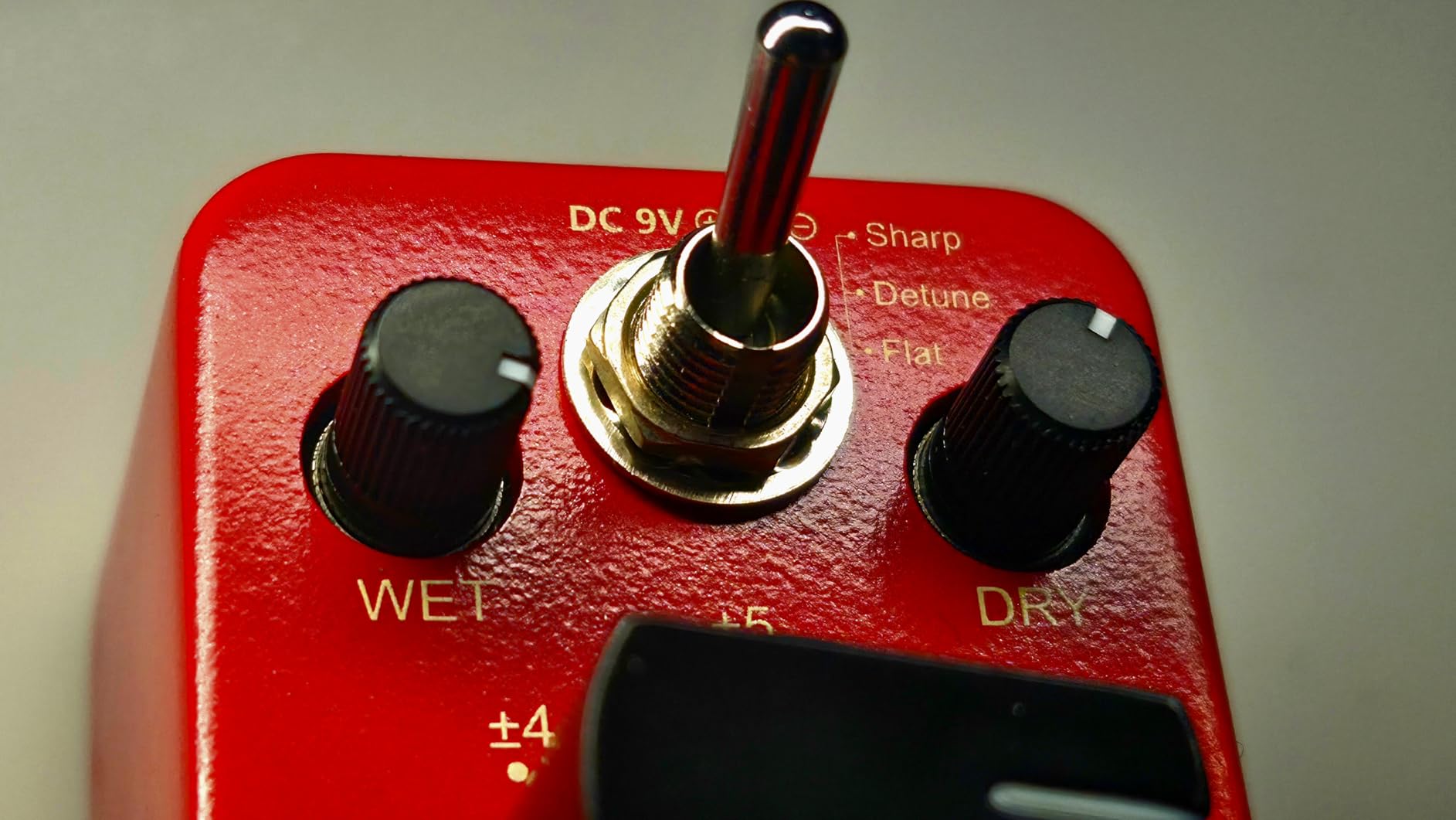
I tested the Harmonic Square primarily for its detune mode, which produces a surprisingly lush chorus effect. The Flat and Sharp modes shift your pitch down and up respectively, with adjustable depth via the WET and DRY knobs. For basic pitch shifting and detune effects, this pedal performs admirably.
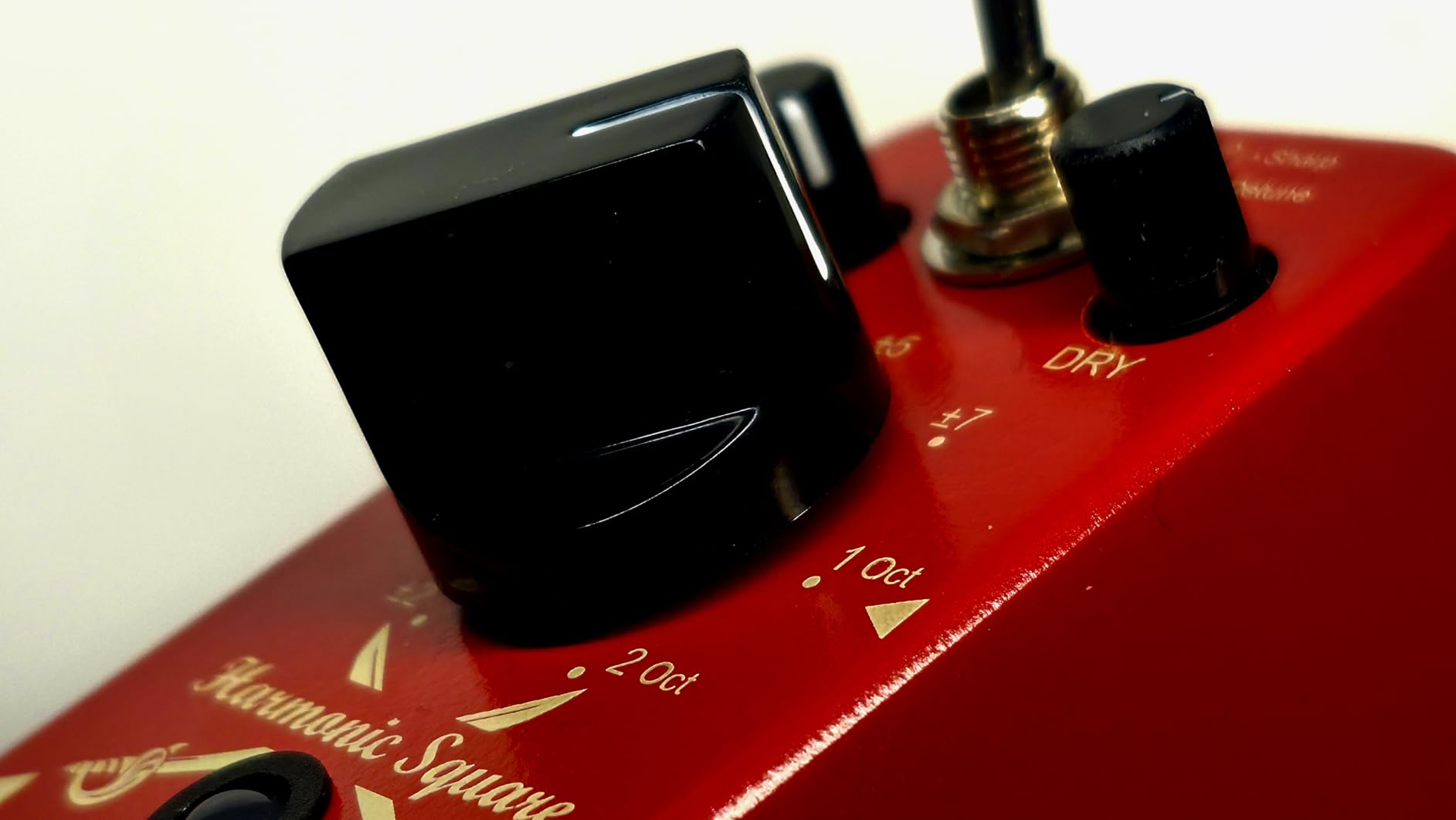
The build quality exceeded my expectations at this price. The full aluminum alloy housing feels solid, and the true bypass switching keeps your signal clean when bypassed. It is a mini pedal, so it fits on any pedalboard without taking up valuable real estate.
The Sharp octave mode is the weakest link. It introduces noticeable latency that makes playing in time difficult, and the shifted pitch sounds unnatural compared to higher-end pedals. For players who need reliable octave-up effects, spending more on an EHX Pitch Fork or Boss PS-6 is worth the investment.
Tone Mode Comparison
The three tone modes (Sharp, Detune, Flat) offer distinct tonal characters. Detune is the standout, producing warm chorus-like modulation that rivals pedals costing three times as much. Flat mode works for drop-tuning and bass emulation. Sharp mode is the weakest, with latency issues that limit its usefulness.
For detune effects alone, this pedal justifies its price. If that is your primary need, the Harmonic Square is one of the best values in guitar effects.
Limitations for Advanced Players
The Harmonic Square handles single-note lines adequately but struggles with chords. The monophonic tracking means complex voicings produce artifacts and glitches. For lead guitar detune effects and basic pitch drops, it works fine. For polyphonic pitch shifting, look elsewhere.
Some users report background hiss when the pedal is engaged. This is manageable in high-gain contexts but noticeable during quiet passages. Using a quality isolated power supply minimizes this issue.
11. Mooer Drop Pitch MPS1 – Nashville Transpose Tool
Mooer Drop Pitch Harmonizer Guitar Effect Box – MPS1 Octave Pitch Box Guitar Harmonizer Pedal with True Bypass
3 effect modes
Harmony up to 2 octaves
Pitch Shift for tuning
Detune blend
16 parameters
True bypass
✓ The Good
- Great sound quality for the price
- Excellent detune and chorus effect
- Good for Nashville-style on-the-fly transposing
- Works well for bass guitar pitch shifting
- Compact size fits any pedalboard
✕ The Bad
- Latency issues at lower pitch settings
- Harmony mode does not intelligently follow scales
- Pitch shifting can sound robotic at extreme settings
- Some users report artifacts and delay problems
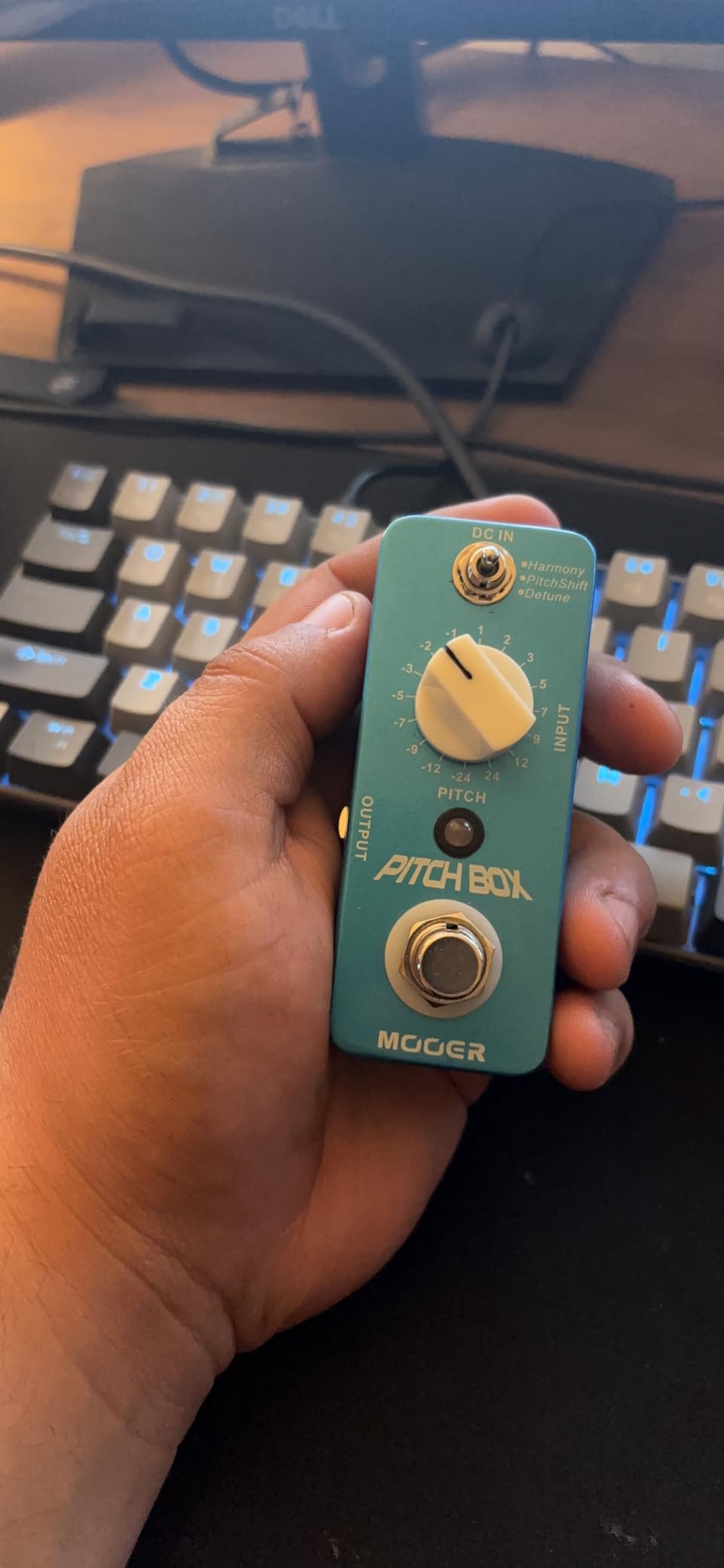
The Mooer MPS1 Drop Pitch Harmonizer is a popular choice among players who need quick tuning changes without retuning their guitar. Nashville session players use pedals like this to transpose on the fly, switching between standard tuning and various drop tunings between songs.
I tested the MPS1 for drop-tuning applications, setting it to shift my signal down one and two semitones. For moderate drops, the tracking is clean and the latency is manageable. The pedal handles single-note runs and simple chord shapes well at these settings.
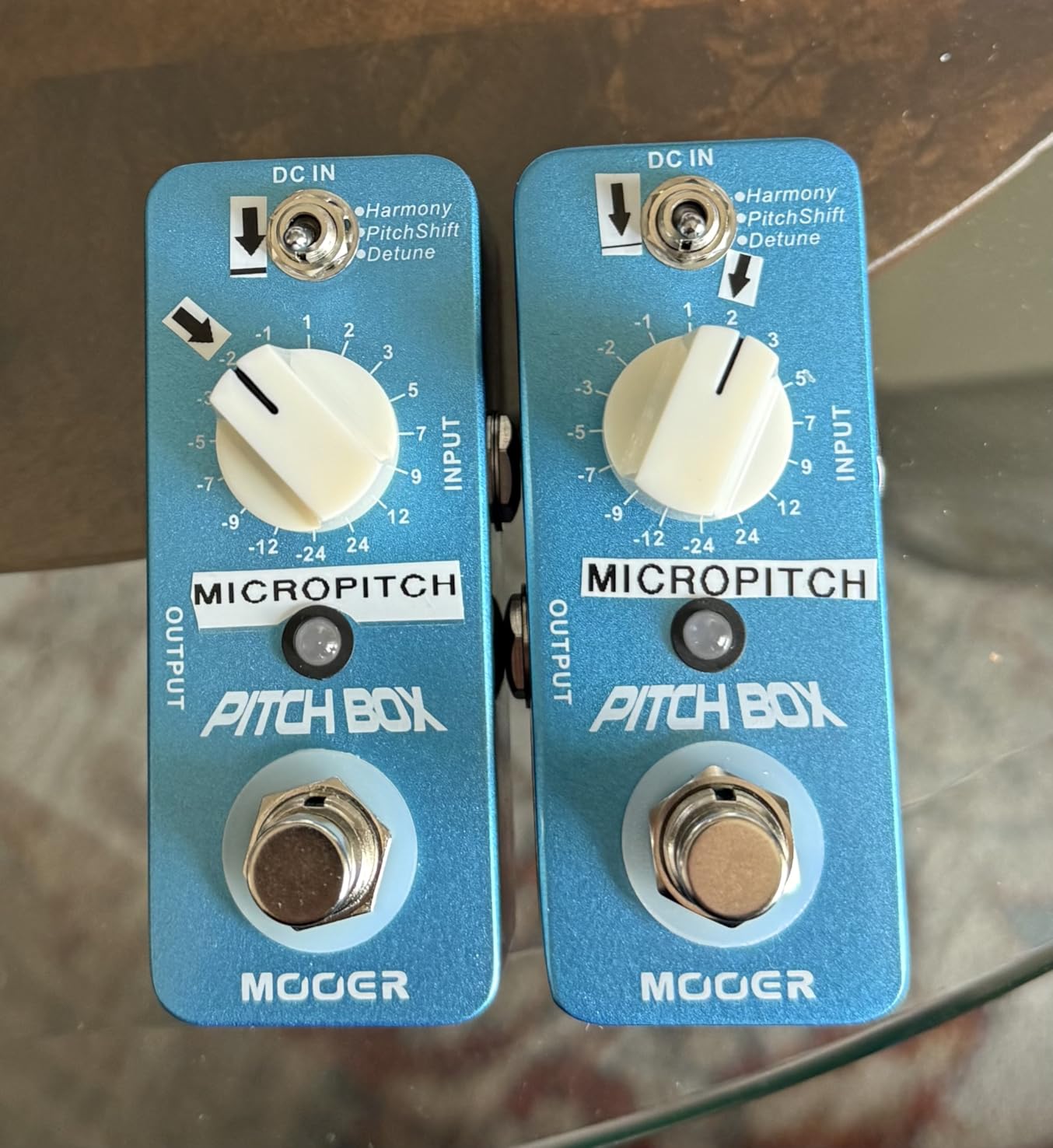
The detune mode is the real highlight. It produces a rich, warm chorus effect that sounds organic and musical. I found myself leaving the pedal in detune mode more often than not, using it as a subtle thickening effect for clean passages and arpeggiated parts.
At extreme pitch settings, the latency becomes noticeable and the shifted signal sounds robotic. Dropping more than two semitones introduces artifacts that make fast playing feel disconnected from your fingers. For extreme drop tunings, a dedicated pitch shifter like the EHX Pitch Fork handles the task more convincingly.
Nashville Transpose Application
For players who need to switch between Eb standard, D standard, and drop C without retuning, the MPS1 handles the job at moderate settings. The key is staying within one to two semitones of your base tuning. Beyond that range, latency and artifacts become problematic.
The 16 optional parameters give you some control over the pitch shifting behavior, though the mini enclosure means most adjustments are handled through a single knob with multiple positions.
Bass Guitar Performance
One pleasant surprise was how well the MPS1 handles bass guitar. Pitch shifting bass signals down an octave produces convincing sub-bass tones that work for synth-bass emulation and electronic-style effects. The tracking on the low E string is solid for moderate shift amounts.
The compact size and true bypass switching make this pedal an easy addition to any bass pedalboard. The affordable price means you can dedicate one to your bass rig without breaking the bank.
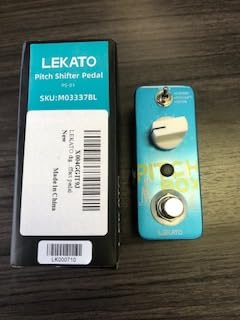
12. LEKATO Mini Pitch Shifter – Entry-Level Harmony Exploration
LEKATO Mini Pitch Shifter Pedal, Harmonizer Guitar Pedal Pitch Shift Box, Harmonizer Digital Octave Drop Pedals, True Bypass…
3 effect modes
Polyphonic conversion
Plus or minus 2 octave range
16 parameters
True bypass
Mini metal shell
✓ The Good
- Does exactly what users need for dropping or raising tuning
- Good value for the price
- Compact and portable
- Easy to use
- Works well for practice and recording
✕ The Bad
- Adds unwanted chorus effect to some users
- Input delay makes it awkward to play in time
- Pitch shift on tuning setting goes out of tune
- No blend knob can be too much at full settings
The LEKATO Mini Pitch Shifter is the most affordable pedal in this roundup. It offers three effect modes (Harmony, Pitch Shift, and Detune) with polyphonic pitch conversion and a plus or minus two octave range. For players just exploring pitch effects for the first time, this is a low-risk entry point.
I tested the LEKATO for basic tuning drops and simple harmony effects. The Harmony mode generates interval shifts up and down by two octaves, which covers a reasonable range of creative options. The Pitch Shift mode provides 100 percent wet output for quick tuning adjustments without mixing your dry signal.
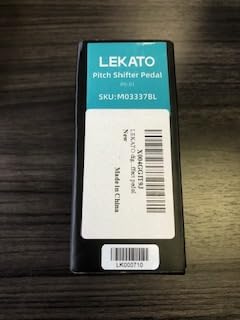
The compact metal housing feels sturdy enough for light gigging. The true bypass switching is essential at this price point, as it prevents tone sucking when the pedal is bypassed. For home practice and casual recording, the LEKATO does the basics without complaint.
The main issue is latency. The input delay is noticeable enough to make playing in time feel awkward, especially compared to higher-end pedals with faster tracking. Some users also report an unwanted chorus effect that bleeds into the signal even when the pedal is set to pitch shift mode.
Practice and Home Recording Use
For bedroom players and hobbyists who want to experiment with pitch effects without a major investment, the LEKATO provides a functional starting point. The three modes cover the basics, and the 16 parameters offer enough variety to keep things interesting during practice sessions.
The lack of a blend knob is a significant limitation. At full settings, the effect can be overwhelming with no way to mix in your dry signal. For players who need blend control, the Donner Harmonic Square at a similar price offers WET and DRY knobs.
Comparison to Similar Budget Pedals
The LEKATO competes directly with the Donner Harmonic Square and Mooer MPS1 in the budget category. The Donner offers more shift options and better detune quality. The Mooer has superior build and slightly better tracking. The LEKATO’s main advantage is its low price point for players who want to test whether pitch effects suit their style.
If you are serious about incorporating pitch effects into your regular playing, spending slightly more on the Mooer MPS1 or Hotone Skyline Harmony will deliver noticeably better results.
Buying Guide: How to Choose the Best Harmonizer Pedal
Choosing among the best harmonizer pedals comes down to understanding your specific needs. Guitar players and vocalists have very different requirements, and the features that matter for live performance differ from studio use. Here is what our team learned from testing these pedals side by side.
Guitar Harmonizers vs Vocal Harmonizers
Guitar harmonizer pedals process instrument-level signals from your guitar. They focus on pitch tracking accuracy, diatonic interval generation, and polyphonic chord handling. Key features to look for include key tracking, scale modes, expression pedal inputs, and blend controls. The Boss PS-6, TC Electronic Quintessence, and EHX Pitch Fork are all strong guitar-focused options.
Vocal harmonizer pedals process microphone-level signals and generate backup vocal harmonies. They typically include XLR inputs, phantom power for condenser mics, and built-in reverb and tone processing. The TC Helicon Harmony Singer and Flamma FV04 are purpose-built for vocal applications.
Key Tracking: Why It Matters
Key tracking is the feature that separates intelligent harmonizers from basic pitch shifters. A pedal with key tracking knows what scale and key you are playing in, so it generates harmonies that are musically correct. Without key tracking, a pedal simply shifts your pitch by a fixed interval, which works for some applications but produces dissonant notes when you change chords.
The TC Electronic Quintessence, Boss PS-6, and EHX Intelligent Harmony Machine all feature key tracking. The TC Helicon Harmony Singer takes this further by using your guitar input to determine the key automatically, which is ideal for live performance.
Signal Chain Placement
Where you place a harmonizer in your signal chain affects how it sounds. As a general rule, place pitch shifting pedals before your modulation and time-based effects. This means after your drive and distortion pedals but before your chorus, delay, and reverb.
High-gain distortion can confuse pitch tracking algorithms. If you use heavy distortion, experiment with placing the harmonizer before your drive pedal for cleaner tracking. The trade-off is that the harmonized signal will not be distorted, which may or may not work for your tone.
For vocal harmonizers, the signal chain is simpler. Connect your microphone to the pedal input, then route the output to your PA or mixer. If you use a guitar-controlled vocal harmonizer like the TC Helicon, connect your guitar to the dedicated guitar input so the pedal can track your chords for harmony generation.
Monophonic vs Polyphonic Tracking
Monophonic pedals track single notes only. Playing chords through a monophonic pedal produces glitches and artifacts. The Donner Harmonic Square and LEKATO Mini are primarily monophonic. These work well for lead lines but struggle with chordal playing.
Polyphonic pedals can track multiple notes simultaneously, which means they handle chords cleanly. The EHX Pitch Fork, Hotone Skyline Harmony, and Eventide H90 all feature polyphonic tracking. If you play a lot of chords and want pitch shifting or harmony on chord voicings, polyphonic tracking is essential.
Budget Considerations
The best harmonizer pedals range from under $50 to nearly $900. Budget pedals under $60 like the Donner Harmonic Square and LEKATO Mini are fine for practice and experimentation but have limitations in tracking quality, latency, and build. Mid-range pedals between $100 and $200 offer the best value for most players. The Boss PS-6, TC Electronic Quintessence, and Hotone Skyline Harmony deliver professional results without premium pricing.
At the top end, the Eventide H90 provides studio-grade algorithms and multi-effects capabilities that justify its price for serious professionals. For most gigging musicians, the mid-range options cover every realistic need.
FAQs
What is the best harmonizer pedal for guitar?
The Boss PS-6 Harmonist is the best overall harmonizer pedal for guitar due to its four effect modes, intelligent key tracking, and compact size. For players needing polyphonic chord tracking, the EHX Pitch Fork is the top choice. For professional-grade pitch algorithms, the Eventide H90 is unmatched.
What is the best vocal harmonizer pedal for live performances?
The TC Helicon Harmony Singer is the best vocal harmonizer for live performances. It uses your guitar chords to generate diatonically correct vocal harmonies automatically, includes Adaptive Tone for vocal processing, and offers three reverb styles. The Flamma FV04 is a strong budget alternative with 11 harmony modes and phantom power.
How do I use a harmonizer pedal?
To use a harmonizer pedal, connect your guitar or microphone to the input, set the key and scale if your pedal has intelligent tracking, choose your harmony interval or pitch shift amount, and adjust the blend between dry and effected signal. Place the pedal in your signal chain after drive pedals and before modulation effects. For vocal harmonizers, connect your mic via XLR and route the output to your PA system.
What is the difference between a harmonizer and a pitch shifter?
A pitch shifter moves your entire signal up or down by a fixed interval, changing the pitch of everything you play. A harmonizer generates additional pitched voices alongside your original signal, creating harmony intervals like thirds, fifths, and octaves. Intelligent harmonizers use key tracking to ensure the generated harmonies stay musically correct within your chosen scale. Many pedals, like the Boss PS-6, offer both functions in one unit.
Do I need a smart harmonizer with key tracking?
You need a smart harmonizer with key tracking if you play music that changes chords or uses complex progressions. Without key tracking, fixed-interval harmonies will produce dissonant notes when you change chords. If you only play in one key or use the pedal for simple octave and detune effects, key tracking is less critical. For lead guitar work across multiple keys, key tracking is strongly recommended.
Conclusion
After testing 12 pedals across guitar, bass, and vocal setups, our top recommendation for the best harmonizer pedals in 2026 comes down to three picks. The Eventide H90 wins for players who want studio-grade pitch algorithms and multi-effects in one unit. The EHX Pitch Fork delivers the best value with polyphonic tracking and versatile shift modes. The Boss PS-6 remains the compact champion with four effect modes and intelligent key tracking.
For vocalists, the TC Helicon Harmony Singer is the clear winner thanks to guitar-controlled harmony generation and built-in vocal processing. Budget-conscious players should look at the Hotone Skyline Harmony or Donner Harmonic Square for surprising capability at entry-level prices.
Whatever your setup, investing in a quality harmonizer pedal opens creative possibilities that transform solo performances, studio productions, and live shows. Choose the pedal that matches your instrument, playing style, and budget, and start building harmonies that make your sound bigger than ever.