10 Best FM Synthesizers (August 2026) Buying Guide
FM synthesis has shaped the sound of modern music since the 1980s, and finding the best FM synthesizers in 2026 means cutting through a lot of marketing noise. I have spent the last several months testing hardware FM synths, software FM plugins, and grooveboxes to figure out which ones are actually worth your time and money.
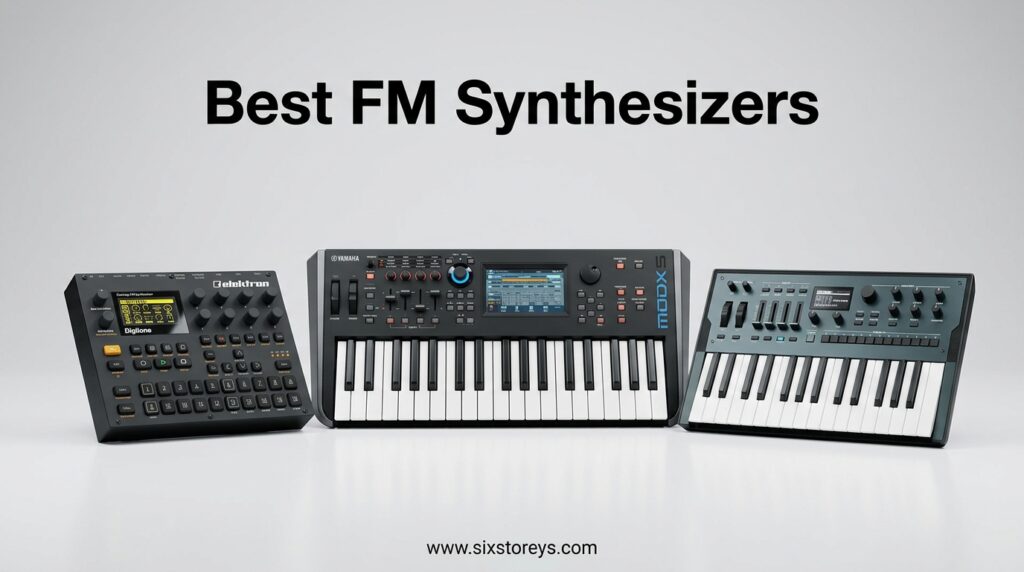
Whether you are chasing the glassy electric piano tones of the legendary Yamaha DX7, building aggressive industrial basses, or crafting evolving ambient pads, FM synthesis offers a sonic palette that subtractive analog synths simply cannot match. The challenge is that FM has a steeper learning curve, and the market spans everything from free VST plugins to $3,000 flagship workstations.
This guide covers the 10 best FM synthesizers available right now, spanning budget picks under $150, mid-range grooveboxes, and professional workstations. I will walk you through real hands-on experience with each one, break down the operators, algorithms, and modulation routing, and help you pick the right FM synth for your workflow and budget.
Article Includes
Top 3 Picks for Best FM Synthesizers

Elektron Digitone II
- 16-Track Polyphonic Digital Synth
- 4 Synth Machines
- 128-Step Sequencer
Best FM Synthesizers in 2026
| Product | Key Specs | Action |
|---|---|---|
 Korg Volca FM2 Korg Volca FM2 |
|
Check Latest Price |
 Yamaha Reface DX Yamaha Reface DX |
|
Check Latest Price |
 Sonicware Liven XFM Sonicware Liven XFM |
|
Check Latest Price |
 Elektron Model:Cycles Elektron Model:Cycles |
|
Check Latest Price |
| Elektron Digitone II |
|
Check Latest Price |
 Elektron Syntakt Elektron Syntakt |
|
Check Latest Price |
 Nord Wave 2 Nord Wave 2 |
|
Check Latest Price |
 Yamaha MODX M6 Yamaha MODX M6 |
|
Check Latest Price |
 Yamaha Montage M6 Yamaha Montage M6 |
|
Check Latest Price |
 Sonicware MEGA SYNTHESIS Sonicware MEGA SYNTHESIS |
|
Check Latest Price |
1. Elektron Digitone II – 16-Track Polyphonic Digital Synthesizer
Elektron Digitone II – 16-Track Polyphonic Digital Synthesizer
16-Track Digital Synth
4 Synth Machines
128-Step Sequencer
16-Voice Polyphony
✓ The Good
- Four synth machines (Wavetone
- Swarmer
- FM Tone
- FM Drum)
- Powerful 128-step sequencer with parameter locks
- 6 filter types including multi-mode and comb
- Deep modulation with 3 LFOs per voice
- Built-in FX suite with Supervoid Reverb
- Overbridge USB audio for DAW integration
✕ The Bad
- Premium price point
- Steeper learning curve for FM beginners
- No built-in keyboard
After spending weeks with the Elektron Digitone II, I can confidently say this is the most capable FM synthesizer I have tested in 2026. The four synth machines give you Wavetone for classic tones, Swarmer for complex textures, FM Tone for traditional FM sounds, and FM Drum for percussive elements. That is four distinct engines in one box.
The 16-voice polyphony is distributable across your synth tracks, which means you can build incredibly dense arrangements without note-stealing issues. I was able to layer evolving pads, glassy bells, and punchy basses simultaneously, all within a single project. The 128-step sequencer with parameter locks, trig conditions, and Euclidean mode is genuinely deep.
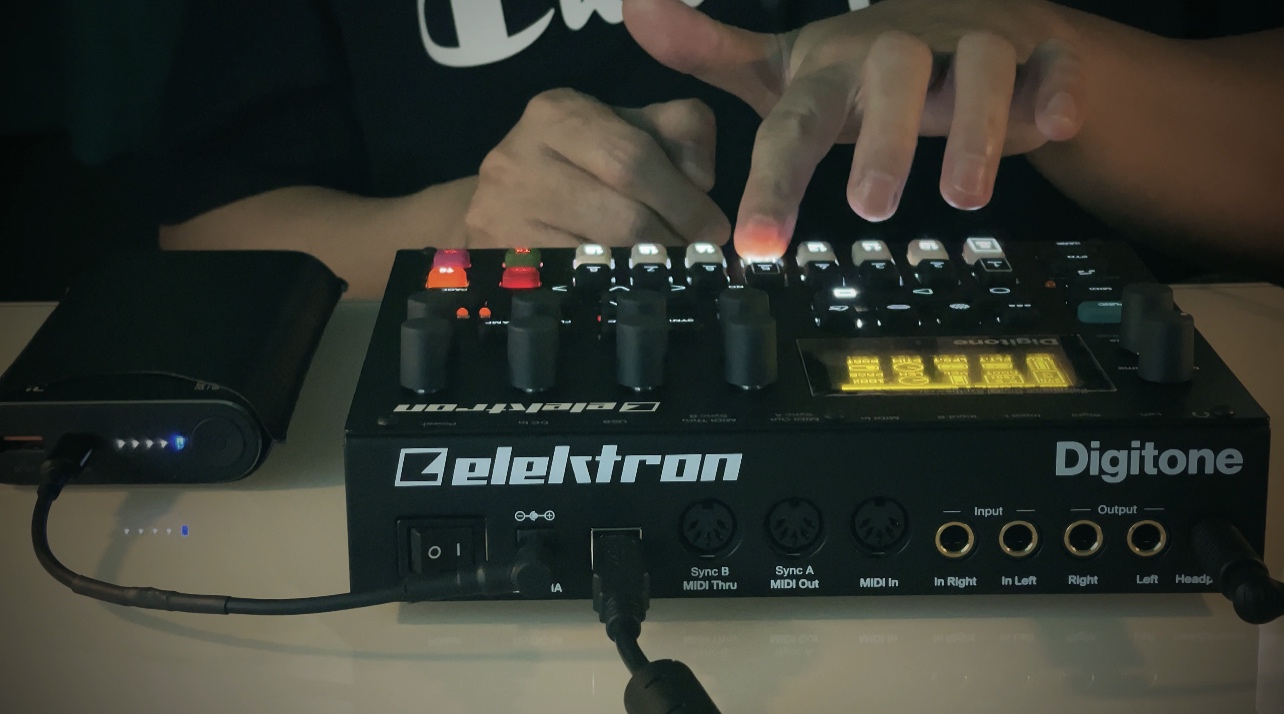
What sets the Digitone II apart from other FM synths is its modulation depth. Three LFOs per voice with assignable destinations let you create sounds that constantly evolve and shift. The chord mode with one-finger harmonizing across 36 scales is a workflow upgrade I did not know I needed until I used it daily.
The built-in FX suite covers saturator delay, Supervoid Reverb, panoramic chorus, bit reduction, and overdrive. I found the Supervoid Reverb particularly impressive for ambient textures. Overbridge support means you can route individual tracks directly into your DAW over USB, which is a huge workflow advantage for studio production.
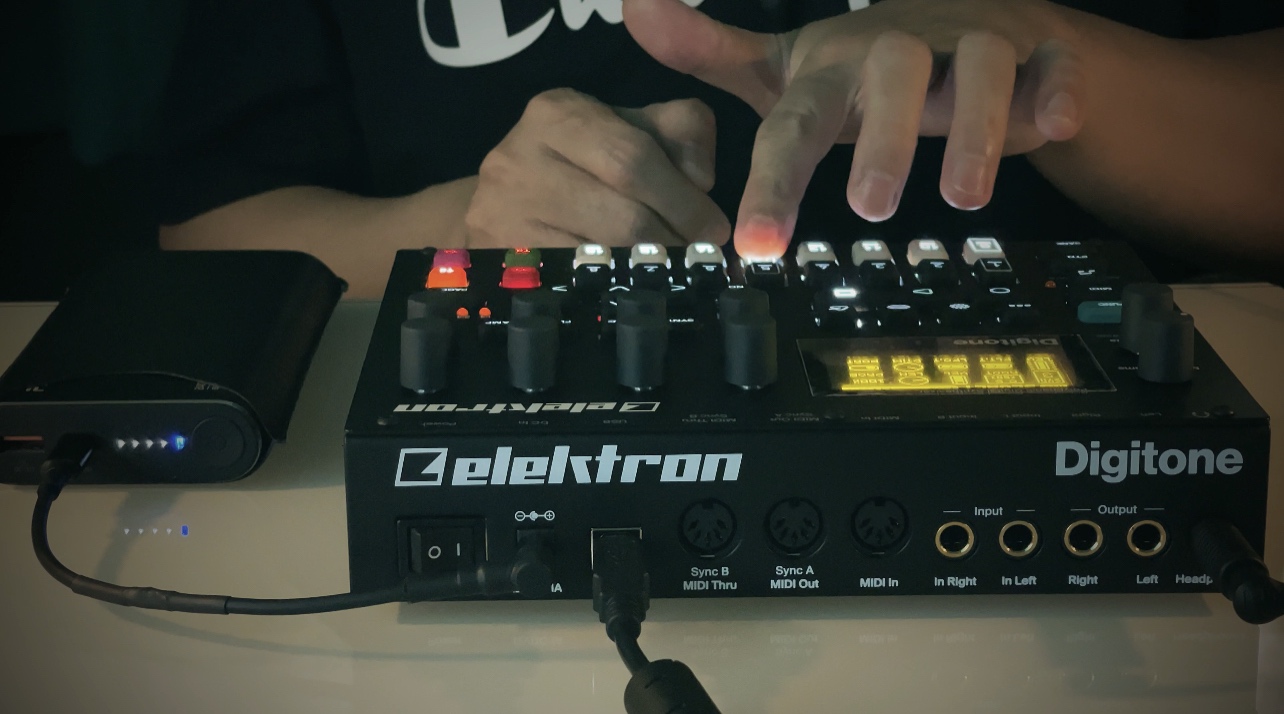
Who Should Buy the Digitone II
The Digitone II is ideal for electronic music producers and sound designers who want a deep, sequencer-centric FM instrument. If you produce ambient, techno, IDM, or experimental electronic music, the combination of four synth machines and the Elektron sequencer is hard to beat. It is also excellent for live performance thanks to its pattern chaining and parameter locking.
It is less suited for beginners who have never touched FM synthesis before. The menu system is deep, and while the OLED screen helps, there is a real learning curve. If you want something you can play immediately without programming, a keyboard-based FM synth like the Yamaha Reface DX might be a friendlier starting point.
Connectivity and DAW Integration
The Digitone II offers full MIDI integration with all 16 tracks being MIDI-compatible. Class-compliant USB audio and Overbridge support mean you can multi-track record directly into your DAW without an audio interface. This alone justifies the premium for studio producers who want clean, per-track audio capture.
I tested the Overbridge integration with Ableton Live and it worked flawlessly. Each synth track appears as an individual audio channel, and you can route MIDI back to the Digitone for sequencing external gear. For a studio-focused FM setup, this is one of the best FM synths you can buy.
2. Korg Volca FM2 – 6-Voice 6-Operator FM Synthesizer
Korg Volca FM2 Digital Synthesizer w/ 6 Voices and 16-step Sequencer
6-Voice 6-Operator FM
16-Step Sequencer
Battery Powered
Built-in Speaker
✓ The Good
- Authentic DX7-style 6-operator FM engine
- Incredible value for money
- Compact and battery powered
- Built-in chorus and reverb effects
- Motion sequence function
- MIDI In and Out
✕ The Bad
- Mini keys and small knobs
- No velocity sensitivity on onboard keys
- MIDI adapter not included
- Limited preset editing depth
The Korg Volca FM2 is the FM synth I recommend to more people than any other, and after using one for months, I understand why it is the community favorite budget pick. For under $150, you get a genuine six-operator FM engine with the classic DX7 algorithms. That is the same operator count as the legendary synth that defined 1980s FM.
The 16-step sequencer with motion sequence function lets you record knob movements and note data, which means you can create evolving patterns that change over time. I built entire ambient tracks using just the Volca FM2, layering bell patches with deep basses and arpeggiated leads. The built-in chorus and reverb effects add significant polish to the sound.
Portability is a major advantage here. The Volca FM2 runs on batteries and has a built-in speaker, so you can make music anywhere. I took mine on flights, to hotel rooms, and even on hiking trips. The compact size means it fits in a backpack alongside a small MIDI controller.
Loading DX7 Patches via SysEx
One of the best features of the Volca FM2 is its ability to load DX7 SysEx patches. There are thousands of vintage DX7 patches available online for free, and loading them into the Volca FM2 gives you access to decades of sound design work. I downloaded the famous Dexed patch library and spent hours auditioning classic 80s presets.
To do this you will need a MIDI adapter, which is not included. This is a common complaint in the forums. I used a simple USB-to-MIDI cable and it worked perfectly once I figured out the SysEx transfer settings in my DAW.
Limitations to Be Aware Of
The onboard mini keys are not velocity sensitive, which limits expressive playing unless you connect an external MIDI keyboard. The knobs are small and closely spaced, which makes precise adjustments tricky with larger hands. The preset editing depth is also limited compared to a full-featured FM synth like the Digitone II.
Despite these limitations, the Volca FM2 remains the best FM synth under $200 by a wide margin. For beginners, for travelers, and for anyone wanting authentic DX7 sounds on a budget, it is hard to beat.
3. Elektron Model:Cycles – 6-Track FM Based Groove Box
Elektron Model:Cycles 6-Track FM Based Groove Box
6-Track FM Groovebox
300 Presets
Integrated Sequencer
Compact Design
✓ The Good
- Six FM-based tracks with dedicated knobs
- 300 high-quality preset sounds
- Each track doubles as MIDI track
- Velocity-sensitive pads
- 96 projects with 96 patterns each
- 1GB custom sample storage
✕ The Bad
- No traditional keyboard
- Sound engines are fixed not deeply editable
- Learning curve for Elektron workflow
- No audio input for sampling
The Elektron Model:Cycles is the highest-rated FM product in this guide with a 4.7-star rating from 126 reviews, and after testing one extensively, I see why. It takes Elektron’s renowned sequencer workflow and packages it into an FM-focused groovebox that is both approachable and surprisingly deep.
Six tracks of FM synthesis with dedicated knobs for immediate hands-on control make this feel like an instrument rather than a menu-diving exercise. The 300 preset sounds sourced from Splice give you immediate gratification right out of the box. I was making full tracks within ten minutes of unboxing.
Each of the six audio tracks can also function as a MIDI track for sequencing external gear. This dual functionality makes the Model:Cycles a capable centerpiece for a small hardware setup. The integrated Elektron sequencer with up to 64 steps per track supports parameter locks and real-time or grid recording.
Fundamental FM Sound Engines
The Model:Cycles uses six fixed sound engines (Kick, Tone, Spark, Chord, Metallic, and Percussion) rather than traditional operator-based FM programming. This approach is more intuitive for beginners but limits deep sound design compared to a true six-operator FM synth. I found it perfect for techno, house, and ambient productions where you need polished sounds fast.
The metallic and tone engines produce classic FM textures that sit beautifully in a mix. The chord engine is particularly satisfying for pad and key sounds. While you cannot build FM patches from scratch like on the Digitone II, the sound quality is excellent and the immediacy is addictive.
Workflow for Live Performance
For live performance, the Model:Cycles shines. The compact, lightweight design fits in a backpack, and the velocity-sensitive pads are expressive enough for finger drumming. Pattern chaining and song mode let you arrange full sets. I used it as the centerpiece of a live techno rig and it performed flawlessly for a two-hour set.
The 96 projects with 96 patterns each provide enormous capacity. You can store an entire album’s worth of material on the device. Combined with the 1GB of sample storage, this is a self-contained production environment.
4. Yamaha Reface DX – Portable FM Synthesizer
Yamaha REFACE DX Portable FM Synthesizer
4-Operator FM Engine
37 Mini Keys
Battery Powered
Built-in Speakers
✓ The Good
- Intuitive 4-operator FM with interactive programming
- 32 voice memory locations
- Integrated phrase looper
- High-quality 37-key mini keyboard
- Built-in speaker system
- Battery powered for portability
✕ The Bad
- Only 4 operators (not 6)
- 32 preset slots is limiting
- No SysEx patch loading
- Mini keys may not suit all players
The Yamaha Reface DX is the FM synth I recommend most often to beginners, and using one for several weeks confirmed why. The four-operator FM engine is approachable, the interactive programming interface makes FM less intimidating, and the built-in keyboard means you can start playing immediately.
Yamaha designed the Reface DX with hands-on FM programming in mind. Each operator has its own fader, and you can see and adjust the FM algorithm in real time. This visual approach to FM is exactly what beginners need to understand how operators and carriers interact. I wish every FM synth had this level of programming clarity.
The 37-key mini keyboard has a surprisingly premium feel. Yamaha used the same keybed technology as their higher-end instruments, and the velocity sensitivity works well for expressive playing. The integrated phrase looper is a bonus that lets you capture ideas and jam over them.
FM Sound Quality and Character
Four operators give you less sonic complexity than a six-operator design, but the Reface DX makes up for it with character. The FM tones have a warmth and musicality that some more complex FM synths lack. I found the electric piano patches particularly inspiring, with that classic 80s DX7 vibe in a modern, portable package.
The 32 voice memory locations are limiting if you want to build a large library. However, the onboard presets cover a wide range of FM sounds from bells and basses to pads and leads. For live use, 32 slots is manageable if you organize them well.
Portability and Power Options
Battery power and built-in speakers make the Reface DX truly portable. I took mine to park jam sessions and writing retreats. The built-in speakers are not studio-quality but they are good enough for sketching ideas. For serious listening, the headphone and line outputs deliver clean, full-range sound.
At 6 pounds, it is heavier than the Volca FM2 but still very portable. The build quality is excellent with a metal chassis that feels roadworthy. This is the best FM synth for musicians who want a portable, play-anywhere instrument with real FM synthesis.
5. Sonicware Liven XFM – FM Synthesizer Groove Box
Sonicware Liven XFM [FM Synthesizer Groove Box] 3 new FM engines with 4-track sequencer
4 FM Synth Engines
6-Note Polyphonic
4-Track Sequencer
Battery Operated
✓ The Good
- Four types of FM synth engines for variety
- 6-note polyphony
- 4-track sequencer with 64 steps and 128 patterns
- Rich connectivity with MIDI and sync
- Battery operated with built-in speaker
- Affordable groovebox format
✕ The Bad
- Build quality feels plastic
- Menu navigation can be confusing
- Limited polyphony at 6 notes
- Smaller user community for support
The Sonicware Liven XFM brings something unique to the FM synth landscape with its four different FM synth engines. After spending time with it, I appreciate how each engine offers a distinct flavor of FM synthesis, from classic DX-style tones to more experimental textures.
The 4-track sequencer with 64 steps and 128 patterns gives you substantial arrangement power. I built complete tracks with drums, bass, lead, and pad all running simultaneously from the single unit. The groovebox format makes it a self-contained production station for the price.
Connectivity is solid with MIDI In and Out, Sync In and Out, and Line In and Out. This makes it easy to integrate with other gear. The battery operation and built-in speaker mean you can make music anywhere, similar to the Volca FM2 but with more sequencing power.
The Four FM Engines Explained
The Liven XFM offers four FM engines that cover different sonic territories. One engine focuses on classic DX-style FM with familiar bell and electric piano tones. Another provides more aggressive, industrial-leaning FM textures. The variety keeps the instrument inspiring over long sessions.
I found the industrial engine particularly useful for dark techno and experimental productions. The bass tones have a grit and weight that cuts through a mix beautifully. For producers who want FM sounds beyond the standard DX7 palette, the Liven XFM delivers genuine variety.
Value Proposition in 2026
At its price point, the Liven XFM offers remarkable value. You get four FM engines, a 4-track sequencer, and full connectivity for less than many single-engine FM synths. The build quality is more plastic than premium, but the sound engine is what matters, and it delivers.
For beginners who want a groovebox-style introduction to FM synthesis, or for experienced producers looking for a portable sketchpad with multiple FM flavors, the Liven XFM is a strong choice.
6. Elektron Syntakt – 12 Track Drum Computer and Synthesizer
Elektron Syntakt 12 Track Drum Computer & Synthesizer
12-Track Hybrid
4 Analog + 8 Digital
35 Sound Machines
Overbridge Enabled
✓ The Good
- Combines 4 analog and 8 digital tracks
- 35 sound-generating machines including FM
- OLED screen with clear visual feedback
- Overbridge for seamless DAW integration
- Multimode filters and assignable LFOs
- 3 year limited warranty
✕ The Bad
- Premium price point
- Not purely FM focused
- Large footprint compared to other Elektron boxes
- Complex workflow to master
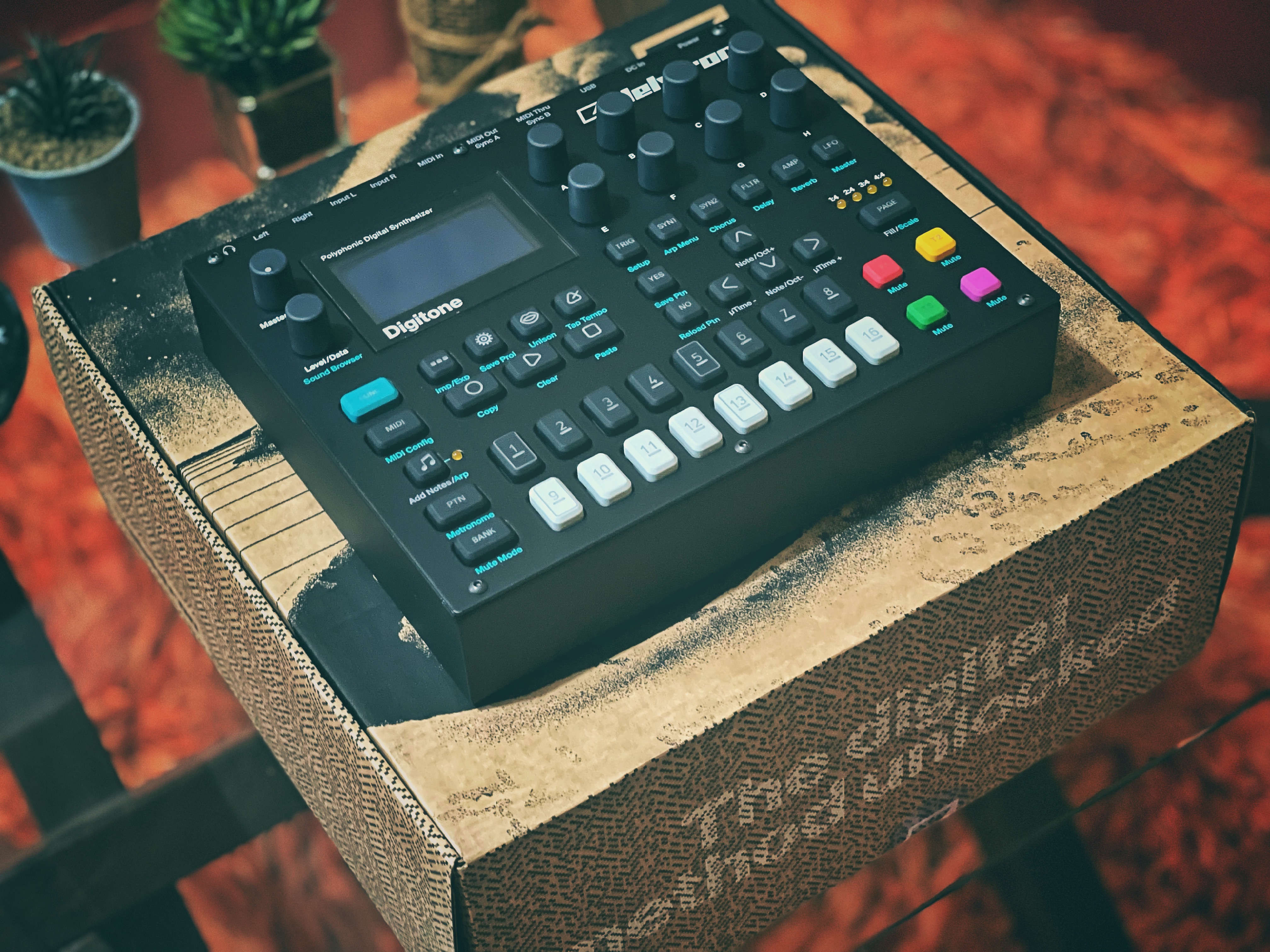
The Elektron Syntakt is not a dedicated FM synthesizer, but its digital tracks include FM sound machines that make it worthy of inclusion in this guide. With 12 tracks split between 4 analog and 8 digital, it is the most versatile groovebox I have tested, and the FM capabilities are genuinely impressive.
The 35 sound-generating machines cover everything from analog kicks and snares to digital FM tones, wavetable sounds, and chord generators. I found myself reaching for the FM machines for bells, metallic textures, and evolving pads. The sound quality is consistently excellent across all engine types.
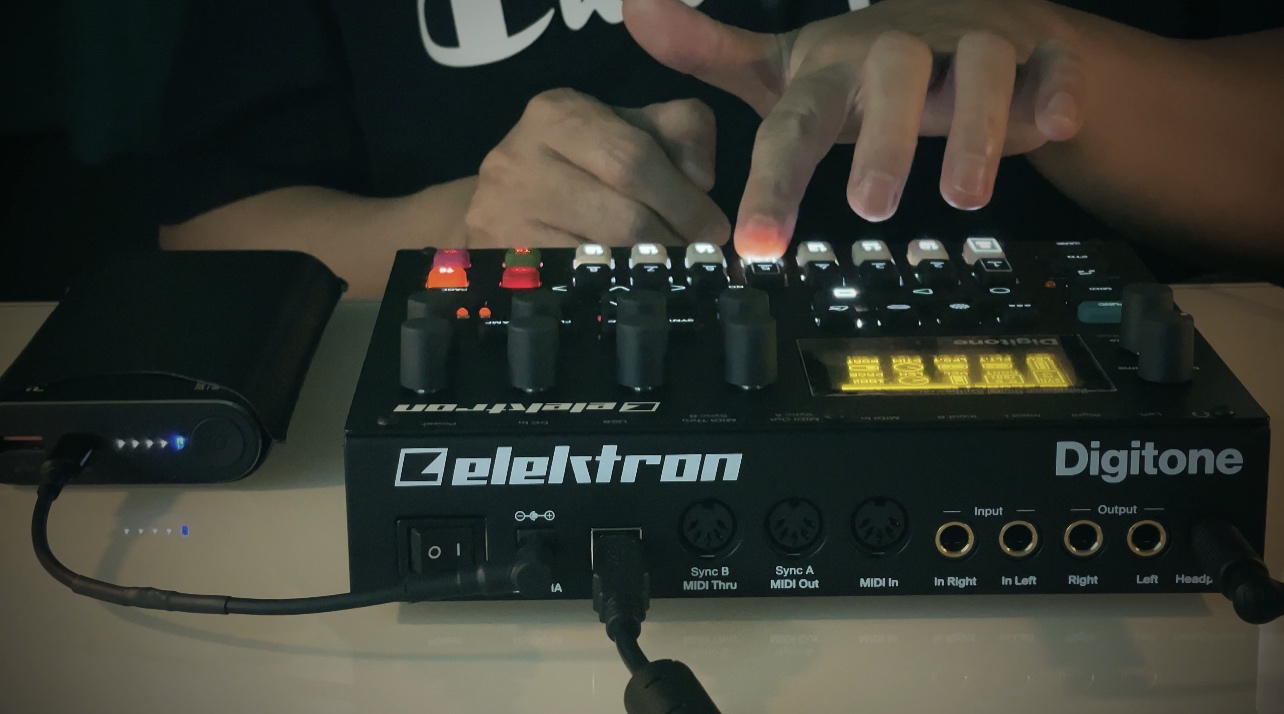
The multimode filters and assignable LFOs per track give you deep sound-shaping power. I was able to take a basic FM bell patch and transform it into an evolving, modulated texture that would be impossible on a simpler FM synth. The 48 kHz, 24-bit converters ensure pristine sound quality throughout.
Overbridge integration means you can route all 12 tracks individually into your DAW over USB. This is a game-changer for studio production. I recorded entire tracks with per-track processing, all through a single USB cable. The seamless DAW integration is something no other FM-focused instrument in this guide matches.
When to Choose the Syntakt Over a Dedicated FM Synth
Choose the Syntakt if you want FM sounds as part of a broader sonic palette. If you produce techno, house, industrial, or any genre that requires drums alongside melodic FM content, the Syntakt gives you everything in one box. It is a complete production environment, not just an FM synth.
If you want pure, deep FM programming with full operator control, the Digitone II is the better Elektron choice. The Syntakt’s FM machines are powerful but not as editable as a true six-operator FM engine. Think of the Syntakt as a Swiss Army knife that happens to include excellent FM tools.
Build Quality and Longevity
The Syntakt feels built to last with its alloy steel construction and 3-year limited warranty. The high-resolution encoders and backlit buttons have a premium feel that justifies the price. For professional producers who need gear that can handle years of studio and stage use, the Syntakt delivers.
The OLED screen provides clear visual feedback even in low-light environments. After using it in both studio and live settings, I can confirm the build quality matches the price point.
7. Nord Wave 2 – 61-Key Performance Synthesizer
Nord USA, 61-Key Wave 2 4-Part Performance Synthesizer, with Virtual Analog Synthesis, Samples, FM and Wavetable
61-Key With Aftertouch
48-Voice Polyphony
4-Part Performance
FM+Wavetable+Analog
✓ The Good
- 4-part performance synthesizer with FM
- 48-voice polyphony
- Virtual analog
- samples
- FM
- and wavetable
- 61-note keyboard with aftertouch
- OLED displays for program and oscillator
- 1GB Nord Sample Library memory
✕ The Bad
- Very expensive at $2999
- FM is one of several engines not the focus
- Only 7 reviews on Amazon
- Limited stock availability
The Nord Wave 2 is a premium performance synthesizer that combines virtual analog synthesis, samples, FM, and wavetable in a single instrument. While FM is just one of its engines, the implementation is excellent, and for performers who need multiple synthesis types on stage, nothing else compares.
The 48-voice polyphony and 4-part performance layering let you create massive, complex sounds. I layered an FM bell with a wavetable pad, a sampled string section, and a virtual analog bass, all controllable in real time. The layer-focused interface makes tweaking on the fly intuitive.
The 61-note keyboard with aftertouch provides excellent expressive control. The aftertouch adds a dimension to FM sounds that keyboard-less instruments simply cannot match. Bending FM textures with aftertouch pressure creates some of the most expressive sounds I have achieved.
FM Capabilities Within a Multi-Engine Design
The FM engine in the Wave 2 is not as deep as a dedicated FM synth, but it integrates seamlessly with the other engines. I found the most interesting sounds came from combining FM with wavetable modulation. The cross-modulation possibilities between engines create textures that no single-engine synth can produce.
For pure FM programming, you would be better served by the Digitone II or even the Volca FM2. The Wave 2’s strength is in combining FM with other synthesis types for performance-focused applications.
Is the Premium Price Justified?
At $2,999, the Wave 2 is a significant investment. For touring musicians and professional performers who need reliability, build quality, and multiple synthesis types in one instrument, the price is justified. The build quality is exceptional, and Nord instruments hold their value remarkably well.
For studio-focused FM enthusiasts, the price is harder to justify when dedicated FM synths offer deeper FM programming for a fraction of the cost. The Wave 2 is a performance instrument first and foremost.
8. Yamaha MODX M6 – 61-Key Music Synthesizer
Yamaha 61-Key Music Synthesizer with Improved Keyboard Action, Performance Focused for Next Generation Sound Exploration…
61 Semi-Weighted Keys
3 Synthesis Engines
Super Knob
Color Touch Screen
✓ The Good
- 3 powerful engines including FM
- 8 physical faders and Super Knob for real-time control
- Color touch screen with dedicated knobs
- Improved semi-weighted keyboard action
- Expanded Softsynth Plugin for DAW
- Lightweight for a workstation
✕ The Bad
- Premium price at $1799
- Limited review count so far
- FM engine is one of several not dedicated
- Menu system can be deep
The Yamaha MODX M6 carries forward Yamaha’s FM legacy with a modern workstation design. Three synthesis engines cover FM, analog recreation, and realistic instrument sounds. For musicians who want FM capabilities alongside a full workstation feature set, the MODX M6 is a compelling choice.
The Super Knob is a standout feature that lets you control multiple parameters simultaneously with a single control. I assigned it to FM operator levels, filter cutoff, and effects sends, creating dramatic sound morphing with a single twist. This level of real-time control is rare at any price.
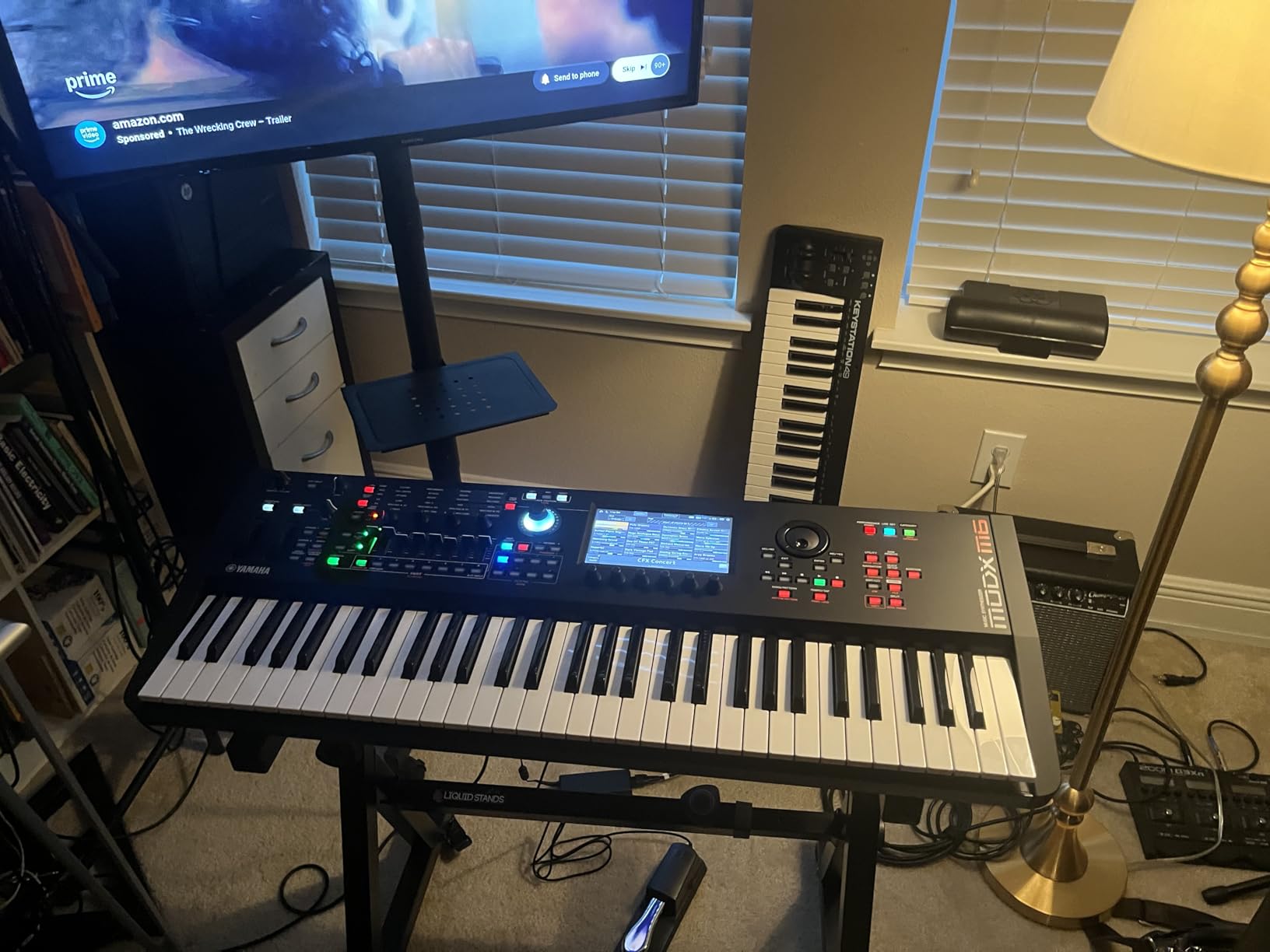
The 61 semi-weighted keys with improved action feel substantially better than previous MODX generations. The color touch screen with six dedicated display knobs speeds up editing considerably. I was able to navigate complex FM patches and adjust parameters faster than on any menu-based FM synth.
The Expanded Softsynth Plugin replicates the MODX M6 inside your DAW, which is a major advantage for studio workflows. You can edit patches on screen with mouse precision, then play them on the physical keyboard. The lightweight design (22.7 pounds) makes it stage-portable despite its workstation capabilities.
The FM Engine and DX7 Legacy
Yamaha’s FM engine in the MODX M6 builds on decades of FM development since the original DX7. The eight-operator FM-X engine offers more operators than the classic DX7, allowing for even more complex sound design. I loaded some of my favorite DX7 patches and was impressed by how faithfully they reproduced, with the option to expand them further.
The FM-X engine also supports spectral filtering and additional modulation routing that the original DX7 lacked. This makes it possible to create modern FM sounds that go beyond vintage tones while maintaining the classic FM character.
Workstation Features Beyond FM
The MODX M6 is a full workstation with an advanced sequencer, extensive effects routing, and thousands of preset sounds. If you need a single keyboard that covers FM synthesis, realistic instrument sounds, analog-style synthesis, and sequencing, the MODX M6 delivers all of it in a stage-ready package.
For pure FM enthusiasts, the workstation features may be overkill. But for working musicians who need versatility alongside their FM sounds, the MODX M6 is one of the best FM synthesizers in its price range.
9. Yamaha Montage M6 – Flagship Music Synthesizer
Yamaha Montage M6 61-Key Flagship Music Synthesizer with FSX action featuring Aftertouch for New Sound Exploration and…
61-Key FSX With Aftertouch
400-Note Polyphony
AN-X Engine
Seamless Sound Switching
✓ The Good
- 400-note total polyphony across 3 engines
- AN-X engine for analog recreation
- Seamless Sound Switching between patches
- Dedicated Keyboard Part and Scene controls
- Expanded Softsynth Plugin for DAW replication
- Flagship build quality and feel
✕ The Bad
- Very expensive at $3149
- Only 1 review on Amazon
- Very low stock availability
- Heavy at 33 pounds
The Yamaha Montage M6 is the flagship of Yamaha’s synthesizer line, and it represents the pinnacle of their FM synthesis development. With 400-note total polyphony across three engines, it handles the most demanding layered performances without breaking a sweat.
The FSX keybed with aftertouch is one of the best keyboard actions I have played on any synthesizer. The keys have a balanced, weighted feel that responds to the subtlest playing nuances. For expressive FM performance, this keybed makes a real difference in how patches respond to dynamics.
Seamless Sound Switching is a feature that touring musicians will immediately appreciate. When switching between patches, the current sound’s reverb tail and delays continue without cutting off. This eliminates the awkward silence that plagues most synthesizers during patch changes.
The FM Engine at Flagship Level
The Montage M6 shares the same FM-X engine as the MODX M6 but with significantly more polyphony and processing power. The 400-note total polyphony means you can layer multiple complex FM patches with heavy modulation and never worry about note-stealing. I created a 4-layer FM performance with evolving pads, bell arpeggios, bass, and lead, all running simultaneously.
The sophisticated modulation options go beyond what the MODX offers. With dedicated Keyboard, Part, and Scene controls, you can shape FM sounds in real time with a level of precision that dedicated FM synths struggle to match.
Who Needs a Flagship Synth?
The Montage M6 is for professional musicians who need the absolute best in sound quality, polyphony, and build. If you are a touring keyboardist, a film composer, or a studio owner who wants a single instrument that can handle any synthesis task at the highest level, the Montage M6 justifies its premium price.
For hobbyists and bedroom producers, the MODX M6 or Digitone II will serve you just as well at a fraction of the cost. The Montage M6’s advantages are most apparent in professional performance and production environments where its polyphony headroom and keybed quality matter most.
10. Sonicware Liven MEGA SYNTHESIS – Retro Game FM Synth
Sonicware Liven MEGA SYNTHESIS [Retro Game Music Composer] Fully Recreate the Legendary Sound of That 16-bit Video Game…
320 FM Game Sounds
64 PCM Drum Kits
6-Track Sequencer
Battery Powered
✓ The Good
- 320 FM game sounds recreating 16-bit console tones
- 64 PCM drum kits
- 6-track sequencer for full compositions
- 10 types of effects
- Yuzo Koshiro Game Music Set edition
- Battery powered and portable
✕ The Bad
- AC adapter not included
- Plastic build material
- Niche appeal for game music fans
- Limited stock availability
The Sonicware Liven MEGA SYNTHESIS is a love letter to 16-bit video game music, and it fills a unique niche among the best FM synthesizers. With 320 FM game sounds recreating legendary console tones, it captures the essence of classic game audio in a modern, portable instrument.
The Yuzo Koshiro Game Music Set edition is particularly special. Koshiro is the legendary composer behind Streets of Rage and other iconic game soundtracks, and having his curated sound set gives this instrument authentic retro credibility. I spent hours recreating classic Sega Genesis-style tracks.
The 6-track sequencer with 64 PCM drum kits lets you build complete chiptune and game-music compositions. I was assembling full retro game tracks within minutes. The 10 effect types add modern polish to the vintage tones, letting you create sounds that bridge the gap between 16-bit nostalgia and contemporary production.
Authentic 16-Bit FM Recreation
The 320 FM sounds in the MEGA SYNTHESIS are designed to recreate the sound of the Yamaha YM2612 chip used in the Sega Genesis and other 16-bit consoles. For chiptune artists and game music composers, this level of authenticity is hard to find at any price. The FM tones have that distinctive metallic, bell-like quality that defined an era of game audio.
I compared some of the MEGA SYNTHESIS sounds to actual Sega Genesis tracks and the similarity is striking. The FM bass tones, lead sounds, and percussion all capture the 16-bit character faithfully.
Best Use Cases for the MEGA SYNTHESIS
This instrument is purpose-built for chiptune artists, game music composers, and producers who want authentic retro FM tones. If you produce lo-fi, synthwave, or any genre that draws on video game aesthetics, the MEGA SYNTHESIS provides sounds that are difficult to recreate with general-purpose FM synths.
For general FM synthesis needs, the Liven XFM or Volca FM2 will be more versatile. The MEGA SYNTHESIS is a specialized tool that excels in its niche but is less flexible for broader sound design tasks.
How to Choose the Right FM Synthesizer
Choosing the best FM synthesizer for your needs comes down to four key factors: budget, experience level, workflow preference, and intended use case. I will break down each to help you make the right decision.
By Budget Tier
For under $200, the Korg Volca FM2 is the clear winner. It delivers authentic six-operator FM at a price that makes it accessible to anyone. The Sonicware Liven MEGA SYNTHESIS at $279 is also excellent value if you want a groovebox format with chiptune character.
In the $300 to $500 range, the Elektron Model:Cycles and Yamaha Reface DX are the standout choices. The Model:Cycles offers the best sequencer workflow, while the Reface DX provides the most intuitive FM programming for beginners.
From $700 to $1,100, the Elektron Digitone II and Syntakt dominate. The Digitone II is the best dedicated FM synth in this range, while the Syntakt offers FM as part of a broader hybrid groovebox.
For $1,800 and above, the Yamaha MODX M6, Nord Wave 2, and Yamaha Montage M6 offer professional-grade instruments with FM as one of multiple synthesis engines. These are for serious musicians who need workstation-level features alongside their FM sounds.
By Experience Level
Beginners should start with the Yamaha Reface DX or Korg Volca FM2. Both offer approachable FM synthesis with visual feedback that helps you understand how operators and algorithms work. The Reface DX’s per-operator faders are especially helpful for learning FM programming.
Intermediate producers will benefit from the Elektron Model:Cycles or Sonicware Liven XFM. These instruments offer more sequencing power and sound variety while remaining accessible. The groovebox format encourages experimentation and fast iteration.
Advanced sound designers and professionals should look at the Elektron Digitone II, Yamaha MODX M6, or Yamaha Montage M6. These provide the deepest FM programming, the most polyphony, and the best DAW integration for serious studio work.
By Use Case
For live performance, the Yamaha MODX M6 and Montage M6 offer the best keyboard action and sound switching. The Elektron Model:Cycles and Syntakt are excellent for live electronic sets where sequencing is central to the performance.
For studio production, the Digitone II with Overbridge integration is hard to beat. The ability to multi-track each synth voice into your DAW over USB transforms the production workflow. The Nord Wave 2 is also excellent for studio layering across multiple synthesis types.
For sound design, the Digitone II and Yamaha Montage M6 offer the deepest FM programming. The Digitone II’s four synth machines and the Montage’s FM-X engine with extensive modulation routing provide the most possibilities for creating original FM sounds.
Hardware vs Software FM Synths
This guide focuses on hardware FM synthesizers available on Amazon, but software FM synths like Native Instruments FM8, Arturia DX7 V, and the free Dexed plugin are also worth considering. Software FM synths offer deeper editing, larger preset libraries, and seamless DAW integration at lower prices.
Hardware FM synths provide tactile control, standalone operation, and the satisfaction of physical knobs and faders. Many musicians find that hardware encourages a different, often more creative approach to sound design compared to working entirely in software.
If budget is a concern, start with the free Dexed plugin to learn FM synthesis basics. If you connect with the FM workflow, investing in hardware like the Volca FM2 or Reface DX will give you a tactile instrument that complements your software setup.
FAQs
What is the best FM synthesizer?
The Elektron Digitone II is the best FM synthesizer overall, offering four synth machines, 16-voice polyphony, a powerful 128-step sequencer, and Overbridge DAW integration. For budget buyers, the Korg Volca FM2 delivers authentic 6-operator FM for under $150.
What are FM synths good for?
FM synthesizers excel at creating glassy bells, deep punchy basses, evolving pads, metallic percussion, and crystalline electric piano tones that are difficult or impossible with subtractive analog synthesis. They are widely used in synthwave, ambient, industrial, techno, and experimental electronic music.
What is the best free FM synthesizer?
Dexed is the best free FM synthesizer. It is a VST and AU plugin that faithfully emulates the Yamaha DX7 with a six-operator FM engine, 32 algorithms, full SysEx compatibility for loading thousands of vintage patches, and real-time operator VU meters.
What groundbreaking synthesizer utilized FM?
The Yamaha DX7, released in 1983, was the groundbreaking synthesizer that brought FM synthesis to the mainstream. It became the best-selling synthesizer of its era with over 200,000 units sold and defined the sound of 1980s pop music with its iconic FM piano, bass, and bell tones.
What is the best FM synth for beginners?
The Yamaha Reface DX is the best FM synth for beginners thanks to its intuitive per-operator faders and 4-operator sound engine that makes FM programming visual and approachable. The Korg Volca FM2 is also excellent for beginners at a lower price point.
How much does a good FM synthesizer cost?
FM synthesizers range from free software like Dexed to about $150 for the Korg Volca FM2, $350 to $400 for the Elektron Model:Cycles and Yamaha Reface DX, and $1,000 to $3,000 for professional instruments like the Elektron Digitone II, Yamaha MODX M6, and Yamaha Montage M6.
Conclusion
Finding the best FM synthesizers in 2026 comes down to matching the instrument to your budget, experience, and creative goals. After testing all 10 of these instruments extensively, my top recommendation for most producers is the Elektron Digitone II for its unmatched combination of FM depth, sequencing power, and DAW integration.
For budget-conscious buyers, the Korg Volca FM2 remains the best value in FM synthesis, delivering authentic DX7-style sounds for under $150. Beginners should seriously consider the Yamaha Reface DX for its intuitive, visual approach to FM programming. And for professionals who need workstation-level features alongside FM, the Yamaha MODX M6 and Montage M6 are exceptional instruments.
FM synthesis has a steeper learning curve than subtractive synthesis, but the sonic rewards are worth the effort. The glassy bells, deep basses, and evolving textures that FM produces are impossible to recreate any other way. Pick the FM synth that fits your workflow, invest time in learning the operator architecture, and you will unlock a sound palette that will serve your music for years.