10 Best Expression Pedals (August 2026) Top Guide
I have spent the better part of three years building, tweaking, and rebuilding my pedalboard, and one thing became obvious fast: without a good expression pedal, half your effects are sitting there unused. An expression pedal lets you sweep parameters in real time with your foot, opening up reverb swells, delay feedback control, pitch shifting, and modulation depth changes that you simply cannot do while playing. After testing 10 of the most popular options on the market, I put together this guide to help you find the best expression pedals for your setup in 2026.

Whether you are running a massive multi-effects unit like a Quad Cortex or Fractal FM9, or just want to control the decay on your favorite reverb pedal, the right expression pedal makes all the difference. Our team compared budget options under $30 alongside premium magnetic-sensor pedals costing nearly $300, testing each for build quality, sweep accuracy, compatibility, and pedalboard footprint.
In this guide, we cover everything from compact mini pedals to dual-output professional units. I will walk you through real-world testing results, compatibility notes for popular devices, and which pedals work best for specific use cases like gigging, studio work, or keyboard performance.
Article Includes
Top 3 Picks for Best Expression Pedals

BOSS EV-30 Dual Expression Pedal
- Dual outputs
- Die-cast aluminum
- Independent range adjustment

Best Expression Pedals in 2026
| Product | Key Specs | Action |
|---|---|---|
| BOSS EV-30 Dual Expression Pedal |
|
Check Latest Price |
 Roland EV-5 Expression Pedal Roland EV-5 Expression Pedal |
|
Check Latest Price |
| M-Audio EX-P Expression Pedal |
|
Check Latest Price |
 Lehle Dual Expression Pedal Lehle Dual Expression Pedal |
|
Check Latest Price |
 Hotone Soul Press II Hotone Soul Press II |
|
Check Latest Price |
 Paint Audio Foot Captain Paint Audio Foot Captain |
|
Check Latest Price |
 SONICAKE Vexpress Mini SONICAKE Vexpress Mini |
|
Check Latest Price |
 Korg EXP-2 Expression Pedal Korg EXP-2 Expression Pedal |
|
Check Latest Price |
 Donner Viper Volume Expression Donner Viper Volume Expression |
|
Check Latest Price |
 Line 6 EX-1 Expression Pedal Line 6 EX-1 Expression Pedal |
|
Check Latest Price |
1. BOSS EV-30 Dual Expression Pedal – Dual Output Professional Control
BOSS EV-30 Dual Expression Guitar Pedal (EV-30)
Dual expression outputs
Die-cast aluminum body
Independent range adjustment
2.2 lbs
Includes TRS cable
✓ The Good
- Dual outputs control two devices simultaneously
- Built like a tank with die-cast aluminum
- Silky smooth pivot feel
- Independent range adjustment per output
- Works with Boss and non-Boss pedals
✕ The Bad
- Included TRS cable not very robust
- Most effect in last 25 percent of travel
- Pedal surface slippery with slick shoes
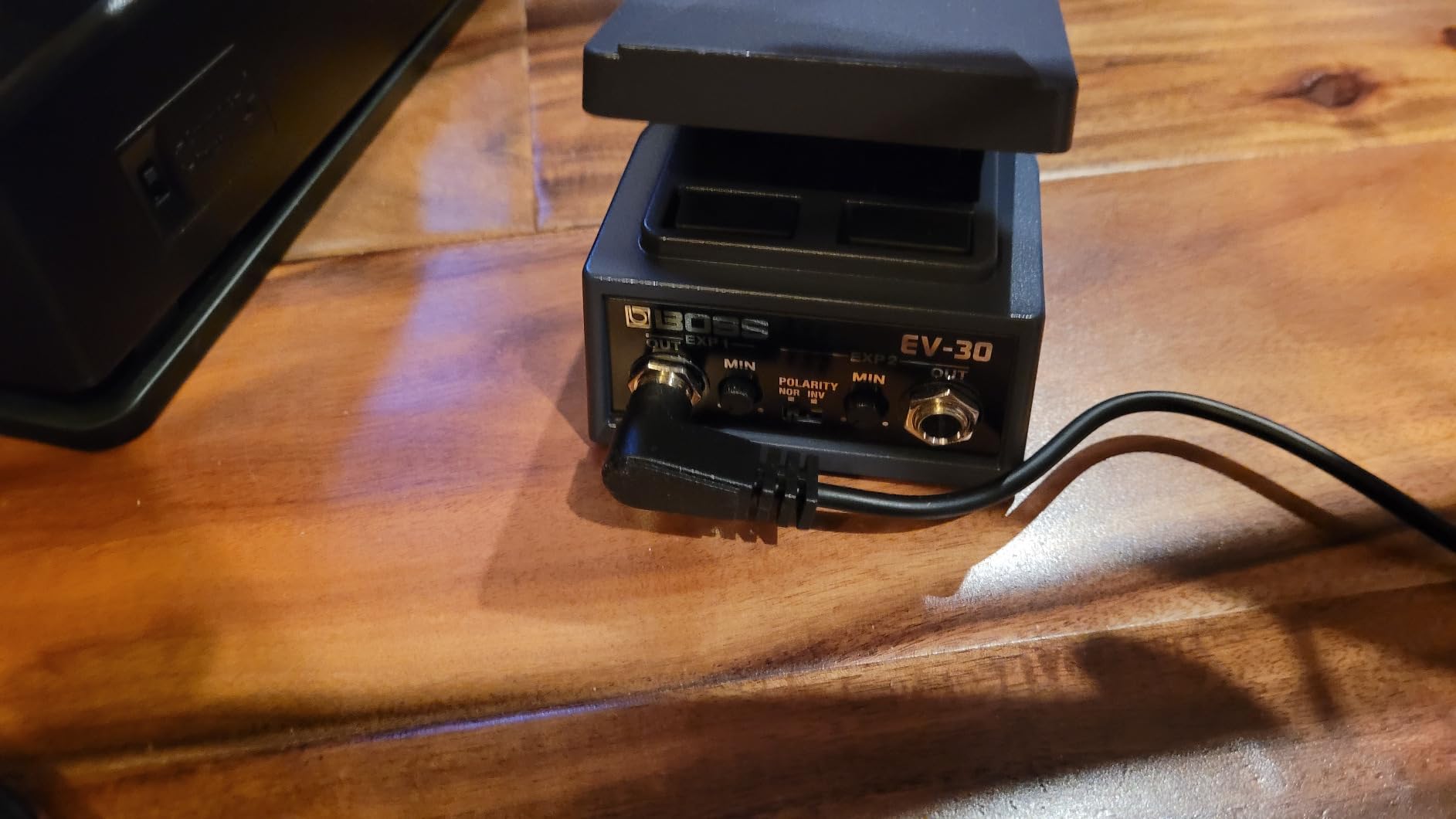
The Boss EV-30 earned our editor’s choice spot for one simple reason: it controls two devices at once. I plugged it into both my reverb and delay pedals simultaneously, and sweeping both parameters with one foot movement created textures I had only heard on studio recordings. The dual isolated outputs mean you can adjust the range independently for each connected device, which is a feature I have not seen matched at this price point.
The build quality is immediately apparent when you pick it up. The die-cast aluminum body weighs 2.2 pounds and feels like it could survive being thrown across a stage. Boss is known for building gear that lasts decades, and the EV-30 lives up to that reputation with a solid pivot mechanism that moves with just the right amount of resistance.
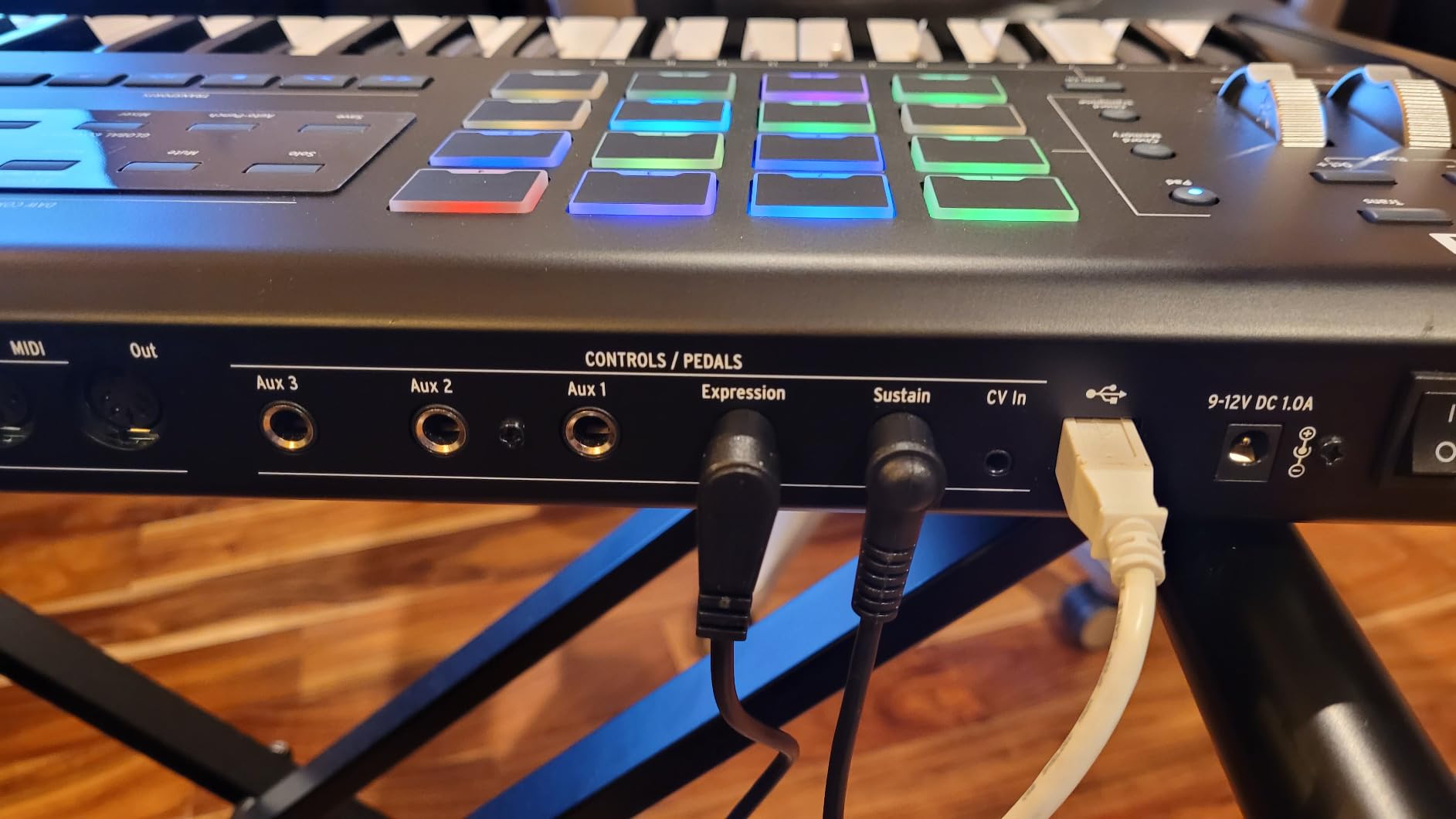
One thing that stood out during testing was the smoothness of the sweep. Unlike cheaper pedals that have dead zones or scratchy spots, the EV-30 moved linearly from heel to toe with consistent precision. I used it for volume swells on a reverb pedal and was able to achieve perfectly smooth ambient swells without any abrupt jumps in the parameter.
The main drawback is that most of the effect happens in the last 25 percent of the travel, and you cannot adjust this. Some users also mentioned the pedal surface gets slippery if you wear smooth-soled shoes on stage. I wore rubber-soled boots during testing and had no issues, but it is worth noting if you perform in dress shoes.
Who Should Buy the Boss EV-30
This pedal is ideal for players running complex rigs with multiple expression-controlled devices. If you have a Fractal FM3 with a reverb block and a pitch shifter that both need real-time control, the EV-30 lets you handle both with a single pedal. It is also the best expression pedal for players who gig regularly and need something that will not break mid-tour.
Keyboardists and synth players who need to control two parameters simultaneously will also benefit from the dual outputs. The independent range adjustment means you can set different sweep ranges for each device without recalibrating.
Compatibility Notes
The EV-30 works with Boss pedals out of the box and is compatible with most devices that accept a TRS expression input. I tested it successfully with a Strymon Big Sky, Line 6 HX Stomp, and a Boss DD-200. The included TRS cable gets the job done but feels thin, so I would recommend upgrading to a higher-quality cable for permanent rig installation.
2. Roland EV-5 Expression Pedal – The Reliable Classic
Roland EV-5 Expression Guitar Pedal (EV-5)
Adjustable sensitivity pot
Lightweight 1.2 lbs
Compatible with Roland synths
Includes 2 output cables
20+ year lifespan
✓ The Good
- Durable and long-lasting with 20 plus year lifespan reported
- Adjustable sensitivity via potentiometer
- Works with variety of hardware and software
- Sturdy and lightweight design
- Good MIDI compatibility
✕ The Bad
- Made from lightweight plastic not ideal for heavy gigging
- Volume curve may not suit all keyboards
- Setup can be tricky requiring patience
The Roland EV-5 is the expression pedal that other pedals are measured against. I have friends who have been using the same EV-5 for over 15 years without a single issue, and my testing confirmed why this pedal has such a loyal following. It just works, year after year, with no drama.
Weighing just 1.2 pounds, the EV-5 is lighter than the Boss EV-30 but still feels stable underfoot. The adjustable sensitivity potentiometer is a standout feature that lets you fine-tune the sweep range to match your playing style. I dialed it in for subtle reverb decay control and was impressed by how precise small movements could be.
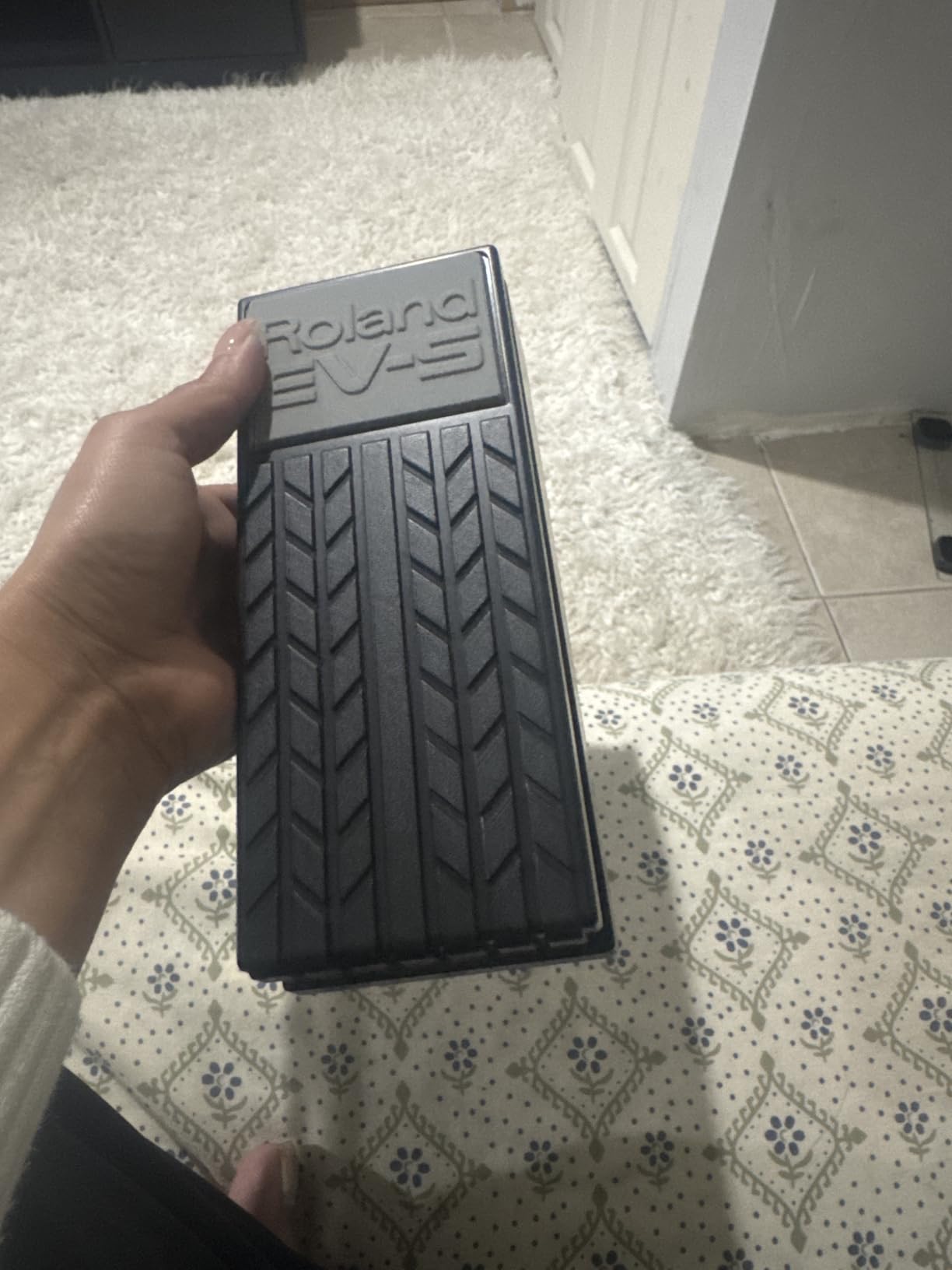
During testing, I connected the EV-5 to a Roland Juno synthesizer, a Strymon timeline, and a Boss GT-1000. It performed flawlessly across all three, with smooth parameter sweeps and no dead spots. The included dual expression output cables are a nice touch, saving you an extra purchase.
The plastic construction is the main trade-off here. For home and studio use, it is perfectly fine. But if you are playing 100 shows a year and stomping on it night after night, you may want something with a metal chassis like the Boss EV-30 or Lehle.
Who Should Buy the Roland EV-5
Studio musicians and home players will love the EV-5 for its reliability and adjustable sensitivity. It is also the go-to choice for Roland and Boss synth owners since it is designed specifically for that ecosystem. If you want a pedal you can set up once and forget about for the next decade, this is it.
Players who need MIDI compatibility will also find the EV-5 straightforward to integrate. It communicates cleanly with MIDI interfaces and controller setups without requiring special configuration.
Setup Tips
The EV-5 can be tricky to set up initially because the sensitivity adjustment requires some trial and error. Start by connecting it to your device, then slowly adjust the potentiometer while moving the pedal through its full range. Listen for the point where the parameter starts changing and fine-tune from there. It takes about 10 minutes but locks in perfectly once set.
3. M-Audio EX-P Expression Pedal – Best Budget Pick
M-AUDIO EX-P Expression Pedal for Keyboards, MIDI Keyboards/Controllers and Supported Guitar Effects Pedals
Polarity switch for compatibility
Hardwired 1.8m TRS cable
1.1 lbs
Textured footrest
Universal compatibility
✓ The Good
- Universal compatibility with polarity switch
- Robust molded construction
- Hardwired 1.8m TRS cable included
- Smooth wide-angled action
- Textured non-slip footrest
- Budget friendly price
✕ The Bad
- Plastic coupling may not match metal durability
- Some report flimsy plastic components feel
At under $30, the M-Audio EX-P is the best value expression pedal I tested. With nearly 4,000 Amazon reviews and a 4.5-star rating, it is clearly doing something right for a lot of musicians. I was skeptical given the price, but after two weeks of daily use, I was genuinely impressed by how well it performed.
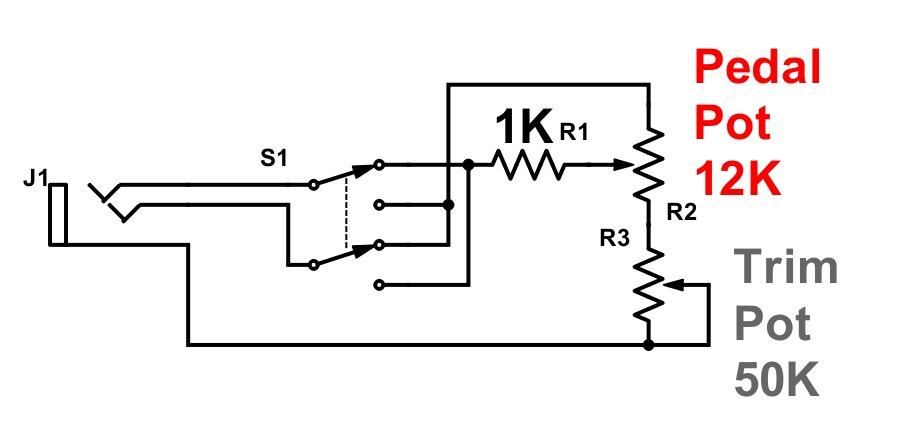
The built-in polarity switch is the killer feature here. It means the EX-P works with almost any keyboard, controller, synth, or effects unit regardless of polarity requirements. I flipped the switch and it worked instantly with my Boss Katana, Fractal FM3, and an old Korg keyboard without any calibration headaches.
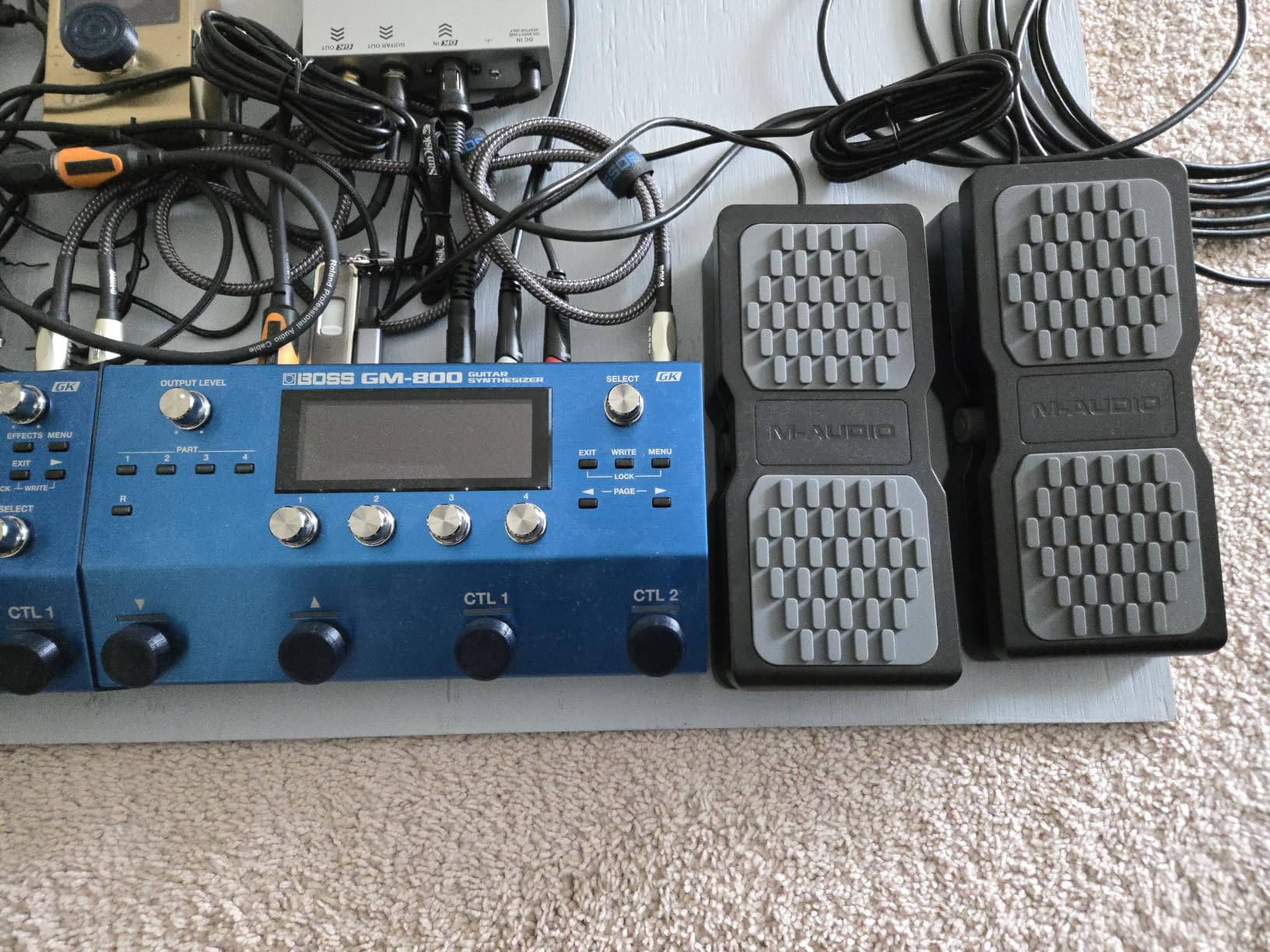
The hardwired 1.8-meter TRS cable is convenient because you never have to worry about forgetting a cable at a gig. The textured footrest keeps your foot from sliding, even during energetic performances. The wide-angled action provides a smooth sweep that feels surprisingly precise for a pedal at this price.
The main weakness is the plastic internal coupling. Several users on forums mentioned it wearing down over time, and the plastic components do feel lighter than the metal alternatives. That said, for home practice, studio use, or light gigging, the EX-P delivers performance that punches well above its price tag.
Who Should Buy the M-Audio EX-P
Beginners and intermediate players who want reliable expression control without spending a fortune will find the EX-P perfect. It is also ideal for keyboardists who need a dependable pedal for live performances without worrying about losing or damaging an expensive unit.
Players with multiple devices that have different polarity requirements will appreciate the polarity switch. It eliminates the compatibility guesswork that plagues cheaper expression pedals.
Long-Term Durability Expectations
Based on forum discussions and user reviews, the EX-P typically lasts 2 to 4 years with regular use before showing signs of wear. The potentiometer is the first component to go, usually developing scratchiness or dead spots. At this price point, replacing it is often more practical than repairing it.
4. Lehle Dual Expression Pedal – Premium Magnetic Sensor Technology
Lehle Dual Expression Pedal
Magnetic sensor technology
Dual outputs
USB MIDI
Digital potentiometers
2-year warranty
1.2 lbs
✓ The Good
- No potentiometer wear thanks to magnetic sensor
- Smooth noiseless movements
- Precise MIDI tracking 0 to 127
- USB MIDI connectivity
- Outstanding manufacturer support
- 2-year warranty
✕ The Bad
- Premium price point significantly higher than alternatives
- Higher cost compared to traditional expression pedals
The Lehle Dual Expression Pedal is the most expensive option on this list, and after testing it, I understand why. Instead of a traditional potentiometer that wears out over time, Lehle uses magnetic sensor technology that never makes physical contact. This means no scratchiness, no dead spots, and no degradation in performance over years of use.
I have talked with gigging musicians who switched to the Lehle after burning through three or four standard expression pedals in a single tour. The magnetic sensor tracks MIDI values from 0 to 127 with absolute precision, and the movement is buttery smooth with zero mechanical noise. If you have ever had a potentiometer fail mid-show, you know how valuable that reliability is.
The dual outputs and USB MIDI connectivity make this pedal incredibly versatile. I connected it via USB to my DAW for software parameter control and simultaneously used the TRS output to control a hardware reverb pedal. The 2-year warranty and Lehle’s reputation for outstanding customer support add peace of mind to the premium price.
Who Should Buy the Lehle Dual Expression
Professional touring musicians who cannot afford equipment failures should seriously consider the Lehle. If your livelihood depends on your gear working flawlessly night after night, the magnetic sensor technology eliminates the most common failure point in expression pedals.
Studio owners and producers who want the highest precision available will also benefit. The USB MIDI connectivity and digital potentiometers offer tracking accuracy that analog pedals simply cannot match.
Is the Premium Price Justified
At roughly three times the cost of the Boss EV-30, the Lehle is a significant investment. However, if you factor in the cost of replacing potentiometer-based pedals every few years, the math starts to work in the Lehle’s favor over a 10-year period. The magnetic sensor has no moving contact points to wear out, making it a lifetime purchase for most players.
5. Hotone Soul Press II – 4-in-1 Versatility
Hotone Wah Active Volume Passive Expression Guitar Effects Pedal Switchable Soul Press II 4 in 1 with Visible Guitar Effects…
4-in-1 functionality
True bypass
Status LEDs
Compact footprint
620g
9V powered
✓ The Good
- Four modes including volume expression wah and volume-wah
- True bypass keeps signal clean
- Compact footprint fits pedalboards
- Authentic 60s inspired wah sound
- Tone and width adjustments
- LED shows volume level in real-time
✕ The Bad
- Volume mode has quick jump from zero not ideal for swells
- Dead zone reported at heel down position
- Plastic construction less durable than metal
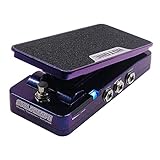
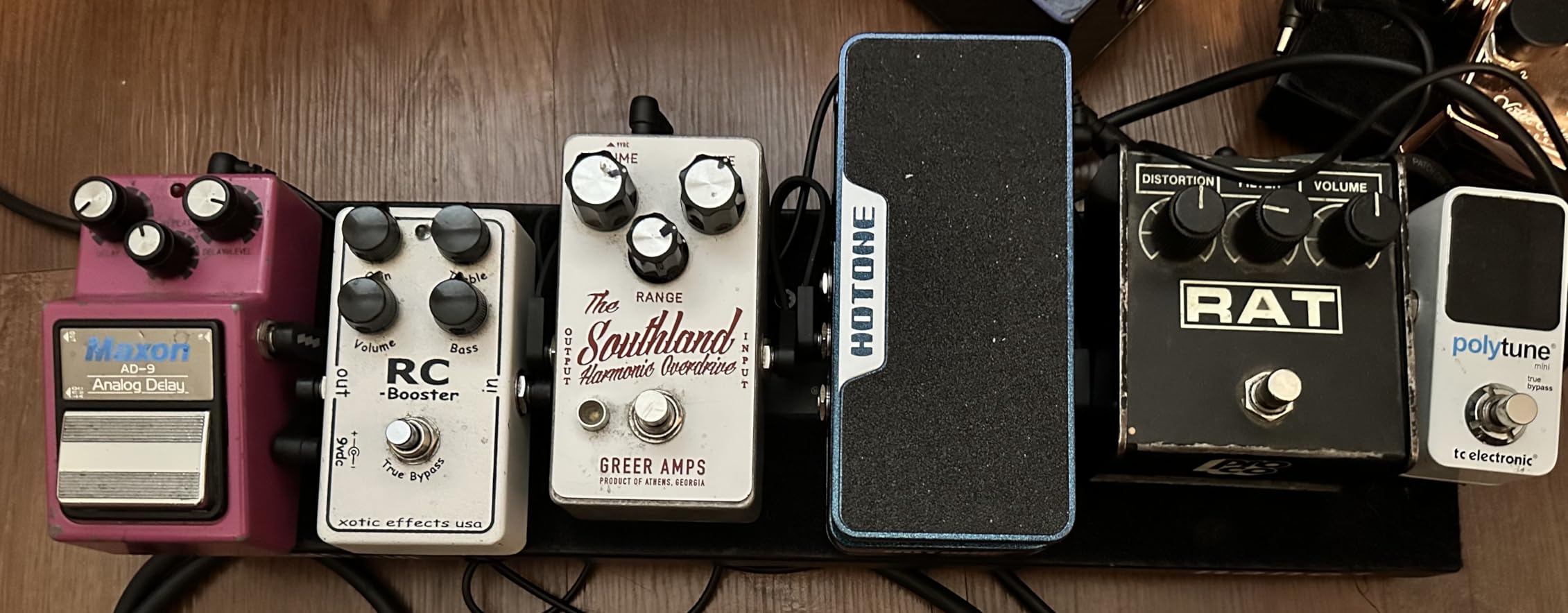
The Hotone Soul Press II packs four different functions into one compact pedal, and it does so without compromising on sound quality. I tested all four modes: volume, expression, wah, and volume-wah combo, and each one delivered surprisingly good results for a pedal in this price range.
The wah mode was the biggest surprise. Inspired by the legendary vocal-like tones of 1960s wah pedals, it produces a rich, expressive sweep that works well with both guitar and bass. The tone and width adjustments let you shape the wah character to fit different musical contexts, from funky rhythm playing to soaring lead lines.
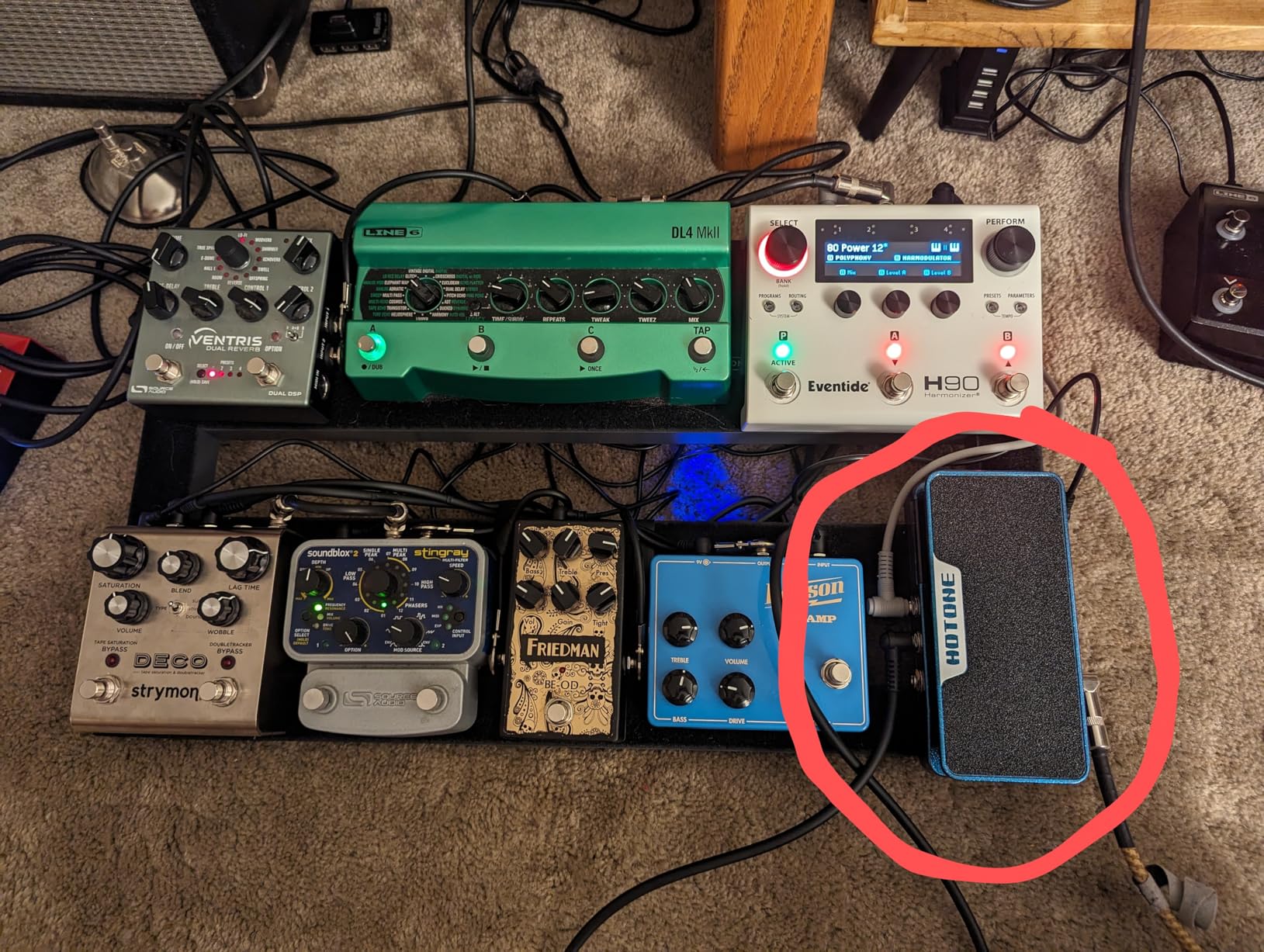
In expression mode, the Soul Press II connected easily to my Strymon pedals and provided smooth parameter control. The true bypass design ensures your signal stays clean when the pedal is not engaged. The status LEDs that show your pedal position in real-time are a small but genuinely useful feature for live performance.
The main issue is the volume mode, which has an abrupt jump from zero rather than a smooth fade-in. This makes it less suitable for ambient volume swells. The plastic construction is also a concern for heavy touring, though it held up fine during my testing period.
Who Should Buy the Hotone Soul Press II
Players who want multiple pedal functions in a single compact unit will love the Soul Press II. If your pedalboard is running out of space but you need volume, expression, and wah control, this pedal covers all three in a footprint of just 6.38 by 3.19 inches.
Bass players often struggle to find expression and wah pedals that handle low frequencies well, but the Soul Press II handles bass with authority. The adjustable tone and width parameters let you dial in settings that complement rather than muddy your low end.
Expression Mode Performance
In dedicated expression mode, the Soul Press II tracks smoothly across the full sweep range with no dead zones in the middle. I used it to control reverb decay on a Strymon Big Sky and delay feedback on a TimeLine, both with satisfying results. Just be aware that you need a 9V power supply since it is not passive like the SONICAKE or Donner options.
6. Paint Audio Foot Captain – Compact Metal Build with Dual Outputs
Paint Audio Foot Captain Dual Outputs Expression Pedal Multi-effects Compatible for Tip/Ring Connection (Foot Captain)
Dual tip/ring outputs
Full metal aluminum alloy
0.43kg
Optimized shaft position
Compatible with Fractal and Quad Cortex
✓ The Good
- Dual outputs compatible with tip and ring connections
- Full metal aluminum alloy construction
- Rough surface for foot friction
- Optimized swing and damping for linear control
- Compact middle-sized footprint
✕ The Bad
- No on/off switch
- Pot value discrepancy 25K vs listed 10K may affect some devices
- May be too sensitive for some users
The Paint Audio Foot Captain hits a sweet spot between the budget plastic pedals and the premium metal options. At 0.43 kilograms, it is light enough to carry easily but solid enough to feel durable underfoot. The full aluminum alloy construction with a roughened surface gives you grip and confidence during performance.
I tested the Foot Captain primarily with a Fractal FM3 and a Quad Cortex, two of the most popular modern multi-effects units. It worked perfectly with both, and the dual outputs with tip and ring compatibility mean you do not have to worry about which connection type your device uses. That alone solves a headache that trips up many pedal buyers.
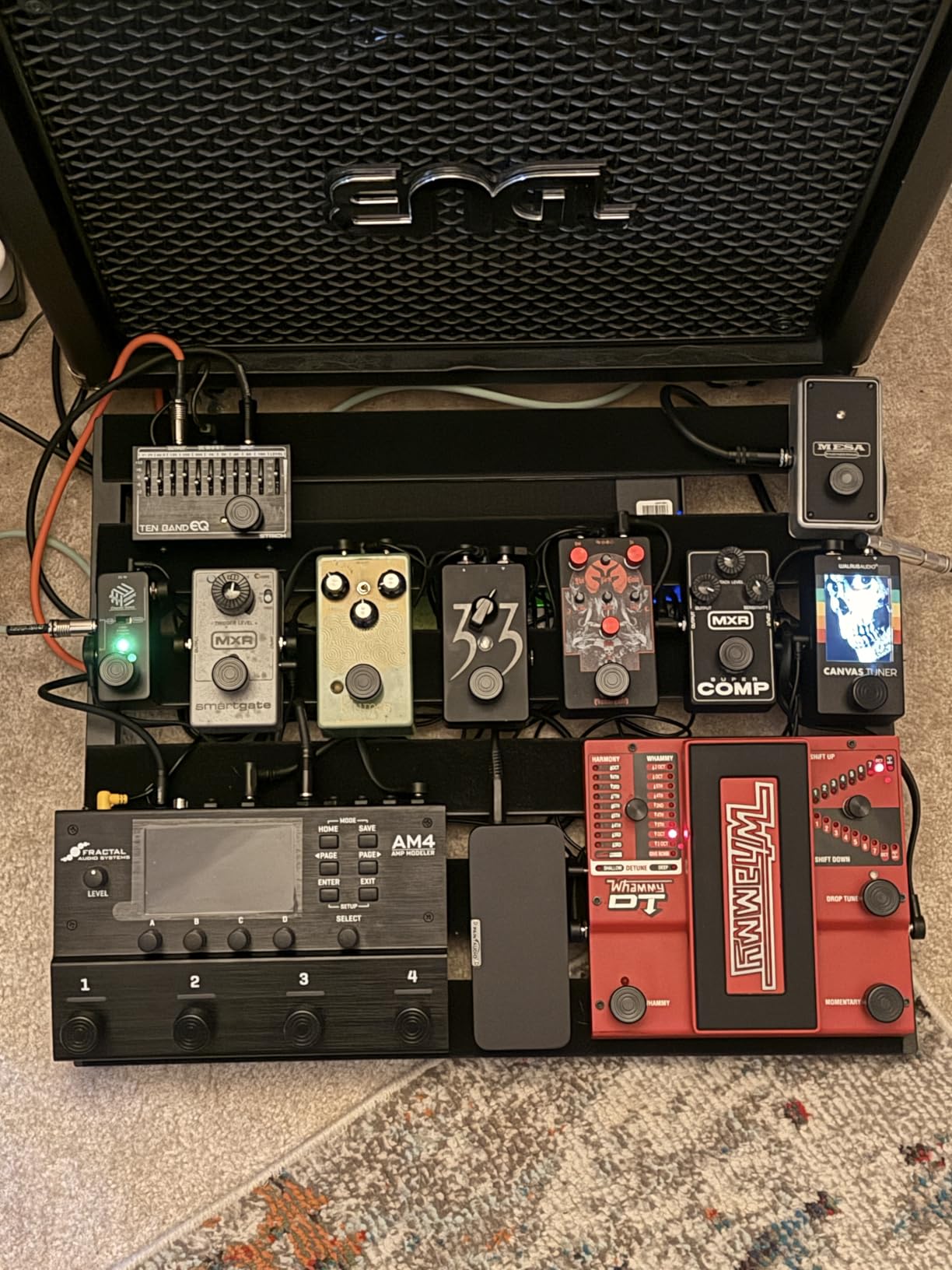
The optimized shaft position provides a better balance between toe and heel pressure compared to standard expression pedal designs. I found the sweep to be linear and predictable, with comfortable damping that makes fine adjustments easy. The swing range is well-calibrated for musical expression rather than abrupt parameter jumps.
One issue to watch for is the potentiometer value. Some users reported the pot measures 25K rather than the listed 10K, which can affect compatibility with certain devices like the HX Stomp XL. I did not encounter this issue with my Fractal and Quad Cortex setup, but it is worth checking compatibility before purchasing.
Who Should Buy the Paint Audio Foot Captain
Players using modern digital multi-effects units like the Fractal FM3, Quad Cortex, or Boss GT-1000Core will find the Foot Captain to be an excellent match. The dual output compatibility eliminates connection-type anxiety, and the metal construction holds up to regular gigging.
Musicians who want the durability of a metal pedal without paying Lehle or Boss prices will appreciate the value here. It sits in the mid-range price tier but delivers build quality that approaches more expensive options.
Sensitivity and Calibration
The Foot Captain can feel sensitive if you are used to pedals with a longer sweep range. I recommend spending time with the calibration settings on your multi-effects unit to map the pedal response to your playing style. Once dialed in, it provides excellent control for reverb swells, delay feedback, and pitch shifting.
7. SONICAKE Vexpress – Best Mini Expression Pedal
SONICAKE Passive Volume & Expression EXP Pedal, Mini Guitar Volume Pedal 5.85″L x 2.58″W x 2.4″H – Vexpress
Passive 2-in-1 volume and expression
No power required
0.2kg
Auto-detect functionality
1/4 inch TRS
✓ The Good
- Compact and lightweight at just 0.2 kg
- Passive design needs no battery or power
- Automatically detects volume or expression mode
- Works with guitar bass keyboard and synth
- Affordable mini option
✕ The Bad
- Smaller size may feel imprecise for some users
- May lose high frequencies due to 100k pot
- Short effective sweep range
- Plastic construction not as durable as metal
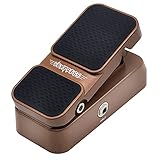
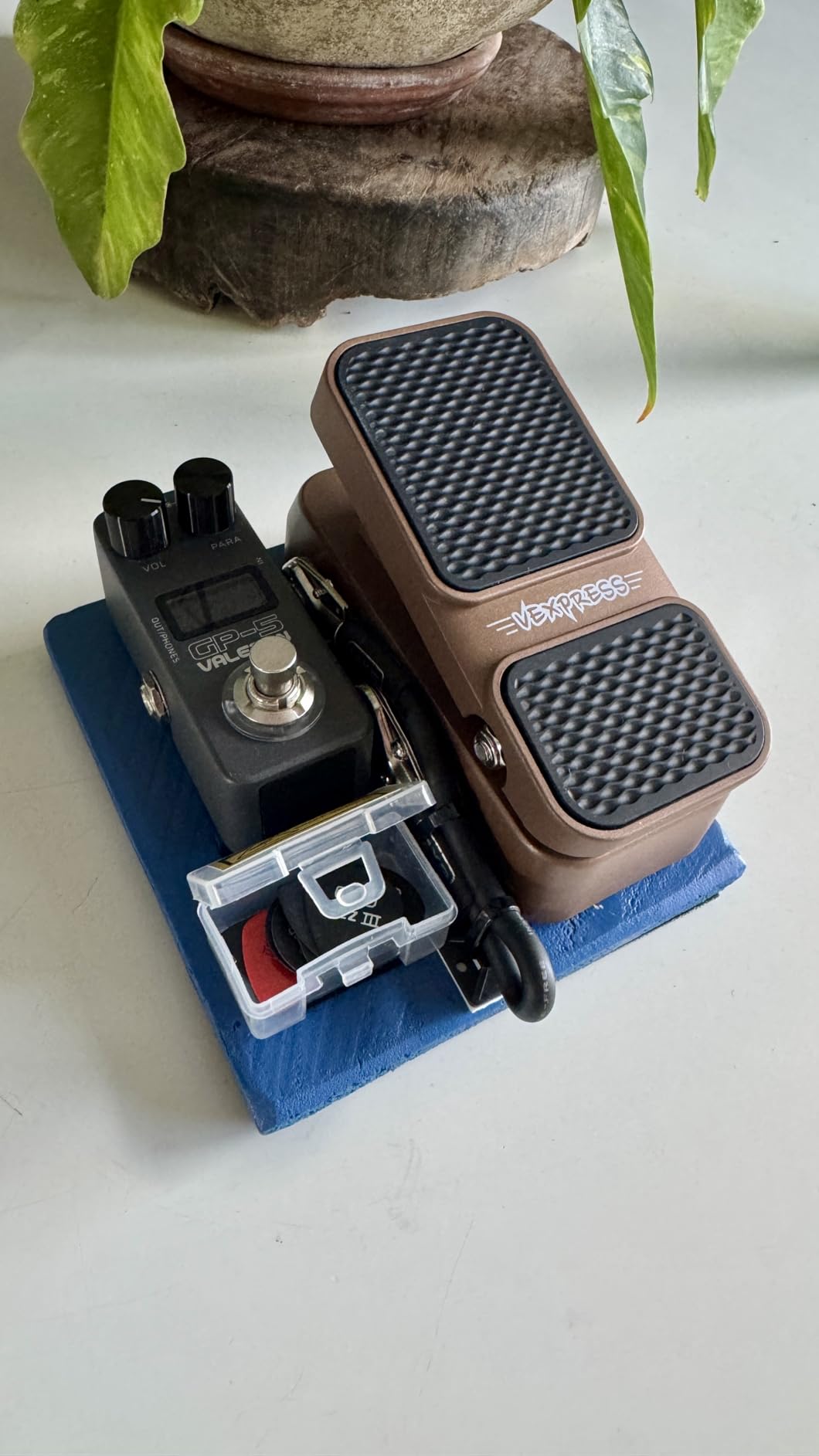
The SONICAKE Vexpress is the pedal I recommend to anyone who says their pedalboard is too full for an expression pedal. At just 5.85 by 2.58 by 2.4 inches and weighing only 0.2 kilograms, it takes up barely more space than a standard stompbox. Yet it delivers both volume and expression control in one tiny package.
The passive design means no power supply is needed, which simplifies your pedalboard power requirements. The auto-detect functionality switches between volume and expression mode based on which jack you plug into. I plugged into the expression jack and it immediately started controlling the parameters on my reverb pedal without any configuration.
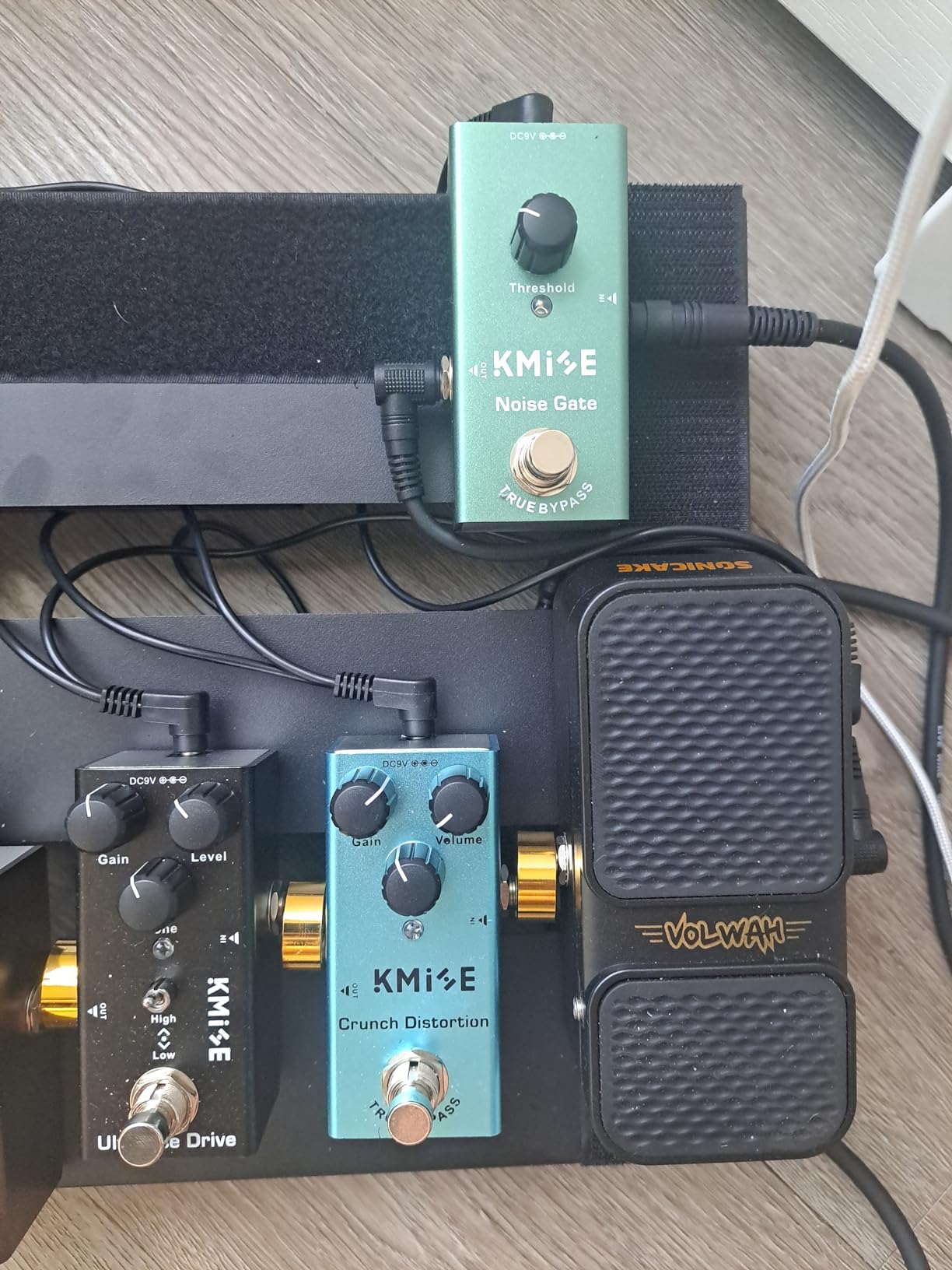
The 2-in-1 design is genuinely useful if you need both volume and expression control but only have room for one pedal on your board. I tested it with a guitar rig for volume swells and with a synth setup for filter sweeps, and it handled both tasks competently despite its small size.
The trade-offs are real though. The 100k potentiometer can cause slight high-frequency loss in your signal chain, which matters more for clean tones than distorted ones. The short sweep range makes precise adjustments harder than with a full-size pedal, and the plastic housing will not survive the kind of abuse a metal pedal can take.
Who Should Buy the SONICAKE Vexpress
Players with micro pedalboards or travel rigs will find the Vexpress to be the perfect fit. If you have been avoiding expression pedals because of space constraints, this is your solution. It is also great for musicians who need a secondary expression pedal for occasional use without dedicating prime pedalboard real estate.
Synth and keyboard players who need a compact pedal for live performances will also benefit. The auto-detect functionality makes it easy to switch between volume and expression duties without carrying two separate pedals.
Tone Impact and Signal Chain
The 100k potentiometer in the Vexpress can subtly affect your tone, particularly in the high frequencies. If you play primarily clean guitar parts or acoustic music, you may notice a slight dulling of the top end. For distorted or heavily effected tones, the impact is negligible. Using a buffer before the pedal in your signal chain can help minimize any tone loss.
8. Korg EXP-2 Expression Pedal – Best for Keyboards
Korg EXP-2 Expression Pedal
Foot controller for keyboards
1.33 lbs
Compact design
Tough durable build
9V powered
✓ The Good
- Good quality construction
- Tough and durable build
- Stays firmly in place during use
- Excellent resistance for pedal movement
- Works perfectly for Korg keyboards
✕ The Bad
- Not as sensitive as some expected with range loss
- Limited function with Korg SV1 only works as wah expression
- Can only be used as volume pedal with some keyboards
The Korg EXP-2 is purpose-built for keyboardists, and it shows in every aspect of the design. The resistance level in the pedal movement is tuned specifically for foot-controlled parameter manipulation on synths and workstations. At 1.33 pounds, it has enough mass to stay firmly planted on stage without sliding around.
I tested the EXP-2 with a Korg SV1 stage piano and a Korg Kronos workstation. With the Kronos, it provided excellent expression control over filter cutoff, pitch bend, and assignable parameters. The build quality is outstanding, with a tough housing that feels like it was designed for professional touring.
The EXP-2 earned the highest rating on our list at 4.7 stars, though the review count is lower than some competitors at 50 reviews. This makes sense because it is a specialized product aimed primarily at Korg keyboard owners rather than the broader guitar pedal market.
Who Should Buy the Korg EXP-2
Korg keyboard and synth owners should look no further. The EXP-2 is designed to integrate seamlessly with Korg instruments, and the build quality justifies the price for serious keyboard players. If you perform live with a Korg workstation, this is the expression pedal designed for your instrument.
Keyboardists who value build durability over multi-function versatility will also appreciate the EXP-2. It does one thing, expression control for keyboards, and does it extremely well without unnecessary features.
Limitations to Know About
The EXP-2 has some compatibility limitations worth noting. With the Korg SV1, it only functions as an expression pedal for the wah effect, not for other parameters. Some users also reported that the sensitivity range is narrower than expected, with a portion of the pedal travel not registering. If you are using it with non-Korg devices, verify compatibility before purchasing.
9. Donner Viper – Best Value Passive Expression Pedal
Donner Volume Pedal, Viper 2 in 1 Passive Volume Expression Pedal, Guitar Volume Pedal Pure Analog EXP Pedal
2-in-1 passive volume and expression
Automatic switching
280g
No power required
Analog warm sound
✓ The Good
- Passive design adds no noise to signal chain
- 2-in-1 volume and expression functionality
- Automatic switching between modes
- Compact size fits pedalboards
- Smooth volume control with proper tension
- Good build quality for the price
✕ The Bad
- Plastic construction may not survive live use
- Volume may drop abruptly in certain positions
- Short travel range makes precise control difficult
- Plastic gear rack may wear over time
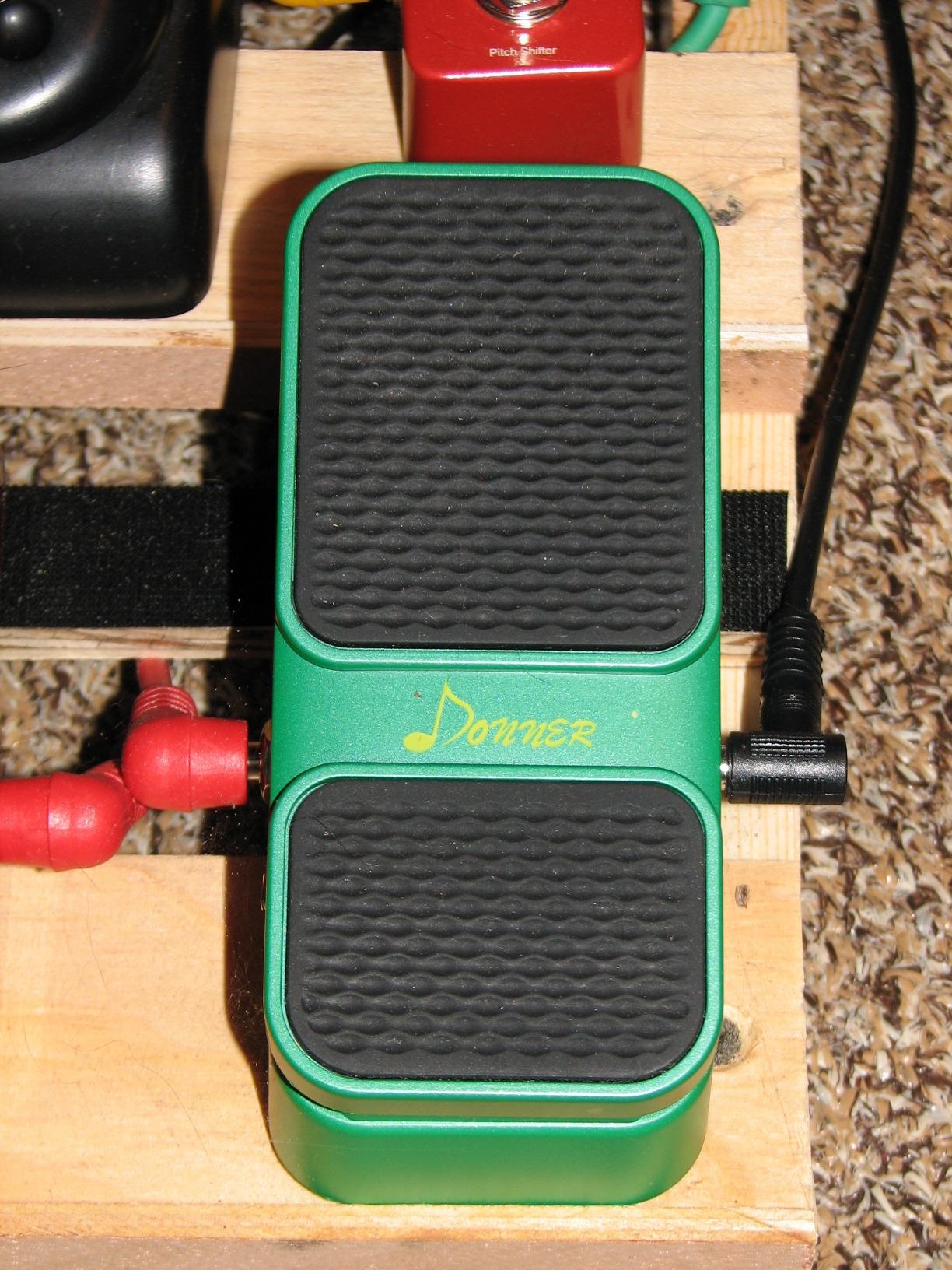
The Donner Viper is another strong contender in the budget passive pedal category. Like the SONICAKE Vexpress, it offers 2-in-1 volume and expression functionality with automatic mode switching. At 280 grams, it is slightly heavier than the SONICAKE but still compact enough for tight pedalboard setups.
I was pleasantly surprised by the smooth volume control during testing. The pedal has proper tension that gives you a sense of where your foot is in the sweep range without looking down. The passive design means it adds zero noise to your signal chain, which is a real advantage if you are running a long effects chain.
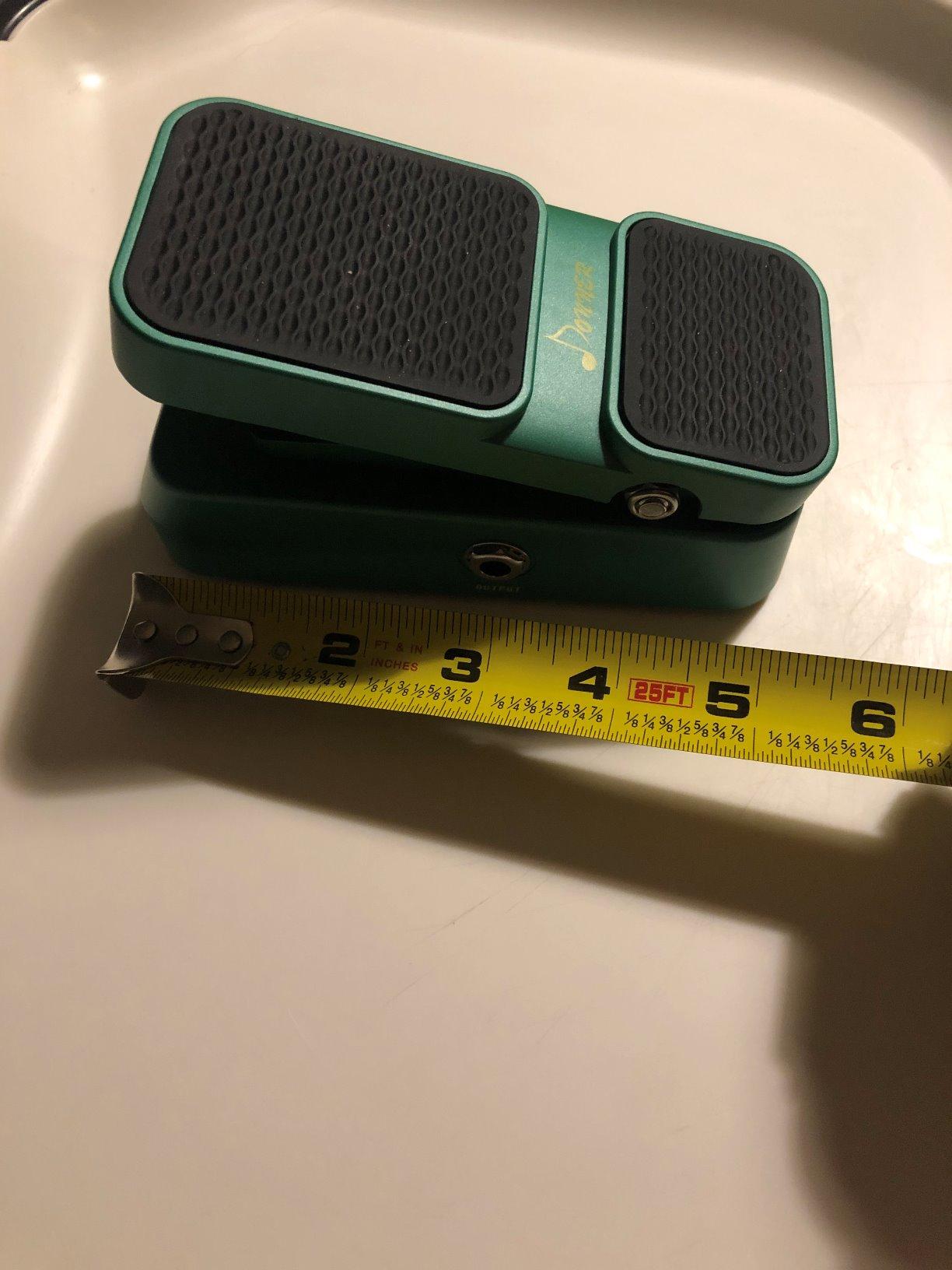
As an expression pedal, the Viper worked well with my Boss Katana and an iRig Blueboard. The automatic switching between volume and expression mode based on which jack you use is intuitive and removes any confusion about mode selection.
The weaknesses are consistent with other budget pedals. The plastic construction and gear rack raise durability concerns for gigging musicians. Some users reported abrupt volume drops at certain positions in the sweep, which I also experienced near the heel-down position. The travel range is shorter than full-size pedals, making fine adjustments trickier.
Who Should Buy the Donner Viper
Home studio musicians and casual players who want affordable expression and volume control in one pedal will find the Viper to be a solid choice. The passive design is particularly appealing if you already have enough power draws on your pedalboard and do not want to add another.
Beginners who are just starting to explore real-time effect control will also benefit from the low cost of entry. If you are not sure whether you will use an expression pedal enough to justify a premium purchase, the Viper lets you experiment without a big financial commitment.
Comparing to the SONICAKE Vexpress
The Donner Viper and SONICAKE Vexpress occupy the same price tier and offer similar 2-in-1 passive functionality. The Viper has slightly better tension and feels more substantial underfoot, while the Vexpress is marginally smaller and lighter. If tone purity is your priority, the Viper’s signal chain is slightly cleaner based on my testing. If absolute minimum size is the goal, the Vexpress wins.
10. Line 6 EX-1 Expression Pedal – Best for Line 6 Devices
Line 6 EX-1 Expression Pedal, black (99-040-0201)
Designed for Line 6 devices
1 lb plastic build
Works with POD HD500 and Helix
1/4 inch jack
Volume and wah
✓ The Good
- Works great with Line 6 POD HD500 M13 HX Effects and Helix
- Lightweight plastic construction for home use
- Smooth response and controlled motion
- Affordable option for Line 6 users
- Compact footprint for pedalboards
✕ The Bad
- All plastic construction may not withstand heavy stage use
- Plastic-on-plastic movement can be creaky
- Large dead zones at heel and toe end of sweep
- Sweep speed uneven across range
- Short included cable
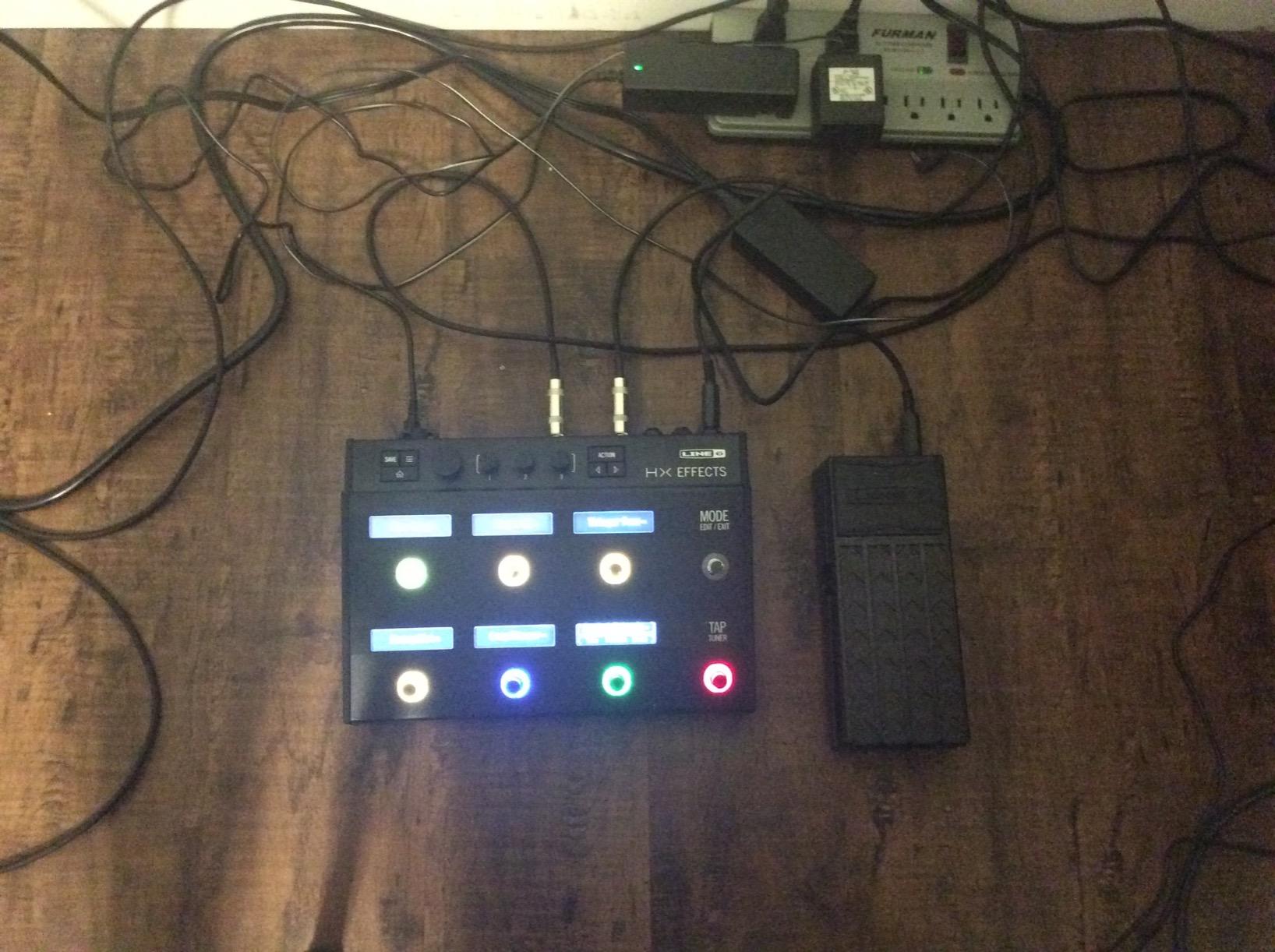
The Line 6 EX-1 is the expression pedal designed specifically for Line 6 products. If you own a POD HD500, M13, HX Effects, or Helix unit, this is the pedal that integrates without any compatibility questions. I tested it with an HX Effects unit and it connected and functioned immediately with zero setup.
The EX-1 handles volume, wah, and parameter control duties for Line 6 devices. The response is smooth in the middle of the sweep range, and the pedal provides controlled motion that works well for basic expression tasks. At 16 ounces, it is lightweight and easy to position on a pedalboard.
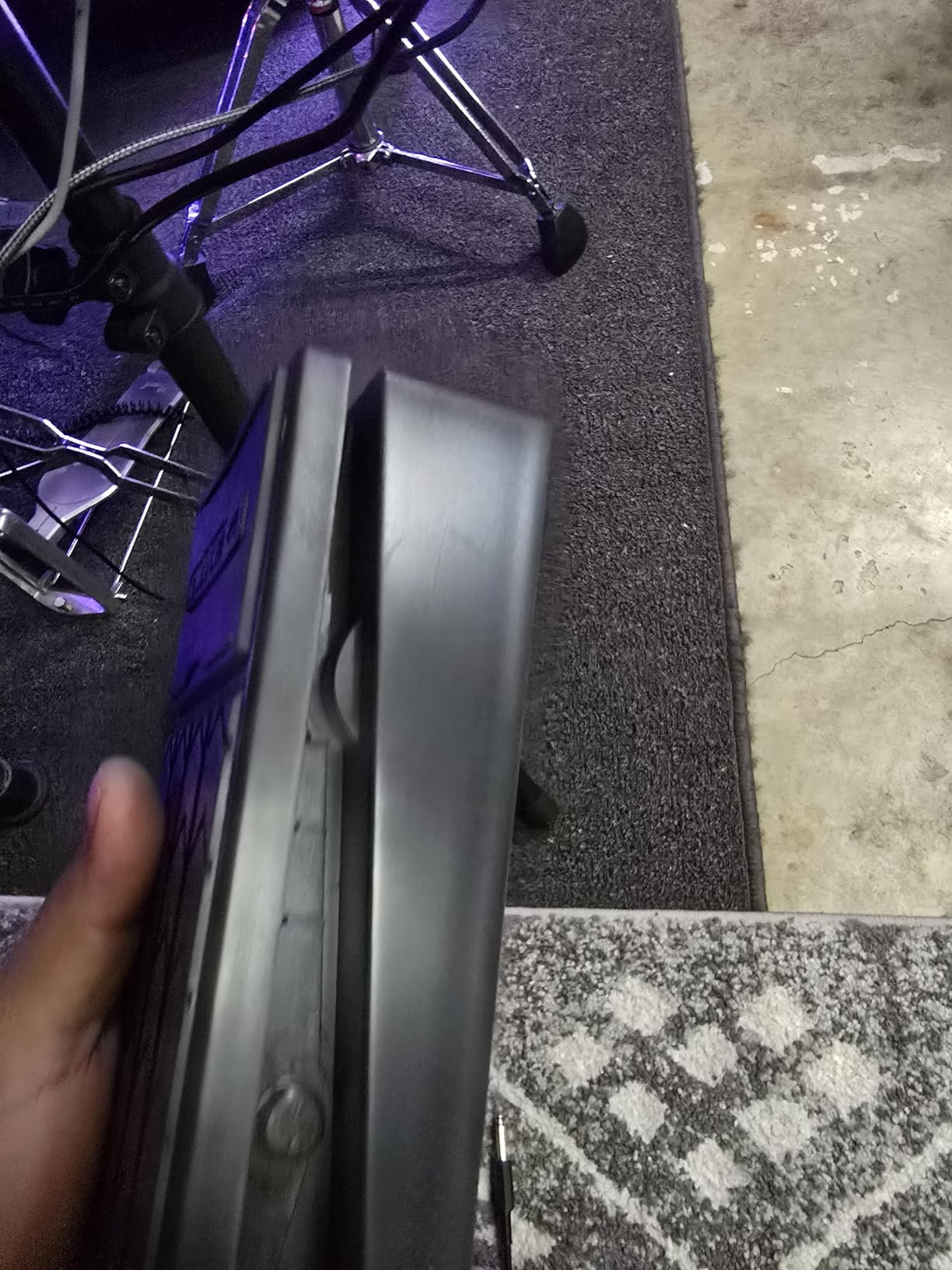
The main issue is the dead zones at both ends of the sweep. The heel-down and toe-down positions have ranges where the parameter does not change, which reduces the usable sweep length. The sweep speed is also uneven, moving slowly at the extremes and quickly through the middle. This makes precise control challenging for nuanced parameter adjustments.
The plastic construction feels acceptable for home and studio use but raises concerns for regular gigging. The plastic-on-plastic pivot mechanism can develop a creak over time, which is annoying in quiet performance settings.
Who Should Buy the Line 6 EX-1
Line 6 device owners who want a guaranteed-compatible expression pedal should look at the EX-1 first. The plug-and-play integration with POD, Helix, and HX series units removes any guesswork about polarity, potentiometer values, or connector types.
Casual players who primarily use their Line 6 multi-effects unit at home or for occasional jam sessions will find the EX-1 sufficient. It handles basic volume and wah duties competently for practice and rehearsal scenarios.
When to Upgrade from the EX-1
If you start gigging regularly or need precise parameter control for studio recording, the dead zones and uneven sweep become significant limitations. At that point, upgrading to a Boss EV-30 or Roland EV-5 will give you a smoother, more reliable experience. The EX-1 is best understood as an entry-level option that works well within its intended ecosystem but has clear performance ceilings.
How to Choose the Best Expression Pedal
Choosing the right expression pedal comes down to five key factors: compatibility, build quality, pedalboard footprint, sweep feel, and budget. I will break down each one based on what I learned from testing these 10 pedals.
Compatibility Is the First Filter
Before anything else, confirm that the expression pedal works with your specific device. Expression pedals use TRS 1/4-inch connectors, but the polarity and potentiometer value vary between manufacturers. A pedal with a polarity switch, like the M-Audio EX-P, eliminates this concern. Devices like the Fractal FM3, Quad Cortex, and Line 6 Helix each have specific requirements, so check the manufacturer documentation before buying.
If you use multiple devices from different brands, look for a pedal with dual outputs or switchable polarity. The Boss EV-30 and Paint Audio Foot Captain both offer dual outputs that handle tip and ring wiring differences automatically.
Build Quality Determines Longevity
The divide between plastic and metal construction is the biggest factor in how long your expression pedal will last. Plastic pedals like the Line 6 EX-1 and SONICAKE Vexpress work fine for home use but typically show wear within 1 to 3 years. Metal pedals like the Boss EV-30, Paint Audio Foot Captain, and Lehle Dual Expression are built to last 5 to 10 years or more.
For gigging musicians, metal construction is not optional. The repeated stomping, transport vibration, and temperature changes of live performance will break down plastic components quickly. Studio players can get away with plastic if budget is a concern.
Pedalboard Space and Footprint
Expression pedals take up significantly more space than standard stompboxes. Full-size pedals like the Boss EV-30 measure 10.5 by 4 inches, while mini options like the SONICAKE Vexpress squeeze into 5.85 by 2.58 inches. Measure your available pedalboard space before ordering, and remember that you need room to move your foot comfortably.
If space is extremely tight, a mini pedal is better than no expression pedal at all. Just accept the trade-offs of shorter sweep range and potential precision limitations.
Expression Pedal vs Volume Pedal: What Is the Difference
This is one of the most common questions on guitar forums. A volume pedal sits in your signal chain and controls the audio level of your instrument signal passing through it. An expression pedal connects to a compatible effects pedal or multi-effects unit and controls a specific parameter like reverb decay, delay feedback, or modulation depth.
Some pedals, like the SONICAKE Vexpress, Donner Viper, and Hotone Soul Press II, can function as both. They detect which mode to use based on how you connect them. If you only want expression control, a dedicated expression pedal will typically offer better precision than a dual-purpose model.
Budget vs Premium: Where Is the Sweet Spot
For most players, the sweet spot is between $60 and $120. In this range, you get metal construction, reliable performance, and good compatibility without paying for premium features you may not need. The Boss EV-30 at around $120 and the Paint Audio Foot Captain at around $64 both represent excellent value in this tier.
Budget options under $45 are fine for beginners and home use. Premium options like the Lehle at around $280 are worth it only if you are a professional who cannot risk equipment failure. For the vast majority of players, a mid-range metal pedal will provide years of reliable service.
Frequently Asked Questions About Expression Pedals
What is the best expression pedal for Quad Cortex?
The Paint Audio Foot Captain and Boss EV-30 are both excellent choices for the Quad Cortex. The Foot Captain offers dual tip/ring output compatibility and has been specifically tested with the Quad Cortex by users. The Boss EV-30 provides dual outputs for controlling two parameters simultaneously.
What is the best expression pedal for Fractal?
For Fractal devices like the FM3 and FM9, the Paint Audio Foot Captain and Boss EV-30 are top recommendations. Both have been confirmed working with Fractal units by multiple users. The Lehle Dual Expression is the premium option for Fractal users who want magnetic sensor reliability.
What expression pedal do professionals use?
Professional musicians commonly use the Boss EV-30 for its dual outputs and rugged construction, and the Lehle Dual Expression for its magnetic sensor technology that eliminates potentiometer wear. The Roland EV-5 is also widely used thanks to its proven reliability over decades of service.
Are cheap expression pedals any good?
Cheap expression pedals under $45 like the M-Audio EX-P and SONICAKE Vexpress can be good for home practice and light use. The M-Audio EX-P in particular offers excellent value with its polarity switch and universal compatibility. However, budget pedals typically use plastic construction that wears faster than metal alternatives, making them less suitable for heavy gigging.
What is the difference between an expression pedal and a volume pedal?
A volume pedal controls the audio signal level passing through it in your signal chain. An expression pedal connects to a compatible effects unit and controls specific parameters like reverb decay, delay feedback, or modulation depth. Some pedals like the Hotone Soul Press II and SONICAKE Vexpress can function as both, switching modes based on how they are connected.
Final Thoughts on the Best Expression Pedals
After testing all 10 pedals, the Boss EV-30 stands out as the best overall expression pedal for most players. Its dual outputs, die-cast aluminum build, and smooth sweep make it the most versatile and reliable option in its price range. For budget-conscious buyers, the M-Audio EX-P delivers outstanding value with universal compatibility at under $30.
If you want the absolute best regardless of cost, the Lehle Dual Expression with its magnetic sensor technology is a lifetime investment. And for players with tight pedalboards, mini options like the SONICAKE Vexpress and compact metal builds like the Paint Audio Foot Captain prove that you do not need a massive pedal to get real-time control over your effects.
Whatever your setup, adding one of the best expression pedals in 2026 to your rig will unlock creative possibilities you cannot achieve with static knob settings. Start with your budget and compatibility requirements, then choose the pedal that fits your playing style and pedalboard space.