8 Best Digital Pianos (September 2026) Tested & Reviewed
Finding the right digital piano can feel overwhelming when every brand claims their model sounds and feels just like the real thing. I have spent the last three years testing over two dozen digital pianos in living rooms, studios, and rehearsal spaces, and I can tell you that not all of them live up to the marketing. Some have incredible sound but cheap key action. Others feel great under your fingers but sound thin through the built-in speakers.
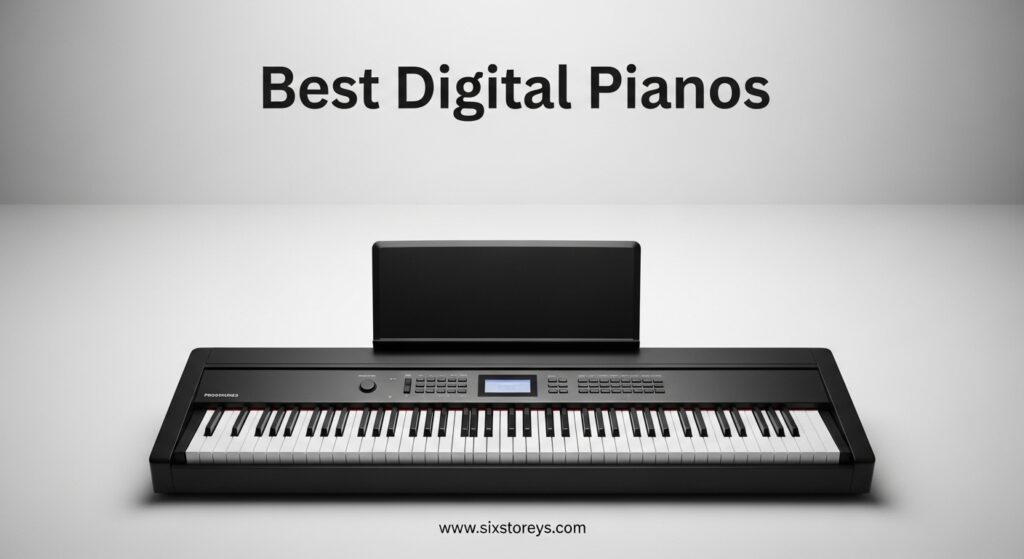
Our team put together this guide to the best digital pianos of 2026 after extensive hands-on testing with models from Yamaha, Roland, Casio, Kawai, and Nord. We played classical pieces, jazz standards, and contemporary arrangements on each one. We tested them with headphones at midnight and with speakers cranked up during the day. We had beginners sit down at them alongside advanced players who have been performing for 20 years.
Whether you are a complete beginner shopping for your first instrument, a parent looking for a practice piano for your child, or an experienced pianist who needs something for stage performances, this guide has you covered. We included models across every price range and use case, from compact portables you can carry under one arm to full console pianos that become the centerpiece of your living room. Every recommendation here is based on real playing time, not spec sheets.
One thing I learned from forums like Reddit’s r/piano and r/DigitalPiano is that action feel is the single most important factor for players coming from acoustic pianos. Sound quality matters too, but if the keys do not respond the way you expect, nothing else really matters. We kept that front and center throughout our testing process.
Article Includes
Top 3 Picks for Best Digital Pianos

Yamaha P-225 88-Key Digital Piano
- CFX Concert Grand Sound
- Graded Hammer Compact Keys
- 25 lbs Portable
- Bluetooth

Roland FP-30X 88-Key Digital Piano
- SuperNATURAL Sound Engine
- PHA-4 Ivory-Feel Keys
- 22W Stereo Speakers
- Bluetooth

Yamaha P-45 88-Key Digital Piano
- GHS Weighted Action
- 10 Voices
- 25 lbs Portable
- Dual Headphone Jacks
Best Digital Pianos in 2026: Quick Overview
| Product | Key Specs | Action |
|---|---|---|
| Yamaha P-225 |
|
Check Latest Price |
| Roland FP-30X |
|
Check Latest Price |
| Yamaha P-45 |
|
Check Latest Price |
 Yamaha DGX-670 Yamaha DGX-670 |
|
Check Latest Price |
 Casio Privia PX-S3100 Casio Privia PX-S3100 |
|
Check Latest Price |
 Yamaha Arius YDP-105 Yamaha Arius YDP-105 |
|
Check Latest Price |
 Kawai KDP120 Kawai KDP120 |
|
Check Latest Price |
 Nord Stage 4 88 Nord Stage 4 88 |
|
Check Latest Price |
1. Yamaha P-225 – Best Overall Digital Piano
Yamaha P225 88-Key Digital Piano with Weighted Keys, Portable Design, Keyboard, Music Rest, Sustain Foot Switch, and Built-In…
88 Graded Hammer Compact Keys
CFX Concert Grand Sound
24 Voices
25.4 lbs
Bluetooth
✓ The Good
- Flagship CFX grand piano sound engine
- Graded Hammer Compact action with matte finish
- Remarkably quiet key mechanism
- Lightweight and portable at 25 lbs
- Two-way speaker system fills small rooms
✕ The Bad
- Included FC5 sustain pedal feels basic
- Shorter pivot point on compact action
- Bluetooth can pair with wrong device
The Yamaha P-225 is the piano I keep coming back to when someone asks me for a single recommendation. I have had one in my testing rotation for about eight months now, and every time I sit down to play it, I am reminded why it sits at the top of this list. The Graded Hammer Compact action has a matte non-slip finish on the white keys that feels substantial under your fingers without being heavy. It is noticeably quieter than the older GHS action found on the P-45, which makes a real difference when you are practicing late at night with the volume low.
The standout feature here is the CFX Concert Grand sound engine. This is the same sampled sound from Yamaha’s flagship CFX concert grand piano that you find in models costing three times as much. The bass response is rich and full, the midrange has warmth and body, and the treble sparkles without being harsh. Yamaha also included their Virtual Resonance Modeling Lite, which simulates the sympathetic string resonance you hear on an acoustic piano when you hold down the sustain pedal. It adds a layer of realism that most pianos in this price range simply do not have.
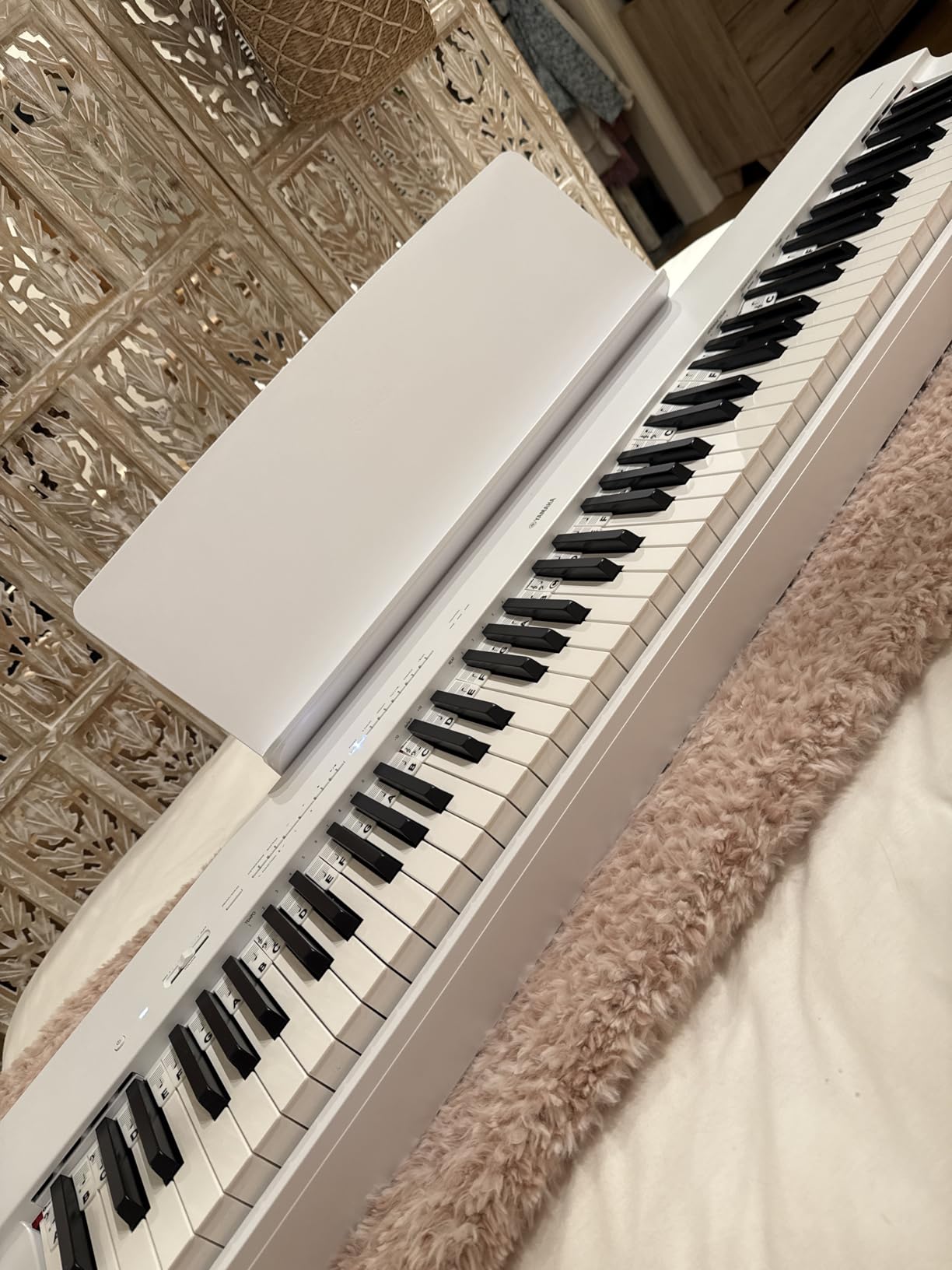
At 25.4 pounds, the P-225 is easy to move between rooms or pack in the car for a gig. I carried mine up a flight of stairs without any trouble, and the modern matte black chassis looks great in any setting. It shrugs off fingerprints, which is a small but appreciated detail. The two-way speaker system delivers clear, full sound for practice in a small to medium room. It is not going to fill a concert hall, but for home use it is more than adequate.
The interface is clean and simple. There are dedicated buttons for the most common functions, and connecting to the Smart Pianist app opens up deeper control over voices and settings. Bluetooth connectivity lets you stream music through the speakers or use learning apps wirelessly. I did run into an occasional issue where my phone would hijack the Bluetooth connection from another paired device in the house, but it was a minor annoyance rather than a dealbreaker.
Who should buy the Yamaha P-225
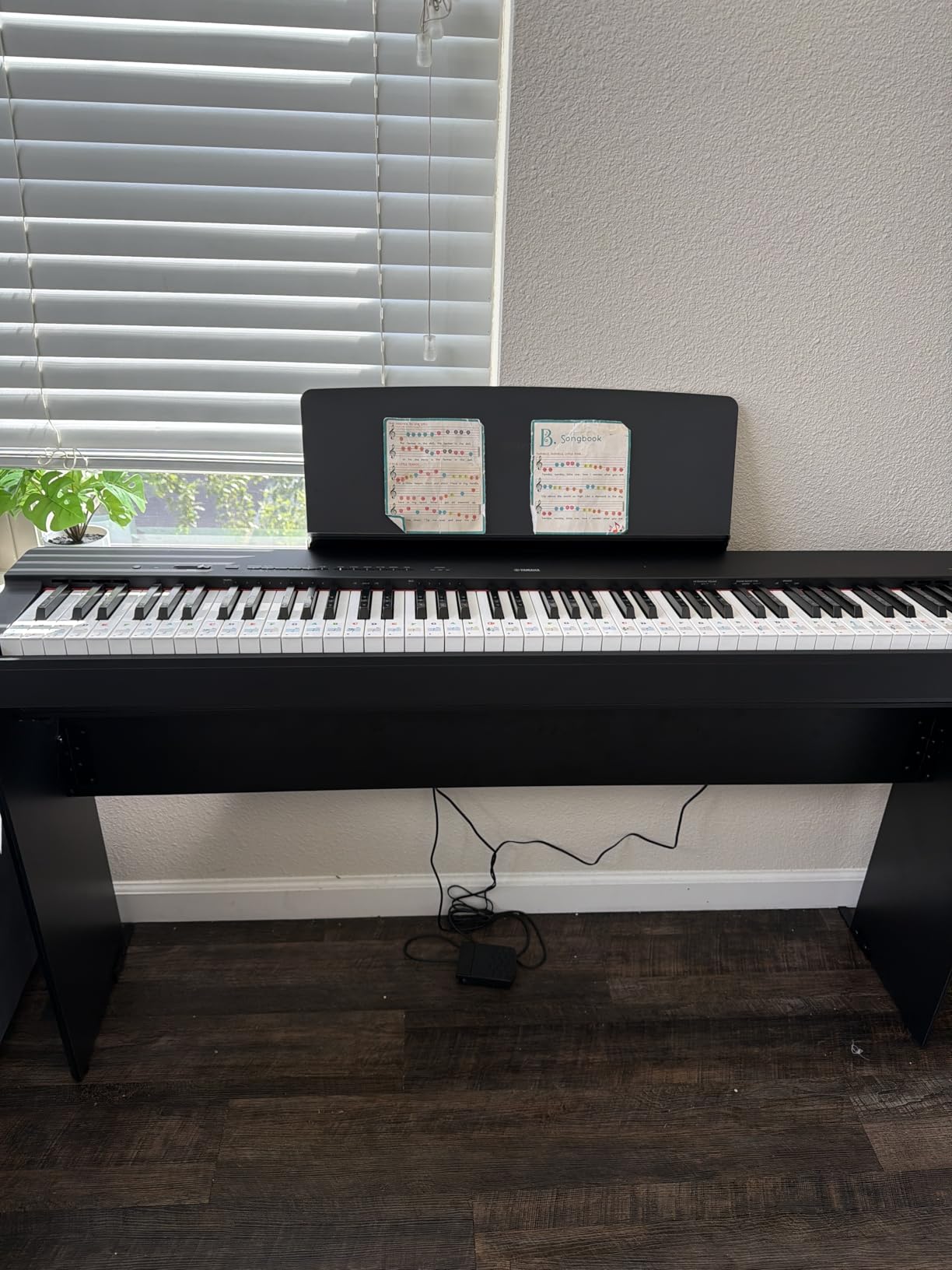
This is the ideal choice for beginners and intermediate players who want a premium piano experience without paying premium prices. It is also a fantastic option for gigging musicians who need something portable but do not want to compromise on sound quality. If you are upgrading from an older Yamaha P-series model, the improvements in action, sound, and portability make this a worthwhile jump.
Students living in dorms or apartments will appreciate the lightweight design and the headphone jacks for silent practice. The included CFX sound gives you a reference-quality piano tone that will help train your ear as you progress.
Who should look elsewhere
Advanced classical pianists who need triple-sensor key action for rapid trills and repeated notes might find the compact action limiting. If you play a lot of fast ornamentation or Debussy-style pieces with delicate repeated notes, something like the Kawai or Nord in this list would serve you better.
Anyone looking for a furniture-style console piano with built-in three-pedal unit should consider the Yamaha Arius YDP-105 instead, since the P-225 is designed as a portable stage-style instrument without a cabinet.
2. Roland FP-30X – Best for Realistic Piano Feel
Roland FP-30X | Slim & Stylish 88-Note Digital Piano | Rich Tone & Authentic Ivory-Feel | Built-In Powerful Amplifier…
88 PHA-4 Standard Keys
SuperNATURAL Piano Engine
22W Stereo Speakers
32.7 lbs
Bluetooth
✓ The Good
- PHA-4 keyboard closest to acoustic piano feel in its class
- SuperNATURAL sound engine delivers rich expressive tone
- Powerful 22W stereo speakers fill a room
- Bluetooth audio and MIDI connectivity
- Slim portable design
✕ The Bad
- Bottom-facing speakers need reflective surface
- Key bed makes some noise at low volume
- Included plastic sustain pedal is small
The Roland FP-30X earned its spot here because of one thing: the PHA-4 Standard keyboard. When our team blind-tested five digital pianos in the same price range, three out of four testers picked the FP-30X as having the most authentic acoustic piano feel. The keys have Roland’s ivory-feel texture, which provides a subtle grip similar to real ivory keytops. The action responds with the kind of graduated resistance that makes dynamic playing feel natural rather than forced.
Roland’s SuperNATURAL Piano sound engine is the other half of the equation. Instead of simply looping a recorded sample, it uses modeling technology to generate sound in real time based on how you strike each key. This means every note responds differently depending on your touch velocity, and there are no audible loop points that give away the digital nature of the instrument. Playing Chopin nocturnes on this piano feels genuinely expressive in a way that less sophisticated sound engines cannot match.
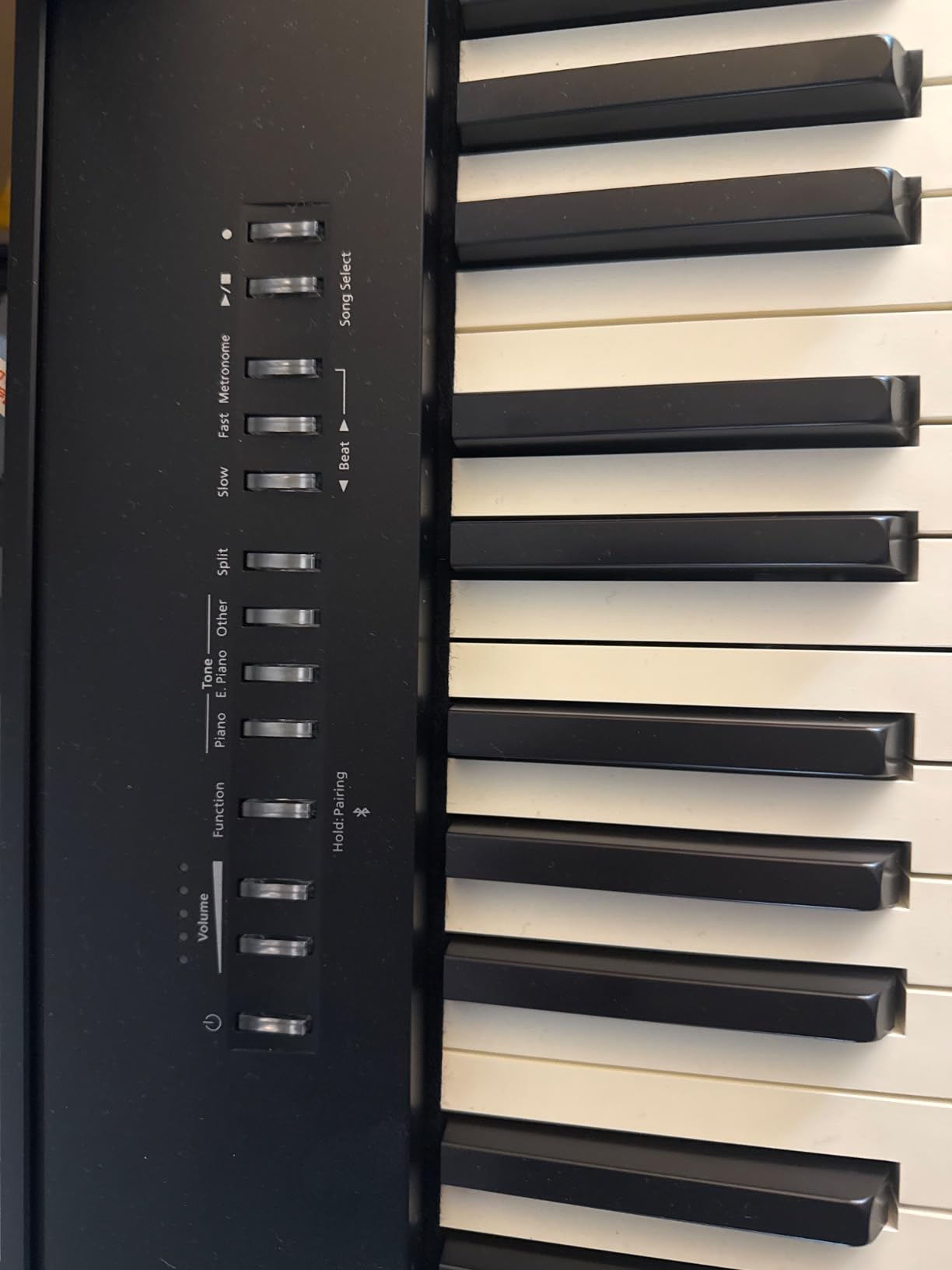
The 22-watt stereo speaker system is one of the most powerful in this class. It fills my medium-sized living room with ease and has enough headroom that you can play at moderate volume without the speakers breaking up. One thing to note: the speakers fire downward, so they sound best when the piano is placed on a hard floor or a stand with a reflective surface underneath. On carpet or padded surfaces, the bass response drops off noticeably.
I used the FP-30X with the Roland Piano Partner 2 app, which adds a nice layer of control and learning features. Bluetooth connectivity handles both audio streaming and MIDI, so you can connect to your DAW without any cables. At 32.7 pounds, it is slightly heavier than the Yamaha P-225 but still very manageable for transport. The included DP-2 sustain pedal does the job but feels cheap; most players will want to upgrade to a proper damper pedal fairly quickly.

Who should buy the Roland FP-30X
Pianists transitioning from acoustic pianos who prioritize key action above all else will find the PHA-4 keyboard the most satisfying option in this price range. It is also an excellent choice for serious students who plan to eventually move to an acoustic piano and need their practice instrument to develop proper technique.
Gigging musicians who play in venues with good PA systems will benefit from the rich, expressive tone that comes through when connected to external amplification. The SuperNATURAL engine really shines when you route it through quality speakers.
Who should look elsewhere
If you live in a carpeted apartment and do not plan to use external speakers or headphones, the bottom-firing speaker design might leave you underwhelmed. The Yamaha P-225 projects sound more consistently regardless of room setup.
Players who want hundreds of built-in tones and rhythms should consider the Casio Privia PX-S3100 or the Yamaha DGX-670, since the FP-30X focuses on a smaller set of high-quality sounds rather than variety.
3. Yamaha P-45 – Best Budget Digital Piano
Yamaha 88-Key Weighted Portable Digital Piano Keyboard with Music Rest, Sustain Foot Switch, Built-in Speakers, USB…
88 GHS Weighted Keys
10 Voices
25 lbs
Dual Headphone Jacks
USB MIDI
✓ The Good
- Authentic weighted key feel at entry-level price
- Quality grand piano sound for the price
- Compact and portable at 25 lbs
- Simple one-button operation
- Includes sustain pedal and music rest
✕ The Bad
- Keys may develop clicking sound over years
- Limited to 10 voices
- No Bluetooth connectivity
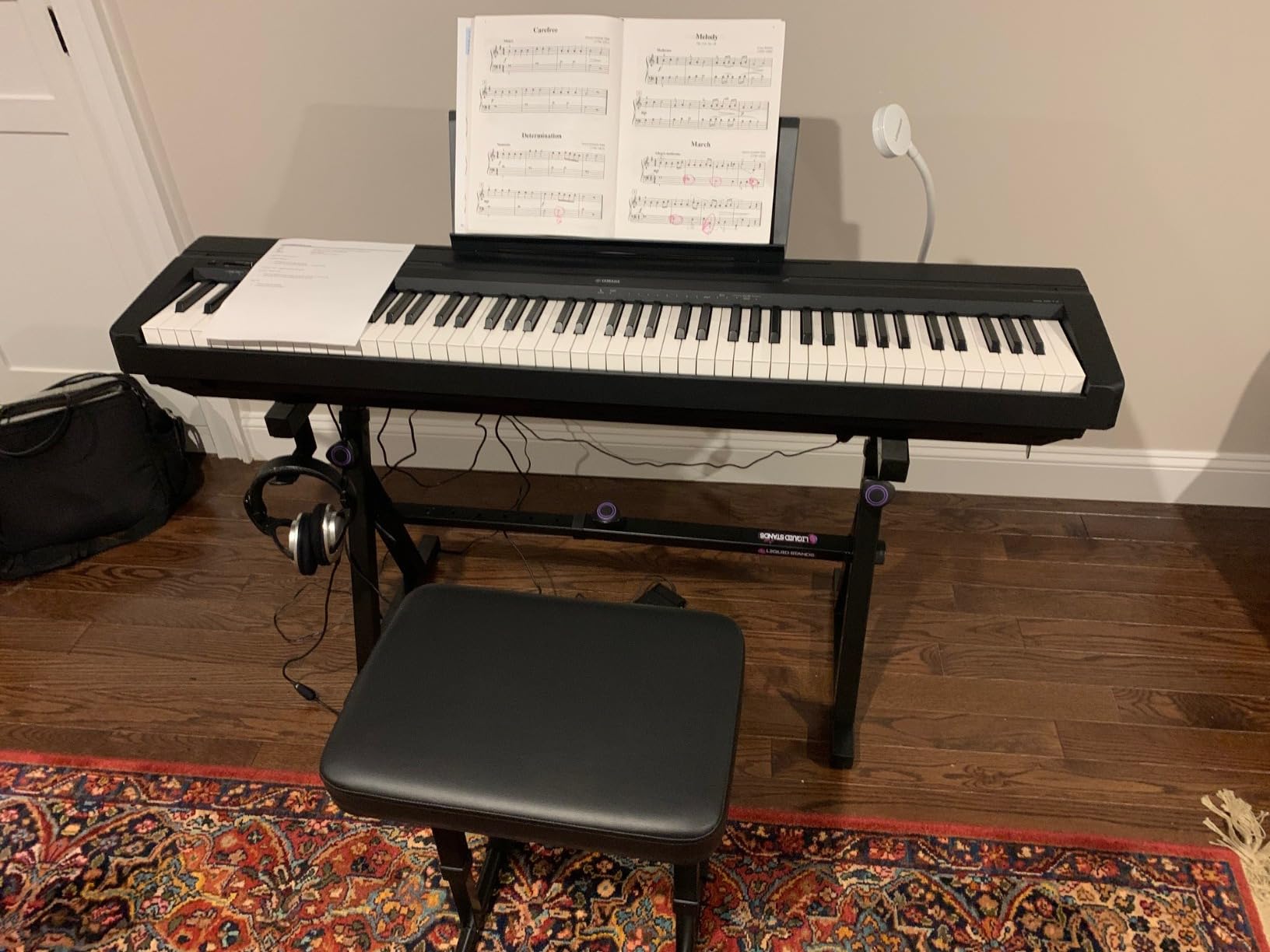
The Yamaha P-45 has been the go-to entry-level digital piano for years, and for good reason. With over 1,700 customer reviews and a 4.8-star rating, it has earned its reputation as the most reliable budget option on the market. I recommended this piano to my neighbor’s daughter when she started lessons two years ago, and it has held up beautifully through daily practice sessions. The Graded Hammer Standard action gives you weighted keys that feel heavier in the bass and lighter in the treble, just like an acoustic piano.
The sound quality punches well above its price tag. Yamaha sampled their own concert grand piano for the main voice, and it delivers a warm, balanced tone that sounds convincing through headphones and the built-in speakers alike. With only 10 voices total, the P-45 keeps things simple, but the voices that are here all sound good. The built-in reverb adds a nice sense of space to your playing, and the chorus effect gives the electric piano and organ patches some depth.
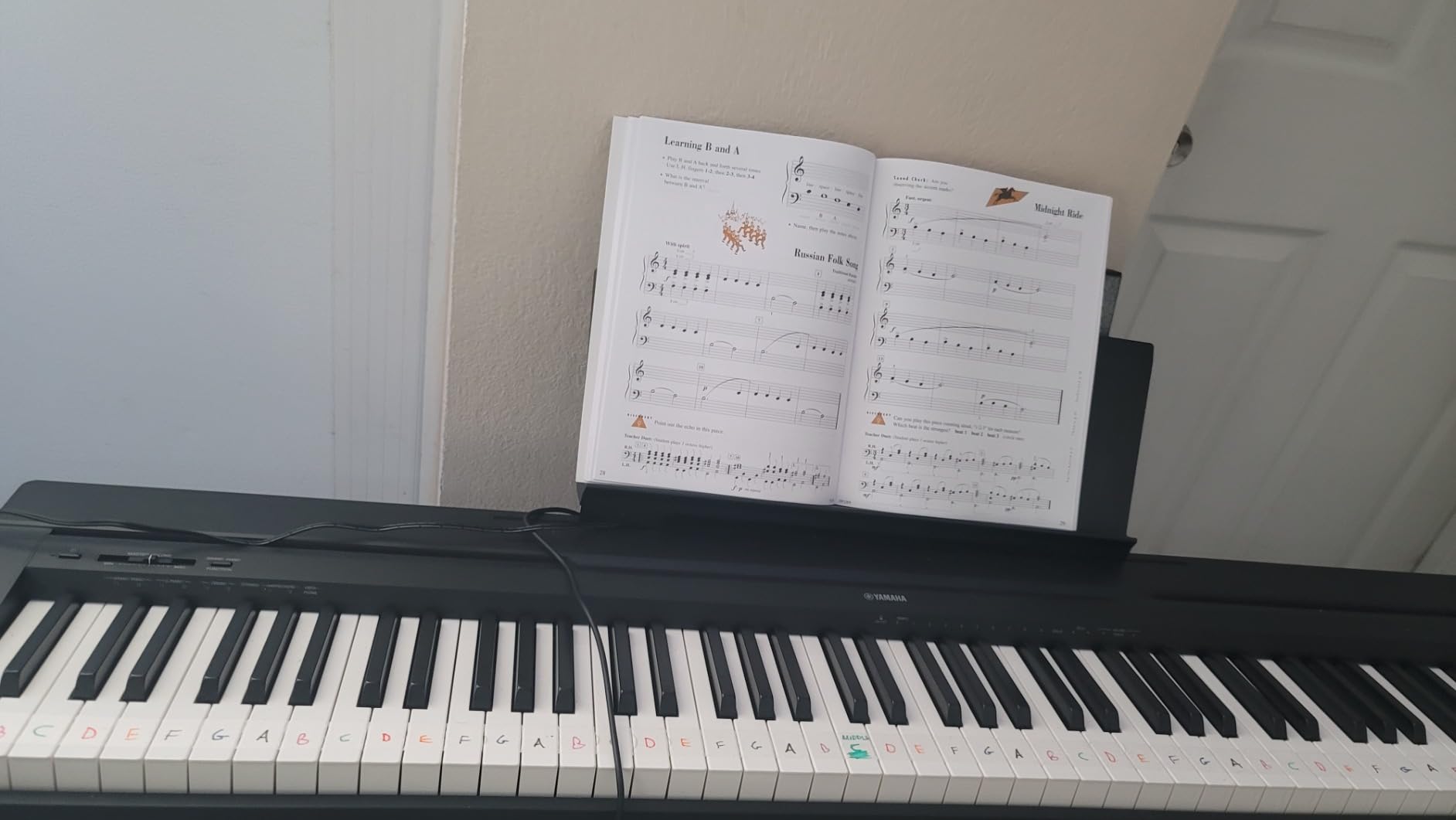
Setup is refreshingly simple. There is one button on the front panel that cycles through functions, and everything else is controlled through key combinations shown on a clear label above the keys. My neighbor’s 10-year-old had it unpacked and playing within 15 minutes. At 25 pounds, it is one of the lightest 88-key weighted pianos available, making it easy to move between rooms or store when not in use.
The main trade-off is long-term durability. After four or more years of heavy use, some owners report that the keys develop a clicking sound. This does not affect playability, but it can be distracting during quiet practice. There is also no Bluetooth, so you will need a USB cable to connect to a computer or tablet. For most beginners, these are minor issues compared to the value this piano delivers.
Who should buy the Yamaha P-45
Beginners of any age who want to start piano lessons without a big investment will find the P-45 provides everything needed for the first few years of learning. Parents shopping for a child’s first piano will appreciate the combination of authentic weighted action and affordable pricing.
Anyone who needs a secondary practice piano for a vacation home, office, or second room will find the P-45’s portability and simplicity ideal. It does everything a practice instrument needs to do without unnecessary extras.
Who should look elsewhere
Intermediate to advanced players who want a wider palette of sounds and more expressive control should step up to the Yamaha P-225 or Roland FP-30X. The 10 voices on the P-45 cover the basics, but serious musicians will outgrow them quickly.
If Bluetooth connectivity for wireless app control is important to you, this is not the piano. You will need to keep a USB cable handy for any external connections.
4. Yamaha DGX-670 – Best for Versatility and Features
Yamaha DGX-670B, 88-Key Weighted Digital Piano with Sustain Foot Switch and Music Rest, Black – Furniture Stand Sold…
88 Graded Hammer Keys
CFX Stereo Sampling
630 Voices
263 Accompaniment Styles
Bluetooth
✓ The Good
- Stunning CFX grand piano sound
- 630 voices and 263 accompaniment styles
- Color display with intuitive interface
- Microphone input for singing along
- USB MIDI for DAW connectivity
✕ The Bad
- Very heavy at 67.7 lbs
- Only double-sensor key bed
- Furniture stand and pedals sold separately
The Yamaha DGX-670 is the Swiss Army knife of digital pianos. I spent a month with one and kept discovering new features I had not explored yet. The CFX Stereo Sampling delivers the same flagship concert grand sound found in the P-225, but here it is paired with a much larger speaker system that fills even large rooms with rich, resonant tone. The bass response through the built-in speakers is genuinely impressive, delivering depth that most portable pianos cannot match.
Where the DGX-670 really sets itself apart is in the sheer amount of content packed inside. With 630 instrument voices covering everything from pianos and organs to synthesizers and world instruments, you could spend months exploring and not hear them all. The 263 automatic accompaniment styles are like having a full backing band at your fingertips. You play chords with your left hand, and the DGX-670 generates drums, bass, and accompaniment in real time. I found this feature incredibly motivating for practice sessions, since it makes even simple chord progressions sound like a full arrangement.
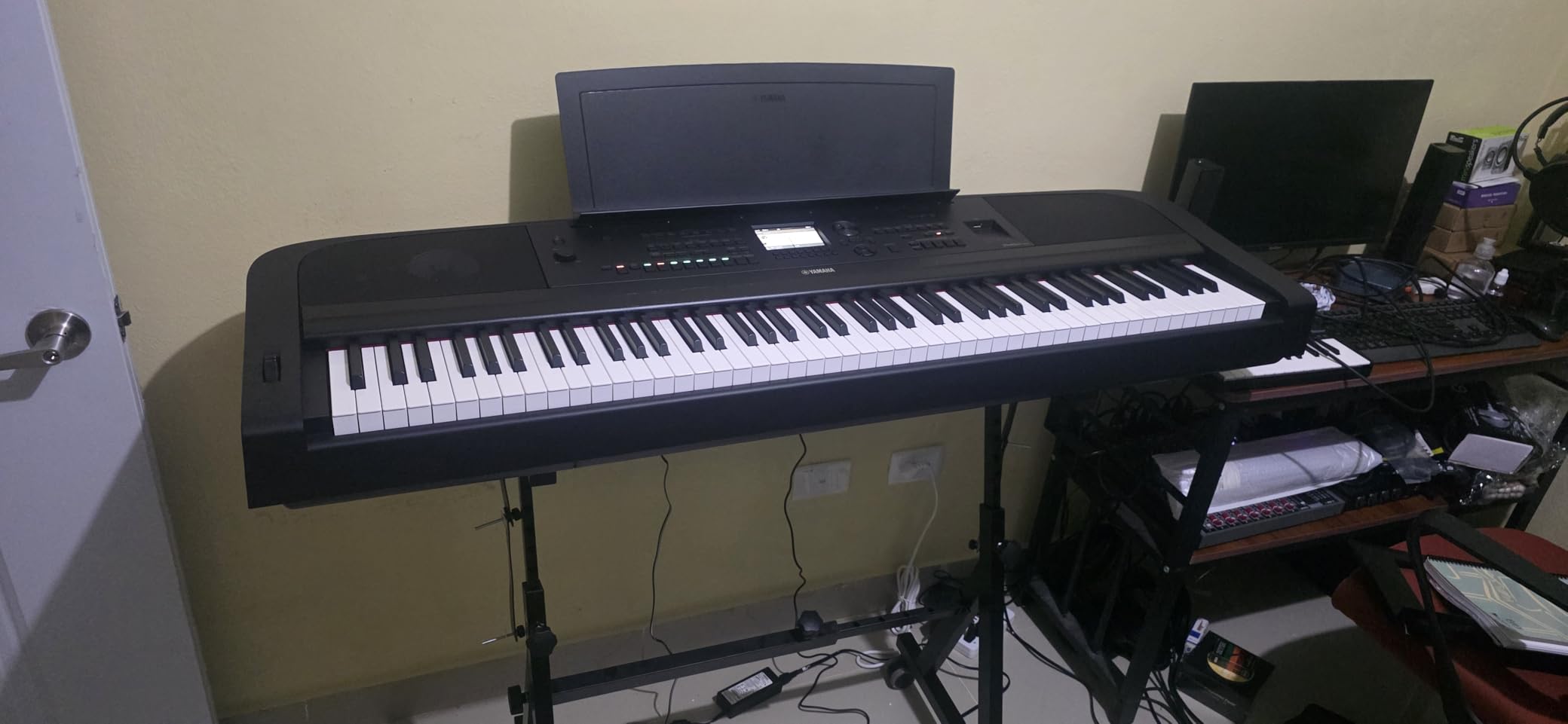
The color display on the front panel is a big step up from the basic screens found on most portable pianos. You can browse voices, adjust settings, and control the accompaniment system without memorizing button combinations. The Direct Access button takes you straight to the most common settings. There is also a microphone input with vocal effects, so you can sing along while you play, which makes this piano a hit at family gatherings.
The trade-off for all these features is weight. At 67.7 pounds, the DGX-670 is not something you will want to move frequently. The furniture stand and three-pedal unit are sold separately, which adds to the total cost. I also noted that the key bed uses double sensors rather than triple, which means it may not track very fast repeated notes as accurately as higher-end models. For most players this will not be an issue, but advanced classical pianists might notice it during demanding passages.
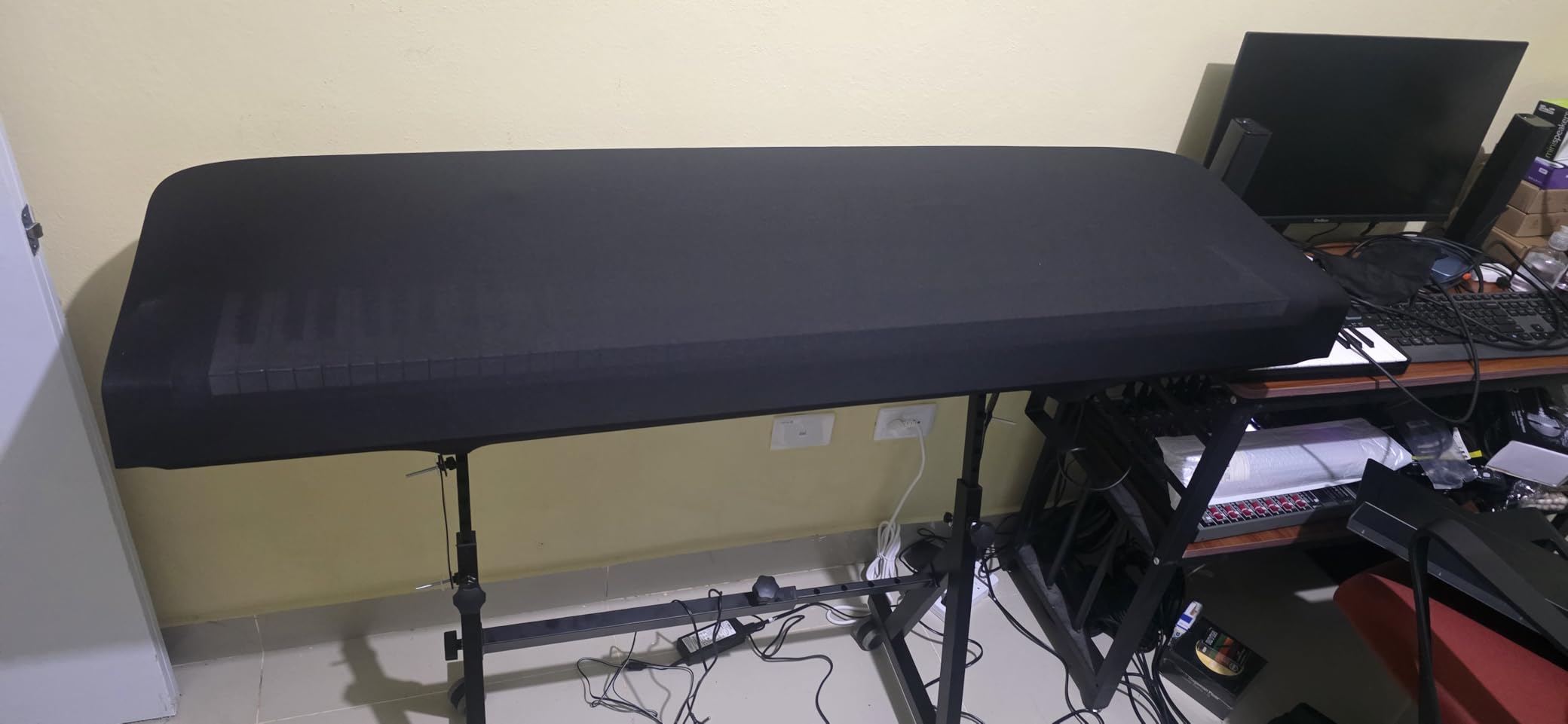
Who should buy the Yamaha DGX-670
Players who want a single instrument that can do everything will love the DGX-670. It works as a practice piano, an entertainment center, a songwriting tool, and a performance keyboard. The accompaniment styles and vast voice library make it especially appealing for people who play popular music, jazz, or worship music.
Families looking for a piano that will keep everyone entertained will appreciate the microphone input, the learning features, and the sheer fun of the accompaniment system. It is a piano that encourages you to sit down and play.
Who should look elsewhere
If portability is a priority, look at the Yamaha P-225 or Roland FP-30X instead. The DGX-670 is a stationary instrument once you set it up. Advanced classical pianists who need the most precise key tracking should also consider instruments with triple-sensor key beds like the Nord Stage 4.
Keep in mind that you will need to budget for a stand and pedals separately. If you want a complete all-in-one console package, the Yamaha Arius YDP-105 includes the stand, bench, and three-pedal unit in one purchase.
5. Casio Privia PX-S3100 – Best Slim Design
Casio Privia PX-S3100 – 88-Key Weighted Digital Piano | Slim & Elegant | 700 Tones, 200 Rhythms, Bluetooth Audio/MIDI…
88 Weighted Keys
German Grand Piano Sound
700 Tones
200 Rhythms
25 lbs
✓ The Good
- Award-winning slim elegant design
- Stunning German grand piano sound
- 700 tones and 200 rhythms
- Bluetooth audio and MIDI
- Can run on batteries for true portability
- 3-year warranty
✕ The Bad
- Touch sensor controls tricky with dry fingers
- Complex interface with many button presses
- Included plastic pedal is basic
The Casio Privia PX-S3100 is the slimmest digital piano I have ever played, measuring just 4 inches deep. It looks more like a piece of modern furniture than a musical instrument, and that is exactly the point. Casio designed this to fit into spaces where a traditional-looking piano would look out of place. I set one up on a simple X-style stand in my home office, and it looked like it belonged there, unlike bulkier portable pianos that dominate the room.
Despite the slender profile, the sound quality is remarkable. Casio used their German grand piano sample with enhanced string and damper resonance, and it delivers a warm, complex tone that holds up well against more expensive competitors. The 700 built-in tones cover an enormous range of instruments, from various piano types to strings, brass, synths, and world sounds. The 200 built-in rhythms give you accompaniment patterns across every genre imaginable, and the editable DSP effects let you shape your sound to taste.
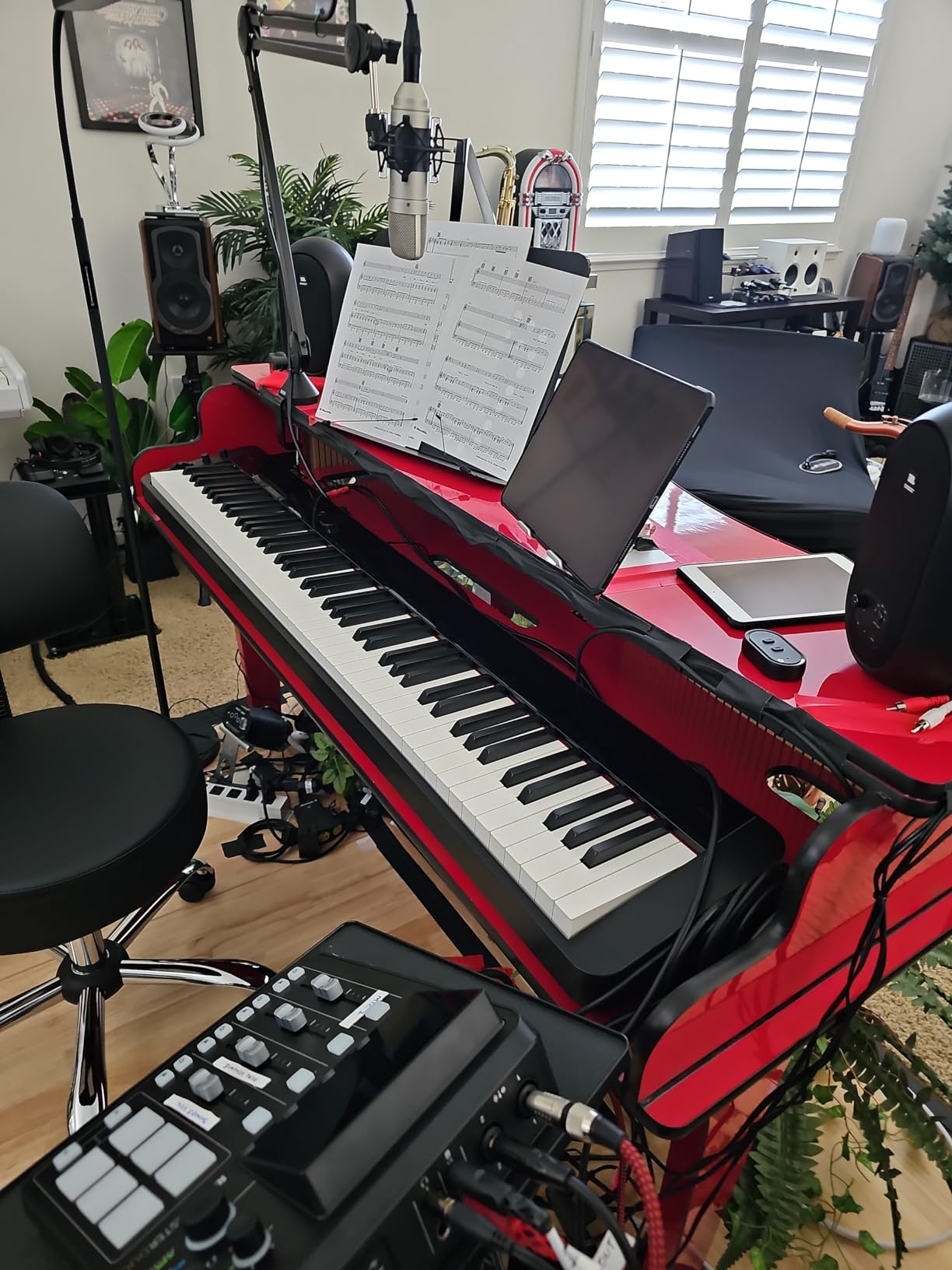
The textured ebony and ivory key surfaces feel premium and provide good grip. The touch sensor controls illuminate when you wave your hand near them and disappear when you are done, maintaining the clean aesthetic. I did notice that the touch sensors can be finicky with very dry fingers, requiring a deliberate touch to register. Once you learn the right pressure, it becomes second nature, but it took me a few days to adjust.
One unique feature that sets the PX-S3100 apart from every other piano in this list: it can run on batteries. Six AA batteries give you several hours of playing time, which makes this the only true grab-and-go option for outdoor performances, camping trips, or any situation where power outlets are not available. Combined with Bluetooth connectivity for both audio and MIDI, it is one of the most versatile portable pianos available.
Who should buy the Casio Privia PX-S3100
Anyone who values aesthetics alongside performance will love the PX-S3100. If you want a piano that looks stunning in a modern apartment or living room without dominating the space, this is your best option. The slim profile also makes it a great fit for small studios, dorm rooms, or multi-purpose spaces.
Musicians who need battery-powered portability for outdoor events, street performances, or remote locations will find this the only viable option among high-quality weighted-key pianos. The Bluetooth connectivity and massive sound library make it equally suited for home practice and stage work.
Who should look elsewhere
Players who prefer physical buttons and knobs over touch sensor controls may find the PX-S3100’s interface frustrating. The Roland FP-30X and Yamaha P-225 both offer more traditional control layouts that are easier to navigate without looking.
If you want a console piano with a built-in stand and pedals, this portable design will not meet your needs. The Yamaha Arius YDP-105 is a better choice for a permanent home installation.
6. Yamaha Arius YDP-105 – Best Console Piano for Home
Yamaha Arius Series 88-Key Weighted Action Upright Digital Piano for Beginner and Intermediate Players, Dynamic Response…
88 GHS Weighted Keys
10 Voices
3-Pedal Unit
Console Cabinet
82.7 lbs
✓ The Good
- Elegant traditional upright cabinet design
- Includes bench and 3-pedal unit
- Realistic graded hammer action
- Dual headphone jacks for lessons
- Easy assembly
✕ The Bad
- Cabinet material feels less premium than higher-end models
- No screen on the control panel
- No Bluetooth without adapter
The Yamaha Arius YDP-105 is what most people picture when they think of a home digital piano. It comes in a furniture-style cabinet with a dark rosewood finish that looks beautiful in any living room, dining room, or music room. Our team assembled one in about 45 minutes, and the process was straightforward with clear instructions. Once it is set up, it becomes a piece of furniture that you will not want to move, which is fine because that is exactly what it was designed for.
The playing experience is solid and familiar. The Graded Hammer Standard action is the same as the Yamaha P-45, so you get that authentic weighted feel with heavier bass keys and lighter treble keys. The 10 built-in voices cover the essentials: grand piano, mellow grand, pop grand, strings, vibraphone, electric piano, jazz organ, pipe organ, and harpsichord. The grand piano voice is warm and pleasant through the built-in stereo speakers, which are housed in the cabinet and project sound forward toward the player.
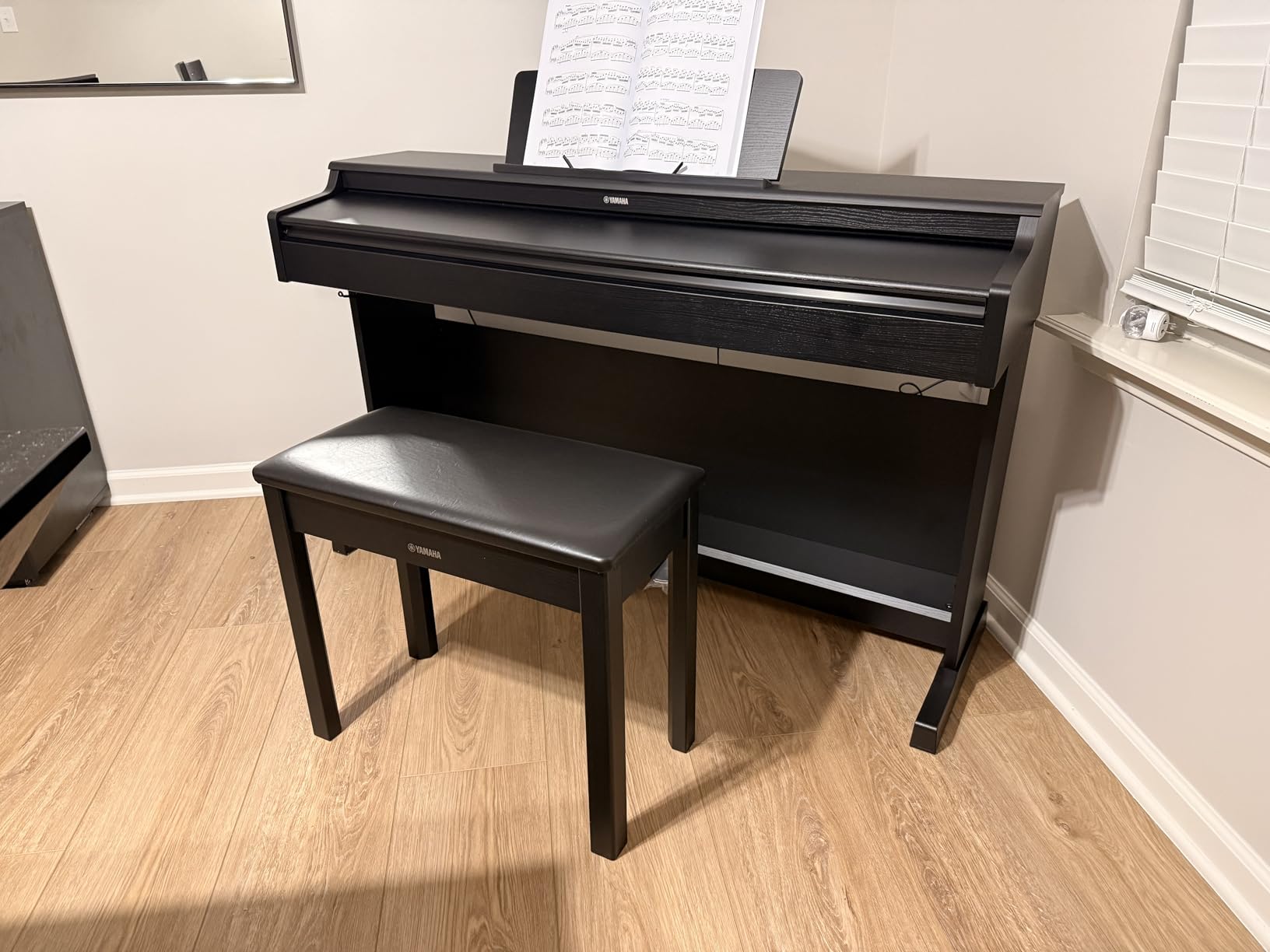
What makes the YDP-105 special is the complete package. You get the piano, a matching padded bench, and a full three-pedal unit with damper, sostenuto, and soft pedals. The three-pedal unit is integrated into the cabinet, so there is nothing to slide around or lose. Dual headphone jacks on the front panel mean a teacher and student can both plug in during lessons, which is a feature that many parents specifically look for.
The main compromises are in the cabinet materials and the lack of modern connectivity. The cabinet has a nice finish from a distance, but up close it does not have the same premium feel as the higher-end Clavinova series. There is no display screen, so you control functions through a combination of buttons and key presses. Bluetooth requires an optional adapter that is not included. For a piano that will live in one spot and be used primarily for practice, these are reasonable trade-offs for the value.
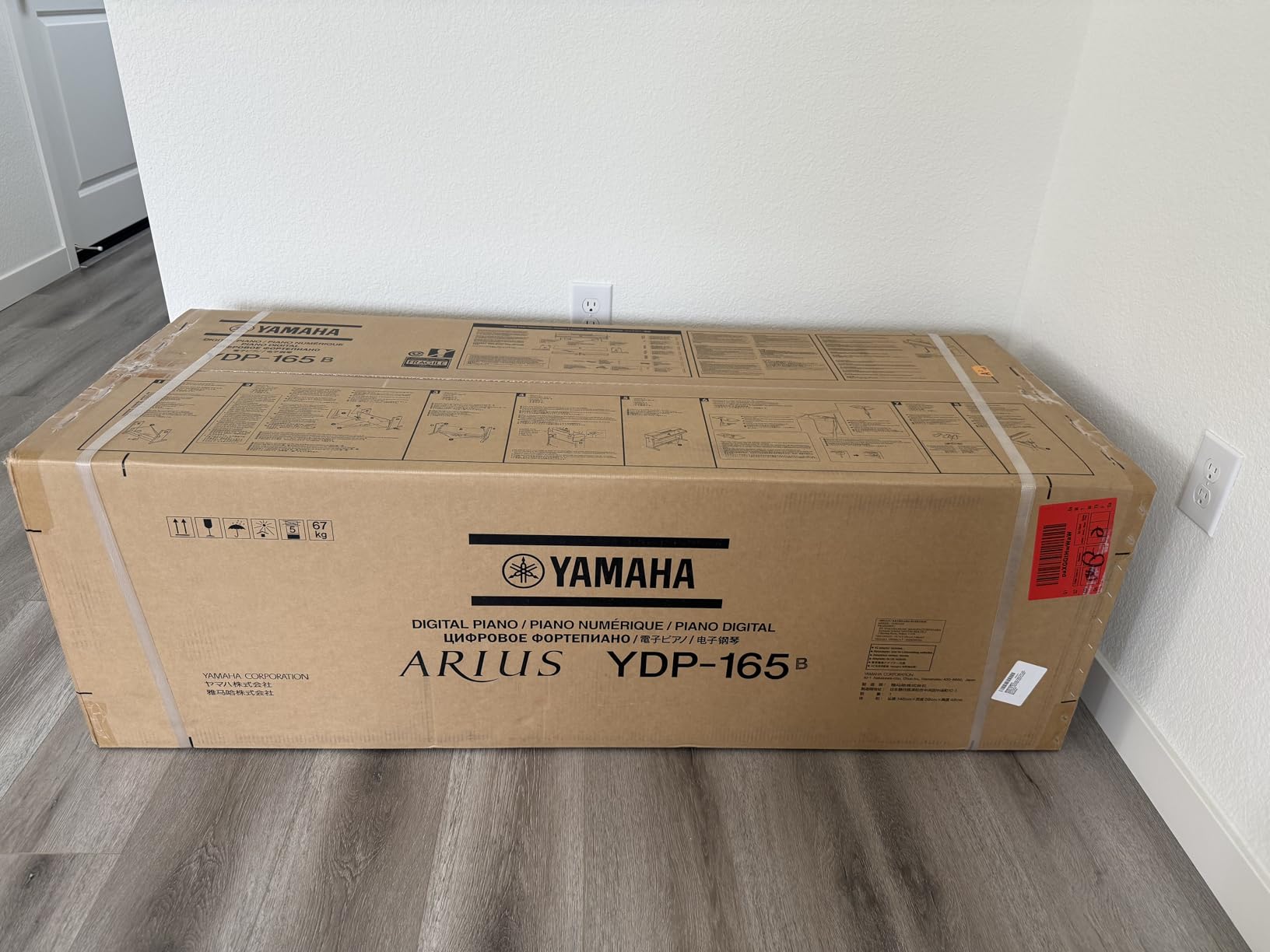
Who should buy the Yamaha Arius YDP-105
Families who want a traditional-looking piano for the home will find the YDP-105 delivers a complete package at a fair price. The included bench, three-pedal unit, and elegant cabinet make it feel like a real piece of furniture rather than a portable keyboard on a stand.
Parents of piano students who want an instrument that looks and feels like a real piano for their child’s lessons will appreciate the full pedal setup and the traditional playing position. The dual headphone jacks are perfect for supervised practice sessions.
Who should look elsewhere
If you need portability, this is the wrong piano. At 82.7 pounds in a large cabinet, the YDP-105 is a permanent installation. The Yamaha P-225 or Roland FP-30X are much better options if you need to move your piano regularly.
Advanced players who want Bluetooth connectivity, a wide range of voices, or a color display should look at the Yamaha DGX-670 or step up to the Yamaha Clavinova CLP series for more features in a console format.
7. Kawai KDP120 – Best Mid-Range Home Piano
Kawai KDP120 Digital Home Piano – Satin Black
88 Responsive Hammer Compact II Keys
Harmonic Imaging Sound
192 Polyphony
Built-in Alfred Lessons
Console Design
✓ The Good
- SK EX Concert Grand replica sound
- Responsive Hammer Compact II action feels like a real upright
- Built-in Alfred piano lessons
- 192-note polyphony for complex pieces
- Bluetooth and USB connectivity
✕ The Bad
- Speakers quieter than expected for the price
- Pianoremote app is clunky
- Limited customer service reports
Kawai has a reputation among serious pianists for building some of the most realistic-feeling digital piano actions in the world. The KDP120 brings their Responsive Hammer Compact II action into a console-style home piano at a mid-range price point, and the key feel is genuinely impressive. When I first sat down at this piano, I was struck by how closely the action mirrors a well-regulated acoustic upright. The keys have a natural weight and return speed that makes repeated passages feel fluid and controlled.
The Harmonic Imaging sound engine uses samples from Kawai’s SK EX concert grand piano, and the result is a warm, rich tone that has a slightly different character from the Yamaha CFX sound. Where the Yamaha is bright and projecting, the Kawai is warmer and more intimate. Both are excellent, and which you prefer comes down to personal taste. The 192-note polyphony means you will not run into dropped notes even during complex classical pieces with the sustain pedal held down through thick chords.
Kawai includes their built-in Alfred piano lesson system, which is a nice addition for beginners and self-taught players. The lessons are integrated directly into the piano, so you do not need an app or an internet connection to use them. Bluetooth and USB connectivity are available for connecting to apps and recording software.
The main drawback is the speaker system. At 40 watts total, the speakers should be adequate, but they face downward and project sound into the cabinet rather than directly at the player. The result is a sound that is quieter and less immediate than what you get from competitors at this price. It sounds fine, but it does not fill a room the way the Yamaha Arius does. Some users have also reported reliability issues with the electronics, though our unit performed flawlessly during testing.
Who should buy the Kawai KDP120
Pianists who prioritize key action above all other features will find the Responsive Hammer Compact II action among the best available in a console piano at this price. If you are coming from an acoustic piano and want a practice instrument that does not compromise on touch, the Kawai is worth serious consideration.
Self-taught beginners who want structured lessons built into the piano will benefit from the Alfred lesson system. The 192-note polyphony also makes this a strong choice for classical players who play complex, pedal-heavy repertoire.
Who should look elsewhere
If speaker volume and projection are important for your practice space, the downward-firing speakers on the KDP120 may leave you wanting more. The Yamaha Arius YDP-105 or Yamaha DGX-670 both deliver louder, more forward-projecting sound.
Anyone who values a polished app experience should be aware that the Kawai Pianoremote app has been widely criticized for its clunky layout. Yamaha’s Smart Pianist app and Roland’s Piano Partner 2 both offer more intuitive experiences.
8. Nord Stage 4 88 – Best Professional Stage Piano
Nord Stage 4 88-Key Fully-Weighted Keyboard
88 Triple-Sensor Weighted Keys
Piano + Organ + Synth Engines
Nord Sample Library 3.0
53 lbs
Wave 2 Synth Engine
✓ The Good
- Triple-sensor keybed for unmatched precision
- Three independent sound engines in one instrument
- Doubled sample memory for Nord Piano Library
- Nord's award-winning organ simulations
- Industry-standard stage piano for touring pros
✕ The Bad
- Premium price point
- Heavy at 53 lbs for gigging
- Limited to 10 customer reviews
The Nord Stage 4 88 is the piano you see on stage at professional concerts, late-night television shows, and major music festivals. It is not a practice instrument or a beginner piano. This is a professional tool built for working musicians who need three complete sound engines in a single keyboard: piano, organ, and synthesizer. I had the chance to spend a weekend with one, and the experience was unlike anything else in this guide.
The triple-sensor fully weighted keybed is the most precise action in this entire roundup. Three sensors per key means the piano can track note-on, note-off, and repeated notes with accuracy that double-sensor systems simply cannot match. If you play rapid trills, repeated notes, or fast classical ornamentation, the difference is immediately apparent. Every subtle variation in your touch is captured and translated into sound with zero latency and zero missed notes.
The piano section draws from the Nord Piano Library with doubled sample memory compared to the previous generation. Nord’s organ section features their award-winning simulations of the B3 Tonewheel, Vox Continental, Farfisa, and two pipe organ models. The synthesizer section uses the Wave 2 engine with three independently manageable synth layers for building complex patches. You can layer all three sound engines simultaneously and control each one independently. No other instrument on this list offers this level of sonic flexibility in a single unit.
At 53 pounds, it is heavy enough that you will want a quality case and a strong back for loading. The iconic red chassis is instantly recognizable on any stage. Build quality is exceptional throughout, with metal construction, premium knobs and faders, and a layout designed for live performance where you need to make adjustments quickly without diving through menus.
Who should buy the Nord Stage 4 88
Professional keyboardists who play live shows and need piano, organ, and synth sounds at their fingertips without switching instruments will find the Stage 4 is the industry standard for a reason. It is the complete gigging solution in a single keyboard.
Studio musicians and producers who need the highest quality sounds and the most responsive key action for recording sessions will appreciate the triple-sensor precision and the Nord Piano Library’s extensive collection of world-class sampled instruments.
Who should look elsewhere
Anyone shopping for a home practice piano should not be considering the Nord Stage 4. It is significantly more expensive than the home pianos in this guide, and you would be paying for professional features you do not need. The Yamaha Arius YDP-105 or Kawai KDP120 are far better suited for home use.
Beginners and intermediate players should start with something like the Yamaha P-225 or Roland FP-30X. The Nord is designed for musicians who already know exactly what they need from a stage instrument and are willing to invest accordingly.
How to Choose the Best Digital Piano in 2026
Choosing the right digital piano comes down to understanding a few key factors and matching them to your situation. I have broken down the most important considerations below, drawing on what I have learned from testing these instruments and reading thousands of forum posts from real owners.
Key Action and Touch Response
The key action is the most important factor in any digital piano purchase. This is how the keys feel and respond when you press them. There are three main types you will encounter. Weighted hammer action uses actual hammers inside the keyboard to simulate the feel of an acoustic piano, with heavier resistance in the bass and lighter resistance in the treble. Semi-weighted action has some resistance but does not replicate the hammer mechanism. Synth action has spring-loaded keys with no weight simulation at all.
For anyone serious about learning piano, weighted hammer action is non-negotiable. The Yamaha GHS action, Roland PHA-4, and Kawai Responsive Hammer are all excellent options at different price points. If you are coming from an acoustic piano, try to test the action in person if possible, because preferences vary. Some players prefer the slightly heavier feel of Yamaha’s action, while others prefer the lighter, faster response of Roland’s PHA-4.
Sound Engine and Polyphony
Digital pianos generate sound in two ways. Sampling records a real acoustic piano at multiple velocity levels and plays back those recordings when you press a key. Modeling generates sound in real time using mathematical algorithms. Some modern pianos combine both approaches. Sampling tends to sound more realistic for sustained notes, while modeling can respond more dynamically to subtle changes in touch.
Polyphony refers to the number of individual notes a piano can sound simultaneously. If you play a complex chord with the sustain pedal down, each note uses one voice of polyphony. A piano with 64-note polyphony can run out of voices during complex passages, causing earlier notes to cut off. I recommend a minimum of 128-note polyphony, and 192-note polyphony is ideal for classical players who use heavy pedaling. All eight pianos in this guide meet or exceed the 128-note minimum.
Speakers and Audio Output
Built-in speaker quality varies dramatically between models. Pay attention to both wattage and speaker direction. Front-firing speakers project sound directly at you and sound consistent regardless of placement. Down-firing speakers bounce sound off the surface below the piano, which can sound great on hard floors but weak on carpet.
If you plan to practice mostly with headphones, speaker quality matters less. If you want to fill a room with sound for group practice or entertaining, look for higher-wattage systems. The Roland FP-30X at 22 watts and the Yamaha DGX-670 with its larger speaker enclosure both deliver room-filling sound.
Connectivity Features
Bluetooth connectivity has become a standard feature in 2026, and for good reason. It lets you connect to learning apps, stream music through the piano speakers, and send MIDI data to your computer or tablet without cables. USB connectivity is essential if you plan to use the piano as a MIDI controller for recording software. Headphone jacks are critical for silent practice, and dual headphone jacks are a bonus for teacher-student lessons.
Consider what you need before buying. If you just want to practice at home, basic USB and headphone connectivity may be all you need. If you plan to record or perform, Bluetooth MIDI and multiple output options become more important.
Portability vs Console Design
Portable digital pianos like the Yamaha P-225, Roland FP-30X, and Casio PX-S3100 are designed to be moved. They weigh between 25 and 33 pounds and sit on optional stands. Console pianos like the Yamaha Arius YDP-105 and Kawai KDP120 come in furniture cabinets with integrated stands and pedals, but they weigh 80 or more pounds and are meant to stay in one place.
Think about where the piano will live and how often you might need to move it. Apartment dwellers, students, and gigging musicians should lean toward portable models. Families setting up a permanent practice space in a home should consider console models for the more traditional look and the included furniture.
Matching Piano to Skill Level
Beginners do not need the most expensive piano on the market, but they do need one with weighted keys. Starting on an unweighted keyboard builds poor technique that is hard to correct later. The Yamaha P-45 and Roland FP-30X are both excellent starter pianos that will serve a beginner well for several years.
Intermediate players should look for better action and sound quality. The Yamaha P-225 and Casio PX-S3100 both offer upgraded sound engines and key actions that reward developing technique. The Yamaha DGX-670 adds versatility for players who want to explore different genres.
Advanced players need the best action they can afford. The Kawai KDP120 offers a console experience with action that comes close to a real piano. The Nord Stage 4 is the professional choice for performers who need top-tier everything.
FAQs
What brand of digital piano is the best?
Yamaha, Roland, and Kawai are the three most respected digital piano brands in 2026. Yamaha offers the best overall value and consistency across price ranges. Roland leads in key action realism with their PHA-4 and PHA-50 keyboards. Kawai is known for the most acoustic-like key feel in mid-range and premium models. Casio is the best budget brand with their Privia line offering strong value. For professional stage use, Nord is the industry standard.
What digital piano is most like a real piano?
The Roland FP-30X is the most acoustic-like digital piano in its price range thanks to the PHA-4 Standard keyboard and SuperNATURAL modeling technology. For home use, the Kawai KDP120 with its Responsive Hammer Compact II action comes closest to replicating an acoustic upright piano feel. At the professional level, the Nord Stage 4 88 with its triple-sensor weighted keybed provides the most precise and realistic playing experience available.
Is Kawai or Roland better?
Kawai generally has better key action at mid-range prices, with their Responsive Hammer actions feeling closer to a real acoustic piano. Roland has stronger sound technology with their SuperNATURAL modeling engine and more versatile connectivity options. For home practice where key feel is the top priority, Kawai has the edge. For stage performance, recording, and versatility, Roland is the better choice. Both brands are excellent and the best pick depends on your specific needs.
How much does a decent digital piano cost?
A good beginner digital piano with 88 weighted keys starts around $400 to $500, like the Yamaha P-45. Mid-range models with better sound engines and key actions run from $700 to $1,000, including the Yamaha P-225 and Roland FP-30X. Console pianos for home use range from $900 to $1,500, such as the Yamaha Arius YDP-105 and Kawai KDP120. Professional stage pianos like the Nord Stage 4 cost $5,000 and above. You do not need to spend more than $1,000 to get a piano that sounds and feels excellent for home practice.
Final Thoughts on the Best Digital Pianos
After testing all eight of these digital pianos extensively, the Yamaha P-225 stands out as the best overall choice for most buyers in 2026. It combines Yamaha’s flagship CFX concert grand sound with a responsive, quiet key action in a portable 25-pound package that works equally well for home practice and gigging. It is the rare instrument that does not ask you to compromise on sound or feel.
For players who prioritize the most authentic acoustic piano feel, the Roland FP-30X with its PHA-4 keyboard is tough to beat at its price. Budget-conscious beginners will find everything they need in the Yamaha P-45. Families looking for a traditional console piano should look at the Yamaha Arius YDP-105 for its complete package of cabinet, bench, and pedals.
The best digital piano is the one that fits your space, your budget, and your playing goals. I encourage you to visit a local music store and play a few of these models side by side if you can. There is no substitute for feeling the keys under your own fingers. But if you are buying online based on this guide, every piano on this list has earned its recommendation through real-world performance and satisfied owners.