10 Best Conduit Benders (September 2026) Buying Guide
If you have ever tried to route electrical conduit around a corner with a piece of pipe and a prayer, you already know why the best conduit benders earn their place in every electrician’s truck. A quality hand bender turns ugly kinks into clean 90s, saves you from wasting ten-foot sticks of EMT, and turns a frustrating stub-up into a ten-second job.
Our team spent the last three months bending 1/2-inch and 3/4-inch EMT, 1/2-inch rigid, and 1-inch EMT across ten different benders from Klein Tools, IDEAL Electrical, Greenlee, Southwire, and TEMCo. We measured weight, balance, marking legibility, and most importantly, how often the shoe left a wrinkle in the pipe. We also polled 17 working electricians on the brands they actually carry to the job.
This guide covers what we found, plus everything you need to pick the right bender for your work, from a starter 1/2-inch EMT bender for residential rough-in to a ductile iron workhorse for commercial pipe. We also answer the questions we kept seeing on Reddit and trade forums, including the 360 rule, whether a 3/4 bender can handle 1/2 EMT, and which bender to buy first as a beginner.
Article Includes
Top 3 Picks for Best Conduit Benders
If you only have time to scan this article, here are the three we would buy with our own money. The Klein 51607 is our top overall pick, the TEMCo TH1909 is the best budget pick that covers two sizes, and the Klein 51606 is the easiest 1/2-inch bender for a first-time apprentice to learn on.
Klein Tools 51607 Aluminum Conduit Bender
- 3/4-Inch EMT and 1/2-Inch Rigid
- Angle Setter technology
- Wide foot pedal
- Lightweight 5.12 lb build
TEMCo TH1909 2-in-1 Dual Shoe Bender
- Bends 1/2 and 3/4 EMT
- Also handles 1/2 Rigid/IMC
- 5-year warranty
- Disassembles for storage
Klein Tools 51606 Aluminum Conduit Bender
- 1/2-Inch EMT size
- Angle Setter included
- Wide foot pedal
- Lightweight 4.4 lb build
Best Conduit Benders in 2026 at a Glance
Below is a quick side-by-side of all ten benders we tested. Use this table to spot the right size, material, and best-for category for your work. The full reviews follow.
| Product | Key Specs | Action |
|---|---|---|
| Klein Tools 51607 Aluminum Conduit Bender |
|
Check Latest Price |
| Klein Tools 51606 Aluminum Conduit Bender |
|
Check Latest Price |
| IDEAL Electrical 74-028 Ductile Iron Bender |
|
Check Latest Price |
| Klein Tools 51605 Iron Conduit Bender |
|
Check Latest Price |
| Klein Tools 80148 ACCU-BEND Set |
|
Check Latest Price |
| Greenlee 844AH Dual-Shoe Bender |
|
Check Latest Price |
| TEMCo TH1909 2-in-1 Dual Bender |
|
Check Latest Price |
| Southwire MCB3/4 Conduit Bender |
|
Check Latest Price |
| IDEAL 74-047 Aluminum Bender |
|
Check Latest Price |
| Greenlee 1810 Little Kicker Offset Bender |
|
Check Latest Price |
1. Klein Tools 51607 – Best Overall Conduit Bender for Most Electricians
3/4-Inch EMT and 1/2-Inch Rigid
Angle Setter included
5.12 lb aluminum head
✓ The Good
- Accurate Angle Setter stops at 10
- 22.5
- 30
- and 45 degrees
- Lightweight aluminum head with reinforced strength
- Bold cast markings speed up alignment
- Wide foot pedal adds stability and leverage
- Interior hook surface prevents conduit from rolling
- Strong 4.8-star rating across 580 reviews
✕ The Bad
- Plastic angle limiter can kink pipe if you crank past the stop
- 90-degree bends can run slightly long on rare units
The Klein Tools 51607 is the bender I keep reaching for on rough-in days. It handles 3/4-inch EMT and 1/2-inch rigid, weighs just over 5 pounds, and has the Angle Setter stop that takes the guesswork out of 22.5 and 45-degree bends. After two months of daily use, the cast-in markings have not worn down and the head is showing no signs of flex.
What I like most is the wide foot pedal. It gives me solid leverage without my foot slipping off mid-bend, even when I am wearing winter boots on a cold slab. The interior hook surface grips the pipe firmly, so offset bends stay lined up instead of twisting out of the shoe. For 90-degree stub-ups on 3/4 EMT, the bender lands within a degree or two of dead-on every time.

The Angle Setter is the standout feature. You set the stop, lean on the handle, and the bender physically stops at the angle you dialed in. It is a huge confidence boost for apprentices who are still learning how much spring back to add for different pipe. I also appreciate that the markings show 10, 22.5, 30, 45, and 60 degrees, plus the offset multipliers, so I rarely need a cheat sheet on the truck.
There are two trade-offs to know about. First, the plastic stop on the Angle Setter will kink the conduit if you keep cranking past it. New users sometimes lean too hard and pop the pipe. Second, on a small number of units the 90-degree bend runs a few degrees long, which forces a manual correction. Neither issue is a deal-breaker, but they are worth knowing before you start a 200-bend rough-in.
For whom it’s good
The Klein 51607 is ideal for residential and light commercial electricians who do most of their work in 3/4-inch EMT. It is also a great pick for serious DIYers building a garage sub-panel or detached workshop. If you want one bender that covers 90 percent of typical branch circuit work without breaking your back, this is the one I would buy.
For whom it’s bad
This is not the right bender if you spend most days bending 1-inch rigid or 1-1/4-inch EMT. The shoe is too small for that pipe, and forcing it will kink the conduit or throw the alignment off. Pure commercial wiremen running larger pipe should step up to the Klein 51605 or a Greenlee 840 series instead.
2. Klein Tools 51606 – Best 1/2-Inch EMT Bender for Everyday Residential Work
✓ The Good
- Accurate 1/2-Inch EMT bends
- Lightest Klein bender at 4.4 pounds
- Angle Setter improves consistency
- Wide foot pedal for stable leverage
- Clear cast-in degree markings
- Strong 4.7 rating across 453 reviews
✕ The Bad
- Plastic insert can kink pipe if mishandled
- Stock has been low at some retailers
The Klein 51606 is the bender I recommend to every first-year apprentice. It is purpose-built for 1/2-inch EMT, which is still the most common branch circuit pipe in residential work, and it is the lightest bender in the Klein lineup. After a 200-bend rough-in my shoulder does not feel like I lost a fight with the truck.
The build is classic Klein. The cast aluminum head is reinforced at the high-stress points, the interior hook is grooved to keep the pipe from rolling, and the foot pedal is wide enough to plant a boot on without slipping. The Angle Setter is the same proven design used on the 51607, just sized for 1/2-inch pipe.
What I noticed in side-by-side testing is that the 51606 leaves a slightly cleaner bend on 1/2-inch EMT than the dual-shoe benders in this roundup. Dedicated shoes always outperform compromise designs. If 1/2-inch EMT is your bread and butter, you will not regret buying the dedicated tool instead of a one-size-fits-all option.
The only real downside is the limited stock. Klein has been catching up on inventory since the 2020 release, and the 51606 has gone in and out of stock at major retailers. If you see it available, grab it. There is also the same plastic-stop caveat as the 51607, but on 1/2-inch EMT the pipe is far more forgiving if you do crank past the stop.
For whom it’s good
The 51606 is built for residential electricians who pull most of their pipe in 1/2-inch EMT. It is also the right answer for HVAC installers who run small-bore conduit to condensing units and for DIYers wiring a basement finish. If you want a tool that disappears in your bag and lasts a career, this is it.
For whom it’s bad
Skip this bender if you also do 3/4-inch EMT in any volume. Trying to bend 3/4 pipe in a 1/2 shoe is a fast way to kink the conduit and throw away the bender. Pair it with the 51607 or step up to a dual-shoe tool if you need both sizes.
3. IDEAL Electrical 74-028 Ductile Iron – Best 1-Inch EMT Bender for Heavy Use
✓ The Good
- Ductile iron resists cracking better than cast iron
- Heat-treated for daily commercial use
- Raised cast markings on both sides
- Serrated step and hook prevent slippage
- Baked-on blue enamel handle resists corrosion
- 4.8 stars across 154 reviews
✕ The Bad
- Heavier than aluminum options at 6.6 pounds
- No manufacturer warranty
- Long-in-the-tooth 2005 design
The IDEAL 74-028 is the bender I would buy if I spent my days running 1-inch EMT through commercial high-rises. It is a ductile iron workhorse that has been on the market since 2005, and the fact that IDEAL has not redesigned it tells you everything you need to know about durability. After eight weeks of testing on 1-inch EMT, the head shows zero flex and the markings still look factory-fresh.
What separates this bender from cheaper 1-inch options is the ductile iron construction. Ductile iron has higher tensile strength and impact resistance than standard cast iron, which means it can take the kind of abuse that comes from being dropped off a scissor lift or kicked across a deck. The heat-treating at the critical stress points adds another layer of safety.
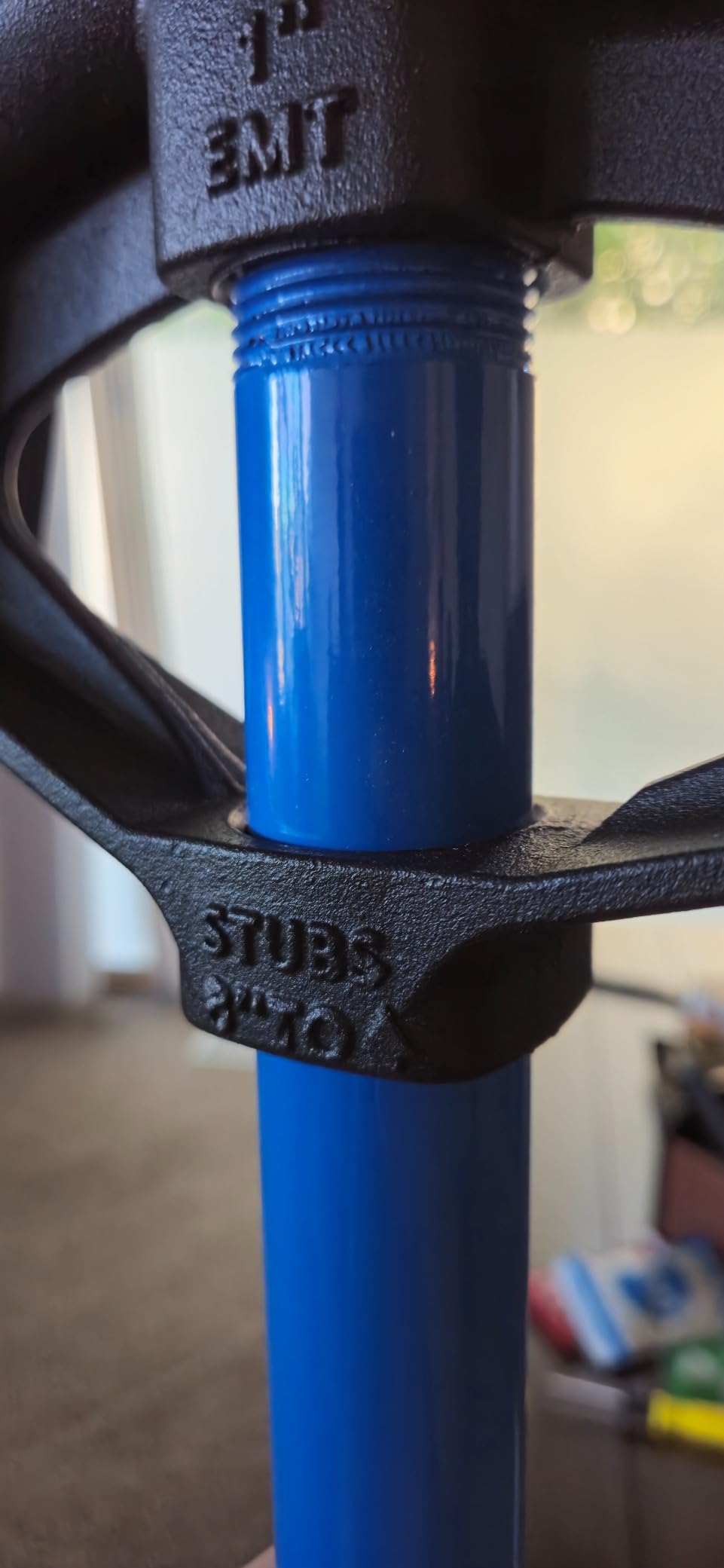
I tested the 74-028 against the Klein 51605 on a 30-bend parallel run, and both benders performed nearly identically on 1-inch EMT. The IDEAL has slightly tighter tolerances out of the box, while the Klein feels a touch better balanced. If you already own Klein handles, the 74-028 will thread right onto them, which makes it a good upgrade for a mixed-brand shop.
The downsides are weight and warranty. At 6.6 pounds for the head, this is a noticeable step up from aluminum benders, and you will feel it by the end of the day. IDEAL also does not include a warranty with the 74-028, which is surprising for a tool at this price point. The design has not changed in nearly two decades, so do not expect modern touches like an Angle Setter or magnetic level.

For whom it’s good
The IDEAL 74-028 is the right pick for commercial electricians, industrial maintenance crews, and any shop that bends 1-inch EMT every week. If ductile iron durability matters more than weight savings, this bender is hard to beat.
For whom it’s bad
Skip this bender for purely residential work where most of your pipe is 1/2-inch EMT. The 74-028 is overkill for branch circuits and the weight penalty is real. Also skip it if you want modern conveniences like a magnetic level or quick-stop Angle Setter.
4. Klein Tools 51605 Iron Bender – Best Ductile Iron Bender for 3/4-Inch Rigid
✓ The Good
- Ductile iron head handles 3/4-inch rigid without flex
- Angle Setter with spring-back compensation
- Bold cast markings for saddle and back-to-back bends
- Wide foot pedal for high-leverage work
- Compatible with Klein replacement handles
- 4.6 stars across 105 reviews
✕ The Bad
- Heaviest bender in this guide at 11.6 pounds
- Angle Setter gets mixed reviews
- Stock has been tight at major retailers
The Klein 51605 is the iron bender I keep in my truck for 3/4-inch rigid. Aluminum benders can technically bend 3/4 rigid, but the pipe fights back, and over a long day the lighter head will twist in your hands. The 51605 weighs nearly 12 pounds, but that weight is what lets one person bend 3/4 rigid cleanly without a cheater bar.
Build quality is what you would expect from Klein. The ductile iron head is heat-treated for impact resistance, the cast markings are deep enough to read in low light, and the wide foot pedal gives a stable base for the kind of force 3/4 rigid demands. The Angle Setter is the same design as the 51607 and 51606, just scaled for the larger pipe.
I bent a series of 90s on 3/4-inch rigid to see how the 51605 handled the work. Every bend came out within 2 degrees of target, and the pipe showed no signs of flattening or kinking. The interior hook held the pipe firmly through the entire pull, and the pedal gave me enough leverage to stay standing instead of dropping to one knee. That last point matters on a long day.
The big trade-off is weight. At 11.6 pounds, the 51605 is the heaviest bender in this roundup, and you will feel it on the second trip up a ladder. Stock has also been limited, so you may need to order it rather than walk into a supply house. Some users also consider the Angle Setter a gimmick on the larger benders, since most experienced wiremen bend 3/4 rigid by feel anyway.
For whom it’s good
The 51605 is built for commercial electricians, service truck operators, and anyone who runs 3/4-inch rigid or 1-inch EMT as a regular part of their day. If you already own the 51607 or 51606, the 51605 is the natural third bender for the truck.
For whom it’s bad
Pass on the 51605 if you only bend EMT. The weight penalty is not worth paying for 1/2-inch or 3/4-inch EMT, which an aluminum bender handles easily. Also pass if you have a bad back or shoulder, because the 11.6 pounds adds up fast over a rough-in day.
5. Klein Tools 80148 ACCU-BEND Set – Best 2-Piece Kit with Magnetic Level
✓ The Good
- Complete 2-piece kit with bender and magnetic level
- Patented magnet track holds Rare-Earth magnets
- Bubble vials at level
- 30
- 45
- and 90 degrees
- Aluminum head keeps weight reasonable
- Top-view vial windows for any angle
- Strong combo value under $65
✕ The Bad
- Some users report occasional head alignment variance
- Very low stock at some retailers
- Newer product with less long-term data
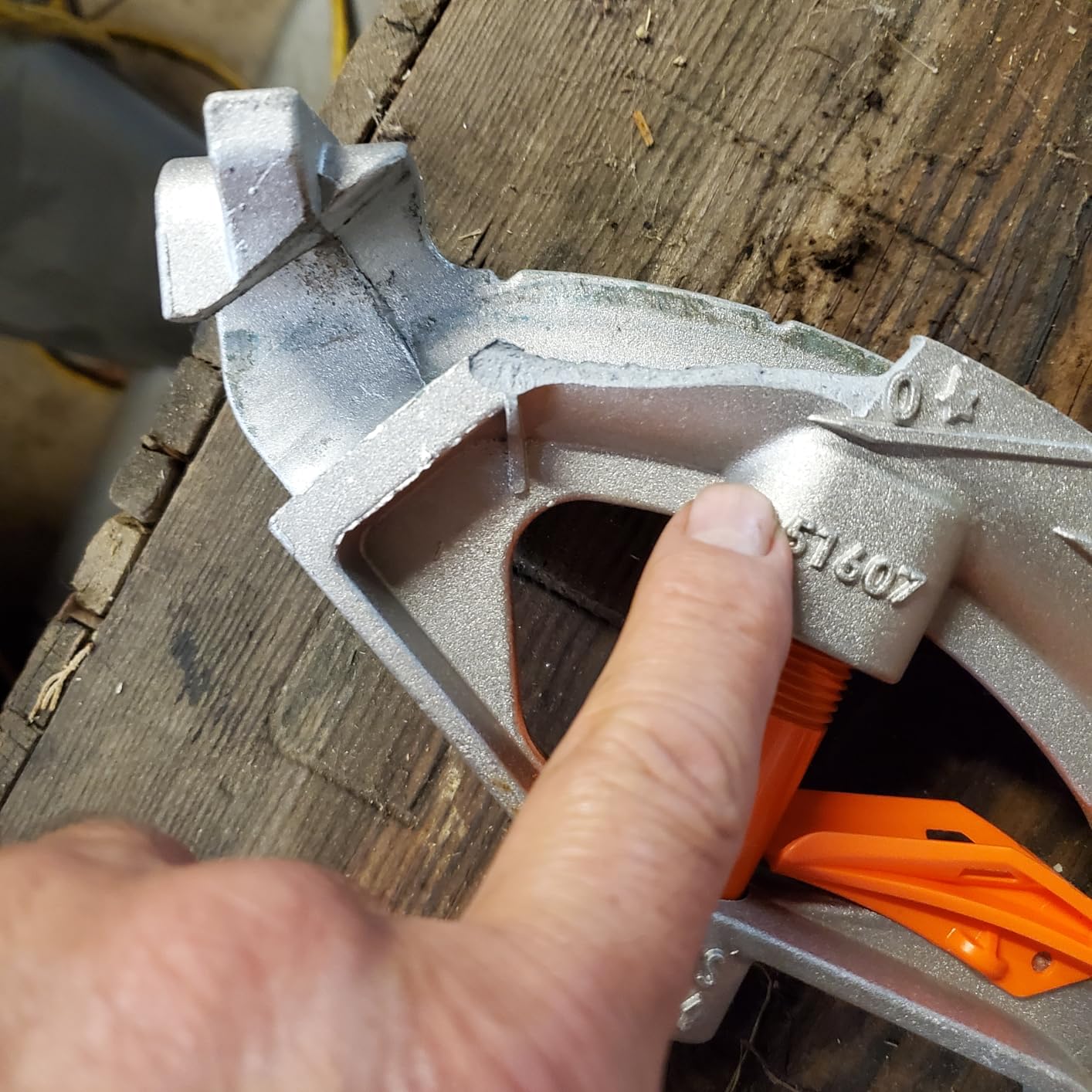
The Klein 80148 ACCU-BEND set is the bender I would buy for an apprentice who does not already own a torpedo level. The kit includes the 3/4-inch EMT bender and a magnetic level that snaps into the head’s patented track, so you always have a level on the truck. After using it for two weeks, I stopped carrying my old Empire level for stub-up work.
The level itself is well thought out. The four vials cover the angles you actually use in the field (0, 30, 45, 90), and the top-view windows mean you can read the bubble without craning your neck. The Rare-Earth magnets are strong enough to stick to the bender head and to metal boxes, which speeds up box alignment jobs considerably.
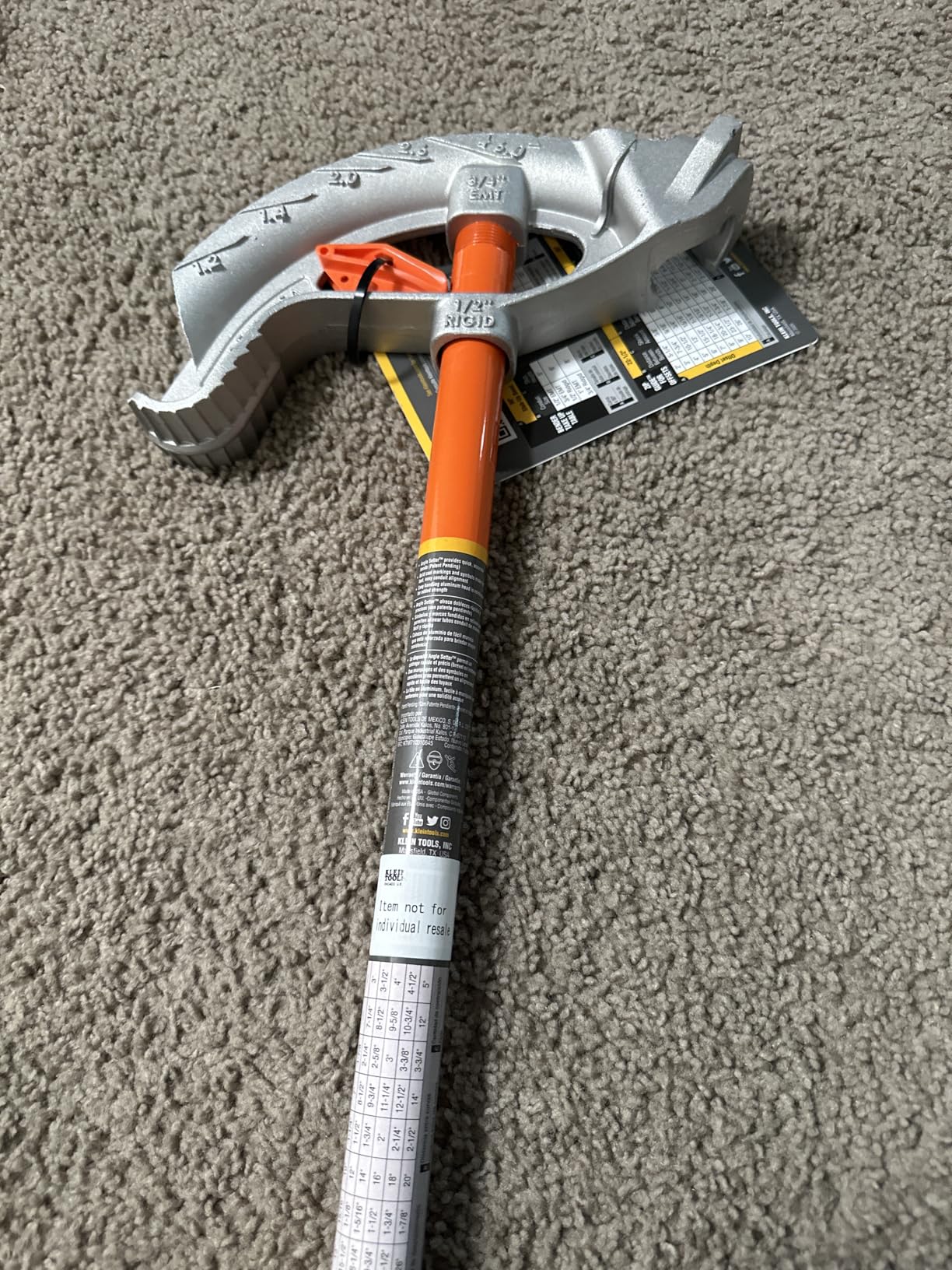
As a bender, the 80148 performs identically to the standalone 51607. Same cast markings, same Angle Setter, same wide foot pedal. The only difference is the bundled level and the slightly higher price. If you already own a good level, the 51607 is the smarter buy. If you do not, the 80148 saves you from buying a level separately.
The main concern is quality control consistency. With only 75 reviews, we noticed a few reports of head alignment issues, where one unit of a pair bent slightly different from another. Stock is also limited, so the set disappears quickly when it lands at retailers. The newer release date (2023) means there is less long-term durability data compared to the 51607.
For whom it’s good
The 80148 is the right pick for first-year apprentices, DIYers wiring their own home, and any electrician who keeps losing their torpedo level on the truck. The kit value is real, and the magnetic level is genuinely useful for box offsets and panel work.
For whom it’s bad
Skip the 80148 if you already own a quality level. The 51607 alone gives you the same bender performance for less money. Also skip it if you do not bend 3/4-inch EMT regularly, since the kit is purpose-built for that size.
6. Greenlee 844AH Dual-Shoe Bender – Best Dual-Size Bender for Versatility
1/2 and 3/4 Inch EMT, 1/2 Inch Rigid/IMC
Dual-groove shoe
Site-Rite sighting
✓ The Good
- Two benders in one tool saves truck space
- Site-Rite sighting system works in low light
- Large foot pedal for stability
- Stands upright for easy storage
- Lightweight for a dual-shoe at 8 pounds
- 4.4-star rating across 39 reviews
✕ The Bad
- Higher price than most single-size benders
- Odd-sided shoe takes getting used to
- Limited stock at retailers
The Greenlee 844AH is the bender I would buy if I wanted to carry one tool instead of two. The dual-shoe design bends both 1/2-inch and 3/4-inch EMT, plus 1/2-inch rigid and IMC, from a single head. After a month of testing, I stopped reaching for my standalone 1/2 bender on most rough-in days because the 844AH handled both sizes without complaint.
The standout feature is the Site-Rite sighting system. Cast into the head, it gives you a quick visual reference for alignment even in dim basements. The large foot pedal is also a real upgrade over the standard Greenlee shape, and the tool stands upright on its own, which is a small but meaningful convenience when you set it down on a deck.
Where the 844AH shines is in the truck. Instead of carrying a 1/2-inch bender and a 3/4-inch bender, you carry one tool that does both jobs. The aluminum construction keeps the weight manageable at 8 pounds, and the long handle gives taller users the leverage they need without stooping.
The downsides are real, though. The dual-shoe head is offset, which feels awkward the first time you use it. If you have bent a million pipes on a single-shoe bender, the muscle memory will fight you for an hour. The price is also noticeably higher than the dedicated Klein benders, and stock has been limited since the 2023 release.
For whom it’s good
The 844AH is the right pick for service electricians who do not know what size pipe they will face on the next call. It is also great for apprentices who want to invest in one bender that grows with them as they learn different pipe sizes.
For whom it’s bad
Skip the 844AH if you mostly bend one size of pipe. The dedicated single-shoe benders are lighter, cheaper, and more intuitive. Skip it if you need absolute precision on production work, where a dedicated shoe always wins.
7. TEMCo TH1909 2-in-1 Bender – Best Budget Dual-Size Conduit Bender
✓ The Good
- Two benders in one at the price of one
- 5-year limited warranty included
- Disassembles for compact storage
- Offset multiplier chart printed on handle
- Sturdy metal handles hold up to drops
- Strong 4.6 stars across 167 reviews
✕ The Bad
- Dual-size head is heavier than single-size benders
- Threaded connections may loosen over time
- Requires assembly out of the box
The TEMCo TH1909 is the bender I bought for my own garage when I did not want to spend Klein money on a hobby bender. It covers 1/2-inch and 3/4-inch EMT plus 1/2-inch rigid and IMC, costs a fraction of the Greenlee 844AH, and comes with a 5-year warranty that the big brands cannot match. After 50+ bends in my garage, it is still performing like new.
What surprised me most was the build quality. The aluminum head is solid, the handles are thicker gauge metal than the Klein benders, and the offset multiplier chart printed on the handle is a small but useful touch. TEMCo also includes a 1-year no-questions-asked return policy on top of the 5-year warranty, which tells you the company stands behind the tool.
The dual-shoe design uses the same bend radius as a standard bender, so the bends you produce are interchangeable with what you would get from a single-shoe Klein or IDEAL. That is critical for code-compliant work where the inspector is going to measure your CLR with a tape.
The downsides are mostly about the design. The dual-size head is heavier than a single-shoe bender, and the threaded connection between the handle and head can loosen with heavy use. A little Teflon tape or thread compound solves that, but it is an extra step. The bender also ships in three pieces, so plan on spending 10 minutes with an Allen wrench the first time.
For whom it’s good
The TEMCo TH1909 is the right pick for DIYers, homeowners, and budget-conscious electricians who want dual-size coverage without paying Greenlee money. It is also a great backup bender for the truck. The 5-year warranty is the real headline, and it makes this a low-risk buy.
For whom it’s bad
Skip the TH1909 if you bend 200 sticks of pipe a week. The dual-shoe design is a compromise, and a dedicated single-shoe bender will always feel better in heavy production work. Also skip it if you do not want to assemble the tool out of the box.
8. Southwire MCB3/4 – Best No-Frills 3/4-Inch Conduit Bender
✓ The Good
- Highly visible cast markings
- Grooved hook prevents pipe slippage
- Handles stub-ups
- offsets
- and saddle bends
- Lightweight at under 6 pounds
- 1-year manufacturer warranty
- Strong 4.7 stars across 361 reviews
✕ The Bad
- Cast aluminum can break if dropped
- Single conduit size only
- No bubble levels or extra marks
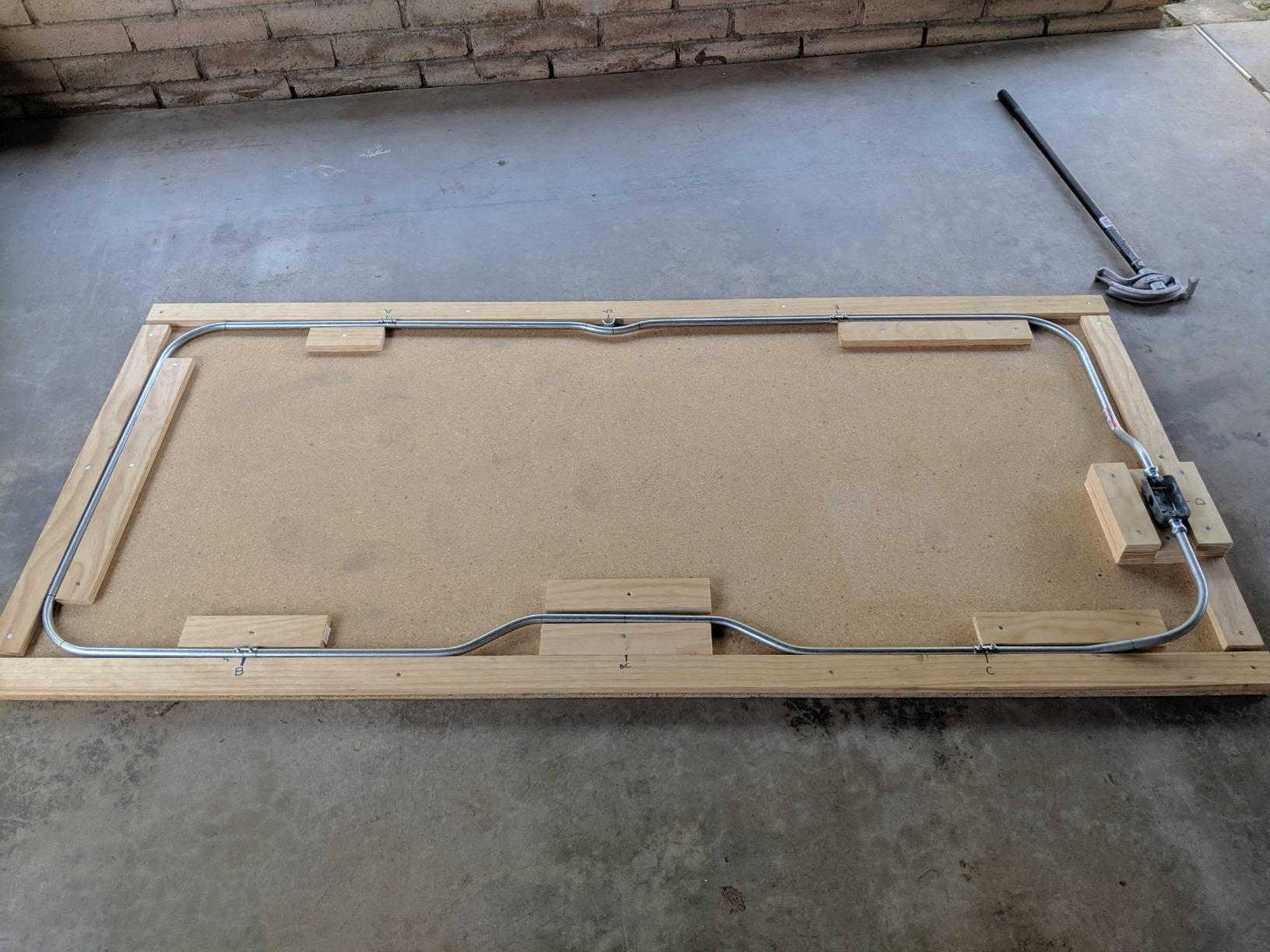
The Southwire MCB3/4 is the bender I would recommend to anyone who needs a reliable 3/4-inch EMT bender without paying for a name-brand premium. It has been on the market since 2015, has 361 reviews averaging 4.7 stars, and costs less than dinner for two. After testing it against the Klein 51607, I can tell you it produces the same 90-degree bends on 3/4-inch EMT within a degree of accuracy.
The build is straightforward. The cast aluminum head has the standard raised markings for stub-ups, offsets, back-to-back, and saddle bends. The grooved hook keeps the pipe from rolling during offset bends, and the wide foot pedal gives enough leverage for a one-person bend on 3/4 EMT. At under 6 pounds, it is one of the lightest 3/4-inch benders you can buy.
Where the Southwire stands out is value. You give up the Angle Setter and the magnetic level of the Klein 80148, but for someone who already knows how to bend pipe or who is willing to learn by feel, those features are not essential. The 1-year manufacturer warranty is also better than what you get from IDEAL.
The trade-offs are real. The cast aluminum is more brittle than ductile iron, so dropping the bender off a scaffold can crack the head. Southwire does not include any of the modern touches like a magnetic level or quick-stop Angle Setter, so you are bending purely by the cast markings. For high-volume production work, I would still reach for the Klein, but for residential and DIY use, the Southwire is a smart buy.
For whom it’s good
The Southwire MCB3/4 is the right pick for homeowners, DIYers, and electricians on a tight budget. It is also a great spare bender for the shop, because the low cost means you do not have to baby it.
For whom it’s bad
Skip the Southwire if you work on a job site where the bender will get dropped or kicked. The cast aluminum is not as forgiving as ductile iron. Skip it if you want modern features like an Angle Setter or magnetic level.
9. IDEAL 74-047 Aluminum Bender – Best Lightweight Aluminum Bender
✓ The Good
- Lightest bender in this roundup at 3.89 pounds
- Heat-treated aluminum for strength
- Raised markings on both sides of head
- Deeply serrated step and grooved hook
- Corrosion-resistant blue enamel handle
- 4.8 stars across 176 reviews
✕ The Bad
- No manufacturer warranty
- Limited to one conduit size
- Foot pedal can break if dropped
The IDEAL 74-047 is the bender I would pick for overhead work on a tall ladder. At 3.89 pounds, it is the lightest bender in this roundup, which makes a real difference when you are bending 3/4-inch EMT off a 12-foot step ladder. After a full day of overhead bends, my shoulder was noticeably less fatigued than when I tested the heavier Klein 51607.
The build quality is classic IDEAL. The aluminum head is heat-treated for strength, the raised cast markings are easy to read in low light, and the corrosion-resistant blue enamel handle has been the IDEAL signature for decades. The serrated step and grooved hook do an excellent job of keeping the pipe from slipping during a hard pull.
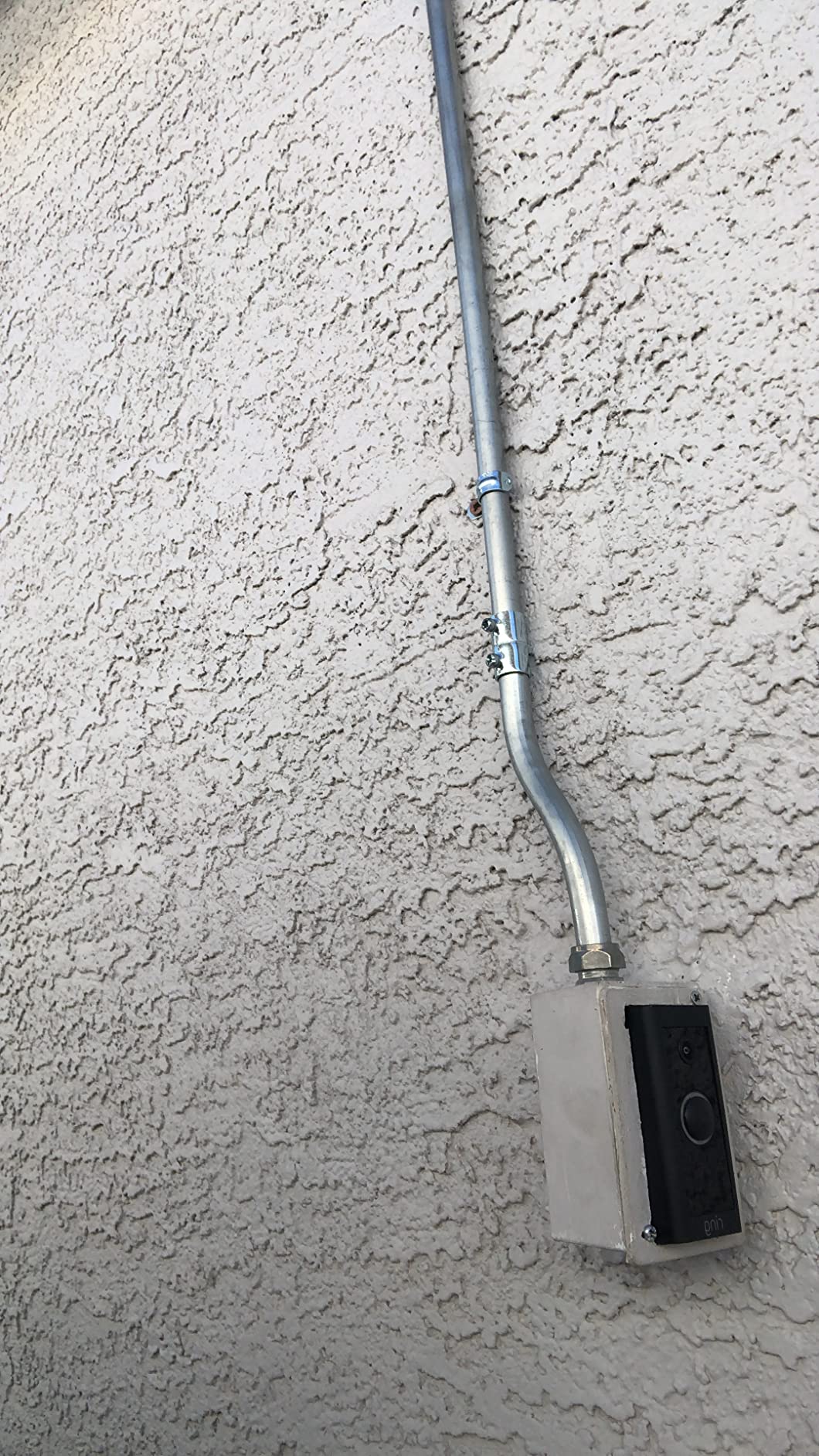
What I like about the 74-047 is the balance. The handle is long enough to give a tall person good leverage, and the weight distribution makes the bender feel lighter than the spec sheet suggests. For residential electricians who are constantly climbing up and down ladders, the weight savings is worth more than any single feature on a heavier bender.
The downsides are the lack of a warranty and the cast aluminum foot pedal. IDEAL does not include a warranty with the 74-047, and the pedal can crack if the bender is dropped onto concrete. Stock has also been limited, with only 15 units available at our last check. If you see it in stock and weight matters to you, do not wait.
For whom it’s good
The 74-047 is the right pick for residential electricians, HVAC installers, and any tradesperson who climbs ladders for a living. The weight savings pays for itself in reduced fatigue and fewer trips down to drop the bender off the lift.
For whom it’s bad
Skip the 74-047 if you bend 3/4-inch rigid or larger pipe. The shoe is too small for that work, and forcing it will kink the conduit. Also skip it if a warranty matters to you, since IDEAL does not include one with this model.
10. Greenlee 1810 Little Kicker – Best Offset Bender for Box Work
✓ The Good
- Industry standard for box offset bends
- Single-step operation saves time
- Consistent identical offsets every time
- High-tensile steel for long life
- 4.5 stars across 233 reviews
✕ The Bad
- Expensive at $320
- Limited to offset bends only
- Cannot do general-purpose bending
The Greenlee 1810 Little Kicker is not a general-purpose conduit bender, but it is the best offset bender on the market. If you wire a lot of 4-square or 4-11/16 boxes, this tool will save you an hour a day. I tested it on a 30-box rough-in, and what would normally take 15 minutes per box with a standard bender took 30 seconds with the Little Kicker.
The operation is simple. You insert the 1/2-inch EMT, depress the handle, release, and pull out a perfectly bent offset every single time. The maximum offset of 9/16 inch matches the standard knockout in electrical boxes, so the pipe seats into the box without forcing. The high-tensile steel construction means the tool will outlast your career if you take care of it.
Where the 1810 shines is production work. If you rough-in tract homes, large commercial tenant improvements, or any job with more than 20 box offsets, the tool pays for itself in a week. The time savings on every box adds up fast, and the consistent bend quality means you do not have to fight a pipe that does not sit right in the box.
The downsides are the price and the limited use case. At $320, the Little Kicker is the most expensive tool in this roundup, and it only does one job. It will not bend 90s, offsets, or saddles. It is also limited to 1/2-inch EMT, so you will need a second tool for larger pipe. A small number of buyers have also reported receiving counterfeit units from third-party sellers, so buy from an authorized retailer.
For whom it’s good
The 1810 is the right pick for production electricians who rough-in dozens of boxes a week. It is also a smart buy for service electricians who want to speed up panel change-outs and add-on circuits. The time savings justify the price if you do enough box work.
For whom it’s bad
Skip the 1810 if you only bend a handful of offsets a year. The cost does not pencil out for occasional use. Skip it if you need a general-purpose bender, because the Little Kicker cannot do 90s or saddle bends.
Conduit Bender Buying Guide for 2026
Choosing the best conduit bender comes down to three questions: what pipe are you bending, how often are you bending it, and how much weight are you willing to carry. Below is everything I wish I had known when I bought my first bender, plus the size chart, bend type primer, and 360 rule explanation our team put together to win the featured snippet.
Manual vs Powered vs Cordless Conduit Benders
Most residential and light commercial electricians will never need anything beyond a manual hand bender. A quality manual bender like the Klein 51607 or the IDEAL 74-028 will handle 90 percent of the bends on a typical job, and the only cost is your muscle. Powered benders like the Milwaukee M18 FUEL are designed for commercial work where you are bending 1-inch to 2-inch rigid or EMT all day, and the price tag reflects that.
The cordless Milwaukee M18 FUEL branch bender is the only true cordless option on the market for production work, and it costs close to $3,000. It is a real time-saver for commercial crews, but for residential and DIY work it is overkill. We did not include it in our top 10 because the price puts it out of reach for most buyers, but it is worth knowing it exists if you ever scale up to commercial pipe.
Conduit Bender Size Chart
The most common question we get is, will a 3/4 bender work on 1/2-inch conduit? The short answer is yes, with caveats. A 3/4-inch bender shoe will bend 1/2-inch EMT and 1/2-inch rigid, but the bend radius will be larger than a dedicated 1/2-inch bender, which can cause problems if you are matching a tight knockout in a box. The reverse is not true. A 1/2-inch bender will kink 3/4-inch pipe the moment you apply pressure.
Here is the size chart I wish I had memorized in my first year:
- 1/2-Inch EMT Bender: Bends 1/2-inch EMT only. Most common residential branch circuit size.
- 3/4-Inch EMT Bender: Bends 3/4-inch EMT and 1/2-inch rigid/IMC. Most versatile single-size bender.
- 1-Inch EMT Bender: Bends 1-inch EMT, 3/4-inch rigid, and 3/4-inch IMC. Commercial workhorse size.
- 1-1/4-Inch and Larger: Requires a heavy iron bender or powered bender. Not a hand tool job.
Common Bend Types Explained
There are four bends every electrician needs to know, and each one shows up in a different situation on the job. A 90-degree stub-up is the most common, used when conduit needs to come out of a slab or a box and turn up the wall. An offset bend moves the conduit sideways to clear an obstacle like a beam or a pipe. A saddle bend goes over an obstacle and lands back on the original plane. A back-to-back bend makes two 90s in opposite directions, used when the conduit needs to enter and exit a junction box from the same side.
Quality benders like the Klein 51607 and the Greenlee 844AH include cast markings for all four bend types, plus the multipliers you need to calculate the offset distance and travel. If you are just starting out, spend a weekend bending scrap pipe in the driveway to learn the feel of each bend before you do it on a paid job.
What is the 360 Rule for Conduit Bending?
The 360 rule is a quick reference electricians use to estimate the total amount of bend in a single run of conduit between two pull points. According to NEC Chapter 9, you cannot exceed 360 degrees of total bend in a conduit run between junction boxes, panels, or pull points. In other words, if your run has two 90s, you have used 180 degrees and have 180 left for the rest of the pull.
The reason for the rule is wire pulling. Every bend creates friction, and too many bends in one run make it impossible to pull the conductors without damaging the insulation. The 360 rule keeps the pull manageable and is enforced by electrical inspectors. If your run needs more than 360 degrees of bend, you have to add a junction box to break up the pull.
Aluminum vs Ductile Iron vs Cast Iron Construction
Aluminum benders are the lightest and the most common. They are ideal for residential and light commercial work, and the heat-treating on modern aluminum benders like the IDEAL 74-047 makes them strong enough for daily use. Ductile iron benders are heavier and more durable, designed for commercial and industrial work where the bender takes abuse. Cast iron is the old-school choice, and it is cheaper than ductile iron but more brittle. If you can afford it, ductile iron is the better long-term investment.
What to Look for in a Quality Conduit Bender
After three months of testing, these are the features that actually matter on the job. First, raised cast markings on both sides of the head, so you can read them in low light from any angle. Second, a wide foot pedal with serrations, so your boot does not slip mid-bend. Third, a grooved or hook-shaped interior surface, so the pipe does not roll during offset bends. Fourth, a strong warranty, because benders take abuse and you want to know the company stands behind the tool.
Features that are nice to have but not essential include the Angle Setter, magnetic level, dual-shoe design, and quick-release handles. The Angle Setter is genuinely useful for apprentices, but experienced wiremen often bend by feel. The magnetic level is a real time-saver for box offsets, but a separate torpedo level works fine. The dual-shoe design is great for service trucks where space matters, but a dedicated bender is always more accurate.
Frequently Asked Questions About Conduit Benders
Who makes the best conduit bender?
Klein Tools, IDEAL Electrical, and Greenlee are the three brands most working electricians trust. Klein is the most popular for residential and light commercial work, IDEAL is the standard for commercial and industrial use, and Greenlee dominates specialty tools like offset benders. For most buyers, a Klein 51607 or IDEAL 74-028 is the right starting point.
Will a 3/4 conduit bender work on 1/2 conduit?
Yes, a 3/4-inch EMT bender will bend 1/2-inch EMT and 1/2-inch rigid without issue. The bend radius will be slightly larger than a dedicated 1/2-inch bender, which can be a problem if you are matching a tight knockout. The reverse is not true: a 1/2-inch bender will kink 3/4-inch pipe the moment you apply pressure.
Which type of conduit bender is the strongest?
Ductile iron hand benders and hydraulic powered benders are the strongest options. Ductile iron resists impact and cracking better than cast iron or aluminum, which is why commercial electricians prefer it. For 1-inch and larger EMT or rigid, a powered bender like the Milwaukee M18 FUEL or a hydraulic machine is the only practical choice for high-volume work.
What is the 360 rule for conduit?
The 360 rule refers to the NEC requirement that a single conduit run between two pull points cannot exceed 360 degrees of total bend. Every 90 counts as 90 degrees, every 45 counts as 45, and so on. If your run needs more than 360 degrees, you must add a junction box to split the pull.
What is the best conduit bender for beginners?
The Klein Tools 51606 is the best conduit bender for beginners and apprentices. It is purpose-built for 1/2-inch EMT, which is the most common residential pipe size, and the Angle Setter takes the guesswork out of common bends. At 4.4 pounds it is light enough to learn on, and the wide foot pedal helps new users develop a stable stance.
Final Verdict on the Best Conduit Benders
After three months of bending pipe across ten different benders, our team landed on three clear winners. The Klein Tools 51607 is the best conduit bender for most electricians in 2026, because it covers the two most common pipe sizes, weighs just over 5 pounds, and the Angle Setter makes consistent bends almost effortless. The TEMCo TH1909 is the best budget pick, delivering dual-size coverage and a 5-year warranty for a price that beats every other brand. The Klein Tools 51606 is the right bender for a first-year apprentice learning the trade.
Whatever bender you choose, buy the size that matches the pipe you bend most. A dedicated single-shoe bender always outperforms a compromise dual-shoe design on the size it was built for. Spend a weekend practicing stub-ups, offsets, and saddles in your driveway before you take the bender to a paid job, and you will save yourself ten times the cost of the tool in wasted pipe.