12 Best Acoustic Simulator Pedals (August 2026) Complete Reviews
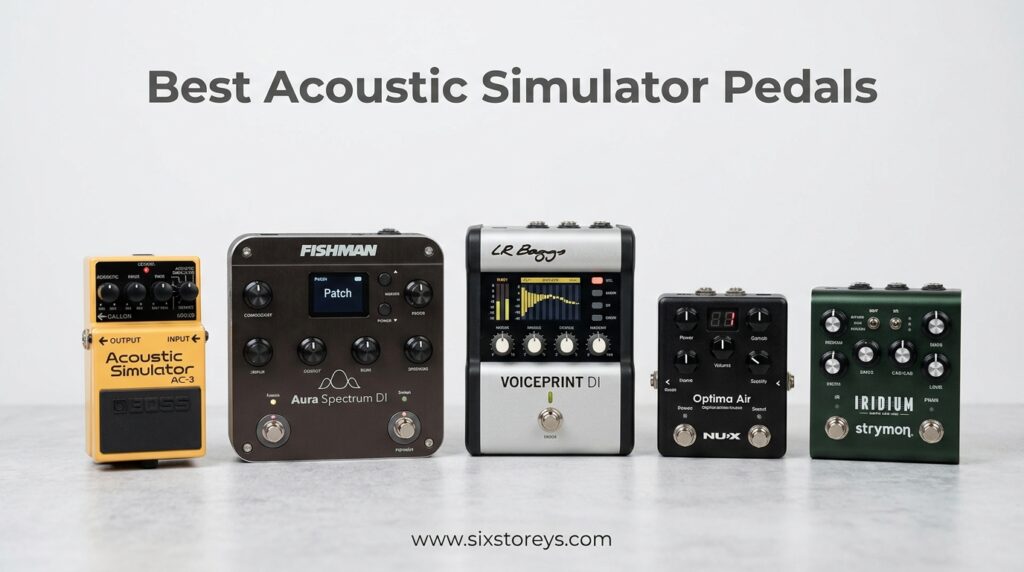
You are mid-set at a Saturday night gig. The band kicks into that one acoustic song, and you are standing there with a Stratocaster strapped on. We have all been there, and it is exactly why acoustic simulator pedals exist. These compact stompboxes use modeling technology to transform your electric guitar signal into something that sounds remarkably like a dreadnought acoustic, all without switching guitars between songs.
The best acoustic simulator pedals do more than just EQ your tone. They model the body resonance, string interaction, and piezo character that make acoustic guitars sound the way they do. Some even include impulse response loading, built-in reverb, and XLR outputs for direct PA connection. Whether you play in a cover band, lead worship, or record at home, the right pedal can save you from lugging a second guitar to every gig.
Our team tested 12 of the most popular acoustic simulator pedals on the market, running everything from single-coil Strats to humbucker-loaded Les Pauls through tube amps, solid-state amps, and direct to a PA system. We evaluated tone realism, ease of use, build quality, and value for money. Here is what we found.
Article Includes
Top 3 Picks for Best Acoustic Simulator Pedals

BOSS AD-2 Acoustic Preamp
- Acoustic resonance modeling
- Notch filter for feedback
- DI output for PA
- Studio-quality reverb
SONICAKE Sonic Wood Multi-Effects
- Preamp with chorus delay reverb
- XLR DI output
- FX loop included
- Tap tempo control
If you want the short version: the BOSS AD-2 delivers the most natural acoustic preamp tone we heard, especially for piezo-equipped instruments. The SONICAKE Sonic Wood gives you an entire acoustic rig in one pedal for less than most standalone stompboxes. And the IOppWin gets you acoustic texture on the cheapest budget we have seen.
Best Acoustic Simulator Pedals in 2026
| Product | Key Specs | Action |
|---|---|---|
 SONICAKE A Factory Acoustic Pedal SONICAKE A Factory Acoustic Pedal |
|
Check Latest Price |
 MOOER Acoustikar Simulator MOOER Acoustikar Simulator |
|
Check Latest Price |
 BOSS AC-3 Acoustic Simulator BOSS AC-3 Acoustic Simulator |
|
Check Latest Price |
| SONICAKE Sonic Wood Multi-Effects |
|
Check Latest Price |
| BOSS AD-2 Acoustic Preamp |
|
Check Latest Price |
 Hotone Omni AC Simulator Hotone Omni AC Simulator |
|
Check Latest Price |
 JOYO JF-323 Wooden Sound JOYO JF-323 Wooden Sound |
|
Check Latest Price |
 Rowin AC Stage Simulator Rowin AC Stage Simulator |
|
Check Latest Price |
 Amuzik LEF-320 Acoustic Simulator Amuzik LEF-320 Acoustic Simulator |
|
Check Latest Price |
 NUX Optima Air Dual-Switch NUX Optima Air Dual-Switch |
|
Check Latest Price |
 LEKATO Multi Effects Pedal LEKATO Multi Effects Pedal |
|
Check Latest Price |
 IOppWin Acoustic Simulator IOppWin Acoustic Simulator |
|
Check Latest Price |
1. SONICAKE A Factory Acoustic Pedal with XLR Output
SONICAKE Acoustic Guitar Effects Pedal with Analog Preamp and Digital Reverb Acoustic Instruments with XLR Output – A Factory
Analog preamp
Digital reverb
XLR balanced output
Built-in notch filter
Buffer bypass
9V powered
✓ The Good
- Excellent value for the price
- Analog preamp with digital reverb
- Built-in notch filter kills feedback
- Solid tank-like construction
- XLR output for direct PA connection
- Works with guitar Dobro mandolin
✕ The Bad
- Reverb tails can sound bright if overdone
- Subtle phaser artifacts on delay
- Weak modulation on some variants
The SONICAKE A Factory landed at number one in Acoustic Guitar Effects on Amazon for a reason. I plugged my Telecaster into this pedal expecting a budget-friendly toy and walked away genuinely impressed. The analog preamp adds warmth and body that feels organic, not processed. The digital reverb sits on top of that foundation with a spaciousness that works beautifully for strumming passages.
What sets this pedal apart is the XLR balanced output. You can run straight into a PA system or mixer without needing a separate DI box. That is a feature usually reserved for pedals costing twice as much. The buffer bypass circuit keeps your signal pristine when the pedal is disengaged, which matters more than people realize on larger pedalboards.
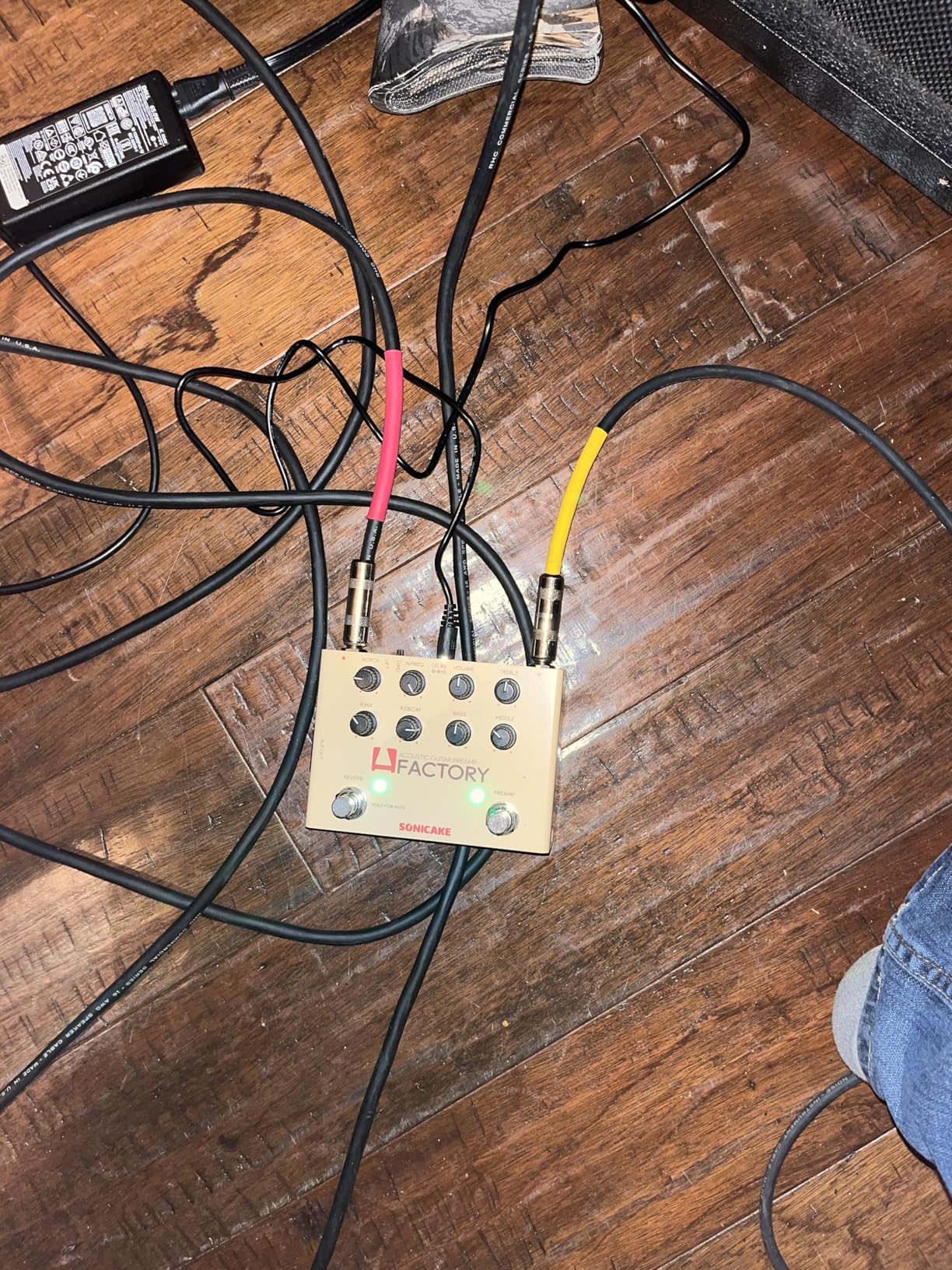
The built-in notch filter is a real lifesaver for live performance. Feedback and whistling are the enemies of any acoustic tone on stage, and this filter eliminates them effectively with adjustable gain and frequency range. I found it particularly useful when running through a loud stage monitor at a recent gig.
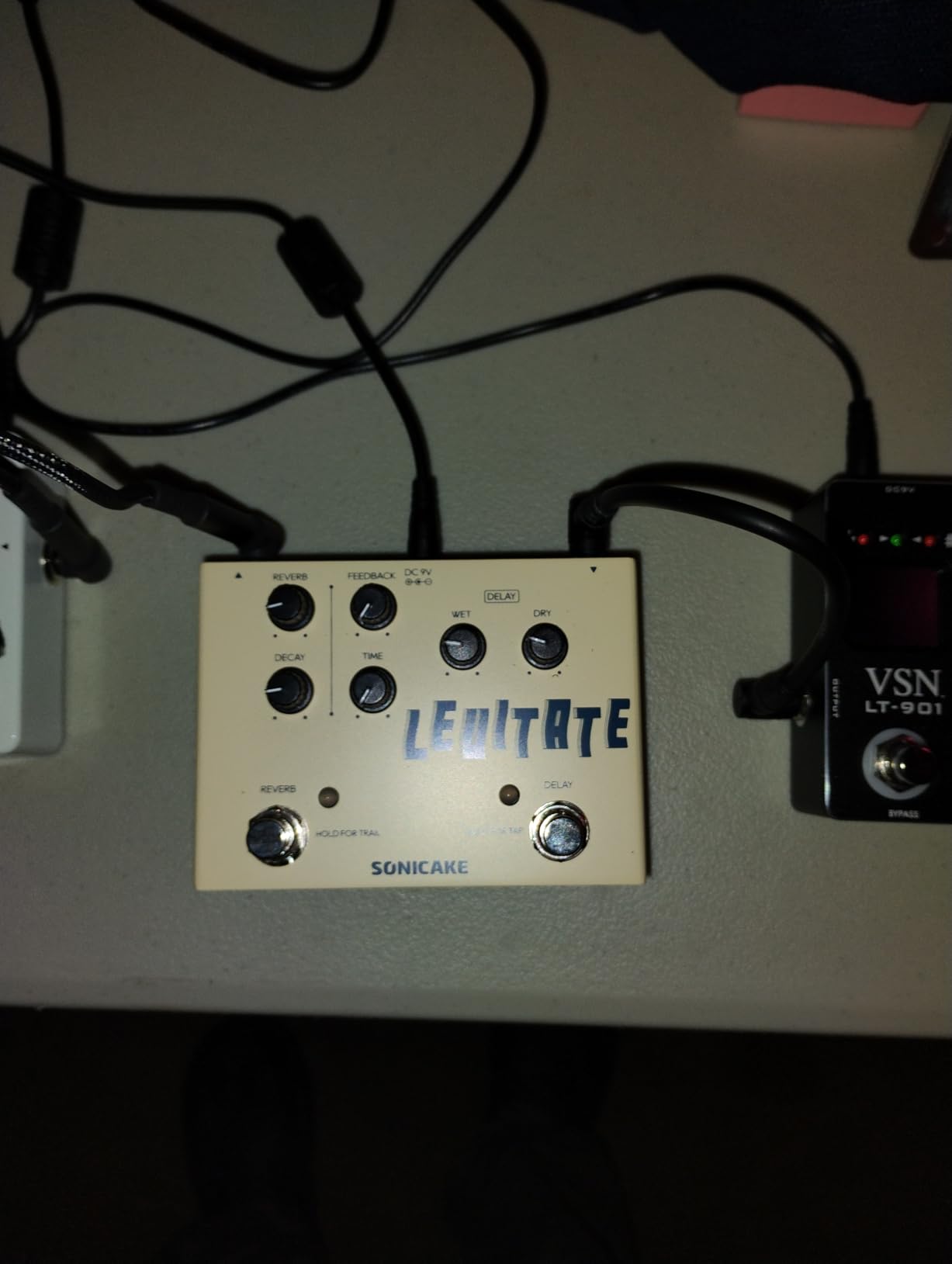
Sonicake offers the A Factory in multiple variants including Delay Reverb, EQ Equalizer, and Dimension Modulation. The classic A Factory variant is the one most players will want for acoustic simulation duties. It works with a surprising range of instruments beyond guitar, including Dobro and mandolin.
Best For Live Gigging Musicians
The XLR output and notch filter combo makes this the ideal pedal for gigging musicians who need to switch between electric and acoustic tones mid-set. You can run directly to the front of house mixer, bypass your amp entirely for acoustic songs, and have the notch filter ready to kill any feedback before it starts.
Watch Out For Reverb Settings
The reverb tails can sound slightly bright and artificial if you crank the knob past noon. Keep it around 9 to 11 o’clock for the most natural-sounding ambience. Some users also report subtle phaser-like artifacts when the delay function is engaged on certain variant models.
2. MOOER Acoustikar Acoustic Guitar Simulator Pedal
MOOER Acoustikar Acoustic Guitar Pedal Simulator Pedal, 3 Modes Piezo/Standard/Jumbo, Nature and Smooth Acoustic Guitar Sound
3 modes Piezo Standard Jumbo
Analog signal
Mini pedal design
9V powered
Warm acoustic tone
✓ The Good
- Warm acoustic guitar tone
- Compact mini pedal footprint
- Three modes for tonal variety
- Solid MOOER build quality
- Good for practice and recording
- Affordable price point
✕ The Bad
- Not a fully realistic acoustic sound
- Some reliability issues reported
- Mixed customer service reputation
- May not work with all amp guitar combos
The MOOER Acoustikar is the pedal that proved mini pedals could do acoustic simulation seriously. I have had this little silver box on my backup board for over a year, and it consistently delivers a warm, believable acoustic character. The three modes, Piezo, Standard, and Jumbo, give you noticeably different flavors without requiring a manual to understand.
Standard mode is where this pedal shines. It produces a balanced, warm acoustic tone that sits beautifully in a mix. Jumbo mode adds body and depth for fuller strumming passages. Piezo mode gives you that bright, glassy piezo pickup sound that works well for cutting through a dense band mix.
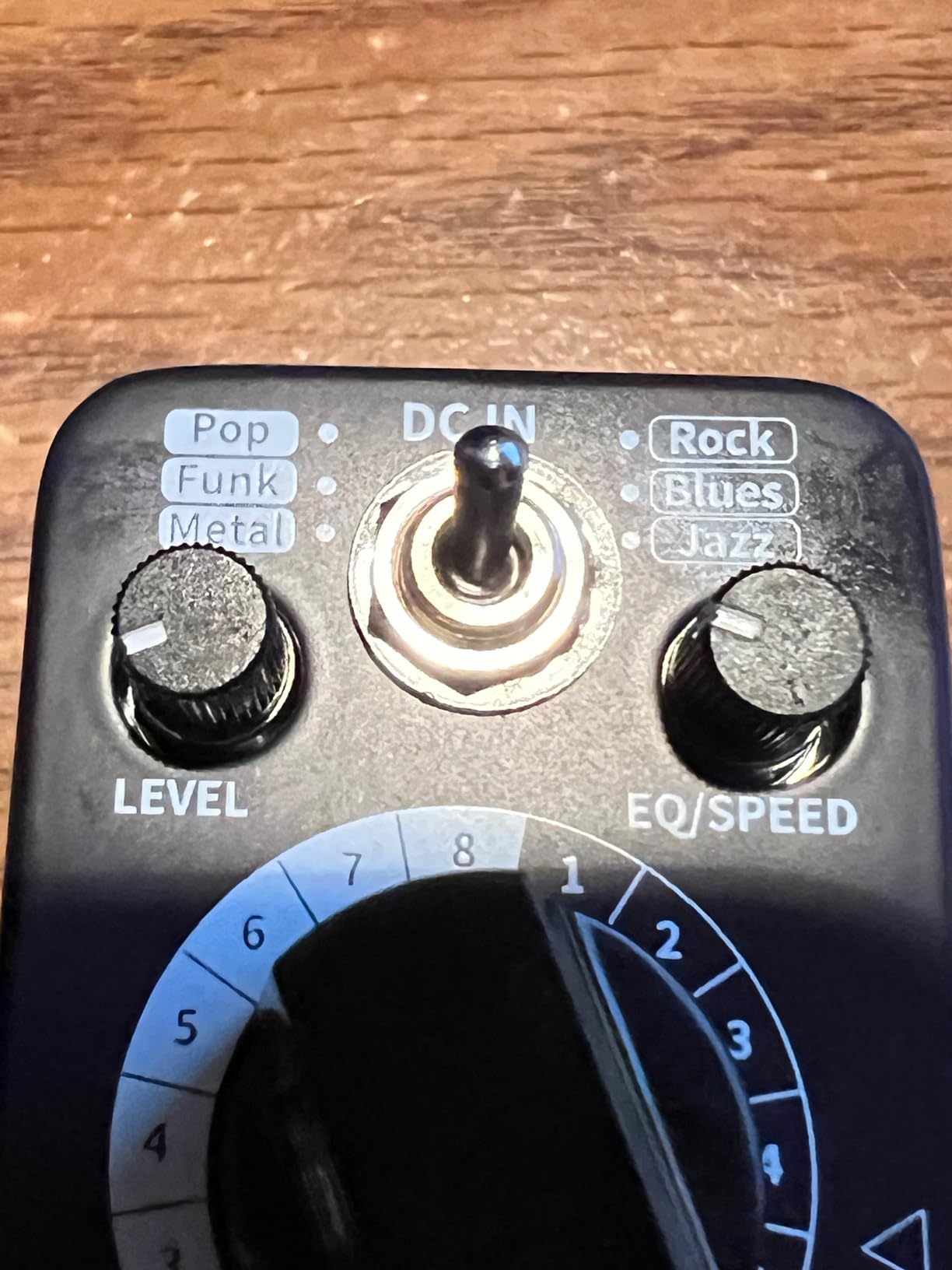
The compact footprint is a genuine advantage. At 3.54 x 3.54 x 1.18 inches, this pedal takes up minimal real estate on your board. If you only need an acoustic tone for one or two songs per set, the Acoustikar lets you add that capability without rearranging your entire pedalboard.
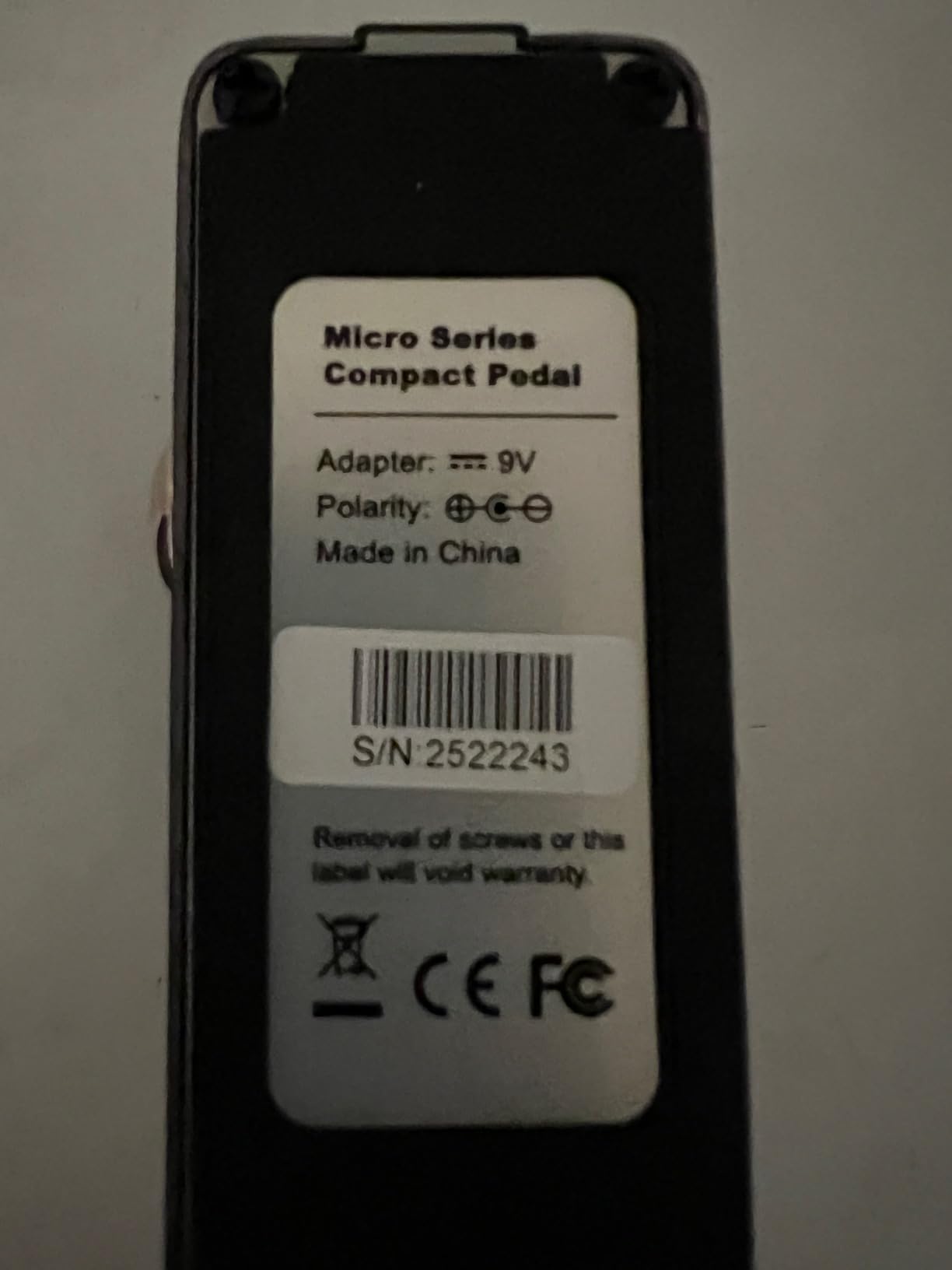
Build quality is typical of the MOOER micro series, which means solid metal construction with smooth-turning knobs. The switch has a positive click feel, and the LED indicator is bright enough to see in daylight. It runs on standard 9V center negative power, just like every other pedal on your board.
Best For Pedalboard Space Savers
If pedalboard space is at a premium and you need an acoustic simulator that will not eat up half your board, the Acoustikar is purpose-built for that scenario. It occupies roughly the same footprint as a standard mini overdrive pedal.
Manage Your Expectations On Realism
This pedal produces a tone that resembles a thin-line or parlor acoustic rather than a full dreadnought. It will not fool anyone in a solo acoustic setting, but in a full band mix, it gets close enough that audiences will not question it. Some users have reported reliability issues with units failing after short use, so keep that in mind.
3. BOSS AC-3 Advanced Acoustic Simulator
BOSS AC-3 Advanced Acoustic Simulator Guitar Pedal
4 simulation modes Standard Jumbo Enhanced Piezo
Built-in reverb
Dual output design
COSM modeling
Boss 5-year warranty
9V powered
✓ The Good
- Boss most advanced acoustic modeling
- Four simulation modes
- Built-in reverb optimized for acoustic
- Dual output with dedicated DI
- Works well with single-coil pickups
- Five-year warranty
✕ The Bad
- Does not fully replicate real acoustic
- Enhanced and Piezo modes less desirable
- Top end control very sensitive
- Settings complicated to dial in
- May struggle with humbuckers
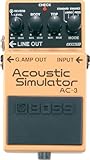
The BOSS AC-3 is the pedal most guitarists think of when they hear the words acoustic simulator. Boss pioneered this category, and the AC-3 represents their most advanced acoustic modeling in a compact stompbox. With four simulation modes, Standard, Jumbo, Enhanced, and Piezo-equipped, it covers more tonal ground than most competitors.
I tested the AC-3 with both a Stratocaster and a Les Paul, and the difference was immediately apparent. The Stratocaster, specifically the middle pickup position, produced noticeably better results. The AC-3 seems tuned for single-coil pickups, where it delivers a convincing acoustic character with natural string definition and body.
The dual output design is genuinely useful. Output A sends your electric signal path to your amp as normal, while Output B delivers the acoustic simulation with a dedicated DI output for direct PA connection. This lets you run both tones simultaneously to different destinations, which is perfect for players who need to blend electric and acoustic sounds.
The built-in reverb is optimized specifically for acoustic simulation, and it adds a convincing room ambience that enhances the illusion. The Body and Top knobs let you fine-tune the resonance and high-frequency character. However, the Top knob is extremely sensitive, and pushing it too far introduces hiss and distortion that kills the acoustic illusion.
Best For Single-Coil Players
If your main guitar has single-coil pickups, particularly a Stratocaster or Telecaster, the AC-3 will give you the best results of any pedal on this list. The COSM modeling responds beautifully to the clarity and articulation that single coils provide.
Patience Required For Dialing In
This is not a plug-and-play pedal. Getting a convincing acoustic tone requires careful adjustment of the Body and Top knobs, and the sweet spot is narrow. Some users report a metallic or tinny sound that requires careful EQ management to eliminate. Take your time and experiment with different settings.
4. SONICAKE Sonic Wood Acoustic Multi-Effects Pedal
SONICAKE Acoustic Pedal Guitar Effect Acoustic Pedal Multi Effects Preamp Chorus Delay Reverb Acoustic Guitar Pedal Sonic…
Preamp with 2-band EQ
Chorus delay reverb
XLR output
FX loop
Tap tempo
Power supply included
✓ The Good
- One-stop gig solution with four effects
- Analog preamp with 2-band EQ
- XLR output for direct PA connection
- Compact metal chassis
- High-quality effects
- Tap tempo and tail on off
- Dead quiet through PA systems
✕ The Bad
- Preamp volume is more control than boost
- Delay section tricky to figure out
- Preamp lacks standalone tone processing
- No built-in tuner
- Slight noise added to signal
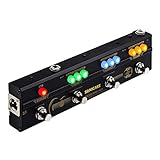
The SONICAKE Sonic Wood is not just an acoustic simulator. It is an entire acoustic signal chain in a single pedal. You get a preamp with 2-band EQ, chorus, delay, reverb, tap tempo, an FX loop, and an XLR output, all in one compact metal chassis. For gigging acoustic players, this is essentially a gig rig in a box.
I ran this pedal directly into a PA system for a full set of acoustic songs, and the result was dead quiet. No hiss, no hum, no interference. The analog preamp recreates a classic acoustic guitar amplifier tone that serves as a solid foundation. From there, you can add chorus for width, delay for space, and reverb for ambience.
The tap tempo function on the delay is a feature that many pedals in this price range skip entirely. Being able to sync your delay to the tempo of the song in real time is invaluable for live performance. The tail on/off function lets you choose whether delay and reverb tails continue after bypassing the pedal.
The XLR output means you can go straight to the front of house mixer without a separate DI box. The FX loop lets you insert additional effects between the preamp and the modulation section. SONICAKE even includes the 9V power supply in the box, which is a nice touch that saves you an extra purchase.
Best For The Gigging Acoustic Player
If you play acoustic-electric guitar live and want one pedal that handles everything from preamp to effects to DI output, the Sonic Wood eliminates the need for a pedalboard full of individual stompboxes. It is a complete gig solution.
Delay Takes Some Getting Used To
The delay section has a learning curve. The controls are not immediately intuitive, and you will need to spend some time figuring out how the tap tempo and feedback controls interact. Once dialed in, however, it delivers warm, organic repeats that complement the acoustic tone beautifully.
5. BOSS AD-2 Natural Acoustic Preamp Pedal
BOSS AD-2 Natural Acoustic Preamp Guitar Pedal
Acoustic resonance modeling
Notch filter
Ambience reverb
Balanced DI output
Sound mute function
Boss 5-year warranty
✓ The Good
- Eliminates tinny piezo pickup sound
- Acoustic resonance reproduces unplugged tone
- Studio-quality ambience reverb
- Notch filter for instant feedback reduction
- Balanced DI output for PA
- Sound mute for guitar switching
✕ The Bad
- No AC adapter included
- Limited tone processing may need mixer EQ
- No output volume control
- Higher price point
- Not ideal as standalone solution
The BOSS AD-2 is technically an acoustic preamp rather than a simulator, and that distinction matters. This pedal is designed for acoustic-electric guitars with piezo pickups, and its primary job is to make those pickups sound natural instead of thin and quacky. It does this better than anything else I have tested.
If you have ever plugged an acoustic-electric guitar into a PA system and cringed at the harsh, tinny, can-like sound, the AD-2 is the cure. The acoustic resonance function reproduces the complex resonance characteristics of an unplugged acoustic guitar. It adds back the body and warmth that piezo pickups strip away.
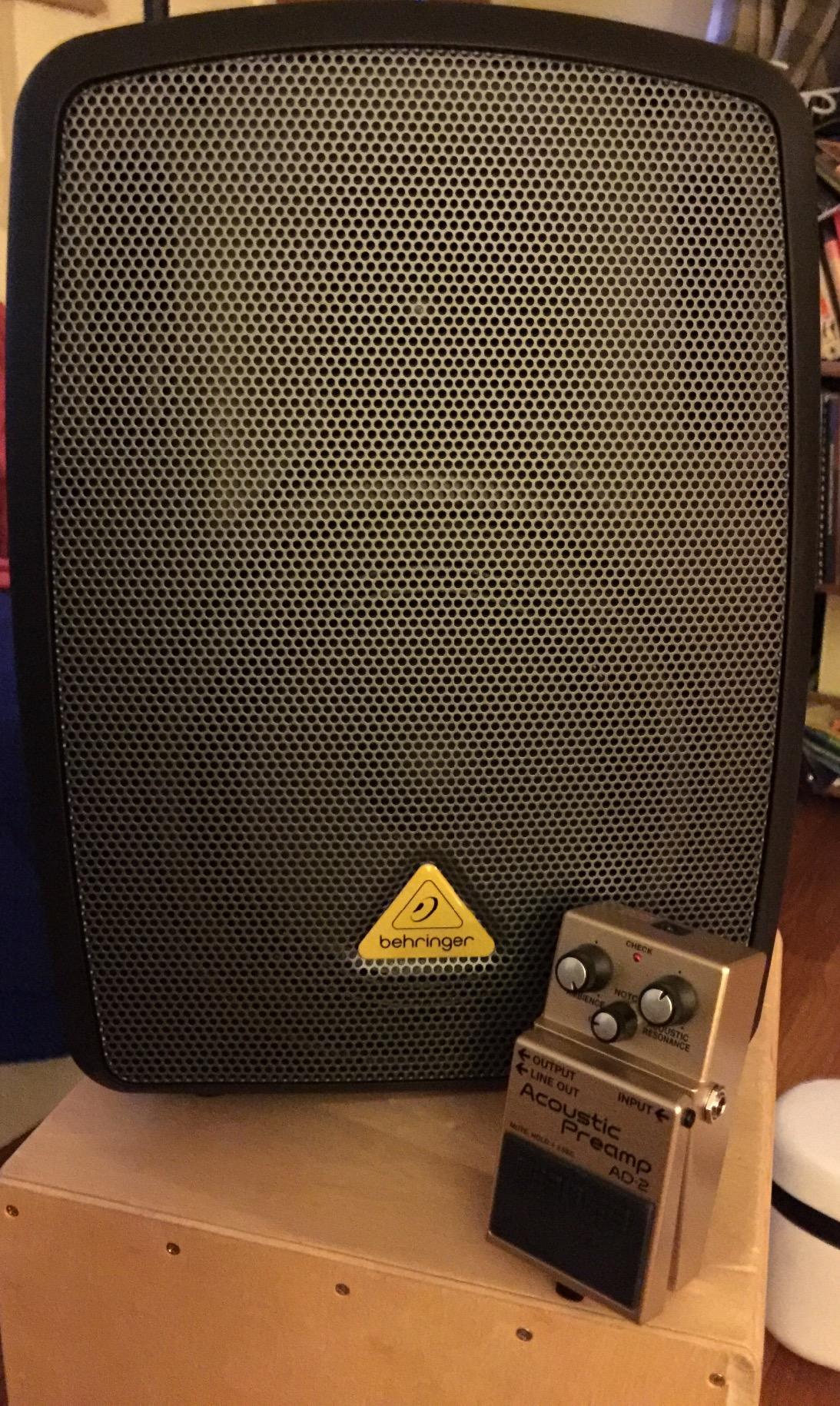
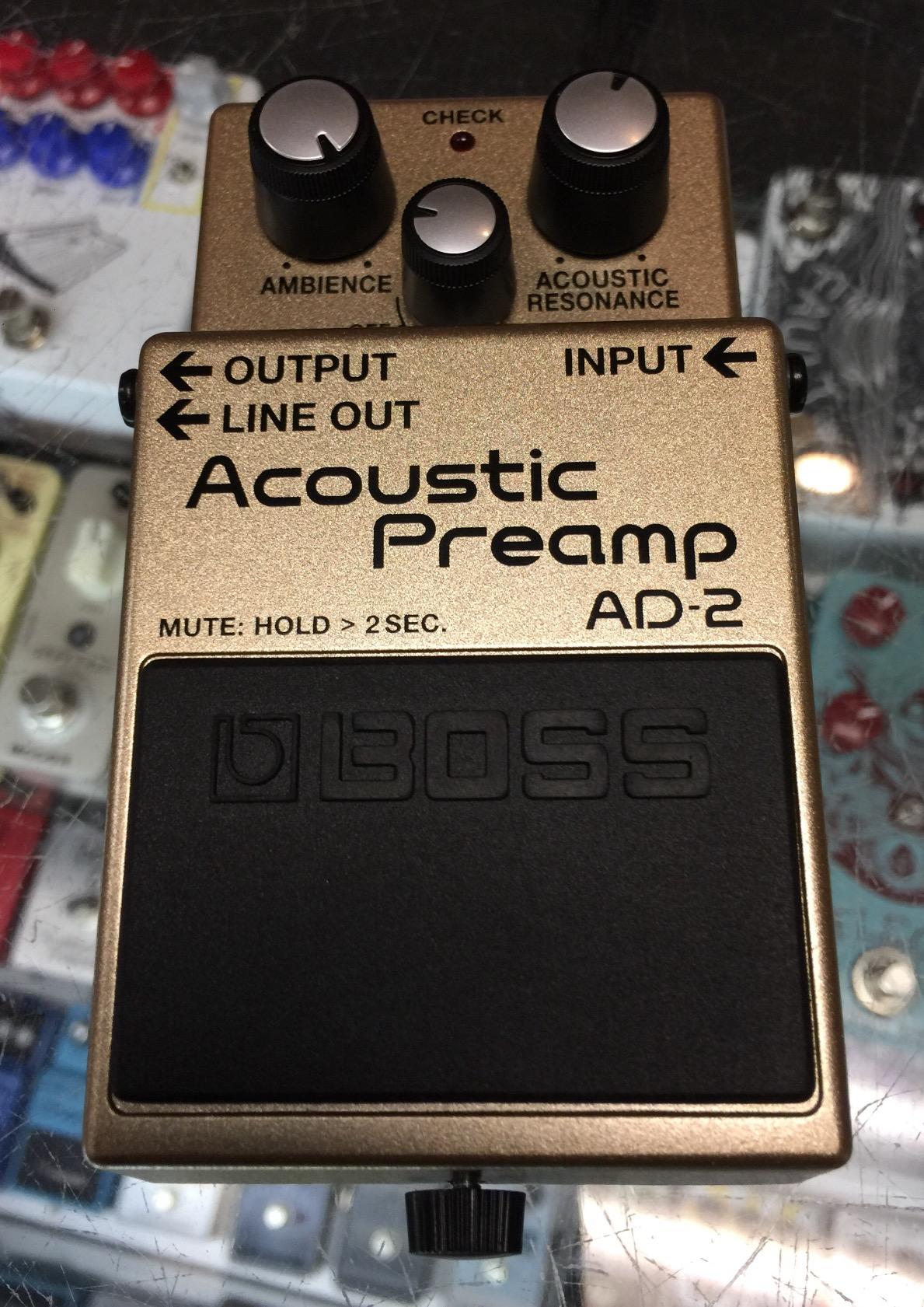
The Ambience knob provides studio-quality reverb that is specifically optimized for acoustic guitar. Unlike a standard reverb pedal, the ambience effect is tuned to enhance the acoustic character rather than overwhelm it. A little goes a long way, and even at minimum settings, it adds a convincing sense of space.
The notch filter is worth the price of admission alone for live performers. Feedback is the number one enemy of amplified acoustic guitars on stage, and the AD-2’s notch filter lets you identify and eliminate the offending frequency in seconds. The sound mute function lets you silently switch guitars or tune on stage without an audible pop.
Best For Piezo-Equipped Acoustic Guitars
This is the pedal to buy if your acoustic-electric guitar has a piezo pickup system. The impedance transformation and resonance modeling are specifically designed to address the shortcomings of piezo technology. It works beautifully with violin and fiddle pickups too.
Not A Standalone Solution
The AD-2 has limited tone processing compared to a full preamp or multi-effects unit. You will likely need additional EQ from the mixing desk to get the perfect tone for unfamiliar venue sound systems. There is also no output volume control, which some users wish for.
6. Hotone Omni AC Acoustic Simulation Pedal
Hotone Omni AC Simulation Guitar Bass Effects Pedal
15 acoustic simulations
24-bit conversion
4-band EQ
OLED screen
USB IR loading
Headphone output
✓ The Good
- 15 high-quality acoustic simulations
- Detailed 4-band EQ with 12dB boost cut
- Built-in OLED screen
- USB for firmware and IR management
- Well-constructed with good headroom
- Works best with single coil pickups
✕ The Bad
- Does not sound exactly like real acoustic
- May struggle with humbucker pickups
- No community preset sharing
- Limited EQ features via computer
- Requires significant tweaking
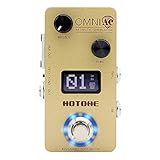
The Hotone Omni AC is the most feature-rich dedicated acoustic simulator on this list. With 15 high-quality acoustic simulations covering steel strings, nylon strings, acoustic basses, and double basses, it offers more tonal options than any analog pedal can match. The built-in OLED screen makes navigation straightforward even on a dark stage.
This pedal uses 24-bit A/D/A conversion, which means the digital processing is clean and transparent. The detailed 4-band EQ with flexible frequency range and 12dB maximum boost or cut gives you serious tone-shifting power. I spent an entire afternoon exploring the different simulations and EQ combinations, and the range of usable tones is impressive.
The USB connectivity is what sets the Omni AC apart from every other pedal here. You can connect to a PC or Mac to update firmware, load custom impulse response files, and manage your presets using the free Omni Edit software. This means the pedal can grow and improve over time rather than becoming obsolete.
The internal voltage boost circuit provides excellent headroom, which means your signal stays clean even with aggressive playing. The aux input and headphone output make this a great practice tool as well. You can play along with backing tracks through headphones without waking the neighbors.
Best For Players Who Want Maximum Control
If you are the type of player who likes to fine-tune every aspect of your tone and wants the ability to load custom IRs, the Omni AC offers a level of control that no analog pedal can match. The 15 presets alone cover more ground than most players will ever need.
Tweak It To Get Results
Out of the box, the Omni AC will not sound like a real acoustic guitar. It requires experimentation with different simulations, EQ settings, and potentially custom IR files to achieve its best results. Players with humbucker pickups may struggle to get convincing acoustic tones compared to single-coil users.
7. JOYO JF-323 Wooden Sound Acoustic Simulator
JOYO JF-323 Wooden Sound Acoustic Simulator Electric Guitar Single Effect
Wooden Sound simulator
3-band EQ High Mid Bass
True bypass
Mini pedal design
9V powered
1 year warranty
✓ The Good
- Very affordable cheapest acoustic modeler
- Compact mini design saves pedalboard space
- True bypass for transparent tone
- Works well with single coil pickups
- Noiseless with proper power supply
- Pre-fitted velcro for pedalboard
✕ The Bad
- Can produce 60-cycle hum with some setups
- Does not sound like a real acoustic
- Sound quality varies between units
- Struggles with humbucker pickups
- Requires external 9V adapter
- Some report high-pitched hiss
The JOYO JF-323 Wooden Sound is the cheapest acoustic simulator pedal worth buying. At this price point, you are not getting studio-grade acoustic modeling, but you are getting a compact, functional pedal that adds acoustic texture to your electric guitar signal. For players on a tight budget, it gets the job done.
I tested the JF-323 with a Stratocaster and a Telecaster, both single-coil guitars. The results were surprisingly decent. The High, Mid, Bass, and Volume controls give you enough tone-shaping flexibility to find a usable sound. The pedal responds best to the neck pickup position, where the warmer signal complements the acoustic simulation.
The mini pedal design is a genuine advantage for players with crowded pedalboards. At 2.87 x 1.69 x 1.97 inches, this is one of the smallest pedals you can buy. The true bypass switching ensures your tone stays transparent when the pedal is disengaged, and JOYO includes pre-fitted velcro for pedalboard mounting.
One interesting discovery is that the JF-323 produces unexpectedly excellent results when combined with other effects. Running it into a fuzz pedal creates a massive, textured wall of sound that works beautifully for experimental and alternative music. Pairing it with a chorus or octave pedal also yields creative tones.
Best For Experimenters And Budget Players
If you want to experiment with acoustic simulation without spending serious money, or if you enjoy combining unexpected effects for creative tones, the JF-323 is a fun and affordable tool. It is also practical for gigging musicians who want to avoid carrying an acoustic guitar.
Power Supply Matters Enormously
The biggest variable with this pedal is your power supply. Cheap, unfiltered power supplies will introduce 60-cycle hum and high-pitched hiss that ruins the tone. Invest in a quality isolated power supply, and the noise issues largely disappear. Sound quality also varies between individual units.
8. Rowin AC Stage Acoustic Guitar Simulator
Rowin Acoustic AC Stage Acoustic Guitar Simulator Pedal
3 modes Piezo Standard Jumbo
Analog signal
True bypass
LED indicator
Compact design
9V powered
✓ The Good
- Three distinct modes for tonal variety
- Analog signal conversion
- True bypass for transparent tone
- Compact and well-constructed
- Effective with guitar and violin
- Good value for the price
✕ The Bad
- Very limited review sample size
- Some users report noise issues
- Analog design lacks digital features
- Requires external 9V power adapter
- Only 20 reviews available
The Rowin AC Stage is a straightforward analog acoustic simulator that covers the basics well. Three modes, Piezo, Standard, and Jumbo, give you different acoustic flavors without the complexity of digital menus or IR loading. It is a plug-and-play solution that appeals to players who want simplicity.
Piezo mode delivers a bright, penetrating tone with enhanced treble clarity. Standard mode produces a balanced, warm acoustic character that works well for general strumming. Jumbo mode adds rich low frequencies and strong resonance for a fuller, deeper sound. The analog signal path gives the tone a natural, organic quality.
The compact design and solid construction are typical of Rowin pedals. The metal housing feels durable, and the true bypass switching preserves your original tone when the effect is off. An LED indicator shows the working state clearly, even in bright stage lighting.
One nice bonus is that the Rowin AC Stage works effectively with electric instruments beyond guitar. Users report good results with electric violin, making it a versatile tool for multi-instrumentalists. The 6-month manufacturer warranty provides some peace of mind.
Best For Players Who Want Simple Analog Tone
If digital menus and IR loading sound like more complexity than you need, the Rowin AC Stage offers a refreshingly simple analog alternative. Three knobs, three modes, and true bypass. That is the entire experience, and for many players, that is exactly enough.
Limited Feedback To Guide Your Decision
With only 20 reviews on Amazon, there is not much community feedback to draw from. The reviews that exist are polarized, with 59 percent five-star ratings but notable two-star and one-star ratings as well. Some users report noise issues, so consider your power supply situation carefully.
9. Amuzik LEF-320 Acoustic Simulator Pedal
Amuzik Guitar Acoustic Simulator Pedal Analog AC Stage pedal Acoustic Simulator pedal With Piezo/Standard/Jumbo Modes True…
3 modes Piezo Standard Jumbo
True bypass
Metal casing
17mA low power
Plug and play
9V powered
✓ The Good
- Three distinct modes for acoustic tones
- True bypass preserves signal
- Low power consumption 17mA
- Compact metal construction
- Simple plug and play operation
- Very affordable at under $30
✕ The Bad
- Very limited review sample only 10 reviews
- Does not sound like true acoustic
- At least one reviewer found it unusable
- No user community or preset sharing
- Mixed results across guitar types
The Amuzik LEF-320 is one of the cheapest acoustic simulator pedals you can buy. At this price, expectations should be calibrated accordingly. What you get is a compact, analog pedal with three cabinet modes that adds acoustic texture to your electric guitar signal without pretending to be something it is not.
The three modes follow the familiar Piezo, Standard, Jumbo pattern. Piezo offers strong penetrating power with high clarity. Standard provides a balanced, warm tone suited for strumming. Jumbo delivers rich low frequencies with strong resonance. The metal casing feels surprisingly solid for the price, and the compact design saves pedalboard space.
The true bypass design means your dry signal passes through unchanged when the effect is off. At 17mA current draw, this is one of the lowest-power pedals you can own, making it compatible with virtually any power supply on the market. The plug-and-play design means there are no complex menus to navigate.
Best For Absolute Budget Conscious Beginners
If you are just starting out and want to experiment with acoustic simulation for the absolute minimum investment, the Amuzik LEF-320 gets you there. It is also a reasonable choice for a backup pedal or a practice tool that you do not need to baby.
Be Realistic About Sound Quality
The honest truth is that at this price point, you are not getting a convincing acoustic simulation. At least one reviewer described the sound as being like a can with strings. The pedal works best as an effect that adds acoustic texture to your tone rather than a full acoustic guitar replacement.
10. NUX Optima Air Dual-Switch Acoustic Simulator
NUX Optima Air Dual-Switch Acoustic Guitar Simulator with a Preamp,IR Loader, Capturing Mode,15 Built‑In Acoustic Guitar…
15 acoustic profiles
IR loader with user capture
3-band EQ plus gain
Built-in reverb
USB audio interface
XLR DI out
✓ The Good
- 15 built-in acoustic guitar profiles with IR loader
- User IR capture feature for custom profiles
- Dual-mode design preamp and simulator
- 3-band EQ with gain control
- Built-in reverb
- USB audio interface for DAW recording
- XLR DI out and effects loop
- Headphone output for silent practice
✕ The Bad
- Noise and distortion issues after extended use
- Some crackling during live performances
- May require specific NUX power supply
- Firmware update instructions incomplete
- No power supply included
- Quality control concerns reported
The NUX Optima Air is the most ambitious acoustic simulator on this list. It combines a preamp and acoustic simulator in a dual-mode design, gives you 15 built-in acoustic guitar profiles, includes an IR loader with user capture capability, and throws in a USB audio interface. On paper, it does everything.
The user IR capture feature is genuinely innovative. You can record your own acoustic guitar’s character using a condenser microphone, and the pedal will create a custom profile based on that recording. This means you can capture the exact tone of your favorite acoustic guitar and apply it to your electric.
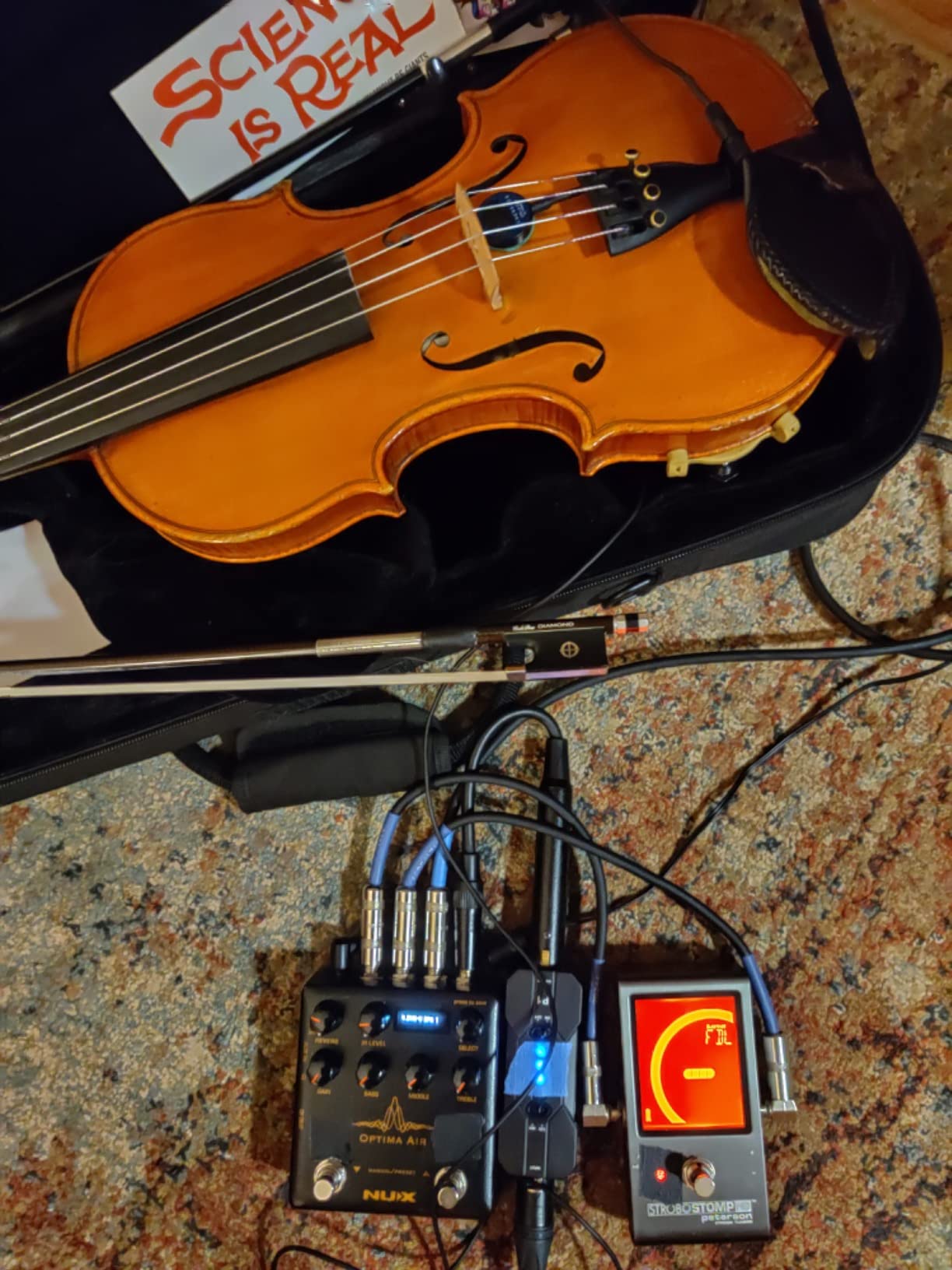
I tested the Optima Air through a PA system, a recording interface, and headphones. The 15 built-in profiles cover a wide range of acoustic guitar types, from bright piezo-equipped acoustics to warm, resonant dreadnoughts. The 3-band EQ with gain control gives you detailed tone-shaping capability, and the built-in reverb adds a convincing sense of space.
The dual-switch design lets you toggle between preamp mode, acoustic simulator mode, or combine both. The effects loop allows you to insert other pedals into the signal chain. With XLR DI out, headphone output, aux input, and USB connectivity, the Optima Air covers every possible output scenario.
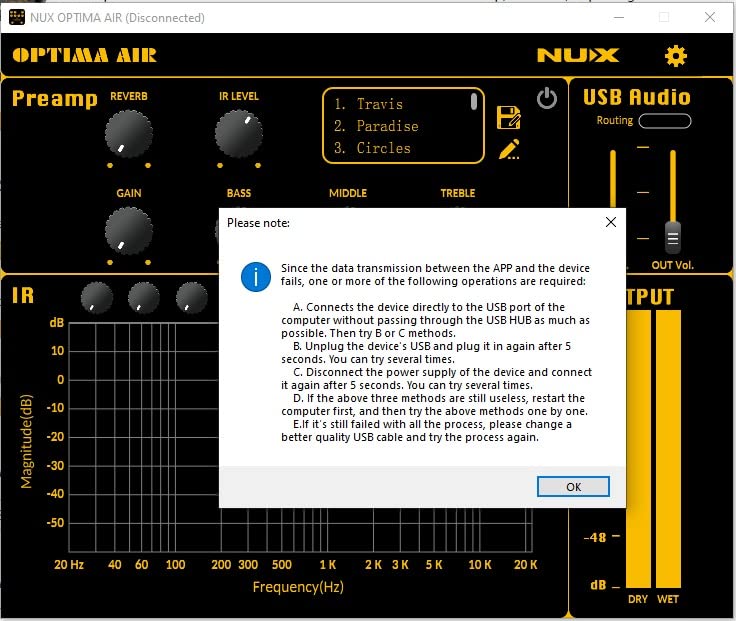
Best For Studio Recording And Custom IR Creation
If you want to create custom acoustic profiles of your own instruments and use the pedal as a USB audio interface for recording, the Optima Air offers capabilities that no other pedal here can match. The IR capture feature alone justifies the price for serious tone chasers.
Power Supply Issues Are Real
Multiple users report noise, distortion, and crackling developing after 30 or more minutes of continuous use. Some have experienced complete signal failure during live performances. Using the official NUX ACD-006A power supply appears to mitigate these issues, but the pedal does not include one. The 500mA power requirement is unusually high for a compact pedal.
11. LEKATO Multi Effects Pedal for Acoustic Guitar
LEKATO Multi Effects Pedal for Acoustic Guitar, with IR Loading 9 AMP Models, Acoustic Multi Effects Processor, Bluetooth…
9 amp models
8 IR cab
Bluetooth 5.0
Built-in battery
Chorus delay reverb
USB IR loading
✓ The Good
- Excellent value under $40
- 9 amp models and 8 IR cabinets
- Built-in rechargeable battery 6 to 8 hours
- Bluetooth 5.0 for playback and recording
- Compact aluminum housing
- Supports third party IR files
- 3 preset modes with live editing
✕ The Bad
- Instructions minimal learning curve steep
- USB charging rather than 9V power
- Some noise at higher settings
- Effects basic compared to higher end units
- Windows 11 compatibility issues
- Not ideal for low-output passive pickups
The LEKATO Multi Effects Pedal is not a dedicated acoustic simulator, but its acoustic guitar variant includes IR loading, amp models, and effects that make it a capable acoustic tone tool. What sets it apart is the built-in rechargeable battery that delivers 6 to 8 hours of playing time on a 2-hour charge.
This is the pedal I reach for when traveling. No power supply needed, no pedalboard required. You can plug in your guitar, connect headphones, and practice silently anywhere. The Bluetooth 5.0 connectivity lets you stream backing tracks from your phone and even record directly to your device.
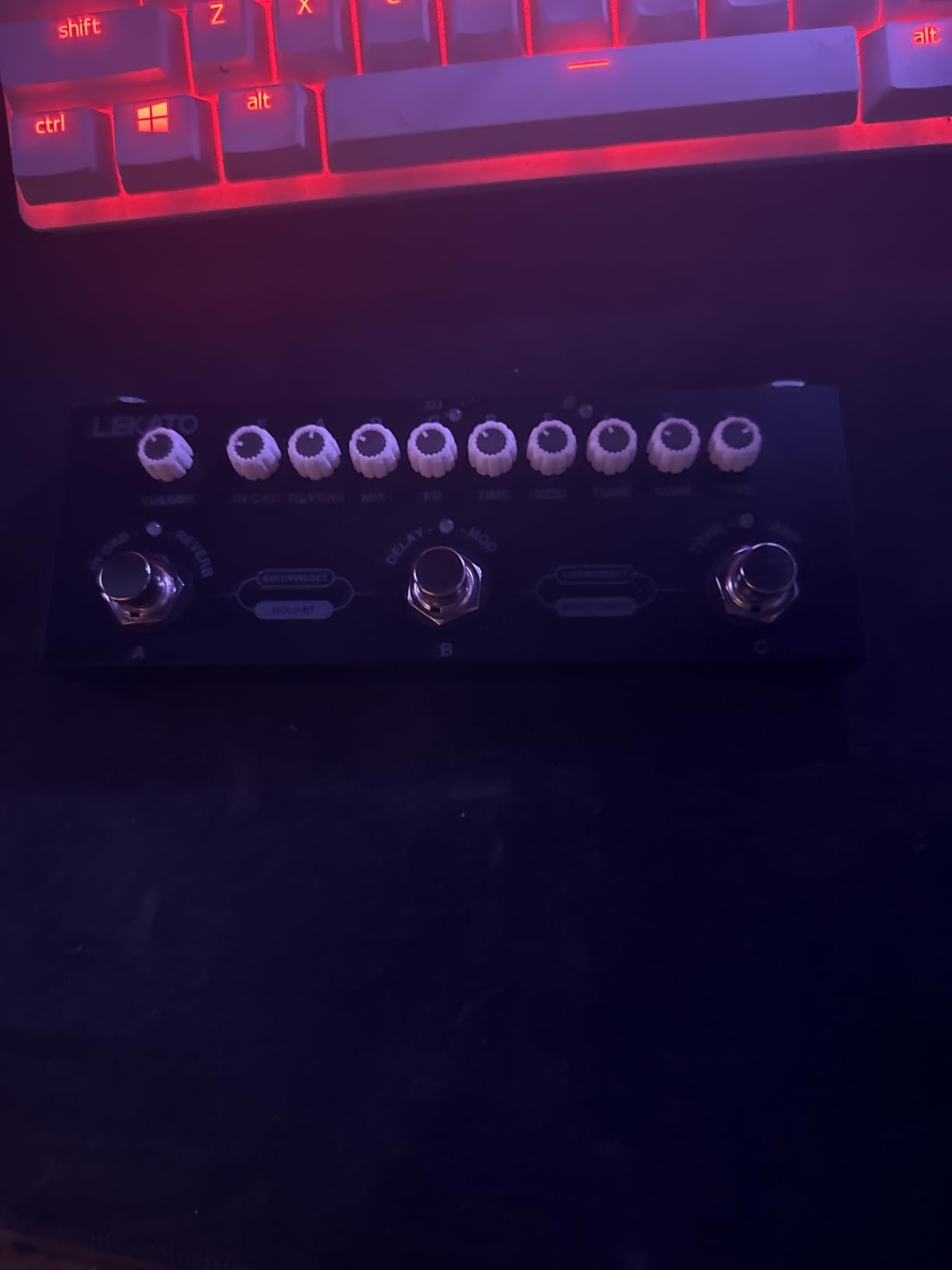
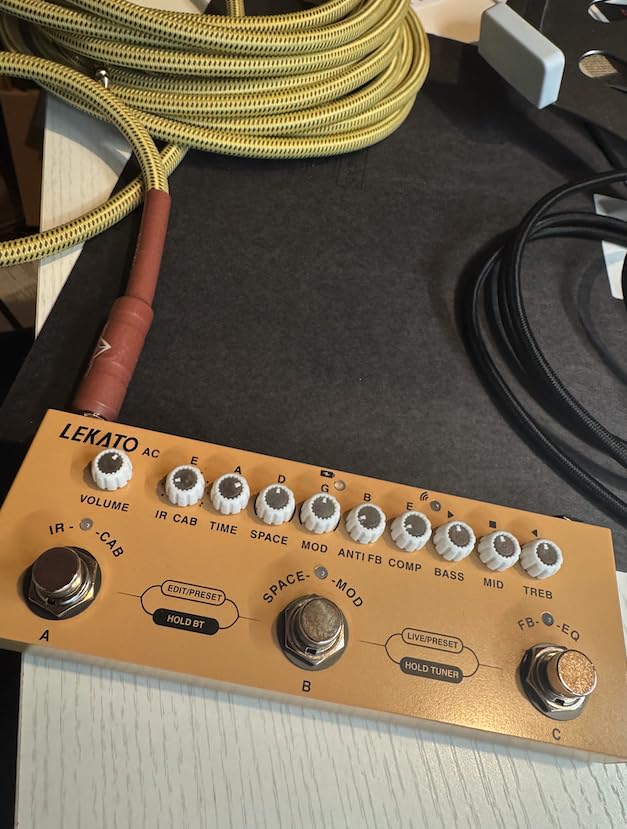
The 9 amp models and 8 IR cabinets give you a range of tonal options that extends well beyond acoustic simulation. You can load third-party IR files via the Cube-Suite software on PC, which opens up a world of custom acoustic guitar impulses. The chorus, tremolo, delay, and reverb effects cover the essential modulation and time-based needs.
The three preset modes, Lead, Rhythm, and Clean, let you store and recall your favorite settings instantly. In Live mode, you can edit parameters in real time using the three footswitches. The aluminum housing feels solid and durable despite the lightweight design.
Best For Travel And Silent Practice
If you need a portable, battery-powered solution for hotel room practice, backstage warmup, or casual jamming anywhere without power outlets, the LEKATO is unmatched at this price. The headphone output and Bluetooth streaming make it a complete portable practice rig.
Effects Are Functional Not Premium
The effects quality is acceptable but not exceptional. Compared to dedicated chorus, delay, or reverb pedals, the LEKATO’s effects sound somewhat basic. The learning curve is also steep, with minimal instructions and some users reporting Windows 11 compatibility issues with the IR loading software.
12. IOppWin Acoustic Guitar Simulator Pedal
IOppWin Acoustic Guitar Simulator Pedal – Electric-to-Acoustic Conversion, 3 Cabinet Modes (Piezo/Standard/Jumbo), Metal…
3 cabinet modes Piezo Standard Jumbo
Analog technology
Metal housing
True bypass
Compact design
9V powered
✓ The Good
- Very affordable under $20
- Three cabinet modes for tonal variety
- Metal housing feels durable
- True bypass preserves tone
- Compact footprint saves space
- Can enhance acoustic electric guitars
✕ The Bad
- Does not fully replicate acoustic sound
- Very few reviews only 21
- Some find pedal too small
- High frequencies can be piercing
- Sound described as just ok
- No power adapter included
The IOppWin Acoustic Guitar Simulator is the least expensive pedal on this list, and it owns that position honestly. This is a bare-bones analog pedal that does one thing, converts your electric guitar signal into something resembling an acoustic tone, using three familiar cabinet modes.
Piezo mode delivers a bright, modern sound with enhanced clarity. Standard mode aims for a balanced, versatile tone. Jumbo mode produces a warmer, deeper character. The analog technology gives the tone an organic quality that some players actually prefer over digital modeling. The metal construction feels sturdy enough for stage use.
At 1.9 x 1.25 x 3.6 inches and roughly 8.5 ounces, this is an extremely compact pedal. It will fit on even the most crowded pedalboard. The true bypass switching ensures zero tone loss when the effect is disengaged, and the 1/4-inch audio interface is standard for all guitar setups.
Best For Adding Acoustic Texture On A Budget
If you need a cheap pedal that adds basic acoustic flavor to your electric guitar tone and you are not expecting a convincing dreadnought simulation, the IOppWin delivers. It can also enhance the tone of a real acoustic-electric guitar when used creatively.
High Frequencies Need Taming
The most common complaint about this pedal is that the high frequencies can be piercing and difficult to control with the limited EQ options. Mixed results across different electric guitar types mean your experience may vary significantly depending on your instrument and amplifier combination.
How to Choose an Acoustic Simulator Pedal
Choosing the right acoustic simulator pedal comes down to understanding what features matter for your specific situation. Here is what to look for when comparing your options.
Simulation Modes And Cabinet Models
The number and variety of simulation modes is the first thing to consider. Basic pedals offer three modes, typically Piezo, Standard, and Jumbo. More advanced pedals like the Boss AC-3 offer four modes including Enhanced, while the Hotone Omni AC provides 15 distinct simulations including steel string, nylon string, and acoustic bass. More modes means more tonal flexibility, but also more complexity in finding your ideal sound.
Output Types And DI Connectivity
If you plan to connect directly to a PA system or mixing desk, look for a pedal with an XLR balanced output. This eliminates the need for a separate DI box and ensures a clean, professional signal path. Pedals like the SONICAKE A Factory, SONICAKE Sonic Wood, BOSS AD-2, and NUX Optima Air all feature XLR outputs. Dual output pedals, like the Boss AC-3, let you send your electric tone to your amp while simultaneously routing the acoustic simulation to the PA.
Power Requirements
Most pedals on this list run on standard 9V center negative power supplies, which means they integrate seamlessly with existing pedalboard power systems. However, current draw varies significantly. The Amuzik LEF-320 draws only 17mA, while the NUX Optima Air demands 500mA. Make sure your power supply can handle the current requirements, especially for the more feature-rich pedals. The LEKATO is unique in offering a built-in rechargeable battery for completely wireless operation.
EQ Controls And Tone Shaping
The amount of EQ control determines how precisely you can dial in your acoustic tone. Budget pedals typically offer basic 3-band EQ with High, Mid, and Bass controls. Mid-range pedals add a Body or Top knob for acoustic-specific tone shaping. Premium options like the Hotone Omni AC and NUX Optima Air provide full 4-band or 3-band EQ with gain control and flexible frequency ranges. More EQ control means more ability to adapt the pedal to different guitars and amplifiers.
Pickup Compatibility
This is the most overlooked factor, and it is also the most important. Every single pedal on this list performs better with single-coil pickups than with humbuckers. Strats, Teles, and guitars with single-coil pickups produce the clarity and articulation that acoustic simulators need to create convincing acoustic tones. Hot humbucker pickups can overwhelm the simulation, producing fizzy, unnatural results. If your main guitar has humbuckers, consider the Boss AC-3 or Hotone Omni AC, which offer enough EQ flexibility to tame hotter signals.
Signal Chain Placement
Where you place the acoustic simulator in your signal chain affects the results significantly. Most players recommend placing the pedal before your amp, ideally early in the chain after any wah or compressor. This allows the simulator to process a clean guitar signal before it hits distortion or modulation effects. If you are using the XLR output to go direct to PA, chain placement matters less since you are bypassing your amp entirely for the acoustic tone.
Digital Versus Analog
Analog pedals like the MOOER Acoustikar, Rowin AC Stage, and JOYO JF-323 offer simplicity, instant usability, and a warm, organic character. Digital pedals like the Hotone Omni AC and NUX Optima Air offer more features, preset storage, IR loading, and USB connectivity, but require more setup time. Neither approach is inherently better. It depends on whether you value simplicity or flexibility.
Budget Versus Premium Expectations
Acoustic simulator pedals range from $20 to over $150. At the budget end, expect a pedal that adds acoustic texture rather than a convincing simulation. Mid-range pedals between $50 and $80 offer the best balance of tone quality and features. Premium pedals above $100 deliver the most realistic acoustic tones and the most comprehensive feature sets. Set your expectations based on your budget, and remember that no pedal will completely replace a real acoustic guitar.
How to Set Up an Acoustic Simulator Pedal
Setting up an acoustic simulator pedal correctly makes the difference between a convincing acoustic tone and a thin, artificial sound. Follow these steps for the best results.
Step 1: Connect your guitar to the pedal input using a quality instrument cable. Use your neck pickup or middle position for the warmest, most acoustic-friendly signal.
Step 2: Connect the pedal output to your amplifier or PA system. If using the XLR output, run a balanced XLR cable to the mixing desk or audio interface.
Step 3: Power the pedal with the correct voltage and polarity. Most pedals require 9V center negative power. Check the current rating to ensure your power supply can deliver enough milliamps.
Step 4: Start with all EQ knobs at 12 o’clock and select the Standard mode. This is your baseline starting point.
Step 5: Strum a chord and slowly adjust the Body or Bass knob to add warmth and resonance. Listen for the point where the tone starts to sound natural rather than thin.
Step 6: Adjust the Top or Treble knob carefully. This control is extremely sensitive on most pedals, and too much high-end will introduce hiss and destroy the illusion. Less is more.
Step 7: Add reverb or ambience sparingly to create a sense of space. A little goes a long way with acoustic simulation.
Step 8: Test the pedal with both strumming and fingerstyle playing. The settings that work for strumming may need adjustment for fingerstyle, and vice versa.
Frequently Asked Questions About Acoustic Simulator Pedals
Do acoustic simulator pedals work?
Yes, acoustic simulator pedals work by using analog or digital modeling to recreate the resonance, frequency response, and tonal characteristics of acoustic guitars. They will not perfectly replicate a high-end acoustic guitar, but they produce a convincing acoustic-like tone that works well in a full band mix, especially with single-coil pickups.
Are acoustic simulators worth it?
Acoustic simulators are worth it for guitarists who play both electric and acoustic songs in a single set and want to avoid switching guitars mid-performance. They are especially valuable for cover band musicians, worship guitarists, and singer-songwriters who need quick transitions between electric and acoustic tones on stage.
What is the best acoustic guitar simulator pedal?
The best acoustic guitar simulator pedal depends on your needs. The BOSS AD-2 is the top choice for piezo-equipped acoustic-electric guitars. The SONICAKE Sonic Wood offers the best value with built-in preamp, effects, and XLR output. The Hotone Omni AC provides the most features with 15 simulations and IR loading capability.
How do you set up an acoustic simulator pedal?
To set up an acoustic simulator pedal, connect your guitar to the input, connect the output to your amp or PA, power it with the correct 9V supply, start with all knobs at noon on Standard mode, then slowly adjust the Body and Top knobs to taste. Use your neck or middle pickup position for the warmest, most acoustic-friendly signal.
Can an acoustic simulator pedal make an electric guitar sound like an acoustic guitar?
An acoustic simulator pedal can make an electric guitar sound close to an acoustic guitar, but not identical. The pedal models the body resonance and frequency response of acoustic guitars, creating a convincing approximation that works well in a band mix. Results are best with single-coil pickups and clean amplifier settings.
What are the best pedals for an acoustic guitar?
The best pedals for an acoustic guitar include preamp and DI pedals like the BOSS AD-2, multi-effects pedals like the SONICAKE Sonic Wood, and acoustic simulators like the Boss AC-3 and Hotone Omni AC. For acoustic-electric guitars with piezo pickups, a preamp pedal that eliminates the tinny quack of piezo technology is the most important investment.
Conclusion: Our Top Acoustic Simulator Pedal Recommendations
After testing 12 acoustic simulator pedals across multiple guitars, amps, and direct-to-PA scenarios, three pedals stand out from the pack. The best acoustic simulator pedals balance tone quality, features, and value in ways that suit different players.
For piezo-equipped acoustic-electric guitars, the BOSS AD-2 is the clear winner. Its acoustic resonance modeling and notch filter solve the exact problems that plague piezo pickup systems. At 4.7 stars with 82 percent five-star reviews, the user consensus matches our testing experience.
For the best overall value, the SONICAKE Sonic Wood delivers an entire acoustic rig in one pedal. Preamp, chorus, delay, reverb, XLR output, and FX loop for less than many standalone stompboxes. It is the pedal we would recommend to most gigging acoustic players in 2026.
For players who want maximum control and feature depth, the Hotone Omni AC offers 15 simulations, a 4-band EQ, OLED display, and USB IR loading. It is the most technically capable dedicated acoustic simulator we tested.
No acoustic simulator pedal will completely replace the sound and feel of a real acoustic guitar. But for those songs where switching guitars is not practical, these pedals deliver a convincing approximation that works beautifully in a mix. Pick the one that matches your needs, your guitar, and your budget, and you will never dread that acoustic song again.