How To Sharpen A Pocket Knife In 6 Easy Steps (January 2026) Guide
I spent 20 years carrying dull pocket knives before I learned how to sharpen one properly. My grandfather tried to teach me as a kid, but I got frustrated and quit. After ruining three blades with inconsistent angles, I finally developed a system that works every time.
To sharpen a pocket knife in 6 easy steps, you need a sharpening stone, water or oil lubricant, about 15-30 minutes depending on dullness, and a consistent 20-degree angle. Start by preparing your stone, find your angle, sharpen each side until a burr forms, refine with finer grit, and test your edge.
A sharp pocket knife is safer than a dull one. It requires less force to cut, reducing the chance of slipping and injuring yourself. Dull knives crush through material while sharp knives slice cleanly. After helping dozens of friends learn this skill, I’ve found the biggest barrier isn’t difficulty—it’s knowing where to start.
This guide covers the complete sharpening process using three proven methods, plus tool recommendations that work for beginners and experienced sharpeners alike. You’ll learn the 6-step process, common mistakes to avoid, and how to test your edge like a pro.
Article Includes
Essential Sharpening Tools
Choosing the right tool makes sharpening dramatically easier. After testing dozens of options over the years, I’ve identified three tools that cover every skill level and budget.
| Tool Type | Skill Level | Time to Sharpen | Best For |
|---|---|---|---|
| Whetstone | Beginner to Pro | 15-30 minutes | Sharpest edge, traditional method |
| Guided System | Beginner | 10-15 minutes | Consistent angle, foolproof results |
| Honing Rod | All Levels | 1-2 minutes | Maintenance between sharpenings |
Detailed Tool Reviews For 2026
1. Sharp Pebble Premium Whetstone – Best for Learning Traditional Sharpening

Sharp Pebble Premium Whetstone Knife Sharpening System – 1000/6000 Grit Whetstone Knife Sharpener & Honing Kit with Angle…
Grit: 1000/6000 dual-grit
Material: Corundum
Includes: Bamboo base, angle guide
Type: Water stone
✓ The Good
- Beginner-friendly kit
- Non-slip base included
- Dual grit for shaping and polishing
- Water-based no oil needed
- 25
- 000+ reviews
✕ The Bad
- Requires practice to master technique
- Can take 30+ minutes for very dull blades
- Stone wears over time
The Sharp Pebble whetstone is what I recommend to anyone wanting to learn proper sharpening technique. I’ve used this specific stone for three years now, and it’s restored dozens of dull blades to razor sharpness. The 1000 grit side quickly reshapes dull edges while the 6000 grit side polishes to a mirror finish.
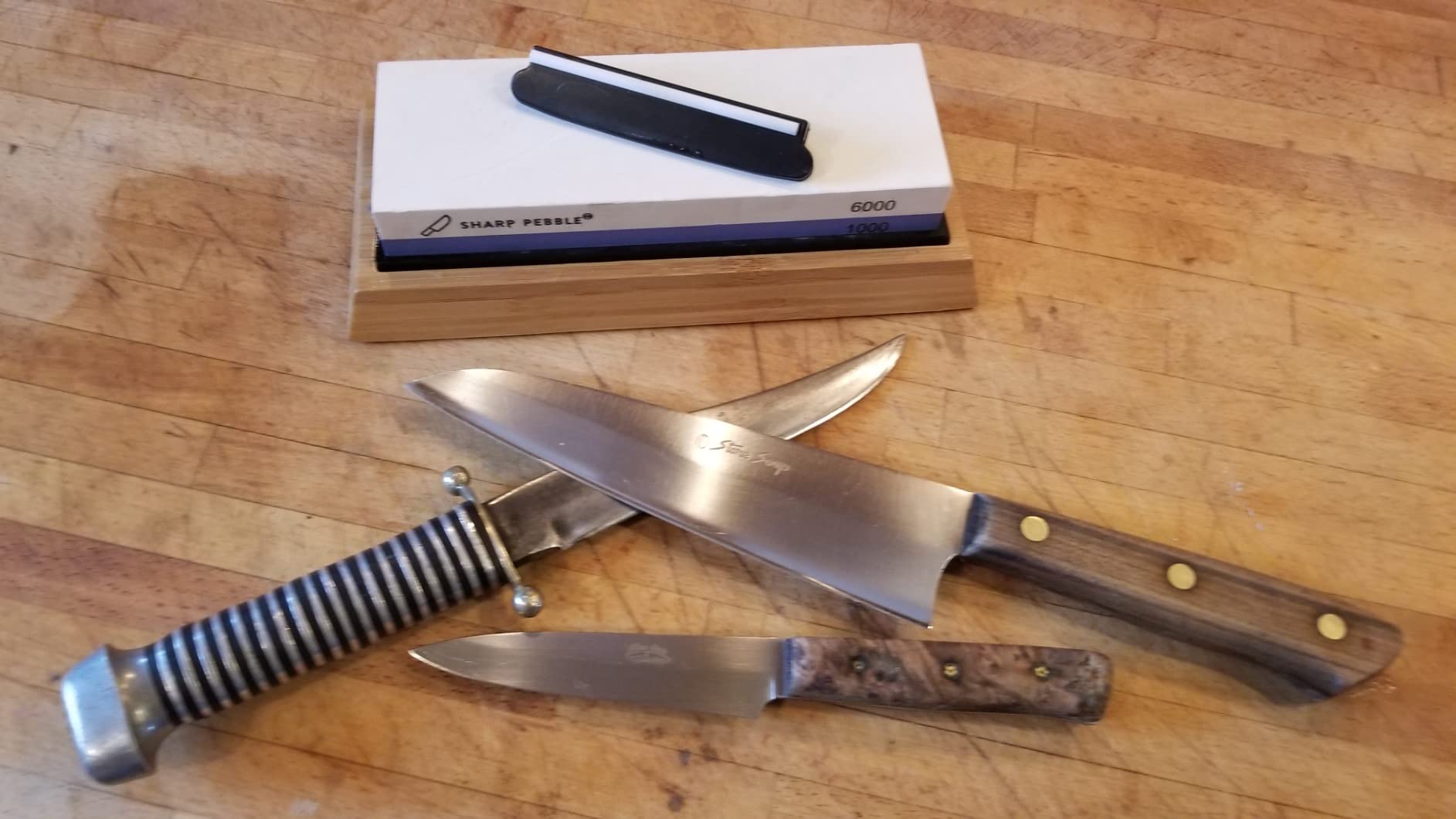
What sets this kit apart is the included angle guide and bamboo base. The non-slip base keeps everything stable while you work—a critical feature I wish I had when starting out. Customer photos show the impressive results beginners achieve with this system, from kitchen knives to hunting blades.
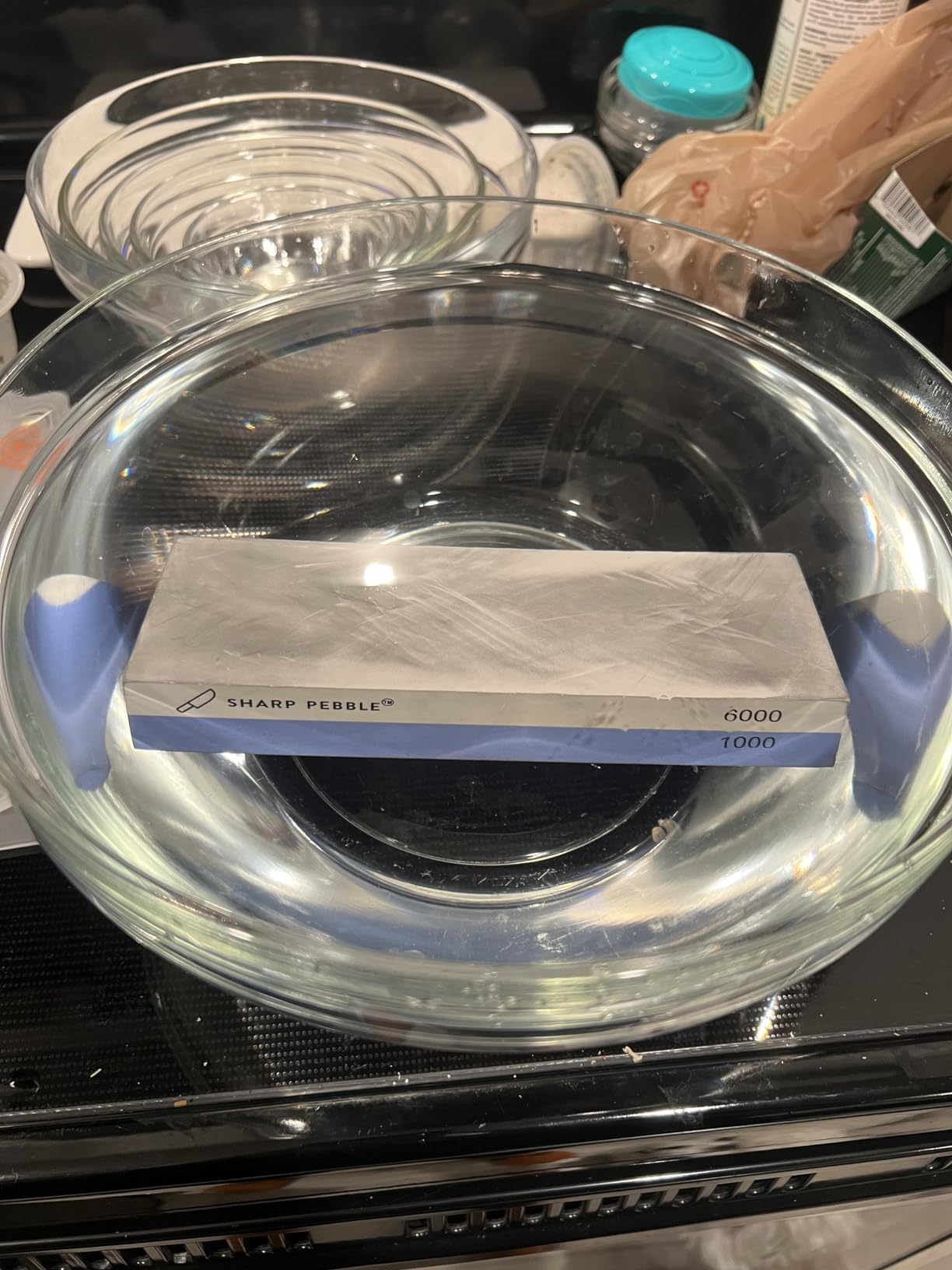
The corundum material removes metal efficiently without being overly aggressive. I’ve sharpened everything from cheap pocket knives to high-end chef’s knives with consistent results. Water stones require soaking before use, typically 5-10 minutes, which gives you time to clean and inspect your blade first.
This whetstone works on any blade type. The comprehensive ebook included with the kit covers technique basics, though nothing replaces hands-on practice. After about 5-10 knives, you’ll develop muscle memory for the correct angle.
Who Should Buy?
Anyone willing to invest time learning a valuable skill. This is ideal if you want the sharpest possible edge and enjoy traditional methods. Perfect for home users who sharpen knives monthly and want professional results.
Who Should Avoid?
If you need instant results without practice, consider a guided system instead. Also not ideal if you sharpen frequently and want faster results—the learning curve takes time.
2. Work Sharp Guided Field Sharpener – Best for Foolproof Results

Work Sharp Guided Field Sharpener, Compact Travel Knife Sharpener Tool
Type: Guided system
Abrasives: Diamond plates, ceramic rods
Angles: 20-25 degrees
Weight: 4.8 ounces
✓ The Good
- Guided angle ensures consistency
- All-in-one design no assembly
- Diamond plates sharpen quickly
- Includes leather strop
- Portable for field use
✕ The Bad
- Limited to 20-25 degree angles
- Diamond plates are coarse only
- Bulky design for small blades
- Not for reprofiling damaged edges
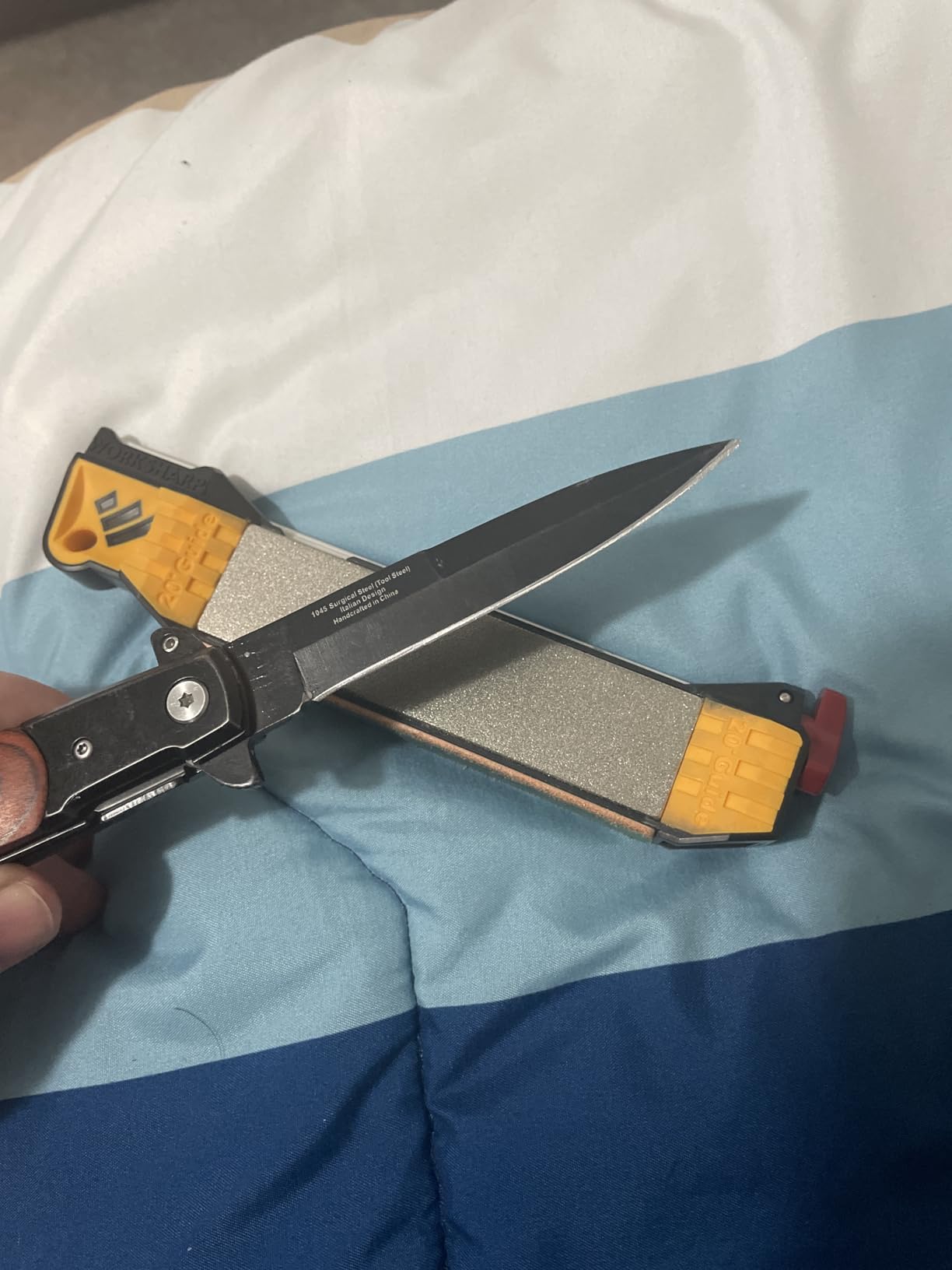
The Work Sharp Guided Field Sharpener changed how I sharpen in the field. I carry this on every camping trip now. The guided angle system eliminates the biggest challenge beginners face—maintaining a consistent angle. Set it to 20 or 25 degrees, and you’re locked in.
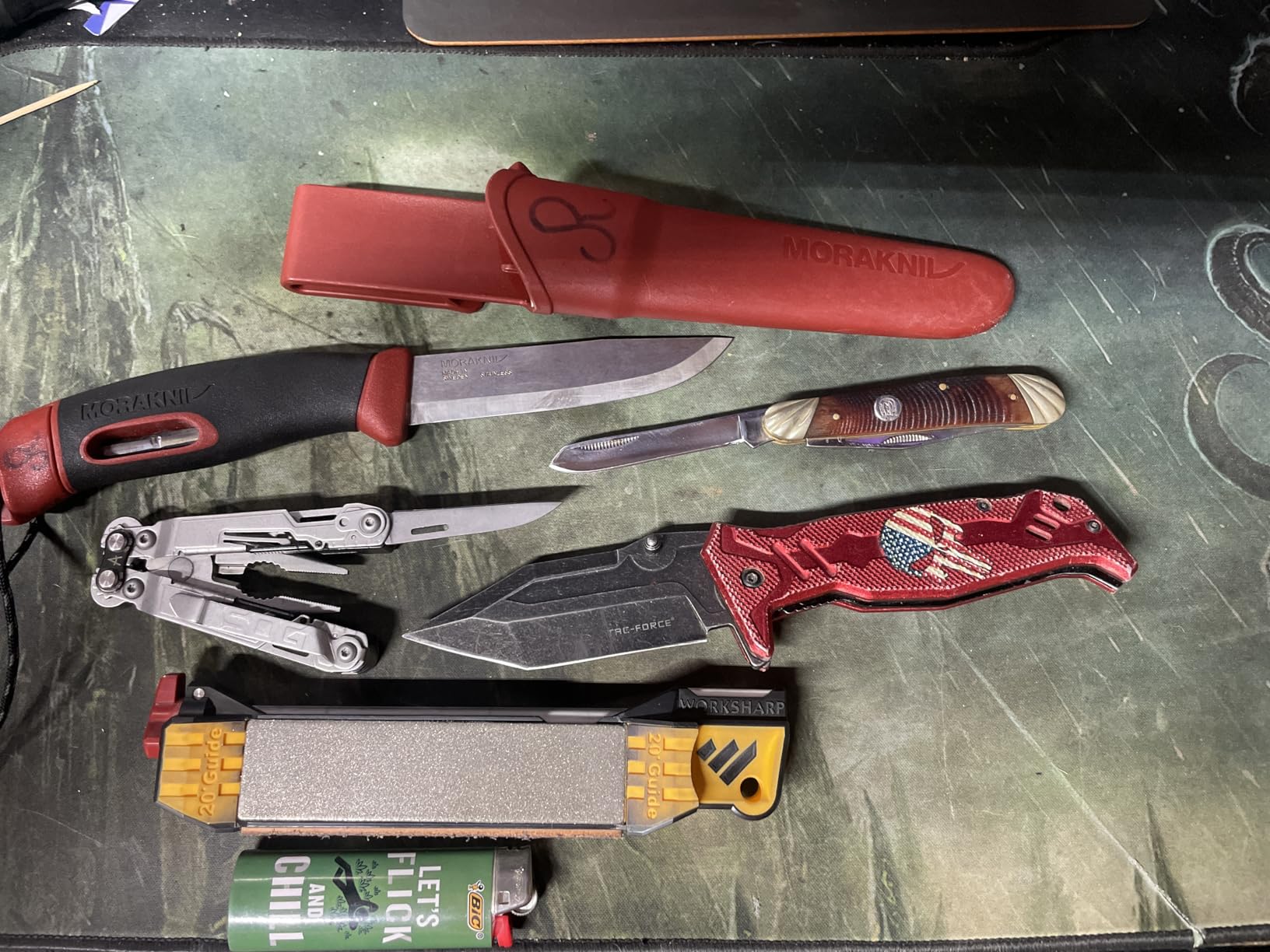
This tool combines diamond plates, ceramic rods, and a leather strop in one compact package. I’ve used it to sharpen everything from pocket knives to broadheads while sitting around a campfire. The diamond plates remove metal quickly when you’re in a hurry, while the ceramic rods refine the edge.
Customer images reveal the versatility of this sharpener. Users have successfully sharpened serrated blades, fish hooks, and even arrowheads with the various surfaces. At only 4.8 ounces, it disappears in your pack but performs like a workshop setup.
The built-in broadhead wrench is a thoughtful addition for hunters. I appreciate not needing extra tools in the field. Everything stores self-contained with no assembly required—just pull it out and start sharpening.
Who Should Buy?
Beginners who want guaranteed results, outdoor enthusiasts who need field sharpening capability, and anyone who struggles with freehand angle consistency. Perfect for camping, hunting, or backpacking where weight matters.
Who Should Avoid?
High-end knife enthusiasts who want 15-degree edges—this system tops out at 25 degrees. Also not ideal if you only sharpen at home and want the absolute sharpest edge possible from traditional stones.
3. SHARPAL 118N Ceramic Honing Rod – Best for Maintenance

SHARPAL 118N Professional Ceramic Sharpening Fine Honing Rod Steel Kitchen Knife Sharpener Stick, With Anti-Breaking Cap
Material: 3000 grit ceramic
Length: 12 inches
Features: Anti-slip handle, rubber cap
Type: Honing rod
✓ The Good
- Realigns edge without removing metal
- Extends time between sharpenings
- Lightweight at 9.1 ounces
- Oversized hand guard for safety
- Rubber cap protects surfaces
✕ The Bad
- Not a sharpener only hones
- Cannot fix damaged blades
- Requires proper technique
- Shorter than some rods
The SHARPAL 118N ceramic honing rod is essential for maintaining edges between full sharpening sessions. I use this weekly on my EDC knife, extending the time between full sharpenings from monthly to quarterly. It realigns the microscopic edge without removing significant metal.
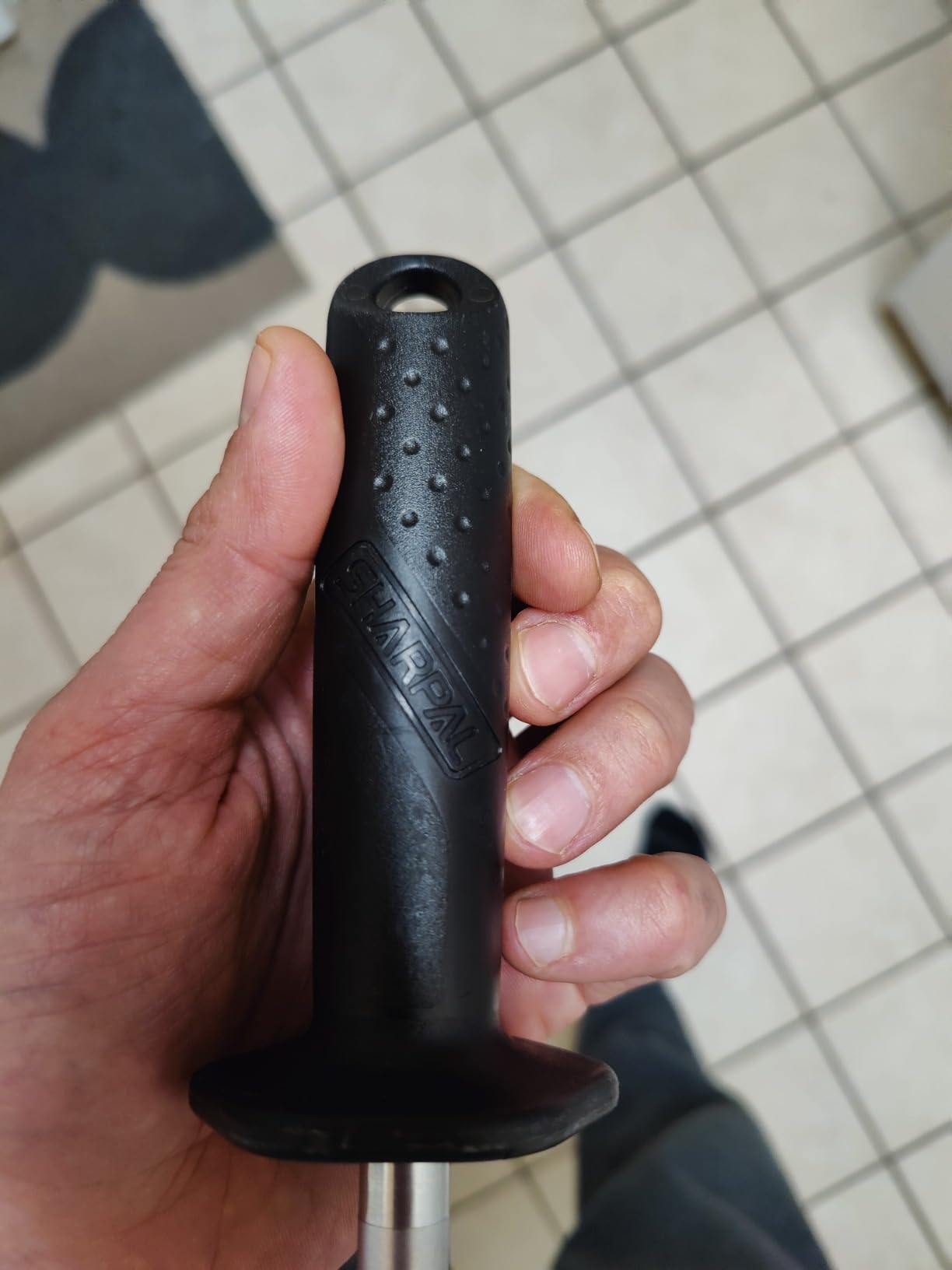
This isn’t a sharpener—it’s a maintainer. The 3000 grit ceramic material is harder than most knife steels, making it effective even on high-hardness blades. I’ve found that 5-10 quick swipes on each side restores that just-sharpened feeling.
The oversized hand guard is a safety feature I really appreciate. After seeing someone slice their finger when a honing rod slipped, I won’t use one without proper protection. The removable rubber cap protects both the rod and your countertop from damage.
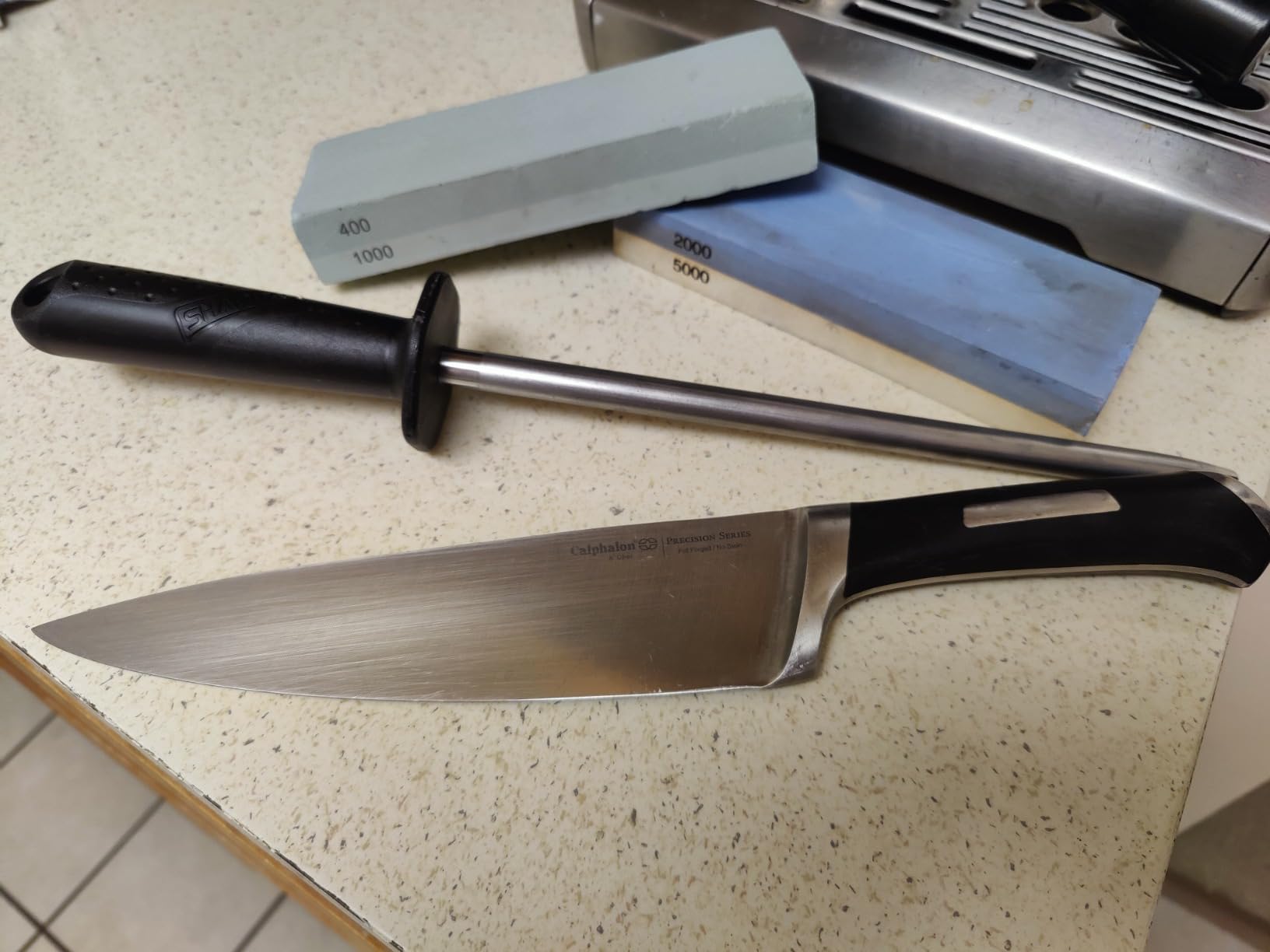
Customer photos show this rod working on everything from German chef’s knives to Japanese pocket knives. The ceramic material is aggressive enough to realign hard steel but gentle enough for quality blades. At 9.1 ounces, it feels substantial but not heavy in hand.
Who Should Buy?
Anyone who wants to extend the life of their sharpened edges. Perfect for kitchen knife users and EDC enthusiasts who maintain their blades regularly. Essential if you invest in quality knives and want to preserve them.
Who Should Avoid?
If your knife is completely dull or damaged, this won’t help—you need a proper sharpening stone first. Also not ideal as your only sharpening tool.
How To Sharpen A Pocket Knife In 6 Easy Steps In 2026?
The following steps work with any sharpening method. I’ve refined this process through hundreds of sharpening sessions. Take your time with each step, especially when starting out. Rushing leads to uneven edges and frustration.
Step 1: Prepare Your Sharpening Stone
Proper stone preparation is the foundation of successful sharpening. Water stones need soaking before use, while oil stones need lubricant applied during sharpening.
For water stones like the Sharp Pebble, submerge in water for 5-10 minutes. You’ll see air bubbles stop rising when it’s fully saturated. Oil stones only need a few drops of mineral oil spread across the surface.
Pro Tip: Place a damp paper towel under your stone base for extra grip. I learned this after a stone slipped during a sharpening session.
Secure your stone on a stable surface. The included bamboo base with the Sharp Pebble works great, or use a rubber mat. Your stone shouldn’t move at all while sharpening.
While the stone soaks, clean your knife blade with soap and water. A dirty blade can scratch your stone and transfer grit to the wrong places. Dry thoroughly before proceeding.
Step 2: Find Your Sharpening Angle
The correct sharpening angle for a pocket knife is 20 degrees per side. This angle balances edge durability with sharpness for general use.
| Angle | Edge Characteristics | Best For |
|---|---|---|
| 15 degrees | Extremely sharp but fragile | Slicing, food preparation, delicate work |
| 20 degrees | Sharp and durable (recommended) | General pocket knife use, EDC |
| 25 degrees | Durable but less sharp | Heavy use, hunting, hard materials |
Finding the right angle by feel takes practice. I recommend the Sharpie trick for beginners: color the bevel with a permanent marker, then take a few strokes on the stone. The marker will be removed exactly where you’re making contact. Adjust your angle until the entire bevel shows contact.
Another method: match your existing bevel. Place the blade flat on the stone, then slowly lift the spine until the bevel sits flush. This is your current angle. Match it unless you want to change the edge geometry.
Bevel Angle: The angle between the knife blade and the sharpening stone. Most pocket knives have a bevel between 17-22 degrees per side from the factory.
Once you find your angle, lock your wrist. Use your shoulder to move the knife, not your wrist. This maintains consistency through each stroke.
Step 3: Start Sharpening the First Side
With your angle set, begin sharpening the first side using heel-to-tip strokes. Place the heel of the blade on the stone at your chosen angle, then draw the blade across the stone toward the tip while maintaining that angle.
Use light pressure. You’re not trying to cut through the stone—let the abrasive do the work. Heavy pressure creates heat and uneven edges. I use about the same pressure as writing with a pen.
Count your strokes. I recommend 10-15 strokes on each side for maintenance sharpening. For very dull knives, you might need 20-30 strokes per side. Consistency matters more than speed.
- Set angle: Place blade heel on stone at 20 degrees
- Draw stroke: Sweep blade from heel to tip with light pressure
- Return stroke: Lift blade and return to starting position (don’t drag back)
- Repeat: Perform 10-15 strokes total
Time Saver: Use a stone holder or non-slip mat. I wasted months fighting stones that moved. A stable setup improves results immediately.
Feel the edge periodically with your thumbnail. Gently drag your thumbnail perpendicular to the edge. You’ll feel a burr forming on the opposite side—that’s your sign to move to the next step.
Step 4: Sharpen the Second Side
Flip the knife over and sharpen the second side using the same technique. Maintain the same angle and use the same number of strokes as the first side.
The goal is to raise a burr along the entire edge. This burr is metal that’s been pushed over from the first side. It means you’ve sharpened enough to reach the very edge of the blade.
Feel for the burr carefully. Run your finger gently from spine to edge on both sides. You should feel a rough edge on the side opposite from sharpening. If the burr isn’t consistent along the whole blade, add more strokes to the thin areas.
Don’t worry about the burr—we’ll remove it in the next step. The presence of a consistent burr means both sides meet at the edge. This is the critical checkpoint in sharpening.
For very dull blades, you might need to repeat steps 3 and 4 several times. Use a coarse grit first (like the 1000 side of your Sharp Pebble), then progress to finer grits.
Step 5: Refine and Polish the Edge
Now remove the burr and polish your edge. Switch to your fine grit stone—the 6000 side of the Sharp Pebble works perfectly for this.
Use light alternating strokes: one stroke on the first side, one stroke on the second side. Repeat this 5-10 times. This removes the burr and begins polishing the edge to razor sharpness.
Essential Step: Burr removal is non-negotiable. If you skip this, your knife will feel sharp but dull immediately on first use. Always finish with alternating strokes.
Reduce pressure even further for the polishing stage. You’re barely touching the stone now. Let the fine abrasive do the work. This creates a clean, refined edge that will hold its sharpness longer.
Optional but recommended: finish with a leather strop. If you have the Work Sharp Guided Field Sharpener, use the included strop. A few passes on leather loaded with compound removes any remaining micro-burr and creates a polished edge.
Progress through grits if your stone offers multiple options. Start coarse enough to reshape the edge, then move through medium, fine, and extra fine. Each grit removes the scratches from the previous one.
Step 6: Test and Maintain Your Edge
Testing your edge confirms whether sharpening was successful. The paper test is the most common method, but I use several tests to be thorough.
For the paper test, hold a piece of printer paper by one edge. Try slicing through it from heel to tip. A sharp knife will cut cleanly with minimal force. If the knife tears or fails to cut, go back to step 5 for more refinement.
The tomato test works great for kitchen and camping knives. A sharp knife should slice through a tomato’s skin under its own weight with zero downward pressure. This tests both sharpness and edge smoothness.
- Paper test: Slice printer paper diagonally, should cut cleanly
- Tomato test: Slice tomato skin under the knife’s own weight
- Thumbnail test: Gently bite into thumbnail, should catch without sliding
- Arm hair test: Shave arm hair (carefully!)—razor-sharp will cut easily
Warning: Never swipe your finger along the edge to test sharpness. This is how experienced people still cut themselves. Use the tests above instead.
Maintain your edge with regular honing using a ceramic rod like the SHARPAL 118N. A few swipes each week keep the edge aligned between full sharpenings. This extends time between major sharpening sessions significantly.
Store your knife properly to protect the edge. A leather sheath is better than nothing, but a hard sheath or blade guard prevents edge damage during carry. Dry your knife thoroughly before storage to prevent rust.
Common Sharpening Mistakes to Avoid 2026
I’ve made every mistake on this list. Learn from my failures instead of repeating them.
Using too much pressure: Heavy pressure seems intuitive but actually creates worse edges. It generates heat that can damage the steel, creates an uneven bevel, and wears your stone unevenly. Use light pressure and let time do the work.
Changing angle during the stroke: This rounds your edge instead of creating a crisp bevel. Lock your wrist and use shoulder movement. If you struggle with this, a guided system like the Work Sharp eliminates this mistake entirely.
Not checking for a burr: The burr is your only reliable indicator that you’ve reached the edge. Skip this check and you might sharpen for an hour without actually reaching the cutting edge. Feel for the burr after every set of strokes.
Starting with too coarse a grit: If your knife is just slightly dull, starting at 400 grit removes way more metal than necessary. Start with the finest grit that shows progress. You’ll save steel and sharpening time.
Unequal strokes on each side: More strokes on one side creates an off-center edge. Count your strokes and keep them equal. I use a simple rhythm: 10 strokes one side, 10 strokes the other, repeat.
Not removing the burr: Leaving the burr means your knife will feel sharp then dull immediately on first use. Always finish with alternating light strokes or stroping to remove this wire edge completely.
Sharpening when frustrated: This seems minor but matters. When I’m frustrated, my pressure increases and my angle gets inconsistent. If you’re feeling frustrated, take a break. Come back in 10 minutes with fresh focus.
Sharpening vs. Honing: What’s the Difference?
Understanding the difference between sharpening and honing will improve your knife maintenance routine significantly.
Sharpening removes metal from the blade to create a new edge. This is necessary when the edge has become dull, rounded, or damaged. Sharpening uses abrasive stones or systems and removes a significant amount of material over time.
Honing realigns the existing edge without removing substantial metal. The microscopic teeth of your edge fold over with use—honing stands them back up. A ceramic rod like the SHARPAL 118N is perfect for this. Honing takes seconds and extends time between sharpenings.
I hone my EDC knife weekly but only sharpen it quarterly. This routine keeps the knife cutting well without removing unnecessary steel. Think of honing as maintenance and sharpening as restoration.
Quick Summary: Sharpen when your knife is dull and can’t cut properly. Hone regularly to maintain the edge between sharpenings. Both are essential for optimal performance.
Frequently Asked Questions
What is the best angle to sharpen a pocket knife?
The best angle for a pocket knife is 20 degrees per side. This provides an excellent balance of sharpness and durability for everyday carry use. Lower angles around 15 degrees produce razor-sharp edges but are more fragile and require frequent maintenance. Higher angles around 25 degrees are more durable but sacrifice some cutting performance. Match your existing bevel unless you have a specific reason to change it.
How do I know if my pocket knife is sharp enough?
The paper test is the most reliable method. Hold a piece of printer paper by one edge and try slicing through from heel to tip. A properly sharp knife will cut cleanly with minimal force. The tomato test is another good option: a sharp knife should slice through tomato skin under its own weight. Finally, the thumbnail test: gently drag your thumbnail perpendicular to the edge. A sharp knife will bite in rather than slide.
What is the difference between sharpening and honing?
Sharpening removes metal from the blade to create a completely new edge. This is necessary when the knife has become dull or damaged. Honing realigns the existing microscopic edge without removing significant metal. Think of honing as straightening bent teeth and sharpening as creating new teeth. Use a honing rod weekly for maintenance and a sharpening stone every few months for restoration.
How often should I sharpen my pocket knife?
Sharpen your pocket knife when it no longer performs well. For moderate EDC use, this typically means every 2-3 months. Heavy users might need monthly sharpening, while light use might only need sharpening once or twice per year. However, you should hone your knife weekly with a ceramic rod to maintain the edge. Regular honing significantly extends the time between full sharpening sessions.
What grit sharpening stone should I use for a pocket knife?
Start with 1000 grit for general sharpening. This coarse grit removes material quickly to reshape dull edges. Finish with 3000-6000 grit for polishing and refinement. If your knife is extremely dull or damaged, you might need 400-800 grit first. If it’s only slightly dull, you can start at 2000-3000 grit. A combination stone like 1000/6000 covers most pocket knife sharpening needs.
Should I use oil or water on my sharpening stone?
Use whatever your stone requires. Water stones need water for lubrication and typically require soaking before use. Oil stones need mineral oil or honing oil. Never use water on an oil stone or oil on a water stone—this can damage the stone. Water stones are more common for modern sharpening and cut faster, while oil stones are more traditional but slower. Check your stone’s instructions and follow them.
Final Recommendations
Learning to sharpen a pocket knife is a valuable skill that rewards you every time you use your blade. After testing these tools and techniques extensively, I recommend starting with the tool that matches your patience level and experience.
For beginners willing to learn: the Sharp Pebble whetstone delivers the sharpest edges and teaches proper technique. The included guides make the learning curve manageable.
For guaranteed results: the Work Sharp Guided Field Sharpener eliminates angle mistakes and works anywhere. Perfect for outdoor enthusiasts and anyone who values consistency.
For maintenance: the SHARPAL ceramic honing rod extends the life of your edges dramatically. Use it weekly between full sharpening sessions.
Whichever tool you choose, remember that sharpening is a skill developed through practice. Start with an inexpensive knife, expect to make mistakes initially, and don’t rush. Your first few sharpening attempts might not produce perfect edges—but by attempt ten, you’ll be sharpening like a pro.