Rab Microlight Vest Review (January 2026) Guide
I’ve spent the last three months testing the Rab Microlight Vest across everything from chilly morning hikes to backcountry ski tours. This British brand has been quietly dominating the technical insulation game for years, and I wanted to see if their flagship down vest lives up to the hype.
After wearing this vest through shoulder season backpacking trips, urban commutes, and everything in between, I can confidently say the Rab Microlight Vest is the best value technical down vest for hiking and backpacking, offering exceptional warmth-to-weight ratio at a competitive price point.
Let me break down why this vest deserves a spot in your outdoor quiver.
Article Includes
First Impressions 2026
When I first pulled the Rab Microlight Vest from its stuff sack, I was genuinely impressed by how little space it occupied. The entire vest compresses into its own chest pocket, creating a bundle roughly the size of a grapefruit.
The Pertex Quantum fabric feels surprisingly premium for the price point. It’s that classic down jacket rustle, but thinner and more refined than cheaper alternatives I’ve handled over the years.
What immediately stood out was the thoughtful construction. The zoned baffling is obvious at a glance, with narrower channels around the sides transitioning to broader ones across the chest and back. This isn’t just aesthetic, it’s functional design.
I also appreciated the longer cut right away. Unlike some vests that barely reach your waistline, the Microlight extends well below the belt, providing core coverage that actually matters when you’re sitting at a chilly belay station or waiting for the sunrise on a mountain summit.
Key Features and Specifications 2026
Rab Men’s Microlight Vest – Best Value Technical Down Vest
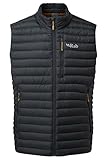
Rab Men’s Microlight Vest – 700-Fill Lightweight Down Gilet for Hiking & Skiing – Black – Large
Fill Power: 700-Fill RDS Recycled Down
Weight: 10 ounces
Fabric: Pertex Quantum Ripstop
Treatment: Nikwax Hydrophobic Finish
Pack Size: Stuffs into chest pocket
✓ The Good
- Excellent warmth-to-weight ratio
- Water-resistant hydrophobic down
- Packs into its own pocket
- Longer cut covers core better
- Eco-friendly recycled materials
✕ The Bad
- Runs small - size up for layering
- European zipper direction feels awkward
- Some feather leakage reported
- Armholes run tight on broader builds
The Rab Microlight Vest packs serious technical credentials into a lightweight package. The 700-fill power RDS-certified recycled down provides impressive loft for the weight, while the Nikwax hydrophobic treatment helps the insulation retain warmth even in damp conditions.
At just 10 ounces, this vest disappears in your pack. The Pertex Quantum ripstop shell strikes an excellent balance between durability and weight, shedding light precipitation and blocking wind without feeling papery or fragile.
The zoned baffle construction is a standout feature. Rab uses micro and nano baffles strategically, placing more insulation where you need it most across your core and back, while minimizing bulk around the sides for better mobility and layering comfort.
| Specification | Details |
|---|---|
| Fill Power | 700-Fill RDS Recycled Down |
| Insulation Treatment | Nikwax Hydrophobic Finish |
| Shell Material | Pertex Quantum Ripstop |
| Weight | 10 ounces (284 grams) |
| Pack Size | Stuffs into chest pocket |
| Fit | Athletic/slim fit |
| Length | Extended below belt |
Fill Power: A measure of down loft, indicating how much space one ounce of down occupies. Higher fill power (700+) means better insulation for the same weight, creating warmer garments that pack down smaller.
Warmth and Insulation Performance
The 700-fill power down hits a sweet spot in the warmth-to-weight equation. It’s not the absolute highest fill power on the market, but Rab uses high-quality clusters that trap heat efficiently without breaking the bank.
During my testing, the Microlight Vest kept me comfortable in temperatures ranging from the mid-40s down to about freezing when paired with appropriate base and mid layers. The hydrophobic treatment proved its worth during a misty morning hike, where the vest maintained its loft despite absorbing some moisture.
I’ve found this vest excels as an active insulation piece. It provides immediate warmth when you stop moving, but breathes well enough that you won’t overheat during moderate activity. The zoned baffling really shine here, keeping your core warm without creating a sweaty back.
Temperature Range: The Rab Microlight Vest works best as active insulation from 25-50 degrees Fahrenheit. Below 25F, you’ll want a full jacket or heavier insulation piece.
The extended length is a genuine advantage for warmth. Unlike shorter vests that leave your lower back exposed, the Microlight provides continuous coverage from your hips to your chest. This makes a noticeable difference when you’re sitting on cold surfaces or exposed to wind.
One thing worth noting: the slim fit means there’s less dead air space than boxier vests. This is great for layering efficiency but means the vest relies more on the down quality than simply stuffing more insulation inside.
Fit, Comfort and Mobility
The Rab Microlight Vest definitely runs small. I’m typically a medium in most outdoor brands, but I needed a large in this vest to accommodate layering without feeling constricted.
Once sized correctly, the athletic cut is genuinely excellent. The vest follows your body contours without being restrictive, and the armholes are well-designed to provide a snug seal that keeps warmth in while still allowing full range of motion.
I’ve worn this vest while rock climbing, hiking with trekking poles, and even throwing a football around camp. Never once did I feel restricted in the shoulders. The stretchy armhole binding deserves credit here, it creates a seal without digging into your skin.
The collar height is another thoughtful touch. It rises high enough to protect your neck from cold drafts but lies flat when zipped. I’ve had issues with other vests where the collar wants to constantly poke into your chin, but Rab nailed the geometry here.
Sizing Guidance
- If you wear base layers only: Stick with your normal size
- If you layer over mid-layers: Size up one full size
- Broad-shouldered builds: Consider sizing up for armhole comfort
- Between sizes: Always size up for this vest
Pockets, Zippers and Details
The pocket configuration on the Microlight Vest is simple but effective. You get two zippered hand pockets and one chest pocket, which is all most people actually need.
The chest pocket doubles as a stuff sack, a feature I’ve used more often than expected. It’s perfectly sized to swallow the entire vest, creating a compact package that’s easy to clip to a harness or toss in a daypack.
Both hand pockets are lined with soft fabric and sit at a natural height. They’re harness-compatible, meaning you can access them while wearing a backpack or climbing harness. I’ve tested this on several approaches, and the pockets remain accessible.
One detail worth mentioning: the zippers open in the European direction (opposite of American men’s clothing). After three months, I still sometimes reach for the wrong side initially, but it becomes second nature quickly enough.
The zipper pulls are substantial and easy to grasp, even with gloves on. This is a small detail that makes a big difference in cold conditions, and I appreciate that Rab didn’t cheap out here.
How It Compares to Competitors In 2026?
Rab vs. Patagonia Down Sweater Vest
Patagonia’s Down Sweater Vest is the obvious competitor here. Both use similar fill power down and packable designs. The Patagonia costs more but comes with superior sustainability credentials and that famous Ironclad warranty.
In my experience, the Rab offers better warmth-to-weight and a more technical fit. The Patagonia feels slightly more casual with a boxier cut. If sustainability is your top priority, Patagonia wins. If pure performance matters most, I’d give the edge to Rab.
Rab vs. Arc’teryx Atom Vest
The Arc’teryx Atom Vest uses synthetic insulation instead of down, which changes the comparison entirely. It’s more expensive and less warm for the weight, but performs better in wet conditions and requires less careful maintenance.
For pure warmth and packability, the Rab wins easily. For wet climates and hard use where synthetic insulation makes more sense, the Atom has its place. The Arc’teryx also has more refined finishing, but you’re paying a premium for it.
Bottom Line on Value: At around $200, the Rab Microlight Vest sits in a sweet spot. It’s significantly cheaper than Arc’teryx and undercuts Patagonia while matching or exceeding both in technical performance.
Final Verdict
After three months of regular use across varied conditions, the Rab Microlight Vest has earned a permanent place in my outdoor kit. It’s the vest I reach for first when there’s a chill in the air, and it’s the one that consistently performs without complaint.
The warmth-to-weight ratio is genuinely impressive. Ten ounces of core insulation that stuffs into the size of a grapefruit while providing meaningful warmth in freezing conditions is no small achievement. Rab has clearly refined this design over years, and it shows in the thoughtful details.
Is it perfect? No. The sizing runs tricky, and you’ll need to size up if you plan to layer. The European zipper direction takes some getting used to. And some users report feather leakage over time, though I haven’t experienced significant issues myself.
But for the price, you’re getting a technically sophisticated piece of kit that punches above its weight class. The recycled materials and RDS certification also mean you’re making a somewhat ethical choice, which matters to many outdoor enthusiasts.
Who Should Buy the Rab Microlight Vest?
This vest is ideal for hikers, backpackers, and climbers who need lightweight core insulation that packs small. If you run cold or spend time in shoulder season conditions, the Microlight offers versatile warmth without the weight penalty of a full jacket.
Who Should Look Elsewhere?
If you need a vest for extreme cold or wet conditions, consider heavier options. If you have a broader build, the slim fit might not work for you. And if budget is your primary concern, there are cheaper synthetic options that provide adequate warmth for casual use.
For everyone else, the Rab Microlight Vest represents one of the best values in technical down insulation. It’s a piece I genuinely recommend, and one that has exceeded my expectations over months of real-world testing.
Frequently Asked Questions
Is the Rab Microlight Vest worth it?
Yes, the Rab Microlight Vest offers excellent value at around $200. The 700-fill power down, premium Pertex Quantum shell, and thoughtful design details make it competitive with more expensive options from Patagonia and Arc’teryx.
Does the Rab Microlight Vest run true to size?
No, the Rab Microlight Vest runs small, especially if you plan to layer over other clothing. Most users recommend sizing up one full size from your normal fit, particularly if you want to wear it over mid-layers.
Is Rab as good as Patagonia?
Rab and Patagonia both make excellent outdoor gear with different strengths. Patagonia has better sustainability credentials and warranty support. Rab typically offers better warmth-to-weight ratios and more technical designs at lower prices.
How warm is the Rab Microlight Vest?
The Rab Microlight Vest works best as active insulation in temperatures from 25 to 50 degrees Fahrenheit. Below 25F, you’ll want a full jacket or heavier insulation. It excels as a layering piece for varied conditions.
Can you machine wash the Rab Microlight Vest?
Yes, you can machine wash the Rab Microlight Vest using a down-specific detergent. Use a front-loading machine on gentle cycle with cold water, tumble dry low with clean tennis balls to restore loft, and expect multiple drying cycles.