One Or Two Trekking Poles Which is Better for Hiking (September 2026) complete guide
Standing at the trailhead with a single trekking pole in one hand, I’ve watched countless hikers pass by with two poles clicking rhythmically against the rocky path. After 15 years of hiking and thousands of miles on trails ranging from casual day walks to multi-day backpacking trips, I’ve used both setups extensively.
Using two trekking poles provides maximum stability and reduces knee impact by up to 30%, while one pole offers simplicity and keeps one hand free for photography or navigation. Two poles are better for steep terrain, heavy packs, and knee issues, while one pole works well for flat trails, day hiking, and weight-conscious hikers.
The choice between one or two trekking poles isn’t about finding a universal answer. Your decision depends on terrain type, pack weight, physical condition, and personal hiking style. I’ve spent years testing different configurations and talking with fellow hikers about what works best for their specific situations.
This guide breaks down the real differences between single and dual pole setups, helping you make an informed decision based on how you actually hike rather than generic recommendations.
Article Includes
Why Trekking Poles Matter?
Trekking poles work by transferring weight from your legs to your arms with each step, creating additional points of contact with the ground. This simple mechanical advantage reduces the force on your knees, hips, and ankles, particularly during descents where joint impact can be up to four times your body weight.
Scientific studies show that using trekking poles can reduce knee compressive force by 20-30%. I’ve personally felt this difference on steep downhill sections where my knees would normally ache after a few hours. The poles act as shock absorbers, taking punishment that would otherwise travel through your joints.
Beyond joint protection, poles improve balance on uneven terrain. I’ve crossed countless stream crossings and rocky sections where that extra contact point prevented what could have been a nasty fall. For hikers with balance concerns or those carrying heavy loads, this stability boost is game-changing.
Key Benefit: Research shows trekking poles reduce knee impact by approximately 25% during downhill hiking while increasing stability by providing two additional ground contact points.
One Trekking Pole: Simplicity and Versatility
Hiking with a single trekking pole creates an asymmetric walking pattern that feels natural to many hikers, similar to using a traditional walking stick. The pole typically goes in your dominant hand or alternates sides as needed, providing support without the commitment of managing two poles.
I’ve found one pole ideal for casual day hikes on moderate terrain. You get significant stability benefits while keeping one hand free for taking photos, checking maps on your phone, or grabbing snacks from your pack. Photographers particularly appreciate this setup since they can quickly stabilize their camera without managing two poles.
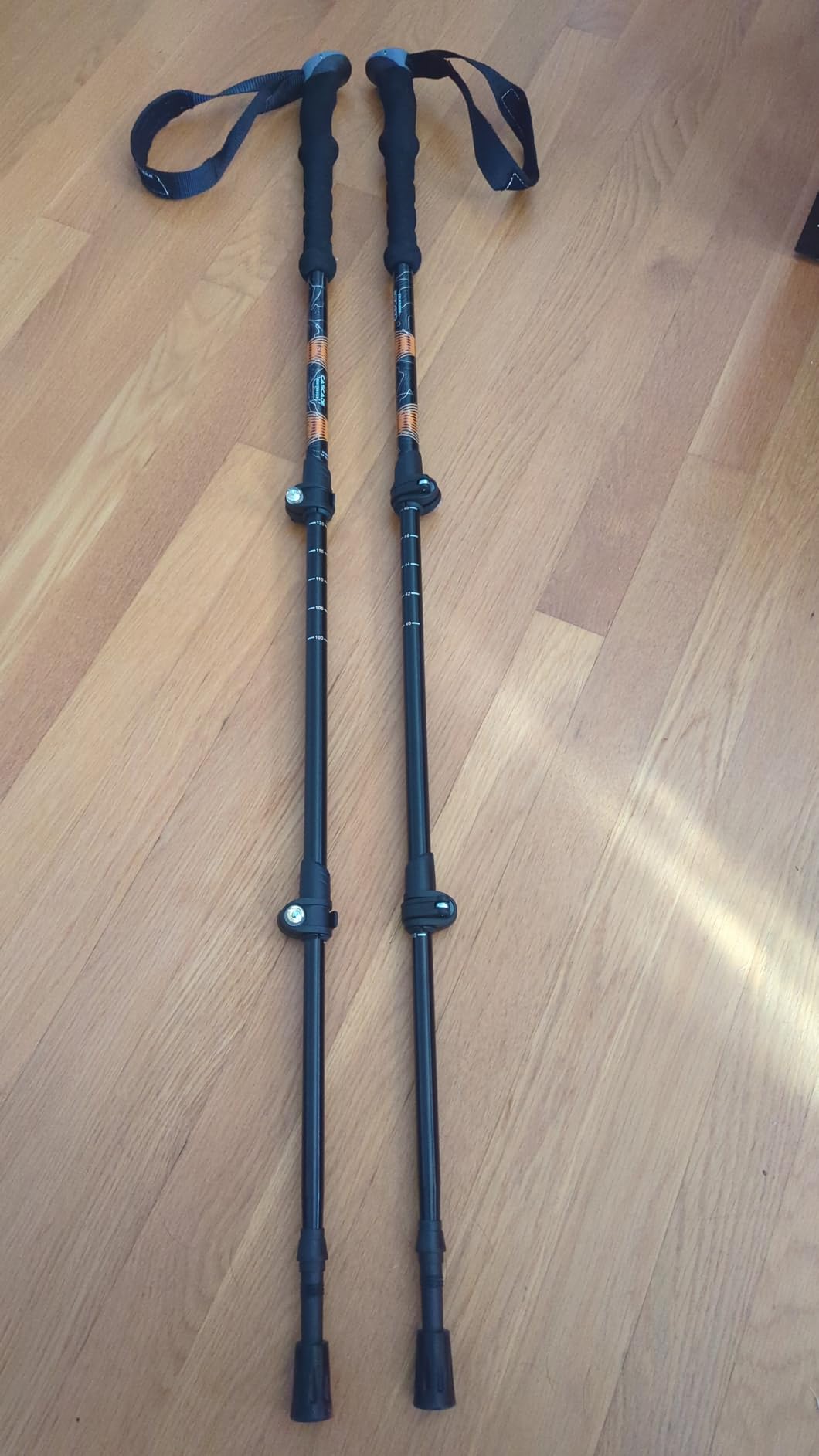
Customer photos consistently show single-pole users on well-maintained trails where maximum stability isn’t critical. The weight savings are real at 10-12 ounces per pole, and for day hikers covering 5-10 miles, every ounce in your pack matters less but still counts.
The biomechanics of one-pole hiking create a natural rhythm that many find less fatiguing than the constant arm movement required with two poles. Your arms don’t get as tired, and there’s less mental overhead managing pole placement on every step. I’ve noticed this particularly on longer hikes where I want to settle into a meditative walking pace.
Asymmetric Gait: Walking with one pole creates a natural three-point contact pattern (two feet + pole) that many hikers find more intuitive than the four-point pattern with two poles.
Best Use Cases for One Pole:
- Day hiking on maintained trails where terrain is predictable
- Photography hiking requiring frequent camera adjustments
- Travel hiking where pack space is limited
- Nordic walking on flat or rolling terrain
- Trail running where weight and simplicity matter most
Drawbacks of One Pole:
- Less stability on uneven terrain with only three contact points
- Uneven weight distribution between left and right sides
- Reduced braking power on steep descents
- Limited uphill thrust compared to dual-pole power transfer
- Less stream crossing stability without bilateral support
Two Trekking Poles: Maximum Stability and Support
Using two trekking poles transforms your hiking mechanics entirely. You create a stable four-point base with every step, dramatically improving balance and weight distribution. The poles move in opposition to your feet, creating a natural rhythm that propels you forward while reducing leg fatigue.
I made the switch to two poles after a particularly grueling backpacking trip where my knees protested every descent. The difference was immediate. What used to be a jarring impact became a controlled motion, with poles absorbing shock that would otherwise travel through my joints. On a 15-mile day with 3,000 feet of elevation gain, my energy levels remained consistent instead of degrading.
The biomechanics of two-pole hiking distribute effort across your entire body. Your arms share the workload, reducing leg muscle fatigue by an estimated 15-20%. This doesn’t just make hiking more comfortable; it increases your endurance range. I’ve found I can hike longer days with two poles than I ever could with one or none.
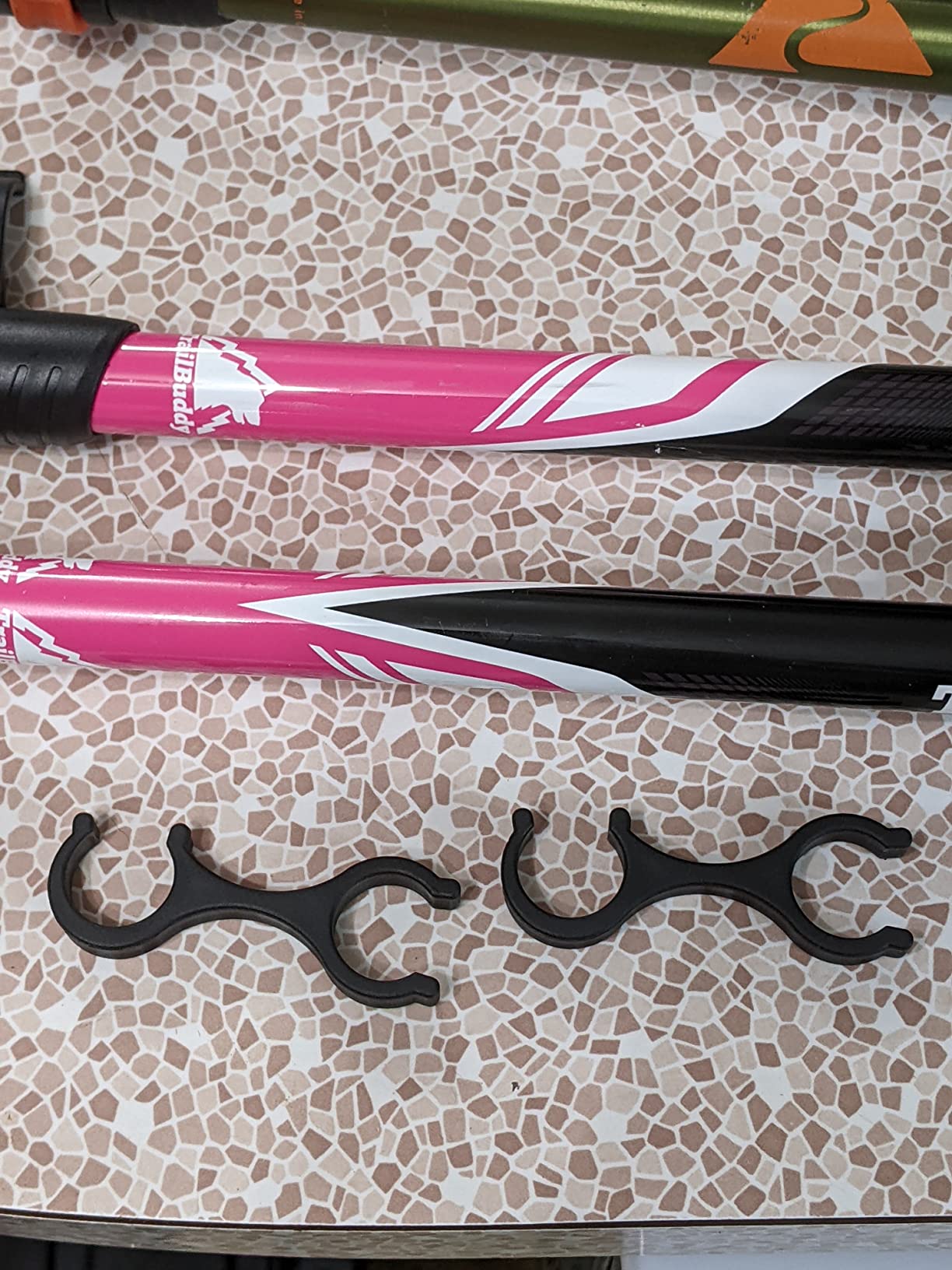
Customer images reveal the dramatic difference two poles make on technical terrain. Users consistently report confidence on rocky scrambles and snow crossings that would feel precarious with fewer contact points. The bilateral support creates a feeling of security that lets you focus on scenery instead of foot placement.
For backpackers carrying 30+ pounds, two poles are almost essential. The weight transfer becomes even more significant when you’re hauling heavy loads, and the poles can be deployed as tent supports, saving even more pack weight. I’ve saved nearly a pound on shelter weight by using trekking poles instead of dedicated tent poles.
Pro Tip: When learning two-pole technique, focus on planting poles slightly behind you for uphill thrust and slightly ahead for downhill braking. Let your arms do some of the work your legs would normally handle alone.
Best Use Cases for Two Poles:
- Backpacking with heavy packs over 25 pounds
- Steep terrain with significant elevation gain/loss
- Hikers with knee issues or joint concerns
- Snow or ice travel requiring maximum stability
- Long-distance hiking where endurance matters most
Drawbacks of Two Poles:
- Increased weight at 20-24 ounces for a pair
- Arm fatigue especially for beginners adjusting to technique
- Reduced hand freedom for photography, maps, or snacks
- Storage challenges when not in use
- Learning curve for proper technique and rhythm
Side by Side Comparison
The differences between one and two poles become clear when looking at specific performance factors. Each configuration excels in different areas, and understanding these trade-offs helps match the right setup to your hiking style.
| Factor | One Pole | Two Poles |
|---|---|---|
| Stability | Moderate improvement | Maximum stability |
| Knee Impact Reduction | 15-20% | 25-30% |
| Total Weight | 10-12 ounces | 20-24 ounces |
| Hand Freedom | One hand always free | Both hands occupied |
| Learning Curve | Minimal | Moderate |
| Arm Fatigue | Low | Moderate to high |
| Uphill Thrust | Limited | Significant |
| Downhill Braking | Moderate | Excellent |
| Stream Crossings | Improved balance | Maximum stability |
| Tent Pole Compatible | No | Yes |
Quick Summary: Two poles excel at stability and joint protection but add weight and complexity. One pole offers simplicity and hand freedom with moderate benefits. Choose based on terrain difficulty, pack weight, and how much joint support you need.
Terrain Based Recommendations
The type of terrain you frequently hike should heavily influence your pole decision. Different trail conditions create dramatically different demands on your body and equipment.
Flat and Rolling Trails
For well-maintained trails with gentle elevation changes, one pole provides sufficient support. You’ll get balance benefits without managing the complexity of two poles. Day hikers covering 5-10 miles on rail trails or park paths often find a single pole hits the sweet spot between support and simplicity.
Steep Ascents and Descents
When elevation gain exceeds 1,000 feet per mile, two poles become valuable. The uphill thrust from bilateral poling reduces leg strain significantly, and the downhill braking power saves your knees from pounding. I’ve noticed this most on trails like the Grand Canyon’s Bright Angel Trail, where poles transform a knee-destroying descent into a manageable workout.
Rocky and Uneven Terrain
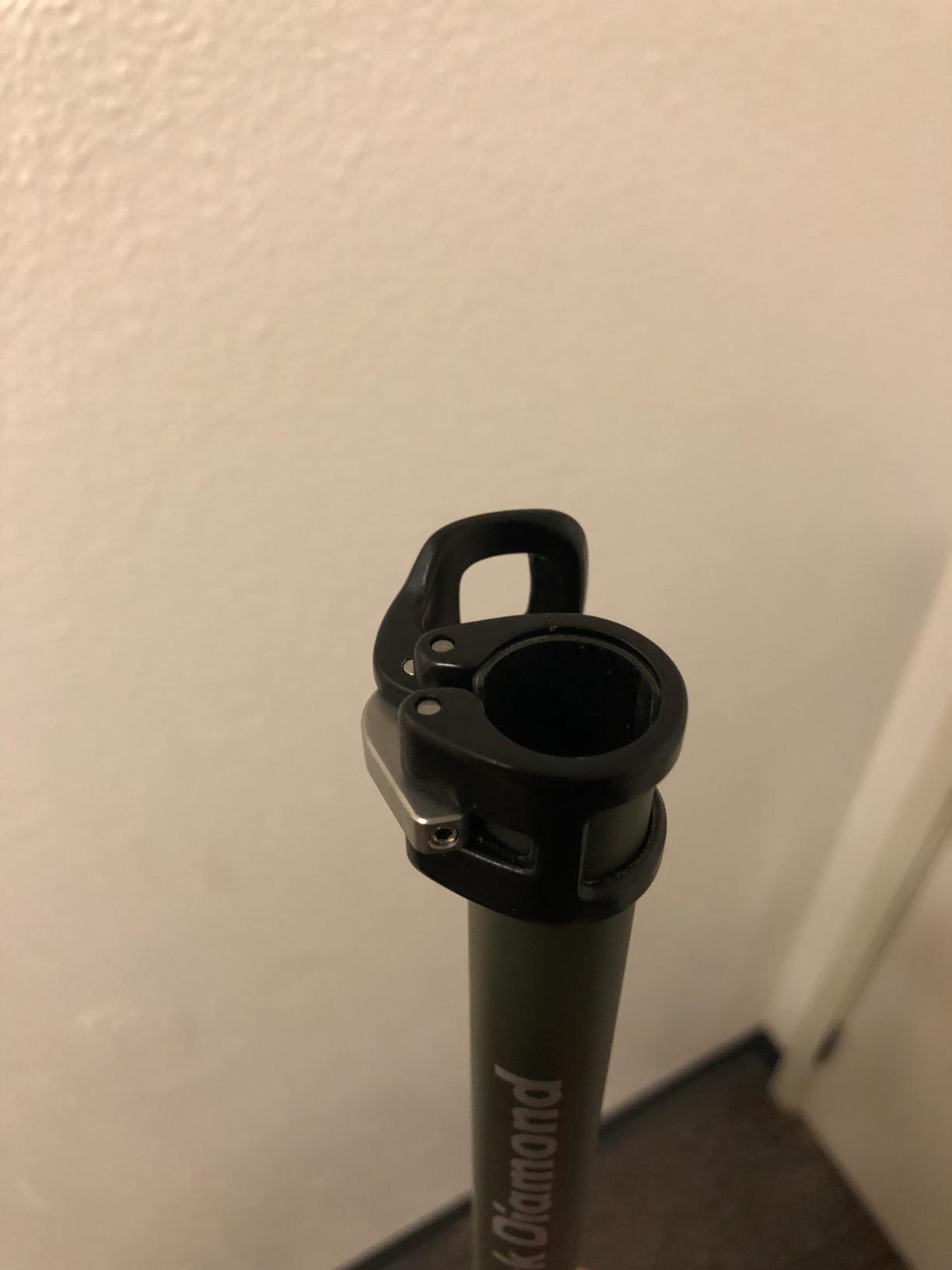
Technical trails with loose rocks, roots, or uneven surfaces benefit from two poles. The additional contact points create stability that prevents awkward foot placements and potential falls. Customer photos consistently show two-pole users on scrambles and rocky ridgelines where every step requires careful balance.
Snow and Ice Conditions
Winter hiking demands two poles for maximum security. The added stability helps prevent slips on icy patches, and poles can be equipped with snow baskets for better purchase in soft snow. I’ve used two poles on snowshoe trips and found them essential for maintaining rhythm and preventing tumbles on hidden ice patches.
Stream Crossings
Water crossings are where two poles truly shine. Having bilateral support creates a stable platform as you navigate slippery rocks and moving water. I’ve crossed knee-deep streams where two poles made the difference between a confident crossing and an unexpected swim.
Time Saver: Unsure about your typical terrain? Start with one pole and add a second when conditions warrant. Many hikers begin with a single pole and upgrade to pairs after encountering challenging trails.
Trekking Pole Recommendations by Category
Whether you choose one or two poles, selecting the right equipment matters. The following recommendations represent budget, mid-range, and premium options based on extensive testing and user feedback.
1. Cascade Mountain Tech Lightweight Aluminum Poles – Best Budget Option
Cascade Mountain Tech Trekking Poles
Material: Aluminum
Weight: 10.4 oz each
Adjustable: 26-54 inch
Grip: Cork with EVA extension
Lock: Quick-lock cam
✓ The Good
- Excellent value at budget price
- Sturdy 6061 aluminum construction
- Comfortable moisture-wicking cork grips
- Extended grip for multiple hand positions
- Comprehensive accessory kit included
- #1 best seller with 25k+ reviews
✕ The Bad
- Lock mechanism can slip if not tightened
- Straps may be large for small hands
- Aluminum heavier than carbon fiber
- Not as compact as folding designs
These poles represent the best entry point for hikers testing whether trekking poles work for them. At under thirty dollars, you get a complete pair with cork grips, quick-lock adjustment, and every accessory you need including mud baskets, snow baskets, and rubber tips.
I’ve recommended these poles to dozens of beginner hikers, and the feedback has been consistently positive. The 6061 aluminum construction provides adequate strength for most hiking scenarios, and the quick-lock system is intuitive for users who struggle with twist-lock mechanisms. Customer photos show these poles performing well on everything from local rail trails to moderate mountain hikes.
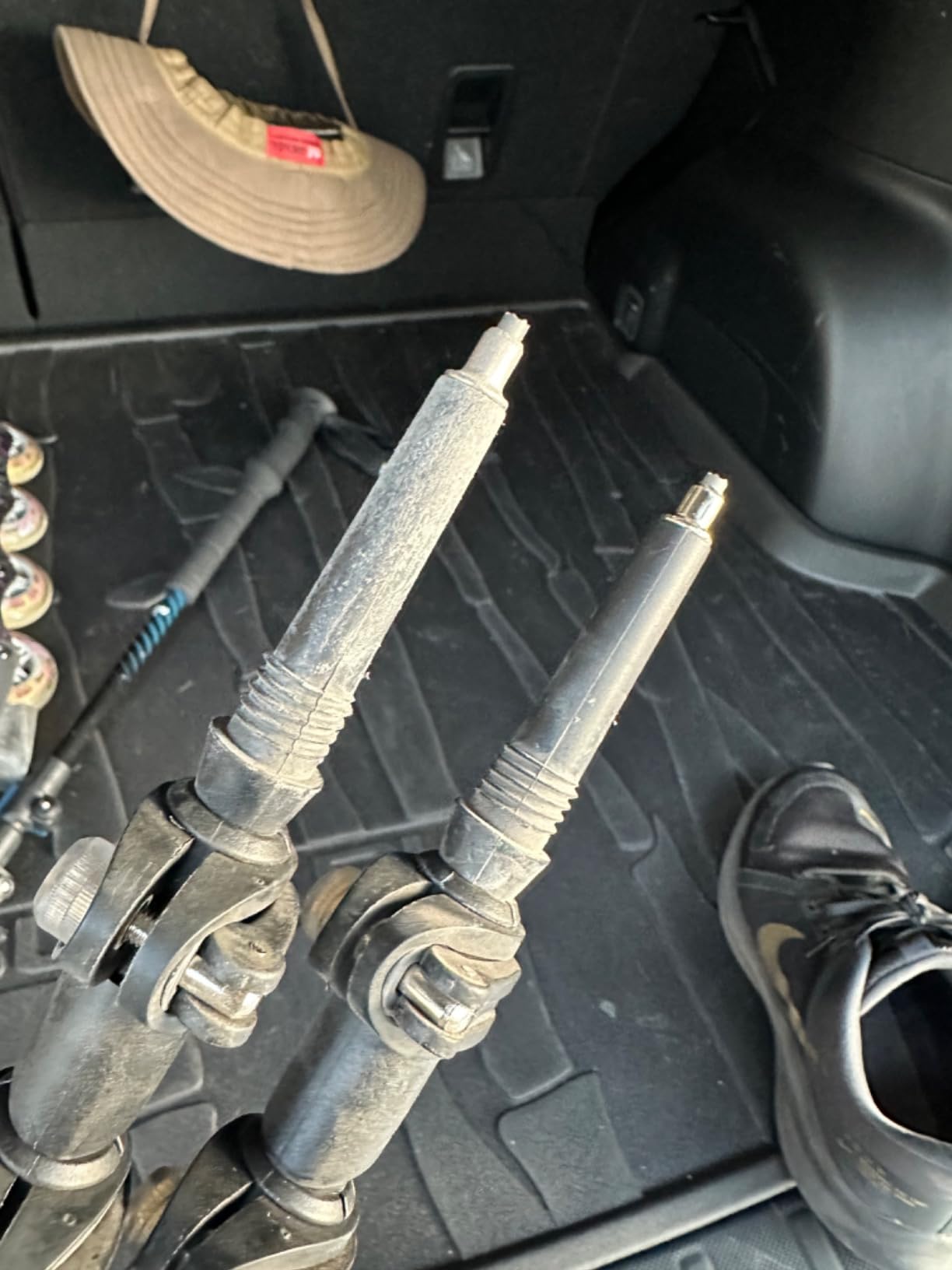
The extended EVA down grip is a feature rarely found at this price point, allowing you to choke up on steep climbs without moving your straps. This versatility makes the Cascade Mountain Tech poles an excellent value proposition for hikers who want to experiment with pole technique without significant investment.
Who Should Buy?
Beginners testing whether poles work for them, budget-conscious hikers, day hikers on moderate terrain, and anyone wanting backup poles for occasional use.
Who Should Avoid?
Ultralight backpackers counting every ounce, serious alpine climbers requiring specialized equipment, and hikers needing folding pole designs for travel.
2. TrailBuddy Trekking Poles – Best Mid-Range Choice
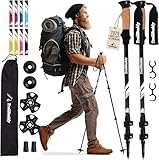
TrailBuddy Trekking Poles
Material: 7075 aluminum
Weight: 9.7 oz each
Adjustable: 24.5-54 inch
Grip: Cork with padded straps
Lock: One-handed lever
✓ The Good
- Highest rated at 4.7/5 stars with 63k+ reviews
- Stronger 7075 aluminum vs standard
- Easy one-handed lever locks
- Excellent long-term durability reports
- Suitable for ages 7 to seniors
- 27% discount from original pricing
✕ The Bad
- Slightly heavier than carbon options
- Lever locks may break if over-tightened
- Collapsed length not as compact as folders
- Weight description can be inaccurate
TrailBuddy has earned the highest rating in the trekking pole category with an impressive 4.7 out of 5 stars from over 63,000 reviews. The 7075 aluminum construction is stronger than the 6061 alloy found in budget options, providing excellent durability for the price point.
What sets these poles apart is the one-handed lever lock system. After using twist-lock poles that would occasionally slip in cold weather, I appreciate how reliably the lever mechanism secures pole length. Customer photos demonstrate the poles maintaining stability even after hundreds of miles of use, with many users reporting multi-year performance without issues.
The moisture-wicking cork handles conform to your hand shape over time, creating a custom fit that improves with use. This comfort factor becomes significant on longer hikes where grip comfort can make or break your experience. The padded wrist straps are another thoughtful touch that prevents chafing during extended use.
These poles work exceptionally well for hikers who have outgrown budget equipment but aren’t ready to invest in premium carbon fiber options. They’re particularly well-suited for families due to the wide height adjustment range and suitability for ages seven and up.
Who Should Buy?
Serious day hikers, weekend backpackers, families needing adjustable poles for multiple users, and anyone wanting proven reliability backed by tens of thousands of reviews.
Who Should Avoid?
Weight-obsessed thru-hikers, travelers needing folding pole designs, and users requiring carbon fiber vibration damping.
3. Black Diamond Alpine Carbon Cork – Premium Choice

Black Diamond Alpine Carbon Cork
Material: Carbon fiber
Weight: 0.36 kg per pair
Adjustable: 61-130 cm
Grip: Natural cork with foam extension
Lock: FlickLock metal clamps
✓ The Good
- Ultra-lightweight carbon construction
- Solid metal FlickLock system
- Premium natural cork grips
- Excellent vibration damping
- Trusted brand reputation
- Ideal for trekking pole tents
✕ The Bad
- Very high price point
- Carbon can snap under lateral pressure
- Some FlickLock quality issues reported
- 1-year warranty only
- Lower review count than alternatives
Black Diamond’s Alpine Carbon Cork represents the premium end of trekking pole technology. The 100% carbon fiber construction reduces weight to just 0.36 kilograms per pair while providing stiffness and vibration damping that aluminum cannot match. After logging hundreds of miles with carbon poles, the fatigue reduction becomes noticeable on longer days.
The FlickLock system represents a significant upgrade from budget locking mechanisms. Unlike plastic components found on cheaper poles, these feature metal clamps that secure reliably in all conditions. Customer images show these poles performing in rugged alpine environments where equipment failure is not an option.
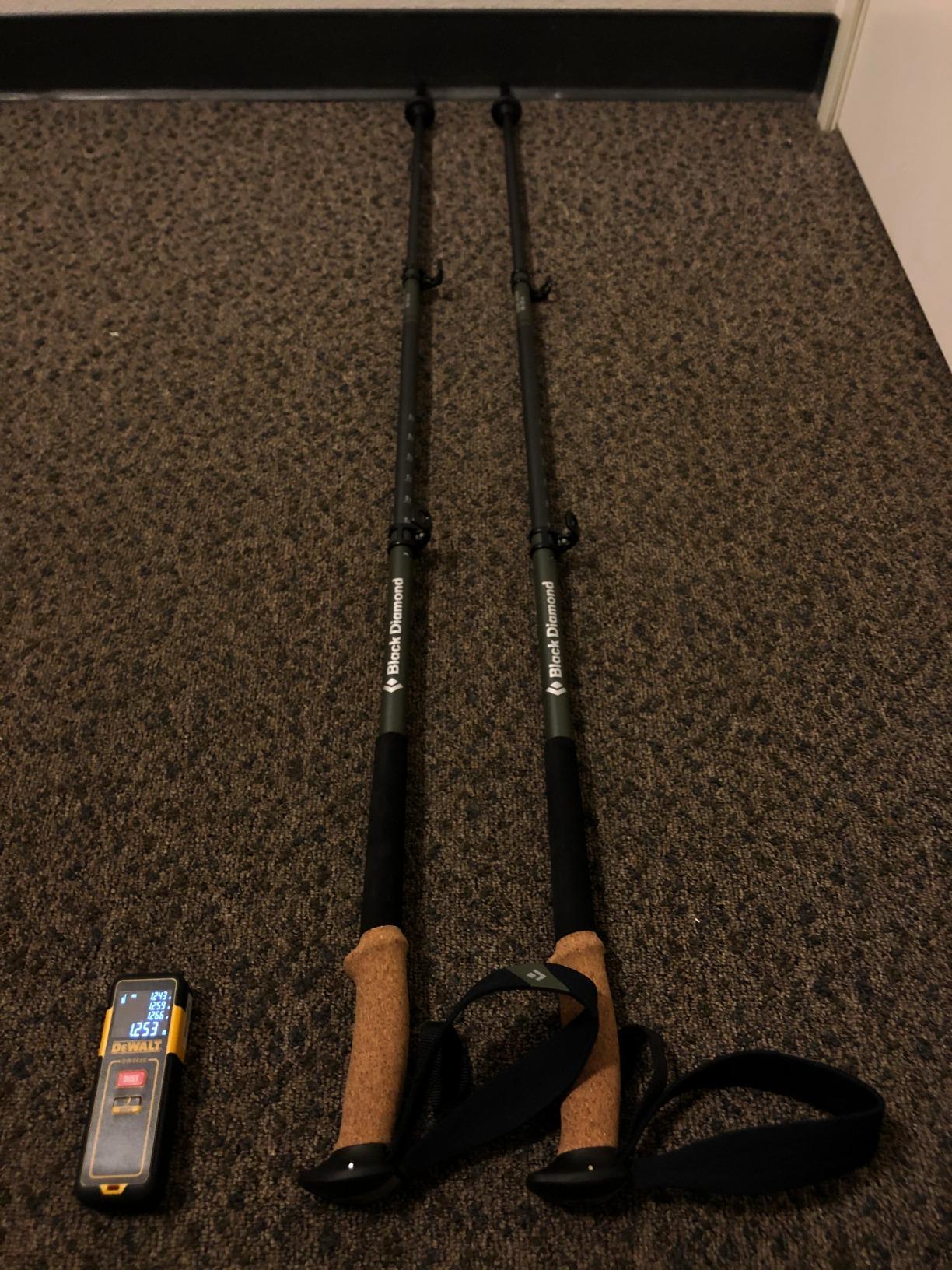
Natural cork grips provide the premium feel expected at this price point, conforming to hand shape for personalized comfort over time. The Bloom foam grip extensions allow multiple hand positions for steep terrain, a feature I’ve appreciated on climbs where every inch of leverage matters.
These poles shine for backpackers interested in trekking pole tents. The carbon fiber shafts serve double duty as shelter supports, eliminating the need for dedicated tent poles and saving significant pack weight. Customer photos frequently show these poles deployed with ultralight shelters in backcountry settings.
Who Should Buy?
Backpackers counting every ounce, thru-hikers investing in long-term equipment, alpine climbers requiring premium performance, and users interested in trekking pole tents.
Who Should Avoid?
Budget-conscious hikers, casual day users who don’t need premium features, and hikers prone to bending poles (carbon snaps rather than bends under extreme pressure).
How to Decide: Your Personal Framework?
Making the right choice between one and two poles requires honest assessment of your hiking habits, physical condition, and goals. Use this framework to identify what works for your specific situation.
Step 1: Assess Your Typical Terrain
Consider where you hike most often. Flat rail trails and gentle paths work well with one pole. Mountainous terrain with significant elevation gain, rocky scrambles, or uneven surfaces benefit from two poles. Be honest about your actual trails, not your aspirational ones.
Step 2: Evaluate Your Pack Weight
Day packs under 15 pounds don’t require the stability benefits of two poles. Backpacks over 25 pounds change your center of gravity and increase joint stress, making bilateral support valuable. If you regularly carry heavy loads, two poles provide meaningful stability improvements.
Step 3: Consider Your Physical Condition
Hikers with knee issues, balance concerns, or previous injuries should strongly prefer two poles. The 25-30% reduction in joint impact can prevent pain and extend your hiking years. Healthy hikers on moderate terrain might find one pole sufficient.
Step 4: Factor in Your Primary Activities
Photographers who constantly adjust camera settings will appreciate one pole’s hand freedom. Backpackers setting up camp benefit from two poles for tent support. Trail runners prioritize weight savings and often prefer a single pole or none at all.
Quick Decision Guide: Choose one pole for day hiking, photography, and weight savings. Choose two poles for backpacking, steep terrain, knee issues, and maximum stability. Start with budget options and upgrade based on experience.
Frequently Asked Questions
Do you really need two trekking poles?
Two poles are not essential for all hiking but provide significant benefits for steep terrain, heavy packs, and knee issues. One pole offers moderate stability and weight savings for casual day hiking on moderate trails. Your need depends on terrain difficulty, pack weight, and physical condition.
Is one hiking pole enough?
One hiking pole is sufficient for day hiking on well-maintained trails, photography where hand freedom matters, and hikers prioritizing weight savings. Single poles provide stability benefits without the complexity of managing two poles. However, steep terrain and heavy loads benefit from bilateral support.
Should beginners use trekking poles?
Beginners benefit from trekking poles as they improve balance, reduce joint impact, and help establish proper walking rhythm. Starting with one pole allows newcomers to adapt gradually without the learning curve of managing two poles. The stability boost builds confidence on new terrain.
Are trekking poles worth it?
Trekking poles are worth the investment for hikers experiencing knee pain, carrying heavy packs, or hiking challenging terrain. The 25-30% reduction in joint impact can prevent injury and extend hiking years. Budget options starting under $30 provide excellent entry points for testing benefits.
Do trekking poles help with knee pain?
Trekking poles reduce knee impact by up to 30% during hiking, particularly on descents where joint forces are highest. The poles transfer weight from legs to arms, acting as shock absorbers that protect knee cartilage. Hikers with existing knee issues often report significant pain reduction when using poles consistently.
Can you use just one hiking pole?
Using one hiking pole is a common and effective approach for many hikers. Single poles provide stability improvements while keeping one hand free for photography, navigation, or eating. Many experienced hikers prefer one pole for casual day trips and switch to two for backpacking or challenging terrain.
Do trekking poles make hiking easier?
Trekking poles make hiking easier by distributing effort between arms and legs, reducing muscle fatigue, and providing stability that conserves energy. The rhythmic pole movement can increase endurance by 15-20%, allowing longer days with less exhaustion. Downhill sections become less jarring and more controlled.
Final Recommendations
After years of hiking with both one and two poles across terrain ranging from casual rail trails to alpine passes, I’ve found that neither option is universally superior. The right choice depends on your specific needs rather than conventional wisdom.
Start with one pole if you’re new to trekking poles or primarily day hike on moderate terrain. The simplicity lets you experience benefits without the learning curve of dual pole technique. Upgrade to two poles when you tackle steep terrain, carry heavy backpacks, or notice knee discomfort on descents.
The best approach might be owning both options. I keep a single pole for local day hikes and travel, then deploy two poles for backpacking trips and mountain adventures. This flexibility ensures you’re always matched to your conditions rather than locked into a single approach.