How to Play Fortnite GeoGuessr Like a Pro 2026 – Complete Guide
I’ll be honest with you – when I first heard about Fortnite GeoGuessr, I thought, “How hard could it be?” I mean, I’ve been dropping onto this island for years, running around every corner, hiding behind every tree. But let me tell you, this game humbled me real quick. After spending countless hours mastering this addictive browser game, I’m here to share everything I’ve learned about becoming a Fortnite GeoGuessr champion.
Article Includes
What Exactly Is Fortnite GeoGuessr?
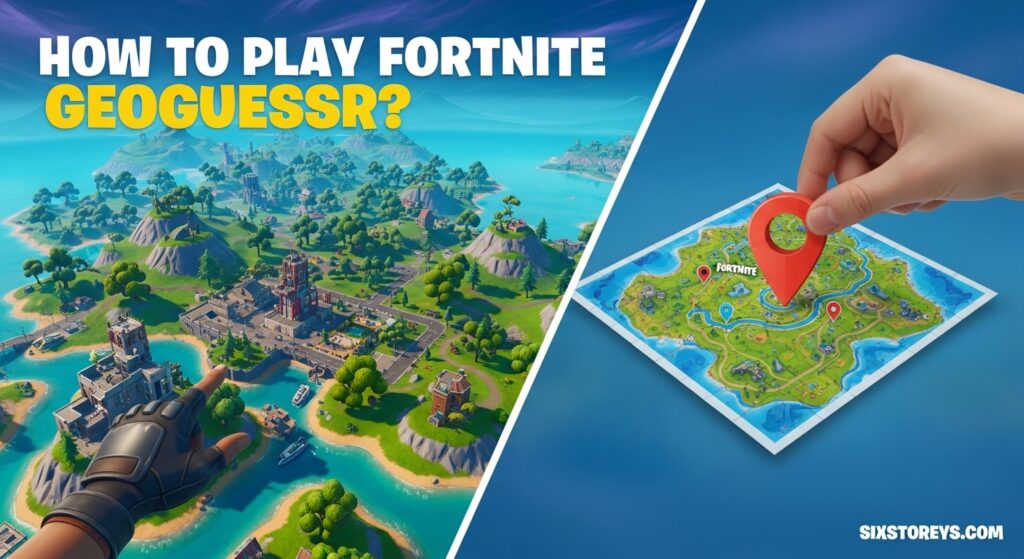
Think of regular GeoGuessr, but instead of trying to figure out if you’re in rural Montana or downtown Tokyo, you’re dropped somewhere on the Fortnite map. It’s a fan-made browser game that challenges your knowledge of every nook and cranny of the Battle Royale island.
The concept is brilliantly simple: you get shown a first-person view from somewhere on the Fortnite map, and you need to guess exactly where you are. The closer your guess, the more points you earn. What makes it incredibly challenging (and addictive) is that it covers maps from Chapter 1 all the way through Chapter 5, meaning you need to remember locations that might not even exist anymore.
I remember my first game – I was so confident. Then I got dropped in some random field with nothing but grass and trees around me. I ended up guessing completely wrong and scored maybe 2,000 points out of a possible 25,000. That’s when I realized this wasn’t going to be as easy as I thought.
Where to Play Fortnite GeoGuessr?
The most popular and feature-rich version is hosted on Lostgamer.io. I’ve tried several different platforms, but this one consistently delivers the best experience. Here’s what I love about it:
- No account required – you can jump straight in
- Massive map selection – covers all chapters and seasons
- Multiplayer support – challenge your friends
- Leaderboards – see how you stack up globally
- Customizable settings – adjust difficulty to your liking
There’s also a Creative Mode version within Fortnite itself (island code: 4749-0459-3824), but honestly, I prefer the browser version for its comprehensive map coverage and smoother gameplay experience.
Step-by-Step: How to Start Playing 2026?
Getting Set Up
- Navigate to Lostgamer.io in your browser
- Click the purple “Play Now” button
- Select “Fortnite” from the game options
- Choose your preferred game mode:
- Single Player (great for practice)
- Multiplayer (compete with friends)
- Raid Mode (team challenges)
Customizing Your Game Settings
Before diving in, I highly recommend adjusting these settings based on your skill level:
| Setting | Beginner | Intermediate | Expert |
|---|---|---|---|
| Map Selection | Single Chapter/Season | Multiple Chapters | All Maps |
| Rounds | 5 | 10 | 20+ |
| Time Limit | 5-10 minutes | 2-5 minutes | 30 seconds – 2 minutes |
| Camera Movement | Enabled | Enabled | Disabled (NMPZ Mode) |
Pro tip from my experience: Start with Chapter 2 maps if you’re new. They have the most distinctive landmarks and are generally easier to identify.
Understanding the Scoring System
The scoring works just like regular GeoGuessr:
- Perfect guess (0 meters away): 5,000 points
- Close guess (within 25 meters): 4,900+ points
- Decent guess (within 250 meters): 4,000+ points
- Far guess (1+ km away): 1,000-3,000 points
- Very far guess (5+ km away): 0-1,000 points
Maximum possible score for a standard 5-round game is 25,000 points.
My Proven Strategies for High Scores
After playing hundreds of rounds, I’ve developed a systematic approach that consistently gets me above 20,000 points. Here’s my method:
The 30-Second Scan Technique
When I first spawn into a location, I spend exactly 30 seconds doing this:
- Quick 360-degree turn – note any immediate landmarks
- Sky check – look for unique structures on the horizon
- Ground examination – check terrain type and vegetation
- Chapter identification – use the indicator in the top-right corner
Landmark Identification Hierarchy
I’ve learned to prioritize clues in this order:
Tier 1 (Instant Recognition):
- Named POIs (Tilted Towers, Pleasant Park, etc.)
- Unique structures (The Agency, Stark Industries)
- Distinctive terrain features (The desert area, snowy mountains)
Tier 2 (Strong Indicators):
- Building styles and architecture
- Vegetation patterns
- Water bodies and their shapes
- Road layouts and intersections
Tier 3 (Subtle Clues):
- Lighting and atmosphere
- Background mountains or hills
- Small environmental details
- Texture variations
Chapter-Specific Strategies
Each chapter has its own “personality” that I’ve learned to recognize:
Chapter 1:
- More basic, blocky architecture
- Simpler terrain variations
- Iconic locations like Dusty Depot (pre-meteor)
- Generally more open spaces
Chapter 2:
- Introduction of water and swimming mechanics
- More realistic building designs
- The Agency and Fortnite spy theme locations
- Distinctive seasonal changes
Chapter 3:
- Flipped map layout
- More tropical and vibrant colors
- Unique POIs like The Daily Bugle
- Sliding mechanics-friendly terrain
Chapter 4:
- Return to more grounded aesthetic
- New biomes and reality changes
- Chrome and Herald influence
- Mix of familiar and completely new areas
Chapter 5:
- Japanese-inspired elements
- Unique art style blend
- New vehicle integration
- Most recent map changes
Advanced Tips That Transformed My Game
The Biome Quick-Sort Method
I always start by identifying which biome I’m in:
- Grassland: Green, hilly terrain
- Desert: Sandy, arid with cacti
- Snowy: White terrain, pine trees
- Swamp: Dark water, unique vegetation
- Urban: Concrete, buildings, roads
This immediately eliminates huge portions of the map from consideration.
Seasonal Context Clues
Each season often has unique elements:
- Halloween seasons: Spooky decorations, orange/purple themes
- Christmas seasons: Snow effects, holiday decorations
- Summer seasons: Brighter colors, beach elements
- Crossover seasons: Marvel/DC/Star Wars themed areas
The Process of Elimination Strategy
When I’m uncertain, I use this mental checklist:
- What can I definitively rule out?
- What biome matches what I see?
- What chapter does the architecture suggest?
- Are there any unique seasonal elements?
- What’s the most logical remaining area?
Common Mistakes I Made (So You Don’t Have To)
Mistake #1: Rushing the Initial Assessment
I used to panic and make quick guesses. Now I always take at least 60 seconds to really examine my surroundings, even in timed modes.
Mistake #2: Ignoring the Chapter Indicator
That little box in the top-right corner is crucial information. I used to completely ignore it and guess locations from the wrong chapter entirely.
Mistake #3: Focusing Only on Big Landmarks
Sometimes the best clues are small details – a unique rock formation, a specific building style, or even the way shadows fall.
Mistake #4: Not Using Camera Movement Strategically
When movement is enabled, I now always check behind me and look up. You’d be surprised how often the perfect identifying landmark is just out of your initial view.
Mistake #5: Playing the Same Maps Repeatedly
I got comfortable with Chapter 2 and avoided other chapters. This created huge knowledge gaps that hurt my “All Maps” scores.
Multiplayer Strategy Guide
Playing with friends completely changes the game dynamics. Here’s what I’ve learned:
Communication Tips
- Share your thinking process – “I see desert terrain and a purple building”
- Divide responsibilities – one person checks landmarks, another examines terrain
- Use collaborative elimination – rule out areas together
Competitive Tactics
- Play mind games – act confident about wrong guesses to throw off opponents
- Watch others’ cursors – see where they’re hovering on the map
- Time management – don’t spend too long on impossible rounds
Platform Comparison: Browser vs. Creative Mode
| Feature | Browser (Lostgamer.io) | Creative Mode |
|---|---|---|
| Map Variety | All chapters/seasons | Limited to specific maps |
| Updates | Regular | Creator dependent |
| Multiplayer | Up to 10+ players | Standard Creative limits |
| Scoring System | Detailed point system | Simplified |
| Leaderboards | Global rankings | Session-only |
| Accessibility | Any device with browser | Requires Fortnite client |
My recommendation: Use the browser version for serious play and Creative Mode for casual fun with friends who are already in-game.
Analyzing the Difficulty Curve
Based on my experience with over 500+ games, here’s how I rank the difficulty:
Easiest Maps (Great for Beginners):
- Chapter 2, Season 1 – Clear landmarks, familiar POIs
- Chapter 1, Season 4 – Post-meteor, distinctive terrain changes
- Chapter 3, Season 1 – New but well-documented locations
Medium Difficulty:
- Chapter 2, Season 2 – Agency locations, but some generic areas
- Chapter 1, Seasons 8-10 – Familiar but with significant changes
- Chapter 4, Season 1 – New mechanics, mixed familiar/new areas
Expert Level:
- Chapter 1, Seasons 1-3 – Fewer distinctive landmarks
- Chapter 5, Season 3 – Latest changes, less documentation
- All Maps Random – Requires mastery of everything
Building Your Fortnite Geography Knowledge
Study Methods That Worked for Me
1. Interactive Map Browsing I spent hours on Fortnite interactive maps, just clicking around and memorizing relationships between locations.
2. YouTube Flyovers
Watching old season trailers and map tour videos helped me remember how areas looked from different angles.
3. Regular Battle Royale Play Nothing beats actually playing the game and exploring areas you don’t usually visit.
4. Screenshot Collection I started saving screenshots of tricky locations from GeoGuessr rounds to study later.
Memory Palace Technique
I created mental “routes” across each map:
- Northern Route: Pleasant Park → Steamy Stacks → Dirty Docks
- Central Route: Salty Springs → Tilted → Retail Row
- Southern Route: Misty Meadows → Slurpy Swamp → Weeping Woods
This helps me quickly orient myself when I recognize any landmark along these paths.
Troubleshooting Common Issues
“I Keep Getting Lost in Generic Areas”
Focus on terrain features rather than buildings. Hills, water bodies, and unique rock formations are more reliable than structures that might look similar across the map.
“I Can’t Tell Chapters Apart”
Create a visual checklist:
- Art style: More cartoon-like vs. more realistic
- UI elements: Different chapter interfaces
- Lighting: Each chapter has distinct atmospheric qualities
“My Scores Aren’t Improving”
Track your mistakes. I keep a simple note on my phone of wrong guesses and why I missed them. Patterns emerge quickly.
The Competitive Scene
While Fortnite GeoGuessr isn’t officially an esport, there’s a growing competitive community. Here’s what I’ve observed:
Leaderboard Categories
- Speed runs: Fastest perfect scores
- Accuracy: Highest average scores
- Consistency: Best performance across multiple maps
- Specialist: Experts in specific chapters/seasons
Community Events
Regular tournaments happen on Discord servers and social media, often with prizes or bragging rights.
FAQ Section
How often do the maps get updated?
The browser version typically updates within 1-2 seasons of new Fortnite releases. Chapter 6 content should be available by early 2026.
Can I play on mobile?
Yes, but I strongly recommend desktop for the best experience. The cursor precision needed for accurate guesses is much easier with a mouse.
Is there a single-player practice mode?
Absolutely. Single-player mode is perfect for learning maps without pressure. You can take unlimited time and really study each location.
What’s the highest possible score?
25,000 points for a standard 5-round game (5,000 per perfect round). Some custom games allow more rounds for higher total scores.
Do I need to know every season to play well?
Not at all. I recommend starting with one chapter you know well, then gradually expanding. Even knowledge of 2-3 chapters will give you plenty of content to enjoy.
Are there any cheats or unfair advantages?
The game relies on honor system, but using external maps or guides during play defeats the purpose and ruins the fun.
Pro Tips for Different Skill Levels
Beginners (0-15,000 average score):
- Start with Chapter 2, Season 1
- Use 10-minute time limits
- Enable camera movement
- Focus on major POIs only
- Don’t worry about perfect accuracy yet
Intermediate (15,000-20,000 average score):
- Mix multiple chapters in one game
- Reduce time limits to 3-5 minutes
- Start learning subtle terrain differences
- Practice quick landmark recognition
- Begin studying chapter-specific architectural styles
Advanced (20,000+ average score):
- Play “All Maps” mode regularly
- Use 1-2 minute time limits
- Try NMPZ (no movement) mode occasionally
- Focus on consistency over occasional perfect rounds
- Study the most commonly missed locations
The Psychology of High-Performance Gaming
After analyzing my own improvement curve, I noticed these mental aspects matter:
Confidence vs. Overthinking
I learned to trust my first instincts more often. If a location “feels” like Retail Row, it probably is.
Stress Management
Timed rounds can create anxiety. I developed a breathing technique: deep breath in while scanning, exhale while making my decision.
Pattern Recognition
Your brain starts automatically categorizing visual elements after enough practice. This unconscious processing is what separates good players from great ones.
Community Resources and Learning Tools
Best YouTube Channels for Map Knowledge:
- Season overview videos
- “Every Change” compilation videos
- Map evolution documentaries
Reddit Communities:
- r/FortniteCompetitive (for strategic discussions)
- r/FortniteBR (for general map knowledge)
Discord Servers:
Multiple GeoGuessr communities host regular Fortnite tournaments and study sessions.
Looking Ahead: The Future of Fortnite GeoGuessr
Expected Updates:
- Chapter 6 integration (estimated Q1 2026)
- Improved mobile compatibility
- New game modes (possibly team-based challenges)
- Better integration with Epic’s Creative tools
My Predictions:
I believe we’ll see official Epic Games recognition of geography games like this. The educational value and community engagement are too strong to ignore.
Personal Achievement Milestones
Here are the milestones that marked my improvement journey:
Beginner Phase (Months 1-2):
- First 10,000+ score
- Perfect round on a familiar location
- Consistent chapter identification
Intermediate Phase (Months 3-4):
- First 20,000+ score
- Perfect game on single chapter
- Successful multiplayer wins
Advanced Phase (Months 5+):
- 20,000+ average across all maps
- Speed-run achievements
- Helping other players improve
Why Fortnite GeoGuessr Matters Beyond Gaming
This game has genuinely improved my:
- Spatial memory in regular Fortnite matches
- Attention to environmental details in all games
- Geographic thinking skills in real life
- Teaching abilities when helping friends
It’s more than just a fun browser game – it’s a legitimate brain training exercise disguised as entertainment.
Final Thoughts and Your Next Steps
I’ve gone from someone who could barely identify Tilted Towers in a screenshot to consistently scoring above 22,000 points in mixed-chapter games. The key isn’t natural talent – it’s systematic practice and genuine curiosity about the world Epic Games has created.
My advice? Start with one chapter you know well, play 2-3 games per day, and don’t get discouraged by low scores initially. Every expert was once a beginner, and every perfect round starts with that first educated guess.
The Fortnite universe is incredibly rich and detailed. GeoGuessr just gives you a new lens to appreciate all the work that goes into creating these virtual landscapes. Plus, you’ll become a better Battle Royale player in the process – knowing exactly where you are and how to rotate is always an advantage.
Ready to test your skills? Head over to Lostgamer.io and start your journey. And remember – every missed guess is just another opportunity to learn something new about the maps we all love.
Save this guide and come back to it as you progress. The techniques that seem advanced now will become second nature with practice. Good luck, and may your guesses always be within 25 meters!
Looking for more gaming guides and tips? Check out our other articles on mastering competitive gaming strategies and improving your gameplay across different platforms.