10 Best Compressor Pedals (August 2026) Buying Guide
I have spent years building pedalboards for country gigs, blues sessions, and home studio recordings. Through all of that, one effect type has stayed on my board more consistently than any other: the compressor. Finding the best compressor pedals for your rig can completely change how your guitar sits in a mix, and our team has tested dozens of models to help you make the right call.
A compressor pedal evens out your guitar’s volume dynamics by reducing loud signals and boosting quiet ones. The result is a more consistent performance with enhanced sustain, added presence, and tighter articulation. Whether you play country chicken-pickin’, blues licks, funk rhythm, or rock leads, a good compression pedal gives your tone that polished, professional quality.
In this guide, we cover the best compressor pedals available in 2026 across every price range and compressor type. We tested optical, VCA, FET, OTA, and multi-band compressors to find the top performers. From budget options under $50 to studio-grade units, each pick below earned its spot through real-world testing on actual gigs and recording sessions.
Article Includes
Top 3 Picks for Best Compressor Pedals
Best Compressor Pedals in 2026: Quick Overview
| Product | Key Specs | Action |
|---|---|---|
 Wampler Mini Ego Compressor Wampler Mini Ego Compressor |
|
Check Latest Price |
 Boss CP-1X Compressor Boss CP-1X Compressor |
|
Check Latest Price |
 MXR Dyna Comp MXR Dyna Comp |
|
Check Latest Price |
| Keeley Compressor Plus |
|
Check Latest Price |
| JHS 3 Series Compressor |
|
Check Latest Price |
 Boss CS-3 Compressor Sustainer Boss CS-3 Compressor Sustainer |
|
Check Latest Price |
 Xotic SP Compressor Xotic SP Compressor |
|
Check Latest Price |
 TC Electronic Forcefield Compressor TC Electronic Forcefield Compressor |
|
Check Latest Price |
 Donner Ultimate Comp Donner Ultimate Comp |
|
Check Latest Price |
 Fender The Bends Compressor Fender The Bends Compressor |
|
Check Latest Price |
1. Wampler Mini Ego Compressor – Blend Control in a Tiny Box
Wampler Mini Ego Compressor Guitar Effects Pedal
Mini format with full features
Blend control for parallel compression
Attack and tone switches
5 year warranty
✓ The Good
- Blend control mixes dry and compressed signal
- Transparent sound with quiet operation
- Works great for acoustic and electric guitar
- Mini footprint saves pedalboard space
- 5 year warranty
✕ The Bad
- Mini switches can be dislodged during live use
- Output volume control sensitive near top of range
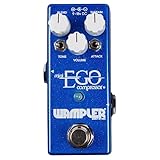
I have used the full-size Wampler Ego for years, so when the Mini Ego came out, I was skeptical that it could match the original. After three months on my pedalboard, I can say the Mini Ego delivers about 95 percent of what made the full version great. The blend control is the star here, letting you mix your dry signal back in so you keep all the natural attack and dynamics while still getting the sustain benefits.
The Mini Ego keeps the pedalboard real estate minimal at roughly 7 x 4 inches. Wampler replaced the full-size knobs with mini switches for tone (dark and bright) and attack (slow and fast). I found these switches easy to set and forget, which suits the always-on nature of most compressor use.
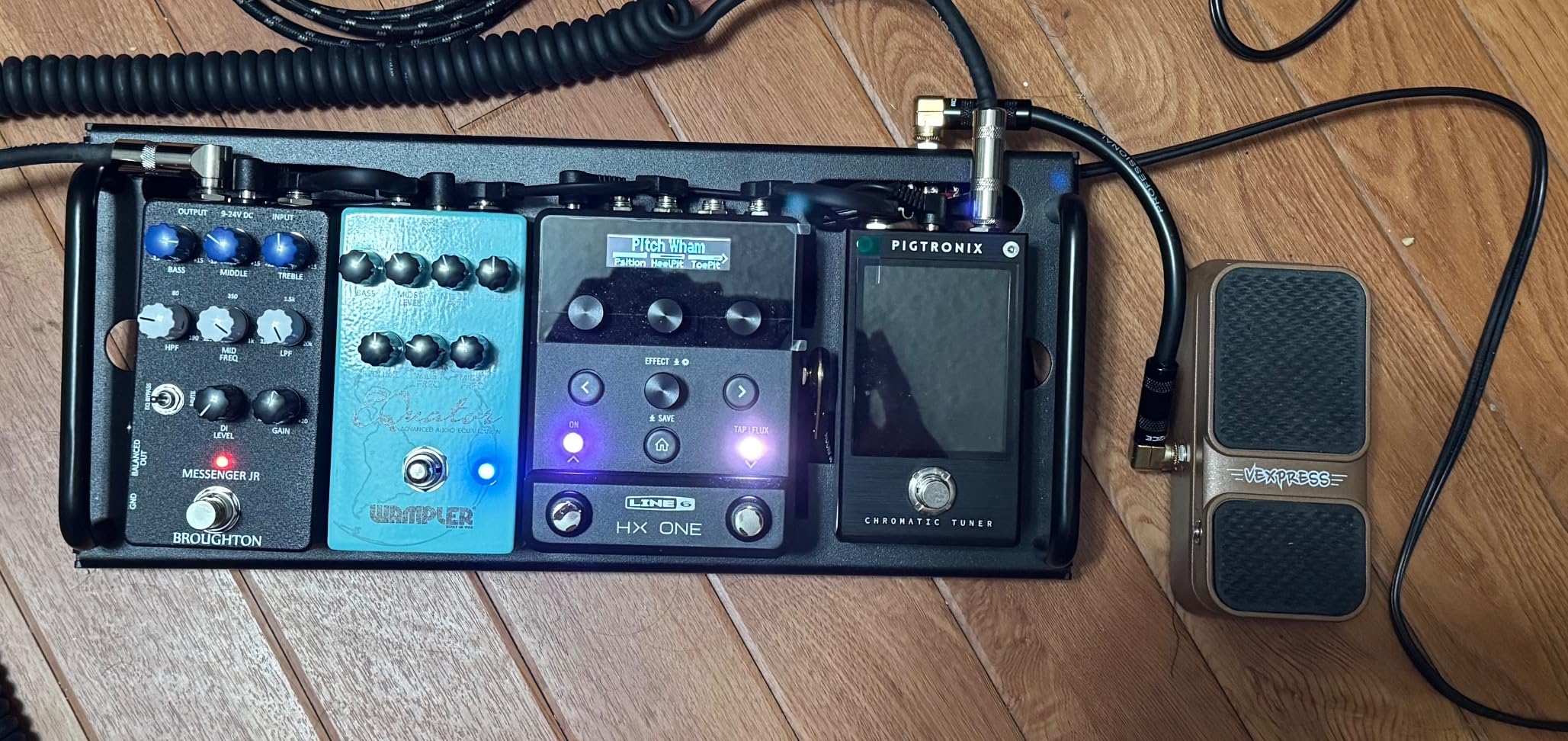
What surprised me most was how transparent this pedal sounds. With the blend knob around noon, I got studio-level parallel compression without any squash on the front of my notes. My Telecaster never sounded better, and the pedal stayed dead quiet even with single coils through a noisy power strip.
The build quality feels solid, though I would be careful with those mini switches on a crowded stage. One accidental stomp from a heavy boot could snap one off. The five-year warranty gives peace of mind, and at 14mA current draw, it is easy on your power supply budget.
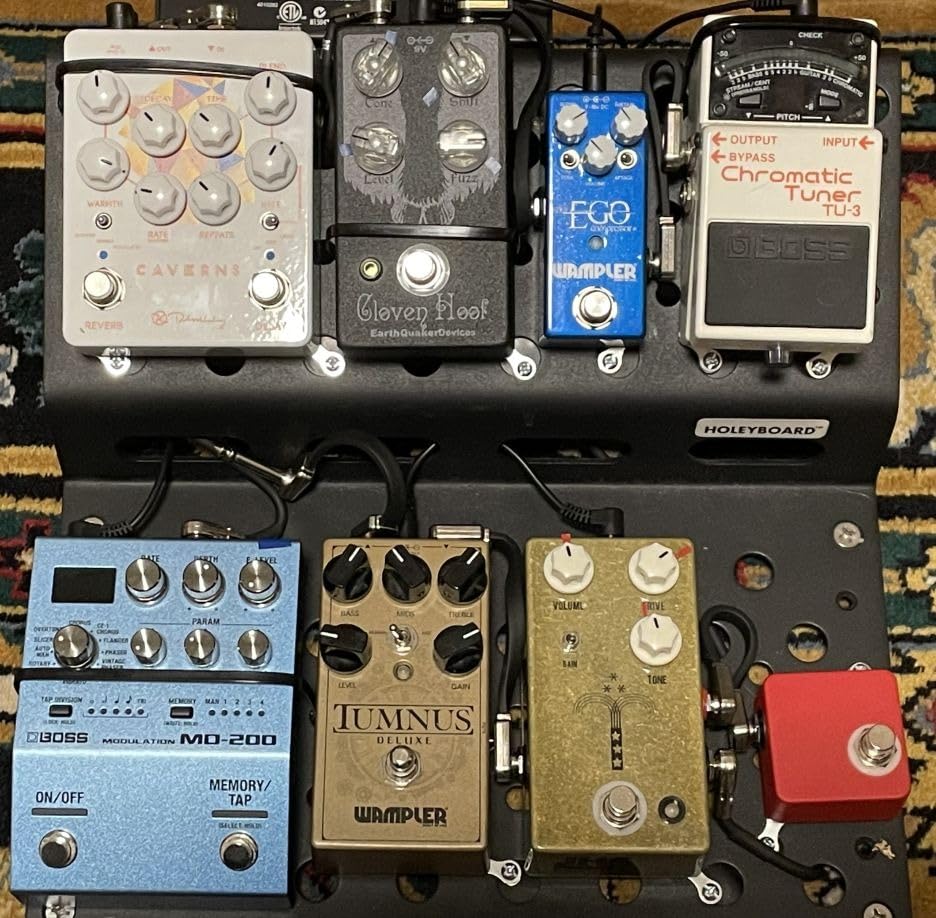
Tone and Attack Switch Configuration
The tone switch lets you choose between dark and bright voicings. I preferred the bright setting with single coils to compensate for the high-end loss that compression sometimes introduces. The attack switch changes how quickly the compressor responds to your picking, and slow attack worked best for funk rhythms where I wanted the transient to punch through.
Best Use Cases for the Mini Ego
This pedal excels as an always-on compressor for country, blues, and pop tones. If you play rock or metal with heavy distortion, you may find the compression redundant since drive pedals already compress your signal heavily. The Mini Ego shines brightest on clean and edge-of-breakup settings.
2. Boss CP-1X Compressor – Smart Multiband Compression
BOSS CP-1X Compressor Guitar Pedal (CP-1X)
MDP multiband compression
Adapts to every register
Gain reduction Indicator
Boss 5-year warranty
✓ The Good
- Lush smooth sound with natural feel
- Adapts to playing dynamics automatically
- Very quiet even at high compression
- Works for guitar and bass
- Intuitive 4-knob design
✕ The Bad
- Limited sustain at very low volumes
- Less tweakability than some prefer
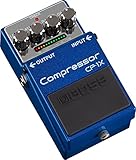
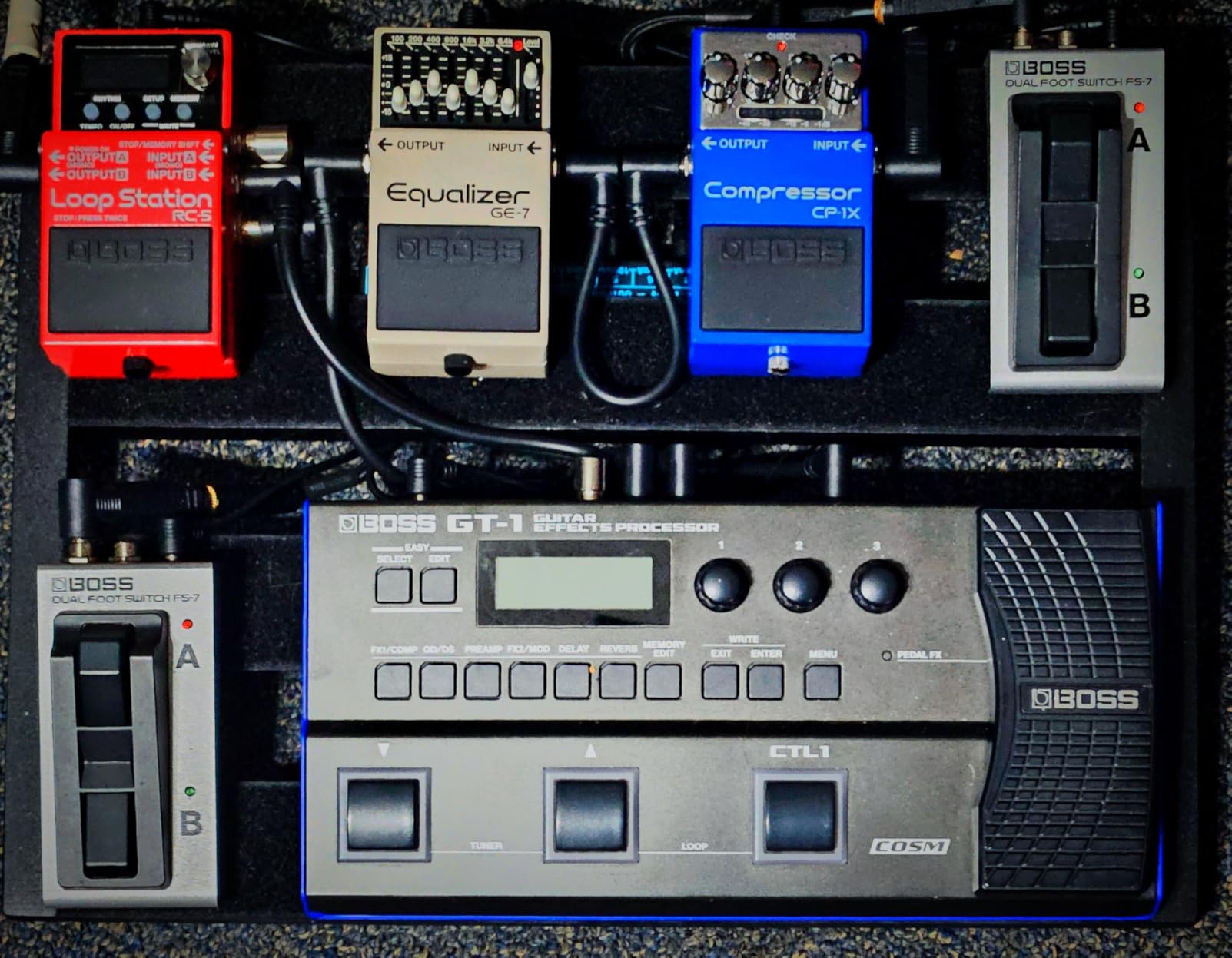
The Boss CP-1X uses what Boss calls MDP technology, which is essentially intelligent multiband compression. Instead of treating your entire frequency range the same way, the pedal analyzes your signal and applies different compression amounts across multiple frequency bands. In practice, this means your low E string and your high B string get treated differently, which is a game-changer for chord work.
I tested the CP-1X through both a Fender Twin Reverb and a small practice amp. The pedal delivered lush, smooth compression that felt bouncy and responsive under my fingers. Unlike traditional compressors that can squash your tone flat, the CP-1X preserved my musical expression while tightening everything up.
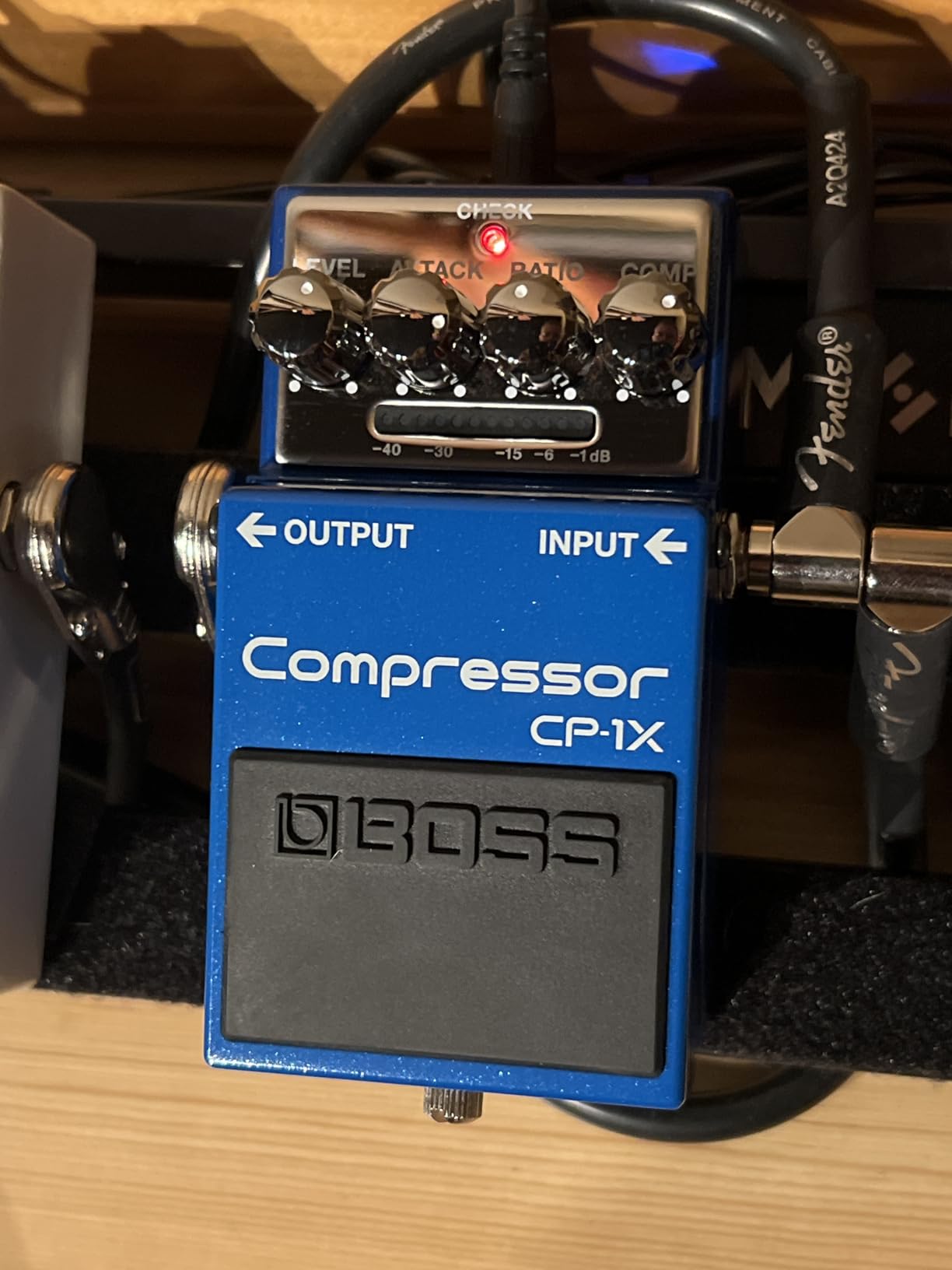
The four-knob layout is refreshingly simple compared to studio compressors with eight or more controls. You get Level, Comp, Attack, and a gain reduction indicator that lights up to show how much compression is happening in real time. I found myself glancing at that indicator constantly during my first week of use.
Boss construction is legendary for a reason. This pedal will survive drops, spills, and decades of gigging. The five-year warranty backs that up, and the buffered bypass is actually a benefit here since it drives long cable runs without signal loss.
MDP Technology Explained Simply
Think of MDP as having multiple compressors running simultaneously, each handling a different frequency range. When you play a low note, the low-frequency compressor engages. Play a high chord, and the high-frequency side takes over. This prevents the muddiness that single-band compressors can introduce.
Who Benefits Most From the CP-1X
Rhythm guitarists and players who use a lot of chord voicings will get the most out of this pedal. The multiband approach keeps complex chords clear and defined. Soloists who want a traditional squash effect might prefer something more straightforward like the MXR Dyna Comp.
3. MXR Dyna Comp – The Nashville Studio Standard
MXR® Dyna Comp® Compressor
Nashville studio standard
OTA compressor circuit
Sensitivity and output knobs
9V battery or adapter
✓ The Good
- Iconic country squash tone
- Versatile across many genres
- Adds sustain and punch to clean tones
- Sturdy metal construction
- Good value at under $100
✕ The Bad
- Can add noise to already noisy rigs
- Sensitivity knob needs careful adjustment
- Not true bypass
The MXR Dyna Comp is the compressor pedal that defined country guitar tone. This OTA-based compressor has been a Nashville studio standard for decades, and for good reason. When you hear that percussive, squashed chicken-pickin’ sound in your head, this is likely the pedal creating it.
I ran the Dyna Comp through my pedalboard for a month of country and blues gigs. The two-knob design is beautifully simple: Output controls your level, and Sensitivity sets the compression amount. Crank the sensitivity and you get that classic squash. Back it off to around 9 o’clock and you get subtle smoothing that works for almost any genre.
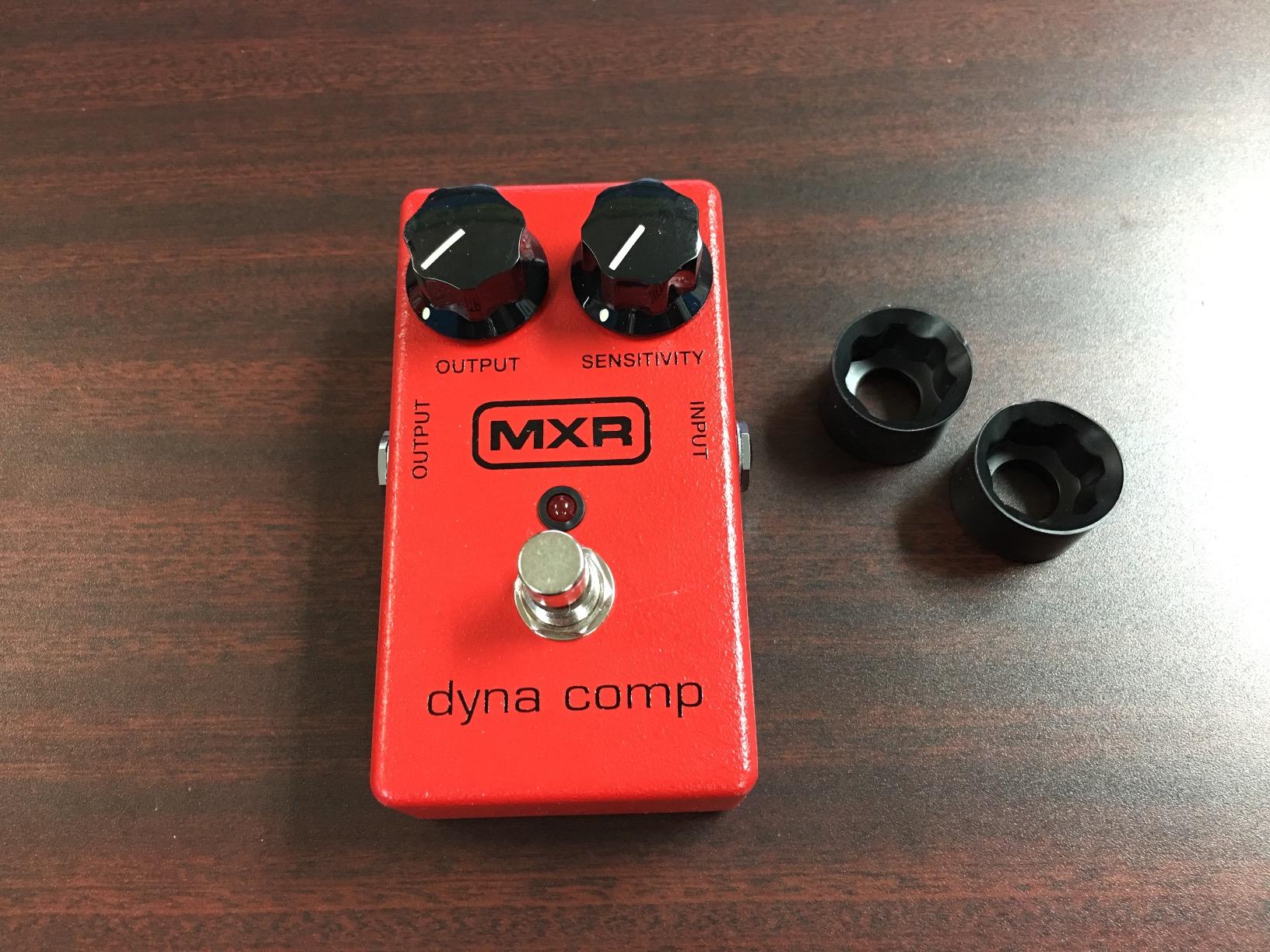
The Dyna Comp adds noticeable sustain and punch to clean tones. My Stratocaster sounded fuller and more articulate with this pedal engaged. It works equally well with humbuckers, though I found the effect more dramatic with single coils.
The main drawback is noise. This pedal can amplify existing noise in your signal chain, especially at high sensitivity settings. If your rig is already noisy, the Dyna Comp will make it worse. I recommend using a noise gate downstream if you push the sensitivity past noon.
Setting the Sensitivity Knob
The Sensitivity control is the heart of this pedal, and it takes some experimentation. I found that anything above 2 o’clock introduces too much squash for most applications unless you are specifically going for that country sound. Around 10 to 11 o’clock gives a transparent smoothing that works for blues and rock.
Using the Dyna Comp as a Clean Boost
With the Sensitivity at minimum and the Output cranked, the Dyna Comp functions as a clean boost. This makes it a dual-purpose pedal that can push your amp harder for solos. It is one of the reasons this pedal has stayed on so many professional pedalboards.
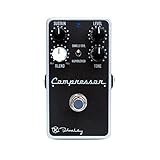
4. Keeley Compressor Plus – Industry Standard Transparency
Keeley Compressor Plus Pedal, Black (KCompPlus)
Ross circuit based
Blend and tone controls
Release switch for pickup type
2 year warranty
✓ The Good
- Blend control for parallel compression
- Tone knob preserves harmonics
- Release switch optimizes for single coils or humbuckers
- Transparent quiet operation
- Suitable for bass guitar
✕ The Bad
- LED indicators can be confusing
- Blue LED is very bright
- Some find it overpriced at MSRP
The Keeley Compressor Plus is widely considered the industry standard for transparent compression. Based on a modified vintage Ross compressor circuit, Keeley has added the features that players actually asked for: a blend control, a tone knob, and a release switch that adapts the pedal to your pickup type.
I tested the Keeley extensively with both single coils and humbuckers. The release switch made an audible difference when switching between my Telecaster and my Les Paul. Single coils benefited from the faster release setting, while humbuckers sounded more natural with the slower release.
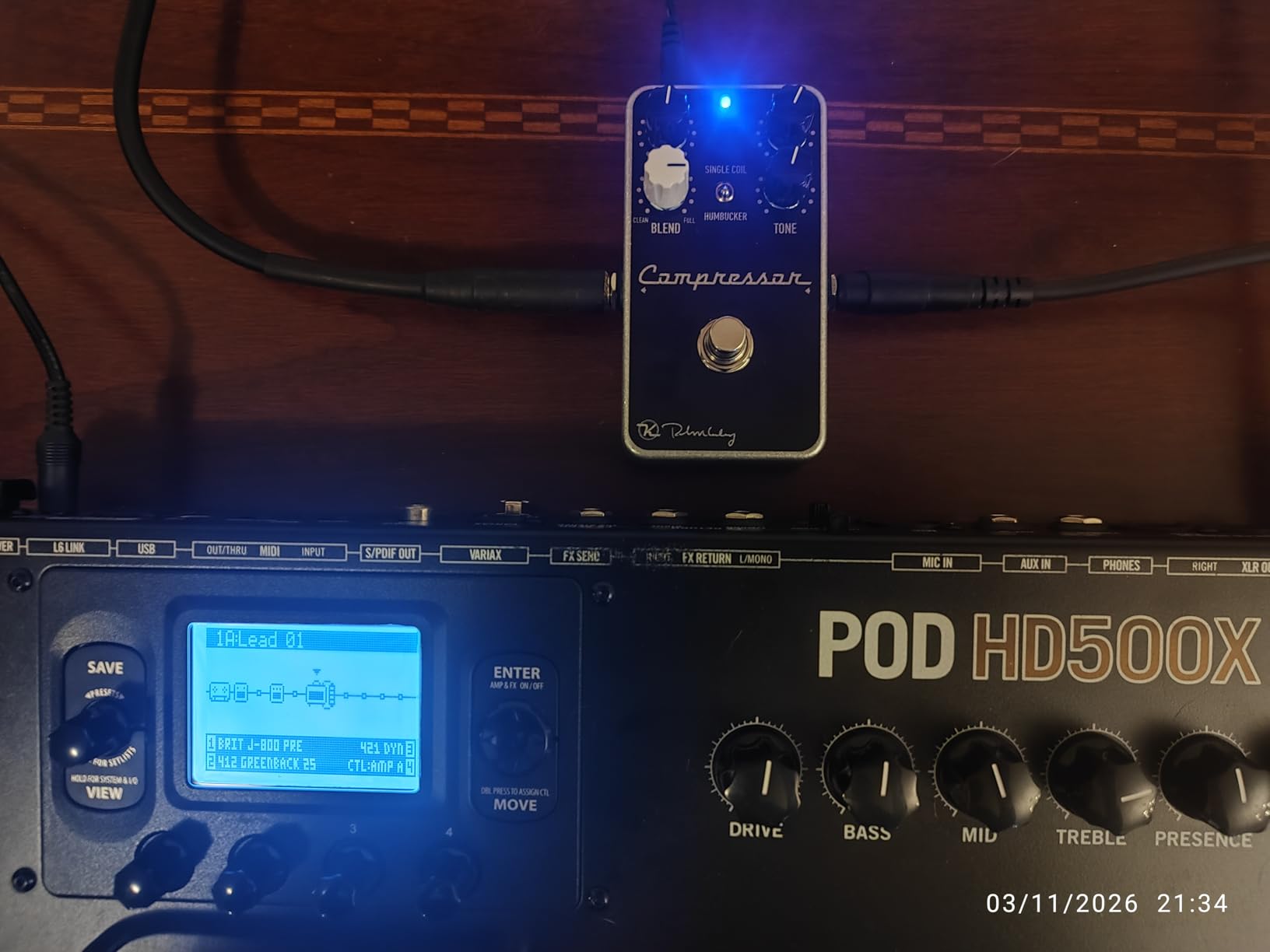
The blend control is what sets this pedal apart from the original Keeley two-knob compressor. By mixing your dry signal back in, you can get all the sustain benefits of heavy compression while keeping the natural attack of your picking. The tone knob restores the upper harmonics that compression often rolls off.
This pedal is exceptionally quiet. Even at high compression settings with single-coil pickups, I heard minimal noise. The full frequency range also makes it suitable for bass guitar, which is a nice bonus if you play both instruments.
Single Coil vs Humbucker Release Switch
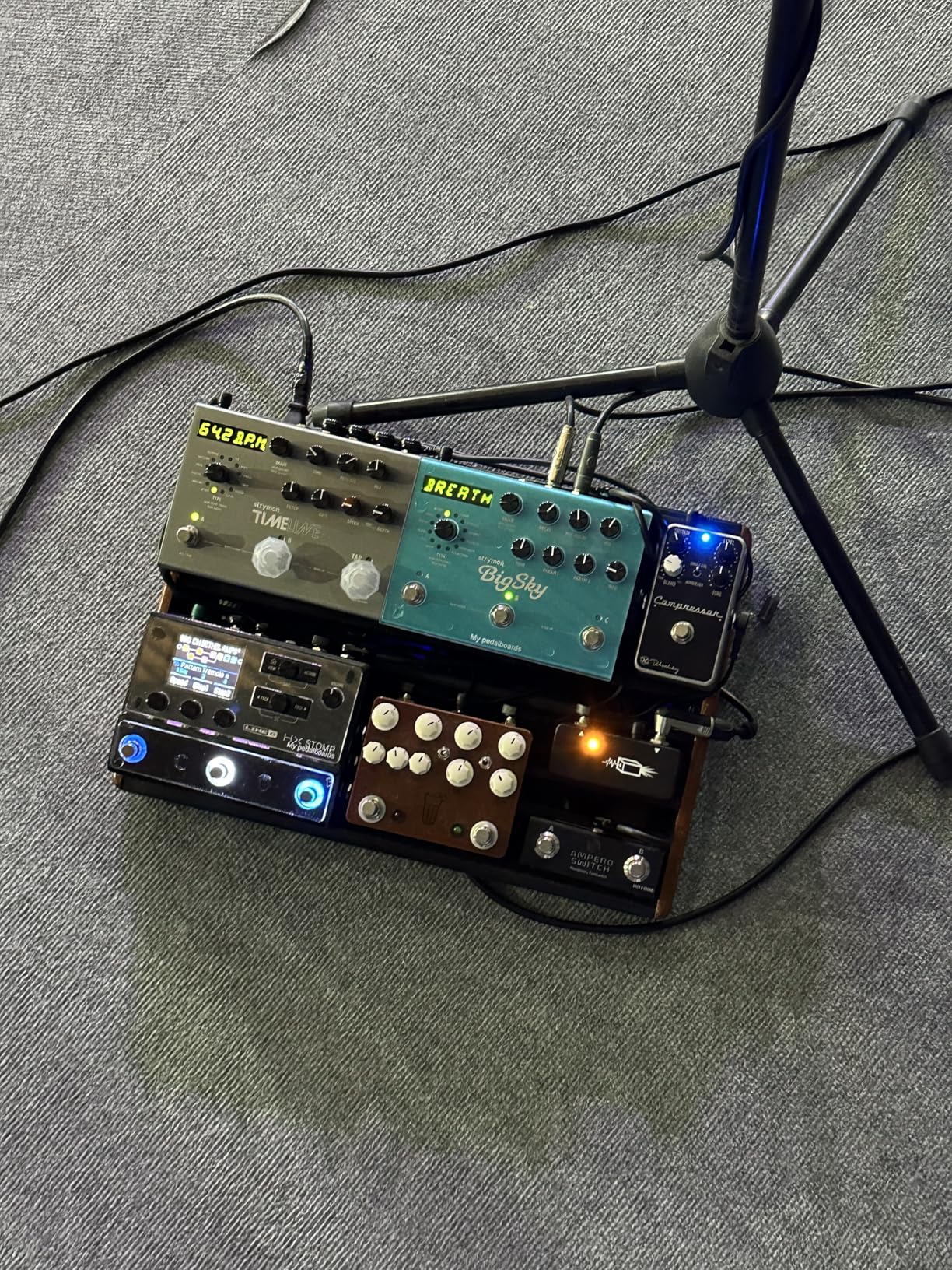
The release switch is labeled with single coil and humbucker icons. Single coils produce less output and benefit from a faster release that keeps the compression responsive. Humbuckers have hotter output and sound more natural with a slower release that lets notes decay gradually.
Why the Keeley Dominates Forum Discussions
On Reddit and gear forums, the Keeley Compressor Plus is consistently recommended as the best value in compression. It costs less than boutique options like the Origin Effects Cali76 while delivering tone that satisfies working professionals. The 817 reviews and number-one ranking in its Amazon category reflect this reputation.
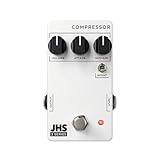
5. JHS 3 Series Compressor – American Made Simplicity
JHS 3 Series Compressor
Made in Kansas City USA
Attack and Sustain knobs
Bright toggle switch
4 year warranty
✓ The Good
- Made in USA with solid build quality
- Simple controls easy to dial in
- Attack and Sustain provide good flexibility
- Bright toggle prevents tone loss
- Excellent value at $99
✕ The Bad
- No blend control
- Can be noisy with certain setups
JHS Pedals built the 3 Series as an affordable, no-nonsense line, and their compressor is a standout. Made in Kansas City, this pedal offers a straightforward three-knob layout with Attack, Sustain, and Volume controls plus a Bright toggle switch. It is one of the best compressor pedals for players who want quality compression without a wall of knobs.
I appreciated how quickly I could dial in a good sound. Within five minutes of unboxing, I had a country-ready tone with the Sustain at noon, Attack at 10 o’clock, and the Bright toggle engaged. The Bright switch counteracts the high-frequency loss that compression can cause, and I found it essential with single coils.
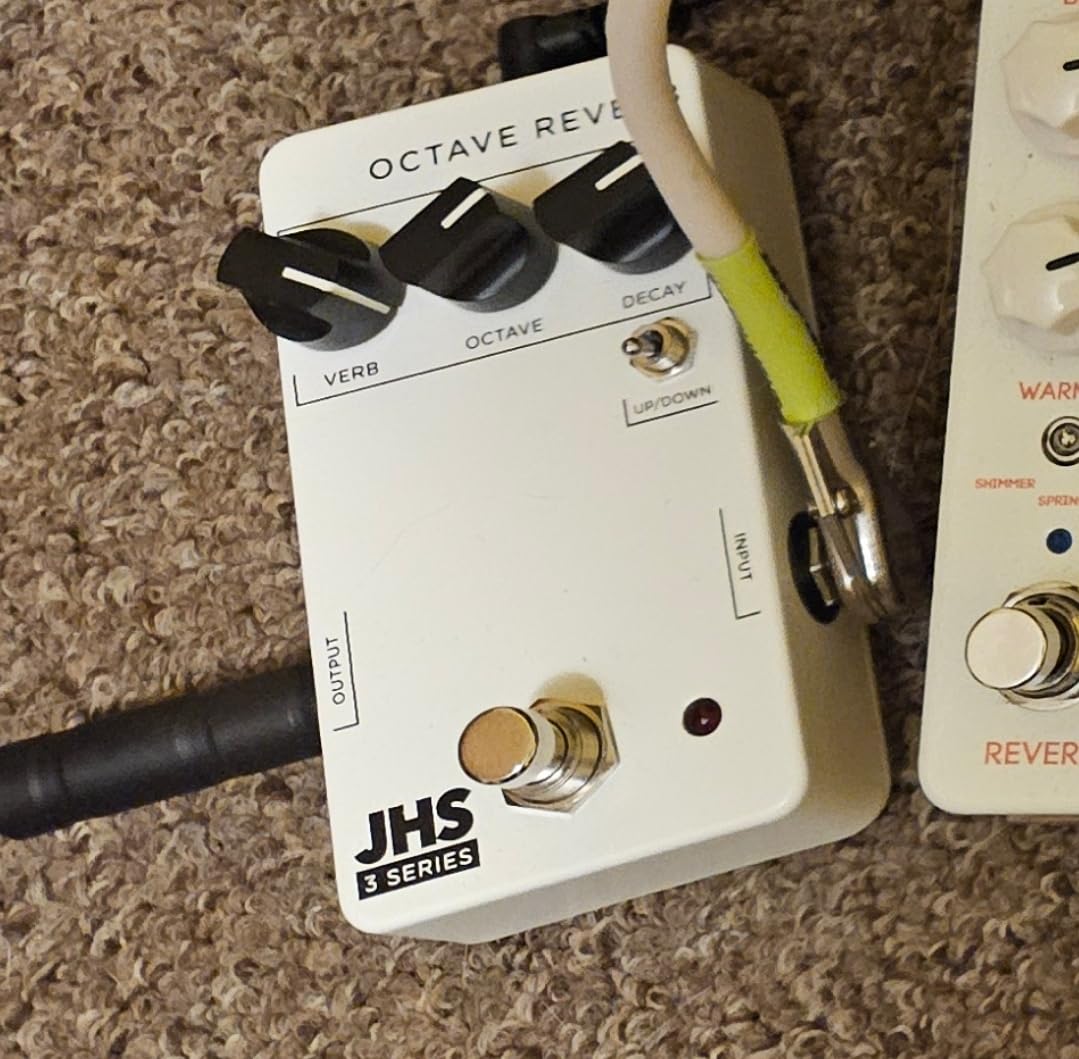
The build quality reflects JHS attention to detail. The footswitch feels robust, the knobs have satisfying resistance, and the enclosure is compact enough for tight pedalboards. At 8mA current draw, it is one of the most power-efficient pedals on this list.
The main omission is a blend control. If you are used to parallel compression from the Wampler or Keeley, the JHS will feel more traditional. It gives you that classic squash when you want it, but you cannot mix in dry signal for a more transparent sound.
The Bright Toggle Difference
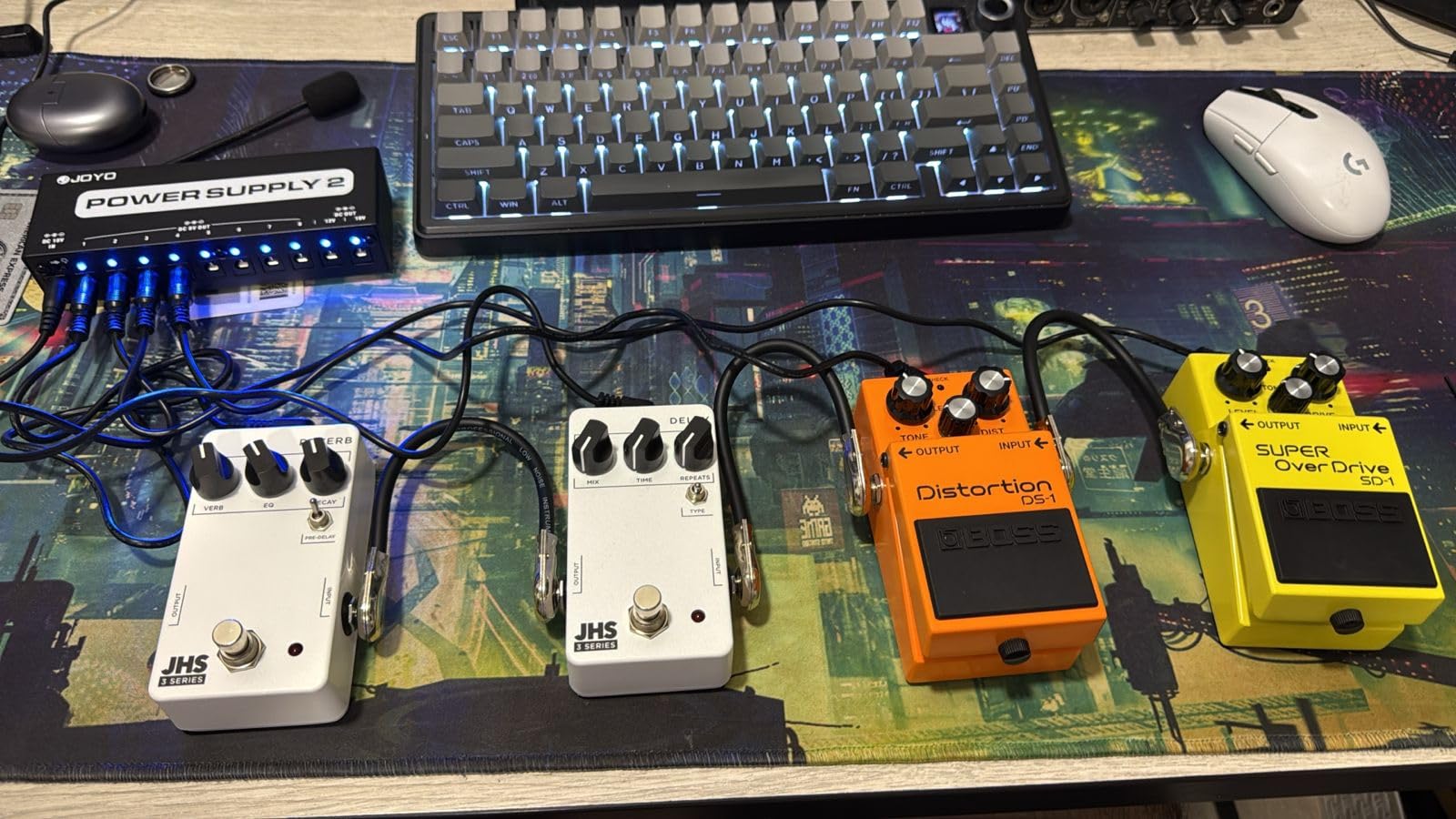
The Bright toggle adds presence to your compressed signal. With single-coil pickups, I noticed the compressed tone could sound slightly muffled without this switch engaged. Humbuckers sounded fine either way, so your mileage will depend on your pickups.
Value Proposition at This Price Point
For $99 with a four-year warranty and American construction, the JHS 3 Series delivers exceptional value. It competes directly with the MXR Dyna Comp but offers an Attack control that the MXR lacks. For beginners building their first pedalboard, this is hard to beat.
6. Boss CS-3 Compressor/Sustainer – The Workhorse Classic
Boss CS-3 Compressor/Sustainer Pedal
Four knob layout
Level Tone Attack Sustain
Low-noise analog circuit
Boss 5-year warranty
✓ The Good
- Excellent sustain without distortion
- Clean sound quality
- Precise tonal shaping with 4 knobs
- Durable Boss construction
- Works for guitar and bass
✕ The Bad
- Not true bypass
- Can introduce noise in some pedal chains
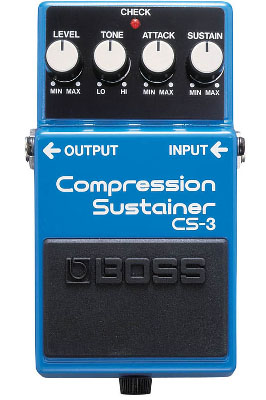
The Boss CS-3 has been on more pedalboards than possibly any other compressor in history. This four-knob pedal offers Level, Tone, Attack, and Sustain controls, giving you more tonal shaping options than most competitors. It is a true workhorse that has earned its place through decades of reliable service.
I tested the CS-3 alongside the newer CP-1X, and each has its strengths. The CS-3 delivers more traditional compression with that familiar Boss character. The Sustain knob adds gain reduction smoothly, and I could push it hard for lead boosts without introducing distortion.
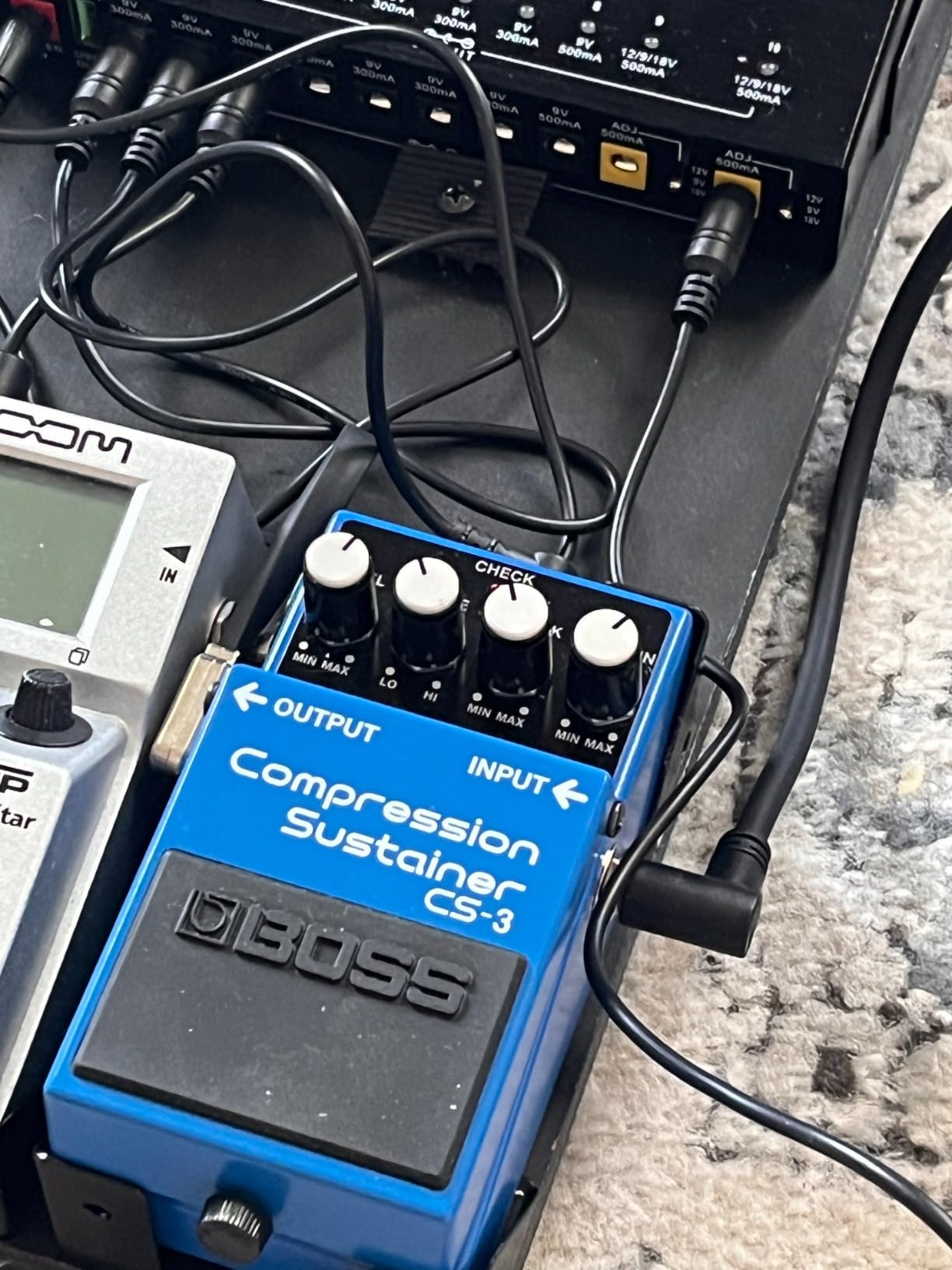
The Tone knob is a welcome addition that the MXR Dyna Comp lacks. Being able to brighten or darken your compressed signal gives you much more control over your final tone. I found myself setting the Tone around 1 o’clock to compensate for the warmth that heavy compression adds.
The CS-3 is not true bypass, which means it colors your tone slightly even when bypassed. For most players, the Boss buffer is actually beneficial because it drives long cable runs. Purists who want absolutely zero tone coloration may prefer a true bypass alternative.
Dialing In the Four Knobs
With four controls, the CS-3 can feel overwhelming at first. A good starting point is Sustain at noon, Tone at 1 o’clock, Attack at noon, and Level adjusted for unity gain. From there, increase Sustain for more compression or decrease it for subtle smoothing.
CS-3 vs CP-1X: Which Boss Compressor?
The CS-3 offers traditional single-band compression with more tweakability. The CP-1X uses smarter multiband processing but has fewer knobs. Beginners may prefer the CP-1X for its foolproof operation, while experienced players who want manual control will gravitate toward the CS-3.
7. Xotic SP Compressor – Boutique Tone in a Tiny Package
Xotic SP Compressor Pedal
Compact size
Blend and volume knobs
Hi Lo Mid internal switch
Transparent OTA compression
✓ The Good
- Transparent sound quality
- Blend knob for parallel compression
- Compact pedalboard-friendly size
- Internal dip switches for customization
- Boutique sound at reasonable price
✕ The Bad
- Can introduce noise at high gain
- Thin housing may tip with cable weight
The Xotic SP Compressor packs boutique-quality compression into one of the smallest enclosures on this list. Based on the legendary Ross compressor circuit, this pedal offers a blend knob for parallel compression and internal dip switches that let you fine-tune the compression character.
I was struck by how transparent this pedal sounds. With the blend knob around noon, the compression was nearly invisible to my ear while still tightening my dynamics. The SP Compressor has been compared favorably to the Keeley two-knob and Wampler Ego, and many forum users actually prefer its simpler approach.
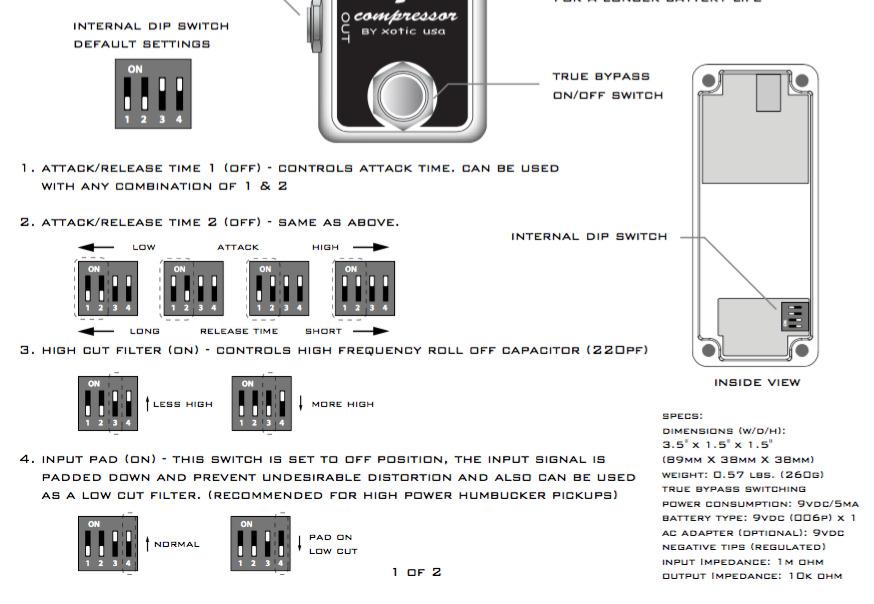
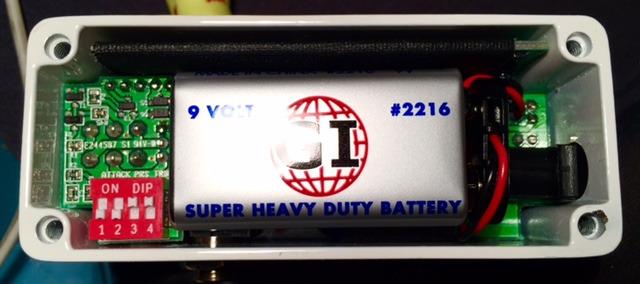
The Hi/Lo/Mid internal switch changes the compression ratio and character. I opened the back panel and experimented with all three settings. The Lo setting gave me subtle, transparent compression. The Mid setting was my default for most playing. The Hi setting delivered aggressive squash for country chicken-pickin’.
The compact size is perfect for crowded pedalboards. The pedal measures roughly 4 x 2.5 inches, which is smaller than nearly everything else on this list. The tradeoff is that the thin housing can tip forward when you have heavy right-angle plugs connected.
Internal Dip Switch Settings
The internal dip switches let you choose between low, medium, and high compression ratios without changing the external knob positions. This makes the pedal versatile despite having only two visible knobs. I recommend trying all three settings to find your preferred compression intensity.
Comparing the SP to the Keeley Plus
Both pedals are based on the Ross circuit and offer transparent compression. The Keeley Plus has a tone knob and a release switch that the Xotic lacks, giving it more tonal flexibility. The Xotic is smaller and simpler, which some players prefer. Your choice depends on whether you value compact simplicity or tonal control.
8. TC Electronic Forcefield Compressor – Multiband Versatility
TC Electronic FORCEFIELD COMPRESSOR Classic Compressor/Limiter Pedal with Endless Sustain
Multiband compression
Toneprint editor
Vintage and Spectra modes
Blend knob
✓ The Good
- Extensively customizable via Toneprint editor
- Blend knob for parallel compression
- Versatile multiband modes
- Compact and well-built
✕ The Bad
- Requires learning Toneprint software
- Autogain can introduce hiss if misconfigured
The TC Electronic Forcefield Compressor (also known as the Hypergravity) is a digital multiband compressor that offers remarkable flexibility. The standout feature is the Toneprint editor, which lets you create custom compression settings on your computer and beam them to the pedal via USB.
I spent a weekend exploring the Toneprint library and was impressed by the range of sounds available. You can download settings created by professional players or design your own from scratch. The Vintage mode emulates classic optical compression, while Spectra mode provides studio-style multiband processing.
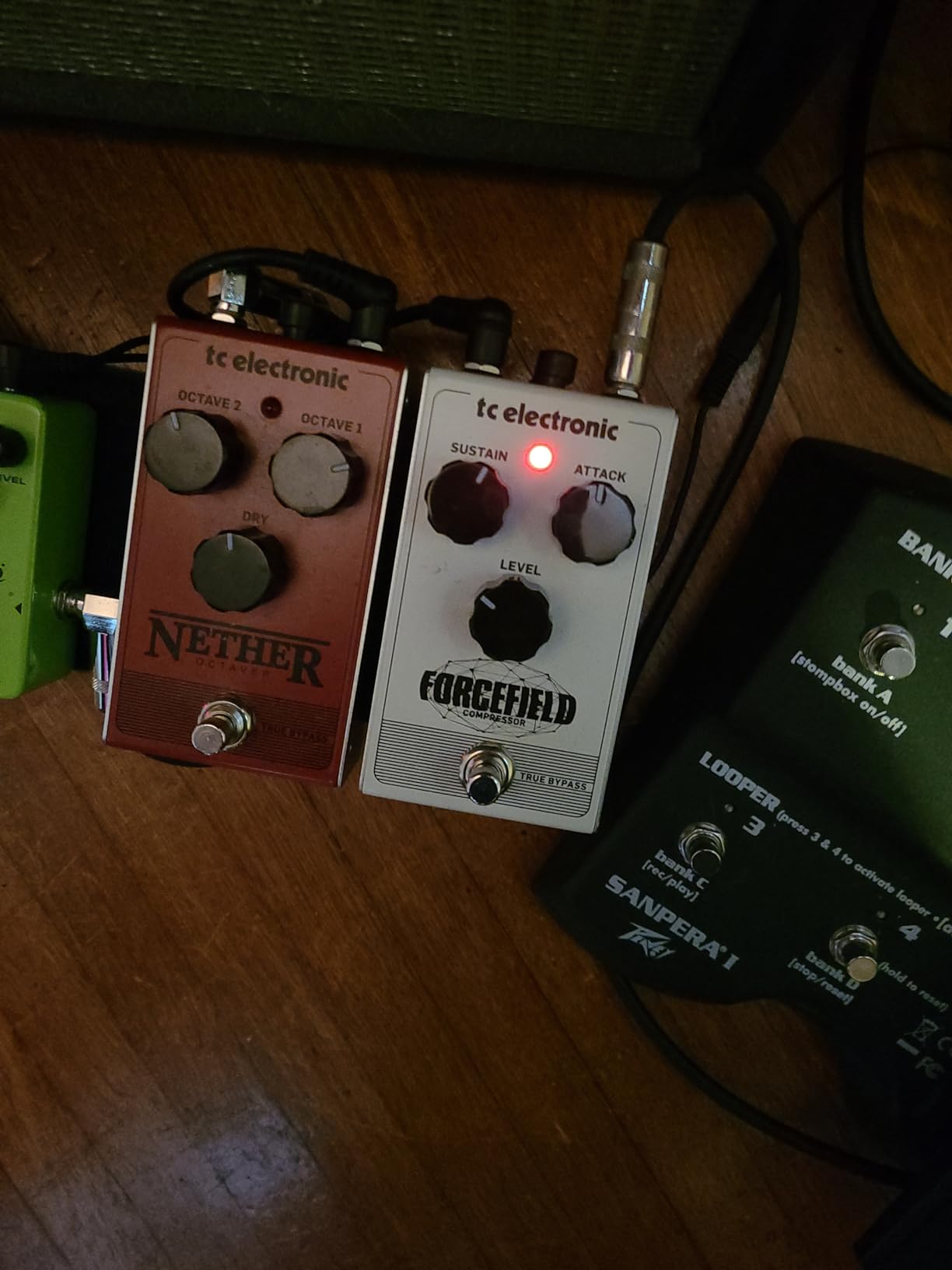
The blend knob is essential here. With the blend at noon, you get parallel compression that keeps your natural dynamics intact. Crank it fully and you get the full force of the multiband engine, which can dramatically reshape your tone.
The learning curve is the main barrier. If you just want to plug in and play, the Toneprint system adds complexity. But if you enjoy tweaking and want maximum control over your compression character, the Forcefield rewards the effort you put in.
Toneprint Editor Walkthrough
The Toneprint software is a free download that gives you control over threshold, ratio, attack, release, makeup gain, and blend. You can save multiple presets and switch between them. The interface is visual and intuitive once you spend a few minutes with it.
Best Settings for Live Performance
For live use, I recommend the Vintage mode with the blend around 11 o’clock. This gives you that classic optical warmth without overpowering your core tone. Save your Toneprint settings to the pedal so you do not need a computer at the gig.
9. Donner Ultimate Comp – Best Budget Compressor Under $50
Donner Compressor Pedal, Ultimate Comp 2 Modes Compression Effect Pedal Pure Analog for Electric Guitar and Bass True Bypass
True bypass
COMP TONE LEVEL knobs
Normal and Treble modes
Pure analog circuit
✓ The Good
- Excellent value for the price
- True bypass design
- Quiet operation for the cost
- Treble and Normal mode switch
- Compact and sturdy construction
✕ The Bad
- Requires external power supply no battery option
- Less extreme compression than MXR Dyna Comp
The Donner Ultimate Comp proves that you do not need to spend a fortune to get usable compression. At under $40, this pedal delivers warm, smooth compression that satisfies most players. It is one of the best compressor pedals for beginners who are just exploring what compression can do for their tone.
The three-knob layout is straightforward: COMP controls compression intensity, TONE adjusts brightness, and LEVEL sets output volume. The Normal and Treble mode switch gives you two distinct compression characters. I found Normal mode suited for rhythm work while Treble mode added sparkle for lead lines.
True bypass is a nice touch at this price point. When the pedal is off, your signal passes through unaffected, which is important for maintaining tone quality in a chain of budget pedals. The build quality is surprisingly solid for the cost, with a sturdy metal enclosure.
The main limitation is that the compression is less pronounced than what you get from premium pedals like the MXR Dyna Comp. If you want extreme squash, the Donner will not deliver. But for subtle smoothing and sustain enhancement, it does the job admirably.
What You Sacrifice at This Price
The Donner lacks a blend control, which means all your signal goes through the compression circuit. This can squash your attack more than parallel compression designs. There is also no battery option, so you need a 9V power supply.
Is It Worth It for First-Time Buyers?
Absolutely. If you have never used a compressor and want to understand what the effect does before investing more, the Donner is the perfect entry point. You can always upgrade later, and at this price, the risk is minimal.
10. Fender The Bends Compressor – Clean and Subtle
Fender The Bends Compressor Pedal
Dual internal audio paths
LED backlit knobs
Jewel LED indicator
Magnetically latched battery door
✓ The Good
- Subtle transparent compression
- Very quiet operation
- LED backlit knobs look great
- Does not color natural tone
- Quality Fender construction
✕ The Bad
- LED brightness may be too intense for some
- Limited availability
- Some quality control concerns reported
Fender entered the compressor pedal market with The Bends, and their approach prioritizes subtlety and transparency. This pedal uses dual internal audio paths for low noise and a high-current symmetrical control path for fast response. The result is compression that you feel more than you hear.
I tested The Bends through a Fender Deluxe Reverb, which felt like the natural pairing. The compression was smooth and unobtrusive, adding sustain and presence without squashing my dynamics. Players who want that always-on smoothing effect will appreciate what Fender has done here.
The LED backlit knobs are a genuinely useful feature for dark stages. Being able to see your knob positions during a gig without a flashlight is something other manufacturers should copy. The Fender amp Jewel LED adds a touch of brand heritage that looks great on any pedalboard.
The magnetically latched battery door is a small but thoughtful detail. It makes battery changes tool-free, which is a relief compared to the screws and clips on other pedals. Though at 15mA, you will want a power supply for regular use.
The Transparency Tradeoff
Fender designed this pedal to be subtle, which means it will not give you the aggressive squash that country players often want. If you need pronounced compression effects, look at the MXR Dyna Comp or the JHS 3 Series instead. The Bends excels at transparent, always-on smoothing.
Best Applications for The Bends
This pedal is ideal for blues, jazz, pop, and acoustic-electric players who want to tighten their tone without obvious compression artifacts. It is less suited for country chicken-pickin’ or funk where you want the compression to be a audible part of your sound.
How to Choose the Best Compressor Pedal for Your Needs
Choosing the right compressor pedal depends on your playing style, your rig, and what you want compression to do for your tone. Our testing revealed that no single compressor is perfect for every situation, so understanding the key factors will help you make the right choice.
Understanding Compressor Types
The four main compressor circuit types each have distinct characteristics:
Optical compressors use a light source and photoresistor to control gain reduction. They respond smoothly and naturally, making them popular for transparent compression. The Keeley Compressor Plus and Boss CS-3 fall into a related category based on vintage Ross-style circuits.
VCA compressors use a voltage-controlled amplifier for precise, fast gain reduction. These are common in studio settings and offer excellent control over attack and release characteristics.
FET compressors use field-effect transistors to emulate the warm character of vintage studio gear. They add musical coloration that many players find pleasing for guitar.
OTA compressors use operational transconductance amplifiers and are the basis for classic designs like the MXR Dyna Comp. They deliver that iconic squash tone beloved by country players.
Multi-band compressors like the Boss CP-1X and TC Electronic Forcefield split your signal into frequency bands and process each independently. This prevents the muddiness that single-band compressors can introduce with complex chords.
Key Controls Explained
Threshold determines the input level at which compression begins. Signals below the threshold pass through unaffected, while signals above it get compressed.
Ratio controls how aggressively the compressor reduces signals above the threshold. A 4:1 ratio means that for every 4dB of input above threshold, only 1dB passes through.
Attack sets how quickly the compressor responds when the signal exceeds the threshold. Fast attack catches transients immediately, while slow attack lets the initial pick attack through.
Release determines how quickly the compressor stops compressing after the signal drops below the threshold. Fast release sounds punchy, while slow release sounds smooth.
Blend mixes your dry uncompressed signal with the compressed signal. This is one of the most valuable features on modern compressor pedals because it lets you get sustain benefits without losing dynamics.
Where to Place a Compressor in Your Pedal Chain
The most common position for a compressor is near the beginning of your signal chain, right after your tuner. This lets the compressor work with your guitar’s raw signal before any coloration from drive or modulation effects.
Some players prefer placing the compressor after their overdrive pedals. This gives a different character because the compressor is processing an already-compressed signal. Experiment with both positions to hear which works better for your rig.
If you use a compressor for clean tone smoothing and a separate setting for leads, consider a pedal with a blend knob. The blend lets you maintain your core tone while adding compression only as much as you need.
True Bypass vs Buffered Bypass
True bypass means your signal passes through the pedal unaffected when it is off. This preserves tone in short pedal chains. Buffered bypass adds a small buffer circuit that drives long cable runs and prevents high-frequency loss.
If you have a large pedalboard with many true bypass pedals, a buffered pedal like the Boss CS-3 or CP-1X can actually improve your overall tone by preventing signal degradation through long cable runs.
Extended Range and 7-String Guitar Compatibility
Players using 7-string guitars or baritone tunings need a compressor that handles low frequencies without muddying the tone. Multi-band compressors like the Boss CP-1X excel here because they process low and high frequencies independently. The Keeley Compressor Plus also handles extended range well thanks to its full frequency response.
Frequently Asked Questions About Compressor Pedals
What does a compressor pedal do?
A compressor pedal evens out your guitar’s volume dynamics by reducing loud signals and boosting quiet ones. This creates a more consistent performance with enhanced sustain, added presence, and tighter articulation across your playing.
What compressor pedal do professionals use?
Professional guitarists commonly use the Keeley Compressor Plus, Origin Effects Cali76, and Wampler Ego compressors. The Keeley Compressor Plus is frequently cited as the industry standard for value and transparent tone quality.
How do I choose a compressor pedal?
Choose a compressor pedal by considering your playing style, whether you need a blend control for parallel compression, the compressor type (optical, VCA, FET, OTA, or multiband), your budget, and whether you need true bypass or buffered bypass for your pedal chain.
What is the best budget compressor pedal?
The Donner Ultimate Comp is the best budget compressor pedal under $50, offering true bypass, warm analog compression, and Normal and Treble modes. The JHS 3 Series at $99 is the best value option with American-made construction and a four-year warranty.
Should I use a compressor pedal?
You should use a compressor pedal if you play clean tones, want enhanced sustain, need even dynamics for recording, or play styles like country, blues, funk, or pop. Players who exclusively use heavy distortion may find compression redundant since drive pedals already compress the signal.
Where should a compressor pedal go in my chain?
Place your compressor pedal near the beginning of your chain, right after your tuner and before drive pedals. This lets it work with your guitar’s raw signal. Some players place it after overdrive for a different compressed character, so experiment with both positions.
Final Thoughts on the Best Compressor Pedals in 2026
After testing all ten pedals on this list through real gigs and recording sessions, the Keeley Compressor Plus remains our top pick for most players. Its blend control, tone knob, and release switch cover every base, and the transparent Ross-based tone satisfies professionals and hobbyists alike.
For budget-conscious buyers, the JHS 3 Series and Donner Ultimate Comp prove that you do not need to spend heavily to get usable compression. And for players who want cutting-edge technology, the Boss CP-1X with its MDP multiband processing represents the future of guitar compression.
The best compressor pedals are the ones that complement your playing style and rig. Consider what you need from compression, whether that is country squash, transparent smoothing, or studio-grade parallel processing. Every pedal on this list earned its place through real-world testing, and any of them will serve you well in 2026 and beyond.