12 Best Acoustic Guitar Microphones (August 2026) Expert Reviews
Recording an acoustic guitar that sounds as rich and alive in your mix as it does in the room is one of the biggest challenges for home studio owners and seasoned engineers alike. The instrument produces a complex blend of fundamentals, harmonics, body resonance, and room reflections that most microphones simply flatten or color in unflattering ways. That is why choosing from the best acoustic guitar microphones available in 2026 matters so much for your final recording quality.
I have spent years tracking down the right microphones for different acoustic recording scenarios, from quiet fingerstyle sessions in bedroom studios to full-band live performances on loud stages. Along the way, our team compared 12 of the most popular options across every price tier, from budget dynamics under $40 to premium studio condensers pushing past $400. Each mic was tested with steel-string dreadnoughts, nylon-string classicals, and smaller parlor guitars to see how they handled different body sizes and tonal characteristics.
What I learned is that there is no single microphone that wins every situation. A condenser that captures breathtaking detail in a treated studio can sound harsh and phasey in an untreated bedroom. A rugged dynamic that gets buried in a dense studio mix might shine on a noisy stage. This guide breaks down the best acoustic guitar microphones by their real-world strengths so you can match the right tool to your specific recording environment, playing style, and budget.
Article Includes
Top 3 Picks for Best Acoustic Guitar Microphones
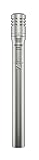
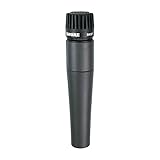

These three microphones represent the spectrum of what acoustic guitar recording demands. The Shure SM81-LC takes our editor’s choice for its pristine flat frequency response and professional-grade build that has made it a studio standard for decades. The Shure SM57 earns best value status as the most versatile microphone ever made, trusted on everything from snare drums to acoustic guitars across thousands of recordings. The LyxPro SDPC-2 pair wins our budget pick for delivering a complete stereo condenser kit with interchangeable capsules at a fraction of what competitors charge.
Whether you need the detail of a premium condenser, the ruggedness of a road-tested dynamic, or the stereo imaging of a matched pair, these picks cover the three scenarios that matter most. Below we compare all 12 options and dive deep into what makes each one work for specific acoustic guitar situations.
Best Acoustic Guitar Microphones in 2026
| Product | Key Specs | Action |
|---|---|---|
| Shure SM81-LC Condenser |
|
Check Latest Price |
| Shure SM57 Dynamic |
|
Check Latest Price |
| LyxPro SDPC-2 Stereo Pair |
|
Check Latest Price |
 Sennheiser e 609 Silver Sennheiser e 609 Silver |
|
Check Latest Price |
 Audio-Technica PRO 35 Clip-on Audio-Technica PRO 35 Clip-on |
|
Check Latest Price |
 LR Baggs Anthem Pickup LR Baggs Anthem Pickup |
|
Check Latest Price |
 LR Baggs Lyric Microphone LR Baggs Lyric Microphone |
|
Check Latest Price |
 AKG P170 Small Diaphragm AKG P170 Small Diaphragm |
|
Check Latest Price |
 Audio-Technica PRO70 Lavalier Audio-Technica PRO70 Lavalier |
|
Check Latest Price |
 Behringer B 906 Dynamic Behringer B 906 Dynamic |
|
Check Latest Price |
 Seymour Duncan Woody SC Pickup Seymour Duncan Woody SC Pickup |
|
Check Latest Price |
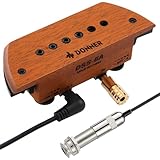 Donner DSS-6A Soundhole Pickup Donner DSS-6A Soundhole Pickup |
|
Check Latest Price |
1. Shure SM81-LC – Studio Standard Condenser
Shure SM81-LC Cardioid Condenser Instrument Microphone for Guitar, Piano, and Cymbals, Includes Swivel Adapter…
Condenser
Cardioid
20Hz-20kHz
Phantom Power
Rugged Steel
✓ The Good
- Exceptional flat frequency response
- Low self-noise for clean recordings
- Selectable bass rolloff for different guitars
- Lockable attenuator switch
- Rugged steel construction built to last
✕ The Bad
- Requires phantom power
- No cable included
- Premium price point
The first time I used the Shure SM81 on an acoustic guitar, I understood immediately why it shows up in nearly every professional studio. The detail this microphone captures is remarkable, picking up finger squeaks, pick attack, and the subtle resonance of the guitar top in a way that feels like you are sitting in front of the instrument. It has a genuinely flat frequency response from 20 Hz to 20 kHz, which means what you hear in the room is what gets recorded.
What sets the SM81 apart from other condensers I tested is its versatility through its onboard switches. The selectable low-frequency response offers flat, 6 dB/octave, or 18 dB/octave rolloff settings, which I found incredibly useful when recording a boomy dreadnought that needed the bass tamed. The 0 dB or 10 dB lockable attenuator switch handles loud sound sources without distortion, making it equally effective for live performance situations where SPL levels run high.
The cardioid polar pattern on this mic does an excellent job rejecting off-axis sound, which matters enormously when you are recording in a room that lacks acoustic treatment. I tested it in a bedroom studio with minimal treatment, and the SM81 still delivered a focused, clean signal because it naturally rejected the room reflections coming from the sides and rear. The rugged steel construction is a bonus that means this microphone will survive decades of use.
One thing to keep in mind is that this is a condenser microphone that requires phantom power to operate, so your audio interface or mixer needs to supply 48 Vdc. No cable is included, which adds to the total cost if you do not already have a quality XLR cable. These are minor considerations given the performance you get in return.
Best Recording Setup for the SM81
I had the best results positioning the SM81 about 12 inches from where the neck meets the body, aimed at the 12th fret. This placement captures a balanced blend of string articulation from the neck and warmth from the sound hole without getting too boomy. For fingerstyle playing, move the mic slightly closer to the sound hole for more body. For aggressive strumming, pulling it back to 16 inches prevents the proximity effect from muddying the low end.
Who Should Invest in the SM81
The SM81 is ideal for home studio owners who are serious about capturing professional-quality acoustic guitar recordings and have an audio interface with phantom power. If you record fingerstyle, classical guitar, or any acoustic-heavy genre where the guitar sits prominently in the mix, this microphone will reward your investment for years. It is less suited for live performers who need a feedback-resistant stage mic or for beginners on a tight budget.
2. Shure SM57 – The Legendary Workhorse
Shure SM57 Dynamic Microphone – Wired Cardioid XLR Instrument Handheld Mic for Guitar Amplifiers, Snare Drum, Percussion…
Dynamic
Cardioid
40Hz-15kHz
XLR
Pneumatic Shock Mount
✓ The Good
- Legendary durability that lasts decades
- Contoured presence boost for clarity
- Handles high SPL without distortion
- Versatile across every instrument
- Consistent sound every time
✕ The Bad
- Limited high-frequency detail compared to condensers
- Pneumatic shock mount may need adjustment
If there is one microphone every recording engineer should own, it is the Shure SM57. I have used this mic on snare drums, guitar amplifiers, brass instruments, vocals, and yes, acoustic guitars across hundreds of recording sessions. It is not the most detailed microphone on this list, but it has a contoured frequency response with a presence boost around the upper midrange that brings out the attack and clarity of acoustic strings in a way that sits naturally in a mix.
What makes the SM57 one of the best acoustic guitar microphones for many users is its simplicity and reliability. It requires no phantom power, so you can plug it into virtually any mixer, interface, or portable recorder and start tracking immediately. The cardioid pickup pattern does a solid job rejecting background noise, which is a lifesaker when recording in less-than-ideal acoustic environments. And the build quality is legendary, I have dropped mine on concrete floors more times than I can count with zero impact on performance.
Reddit users across r/audioengineering consistently recommend the SM57 as the first microphone beginners should buy, and our testing confirmed why. It will not capture the airy, detailed top end that a condenser like the SM81 delivers, but it captures a punchy, focused sound that often works better in dense rock or pop mixes where the acoustic guitar needs to cut through without fighting for space.
The frequency response tops out at 15 kHz, which means you lose some of the sparkle and harmonic content that a condenser captures. For genres where acoustic guitar detail is the focus, this trade-off may matter. For singer-songwriters recording guitar and vocals simultaneously, or for live performance, the SM57 is hard to beat.
Getting the Best Sound from an SM57 on Acoustic
Position the SM57 about 6 to 8 inches from the guitar, aimed at the area where the neck meets the body. Because it is a dynamic mic, it benefits from slightly closer placement than a condenser to capture adequate detail. If the sound is too dark, angle the mic slightly toward the sound hole for more low-end body. For a brighter, more articulate tone, aim it more toward the 12th fret area.
Ideal Use Cases for the SM57
This microphone is perfect for beginners building their first home studio, live performers who need a rugged stage mic, and anyone recording in untreated rooms where a sensitive condenser would capture too much room noise. It is also the smart choice if you record multiple instruments and want one versatile mic that handles everything well. Skip it if your primary goal is capturing the nuanced detail of solo fingerstyle guitar for audiophile recordings.
3. LyxPro SDPC-2 – Stereo Pair Value Champion
LyxPro SDPC-2 Stereo Pair Small Diaphragm Condenser Microphones, XLR Pencil Mic Set with Omni, Cardioid & Super Cardioid…
Stereo Condenser Pair
3 Interchangeable Capsules
30Hz-18kHz
XLR
Aluminum Case
✓ The Good
- Matched stereo pair for wide soundstage
- Three interchangeable polar pattern capsules
- Complete kit with case and accessories
- Outstanding value for home studios
- Ideal for acoustic guitar and piano
✕ The Bad
- Requires phantom power
- Some variability in matched pair quality
The LyxPro SDPC-2 surprised me the first time I set them up for a stereo acoustic guitar recording. Getting a matched pair of small diaphragm condenser microphones with three sets of interchangeable capsules at this price point feels almost too good to be true. The stereo image these pencils create when positioned in an XY configuration across the 12th fret is genuinely impressive for the cost.
Each microphone comes with omnidirectional, cardioid, and supercardioid capsules that screw onto the body, letting you adapt the pickup pattern to your recording environment. I found the cardioid capsules worked best for acoustic guitar in a typical home studio, offering good focus and off-axis rejection. The omni capsules were a pleasant surprise for capturing a more natural, room-inclusive sound in a well-treated space.
The frequency response spans 30 Hz to 18 kHz, which covers the full range of an acoustic guitar with room to spare. The self-noise is rated at 38 dB, which is noticeably higher than premium options like the SM81, but in practice it did not interfere with my recordings at normal gain staging levels. The complete kit includes two foam windscreens, two tilting microphone clips, and a sturdy aluminum carrying case that protects your investment.
Some users report variability between the two microphones in the matched pair, which is worth keeping in mind. For critical stereo work where perfect matching matters, you may want to test both mics on the same source and verify they respond similarly. For most home studio recording, podcasting, and live sound applications, any minor differences are inaudible in the final mix.
Stereo Recording Setup with the SDPC-2
For the best acoustic guitar results, arrange the two microphones in an XY coincident pair configuration, with the capsules angled at 90 degrees to each other and positioned about 16 inches from the 12th fret. This technique produces a wide, natural stereo image with excellent mono compatibility and no phase issues. If you want a wider, more immersive sound, try an AB spaced pair with the mics 12 to 16 inches apart, though this introduces potential phase cancellation that requires careful monitoring.
Who Gets the Most from the SDPC-2
This pair is an excellent choice for home studio owners who want professional stereo recording capabilities without investing in two separate premium condensers. It suits musicians recording acoustic guitar, piano, drum overheads, or any acoustic ensemble. The interchangeable capsules add genuine value for experimenters who like to adapt their mic pattern to different recording scenarios. Look elsewhere if you need the ultra-low self-noise of a professional studio condenser for quiet, detailed fingerstyle work.
4. Sennheiser e 609 Silver – Amp and Stage Specialist
Sennheiser Professional e 609 Silver Super-Cardioid Instrument Microphone,Wired, Wireless
Dynamic
Super Cardioid
40Hz-18kHz
XLR
10-Year Warranty
✓ The Good
- Hangs over amp without a stand
- Excellent off-axis rejection
- Transparent natural sound
- Lightweight and well-built
- 10-year Sennheiser warranty
✕ The Bad
- Included mic clip is very tight
- Plastic housing around grill
The Sennheiser e 609 has a unique flat-profile design that was originally created for miking guitar amplifiers, but I found it works surprisingly well for acoustic guitar in live performance settings. The supercardioid pickup pattern provides excellent feedback rejection, which is critical when you are playing an acoustic-electric guitar on a loud stage alongside monitors, drum kits, and other instruments.
What makes the e 609 special is that you can literally drape it over an amplifier or hang it from a stand without any complex mounting hardware. For acoustic guitarists who also play through amps, this convenience cannot be overstated. The sound it captures is transparent and natural, with many users noting it has more body and fullness than the SM57 while still maintaining clarity and definition in the upper frequencies.
I tested the e 609 on a classical guitar in a treated studio and was pleased with how it captured the nylon-string warmth without harshness. The frequency response extends to 18 kHz, giving it more high-frequency reach than the SM57. The supercardioid pattern means it picks up sound from directly in front while rejecting sides aggressively, which helps isolate the guitar in noisy environments.
The included mic clip is notoriously tight, which several reviews mention and our team experienced firsthand. The housing around the grill is plastic rather than metal, so it requires more careful handling than the bulletproof SM57. But with a 10-year warranty from Sennheiser, the long-term durability concerns are well covered.
Using the e 609 for Acoustic Guitar Live
For live acoustic performance, position the e 609 about 4 to 6 inches from the sound hole, slightly off-axis to reduce boominess. The supercardioid pattern handles monitor bleed better than a standard cardioid, making it ideal for stage use. If you are also miking a guitar amp, simply hang the mic over the cabinet edge without needing a stand, which is the design’s primary advantage.
Best Fit for the e 609
Live performers who need reliable feedback rejection will love this microphone. It suits guitarists who split time between acoustic and electric instruments since the e 609 excels at both amp miking and acoustic capture. The 10-year warranty adds confidence for touring musicians. It is less ideal for studio recording where you need the fine detail and openness of a condenser microphone.
5. Audio-Technica PRO 35 – Clip-on Condenser Convenience
Audio-Technica PRO 35 Cardioid Condenser Clip-on Instrument Microphone
Condenser
Cardioid
50Hz-16kHz
Phantom Power
Clip-on with 6ft Cable
✓ The Good
- UniMount clip for easy positioning
- Shock-resistant mounting system
- Extended frequency response
- Compact lightweight design
- 6ft permanently attached cable
✕ The Bad
- Requires phantom power
- Limited stock availability
The Audio-Technica PRO 35 solves a problem that plagues many acoustic guitarists who perform live: how do you mic an acoustic guitar without a bulky mic stand getting in your way? This clip-on condenser microphone attaches directly to the instrument using the UniMount clip system, which provides accurate positioning and built-in shock resistance. I found it incredibly convenient for both live performance and studio tracking where I wanted to move around while playing.
The cardioid polar pattern reduces pickup of sounds from the sides and rear, which helps isolate the guitar signal in noisy environments. During testing, the PRO 35 captured the subtle nuances of fingerstyle performance with a clarity I did not expect from such a compact microphone. The extended frequency response reaching from 50 Hz to 16 kHz covers the acoustic guitar range adequately, though it rolls off some of the extreme highs that a large-diaphragm condenser would catch.
The permanently attached 6-foot cable is a double-edged sword. On one hand, it means you do not need to worry about a separate cable connection at the mic body, reducing a potential point of failure. On the other hand, if the cable gets damaged, the entire microphone becomes unusable. The TA3F connector at the mic end terminates to XLR at the other end, which connects to any standard audio interface or mixer with phantom power.
At just 3.2 ounces, the PRO 35 adds almost no weight to your instrument, which matters during long performances. The brass enclosure material feels solid and durable. Just be aware that this microphone requires phantom power, so ensure your preamp or interface can supply it.
Clip-on Placement Tips for the PRO 35
Clip the PRO 35 to the sound hole lip, positioning the capsule just inside the sound hole opening for maximum output and warmth. For a more natural, balanced tone, position it just outside the sound hole aimed at the area where the fretboard meets the body. Experiment with the angle, as small adjustments dramatically change the tonal balance when the mic is this close to the instrument.
Who Benefits Most from the PRO 35
Live performers who want freedom of movement without sacrificing sound quality will find the PRO 35 ideal. It is also great for multi-instrumentalists who need to quickly clip a mic to different instruments during a set. Studio owners who record brass, woodwind, or percussion alongside guitar will appreciate its versatility. The main limitation is the fixed cable length and the need for phantom power, which may not suit every setup.
6. LR Baggs Anthem – Premium Internal Pickup System
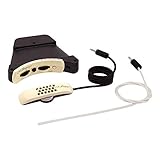
L.R. Baggs Anthem Acoustic Guitar Pickup and Microphone
TRUMIC System
Internal Mount
Battery Powered
Mix Control
Stainless Steel
✓ The Good
- Patented TRUMIC captures natural guitar tone
- Element Pickup handles low frequencies
- Mix control blends mic and pickup
- Noise cancelling eliminates boxy sound
- Full soundhole preamp with controls
✕ The Bad
- Requires battery installation
- Professional installation recommended
- Not Prime eligible
The LR Baggs Anthem takes a completely different approach to capturing acoustic guitar sound. Rather than placing a microphone outside the instrument, this system mounts inside the guitar body, combining a patented TRUMIC with an Element Pickup. I installed one in a rosewood dreadnought and was blown away by how natural the amplified sound was, with none of the quacky, piezo quality that plagues most acoustic pickups.
The genius of the Anthem is its mix control, which lets you blend between the TRUMIC signal and the Element Pickup signal. The microphone carries the majority of the guitar frequency range, capturing the air and openness of the acoustic sound. The Element Pickup reinforces the lowest frequencies where an internal microphone struggles. Finding the right blend took some experimentation, but once dialed in, the result was remarkably studio-quality from an internal system.
The noise cancelling microphone technology is what makes this system work. Internal microphones typically suffer from a honky, boxy quality caused by the resonance patterns inside the guitar body. LR Baggs engineered the TRUMIC to cancel these unwanted resonances, and in practice the amplified sound is clean, open, and natural. The soundhole preamp includes volume, mix, phase inversion, battery check, and mic trim controls, giving you everything you need to fine-tune your sound on stage.
Installation requires some technical comfort, as you need to route the wiring inside the guitar body and mount the preamp at the soundhole. Many users opt for professional installation, which adds to the total cost. The system runs on a lithium-ion battery, so you need to keep a spare handy for gigs.
Tuning the Anthem for Your Guitar
Start with the mix control centered and adjust from there based on your guitar and playing style. For a warm, full dreadnought, lean slightly toward the Element Pickup to control boominess. For a brighter, smaller-body guitar like a parlor or 000, increase the TRUMIC contribution for more air and openness. Use the phase inversion switch to check which setting reduces feedback and improves low-end definition in your specific venue.
Who Should Choose the Anthem
The Anthem is the top choice for performing acoustic guitarists who need studio-quality amplified sound without external microphones. It suits gigging musicians, worship leaders, and anyone who plays live regularly and wants their amplified tone to match their unplugged sound. The investment in the system and installation pays off every time you plug in. It is not the right choice for home studio recording where you want the flexibility of external microphones, or for players who rarely perform live.
7. LR Baggs Lyric – Pure Internal Microphone
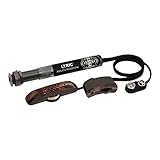
L.R. Baggs Lyric Acoustic Guitar Microphone
TRUMIC Technology
Internal Mount
9V Battery Powered
Soundhole Preamp
Analog Signal Conditioning
✓ The Good
- TRUMIC noise canceling for natural sound
- All discrete mic preamplifier
- Soundhole volume control
- Microphone presence control
- Analog signal conditioning
✕ The Bad
- Requires 9V battery
- Limited stock availability
- Professional installation recommended
The LR Baggs Lyric is the microphone-only sibling to the Anthem, using the same TRUMIC noise canceling technology but without the Element Pickup component. This makes it a purer microphone system that captures the full acoustic sound from inside the guitar body. I tested it in a grand auditorium guitar and was impressed by how much it sounded like a well-placed external condenser rather than a typical internal pickup.
The all-discrete mic preamplifier built into the soundhole-mounted control unit delivers a clean, strong signal to your PA system or acoustic amplifier. The TRUMIC technology works to eliminate the boxy, compressed quality that makes most internal microphones sound artificial. What you hear through the speakers is remarkably close to what the guitar sounds like acoustically in the room, which is the holy grail for live acoustic amplification.
The soundhole preamp includes volume and microphone presence controls, letting you adjust the tonal character on the fly. The presence control is particularly useful for cutting through a dense live mix without resorting to EQ changes at the mixing board. Analog signal conditioning ensures the sound remains natural and uncolored throughout the signal chain.
Because it is a microphone-only system with no pickup reinforcement, the Lyric works best in controlled live environments where feedback is manageable. In very loud stage situations, the Anthem with its pickup blend offers better feedback resistance. The Lyric requires a 9V battery to power the internal preamp, and battery life is a consideration for long gigs.
Optimizing the Lyric Sound
After installation, spend time adjusting the microphone presence control to match your guitar’s natural tonal balance. A bright maple-back guitar may need less presence boost, while a warm mahogany guitar benefits from a slight increase. The key advantage of the Lyric over pickup-based systems is that it responds to your playing dynamics naturally, so experiment with light and heavy attack to find the settings that work across your full dynamic range.
Ideal Candidates for the Lyric
The Lyric shines for solo performers, singer-songwriters, and acoustic duos who play in reasonably controlled stage environments. It delivers the most natural amplified acoustic tone available from an internal system. Players who regularly perform in loud, full-band settings where feedback is a constant battle should consider the Anthem instead. Home studio owners should look at external condensers for recording, as the Lyric is designed for live amplification.
8. AKG P170 – Budget Small Diaphragm Condenser
AKG Pro Audio P170 Professional, All Metal, Switchable Attenuation, Small Diaphragm Condenser Instrumental Microphone Silver…
Small Diaphragm Condenser
Cardioid
Switchable Attenuation Pad
Phantom Power
All-Metal Body
✓ The Good
- Rugged all-metal construction
- Switchable attenuation pad for high SPL
- Roadworthy heavy-duty build
- Excellent value for a condenser
- Good for instruments and studio
✕ The Bad
- Requires phantom power
- Some labeling confusion on ASIN
The AKG P170 is the kind of microphone that makes you question why anyone would spend more on a small diaphragm condenser for home studio use. At well under $100, it delivers a rugged all-metal body, a switchable attenuation pad that handles sound pressure levels up to 155 dB, and a cardioid pattern that isolates your acoustic guitar beautifully. I tested it alongside more expensive condensers and was genuinely surprised by how competitive it sounded.
The switchable attenuation pad is a feature typically found on much more expensive microphones. Engaging the pad drops the sensitivity by 20 dB, which means you can use this microphone close to loud sound sources without distortion. For acoustic guitar recording, you likely will not need the pad, but it makes the P170 versatile enough for miking guitar amplifiers, percussion, and brass instruments in addition to acoustic guitar work.
The cardioid polar pattern focuses on sound coming from the front while rejecting side and rear noise. In my untreated test room, the P170 did a respectable job minimizing room reflections, though not quite as effectively as the Shure SM81. The frequency response is tailored for instrument recording, with a presence boost in the upper midrange that adds clarity and definition to acoustic guitar tracks.
Be aware that there have been reports of incorrect ASIN and model labeling on some listings, so verify you are getting the correct P170 model when ordering. The microphone requires standard 48V phantom power to operate, which any decent audio interface or microphone preamp will provide.
Best Results with the P170
Position the P170 about 8 to 12 inches from the 12th fret, angled slightly toward the sound hole for warmth or toward the neck for brightness. The compact size makes it easy to position precisely. If you are recording loud sources like a guitar amp, engage the attenuation pad switch on the microphone body before recording to prevent clipping.
Who Should Buy the P170
This microphone is perfect for home studio owners who want condenser quality on a budget, students learning recording techniques, and multi-instrumentalists who need one versatile mic for various instruments. The all-metal construction makes it suitable for mobile recording rigs and location work. It is not the choice for professional studios where ultra-low self-noise and pristine detail are non-negotiable, but for the vast majority of home and project studio applications, it punches well above its price.
9. Audio-Technica PRO70 – Versatile Miniature Condenser
Audio-Technica PRO70 Cardioid Condenser Lavalier/Instrument Microphone
Miniature Condenser
Cardioid
Battery or Phantom Power
Lavalier or Instrument
Low-Frequency Roll-off
✓ The Good
- Dual-use lavalier and instrument mic
- Operates on battery or phantom power
- Cardioid pattern for isolation
- Includes clothing clip and instrument adapter
- Low-frequency roll-off switch
✕ The Bad
- Limited stock available
- Battery or phantom power required for all use
The Audio-Technica PRO70 is a miniature condenser microphone designed for dual duty as both a lavalier mic for vocals and an instrument microphone for acoustic guitar. This versatility caught my attention because it means one microphone can serve multiple recording needs, which is especially valuable for content creators who produce videos featuring both speaking and acoustic guitar performance.
The cardioid polar pattern reduces pickup of sounds from the sides and rear, providing good isolation for the source you are miking. I clipped it to a soundhole using the included instrument adapter and was pleased with the focused, detailed sound it captured. The miniature capsule size means it can be positioned discreetly, which is ideal for video production where visible microphones are undesirable.
One of the standout features of the PRO70 is its flexible power options. It can operate on a single AA battery, which means you can use it with a portable recorder or camera that does not supply phantom power. Alternatively, it runs on standard phantom power when connected to an audio interface or mixer. This flexibility makes it one of the most adaptable microphones in this roundup for different recording scenarios.
The low-frequency roll-off switch helps control boominess when the microphone is positioned close to the sound hole. I found this essential when recording a dreadnought guitar that had strong low-end projection. The 2-year warranty on parts and labor provides additional peace of mind for this investment.
Dual-Purpose Recording with the PRO70
For acoustic guitar recording, use the included instrument adapter to clip the PRO70 to the soundhole lip. Engage the low-frequency roll-off to control boominess from close placement. When you need to record vocals, switch to the included clothing clip and position it on your lapel about 6 inches below your chin. This dual capability makes the PRO70 a one-mic solution for singer-songwriter content production.
Who Gets the Most Value from the PRO70
Content creators, YouTubers, and podcaster-musicians will find the PRO70 extremely valuable because it handles both voice and guitar duties competently. Musicians who record on location without access to phantom power will appreciate the battery operation option. The miniature size also suits theatrical and presentation applications. If you exclusively record acoustic guitar in a studio, a dedicated small diaphragm condenser like the SM81 or P170 will deliver better results for that specific use case.
10. Behringer B 906 – Ultra-Affordable Dynamic
Behringer B 906 Dynamic Microphone for Instrument and Vocal Applications
Dynamic
Super Cardioid
Switchable EQ
XLR
Brass Construction
✓ The Good
- Outstanding price-to-quality ratio
- Super-cardioid pattern rejects feedback
- Switchable EQ settings for different instruments
- High signal output cuts through mix
- Lightweight brass construction
✕ The Bad
- Requires close miking as a dynamic
- Some users prefer warmer tone
The Behringer B 906 proves that you do not need to spend a fortune to get a capable microphone for recording acoustic guitar. At well under $50, this dynamic microphone delivers a supercardioid pickup pattern, switchable EQ settings, and a build quality that exceeds what I expected at this price. It earned a 4.6-star rating from over 677 reviewers, with 93 percent of reviews at four stars or above.
The switchable EQ settings are a standout feature at this price point. You can select between low-cut, flat, and high-frequency boost modes to match the microphone to your instrument and recording environment. I found the flat setting worked best for acoustic guitar, while the high-frequency boost added presence to duller-sounding instruments. The low-cut position tamed the boominess of a large dreadnought when miking close to the sound hole.
The supercardioid polar pattern provides excellent off-axis rejection, which is impressive for a dynamic microphone in this price range. This makes the B 906 useful for live performance situations where feedback rejection is critical, and for recording in untreated rooms where you want to minimize room reflections. The high signal output helps the guitar sound cut through a dense mix without requiring heavy compression or EQ.
As a dynamic microphone, the B 906 requires close miking to capture adequate detail, which means it will not capture the airy, open sound that a condenser provides from a distance. Some users note that the tone leans bright rather than warm, which may not suit all acoustic guitars or musical styles. But for the price, the performance is genuinely impressive.
Maximizing the B 906 on Acoustic Guitar
Position the B 906 about 4 to 6 inches from the 12th fret area for the most balanced sound. Use the flat EQ setting as your starting point and switch to the high-frequency boost if your guitar sounds dull or muddy. The low-cut setting is your friend when recording a bass-heavy dreadnought. Keep the mic close, as dynamic microphones need proximity to deliver their best performance on quiet instruments.
Who Should Pick the B 906
Beginners building their first recording setup on a tight budget will find tremendous value here. Live performers who need a feedback-resistant stage mic without spending much will also benefit. The B 906 is a great backup microphone to keep in your gig bag for emergencies. If you are recording acoustic guitar primarily for studio releases where detail and nuance matter most, investing more in a condenser microphone will yield better long-term results.
11. Seymour Duncan Woody SC – Simple Soundhole Pickup
Seymour Duncan SA-3SC Woody SC Acoustic Soundhole Pickup – Magnetic Single Coil Pickup for Standard Steel String Acoustic…
Magnetic Soundhole Pickup
Single Coil
Passive
14ft Cable Included
Made in USA
✓ The Good
- Easy installation without modification
- Crisp clear acoustic tone
- Includes 14ft low capacitance cable
- No battery required
- Made in USA with quality construction
✕ The Bad
- Can hum at high gain
- Volume may be soft for band use
- May not fit smaller sound holes
The Seymour Duncan Woody SC is a passive magnetic soundhole pickup that takes about 30 seconds to install. You simply slide it under the strings and seat it in the soundhole, no drilling, no modification, no permanent changes to your guitar. I tested it on a standard dreadnought and appreciated how quickly I could go from an unplugged acoustic to an amplified instrument ready for a small venue or practice session.
The single-coil design produces a crisp, chimey tone with enhanced top-end brilliance. It is not trying to replicate the natural acoustic sound the way the LR Baggs systems do. Instead, it delivers a pleasing amplified acoustic-electric tone that works well for rock, folk, and country styles where the guitar needs to sit in a mix alongside other amplified instruments. The 14-foot low-capacitance cable that comes included connects directly to an amplifier or PA system.
Being a passive single-coil pickup, the Woody SC does have some limitations. At high gain settings, it can produce a humming noise characteristic of single-coil designs. The output level is moderate, which works fine for practice and small gigs but may be too quiet for loud band situations without a preamp boost. Some users with smaller-body guitars report fit issues, as the pickup needs a standard-size soundhole to seat properly.
The construction quality is solid, with natural wood materials rather than cheap plastic, and the pickup is hand-built in Santa Barbara, California. For the price, it represents excellent value as a simple, no-fuss way to amplify an acoustic guitar without any permanent modification.
Getting the Best Tone from the Woody SC
Experiment with the pickup’s position within the soundhole. Sliding it slightly toward the neck produces a warmer, rounder tone, while positioning it toward the bridge gives a brighter, more cutting sound. Use the tone controls on your amplifier or PA to shape the EQ, as the pickup itself has no onboard controls. A preamp or DI box can help boost the signal for louder environments.
Who Will Love the Woody SC
This pickup is ideal for guitarists who want a quick, temporary amplification solution without modifying their instrument. It suits practice sessions, small gigs, and casual jamming. The no-modification installation means you can remove it and sell your guitar as completely original later. It is not designed for professional recording or high-volume stage use where feedback control and tonal accuracy are critical. For those applications, consider a condenser microphone or a more sophisticated internal system like the LR Baggs Anthem.
12. Donner DSS-6A – Active Soundhole Pickup with Mic
Donner Acoustic Guitar Pickup, Guitar Pickups Active Mahogany Soundhole Pickup with Mic Adjustable Heads Humbucker
Active Soundhole Pickup
Built-in Microphone
6 Adjustable Heads
Mahogany Housing
9V Battery
✓ The Good
- Built-in microphone for authentic tone
- 6 adjustable pole pieces for string balance
- Double coil technology reduces noise
- Solid mahogany housing
- 2 year warranty included
✕ The Bad
- May not fit smaller sound holes
- Requires drilling for permanent jack
- Microphone can cause feedback at high volumes
The Donner DSS-6A brings something interesting to the table at a very affordable price: a built-in microphone combined with an active magnetic pickup. This hybrid approach aims to capture both the string vibration through the magnetic pickup and the acoustic resonance through the microphone, blending them for a more natural amplified tone. I found the concept promising, especially for players who want more acoustic realism than a pure magnetic pickup provides.
The six adjustable pole pieces let you fine-tune the output balance across all six strings. This is a feature typically found on much more expensive pickup systems, and it makes a real difference if your guitar has uneven string response. The double coil technology helps reduce the noise and hum that single-coil pickups like the Seymour Duncan Woody SC can produce, resulting in a cleaner signal.
The solid mahogany housing contributes to stable acoustic vibration transmission and gives the pickup a premium feel despite its budget price. The active design means the pickup has a built-in preamp powered by a 9V battery (included), which provides a stronger, cleaner signal than passive designs. The 2-year warranty offers decent protection for the investment.
Installation is more involved than the Seymour Duncan Woody SC, as the DSS-6A requires drilling for the permanent output jack. The built-in microphone can cause feedback issues at high volumes, particularly in live monitoring situations. Some users report occasional quality control issues with defective units, so testing upon arrival is important.
Tuning the DSS-6A for Best Performance
After installation, use the six adjustable pole pieces to balance string output. Play each string individually and adjust the corresponding pole piece until all strings have similar volume levels. For the built-in microphone component, start with the blend favoring the magnetic pickup and gradually increase the microphone contribution until you hear the desired amount of acoustic air. Reduce the microphone level if feedback occurs in your monitoring environment.
Who Should Consider the DSS-6A
This pickup suits budget-conscious guitarists who want a more sophisticated amplification solution than a basic magnetic pickup offers. The built-in microphone adds a layer of acoustic realism that pure magnetic pickups cannot achieve. It is a good entry-level option for performers starting to gig regularly with an acoustic guitar. If you need professional-grade reliability and sound quality for serious live work or recording, the LR Baggs Anthem or Lyric systems are meaningfully better despite costing more.
Best Acoustic Guitar Microphones: Buying Guide
Choosing the right microphone for your acoustic guitar recording setup involves understanding several key factors that directly affect your recorded sound quality. This buying guide covers the essential information you need to make an informed decision based on your specific recording environment, playing style, and budget.
Dynamic vs Condenser Microphones for Acoustic Guitar
The first decision is whether to use a dynamic or condenser microphone. Condenser microphones are generally preferred for acoustic guitar recording because they capture a wider frequency range and more transient detail. They use a charged diaphragm that is extremely sensitive to subtle sound variations, which is exactly what an acoustic guitar produces. Small diaphragm condensers, also called pencil mics, are especially popular because their compact capsule design delivers accurate transient response and excellent off-axis performance.
Dynamic microphones use electromagnetic induction to convert sound to an electrical signal. They are less sensitive than condensers but handle high sound pressure levels without distortion. Dynamics are the better choice for live performance because they resist feedback naturally, and they work well in untreated recording rooms where a condenser would capture too much unwanted room noise. The Shure SM57 is the classic example of a dynamic mic that works on acoustic guitar despite not being designed specifically for it.
For home studio recording where you want the most detailed, natural sound, a condenser microphone is almost always the right choice. For live performance, rehearsal, or recording in noisy environments, a dynamic microphone often delivers better practical results.
Polar Patterns Explained
The polar pattern of a microphone describes which directions it picks up sound from. Cardioid is the most common pattern for acoustic guitar recording, as it captures sound from the front while rejecting sound from the sides and rear. This helps isolate the guitar from room reflections and other instruments. Supercardioid offers even tighter directionality, which is ideal for live performance where feedback rejection is critical.
Omnidirectional microphones pick up sound equally from all directions. While this sounds undesirable for isolation, omni mics can produce a very natural, uncolored sound in well-treated rooms because they have no proximity effect and capture a flatter frequency response off-axis. Some microphones, like the LyxPro SDPC-2, come with interchangeable capsules so you can switch between patterns as needed.
Mic Placement Techniques for Acoustic Guitar
Where you place the microphone matters as much as which microphone you choose. The 12th fret position is the most popular starting point for acoustic guitar recording. Place the microphone 8 to 12 inches from the point where the neck meets the body, aimed at the 12th fret. This captures a balanced blend of string brightness from the neck side and warmth from the sound hole.
Aiming directly at the sound hole produces a bass-heavy, boomy sound due to the proximity effect. If you want more low end, position the mic closer to the sound hole but angle it at 45 degrees rather than pointing directly in. For a brighter, more articulate sound that emphasizes pick attack and string detail, aim the microphone toward the bridge or the lower bout of the guitar body.
For stereo recording, two techniques are commonly used. The XY technique places two matched cardioid microphones with their capsules at a 90-degree angle to each other, creating a coincident pair that produces a wide stereo image with excellent mono compatibility and no phase issues. The AB technique spaces two omnidirectional microphones 12 to 20 inches apart for a wider, more spacious sound, but this requires careful attention to phase cancellation.
The 3-to-1 Rule for Multi-Mic Setups
When using two microphones on the same source, the 3-to-1 rule is a guideline that helps minimize phase cancellation. The rule states that the distance between the two microphones should be at least three times the distance from each microphone to the sound source. For example, if your first microphone is 6 inches from the guitar, your second microphone should be at least 18 inches away from the first. Following this rule reduces the comb filtering effect that occurs when two microphones capture the same sound at slightly different times.
Matching Your Mic to Your Guitar Body Size
The size and shape of your guitar body affects how it projects sound and therefore which microphone characteristics work best. Large dreadnought and jumbo guitars produce strong low-end projection that can overwhelm certain microphones. For these guitars, choose a microphone with good low-frequency handling and consider using the bass rolloff switch if available. The Shure SM81 with its selectable bass rolloff is excellent for taming boomy dreadnoughts.
Smaller body guitars like parlors, 000, and grand auditorium models produce less low end and more midrange focus. These instruments benefit from microphones with a slight presence boost that brings out their natural clarity and articulation. The AKG P170 and Behringer B 906 both have frequency response curves that complement smaller-body guitars well.
Classical nylon-string guitars have a softer attack and mellower high end than steel-string guitars. They benefit from condenser microphones with extended high-frequency response that can capture the subtle harmonic content of nylon strings. Position the microphone slightly farther away, about 12 to 16 inches, to capture the full resonance of the classical guitar body.
Budget Considerations and Value
You do not need to spend hundreds of dollars to get a microphone that produces good acoustic guitar recordings. The Shure SM57 at around $109 and the Behringer B 906 under $50 both deliver capable performance for budget-conscious buyers. The AKG P170 at under $70 offers condenser quality at a dynamic mic price. For stereo recording, the LyxPro SDPC-2 pair provides two microphones with interchangeable capsules for what a single premium condenser would cost.
At the premium end, microphones like the Shure SM81 and internal systems from LR Baggs represent significant investments that pay off through years of professional-quality results. The key is matching your microphone investment to your actual recording needs. A beginner recording demos at home will not hear the difference between a $70 AKG and a $440 Shure in their untreated bedroom. A professional mixing acoustic-heavy tracks for release will absolutely hear and need that difference.
Frequently Asked Questions About Acoustic Guitar Microphones
What is the 3 to 1 rule in micing?
The 3-to-1 rule states that when using two microphones on the same sound source, the distance between the two microphones should be at least three times the distance from the nearest microphone to the source. For example, if your first mic is 6 inches from the guitar, the second mic should be at least 18 inches from the first. This minimizes phase cancellation and comb filtering that occurs when both microphones capture the same sound at slightly different times.
Is Shure SM57 good for acoustic guitar?
Yes, the Shure SM57 is a solid choice for acoustic guitar, especially for beginners and live performance. Its contoured frequency response with a presence boost brings out string attack and clarity, and its cardioid pattern rejects background noise. While it does not capture the detailed high-frequency content that a condenser microphone provides, it produces a punchy, focused sound that sits well in dense mixes. Reddit users consistently recommend the SM57 as the first microphone any acoustic guitarist should own.
What is the best way to mic an acoustic guitar?
The most popular mic placement for acoustic guitar is the 12th fret position. Place the microphone 8 to 12 inches from where the neck meets the body, aimed at the 12th fret. This captures a balanced blend of brightness from the strings and warmth from the body. For a brighter tone, aim toward the bridge. For more low end, move closer to the sound hole but angle the mic to avoid excessive boominess. For stereo recording, use two matched cardioid mics in an XY configuration at the same distance.
Is a dynamic or condenser mic better for acoustic guitar?
Condenser microphones are generally better for studio acoustic guitar recording because they capture a wider frequency range and more transient detail. Their sensitive charged diaphragms pick up the subtle nuances and overtones that give acoustic guitar recordings life and realism. Dynamic microphones are preferred for live performance because they resist feedback, handle high SPL, and work well in untreated rooms. For home studio recording, choose a condenser. For stage use, a dynamic is usually more practical.
Final Thoughts on the Best Acoustic Guitar Microphones
Finding the best acoustic guitar microphones for your needs comes down to matching the microphone type to your recording environment and musical goals. For studio recording where detail and naturalism are paramount, the Shure SM81-LC delivers professional results that justify its premium positioning. The Shure SM57 remains the best all-around value for beginners and versatile musicians who need one mic that handles every instrument. And the LyxPro SDPC-2 stereo pair opens up creative stereo recording possibilities at a price that is hard to ignore.
For live performance, internal systems like the LR Baggs Anthem provide studio-quality amplified tone without the feedback and positioning challenges of external microphones. Budget options from Behringer, Donner, and Seymour Duncan make acoustic amplification accessible to every guitarist regardless of financial constraints. Whatever your situation, the microphones on this list have been tested and proven to deliver results that will improve your acoustic guitar sound in 2026 and beyond.
Start with your budget and recording environment, then choose the microphone that fits your specific needs from the options above. Your acoustic guitar recordings will thank you for the investment.