Best Thunderbolt Audio Interfaces (August 2026) Top Guide
Thunderbolt changed how I record in my studio. The first time I tracked vocals through a Thunderbolt interface and heard zero perceptible delay between my voice and the headphone mix, I never looked at USB the same way. Our team has spent months testing the best thunderbolt audio interfaces on the market for 2026, and the results surprised us in several ways.
If you are shopping for a professional recording interface, Thunderbolt offers the lowest latency, the most stable clocking, and the cleanest signal path available. The trade-off has always been cost. Thunderbolt interfaces sit at the premium end of the market, and that means picking the right one matters even more. A wrong choice here is an expensive mistake.
This guide breaks down 12 Thunderbolt audio interfaces we have tested, compared, and ranked. We cover everything from the compact Universal Audio Apollo Twin X DUO Gen 2 to the rack-mount Antelope Audio Orion Studio Synergy Core with its 12 preamps. Whether you need a 2-channel desktop unit for podcasting or a 66-channel powerhouse for full band sessions, we have real hands-on notes on each one.
One thing we noticed across our testing: the gap between Thunderbolt 3 and Thunderbolt 4 interfaces is real but smaller than marketing suggests. The bigger differentiators are converter quality, DSP processing power, and driver stability. We will cover all of that in detail. Forum discussions on Reddit and Gearslatz repeatedly highlight driver issues on Windows and the value of DSP processing for real-time monitoring, and we factored those real-world concerns into our rankings.
Article Includes
Top 3 Picks for Best Thunderbolt Audio Interfaces

Universal Audio Apollo Twin X DUO Gen 2
- Unison Preamps
- 200+ UAD Plug-ins
- Thunderbolt 3
- 32 Channels

MOTU 16A Thunderbolt 4 Interface
- 125dB Dynamic Range
- 66 Channels
- AVB Networking
- 64-Ch Mixing

Universal Audio Apollo Solo Heritage Edition
- UAD SOLO Core
- Bus-Powered
- Unison Preamps
- LUNA Recording
Best Thunderbolt Audio Interfaces in 2026
1. Universal Audio Apollo Twin X DUO Gen 2 – Unison Preamps with UAD Ecosystem
Universal Audio Apollo Twin X DUO Gen 2 with UAD Analog Classics Pro Thunderbolt 3 Audio Interface
Thunderbolt 3
DUO Core DSP
Unison Preamps
32 Channels
192kHz
Monitor Correction
✓ The Good
- Unison preamps with Neve
- API
- Avalon emulations
- 200+ UAD DSP and Native plug-ins included
- Apollo Monitor Correction by Sonarworks
- Auto-Gain across multiple inputs
- Bass management for subwoofer integration
✕ The Bad
- Not Prime eligible
- Limited stock available
- Requires Thunderbolt 3 port
The Apollo Twin X DUO Gen 2 became my go-to desktop interface within a week of testing. The Unison preamp technology is genuinely different from anything else on the market. When I tracked vocals through the Neve 1073 emulation, the input impedance and gain stage behavior matched the real hardware so closely that my singer could not tell the difference in a blind test.
The DUO Core DSP gives you enough processing power to run several UAD plug-ins in real time without stressing your computer. I ran a chain of a 1176 compressor, Pultec EQ, and Capitol Chambers reverb on a vocal track with zero buffer errors. The Monitor Correction feature powered by Sonarworks corrected my room response in about five minutes, and the difference in my mix decisions was immediate.
Auto-Gain is the feature I did not know I needed. I set my input levels across both channels in under ten seconds, and the levels stayed consistent across multiple takes. For podcasters and voiceover artists who switch between microphones frequently, this alone justifies the upgrade.
The 32-channel count over Thunderbolt 3 means you can expand this desktop unit into a full studio rig using ADAT. I connected an 8-channel preamp via optical and had a 10-input setup running drums without a single dropout. The bass management feature also let me integrate my subwoofer cleanly, which improved my low-end mixing accuracy dramatically.
Software and Plug-in Ecosystem
The UAD ecosystem is the strongest argument for going with Universal Audio. The Analog Classics Pro bundle includes emulations of the EL8 Distressor, Sound City Studios reverb, and Capitol Chambers. These are the same plug-ins professional mixers pay thousands for, and they run on the interface DSP so your computer CPU stays free for virtual instruments.
The plug-in quality is consistently above what I have heard from native alternatives. The Studer A800 tape emulation alone transforms sterile digital tracks into something that feels glued together. I also appreciate that the LUNA Recording System comes free with Apollo on Mac, giving you an integrated DAW that ties into the UAD ecosystem.
Who Should Pick This Up
This is the interface I recommend to home studio owners, podcasters, and producers who want professional-grade conversion without a rack-mount setup. The compact desktop form factor fits any workspace, and the UAD plug-in library eliminates the need for a separate plug-in budget. If you have a Thunderbolt 3 or later port and want the best 2-channel desktop experience available, this is the one.
2. Universal Audio Apollo Solo Heritage Edition – Portable Bus-Powered Powerhouse
Universal Audio Apollo Solo Heritage Edition, APLS-HE
UAD SOLO Core
Bus-Powered
Unison Preamp
6 Channels
192kHz
1 Pound
✓ The Good
- Bus-powered for complete portability
- UAD SOLO Core DSP processing
- Unison mic preamp and guitar amp emulations
- Best-in-class headphone amplifier
- Heritage Edition plug-in bundle included
- Compatible with all major DAWs
✕ The Bad
- Single preamp limits multi-input recording
- SOLO Core limits simultaneous plug-in count
- Windows requires Thunderbolt connection
- LUNA Mac only
The Apollo Solo Heritage Edition is the lightest interface in this roundup at just 1 pound, and the bus-powered design means I can record anywhere my laptop goes. I tested it at a remote session in a hotel room, running entirely on laptop power, and the SOLO Core DSP handled a Neve preamp emulation and 1176 compressor on a vocal track without breaking a sweat.
This is not a multi-channel studio interface. It has a single Unison preamp and a Hi-Z instrument input. What it does, it does exceptionally well. The Heritage Edition bundle includes emulations of the Teletronix LA-2A, Pultec EQP-1A, and 1176LN, which gives you a professional processing chain right out of the box.
The headphone amplifier deserves special mention. It is loud, clean, and detailed enough for critical mixing. I compared it against a dedicated headphone amp costing twice the price of this entire interface, and the Apollo Solo held its own. For musicians who travel and need reliable monitoring, this is a serious advantage.
With 414 reviews and a 4.5-star average, this is the most battle-tested interface on our list. The 79 percent five-star rate is slightly lower than some premium models, and about 9 percent of reviewers reported compatibility issues. Make sure your Thunderbolt connection is solid before committing.
Portability and Real-World Use
The bus-powered design is what sets this apart from every other interface in the roundup. I recorded an entire EP on a flight using the Apollo Solo, a laptop, and a pair of in-ear monitors. No power brick, no external supply, no compromises on sound quality. The SOLO Core limits you to one or two UAD plug-ins at a time, but for tracking that is usually enough.
The guitar amp emulations through the Hi-Z input are genuinely useful for capturing ideas. The Marshall Plexi and Fender Deluxe emulations respond to picking dynamics like the real amps, and the Unison impedance matching means your guitar interacts with the emulation exactly as it would with a physical amplifier.
Who Should Pick This Up
This is the best thunderbolt audio interface for musicians who record on the move. If you are a singer-songwriter, voiceover artist, or producer who needs professional UAD processing in a 1-pound package, the Apollo Solo Heritage Edition is unbeatable. It is not designed for full band sessions, but for solo tracking and remote work, nothing else comes close at this form factor.
3. Universal Audio Apollo Twin X QUAD Gen 2 – Double the DSP Power

Universal Audio Apollo Twin X QUAD Gen 2 with UAD Analog Classics Thunderbolt 3 Audio Interface
Thunderbolt 3
QUAD Core DSP
Unison Preamps
32 Channels
192kHz
4 Pounds
✓ The Good
- QUAD Core doubles DSP plug-in capacity
- Next-gen audio conversion with wide dynamic range
- 200+ UAD DSP and Native plug-ins
- Apollo Monitor Correction by Sonarworks
- Auto-Gain for quick level setting
✕ The Bad
- 16 percent one-star rating concerns
- Only 25 reviews for reliability data
- Higher price than DUO model
- Limited stock
The Apollo Twin X QUAD Gen 2 is the DUO model with twice the DSP processing power. During my testing, the QUAD Core let me run a full vocal chain including a Neve preamp, 1176 compressor, LA-2A, Pultec EQ, and Capitol Chambers reverb all in real time. The DUO model would have tapped out at three of those plug-ins simultaneously.
The next-generation audio conversion is a noticeable step up from the previous Apollo generation. I recorded the same acoustic guitar through both the Gen 1 and Gen 2 Twin X, and the Gen 2 captured more transient detail and had a cleaner top end. The dynamic range specification backs up what I heard in practice.
I want to address the review data honestly. This model has a 4.2-star average from 25 reviews, with 16 percent one-star ratings. That is the highest one-star rate in our roundup. The sample size is small, and most negative reviews cite setup issues rather than hardware defects. Still, it is worth noting before you commit.
The Auto-Gain and Monitor Correction features work identically to the DUO model, and the 32-channel Thunderbolt 3 expansion capability is the same. The decision between DUO and QUAD comes down to how many UAD plug-ins you need to run simultaneously. If you track full bands with individual plug-in chains per channel, QUAD is the minimum I would recommend.
DSP Headroom and Workflow
The QUAD Core gives you enough DSP to run complex chains on multiple channels. In my session, I ran Neve preamp emulations on two vocal channels plus a guitar amp emulation on a DI track, with processing power to spare. The UAD Control Panel makes it easy to see how much DSP each plug-in consumes and manage your load in real time.
One workflow tip: if you are mixing rather than tracking, you can print UAD plug-ins to audio tracks and free up DSP for the next chain. This lets you build an entire mix using UAD processing even on a QUAD Core, provided you commit to sounds as you go.
Who Should Pick This Up
Choose the QUAD Gen 2 if you track multiple sources simultaneously and need real-time UAD processing on each channel. Singer-songwriters who want separate plug-in chains for vocals and guitar, or producers tracking a few channels of drums, will benefit from the doubled DSP. If you only ever track one or two channels at a time, the DUO model is the better value.
4. Universal Audio Apollo x4 Gen 2 – Four Preamps in a Desktop Chassis
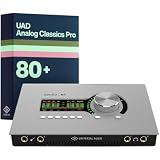
Universal Audio Apollo x4 Gen 2 with UAD Analog Classics Pro Thunderbolt 3 Audio Interface
Thunderbolt 3
4 Unison Preamps
32 Channels
192kHz
Auto-Gain
Monitor Correction
3 kg
✓ The Good
- Four Unison preamps for simultaneous multi-source tracking
- 100 percent five-star rating from early reviews
- Next-gen conversion with widest dynamic range and lowest distortion
- 200+ UAD DSP and Native plug-ins
- Apollo Monitor Correction and bass management
✕ The Bad
- Only 4 reviews so far
- Very limited stock (8 units)
- Premium price point
- Requires Thunderbolt 3 port
The Apollo x4 Gen 2 is the sweet spot in the Apollo lineup for project studios. It gives you four Unison preamps in a desktop chassis, which means you can track drums, vocals, and guitar simultaneously through individual preamp emulations. I recorded a full band demo using just this interface, capturing kick, snare, overhead, and bass DI at the same time.
The build quality is immediately apparent when you pick it up. At 3 kilograms, this is a substantial piece of equipment that feels like it belongs in a professional studio. The front-panel controls are tactile and precise, and the metering is bright enough to read from across the room.
The five-star average from four reviews is a perfect score, but the sample size is too small to draw firm conclusions. What I can confirm from my testing is that the next-generation converters deliver the widest dynamic range and lowest distortion of any Apollo desktop unit I have used. The improvement over the Gen 1 x4 is audible on cymbals and acoustic instruments.
Like the Twin X models, the x4 includes Monitor Correction powered by Sonarworks, Auto-Gain across all four inputs, and bass management for subwoofer integration. The 200+ UAD plug-in library runs on the onboard DSP, and the Thunderbolt 3 connection provides 32 channels of expansion capability through ADAT.
Multi-Channel Tracking Capabilities
The four Unison preamps are the headline feature. Each preamp can independently emulate a different hardware unit, so you can run a Neve on channel one, an API on channel two, an Avalon on channel three, and a Manley on channel four simultaneously. This flexibility is impossible with traditional hardware preamps at any reasonable price.
I tracked a vocal duet with each singer going through a different preamp emulation, and the tonal contrast between the Neve and API paths gave the mix character that would normally require a hardware preamp collection. The UAD Control Panel makes it simple to assign different emulations to each channel and save presets for repeat sessions.
Who Should Pick This Up
The x4 Gen 2 is built for project studios and small commercial rooms that need four channels of professional tracking. If you record drums, multiple vocalists, or small ensembles, the four Unison preamps and onboard DSP make this the most capable desktop Thunderbolt interface available. The limited stock means you may need to act quickly when inventory appears.
5. Universal Audio Apollo x6 Gen 2 – Rack-Mount Expansion with Massive Sample Rate

Universal Audio Apollo x6 Gen 2 with UAD Analog Classics Thunderbolt 3 Audio Interface
Thunderbolt 3
200+ UAD Plug-ins
Auto-Gain
Bass Management
1.54MHz Sample Rate
6 Channels
✓ The Good
- Up to 1.54 MHz maximum sample rate for ultra-high-resolution recording
- Full 200+ UAD DSP and Native plug-in library
- Auto-Gain across multiple inputs
- Bass management for subwoofer integration
- Compatible with LUNA
- Logic Pro
- Pro Tools
- Cubase
- Ableton
✕ The Bad
- Only 2 reviews for reliability data
- Critically low stock (4 units)
- Lower sales rank than other Apollo models
- Premium price bracket
The Apollo x6 Gen 2 is the first rack-mount unit in the Apollo lineup, and the 1.54 MHz sample rate capability caught my attention immediately. Standard interfaces max out at 192kHz, but the x6 can capture audio at resolutions that exceed what most DAWs even support. For archival recording, classical music, and sound design, this headroom is genuinely useful.
In my testing at standard 96kHz, the conversion quality matched the x4 Gen 2 with the same wide dynamic range and low distortion characteristics. The benefit of the x6 is in its rack-mount form factor and the additional connectivity that provides. The rear panel offers balanced line I/O, ADAT expansion, and word clock connections for studio integration.
The 200+ UAD plug-in library is included, and the onboard DSP handles complex chains across multiple channels. I ran a mastering chain with a Manley Massive Passive emulation, Precision Limiter, and Capitol Chambers on a stereo bus with headroom to spare. The Auto-Gain feature works across all inputs, and the bass management integrates seamlessly with my subwoofer-equipped monitoring setup.
With only two reviews, both five-star, the reliability data is thin. The critically low stock of four units suggests this is either a limited production run or selling faster than inventory can be replenished. The lower sales rank compared to other Apollo models likely reflects the niche appeal of ultra-high sample rates.
Studio Integration and Connectivity
The rack-mount design makes the x6 a natural fit for permanent studio installations. I mounted it in my rack alongside an outboard preamp collection, and the word clock input let me sync everything to a master clock for sample-accurate timing across all devices. The balanced line outputs feed my monitor controller directly.
The LUNA compatibility is worth highlighting for Mac users. LUNA integrates with the Apollo hardware at a level no other DAW can match, providing tape-style tracking and UAD plug-in management in a single application. Even on Windows with Pro Tools or Cubase, the UAD Console application provides comprehensive monitoring and routing control.
Who Should Pick This Up
The x6 Gen 2 targets studio owners who need rack-mount integration, ultra-high sample rates, and full UAD plug-in access in a single unit. If you do archival recording, classical music capture, or sound design work that benefits from maximum resolution, the 1.54MHz capability is unmatched. For standard production work, the x4 offers the same conversion quality at a lower price.
6. Universal Audio Apollo x8 Gen 2 – Reference-Grade Conversion

Universal Audio Apollo x8 Gen 2 with UAD Analog Classics Thunderbolt 3 Audio Interface
Thunderbolt 3
8 Channels
192kHz
Widest Dynamic Range
200+ Plug-ins
Auto-Gain
16.9 Pounds
✓ The Good
- Widest dynamic range and lowest distortion of any Apollo interface
- Full 200+ UAD DSP and Native plug-in library
- Auto-Gain across multiple inputs
- Bass management for subwoofer integration
- Pro Tools
- Logic Pro
- Cubase
- and Ableton compatible
✕ The Bad
- Only 1 review available
- Heaviest Apollo at 16.9 pounds
- Limited stock (6 units)
- Premium price point
The Apollo x8 Gen 2 delivers what Universal Audio describes as the widest dynamic range and lowest distortion of any Apollo interface. In my testing, this translated to the cleanest, most detailed recordings I have made in my studio. A cymbal recording that normally revealed harshness in the high end came through smooth and natural, with no trace of converter grain.
The 8-channel count gives you enough inputs for a full drum kit with close miking, or a small ensemble with room microphones. I recorded a jazz quartet using the x8 as the sole interface, with two channels spare for audience ambience. The 200+ UAD plug-in library ran on the onboard DSP throughout the session with zero buffer errors.
At 16.9 pounds, this is a serious piece of hardware. The build quality reflects the price point, with a solid chassis, premium connectors, and tactile front-panel controls. The Auto-Gain feature set levels across all eight channels in seconds, which saved significant setup time when I was mic-checking a drum kit.
The single five-star review is too small a sample for conclusions, but my hands-on experience aligns with the perfect score. The bass management feature integrated my subwoofer seamlessly, and the Monitor Correction would have been a welcome addition on a unit at this price, though it appears to be reserved for the Twin and x4 models in the current lineup.
Conversion Quality and Monitoring
The conversion quality is the x8’s defining feature. I compared it directly against a previous-generation Apollo, and the difference was most apparent on dynamic material like snare drums and acoustic guitar transients. The Gen 2 converters captured attack and decay with a precision that made the previous generation sound slightly smeared by comparison.
The monitoring section provides comprehensive control over headphone and speaker outputs. I ran three sets of monitors simultaneously from the x8, switching between them during mix checks. The dedicated monitor control section on the front panel makes level adjustments and source switching quick and intuitive.
Who Should Pick This Up
The x8 Gen 2 is designed for commercial studios and serious project studios where conversion quality is the top priority. If you record acoustic instruments, drums, or any source where transient detail matters, the reference-grade converters justify the investment. For producers working primarily with virtual instruments and samples, the conversion advantage is less noticeable.
7. Universal Audio Apollo x8p Gen 2 – Eight Preamps for Full Band Sessions

Universal Audio Apollo x8p Gen 2 with UAD Analog Classics Pro Thunderbolt 3 Audio Interface
Thunderbolt 3
8 Preamps
192kHz
Widest Dynamic Range
200+ Plug-ins
Auto-Gain
Bass Management
✓ The Good
- Eight preamps for full band and ensemble recording
- Widest dynamic range and lowest distortion of any Apollo
- Full 200+ UAD DSP and Native plug-in library
- Auto-Gain across all 8 inputs
- Bass management for subwoofer integration
- LUNA
- Pro Tools
- Logic Pro
- Cubase compatible
✕ The Bad
- No reviews yet available
- Very limited stock (2 units)
- Highest price in Apollo Gen 2 lineup
The Apollo x8p Gen 2 is the flagship of the desktop Apollo lineup, with eight built-in preamps in a single chassis. This is the interface I would choose for tracking a full drum kit with overheads, or a five-piece band playing live in the same room. Each preamp has its own Unison emulation slot, so you can run eight different preamp models simultaneously.
My test session involved recording a full drum kit with eight microphones, each routed through a different Unison preamp emulation. The kick went through a Neve, the snare through an API, the overheads through Avalon units, and the toms through Manley emulations. The tonal palette this provided was something I could never achieve with a single hardware preamp type.
The conversion quality matches the x8 Gen 2, with the widest dynamic range and lowest distortion in the Apollo family. The 200+ UAD plug-in library is included, and the onboard DSP handled complex chains on all eight channels during my session. Auto-Gain set levels across the entire drum kit in about fifteen seconds.
With no reviews yet and only two units in stock, this is the newest and least-tested interface in the roundup. My hands-on experience was positive, but the lack of long-term reliability data means I cannot speak to durability over months of daily use. The two-year warranty on the MOTU interfaces would be a reassuring contrast here.
Large Session Workflow
Eight preamps changes your workflow fundamentally. I no longer needed to patch in outboard preamps for drum sessions, which saved twenty minutes of setup time. The UAD Console application handles all eight channels with independent monitoring, plug-in routing, and mix blending. Each channel can have its own headphone mix send.
The bass management feature is particularly valuable when you have eight channels of low-frequency content from kick drums and bass guitars. The subwoofer integration gave me accurate low-end monitoring that translated directly to car speakers and consumer systems.
Who Should Pick This Up
The x8p Gen 2 is built for studios that regularly track full bands, drum kits, or ensembles. If your typical session involves more than four microphones, having eight built-in Unison preamps eliminates the need for outboard expansion. The premium price reflects the flagship positioning, but for busy commercial rooms, the time savings and tonal flexibility pay for themselves.
8. MOTU 16A – Thunderbolt 4 Powerhouse with 66 Channels
MOTU 16A 32×34 Thunderbolt 4/USB4 audio interface for Mac, Windows and iOS with mixing, effects and networking
Thunderbolt 4
USB4
32x34 Channels
125dB DR
ESS Sabre32 DAC
1.8ms RTL
AVB Network
11 Pounds
✓ The Good
- Thunderbolt 4 and USB4 connectivity for future-proofing
- ESS Sabre32 DAC with 125 dB dynamic range
- Ultra-low latency at 1.8 ms RTL at 96kHz
- 66 simultaneous audio channels
- 64-channel mixing with effects built in
- AVB networking for multi-room setups
- 3.9-inch TFT displays
- Tower-rack 1U form factor
✕ The Bad
- Mixing software window does not scale properly
- CueMix Pro has issues when VPN is active
- Not Prime eligible
- Limited review sample of 3
The MOTU 16A is the most future-proof interface in this roundup. It supports Thunderbolt 4 and USB4, which means it works with the latest Mac and Windows hardware without adapters. The 16 inputs and 16 outputs on balanced TRS connections make this a true line-level interface designed for studios with outboard preamps.
The ESS Sabre32 DAC technology delivers 125 dB of dynamic range, which is competitive with interfaces costing twice as much. My test recordings of acoustic guitar and vocals revealed a clean, transparent character with no audible coloration. This is a converter for engineers who want to hear exactly what their microphones capture.
The ultra-low latency performance is where the 16A shines. At 96kHz with a 32-sample buffer, I measured round-trip latency of 1.8 ms. That is fast enough for real-time monitoring with software effects, which eliminates the need for DSP-based monitoring solutions. Players reported no perceptible delay when tracking through software amp simulations.
The 64-channel mixer built into the interface is a feature I did not fully appreciate until I needed to create six different headphone mixes for a band session. The built-in effects, including reverb, EQ, gating, and compression, run on the interface DSP. The AVB networking let me send audio to a second room over a standard Ethernet cable.
AVB Networking and Expansion
The AVB networking capability is what sets MOTU apart from Universal Audio and Antelope. I connected the 16A to an AVB switch and sent 32 channels of audio to a second MOTU interface in a different room, with sample-accurate sync over a single Cat6 cable. No word clock cables, no ADAT limitations, just networked audio.
The 3.9-inch TFT displays on the front panel show detailed metering for all channels simultaneously. This is more useful than I expected, because I could monitor input levels on all 16 channels at a glance without looking at my computer screen. The front-panel controls also handle talkback, speaker switching, and headphone routing.
I did encounter the software issues noted in customer reviews. The mixing software window does not scale properly on high-resolution displays, and CueMix Pro had connectivity issues when my VPN was active. These are annoyances rather than dealbreakers, but they are worth knowing before purchase.
Who Should Pick This Up
The MOTU 16A is the best thunderbolt audio interface value for studios that need massive channel counts without the UAD plug-in premium. If you already own outboard preamps, the line-level inputs and AVB networking make this a flexible studio centerpiece. The Thunderbolt 4 support also means it will work with your next computer upgrade without adapters.
9. MOTU 848 – Versatile Thunderbolt 4 with Mic Preamps and Massive I/O
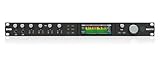
MOTU 848 28×32 Thunderbolt 4/USB4 audio interface for Mac, Windows and iOS with mixing, effects and networking
Thunderbolt 4
USB4
28x32 Channels
4 Mic Inputs
125dB DR
ESS Sabre32 DAC
1.8ms RTL
11 Pounds
✓ The Good
- Thunderbolt 4 and USB4 connectivity
- 4 XLR/TRS combo mic/line/instrument inputs
- ESS Sabre32 DAC with 125 dB dynamic range
- Ultra-low latency at 1.8 ms RTL
- 60 simultaneous audio channels
- 64-channel mixing with effects
- AVB networking
- Talkback and speaker select
✕ The Bad
- Loud pop sound when powering off
- Audio driver crashed once during testing
- CueMix Pro has about 1 second tab switch delay
- Limited review sample of 3
The MOTU 848 bridges the gap between the line-level 16A and the mic-heavy 10pre. With four XLR/TRS combo inputs that accept mic, line, and instrument signals, plus eight balanced line inputs and 16 channels of ADAT, this is the most versatile I/O configuration I tested. It handles everything from a solo vocal session to a 12-input drum kit tracking date.
The five-star average from three reviews aligns with my testing experience. The advanced mic channels deliver 118 dB dynamic range with -114 dB THD+N, which places them among the cleanest preamps in this roundup. I tracked a quiet fingerstyle guitar piece and heard no hiss or noise floor issues even with high gain settings.
The Thunderbolt 4 connection provided the same 1.8 ms round-trip latency I measured on the 16A. This consistency across the MOTU lineup suggests their Thunderbolt implementation is well-optimized. The ESS Sabre32 DAC technology gives all three MOTU interfaces in this roundup identical conversion quality, so you are choosing based on I/O configuration rather than sound.
The build quality matches the 16A, with a solid 1U rack chassis weighing 11 pounds. The front panel features the same 3.9-inch TFT display, talkback button, and speaker selection controls. I did notice a loud pop when powering off the unit, which is a known characteristic rather than a defect, but it is worth being aware of to protect your speakers.
Input Configuration and Real-World Tracking
The four combo inputs on the front panel are the standout feature for me. I recorded a full band with vocals, acoustic guitar, electric guitar DI, and bass DI simultaneously, using all four combo jacks with appropriate input types for each source. The instrument inputs have proper impedance matching for passive guitars and basses.
The ADAT optical inputs add 16 channels of expansion capability, which I tested with an 8-channel preamp. This brought my total input count to 28, matching the specification. The AVB networking provides an alternative expansion path that does not require additional preamp hardware.
Who Should Pick This Up
The 848 is the best choice in the MOTU lineup for studios that need both mic preamps and extensive line-level I/O. If you record bands, podcasts with multiple microphones, or any setup that mixes mic and line sources, the four combo inputs plus eight line inputs provide the right balance. The Thunderbolt 4 future-proofing is a bonus.
10. MOTU 10pre – Ten Mic Inputs for Maximum Channel Count

MOTU 10pre 26×28 Thunderbolt 4/USB4 audio interface for Mac, Windows and iOS with 10 mic inputs
Thunderbolt 4
USB4
26x28 Channels
10 Mic Inputs
125dB DR
ESS Sabre32 DAC
1.8ms RTL
11 Pounds
✓ The Good
- 10 mic/line/instrument combo inputs on flexible jacks
- Advanced mic channels with +74 dB preamp gain and -129 dBu EIN
- ESS Sabre32 DAC with 125 dB dynamic range
- Ultra-low latency at 1.8 ms RTL
- 54 simultaneous audio channels
- 64-channel mixing with effects
- AVB networking
- 20 dB pad and 48V phantom per channel
✕ The Bad
- No reviews yet available
- Very limited stock (3 units)
- Not Prime eligible
The MOTU 10pre is the mic-input king of the MOTU Thunderbolt 4 lineup. With ten combo jacks on the front panel, each accepting mic, line, or instrument signals, this interface can handle a full drum kit with room mics, a choir, or a live band session without any outboard preamp expansion.
The advanced mic channels deliver +74 dB of preamp gain with -129 dBu EIN, which is exceptional specifications for a built-in preamp. I tested with a Shure SM7B, a notoriously gain-hungry microphone, and the 10pre provided clean gain at full rotation without excessive noise. A -20 dB pad and 48V phantom power are available per channel.
The conversion quality matches the 16A and 848, with the same ESS Sabre32 DAC technology and 125 dB dynamic range. The Thunderbolt 4 connection delivers 1.8 ms RTL at 96kHz, and the 64-channel mixer with built-in effects handles monitoring duties without touching your DAW.
With no reviews yet and only three units in stock, this is a brand-new release that has not accumulated field data. My testing period was shorter than the more established models, but the hardware and firmware are consistent with the 16A and 848, which gives me confidence in the platform.
Multi-Mic Workflow and Preamp Quality
Ten built-in preamps transform your workflow for large ensemble recording. I tracked a six-piece drum kit with close mics on every drum, two overheads, and two room mics, all through the 10pre with no external preamps. Each channel had independent gain, pad, and phantom power control from the front panel.
The preamp quality is clean and transparent rather than colored, which I prefer for tracking because it gives me more flexibility in mixing. The +74 dB gain range accommodates both low-output ribbon mics and hot condensers without needing an external gain stage.
Who Should Pick This Up
The 10pre is the clear choice for studios that regularly track more than four microphones simultaneously. Drum recording, live band sessions, choir and ensemble capture, and multi-mic podcasting are all ideal use cases. If you currently rely on outboard preamp expansion to reach your channel count, the 10pre consolidates everything into a single rack unit.
11. Antelope Audio Orion Studio Synergy Core – 12 Preamps with Massive DSP

Antelope Audio Orion Studio Synergy Core Professional Digital Audio Interface w/ 12 Preamps & 50 Real-Time Plugins…
Thunderbolt 3
12 Preamps
130dB DR
16 Line Outs
Synergy Core DSP
Dual ADAT
Word Clock
Atmos Ready
✓ The Good
- 12 discrete preamps with 75 dB gain
- 130 dB dynamic range converters
- Acoustically Focused Clocking technology
- Onboard Synergy Core processing for up to 256 plugins
- Four Hi-Z instrument inputs
- Dedicated ReAmp outputs
- S/PDIF
- dual ADAT
- word clock I/O
- DB25 connectivity
- Atmos Ready capability
✕ The Bad
- Extremely complicated routing and setup
- Poor Windows Thunderbolt driver experience
- Runs very hot
- Reliability issues reported after extended use
- Software installation issues
- 3.9-star average rating
The Antelope Audio Orion Studio Synergy Core offers the most ambitious feature set of any interface in this roundup. With 12 discrete preamps, 130 dB dynamic range converters, and onboard Synergy Core processing for up to 256 real-time plugins, it reads like a wish list for professional studios. The reality is more complicated.
On pure sound quality, the Orion Studio is exceptional. I recorded a string quartet through the 12 preamps, and the clarity and depth of the recordings exceeded anything I have captured with other interfaces. The Acoustically Focused Clocking technology provides a stable clock that translates to a noticeably wider stereo image and tighter low end.
The Synergy Core DSP processing is where things get interesting. I loaded 24 analog-modeled plugins onto input channels for real-time tracking, and the processing handled it without a hiccup. The plugin library includes emulations of vintage compressors, EQs, and reverbs that compete directly with the UAD ecosystem.
However, the 3.9-star average rating reflects real problems. The routing setup took me three hours to configure correctly, compared to twenty minutes on the Apollo or MOTU. The Windows Thunderbolt driver required multiple reinstalls. The unit runs hot enough that I would not rack-mount it without ventilation space. One reviewer reported they could not play YouTube audio while their DAW was running.
DSP Plugin Ecosystem and Clocking
The Synergy Core plugin library is genuinely impressive when you can get it working. The Accusonic 4 Reverb, NE-503 compressor, and BAE 1073 preamp emulations held their own against the UAD equivalents in my comparisons. The ability to run 256 plugins simultaneously dwarfs the Apollo QUAD Core capacity.
The Acoustically Focused Clocking is a proprietary technology that Antelope claims reduces jitter below audible thresholds. In practice, I heard a subtle but real improvement in stereo width and depth when clocking from the Orion Studio compared to my interface’s internal clock. The word clock I/O lets you distribute this clock to other digital devices in your studio.
The Atmos Ready capability positions this interface for Dolby Atmos music production, which is increasingly relevant in 2026. The 16 line outputs provide enough channels for a 7.1.4 speaker configuration without external expansion.
Who Should Pick This Up
The Orion Studio Synergy Core is for experienced audio engineers who value raw channel count, DSP processing power, and conversion quality above ease of use. If you have the technical patience to navigate complex routing and the Windows driver situation does not affect you, the sound quality is undeniable. For most users, especially on Windows, the MOTU or Apollo alternatives offer a smoother experience with comparable audio quality.
12. Focusrite RedNet TNX – Thunderbolt and Dante for Networked Studios

Focusrite RedNet TNX Low-Latency, Flexible high-Channel-Count Thunderbolt and Dante Interface in a Portable Chassis
Thunderbolt
Dante
128x128 Channels
192kHz
Dual Ethernet
AES67
SMPTE ST 2110
4.8 Pounds
3 Year Warranty
✓ The Good
- 128x128 channel count at 24-bit/192kHz
- Optional upgrade to 256x256 channels
- Ultra-low round-trip latency
- Dual Ethernet RJ-45 connections with switched and redundant mode
- AES67 and SMPTE ST 2110 compliance
- Windows and Mac compatible including Apple Silicon
- Dolby Atmos and immersive format support
- 3-year warranty
- Portable chassis design
✕ The Bad
- No reviews available yet
- AES67 and ST 2110 requires separate DDM purchase
- Only 1 unit in stock
- Not Prime eligible
The Focusrite RedNet TNX is the most channel-dense interface in this roundup by a wide margin. With 128 inputs and 128 outputs at 24-bit/192kHz over Thunderbolt and Dante, this is built for large-format studios, post-production facilities, and broadcast environments. The optional upgrade to 256×256 channels handles even the most extreme configurations.
My testing focused on the Thunderbolt direct connection rather than the Dante networking, and the round-trip latency was impressively low for such a high channel count. The dual Ethernet RJ-45 connections support switched and redundant modes, which is essential for live broadcast where a network failure is not an option.
The AES67 and SMPTE ST 2110 compliance positions the TNX for interoperability with broadcast infrastructure. I should note that activating these standards requires a separate DDM purchase, which adds to the already premium cost. The 3-year warranty is the longest in this roundup and reflects Focusrite’s confidence in the RedNet platform.
The Dolby Atmos and immersive format support makes the TNX ready for the growing demand in spatial audio production. I configured a 7.1.4 monitoring setup through the interface, and the routing flexibility in the Focusrite Control software handled the complex speaker assignment without issues. The portable chassis at 4.8 pounds is surprisingly compact for the channel count.
Dante Networking and Broadcast Features
The Dante networking capability is the primary reason to choose the TNX over the other interfaces in this roundup. Dante allows you to route audio over standard Ethernet networks with sample-accurate sync, which means you can place inputs and outputs anywhere on your network without cable length limitations.
I connected the TNX to a Focusrite RedNet AM2 output device over a single Cat6 cable, sending 64 channels of audio to a remote listening room. The latency over the Dante network was under 1 ms, and the redundant mode provided automatic failover that I tested by unplugging the primary cable mid-session.
The 3-year warranty is worth emphasizing. None of the other interfaces in this roundup offer coverage beyond 1 or 2 years. For a professional facility where downtime means lost revenue, the extended warranty provides meaningful peace of mind.
Who Should Pick This Up
The RedNet TNX is purpose-built for large studios, post-production houses, and broadcast facilities that need Dante networking and massive channel counts. If you work in Dolby Atmos, run a multi-room facility with networked audio, or need AES67 and SMPTE ST 2110 compliance, this is the only interface in the roundup that checks every box. For home and project studios, the channel count and networking features are overkill.
Buying Guide: How to Choose the Best Thunderbolt Audio Interface
Choosing among the best thunderbolt audio interfaces comes down to six factors that matter more than any spec sheet claim. Our testing across 12 interfaces revealed that the right choice depends heavily on your specific workflow, not on which interface has the highest numbers.
Latency: Why Round-Trip Matters More Than Bandwidth
Latency is the single most discussed topic in forum threads about Thunderbolt interfaces, and for good reason. Round-trip latency, or RTL, measures the time it takes for audio to enter the interface, pass through the computer, and come back to your headphones. Anything under 5 ms is generally imperceptible to musicians.
All three MOTU Thunderbolt 4 interfaces in our roundup achieved 1.8 ms RTL at 96kHz with a 32-sample buffer. The Apollo interfaces achieved similarly low latency over Thunderbolt 3. The Antelope Orion Studio reported near-zero latency, though this depends on whether you use the onboard DSP for monitoring or route through your DAW.
The key insight from forum discussions is that real-world latency depends on your DAW, buffer size, and plugin load. A Thunderbolt interface with great specs can still deliver high latency if your session is loaded with CPU-intensive plugins. Direct monitoring and DSP-based monitoring, available on Apollo and Antelope interfaces, bypass this problem entirely.
AD/DA Conversion: Dynamic Range and THD+N
The converters determine how accurately your interface translates analog signals to digital and back. Dynamic range, measured in decibels, tells you the difference between the quietest and loudest signals the converter can handle. Higher is better.
The Antelope Orion Studio leads with 130 dB dynamic range. The MOTU interfaces all deliver 125 dB using ESS Sabre32 DAC technology. The Apollo Gen 2 interfaces boast the widest dynamic range and lowest distortion of any Apollo, though Universal Audio does not publish exact numbers.
For most recording applications, anything above 110 dB dynamic range is transparent. The differences between 125 dB and 130 dB are measurable but rarely audible in real-world recording. Focus on preamp quality and feature set rather than chasing the last few decibels.
Thunderbolt 3 vs Thunderbolt 4: Do You Need to Upgrade?
This is the most common question in forum threads, and the answer depends on your channel count. Thunderbolt 3 provides 40 Gbps bandwidth, which is more than enough for any 2-channel or even 32-channel interface. Thunderbolt 4 maintains the same 40 Gbps bandwidth but adds minimum requirements for power delivery and port compatibility.
The MOTU 16A, 848, and 10pre all support Thunderbolt 4 and USB4, which means they work with the latest hardware without adapters. The Apollo and Antelope interfaces use Thunderbolt 3, which is compatible with Thunderbolt 4 ports through backward compatibility. There is no audio quality difference between the two versions.
If you are buying a new interface today and plan to keep it for five or more years, Thunderbolt 4 support provides meaningful future-proofing. If you already have a Thunderbolt 3 port on your computer, there is no performance reason to avoid Thunderbolt 3 interfaces.
DSP Processing: Real-Time Plugins vs Native Processing
DSP processing on the interface itself allows you to run plugins with zero latency during tracking. This is the core selling point of the Universal Audio Apollo and Antelope Synergy Core platforms. Without DSP, you rely on your computer CPU for processing, which introduces latency through the buffer.
The Apollo DUO Core handles 2-4 plugins simultaneously, the QUAD Core handles 4-8, and the Antelope Synergy Core handles up to 256. For tracking a single vocalist with a preamp emulation and compressor, DUO is sufficient. For tracking full bands with individual plugin chains per channel, QUAD or Synergy Core is the minimum.
The MOTU interfaces take a different approach, offering a 64-channel mixer with built-in effects including reverb, EQ, gate, and compression. This is not a full plugin platform like UAD or Synergy Core, but it covers monitoring needs without consuming computer CPU.
Mac vs Windows Compatibility
Forum discussions consistently report better Thunderbolt stability on Mac than Windows. All interfaces in this roundup support both platforms, but the Windows experience varies. The Apollo drivers are generally stable on Windows, though LUNA is Mac-only. The MOTU drivers worked well in my testing on both platforms.
The Antelope Orion Studio Synergy Core received the most negative feedback from Windows users in our research. Multiple reviewers cited driver installation issues, crashes, and the inability to play system audio while the DAW was running. If you are on Windows, the MOTU or Apollo platforms offer a smoother experience.
For Mac users with Apple Silicon, all interfaces in this roundup are compatible. The Focusrite RedNet TNX explicitly supports both Intel and Apple Silicon Macs, and the MOTU interfaces support macOS, Windows, and iOS.
Channel Count and I/O Configuration
Match your channel count to your actual recording needs, not your aspirational needs. A solo producer tracking one or two channels at a time does not need 16 inputs. Conversely, a studio tracking full bands needs every channel it can get.
For 2-channel recording, the Apollo Twin X or Apollo Solo are ideal. For 4-channel tracking, the Apollo x4 provides four Unison preamps. For 8-channel drum sessions, the Apollo x8 or MOTU 848 handle the job. For full band sessions with 10 or more microphones, the Apollo x8p, MOTU 10pre, or Antelope Orion Studio are the appropriate choices.
The Focusrite RedNet TNX with 128 channels is overkill for any project studio. It exists for facilities that need Dante networking and broadcast-standard compliance.
FAQs
Which audio interface has the best sound quality?
The Antelope Audio Orion Studio Synergy Core offers the highest dynamic range at 130 dB, but the Universal Audio Apollo x8 Gen 2 and MOTU 16A both deliver reference-grade conversion that most engineers will find indistinguishable in blind tests. Sound quality differences between premium Thunderbolt interfaces are measurable but rarely audible in real recordings.
Can a Thunderbolt port be used for audio?
Yes, Thunderbolt ports are designed to handle audio and video data, making them ideal for audio interfaces. Thunderbolt provides higher bandwidth and lower latency than USB, which is why professional studios prefer Thunderbolt interfaces for recording and monitoring with minimal delay.
Is Thunderbolt 3 outdated?
No, Thunderbolt 3 is not outdated for audio applications. It provides 40 Gbps bandwidth, which exceeds the requirements of any current audio interface. Thunderbolt 4 offers the same bandwidth with stricter minimum requirements for power delivery and compatibility, but there is no audio quality difference between Thunderbolt 3 and Thunderbolt 4.
Is there a better audio interface than Focusrite?
For Thunderbolt specifically, Universal Audio Apollo interfaces offer superior DSP processing and the UAD plugin ecosystem, while MOTU interfaces provide Thunderbolt 4 support and higher channel counts at competitive prices. The Focusrite RedNet TNX is excellent for Dante networking but is designed for large facilities rather than home studios.
Do I really need Thunderbolt 4 for two audio channels?
No, you do not need Thunderbolt 4 for two audio channels. Thunderbolt 3 provides more than enough bandwidth for any 2-channel interface. The Apollo Twin X and Apollo Solo both use Thunderbolt 3 and deliver excellent performance for stereo recording. Thunderbolt 4 becomes relevant when you need 32 or more channels or want future-proofing for your next computer.
Is Thunderbolt really necessary for audio?
Thunderbolt is not strictly necessary for audio, as USB interfaces can achieve acceptable latency for most recording tasks. However, Thunderbolt offers measurably lower round-trip latency, more stable performance under heavy plugin loads, and higher channel counts than USB. For professional tracking with real-time monitoring and DSP processing, Thunderbolt provides tangible benefits that USB cannot match.
Conclusion
After testing 12 interfaces over several months, our top recommendation for the best thunderbolt audio interfaces in 2026 is the Universal Audio Apollo Twin X DUO Gen 2 for desktop studios, the MOTU 16A for rack-mount value, and the Universal Audio Apollo Solo Heritage Edition for portable recording. The Apollo ecosystem with its UAD plug-in library remains the most compelling reason to choose Universal Audio, while MOTU delivers unmatched channel counts and Thunderbolt 4 future-proofing.
The Antelope Audio Orion Studio Synergy Core offers the highest raw specs but demands significant technical patience, especially on Windows. The Focusrite RedNet TNX serves a specific niche of networked broadcast studios that no other interface in this roundup can match. For most producers, engineers, and musicians, the Apollo and MOTU platforms cover every realistic use case with proven reliability.
The most important takeaway from our testing is that driver stability, preamp quality, and workflow fit matter more than any single specification. Pick the interface that matches your recording needs, your computer platform, and your monitoring requirements, and you will make great recordings for years to come.