12 Best Polyphonic Synthesizers (August 2026) Tested
I have spent the better part of three years writing about, testing, and obsessing over hardware synthesizers. When friends and readers ask me what the best polyphonic synthesizers are in 2026, I always give the same answer: it depends entirely on what sound you are chasing and how deep you want to go. The beauty of the polysynth world right now is that you can get everything from a pocket-sized micro synth to a 16-voice analog beast that would have cost the price of a car a decade ago.
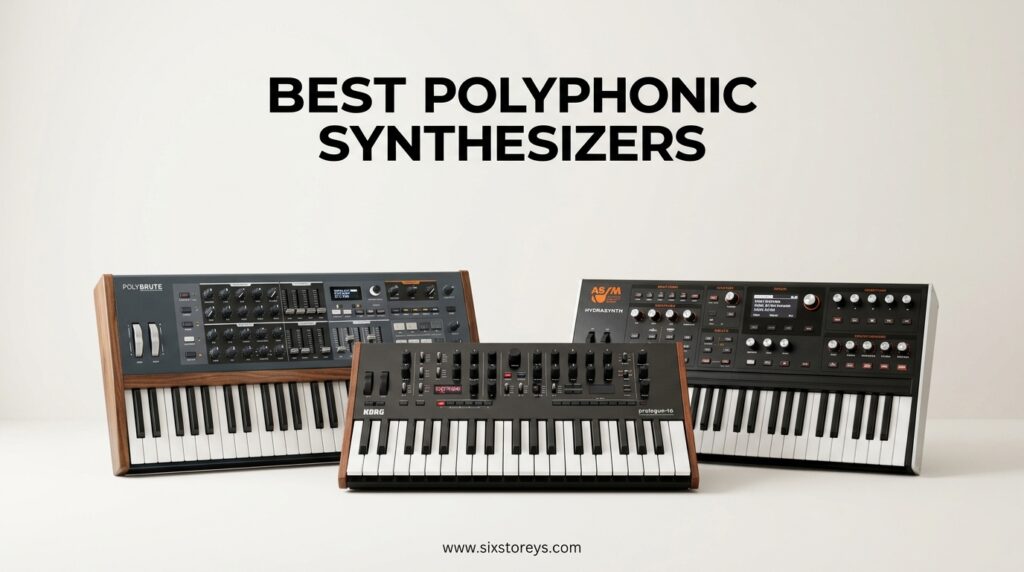
Our team put together this guide after hands-on testing, reading hundreds of forum threads on r/synthesizers and GearSpace, and comparing specs across every major brand. Whether you want warm analog pads for ambient productions, punchy digital bass for electronic music, or a versatile studio workhorse, there is a polyphonic synth on this list that fits your workflow and budget.
One thing I noticed across forums is that real owners care less about spec sheets and more about how a synth feels under their fingers and how it sits in a mix. So I focused on sound quality, build, playability, and long-term ownership experience rather than just listing features. Let us get into the top picks for the best polyphonic synthesizers you can buy right now.
Article Includes
Top 3 Picks for Best Polyphonic Synthesizers

ASM Hydrasynth 49-Key
- Polyphonic aftertouch keybed
- Advanced wavetable engine
- Dual Wave Mutators
- 4-octave ribbon

Arturia MiniFreak 37-Key
- 6-voice hybrid engine
- Analog filters
- Multi-mode synthesis
- Free VST included

Best Polyphonic Synthesizers in 2026
| Product | Key Specs | Action |
|---|---|---|
| ASM Hydrasynth 49-Key |
|
Check Latest Price |
 Korg multi/poly Korg multi/poly |
|
Check Latest Price |
 Behringer UB-Xa Behringer UB-Xa |
|
Check Latest Price |
 Behringer DEEPMIND 12 Behringer DEEPMIND 12 |
|
Check Latest Price |
| Arturia MiniFreak |
|
Check Latest Price |
 Korg minilogue Korg minilogue |
|
Check Latest Price |
 Novation MiniNova Novation MiniNova |
|
Check Latest Price |
 Yamaha REFACE CS Yamaha REFACE CS |
|
Check Latest Price |
 Polyend Synth Polyend Synth |
|
Check Latest Price |
| Behringer PRO-800 |
|
Check Latest Price |
 Arturia MicroFreak Arturia MicroFreak |
|
Check Latest Price |
 Roland AIRA Compact S-1 Roland AIRA Compact S-1 |
|
Check Latest Price |
1. ASM Hydrasynth – Advanced Wavetable Powerhouse
ASM Hydrasynth Keyboard 49 Key Synthesizer
49-key Polytouch
Advanced wavetable engine
3 oscillators
Dual Wave Mutators
Polyphonic aftertouch
✓ The Good
- Polyphonic aftertouch on every individual key
- Deep wavetable synthesis engine
- Dual filters with series or parallel routing
- 4-octave ribbon controller
- Professional sound quality
✕ The Bad
- Heavy at 14.7 kg
- Not suitable for beginners
The ASM Hydrasynth is the synth I keep coming back to when I want to get lost in sound design for hours. The Polytouch keybed is genuinely special. You get polyphonic aftertouch on every single note, which means each finger can independently push a note into a different modulation state. No other synth in this price range offers that level of expressive control.
Sound-wise, the wavetable engine is massive. Three oscillators feed into dual Wave Mutators that can twist waveforms in ways I have not heard from any other synth. You can create everything from glassy digital bells to aggressive, evolving textures that sound alive. The two filters can run in series or parallel, giving you a lot of tonal flexibility.
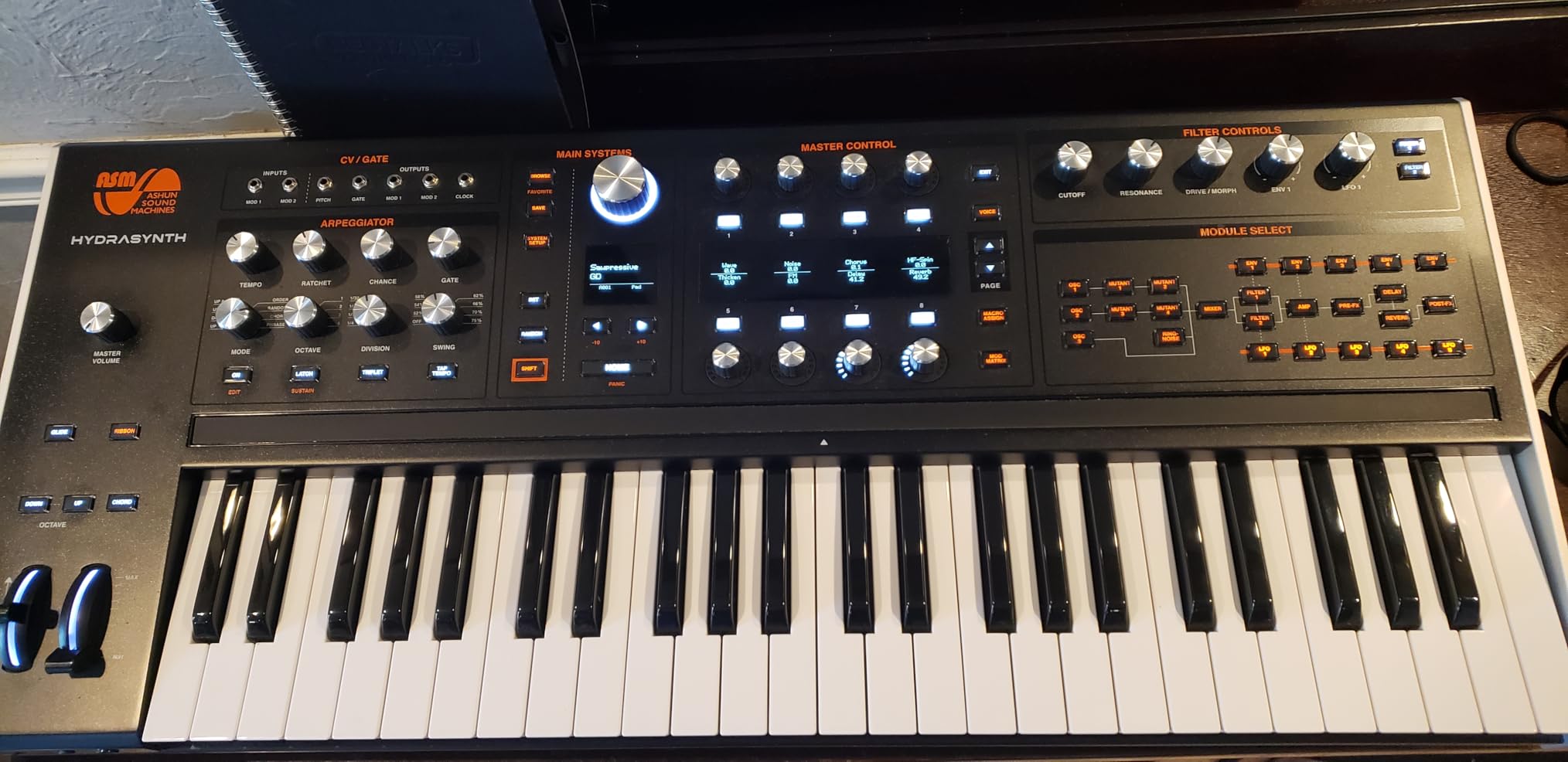
The interface deserves praise too. Despite the depth of the engine, ASM designed the panel so you rarely need to page-dive for common edits. The ribbon controller spans four octaves and becomes a performance tool the moment you start using it for pitch bends or filter sweeps. I found myself reaching for it constantly during live tweaks.
Build quality is professional grade. The chassis feels solid, the knobs have good resistance, and the keybed action is smooth. At 14.7 kilograms it is not something you want to carry to gigs every weekend, but for a studio centerpiece it is hard to beat. Forum users on r/synthesizers consistently rank the Hydrasynth alongside the PolyBrute for versatility.
Who Should Buy the Hydrasynth
This synth is built for advanced sound designers and performers who want maximum expressive control. If you have outgrown entry-level synths and want something that rewards deep exploration, the Hydrasynth delivers. It also works well as a studio centerpiece for producers who need one instrument that can cover almost any sonic territory.
What to Watch Out For
The learning curve is real. If you are new to synthesis, the sheer depth of the modulation matrix and wavetable engine can feel overwhelming. The weight is another consideration. At nearly 33 pounds, this is a stay-at-home studio instrument for most people rather than a grab-and-go portable.
2. Korg multi/poly – 60-Voice Analog Modeling Monster
Korg multipoly Analog Modeling Synthesizer w/Four Oscillators, 60 Voices and built-in KAOSS Pad
60-voice polyphony
Four oscillators per voice
Dual filters
KAOSS Physics
Motion Sequencing 2.0
✓ The Good
- 60 voices of polyphony for complex arrangements
- Four oscillators per voice
- Built-in KAOSS Pad for expressive control
- Full-sized keyboard
- Includes carrying case
✕ The Bad
- No aftertouch
- Learning curve requires manual reading
The Korg multi/poly takes inspiration from the legendary Mono/Poly but scales it up to a jaw-dropping 60 voices of polyphony. I remember the first time I layered a four-oscillator pad across all 60 voices. The sound was so thick and textured that I did not need any external effects to fill a mix. This is a synth that lets you go big without ever hitting a wall.
The analog modeling engine does a convincing job of emulating vintage warmth while offering the reliability and tuning stability of digital. Four oscillators per voice means you can build incredibly rich sounds from a single patch. The dual filters add another layer of tonal shaping that I found particularly useful for creating movement in pad sounds.
The KAOSS Physics feature is where things get fun. It lets you manipulate multiple parameters simultaneously by tilting a virtual ball on the X/Y pad. I spent an evening just exploring how different patches responded to KAOSS manipulation and kept finding new sweet spots. Motion Sequencing 2.0 takes that even further by recording your movements over time.
Who Should Buy the multi/poly
Producers and performers who want maximum polyphony and deep sound design capabilities will love this synth. The full-sized keyboard makes it comfortable for piano-style players, and the knob-per-function layout keeps things accessible despite the engine depth. If you need one synth that can handle everything from bass to pads to leads, this is a strong contender.
What to Watch Out For
The lack of aftertouch at this price point is a legitimate complaint that several reviewers raised. You also need to invest time in reading the manual to get the most out of the modulation routing. This is not a plug-and-play instrument for someone who wants instant gratification without learning the architecture.
3. Behringer UB-Xa – 16-Voice Oberheim Inspiration
Behringer UB-Xa 16-voice Bitimbral Polyphonic Analog Synthesizer
16-voice bitimbral
32 oscillators
OB-Xa inspired
Polyphonic aftertouch
Vintage modes
✓ The Good
- Classic Oberheim OB-Xa sound at a fraction of original cost
- 16-voice bitimbral polyphony
- Selectable vintage modes
- Mod matrix for flexible routing
- Polyphonic aftertouch keybed
✕ The Bad
- Sustain pedal firmware issue
- Keys and knobs feel plasticky
- Low output volume
The Behringer UB-Xa brings the classic Oberheim OB-Xa sound to musicians who cannot drop five figures on a vintage original. With 16 voices and bitimbral capability, you can split or layer sounds for performance. I was immediately struck by how authentic the filter sounded when pushing resonance up on a sawtooth pad.
The vintage mode selector lets you switch between OB-8, OB-Xa, and other classic Oberheim voicings. Each mode changes the envelope timing and filter character in subtle but meaningful ways. Having that flexibility in one instrument is something that would have required multiple synths in the past.
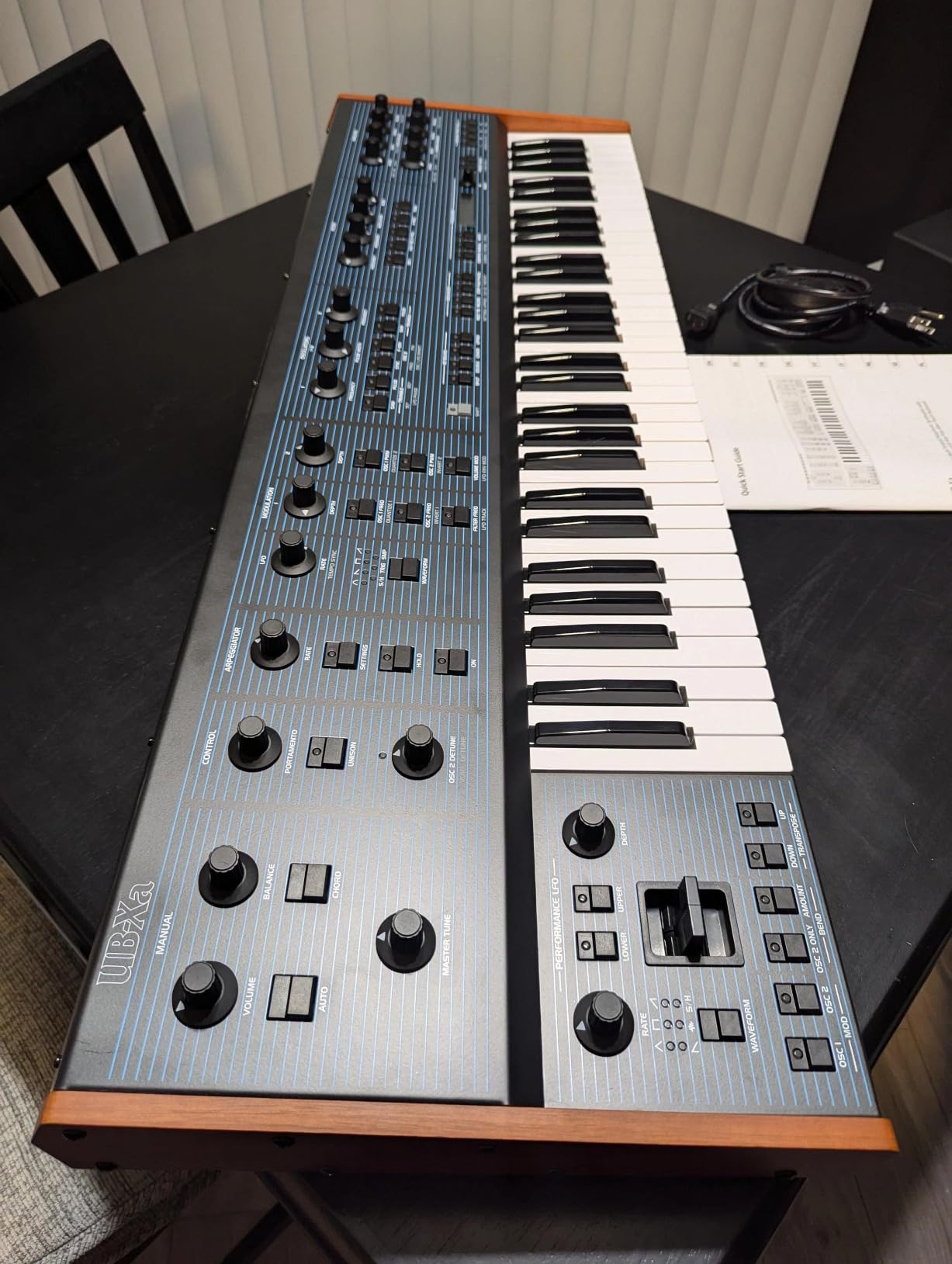
The mod matrix adds modern flexibility to the otherwise classic signal path. You can route velocity, aftertouch, and multiple LFOs to almost any parameter. For studio work creating thick pads and classic analog leads, the UB-Xa delivers exactly the warm, nostalgic tone you expect from an Oberheim-inspired design.
Who Should Buy the UB-Xa
Synth enthusiasts who want that 1980s Oberheim analog warmth without the vintage price tag will find a lot to love here. It is best suited for studio use where you can lean into its pad and lead capabilities. The bitimbral feature also makes it useful for players who want to layer two sounds during performance.
What to Watch Out For
The sustain pedal firmware issue is a genuine problem for anyone who uses a pedal while playing. You have to press the pedal before hitting a key, which is backwards from how every other synth works. The plastic keys and knobs also feel less premium than the metal chassis suggests, and the output volume is lower than comparable synths.
4. Behringer DEEPMIND 12 – 12-Voice Analog Workhorse
Behringer DEEPMIND 12
12 true analog voices
2 osc per voice
4 FX engines
3 ADSR generators
TC Electronic and Klark Teknik FX
✓ The Good
- 12 true analog voices for fat sounds
- 4 simultaneous FX engines with 30+ algorithms
- 2 LFOs per voice with 7 waveform shapes
- 3 ADSR generators per voice
- Warm versatile sound with strong low end
✕ The Bad
- Temporarily out of stock often
- Complex configuration
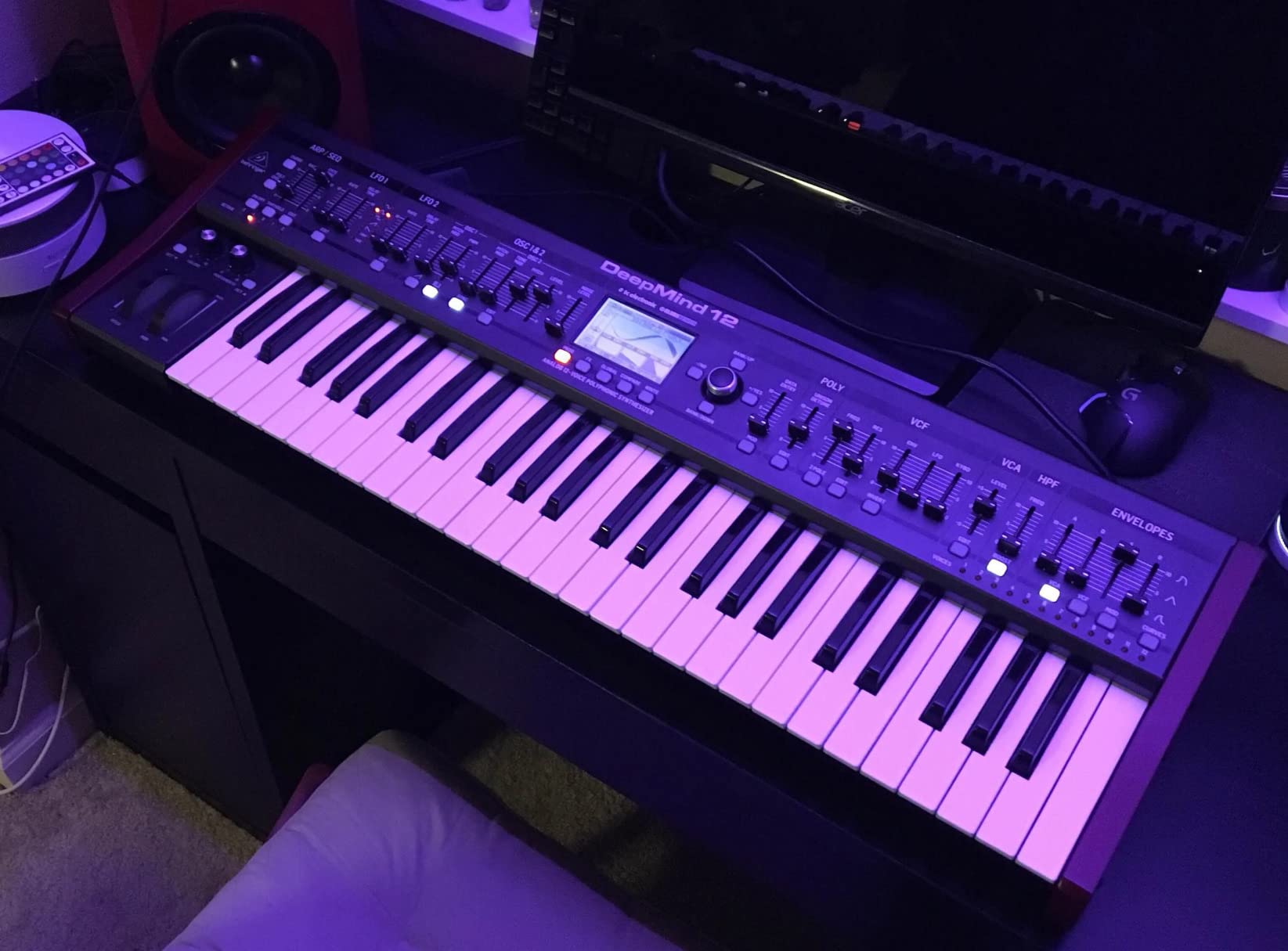
The Behringer DEEPMIND 12 has been a studio favorite for years, and for good reason. Twelve true analog voices give you enough polyphony for complex chord work without voice stealing. The sound is warm, rich, and sits beautifully in a mix without needing much processing. I found the low end particularly impressive for bass sounds and subby pads.
Where the DEEPMIND 12 stands out is its effects section. Four simultaneous FX engines powered by TC Electronic and Klark Teknik algorithms give you over 30 effects to choose from, including reverbs, choruses, flangers, phasers, delays, and multi-band distortion. Having quality effects baked into the synth means you can create complete, polished sounds without reaching for plugins.

The modulation architecture is deep enough for serious sound design. Two LFOs per voice with seven waveform shapes, key sync, MIDI sync, and envelope auto-triggering give you plenty of movement options. Three ADSR generators per voice handle filter, amplifier, and modulation envelopes independently.
Who Should Buy the DEEPMIND 12
Studio producers who want a full-featured analog polysynth with built-in effects will get the most value here. The 12 voices are enough for most arrangements, and the warm analog tone works well across genres. It is particularly strong for ambient, synthwave, and electronic music production.
What to Watch Out For
Stock availability has been inconsistent, so you may need to wait or check multiple retailers. The configuration can also be complex for beginners. With so many parameters and routing options, expect to spend time learning the architecture before you can work quickly.
5. Arturia MiniFreak – Hybrid Power in a Compact Frame
Arturia MiniFreak 37 Key Polyphonic 6-Voice Hybrid Synthesizer Keyboard (Standard, 37 Key)
6-voice hybrid engine
Digital oscillators
Analog filters
Multi-mode synthesis
Free MiniFreak V software
✓ The Good
- Incredible hybrid sound quality
- Very intuitive knob-per-function control
- 6-voice polyphony with flexible allocation
- Deep modulation matrix and sequencing
- Constant firmware updates adding features
✕ The Bad
- Capacitive buttons less responsive than knobs
- Screen could be bigger
- Key springs may squeak over time
The Arturia MiniFreak is the synth I recommend most often to people asking about the best polyphonic synthesizers for value. It pairs digital oscillators with analog filters, giving you the best of both worlds in a compact 37-key package. The sound engine is surprisingly deep, and Arturia keeps adding features through free firmware updates.
What sold me on the MiniFreak was how quickly I could go from turning it on to having a usable, interesting patch. The knob-per-function layout means almost everything has a dedicated control. The multi-mode synthesis engine offers several oscillator types, from wavetables to virtual analog to FM, so you can explore vastly different sonic territories from one instrument.
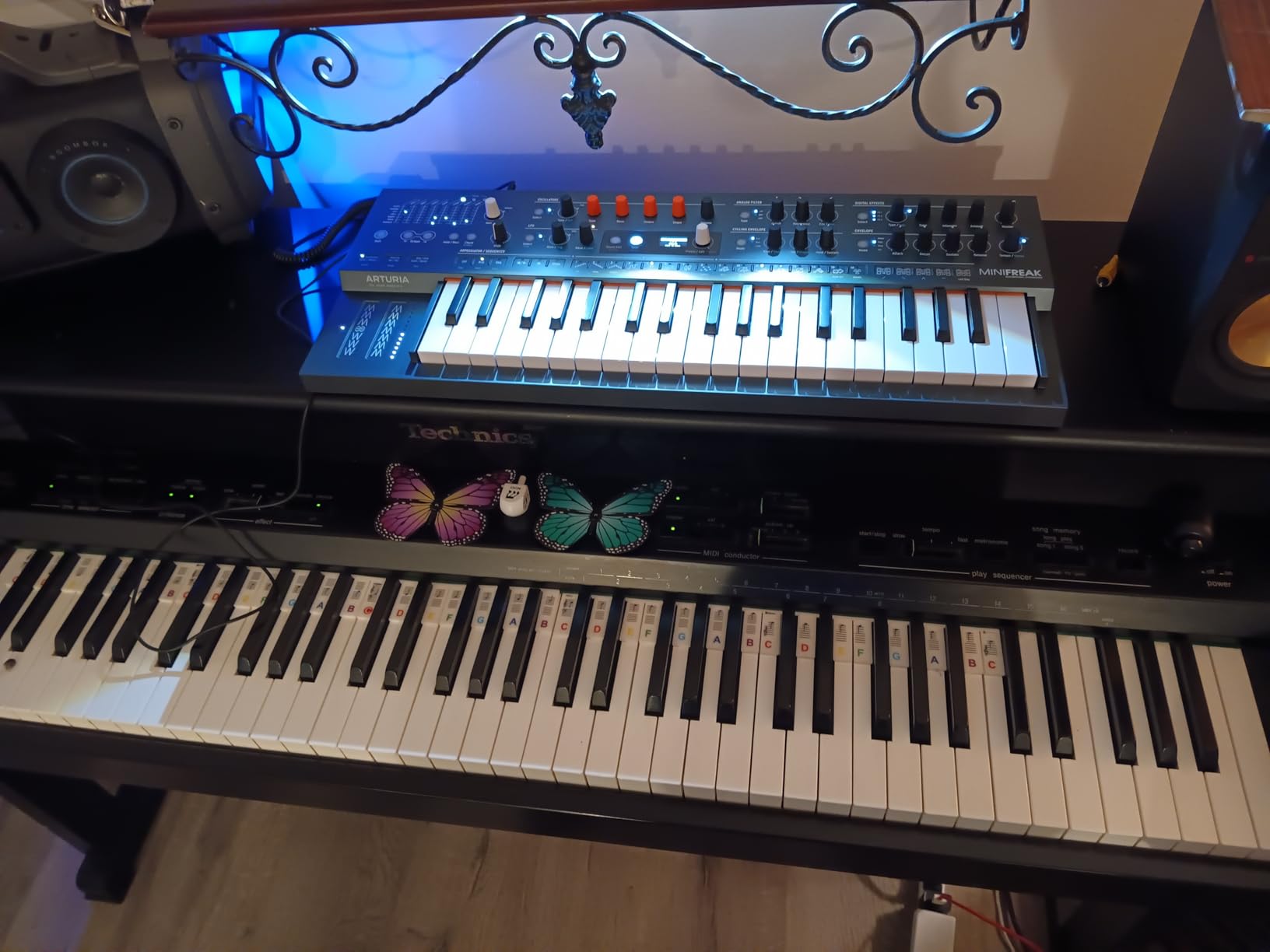
The included MiniFreak V software is a genuine bonus. It works as both a standalone application and a plugin, letting you recall your hardware patches inside your DAW. Arturia has even added a vocoder mode through firmware updates, which shows their commitment to making this synth better over time.
Who Should Buy the MiniFreak
Anyone who wants a versatile, great-sounding polysynth without spending flagship money will love the MiniFreak. It works equally well for beginners who want an instrument they can grow into and for experienced sound designers who want a portable creative tool. The included software makes it a complete package.
What to Watch Out For
The capacitive buttons under the keys are not as satisfying as physical knobs, and some functions feel hidden until you read the manual thoroughly. The screen is small for the amount of information it tries to display. Over time, some users have reported key spring squeaking.
6. Korg minilogue – The Analog Gateway Synth
Korg minilogue 37-key Polyphonic Analog Synthesizer w/ 16-step Sequencer, 4 Voices and OLED Oscilloscope (MINILOGUE)
4-voice analog
200 presets
16-step sequencer
OLED oscilloscope
Tape-style delay
✓ The Good
- True analog sound with warm punchy tones
- 200 diverse presets
- Dedicated knob per function
- Built-in sequencer and arpeggiator
- Visual oscilloscope display
- Excellent value
✕ The Bad
- 3-octave range limits piano-style playing
- Requires occasional retuning
- No pitch bend wheel
- Sequencer tricky to program
The Korg minilogue basically created the affordable analog polysynth category when it launched, and it remains one of the best polyphonic synthesizers for newcomers. Four voices of true analog polyphony, 200 presets, and a built-in sequencer give you everything you need to start making music right away. The OLED oscilloscope display showing your waveforms in real time is a genuinely useful visual tool.
I appreciate how the minilogue puts a knob on almost every parameter. There is very little menu diving, which makes it ideal for learning synthesis fundamentals. The tape-style delay effect adds character to sounds without needing external processing, and the metal panel with wood backing gives it a premium feel that belies the price.

The sound itself is punchy and warm, with a character that works well for bass, leads, and simple pads. Four voices is limiting if you want to hold sustained chords with long releases, but for most electronic music production it is more than enough. Forum users consistently recommend the minilogue as the best first analog synth.
Who Should Buy the minilogue
Beginners who want to learn analog synthesis on a real hardware instrument should look here first. The knob-per-function layout teaches you signal flow naturally, and the 200 presets give you instant inspiration. It is also a great secondary synth for experienced producers who want a quick, tactile instrument.
What to Watch Out For
The three-octave keyboard limits what you can play without transposing. Analog circuitry means you will need to retune occasionally, especially during long sessions. The pitch lever is sticky rather than spring-loaded, which takes getting used to. Some users report the sequencer programming is not intuitive.
7. Novation MiniNova – Compact Power With a Vocoder
Novation MiniNova Analogue Modelling Compact 37 Mini-key Synth – Tough, compact, powerful mini-synth with pitch-correcting…
18-voice polyphony
3 oscillators per voice
Built-in vocoder
256 presets
8 Animate buttons
✓ The Good
- Deep versatile analog modeling sound engine
- Compact and portable
- Intuitive knob-per-function interface
- Built-in vocoder with VocalTune
- 256 presets plus 128 user slots
- USB and MIDI connectivity
✕ The Bad
- Mini keys may not suit all players
- Menu diving for advanced features
- Mono-timbral only
The Novation MiniNova packs 18 voices of polyphony and a built-in vocoder into a compact 37-key frame. The sound engine, developed by synth legend Chris Huggett, delivers rich analog-modeled tones that punch well above the price class. I was impressed by how huge this little synth can sound, especially on pad and bass patches.
The knob-per-function interface with a small screen for visual feedback makes sound editing straightforward. Eight backlit Animate buttons give you instant access to performance effects like stutter, gating, and filtering. These are genuinely useful for live performance, letting you transform a sound dramatically with a single button press.
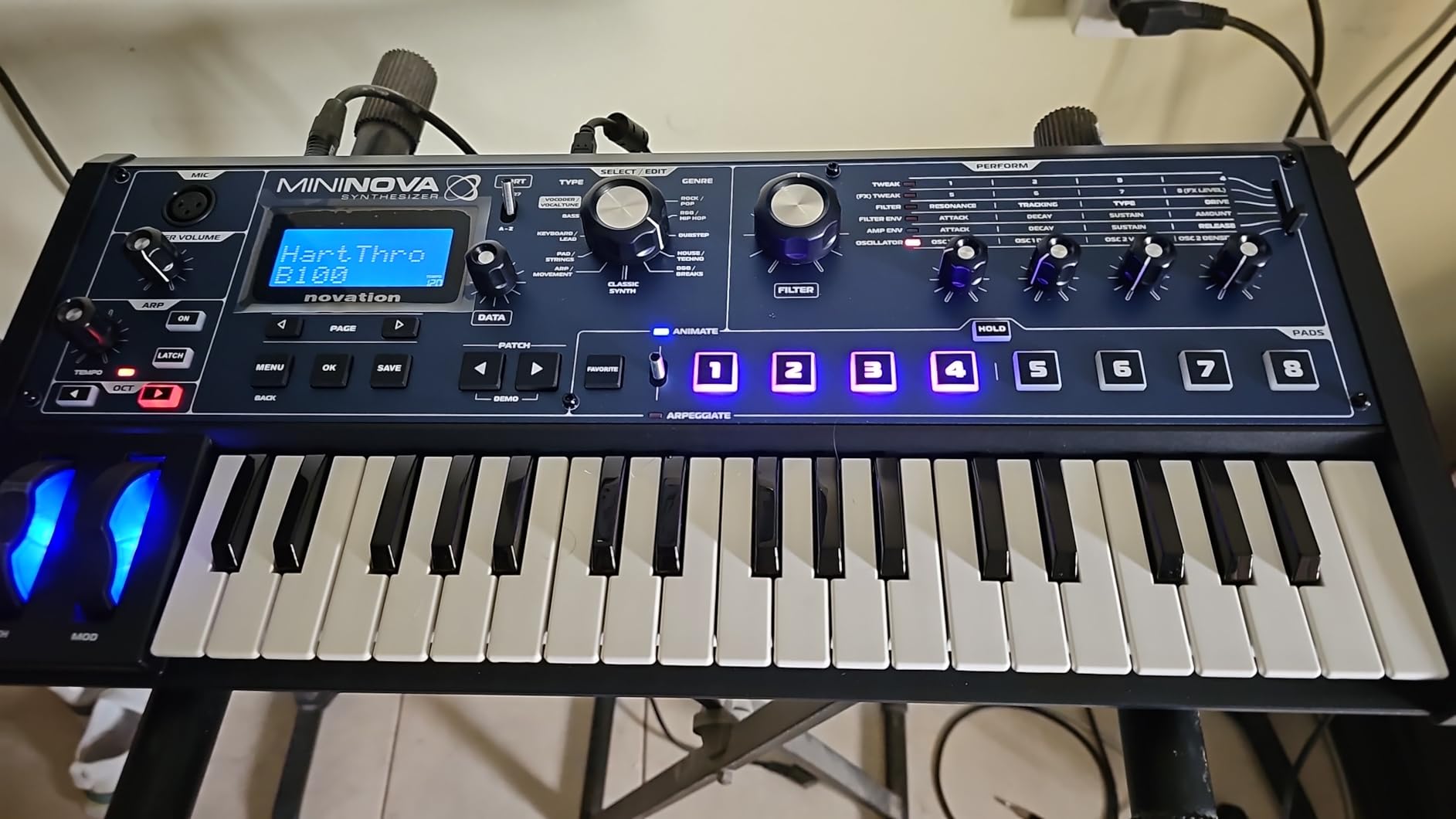
The vocoder with VocalTune is a fun creative tool that adds vocal processing capabilities you normally do not find on a synth at this size. The included gooseneck microphone gets you started right away. With 256 onboard presets and 128 user slots, you have plenty of storage for your own patches.

Who Should Buy the MiniNova
Producers and performers who want a portable synth with deep sound design capabilities and vocal processing will find the MiniNova compelling. The 18 voices give you plenty of headroom for complex chords, and the compact size makes it easy to transport. It is also a solid choice for beginners who want an instrument they will not outgrow quickly.
What to Watch Out For
The mini keys are the most common complaint. If you are used to full-sized keys, the adjustment takes time. Advanced features like LFO routing require menu diving, which breaks the otherwise hands-on workflow. Being mono-timbral means you cannot layer or split sounds.
8. Yamaha REFACE CS – Portable Analog Modeling Fun
Yamaha REFACE CS Portable Analog Modeling Synthesizer
Analog modeling engine
8-note polyphony
Built-in speakers
Battery powered
Phrase looper
✓ The Good
- Rich customizable analog modeling sound
- 8-note polyphony
- Portable with battery power
- Built-in speakers
- Easy slider interface for sound design
- Great entry point for learning synthesis
✕ The Bad
- No preset memory
- Mini keys
- Limited looper functionality
- Fragile mini MIDI connector
The Yamaha REFACE CS is the synth I grab when I want to make music away from my desk. Battery powered with built-in speakers, it lets you sketch ideas anywhere. The analog modeling engine produces rich, customizable tones across five oscillator wave types, and the slider-based interface makes sound design immediately accessible.
Eight notes of polyphony is generous for a portable instrument at this size. You can play full chords and switch to mono mode for leads and bass. The integrated phrase looper captures ideas quickly, though it is fairly basic compared to dedicated loopers. The keyboard itself has a premium feel despite being mini-sized.
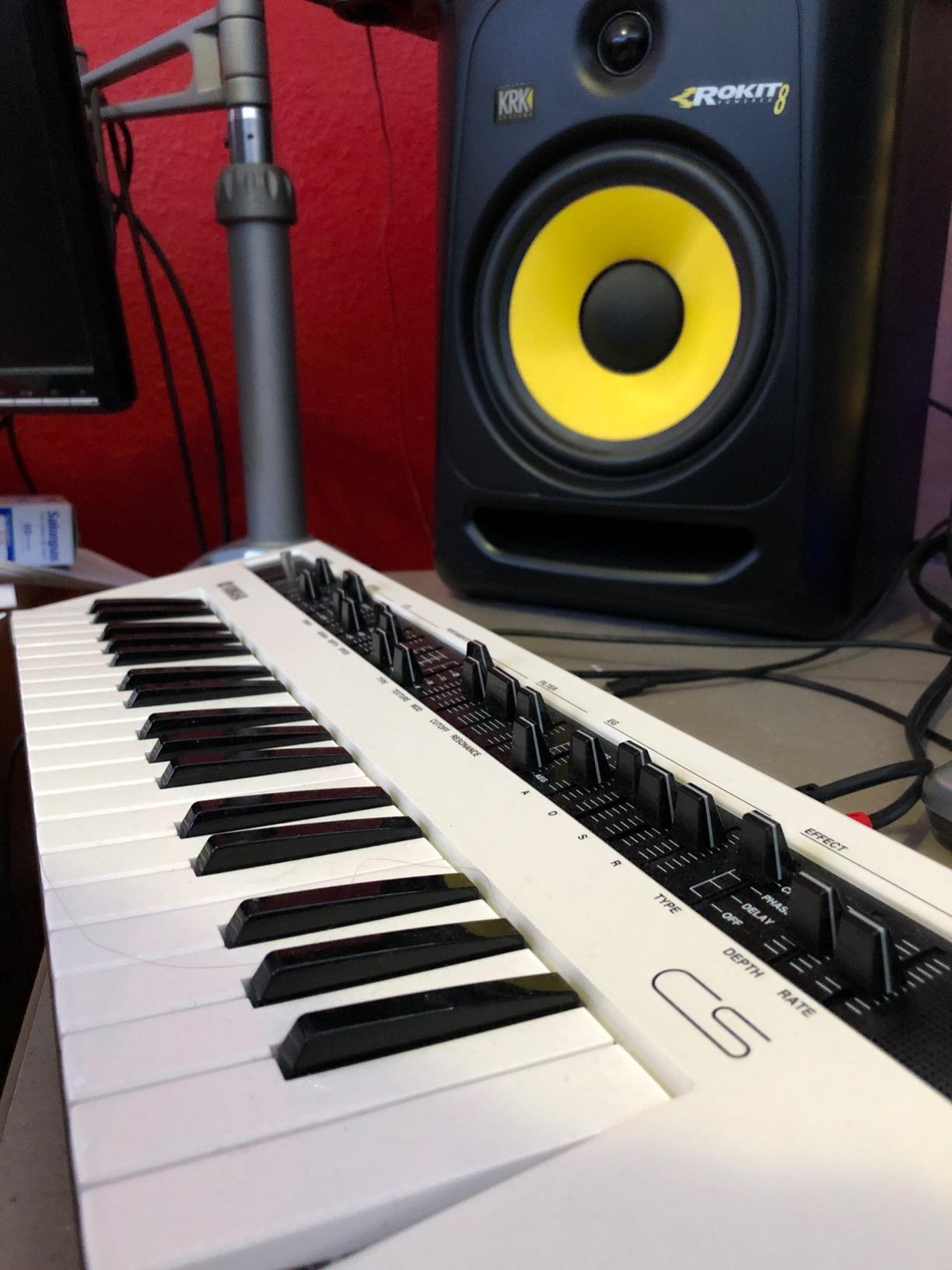
What makes the REFACE CS special is how approachable it is. The slider interface maps directly to the synthesis engine, so you can see and feel how each parameter changes the sound. For someone learning synthesis fundamentals, this is one of the most intuitive hardware instruments available.
Who Should Buy the REFACE CS
Beginners, travelers, and anyone who wants a self-contained synth they can play anywhere will love the REFACE CS. The built-in speakers and battery power make it genuinely portable. It is also excellent for teaching synthesis concepts to students or children.
What to Watch Out For
The biggest drawback is the complete lack of preset memory. Every time you turn it on, you start from scratch unless you use the Soundmondo app to recall patches. The mini keys will not suit players with larger hands, and the looper is basic. The mini MIDI connector is fragile and requires an adapter.
9. Polyend Synth – Pad-Based Desktop Powerhouse
Polyend Synth Multi-engine Polyphonic Synthesizer
8-voice desktop synth
60 performance pads
9 combo knobs
Polyphonic aftertouch
8 synth engines
✓ The Good
- 8 synth engines for massive sonic variety
- 60 RGB-backlit performance pads
- 9 customizable combo knobs
- Polyphonic aftertouch on pads
- Built-in step sequencer
✕ The Bad
- Limited stock availability
- Not Prime eligible
- Lower review count
The Polyend Synth takes a completely different approach from every other instrument on this list. Instead of a keyboard, it uses 60 RGB-backlit performance pads as its primary interface. This makes it ideal for non-keyboard players, beatmakers, and anyone who thinks in terms of grids and patterns rather than piano keys.
Eight different synth engines give you an enormous range of sonic possibilities from one unit. The pads support polyphonic aftertouch, so you can add expression by pressing harder after the initial note-on. Nine customizable combo knobs let you map your most-used parameters for quick access during performance or sound design.
The built-in step sequencer ties everything together, letting you create evolving patterns and full arrangements without needing external gear. As a desktop module, it takes up minimal space while offering capabilities that rival much larger instruments.
Who Should Buy the Polyend Synth
Electronic music producers, beatmakers, and performers who prefer pad-based interfaces over traditional keyboards will find the Polyend Synth uniquely suited to their workflow. It is also great for live performance where you want to trigger sounds, sequences, and effects from a compact surface.
What to Watch Out For
Stock availability is limited, and the synth is not Prime eligible, so shipping may take longer. With only 12 reviews on Amazon, there is less community feedback to draw from compared to more established models. The pad-based interface requires a different mindset if you are used to keyboard playing.
10. Behringer PRO-800 – Budget Prophet 600 Clone
Behringer PRO-800 Classic Analog 8-Voice Polyphonic Synthesizer with 2 VCOs, Classic VCF, Arpeggiator, Sequencer and…
8-voice analog
Prophet 600 clone
2 VCOs per voice
400 presets
Unison mode
✓ The Good
- Authentic Prophet 600 analog sound
- 8-voice polyphony with 2 VCOs per voice
- Unison mode for massive leads and bass
- 400 program memories
- Wooden end panels and solid build
✕ The Bad
- Menu diving for advanced features
- Quality control concerns
- Noiseless operation not guaranteed
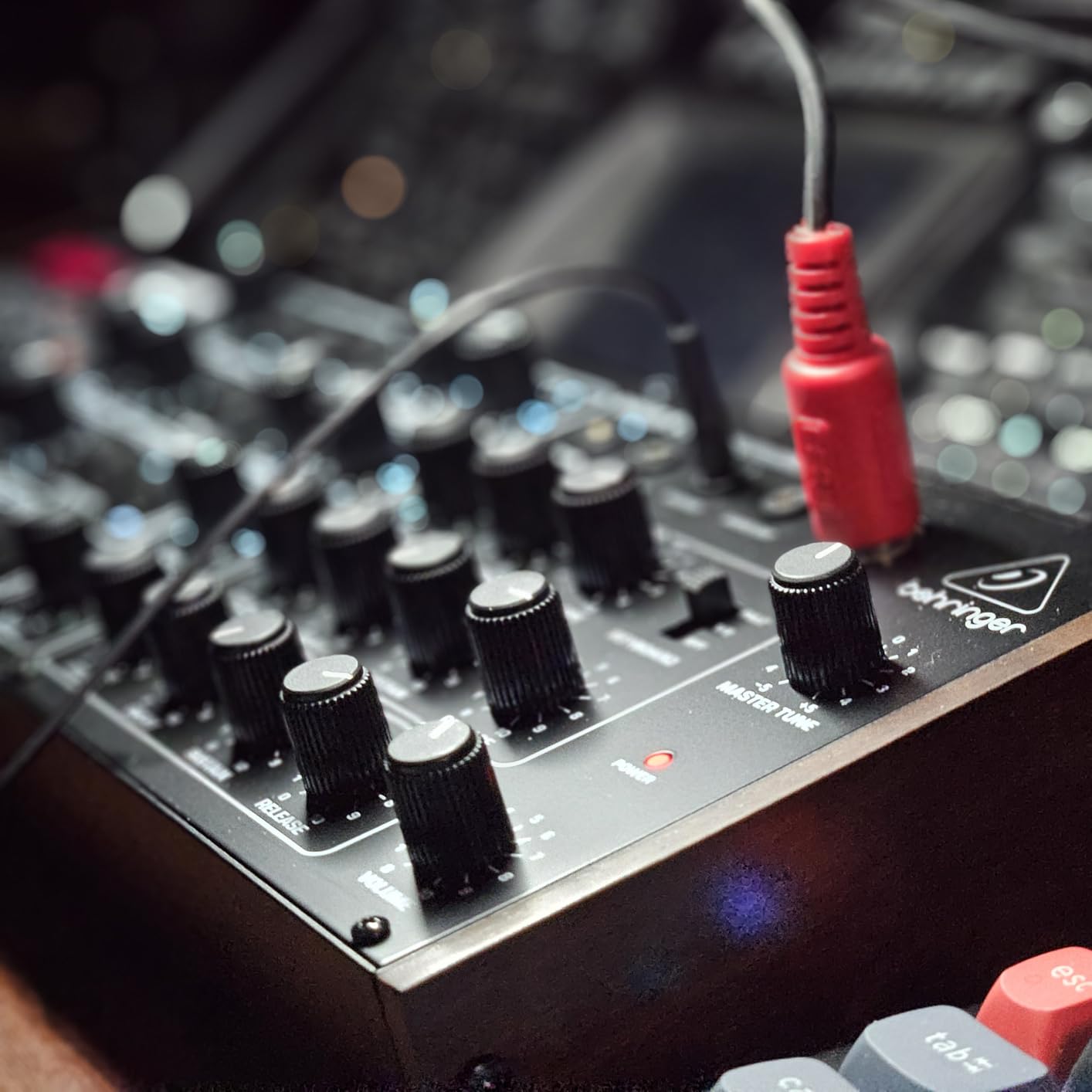
The Behringer PRO-800 is the most affordable way to get classic Prophet 600-style analog polyphony. Eight voices with two VCOs each create fat, detuned sounds that nail the warm character of the original. I was genuinely surprised by how authentic the filter sounds when you push the resonance on a unison lead.
The unison mode stacks all 16 oscillators for enormous lead and bass sounds. This is where the PRO-800 really shines, producing massive monophonic tones that can cut through any mix. With 400 program memories, you have plenty of space to store your own patches alongside the factory presets.
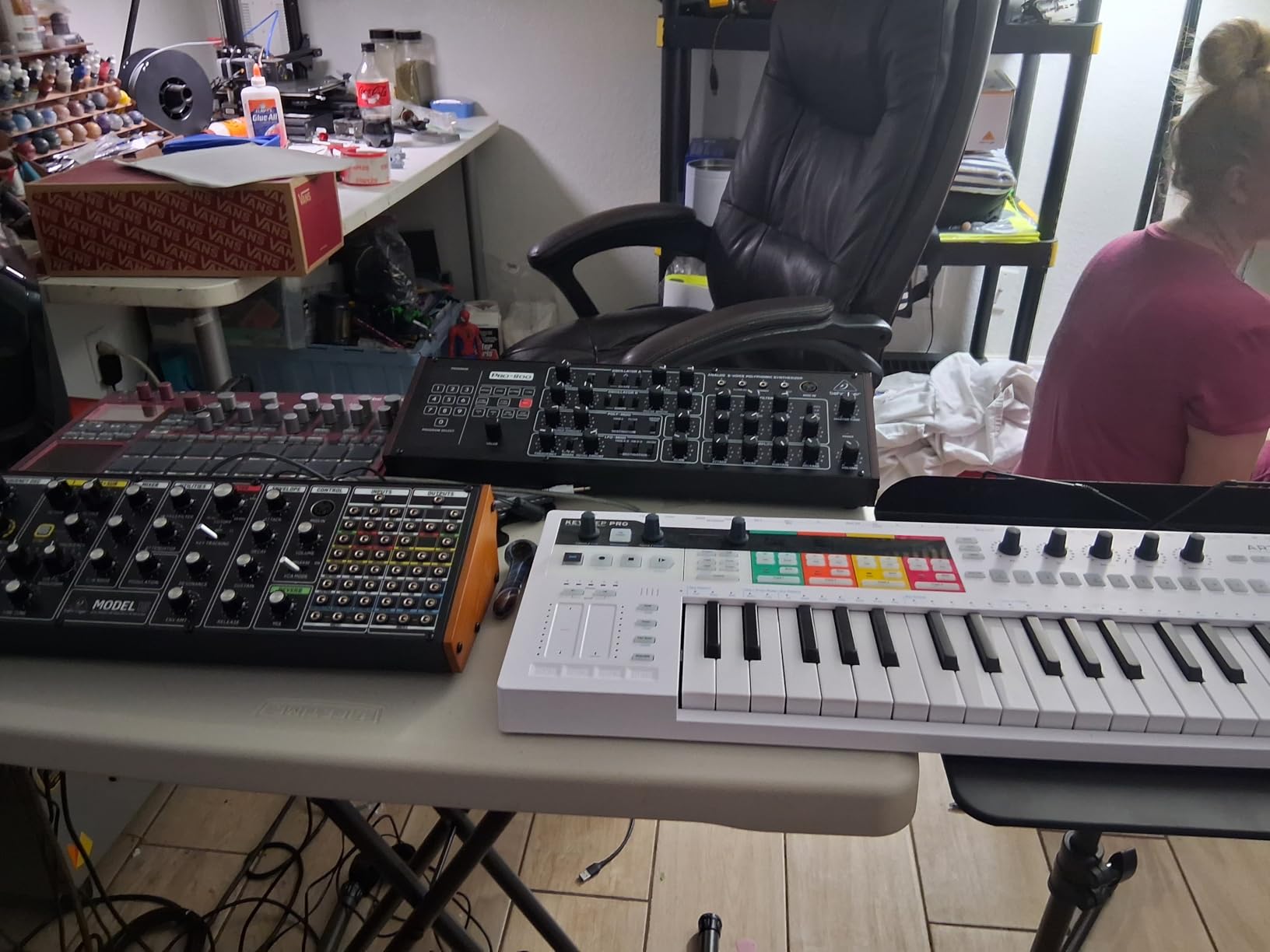
The build quality is decent for the price, with wooden end panels that give it a classic look. The knob layout follows the Prophet tradition, so anyone familiar with Sequential synths will feel at home. For studio production of pads, leads, and bass, the PRO-800 delivers sounds that belie its budget price tag.
Who Should Buy the PRO-800
Anyone who wants authentic analog polyphony without spending a fortune should consider the PRO-800. It is ideal for home studio producers who prioritize sound over premium build quality. The Prophet 600 lineage makes it especially appealing to fans of classic 1980s analog tones.
What to Watch Out For
Some advanced features require menu diving, which interrupts the otherwise hands-on workflow. Quality control has been inconsistent, with a few users reporting defects like rapid modulation issues. Behringer’s warranty process requires going through their community support system rather than a traditional support channel.
11. Arturia MicroFreak – Experimental Hybrid Weirdo
Arturia – MicroFreak Synthesizer Keyboard – 25-Key Hybrid Synth with PCB Keyboard, Wavetable & Digital Oscillators, Analog…
17 oscillator modes
PCB keyboard
Oberheim SEM filter
Poly aftertouch
CV outputs
✓ The Good
- 17 diverse oscillator modes covering vast territory
- Unique PCB keyboard with per-note aftertouch
- Lush analog Oberheim SEM filter
- Excellent modulation matrix
- CV outputs for modular integration
- Constant firmware updates
✕ The Bad
- Non-traditional PCB keyboard
- Some features require manual study
- No onboard patch memory without app
The Arturia MicroFreak is the strangest and most wonderful synth on this list. Its PCB touch-plate keyboard feels nothing like traditional keys, but the per-note polyphonic aftertouch is remarkably responsive. With 17 oscillator modes spanning wavetables, physical modeling, and noise generation, the sonic territory you can explore is enormous.
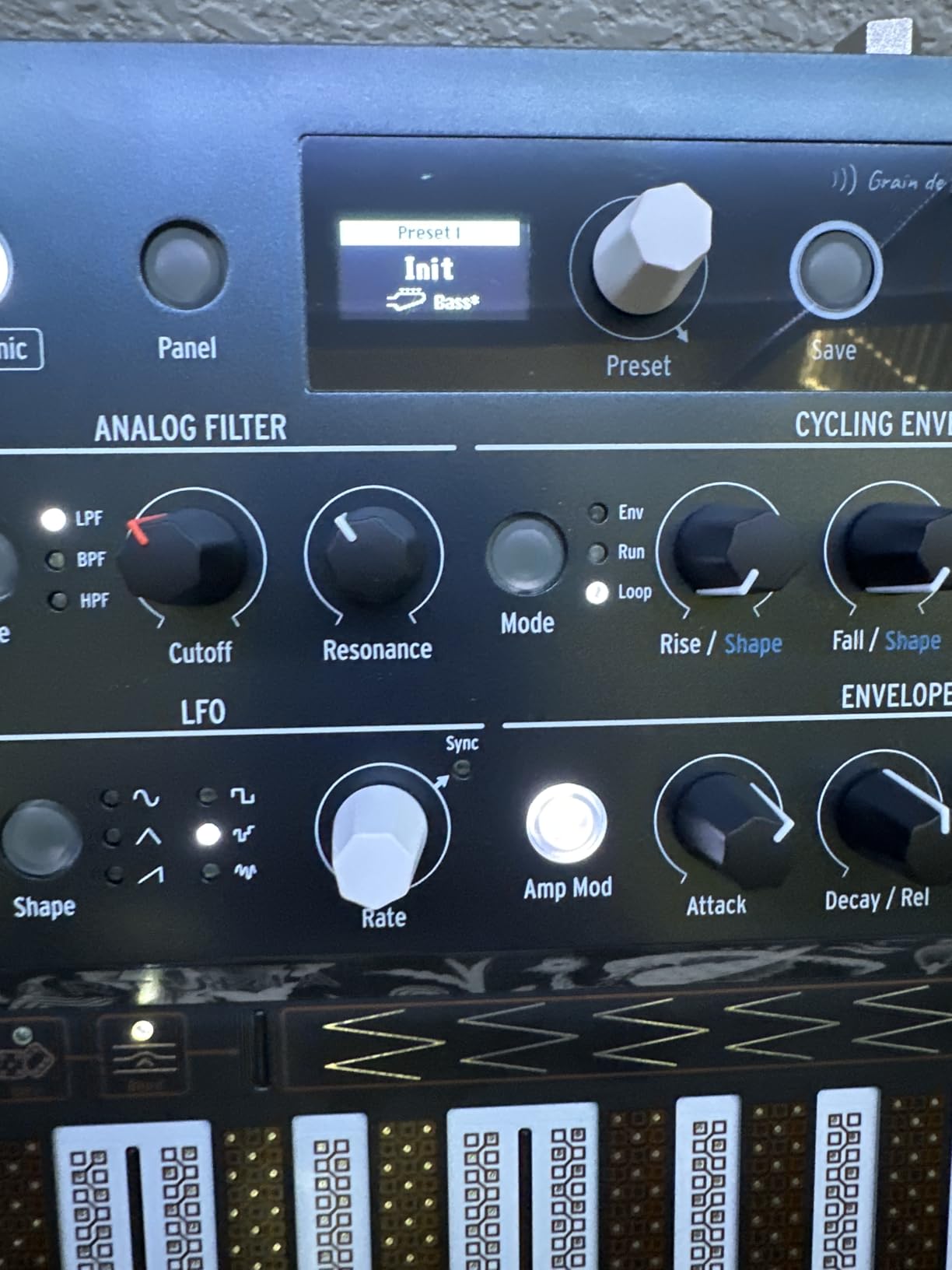
The analog filter is based on the classic Oberheim SEM state-variable design, and it sounds lush and musical across the entire frequency range. The 5×7 modulation matrix lets you route almost anything to anything, creating evolving, unpredictable patches that keep surprising you. Arturia keeps adding new oscillator engines through free firmware updates.
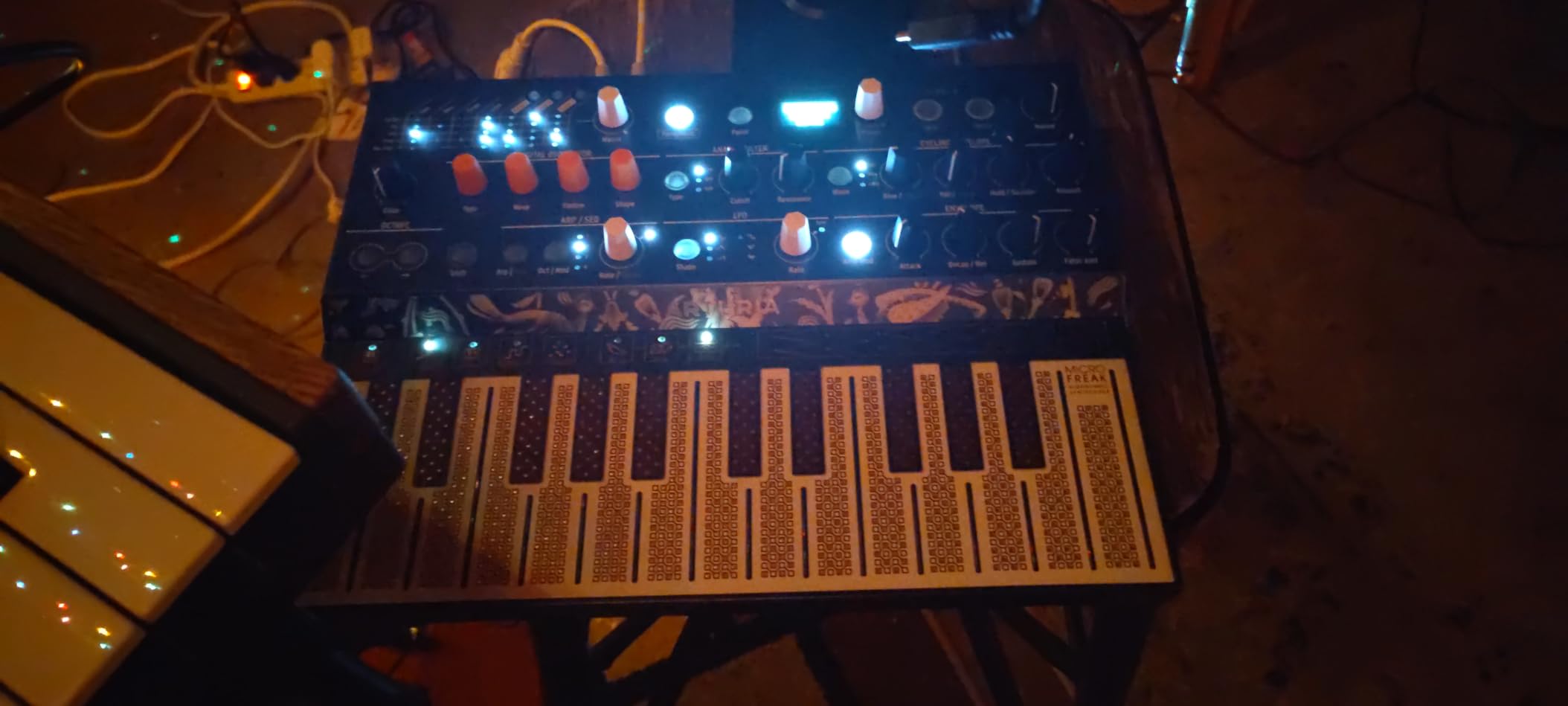
CV outputs for pitch, gate, and pressure make the MicroFreak an excellent companion for modular synth setups. I have used it as a controller for my Eurorack modules, and the integration is seamless. The Spice and Dice sequencer functions add randomized variation to patterns, which is perfect for generative composition.
Who Should Buy the MicroFreak
Experimental sound designers, modular synth owners, and anyone who wants a uniquely capable instrument for not much money will love the MicroFreak. It rewards curiosity and rewards players who are willing to learn its quirks. The CV outputs make it especially valuable as part of a larger modular ecosystem.
What to Watch Out For
The PCB keyboard is not for everyone. If you are a trained pianist, the flat touch plates will feel alien. Some advanced features require careful manual reading. Patch storage requires the Soundmondo app rather than onboard memory, which is an inconvenience if you are working away from a computer.
12. Roland AIRA Compact S-1 – Pocket-Sized Polysynth
Roland AIRA Compact S-1 Tweak Synth | Ultra-Portable Micro Polysynth with Advanced Tools | D-Motion Sound Control
Ultra-portable micro polysynth
Roland ACB engine
64-step sequencer
Battery powered
Built-in effects
✓ The Good
- Ultra-compact fits in a backpack
- Roland ACB analog modeling sound
- Battery powered with USB-C charging
- 64-step sequencer
- Built-in reverb and delay
- Excellent value for sound quality
✕ The Bad
- No aftertouch
- Small 2-octave mini keys
- MIDI cable not included
- Menu diving for deeper functions
The Roland AIRA Compact S-1 is the most portable polysynth on this list. It weighs just one pound and fits in a backpack, yet it delivers Roland’s ACB analog modeling technology that produces genuinely punchy, warm sounds. I was skeptical that something this small could sound this good, but the S-1 exceeded my expectations.
The 64-step sequencer is surprisingly capable for such a compact device. You can create four-bar patterns with parameter locks, and the D-Motion feature lets you modulate sounds by physically moving the synth. Built-in reverb and delay effects add space and character without needing external processing.

Battery powered via USB-C charging means you can make music anywhere. The S-1 also works as a MIDI controller for other gear, expanding its utility beyond its internal sound engine. For travel, street performance, or just sketching ideas on the couch, it is hard to beat the convenience.

Who Should Buy the S-1
Travelers, beginners, and anyone who wants a capable synth that goes anywhere will love the S-1. It is also a great first hardware synth for someone who wants to experience analog-style sound without a big investment. The sequencer and effects make it capable enough for serious music production despite its size.
What to Watch Out For
The two-octave mini keybed requires adaptation, especially for players with larger hands. There is no aftertouch. A MIDI-to-3.5mm cable is not included, which you will need for connecting to other gear. Deeper functions require menu diving through shift functions, which can slow your workflow.
How to Choose the Best Polyphonic Synthesizer
Choosing among the best polyphonic synthesizers comes down to understanding your needs across a few key categories. I have broken down the most important factors based on what real users on forums and in reviews consistently highlight as decision-makers.
Voice Count and Polyphony
Voice count determines how many notes you can sound simultaneously before the synth starts stealing voices from earlier notes. Four voices works for simple chords and leads. Six to eight voices covers most playing styles comfortably. Twelve or more voices gives you freedom for sustained pads with long releases and complex arrangements. Think about how you play and what sounds you want to create when deciding on voice count.
Analog vs Digital vs Hybrid
True analog synths use physical oscillator circuits and tend to sound warm and alive, but they require occasional tuning and can drift. Digital synths are perfectly stable, offer more voices per dollar, and can do things analog cannot, like precise wavetable manipulation. Hybrid synths pair digital oscillators with analog filters to get benefits from both approaches. There is no universally better option, only what suits your sound and workflow.
Keyboard Quality and Size
Full-sized keys are essential if you are a trained pianist. Mini keys save space and weight but require adjustment. Some synths like the MicroFreak use unconventional interfaces like PCB touch plates or pads instead of keys. Aftertouch, whether channel or polyphonic, adds a dimension of expressive control that many players find essential once they get used to it.
Sound Design Workflow
Knob-per-function layouts let you see and grab any parameter instantly, which is ideal for learning and live tweaking. Menu-based interfaces pack more features into less space but slow you down and can be frustrating. Consider how hands-on you want your sound design experience to be. Forum users consistently value dedicated controls over menu diving.
Portability and Power
If you need to move your synth frequently, weight and size matter. The Roland S-1 and Yamaha REFACE CS are genuinely portable with battery power options. The Hydrasynth and UB-Xa are studio instruments that you will not want to move often. Think about where you will actually use the synth before committing to a large, heavy instrument.
Connectivity
MIDI In/Out/Thru, USB-MIDI, and CV/gate connections all matter depending on your setup. If you work with a DAW, USB-MIDI is essential. For modular synth integration, CV outputs are critical. Audio outputs, headphone jacks, and sustain pedal inputs round out the connectivity picture. Make sure the synth you choose can connect to everything else in your studio.
Budget and Value
The best polyphonic synthesizers span a wide price range, from around $270 for the Roland S-1 to over $1,300 for the Hydrasynth and UB-Xa. More expensive does not always mean better for your needs. The PRO-800 delivers authentic analog sound for a fraction of what similar synths cost. The MiniFreak offers hybrid power that competes with instruments twice its price. Focus on value rather than absolute price.
Frequently Asked Questions About Polyphonic Synthesizers
What is the most versatile poly synth?
The ASM Hydrasynth is widely considered the most versatile poly synth available. Its advanced wavetable engine, three oscillators, dual Wave Mutators, polyphonic aftertouch keybed, and deep modulation matrix let it cover everything from classic analog warmth to complex digital sound design. The Arturia MiniFreak is another highly versatile option at a lower price point, offering hybrid digital-and-analog architecture with multiple synthesis modes.
What is the best poly synth for beginners?
The Korg minilogue is the best poly synth for beginners because of its knob-per-function layout, 200 presets, OLED oscilloscope that visually shows waveforms, and affordable price. The Yamaha REFACE CS is another excellent beginner option with its intuitive slider interface, built-in speakers, and battery power. Both synths teach synthesis fundamentals through hands-on control rather than menu diving.
Do I need a polyphonic synth?
You need a polyphonic synth if you want to play chords, create layered pad sounds, or produce rich ambient textures. Monophonic synths can only play one note at a time, which works for bass lines and leads but cannot produce the harmonic richness of multiple simultaneous notes. If your music involves chords, pads, or any textural elements, a polysynth is essential for your setup.
How many voices do I really need in a polyphonic synth?
Four voices handle simple triads and leads. Six to eight voices cover most playing styles including four-note chords with sustained releases. Twelve or more voices give you freedom for complex arrangements, layered pads, and sequences without voice stealing. If you play solo with long-release pads, aim for at least eight voices. For simple chord work and leads, four to six voices is sufficient.
Is analog or digital polyphonic synth better?
Neither is universally better. Analog synths offer warm, living sound with natural detuning and character but require occasional tuning and cost more per voice. Digital synths provide perfect tuning stability, more voices per dollar, and capabilities like precise wavetable manipulation. Hybrid synths combine digital oscillators with analog filters to capture benefits of both. Your choice should depend on the sound character you want and your budget.
Final Thoughts on the Best Polyphonic Synthesizers in 2026
The best polyphonic synthesizers in 2026 cover an incredible range of sounds, features, and price points. For absolute versatility and sound design depth, the ASM Hydrasynth stands above the rest with its polyphonic aftertouch keybed and advanced wavetable engine. For the best value, the Arturia MiniFreak delivers hybrid power and included software at a price that makes sense. And for budget-conscious buyers wanting authentic analog polyphony, the Behringer PRO-800 nails the Prophet 600 sound for a fraction of the cost.
Our team tested, researched, and compared every synth on this list to give you recommendations based on real ownership experiences rather than just spec sheets. Whether you are a beginner looking for your first hardware synth or an experienced producer adding to your studio, there is a polyphonic synthesizer here that will inspire you for years to come. The most important thing is to choose an instrument that matches your sound, your playing style, and your creative goals.