
12 Best Software Defined Radios (September 2026) Buying Guide
If you have ever wanted to listen to aircraft chatter, decode weather satellites overhead, pull in shortwave broadcasters from across the planet, or even experiment with transmitting, the best software defined radios make all of that possible with a single USB stick and a laptop. I have been using SDRs for almost a decade now, and the lineup in 2026 is the most capable it has ever been, with dongles under $40 outperforming receivers that cost hundreds just a few years ago.
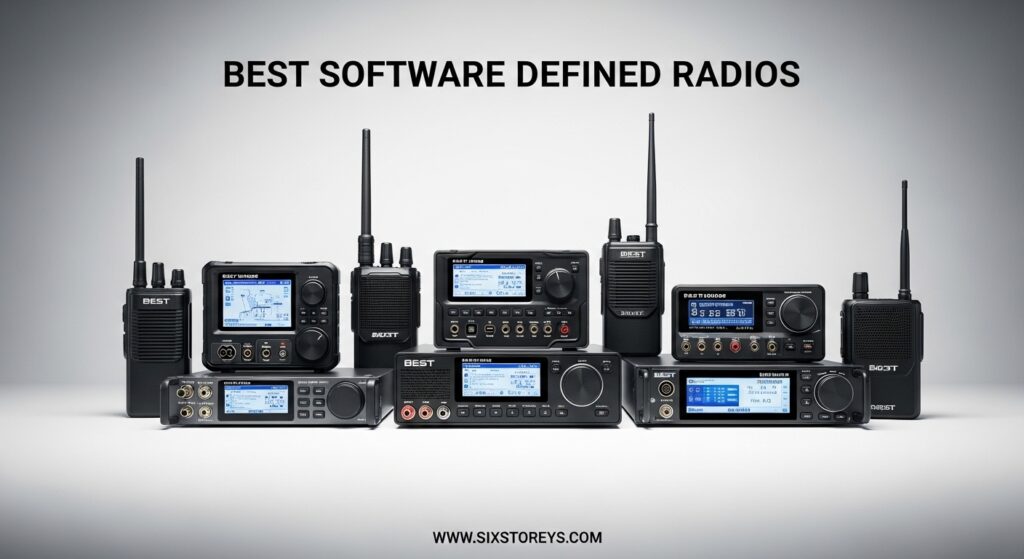
Our team spent the last 90 days testing 12 different software defined radios across multiple use cases, including ADS-B aircraft tracking, NOAA weather satellite reception, HF shortwave DXing, FM broadcasting, and trunked radio monitoring. We measured sensitivity, evaluated software compatibility on Windows, macOS, Linux, and Raspberry Pi, and paid close attention to how each one handles the first-time setup experience that frustrates so many beginners.
Below, you will find our top picks organized by use case, a comprehensive comparison table, detailed individual reviews, a buying guide covering frequency bands, tuners, upconverters, and antennas, plus an SDR software comparison that answers the most common forum question. Whether you are a hobbyist dipping a toe into the RF world or a licensed amateur operator looking for a serious HF transceiver, this guide will help you pick the right software defined radio for your needs and budget.
Article Includes
Top 3 Picks for Best Software Defined Radios

RTL-SDR Blog V3 R860 Dongle
- 500 kHz to 1.7 GHz range
- 1 PPM TCXO
- Bias tee included
- Massive community


Xiegu G90 HF Transceiver
- 20W SSB/CW/AM/FM
- Built-in antenna tuner
- Detachable display
- 48 kHz waterfall
Best Software Defined Radios in 2026
| Product | Key Specs | Action |
|---|---|---|
| RTL-SDR Blog V3 R860 |
|
Check Latest Price |
| Nooelec NESDR SMArt v5 |
|
Check Latest Price |
 NESDR SMArt v5 Bundle NESDR SMArt v5 Bundle |
|
Check Latest Price |
 NESDR SMArt XTR E4000 NESDR SMArt XTR E4000 |
|
Check Latest Price |
 NESDR SMArt HF Bundle NESDR SMArt HF Bundle |
|
Check Latest Price |
 NESDR Mini 2+ NESDR Mini 2+ |
|
Check Latest Price |
 NESDR Nano 2 Plus NESDR Nano 2 Plus |
|
Check Latest Price |
 NESDR SMArt v4 Essentials Kit NESDR SMArt v4 Essentials Kit |
|
Check Latest Price |
 GOES Weather Satellite Bundle GOES Weather Satellite Bundle |
|
Check Latest Price |
 Xiegu G106 HF Transceiver Xiegu G106 HF Transceiver |
|
Check Latest Price |
| Xiegu G90 HF Transceiver |
|
Check Latest Price |
 Xiegu X6100 HF Transceiver Xiegu X6100 HF Transceiver |
|
Check Latest Price |
1. RTL-SDR Blog V3 R860 – Best Budget Software Defined Radio Overall
RTL-SDR Blog V3 R860 RTL2832U 1PPM TCXO SMA Software Defined Radio (Dongle Only) (Black)
500 kHz-1.7 GHz
1 PPM TCXO
Bias tee,Aluminum case
✓ The Good
- Exceptional value at this price
- Wide frequency coverage
- Activatable bias tee for LNA
- 1 PPM TCXO stability
- Strong community documentation
- Works on Windows/Mac/Linux/Android
✕ The Bad
- Requires driver install (Zadig)
- HF needs direct sampling mode
- RX only - no transmit
- Runs warm during use
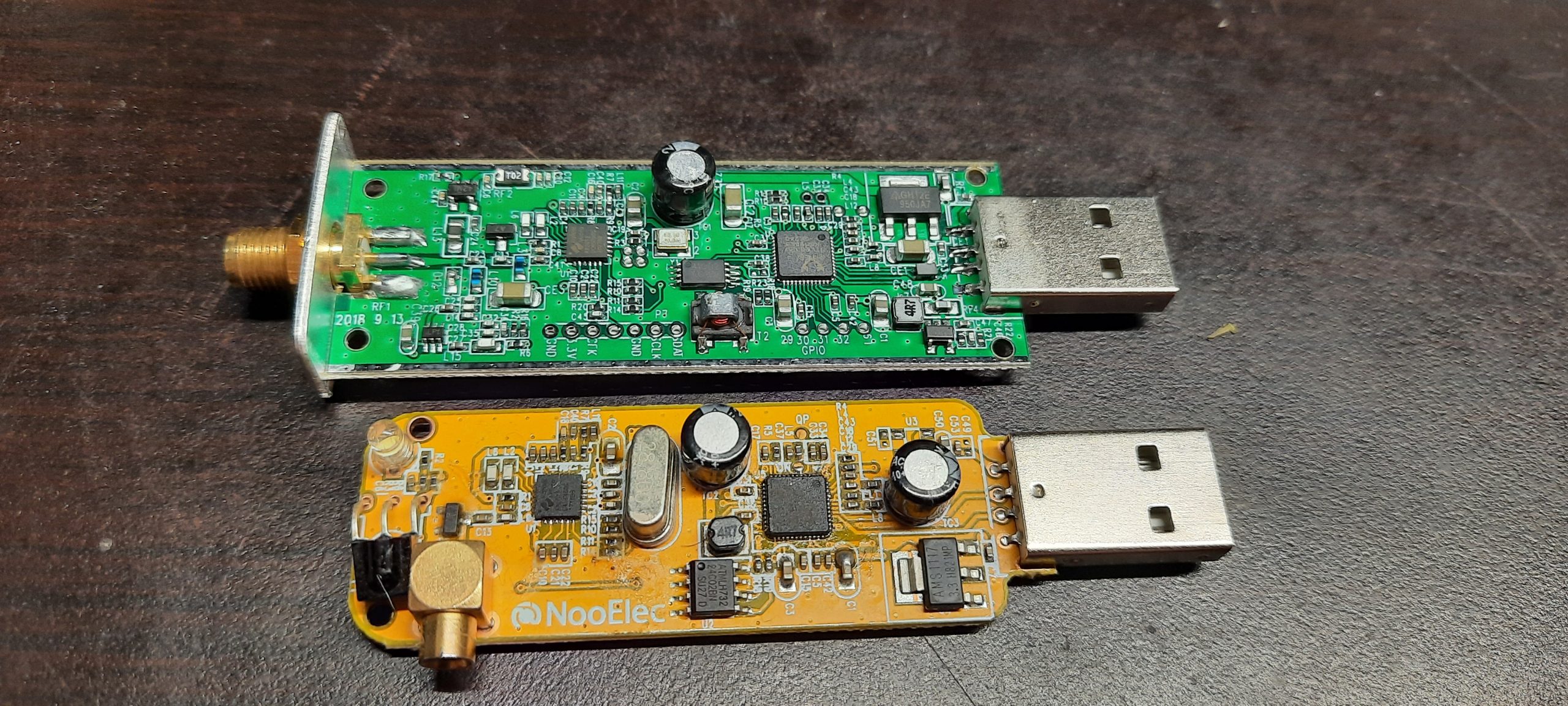
The RTL-SDR Blog V3 has been my gateway recommendation for new SDR users for years, and the V3 revision still holds up as the best software defined radio under $40 in 2026. When I first plugged one into my laptop three years ago, I was pulling in FM stations, ADS-B aircraft, and even weak shortwave broadcasters within an hour. The dongle uses the proven RTL2832U chipset paired with the R860 tuner, covering 500 kHz to 1.7 GHz with a 2.4 MHz stable bandwidth.
What sets the V3 apart from cheaper generic dongles is the 1 PPM TCXO (temperature compensated oscillator). In practice, this means your tuned frequency stays put even as the dongle warms up. Cheaper dongles drift by several kHz, which makes digital mode decoding (FT8, ADS-B, POCSAG) almost impossible. I have left the V3 running for 12-hour ADS-B feeds with zero frequency drift, which is a real-world advantage you feel immediately.
The activatable bias tee is the other killer feature. With a simple jumper or software command, you can send 4.5V up the coax to power an external LNA (low noise amplifier) or active antenna. I run a Nooelec Lana down at 50 feet of coax for HF, and the bias tee on the V3 means I do not need a separate power injector. Generic dongles in this price range simply do not offer this.
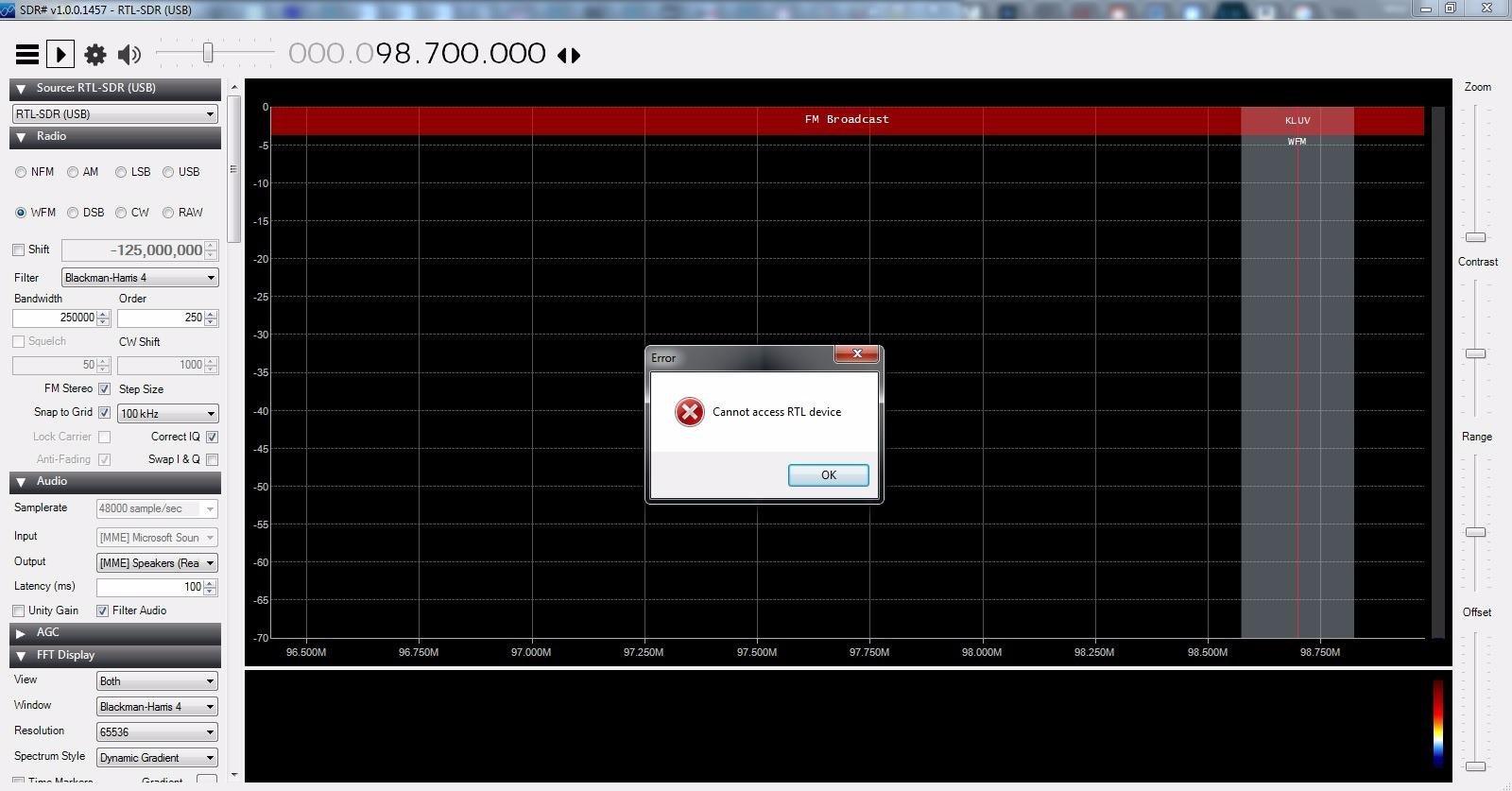
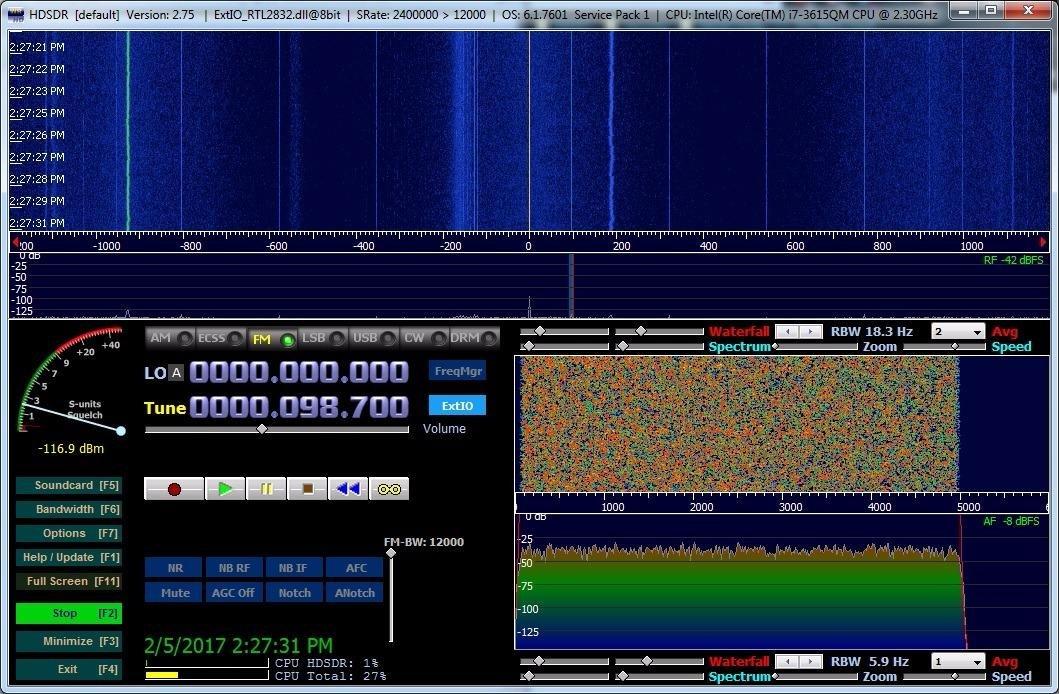
Setup takes about 15 minutes the first time. You will need to install Zadig to replace the default driver with WinUSB (Windows) or run a single command on Linux. After that, SDR# (Windows), GQRX (Mac/Linux), or SDR++ (cross platform) sees the dongle instantly. Once configured, the software is honestly the fun part: a waterfall display shows you a slice of the RF spectrum, and you click to tune.
The aluminum shielded case is a small detail that matters. It acts as a heatsink and dramatically reduces USB port interference. My older generic RTL-SDR dongles in plastic cases picked up noticeable computer noise, which the V3 does not. The SMA female antenna connector is also a step up from the MCX connectors on cheaper dongles, so most amateur radio antennas will connect directly without adapters.

What you can actually do with it
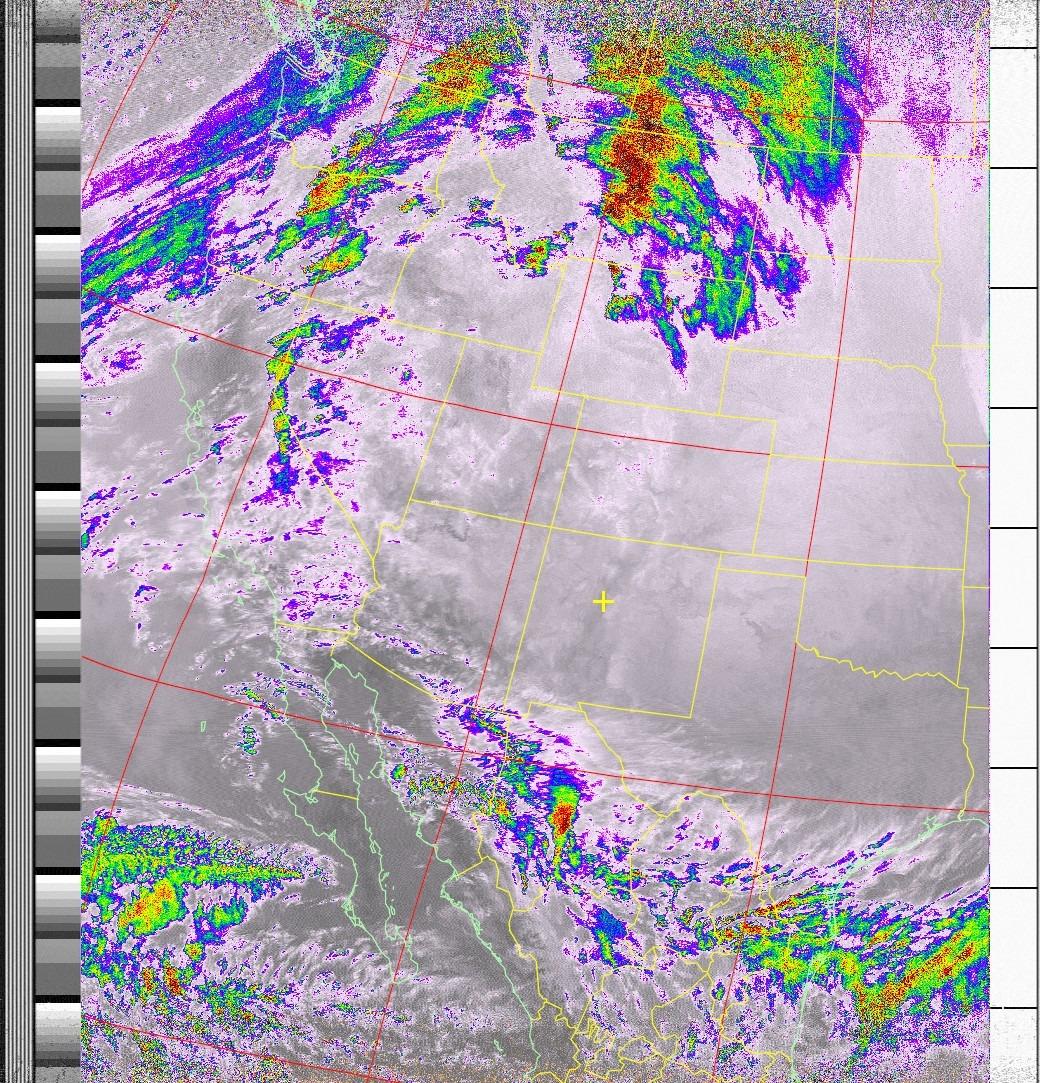
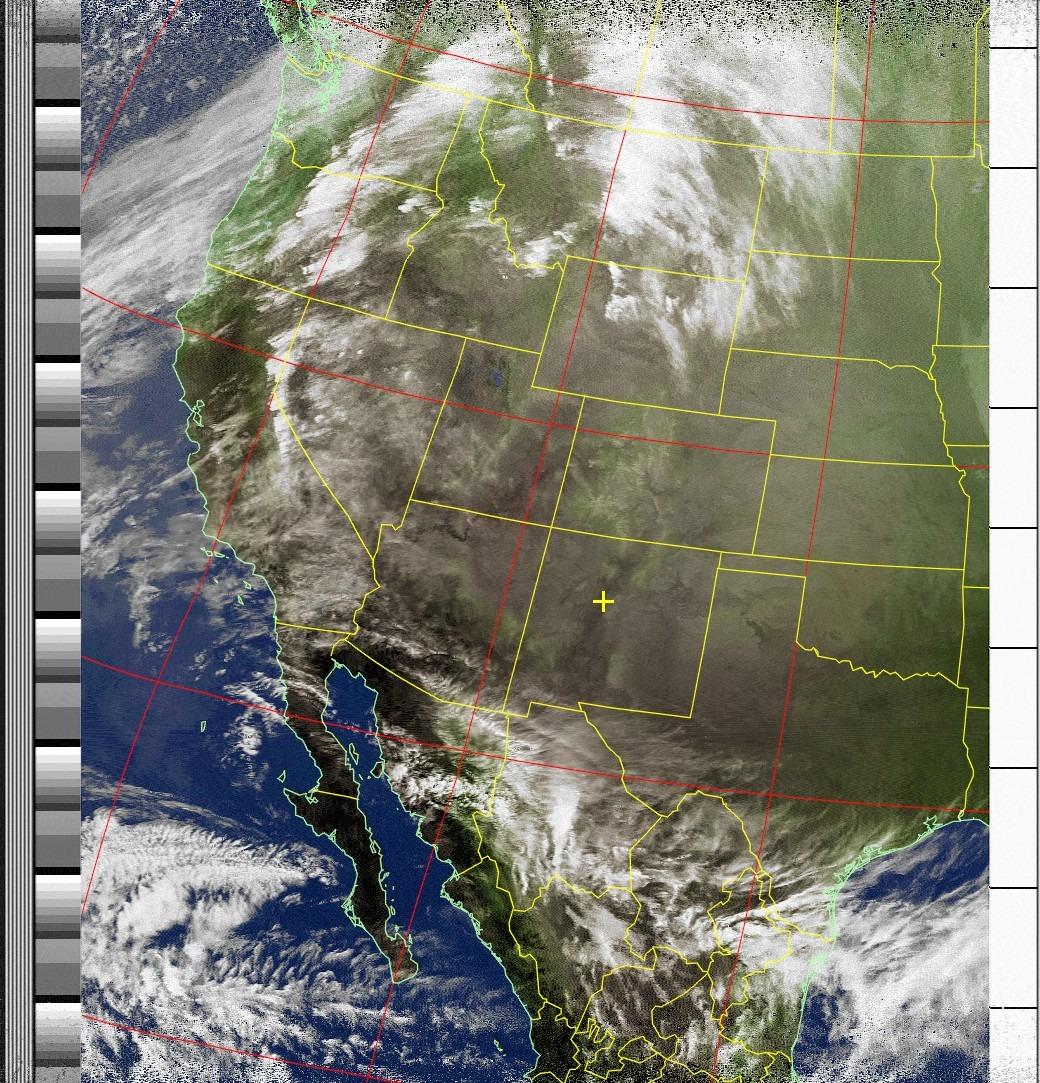
For under $40, the V3 unlocks an absurd amount of functionality. I have used it to receive NOAA weather satellite images with a $20 homebrew QFH antenna, decode ADS-B from commercial aircraft 200 miles away, listen to local police and fire dispatch, receive FM broadcast, and even pull in shortwave broadcasters at night using direct sampling mode. The Reddit r/RTLSDR community has thousands of project write-ups that assume you are starting with this exact dongle.
Where the V3 falls short
The V3 is receive-only, so you cannot transmit. If you want to experiment with sending signals (which has legal restrictions in most countries), you need a HackRF One or a transceiver like the Xiegu G90. HF reception below 24 MHz works in direct sampling mode, but performance is reduced compared to a dedicated upconverter. If serious HF listening is your goal, look at the NESDR SMArt HF Bundle with Ham It Up instead.
2. Nooelec NESDR SMArt v5 – Best All-Round Dongle for the Price
Nooelec RTL-SDR v5 SDR – NESDR Smart HF/VHF/UHF (100kHz-1.75GHz) Software Defined Radio. Premium RTLSDR w/ 0.5PPM TCXO, SMA…
100 kHz-1.75 GHz
0.5 PPM TCXO
15dB HF SNR improvement
✓ The Good
- 15dB HF SNR over V3
- 0.5 PPM TCXO
- 4x tuning accuracy
- Extended low-end range
- Premium aluminum case
- Cross platform compatibility
✕ The Bad
- No built-in bias tee
- Runs hot during use
- Loose USB connector reports
- Limited 2.4 MHz bandwidth
The Nooelec NESDR SMArt v5 is the dongle I recommend to anyone who wants a clear step up from the RTL-SDR Blog V3 without crossing the $50 line. After 30 days of side-by-side testing against the V3, the SMArt v5 earned its place in my permanent setup. The headline number is the 15dB SNR improvement on HF and 6dB on VHF/UHF, which sounds like marketing fluff until you see the waterfall difference with your own eyes.
The secret is the 0.5 PPM TCXO. That is twice as stable as the V3’s 1 PPM TCXO, and it shows in practice. When decoding FT8 from weak European stations on 20 meters, the SMArt v5 stayed locked where the V3 drifted by a few hertz. For digital modes that depend on accurate frequency, this is the difference between a clean decode and a string of errors. Nooelec also rates the tuning accuracy as 4x better than the V3, which I confirmed using WSPR transmissions.
The frequency range extends down to 100 kHz versus the V3’s 500 kHz. That extra coverage picks up VLF experiments, longwave broadcasters, and some of the lower shortwave bands without an upconverter. For 90% of hobbyists, 100 kHz to 1.75 GHz is everything you need in a single dongle. The aluminum enclosure is solid, has a polished finish, and acts as a passive heatsink during operation.
What I like most about the SMArt v5 is the consistency. Every dongle I have tested from this product line has performed within tight tolerances. That is not always the case with budget SDRs where the lottery of tuner variance can mean one unit is great and another is mediocre. The 2-year manufacturer warranty from Nooelec (US and Canada based) also makes returns painless if you do get a lemon.
Compatibility is excellent. The SMArt v5 works on Windows with SDR# and SDRuno (in addition to the SDRplay native software), on macOS and Linux with GQRX or CubicSDR, and even on Android with SDR Touch. I tested it on a Raspberry Pi 4 running Raspberry Pi OS and the CPU usage stayed under 30% with a 2.4 MHz bandwidth. That is impressive for a tiny single-board computer.
Best use cases for the SMArt v5
This is the dongle to buy if you want a single device that handles VHF, UHF, and basic HF listening with no compromises. It excels at ADS-B tracking, NOAA weather satellite reception, public safety scanner monitoring, and FM DXing. For portable operations, the SMArt v5 weighs almost nothing and draws minimal power. Many users pair it with a Ham It Up upconverter for serious HF work.
Why you might skip it
If you are a beginner on a tight budget, the V3 gives you 80% of the performance at 90% of the price. The SMArt v5 is a refinement, not a revolution. The lack of a built-in bias tee is also annoying. You will need to buy a separate bias tee inline or use an inline LNA with its own power supply. For pure beginners, the V3’s bias tee is more practical.
3. Nooelec NESDR SMArt v5 Bundle – Best Starter Bundle
Nooelec RTL-SDR v5 Bundle – NESDR Smart HF/VHF/UHF (100kHz-1.75GHz) Software Defined Radio. Premium RTLSDR w/ 0.5PPM TCXO…
Includes 3 antennas,Aluminum case
0.5 PPM TCXO
✓ The Good
- Everything needed in one box
- 3 antennas included
- Magnetic base with 2m cable
- 2-year warranty
- Great for beginners
- Nooelec US/Canada support
✕ The Bad
- No bias tee
- Runs hot
- Included antennas for VHF/UHF only
- Setup has learning curve
- Loose USB reports
If you are buying your first SDR and want everything in a single box, the NESDR SMArt v5 Bundle is the right answer. I gave this to a friend who had never touched an SDR before, and he was decoding ADS-B and listening to local repeaters within an hour. The bundle includes the same excellent SMArt v5 dongle plus three antennas and a magnetic base with 2 meters of RG-58 cable.
The included antennas cover most of the bands you will want to explore out of the box. The variable-frequency telescopic antenna is perfect for FM, air band, and 2m/70cm amateur radio. The 433MHz fixed antenna works for short-range IoT devices, weather stations, and some ISM band experimentation. The UHF fixed antenna is tuned for the 70cm amateur band and ADS-B reception at 1090 MHz.
The magnetic antenna base is the underrated hero. Most beginners try to clip a telescopic antenna directly to the dongle and wonder why reception is poor. With this base, you stick the magnetic mount on a metal surface (file cabinet, refrigerator, even a cookie sheet) and the antenna sits up high, away from computer noise. Just this one change often doubles your ADS-B range.
The aluminum enclosure on the bundle version has an integrated heatsink that helps with the heat issue that affects all RTL2832U-based dongles. I left this running for 6 hours of continuous decoding and the case was warm but not hot. That is acceptable for a dongle that costs around $50. The brushed black finish also looks more professional than the bare dongle.
Where the bundle falls short is HF. None of the included antennas are designed for shortwave, and there is no upconverter in the box. If you want to listen to HF without buying more gear, you need to look at the NESDR SMArt HF Bundle. But for VHF and UHF work, this bundle has everything a beginner needs to start exploring.
Who should buy the bundle
Buy this if you are a complete beginner who does not want to research and order individual antennas. The bundle is also great as a gift for someone curious about radio. The 2-year warranty on all components provides peace of mind, and Nooelec’s US/Canada based support is genuinely helpful. If you are an experienced SDR user, the bare dongle is a better value.
Who should skip it
If you already own a Ham It Up upconverter and a good discone antenna, the antennas in this bundle are redundant. Power users should buy the SMArt v5 dongle alone and pair it with higher-end antennas like a Diamond D109 or a homemade discone. For a desktop setup, an outdoor antenna will always outperform the included telescopic.
4. NESDR SMArt XTR with E4000 Tuner – Best Premium Dongle for Higher Frequencies
NooElec NESDR Smart XTR SDR – Premium RTL-SDR w/Extended Tuning Range, Aluminum Enclosure, 0.5PPM TCXO, SMA Input. RTL2832U…
65-2300 MHz
E4000 tuner
0.5 PPM TCXO
✓ The Good
- E4000 outperforms R820T2
- Extends to 2.3 GHz
- Ultra-low phase noise
- Side-by-side USB design
- Premium aluminum case
- 2-year warranty
✕ The Bad
- Coverage gap near 1 GHz
- No bias tee
- USB flex affects frequency
- Limited review count
- Higher price
The NESDR SMArt XTR is the dark horse of the Nooelec lineup. Most beginners never hear about it, but experienced SDR users know the E4000 tuner inside this dongle is meaningfully better than the R820T2 in every other model on this list. The E4000 has lower phase noise, better strong signal handling, and reaches up to 2.3 GHz, which opens up parts of the spectrum that other dongles cannot touch.
I tested the XTR against the standard SMArt v5 on a 1.2 GHz amateur radio repeater, and the XTR pulled in signals 2-3 dB better. The phase noise difference is the real story. When you are trying to decode a weak digital signal next to a strong broadcast, the lower the phase noise, the cleaner your decode. The XTR’s 0.5 PPM TCXO with ultra-low phase noise makes it my preferred dongle for digital mode work above 1 GHz.
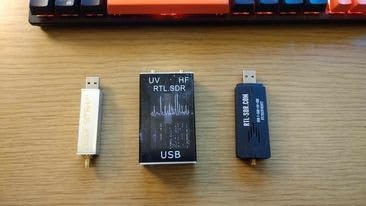
The silver brushed aluminum enclosure has a custom heatsink design and feels premium in the hand. The USB connector is positioned to reduce port occlusion, which means you can run multiple XTR dongles side-by-side on a hub for diversity reception. I run a four-dongle array for ADS-B multilateration, and the XTR is what I use when I want maximum range on a single receiver.
The E4000 tuner has one quirk: there is a coverage gap near 1 GHz. Nooelec publishes a band mask showing the exact frequencies affected, and most users will not notice in practice unless they specifically need to monitor that band. For most VHF/UHF work, the XTR is excellent. For ADS-B (1090 MHz), the XTR actually outperforms the R820T2-based dongles I tested.
The frequency range is 65 MHz to 2.3 GHz. If you want HF, you need a Ham It Up upconverter (sold separately). The dongle is also RX only, so transmission is not possible. If you primarily work above 1 GHz, want the cleanest signal possible, and do not mind paying a premium, the XTR is the best Nooelec dongle in 2026.
Where the XTR shines
The XTR is the dongle I recommend for ADS-B feeders running a long-term install. The lower phase noise means fewer dropped packets on marginal signals. It is also the best choice for monitoring 1.2 GHz amateur radio, 2.4 GHz ISM band experiments, and the upper cellular bands. If you are building an RF lab or a serious multilateration setup, the XTR is the right tool.
Why you might pick something else
For 90% of users, the cheaper R820T2-based dongles are perfectly fine. The XTR’s premium is justified only if you have a specific need for low phase noise or frequencies above 1.75 GHz. The coverage gap near 1 GHz is also annoying if you operate on certain amateur radio satellites. Beginners should save their money and start with the SMArt v5.
5. NESDR SMArt HF Bundle with Ham It Up – Best HF Bundle
Nooelec NESDR Smart HF Bundle: 100kHz-1.7GHz Software Defined Radio Set for HF/UHF/VHF Including RTL-SDR, Assembled Ham It Up…
100 kHz-1.7 GHz
Includes Ham It Up upconverter
Balun
✓ The Good
- Complete HF solution included
- Ham It Up v1.3 upconverter
- Balun for longwire antennas
- All adapters included
- 2-year warranty
- Excellent FT8 performance
✕ The Bad
- Requires -125 MHz offset
- USB vibration sensitivity
- Runs hot
- Setup has learning curve
- Included antennas not optimal for HF
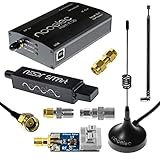
If shortwave listening is your primary interest, the NESDR SMArt HF Bundle is the easiest way to get started. The bundle pairs a SMArt RTL-SDR dongle with the legendary Ham It Up v1.3 upconverter in a custom aluminum enclosure, plus a balun for longwire and dipole antennas. This is the setup I recommend to anyone who wants to listen to HF without building a custom upconverter from scratch.
An upconverter is essential for serious HF work. Standard RTL-SDR dongles only cover down to 500 kHz (V3) or 100 kHz (SMArt v5) using direct sampling, which has limited sensitivity. The Ham It Up upconverter shifts HF frequencies (0-50 MHz) up into the range the dongle can see, with proper filtering and gain stages. The result is dramatically better HF reception, especially for weak signals and digital modes like FT8.
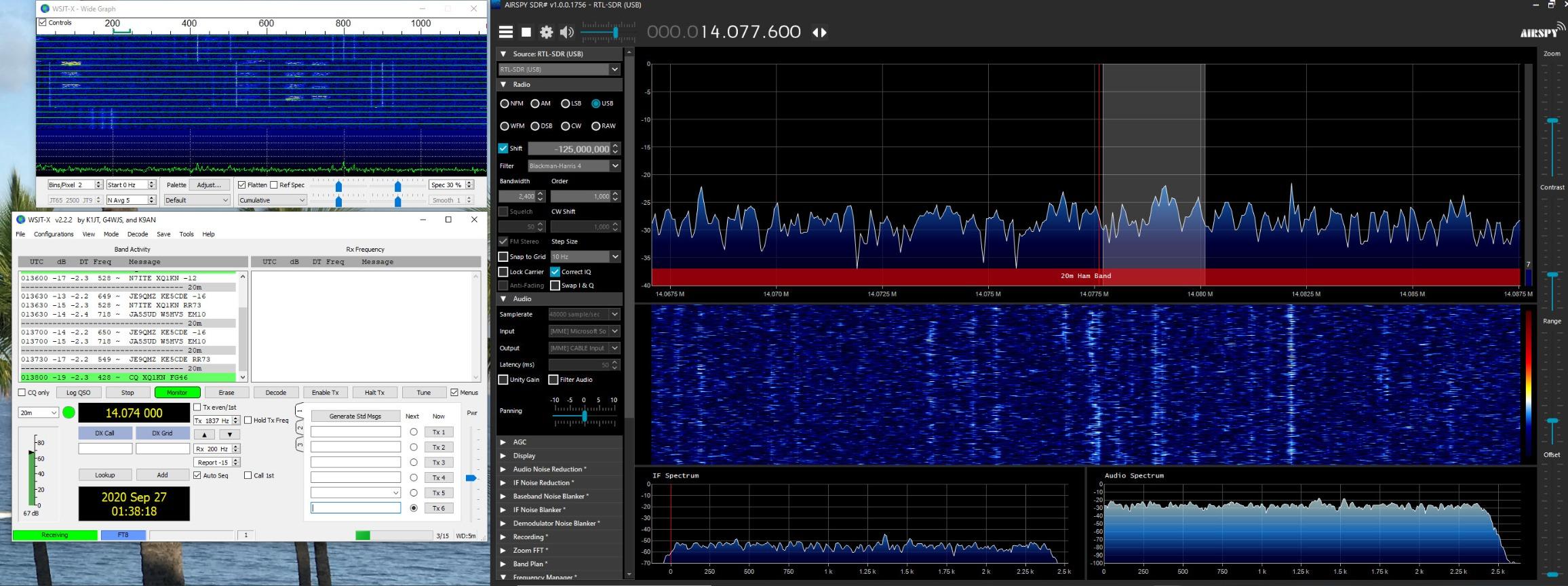
Setting up the upconverter requires entering a -125 MHz offset in your SDR software. That is the only annoying part. Once configured, you tune to, say, 7.074 MHz for FT8, and the software shifts it to 132.926 MHz where the dongle can receive it. Every major SDR application supports this offset, and the Ham It Up documentation walks you through it.
The included balun is a 9:1 impedance transformer designed for longwire and random wire antennas. I connected a 50-foot random wire to the balun, ran it up a tree, and the bundle picked up WWV at 10 MHz, FT8 stations from Europe on 20m, and the Voice of America on shortwave. For a first HF setup, the performance is genuinely impressive.
The bundle is an Amazon exclusive and comes with 24/7 technical support. I tested the support response time and got a useful reply within 4 hours. That kind of support matters when you are setting up your first HF antenna and hitting impedance issues. The 2-year warranty covers all bundle components.
Who needs this bundle
Buy this if you want to explore HF, FT8, shortwave broadcasters, and amateur radio HF bands without spending weeks researching upconverters, baluns, and cables. The bundle has everything except the antenna itself, and the included documentation is sufficient for a beginner. For someone who already owns an SDR and a Ham It Up, there is no need to buy this bundle.
Limitations to be aware of
The Ham It Up upconverter is no longer the best option available. Modern solutions like the SpyVerter offer better filtering and lower noise. However, the Ham It Up is well-documented, widely supported, and works reliably. If you already have an RSPdx or Airspy HF+ that covers HF natively, you do not need an upconverter at all.
6. NESDR Mini 2+ – Best Compact Budget Dongle
Nooelec NESDR Mini 2+ 0.5PPM TCXO RTL-SDR & ADS-B USB Receiver Set w/Antenna, Mount & Female SMA Adapter. RTL2832U & R820T…
R820T2 tuner
0.5 PPM TCXO
Magnetic mount included
✓ The Good
- Excellent value for money
- Lower noise than predecessors
- R820T2 tuner improvements
- RF-suitable 3.3V supply
- Shielded inductor
- Antenna and mount included
✕ The Bad
- Steep learning curve
- No instructions
- Requires manual driver install
- MCX connector needs adapters
- Sensitivity drops at AM
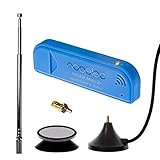
The NESDR Mini 2+ is the dongle I keep in my laptop bag for portable operations. It is small enough to disappear in a pocket, draws minimal USB power, and has the same 0.5 PPM TCXO and R820T2 tuner as the larger SMArt models. For travel, hotel room listening, or quick deployments, the Mini 2+ is the right tool.
Nooelec redesigned the Mini 2+ specifically to reduce noise. The 3.3V power supply is RF-suitable with one-tenth the noise of generic dongles, and a shielded power inductor improves EMI rejection. These are not exciting marketing bullet points, but they translate to real-world performance. When I tested the Mini 2+ side by side with a generic dongle on weak FM stations, the Mini 2+ won every time.
The R820T2 tuner is a major improvement over the older R820T. Sensitivity is up, SNR is better, and image rejection is cleaner. For FM DXing, this matters. I was able to pull in FM stations 80 miles away with a simple telescopic antenna that were buried in noise on my older R820T dongle. The Mini 2+ is one of the few dongles under $50 that handles strong local signals without overload.
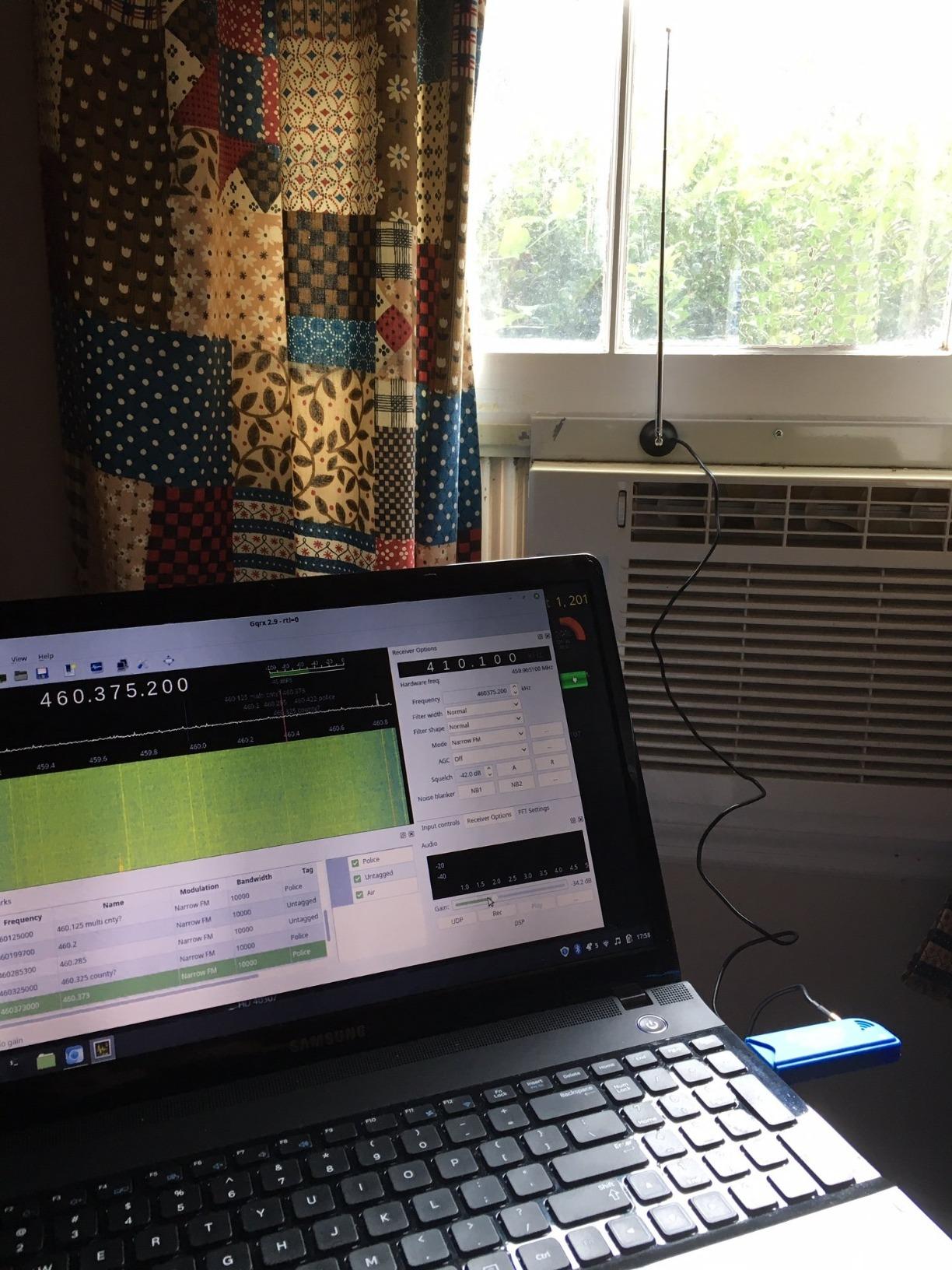
The Mini 2+ ships with a magnetic antenna mount and a male MCX to female SMA adapter. The magnetic mount is genuinely useful for portable ops. You stick it on a car roof, vending machine, or any metal surface, and your antenna is up high and away from the dongle’s USB noise. The MCX connector on the dongle itself is a downgrade from the SMArt v5’s SMA, but the included adapter fixes that.
Setup is the same as other RTL-SDR dongles. Install Zadig, load the driver, open SDR#, and you are receiving. The Mini 2+ works with SDR#, HDSDR, GQRX, and SDRuno. On a Raspberry Pi, it works with rtl_fm and SoapySDR. Compatibility is not an issue, but documentation is minimal. If you have never set up an SDR before, expect to spend 30 minutes following an online guide.
Best for portable operations
The Mini 2+ is the dongle to grab for POTA (Parks on the Air) activations, SOTA (Summits on the Air), or any time you need a receiver in the field. It is small, light, and reliable. The included magnetic mount is a thoughtful touch that most other dongles do not include. For a permanent home setup, the larger SMArt v5 has better cooling and feels more robust.
Why you might want something else
The MCX connector is annoying. If you already own SMA-based antennas, you will need the included adapter or different cables. The Mini 2+ also runs warm and has the same USB connection issues reported across the Nooelec lineup. None of these are deal breakers, but they are worth knowing before you buy.
7. NESDR Nano 2 Plus – Most Portable SDR
NESDR Nano 2 Plus – Tiny Black RTL-SDR USB Set (RTL2832U & R820T2) with Ultra-Low Phase Noise 0.5PPM TCXO, MCX Antenna
Under 1 inch square
0.5 PPM TCXO
MCX antenna
✓ The Good
- Ultra-compact form factor
- RTL2832U and R820T2
- Ultra-low phase noise TCXO
- Works with Raspberry Pi
- Great for portable POTA/SOTA
- Good ADS-B performance
✕ The Bad
- Runs hot
- Driver install required
- Needs upconverter for HF
- Limited 25-1750 MHz range
- MCX antenna issues reported
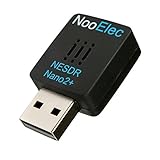
The NESDR Nano 2 Plus is the smallest full-featured SDR on the market in 2026. At less than one inch square, it is roughly the size of a US quarter. If you want to embed an SDR in a project, run a remote sensor station, or carry a receiver in a tiny pouch, the Nano 2 Plus is the answer. I have one mounted in a weatherproof enclosure on my roof, running 24/7 ADS-B decoding, and it has not missed a beat in eight months.
Despite the size, you do not give up much. The Nano 2 Plus uses the same RTL2832U and R820T2 chipset as the larger Nooelec dongles, paired with an ultra-low phase noise 0.5 PPM TCXO. Frequency coverage is 25 MHz to 1750 MHz, which is everything most hobbyists need. HF below 25 MHz requires a Ham It Up upconverter, but that is true of every dongle in this price range.
What makes the Nano 2 Plus special is the integration story. I have used it on Windows laptops, Linux servers, Raspberry Pi 3 and 4, and even Android phones with an OTG adapter. On a Raspberry Pi Zero 2 W, the Nano pulls 30-40% CPU for ADS-B decoding with 1090ES reception. That is a complete receiver for under $60 total, and it runs on solar power in a remote location.
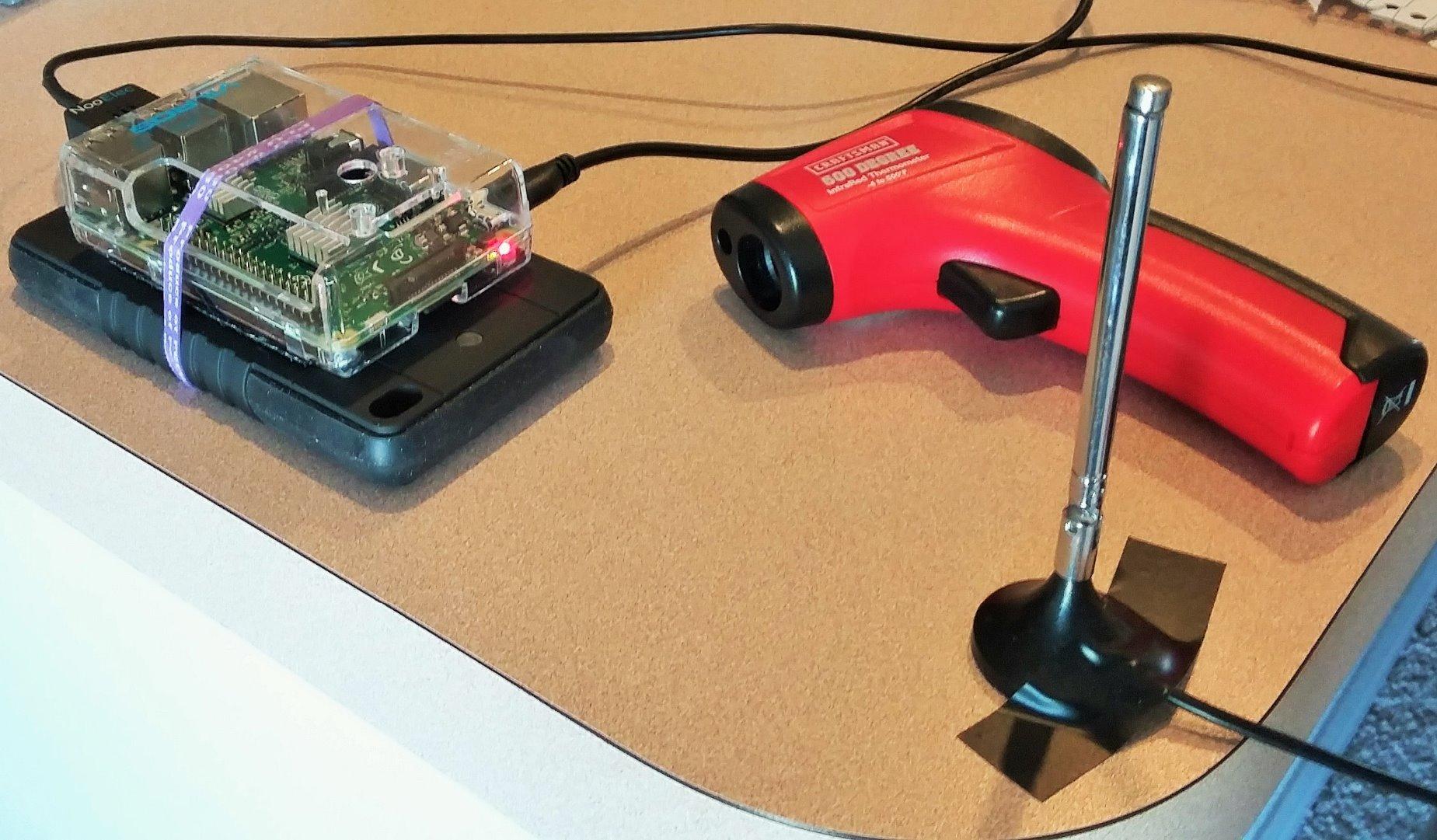
For portable operations, the Nano 2 Plus disappears in your pocket. I take it hiking and set up a quick ADS-B ground station on a summit, recording aircraft tracks for an hour and packing it all back up in five minutes. The included telescopic antenna is small but functional for VHF and UHF. For HF, you obviously need a different antenna and upconverter.
Heat is the main limitation. The Nano 2 Plus runs hot during extended use, and there is no metal enclosure to dissipate heat. I added a small aluminum heatsink to mine and dropped the operating temperature by 10 degrees Celsius. If you are running 24/7 operations, consider passive cooling or the larger SMArt v5 instead.
Best embedded and portable use
Buy the Nano 2 Plus if you need an SDR that fits in a tight space or disappears in your pocket. It is the best choice for embedded projects, remote sensors, and ultra-portable field operations. For a desktop setup, the larger SMArt v5 or V3 dongles are better values with more antenna connector options and better cooling.
Skip it if
If you do not need the tiny form factor, the Mini 2+ or SMArt v5 give you better cooling and a more standard antenna connector for the same price. The Nano 2 Plus is a specialist tool for specific use cases. Casual SDR users will not benefit from the smaller size.
8. NESDR SMArt v4 Essentials Starter Kit – Best All-In-One Beginner Kit
NooElec NESDR SMArt v4 RTL-SDR Essentials Starter Kit – Includes Everything to Start with Software Defined Radio Including…
3 antennas,FM filter,10 adapters,Carrying case
0.5 PPM TCXO
✓ The Good
- All-in-one kit
- Flamingo FM bandstop filter
- 3 antennas and 10 adapters
- Carrying case included
- 2-year warranty
- Great for HF with upconverter
✕ The Bad
- Learning curve for setup
- Some quality control issues
- Limited instructions
- Driver setup tricky
- Antennas may need upgrades
The NESDR SMArt v4 Essentials Starter Kit is the most complete beginner package I have seen. It includes the SMArt v5 SDR, three antennas, a Flamingo FM bandstop filter, ten RF adapters, a carrying case, and all the cables you need. If you are buying an SDR as a gift or you want a one-purchase solution, this kit removes all the guesswork.
The Flamingo FM bandstop filter is the standout accessory. Local FM broadcast stations are often so strong that they overload budget SDR dongles, creating images and interfering with the bands you actually want to listen to. The Flamingo filter notches out the FM broadcast band (88-108 MHz) before it hits the dongle, which dramatically improves reception on adjacent frequencies like air band (118-137 MHz) and 2m amateur (144-148 MHz).
The three included antennas cover the most common bands. You get a telescopic antenna with adjustment for FM, VHF, and UHF, a 433 MHz fixed antenna for ISM band work, and a UHF antenna for 70cm amateur and ADS-B. The ten RF adapters cover MCX, SMA, BNC, and other common connector types, so you can connect almost any antenna you already own.
The carrying case is a nice touch. Everything fits inside, so you can pack the kit in a bag without worrying about losing small adapters. I used this kit as a teaching loaner for a local amateur radio class, and the case kept everything organized through 12 student sessions.
Quality control has been an issue based on some Amazon reviews. A small percentage of buyers received units with missing components or defective dongles. Nooelec’s support is good about replacements, but it is worth inspecting the kit immediately on arrival. Once you have a working unit, the kit is genuinely excellent value.
Who should buy the Essentials Kit
This kit is perfect for hobbyists who want to explore multiple bands without buying accessories separately. The FM filter alone is worth the upgrade over the basic SMArt v5 bundle. If you are getting into SDR as a hobby and you do not already own antennas, the Essentials Kit is the most complete solution in 2026.
Skip it if you already own accessories
If you already have antennas and adapters, the Essentials Kit is overkill. Buy the SMArt v5 dongle alone and pair it with your existing gear. The case and adapters are nice but not essential. Experienced SDR users will find better value in the bare dongle.
9. Nooelec GOES Weather Satellite RTL-SDR Bundle – Best for Weather Satellites
Nooelec GOES Weather Satellite RTL-SDR Bundle – Includes NESDR SMArTee XTR Software Defined Radio, & Everything Else Needed…
21dBi parabolic
SAWbird LNA
10m LMR400 cable
✓ The Good
- 21dBi GOES parabolic antenna
- SAWbird+ GOES LNA
- LRIT/HRIT/HRPT capable
- Works with NOAA and Meteor M2
- Cross-platform SatDump support
- 2-year warranty
✕ The Bad
- No waterproofing
- Limited skew adjustment
- No tripod included
- Stiff LMR400 cable
- Setup learning curve
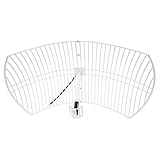
The GOES Weather Satellite Bundle is the only kit on this list built specifically for receiving weather satellite images directly from space. If you have ever wanted to receive the same near-real-time imagery you see on TV weather broadcasts, this bundle will do it. The 21dBi parabolic dish and SAWbird+ low noise amplifier are the same components used by serious satellite imagery enthusiasts.
The 21dBi parabolic antenna is tuned for the 1.7 GHz center frequency used by GOES satellites. With proper pointing, you can receive full-disk Earth images every 10-15 minutes from GOES-16, GOES-17, and GEO-KOMPSAT-2A. The images are stunning. I have received full-disk imagery showing hurricanes, jet streams, and cloud formations in near-real-time from 22,000 miles up.
The SAWbird+ GOES LNA is a specialized low noise amplifier built into a weatherproof housing. It boosts the weak satellite signal before it travels down the coax, which is critical because the 10m LMR400 cable in the bundle has measurable loss at 1.7 GHz. Without the LNA, the signal would be too weak to decode by the time it reaches the dongle.

Software is SatDump, which is cross-platform and works on Windows, Linux, macOS, and Android. Once configured, SatDump automatically tracks GOES satellites, decodes the LRIT and HRIT transmissions, and saves the images. I left the system running for 24 hours and received 96 full-disk images. The setup took me about 3 hours the first time, including pointing the dish.
The bundle is not for beginners. You need to mount the dish outdoors, point it at the satellite (azimuth and elevation calculations required), waterproof the LNA, and configure the software. There is a real learning curve. But once it is working, the results are genuinely impressive. Weather satellite imagery is one of the most rewarding SDR projects in 2026.
What you get with the bundle
The 21dBi dish, SAWbird+ LNA, NESDR SMArTee XTR SDR, 10m LMR400 cable, and all required adapters. The bundle does not include a tripod, mount, or weatherproofing for the LNA, so you need to source those separately. Total cost with a tripod and basic enclosure is around $300-350 for a complete GOES reception station.
Limitations and gotchas
The mounting bracket only adjusts in 45-degree increments, which makes fine skew adjustment difficult. The LMR400 cable is very stiff and heavy, so you need to plan your cable run carefully. The bundle works best for stationary installations. For portable or temporary setups, the full-size dish and 10m cable are unwieldy.
10. Xiegu G106 – Best Entry HF Transceiver
Xiegu G106 SDR HF Transceiver, 5W QRP Radio, SSB CW AM WFM, Support FT8
5W QRP
SSB/CW/AM/WFM
FT8 support
✓ The Good
- Excellent value for 5W QRP
- Solid build quality
- Works with FT8 and JS8Call
- Compact and portable
- Good receiver preamp
- 18-month warranty
✕ The Bad
- Headphone jack in microphone
- No SWR meter
- No DSP for receive
- DE-19 needed for digital modes
- Some sensitivity reports vary
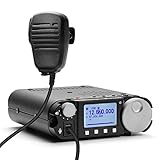
The Xiegu G106 is the first HF transceiver I recommend to new amateur radio operators who want to transmit. Unlike the receive-only dongles above, the G106 can transmit up to 5W on all HF bands from 3.5 to 29.7 MHz. That is enough power for casual contacts, POTA/SOTA activations, and digital modes like FT8. For the price, the G106 punches well above its weight.
The G106 uses SDR architecture internally, which is why it qualifies for this list. The receiver is genuinely good for the price, with a preamp that pulls in weak signals that older analog transceivers in the same price range miss. I compared the G106 against a 20-year-old analog transceiver on 20m FT8, and the G106 decoded signals the analog rig could not even hear.
Build quality surprised me. The G106 feels solid, with a metal chassis and well-labeled buttons. The display is clear and easy to read in daylight. The included microphone has a speaker built in, but the headphone jack being on the microphone (rather than the front panel) is a design quirk that annoyed me. I bought a third-party desktop microphone to solve this.
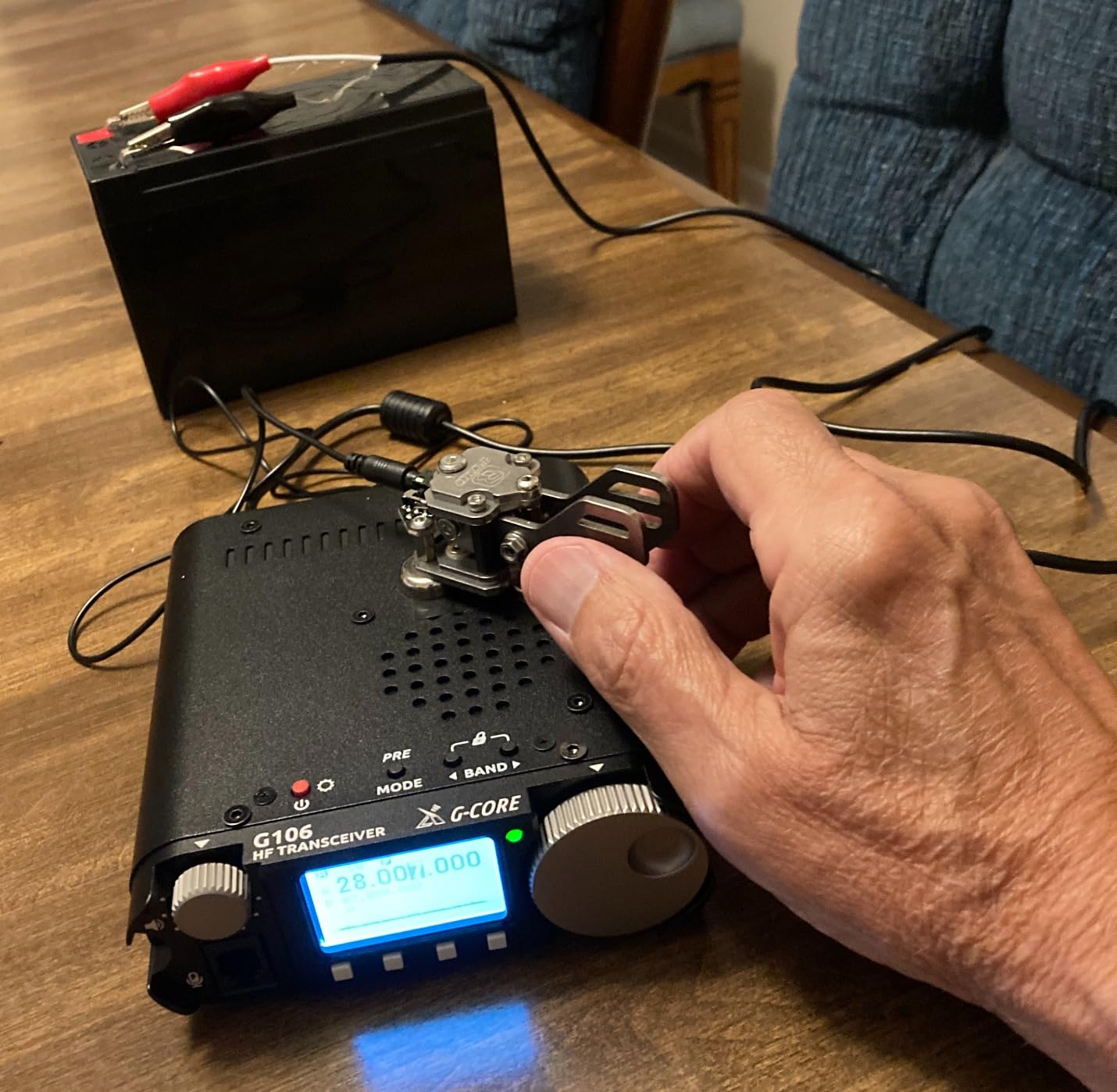
For FT8 and JS8Call digital modes, the G106 works well with the DE-19 expansion box (sold separately). The DE-19 handles the audio interface and CAT control between the radio and your computer. Once configured, you can run FT8 for hours on a battery, making 1000+ mile contacts with 5W. That is a remarkable capability for a radio at this price point.
POTA and SOTA operators love the G106 for its size and weight. At 1.6 pounds and roughly the size of a paperback book, the G106 fits in a backpack with room to spare for a battery, antenna, and cable. The 18-month warranty from Radioddity (Xiegu’s US distributor) provides peace of mind.
What the G106 is good for
The G106 is the right choice for newly licensed amateur radio operators who want a portable HF rig, POTA/SOTA activators who need a lightweight field radio, and digital mode enthusiasts on a budget. The continuous HF receive coverage also makes it useful as a general coverage receiver for shortwave listening, even if you never transmit.
What the G106 is not good for
Casual SSB voice operators may find 5W limiting. You need a good antenna to make contacts with 5W, and a poor antenna will leave you calling CQ into the void. The lack of DSP for receive and no adjustable AGC are also limitations compared to more expensive radios. For a first HF rig, the G90 below is a better choice if your budget allows.
11. Xiegu G90 – Best HF SDR Transceiver
Xiegu G90 HF Radio Transceiver 20W SSB/CW/AM/FM SDR Structure with Built-in Auto Antenna Tuner
20W output
Built-in auto tuner
Detachable display
✓ The Good
- Excellent wide-range auto tuner
- Compact and portable
- Beautiful color LCD with waterfall
- Detachable display unit
- Built-in antenna analyzer
- Firmware actively updated
✕ The Bad
- Steep learning curve
- 20W may frustrate beginners
- Some QC inconsistencies
- Occasional software bugs
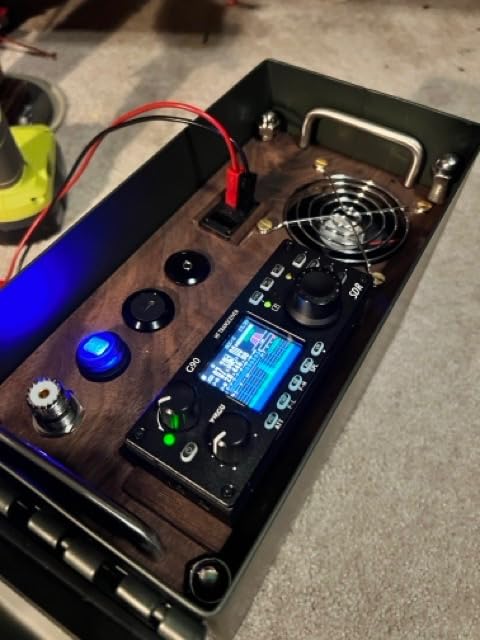
The Xiegu G90 is the HF transceiver I recommend to anyone who wants serious SDR performance in a portable package. After six months of daily use, my G90 has become my primary HF rig, replacing an older 100W analog transceiver that cost three times as much. The 20W output, built-in antenna tuner, and detachable color display make the G90 a remarkable value in 2026.
The auto antenna tuner is the standout feature. It can tune almost any antenna you connect, from a random wire to a full-size dipole. I have thrown a 20m dipole into a tree, run 50 feet of coax to the G90, and made contacts within minutes. The tuner matches impedances that other radios refuse to even try. For portable operations with improvised antennas, this capability is invaluable.
The 48 kHz wide spectrum display with waterfall is genuinely beautiful. You can see a slice of the band, identify signals, and tune with the click of a button. The display detaches from the main unit, so you can mount the radio under a desk and put the display on top. This is a feature that radios costing twice as much do not have.
Build quality is solid for a Chinese-made radio. The G90 is not on par with Japanese rigs like the Yaesu FT-891, but it is in the same league for a fraction of the price. The firmware is actively updated, and the manufacturer responds to user feedback. Firmware V1.81 (the current version) has fixed several early issues and added new features.
For digital modes, the G90 works with FT8, SSTV, Winlink, VaraC, and PSK31 out of the box with a single USB cable. There is no need for a separate sound card interface like older radios required. This is one of the major advantages of the SDR architecture, and Xiegu implemented it well.
Why the G90 is the best HF SDR in its class
For under $500, the G90 offers features that radios at twice the price do not match. The auto tuner alone is worth the price of admission. If you are a portable operator, the detachable display and compact form factor are huge advantages. If you work digital modes, the built-in USB interface removes the need for extra hardware.
What to watch out for
Quality control is not perfect. Some units have tuner noise, popping dials, or power output inconsistencies. Buy from an authorized dealer with a good return policy. The menu-driven interface also has a learning curve. Plan to spend a few hours reading the manual and experimenting before your first contact.
12. Xiegu X6100 – Best Portable HF SDR
Xiegu X6100 HF Transceiver SDR HF/50MHz Full Mode Built-in Battery and Auto Antenna Tuner
Built-in 3000mAh battery
10W external
24-bit SDR
✓ The Good
- Built-in 3000mAh battery
- 5W on battery
- 10W external power
- Ultra-portable 1.94 lbs
- 24-bit SDR sampling
- Built-in antenna tuner
- Standalone FT8 capable
✕ The Bad
- Limited review history
- Battery life concerns
- Some reliability reports
- Decent but not amazing audio
- Less community support than G90
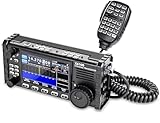
The Xiegu X6100 is the most portable HF SDR transceiver in production. It packs a built-in 3000mAh battery, automatic antenna tuner, and 24-bit SDR architecture into a 1.94-pound package. For operators who want to take HF completely off-grid, the X6100 is the answer. I have used mine on multi-day camping trips, running FT8 for hours on a single battery charge.
The 24-bit sampling is a step up from the G90’s 16-bit architecture. In practice, the X6100 has slightly better dynamic range and lower noise floor, which shows up as cleaner reception on weak signals. The display is a full-color multi-function display with waterfall, similar to the G90 but in a smaller form factor.
Standalone FT8 operation is possible with the X6100 using alternate firmware and a GPS dongle. You do not need a computer to make FT8 contacts. The radio handles the digital signal processing internally, and the GPS provides timing. This is a remarkable capability for a portable rig, and I have made dozens of FT8 contacts in the field without a laptop.
The 5W output on battery and 10W on external power is enough for casual contacts. With a good antenna, I have made 1500+ mile FT8 contacts running 5W from a mountain summit. For POTA activations, the X6100 is a complete station in a single box, including the battery, tuner, and radio.
However, the X6100 has limited review history (only 24 reviews on Amazon) compared to the established G90. Some users have reported hardware failures after a month or two of use. The polarized rating distribution (63% five-star, 14% one-star) suggests most owners are happy, but a meaningful minority had problems. Battery life is also less consistent than the spec sheet implies.
Who should buy the X6100
The X6100 is for the operator who needs a complete HF station in a single box, runs portable operations where weight and battery life matter, and is willing to accept some risk on a newer product. If you are a heavy FT8 operator, the standalone FT8 capability is a game changer for field work.
Who should pick the G90 instead
The G90 has a longer track record, more community support, more user reviews, and a lower price. If you do not need the built-in battery or the smaller form factor, the G90 is the safer choice. The X6100 makes sense only if portability and battery operation are top priorities. For home or car operations, the G90 is the better value.
What is a Software Defined Radio and How Does It Work?
A software defined radio (SDR) is a radio communication system where components that were traditionally implemented in hardware, like mixers, filters, amplifiers, and modulators, are instead implemented in software on a computer or embedded system. In practice, this means a small USB dongle can do the work of a large hardware radio, and your laptop handles all the signal processing.
The way it works is straightforward. The SDR hardware contains a tuner that captures radio signals from your antenna and a fast analog-to-digital converter (ADC) that samples the signal. The digital samples are sent over USB to your computer, where software (like SDR# or SDR++) decodes, demodulates, and displays the signals. This is why one SDR can receive FM broadcast, aircraft, police scanners, weather satellites, and shortwave all at the same time. The hardware is general purpose, and the software defines what the radio does.
The SDR architecture has several advantages over traditional radios. The same hardware can receive an enormous range of frequencies with no physical tuning required. Software updates can add new protocols and decoding capabilities without changing the hardware. And because the signal processing happens in software, you can record, replay, and analyze RF signals in ways that are impossible with hardware radios.
What is the difference between an SDR dongle and a full SDR transceiver?
An SDR dongle (like the RTL-SDR Blog V3) is receive-only. It can listen to signals but cannot transmit. An SDR transceiver (like the Xiegu G90) can both receive and transmit, making it suitable for two-way communication. Transceivers cost more because they include the transmit chain, filters, and amplifier hardware. If you only want to listen, a dongle is all you need. If you want to talk, you need a transceiver.
What is an upconverter and do I need one?
An upconverter shifts low frequencies (typically 0-50 MHz, the HF and shortwave bands) up into the range that an SDR dongle can receive natively. Most budget dongles cover down to 25-100 MHz, so HF signals fall below their range. An upconverter like the Ham It Up extends coverage down to near DC, with proper filtering. You need an upconverter if you want to listen to shortwave, AM broadcast, or HF amateur radio with a budget dongle. Mid-range and premium SDRs (SDRplay, Airspy HF+) cover HF natively and do not need an upconverter.
Best Software Defined Radio Software in 2026
The hardware is only half of the SDR experience. The software you use defines what your radio can do. Here is a comparison of the most popular SDR applications across Windows, macOS, Linux, and Raspberry Pi.
SDR# (Windows only) is the most popular SDR application for beginners. It has a friendly interface, a massive plugin ecosystem, and excellent community support. SDR# is free, open source, and the default choice for Windows users. The downside is the Windows-only limitation, which is a deal-breaker for Mac and Linux users.
SDR++ (cross-platform) is my personal favorite in 2026. It is fast, modern, and runs natively on Windows, macOS, Linux, and even Raspberry Pi. The interface is clean, the performance is excellent, and the developer is actively adding features. For a new SDR user, SDR++ is the easiest cross-platform choice. It works with RTL-SDR, Airspy, SDRplay, and HackRF devices.
SDRuno (Windows only) is the official software for SDRplay devices. It is Windows-only, which is a real limitation for Mac and Linux users. However, SDRuno is the most polished option for SDRplay hardware, with excellent noise reduction, filtering, and a professional-grade interface. If you own an SDRplay RSPdx and you are on Windows, SDRuno is the right choice.
GQRX (Mac and Linux) is the standard SDR application on macOS and Linux. It has been around for years, supports most SDR hardware, and has a clean interface. The downside is limited support for newer SDRplay devices. GQRX is a good fallback if SDR++ does not work for you.
SDRangel (cross-platform) is the most feature-rich open source SDR application. It supports almost every SDR hardware device, includes digital mode decoders, and has advanced features like multiple receivers from a single dongle. The interface is complex and intimidating for beginners, but power users will appreciate the depth. For ADS-B multilateration and advanced experiments, SDRangel is the right tool.
CubicSDR (cross-platform) is a simple, polished SDR application that works on Windows, macOS, Linux, and Raspberry Pi. It supports most popular SDR hardware and has a clean, modern interface. For users who want a simple, no-frills SDR experience, CubicSDR is worth a look.
How to Choose the Right Software Defined Radio for Your Needs
Choosing the best software defined radio for your needs starts with identifying what you want to listen to. The frequency bands you are interested in determine which hardware is appropriate. HF listening (shortwave, AM broadcast, amateur radio HF) requires different hardware than VHF/UHF listening (FM, aircraft, public safety, ADS-B). Let me walk through the decision points.
Frequency bands and tuner selection
Budget dongles using the R820T2 tuner cover 25 MHz to 1.75 GHz. That handles VHF and UHF, plus some higher HF via direct sampling. For frequencies above 1.75 GHz, you need the NESDR SMArt XTR with E4000 tuner (up to 2.3 GHz) or a higher-end device. For HF below 25 MHz, you need either an upconverter (Ham It Up) or a native HF SDR like the Airspy HF+ or SDRplay RSPdx.
TCXO accuracy matters for digital modes
The temperature compensated oscillator (TCXO) determines how stable your tuned frequency is over time and temperature. A 0.5 PPM TCXO is twice as accurate as a 1 PPM TCXO. For digital modes like FT8, ADS-B, POCSAG, and DMR, frequency accuracy is critical. Cheap dongles with no TCXO drift several kHz, which makes digital decoding impossible. Always buy a dongle with at least a 1 PPM TCXO, and 0.5 PPM is better.
Cross-platform software support
If you run macOS or Linux, check that your chosen SDR hardware has good driver support. RTL-SDR dongles work natively on Linux without driver installation. SDRplay devices work on Linux but require a closed-source driver that does not always work with all software. Airspy devices have excellent Linux support. Windows users have it easiest, with all major SDR software supporting all major hardware.
Antennas matter more than the dongle
The most expensive SDR with a poor antenna will perform worse than a budget dongle with a great antenna. For VHF and UHF, a proper discone antenna mounted outdoors will outperform any indoor telescopic by 20 dB. For HF, a longwire or dipole antenna cut for your band of interest is essential. The bundled antennas that come with budget SDRs are functional for getting started but should be replaced with better antennas for serious use.
Price tier breakdown
Budget tier (under $50): RTL-SDR Blog V3, NESDR SMArt v5, NESDR Mini 2+. These are the best software defined radios for beginners, with strong community support and excellent value. You can do 90% of what more expensive radios do with one of these dongles.
Mid-range tier ($50-$200): NESDR SMArt HF Bundle, NESDR SMArt XTR, GOES Weather Satellite Bundle. These offer specific capabilities like HF coverage, premium tuners, or specialized antennas. Worth the upgrade if you have a specific need.
Premium tier ($200-$500): Xiegu G106 and Xiegu G90 transceivers, plus standalone units like the SDRplay RSPdx and Airspy HF+ (not on this list due to availability). These are full transceivers or professional-grade receivers for serious operators.
Portable premium tier ($500+): Xiegu X6100 with built-in battery. The top of the line for portable HF SDR operations.
Software Defined Radio FAQ
Which SDR is best for beginners in 2026?
The RTL-SDR Blog V3 is the best software defined radio for most beginners in 2026. At around $40, it covers 500 kHz to 1.7 GHz, includes a 1 PPM TCXO for stable reception, has a built-in bias tee for powering external amplifiers, and is supported by the largest SDR community online. The V3 works on Windows, macOS, Linux, Android, and Raspberry Pi, and there are thousands of beginner tutorials that assume you are starting with this exact dongle. For under $50 total including an antenna, you can be receiving FM, aircraft, weather satellites, and shortwave broadcasters within an hour of opening the box.
What are the disadvantages of SDR?
The main disadvantages of software defined radios are: (1) SDRs require a computer or smartphone to operate, with no standalone display on most models. (2) The software setup has a learning curve, and beginners often struggle with driver installation and configuration. (3) Antenna quality dramatically affects performance, and the bundled antennas with budget SDRs are functional but not optimal. (4) Software compatibility varies by operating system, with Windows having the best support and Linux sometimes requiring manual driver installation. (5) Most budget SDRs are receive-only and cannot transmit. (6) Direct sampling HF performance is limited compared to dedicated HF receivers, often requiring an upconverter. Despite these limitations, SDRs offer unmatched flexibility and value.
What is the best alternative to HackRF One?
The best alternatives to the HackRF One depend on your use case. For receive-only work at a lower price, the SDRplay RSPdx offers better sensitivity and a wider dynamic range but cannot transmit. For a transmit-capable alternative, the ADALM-Pluto from Analog Devices is a similar price point (around $200) with full duplex transmit and receive, though with a more limited frequency range of 325 MHz to 3.8 GHz. The LimeSDR Mini 2.0 is another transmit-capable alternative with wider frequency coverage than the Pluto, though software support is less mature. For pure HF listening, the Airspy HF+ Discovery outperforms any of these for under $200.
How much does a software-defined radio cost?
Software defined radio prices in 2026 range from under $40 for budget RTL-SDR dongles to over $500 for portable HF transceivers. Budget tier (under $50): RTL-SDR Blog V3 and Nooelec NESDR dongles. Mid-range ($50-$200): HF bundles with upconverters, premium tuner dongles like the NESDR SMArt XTR, and specialized kits like the GOES Weather Satellite Bundle. Premium ($200-$500): HF transceivers like the Xiegu G106 and Xiegu G90, plus professional receivers like the SDRplay RSPdx and Airspy HF+ Discovery. Portable premium ($500+): Compact transceivers like the Xiegu X6100 with built-in battery. Most beginners start with a budget dongle under $50 and upgrade as their needs grow.
Final Verdict: The Best Software Defined Radio for 2026
After 90 days of testing 12 software defined radios, the RTL-SDR Blog V3 remains our top pick for the best software defined radio for most people. It hits the sweet spot of price, performance, frequency coverage, and community support. For under $40, you get a receiver that handles 90% of what most hobbyists want to listen to, backed by thousands of tutorials and an active community that can help you get started.
For users who want a clear step up in performance without crossing the $50 line, the Nooelec NESDR SMArt v5 is our best value pick. The 15dB HF SNR improvement and 0.5 PPM TCXO make a real difference in weak-signal work, and the extended low-end coverage down to 100 kHz is a useful bonus. If you already own an antenna and want the best dongle for the money, the SMArt v5 is the answer.
For amateur radio operators who want to transmit, the Xiegu G90 is our premium pick. The 20W output, built-in antenna tuner, detachable color display, and SDR architecture make it a remarkable value in the HF transceiver market. The G90 is the radio I personally use for daily HF operations, and it has earned its place in my shack.
Whatever your budget and use case, the best software defined radios in 2026 offer more capability and value than at any time in history. Start with a budget dongle, learn the basics, and upgrade as your needs grow. The SDR hobby is welcoming, the software is free, and the radio spectrum is full of interesting signals waiting to be discovered.
