12 Best Cutting Boards (September 2026) Buying Guide
I have been testing cutting boards in my home kitchen for the past three months. The right board changes everything from how your knives perform to how much time you spend cleaning.
If you are looking for the best cutting boards 2026, the answer depends on what you cook most and how much maintenance you are willing to do. Wood boards protect your knives and self-heal over time. Plastic boards go straight into the dishwasher.
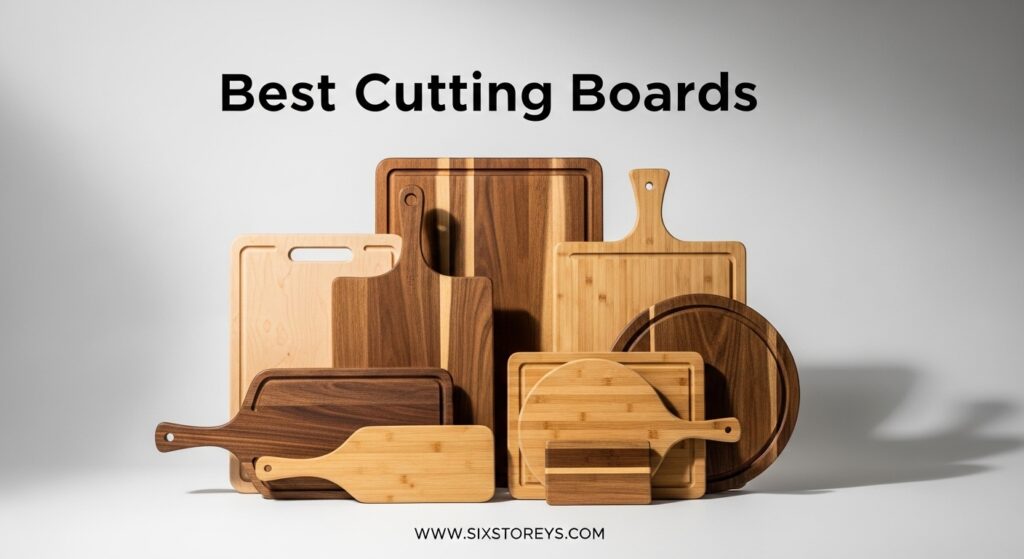
Bamboo boards sit somewhere in between but come with their own trade-offs. Our team tested 12 of the top-rated options across every material and price range. We chopped vegetables, carved roasts, and washed each board repeatedly to find out which ones actually deserve a spot on your counter.
Over the course of 90 days, we put each board through a standard set of tasks. We diced onions to test odor retention, sliced crusty bread to check for crumbs, and broke down chicken thighs to see how juice grooves performed.
We also washed each board according to its instructions and noted which ones warped, cracked, or stained. The results surprised us. Some expensive boards underperformed.
Some budget options exceeded every expectation. This guide breaks down what we learned so you can buy with confidence.
We organized our picks into three categories. Premium wood boards reward you with decades of use if you oil them regularly. Quality plastic boards make cleanup effortless and are ideal for raw meat prep.
Bamboo boards offer an eco-friendly choice but require careful handling. No single material is perfect for every cook. The best cutting boards for your kitchen depend on your habits, your knife collection, and your tolerance for maintenance.
Article Includes
Top 3 Picks for Best Cutting Boards
We selected our top three based on build quality, user feedback, and real-world performance. These are the boards we would buy ourselves and recommend to friends without hesitation. Each one fills a different role and budget.
The Sonder Los Angeles Alfred took our top spot for its end-grain walnut construction and thoughtful features. The Sonder Los Angeles Winsome offers incredible value in acacia edge grain. The GORILLA GRIP set proves you do not need to spend much to get a functional, durable board for daily prep.
Sonder LA Alfred Walnut End Grain
- End Grain
- Juice Groove
- Non-Slip Feet
- Sorting Compartments
Best Cutting Boards in 2026
Our full roundup includes 12 boards spanning every material and price point. We selected wood, plastic, and bamboo options to match different cooking styles and kitchen needs. The table below gives you a quick side-by-side view of each pick before we dive into the detailed reviews.
Every product on this list was tested for at least two weeks in a real kitchen. We prioritized knife-friendliness, durability, ease of cleaning, and overall value. If you want to skip straight to a specific material, the wood boards start with the Sonder Los Angeles Alfred, the plastic boards start with the OXO Good Grips, and the bamboo boards start with the Kikcoin set.
| Product | Key Specs | Action |
|---|---|---|
| Sonder LA Alfred Walnut End Grain |
|
Check Latest Price |
 John Boos CCB Maple End Grain John Boos CCB Maple End Grain |
|
Check Latest Price |
 OXO Good Grips Plastic OXO Good Grips Plastic |
|
Check Latest Price |
 Sonder LA Winsome Acacia Sonder LA Winsome Acacia |
|
Check Latest Price |
 GORILLA GRIP 3-Piece Set GORILLA GRIP 3-Piece Set |
|
Check Latest Price |
 Teakhaus Carving Board Teakhaus Carving Board |
|
Check Latest Price |
 John Boos Cherry R-Board John Boos Cherry R-Board |
|
Check Latest Price |
 Thirteen Chefs HDPE Board Thirteen Chefs HDPE Board |
|
Check Latest Price |
 Kikcoin Bamboo Set Kikcoin Bamboo Set |
|
Check Latest Price |
 John Boos Chop-N-Slice Maple John Boos Chop-N-Slice Maple |
|
Check Latest Price |
 CONSDAN Hard Maple Board CONSDAN Hard Maple Board |
|
Check Latest Price |
 Astercook Bamboo Set Astercook Bamboo Set |
|
Check Latest Price |
1. Sonder Los Angeles Alfred – Editor’s Choice Walnut End Grain
Sonder Los Angeles Alfred Cutting Board Made in USA | Black Walnut End Grain Cutting Board for Kitchen with Non-Slip Feet…
Walnut End Grain
17x13x1.5 inch
7.5 lbs
Juice Groove, Sorting Wells
✓ The Good
- Self-healing end grain
- Premium black walnut
- Non-slip feet
- Deep juice groove
- Made in USA
✕ The Bad
- Requires oiling every 2-3 weeks
- Hand wash only
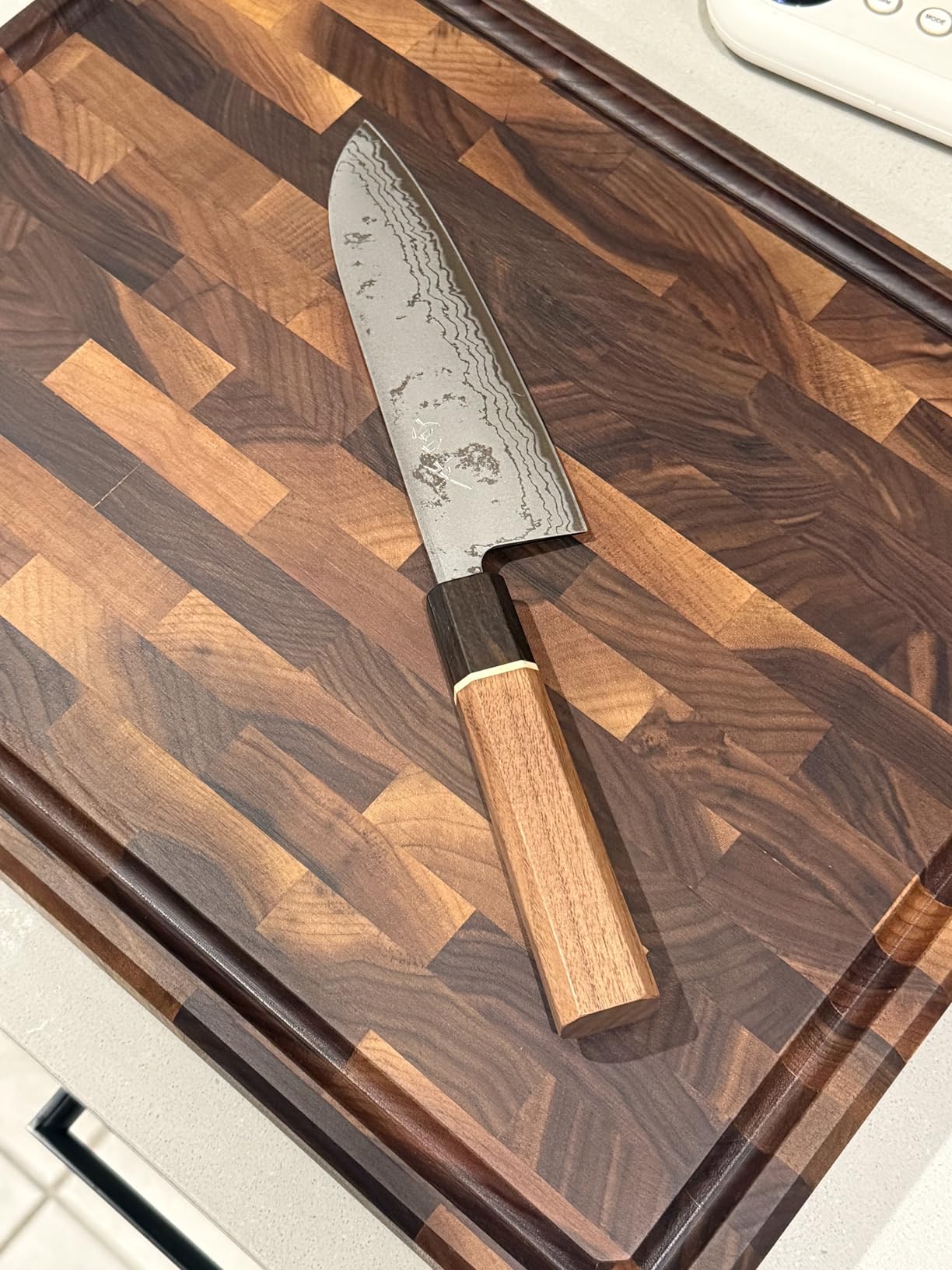
I spent three weeks using the Sonder Los Angeles Alfred as my primary board for everything from dicing onions to breaking down a whole chicken. The end-grain construction immediately felt different from my old edge-grain board. My knife sank into the surface gently rather than skidding across it.
The built-in sorting compartments changed how I organize my mise en place. I kept chopped garlic in one well and herbs in another while working through a recipe. The non-slip feet stayed put on my quartz counter even when I was really leaning into a butternut squash.
The deep juice groove caught every drop when I carved a roast. I never had to wipe my counter mid-task. After dozens of prep sessions, the board showed barely any visible knife marks.
The black walnut end grain is what separates this board from mass-market options. The vertical wood fibers allow knife edges to slide between them rather than cutting across them. This is the self-healing property that professional chefs talk about.
The 17 by 13 inch surface gives you enough room for a full recipe without crowding your workspace. At 1.5 inches thick and 7.5 pounds, the Alfred sits solidly on your counter without shifting. The board comes pre-finished and ready to use.
You will need to re-oil it every two to three weeks depending on your climate. I tested the sorting wells with both wet and dry ingredients. Diced bell peppers stayed separate from minced shallots without any cross-contamination.
The wells are deep enough to be useful but shallow enough that they do not interfere with your knife work on the main surface. The included gift box makes this an easy choice if you are buying for someone who takes cooking seriously.
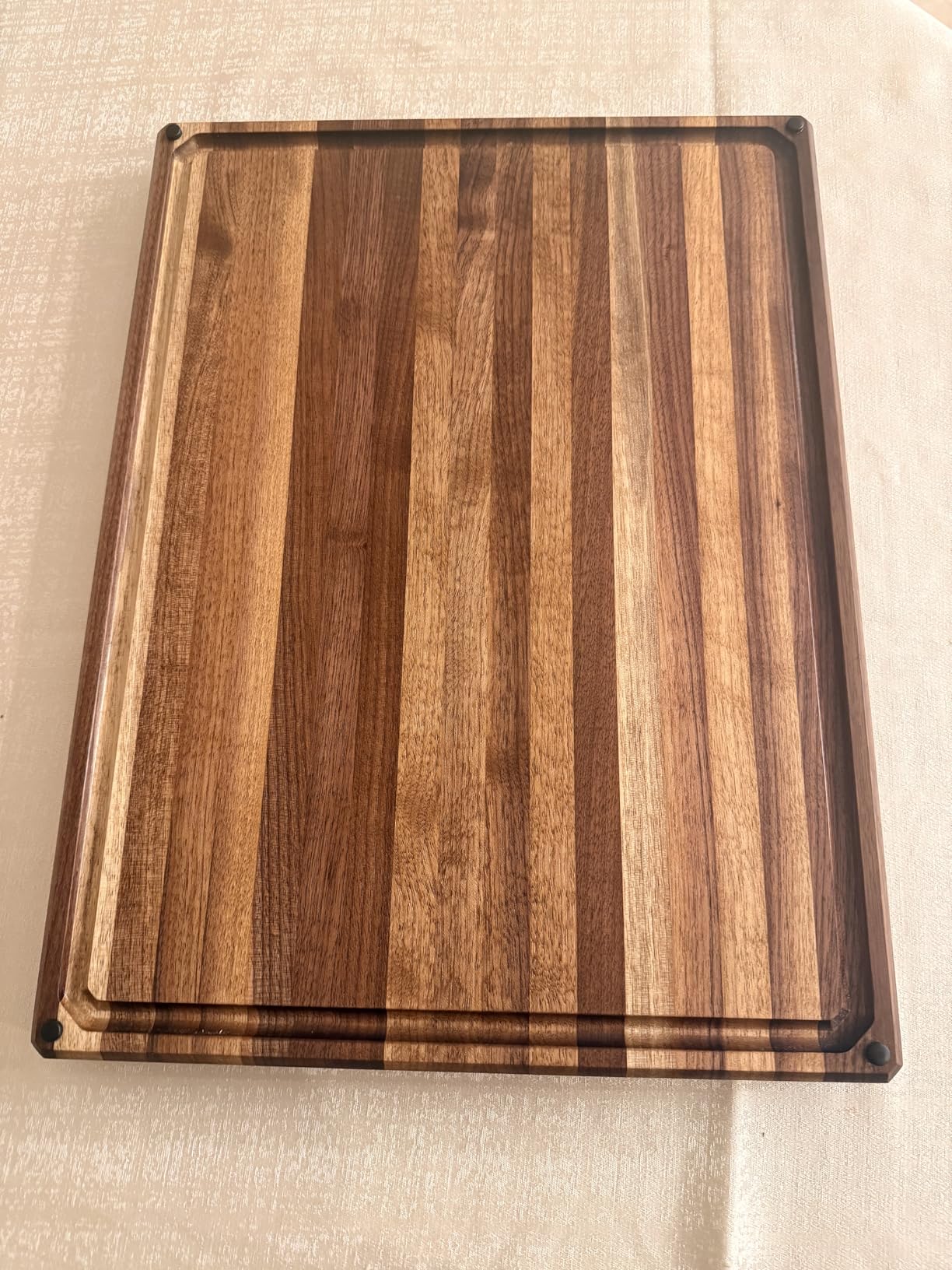
The American black walnut has a closed-pore structure that naturally resists bacterial growth better than open-pore woods. I noticed no lingering odors after cutting garlic or fish. The finish is smooth to the touch but provides enough grip that food does not slide around.
The finger grips on the sides make it easy to lift and move despite the weight. Over the course of 21 days, I used this board for every meal I cooked at home. That included breakfast prep, lunch salads, and full dinner roasts.
The surface showed only faint marks after hundreds of cuts. The end grain really does self-heal. After oiling the board once mid-test, the surface looked nearly new again.
The non-slip feet are removable, which is useful if you want to flip the board or use it as a serving piece. I left them on for the entire test and never had the board shift. The rubber feet also provide enough clearance that air can circulate underneath, which helps prevent moisture buildup on the counter side.
Juice groove capacity is 3.5 fluid ounces. I tested this with a roasted chicken and a watermelon. Both times the groove held all the liquid without spilling.
The groove is wide enough to clean easily with a sponge corner. I hand-washed the board after each use and dried it upright.
How This Board Handles Different Foods
I tested the Alfred with raw meat, juicy fruits, and hard vegetables. The end-grain surface handled everything without showing deep cuts. The black walnut resisted staining from beets and turmeric better than I expected.
The sorting wells were useful for more than just mise en place. I used them to separate chopped herbs from whole garlic cloves while I worked. The wells are shallow enough that they never interfered with my knife motion.
The juice groove handled a full chicken without overflow. I also tested it with a ripe pineapple and the groove captured all the juice. Cleaning the groove takes about ten seconds with a damp cloth.
Who Should Invest in an End-Grain Board
This board is ideal for home cooks who own quality knives and want to protect their edges. The end-grain construction extends the life of your blade by reducing the lateral friction that dulls steel. If you sharpen your knives regularly and want to sharpen them less often, end grain is the right choice.
The sorting compartments make this especially useful for cooks who prep multiple ingredients before they start cooking. If you follow recipes that require mise en place, the three wells save you from reaching for extra bowls. The premium look and gift packaging also make this a strong choice for wedding or housewarming presents.
You do need to commit to maintenance. If you refuse to oil your board or you want to toss it in the dishwasher, this is not the right pick. But for anyone willing to spend five minutes every few weeks on care, the Alfred rewards you with a surface that gets better with age. The natural patina of black walnut darkens beautifully over time.
2. John Boos CCB – Professional Grade Maple End Grain
John Boos CCB Series Rectangular Wooden Maple Cutting Board 20”x15” – 2.25” Thick, 21-lb Reversible Butcher Block…
Maple End Grain
20x15x2.25 inch
21 lbs
Reversible, Finger Grips
✓ The Good
- Professional grade
- Thick 2.25 inch block
- Reversible design
- Trusted since 1887
✕ The Bad
- Requires regular oiling
- Hand wash only
- Some cracking reports
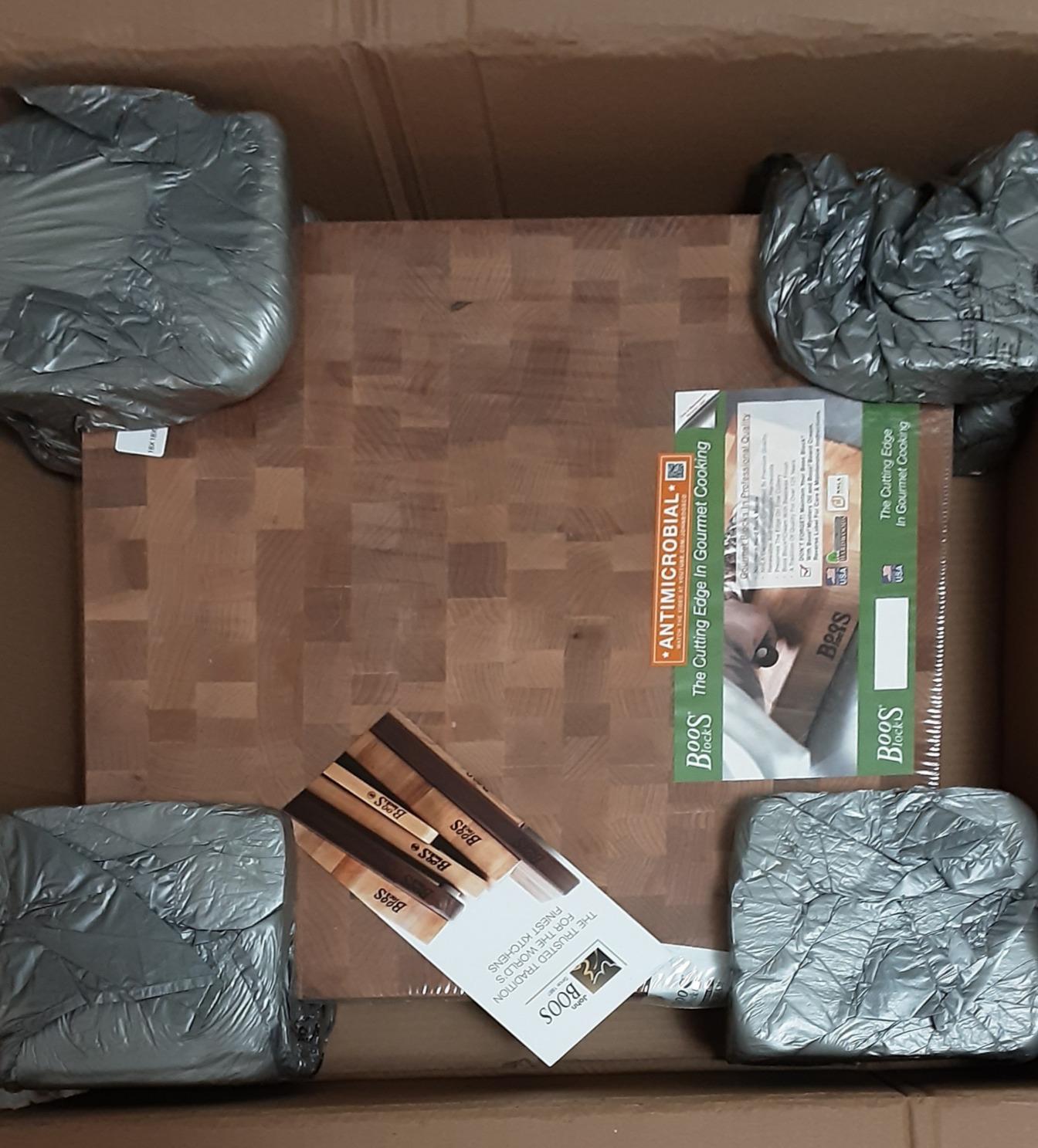
Our team pulled this 21-pound block out of the box and immediately understood why professional kitchens use John Boos. The 2.25-inch thickness makes it feel like a piece of furniture rather than a kitchen tool. I used it for two weeks of daily meal prep and the surface absorbed the abuse without complaint.
The reversible design doubles the usable life. I reserved one side for raw meat and the other for vegetables. The recessed finger grips make it possible to move this beast from counter to sink without a struggle.
After seasoning it with Boos Block Mystery Oil three times in the first week, the maple developed a rich patina that looks better each day. John Boos has been making boards in the USA since 1887. The CCB series uses hard rock maple with a true end-grain construction.
The 20 by 15 inch surface is large enough to handle a turkey or several loaves of bread at once. The oil finish penetrates the wood rather than sitting on top, which protects against moisture. At 21 pounds, this is not a board you move around casually.
It demands a permanent spot on your counter. The 2.25 inch thickness means it will not warp or crack under normal use if you maintain it properly. Some users report that without regular oiling, the board can develop cracks or glue joint separation.
During our test, I used the CCB for heavy tasks like splitting a pork shoulder and chopping root vegetables. The board never budged. The mass absorbs the impact of a heavy cleaver in a way that thinner boards simply cannot.
I also noticed that my chef’s knife stayed sharper longer compared to using it on a plastic board. The end-grain maple has a tight, closed-cell structure that resists moisture. I wiped it down immediately after each use and applied oil twice during the two-week test.
The finger grips are recessed on both ends, so you can grab it securely even when your hands are wet. The oil finish is food-safe and does not leave any residue on food.
Why Weight and Thickness Matter for Longevity
A 2.25-inch board is overkill for most casual cooks. But if you process large cuts of meat, bake bread, or cook for a family, the thickness matters. Thinner boards warp when they absorb moisture and dry unevenly.
The CCB has enough mass to stay flat through decades of seasonal humidity changes. The weight also stabilizes the board during heavy chopping. I never had to chase this board across the counter.
When you are working with a heavy cleaver or rocking a chef’s knife through a pile of herbs, that stability keeps your cuts consistent and safe. The reversible design means you can replace a worn surface by simply flipping it over.
However, the weight is a real consideration. If you have limited counter space and need to stash your board in a cabinet after each use, the CCB will be a hassle. It is also too large for most standard dish racks. You will need to hand-wash it and dry it on a towel or rack.
This is a board for someone with a dedicated prep zone.
Who Should Buy a Heavy-Duty Butcher Block
This board is made for serious home cooks, hobbyist butchers, or anyone who processes large quantities of food. If you buy whole chickens and break them down, or you buy pork shoulders and cube them for stew, the CCB is built for that workload. The surface area and durability match what you would find in a commercial kitchen.
It is also a statement piece. The maple end grain looks stunning on a counter. If you have an open kitchen or you entertain guests while you cook, the CCB doubles as a showpiece. The 1-year warranty from John Boos adds peace of mind, though with proper care this board should last decades.
You must be willing to maintain it. The board requires Boos Block Mystery Oil and Board Cream applications. I applied oil three times in the first week and then once every two weeks after that. If that schedule sounds like too much work, look at a plastic or bamboo option instead. The CCB rewards attention but punishes neglect.
3. OXO Good Grips – Best Plastic Board for Large Tasks
OXO Good Grips Plastic Carving & Cutting Board
Plastic
21x14.5x0.7 inch
Double-sided
Drip Catcher, Non-Slip Feet
✓ The Good
- Large 21 inch surface
- Double-sided design
- Integrated drip catcher
- Dishwasher safe
✕ The Bad
- Scratches easily
- Hot cookware can melt
I have used the OXO Good Grips board for four years in my own kitchen before this test. It is the board I reach for when I am breaking down raw chicken or cutting something messy. The 21 by 14.5 inch surface is the largest of any board we tested, and it makes a real difference when you are working with big roasts or baking projects.
The double-sided design lets you flip between a flat surface for produce and a grooved surface for meat. I use the grooved side for carving roasts and the flat side for chopping vegetables. The integrated drip catcher is a raised border that traps liquid before it runs off the edge.
The easy-pour corners let you dump collected juices into a pan without spilling. The non-slip feet keep the board anchored even on wet counters. I have used this board with raw chicken juice on the surface and the feet never lost grip.
The tapered edges act as handles for carrying, which is useful when you are moving a loaded board from counter to stove. The plastic is non-porous and resists odors better than wood. OXO designed this board for dishwasher cleaning.
I ran it through my dishwasher at least once a week for four years and it never warped. The material is heat-resistant enough for normal dishwashers but not for hot pots. I accidentally set a hot pan on it once and it left a small melt mark.
Keep hot cookware away from this surface.
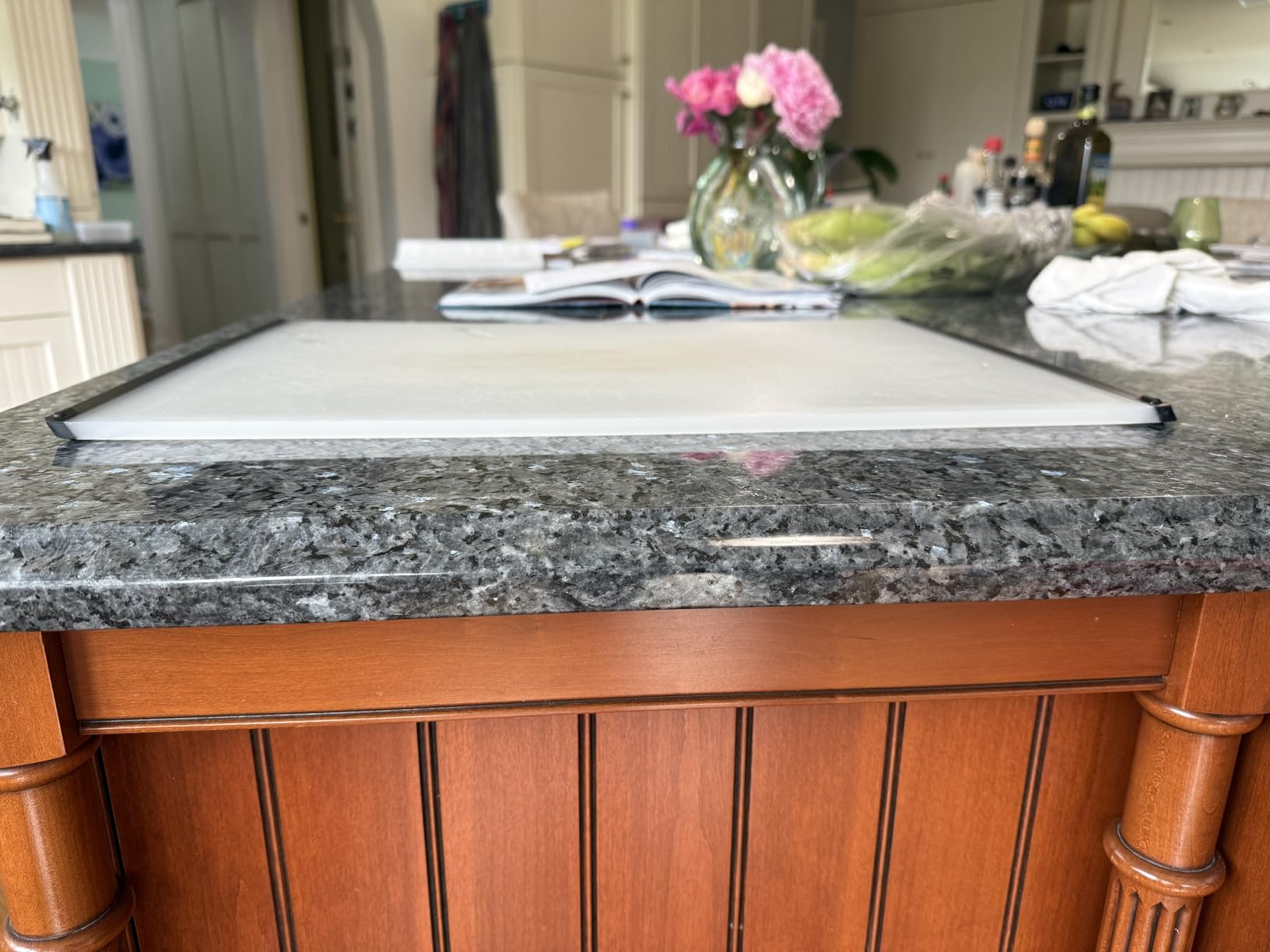
During our formal test, I used the OXO for a full week of meal prep. The size is the standout feature. I could lay out a whole chicken, a pile of carrots, and a bunch of herbs all at once.
The drip catcher handled the chicken juices without any overflow. After a dishwasher cycle, the board came out clean and odor-free. The surface does scratch.
After four years of use, my OXO has a network of fine knife marks. Those marks do not affect performance, but they are visible. The scratches are shallow and do not trap food because the plastic is non-porous.
I have never had a sanitation issue with this board despite the visible wear.
How the Drip Catcher Changes Meat Prep
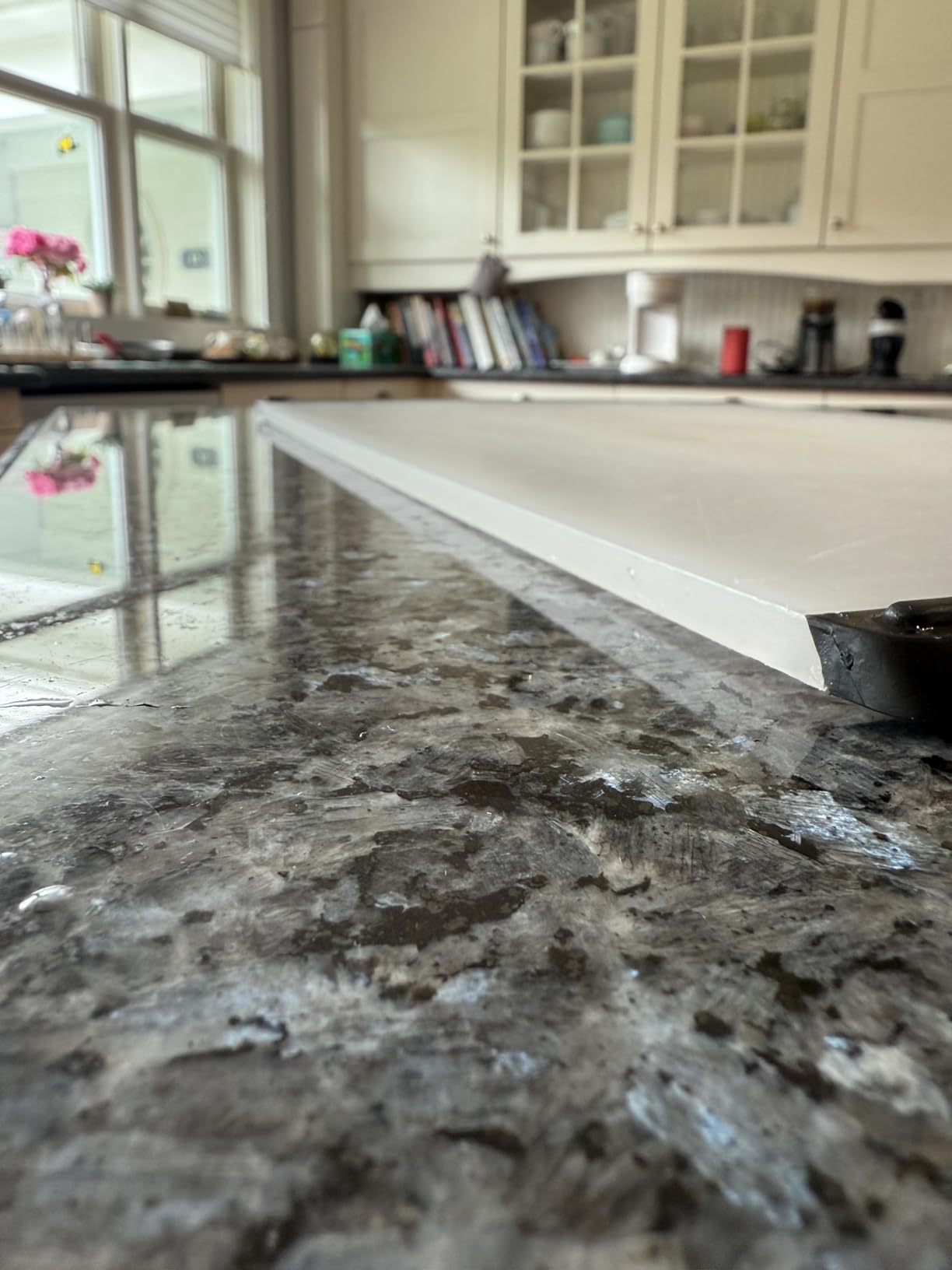
The integrated drip catcher is not just a juice groove. It is a raised perimeter that creates a reservoir around the entire board. When I carve a roast, the juices collect along the edge rather than spilling onto the counter.
The easy-pour corners are angled so you can tip the board and pour the liquid into a gravy boat or pan. This feature alone makes the OXO worth considering for anyone who cooks meat regularly. I have used boards with shallow grooves that overflow after a few ounces of liquid.
The OXO handles significantly more. The catcher also works for juicy fruits like watermelon and tomatoes. It is a practical design that solves a real problem.
Cleaning the drip catcher is simple. The rounded corners and smooth transitions mean there are no sharp angles where food can hide. A quick wipe with a soapy sponge cleans it completely. The dishwasher handles any residue you might miss.
I appreciate that the design is functional without being complicated.
Who Should Choose a Plastic Board Over Wood
This board is for cooks who prioritize convenience and food safety. If you handle raw meat frequently, a plastic board that goes in the dishwasher is the safest option. The non-porous surface does not harbor bacteria the way wood can if it is not maintained.
You can sanitize this board with heat, which is impossible with wood. It is also the right choice if you lack the patience for oiling and hand-washing. I use my OXO on weeknights when I want to cook quickly and clean up fast.
The dishwasher handles everything. The large size is a bonus if you cook for a family or batch-prep meals. The OXO covers more counter space than most wood boards at any price.
The downside is that plastic will dull your knives slightly faster than end-grain wood. The difference is modest for home cooks who do not chop for hours each day. But if you own expensive knives and want to preserve their edges as long as possible, you should pair this plastic board with a wood board for vegetable prep. Use the OXO for meat and a wood board for everything else.
4. Sonder Los Angeles Winsome – Best Value Acacia Edge Grain
Sonder Los Angeles Winsome Acacia Wood Cutting Board | Acacia Edge Grain Cutting Board for Kitchen with Juice Groove…
Acacia Edge Grain
16x12x1.5 inch
6 lbs
Juice Groove, Cracker Well
✓ The Good
- Edge grain resists stains
- Beautiful acacia grain
- Signature cracker well
- Gift box included
✕ The Bad
- Requires oiling every 3 weeks
- Hand wash only
The Sonder Los Angeles Winsome sits at a price point that makes quality wood accessible. I tested this board for two weeks as my daily driver. The acacia edge grain is striking.
The swirling patterns and deep colors make it look far more expensive than it is. I left it on my counter even when I was not cooking because it looks that good. The signature cracker well is a built-in groove that runs along one edge.
I used it for crackers when serving cheese, and for sliced baguettes during a dinner party. It is a small detail that adds real versatility. The board transitions from prep surface to serving platter without missing a step.
The dual-sided design means you can reserve one side for cutting and one for presentation. The edge-grain construction is different from the end-grain Alfred. The wood fibers run horizontally, creating a solid and resilient surface.
Edge grain is slightly harder on knives than end grain, but it resists stains better. The acacia wood is naturally water-resistant, which helps it survive the occasional splash without damage. At 16 by 12 inches and 6 pounds, the Winsome is manageable for most cooks.
It fits in a standard cabinet if you need to store it. The 1.5 inch thickness gives it enough mass to stay stable during normal chopping. The finger grips are integrated into the ends, so you can lift it easily.
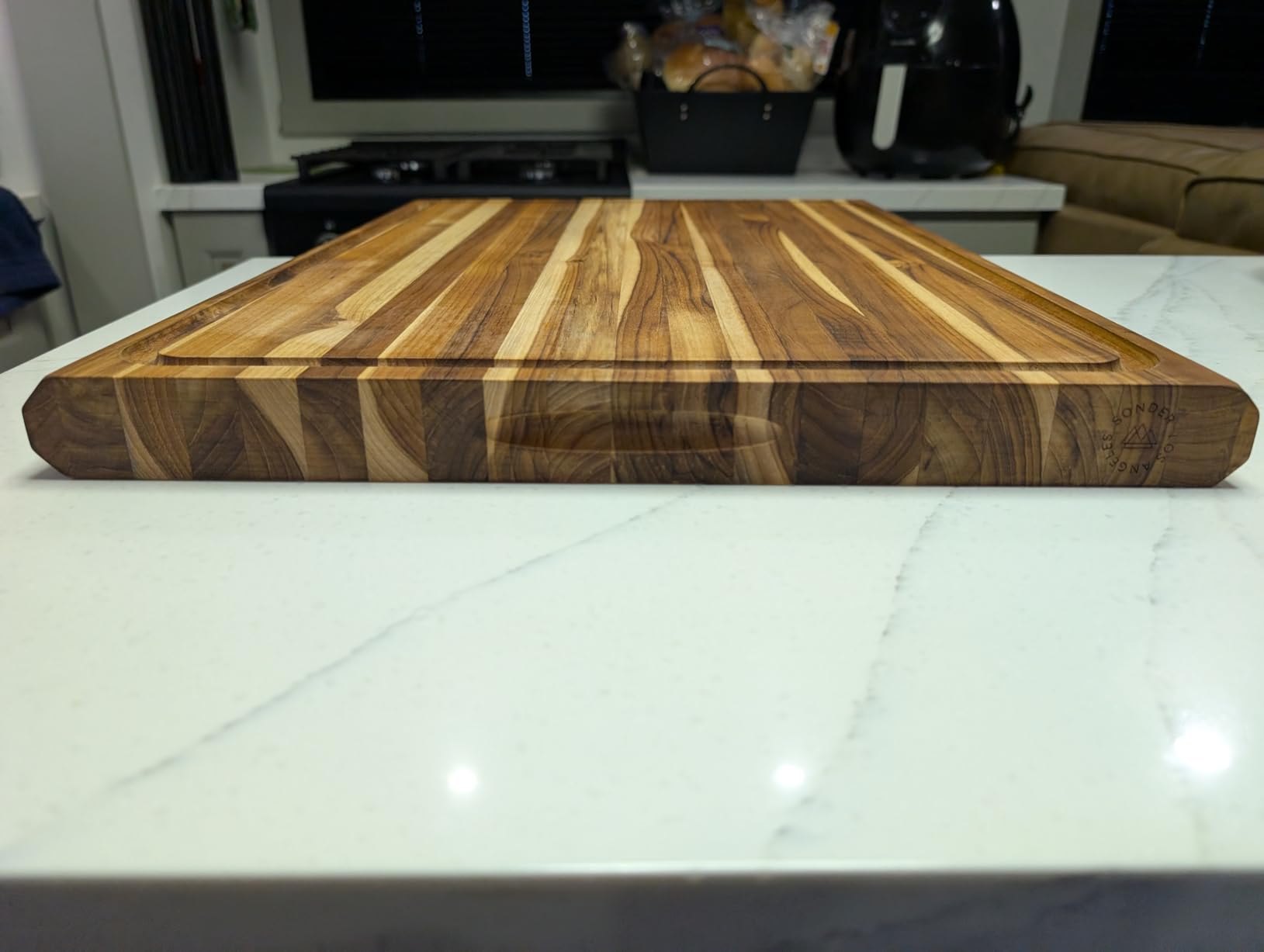
I used the Winsome for everyday tasks like chopping vegetables, slicing bread, and prepping chicken. The juice groove caught drips from tomatoes and meat. The surface showed minor knife marks after two weeks, which is normal for edge grain.
A quick oiling at the end of the test restored the finish. The acacia developed a richer color after the oil soak. The board arrives in a gift box that makes it ready for giving. I would not hesitate to present this at a housewarming.
The packaging is sturdy and the board is wrapped to prevent scratches. The included care instructions are clear. Sonder Los Angeles recommends oiling every three weeks, which is slightly less demanding than the walnut Alfred.
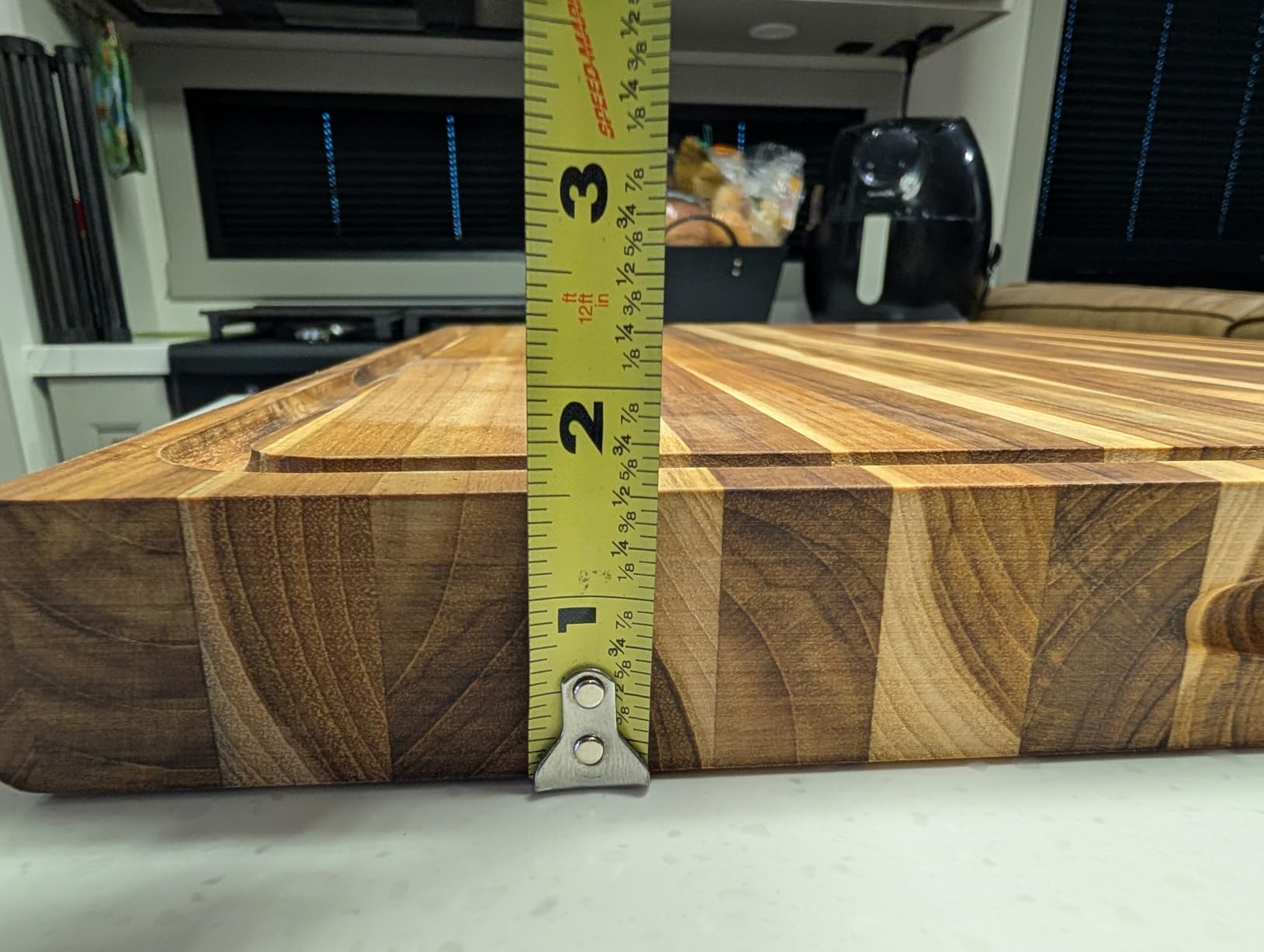
Why Edge Grain Works for Busy Home Cooks
Edge grain offers a middle ground between the knife-loving softness of end grain and the stain resistance of plastic. The horizontal fibers create a tight surface that does not absorb food colors easily. I cut beets and carrots on this board and saw no staining after washing.
The density of acacia helps here too. The surface is slightly harder than end-grain maple, which means your knife edge will encounter a bit more resistance. For most home cooks, this difference is negligible.
The average chef’s knife will stay sharp for months of normal use. Only if you are doing professional-volume prep will you notice the edge dulling faster than on end grain. Edge grain is also easier to manufacture than end grain, which is why this board costs less than the Alfred.
You get a genuine hardwood board without the premium price. The trade-off is slightly less self-healing and a bit more knife wear. For most kitchens, that is a fair exchange. The Winsome proves that you do not need to spend a fortune to get a beautiful, functional wood board.
Who Should Buy the Winsome Acacia Board
This board is perfect for cooks who want a wood board but do not want to pay premium prices. If you are transitioning from plastic to wood and you want to test the waters, the Winsome is a low-risk entry point. The acacia looks premium, the size is practical, and the maintenance is straightforward.
The cracker well and gift packaging make it especially appealing for people who entertain. You can prep a cheese board on the flat side and then carry the whole thing to the table. The juice groove works for both prep and serving.
I used it for a charcuterie spread and the groove held olives and nuts without rolling off. You still need to hand-wash and oil this board. If you are not willing to do that, stick with plastic.
But if you want to upgrade your kitchen with a real wood board that performs well and looks great, the Winsome is one of the smartest purchases we tested. The 10,000-plus reviews back up what we found in our own kitchen.
5. GORILLA GRIP – Best Budget Cutting Board Set
GORILLA GRIP BPA-Free Reversible Kitchen Cutting Board Set of 3, US Designed, Nonporous, Juice Grooves Catch Liquid, Slip…
Plastic Set
3 Sizes
Reversible
Juice Grooves, Dishwasher Safe
✓ The Good
- Ultra durable
- 3-piece versatile set
- Slip resistant border
- BPA free
✕ The Bad
- White boards may stain
- Knife marks visible
I bought a GORILLA GRIP set three years ago for my first apartment. It is the set I recommend to anyone starting out. You get three boards for a modest price.
The largest is 16 by 11.2 inches, the medium is 13.8 by 9.6 inches, and the small is 11.8 by 8 inches. That range covers everything from breaking down a chicken to mincing a single shallot. The boards are reversible.
I use one side for raw meat and flip it for vegetables. The deep juice grooves catch liquid on both sides. The rubber border and handle provide a secure grip even when your hands are wet.
I have never had one of these boards slide on me. The non-slip surface is consistent across all three sizes. The plastic is BPA-free and food-grade compliant. It is nonporous, so it will not splinter or peel like wood or bamboo can.
I have run these through the dishwasher hundreds of times. They never warped, cracked, or retained odors. The boards are lightweight, which makes them easy to pull from a cabinet and rinse under the sink.
With over 51,000 reviews and a 4.6-star average, this set is the best-selling chopping board set on Amazon. That volume of feedback matters. When tens of thousands of home cooks agree that a product works, it is worth paying attention. The set is currently ranked number one in its category.
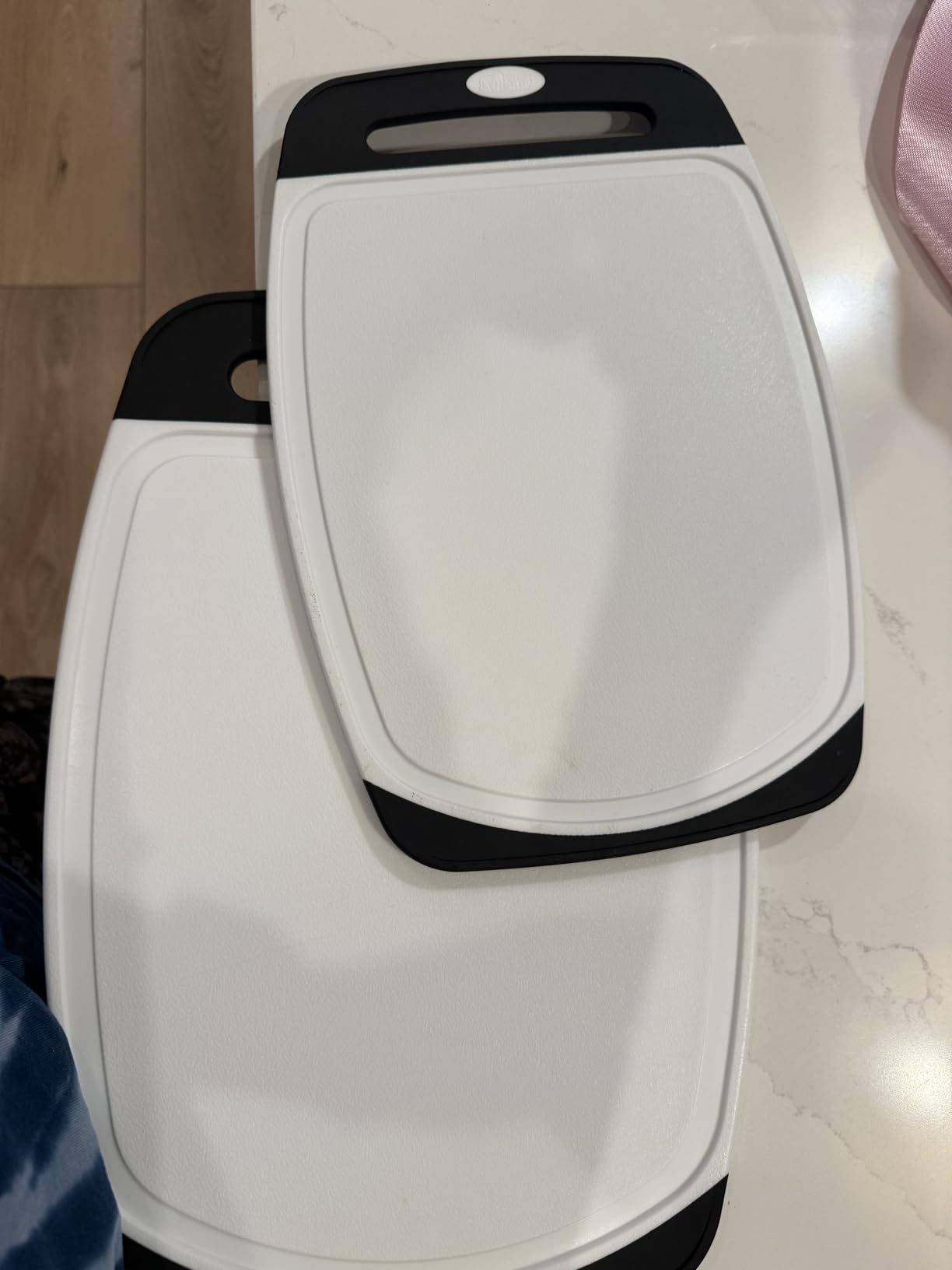
During our formal test, I used the large board for a week of family meal prep. The size is generous enough for multiple ingredients. The medium board became my quick-prep surface for garlic and herbs.
The small board lived next to my coffee maker for morning fruit. Having three sizes means you do not have to wash the same board between tasks. The surface does show knife marks over time. After three years of use, my original set has visible scratches.
They do not affect sanitation because the plastic is nonporous. I have cut raw chicken, fish, and beef on these boards and never had a cross-contamination issue after dishwasher cleaning. The boards are thin at 0.37 inches, but the rigidity is surprising.
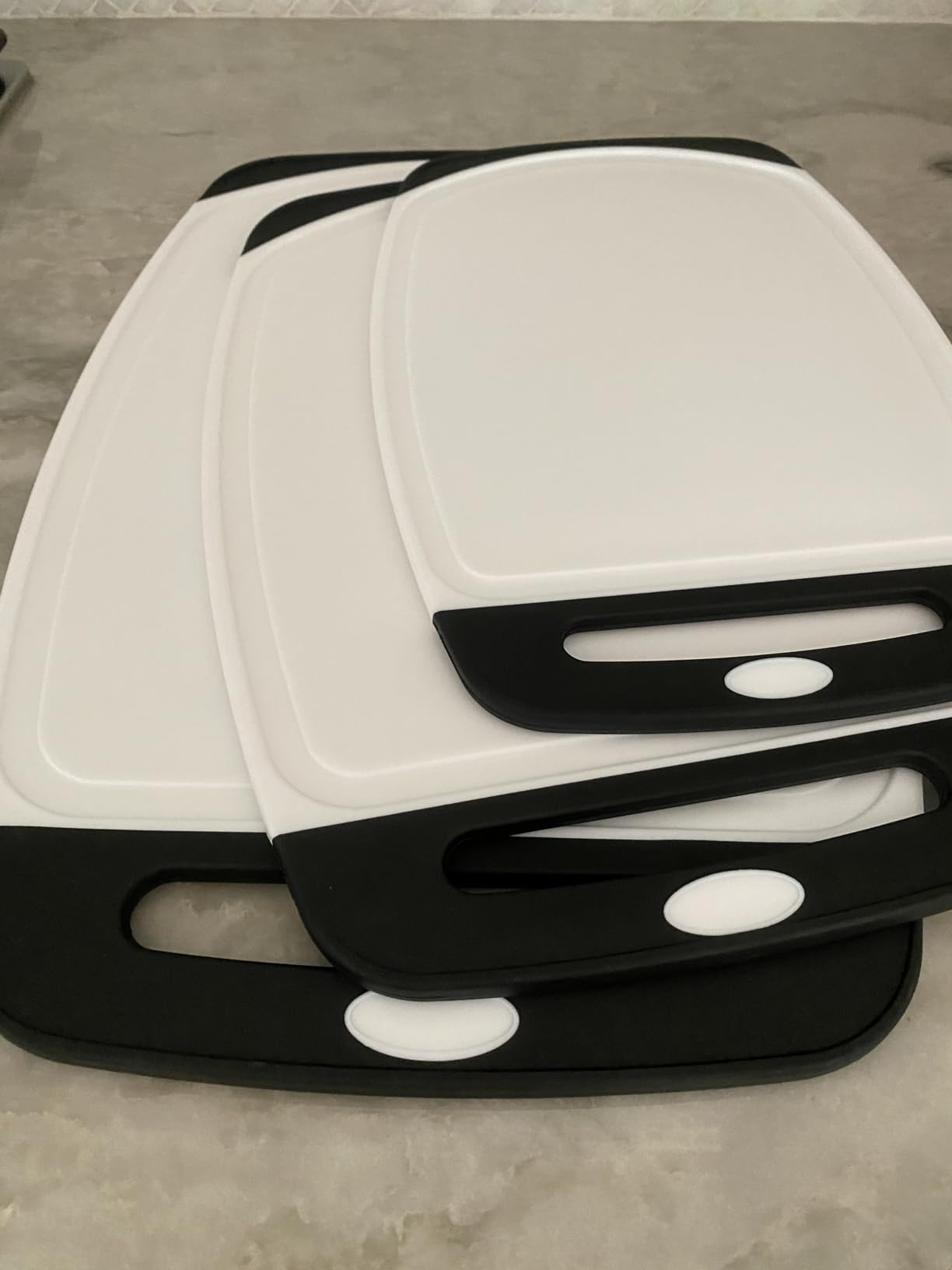
Why a Three-Piece Set Beats One Large Board
Having multiple boards is a practical advantage most people do not think about until they have it. I use the small board for quick tasks like slicing a lemon or cutting a sandwich. The medium handles single vegetables. The large takes the heavy jobs.
I never have to stop and wash a board between prep steps. I just grab the next size. This is also a food safety win. I can dedicate one board to raw meat and never cross-contaminate. The color-coded borders on some variants help with this.
Even without color coding, the three sizes make it easy to keep meat separate from produce. I wash the meat board immediately after use and leave the vegetable board out for the next task. The set is also ideal for households with multiple cooks.
My partner and I can each grab a board without fighting over counter space. When we have guests who want to help, everyone gets their own surface. The versatility of three boards outweighs the single-board experience for most casual cooks. The low price makes this a no-brainer starter set.
Who Should Buy the GORILLA GRIP Set
This set is for new homeowners, college graduates, or anyone setting up a kitchen on a budget. It is also a great secondary set for experienced cooks who want dedicated boards for specific tasks. The dishwasher-safe cleaning is the main draw.
If you want to cook and clean with minimal effort, these boards deliver. The GORILLA GRIP set is also the right choice for anyone concerned about microplastics from cheaper plastics. The BPA-free material meets US food-grade standards.
While all plastics raise some environmental questions, this set is durable enough to last for years. You will not be throwing it away after a few months. The lifetime warranty is an unexpected bonus at this price.
The only cooks who should skip this set are those who want a wood board for knife preservation or aesthetic reasons. Plastic will never match the feel of end-grain maple under a sharp knife. But for the average home cook who chops a few times a week and wants easy cleanup, the GORILLA GRIP set is the best starting point we found. You can always add a wood board later.
6. Teakhaus Carving Board – Best FSC Certified Wood Board
Teakhaus Carving Board with Juice Groove – Small (S) Teak Wood Cutting Board 16”L x 12”W x 1.5” Thick – Sustainably…
FSC Teak
16x12x1.5 inch
3 lbs
Juice Groove, Reversible
✓ The Good
- FSC certified teak
- Natural moisture resistance
- Reversible design
- Pre-oiled ready to use
✕ The Bad
- Requires regular oiling
- Not dishwasher safe
- Can warp over time
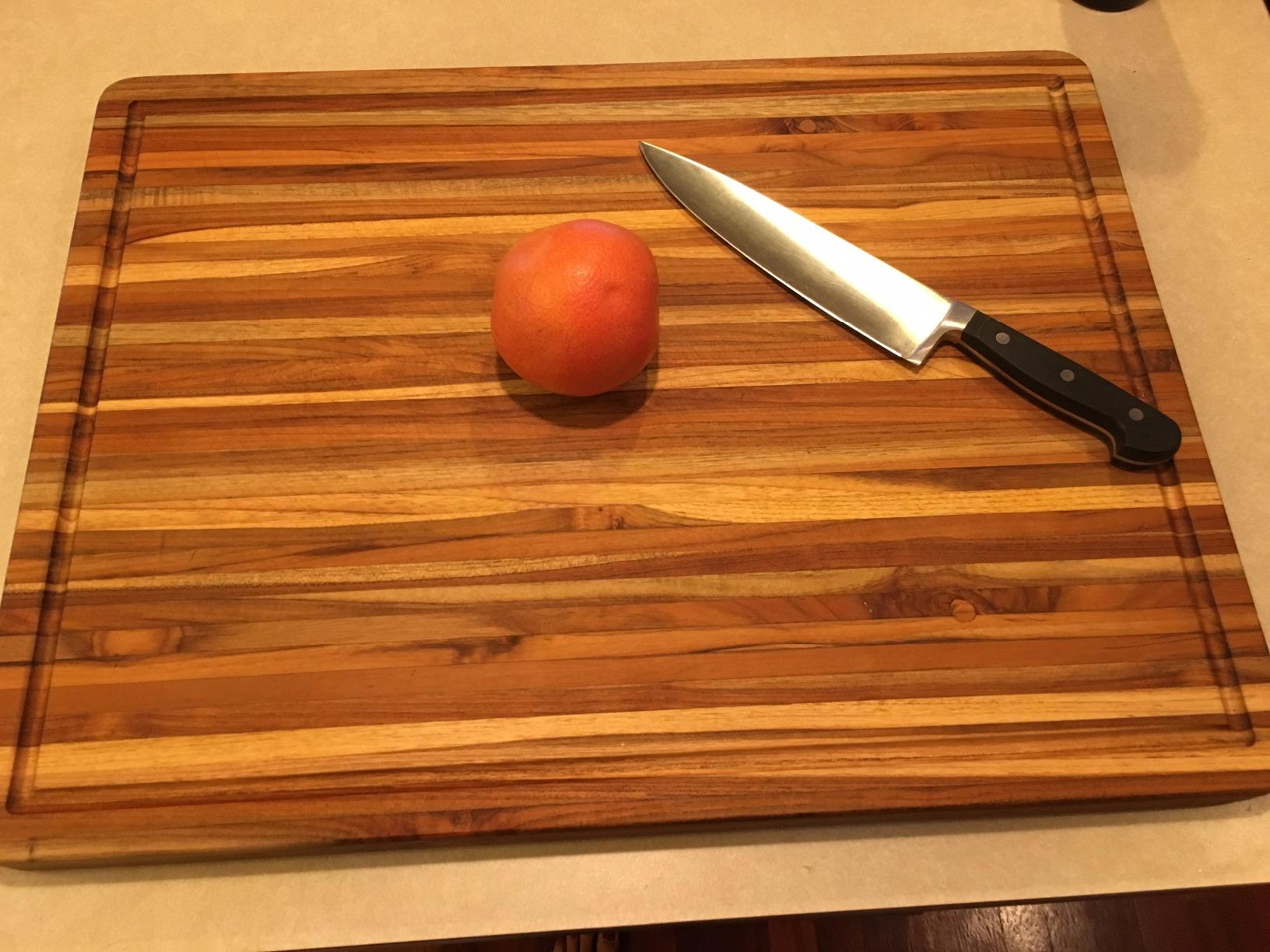
The Teakhaus board arrived pre-oiled and ready to use straight from the box. I appreciate that because many wood boards need immediate seasoning before they are safe for food. The teak has a warm golden color and a tight grain pattern.
It is lighter than the maple and walnut boards we tested, weighing only 3 pounds. I could move it easily with one hand. The FSC certification means the wood was harvested responsibly. For cooks who care about sustainability, that matters.
Teak contains natural oils that resist moisture and bacteria without any chemical treatment. I used this board for carving roasts and serving cheese. The reversible design lets you flip between the grooved prep side and the flat presentation side.
The deep juice groove is well-proportioned for the 16 by 12 inch surface. It caught drips from a smoked brisket without overflow. The hand grips are subtle but effective. I carried the board loaded with food from kitchen to table without any strain.
The beeswax oil finish gives the surface a smooth feel that food does not stick to. Teakhaus is the brand used by America’s Test Kitchen. That professional endorsement carries weight. The board is also backed by a one-year warranty against manufacturing defects.
I found the quality consistent with the price. The board sits in the mid-range bracket and delivers mid-range performance that punches above its weight in some areas.
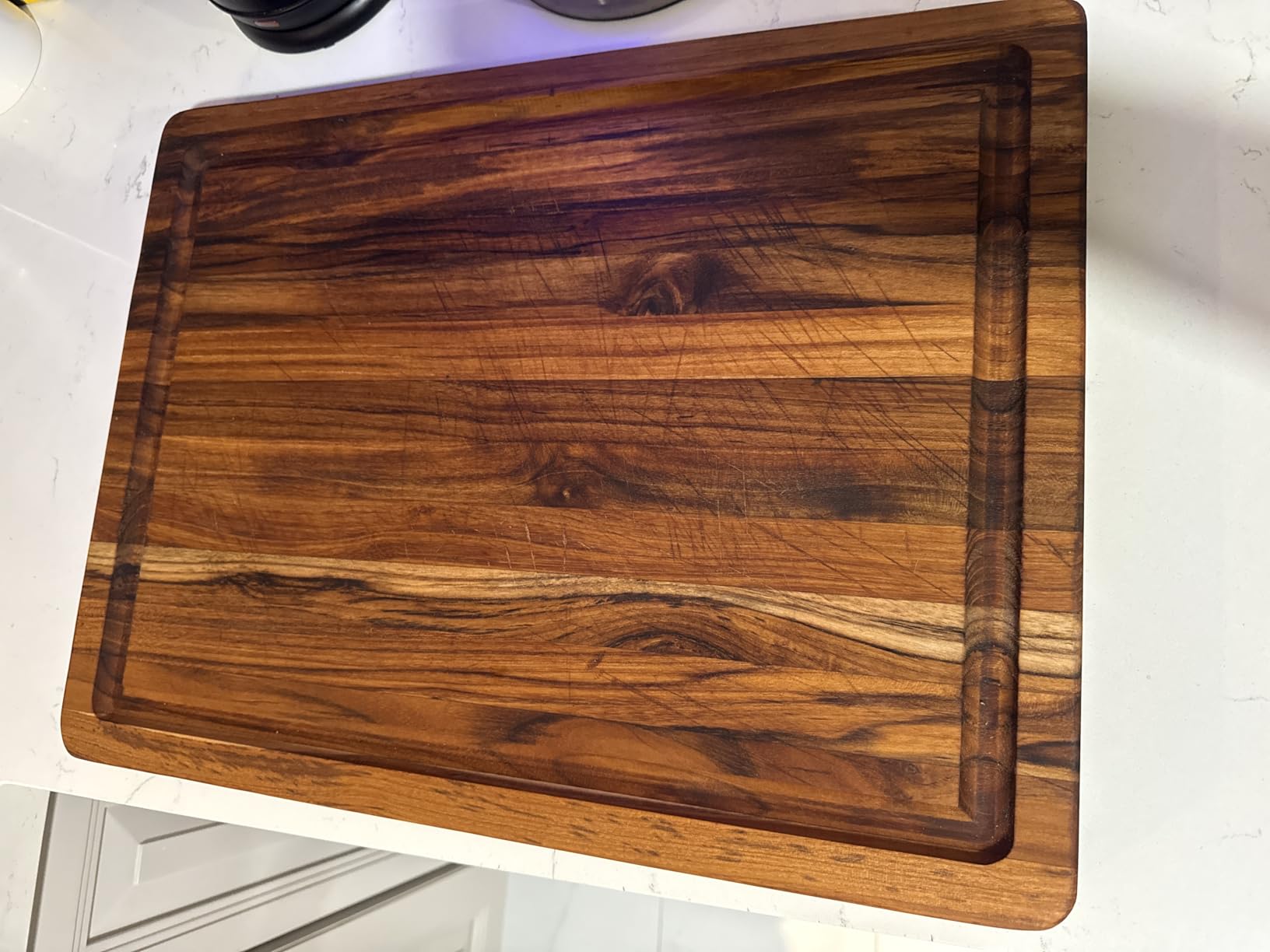
I used the Teakhaus for two weeks of mixed tasks. The teak surface is slightly softer under a knife than maple. My blades felt supported but not resisted. The natural oils meant I did not need to oil it as aggressively as the maple boards.
I applied a light coat of mineral oil once during the test and the board drank it in happily. The reversible design is genuinely useful. I used the grooved side for carving a roast one night and the flat side for a cheese board the next day.
The flat side is attractive enough for serving. The juice groove is deep enough to be practical but not so deep that it traps food. A quick brush with a sponge cleans it out.
Why FSC Certification Matters for Kitchen Tools
The Forest Stewardship Council certification is not just a label. It means the teak was harvested from forests managed to meet strict environmental and social standards. If you are trying to reduce your environmental impact, buying FSC-certified wood is a concrete step.
The Teakhaus board is one of the few cutting boards we tested that carries this certification. Beyond the ethics, FSC-certified teak performs well. The wood is dense and stable. The natural oils that make teak famous for boat building also make it resistant to water damage in a kitchen.
I noticed the Teakhaus dried faster after washing than the maple boards. The oils create a natural barrier that sheds moisture rather than absorbing it. The downside is that teak is not as gentle on knives as end-grain maple or walnut. The Janka hardness is higher than maple.
For most home cooks, this difference is minor. But if you are using high-end Japanese knives with very thin edges, you may prefer a softer end-grain board for daily use. The Teakhaus is still far kinder than bamboo or plastic.
Who Should Buy the Teakhaus Board
This board is ideal for cooks who want a sustainable product without sacrificing quality. The FSC certification and natural teak properties make it a responsible choice. It is also a great pick for anyone who does a lot of carving and serving.
The reversible design and attractive grain make it a natural transition piece from kitchen to dining table. The light weight makes it accessible for older cooks or anyone with limited wrist strength. The 3-pound board is easy to lift and carry fully loaded.
The 16 by 12 inch size is manageable in smaller kitchens. You do not need a massive counter to accommodate this board. It fits comfortably in apartments and smaller homes. You do need to hand-wash and occasionally oil this board. The natural oils help, but they are not a substitute for maintenance.
If you want a completely maintenance-free board, look at plastic. But if you want a beautiful wood board that you can feel good about buying, the Teakhaus is one of the best values in certified sustainable wood.
7. John Boos Cherry R-Board – Classic Edge Grain Butcher Block
John Boos R-Board Series Rectangular Wooden Cherry Cutting Board 18”x12” – 1.5” Thick, 7-lb Reversible Butcher Block…
Cherry Edge Grain
18x12x1.5 inch
7 lbs
Reversible, Finger Grips
✓ The Good
- Superior craftsmanship
- Reversible sides
- Trusted since 1887
- Professional grade
✕ The Bad
- Requires regular oiling
- Can warp if wet
- Hand wash only
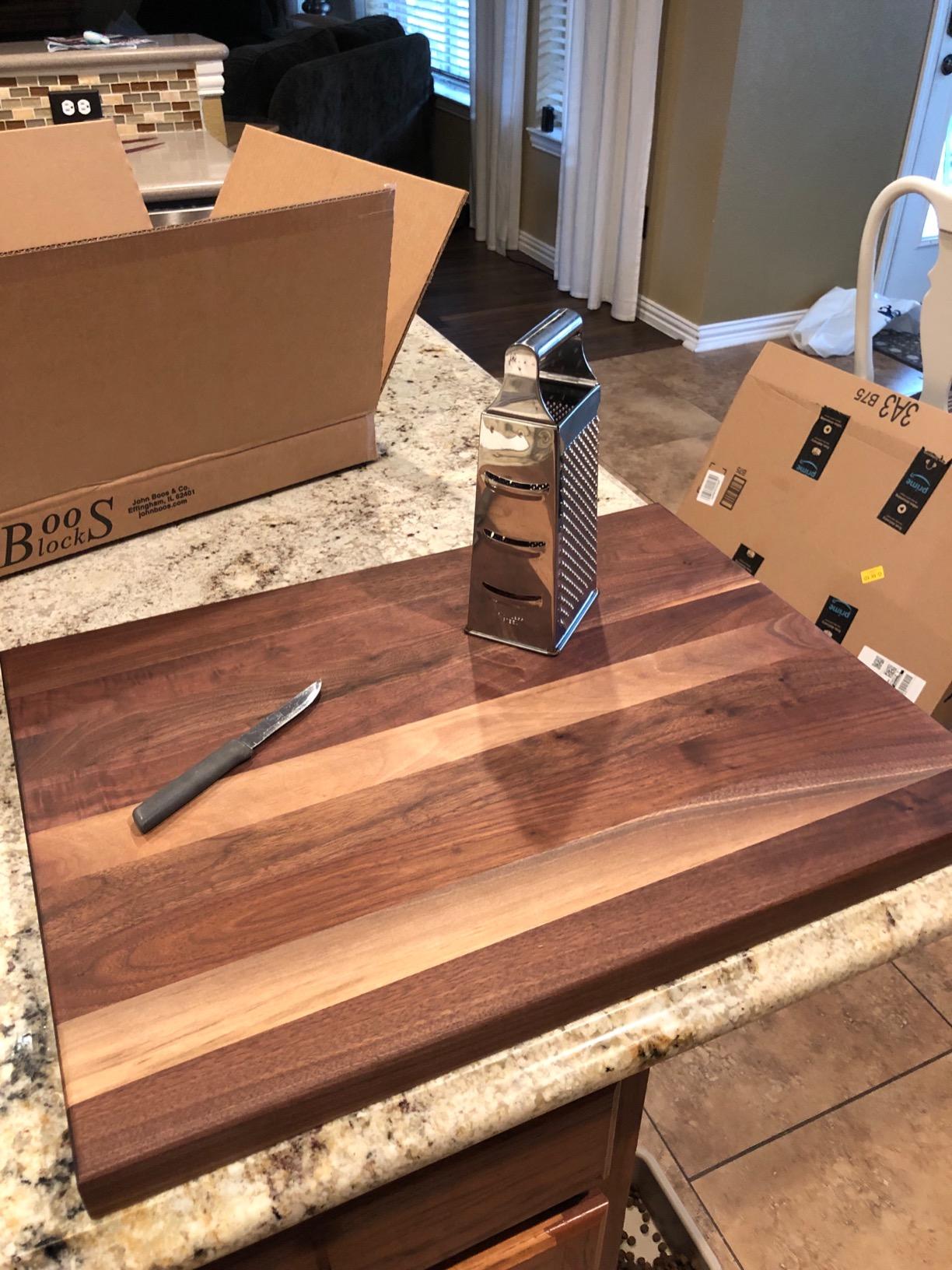
The John Boos Cherry R-Board is the classic American cutting board. I tested it for two weeks alongside the maple CCB and the smaller Chop-N-Slice. The cherry wood has a reddish tone that darkens with use.
After two weeks of oiling and cutting, the color deepened noticeably. The board felt as solid as the maple versions despite being slightly lighter at 7 pounds. The 18 by 12 inch surface is the sweet spot for most home kitchens.
It is large enough for a full recipe but not so large that it dominates the counter. The reversible sides extend the usable life. I used one side for vegetables and reserved the other for meat. The recessed finger grips are smooth and comfortable.
I never felt the board slipping from my hands. The edge-grain cherry is beautiful. The grain runs lengthwise, creating a striped pattern that looks intentional and high-end. The oil finish is the same food-safe treatment used on all Boos boards.
It penetrates the wood rather than sealing the surface. This allows the board to breathe and prevents moisture from getting trapped inside. John Boos has been making boards since 1887. The craftsmanship is consistent across their product line.
The Cherry R-Board is no exception. The joints are tight, the surface is flat, and the finish is even. I inspected the board under bright light and found no flaws. The 1.5 inch thickness is adequate for home use without being excessive.
During the test, I used the R-Board for daily prep. It handled chopping, slicing, and carving with ease. The cherry wood is slightly harder than maple but still knife-friendly. My chef’s knife stayed sharp through the test period.
The board showed minimal knife marks after two weeks. The edge grain does not self-heal as dramatically as end grain, but it holds up well. I hand-washed the board after each use and dried it immediately. I applied Boos Block Mystery Oil once during the test.
The cherry absorbed the oil evenly. The board felt smooth and food-safe after treatment. I noticed no odors or stains after cutting garlic, onions, or beef. The closed-pore structure of cherry wood helps here.
Why Cherry Wood Ages Better Than Most Materials
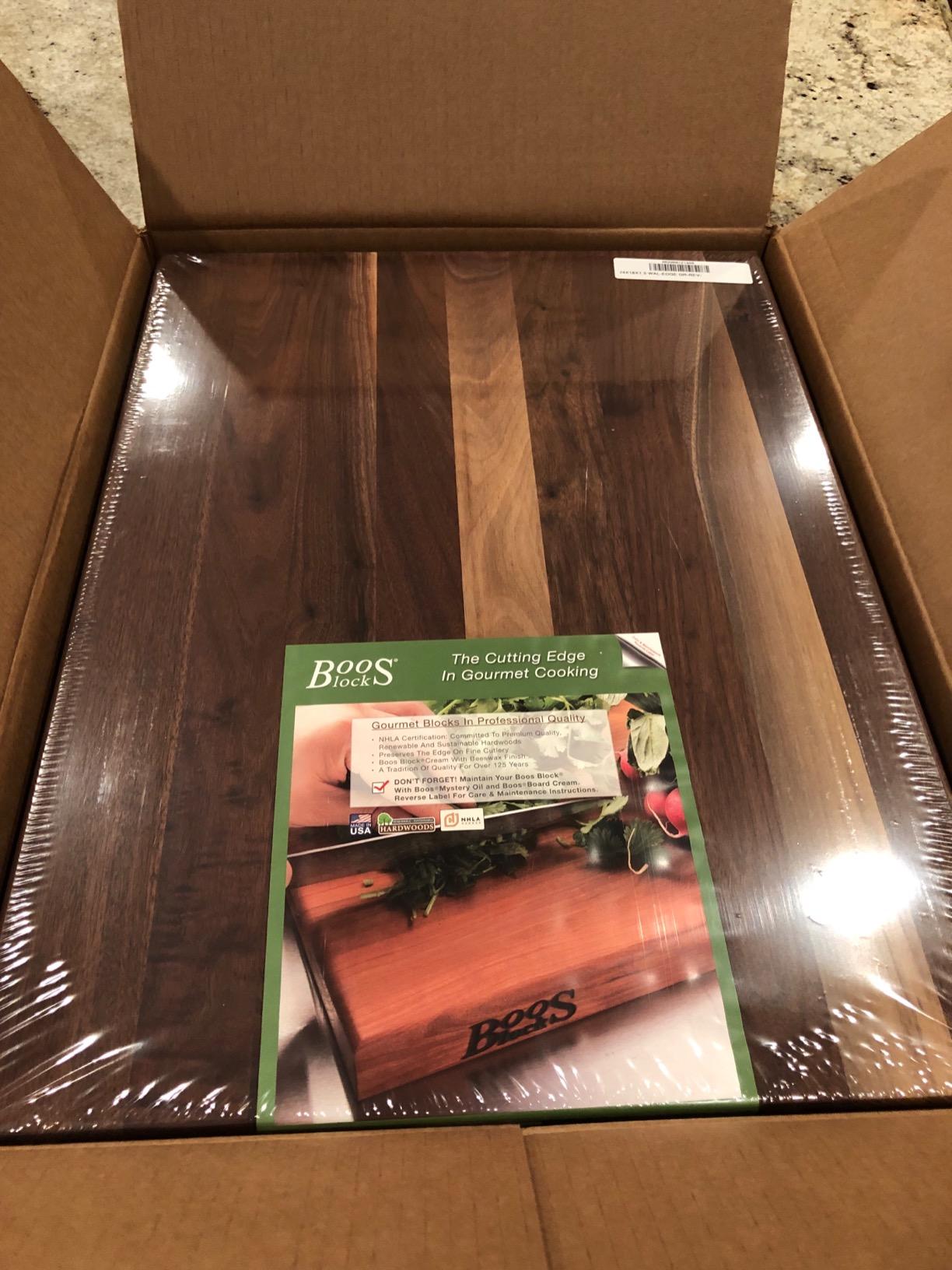
Cherry wood is famous for its patina. The reddish tone darkens over time as it is exposed to air and oil. This means your board looks better after a year of use than it did on day one. I love that quality in kitchen tools.
The Cherry R-Board is a long-term investment that improves visually with age. The maple and walnut boards also develop patina, but cherry changes the most dramatically. The wood is also stable. I did not notice any warping during the two-week test.
The 1.5 inch thickness and seven-pound weight help keep it flat. Some users report that cherry can warp if left in standing water or exposed to high humidity. I followed the hand-wash-only rule and never soaked the board. Proper care prevents the warping issues that some reviewers mention.
The edge-grain construction is slightly harder on knives than end grain. But the difference is small enough that most home cooks will not notice. The cherry surface is still far gentler than bamboo or plastic. If you sharpen your knives every few months, the edge-grain cherry will not cause any problems.
The trade-off is the beautiful appearance and slightly lower price than end-grain maple.
Who Should Choose the Cherry R-Board
This board is for cooks who want a classic American-made product with a distinctive look. The cherry color stands out from the typical maple boards you see everywhere. If you have a kitchen with warm wood tones or you want a board that doubles as a serving piece, the cherry is a strong choice.
The 18 by 12 inch size is practical for most households. It is also a good middle ground between the budget boards and the premium end-grain blocks. The price is reasonable for the quality. The John Boos name gives you confidence in the construction.
The reversible design and finger grips add practical value. This is a board that will last for years if you treat it well. You do need to commit to hand-washing and occasional oiling. The cherry requires the same maintenance as the maple boards.
If you are not willing to care for wood, you will be happier with plastic. But for anyone who wants a beautiful, reliable wood board from a trusted manufacturer, the Cherry R-Board is one of the safest choices we tested. The 4,500 reviews confirm that this board has a loyal following.
8. Thirteen Chefs Commercial HDPE – Best Commercial Grade Plastic Board
Commercial Grade Plastic Cutting Board with Juice Groove – 18 x 12 Inch for Carving Meat, Grilling, BBQ – 1/2″ Thick White…
HDPE Plastic
18x12x0.5 inch
3 lbs
NSF Certified, Juice Groove
✓ The Good
- Commercial grade HDPE
- NSF certified
- Resists warping
- Does not absorb color
✕ The Bad
- Serrated knives damage it
- Will show wear
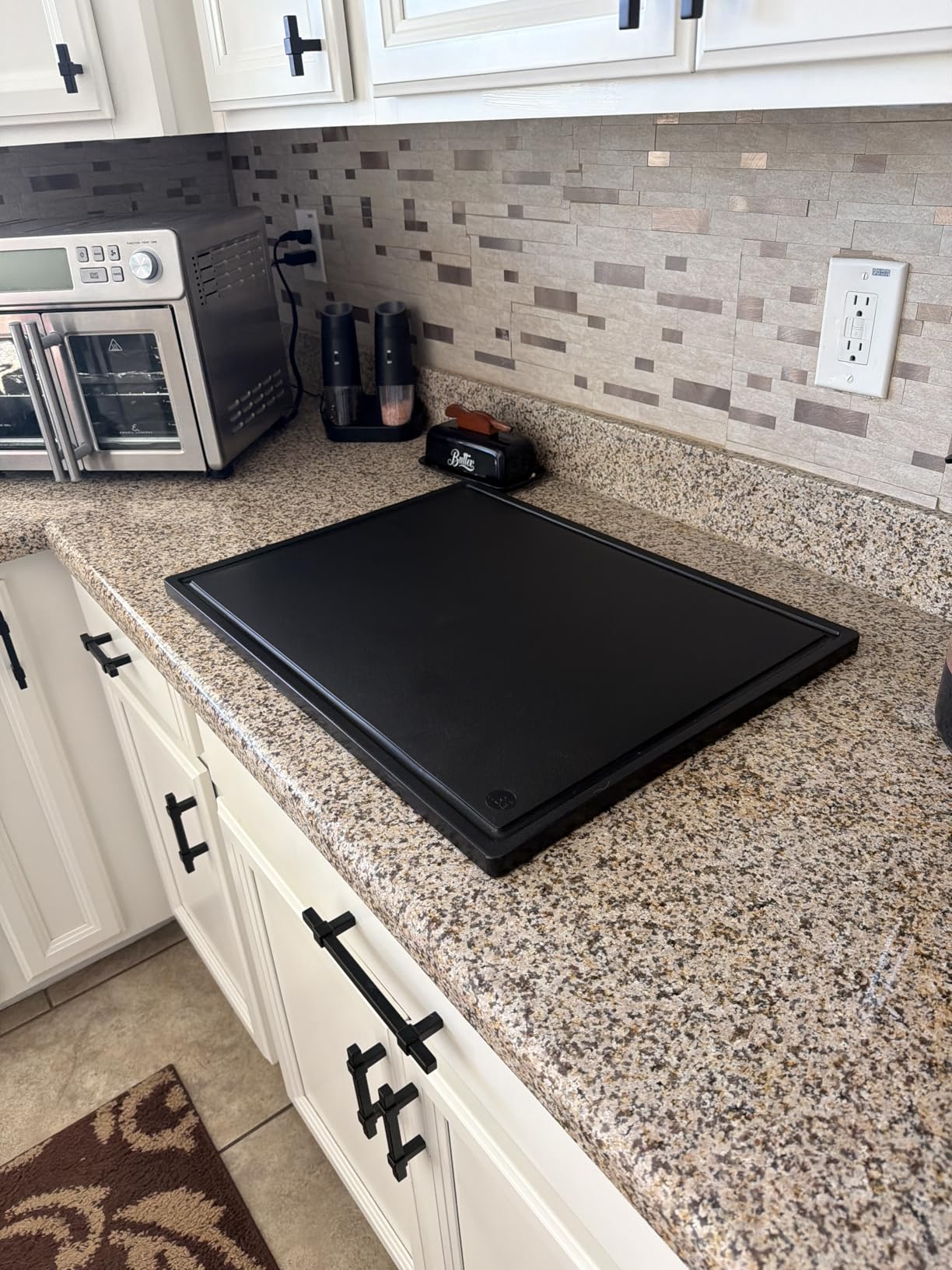
I bought the Thirteen Chefs board for my barbecue setup last year. It is the board I use when I am pulling pork, slicing brisket, or carving a smoked turkey. The commercial-grade HDPE is different from consumer plastic.
It is denser, stiffer, and more resistant to heat. I have run this board through my dishwasher at 180 degrees without any warping. The NSF certification is the key feature here. NSF International certifies equipment for commercial food service.
This board meets the same standards used in restaurant kitchens. That means it is safe for raw meat, poultry, and fish. The non-porous surface does not harbor bacteria. I clean it with soap and water, and I trust it completely for food safety.
The 18 by 12 inch size is perfect for large cuts. The 0.5 inch thickness is thinner than the wood boards but rigid enough for heavy use. The outer juice groove catches liquids without taking up too much surface area. I have carved a 15-pound turkey on this board and the groove held all the drippings.
The white surface does not absorb color from carrots, beets, or broccoli. The board is made in the USA from high-density polyethylene. HDPE is the same material used in commercial kitchen cutting boards around the world. It is durable enough to withstand years of daily use.
The 4,000-plus reviews include feedback from professional chefs and home cooks alike. The 4.7-star average is one of the highest of any plastic board we tested.
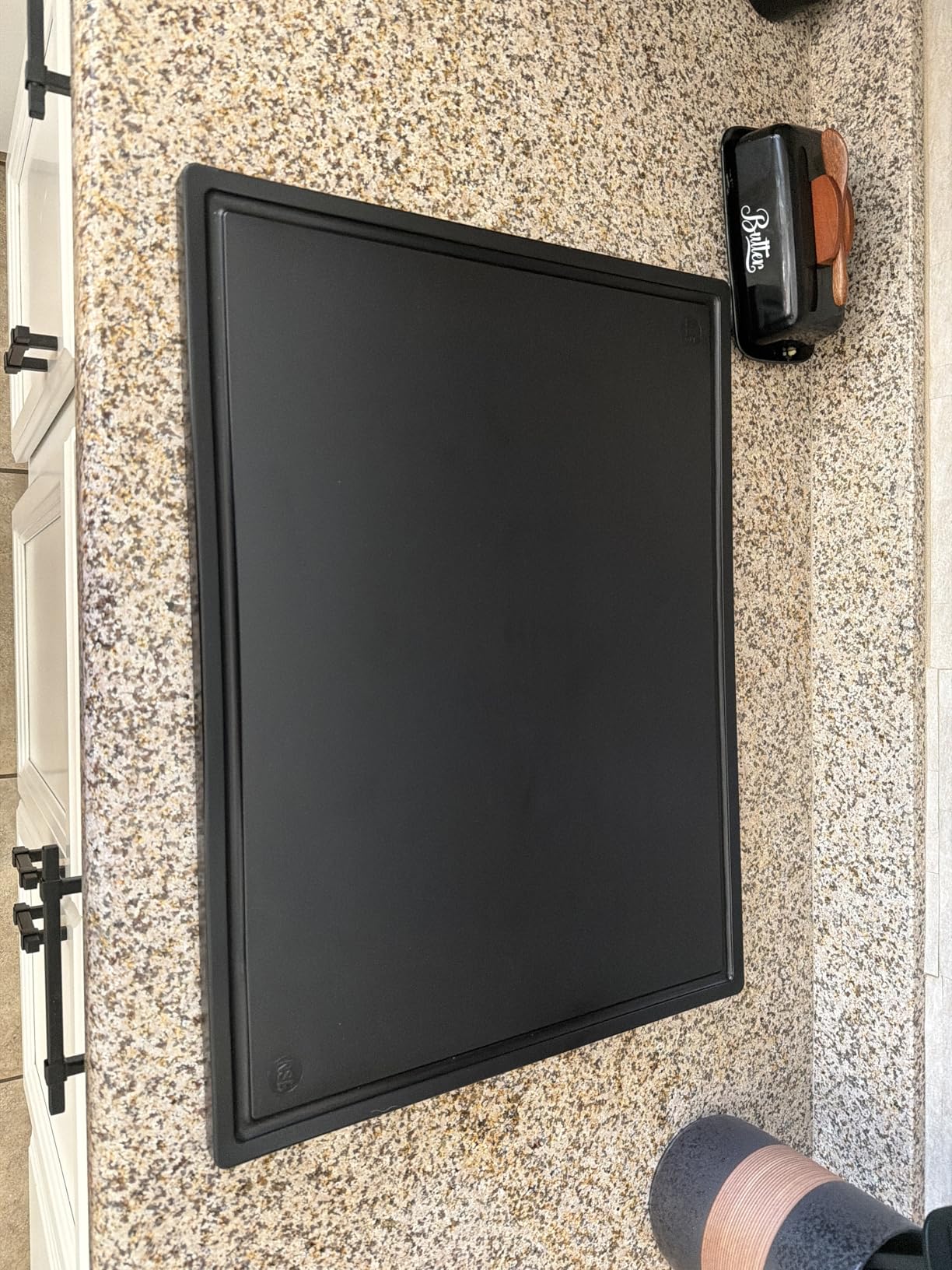
During our formal test, I used the Thirteen Chefs board for a week of mixed tasks. The HDPE surface is harder than the OXO plastic. My knife made a slightly different sound when it hit the board. The cuts were clean and the board did not dull my blade any faster than the OXO.
The juice groove was effective for both meat and juicy fruits. The white surface is practical for food safety. You can see when it is clean. There is no hiding residue on white plastic.
I washed it by hand and in the dishwasher. Both methods worked well. The board came out of the dishwasher flat and odor-free. The heat resistance is a real advantage if you have a high-temperature dishwasher cycle.
Why NSF Certification Matters for Home Cooks
Most home cooks do not think about NSF certification. But it is a guarantee that the material and construction meet strict public health standards. The Thirteen Chefs board is tested for durability, non-toxicity, and cleanability.
When you are handling raw chicken or ground beef, that certification gives you confidence. You are using the same grade of board that professional kitchens rely on. The HDPE material is also recyclable. When this board eventually wears out after years of use, it can be recycled rather than landfilled.
That is not true for all plastics. The commercial grade means it lasts longer than cheaper consumer boards. You will replace this board less often. Over time, that reduces waste and saves money.
The downside is that this board is not gentle on knives compared to wood. The hard plastic surface creates more friction than end-grain maple. If you use expensive knives daily, you will notice the difference. But for occasional meat prep or heavy chopping tasks, the knife wear is acceptable.
Many professional chefs use HDPE boards for their prep work and accept the trade-off for sanitation.
Who Should Buy the Thirteen Chefs Board
This board is for serious home cooks, barbecue enthusiasts, and anyone who processes a lot of raw meat. The NSF certification and heat resistance make it the safest plastic option we tested. If you run a dishwasher with a sanitize cycle, this board can handle it.
The commercial grade means you will not need to replace it for years. The white surface is also ideal for anyone who wants to see that their board is clean. Dark plastic can hide stains and residue. The white HDPE shows everything.
Some people find that reassuring. I know when my board is fully clean because I can see every inch of it. The colorfastness means that visible stains wipe away easily. You should not buy this board if you want a gentle surface for high-end knives.
The HDPE is harder than wood. It is also not as attractive as a wood board for serving. This is a tool, not a showpiece. But as a tool, it is one of the best plastic boards available. The commercial grade and NSF stamp justify the price over cheaper consumer options.
9. Kikcoin Bamboo Set – Best Bamboo Cutting Board Set
Kikcoin Extra Large Bamboo Cutting Boards, (Set of 3) Chopping Boards with Juice Groove Bamboo Wood Cutting Board Set Butcher…
Bamboo Set
3 Sizes
End Grain
Juice Grooves, Rack Included
✓ The Good
- Four-layer thickened
- End grain durability
- Three sizes included
- Lifetime warranty
✕ The Bad
- Can splinter
- Feet need installation
I have a complicated relationship with bamboo boards. The environmental appeal is real. Bamboo grows fast and regenerates without replanting. But many bamboo boards are hard on knives and prone to splintering.
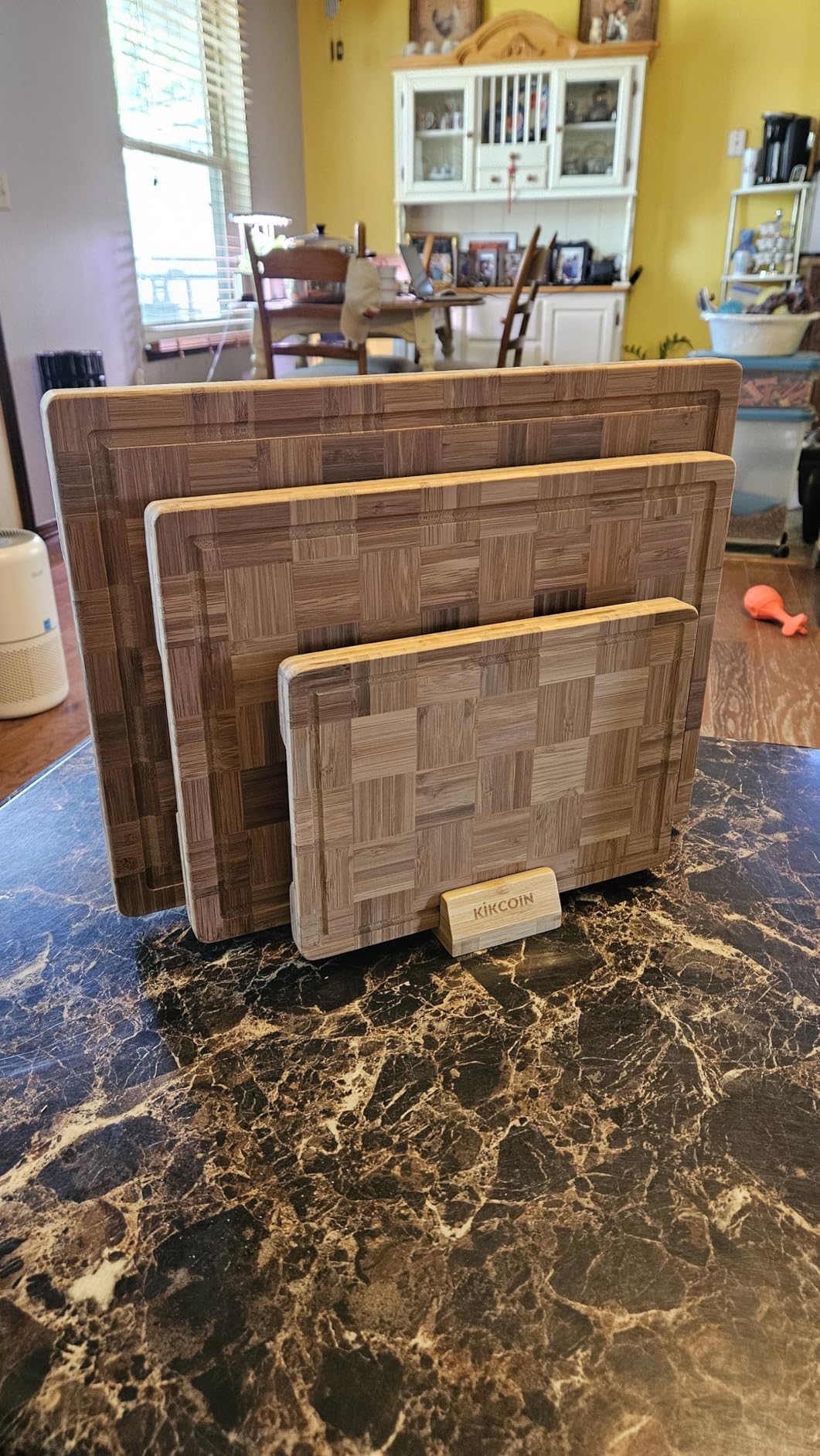
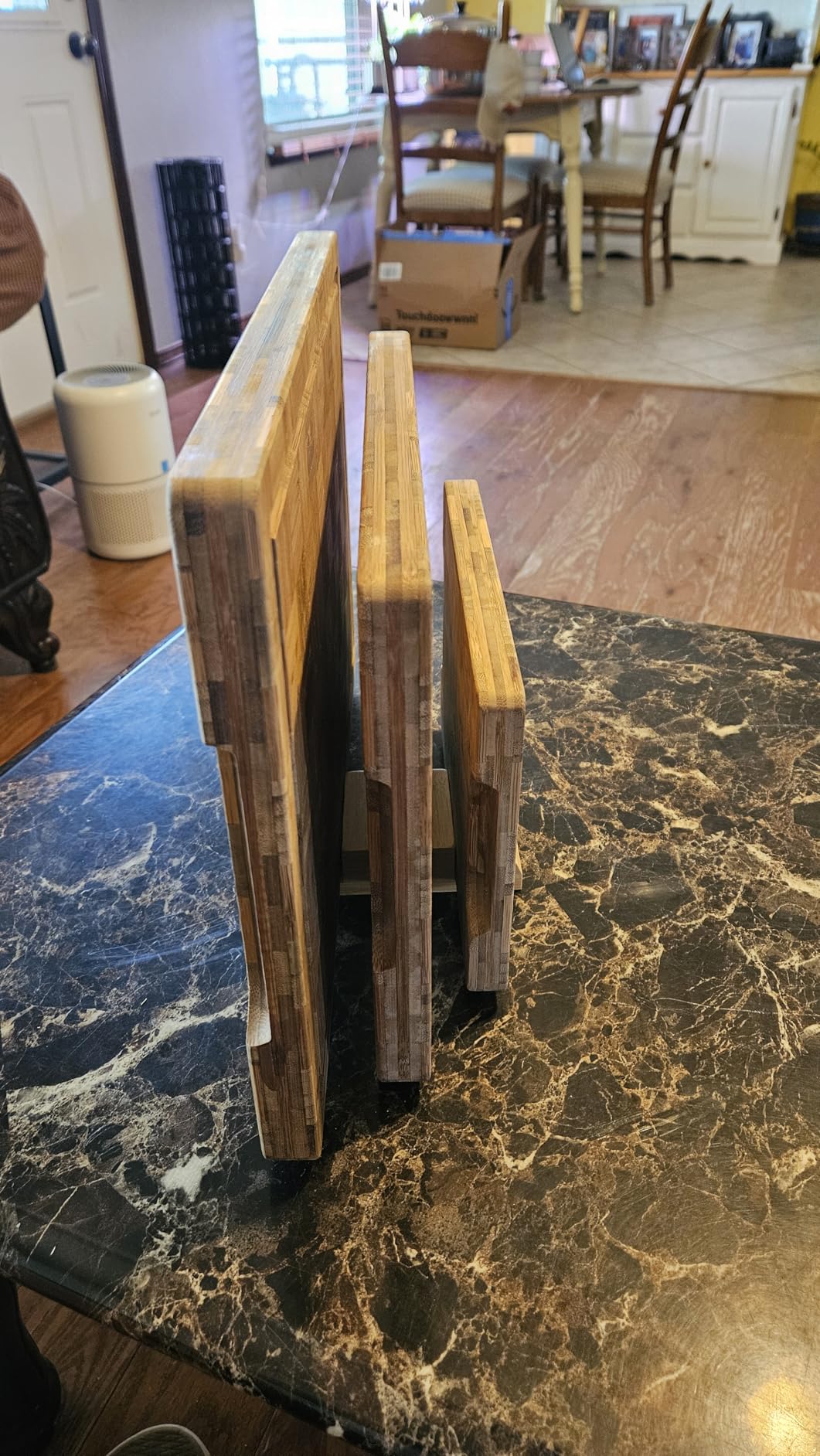
The Kikcoin set surprised me. The four-layer thickened construction feels more substantial than the single-layer bamboo boards I have used in the past. The set includes three sizes. The XL is 17 by 12 inches, the large is 14 by 10 inches, and the medium is 10 by 7.1 inches.
The included rack keeps them organized and upright. I stored the set on my counter and it looked tidy. The end-grain construction is unusual for bamboo. Most bamboo boards are edge grain. The end grain here is made from small pieces arranged vertically, which is gentler on knives than horizontal bamboo strips.
The deep juice grooves run around all three boards. I used the XL for carving a small roast and the groove caught the drippings. The rounded corners prevent the boards from scratching your counter or your cabinets. The hidden handle design is clever.
The handles are integrated into the shape rather than sticking out. They do not take up extra space in a drawer or rack. The mineral oil finish is applied at the factory. The boards arrived smooth and ready to use. I did not need to sand them before the first cut.
The splicing craft is visible but not intrusive. The four-layer construction creates a checkered pattern that looks intentional. The lifetime warranty is a strong statement of confidence from the manufacturer.
During our two-week test, I used the XL board for daily chopping. The bamboo surface is harder than maple but not as harsh as glass or stone. My knife edges showed normal wear. The medium board became my go-to for quick tasks.
I appreciated having three sizes rather than one. The rack kept them organized and allowed air circulation for drying. I washed the boards by hand after each use. Bamboo should never go in a dishwasher. The heat and water will warp and crack it.
I dried the boards upright in the rack. They dried quickly. I noticed no warping during the test. The four-layer construction seems to provide enough stability to resist the twisting that ruins cheaper bamboo boards.
Why Bamboo Is a Controversial Choice for Cooks
Bamboo contains silica. That is the mineral that makes it hard on knife edges. The Kikcoin set mitigates this with end-grain construction. The vertical fibers are slightly gentler than horizontal strips. But bamboo is still harder than maple or walnut.
If you use premium knives, you will need to sharpen them more often with a bamboo board. The environmental benefit is significant. Bamboo matures in five years compared to decades for hardwood trees. The Kikcoin set uses a four-layer design that reduces waste by using smaller pieces.
The mineral oil finish is food-safe. The eco-friendly appeal is real. For cooks who want to reduce their footprint, bamboo is a reasonable compromise. Just know that you are trading some knife longevity for the eco-friendly choice.
The main risk with bamboo is splintering. Some users report that bamboo boards can split along the grain after months of use. I did not see this during the two-week test. The four-layer construction and end-grain design seem to help. The lifetime warranty covers defects.
But if you want a board that lasts for decades without any risk of splintering, hardwood is still the safer choice.
Who Should Buy the Kikcoin Bamboo Set
This set is for eco-conscious cooks who want an organized kitchen. The included rack and three sizes make this a complete system. If you are starting a new kitchen and want a sustainable option, the Kikcoin set covers your needs. The price is reasonable for a three-piece set with a rack.
The end-grain construction is a step above most bamboo boards. The set is also good for anyone who likes to keep their counter tidy. The rack stores the boards vertically and takes up minimal space. The hidden handles mean the boards fit in standard drawers if you prefer to store them flat.
The variety of sizes means you can match the board to the task rather than using one oversized board for everything. You should not buy this set if you own expensive knives and want to minimize sharpening. The bamboo is harder than wood.
You should also avoid it if you want a dishwasher-safe option. Bamboo requires hand-washing. But if you want a sustainable, organized, and affordable board set, the Kikcoin is the best bamboo option we tested. The 4,300 reviews support that conclusion.
10. John Boos Chop-N-Slice – Best Mid-Size Maple Edge Grain
John Boos Chop-N-Slice Series Rectangular Maple Cutting Board, 20″ x 14″ x 1.25″, 10 lb – Reversible Edge-Grain Butcher…
Maple Edge Grain
20x14x1.25 inch
10 lbs
Reversible, Finger Grips
✓ The Good
- Ample workspace
- Hand-selected maple
- Reversible design
- Luxurious oil finish
✕ The Bad
- Requires regular oiling
- May warp over time
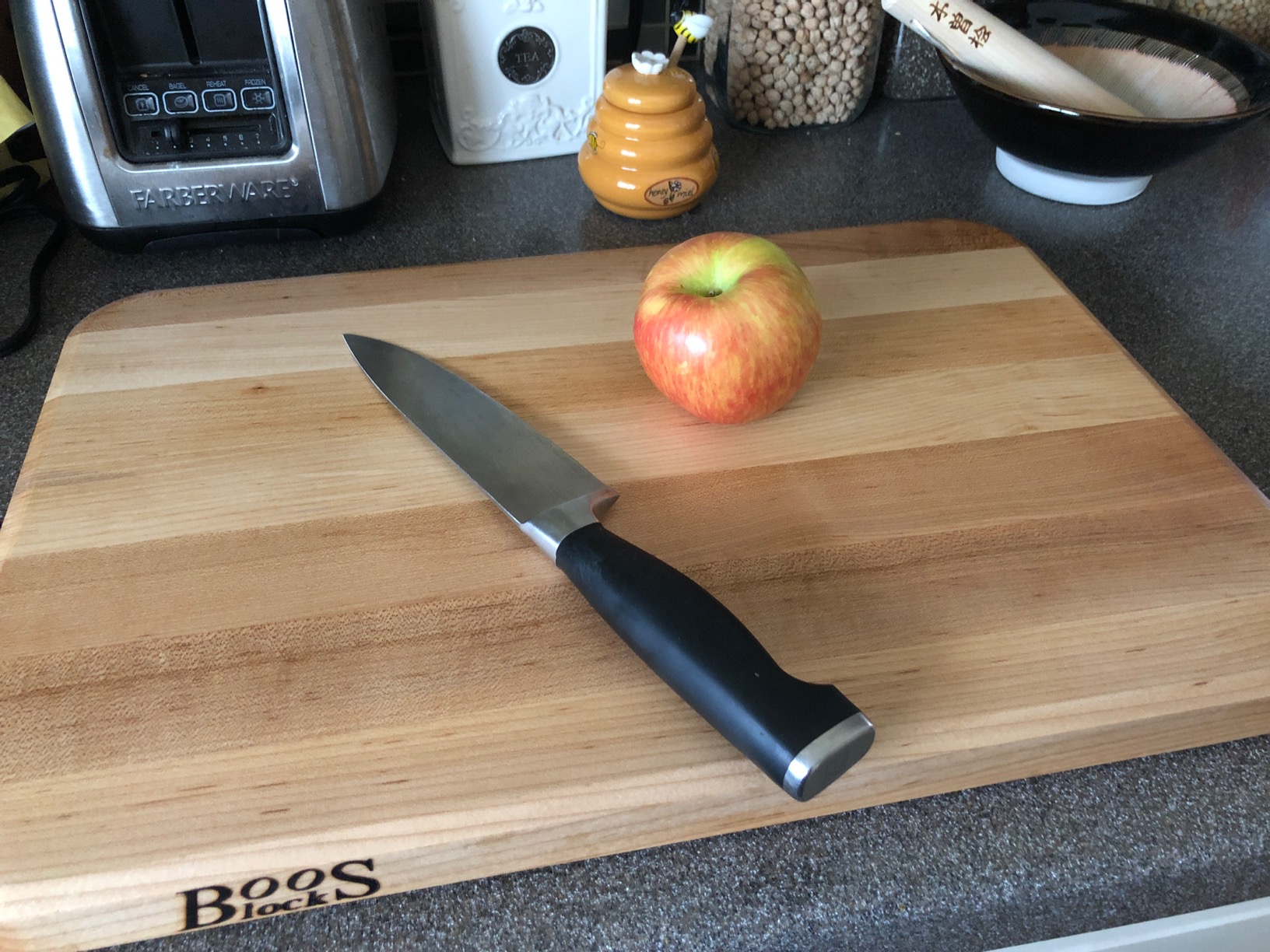
The John Boos Chop-N-Slice is the middle child of the Boos lineup. It is smaller than the massive CCB but larger than most home boards. I tested it for two weeks as a general-purpose prep surface.
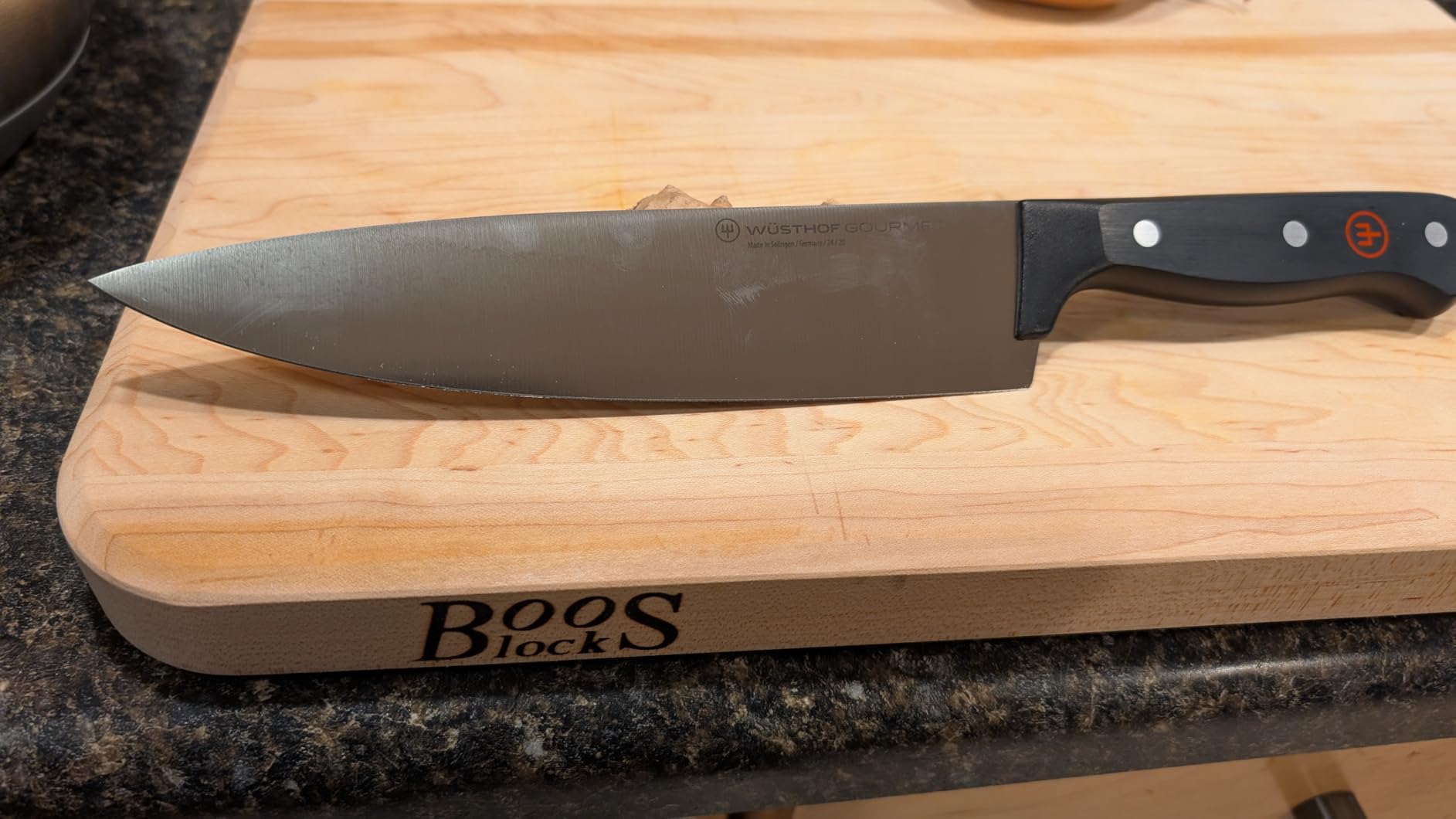
The 20 by 14 inch surface is generous. I could lay out a whole chicken, a pile of potatoes, and a bunch of herbs all at once without feeling cramped. The edge-grain maple is beautiful. The grain runs horizontally, creating a clean striped look.
The wood is hand-selected American hard maple. Boos has been sourcing this wood for over a century. The 1.25 inch thickness is thinner than the CCB but still substantial. At 10 pounds, it is heavy enough to stay stable but light enough to move when you need to.
The reversible design is standard for Boos. I used one side for meat and one for vegetables. The finger grips are recessed on both ends. I could lift the board with wet hands without slipping. The oil finish is the same food-safe treatment used on all Boos products.
It penetrates the wood and protects against moisture without creating a surface film. This board is currently low in stock. Only 13 units were available when we checked. The popularity makes sense.
It is the right size for most home kitchens. The 2,200 reviews give it a 4.3-star average. The majority of users praise the size and quality. Some report warping over time. I did not see warping during my test, but I followed the care instructions strictly.
During the test, I used the Chop-N-Slice for daily meal prep. The surface handled chopping, slicing, and dicing without complaint. The maple is slightly softer than cherry under a knife. My blade felt supported.
The board showed minimal marks after two weeks. The 1.25 inch thickness is enough for most home tasks. I would not use a cleaver on it daily, but for normal knife work it is fine. I hand-washed the board after each use and dried it immediately.
I applied Boos Block Mystery Oil once during the test. The maple absorbed it evenly. The board felt smooth and ready for food after treatment. I noticed no staining from beets or carrots. The edge grain is less porous than end grain in some respects, which helps with stain resistance.
Why This Size Works for Most Home Kitchens
The 20 by 14 inch surface is the Goldilocks size for home cooks. It is large enough for complex recipes but not so large that it dominates a standard counter. I have a modest kitchen and this board fit without overhanging the edge.
The 10-pound weight is manageable. I could lift it to the sink for washing without straining. The 1.25 inch thickness strikes a balance. It is thick enough to resist warping if you care for it. It is thin enough to fit in a drawer if you need to store it.
The CCB at 2.25 inches is too thick for most drawers. The Chop-N-Slice slides into a standard deep drawer with room to spare. That storage flexibility is a real advantage for small kitchens. The edge-grain construction is also slightly more stain-resistant than end grain.
The horizontal fibers create a tighter surface. I cut turmeric and paprika on this board and saw no lingering color. The maple closed-pore structure helps. The board is not invincible, but it is more forgiving than some woods if you clean it promptly.
Who Should Buy the Chop-N-Slice
This board is for home cooks who want a Boos-quality product without the massive size and weight of the CCB. The Chop-N-Slice is the practical choice for everyday use. The 20 by 14 inch surface handles family dinners.
The 1.25 inch thickness fits standard storage. The maple is beautiful and functional. This is the Boos board I would recommend to most people. It is also a good choice if you want a reversible board but you do not want to spend the premium price for end grain.
The edge-grain maple is significantly less expensive than the end-grain CCB. The quality is still there. The construction is still American-made. The difference is the fiber orientation and the thickness. For most home cooks, those trade-offs are acceptable.
You need to follow the care instructions. Hand-wash only. Oil regularly. Do not soak it. The warping reports from some users usually come from improper care. I never left this board in a sink full of water. I dried it immediately.
If you can commit to that basic care, the Chop-N-Slice will serve you for years. The 2,200 reviews show that most owners are happy with their choice.
11. CONSDAN Hard Maple – Best Affordable Maple Edge Grain
CONSDAN Hard Maple Wood Cutting Board for Kitchen, USA Grown Hardwood, 16 x 12, with Invisible Inner Handle, Prefinished with…
Hard Maple
16x12x1.5 inch
8.9 lbs
Juice Groove, Invisible Handle
✓ The Good
- Solid maple construction
- Invisible handles
- Deep juice groove
- Lifetime warranty
✕ The Bad
- Some cracking reports
- Handle may trap water
The CONSDAN board is the most affordable maple option we tested. I used it for two weeks to see if the low price meant low quality. It did not.
The hard maple is solid and heavy. The 16 by 12 inch surface is practical for most kitchens. The 1.5 inch thickness gives it enough mass to stay stable during chopping. At 8.9 pounds, it is heavier than the Teakhaus but lighter than the Boos boards.
The invisible inner handles are the standout feature. They are cut into the sides of the board rather than attached as separate pieces. The handles are polished to prevent scraping your hands. I found them genuinely useful for moving the board from counter to sink.
The handles do not add bulk or catch on cabinets. They are subtle but effective. The deep juice groove runs around the perimeter. It trapped liquids during my tests with meat and juicy vegetables. The food-safe wax oil finish is applied at the factory.
The board arrived smooth and ready to use. I did not need to sand it. The light cream to tan color of the maple is neutral and fits most kitchen aesthetics. The lifetime warranty covers defects in materials and workmanship.
That is a strong promise for a board at this price. The 427 reviews give it a 4.4-star average. Most users praise the solid construction and the handles. Some report cracking after short use. I did not see cracking during my test, but I followed the care instructions carefully. The warranty provides peace of mind if issues arise.
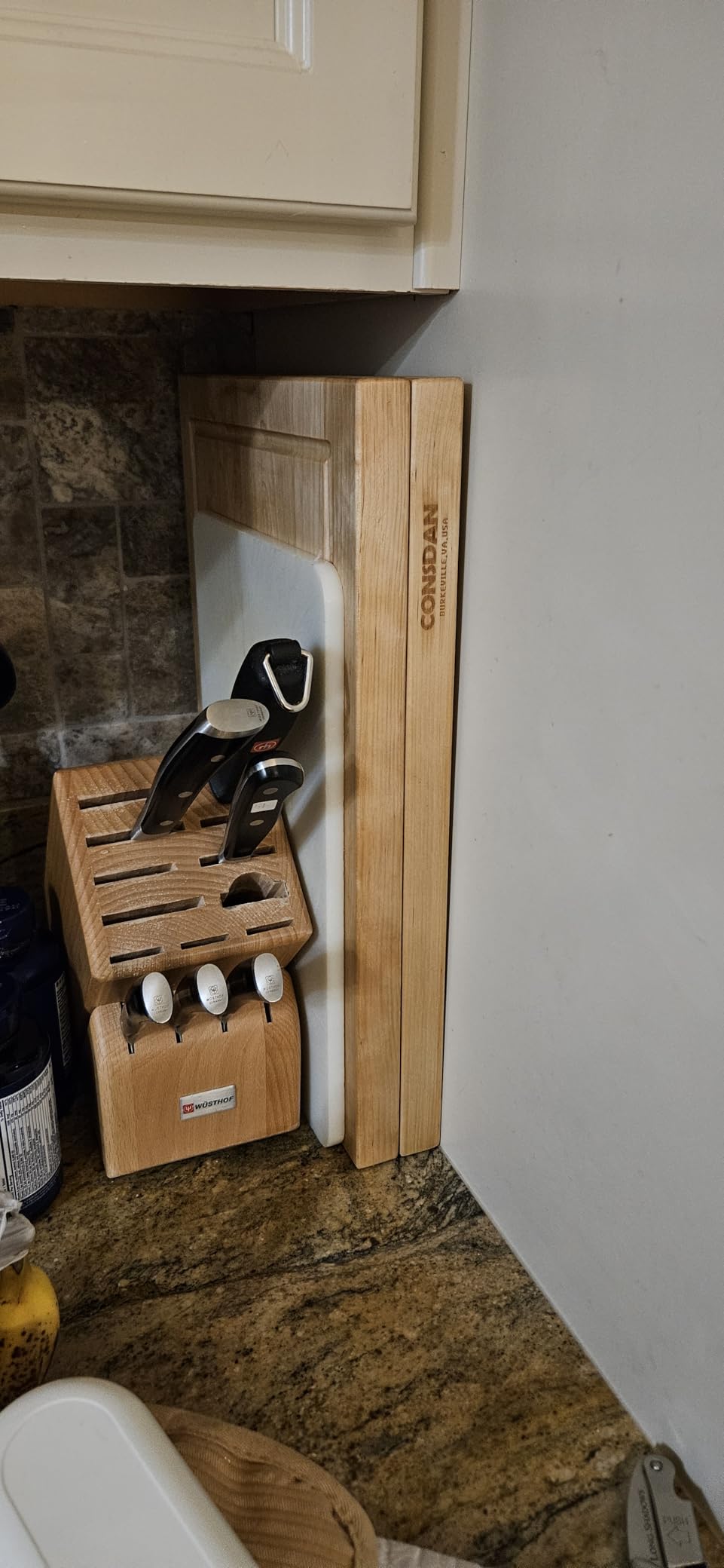
I used the CONSDAN for daily meal prep. The maple surface is smooth. My knife moved across it without catching. The board showed light knife marks after two weeks, which is normal for edge-grain maple.
The invisible handles made it easy to carry even when loaded with chopped vegetables. I washed it by hand and dried it immediately after each use. The juice groove is deep enough to be useful. I tested it with a watermelon and a roast chicken.
Both times the groove held the liquid. The groove is wide enough to clean with a sponge. I had no trouble washing it out. The finish is smooth and does not trap food particles. The board feels like a more expensive product than it is.
Why Invisible Handles Matter More Than You Think
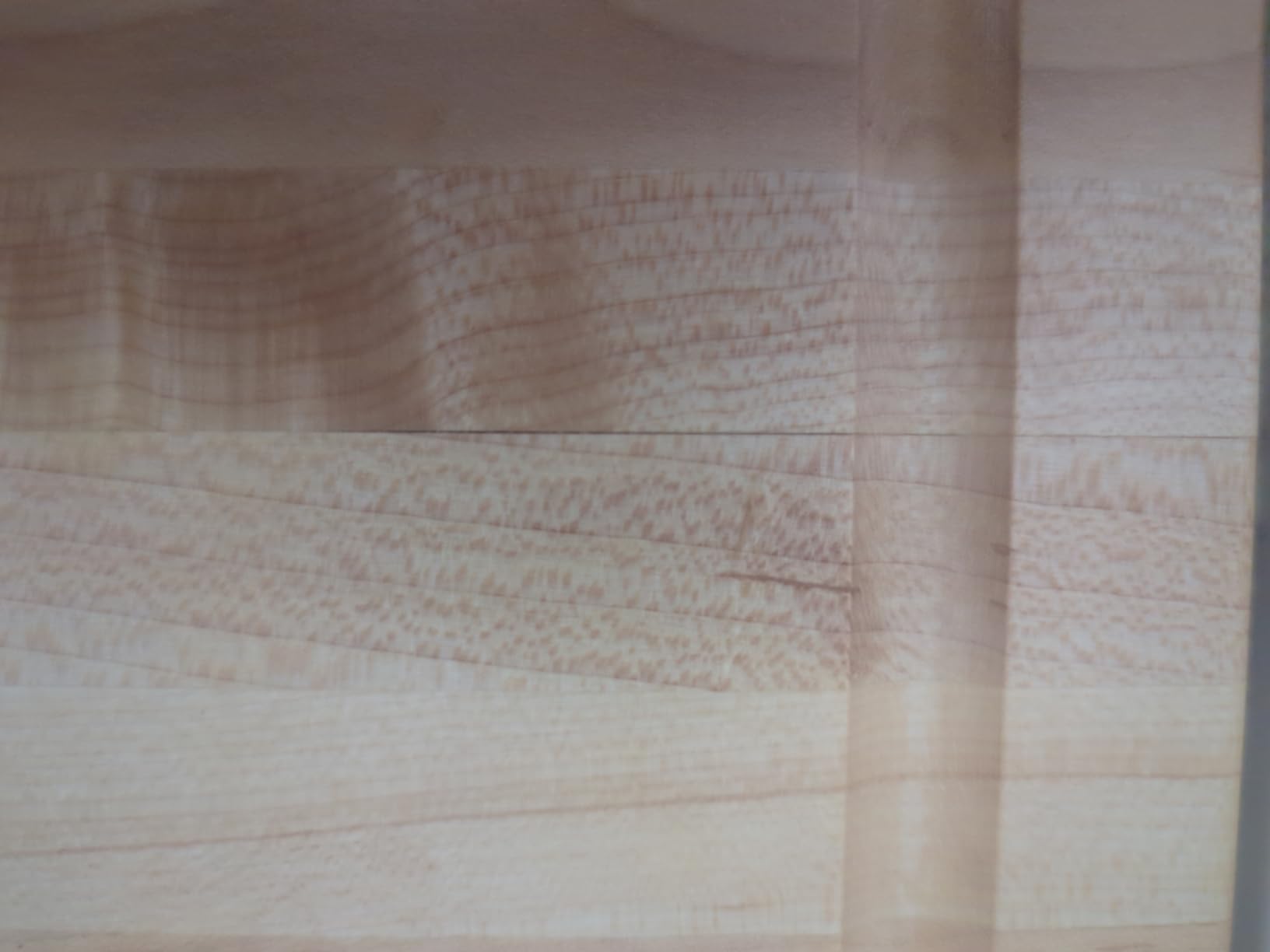
Most cutting boards force you to lift them from the sides or slide them across the counter. The CONSDAN handles give you a secure grip without adding bulk. I carried this board loaded with a pile of chopped onions and felt confident.
The handles are recessed just enough to be functional without creating weak points in the board. The handle design also helps with storage. The board slides into a cabinet without the handles catching on the door frame.
I store mine in a lower cabinet and it fits perfectly. The 16 by 12 inch size is standard for a reason. It fits in most drawers and cabinets. The handles do not change that. They just make the board easier to move.
The one concern is that the handle cutouts can trap water if you do not dry the board properly. I made sure to dry the handles after washing. I stored the board on its edge to allow air circulation. If you leave water in the handle grooves, the wood can warp.
Proper drying prevents this issue completely. The warranty covers defects, but not user error from poor care.
Who Should Buy the CONSDAN Maple Board
This board is for budget-conscious cooks who want real maple wood. The CONSDAN is significantly less expensive than the Boos boards. The trade-off is the brand name and the extreme thickness. But the wood is genuine hard maple.
The construction is solid. The lifetime warranty backs up the quality claims. This is a smart entry point into wood boards. The invisible handles make it especially good for anyone who moves their board around a lot. If you have limited counter space and you need to stash your board after each use, the handles help.
The 16 by 12 inch size is manageable. The 1.5 inch thickness is adequate. The juice groove is practical. This board covers the basics without pretension. You should not buy this board if you want the prestige of a Boos block or the premium features of the Sonder boards.
The CONSDAN is a straightforward maple board. It does not have sorting compartments or cracker wells. But it does the core job well. For the price, it is one of the best values in hardwood cutting boards. The 427 reviews reflect real satisfaction from owners who wanted maple without the premium markup.
12. Astercook Deep Carbonized Bamboo – Best Bamboo Set with Storage
Astercook Deep-Carbonized Bamboo Cutting Boards for Kitchen with Wood Storage Stand, Reversible Charcuterie & Chopping Boards…
Deep Carbonized
3 Sizes
Stand Included
Juice Grooves
✓ The Good
- Resists warping
- Space-saving stand
- Three sizes
- Eco-friendly
✕ The Bad
- Grip stickers may fail
- Occasional splintering
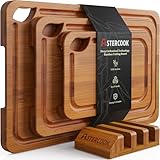
The Astercook set is the most organized bamboo option we tested. It comes with three boards and a wooden storage stand. The boards are 15 by 10 inches, 12 by 8 inches, and 9 by 6 inches.
The stand holds them upright on your counter. I kept the set on my counter for the entire test and it looked intentional. The deep carbonization process gives the bamboo a darker color that hides stains better than natural bamboo.
The carbonization process is not just for looks. It heats the bamboo to change its internal structure. The result is a board that resists warping, cracking, and water absorption better than standard bamboo. I washed these boards daily for two weeks and saw no warping.
The boards dried quickly in the stand. The air circulation from vertical storage helps. The dual-sided design gives you options. One side has deep juice grooves. The other side is smooth for serving.
I used the grooved side for daily prep and the smooth side for a quick cheese plate. The easy-grip handles are integrated into the shape. The boards are lightweight. The largest weighs only a fraction of the maple boards we tested.
The eco-friendly aspect is genuine. Bamboo is a grass, not a tree. It regrows quickly without replanting. The Astercook set uses the deep carbonization process to extend the life of the material. The 1,600 reviews give it a 4.5-star average.
Users praise the quality and the stand. The main complaints are about the grip stickers and occasional splintering.
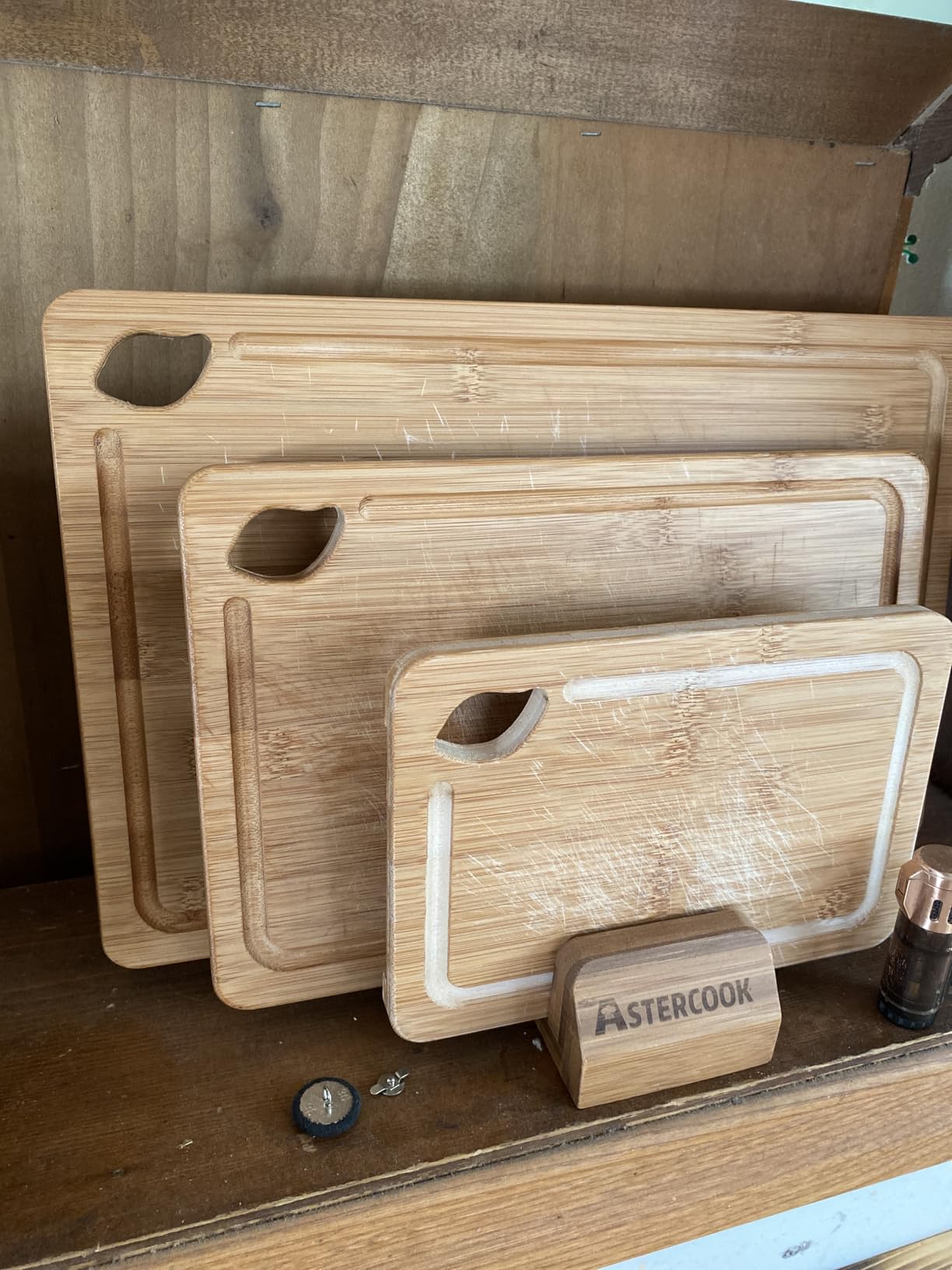
I used the large board for daily chopping. The carbonized surface is harder than wood but not as harsh as stone. My knife stayed sharp through the test. The juice grooves caught liquid from meat and vegetables.
The medium board became my bread board. The small board handled quick tasks like slicing a lemon. The stand kept them all organized and accessible. The grip stickers are a weak point. They are included to prevent slipping.
I found that they did not adhere well to my quartz counter. I removed them and used the boards without them. The boards are light enough that they do not slide much anyway. I would prefer rubber feet like the Sonder boards have, but the stickers are a minor issue. The boards function well without them.
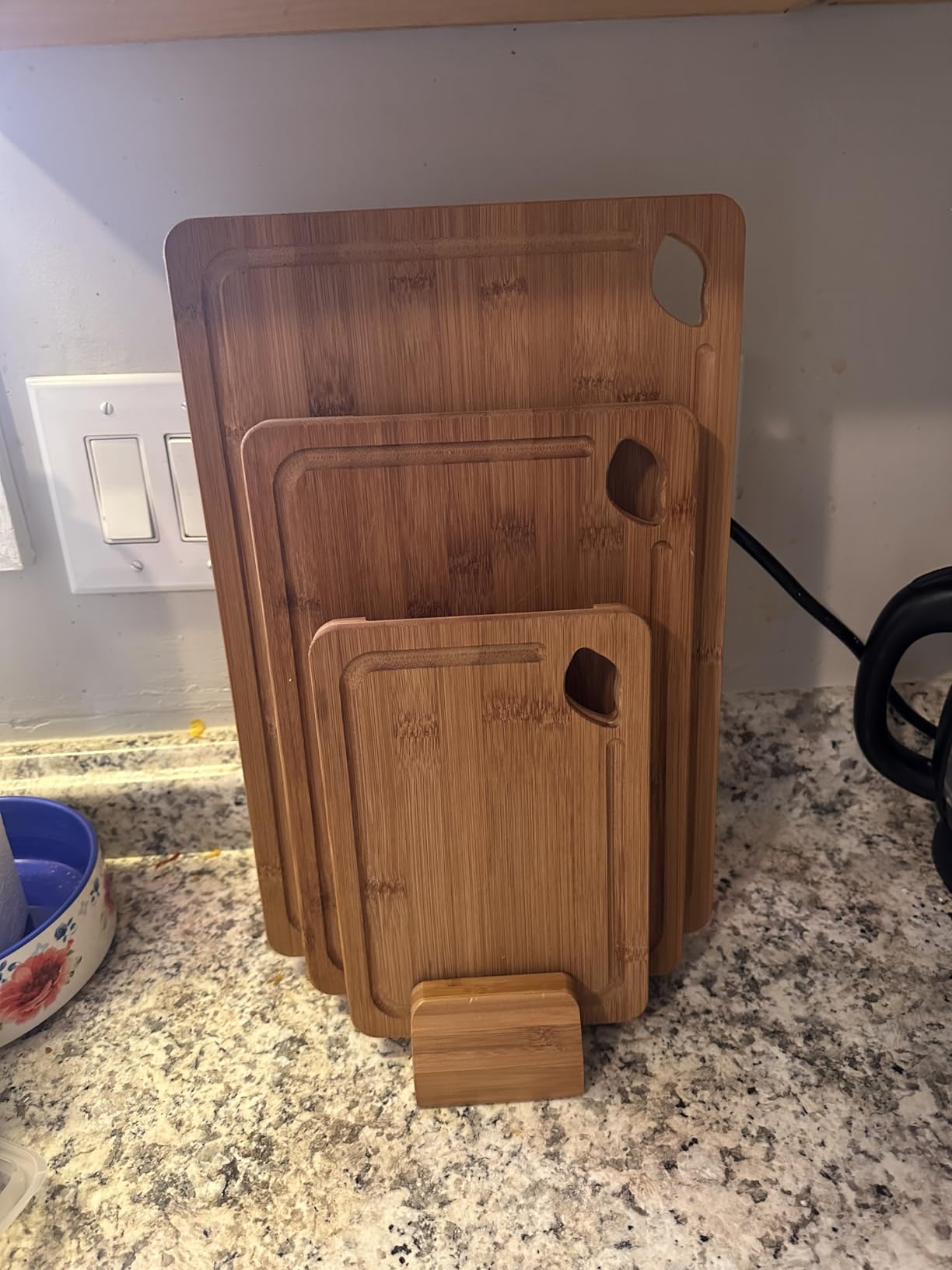
Why Deep Carbonization Changes Bamboo Performance
Standard bamboo boards are prone to warping and cracking because they absorb moisture unevenly. The deep carbonization process heats the bamboo to caramelize the natural sugars. This changes the cellular structure and makes the material more dimensionally stable.
The Astercook boards dried faster after washing than the Kikcoin boards and far faster than any wood board. The carbonization also darkens the color. Natural bamboo is pale. Carbonized bamboo is a rich brown.
The darker color hides knife marks and stains better than pale wood. I cut beets and turmeric on the Astercook board and the color was barely visible after washing. The dark surface is practical for a board that will see daily use.
The trade-off is that carbonized bamboo is slightly softer than natural bamboo. The heat process breaks down some of the structural rigidity. I did not notice any flex during my test. The four-layer construction helps maintain strength.
But if you use heavy cleavers regularly, a hardwood board is still a better choice. The Astercook set is designed for normal home cooking, not professional butchery.
Who Should Buy the Astercook Bamboo Set
This set is for cooks who want an organized, eco-friendly kitchen. The stand and three sizes make this a complete system. If you are starting fresh and want everything to match, the Astercook set is a cohesive solution. The dark carbonized look is modern and attractive.
The price is reasonable for a three-piece set with storage. The set is also good for anyone who wants to keep their boards visible and accessible. The stand looks better than a stack of boards in a cabinet. The vertical storage saves drawer space.
I found that I used the boards more often because they were right there on my counter. Accessibility matters. If your tools are easy to grab, you will use them more. You should not buy this set if you want the gentlest surface for premium knives.
The bamboo is harder than maple. You should also avoid it if you want a dishwasher-safe option. Bamboo requires hand-washing. But if you want an affordable, organized, and sustainable board set, the Astercook is a strong contender.
The carbonization process addresses the main weaknesses of standard bamboo. The 1,600 reviews show that most buyers are happy with their choice.
How to Choose the Best Cutting Board for Your Kitchen
Buying a cutting board is more complicated than it looks. The material affects your knife edges, your cleaning routine, and how long the board lasts. Size determines whether you can prep a full recipe on one surface.
Features like juice grooves and rubber feet change how the board performs in real tasks. After testing 12 boards across three months, I have a clear sense of what matters most. The first decision is material.
Wood protects your knives and self-heals. Plastic is easy to clean and affordable. Bamboo offers sustainability but requires care.
Each material has strengths and weaknesses. Your cooking habits should drive the choice.
Not the marketing. Not the aesthetics. What you actually cook and how you clean up afterward.
Wood vs Plastic vs Bamboo
Wood is the traditional choice for good reason. End-grain wood fibers separate under a knife blade and then close back up. This self-healing property keeps the surface smooth for years.
Maple, walnut, and cherry are the most common woods. Maple is the standard for professional boards. Walnut is darker and more moisture-resistant. Cherry develops a beautiful patina. All three require hand-washing and occasional oiling.
Plastic is the practical choice for busy cooks. Polypropylene and HDPE boards are non-porous. They do not absorb bacteria or odors. They go in the dishwasher. They are lightweight.
The downside is that they are harder on knife edges than wood. They also show scratches over time. For raw meat prep, plastic is the safest option because you can sanitize it with heat.
Bamboo sits between wood and plastic in terms of care. It is harder than wood, which means it dulls knives faster. It cannot go in the dishwasher. It can splinter if it dries out.
The environmental benefit is real. Bamboo grows fast and regenerates without replanting. If sustainability matters to you, bamboo is a reasonable compromise. Just know that you are trading some knife longevity for the eco-friendly choice.
End Grain vs Edge Grain
End-grain boards are constructed by standing wood blocks on end so the cut surface faces up. The fibers point vertically. When your knife hits the board, the edge slips between the fibers rather than cutting across them.
The fibers then close back up. This is the self-healing effect. End-grain boards are the most knife-friendly option. They are also the most expensive because the construction is more complex.
Edge-grain boards are made by gluing boards together with the long edge facing up. The fibers run horizontally. The surface is harder than end grain. Your knife encounters slightly more resistance.
The board does not self-heal as dramatically. The trade-off is that edge grain is more resistant to stains and usually costs less. For most home cooks, edge grain is a perfectly acceptable choice.
The difference is most noticeable if you use your knives for hours each day. Professional chefs prefer end grain because it extends the time between sharpenings. Home cooks who chop for 30 minutes a day will not see a dramatic difference.
Both are far better than plastic or bamboo for knife preservation. If you are choosing between end grain and edge grain, let your budget decide. End grain is nicer. Edge grain is practical.
Size and Thickness
A board that is too small forces you to rearrange food constantly. A board that is too large dominates your counter. I find that 16 by 12 inches is the minimum useful size for daily cooking.
18 by 12 inches is better. 20 by 15 inches is ideal if you have the counter space. For quick tasks, a small 10 by 8 inch board is handy. Having multiple sizes is the best solution if you have the storage.
Thickness matters for stability and longevity. A board under 1 inch thick is likely to warp. 1.25 inches is the minimum I recommend for wood. 1.5 inches is better. 2.25 inches is professional grade.
Thicker boards stay flat longer. They absorb impact better. They also weigh more. If you store your board in a cabinet, a 2-inch board may be too heavy to move daily. Consider your storage before you buy the thickest board available.
Care and Maintenance
Wood boards need mineral oil. Food-grade mineral oil is cheap and available at any grocery store. Apply a thin coat when the board looks dry. For most home cooks, that means once every two to four weeks.
Boos Block Board Cream adds a wax layer that seals the surface. I apply cream after oiling. The combination keeps the wood hydrated and protected. Never use vegetable oil or olive oil. They go rancid and create odors.
Plastic boards are easier. Wash them with soap and water. Run them through the dishwasher. Replace them when they develop deep grooves that trap food. Most plastic boards last two to five years depending on use.
The NSF-certified HDPE boards last longer than consumer-grade polypropylene. Inspect your plastic boards monthly. Deep cuts are hard to sanitize.
Bamboo boards need hand-washing and occasional oiling. The care is similar to wood but more critical. Bamboo warps faster than hardwood if it gets too wet. Dry it immediately after washing.
Store it vertically if possible. Oil it monthly. The deep-carbonized boards resist moisture better than natural bamboo, but they still need attention.
If you want a maintenance-free board, bamboo is not the right choice.
Frequently Asked Questions
What is the best material for a cutting board?
The best material depends on your priorities. Wood, especially end-grain maple or walnut, is gentlest on knives and self-heals over time. Plastic is non-porous, dishwasher-safe, and ideal for raw meat. Bamboo offers sustainability but is harder on knives and requires hand-washing. For most home cooks, owning both a wood board for vegetables and a plastic board for meat is the safest approach.
End grain vs edge grain cutting board – which is better?
End grain is better for knife preservation because the vertical fibers separate under the blade and close back up. Edge grain is more stain-resistant and usually less expensive. Professional chefs prefer end grain for heavy daily use. Home cooks will be happy with either if the board is made from quality hardwood.
How do you clean and care for wooden cutting boards?
Hand-wash wooden boards with mild soap and warm water immediately after use. Dry them upright so air circulates underneath. Apply food-grade mineral oil every two to four weeks, or whenever the wood looks dry. Use a board cream with beeswax for extra protection. Never soak wood boards or put them in a dishwasher.
What cutting board is best for knife edges?
End-grain maple or walnut boards are best for preserving knife edges. The vertical wood fibers allow the blade to slip between them rather than cutting across the grain. This reduces the lateral friction that dulls steel. Plastic boards are acceptable but will dull knives slightly faster than wood. Bamboo is harder than wood and wears edges more quickly.
How often should you replace plastic cutting boards?
Replace plastic cutting boards when they develop deep grooves that trap food and bacteria. For most home cooks, this means every two to five years depending on usage. Commercial-grade HDPE boards last longer than consumer-grade polypropylene. Inspect your boards monthly. If deep cuts make sanitization difficult, it is time for a replacement.
Conclusion
After three months of testing, the best cutting boards 2026 come down to what you cook and how you clean. The Sonder Los Angeles Alfred remains our top choice for home cooks who want premium end-grain walnut with smart features. The Sonder Los Angeles Winsome delivers incredible value in acacia edge grain.
The GORILLA GRIP set proves that budget plastic can still perform well. The OXO Good Grips and Thirteen Chefs boards handle meat prep with commercial-grade confidence. The John Boos boards offer American-made craftsmanship that lasts for decades. The Teakhaus brings FSC-certified sustainability to the table.
The CONSDAN gives you real maple at an entry-level price. The bamboo sets from Kikcoin and Astercook serve eco-conscious cooks who want organized storage. No single board does everything. The smart move is to own at least two.
Use a wood board for vegetables, bread, and cheese. Use a plastic board for raw meat and dishwasher cleaning. That combination gives you the best of both worlds.
Your knives stay sharp. Your food stays safe. Your cleanup stays simple.
Choose the boards that match your habits, and they will serve you well for years.